
Tag Archives for " presentation "

25 PowerPoint Presentation Ideas to Level-Up Your Next Talk
Ninety percent of the anxiety people feel before sacrificing an appearance comes from not feeling devised.
Adding a PowerPoint presentation to your talk and spending the time to create and practice it can increase your confidence and help get your message across to your audience.
Well-designed PowerPoint presentations give life to your talk by adding a visual aspect that people can connect with. The etched text, photos, visuals, graphs, icons, and more butter what you are saying.
Both you and your audience wish that your PowerPoint presentation should be to the point, and efficient.
25 PowerPoint Presentation Ideas to Level-Up Your Next Talk
Here are 25 PowerPoint presentation tips to assist you to reach your next representation your best one.

1. Plan Ahead
Planning onward gives you the time you need to look for quality photos, create infographics that streamline any data you are presenting, and decide on the best pigments, typefaces, and themes that will connect with your audience.
Begin planning your PowerPoint presentation suggestions as you are planning your talk.
However, do not create your slips until after your talk is fine-tuned and ready.
Instead, jot down ideas of visuals, floors, videos, and demos you may want to include in your presentation.
Your presentation slithers will come together as you develop your talk. The suggestions will come to you as you keep your slide presentation in the back of your mind.
Once your talk is written and revised and you are happy with it, establish your slides to complement and help reach the goals and targets of your talk.

2. Choose a Consistent Theme
Using a consistent theme for each of your slips forms a connection throughout your entire presentation for the audience and constructs your content more memorable.
That symbolizes using the same color scheme, typefaces, formatting, icons, logos, and each type of personas and background throughout your presentation.
While it’s important to stay consistent, you do still, however, want to alternate slide layouts to prevent your audience from predicting exactly what’s next and possibly tuning out your presentation.
This makes a shiny look to your creative present and forms it easier for your audience to focus on the content instead of being disconcerted by slides that don’t seem to relate to each other.
A quick and easy way to create a consistent theme for your presentation is to use Powerpoint templates.
PowerPoint has dozens of representation templates you can choose from within the app. You can also access many more templates online for a fee.
PowerPoint presentation templates include shades, typefaces, layouts, background forms, consequences, and sometimes content that let you begin creating your slips immediately.
Or, you can start with a blank slip and make your own theme.
3. Use Bullet Points
When you use bullet places on your slips, it lets your audience visualize crucial points from your verbal production. It also gives you speaking cues, in case you lose your train of thought.
Bullet spots should be short and easy to scan. As a general rule, keep your bullets to four per slither and eight words per missile point.
This will keep your audience involved with you and what you are saying instead of reading your slips and caroling you out.
Your talk is the main event, and your PowerPoint presentation is there to complement what you are saying. Your moves shouldn’t do the talking for you.
Use bullet points to list the main points and highlight important information that you want your audience to remember.
4. Choose Easy to Read Text
Use text that is pleasant to look at and easy for your gathering to read when you are giving your presentation. Font styles such as Arial, Times New Roman, or Helvetica are simple and easy to read.
If you want to use fancier text, save it for bigger headlines in your presentation. And recollect being consistent across your slides.
Make your typeface big enough to be read easily in a large room. A typeface length of 30-point or higher is optimal.
Avoid backgrounds and typefaces that are complementary colors. For example, red and dark green are complementary colors, so a red typeface on a light-green background would be very hard on the eyes.
Dark text on a light background, or vice versa, has the best visibility.
Play around with daring, underscore, italics, and shades for included emphasis on keywords or terms. Use these features strategically — instead of overusing them — to help your gathering places great importance on what you want them to gain from your presentation.
5. Keep It Simple
Avoid ” busy” moves. There is no need to have fancy borders or too many portraits, gifs, or livings in your PowerPoint presentation. Too much to watch on one move can be distracting.
Limit yourself to what is most essential for the audience to understand your message.
As a general rule of thumb, try to include simply one feeling per slide. This will likely mean you’ll have more moves, but it will help your audience follow along and increase their understanding.
One boast that PowerPoint presentations volunteer is modulations, such as fading out of one slip and into the next or moving paroles across the slide. The rule of thumb here is simple changes are the best. This keeps the focus on your talk and not on your PowerPoint presentation.
Consider making some slips only a photo with no text at all. One statement or term on a slip can make it stand out so your audience knows it is important.
When using infographics, preserve paroles to a minimum and verbally explain the graphic. Use amounts, percentages, icons, or small-time phrases to name each one of the purposes of your infographic instead of sentences.
6. Add Inspiring Quotes

Use an inspirational repeat related to your word when you want the audience to remember a key point.
Quoting a phrase spoken by a respected or important person can give credibility and friendliness to your message.
Inspirational mentions likewise help specified the climate and manner of your presentation. They can provide encouragement, appease nerves, lend humor, and give your audience ideas they can use to make improvements.
Since quotes are usually abruptly, they are easy to remember. Use them to help your audience take action or press home the central theme of your presentation.
7. Personalize Your Presentation Slides
One of the most important elements of writing a good talk is to know your audience. The same principle applies to crying your PowerPoint presentation.
To help you craft an innovative present, choice images, hues, themes, and so on that would appeal to your audience and avoid anything that would trigger the opposite effect.
This expects experimenting your gathering. Get to know what is important to them and what their background is. Knowing age, gender, educational status, vocation alternative are helpful. What events have they had that are related to your presentation?
Personalize your PowerPoint presentation to the expectations and tastes of your audience.
In the same regard, contribute your identity to the presentation as appropriate. Sharing personal experiences assistants the gathering connect with you and improve rely on — and therefore connect with your message
8. Browse PowerPoint Templates and Themes
Some PowerPoint templates focusing on a specific industry, topic, or theme. Search the web for some examples of PowerPoint ideas in your battleground and browse the choices and templates available to see if one will reverberate best with your audience.
Within the PowerPoint app, you can search for keywords, such as education, business, boasts, wandering, healthcare, medical, biography, and many other topics related to your talk. Use these lecture templates to your advantage to create crisp, clean, engaging slides.
Along with PowerPoint ideas and templates, you can also access ready-made themes. These are comprised of background and mutually reinforcing fonts and graphics.
As you are searching for a demonstration template, browse PowerPoint’s charts, charts, and infographics available through the app. These are contained within certain presentation templates to give you customizable layouts for plots, tables, timelines, and more that you can use to make your data come alive.

9. Consider PowerPoint Alternatives
If you don’t have PowerPoint, you don’t have to worry. Unless you already have Microsoft Office, you will have to pay to get PowerPoint; but you have alternatives. You even have free options that can help you become great presentations.
Canva is a photo editing tool that forms professional-looking gives. Its free form includes plenty of typefaces and filters to easily create strong, engaging, custom introductions. Canva gives you access to hundreds of design templates and gives you the ability to customize your presentations to your exact specifications.
Google Slides is another free PowerPoint alternative. It offers many of the same peculiarities as PowerPoint, including templates, changes, animations, and inserting likeness, videos, and documents. It is also compatible with PowerPoint if you want to create in Google Slides but present or share using PowerPoint.
Prezi is another strong introduction option that has a free version. Try its templates or start from a space slate. One of its own unique aspects is the ability to record videos, generate intends, and realize infographics with the Prezi online editor.
10. Offer Quality Over Quantity
Don’t waste your audience’s time with fluff and rigmarole. Use your moves for quality information materials and exclusively use them to enhance your presentation.
Less is more. The more words and fluff on a slip, the more chances your audience will have to tune out. You don’t want that.
Limit your slides to the most important points of your talk and slips that will help bring clarity to what you are saying.
11. Fade In and Out of Your Slides
When the content on your slide is not important to what you are saying, fade to colors. This helps your audience focus their attention on you and not get lost in your slides.
It helps to remember that your talk is the point, not your slides.
One of the PowerPoint presentation ideas to consider is to use a slip to introduce a topic, then fade out while you are elaborating on it.
It is best to choose a presentation remote that has a black screen button. Not all remotes do. This feature gives you a fade to a pitch-black screen with the simple click of a button so transition periods are smooth, clean, and not distracting.
12. Engage Instead of Reading
Stay involved with your audience by defying the temptation to read from your slip. Practicing your PowerPoint presentation in advance will make this easy.
Your presentation should help to supplement what you have to say and cater emphasis on your key points.
Elaborate on the information contained within your slips instead of reading them word for word. Keeping your missile spots short will help ensure you engage instead of reading.
With each missile extent or main idea, you can elaborate by telling an interesting story, generating two examples, telling a joke, or doing a demonstration.
Even if you have an inspirational paraphrase, memorize the quote so that you are maintaining eye contact with your audience instead of gazing at your slide. This will help the audience connect with your and your meaning even more.
13. Show One Bullet Point at a Time
One of the most effective PowerPoint presentation ideas is to reveal one bullet part at a time to your gathering.
This helps your audience stay on track with your talk and not read ahead, be lost, or miss a point.
To be able to do this, learn how to use the software and your remote so you are eligible to smoothly advanced from one missile point to the next.
As you set up your PowerPoint slips, you will access the Custom Animation feature then chose an Entrance Effect. Then, when you are presenting, you will be able to show one missile quality at a time to match with what you are currently talking about.
14. Bring Your Own Hardware
It is best practice to bring your own laptop or design that you want to use to give your presentation. That route you are familiar with it and you will not run the risk of having compatible hardware at your venue.
Just make sure you have prepared how to connect your invention to the AV equipment at the place you will be giving your talk. For example, do it is necessary to have a USB or RBG cable, iPhone dongle, or other hardware to present your slithers? If so, deliver it along.

Also, have a backup of your presentation just in case something goes wrong at the last minute with your hardware. Put your backup on a USB flash drive, transmit it to yourself by email, use Dropbox or Google Drive, or add it as a document on your phone.
Ask ahead of time what gear will be held in the venue. This helps you know what to expect while also creating your design and backup of your presentation in case they are needed. Preparation assists pacify your nerves and ensuring your presentation goes on without a hitch.
15. Invest In a Remote Control
Chances are you will not have a tech crew, so you’ll need to advance your slides on your own.
Invest in the remote control so you can be away from your device to control your PowerPoint presentation. This helps the audience places great importance on you and be participating in you instead of watching you from behind your device.
It is essential to learn your remote, by practicing with it often ahead of time. Memorize by suggestion where the buttons are so you are not incessantly looking at it, which is distracting to the audience.
Choose a remote that is compatible with Windows PCs if you are using PowerPoint instead of an alternative. Be able to use a PowerPoint remote app that you can download onto your iPhone or Android phone if this is more convenient for you.
Wireless remotes are best since they allow you the freedom to move around the stage and engage with the audience.
Using a remote with a laser will allow you to point to specific parts of your slides. Red is a common laser hue, while off-color, and violet is also alternatives.
Green is the most powerful color and may be best for huge lecture venues. Be sure not to inadvertently moment the laser at a person as it may cause damage to the eyes.
16. Ask a Question
Asking a question during your talk engages your audience so they are actively thinking and involved in what you are presenting.
Use questions at tactical objects in your presentation to capture their courtesy and attraction them into your talk.
Devote a slither to write out issues and questions, and then pause to give the audience time to think about it. You may want them to keep the answer to themselves or ask questions voluntaries to share theirs out loud and promote discussion.

A successful public speaking strategy is to make a bold affirmation and then ask a question. For example, you are able to state that” Most parties are not well understood the 5 causes of climate change impacts,” and then request,” Are you one of these parties?”
Instead of starting out with a listing of causes, posing this issue firstly passes the audience an opportunity to think about the topic. They will likely be more interested in what you have to say next and be able to personalize your word to themselves.
17. Choose the Best Images
The human brain can process portraits 60,000 periods faster than it treats written text. Adding likeness to your slides is one of the most effective PowerPoint presentation ideas.
But make sure your likeness is high quality. They must be in focus, high resolving, and pleasant to look at.
You can access numerous high-quality epitomes online that are free to use. Many PowerPoint templates also include photos related to the theme of the presentation.
Choose pictures, instances, or graphics that are both pleasing to the eye and on topic. A random photo of a cute kitten has a sickening price, but if it is off-topic it will attract your audience away from your word. You want your audience to remember your content, not an unrelated slide.
One PowerPoint presentation suggestion you can try is to replenish your slip with an image and then included short bullet points over it. If you do, make sure your text font is easily visible on top of the image.
18. Engage With Video
Most people retain report better when they watch a video over-read text.
In fact, 94% of marketers say video helps people understand their product or service better. And 87% say it increases their return on investment.
PowerPoint and other slither performance alternatives allow you to add a video to make a most creative presentation.

Keep your video suddenly to make it more involving. It is best to communicate your plan in a video that ranges from less than a time to no more than three minutes.
Add a video to your PowerPoint presentation from YouTube, by pasting in an embed system from another location, or uploading a video from your computer.
You can also add a screen recording when you want to demonstrate something to your audience. Add an animated gif as an alternative to a stationary photograph.
For best accessibility, a significant PowerPoint presentation thought is to add captions to your video. You can do this directly in PowerPoint by using the Video Tools Playback feature.
19. Call On Your Leadership Skills
The purpose of your talk is to improve the lives of your audience in some way. You will either want to motivate, induce, inform, influence, or entertain them.
The same qualities that induce you a good lead construct you a dynamic public speaker.
Become familiar with these skills and develop them. Some of the top characteristics of good governors in my own experience are imagination, heroism, soundness, humility, sharpness, and clear communication.

As you establish, rehearse, and present your talk and your PowerPoint presentation, use these leadership sciences to have a positive effect on your audience and reach the goal of your talk.
20. Make Your PowerPoint Presentation Actionable
Provide something at the end of your presentation that your gathering can do immediately to take any decision.
This is the exclamation point at the end of your talk. It is where you wrap everything up and create everything together.
Ending your presentation with a thank you slide may leave some gathering members wondering what to do next.
Instead, tell them directly.
What can your audience do when they walk out of the room to throw what they learned into action? In other words, what was the goal of your talk?
To help you craft your call to action, put yourself in the shoes of your audience and expect,” What’s in it for me ?”
Make your call to action clear, specific, and easy to follow. Write it on a slither so the audience can both see and hear it.
21. Develop Excellent Virtual Presentation Skills

Virtual talks are increasingly popular and even necessary in many circumstances now.
The benefits of giving a virtual presentation include availability, you can reach a wider audience, it is often more cost-effective than in-person proposals, and the gathering readily has handouts, connections, resources for taking action.
It is likely you will give a PowerPoint presentation virtually. Prepare yourself to give an effective presentation by preparing and practicing ahead of time.
Get used to talking into the camera instead of looking at your screen. In that mode, the onlookers perceive that you are seeing see contact with them, which is important.
Ask someone to assist you with the technical aspects of the presentation if you can. They can represent you aware of questions and solve any issues that come up so you can concentrate on engaging with the audience.
22. Harness the Power of Infographics
Infographics simplify complex topics. A directory of statistics may seem dry, but when put into an infographic, your audience is able to visualize the concept more easily.
Infographics also afford a visual representation of what you are explaining. They help you make an innovative presentation that welfares your audience.
Create infographics by expanding those contained in PowerPoint templates or applying Canva, Google Slides, Piktochart, easel.ly, and other infographic tools.
23. Look at Your Audience
As I have mentioned, glance at your slide when needed, but never read your slide.
Communicate with your audience and build a relationship with them by maintaining attention contact.
Keep the focus on your word, not your slides.
This takes practice but is essential to keep your audience committed and establish a rapport with them.
Before you start speaking, look at your audience and establish seeing contact with various gathering members. As you are speaking, maintain seeing contact with one person for three to five seconds instead of letting your eyes dart around the room.
Be sure to look at all audience members as well. Focus your eyes on the left, right, middle, front, and back of the chamber. This will help all participants know they are important and included in your presentation.
24. Pause
Avoid rushing your talk or your PowerPoint presentation. No one wants to be chided or was just talking to. They want to feel as though they are having a dialogue as much as possible.
Using a deliberate breather between slithers, bullet times in a slide, or your talk, in general, facilitates capturing the attention of your gathering.
It likewise allows your message to sink in and leaves them more time to think about what you’ve said. An interrupt gives your audience time to read your slip and process it.
Taking time to pause allays your nerves and helps your audience relate to you.
Use a pause to provide emphasis to a part “you’re ever” forming, like a punctuation mark at the end of a convict does.
It is especially important to pause when you are transitioning from one topic or moving to another. It facilitates the gathering transition in their thoughts as well.
25. Practice, Practice, Practice
Preparation is the key to dedicating an effective presentation. About 35% of parties affording a representation pattern it for at least an hour. Another 44% waste anywhere from three to eight hours practicing their presentation to make sure it is polished and states are prepared.
To effectively rehearsal your PowerPoint presentation, write an ended synopsis of your talk in missile detail. Don’t write it word for word, but write it out as missile objects.
Next, dictate your talk into an express record-keeper or cell phone, and then listen to it. It’s amazing how much different it reverberates when you hear your own voice.
You’ll see styles that you could have presented differently. Sometimes exactly changing the order of stages increases their impact.
Practicing your presentation helps you increase confidence and lower nervousness, decrease nervousness, or overcome your fear of public speaking.
Engage Your Audience With These PowerPoint Presentation Ideas
With these 25 PowerPoint presentation ideas, you can reach inventive appearances that are engaging, help you meet the goal of your presentation, and benefit the lives of your gathering members.
For more virtual public speaking tips-off, download my free steer that will help you build a strong online presence as well as motivate and induce others.
Source: briantracy.com

How to Improve Your Presentation Skills: 12 Ways to Give a Speech Worthy of a Standing-Ovation
Whether you’re brand new to public speaking or a seasoned ex-serviceman, there’s always room to improve your presentation skills and comfort level in front of a crowd.
Solidifying your presenting abilities can even help you in your everyday communications, personal and professional. They will assist you to learn to feel comfortable and self-confident speaking with anyone.
If you are new to public speaking and interested in learning more or are ready to take your presentation abilities to the next rank, I’m aroused to share my top tips on how to sharpen your abilities to become the best public speaker.
I have personally expended these techniques to improve my own presentation knowledge throughout my career as a public speaker.
Become a professional speaker Try the 6-Figure Speaker
12 Ways to Improve Your Presentation Skills
To put yourself on track to becoming the best public speaker you can, complete the following 12 tips-off to improve your presentation sciences, the whole way from having more beneficial conversations at work to getting the standing ovations at your next public speaking engagement.
#1 – Practise
Here’s a cliche we’ve all heard a dozen occasions before: Practice constructs perfect.
This is especially true when it is necessary to public speaking.
Practicing allows you to strengthen your presenting skills and perfect the content you want to get across to your gathering. It allows you to determine the appropriate tone, body language, pauses, and anecdotes you can use to deliver a memorable presentation.
While it may seem time-consuming and exasperating at first, rule assistances stop you from needing to feel like you have to, “just wing it, ” during your speech. In other texts, the more you rehearse, the cozier you are able to feel present.
To help practice, consider doing the following entry:
- Write a write of your key points to reference.
- Question a friend to act as your gathering while you rehearse and give you honest feedback
- Record yourself presenting and take notes on what you could focus on in order to improve.

Though it can be very nerve-wracking to deliver a speech, practicing will likewise help ease your nerves and strengthen your presenting sciences. You will feel much more cozy delivering your content if your key points are engrained within your mind.
#2 – Use Engaging Visual Aids
Our world is full of distractions. Our attention spans are short and readily swayed. This is why adding visual aids to your speech can help keep your audiences’ attention.
Visual assists like plots, diagrams, infographics, portraits, and videos could help engage your gathering as you are delivering your points. Considering that over 65 % of the population are visual learners, visual material could help reinforce your message.

Visual aids could array from funny memes to serious personas. These visual assistances are meant to evoke excitement and strengthen your key points.
#3 – Focus on What You Know
Whatever you decide your topic is, become the panel of experts in it. Study and research the current trends in that area and prepare to answer questions about the topic.

Understanding and being passionate about what you’re speaking about will help you build confidence and convey your points in a natural way.
The audience will absorb more of your cloth if they believe you know what you’re talking about.
#4 – Incorporate Your Personality
If your goal is to give a genuinely memorable and engaging introduction, let your personality shine through!
Your credibility can actually increase if the audience feels connected to you. This is your opportunity to connect with your gathering through funny anecdotes, repeats that have inspired you, and passions that have hit home for you.

You’re not just a talking head, so make relax your body language and prove to the audience that “you’re ever”. You will create memorable knowledge for your gathering if they get a view of your identity.
You will find that you show more interesting if the audience feels like they can relate to you.
#5 – Speak Slowly
People tend to speak faster when they’re apprehensive. While rehearsing can help ease your nerves, recollect to always speak gradually when you’re delivering your communication, and don’t forget to breathe.

Make sure to articulate your words. Use deliberate pauses to emphasize important crucial points in your presentation and to keep your audience employed.
Working in well-timed intermissions will too help you keep your pace and cadence.
#6 – Impede Water Handy
If you’ve ever seen someone speak publicly, you’ve likely also accompanied a glass of liquid at their arm’s reach. This is sometimes because nerves are likely to cause your lip to feel dry mid-speech, as a dry opening is a common cause of the feeling.

It is likewise because as you talk and project your expression, your throat may start feeling sore or dry.
Keeping water close by will help keep your speech and stage spirit on track and as perfect as possible.
Taking a sip of liquid during your address can also give you a moment to catch your breath and refocus on your topic if you’re feeling nervous or stressed.
Plus, abiding hydrated throughout the day before your presentation can help you avoid feeling dizzy or lightheaded during your speech.
#7 – Loosen
Relaxing is an important presenting skill. Your body and thoughts must be calm in order for you to come across as calm, collected, and professional.
Breathe in, breathe out, rely on yourself, and loosen. Stretch and shake out your form. Let lead of any stiffness you’re viewing on to.
You want to feel relaxed and fluid as you step out to the present. Your body language should communicate the feeling of solace and confidence.

A great course to boost endorphins and affluence your anxiety before a big presentation is through working out. Take a long walk, go to a boxing class, or try some yoga at home. Whatever you do, getting your blood flowing will help you loosen for your speaking engagement.
Ensuring that you know your subject by mettle can help ease the tension you feel. That’s why practicing is such an important piece of a successful presentation. This will help you cartel your ability to deliver an incredible presentation.
#8 – Ask Questions
People love to make their voices heard and feel like they’re part of the conversation. Appearances can often feel one-sided, but they don’t “ve got to be”. To keep your audience engaged and your communication a memorable ordeal for your audience, you can include them in the conversation.

Ask the audience what they think, take a poll, invite meaningful questions- these are all styles you can increase engagement.
Engaging with your audience will allow you to establish and deeper connection with them and be seen as much more relatable. This will also allow you to get first-hand information on what your audience is looking to gain from your presentation, and adjust accordingly to give them what the fuck it wants.
The Ultimate Blueprint To Build A Business As A Highly-Paid Professional Speaker 6-Figure Public Speaking
#9 – Check and Adjust to Your Surroundings
Wherever you’re presenting — in an inn, powwow center, or on Zoom- make a point to show up early to scope out your circumvents. This will help you feel cozier when it’s time for you to present.

Here are some important elements to consider about the location.
- What is the temperature in the area? Too hot? Too cold?
- Will you have direct lighting? Does it need to be adjusted so it’s not glowing in your eyes?
- Is all the equipment working properly?
- Is there a backdrop on stage?
- Is there external interference that may distract from your presentation?
- Is there a teleprompter and can you see it from the stage?
- Is the projector/ screen optimized to share your visual assistance?
If your presentation is virtual, check out this five tips-off that will help your virtual presenting skills.
#10 – Abide Personable
While you may be the subject matter expert on the topic to which you’re presenting, it’s important to still stay relatable and personable with your audience.
Keep the conversation simple. Use messages that everyone can understand. Explain complex beliefs in simpler periods. Use anecdotes to acquire similarities that everyone can relate to. Be open to providing further clarification whenever needed.
You want to ensure that your gathering feels understood and respected when you’re communicating with them, so stay on topic and ever voice approachable.
#11 – Start and Intent with a Bang
There are many ways to start and end a speech, but exclusively some are truly impactful. Your first and last thoughts can be the most memorable markers in your speech.
Your first impression, if done right, can engage the gathering right away. A shocking announcement or a fascinating fib can get the audience to the edge of their fannies from the very beginning.

Your last-place remarks can leave a lasting thought on your audience. You can summarize what you discussed and end with a call to action. You can finish the discussion with the conclusion of the story you began the pronunciation with, as a direction to create a narrative throughout your presentation.
Starting strong and finishing with a slam will constitute your communication a total knock-out.
#12 – Have a Backup Plan
As much as we want to, we cannot control everything. Sometimes, things don’t travel our style- there can be technical predicaments, venue topics, audience accidents — whatever it is, make sure you’re prepared for the unexpected and create a backup plan for instants like this.

If you’ve ever seen proposal travel awry, you’ll notice that a good presenter will keep their cool and find the feeling in the situation. Their body language will stay tightened, they won’t lose their temper, and they’ll find an opportunity to engage with their audience.
This type of confidence is gained through practice. You can enhance your presenting sciences by practicing your action in instants where things aren’t going according to plan. Knowing how to handle a critical situation will help you feel more tightened and self-confident throughout your entire presentation.
The show must go on, right?
It’s easy to say “don’t be nervous, ” but it’s much more difficult to act on it.
Even the best public speakers get nervous. Though open speeches and presentations can be nerve-wracking, let your fear motivate you. Harness your apprehensive vigor and transform it into enthusiasm and charisma.
So if you’re wondering how to improve presentation sciences, use these gratuities for any of your public speaking needs and watch as your presenting knowledge improves ten-hold.
Even if you’re simply the preparation of a speech to your unit at work, these gratuities can act as a great tool to help you feel more confident and prepared for any public participation.
They can even simply help you communicate more successfully in your everyday life and help you enhance your career.
If you’re looking to take your public speaking to the big leagues and be a 6-figure talker, check out my Ultimate Blueprint to Building a Career as a Successful Public Speaker.
This comprehensive guide is carried with the best implements and training for public speaking that I’ve learned in my 30+ years of has become a public speaker.
Utilize this guide to become a professional speaker, constructed your own business, make the respect and honor of governors in service industries, and use your content to motivate and stimulate beings all over the world.

Source: briantracy.com
Why Presentation Skills Are Important in Marketing
In a way, marketing is one big presentation. When we write a blog post or appear on a podcast, we’re presenting. When we research our audience, we’re trying to understand better what they want to see and learn from our presentations. In other words, strong presentation skills underlie pretty much every aspect of marketing.
What does it take to be a successful marketer?
Turns out we don’t have to guess because someone’s already done the research.
Fractl used IBM’s Watson Personality Insights API from 2019 to pick out the key traits and characteristics of 20 of the world’s most prominent marketing leaders (I even made the list!).
According to the study, the No. 1 trait shared by marketing leaders is adventurousness, followed by high energy levels, assertiveness, and intelligence.
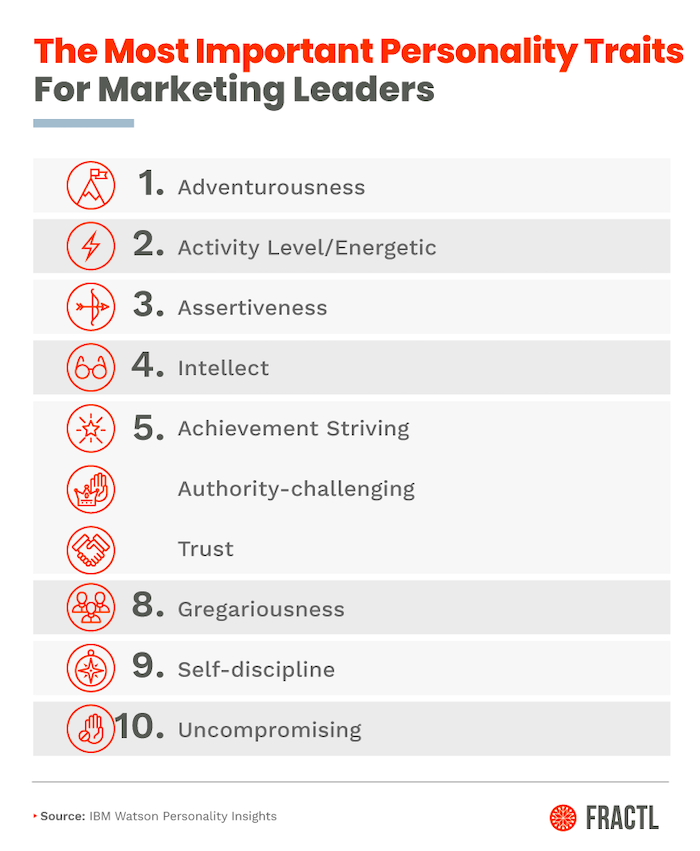
One interesting thing about this is that you’d also find a lot of those traits in people with exceptional presentation skills.
To put yourself out there and present to a room full of people, you need to be at least a little adventurous.
If you’re not a high-energy person, you’ll find it hard to keep people engaged.
If you’re not assertive, you’ll struggle to communicate your points effectively.
The list goes on.
That’s not a coincidence.
To make it as a marketer, excellent presentation skills are pretty much non-negotiable.
3 Reasons Presentation Skills Are Important in Marketing
In a way, marketing is one big presentation.
When we write a blog post or appear on a podcast, we’re presenting.
When we research our audience, we’re trying to understand better what they want to see and learn from our presentations.
In other words, strong presentation skills underlie pretty much every aspect of marketing.
If you can deliver an incredible presentation, you can:
1. Having Good Presentation Skills Drive Trust in Your Brand
What makes people trust brands?
According to a global survey from PR and marketing consultancy Edelman, it boils down to three key factors:
1.Product experience:
The most important factor, 87 percent of respondents cited their experience with a product as a reason to trust a brand.
2.Customer experience:
56 percent of consumers said their own experiences with a brand play an important part in building trust.
3.Societal impact:
38 percent of consumers believe a brand’s impact on society is an important factor in assessing its trustworthiness.
However, an even more crucial point underpins all of this.
Without strong presentation skills, potential customers aren’t going to know about any of those things!
If you don’t tout the quality of your product, or highlight your superb reviews and testimonials, or demonstrate your commitment to making the world a better place, how will anyone know whether they can trust you?
2. Presentation Skills Help Create Brand Awareness
Ever wondered why personal social media accounts get better engagement than brand accounts?
Because it’s easier to sell a person than a brand.
That’s why speaking at conferences, networking meetups, and other events can be such a useful tool for building brand awareness.
It puts a human face on your brand, which instantly makes you more recognizable, relatable, and memorable.
That’s why for many of us when we hear the words Apple, Microsoft, or Tesla, we immediately think of Steve Jobs, Bill Gates, or Elon Musk.
3. Use Your Presentation Skills to Drive Sales
Your presentation skills can be one of the biggest weapons in your armory when it comes to selling your product.
According to a study from Chief Marketer, live events are the second-biggest source of B2B leads, and also generate the second-highest ROI of any sales channel.
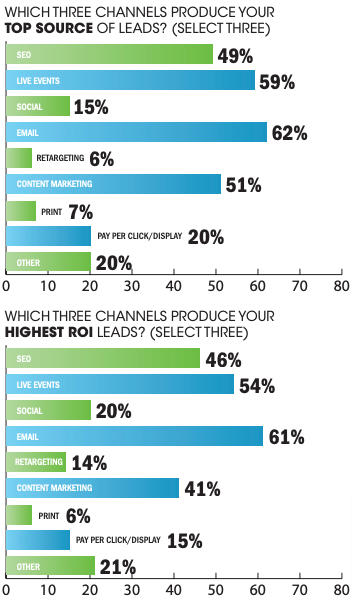
Granted, not all those respondents would have been guest speakers at those events, but to generate leads, they would have absolutely been speaking to prospects at their display stands, during networking sessions, and even while queuing to buy a hot dog or coffee.
Their one-on-one presentation skills were crucial to breaking the ice with those leads.
How to Develop Your Marketing Presentation Skills
By this point, you hopefully agree with me that presentation skills are essential for modern marketers.
Now, let’s take a look at how to hone those skills to meet your marketing objectives.
1. Set Goals for Developing Your Presentation Skills
If I told you to write me a blog right now, you’d likely find it pretty tough.
After all, I’ve not given you any information.
You don’t have a theme, or a title, or even an audience.
In short, there’s no way of knowing what I’m looking for, so you can’t gauge what success looks like.
Alternatively, if I told you to write a blog about this year’s biggest trends in SEO, aimed at marketing leaders for SaaS startups, you’d have a much clearer idea of how to proceed.
The same thing is true for developing your presentation skills.
Start by defining exactly what you want to achieve, such as:
- becoming a better (or first-time) conference speaker
- delivering more impactful training sessions
- peaking more persuasively to leads
- engaging potential prospects at the top of the sales funnel
- honing your pitch presentations

Also, give yourself a deadline. Rather than generally building up your presentation skills, commit to improving your public speaking in time for a specific conference or networking event.
Sign up as a speaker early; that way, you’re completely accountable for following through with your plans.
2. Research Your Audience
As well as simply “doing more of it,” there’s another extremely effective way to help you feel more confident about speaking in front of an audience: Do your research.
When you think about it, imposter syndrome is another big reason people shy away from public speaking.
We worry we’ll be exposed as frauds and charlatans who don’t know what we’re talking about.
Thoroughly researching your audience will help guard against that feeling.
When you know exactly who you’re talking to, it becomes much simpler to build an effective presentation.
If I’m speaking to a room of NASA engineers, I’m not going to tell them how to build a better rocket.
I can’t tell them anything they don’t already know (and most of what I say would likely be wildly inaccurate).
However, I almost certainly know more about marketing than them.
Maybe I’d tell them how, by sharing snippets of their work through their personal social profiles, they can build awareness and interest in what they do, which in turn, might persuade politicians that increased federal funding for NASA would be a real vote-winner.
With that increased funding, they can go away and build better rockets.
With that in mind, before you start working on your next presentation, ask yourself the following questions about your audience:
- How old are they?
- Where are they from?
- What jobs do they do?
- Who do they work for?
- How experienced are they?
- What are their pain points?
The idea here is to identify the “thing” you know that’s of most value to your audience.
The more you can niche down, the better.
If you can’t answer some of those questions, speak to the event organizers; they should be able to help.
3. Incorporate Humor and Stories
Throughout human history, storytelling has been one of our most effective tools for influencing, inspiring, and teaching one another.
Paul Smith, author of “Lead With a Story: A Guide to Crafting Business Narratives That Captivate, Convince, and Inspire,” put it better than me when he wrote:
- In any group, roughly 40 percent will be predominantly visual learners who learn best from videos, diagrams, or illustrations.
- Another 40 percent will be auditory, learning best through lectures and discussions.
- The remaining 20 percent are kinesthetic learners, who learn best by doing, experiencing, or feeling.
Storytelling has aspects that work for all three types.
- Visual learners appreciate the mental pictures storytelling evokes.
- Auditory learners focus on the words and the storyteller’s voice.
- Kinesthetic learners remember the emotional connections and feelings from the story.
With that in mind, another key way to improve your presentation skills is to work on your storytelling.
Don’t just tell your audience how a certain tactic can get them more sales; give them specific, real-world examples that help them relate your advice to their own circumstances.
Also, don’t overlook the power of humor to engage an audience.
As the British comedian John Cleese said:
If I can get you to laugh with me, you like me better, which makes you more open to my ideas.
And if I can persuade you to laugh at the particular point I make, by laughing at it you acknowledge its truth.
I’m not suggesting you go away and write a 30-minute standup set, but if you can drop a couple of one-liners here and there, it can go a long way to getting your audience on your side.
4. Practice in Front of an Audience
Glossophobia, or fear of public speaking, is a common complaint.
One much-quoted (and very old) Gallup survey claims it’s the second-most prevalent fear in Americans, affecting 40 percent of respondents.

Clearly, it’s not the “speaking” element that puts us on edge.
It’s the idea of doing it in front of an audience.
What if we make fools of ourselves, or say the wrong thing and get booed off stage?
Painful as it might sound, in my experience, the best way to overcome this is to seek out opportunities to speak in front of an audience.
This can be in your professional or personal lives.
It can be as simple as saying a few words at family gatherings or giving small presentations to your team at work.
Use Your Presentation Skills: 5 Tips for an Effective Marketing Presentation
You’ve set goals for improving your presentation skills, done your research, crafted a handful of engaging anecdotes, and practiced in front of an audience.
Now, it’s time to weave all those things together to create a killer marketing presentation.
Bear these five tips in mind while you’re doing it:
1. Start Strong

According to one study, you’ve only got 30 seconds before your audience’s attention starts to lapse.
That means you need a strong start to persuade them you’re worth listening to.
Lead with your most eye-catching statistic, your best joke, or your punchiest anecdote, and keep it short.
On average, we speak at up to 130 words per minute, so that only gives you a maximum of 65 words to play with.
2. Make a Good First Impression
Presentation skills aren’t just about what you say.
They’re also about how people perceive you.
A study at California State University, Northridge, found students followed instructions far more accurately when those instructions were given by someone who was dressed casually rather than professionally.

Why did this happen?
One interpretation from the study’s authors is that the students responded better to someone dressed similarly to them:
Perhaps the participants in our study felt that they were better able to relate to the experimenter in the casual-dress condition, thereby lowering their anxiety and increasing their ability to follow directions correctly.
In short, there’s no such thing as a right or wrong way to look or dress for a presentation.
Rather, we should reflect on our audience.
3. Come Prepared
Don’t kid yourself it’ll “be alright on the night.”
If you don’t prepare properly, it won’t!
Figure out what works best for you by running through your presentation multiple times.
Do you find it easiest to work off cue cards?

Or is it better for you to run lines until you’ve memorized your presentation word for word?
4. Ask Questions
There’s no better way to guarantee people are paying attention than to ask regular questions throughout your speech!
This isn’t about putting people on the spot. Instead, it’s about turning your presentation from a one-way narrative to a two-way conversation.
Say you’re giving advice on tackling a specific problem. Ask how many people had experienced that problem, when they first noticed it, and why they’re so keen to fix it.
5. Back Your Claims
There are very few instances in which you shouldn’t be supporting your claims with real evidence.
Even if you’re giving your personal opinion on a topic, those opinions should be backed with actual data from reputable sources.
If I’m telling you that Facebook is the best platform to grow your business, you likely wouldn’t just take my word for it.
You’d want to hear evidence about Facebook’s audience, the effectiveness of advertising on the platform, and how much it’ll cost.
Conclusion
No one is born with incredible presentation skills; not even Steve Jobs.
Sure, some of us are more confident than others at talking to an audience and getting our points across effectively.
However, it takes work; and if honing your presentation skills is taking you away from other important work, like content marketing or SEO, our agency is here to help.
The good news is the harder you work at it, the more confident you’ll feel, and the better your presentation skills will become. It’s a virtuous circle!
What tips have you used to level up your marketing presentation skills?
Source: feedproxy.google.com