
Tag Archives for " user generated content "

The Guide to Using UGC Marketing to Create Deeper Audience Connections
User-generated content, or UGC, is exactly what it sounds like: anything that people outside the professional marketing team are creating around or about your brand, product, or service.
UGC has been gaining significance in recent years as a powerful marketing tool for digital agencies and marketers. It is a way to create a sense of community between the brand and its target audiences.

Why should my brand consider using UGC for marketing?
UGC can help brands establish themselves as an authority in their field while also increasing their bottom line with increased revenue from new customers or repeat customers who are happy with the company.
It also helps differentiate the brand from its competitors because it creates an emotional connection with its customers by showing how they care about what they do and who they serve.
Online UGC takes the form of content, broadly. Specifically, that includes (and isn’t limited to):
- Social media posts
- Recommendations and reviews
- Photography and photo galleries
- Video
- Fan art
- Reddit threads
- TikTok challenges
- Blog posts
- Unboxing videos
- GIFs
- User testimonials
- Posts with branded hashtags
User-generated content is an excellent way for companies to create buzz about their brand. It can also be used by B2B brands in order to connect with potential customers.
More connections create a stronger relationship.

What are the benefits of leveraging UGC as a brand?
UGC is a powerful tool for marketing because it automatically creates greater trust amongst customers, can provide valuable insights into customer needs, and automatically generates fresh content on a consistent basis.
Build trust
It’s well documented by research presented in Edelman’s Trust Barometer, that people trust humans like themselves the most — and they trust brands the least. Brands that can incorporate a mix of user-generated content into the marketing mix can build more trust with customers.
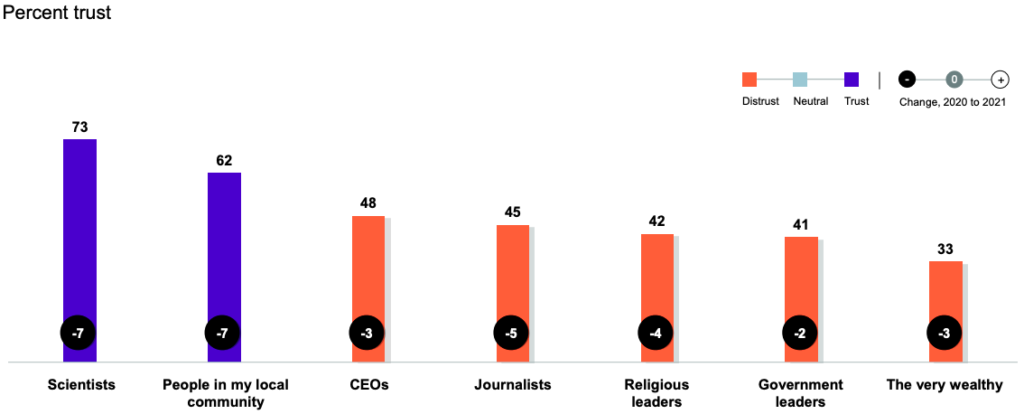
UGC lends an air of authenticity and even transparency. It builds trust because the brand is putting forth what your customers are saying about a brand, product, or service.
Discover customer insights
Brands that embrace the power of UGC in their marketing campaigns are able to create a more relevant and authentic relationship with their intended audience. UGC is about giving customers a voice that is their own, not influenced by the company or its employees.

Searching for and following UGC provides some of the best opportunities to engage with your customers and potential customers. When brand advocates feature your brand to their friends, family, and followers, they will usually have done this without being paid or incentivized to do so.
Without any gatekeepers, they are free to post both the good and (hopefully) constructive critiques about what they would do differently.
It’s easy to get wrapped up in criticisms or bad reviews. The best brands find a way to take this as feedback and learn from it, even if they don’t republish the content or take the opportunity to respond.
Generate fresh content
It shouldn’t come as a surprise that creators are everywhere. Many of them are really good at creating content in a variety of mediums. As mentioned above, there are several ways that content comes to life.
When a customer creates in a way that resonates with them, it will likely also resonate with another member of your audience.
There may be a temptation to slightly change UGC before it’s reposted. STOP. When using UGC that the creators have shared, refrain from editing their content in any way.
Use it as it was meant to be original. These unfiltered views into customers’ experiences with a brand are exactly what audiences need to see to build trust.
Is UGC useful in B2B?
UGC is absolutely useful in B2B, along with B2C and other entities. B2B marketers are also in the business of building trust and building brand advocates. Achieving this is a two-way street.
First, build trust with the audience by amplifying other people’s voices, their recommendations, their product videos, their testimonials, and case studies. For most B2B brands, we discover UGC in places where ratings, reviews, and demonstrations are content cornerstones.
Identifying the creators who are talking about your brand in these channels is a good way to a source who might be able to create more content for you.
Spend time searching on YouTube, Instagram, TikTok, and other video channels for creators who post reviews, explainers, and demonstrations featuring the brand, product, or service. You may be shocked to find just how many product demos and tutorials are online that are never made by the employees who created the actual product.
Discovering and amplifying reviews and demonstrative content allows B2B brands to leverage UGC for building trust with their audience. This creates more and deeper connections with the people who are likely some of the best customers.
At the same time, marketers are deepening the relationship with key customers by amplifying their experiences and using previously shared content.
If there is a good relationship forming with a customer or client who is creating UGC about the brand, product, or service, then B2B marketers should consider a step forward in formalizing content co-creator relationships to maximize the UGC opportunities.
Co-creating content empowers creators to use their vision and voice while allowing the brand a bit more input but in the overall direction. Remember that ultimately the customer is responsible for the end product.
In some of these relationships, co-created content looks similar to influencer marketing. However, there’s still space between full-on influencer marketing and leveraging what somebody was inspired or motivated to create.
How can we encourage UGC for my brand?
While brands can’t create their own user-generated content, they absolutely can encourage the creation, which we see all the time. During Northern Arizona University’s Giving Day 2020, the first 1,000 donors earned a pair of branded Lumberjacks socks.
The package included a small card that instructs the recipient exactly what to do to create a social media post while wearing the socks. The card listed what hashtag to use, the specific university account handle to tag in a post, a suggestion for photo styling, and of course the prompt to share online.

This approach to UGC isn’t new. For a decade or longer, we’ve used social media to ask and inspire audiences to share their experiences with brands. The difference today is that people often create content of what they deem shareable before they’re asked.
Even so, campaigns perform better when creators are guided by specific instructions, including hashtags and @mentions, what channels to post, and post types.
There are discovery platforms or tools for marketers to discover user-generated content across the web, even when a brand is not explicitly tagged or mentioned. Some tools allow marketers to contact the original creator and manage those relationships and permissions within the tool.
How do you get approval for using UGC?
By following a couple of clear-cut rules, brands can absolutely use and leverage user-generated content.
First, you have to find the content, which happens best when using active social listening programs. To find the user-generated content that people are posting on your behalf, marketers must use robust social listening.
A robust listening program goes beyond account tags and keyword searches queued up. Also look at hashtags and non-tagged mentions of your brand, including brand name, your product and service terms, and keywords.
Search across general social feeds and hashtags as well. Take it a step beyond brick-and-mortar or physical locations by using location-based aggregators to find content that is tagged with a location.
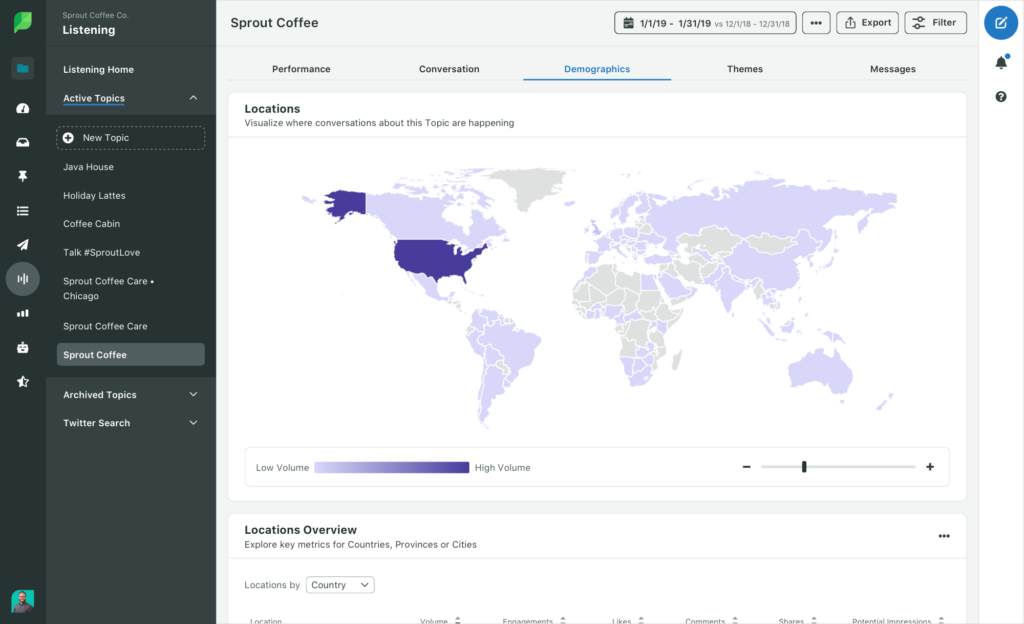
Credit: Sprout Social
User-generated content can come from consumers or from employees of the company. When it comes from consumers, permission needs to be granted before the material is shared on a company’s social media channels or used elsewhere on their website.
A lot of that happens just in direct messages, but some of that happens in the aggregate tools that you’re using as well.
One-to-one connections are how a brand moves someone from being an audience member into becoming a fan.
There are two types of copyright: exclusive rights and moral rights. If someone creates a photo or video expressly for you, like in the co-creation example, this is an example of needing exclusive rights to use the content. A case of moral rights is when a creator produces content as a hobby or as an independent creator, and grants permission to the brand to amplify.
In either case, get approval from the original creators of the content you want to share. Travel and tourism brands often use a hashtag in Instagram bios with a disclaimer that states by using this hashtag, the user allows others to share the content.
Otherwise, reach out to the original creator and secure permission from them to use the content in any marketing channels. To use any photography, video, or art, seek out the moral rights granted by the creator.
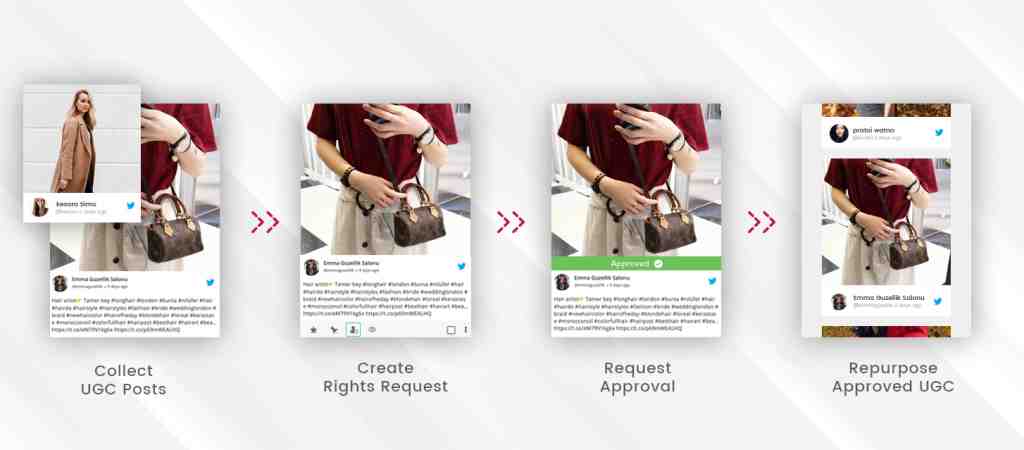
Credit: Tagboxx
Testimonials and reviews that are publicly posted on Google or Yelp, your Facebook page, or G2 Crowd can be reposted without explicit permission.
Even so, smart marketers will try to identify and get in contact with the customer. Doing so creates additional touchpoints with that customer.
Asking permission from the original creator to use their content creates goodwill between you and that creator. That establishes a more direct, one-to-one connection with a brand advocate.
Those one-to-one connections are how a brand moves someone from being an audience member into becoming a fan. Creating one-to-one connections is done easily, but it’s overlooked all the time by marketers.
Social media allows for us to create micro-connections simply, with just a push of a button, a heart on a reply, a simple DM.
The more one-to-one micro-connections that occur, the deeper the relationship and the more strings are connected between the brand and an audience member. More connections create a stronger relationship.
What is the best way to amplify user-generated content?
User-generated content is a way for companies to leverage the power of consumer word-of-mouth in order to promote their brand. UGC works really well, obviously, in social media, through sharing, retweeting, and reposting.
While not used as frequently in email newsletters, UGC can perform well in the right template. Create a content block for a fan shout-out or a UGC feature within the email and encourage others to use a branded hashtag when creating their own content.
Brands that have their own online community or group should incorporate UGC consistently. Doing so will inspire other customers and advocates to create their own content and share it with you. Increasing the cadence of UGC on the brand’s behalf provides more opportunities to amplify brand advocates.
The post The Guide to Using UGC Marketing to Create Deeper Audience Connections appeared first on Content Marketing Consulting and Social Media Strategy.
Source: convinceandconvert.com

The Definitive Guide To Leveraging Social Media for Online Sales
71% of Internet users in the United States actively use social media networks.
That means (almost) three out of four people can potentially be reached, interacted with, and persuaded through social media.
Marketers everywhere are trying to harness social media to improve customer experience, boost brand awareness, and increase sales.
Andrew Hubbard turned a $4,000 investment in Facebook ads into $36,449 in profits.
And, it’s not just for marketers.

Online retailers are also using social media to drive revenue.
A women’s online clothing store supporting a non-profit wildlife conservation organization saw a 192% increase in social media sales with Facebook leading to new customer acquisition.
So, to help you increase sales for your business, I’m going to show you how to use social media to drive sales.
To begin, you have to use the right social channels to reach the right people.
Use the right social channels to reach your target audience
As much as we’d all love to master every social platform, it’s about as likely as winning every lottery by only playing Powerball.
Just like the same winning numbers aren’t going to score you that sweet jackpot for every active lottery game, no blanket strategy can net you big wins on every network.
Why?
Because the preferences, demographics, and interaction styles change between each.
Some of this is the result of design constraints.
But some of it comes down to plain old user bases, which is why it’s so important to choose your channels wisely.
Facebook – the crown king of social media
Facebook may be the crown king of social media in terms of growth and frequency of use, but that doesn’t make it the best choice for your business.

Because there’s one crucial thing you have to remember about Facebook.
Just because it reaches more users than other networks doesn’t mean it reaches more of your users.
And that’s ultimately who matters most when deciding on a social platform.
Just look at the social channels these top brands choose to engage with their audience.
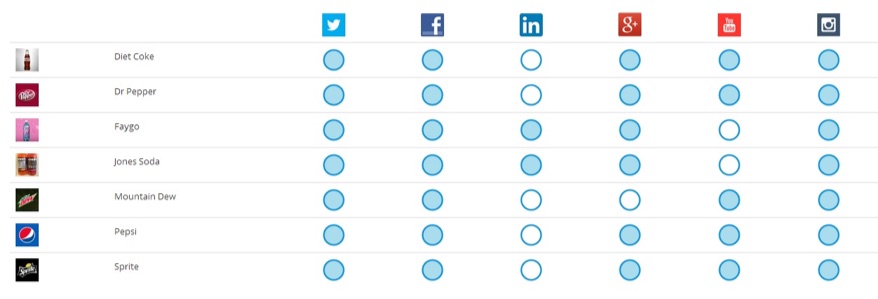
As Michelle Vroom, founder of Vroom Communications explains, “Each channel is used in different ways, and should be used in different ways. There’s no ‘one size fits all.’”
Carnival Cruise Example:
Carnival Cruise is an excellent example of how to leverage the right social channels to reach your target audience.
Carnival Cruise Line wanted to reach more “rookie” cruisers. It also wanted to keep its costs down to a minimum. For them, Pinterest was a golden goose.
Its campaign on Pinterest saw a 14% increase in click-through rate while its CPC was as much as 71% lower than the same outreach tactics on other networks.
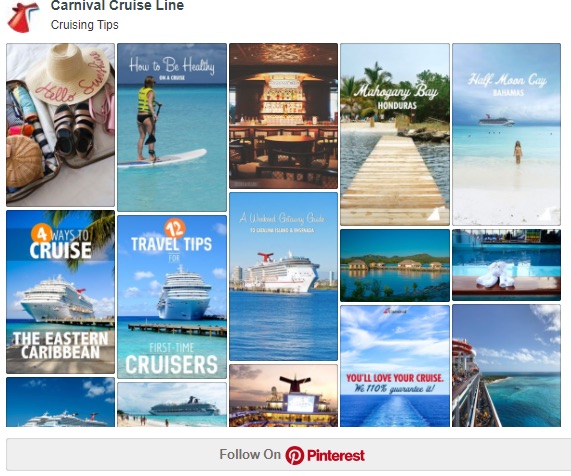
How did they get such money-saving numbers while boosting customer acquisition?
By going to the right network to reach the right people.
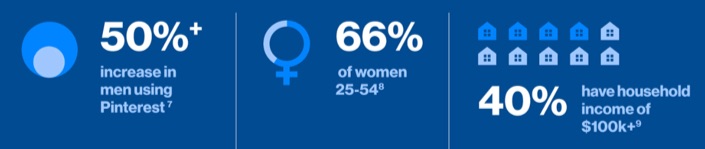
After all, who’s more likely to go on a first-time cruise: a college freshman still shopping a Top Ramen diet or a family that pulls in an income in excess of $100k?
According to Pinterest’s self-reported demographics, the latter accounts for 40% of their user base.
Flight Media saw similar results when they doubled down on their Instagram efforts. Instagram didn’t just surpass Facebook, but it became their top social media performer.
To the tune of 58% of their total lead generation.
Check this out.
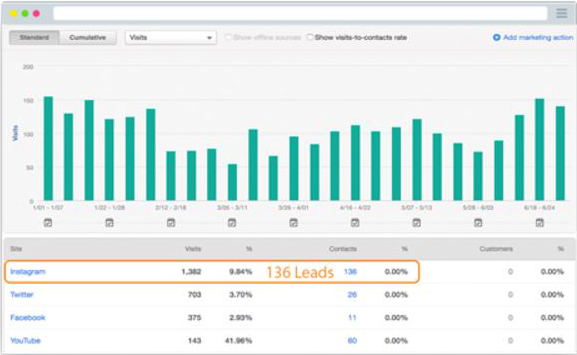
And all of that happened in just a few months.
So, as you can see, identifying your target demographics and meeting them on their platform of choice can help rake in new customers and save on marketing spending.
And sometimes, as demonstrated in the above examples, that platform isn’t always Facebook.
Use paid promotion and buyable pins to increase sales
Paid promotion programs vary between networks in terms of delivery and cost, and you can’t throw a stick without hitting a sales-boosting success story.
Don’t believe me? Check these out.
57th. design, a high-end furniture design house, and retailer get at least 35% of its revenue directly from Pinterest, using its “Promoted Pins” feature to great effect.

Here’s another.
OGX, a beauty and hair care retailer specializing in natural and exotic ingredients, pulled its U.S. sales up by 8% using Facebook’s advertising platform.

And all of that in four weeks. When you consider there’s barely a grocery store in the U.S. that doesn’t feature OGX’s products, that sales lift is huge.
Let’s make it a trifecta and look at one more.
Pringles, the tube of chips that makes us uncomfortably aware of how much we can eat in one sitting, nets a 2.9x ROI on promoted tweets for every dollar spent.
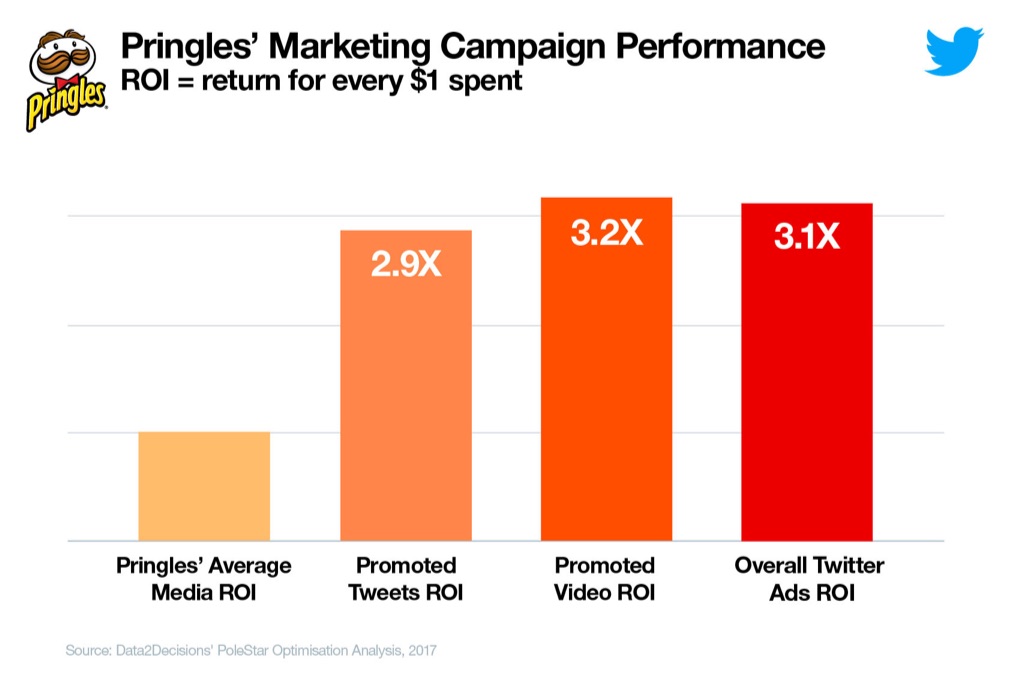
So, if a paid promotion isn’t part of your social media strategy, you’re missing out. But how do you find the program and format that fits your products and budget best?
Start by experimenting with A/B testing.
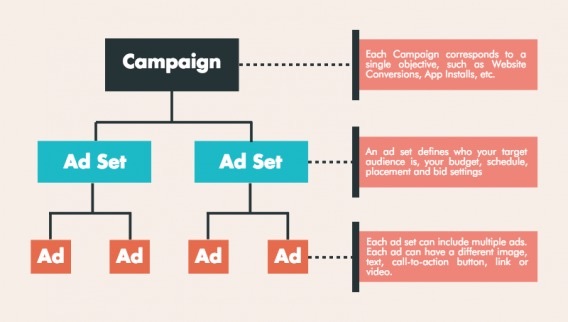
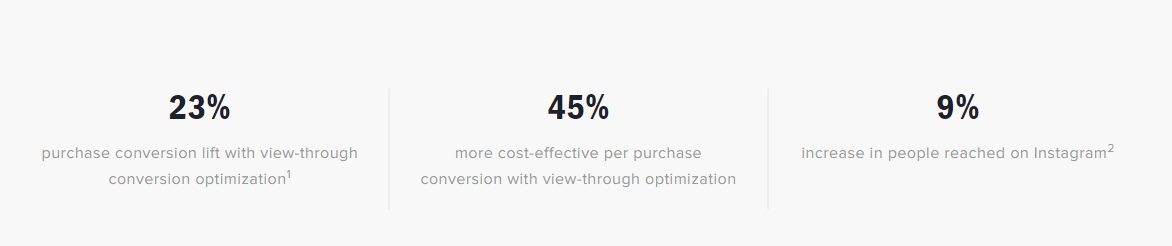
That’s what SHEIN, an online fashion retailer, did with Instagram’s paid promotion program.
Running three concurrent experiments with different ad formats, SHEIN tracked its conversion rates with Facebook pixel to land on the format that worked best for its customers.
Best as in 8.5% more than other ad formats for a total of 23% conversion lift.
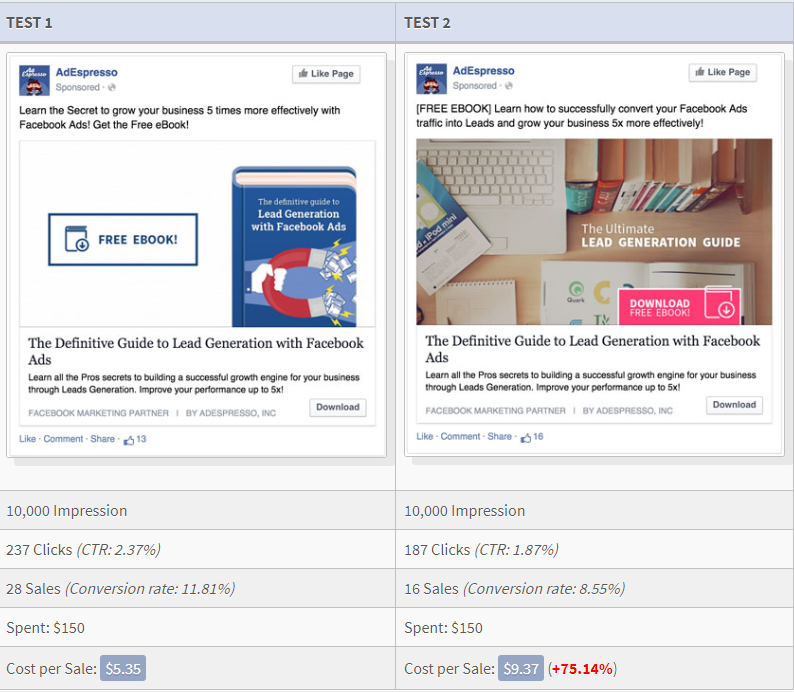
They’re not the only ones who know the value of an excellent side-by-side, either.
AdEspresso uses a similar approach for its Facebook ads.
That said, paid promotion isn’t the only way to bring customers indirectly from a social platform.
Pinterest, where 93% of users use pins to plan purchases, is also a gold mine of potential increased revenue.
Buyable pins, which allow users to complete their purchase Pinterest, have yielded some awesome results for e-commerce stores looking to grow sales and new customer acquisition.

Did I mention the best part yet? They’re free to use for approved businesses.
Look at the results for Gardener’s Supply Company, an online retailer of landscaping supplies.
Using buyable pins boosted its sales by 300%, and 95% of the pin purchases were new customers.
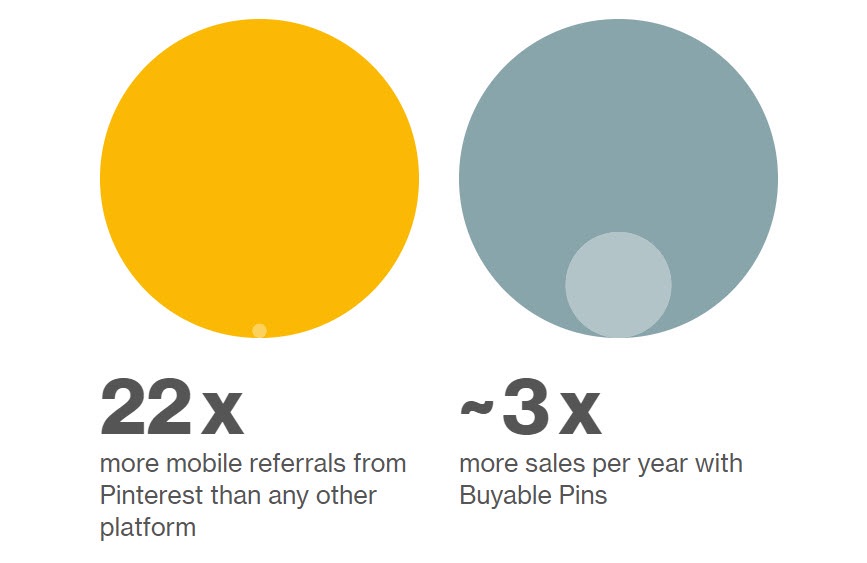
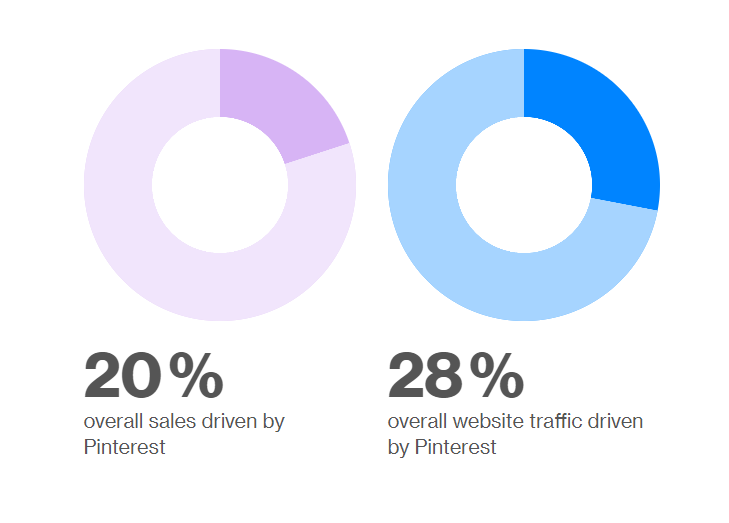
FlyAway BlueJay saw similar results. Buyable pins drove 20% of the retailer’s sales, and 100% of the purchases were from brand new customers.
Holly Feld, the owner of FlyAway BlueJay, said this about her experience with buyable pins:
“Buyable Pins makes Pinterest more user friendly for both people shopping for the perfect gift and for businesses trying to reach new clients.”
This is the gist of it:
Every social network has a paid promotional program that can turn over a massive profit and put your sales into the stratosphere.
On Pinterest, buyable pins can take you even further into the e-commerce cosmos.
So, get out there, shop your options, and get ready to open your doors for new customers, stellar ROI, and huge traffic with paid promotion.
Leverage emotion to draw customers in
Content with high emotional impact is three times more likely to achieve mega-success than campaigns without it.
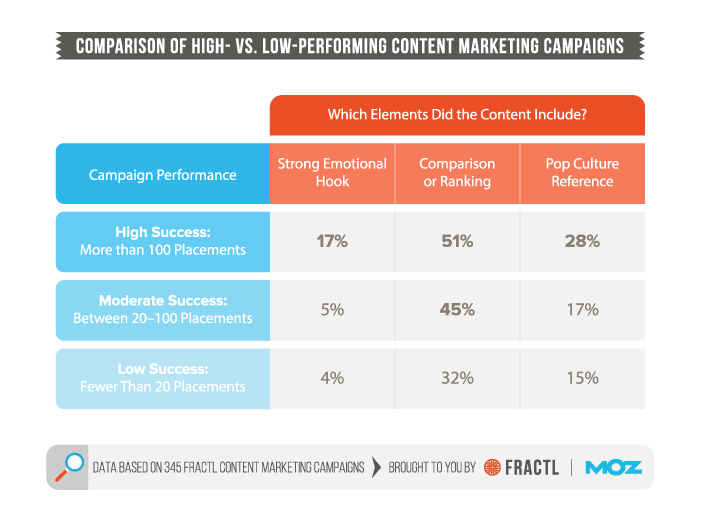
And, it’s not just for B2C organizations. Emotional marketing can be hugely profitable for both B2C and B2B organizations.
Here’s what Michal Zarankin, the former head of digital marketing for Pendo, had to say about it:
“I think that the strategies and tactics to make an impact on people’s decisions lay in the same places for B2C and B2B. B2B marketers should use emotional marketing if it makes sense for their entire strategy.”
But hold up: what exactly is emotional marketing and what makes it so different from other types of marketing? And more to the point, what can it do for your sales?
Emotional marketing, at its core, is storytelling.
And, it’s powerful enough to boost your repurchase rate by as much as 300%.
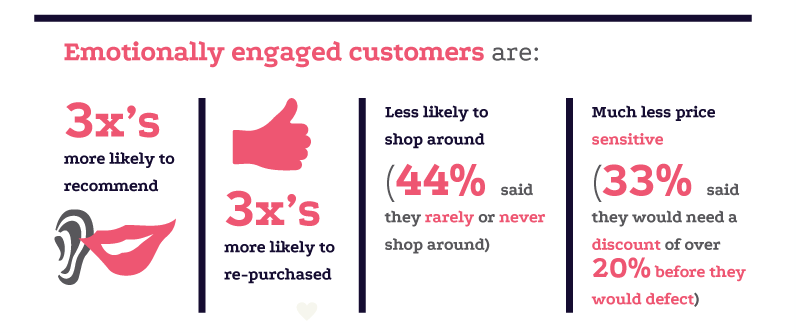
Emotional marketing is taking real-life situations and using them to drive a point home, whether that’s to prevent teens from texting and driving or get people to buy more of your products.
We might love stats in the marketing world, but consumers respond better with emotions. 31% of advertisers reported significant gains with the use of emotional marketing.
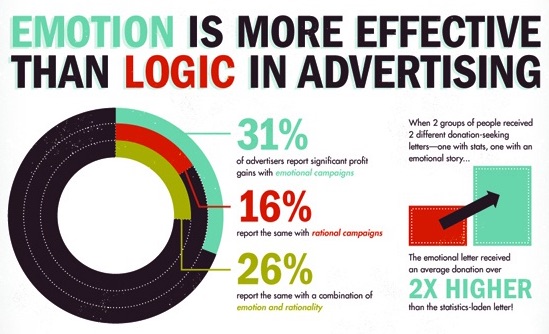
But just how significant?
Beats, the now-premiere headphone company, climbed to the top of consumer’s wishlists with three different story-based campaigns that were rooted in emotion.
The most remarkable part of Beats’ success is that almost all of the campaigns started with little to no budget.
You read that right.
Its product rose to acclaim through campaigns that could barely cover the monthly rent in most metropolitan cities – if at all.
Here’s another example of emotional marketing driving sales.
Back in 2008, a Subaru was nothing special. Dependable, decent, but it didn’t strike a chord with anyone. That all changed with the “Love” campaign.

Turning its focus to emotional storytelling, Subaru rose from the ashes of lackluster reception and is currently riding a 73-month long streak of growth, netting 647,956 sales in 2017.
Since launching their emotionally charged campaigns, Subaru’s marketing has evolved, but the core of it – the emotional resonance – has stayed the same.
Subaru officials put it this way: “Our target demographic is experience seekers. It’s the same as eight years ago, only we are reaching more of them, in better ways.”
Let’s look at one more example of emotional marketing in action, this time, specifically on social media.
Knorr, a food and beverage brand, wanted to get millennials talking (and buying) its products. Thus, the “Love at First Taste” campaign was born.
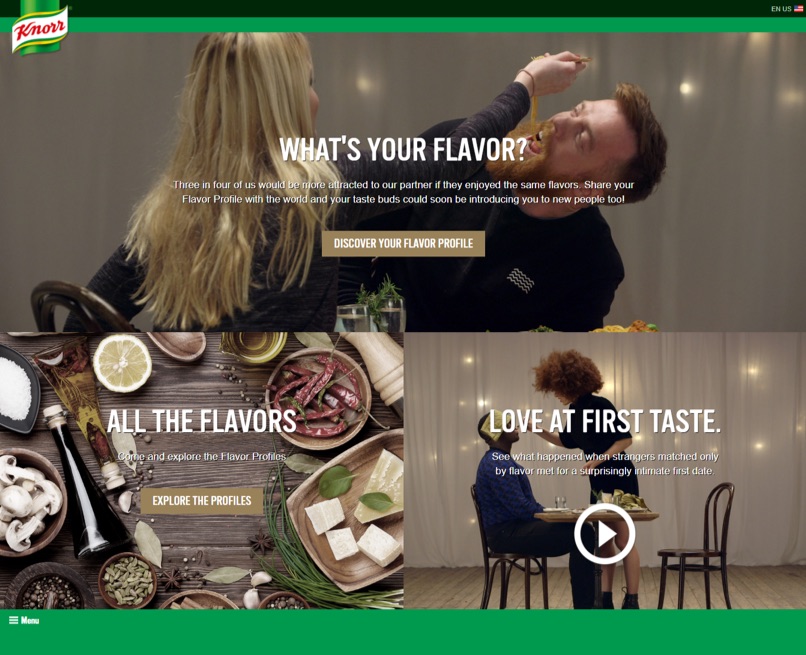
Wildly creative, this campaign leveraged emotional connection with other people – intimacy – to grow its reach across its target demographics on social media.
It used YouTube to drive its film content, Facebook to get shares flowing, and Twitter to spark the conversation with millennials.
The results went well above its expectations.
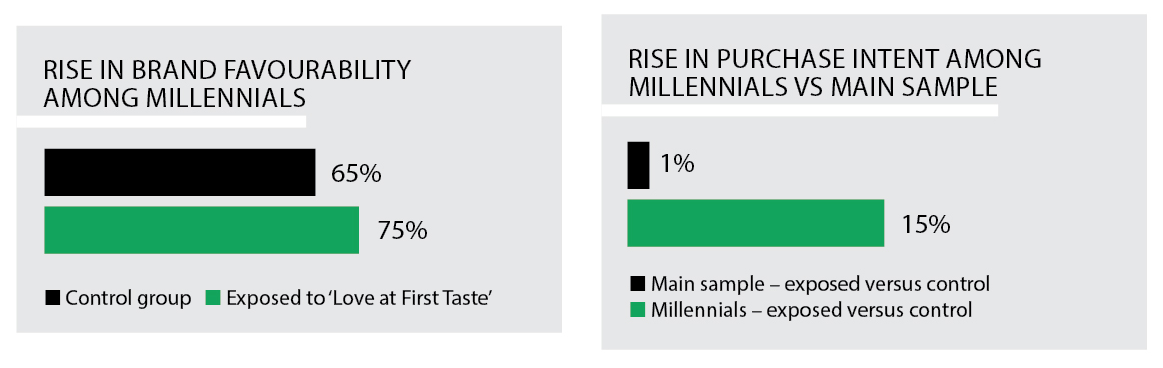
Globally, they saw a 13% rise in purchase intent across all demographics! That’s insane, especially when you consider the previous year’s increase came in at a paltry 1.25%.
OK, you’re sold.
Emotional marketing is effective for sales, offline, online, and when used in social media.
But, how do you incorporate that into your social media strategy?
First, understanding your audience is key.
The more emotional reactions you can elicit, the more shares and engagement you’re going to get with your posts.
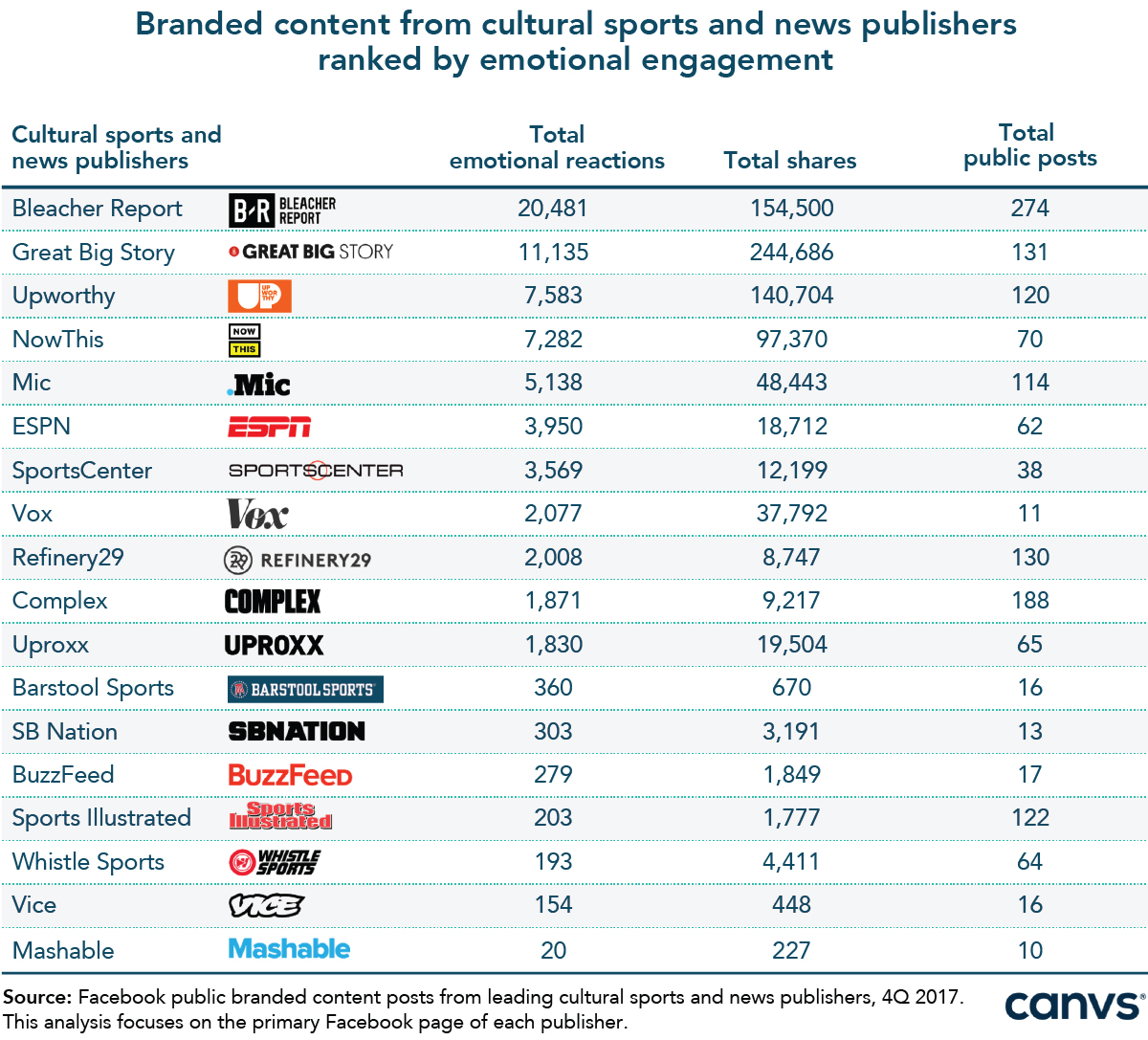
One of the most reliable ways to use emotional marketing on social media is using milestones.
Over half of millennials have made a purchase for a milestone after seeing the associated products on social media.
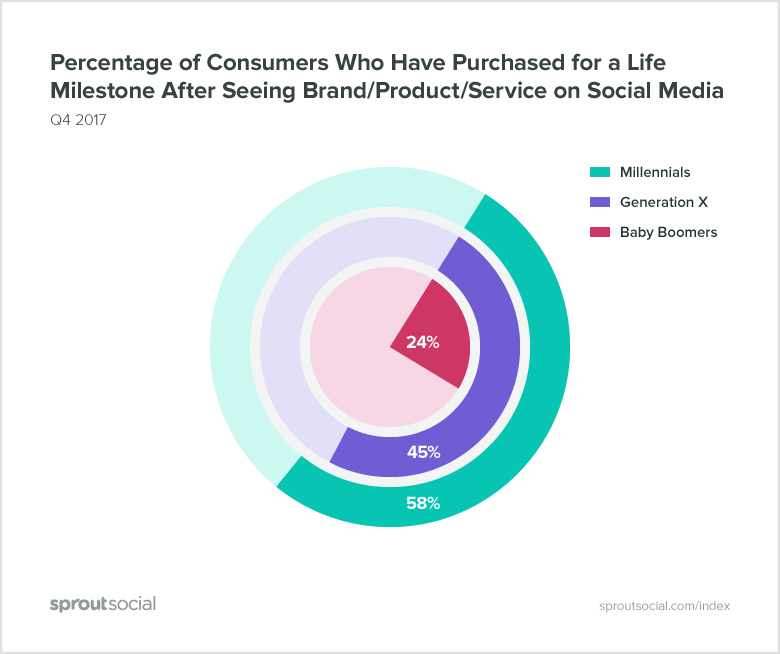
Here’s a sample of milestones – and their brand associations – you can use as inspiration for working into your social media.
Knorr, our above example, leveraged “relationships.” Subaru used “family,” and Beats used a combination of “personal accomplishment” and “professional.”
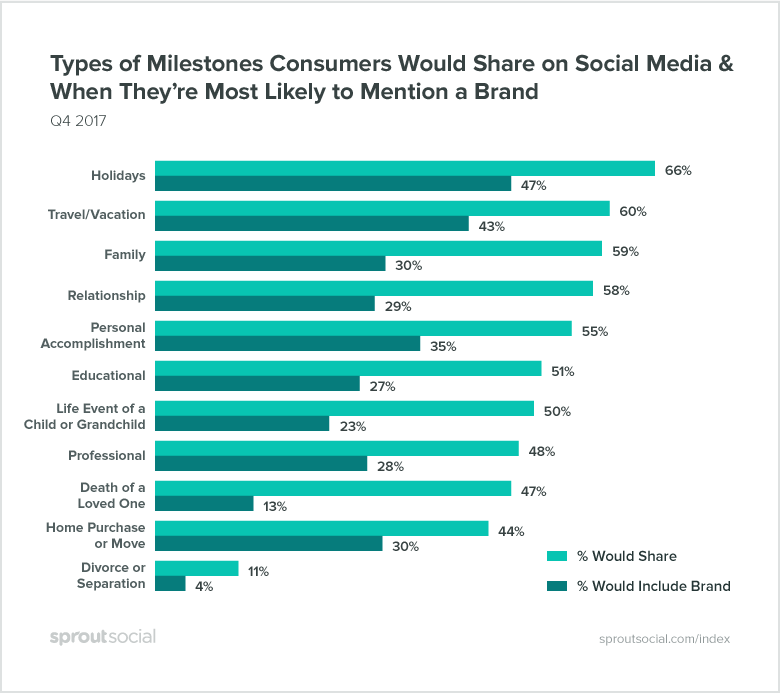
Here’s how it all breaks down:
Emotions are like a roadmap for your products.
As SmartBug Media’s Jennifer Lux explains…
“If you can truly understand the sentiments that drive buyers’ actions, you can cultivate an engagement strategy to result in those collective emotional triggers along the path to purchase.”
So, stop writing bland posts and start incorporating emotion-driven marketing and milestones. Your sales and followers will thank you.
Deliver more than a sales pitch
Do you remember the last time you got trapped in an uncomfortable conversation with a neighbor running one of those catalog businesses?
How, thirty seconds into the conversation, you started wishing for a meteorite to deliver you from their sales pitch?
Your customers feel the same way. They don’t want to listen to you sell, sell, sell.
That lands you in the spam or annoying territories (or both). And that translates into losing followers, especially your older users.
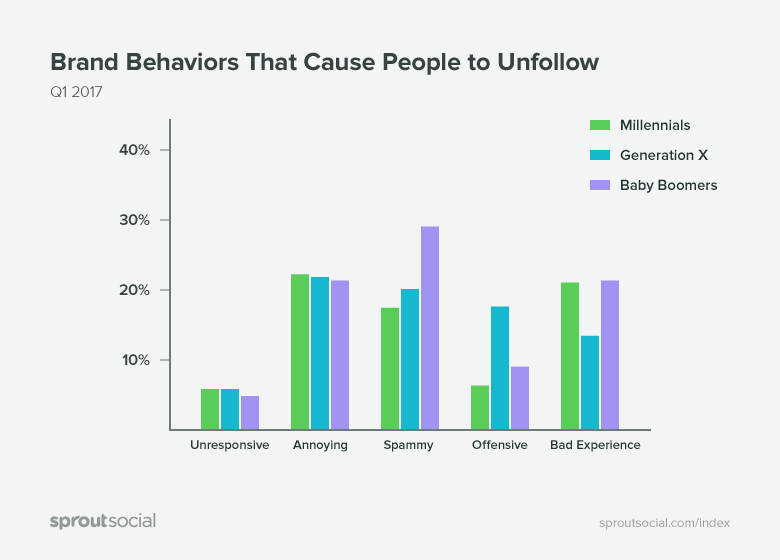
So you need targeted content to keep your social media from self-sabotaging.
Which is a cinch if you’ve got a content marketing budget set up and a writer on hand.
And if you don’t, it’s worth investing in one. The best content marketing strategies include both curated and original content.
Curated content may save you time, but the extra effort and expense required for original content can have a significant impact on directing users to your website.
More traffic means more sales opportunities.
But in case you’re not sold on the necessity of original content, consider HotPads.
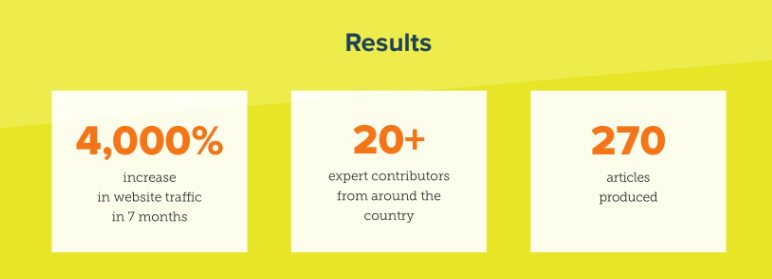
Using original content, the online rental marketplace was able to pull in 4000% more traffic in just seven short months.
At this point you might be thinking: OK, why not just go with all original content then?
Beyond the time and money investment, you should be sharing both curated and original content with your audience because both help your audience.
And more to the point, because both drive consumers on social media to make purchases.
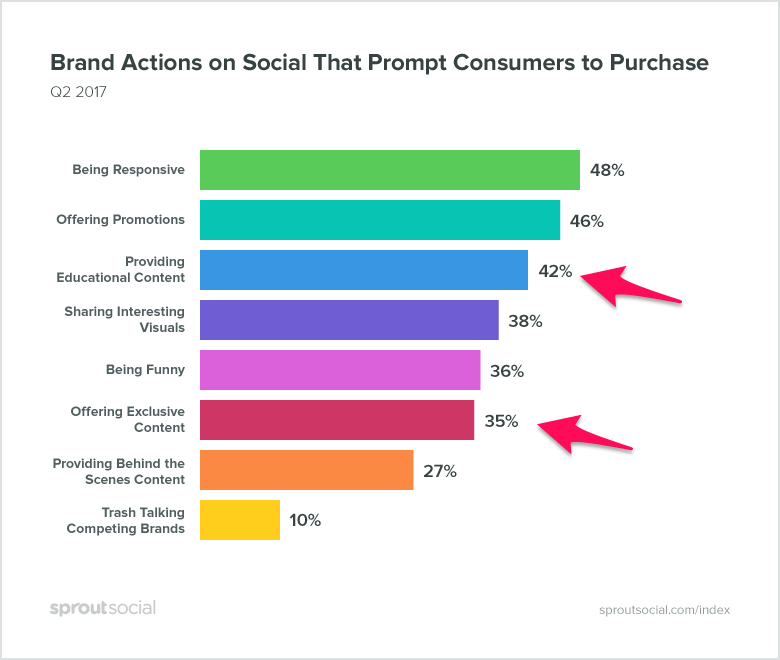
So make sure your social channels aren’t just one long sales pitch after another to keep your customers happy (and more importantly, consuming).
OK, there’s one final pillar you need to hit to leverage social media to drive your online sales. It’s a simple one, but it’s vital: being social.
Increase revenue with influencer marketing
Engaging with users is critical to keep them coming, but it isn’t limited to direct conversations.
In fact, there are a lot of creative approaches to engagement that have yielded some powerful rewards.
Take Nicaila Matthews’ approach.
She used a five-day social media challenge to build her business and help her users reap the rewards with her. The numbers are pretty staggering.
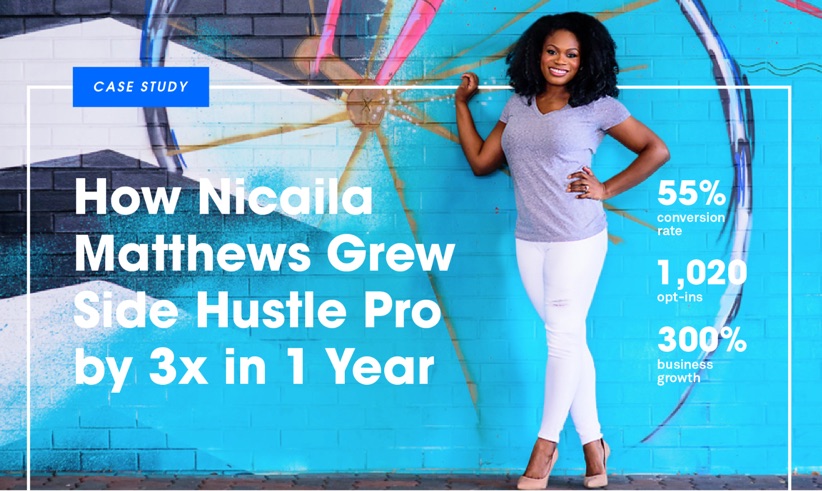
The setup was simple.
Matthews used a combination of organic social growth and paid social advertising to spread the word of her free challenge and direct users to a sign-up page.
Her challenge helped users grow their own Instagram followings and featured five live sessions (that later became evergreen content after the challenge ended).
Using live engagement and great content netted Matthews 1,020 leads in just five days.
She then used those opportunities to upsell her premium product packages and start moving leads into conversions. Brilliant, right?
Want an even savvier way to drive users to your products without having to create a lick of content for it?
Let users generate your content instead.
Better yet, use an influencer to net content, sales, and engagement.
The ROI on influencer marketing has been estimated up to as much as eleven times higher than traditional marketing techniques.

Here are just a few companies that have yielded some epic rewards with influencer marketing.
Daniel Wellington, a watch company, built its entire sales strategy on influencer marketing and sold its one-millionth watch within three years of launch.
Want an even more staggering result?
Foodspring, a culinary upstart catering to the fitness-minded consumer, grew its earned media value 750% in one year thanks to influencers.
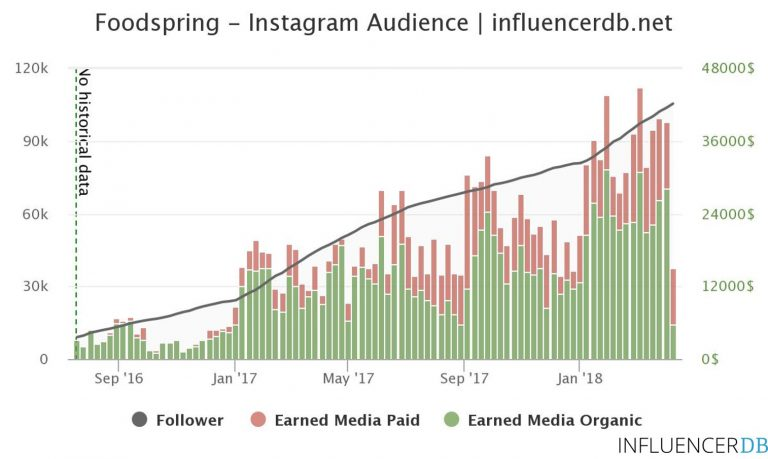
Influencer marketing isn’t just for newcomers looking to make waves. Well-established brands like Bigelow Tea have netted some impressive results, too.
To the tune of an 18.5% increase in sales.
But in case you’re not sold on influencer marketing yet, let’s look at one more example.
Gerber Lil’ Beanies boosted its national sales by 5% thanks to a comprehensive influencer campaign.
This campaign netted Gerber Baby almost 10,000 pieces of content and a quarter million interactions across different social platforms. Which is crazy when you consider this:
It had just under 350 influencers working to promote its products. Which means for every influencer, it netted roughly 800 engagements!
OK, that’s all well and good, but how do you capitalize on influencer marketing if you’re working with a baby-sized budget? Go for influencers who already want to promote your product.
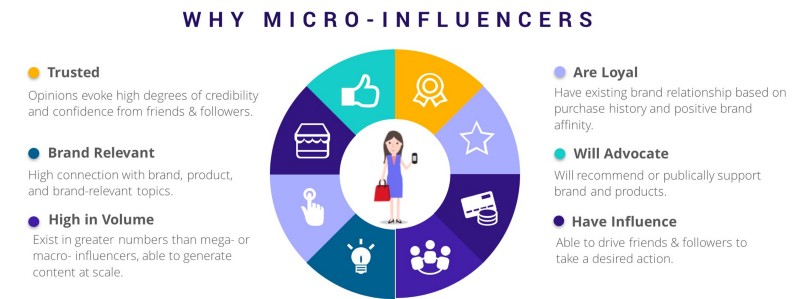
Alternatively, reach out to “micro-influencers.”
These homegrown social media players can deliver high engagement, they’re easier to find than macro-influencers, and they’re often significantly cheaper.
Ready for some good news?
Finding influencers that fit both your budget and niche is easier than ever.
One of my favorite tools for finding influencers is Influence.co.
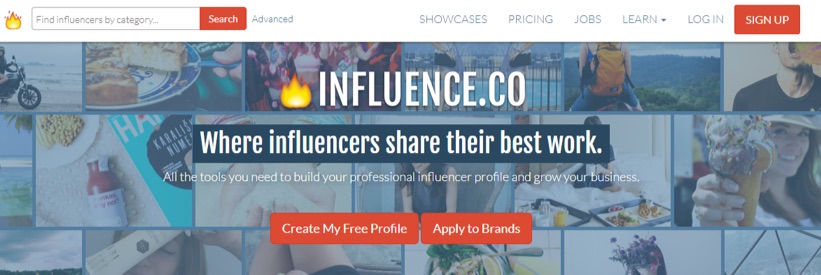
Organized visually and including an exhaustive tagging system, Influence.co makes it easy to filter influencers by industry, follower count, local area, and so much more.
Think of it as a freelance platform specifically for influencers. One that puts the power in your hands to find the perfect people for your budget and products.
You can start by checking out its collections, the hand-selected cream of the influencer crop.
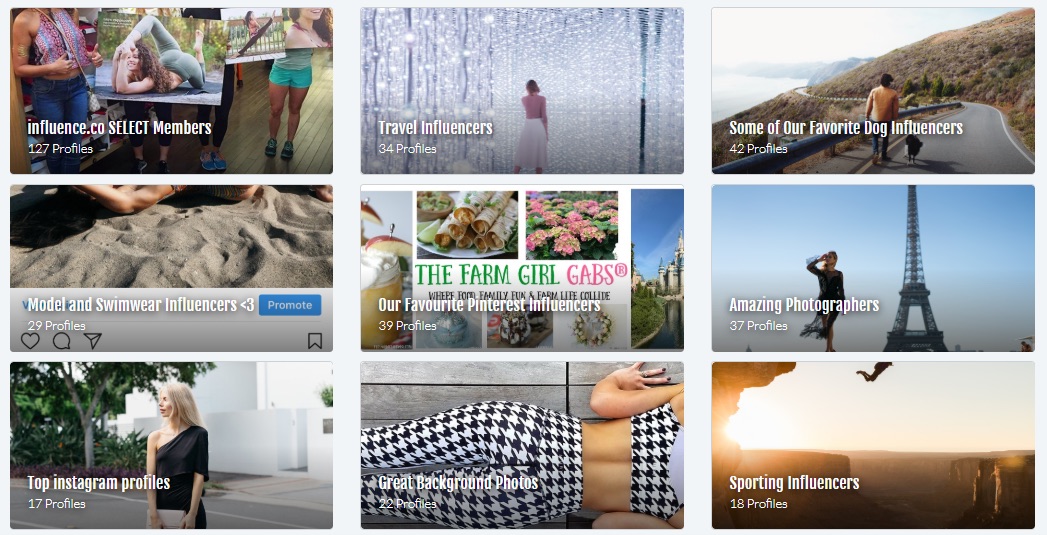
But the real power of this platform is its advanced search.

Check out the options for filtering influencers.
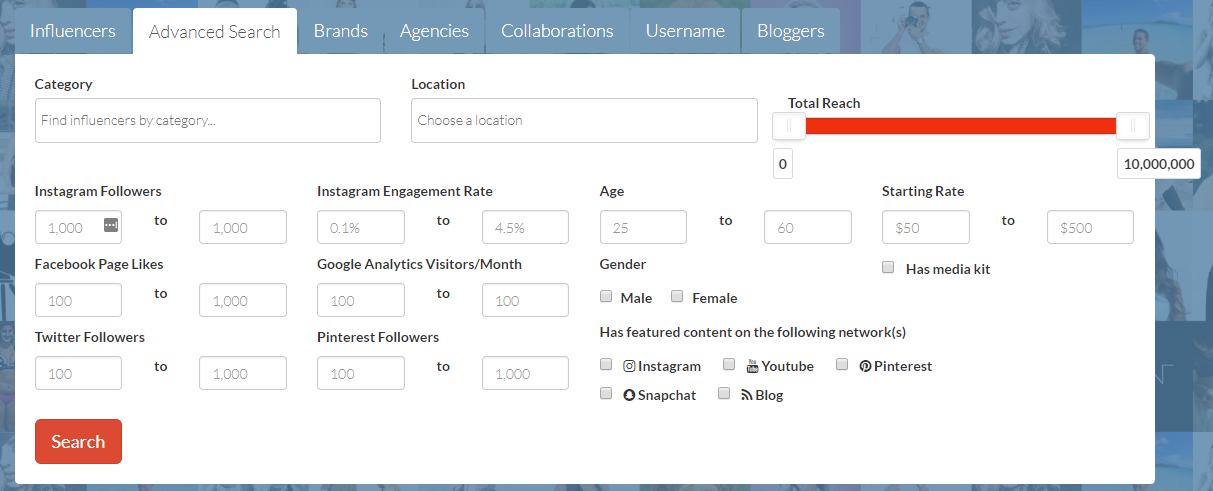
Nice, right?
With Influence.co, it’s easy and free to find the right people to work with your brand.
Basically, here’s the deal.
Social media can drive sales and generate leads, but you have to be involved and get the right players on the board to see the bucks roll in.
Reach out to your users, get involved in the community, and work with influencers to drive your online sales, bulk up your content, and elevate brand engagement. It’s that simple.
Conclusion
The most important aspect of using social media for online sales is going where your customers already are. Different demographics like different networks.
Find your target demographics and build your presence where they’re already comfortable. That isn’t always going to be Facebook.
Once you’ve nailed down your networks, use paid promotion to get some serious ROI and sales traction. The “buyable pins” on Pinterest are also a great option for online retailers.
Want your products to stand out in the sea of social media? Leverage emotion to engage with your customers…and their wallets.
But don’t just focus on your products. Users will drop like flies if your channel is a day-in, day-out sales pitch.
Instead, give your followers a combination of stellar original and curated content to make your brand worth following.
Finally, leveraging your social media to get people invested in your products requires one simple but pivotal action: be social.
Engage with users, whether it’s through user-generated content or clever campaigns like the one run by Nicaila Matthews to generate over 1k leads in five days.
Alternatively, bulk up your content and boost your sales by turning to influencers. Don’t think you have the budget for influencer marketing? Reach out to “micro-influencers” instead.
They’re often cheaper, well-trusted, and much easier to reach than star-studded endorsements. Influence.co is a great way to find them.
The social media game may not be the easiest around, but it can be rewarding with the right metrics and approach. Use this guide to give your products some pop with social media.
What social media strategies have you leveraged to increase sales?
About the Author: Neil Patel is the co-founder of Neil Patel Digital.
Source: feedproxy.google.com