
Tag Archives for " they "

Customer Journey Mapping for Audience-Centric Content
One of the questions we hear from our clients most often is, “How do we get from ‘one-size-fits-all’ to personalized content?” And we have a clear answer: Customer Journey Mapping.
What Is Customer Journey Mapping?
Customer Journey Mapping (also known as Journey Mapping or Audience Journeys, or a dozen other variations) is simply the process of understanding the path your specific target audience segments take, from the moment they become aware of their problem until they (ideally) know and love your brand.
More specifically, customer journey maps clearly outline how each of your target audience’s needs, actions, and mindsets evolve through critical make-or-break decision points along their path.
Journey mapping works for both B2B and B2C scenarios, but it important to note that they are most valuable when evaluating longer-term purchases or relationship-building marketing strategies.
It is less useful to build journey maps for quick one-off purchases where customers are unlikely to build brand loyalty.
So, where to begin?
Why Is Customer Journey Mapping Important?
Your prospective customers are faced with a mountain of choices and content.
When they’re making a decision about whether to engage with a brand, customers—in every demographic, B2B, B2C, and across industries—are overwhelmingly signaling that they prefer personalized messaging that is relevant to their needs.
As Convince & Convert founder Jay Baer says, “To be someone’s favorite, you need to be hyper-relevant.”
One of the easiest ways to boost content marketing relevancy is through personalization. If you’re not already personalizing, you’re probably falling behind.
With the increasing demand for contextual, personalized content as well as the new opportunities for delivering that content using ABM and targeted social advertising, understanding the specific needs and concerns of each audience segment has never been more important.
You can’t personalize for a group you haven’t defined.
Journey maps help improve the customer experience by ensuring you’re considering their full experience as you design the interaction, and they help drive customer-centered decisions, as your team aligns business goals with the customer’s goals, and measures marketing performance based on the ease and effectiveness the customer experiences.
How to Create a Customer Journey Map
Building a Customer Journey Map involves defining five key elements:
- Audience Personas
- Decision Journey Stages
- Audience Mindset (thoughts, feelings, and top questions)
- Touchpoints & Key Actions
- Ideal Response & Content Opportunities
1. Audience Personas
Though creating audience personas are a separate task and not specifically part of the customer journey process, it’s essential to ensure you truly understand your audience before you begin.
Audience Personas should be based on research (even just talking with your customer service team is a great start), and they should group clusters of individuals together based on their needs and attitudes, not demographics.
Here’s more on How to Build Attitudinal Personas for Effective Audience Segmentation.
2. Decision Journey
The decision journey identifies the key steps an individual takes to reach their goal; this is often referenced by marketing teams to outline useful touchpoints at each stage of the decision. Typical stages of the decision journey include:
- Trigger/Desire: realizing they have a problem to solve
- Awareness: becoming aware of your type of solution
- Consideration: adding your brand to the list of possible solutions to evaluate
- Evaluation: comparing the possible solutions
- Purchase: committing to your product or services
- Loyalty: purchasing again and/or telling others about their positive experience.
Customize these stages for your own efforts. For example, a higher ed marketing team might choose to rename these stages:
- Desire
- Awareness
- Consideration
- Application
- Enrollment
- Ambassador
3. Persona Mindset & Top Questions
Next, it’s important to layer on the emotional mindset of this persona at each stage, and then define the questions or objections keeping them from taking that action.
However, almost none of the decisions customers make fit perfectly into a linear decision journey.
There are always emotions that affect a customer’s ability to reach their goal and speed up or slow down their progress.
Identifying the mindset of the audience at each step helps us consider the types of content and level of reassurance they need from us at any given moment.
Make sure that your decision journey includes not just rational steps, but also what they’re thinking, feeling, and needing at each stage.
The mindset analysis takes into account elements like their mood at this stage, how their feeling about the problem and our brand or brand category, trusted advisors they might look to for advice or inspiration, their experience or confidence level, and sense of urgency to solve the problem.
This is also a great place to document their questions and objections:
- What is keeping them from taking the next step in solving this problem?
- Which of your web pages is most visited?
- Which content assets get the most engagement?
- What frequently asked questions does your sales or support team find themselves fielding over and over?
A great tool to brainstorm these is an empathy map, developed as part of the Gamestorming human-centered design kit from XPLANE.
This is a useful exercise to solicit input from across your sales, customer support, and marketing teams to help identify the key identifiers along the journey.
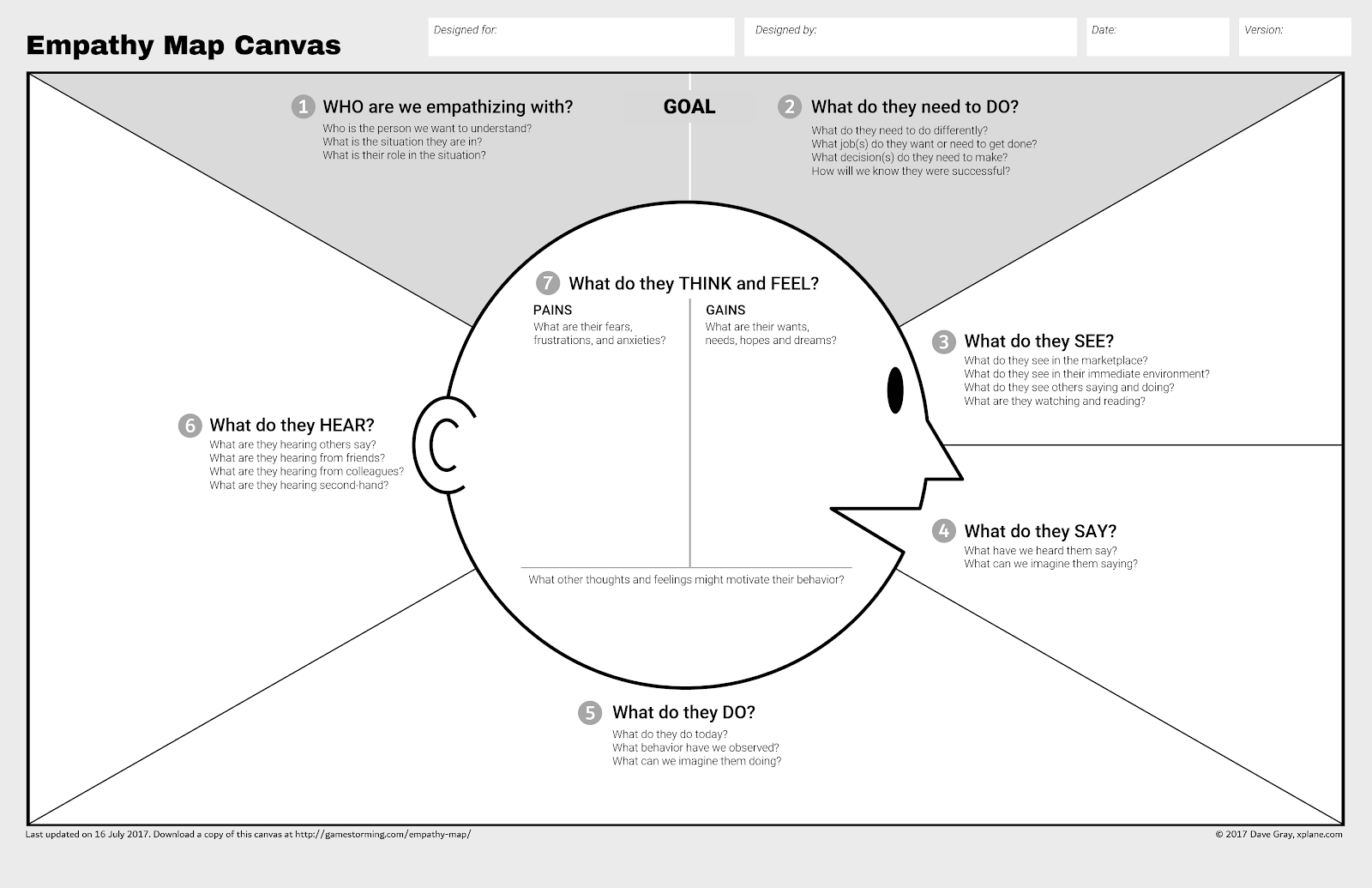
The empathy map canvas is a great tool to brainstorm the mindset of your audience.
It was developed as part of the Gamestorming human-centered design kit from XPLANE.
This is a useful exercise to solicit input from across your sales, customer support, and marketing teams to help identify the key identifiers along the journey.
3. Key Actions & Touchpoints
Ok, we know who we’re talking to, and what they’re going through as they try and solve this challenge.
The next question is what do we want them to DO and HOW are we going to encourage them to take that action. What is the most useful step they can take, and what opportunities will we have to interact with them?
Thinking about what they most need to do next at the same moment that we consider questions like, “will they are on our email list at this point?
What search terms will they be using at this stage? Is the sales team already reaching out to them at this point?
It’s important to document all the touchpoints they might get from your company all in one place to build sales and marketing alignment and ensure we’re working toward the same goals.
Understanding what actions to watch for help keep the focus on the right call to action at each step of the funnel.
4. Ideal Response and Content Opportunities
This is all about finding the most important message: what is the one thing we can say to help them get over the objection and take the next key action?
Specify an ideal response to them at each of these steps and list content you already have or plan to create to meet those needs.
From there, defining our ideal response and most important message to encourage that key action leads to clear content opportunities.
At this point, you have a really useful journey map to begin evaluating your content marketing strategy.
- Do we have most of these questions covered?
- Are these key actions from the journey map aligned with the calls to action on our website?
- What stages of the journey have we done a great job with, and where are the gaps?
Some teams use their personas, journey stages, and key action goals as a way to tag content assets, and then run reports to identify which stages are underserved.
The post Customer Journey Mapping for Audience-Centric Content appeared first on Content Marketing Consulting and Social Media Strategy.
Source: convinceandconvert.com

3 Key Reasons to Use Augmented Intelligence Tools in Digital Marketing

Reasons to use AI
Do terms like “AI” and “machine learning” make you think of robots and science fiction?
These technologies are being used everywhere, and the age of AI is already in full swing.
AI and technology offer a solution to inefficiency. Deloitte has shown that 83 percent of early adopters of AI and cognitive technologies achieved either “moderate” or “substantial” benefits.
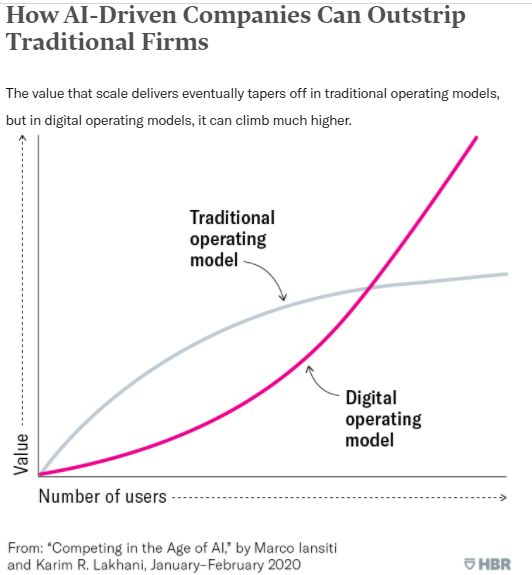
AI vs. traditional comparison
AI is somewhat part of augmented intelligence tools’ technology, but how is it used in marketing right now?
What is Augmented Intelligence?
Gartner defines “augmented intelligence” as “a human-centric partnership model of people and artificial intelligence working together to enhance cognitive performance.”
What that means is that augmented intelligence isn’t just about creating super-smart machines. It’s about creating technology that can help you and your brain do things better.
Augmented intelligence is sometimes also called intelligence automation (IA).
How is Augmented Intelligence Different From Artificial Intelligence (AI)?
Artificial intelligence is all about computers making decisions. But augmented intelligence is about you making better decisions, with the help of a computer.
Let’s dive into some specific examples so we can see how this works:
Artificial Intelligence Examples
Artificial intelligence operates on its own, without help from humans.
That might make you think of autonomous killer robots, but the reality is usually a little less exciting.
Ever used a grammar checker tool? Lots of those use AI to give you more sophisticated grammar recommendations.
Even Google Docs uses an AI grammar checker. Google’s engineers train the model using correct sentences. It’s then able to predict whether sentences are correct or incorrect on their own, without needing to be programmed with every single grammar rule.
Know where else Google uses AI? In its search engine algorithms.
Updates like RankBrain and BERT have brought AI to the search engine, and SEOs have needed to update their strategies accordingly with AI SEO.
Augmented Intelligence Examples
Now that we’ve seen how AI is used, how is augmented intelligence used? How are its applications different from AI?
Augmented intelligence is a pretty general term. You can use it to talk about basically any machine that helps humans enhance their capabilities and make better decisions, even something as simple as a compass or telescope.
But in practice, augmented intelligence is usually used to talk about automated systems that need direction or input from humans to function. Augmented reality tools, like Google Glass, are just one example.

Virtual Try on glasses
Augmented intelligence can be used in a bunch of different fields. It can support financial professionals in making regulatory decisions, or help health care professionals make medical decisions.
The augmented intelligence tool gives recommendations, and then the human makes the final call. Feedback from humans helps the tool to learn and grow continuously.
Why would you want to use augmented intelligence when you could use “true AI?” Well, augmented intelligence allows us to do more with the technology we currently have, without needing to wait for AI to advance.
It also adds a human element to the decision-making process, which can be helpful for complying with regulation in some industries. Plus, with augmented intelligence, we can take advantage of new technologies while also continuing to use human talent.
But the best thing about augmented intelligence? When humans and machines work together, they can achieve better results than one or the other working alone.

Wayfair Furniture AR
For example, an experiment by a team from a Harvard Medical School hospital at the Camelyon Grand Challenge showed that an algorithm could accurately detect breast cancer 92% of the time, while a human pathologist accurately detected it 96% of the time. When the pathologist worked together with the algorithm, the results were accurate 99% of the time.
Overall, augmented intelligence is just a different philosophy that can help us get the most from AI, without needing really sophisticated capabilities.
How Can Augmented Intelligence Help Your Business?
The truth is, augmented intelligence can do huge things for your company.
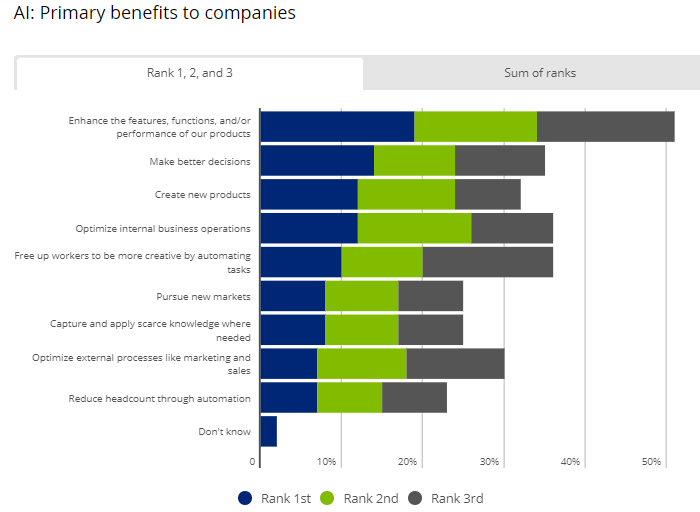
Benefits of AI to companies
There are tons of different ways to use augmented intelligence. There’s probably an IA application out there that can help you streamline and improve every single area of your business.
Here’s an example: Augmented intelligence can help you sell things online.
Think about the last time you thought about buying something online. What were some reasons you might have hesitated before making a purchase?
You might not want to lay out money for certain items before trying them out in person. Furniture, glasses, clothes are examples of products users want to see how they look up close before you buy.
Enter augmented intelligence. With augmented reality (AR) applications, your customers can “try on” things virtually. Even if they’d prefer to shop from home, they can still get a feel for your merchandise.
Want to know how this works in practice?
Check out some of the companies using augmented reality to sell furniture (Wayfair), glasses (EyeBuyDirect), and makeup (MAC Cosmetics).

MAC-cosmetics
To use the virtual try-on tools, you can upload a photo or open your webcam, and the tool will show you what the product looks like in real life.
But sales aren’t the only area where augmented intelligence can help your business.
Want to make your product safer? Car companies are already using augmented reality to help drivers spot dangers on the road and avoid looking down at their phones.
Want to thrill your customers with a cool new feature? Google did that when they introduced internet searchers to AR animals.
You can improve your customer service with augmented intelligence, too. Chatbots can help answer some more straightforward customer questions, freeing up more time for your human staff. IA can also help support your customer service reps when they need more information to help customers.
Finally, just like with sales, product, and customer service, augmented intelligence tools can take your marketing efforts to the next level.

AR in action
Here are three crucial reasons why you should use augmented intelligence tools to supercharge your marketing.
#1 – Augmented Intelligence Creates Positive Customer Experiences
If you use augmented intelligence to create an extra cool or innovative product, your marketing will basically be halfway done for you. An awesome customer experience pretty much markets itself. Just look at all the videos people have made about Google’s AR animals:
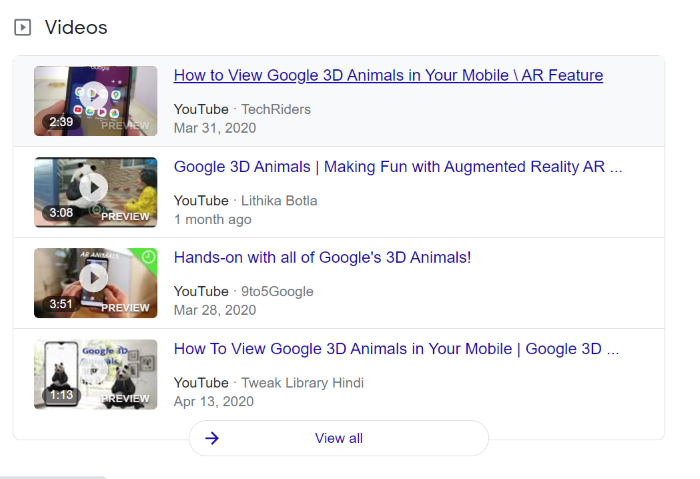
Check out all these articles people have written about Wayfair’s augmented reality feature for furniture:
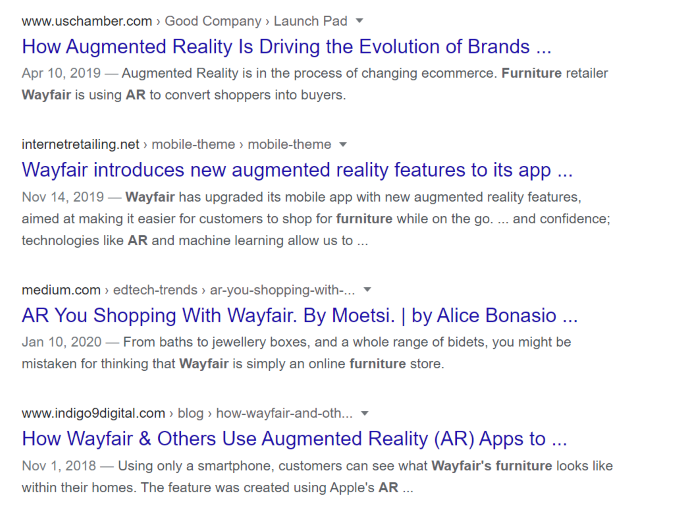
If you make something interesting enough, you might end up getting lots of new backlinks and traffic without even trying.
Besides creating new product features, you can also improve your customer experience with augmented intelligence in other ways.
For instance, customers are more likely to be satisfied if they can get their questions answered faster with technology like automated chatbots, as mentioned above.
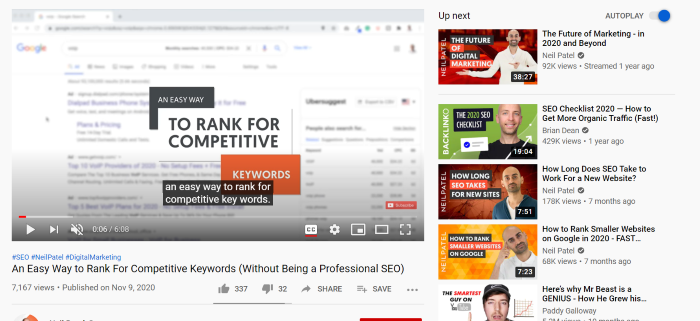
You can also use augmented intelligence to help personalize the customer experience. An example of this would be user recommendations. You’ve probably seen these on YouTube on the right-hand side:
And on Amazon as suggested product examples:
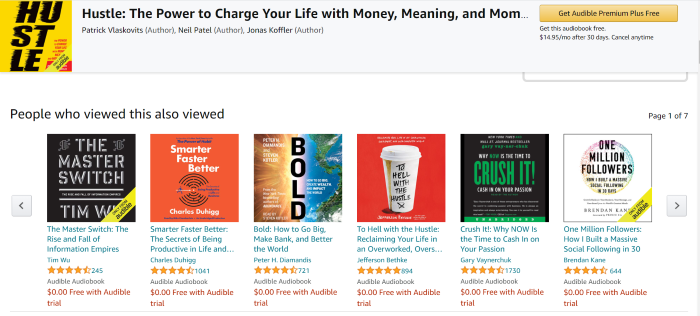
These websites use algorithms to make recommendations based on the videos you’ve already watched or products you’ve already shown interest in. When you click on a recommendation, you’re sending a signal to the algorithm that the recommendation was relevant.
Recommendations help you offer a better experience by helping your customers find things they might be interested in. They are also a way to convince customers to stay on your website for longer.
#2 – Augmented Intelligence Can Reduce Busywork
Another major reason why companies are interested in automation is that it saves time. According to WorkMarket’s 2020 In(Sight) Report, over half of employees think they could save 240 hours every year through automation.
IA can help your marketing department save time in lots of different ways. If you’re currently using data for strategic planning, augmented intelligence tools can help.
You can use these tools to help clean data sets, forecast future trends with predictive modeling, or even keep an eye on competitors, social trends, and customer feedback. This can help you create more effective marketing plans more quickly.
If you decide to use augmented intelligence in your marketing, you won’t be alone. According to a Forrester report, 46% of respondents say that marketing and sales teams are leading AI adoption.
It’s no wonder marketers are excited to adopt this technology. Hubspot found that using AI software cut the time one agency spent on reporting by 97 percent.
#3 – Augmented Intelligence Can Help Write Content
Here’s another way that augmented intelligence can help with your marketing: It can help you write better content, faster.
If you’re a marketer, you know that writing quality content takes serious time and effort.
A survey by Orbit Media Studios states that the average blog post takes almost four hours to write. That’s actually a 63% increase over 2014 when the average blog post took just under 2.5 hours.
If you’re wondering why the writing time has gone up so much, it’s because Google’s algorithm updates have started to favor long-form content.
Besides the actual writing, researching, adding photos, and publishing also take up lots of time, not to mention content planning and SEO.
Augmented intelligence can helpfully write text, but it can’t add much research, facts, or emotions to it.
AI’s writing style can be a little different from what we’re used to, so it needs human polishing.

That’s an excerpt from an article written by an AI, published in The Guardian.
As you can see, AI can write sentences, but you might need to edit or adjust them to fit your content needs.
Even if you don’t want a robot to write your articles, you can still use augmented intelligence tools to help you in your writing. Spelling and grammar checkers, like Grammarly, are a good example of this.
Augmented intelligence can also help you create better content by coming up with more relevant topics for your audience.
If you’re using augmented intelligence for data collection and analytics, you can use the knowledge you gain from that to help you write more data-driven, personalized content.
If you want to do a content audit to review the content that’s already on your website, augmented intelligence can help with that, too.
Augmented Intelligence is Becoming the Norm
It looks like AI, and automation in general, are here to stay. McKinsey predicts that “half of today’s work activities could be automated by 2055.”
With “AI’s adoption increasing year-on-year,” marketing departments are leading the charge.
Augmented intelligence offers the perfect approach to AI, because it’s all about pairing AI’s strengths with human strengths.
Conclusion
As a marketer, you’re all about staying ahead of the competition.
To do that, you’ll need to have the best tools, including artificial intelligence.
However, a lot of people are skeptical about AI. In fact, research by PwC shows that 67% of CEOs think AI and automation will have a negative impact on trust in their industry over the next five years.
With augmented intelligence tools, you don’t have to rely on AI alone. Instead, you can use AI’s strengths and human strengths together to get better results.
If you’ve already started using augmented intelligence in your marketing, or if you’re thinking about using it soon, tell us about your experience in the comments.
The post 3 Key Reasons to Use Augmented Intelligence Tools in Digital Marketing appeared first on Neil Patel.
Source: feedproxy.google.com

Marketing Automation Consulting
Marketing automation is often viewed as a nice-to-have option, something that could be helpful. Marketing automation isn’t an extra; it’s a component that’s an essential part of your marketing.

Why aren’t more companies using marketing automation?
A recent survey from Liana Technologies found that 60 percent of respondents said they didn’t know how to use marketing automation. They listed a lack of know-how as the main reason they weren’t adopting marketing automation campaigns.
Half of those surveyed also listed a lack of strategy or personnel as yet another reason they weren’t moving forward with marketing automation.
As you can see from the research, these companies need marketing automation consulting.
10 Ways a Marketing Automation Consultant Can Help Grow Your Business
Marketing automation is often viewed as a nice-to-have option, something that could be helpful but really isn’t all that necessary for companies looking to grow. Marketing automation isn’t an extra; it’s a component that’s an essential part of your marketing.
This isn’t always as clear until you breakdown the benefits that come with marketing automation.
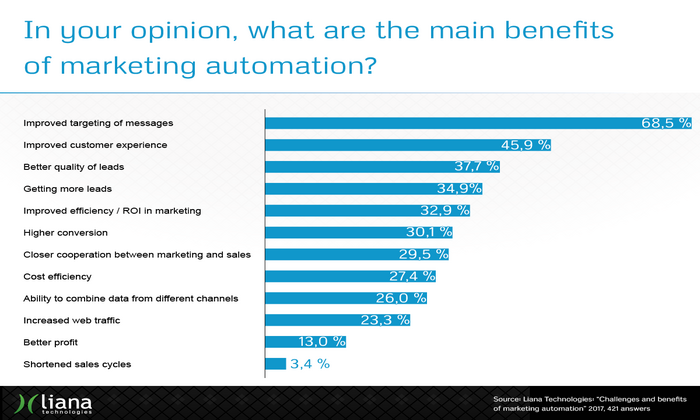
Here are ten ways a marketing automation consultant can help you grow your business.
1 – More targeted marketing:
Many companies force their customers into the same marketing funnel. They’re not focused on optimizing their funnel based on the buyer’s journey, so most of their prospects fall out of their marketing funnel. A marketing automation consultant helps you segment and target your customers properly.
A good consultant will help you identify customers who are ready to buy, leads that need to be nurtured, and leads you can disqualify.
2 – Improve customer experiences:
According to Salesforce, 76 percent of consumers expect you to understand their needs and expectations. Another 84 percent said, “being treated like a person, not a number” is essential to earning their business. Marketing automation helps you achieve this at scale, so you’re able to provide the one-on-one attention and personalization customers expect.
3 – Increased traffic:
Big companies have embraced analytics, but most don’t know how to use their data. Most don’t have a data-driven culture, so it’s difficult for many organizations to have confidence in their marketing decisions. This isn’t just big companies, though; it’s most companies in general.
This means it’s harder for companies to identify the traffic sources working well versus those that aren’t. With marketing automation tools like lead scoring and lead nurturing, you can identify your best performing traffic sources.
4 – Higher quality leads:
When customers go through the same funnels, without segmentation, lead quality suffers. Your marketing automation consultant should help you outline the buyer’s journey and segment customers based on their place in the funnel. Doing this increases lead quality as customers are pre-qualified before and after they convert. This keeps the quality of the leads sent to sales high.
5 – More leads:
Once you’ve identified the list of marketing automation tools and workflows you need to generate high-quality leads, you can use those same automation tools to scale your lead generation campaigns. Your marketing automation consultant will help you increase lead production, using the lessons learned from your smaller campaigns. You’ll know which traffic sources perform best, how to improve lead quality.
6 – Increased conversion rates:
One of the hidden benefits of marketing automation is that the benefits are cumulative. Your marketing automation consultant will show you how to combine the strategy, tactics, workflows, and tools you’ve put together into a single system. Each component, when optimized, should produce increased conversion rates consistently in your campaigns over time.
7 – Increased ROI:
As your conversion rates increase, your ROI will continue to grow. A great marketing automation consultant will show you how to maintain your ROI as you continue to scale. You should see more revenue with less spend consistently over time.
8 – Reduced expenses:
As metrics like your return on ad spend (ROAS) and your conversion rate improves, you should see a decrease in costs (e.g., cost per lead, cost per action, customer acquisition costs). Your marketing automation consultant should monitor your returns and expenses, ensuring that both are moving in the right direction.
9 – Data sharing between marketing channels:
Your marketing automation stack should provide your team with the right data analysis tools. If you use analysis tools like Cyfe or Power BI, you’ll want to make sure that your team has access to data across marketing channels; your consultant should help you set this up, so your team has need-to-know access to data.
Doing this will reduce operational silos, keeping everyone in your team on the same page; no more fights between sales and marketing for control.
10 – Shorter sales cycles:
Let’s say you’ve received two sets of leads. Set A has customers who are ready to buy now. They’ve done their homework, and they’ve decided your company is the best fit.
Set B has interested customers; they won’t be ready to decide for another three to six months. Set A has a shorter sales cycle — your consultant helps you find and segment these customers as they come into your funnel.
These benefits aren’t random one-offs; they’re outcomes your business needs to grow. The problem with growth is scaling. As you grow, it gets harder to manage all of this manually.
How to Get Started With a Marketing Automation Consultant
Your marketing automation consultant should be a specialist with deep expertise in automation. They should also have experience across a broad range of marketing disciplines and channels, including:
- Advertising (display, content, etc.)
- Analytics
- Branding
- Content
- Direct response
- Market research
- Mobile
- Sales
- Search (organic and paid)
Websites (e.g., conversion rate optimization, usability, etc.)
If you’re ready to get started with a marketing automation consultant, there are a few things you’ll need to prepare ahead of time.
Upfront preparation makes it easier to get started; your consultant doesn’t have to waste a lot of time (and your money) getting you up to speed.
Both of you will be able to jump in right away.
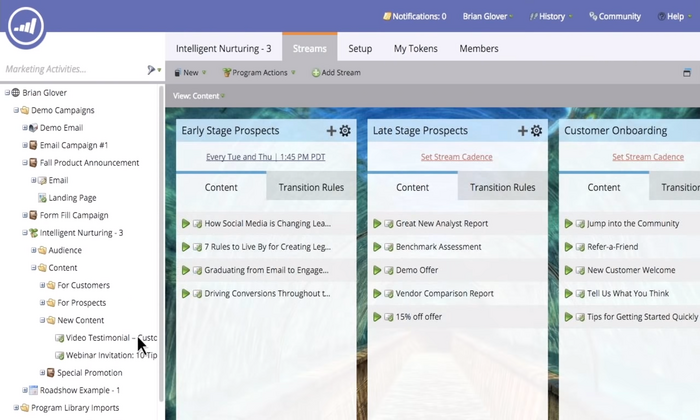
You’ll want to make sure that you have a list of:
Goals, KPIs, and objectives:
For example, this could include a list of tools you’d like to integrate into your technology stack, as well as how you’d like these tools to perform.
This could also provide your consultant with information on the specific outcomes you’d like to see due to automation (e.g., a 7 percent increase in productivity, shorter sales cycles, less double entry, improved utilization rates, etc.).
The tools and resources you’re using:
You’ll want to make a list of the tools and resources you’re already using. Collect additional information on the number of users for each software, tool, or subscription. Make note of any API keys and special instructions. Also include a list of the software, tools, and resources you’d like to use.
Decision-makers and influencers:
If you’re part of a team, you may find that some people aren’t all that excited to share their data. Others are interested in working with your consultant to automate essential marketing tasks.
Sharing a list of decision-makers and influencers with your consultant makes their job easier. Right from the beginning, they know where everyone stands and who to talk to if they need help getting everyone on the same page.
Obstacles and challenges:
You’ll want to outline the list of barriers and challenges that may prevent you from achieving the goals and objectives you’ve listed above. Maybe some of the services you use don’t offer an API or integrate with third-party services like Zapier. Maybe some of the tools in your list are outdated, or they’re unsupported legacy options (i.e., legacy software running on Windows XP).
Policies and procedures:
If your company has specific policies, procedures, or guidelines for software purchases, you’ll want to share that with your consultant as well. You want to let your consultant know what’s allowed, required, forbidden, and unacceptable. You want to set your consultant up for success by giving them a clear set of guidelines to follow; this helps your company grow.
Strengths and weaknesses:
This step is uncomfortable but it’s also important; if your team, division, or company has problems in a specific area, spell that out for your consultant as clearly as possible.
Does it take your company a long time to make important decisions? Is your organization good at finding great employees and contractors?
Give your consultant a brief overview of your strengths and weaknesses. Getting people on board is easier when you know what you’re working with.
Sharing this information upfront makes automation smooth and efficient.
If you’ve already answered these questions for your consultant, they’re able to focus their attention on helping you automate your marketing campaigns, projects, and tasks.

Measuring the ROI of Marketing Automation Consulting Services
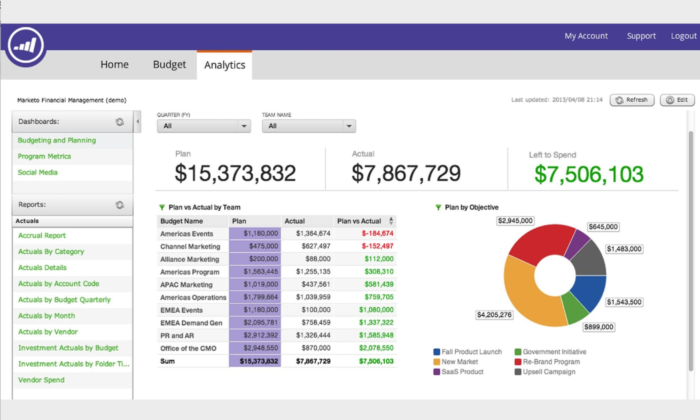
In general, consultants aren’t big on measuring ROI, but they should be. It’s reasonable to expect the same from your marketing automation consultant. If you’ve done the upfront work I’ve mentioned already, you should have everything you need to measure the ROI ahead of time.
Remember the list of goals, KPIs, and objectives you wrote down earlier?
Your consultant should be able to help you refine your goals and objectives. If you haven’t already, you want to add some specificity to these goals. You’ll want to add specific numbers, facts. or figures to these goals. Use these figures as a general guide — you want to discuss these with your consultant making sure they’re realistic and achievable.
Here are a few examples you can use:
- Increase productivity becomes — Increase our marketing team’s productivity by 16 percent
- Improve lead quality becomes — Use lead scoring to achieve a 6 percent lift in marketing qualified lead volume
- Identify top-performing marketing channels becomes — Identify top-performing marketing channels by automating URL tagging for all current and future marketing campaigns
- Decrease customer acquisition costs become — Reduce customer acquisition costs on Google ads by a minimum of 11 percent
Measuring your ROI is pretty straightforward if you have a clear idea of your campaign goals and objectives. The easier it is for you to list a starting point, the easier it will be for your consultant to help you reach your goals and objectives.
4 Point Checklist For Finding the Right Marketing Automation Consultant
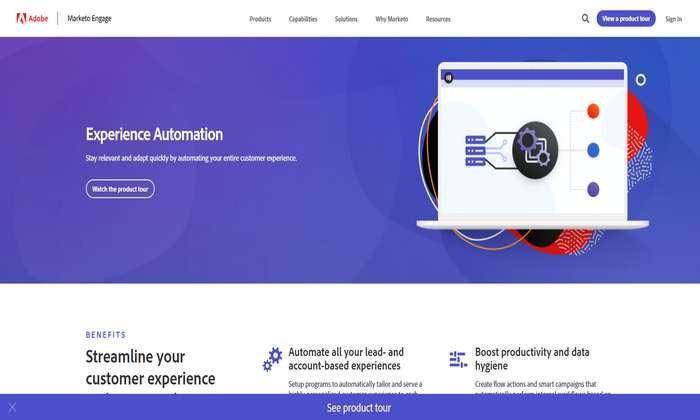
Choosing the right marketing automation consultant is simple if you’ve prepared ahead of time. From there, you can screen consultants the same way you would for any other consultant or professional.
First, you outline your process, listing your goals and objectives, your current technology stack, decision-makers, influencers, etc. Second, you filter your providers through your process, ensuring each candidate meets the criteria you’ve set.
Here’s a shortlist of the criteria you can use to evaluate your consultants.
They understand digital marketing.
The best marketing automation consultants are marketers themselves. The ideal candidate is a marketing veteran who’s managed marketing campaigns from beginning to end throughout their career. You’re looking for someone who got their start as a marketer.
They understand your business.
Your marketing automation consultant should have an in-depth knowledge of your business — how it works, what you need, mistakes to avoid, etc. If you’re managing a retail or ecommerce company, your consultant should have experience managing marketing campaigns for retail or e-commerce companies. You’re looking for someone who has a native understanding of your business.
They’re data-driven.
Marketing automation requires a mix of art and science. You’ll need someone who loves to read through data but is skilled enough to explain it to the people on your team who aren’t data-driven. The ideal consultant can tell stories with data and helping your team make important decisions.
They’re proactive and knowledgeable.
When it comes to automation, you shouldn’t be as knowledgeable as your consultant. They should be able to make recommendations and connections you weren’t even thinking of. They should be able to help you automate your campaigns in new ways; to increase your productivity by customizing your marketing stack.
This checklist is pretty simple.
A great marketing automation consultant should be able to handle everything we’ve covered so far comfortably. They should be able to break things down for you, showing you how to improve your plan, refine your goals and objectives, and add to your technology stack.
They should be asking questions.
If they’re good at what they do, they’ll have some questions and requirements of their own.
Conclusion
While many organizations are switching to marketing automation, most don’t have a clear plan they can follow. Companies list a lack of know-how, strategy, or personnel as the reasons why they weren’t completely on board with marketing automation.
That’s changing fast, though.
More companies are investing in marketing automation. They’re taking the time to implement a strategy for their business. Marketing automation isn’t an extra; it’s a component that’s an essential part of your marketing, especially as your company grows.
With the right consultant and a clear strategy, you’ll have the people, process, and technology you need to grow your business quickly.
The post Marketing Automation Consulting appeared first on Neil Patel.
Source: feedproxy.google.com