
Tag Archives for " target "

How to Avoid Failure in Account-Based Marketing
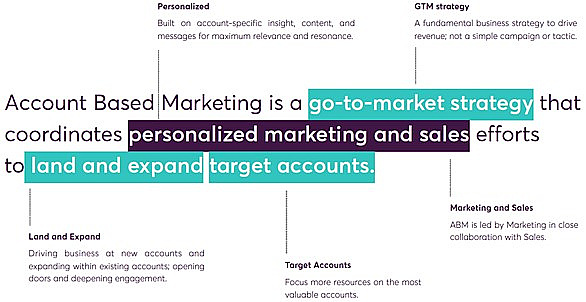
Did you know B2B marketers who report the most success from their digital activities in 2021 are more likely to be engaged in account-based marketing (ABM)? Only 16% of B2B marketers who describe their digital marketing efforts as “somewhat successful” have a measurable ABM program in place.
That number is reduced to 6% for those who say their digital strategy is unsuccessful at achieving goals set for the program. Check out this and other trends in our State of B2B Digital Marketing report.
Disclosure: This content is reader-supported, which means if you click on some of our links that we may earn a commission.
What Sets Successful ABM Strategies Apart From Those That Fail?
To start, ABM requires a different planning approach than more traditional B2B marketing methods.
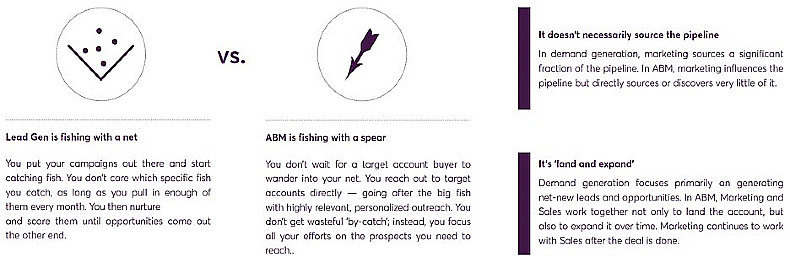
The focus shifts away from driving lead volume and relies on a multi-channel content strategy for key accounts’ aimed at influencers and decision-makers for more personalized experiences.
ABM is based on different performance indicators that favor looking at high quality engagement indicators.
These engagement indicators aim at accelerating your pipeline velocity and increasing the overall account value versus quantity and cost per lead metrics.
To avoid account-based marketing failure, start your ABM plans by first defining your target account list and audience segmentation:
Targeting:
To develop a shortlist of high-value accounts, take a look at your customer data and develop your version of a 360-degree view of attributes that include things like: industry, size of the organization, growth stage, revenue, etc.
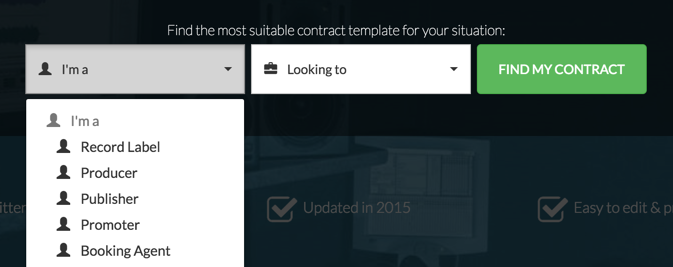
Determine which characteristics drive the most value for your company.
Analyze that list against other information that gauges interest and engagement with your product, including things like website visits, account tenure, intent data from search engines as well as any other relevant relationship health metrics.
Don’t try to boil the ocean — there is no reason to convert your entire organization to an ABM model.
Once you have your best-fit customers identified, you’ll be in a position to put together a list of prospect organizations with similar attributes.
Don’t try to boil the ocean — there is no reason to convert your entire organization to an ABM model.
Most successful teams are able to identify a few key prospects for an ABM strategy with some focusing on larger deals with more complexity and influential internal stakeholders.
Audience Segmentation:
ABM targets are generally composed of a few audience segments that consider both the industry and the individual’s role within the target organization, as well as the purchase process.
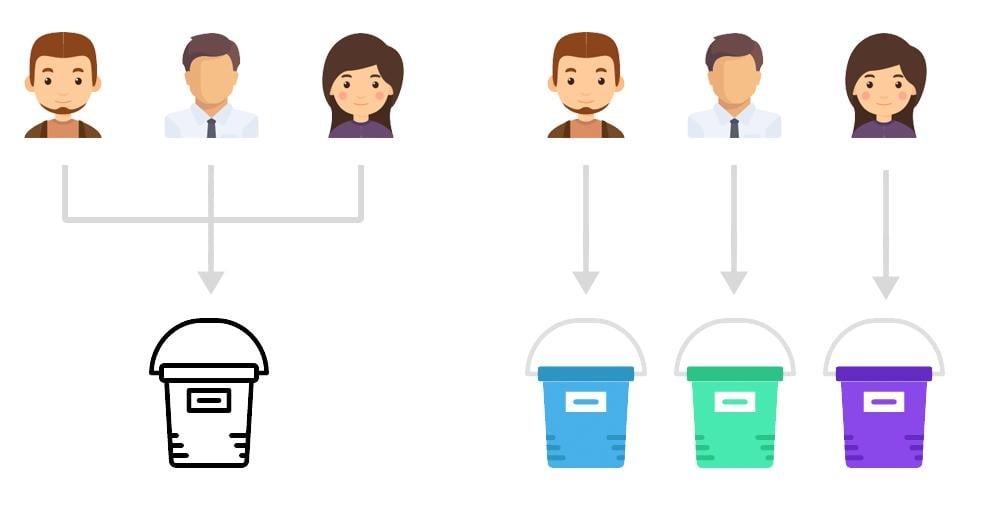
The aim is to deliver personalized content that speaks to the pain points of that particular individual in order to drive meaningful engagement that can lead to a sale.
For example, if your company provides IT infrastructure support to small and mid-size companies, someone in a day-to-day operations role would be interested in a downloadable eBook with how-tos for server protection against new security threats, versus the CFO.
However, a whitepaper on managing costs of ongoing threats to information security may prove more effective for the C-Suite or individuals with a senior-level finance role.
Once you have a shortlist of target accounts with audience segmentation, you can then build your content strategy with multi-channel campaigns.
Consider incorporating tactics for:
- website personalization,
- email, direct mail,
- direct sales outreach,
- digital ads,
- sponsored content, etc.,
with engagement triggers that indicate when and how to advance the customer in the sales process.
Sales and Marketing Alignment:
Successful ABM marketers are aligned in lockstep with their sales organizations.
Ever since the invention of email marketing in the early 2000s, driving lead volume has been easy, but the lead quality has suffered.
ABM forces strategic alignment between marketing and sales in order to shorten the sales cycle and drive quality growth not just lead volume.
How to Avoid Failure In ABM
- Pay close attention to triggers that move a customer forward in the sales cycle, and how well marketing engagement metrics are aligning with both sales activities and business outcomes.
Provide ongoing training for sales teams on available content, how it’s performing, and to solicit feedback. - Understand which accounts sales teams care most about on an ongoing basis.
Apply a test and learn approach that includes dedicating some of your marketing budgets to your ABM target account list. - Activate sales teams by indicating which account to take action on next, what engagement signals the account is showing, and the action to take on those signals.
- Abandon the traditional marketing funnel for measurement purposes. Using the same lead analytics associated with lead volume and lead quality can make ABM efforts seem ineffective when performing well.
- Focus on conversion metrics for your ABM pipeline compared with other sales pipelines for your organization, including sales cycle duration. For most teams, this will include ensuring you have executive buy-in as well as dedicated resources for creating new reports for ABM performance.
Stay Focused On Your High-Quality Target Accounts
Earlier this year, 43% of B2B marketers said they had a measurable ABM strategy in place — how many will be successful?
ABM strategies typically require investments in content creation and new reporting dashboards in order to create multi-channel campaigns for each audience segment within your target accounts.
To justify the resource investment and set your team up for success, be sure to focus your team’s efforts on a shortlist of high-value accounts.
The post How to Avoid Failure in Account-Based Marketing appeared first on Content Marketing Consulting and Social Media Strategy.
Source: convinceandconvert.com