
Tag Archives for " start a blog "

Want To Start A Blog? Read This Advice!
Building the best blog possible is not an easy task. Anyone can make a blog, but separating yourself and becoming unique is the hard part. The tips in the following article will help you create a unique blog that will get a lot of attention.

Stay accessible to your readers.
Become a habit that your readers don’t want to do without.
If you’ve built a connection with readers, you can be available to them more often.

When you have run dry of motivation for your blog, remember that others besides yourself could be disappointed.
Keep the Blog Updated Regularly
It is important to update your posts regularly when you are a blogger.
A common mistake some bloggers make is they don’t update their blogs frequently enough.

When readers are not given frequent updates, they may become bored.
Generally speaking, it is wise to make new blog posts each week and transmit email updates.
Do SEO

Be Precise
Keep your posts brief and to the point. Don’t omit important details, but don’t make a blog post so long it will bore your readers to death.

Blog readers do not require detailed and flowery prose.
They want the whole pizza, not just the toppings!
Allow Constructive Comments
Let your readers post comments and let them know what you think of what they say.
Readers get the chance to interact with you if you enable comments.

This gives you the ability to cultivate relationships with them.
If your readers see that you reply to other people’s comments, they will come back to check your response to their own comments.
Keep Patience
Stay patient and eventually, your readership will grow on its own.
People will not find your blog overnight, so you will need to give them time to locate it.
Also, until you get several blogs written, there won’t be a lot for new readers to see.
The longer you stick to blogging, the more content you’ll accumulate, and the more readers will be interested in it.
Keep Balance

Write Quality Content
The content of your blog is important if you want to increase traffic.
Be sure your blog has useful and interesting content.
Your readers will be happy to return if the information you provide is factual, informative, and fun to read.
Don’t ramble on with your content when creating your blog entries.
You need to write informative content that is right for your blog.
Writing about all the wrong subjects will never lead to success.
Your content is the most important way to succeed.
Take Right Approaches
Improve approaches while running your blog whenever and wherever possible.
Use a businesslike approach to your blog and strive to keep learning and growing in the craft.

Learn from other seasoned bloggers, and incorporate different strategies and techniques that you pick up along the way.
Keep your momentum by continuously learning running blog methods and improving your style.
Frequently Update Your Blog
Finally,
Now you can make a blog and you do not have to worry about how to be a great blogger, because time will eventually do this for you.
If you put the tips in this article to use, your blog will soon be a widely read success.

If I Had to Start a Blog From Scratch, I Would…
You’ve seen me and thousands of other marketers talk about how to make a blog popular. But if you don’t set up your blog correctly, you won’t do well no matter what kind of marketing you do.
And no, I am not talking about the technical setup of your blog. I am talking about the foundation.
From what you are blogging about, to how you structure your content… there are a lot of basics people get wrong.
And if you get them wrong, it’s going to be that much harder to get more traffic (and, more importantly, monetize the traffic).
Principles to Follow before Writing the First Blog Post
So, if I had to start a blog from scratch again, here are the principles I would follow before even writing my first blog post:
Principle #1: Pick a big enough niche
Unless you are well funded, you have to pick a niche.
It’s too hard to compete on a broad level with sites like Huffington Post and Business Insider.
They are well funded and are able to produce huge amounts of content from contributors big and small.
And if your niche is too small, it will be hard for you to grow your traffic and monetize your blog as there just won’t be enough people interested in what you are blogging about.

When trying to find a niche, use Google Trends.
Make sure to pick a niche that is bigger than “digital marketing” but smaller than “nutrition.”
Principle #2: Don’t stick with one platform
I know I’ve told you that you need to use WordPress as your blogging platform, but it shouldn’t stop there.
Why not also use Medium, Tumblr, LinkedIn, and even Facebook?
These are all platforms where you can repurpose your content.
Blogging is competitive, so you’ll need to push your content out on as many platforms to ensure that you’ll get the most eyeballs.

Setting up social accounts across the different platforms is really important.
Make sure the branding and imagery are the same across all of them and try to generate some followers by following these steps so that when you start producing unique content you’ll have places to promote.
Principle #3: Control your destiny
Google doesn’t penalize for duplicate content. But that doesn’t mean you should just post your content on every platform without thinking about it.
The only platform that doesn’t have an algorithm that you need to worry about is your own blog. Facebook, Medium, Tumblr, and LinkedIn all have algorithms you can’t fully control.
Always link back out to your site when posting on these other platforms.
The more people you can get back to your site, the better chance you will have of growing your traffic and monetizing.
Other platforms like Facebook don’t make it easy for you to generate revenue if you keep your readers on their platform.
Principle #4: Blogging is both about “you” and “I”
Blogging is something that is supposed to be informal.
No one wants to read an essay or a white paper.
People want to read stories.
They want to be involved in a conversation, and the easiest way to do this is to use the words “you” and “I” within your blog posts.
This one simple change will help you build a deeper connection with your readers.
A deeper connection means better monetization in the future.
Principle #5: Always ask questions

At the end of every blog post, always ask a question.
If you don’t ask a question, people won’t know what to do next.
By asking a question, a portion of your readers will answer it by leaving a comment.
This will increase engagement, which again will make monetization easier in the long run.
Principle #6: You have to stand out
There are over a billion blogs on the web, and that number is continually rising.
This just means blogging is going to get even more competitive over time.
So how do you stand out in a crowded marketplace?
You have to go above and beyond.
Sadly, there is no single answer as every industry is different, but typically infographics, visuals, and doing the opposite of everyone else in your space will help you stand out.
For example, if everyone in your space writes 1,000-word blog posts, test out writing 10,000-word posts.
Or if everyone is using text-based content, test out visual-based content like infographics or video.
Principle #7: Your content needs to be portable
 People are always on the go these days.
Your content needs to be easy to digest.
And no, I am not talking about making your content mobile compatible or leveraging the AMP framework (although those are good ideas).
I am talking about making your content portable.
For example, creating video-based content or audio-based content (podcasts) are simple ways to make your content portable.
For example, it is easier to watch video-based content on your mobile phone when on the bus or listen to podcasts while you are driving.
Principle #8: Content isn’t king unless it’s good
You’ve heard the saying that content is king.
But is it really?
The Washington Post publishes over 500 pieces of content per day.
The Wall Street Journal is at 240, the New York Times is at 230, and Buzzfeed is around 222.
The list keeps going on and on as there are over 2 million blog posts published daily.
In other words, writing mediocre content isn’t good enough.
It won’t do well and you will just be wasting time.
So, don’t write content unless it is really, really, really good.
Principle #9: You have to produce quality and quantity

It’s sad, but it is true.
Not only does your content have to be amazing, but you have to publish amazing content in quantity.
Just because you are writing an amazing blog post, it doesn’t mean you will do well.
Content marketing is a hit-or-miss game in which your posts will do well or they won’t.
And in most cases, your content won’t do as well as you want no matter how good you are at marketing.
To increase your odds of success, you need to be willing to produce amazing content in quantity.
Principle #10: Your blog isn’t always the best place to blog
Especially early on, you need to save your best content for other blogs.
From industry blogs to large sites like Entrepreneur and Business Insider… consider placing your best content elsewhere.
Once you’ve been blogging for a year and you have built up an audience, you’ll want to keep your best content for yourself.
But in the beginning, placing your best content on more popular blogs will help you increase your brand recognition and audience.
If you aren’t sure how to craft a guest posting proposal, read this.
Principle #11: Useful content beats viral content
We all dream about viral content, but it’s not easy to produce.
The chances of your content going viral are slim to none. And when your content goes viral it will die down… the question just becomes when.
Instead of focusing on creating viral content (when you have less than a 1% chance of producing it), focus on creating useful content.
Useful content tends to be evergreen, which means it can generate steady traffic over time.
Principle #12: It’s easier to build a personal blog than a corporate one
I know I’ve mentioned that I wouldn’t build a personal brand if I started all over again, and I wouldn’t.
But that doesn’t mean that you shouldn’t leverage one.
People connect with people more than they connect with corporate brands.
It’s not like you have conversations with Coca-Cola or Nike like you have with a friend.
If you want your blog to be popular faster then go with a personal brand.
If you want to build something big and potentially even sell it one day, consider a corporate brand for your blog (even though it will take longer for it to become popular).
Principle #13: A blog won’t work without a community
Blogging is about creating conversations. But without readers and community, there is no conversation.
It would just be you talking…
For this reason, you can’t expect to build a popular blog without building up your social profiles.
From running Facebook and Twitter ads, to manually growing your follower counts, you need to focus on your social media game.
The bigger your social following the more people you’ll have to drive to your blog, and the easier it will be to create a community.
Principle #14: No man is an island
As you are building up a community, people will engage with you through comments.
If you don’t respond to every comment, then your community will slowly die down.
Just think of it this way… if you continually talked to someone and they ignored you each and every time, what would you do?
Eventually, you would stop talking to them.
Don’t be rude to your community, help them out. Make sure you respond to each and every comment.
Not just on your blog, but even when people comment on your social profiles, make sure you respond back.
Principle #15: People don’t read, they skim
 Most of the people that come to your website won’t read.
Blogs tend to have an average time on site of less than 1 minute.
There is no way your average visitor is going to read your 2,000-word blog post in under a minute.
That means people skim.
Make sure you write your content with the assumption that people skim.
From leveraging headings to even writing a conclusion at the end of each post, this will help your readers get value out of your content even when they don’t fully read it.
Principle #16: It’s all about the headline
Some people spend 80% of their time writing the content and only 20% promoting it.
Others spend 80% on marketing and 20% on content creation.
And some spend 50% of their time writing and 50% promoting.
But what about the headline?
Why don’t people spend time crafting and testing amazing headlines?
What most people don’t know is that 8 out of 10 people will read your headline, but only 2 out of 10 will click through and read the rest.
So focus on creating amazing headlines or else you won’t get tons of traffic.
Principle #17: Reveal your cards, all of them
Because the blogosphere is competitive, you have no choice but to reveal your cards.
From your secrets to the “good stuff”… you’ll have to share it all.
If you don’t share it, you won’t be giving people a reason to read your blog over the billion other ones out there.
When revealing your cards, make sure you do it early on in each blog post.
It is a great way to hook your readers and to get them to read the rest of your content.
Principle #18: Consistency will make or break you

When you continually blog, do you know what happens?
Your traffic typically stays flat or slowly goes up.
But when you stop or take a break, your traffic will tank. And then when you start up again, your traffic won’t just go back to where it was, you’ll have to fight to gain your traffic back.
I once took a month break from blogging and it took me 3 months to recover my traffic. Literally 3 months.
Don’t start a blog unless you are willing to be consistent.
Not just for a few months or a year, but I am talking years (3 plus).
Principle #19: Don’t ever rely on 1 traffic channel
You hear blogs exploding with Facebook traffic or Google traffic.
But do you know what happens when those sites change their algorithms?
Your traffic drops.
It’s just a question of when, so expect your traffic to drop.
Don’t rely on only one traffic channel.
Before you write your first post, think about which channels you are going to leverage for traffic generation.
You need to have an omnichannel approach in which you are leveraging all of the feasible channels out there that work for your niche.
Principle #20: Don’t forget about Google
You should always write for humans and not search engines.
But that doesn’t mean you should ignore Google.
Whatever you are considering writing about, make sure you do some basic keyword research.
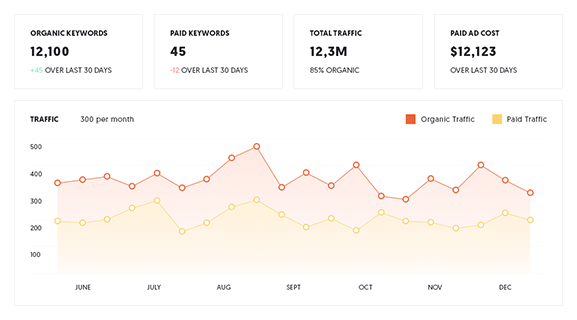
Head over to Ubersuggest first.
Then type in a few keywords related to your article and it will show you a list of other popular phrases.
If they are relevant, make sure you blend them into your content.
This one simple thing will help ensure that your content gets the most search traffic that it can possibly generate.
Principle #21: Be willing to kill your baby
When you start a blog, people only talk about writing and marketing.
But as your blog gets older your responsibilities will grow.
One of them is the willingness to kill some of your content.
Not all of your content will be relevant a year or two from now.
For example, if you write about Vine, which was a company Twitter bought and then shut down, it won’t be relevant anymore.
Especially if the article focuses on “Vine marketing tips.”
Eventually, you want to delete it.
There is no point in keeping useless content on your blog.
Principle #22: You can’t set it and forget it

Similar to killing some of your irrelevant content, you’ll also have to update your older content.
As your content gets outdated, you’ll want to keep it fresh or people will find that it’s useless and bounce away.
This, in turn, will screw up your user metrics (bounce rate, time on site, page views per visitor) and reduce your credibility and traffic.
If you are going to blog, be willing to put resources into updating your older content as well.
It’s something that most bloggers don’t take into account when starting.
I have started to embrace this strategy as I have thousands of articles on this blog and a lot of them are older and need updating.
I have already started with the updating process and will focus a lot of 2019 on keeping my content as fresh as possible.
Principle #23: People won’t come back to your blog unless you ask them to
The best visitors are repeat visitors.
They are more likely to comment, link to your site, share your content on the social web, and convert into a customer.
No matter how good your content is, people won’t just come back unless you ask them to.
The easiest way to do this is through emails and push notifications.
By using tools like Hello Bar, you can easily collect emails and send out a blast every time you have a new post.

And tools like Subscribers will allow you to build a push notification list.
Don’t start a blog without building an email list or push notification list.
You’ll find that people who opt-in to them are much more likely to convert into customers.
So, build this from day 1.
Principle #24: Don’t wait too long to monetize
A lot of bloggers (including me) have made this mistake.
We all wait till we have tons of traffic to monetize.
But if you go years before trying to monetize, people will assume everything on your blog is free.
In other words, you are training your readers that they shouldn’t pay for anything.
And that’s fine if you have no plan to sell anything.
But you should train them early on that not everything is free.
This will make your revenue numbers better as you grow.
Principle #25: Have multiple monetization strategies
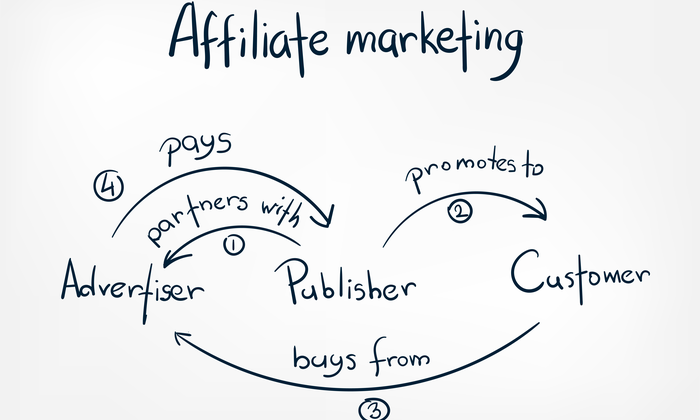
You can’t rely on only one monetization strategy such as affiliate marketing or AdSense.
Sometimes things happen that aren’t in your control such as an offer gets shut down or AdSense bans you and they don’t give you a reason.
Not only is it a safer strategy to have multiple monetization methods you’ll also make more money.
For example, some people won’t click on ads, while others may prefer buying an e-book from you.
When you start your blog, think about all of the monetization methods you want to try out and plan out how you are going to test them out (as not all of them will work).
Principle #26: Always include a personal touch
If you can’t write with a personal touch, then don’t write.
Whatever you decide to blog about, make sure you can tie in a personal story.
People prefer reading content that has stories versus content with just facts and data.
If you don’t have personal stories that you can tie in, that means you are probably blogging on the wrong subject.
Principle #27: Be willing to pay the price

Blogging isn’t easy. It’s no longer a hobby where you can just write whenever you want and do well.
If you want to succeed, you have to be willing to put in the time and energy.
And if you can’t, then you have to be willing to put in money.
If you don’t then you won’t do well, no matter how brilliant of a writer or marketer you are.
Really think about if you are willing to put in hours each day into making your blog successful.
And are you willing to do that for a few years?
Or are you willing to hire someone from day 1 to help out?
This isn’t a principle you need to take lightly, and it is the biggest reason most bloggers don’t make it.
Conclusion
Everyone talks about blogging from a tactical standpoint.
From how you write content to even how to market it, but very few people talk about strategy.
If you don’t follow the above principles, you’ll find yourself spinning your wheels and creating a blog that doesn’t get any traction.
And if you happen to be lucky to gain visitors without taking into account the above principles, you’ll find that they won’t convert into customers.
So what other principles should bloggers follow?
Just leave a comment below with some of the principles you follow.
The post If I Had to Start a Blog From Scratch, I Would… appeared first on Neil Patel.
Source: feedproxy.google.com

256: How One Blogger Landed a Book Deal That Launched Her Career
We’re kicking off our Blogging Breakthroughs series, where a variety of bloggers share their stories of breakthroughs they’ve experienced over the years with their blogs. We received submissions from numerous bloggers. And today I want to introduce you to Andrea Vahl.

How a Book Deal Launched the Career of a Blogger
When Andrea started getting into social media, she realized nobody was teaching it in an entertaining way.
So she invented a character: ‘Grandma Mary: Social Media Edutainer’.
She’d even show up at events as Grandma Mary – a great way to stand out!
Andrea is also the co-author of Facebook Marketing All-in-One for Dummies and a public speaker.
She was a presenter at last year’s Success Incubator event.
In her blogging breakthrough story, she describes how she started her blog in 2009 and how she got her book deal.
She also shares some good blogging tips:
- Start experimenting with monetization early on
- Be open to where your blog may take you, and stay open to possibilities/opportunities
- Show up consistently and participate
- Network: Be well connected and relational, even if you have to wear a costume
Her first eBooks may not have sold many copies, but they got the attention of a publisher.
So she created more eBooks that were profitable and created opportunities for her to speak, consult and teach.
Much of what Andrea does today started as a simple blog.
She pushed herself out of her comfort zone to do some great things.
Links and Resources for PB 256: How One Blogger Landed a Book Deal That Launched Her Career:
- Andrea Vahl
- Andrea Vahl’s Facebook Marketing All-in-One for Dummies book
- Andrea Vahl as Grandma Mary
- Success Incubator

Further Listening:
- Why You Should Create a Product to Sell on Your Blog (and Tips on How to Do It)
- How to Create a Library of Products to Sell on Your Blog
- Blogging Breakthroughs – Your Invitation to be on the ProBlogger Podcast

Courses:
Starting a Blog
ProBlogger Pro – 31 Days to Build a Better Blog
Join our Facebook group
- Full Transcript
- Expand to view full transcript
- Compress to smaller transcript view

Full Transcript
Darren:
Welcome to episode 256 of the ProBlogger Podcast, a kind of podcast.
My name is Darren Rowse and I’m the blogger behind problogger.com.
A blog, podcast, event, job board, and a series of eBooks, and courses are all designed to help you as a blogger to start an amazing blog.
Now, it’s going to help people, that’s going to give you an opportunity to make the world a better place in some way, and also that will hopefully build some profit for you as well, and give you an extra income stream.
You can learn more about ProBlogger and check out our courses and eBooks over at problogger.com.
Now, today we’re kicking off our blogging breakthroughs series where you’ll be hearing over the coming weeks from a variety of bloggers who are going to tell you their stories of breakthroughs that they’ve had over the years.
I put the call out a couple of episodes ago for this series, and we were inundated with amazing stories.
We can’t use them all, but we are going to use quite a few of them over the coming weeks.
We’re still working through those applications, to be honest, there are so many of them, but today I want to introduce you to the first of them, a friend of mine called Andrea Vahl.
I actually asked Andrea to submit her story while we went through all the other submissions.
Now, Andrea is someone I met many years ago now at a blogging conference, I think it was in Las Vegas of all places, but at the time of meeting her.
In fact, she wasn’t actually Andrea Vahl, she was Grandma Mary, which is a strange one, and I was a little bit freaked out when I first met her because she was obviously someone dressed up in costume.
Andrea is someone who had been doing improvisational comedy before she started getting into blogging.
As she started getting into social media, she realized that no one was teaching social media in an entertaining way.
She invented this character Grandma Mary to teach how to do social media via video.

There’s actually a photo in the show notes of her and me from one of those early conferences, so you could see what she looked like.
She would also show up at events as Grandma Mary, which was a great way to stand out.
I remember walking through these conference halls with thousands of people in them, and everyone would be of course looking at who this person was and she was a kind of a bit of an outrageous, funny kind of character and got a lot of attention, a really great way to stand out.
Anyway, Andrea has not only built Grandma Mary’s profile, but she also today is well known for herself.
She’s the co-author of A Dummies Book with Amy Porterfield and Phyllis Khare.
Facebook Marketing All-in-One for Dummies, I’ll link to it in today’s show notes, and she also does a lot of speaking.
In fact, last year she spoke at the Success Incubator event that I ran with some friends.
In today’s blogging breakthrough story, she could really tell a lot of stories, but today, she’s going to tell you the story of starting her blog back in 2009, so she has been doing it for a while now, and also how she got that book deal which is a great story.
She also shares some really good tips that I want to talk more about at the end of her story.
This story goes for about seven minutes, so in seven minutes’ time, I’ll come back on and I want to kind of just expand upon a few of the things that she said and give you a little bit of further listening if it piques your interest.
Today’s show notes including links to Andrea’s site at andreavahl.com, the show notes are at problogger.com/podcast/256.
Okay, here’s Andrea.

Andrea:
Hi, this is Andrea Vahl, co-author of Facebook Marketing All-in-One for Dummies and wig-wearing comedian.
I just want to thank Darren for having me on the ProBlogger Podcast, and I want to tell my blogging breakthrough story.
It really is about how I got the book deal to write Facebook Marketing All-in-One for Dummies through blogging and through my social media connections.
What happened is I started my blog as Grandma Mary, a social media edutainer because I saw that there weren’t a lot of really fun entertaining blogs out there, and I started it more as a video blog.
I used YouTube videos and also was blogging, adding some content with the YouTube videos, and I started blogging in about 2009.
I started a video blog mostly because I didn’t like writing that much.
It was a perfect combination for me to use my humor, and to create content quickly with a video blog, and I was initially putting out a lot of content, I was blogging maybe three times a week, it wasn’t super consistent as far as how many times I was blogging, but I knew I had to get a lot of content out there.
I also knew that I wanted to have some products.
I launched a product, and I launched some eBooks way before I was ready to do that.
I kind of forced myself to get those out there, and I launched my first product and eBook in the fall.
I started blogging in the summer and right away started just launching because I knew that I would just get better at doing that.
I was also at the same time making connections on social media, and showing up and doing regular things by commenting on people’s tutorials, commenting when people had maybe a live show going on, there were some live shows out there that were happening, and I was making those social media connections.
One of the people I got connected to was Phyllis Khare, and she was also watching one of the live shows with me and we started kind of chatting and connecting through that, and because my blog is a little unusual, a little different, it kind of grew in the fans that I had and grew the followers.
Therefore, it was really exciting and fun, and what happened was, a year after I had started my blog, it was totally unexpected and out of the blue, I was just starting to monetize it a little bit because my first few products and eBooks were not huge sales, but I knew that would change.
It’s hard to stay in the course sometimes though, and what happened was a year after I started blogging,
I got a call from Phyllis Khare, and she had a connection with Wiley who is the publisher of the Dummies series books, and they had seen my authority out there, seeing the fact that I created a lot of content.
I also saw the fact that I had written some eBooks, and the combination of all of those things helped me get the book deal to write coauthor for Facebook Marketing All-in-One for Dummies along with Amy Porterfield and Phyllis Khare. It was just a total shock to me that that would happen.
That wasn’t something I had on my radar was to write a book.
I actually didn’t really like writing that much because I started a video blog, so you really never know where those connections are going to lead, and what might happen out there in the world.
I kind of had the intention of starting my business as more of a part-time thing.
I had two young kids at home, and all I wanted to do was just earn some money on the side, I’ve been laid off from my job, but I wanted to stay home with my kids.
I thought, if I could just earn a little bit of money on the side, that would really help our family and it would just make things a little more comfortable for us, plus it kept me sane which was a huge benefit to all of that.

I ended up writing the book and I actually went on to write three editions of the book, and that experience has made me a much better writer.
Now, I do enjoy writing a lot because I think that experience of writing the Dummies book while it was sometimes challenging because they have such strict requirements over how you write.
it’s also helped me be a better blogger, it’s helped me be a better writer, and what it did for me is really transform my business into something that was part-time into something that is full-time.
Now, I get to travel all over the world, I’m speaking in places, I just was speaking in Aruba, I’m heading to Malaysia next week to go speak.
I’m going to be speaking in the Czech Republic, and then a lot of places in the US, and I really never thought all this was possible from a blog.
I also have much more successful products that’s one of the big ways I monetize my blog is through the products, the speaking is great as well.
But I focus a little bit more on the products since some of the other things I do like consulting as well, but the products are what really drives my business.
Now, the amazing thing is just not long ago my husband got laid off from his job, and really he doesn’t necessarily need to go find a new job, and that’s kind of an amazing thing is that we can flip things around now.
My business can be what carries our family, and he can kind of find what he might want to do either online, or virtual, or something that might be a better fit for him, too.
I am such a big believer in blogging, I think some of my key lessons are really to continue to show up consistently, and participate and make those connections because you really don’t know where those social media connections are going to lead
Then be open to where that journey might take you, and also don’t be afraid to monetize early, that was something that was really helpful in my journey because it takes a long time to get to a really profitable product.
It really took me about six years before things really started kicking off, maybe it was really more like five, but it really takes a while before you can see huge benefits.
It depends on how you work, but that was my experience and I know that I was doing a lot more things with my children as well.
That’s why I think blogging is an amazing business to be in.
Thanks, everyone, you can find me over at www.andreavahl.com.
Thanks so much.

Darren:
Thanks very much to Andrea for sharing her story.
I appreciate you taking the time to do that with us today.
I’ve shared links to Andrea’s site and her books in today’s show notes, you’ll also see a couple of photos of her and myself including one of Grandma Mary from, I think, was a Copyblogger conference that we were at that one.
A few things that really stood out to me in Andrea’s story, I really love the way that she articulated the tip of being open to where your blog might take you.
When Andrea started her blog, she thought she was going to have one thing, a part-time business, she didn’t know what would come from it, she wasn’t aiming for a book deal, but she did start to experiment with monetization with those early eBooks.
As so often happens in these little experiments we do in the early days, things turn out different from what we expect.
She wasn’t to know that that early eBook was going to get her on the radar of a publisher.
I’m sure the eBook itself didn’t sell a lot of copies, but the book that followed then led to more opportunities.
It gave opportunities to speak. It gave her more confidence to write more eBooks which were profitable.
It built her audience.
It opened up opportunities to network with other people.
Today, she now has courses that she does as well as eBooks, she does consult, too.
She wasn’t to know that just starting the blog would lead to all of these other things.
She didn’t start with that plan in mind. She was just open to those possibilities and really, that is a story that I can relate to as well.
I remember my first book deal, and my book deal for the ProBlogger book came about because I had previously started writing an eBook.
When a publisher did approach me, I was able to show them the thing I was already working on, and I probably would have rejected a book deal to be honest if I hadn’t already started writing that eBook.
You never quite know where things are going to open up, and while still, I think it’s good, and it’s fine to start with a plan of where you might end up to kind of dream of some of those ideas, stay open to the opportunities, you might have some unexpected changes or pivots, I guess in direction.
What she started as a simple blog today really is so much more, and I guess the other tip that she gave there is that she showed up consistently, and that’s certainly another big part of Andrea, she’s not someone who just started a blog and then it all fell into place after that.
She’s someone who has shown up consistently and I really admire the way that she shows up to live events.
She puts herself out there as Grandma Mary, and she steps out of her comfort zone in those ways.
She’s also shown up consistently online as well.
She mentioned in her story the idea of networking, and I’m really glad she did this because it’s one of the things I’ve noticed about her from day one.
She’s always been very well connected, very relational. She’s put herself out there.
You might think someone that’s showing up as a Grandma to an event is a crazy out there kind of person, but if you meet Andrea in real life, while she has done some of those crazy things, she’s actually a very gentle person.
I would almost say she’s a little bit shy.
She’s obviously got some confidence, but she’s not what you might think she is. she’s pushed herself I suspect out of her comfort zone and as a result, some great things have happened, the last piece of advice that she gave I think was really interesting, to monetize early.
I know some people who teach blogging say, you shouldn’t monetize until you’ve got an audience.
I understand what they’re saying there, but I’ve been teaching for a while, that monetizing early is a good thing.
It might not make you a lot of money, but as Andrea said, it can lead to opportunities, but more importantly, it leads to learning.
No matter what way that you monetize early, whether it be with some AdSense Ads you’re going to then learn about ad positions, you’re going to learn about code and that type of thing, you’re going to learn about how to insert things into the template of your blog.
If you monetize with affiliate marketing, you’ll learn how to do a bit of marketing.
If you’re going to learn by creating a product, an eBook, you’re going to learn so much as well.
I particularly think having a product of your own, creating a product of your own is a very important thing.

What I would say is you don’t need to create a big product.
In fact, I don’t think you should create a big product until you’ve tested it with some little things first, and so an eBook is a great way to do that type of thing or some affiliate marketing of someone else’s product will teach you a lot as well.
Now, I have done a couple of previous episodes on creating products, so if you do want to dig into those, I encourage you to head over to episode 67, which is an episode where I explore why you should create a product, and I’ll give you some tips on creating your first products.
That was episode 67, and then a recent, episode 242 is on how to create a product library.
This is more building upon those first products as well.
That would be a couple that you might want to check out if you did want to begin to monetize.
That wraps up today’s show.
I will put the links to those previous episodes on Andrea’s site on the show notes.
The show notes are at problogger.com/podcast/256. I’ll also link to Andrea’s site, it’s andreavahl.com and I’ll also link to our Success Incubator event, which is happening again this year in Orlando, Florida in late September.
Andrea was one of our great speakers last year.
We’ve begun to announce speakers for this year’s event as well.
There’s also this year a lot of masterminding going on at the event.
If you are wanting a bit of good input, but more importantly, if you want a mastermind type experience where you get to throw ideas around from your blog, check out Success Incubator, and I’ll link to that in today’s show notes, too.
Thanks, everyone for listening.
I’ll be back next week with another blogging breakthrough story and if you do have a blogging breakthrough story, dig back a couple of episodes, and you’ll learn how you can submit your story, too.
We may not be able to use it straight away, but this is something that we do think we will continue to run from time to time, so you’re more than welcome to at least submit something there via the form that we have in that previous show episode, I think it was episode 254.
Thanks, everyone, chat next week.

How did you go with today’s episode?
Enjoy this podcast?
Sign up for our ProBloggerPLUS newsletter to get notified of all new tutorials and podcasts.
The post 256: How One Blogger Landed a Book Deal That Launched Her Career appeared first on ProBlogger.


 Related Stories247: How to Create a Blog on a Topic You’re Not an Expert In237: How Collaborations Can Accelerate Your Blog’s Growth234: How to Relaunch Your Blog After It Becomes Dormant
Source: feeds.feedblitz.com

254: Blogging Breakthroughs – Your Invitation to Be on the ProBlogger Podcast
Do you have a blog? Why not? It’s time to get started. Imagine the breakthroughs you could experience. And if you do already have a blog, have you had a breakthrough? You have? Then tell us about it. We’re seeking submissions of stories to appear on the ProBlogger podcast for the theme, My Blog Breakthrough.
Our goal with this series is to feature bloggers from around the world telling stories about breakthroughs in their blogging.
We want to inspire ProBlogger listeners and give them practical ideas to try with their own blogs.
Your breakthrough can be about anything, big or small. For example:
- How an influencer helped you grow your blog
- A new income stream
- How you made your first dollars blogging
- How a post went viral
- An opportunity that arose from blogging
- A mindset shift that led to growth in your blog
- A tool you started using that led to new results
- Refocusing your blog on a new, narrower, or broader niche
- How you overcame fear or some other obstacle in your blogging
We want to feature a variety of bloggers’ stories, including bloggers of different experience levels, countries, and niches.
If you’d like to participate, submit your story and complete the form at problogger.com/breakthrough.
You can be brief and only include:
- Your name
- Your blog URL
- Your blog topic
- What blogging was like before the breakthrough
- What the breakthrough was
- What blogging was like after the breakthrough
- A tip you’d give listeners that might help them with this breakthrough
- Anything else you think we need to know that relates to your breakthrough story
If your story is selected, you will be asked to record your breakthrough story as an audio file.
Ready to share your story and help others?

Further Listening
- 10 Things I Wish I’d Known About Blogging
- My Million Dollar Blog Post (and How Procrastination Almost Stopped Me from Writing It)
- Why You Should Create a Product to Sell on Your Blog (and Tips on How to Do It)
- I Guarantee This Will Improve Your Blog

Courses
Join our Facebook group
Hi there and welcome to episode 254 of the ProBlogger Podcast. My name’s Darren Rowse and I’m the blogger behind problogger.com, a blog, podcast, events, job board, ebooks, and a couple of courses now that help you to start a great blog and to build a profit around that blog as well.
In today’s episode, episode 254 which you can find the show notes for it at problogger.com/podcast/254, I want to invite you to be a part of an upcoming show on this podcast.
We want to do a series of shows actually called My Blog Breakthrough. We are seeking submissions from you, listeners of the podcast, and readers of the blog, to appear on the podcast by submitting a short audio clip where you talk about a blogging breakthrough that you have had.
Click ► to expand…
Full Transcript
My hope is that this series is going to both inspire our listeners by hearing some different voices from bloggers around the world, sharing their stories, but also giving a few practical ideas of things that other listeners could apply as well.
If that interests you, listen on, and I’ll talk to you a little bit more about what we’re looking for and how you can participate in today’s challenge.
Again, the show notes today where you find links to how to submit your story, the show notes are at problogger.com/podcast/254.
Start A Blog Course
As part of our Start A Blog course which we launched at the start of this year. We did a similar series to what we are planning with this new one–where we invited listeners to submit stories of them starting a blog and it was amazing.
People really enjoyed that series. We featured, I think it was probably almost 10 different stories over a week or so of bloggers.
It was really great to hear the different accents and the different stories of bloggers in different nations starting their blog and what the start of their blog led to.
This really stimulated us with this idea today of doing a series of your blogging breakthroughs.
We know, for a fact, because we hear about these little breakthroughs all the time in our Facebook group, and via emails from listeners and readers as well, that you are constantly, as a listenership, having breakthroughs in your blogging.
Intuition to Share
Every time we get one of the stories, we think, “Ahh, wish we could share this with a wider audience.” That’s what this series is about.
I hope as I said at the start, is that we want to inspire ProBlogger listeners with your stories—your big stories and your little ones as well because we all have different types of breakthroughs in our blogging.
We also really would like this to be a practical thing as well. What we’re going to ask you to do is to submit your story but also share a tip that will help others make a similar breakthrough as well.
Now, you’re probably wondering, “What could I do as a breakthrough?” Well, really it could be anything at all that has helped to grow your blog.
About Traffic

Now, probably some of you are already thinking about how you’ve grown your traffic. We’re certainly open to hearing breakthroughs about traffic but we don’t want everyone to talk about the same thing.
In fact, if everyone submits traffic, we’ll only probably be able to feature a few of them. There are so many other breakthroughs that maybe you could talk about.
Income Story

Maybe it could be the story of trying a new income stream or even the story of how you made your first dollar blogging–that first income stream for you.
- Or maybe some are stories about how an influencer has helped, or how you got featured in the media, or how a post that you wrote went viral for the first time, and how you’ve replicated that.
- Or an opportunity that arose from blogging. Maybe a book deal came through, maybe an opportunity to be featured on someone else’s podcast–a big blogger’s podcast.
- Or maybe it was a mindset shift that led to growth in your blog in some way.
- Or a new tool that you started to use that led to new results.
- Or a new strategy, or a new social network that you tried.
- Or maybe it was you’ve refocused your blog, relaunched it.
A new niche, or a narrower niche, or a broader niche. Or maybe it’s the way you overcame fear or some other obstacle in your blogging.
Really, the breakthrough can be anything that you would like. Even if it’s something small because what I’ve learned over the years is that sometimes it is the small things that lead to bigger ongoing results.
I would love to hear some of those types of stories as well. But if you’ve got a big one as well, you’re more than welcome to share that too.
Featuring a Story
Now, we do want to feature a variety of bloggers.
We want to feature bloggers male and female. We want to feature stories from bloggers who sort of are at the beginning of their journey and more experienced bloggers.
We want to feature some stories of bloggers that you may have heard of before and some new bloggers, bloggers from different countries, and bloggers focusing on different niches.
If you’re thinking, “Oh, I’m not big enough. I’m not well-known enough.” We would love to hear your stories.
Sometimes those unknown bloggers that the rest of us don’t know about, they’re sometimes the best stories of all.
We’re looking for breakthroughs of different kinds.
Again, we cannot feature too many on the same kind of wavelength.
That’s why we’ve kind of chosen the way that we have for you to submit your stories as well because we don’t want you to start recording your story straight away.
We’d like you to submit in a form your idea for the story, just to save you the work of recording something. We want to select and then we’ll commission the ones that we want.
That way, we’d know we’re going to get a variety of stories, and we’re not going to waste too much of your time as well.
Record a Story
If you’d like to participate, we are going to ask you to record a story, it’ll have to be within 10 minutes, and we would like it to be of a reasonable quality so that we can use it on the podcast.
You need to be able to record a story. You need to be willing to have your voice on the ProBlogger podcast and heard by quite a few bloggers. There’s an opportunity for you here to share your link.
Hopefully, it will help you to grow your blog and connect with other bloggers as well but we would love it if you head over to a form that we’ve set up.
Breakthrough
We’ve set up the form at problogger.com/breakthrough. We’ll link to it in today’s show notes as well.
You will see there that I’ve written a little bit of information about what we’re looking for and there is a form there that asks you a few questions.
It asks you, what is your blog name, what’s your blog URL, what’s the topic of your blog.
Then it asks you some questions that again, help us to understand what you are going to talk about in your recording.
Breakthrough Transformation

We want to know what was blogging like before your breakthrough, what was the breakthrough, and what was blogging like after the breakthrough.
That’s really important for us because we want to see that this breakthrough actually led to some kind of transformation in your blogging or growth in your blogging in some way.
You don’t have to write a lot in there. We just want to know the theme of your topic and any relevant information for you there.
We don’t want a transcription of what you’re going to say, just the idea, really. We want to know what tip you will give our listeners that might help them with a similar kind of breakthrough.
Then there’s also an opportunity for you to tell us anything else that you think we need to know about your story.
Now, keep in mind we’re looking for storytelling here that is going to inspire our readers. Again, it doesn’t need to be a massive story in many ways.
Something Small
It could be something small. In fact, sometimes those small things can inspire people the most because they think they can do it too. We’re looking for stories but also looking for something practical here as well.
That’s something that I always try with the ProBlogger podcast to do. I want to inspire you but more than that, I want to give you something that you can go and do as well.
Please don’t feel the need to write too much. I’m looking forward to seeing what you submit.
Now, if I was doing this, as I thought about this, I really have done this with almost every podcast I’ve written out, I usually try and bring something into the podcast that is a story for myself.
If I was doing this, a few things that I would—I’d give you some ideas, it might help to get the wheels turning in your mind—I might do a mindset shift that I made in the early days in my blogging where I decided to stop treating my blog as a hobby and it’s something that might, one day, become a full-time thing.
I made this mindset shift with Vanessa to treat my blog as a business today. I talk about that story in episode 100 of this podcast.
Mindshift

That might be an example that you might want to listen to that could give you some ideas about a mindset shift that changed for you.
Or back in episode 167, I talked about how I overcame eight years of procrastination to write a blog post that I’ve been putting off, that I’ve been too scared to write.
Hell, that blog post, when I did write it, actually ended up helping me earn an income–a 5-figure income a month in some months. That was 167.
Episode 67 was when I created my first ebook by repurposing a lot of the content I’d already published before.
That was a breakthrough because it, one, it grew us an income stream but it helped open up a new type of income stream for me.
That was the first of many ebooks that came or when I created the 31 Days to Build a Better Blog blog post series.
The breakthrough there was really understanding that my readers didn’t want just information, that they wanted a challenge, they wanted something to do as well, and that in turn, let to the new course that we’ve just launched as well which you can listen to information about in our last podcast.
These are the types of things that I’m looking for. They could be mindset shifts, new tools, new strategies, and new understandings, new learning even. Again, head over to problogger.com/breakthrough.
I will love to read your story and then we will be in touch with those that submit that. We want to actually record something as well.
I look forward to presenting those stories in our future episodes of this podcast. It might take us a few weeks to go through this process and get them up and running as well.
Season

The other thing that I just wanted to let you know is that there will be a few weeks’ breaks on this podcast. It’s the middle of the year.
We’ve had a fairly intense year so far and we think, as a team, we just need a little bit of break from producing the podcast for a few weeks.
I know a lot of you are on summer holidays in America or in other parts of the world. Here in Australia, we’ve in the middle of winter and it’s freezing.
We’re just going to have a little bit of hibernation of the podcast for a few weeks while we get this new series up and running.
If you’re missing the ProBlogger podcast, there are 253 other episodes that you can dig around into. I mentioned a few of those today in the show.
I do encourage you to dig around in the archives. Have a listen to something that you may have missed in the past.
Thanks for listening. I look forward to chatting with you in a few weeks’ time in the upcoming episodes of the ProBlogger podcast. Thanks for listening.
Think of Start a Blog Course
If you’re still listening and you are still thinking about your breakthroughs and wondering what breakthrough you could share, I know some of the biggest breakthroughs you really need is to start a blog.
It’s amazing how many listeners of the ProBlogger podcast are in the same position as you. People who haven’t yet started a blog. If you are one of those, I do encourage you to check out our completely free Start A Blog course.
It is designed to walk you through the process of starting a blog.
It is a seven-step course. It’s very comprehensive but it will walk you through even the question of, “Is a blog right for you?” It will help you to define what your blog is about.
It will help you work out what to call your blog, how to get a domain name set up, how to get hosting set up, how to get your WordPress theme set up, and a bit of a checklist there for getting your email and social media account set up as well.
It is completely free. It can be found over at problogger.com/startablog. It will take you through there where you can signup and register for that free course.
If you know someone who hasn’t started a blog, give them the gift of this course by letting them know about it as well. Again, it’s problogger.com/startablog.
How did you go with today’s episode?
Enjoy this podcast?
Sign up for our ProBloggerPLUS newsletter to get notified of all new tutorials and podcasts.
 Related Stories218: How to Set Smart Blogging Goals for the New Year214: 4 Realities of Blogging All Bloggers Need to Talk About205: 5 Obstacles Bloggers Face (And How to Get Over Them)
Source: feeds.feedblitz.com

10 Blogging ‘Firsts’ to Celebrate (From Launch Onwards)
Do you ever look at other bloggers and feel you’ll never catch up to where they are?
Perhaps they have hundreds – or thousands, or even hundreds of thousands – of subscribers to their email newsletter. Maybe they’re making a full-time living blogging, or even employing a whole team of staff.
If you’re still in the early stages of blogging, it can seem like no matter how hard you work you’re not really achieving anything at all.
But you are.
Every little step you take brings you closer to your goals. And today I want you to think about the milestones you’ve already achieved (or are close to achieving).
For each milestone, I’ll share links to further help and guidance on ProBlogger and a note on where you can get help with that particular milestone in:
- our free course, Ultimate Guide to Starting a Blog
- our premium course, 31 Days to Build a Better Blog.
Before we begin, it’s important to remember that you don’t have to hit these milestones in order. There’s no right way to reach them, and you may want to tackle ‘writing a guest post’ long before you get your first comment on your blog.
Milestone #1: Creating Your Blog Itself
This is a huge milestone, and one many would-be bloggers never actually achieve. Launching your blog is a real achievement, so celebrate it.
You may not have written any posts yet. Your blog might not look quite the way you want it to. And you may feel confused or a bit lost when you stare at the WordPress dashboard. But your blog is online, and that’s what matters. You can keep learning and tweaking as you go forward.
Further Reading:
Which is the Best Blog Hosting Solution?
When DIY Blogging isn’t for You: 5 Alternatives to Self-Hosted WordPress
Take the Course:
Completing our free course, Ultimate Guide to Starting Your Blog will help you get ready to launch. But Step 7 in particular will guide you through the process of getting your blog up and running.
Milestone #2: Publishing Your First Post
You might well have written your first post before you launch your blog. But whether you did or not, publishing your very first blog post is always something to celebrate.
Hitting ‘Publish’ on that first piece might feel daunting (or even terrifying), but from here onwards it will get easier.
One post might feel very insignificant. But all bloggers started with zero posts. And that one post could be the start of a major project or even a whole new career.
Further Reading:
5 Things to Do after You Hit ‘Publish’ on Your Next Blog Post
What You Need to Have Ready Before You Launch Your Blog (podcast)
Take the Course:
Hopefully, post #1 will be the first of many. To learn more about the content creation process, check out Day 7 of 31 Days to Build a Better Blog, which covers the publishing process.
Milestone #3: Receiving Your First Comment
The first comment you receive on your blog is a real achievement. Someone isn’t just reading. They’re taking the time to respond.
If you share your blog with friends and family, hopefully at least one of them will leave a comment. But you may want to look for other new bloggers (perhaps in a group such as the ProBlogger Community), and make a point of commenting on their posts. Hopefully, they’ll return the favour and comment on yours.
Further Reading:
Five Ways to Encourage Readers to Comment More Often on Your Posts
Take the Course:
To learn how to create content readers will pay attention to (and hopefully comment on), take a look at Day 16: Get Your Reader’s Attention in 31 Days to Build a Better Blog.
Milestone #4: Getting Your First Email Subscriber
Just getting an email list set up can be a challenge for many new bloggers. So if you’ve managed that, congratulations. Hopefully, it won’t be long before you have your very first subscriber.
One subscriber might seem like a tiny drop in a very large ocean. But if you can persuade one person to sign up for your email list, you can persuade more.
Soon you’ll be able to celebrate 10 subscribers, and then 100.
Further Reading:
6 Reasons Why Your Blog Needs an Email Newsletter
How I Increased the Subscriber Rate on My Blogs by 80 – 1000% (podcast)
Take the Course:
For help with setting up your email list, check out the bonus module to the Ultimate Start a Blog Course: Your Blog’s Email List. (You’ll receive this bonus module at the end of the course once you’ve worked through the launch process.)
Milestone #5: Sending Your First Email Newsletter
You’ve got your email list set up, and people have subscribed and received your welcome message. Now it’s time to send out your very first email newsletter.
If you’re writing separate content for your email newsletter (rather than just sending out your blog posts), it can feel like a waste of time creating newsletters for the three people on your email list – especially if they’re your mum, dad and big sister. But all the newsletters you write will be archived by your mailing list provider, so you can link to them from future newsletters or even your blog.
Further Reading:
3 Examples of Content You Can Include in Your Email Newsletter
7 Common Newsletter Problems Solved
Take the Course:
For help with writing and sending your first email newsletter, take a look at Day 19: Newsletter of 31 Days to Build a Better Blog.
Milestone #6: Getting Your First Tweet or Share
When someone shares one of your posts on Twitter or Facebook, their followers or friends might click through to read it – potentially bringing you lots of new readers.
Even if you don’t get a single new reader from your first tweet/share, it’s still a lovely moment. Someone cared about your blog post enough to want to tell everyone they know about it.
Most bloggers (even those who get a lot of tweets) think it’s nice to say “Thanks” to people who share their posts. This can be a great way to build a relationship with your readers, who may be well on their way to becoming firm fans.
Further Reading:
How to Get Top Bloggers to Share Your Content and Boost Your Traffic
The Step-by-Step Method to Making Your Content Shareable on Social Media
Take the Course:
The bonus module ‘Your Blog’s Social Media’ (part of The Ultimate Guide to Starting a Blog course) helps you get set up with Facebook, Twitter and so on.
Milestone #7: Reading Your First Email from a Reader
Once you’ve been blogging for a few weeks or months, you might be quite used to getting comments, tweets, shares and so on.
But your first actual email from a reader, though can feel very special. It might be a reply to your newsletter, perhaps saying, “This is just what I needed to read. Thank you!” Or it might come as a message through your contact page, with a reader telling you how much they enjoy your blog.
Save any emails like this somewhere safe. You might want to give them a particular tag in Gmail, or even copy them into a separate file. On the days when blogging feels like a lot of hard work for little reward, re-read them. They might make all the difference.
Further Reading:
How to Create an Efficient Contact Page That Boosts Your Productivity
Optimize the Most Underutilized Page of Your Blog
Take the Course:
Getting emails from readers is lovely. But emailing your readers individually can be a great way to grow your blog in the early weeks and months. For help with this, check out Day 25: Personally Email Your Readers in the 31 Days to Build a Better Blog course.
Milestone #8: Writing Your First Forum or Group Post
Not all bloggers want to join forums or groups. But if you’re willing to give them a try they can be a brilliant source of help and support – no matter what stage you’re at.
Writing your first post on a blogging-related forum or in a blogging-related Facebook group can feel daunting. But simply ‘lurking’ and reading other people’s posts won’t be nearly so helpful to you.
Many people begin by writing an introduction post, which can be a good way to start. But you’ll get a better response from starting a new topic where you ask a question.
That might be a question relating to something you’re struggling with (“I can’t seem to get Google Analytics working and I don’t know what I’m doing wrong”). Or it could be an open-ended question that engages others (e.g. “What’s the most important thing you’ve learned from blogging in the past six months?”)
If you’d like to be part of a friendly and supportive Facebook group for bloggers, check out the ProBlogger Community.
Further Reading:
5 Ways You Can Use Facebook Groups to Benefit Your Blog
How LinkedIn Groups Can Explode Your Blog Traffic
Take the Course:
For more help with joining groups and networking, check out Day 11: Engage and Network in the 31 Days to Build a Better Blog course.
Milestone #9: Writing Your First Guest Post
This is a milestone some bloggers feel they’re not ready for. But the truth is you’re probably more ready than you think.
Writing your first guest post for another blog is a great way to get your name out there and to bring in more readers.
Many large blogs accept guest posts, and they won’t normally care how big or well-known your own blog is. They just care about how well you can write.
Guest posting is a huge topic we’ve covered in-depth on ProBlogger (see the Further Reading below). But the most important thing to remember is the worst anyone can say is “No”.
Even if you reach out with a post and it’s rejected, you can simply try another blog.
Further Reading:
7 Powerful Non-SEO Reasons to Try Guest Posting
How to Craft an Outstanding Guest Post
Take the Course:
Day 21: Guest Posting in 31 Days to Build a Better Blog covers what you need to know to have a great chance of success with your guest posts.
Milestone #10: Making Your First Dollar
Not all bloggers want to make money. But if you do, making your very first dollar is a crucial milestone.
You might think one dollar is hardly worth celebrating. But that one dollar shows it’s possible to make money from your blog. If you can make one dollar, you can make ten. If you can make ten, you can make a hundred. And so on.
That first dollar might come from any number of means. It could be advertising revenue or an affiliate commission.
It might be a donation, or someone supporting you on Patreon. It might be your first sale (or a fraction of it) after you’ve launched a product.
However you make that dollar, it’s well worth celebrating.
Further Reading:
The Full Blog Monetization Menu – 60+ Ways to Make Money With Your Blog
Take the Course:
For lots of help on making money, check out Day 14: When and How to Make Money Blogging in 31 Days to Build a Better Blog.
All these ‘firsts’ are ones you could reach quite early on in the life of your blog – potentially in the first few weeks. But if it’s taken you longer than that, please don’t feel there’s anything wrong with your blog or your approach to blogging. Gradual, steady progress is still progress.
Once you’ve been blogging for a full year, you might want to see how many of these milestones you’ve managed to achieve.
You might also want to evaluate how that first year went for you.
At A Glance:
Here’s a quick recap of all the “firsts” we’ve covered:
- Milestone #1: Creating Your Blog Itself
- Milestone #2: Publishing Your First Post
- Milestone #3: Receiving Your First Comment
- Milestone #4: Getting Your First Email Subscriber
- Milestone #5: Sending Your First Email Newsletter
- Milestone #6: Getting Your First Tweet or Share
- Milestone #7: Reading Your First Email from a Reader
- Milestone #8: Writing Your First Forum or Group Post
- Milestone #9: Writing Your First Guest Post
- Milestone #10: Making Your First Dollar
Which of these have you already achieved?
Which one are you working towards next?
How will you go about it (especially if it’s something you can only influence or encourage rather than control)?
Leave a comment below to tell us.
Photo credit: Social Cut
The post 10 Blogging ‘Firsts’ to Celebrate (From Launch Onwards) appeared first on ProBlogger.

Source: feeds.feedblitz.com

Should Your Blog Have a Static Homepage (Whatever That Means)?
Open up a new tab in your browser and go to the homepage of your blog. What do you see? There’s a good chance you see your most recent posts. This is, after all, what most WordPress themes default to do. And if you’ve been blogging for a long time, it might be how you expect a blog’s homepage to look.

For some bloggers, it’s a perfectly good choice. But for others, a list of posts isn’t what they want first-time readers to see.
Many large blogs use a static homepage to quickly introduce who they are and what they do and to point readers towards specific actions (which might well include reading their blog).
Here’s the difference:
Tim Ferriss’s homepage is a classic blog one, with the most recent post at the top:
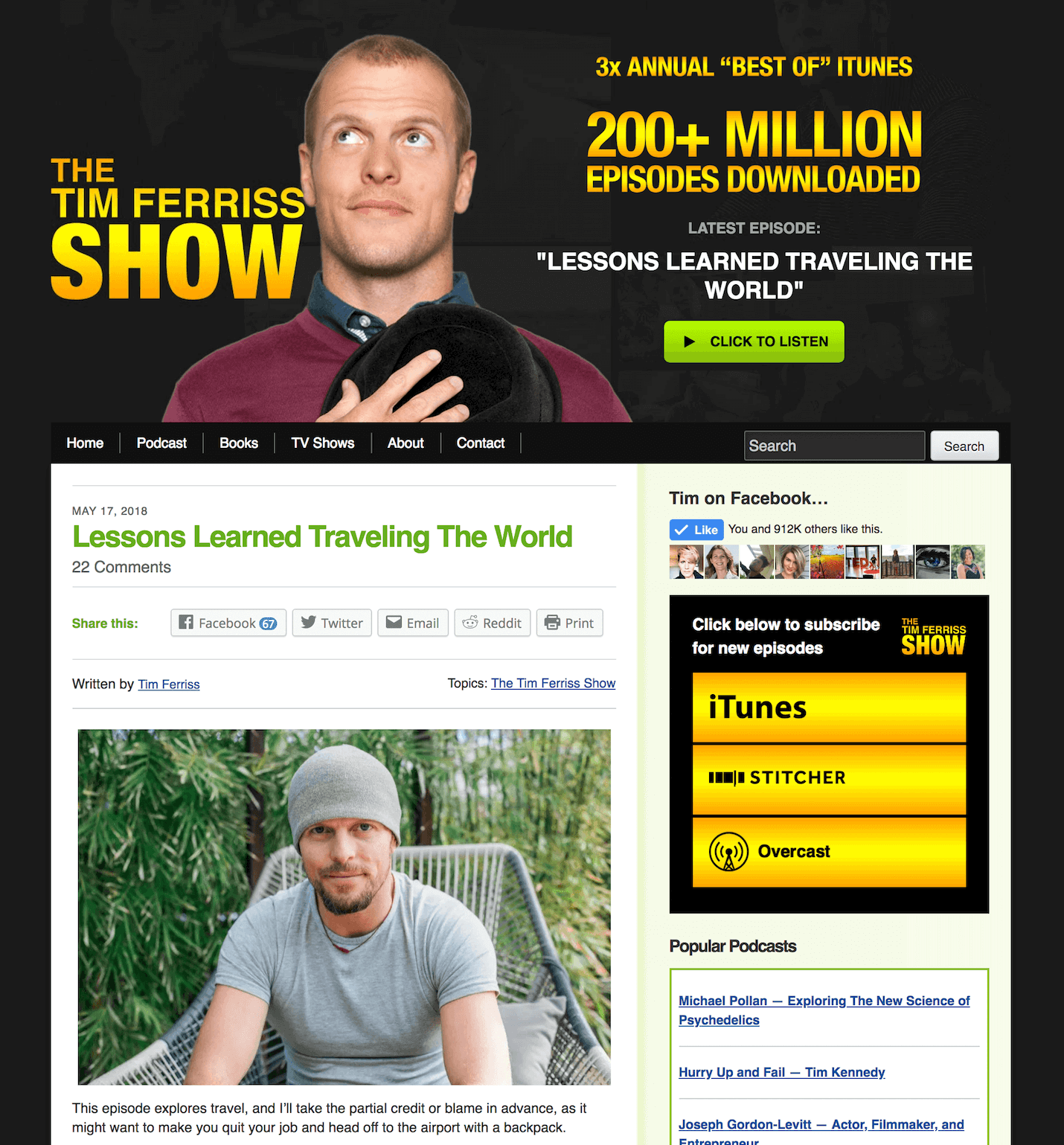
Copyblogger’s homepage, by contrast, is a static one:

Of course, many blogs with static homepages list their most recent posts. For instance, on ProBlogger we have our latest posts and podcasts listed on the homepage:
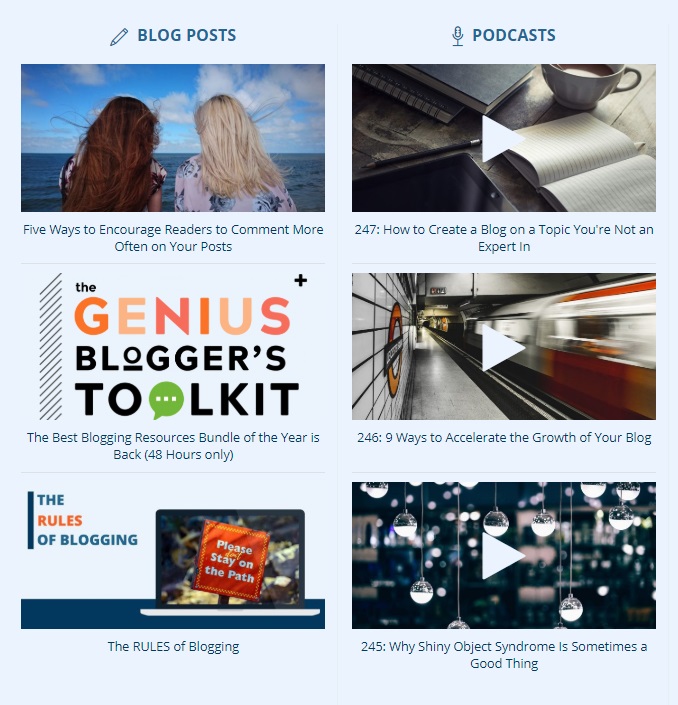
But we also have lots of other elements, such as our “I need help to…” section that links to our different portals, all designed to meet different readers’ needs.
Could a Static Homepage Be the Next Step for Your Blog?
In the podcast episode on 3 Key Things Bloggers Do to Grow Their Blogs into Businesses, I talked about how to blog homepages have evolved over the years – from the long list of full posts that was standard when I started in 2002, to the portal-like static homepages that are becoming increasingly common today.
As John Stevens puts it in his post The 9 Conversion Habits of the World’s Most Successful Bloggers:
Create a homepage instead of directing users straight to your latest blog posts. This gives you an opportunity to do so much more than just make them read your latest content.
So should you consider shifting your home page from a classic list of blog posts to a static page?
Absolutely.
But first, here’s something to think about.
How Does Your Blog Make Money?
If you make money from advertising, it makes sense to design your blog to maximize page views. Having a list of blog posts as the front page might be working perfectly well for you here.
And you may not have much else you want to point readers towards, anyway.
But if you make money from selling products or services, a static homepage would likely be a better fit for you. It lets you get them right in front of new readers, rather than having them tucked away on your sidebar.
If you use your blog in a slightly different way – as a showcase for your writing, perhaps, or as a way to build recognition within your industry – then either type of homepage can work just fine. You might want to look at what people with similar blogs are doing.
How to Create a Static Homepage
The good news is that (technically speaking), it’s easy to set up a static homepage on any WordPress blog.
Here’s what you need to do.
Create Your Homepage Itself
- #1: Log in to your WordPress dashboard, and click “Add Page”.
- #2: Create a new page with whatever content you want there. (We’ll come to what you might include in a moment.)
- #3: (Optional) Remove the sidebar(s) from your new page. Find the Page Attributes box (probably on the right-hand side of your screen), and under ‘Template’ select a ‘No sidebars’ or ‘Full width’ option. (This is available in most themes.)
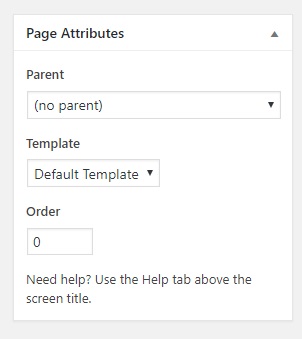
It’s up to you what title you choose for your page. “Welcome” or “Home” can work fine, or you can just leave it off if you don’t want a title on your homepage. (You can still publish the page without a title.)
Set Your New Page as Your Homepage
- #1: Go to Settings → Reading. Under “Your Homepage Displays”, select “A static page”.
- #2: In the “Homepage” drop-down, select the new page.
- #3: Click the blue “Save Changes” button at the bottom of the page.
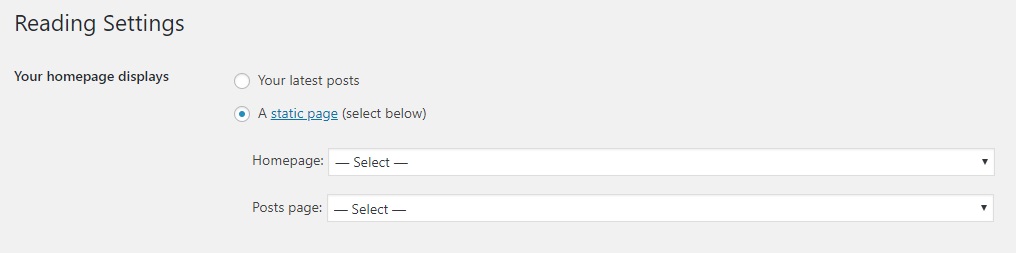
Now, when you visit your blog’s homepage, you should see your new page there rather than your latest blog posts.
You can easily toggle it back if you want to just test it out for now. Just change the “Your Homepage Displays” setting to “Your latest posts”.
What Should You Include On a Static Homepage?
It’s entirely up to you what you put on your homepage. However, most bloggers have most (if not all) of the following:
- #1: A mission statement or value statement, making it clear what readers can expect from the blog, or from you.
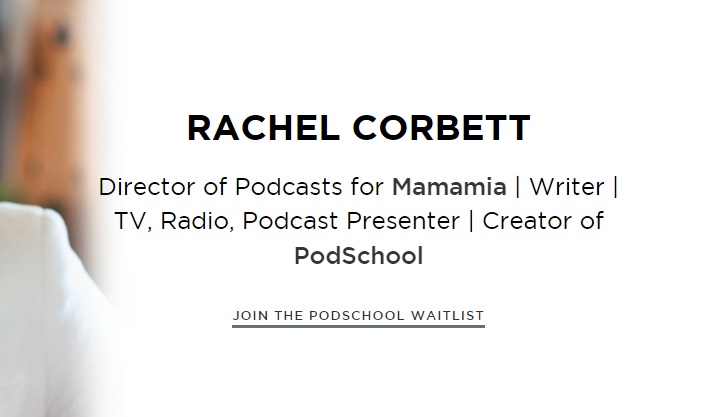
For instance, Rachel Corbett’s personal blog describes her on the homepage:
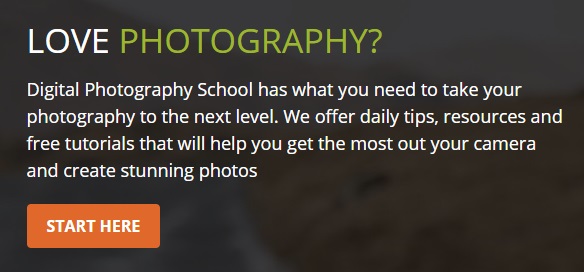
On Digital Photography School’s homepage, we have:
- #2: A newsletter signup button or form. Many blogs feature this prominently on their homepage, as getting new visitors onto your email list is a great way to make sure you can stay in touch.
Here on ProBlogger, we have an orange “Subscribe to ProbloggerPlus” button near the top of our homepage, and a signup form at the bottom.
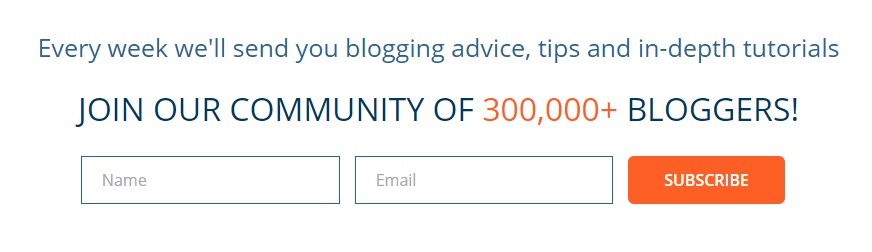
- #3: Links to your most recent blog posts. Many static homepages include the title and featured image from the post, as we do on ProBlogger.
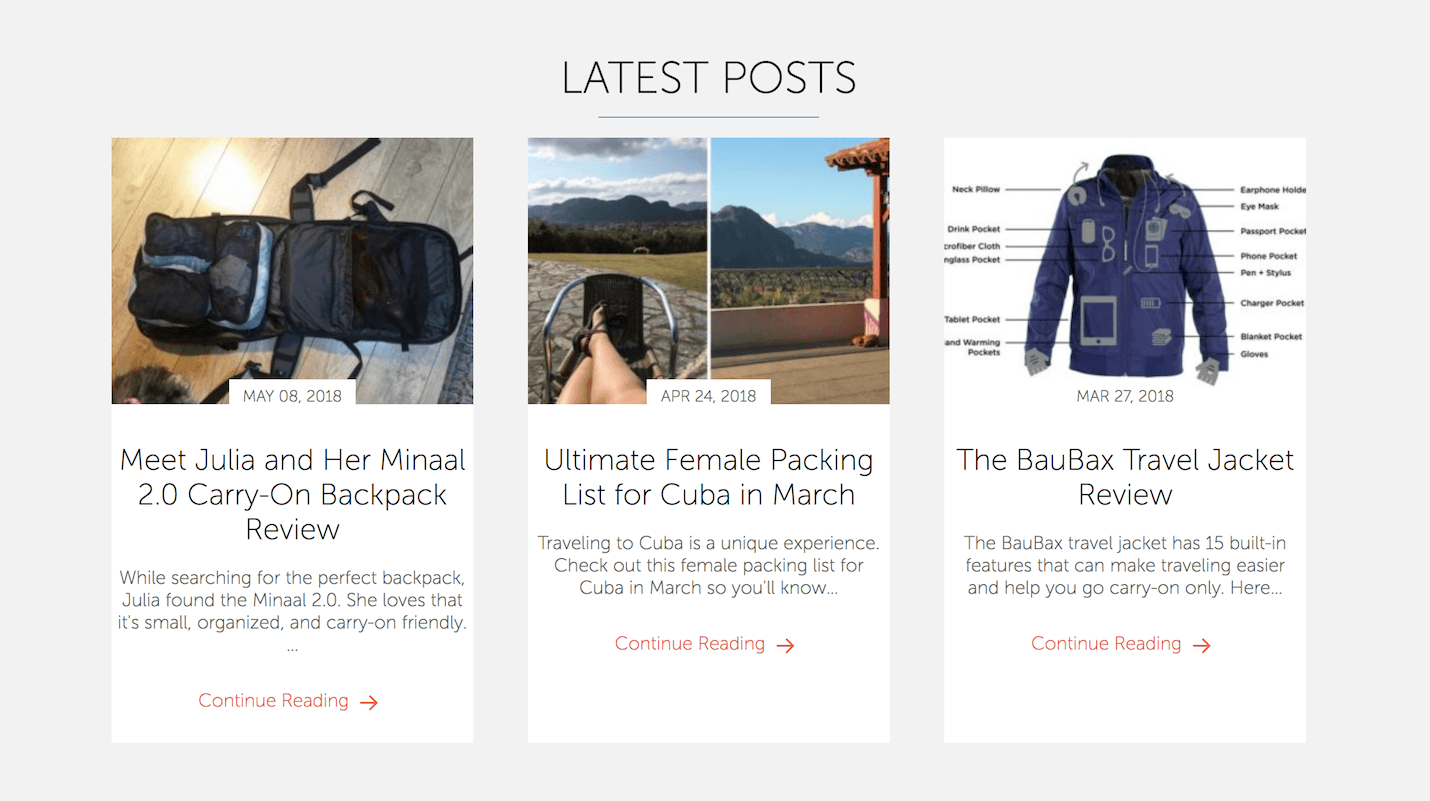
Some bloggers also include excerpts from posts. But if you do this, be careful your homepage doesn’t end up looking cluttered. Brooke from Her Packing List keeps her recent posts (with excerpts) section looking clean by including only three of her latest posts in a clearly defined space on a contrasting background.
#4: A link to your blog. (You can include this whether or not you included your latest posts.) This might well be an image or button to click on. On ProBlogger, we have “View All Posts” beneath the list of our three most recent posts.

- #5: A link to a “Start Here” page, or potentially to several starting points. Large, long-running blogs often include these to help new readers find their feet quickly.
On Planning With Kids, for instance, Nicole Avery has this section on her homepage.
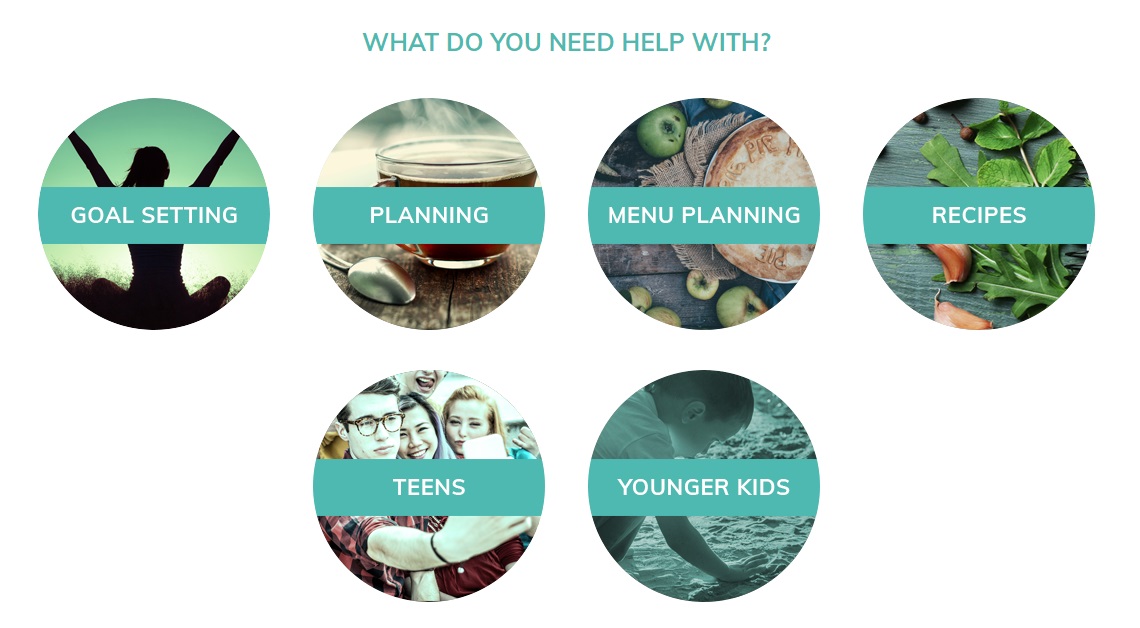
As I said, you don’t need to include all these elements. But each of them is worth carefully considering.
How to Make Your Static Homepage Look Great
WordPress’s default themes tend to be set up for classic blog homepages. So if you’re using the theme that came pre-installed on your blog (or even a different free theme), you may want to consider investing in a premium theme that lets you include dynamic content, such as a list of recent blog posts.
This type of theme will give you far more control over your homepage, and a great-looking professional design too.
We recommend (and are affiliates of) Thrive Themes and StudioPress, which means we receive a commission if you purchase via our links below.
One we use extensively is Thrive Architect, a page builder by Thrive Themes you can use to design your whole site, your sales pages and other landing pages.
And it works in conjunction with Thrive’s conversion-focused WordPress themes or any WordPress theme of your choice.
It’s especially good for homepage design with its full-width and vertical split layout options.
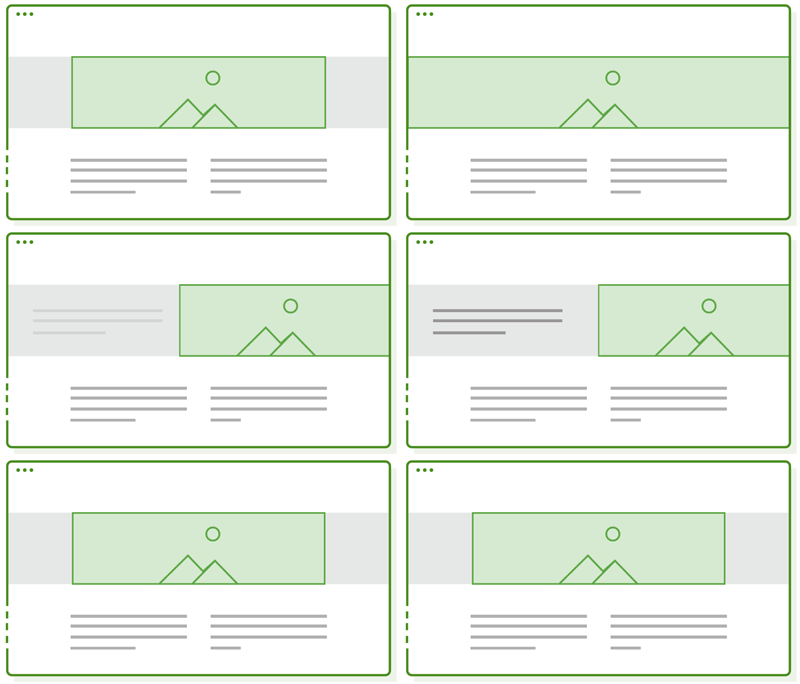
Another good static homepage solution is the themes by StudioPress (our whole team has used their themes at one point). These are specifically designed for different niches and business types. Here are a few examples.
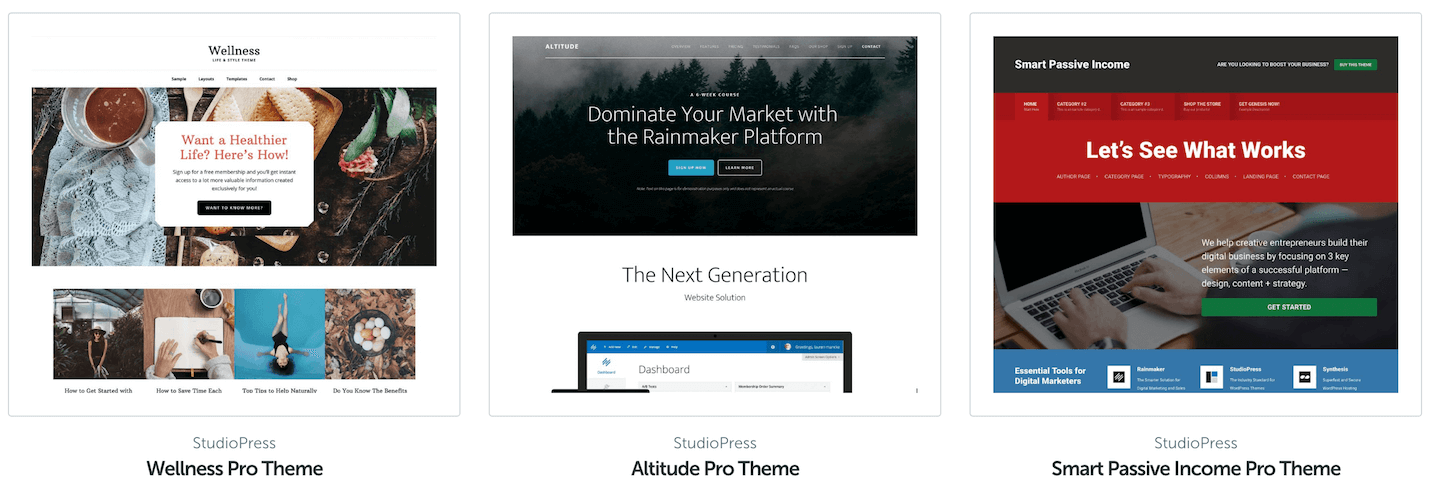
You might want to look at other people’s static homepages for inspiration. (StudioPress has a great Showcase gallery for that.) Which ones look attractive and engaging, and why?
But don’t pack your homepage with too many different options. Focus on the things readers will most likely want to do (e.g. read some of your best posts), and the things you want them to do (e.g. find your email list).
Which Type of Homepage Would Be Right for Your Blog?
If you blog as a hobby or your priority is driving page views, it may be worth sticking with the default blog homepage. (Some bloggers also feel this is a more “authentic” approach, which may or may not be important for your target audience.)
But if you make money selling products or services, it’s probably worth switching to a static homepage. This allows you to carefully direct readers’ experiences from the moment they land on your site.
You may already have a static homepage in place. If you do, take a few minutes to review it. Make sure the information there is fully up to date, and that you’re using the page to carefully guide readers to the most important parts of your site.
Are you thinking of changing your homepage? Or are you confident that what you already have is right for you? Share your thoughts in the comments below.
Image credit: George Coletrain
The post Should Your Blog Have a Static Homepage (Whatever That Means)? appeared first on ProBlogger.

Source: feeds.feedblitz.com

247: How to Create a Blog on a Topic You’re Not an Expert In
Can you start a new blog when you’re not an expert on the topic you’ll be writing about? Of course you can. You can blog about any topic you like. But should you blog about a topic you don’t have any expertise in?

I think it’s okay to start a blog on a topic you don’t know a lot about. I certainly wasn’t an expert when I started my blogs. I had some experience, but I was far from being an expert. I’m not sure I even consider myself an expert now.
Part of the success I’ve had with my blogs is due to the factI wasn’t an expert. Experts are great, but they sometimes come across as inaccessible or unrelatable.
And not being an expert gave my blogs a sense of momentum and excitement. I was actively learning, growing, improving, and sharing with my readers.
Here are a few tips to help you get started with your new blog and topic:
- Be ethical and transparent. Be upfront about who you are, how much experience you have, and why you’re blogging.
- Be careful about the content you post. Avoid teaching or giving advice beyond what you know.
- Actively pursue learning. You may not be an expert yet, but your growth helps people connect with you and your blog.
What kind of content should you create if you’re not an expert? What interests you about the topic? What grabs your attention about it?
Here are some content sources:
- Personal stories
- Case studies
- Interviews
- Guest content
- News items
- Curated content
- Research results
- Answers to discussion questions
Links and Resources for How to Create a Blog on a Topic You’re Not an Expert In:

Further Listening
- How to Build a Blogging Business Through Interviewing Others with Mike Stelzner
- How to Create a Link Post [Challenge]
- How to Use Quotes in Your Blog Content Legally and Ethically
- How to Use Embedded Content on Your Blog [Challenge]

Courses
Join our Facebook group

Transcript
Hey there, welcome to episode 247 of the ProBlogger podcast.
My name’s Darren Rowse and I’m the blogger behind problogger.com, a blog, podcast, event, job board, series of ebooks, and courses all designed to help you to grow an amazing blog that changes the world in some way, but also hopefully, is profitable for you.
You can learn more about what we do at ProBlogger over at problogger.com.
Now, in today’s episode, I want to talk about something that I get asked quite often about from people thinking about starting a new blog, but also from some who have already started who have doubts and insecurities around this kind of topic.
It’s something that I know there’s probably a variety of opinions on, but which I have a fairly strong one on as well. The question that I get asked is, “Should you start a blog on a topic that you don’t have expertise in?”
I want to say right upfront, I think you could or even should. I think there’s definitely a case for it, and in this episode, I want to tell you why, but I also want to, more importantly, give you some tips on how to do that, because this is something I know a lot of people do struggle with.
“I’ve got this blog on a topic, I’m not really sure, I feel secure enough in this topic,” you have these doubts that nag at you. I want to give you some ideas of the type of content that you can create if you don’t yet feel like you’re enough of an expert in that topic.
Previously On
You can find today’s show notes with a full transcription of today’s show at problogger.com/podcast/247.
Before I get into today’s show, I just want to say thank you because I have received some wonderful emails over the last few days from readers, some lovely messages on Twitter particularly.
I’ve been trying a few new things on Twitter recently, just giving you a little bit more advice on a more personal self-development level and I’ve loved the conversation that’s come from those.
I’ve had some beautiful little reviews coming on iTunes. I had carolinaprincess843 from US iTunes, “I love listening to Darren on my way to work, he puts things in a way that is easy to understand.” Thank You Carolina princess.
Crumbsanddirtydishes from the UK left a little review on the 30th of April, “A brilliant podcast offering practical and actionable tips. Darren is so insightful and provides so much value for anyone looking to start, grow, or develop their blog. A must-listen for all bloggers.” Thank you for that crumb-sand-dirty-dishes. I love these names.
Michael Cowell said, “Great to listen to someone so passionate, honest, and knowledgeable about their profession. I’ve recommended this podcast to so many people. I look forward to every new episode.” Thank you, Michael and I do appreciate you passing it on.
I just wanted to start off by saying thank you, I’m very grateful for you as listeners of this podcast and I look forward to powering on, as we go towards episode 250 and beyond. With that said, let’s get into today’s show.
Click ► To expand to view the full transcript
Compress to smaller transcript view
Full Transcript
Can you or perhaps more accurately should you have a blog on a topic that you’re not yet an expert in? It’s something I get asked regularly, and I’ve heard it answered in a variety of ways.
I know some people feel quite passionately that you shouldn’t have a blog that you’re not an expert in, or that you don’t have some knowledge in or a higher level of knowledge.
I want to put it out there that I think it’s okay to do that with certain qualifications around that. I want to give you those qualifications.
I want to give you some words of warning and some advice on how to approach it, and then I want to finish this episode by going through some different types of content that I think you might want to start with if this is the position that you find yourself in.
Yes, I think you can. Of course, there’s nothing stopping anyone from blogging on any topic they like, really, free speech is something that most of us have the right to.
Although, I’m actually very aware that there’s a segment of our audience listening to this podcast who I hear from time to time who don’t have that right of free speech depending upon where they live and the circumstances they’re in.
I want to put that qualification out there.
I think for most people listening to this podcast, we do have the right to really talk about anything that we want to talk about. I guess the question is, should you tackle a topic that you don’t yet have that experience in?
I’ve already said upfront that my answer is, yes. I want to go a little bit deeper and put some qualifications around that before I give you these tips on the type of content.
I also want to say right up front that what I’m going to share today really does come from my own personal experience because both of the blogs that I have today, ProBlogger and Digital Photography School, I would say that when I started them in both cases, I didn’t really feel like an expert and in fact, I wasn’t an expert.
I’m still not even sure I would see myself as an expert today, particularly in my photography blog.
When I started ProBlogger in 2004, I’ve been blogging for about two years, so I did have some experience of blogging, but I was very new to the idea of making money from blogging.
I’ve probably been doing that for less than a year and when I started ProBlogger, I was still at a part-time level. I wasn’t a professional blogger. I wasn’t a full-time blogger by any means. I never claimed to be that when I started ProBlogger.
I didn’t start ProBlogger as an expert, although, I guess, I was probably one of the first people in the world to get to the level that I was at as a part-time blogger
Relatively speaking, maybe some people could have said I was an expert because no one was really doing it, but I certainly didn’t feel like an expert. I had doubts about whether I should start that blog.
Digital Photography
The same is true with Digital Photography. When I first started writing on that topic and that was back in 2003 on a very early blog, I was reviewing cameras. That first blog I only owned one digital camera and I’d only had it for a few months. I was writing about my experience with this first-ever digital camera that I had.
I had had some experience with film cameras, I knew the basics of photography, but I wasn’t an expert. I’ve photographed a few friends’ weddings with previous cameras, but never with digital. I really did have a lack of experience and expertise in that particular topic.
When I started Digital Photography School a few years later, again, I didn’t see myself as a professional photographer.

There were doubts in my mind, should I be doing this and I guess what I did is started a blog for beginners because I felt like I could teach them and that’s a big part of what I want to talk about today.
It’s actually thinking about who your blog is for and pitching it for people who it’s appropriate for, and who you can actually help.
I look at both ProBlogger and Digital Photography School today and whilst I had started both of those blogs with these insecurities, and with doubts, and with the idea of impostor syndrome which I’ve talked about on this podcast before.
I actually look at both of the blogs that I’ve built today and I think one of the foundations and one of the things that did help those blogs is that I wasn’t an expert. I actually think it’s an advantage in some ways to start as someone who is still learning about your topic.
Exerts Often Are Inaccessible or Unrelatable
I’ve met numerous of my early readers over the years and one of the things that I hear again and again from those who’ve been reading my blogs from the early days is that they found my blogs very relatable. They found them accessible.
Experts are great, but sometimes experts can come across as inaccessible or unrelatable. This doesn’t always happen, some experts are very good at talking to beginners, but a complete beginner on a topic may find it hard to connect with someone who has years of experience and who is seen as a guru.
On some levels, we want to learn from experts, but on other levels, I can feel like they’re in another stratosphere to us and not relatable, but someone who’s just ahead of a beginner will use language that a beginner can access, and they’ll come from a position of understanding the place of that beginner.
In the case of ProBlogger particularly, I think what made it attractive in the early days was that I wasn’t an expert, and I was just sharing what I was learning, and I was sharing it with people who were perhaps just a step or two behind me in the journey.

I was incredibly active in my learning, I was growing, I was improving, and I was sharing what I was learning with my readers and that created a sense of excitement that I’m not sure I would have been able to create on that blog if I was sharing it with years of experience about the topic.
You can actually use the fact that you’re not an expert to your advantage in some ways.
Before I get into some tips, I wanted to share those stories of me starting out in that way because I want to encourage you that if you are at the beginning of the journey of your topic that that’s okay, but you want to do it carefully, and that’s what I want to move into now.
Three Qualifications
I want to give you three qualifications if you do decide to blog on a topic that you’re not an expert in and this may be the topic of your whole blog or it may be that you want to add a category to your blog that you’re not an expert in. There are three things that I want to say that you want to kind of be a little bit wary about.
Firstly, I think it’s really important to be transparent, to be ethical, in the way that you present yourself and in the case of both Digital Photography School and ProBlogger; I was really upfront about who I was, what my experience was with the topic.
I remember in both cases, in the early days of those blogs, probably the first week or two of both of those blogs, I put up posts telling my story, which was all about showing the level that I was at, but also why I was starting that blog.
It was really clear that I wanted to share what I’d already learned, but what I was learning and I wanted to gather other people who had experience as well, to give a place for them to talk about what they were learning as well.
I put those stories up as blog posts, also on my about page, so anyone clicking to those blogs in the early days, particularly, would see my story, who I was and where I was coming from, the position I was taking.
I reckon, I probably put off some readers of my blog by doing that and by saying, “I’m not an expert,” but I also as I’ve said before, I think I made my blogs a little bit more relatable as well.
I think there’s nothing worse than reading a blog by someone who claims or implies expertise, who doesn’t have it. It usually shines through in the writing that you don’t have that expertise, but it can also set you up for a fall later if you get found out to not be an expert.
Whatever you do, don’t claim to be an expert and don’t let your lack of transparency imply that you’re an expert either. It is really important.
Put up who you are, put up where you’re coming from on your “About” page in your sidebar if you want to. You can actually build it into your tagline if you want. A beginner or an enthusiast or someone who’s curious about this topic, you can actually put that upfront and you’ll find that that does make you a little bit more relatable.
Be Transparent & Careful:
Number one, I think it’s important to be transparent. Number two, I think you should be careful about the type of blog that you create.
If you go back to the early days of ProBlogger, you’ll see that the types of posts that I was writing were different from today. Today, we do a lot more tutorials that are a little bit more authoritative, that built upon years of testing and experimenting, talking with people, gathering ideas.
Back in the early days of ProBlogger, I did occasionally do some teaching posts, they were very beginner-focused, they were very short, they were almost always based upon something I’d experimented with. I’ll talk more about that in a moment.

Around these occasional teaching, posts were lots of other kinds of posts that didn’t require expertise. That’s what I want to share with you in a moment.
There are so many different types of content that you can authentically do if you don’t have expertise. You want to be so careful of doing teaching or how-to or advice content that’s beyond what you actually know and what you are qualified to know.
Particularly, I want to emphasize this, if you’re writing about anything to do with health, mental health, legal advice, or something that someone could read, take action upon and it would have a detrimental effect on their life. You want to be so careful around those topics.
I’ve had hard conversations with people who have come to me asking, “Should I write about this particular topic.”
I remember talking to one blogger recently, who wanted to start a self-development blog, he had no experience in that area and he wanted to talk about psychology and some of these kinds of deeper stuff and whilst, I think, there probably were some ways he could talk about those things from his own experience.
Educate Yourself before Writing a Blog
He wanted to teach people on those areas and I’m like, “Well, to authentically do that, you probably need to educate yourself at least to some degree first.” I think it’s so important.
There have been numerous cases over the years, where I’ve seen bloggers blog on topics in ways that they’re just not qualified to do. It can have a massive impact on their readers.

I saw a horrific news report recently of someone who had read a blog that gave advice on cancer treatment, they’d made decisions around their own treatment based upon what they’d read, only to discover that that person really had no idea what they were talking about and was just spouting off something that they’d heard, word of mouth about three other people.
The consequences of taking that advice were incredible, I mean the ultimate kind of consequences. You really want to care for your readers. You want to not go beyond what you’re qualified to do.
Also, it covers you as well. If you get found to be doing that type of thing, you could get sued, you could ruin your reputation. It’s just not worth doing that, so be careful. Be really careful about overextending yourself. You may want to get some accountability around that and get some advice around that as well.
Actively Learning the Topic of Blog
Thirdly, you may not be an expert but make sure you’re actively learning on your topic. I’ve intentionally used the word “yet” in the title of this podcast. How to create a blog on a topic you’re not yet an expert in, because you may not be an expert today, but you can be learning on your topic.
You can be intentional about moving forward to the eventuality of becoming an expert. You may never get to an expert level, but the more you’re learning on your topic, if you’re actively moving in your topic and growing in your topic, it will shine through.

Your readers will see that. That will create enthusiasm for them and it will also help you to create better content in the end.
I love the fact that I can look back on the early days of ProBlogger and see that I gave advice back then which was quite naïve. I look at it now and I cringe on some levels, but I can see the progression in my own knowledge on that topic as well.
Your readers will see that progression. That’s something that creates anticipation and momentum and excitement as well, it helps people to connect with your blog. You may not be an expert, but make sure you’re actively learning, I think that is really important.
We’ve kind of got those qualifications, those disclaimers, kind of out there, but what kind of content should you be creating on your blog, if you’re not yet an expert in the topic? I want to give you a few questions to ask and also then some different types of content.
The question that I want to ask you is, “What can you witness about your topic?” I was I got this question from a guy called Rob Bell, who I listen to. He’s a podcaster. He put together some teaching for public speakers that I bought recently, really great teaching.
He was talking about this topic, if you don’t have expertise in a topic that you’ve been asked to do a talk on, the question you should be starting with is,
- “What can I witness to?”
- You may not have a high level of knowledge or training or the theory on a particular topic, but what have you seen?
- What have you experienced?
- What have you learned?
- What have you felt?
- What is your experience?
- What have you witnessed about that topic on a personal level?
If you’re thinking of starting a blog on a topic, you’ve probably had some experience with that topic, I would hope. Hopefully, you just haven’t picked out a topic that’s a random topic that you think will be popular.
Share An Experience
Be Authentic
Start with your experience of that. Hopefully, out of answering that question, some experiences will come to mind that you can share. A lot of them will come out as stories, story posts are great. “This is something that’s happened to me. This is what I experienced. This is what I learned.” No one can critique your story, your experience. That is authentically you.

Be Relevant
Related to this, story posts that are mistake posts or fail posts can be great. “This is what I did. This is what I tried. This is how it worked out. This is what I’d do differently next time.” If you look back in the early days of ProBlogger, you’ll find that there are quite a few of those kinds of posts there. They did really well.
On the other side of things, there’s a success post. “This is something I tried, it worked.” Celebrate that. “This is how I’d tweak it next time. This is what I’m going to extend upon.” These types of posts are about sharing what you have done.
In essence, it’s creating your own case study kind of post. This is how I started ProBlogger. When I did teaching posts in the early days, when I did how-to content in the early days, it was almost always in this way.
I wrote a whole series of posts on how to monetize your blog using Adsense. I probably wouldn’t even recommend you go back and read them today because Adsense changed a lot. All of that content came out of my experience.
This is how I started out. This is where I position my ads today. This is how I changed the size of my ads. This is what I learned from my experiments with Adsense. Here are the tools that I am using to create content.
Here is a mistake I made in sending my emails. This is how I launched my first ebook. These are all content that I created in the early days of ProBlogger that was based upon my experience. They were teaching posts, but they were based on my experience.
You need to get into the habit of looking at your own experiences, mind your own experiences. Take note of what you do, what you’re learning and what you’re experimenting with and report back on those things.
Share An Experiment
No one can critique you for sharing an experiment that you did and talking about what you learned through that experiment.
Someone can critique you if you write an expert post when you’re not an expert, but if you say, “Hey I’m not an expert but I’m experimenting with this, this is what I learned.” No one can critique that, and that’s totally fine.
What are you a witness to share from your own experiences on your topic?
Another question, what are others doing?
One way that you can share what other people are doing on a post really authentically is to do case studies. I used to do this on ProBlogger all the time and we still do case studies from time to time. Case studies about other people, not just your case studies, but other people.

Today, if you look at our most recent case studies on ProBlogger, we generally involve the person that we’re studying.
We interview them or sometimes, they even write up their own case study, but back then in 2004, it was hard to get people to be involved in a case study because no one knew who I was and no one was willing to share on that level.
I would just write about what I saw other people doing,
- “Here’s blogger X, they’ve had a new blog design.
- Here’s how it’s changed, here’s what they’ve changed on their blog.
- Here’s what I like about it.
- Here is how I’d improve it.
- Here are other blogs that look similar,” and picking up the tools that they use, those types of things.
- “Here’s blogger X and here’s how I see them monetizing their blog, and here are three ways they monetize their blog.
- Here’s how they position their ads.”
This type of content can be really useful and you don’t even have to involve the other person.
I personally would give them the courtesy of having the opportunity to participate in the case study, so you might want to say, “I’m thinking of writing a post on my blog. It’s going to be what I observed about what you’re doing with this or what you did here. If you’ve got a comment or if you’d like to participate?” You can make that offer, that will improve the post because you’ll get the inside word on it.
Even if they say no or they don’t respond, you can still create that content, that’s totally fine. You’re writing about your observations of a topic and as long as you do that with grace, then I think most people will be totally fine with that.
What Others Are Doing
Another type of content that you can do that involves the opinions and experiences of others is interviewing people. This can be a little bit hard to do in the early days of your blog where you don’t maybe have the profile, but it’s not impossible.
I did a whole episode back in episode 172 on this podcast with Michael Stelzner from Social Media Examiner. He built that blog on this technique of interviewing other people. He went to conferences and just walked up to people and said, “Can I interview you on video?”
He had a camera guy with him, so he made an investment. He had lights so it looked a little bit more professional.
If someone walks up to you at a conference and you’ve just gotten off the stage and they’ve got a camera crew with them, most people are going to say, “Absolutely. Totally. This guy looks like he knows what he’s doing.”
Mike knew nothing about social media at the time when he first started out, but because he got in front of so many experts in that industry and asked them so many questions, he built relationships with key people in his industry, he grew his knowledge in that area because he asked them questions that he wanted to know the answers to.
So, he was seen alongside other experts in that industry as well, which brought him some credibility as well, and people wanted to share that content because they were in the content.
It was professionally made, the people he interviewed ended up sharing his content.
He built that blog and that blog is an amazing blog today. He’s got a staff, he runs a conference of 4,000 or 5,000 people and it all began because he put himself out there, made an investment created content that was interviewing other people.
It brought expert-level content onto his blog, and he didn’t have to present any of it, he just had to ask questions.
This type of approach can build credibility, it can drive traffic, and also creates really useful content as well, and helps you to network in your industry. Interviews are another one, take some work, take some investment. It can really pay off.
Guest Content
Similarly, guest content can work. This is another one that you do sometimes struggle with within the early days of your blog unless you’re willing to pay people to create content for you. I probably wouldn’t start with this one if you’re just starting out.
Featuring content of other people on your blog when they write an article for you, they might want to do that as a guest post in return for some exposure, or you may want to actually hire people as well.
Again, this is not something I would start with both on ProBlogger and Digital Photography School, I didn’t have anyone else’s content for quite some time because I wanted to build up my traffic, I wanted to build a relationship with my audience, I wanted to keep my voice consistent.
On ProBlogger, we began to involve guest posters. We don’t do so many of those today, but in the early days particularly, we did.
Today, we have a smaller team of guest writers on ProBlogger who come in from time-to-time who are on our team. I would see them as team writers. Digital Photography School, we’ve developed quite a large team of regularly paid writers as well.
This allows me to bring in other voices who are experts. This is a big improvement for Digital Photography School.
When I first started Digital Photography School, it was just me writing two or three articles a week, and all of those articles were for beginners because that’s all I felt that I could teach.
Today, if you’re going to look at the content, we’ve got professional photographers writing at an intermediate level and even beyond that. Sometimes, we do more advanced stuff as well. It allows us to get more expertise into the blog without actually having to become an expert as well.
It can also bring credibility if you choose the right person, it can bring in some traffic as well if the writer promotes it to their own networks as well.
Interviews, case studies, guest content can all be ways of bringing in other people’s expertise into your blog in authentic ways.
Another type of content you might want to mix in you may not want to go with this for all of your content but from time to time, you could do news posts.
It depends on the type of blog, what your intent is for that blog, but news content or writing content about the news and developments in your particular niche or industry can be well worth doing.
In the early days at ProBlogger, I did this from time to time. I didn’t do a lot of it, but probably once every couple of weeks I would write an article that was about some development in the industry of blogging and reporting on someone acquiring someone else, or maybe a tool, or the launch of a new tool, or controversy that was happening in the industry.
I almost always tried to find a way to add something of myself into it.
I didn’t want to just write the news, I wanted to interpret the news for my audience in some way. What does this news mean for us? Sometimes using the news as the start of a discussion as well, we’ll touch on discussion posts in a moment. News posts might be one way to go.
Another type of post that you might want to do and consider is curated content. This is where you add into the mix of what you do. I probably wouldn’t make this everything, I wouldn’t want all my posts to be curated content, but from time-to-time adding in a piece of curated content can be useful.
You want to be really careful about how to do this. You don’t want to steal someone’s content or present it as your own. You want to give credit where credit’s due.
If another blogger in your industry has written a great article on their blog, why don’t you write a blog post that, links to it and says, “You should go and read this dear readers.” Maybe pull out a short relevant quote from their article and put that in yours, and then add some of your own thoughts to it.
Tell your readers why they should go and read it, tell them what you liked about that article, tell them what you would add to that article. They might have 10 reasons to do this, maybe come up with the number 11.
Tell them what you agree with, what you disagree with, how you would interpret what they’ve said for your particular audience in some way and talk about what their article has prompted you to take action on in some way.
This is really useful content for your readers. You’re finding them some useful content to read, but you’re making it even more valuable. The person you’re linking to is going to love it as well, they may even promote what you’re doing as well.
This is something I did all the time in the early days of ProBlogger. Today, this type of content, I would call this a link post, isn’t as popular because people are now sharing their links on social media, I think this is a missed opportunity for a lot of bloggers. I would love to see bloggers returning to this.
This is what blogging was built on in the early days, bloggers linking from one blog to another, sharing their experience, adding to the ideas of other people.
I did an episode back in episode 144 on how to create link posts. I will give you some examples and tips on how to do it as well, also check out episode 173 because that one’s on how to quote people properly, correctly without getting into trouble as well and that’s something you do want to be a little bit careful about, using other people’s content in that way.
The other thing I’d say about curated content is using embeddable content as well. There’s so much content on the internet that can be embedded onto your blog. The most obvious of them is YouTube. Find a video that you think is good, embed it into your blog.
The YouTuber is totally fine with you embedding their content onto their blog. If they’re not, they would have marked it that they don’t want it to be embedded. Take that embeddable content, add it into your own blog and then put some of your own thoughts around it, make it even more useful for your readers as well. Again, episode 152, I talked a lot more about embeddable content and video is just one of the types of content that you can embed.
Curated content is great because, again, you bring in other people’s voices onto your blogs. You’re bringing other people’s expertise. It’s relatively easy to find and it has the potential to build a relationship with that other person that you’re featuring in some way as well.
Two more types of posts that you might want to consider, research posts. The best way of describing a research post in my mind is kind of like the essays that you wrote at high school.
Your high school teacher or your university professor said, “I want you to write an essay on this particular topic answering this question or discussing this issue,” and then you go away and you read all the books and you synthesize all the arguments, you bring in some quotes, crediting your sources of course and then you come to your own conclusions and you create a piece of content for your professor or your teacher that kind of synthesizes the best thinking on that particular topic.
The whole point of writing an essay is that you want to learn something through that process. You learn so much through writing an essay.
The same can be true for blog content as well. You choose a question that you have about your topic. You’re not an expert in your topic, why aren’t you an expert in your topic? What don’t you know about it?
Choose one of those things that you don’t yet know about. Choose a question that you have or that you say your readers are having as well, then go out and research the answer to it. This is how you become an expert. You actually go out and you find the answers to the questions that you have, then you take action upon those things.
It might mean going out reading more than one book, listening to some podcasts, watching some videos, reading some other blogs, strolling through some forums, having some conversations with other people, sending some emails out, asking other people what they’re thinking are. Once you’ve got all that information, write an article about what you found.
You can be really clear up front, “I didn’t know anything about this topic, but here’s what I’ve learnt about it, and here’s what I know now.” It might include a few quotes from books that you’ve read or blog posts that you’ve written.
Crediting the sources of course. It might include an embeddable piece of content, a YouTube clip that you found. It might include different points of view, different approaches that people take. It might include some of the answers that people sent you when you emailed them their questions.
You want to get their permission first before you include those in your article. Hopefully, include your own conclusions, what you’ve learned through the experience, ideas or more questions that you have.
Maybe some stories that you’ve got, maybe some things that you’re going to do as a result of that.
This type of content is so good because you are going to learn so much. You’re actually going to take steps towards becoming an expert through writing this type of content.
You are going to show that you are progressing on this topic. It’s also so useful as well for your readers to see a digest of all the best thinking around a topic.
This shows that you actually are becoming an authority and an expert on your topic as well. Research posts are a really great way of doing this.
Again, it’s an expertise kind of content. You’re featuring other people’s ideas and hopefully some of your own as well.
The last type of content you might want to try is something that I used to do every week on ProBlogger.
I don’t do it quite as often these days, but we still do it every week on Digital Photography School and it takes no expertise whatsoever, it’s simply discussion posts. This is asking your readers to talk about what they think about a topic.
You probably wouldn’t want to do this on the first week of your brand-new blog because you may not have any readers to have discussions with yet.
This is something that you can use once you’ve got a little bit of a readership there but ask a key question. Ask a question you want to know the answer to, maybe, or ask more of a debate like the question,
“Do you do this or do you do that?” Those types of questions can really lead to some interesting discussions. They will teach you.
They will also give your readers an opportunity to participate, to engage. It may even unearth some experts on your topic as well, which then you can feature in guest content or in an interview or in a case study as well.
Sometimes, the best discussion posts that we used to post on Digital Photography School, I would take the comments and then write another post that synthesize those comments, it almost became like a research post.
“Here’s what our audience thinks about this particular topic.” I would then pull out some themes in it, I would add some of my own thoughts in it, maybe add some further reading and those types of things as well.
Discussion posts can really be useful as well to increase the expertise on your blog but also build some engagement as well.
I hope that somewhere in the midst of those, is some encouragement for those of you who are feeling like maybe you’re not an expert enough to really authentically go into your topic, because you’re not an expert.
Those of you struggling with impostor syndrome, it’s okay to have a blog on a topic that you don’t have expertise on, as long as you’re transparent, as long as you’re a little bit careful about the kind of content that you create and don’t overextend yourself.
As long as you’re actively learning and that’s such a key. Most of the types of content that I just share actually are as important because they create good content for your readers—almost all of them are going to teach you so much as well.
That’s why I’ve chosen those types of content, case studies, interviewing people, doing research posts, having guest content. All of these have the opportunity for you to learn and for you to become the expert that you don’t feel that you are.
I’m sure there’s a lot more that could be said on this particular topic and I would love to get your thoughts on it. If you’d like to leave a comment with suggestions on types of content that you find useful in this particular area, feel free to leave those comments over on our show.
That’s at problogger.com/podcast/247 or you can leave those comments in our Facebook group as well.
Before we finish off, I want to finish with our quote for the day and I want to thank those of you who’ve been sending some suggestions of quotes for the day in as well, I had a couple of those come in via email this week. Quite a few of you sharing quotes on Twitter, too.
This one is a bit of a longer quote, you could almost say it’s an excerpt, just a paragraph or two by an author by the name of Neil Gaiman, who wrote this some years ago.
I was lucky enough to be invited to a gathering of great and good people, artists, scientists, writers and discoverers of things. I felt that at any moment, they would realize I didn’t qualify to be there among these people who had really done things.
On my second or third night there, I was standing at the back of the hall while a musical entertainment happened and I started talking to a very nice polite elderly gentleman about several things including our shared first name, Neil.
He pointed to the hall of people and said words to the effect of, “I just look at all these people and I think what the heck am I doing here? They’ve made amazing things. I just went where I was sent.” And I said, “Yes, but you were the first man on the moon. I think that counts for something.”
I felt a bit better, because if Neil Armstrong felt like an impostor, maybe everyone did, maybe there weren’t any grownups, only people who worked hard and also got lucky and were slightly out of their depth. All of us doing the best job we could, which is all we can really hope for.
Hopefully, that encourages you, if Neil Armstrong feels a bit of impostor syndrome, then I think it’s okay for you and me, too, as well.
Thanks for listening today. I look forward to chatting with you next week in next week’s episode. Again, today’s show can be found at problogger.com/podcast/247, where I will include further listening to some of those episodes that I mentioned during today’s show. Thanks for listening, chat with you next week.
How did you go with today’s episode?
Enjoy this podcast? Sign up for our ProBloggerPLUS newsletter to get notified of all new tutorials and podcasts.
The post 247: How to Create a Blog on a Topic You’re Not an Expert In appeared first on ProBlogger.
 Related Stories237: How Collaborations Can Accelerate Your Blog’s Growth234: How to Relaunch Your Blog After It Becomes Dormant232: Collaborative Blogging – How One Blogger Started a Blog with Over 200 Collaborators
Source: feeds.feedblitz.com