
Tag Archives for " security "

How to Protect Your Website from Hackers and Data Breaches
The number of website data breaches is steadily growing. Statista data shows the number of U.S. breaches rose from 662 to more than a thousand in recent years.
Some industries like government and healthcare have been particularly affected. For instance, recent data by Verizon shows data breaches in the healthcare industry increased by 58 percent.

You may be thinking, “What is a website data breach exactly, and should I be worried?”
Like most things in technology, there are no one-size-fits-all warning signs and solutions for website data breaches. However, understanding what these threats entail and learning effective ways to prevent and deal with them can make a huge difference to your business.
What Is a Website Data-Breach?
A data breach occurs when information is taken from a system without the owner’s knowledge or authorization. This stolen data may include confidential details, personal data, trade secrets, and even sensitive information that could majorly threaten the organization’s security.
Some common examples of data stolen during a website data breach include:
- stolen passwords
- identity information (date of birth, email ID, location, etc.)
- credit card information
- banking details
- medical history
If a data breach occurs and this information is stolen for misuse, it could mean harm for both the business and the person whose information is being taken.
Think about it: If you’re a business owner handling sensitive customer information such as their financial history, you must protect this data. When a website data breach occurs, these personal details can be misused, leading to identity theft, empty bank accounts, and unauthorized transfers among other types of fraud.
Ecommerce businesses need to be particularly careful about website data breaches as most of their dealings happen online, so nearly all the information is at risk.
This is important because you’re not just losing data but also money. Consider this: Data by RiskIQ suggests cybercrime costs organizations $2.9 million every minute, and major businesses lose $25 per minute as a result of data breaches.

Do you still want to risk a data breach?
What Causes Data Breaches?
A data breach doesn’t need a trained hacker. Something as simple as losing your device can be enough for a website data breach to occur. Some other causes of website breaches include:
Hacking:

Various types of hackers work alone or in teams to compromise and sell sensitive data. This is one of the leading causes of data breaches and tends to cause the most damage as not only could you lose the data, but your entire system could be compromised.
Accidental access:

If you’ve ever logged in to a coworker’s computer for a minute and got access to sensitive information you weren’t supposed to see, it’s a data breach. This happens more often than you’d think, as many colleagues sometimes share a device to work on a common project.
Internal spy:
If an employee inside the company shares information to outsiders for money or other gains, the data is breached by an “internal spy.”
While these causes can be dangerous for businesses dealing with sensitive data (think payment processing apps), most of them can be prevented. To help you bolster your security, below we’ll talk more about common data breach strategies and how to protect your business against them.
What Strategies Do People Use to Cause Data Breaches?
There are various strategies people use to cause website data breaches. These can be spontaneous or well-planned depending on the type of data being breached, whether it’s a solo or a team venture, and the purpose of the breach.
Here are some of the most common strategies cybersecurity experts recommend watching out for:
Phishing
Phishing attacks are designed to fool users into giving up their information. These look like genuine messages from trusted institutions but actually are clever traps designed by hackers to get access to your data.
Users who are not tech-savvy or those in a hurry may accidentally click on the false links and give away important information straight to the fraudsters.
Here’s an example of a phishing email impersonating Netflix:

Brute Force
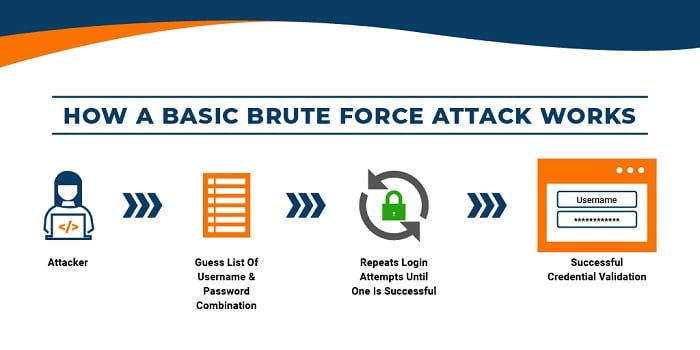
Brute force attacks cause website data breaches by working through all possible combinations to crack your passwords. This used to take a long time as there could be endless variations of letters, numbers, and symbols to try, but nowadays the use of sophisticated software makes this process much easier. In fact, some hackers use fully automated brute force attacks.
This graphic explains how a brute force attack works to cause website data breaches:
Malware
Malware attacks capitalize on your device’s security flaws to gain access to your system. Hackers shove viruses and spyware into your system to view, access, lock or change your files, which causes a massive data breach.
In fact, data shows nearly half of the security professionals surveyed say ransomware and malware pose the biggest IT risks, so businesses should be extra careful to protect themselves against such cyber threats.
How to Prevent Data Breaches
While every business that operates online faces some cyber threats, there are many ways to prevent data breaches or at least minimize their impact. Let’s take a look at some of them below.
Look for Vulnerabilities
No system is perfect. Every system, network, server, and the device has a flaw that hackers use to grab access. The sooner you identify these flaws, the better you can protect your business from website data breaches.
One way to do this is to proactively look for vulnerabilities in your security system. You can do this by using security software specifically designed to test your system for such vulnerabilities.

If you don’t want to rely on software, there’s another option for you. Many companies hire trained white-hat hackers to spot system vulnerabilities and patch them before other hackers can get a chance. This is more time-consuming but can also offer more reliable results, especially when it comes to larger organizations handling a lot of data.
Human testers are also better at recognizing patterns, so if there’s a recurring issue, paid white-hat hackers might be able to identify the problem before it’s too late.
Train Your Employees
While human testers can be a great benefit to your organization, sometimes it’s your very own employees causing the very breaches you are trying to prevent.
Many incidents of website data breaches occur when employees accidentally leak information to people who do not have authorized access to this data.

For instance, if an employee accidentally emails private information to a third-party client, or if sensitive information is leaked through a shared device in the office, this data is considered to be “accidentally” breached.
It’s still harmful to the company, but it’s caused by human error, often due to the employee’s negligence, lack of technical knowledge, or skills in handling data.
Accidental website data breaches like these are easy to prevent through appropriate employee training to improve their understanding of data management. Organizations can use various programs like the Polymer DLP Behavioral Approach to training up their employees on cybersecurity.
If a complete program is too big of a time or budget commitment, consider hosting small webinars. Invite a guest speaker or show a documentary that highlights the impact accidental website data breaches can have on a company, and how to prevent them.
These might sound like small steps offering minimal results, but training your employees early on can go a long way in securing your organization and minimizing the chance of accidental data breaches down the road.
Have Backups for Your Data
In some cases, despite your best attempts at preventing them, a website data breach can wipe out important information from your system. While it may or may not be able to be recovered, it’s always a good idea to backup any and all information that might be important.
This way, if data is stolen, you’re not completely lost. You still have something to fall back on. For this, you can invest in a cloud backup solution or use a third-party service depends on your company’s needs.

Install a Firewall
Firewalls are one of the most basic yet secure ways to defend yourself against website data breaches. By installing a firewall, you will prevent unauthorized traffic and malicious software from entering your network.
This can act as the first line of defense and work well with other security measures to minimize the threat of hackers and other cybercrime.
Encrypt Sensitive Data
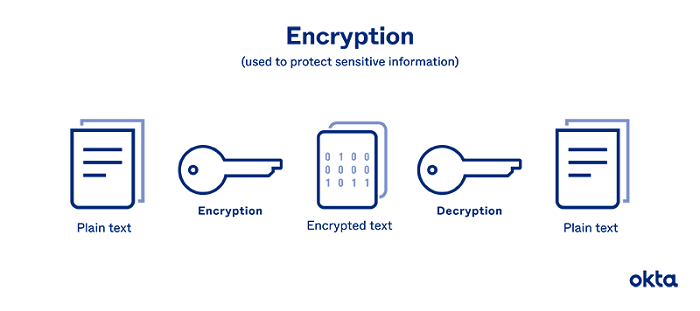
The process of encryption involves encoding data in a way that only authorized parties can read it. This is another basic but effective strategy to protect your business against website data breaches.
Different types of encryption processes can safeguard confidential data that is only meant to be shared with specific people in an organization. Only these people will be able to access and share it, keeping it in tight circles.
Online payment apps, email service providers, and messaging apps like WhatsApp use encryption to protect user privacy and boost security around sharing personal information on these platforms.
This graphic by Okta, explains encryption in simple terms:
Monitor Database Activity
Want something that gives you a high-level view of your security system? Consider monitoring database activity. This might be a new concept for many teams who are still in the early stages of adopting data security tech, but it’s worth taking a look at and can be effective for organizations of all sizes.
A database activity monitor (DAM) observes, identifies, and reports on database activities. These monitoring tools use real-time security technology to monitor all actions across the database. Additionally, they can detect abnormal and unauthorized activity, internally and externally, while gauging the effectiveness of your existing security protocols.
Like most other measures, this has multiple layers, and it’s important to consider your security needs before implementing any complex programs.
Website Data Breaches: Frequently Asked Questions
How common are website data breaches?
The number of data breaches happening in the United States is growing. For instance, Statista data shows the number of data breaches in the U.S. has drastically increased in recent years, from 662 breaches in 2010 to over a thousand breaches in 2020.
Which industries are the most affected by website data breaches?
Data from TechRepublic shows 95 percent of data breaches occurred in the government, retail, and technology sectors. Healthcare and finance industries are also particularly affected by such cyber threats. Researchers at IBM found that the healthcare and financial industries spent the most time in the data breach lifecycle, which is 329 days and 233 days, respectively.
What is the most common cause of website data breaches?
Hacking has consistently been one of the most common causes of website data breaches. Human error is also a common cause, as a lot of confidential data is accidentally leaked by employees in the organization. Losing, sharing, and leaking passwords is also a type of human error that can lead to accidental website data breaches.
What is the best way to prevent website data breaches?
Some of the best ways to protect your business from data breaches include: looking for vulnerabilities within your security system, training your employees to reduce the chance of accidental breaches, having a backup of important data, using a firewall, encrypting confidential information, and monitoring database activity.
Conclusion: Website Data Breaches
In the age of the internet, cyber threats are expected—which means you need to be prepared. Learning more about what causes breaches and finding personalized solutions to prevent those attacks can go a long way in keeping your business—and customer information—safe.
If you’d like to take this a step further, learn how to effectively manage your website, get an SSL certificate, or focus on security and trust throughout your website.
Which cybersecurity technique will you use to protect your website from hackers and data breaches?
Source: neilpatel.com

How to Make Your Site Secure: A Guide for Non-Technical Marketers
With technology quickly advancing, there is one distinct problem we are all facing: keeping our private lives private.
And while each of us can take steps in making our private data harder to steal (like enabling two-factor authentication when it is available, keeping our passwords secure, etc.), website owners, developers and marketers face a more challenging task.
We need to keep our site visitors and users safe.

You see, our users and visitors trust us.
When they visit our website, they may very well submit a form or install a script or software your site is inviting to install.
But what if your site was hacked and all of those invitations were not sent from you but from the hacker, and all that information is now owned by him?
What if your loyal customers will suffer identity theft simply because you failed to protect them and their information?
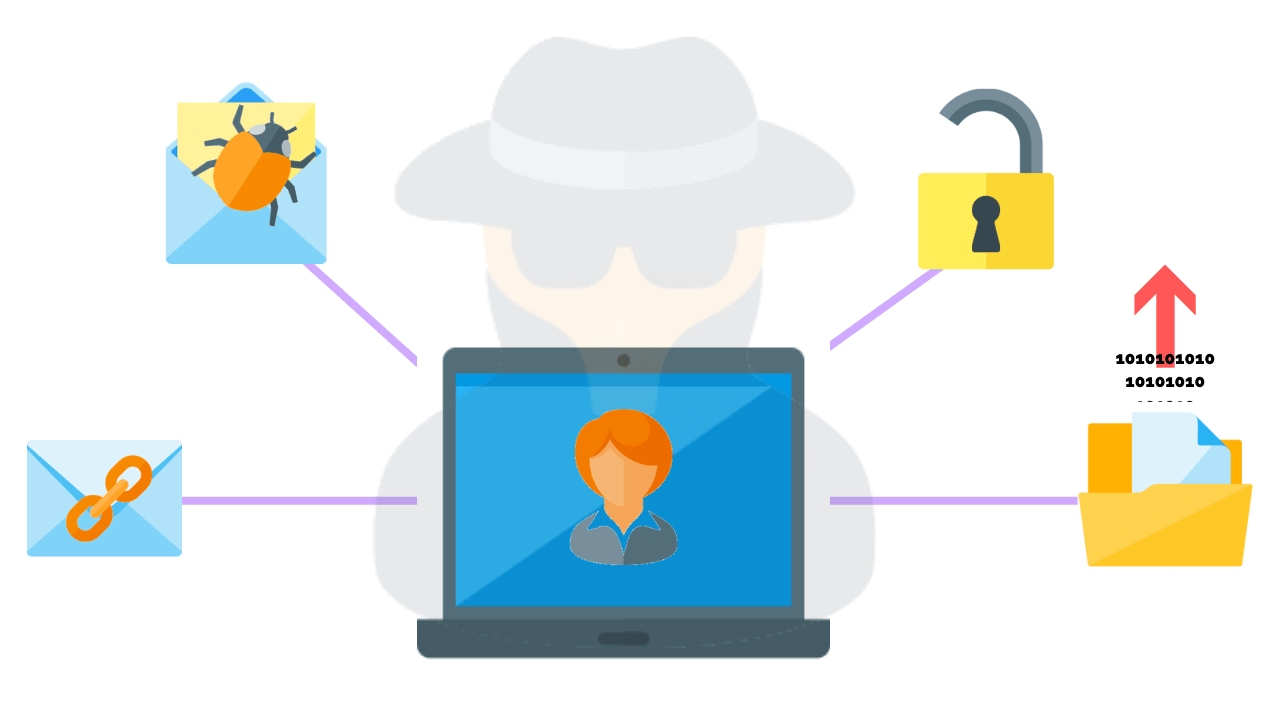
This is where a data breach is not just an inconvenience to you — it is a reputation crisis and possibly even a liability.
And cybercrime statistics are really scary:
- According to Aura, a person becomes a victim of identity theft every ten seconds
- Cybercrime increased by 600% due to the COVID-19 pandemic
- In the search by Sucuri, out of 8000 infected websites, ¾ of those were run by WordPress.
- Every month, about 4,800 websites are compromised with form-jacking code.
If you are still not convinced, security is a ranking signal.
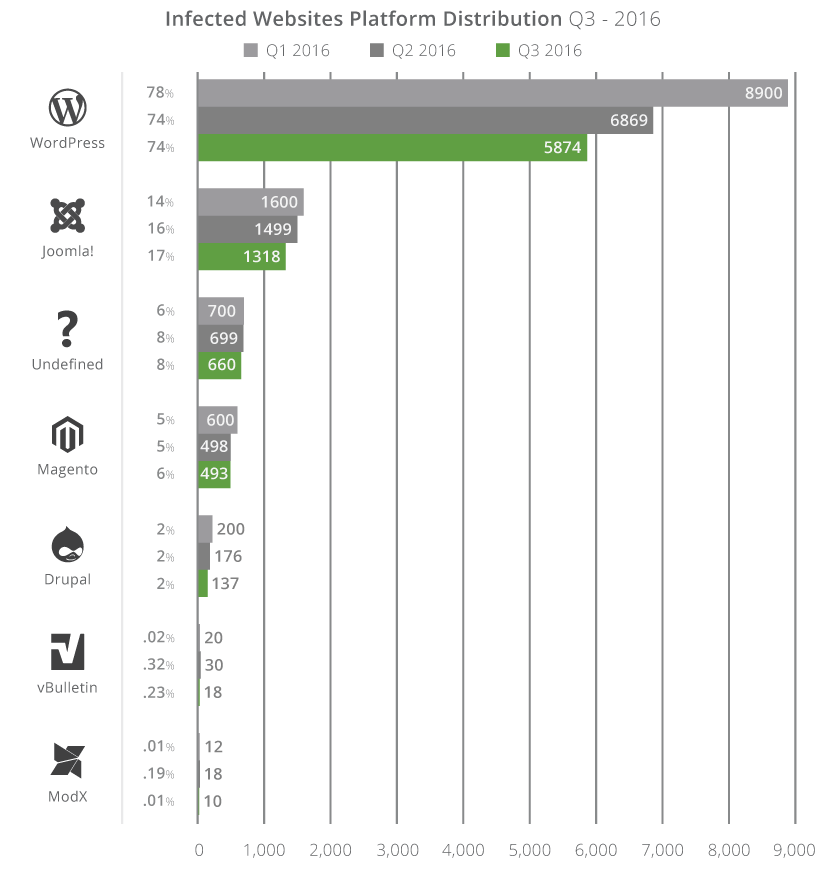
This is why Google forced most websites to switch to HTTPS protocols.
This has been a major crackdown by Google and its commitment to delivering its users to safe and reputable sources. Hypertext Transfer Protocol Secure (HTTPS) is absolutely essential in the modern-day and age, and Google is far more likely to connect its searchers to HTTPS sites rather than standard HTTP sites.
Source: Digital Eagles
Steps to Make Your Website Secure
Here are a few steps you need to take to make your site (as well as your users’ personal information) more secure:
1. Make sure your hosting service is secure.
Lots of malicious attacks happen through your hosting provider, so make sure your provider is taking all the necessary steps to keep your site secure.
Do your research.
Read your hosting provider’s reviews, search for something like [hosting-company security], [hosting-company hacked], [hosting-company security], etc.
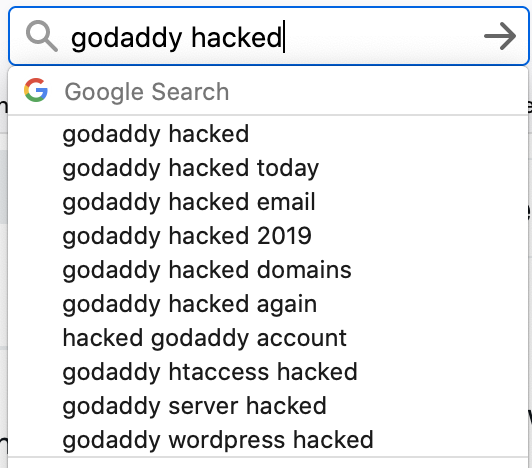
Search for your hosting provider with a query like [hosting-company security], [hosting-company hacked], [hosting-company security], etc.
Check Twitter for something like [hosting-company malware :(] or [hosting-company malware :(]. You might find out that customers are suffering from poor hosting security practices.

It is not just about the issue itself; most hosting companies have experienced at least one data breach at one time or another.
What’s more important is how they handled it.
- Did they reply to their customers?
- Did they act fast?
- Did they work with their customers on cleaning up their websites?
Check if the hosting company is responsive on Twitter and how willing they are to solve any issues.
2. Verify your site with Google Search Console.
If you need just another reason to verify your site with Google Search Console, here’s one: this is one of the fastest malware alert systems out there.
And it’s also completely free.
Google’s Search Console relies on the safe browsing API which alerts site users of possible malware attacks.
It is also used by most browsers (including, obviously, Google Chrome).
Thanks to the API, users are usually warned when they are trying to access an infected website.
Security issues Google reports to website owners.
They are categorized into three major groups:
- Malware and unwanted software: this is what can harm your site users by infecting their devices
- Hacked content: when third-party content (usual links) is added to your site
- Social engineering: this type prompts your site users to share their personal information.

Google also provides helpful instructions on how to fix each of the detected issues.
Again, the most valuable aspect of these reports is how fast they are in reporting problems.
Google will also report on your SSL (Secure Sockets Layer) and TLS (Transport Layer Security) issues, which signal possible security loopholes.
Apart from Google’s Search Console, many more security scanning tools allow you to find security loopholes in your setup and content management platforms.
3. Keep an eye on your bot traffic.
What is bot traffic?
Bot traffic is any non-human traffic to a website or app.
In many cases, bot traffic is not bad.
Bot traffic includes automatic crawlers (like Google’s crawler) and digital assistants (Siri, Alexa, etc.)
It’s a spike in bot traffic that can signal a problem.
This problem may be:
- Beginning of a DDoS attack (this is when a massive amount of traffic is being sent to kill your servers)
- Credential stuffing (when bots attempt to guess your backend login information)
- Data scraping (when your content is being automatically copied)
Finteza is a helpful tool that detects and alerts you of bot traffic spikes that may signal the beginning of a problem.

These reports are helpful because they give you more details to discuss with your developer and/or hosting provider.
Conclusion
Keeping your site secure is one of the most important fundamentals of your online presence.
Don’t ignore problems until it’s too late.
Use the easy steps above to prevent some issues and create processes to fix any security breaches fast and minimize the impact.
The post How to Make Your Site Secure: A Guide for Non-Technical Marketers appeared first on Content Marketing Consulting and Social Media Strategy.
Source: convinceandconvert.com

Best Business Security Systems
It’s a good idea to set up a business security system before you need it. For too many companies, the decision to make this investment is reactive. Their company’s physical security gets compromised, resources are lost, and employees feel unsafe.
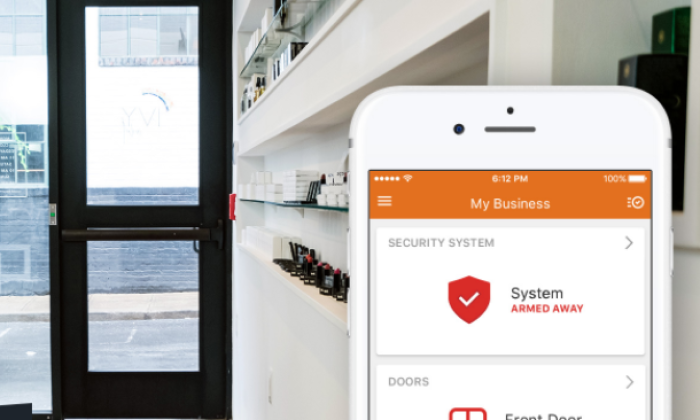
Disclosure: This content is reader-supported, which means if you click on some of our links that we may earn a commission.
A lot of people see cost as a barrier to installing a reliable business security system. That used to be true, but today, there are tons of really affordable solutions.
A small shop can set up basic video surveillance for under $300 for the first year. No joke. And the high-end systems cost nothing compared to the losses they prevent.
Don’t want to drill holes and run wires? That’s fine. There are DIY wireless systems available for a song.
And, with video storage in the cloud, most business owners can monitor all their alerts and recordings from a smartphone.
I’ve put together a list of five of the best business security systems. You’ll find lightweight options that cover the basics, as well as powerful systems with competitive pricing.
In here, there’s going to be a business security system that meets your specific needs. By the end of this post, you’ll know which one.
The Top 5 Options for Business Security Systems
- SimpliSafe – Best for DIY Security System for SMBs
- Vivint – Best for Professional Monitoring
- Alarm.com – Best Professional Security System for SMBs
- Alibi Security – Best for Upgrading Existing Security Systems
- Wyze – Best for Affordable DIY Video Surveillance
How to Choose the Best Business Security Systems for You
Pretend you are a thief. Could you break into your own business and get away with it?
Without a full business security system in place, every office or storefront is going to look like an opportunity to the wrong crowd.
But what does it take to really secure a space?
Not that much, unless you’re trying to lock down a casino or bank.
The typical workplace and even huge corporate headquarters can get by with a surprisingly modest amount of equipment.
Let’s break business security systems down into their basic elements:
- Access control
- Intrusion detection
- Video surveillance and recording
- Professional monitoring
- Installation
I’ll go over the major considerations in each section. From there, you can decide which equipment is going to work best in your space.
Access Control
One of the key responsibilities of a business security system is controlling access to the property. The products I really like to have smart locks, which can be controlled remotely.
What’s more fun than having to let someone into the office on your day off?
Plus these locks can be set to open or shut at particular times, ensuring that a building is secure even if the last person out forgets.
Many smart locks come with keypads and let you assign unique PIN codes that identify who is entering. No more missing keys.
Some of the more advanced access control features include keycard systems, which create a log of everyone coming and going.
Intrusion Detection
Adding sensors to doors and windows lets business owners know when something has been opened.
Usually, owners can configure the types of alerts they get. This means a manager might get an alert that a service door was left ajar, but only the owner would see that the safe was opened.
There are also motion sensors, which can trigger alerts or blare a warning siren to let an intruder know they’ve been detected.
Glass break sensors are triggered by the specific frequency of someone smashing a window, which can provide an alert even when a burglar is not in view or range of other equipment.
Some cameras come with built-in motion detectors, alarms, lights, and sirens. Mounting one of these cameras over an entrance can deter would-be criminals, especially if they trip the motion detector and find themselves bathed in light, frowning at a camera.
There’s actually quite a bit these cameras can do, so let’s jump to that now.
Video Surveillance & Storage
Each camera that is part of a business security system has two important jobs: capture video and store it safely.
To accomplish both these tasks, a camera has to have the right capabilities. Let’s break down each responsibility.
In terms of capturing footage, here are the core camera features to be thinking about:
- Resolution: the quality of the picture (look for 1080p or better)Field of view: how wide an angle the camera sees
- Pan: the range a camera can swivel from side to side
- Tilt: the range a camera can swivel up and down
- Zoom: the camera can reframe and enlarge part of the field of view
- Infrared: the camera can use heat signatures to improve lowlight/night vision.
Let’s say there’s one camera pointed straight down a hallway, and another in a parking lot. The hall cam doesn’t need a wide field of view, night vision, or the ability to pan/tilt/zoom.
The parking lot cam might need all those features, plus a higher resolution to keep image quality when zooming in on a car at the end of the property.
Now, surveillance footage is pretty much useless if you can’t access it when needed. In terms of video storage, here are some of the major things to think about:
- Camera type: analog, cellular, IP, and WiFi cams
- Resolution: the higher the image quality, the more storage required
- Clip capture: whether a camera records a picture every x seconds or records for y seconds after motion is detected
- Continuous recording: the camera is rolling 24/7Storage location: recordings can be stored on a video card, in the cloud, on a DVR, NVR, or some blend of these locations.
The overarching question is, how do I make sure that every camera can deliver its recordings to a centralized place where everything can be managed?
With cellular and WiFi cameras, you really just have to get power to them. WiFi cameras have to be in range, but cellular ones can be anywhere service is available. If these are battery-powered and record to a memory card, they are 100% wire-free solutions.
When it comes to IP and analog cameras, they have to connect to a recorder. If the cameras are PoE (power over ethernet), power and recording can be delivered with the same wire. If not, you’ll need to both, power the camera and wire it to the central hub.
Professional Monitoring
Some business security systems have the option to include professional monitoring. That means that emergency alerts will be routed to a security center that will contact police, fire, and/or EMS.
The cost of professional monitoring can vary widely and sometimes it is only available via a third-party service.
Installation
Some vendors offer installation for supposedly DIY systems and I recommend pricing that out. If it takes you and one other person all day to set things up, is that really more economical than paying a pro $100 to get it right before lunch?
With the more heavy-duty systems, professional installation is going to be required. Getting dozens of IP cameras wired and placed throughout a large property is not something a non-specialist should tackle.
There are also codes and regulations to consider for the non-DIY systems. Usually, a sales rep will be able to answer all your questions about the fire code and other laws that might affect your system.
It’s nothing to lose sleep over, just not a problem you want to discover with the inspector.
The Different Types of Business Security Systems
The breakdown of different types of business security systems is pretty straightforward. Depending on your needs, you may know exactly what type is going to work.
Alternatively, you may fall somewhere in between these categories. Then the decision will come down to the specific equipment that makes up the system.
If anything, I’d err on the side of caution and make extra sure you are securing the entire property, rather than trying to stretch a lighter system to its limits.
DIY Business Security Systems
The so-called DIY business security systems are made up of WiFi and cellular cameras that don’t necessarily require any extensive setup.
Since the cameras record directly to the web, there’s no need to wire them to a central recorder. Mostly it’s just mounting the cameras and plugging them into a power source.
All the cameras, sensors, locks, and other equipment are accessible from a browser or mobile app. If you are not climbing ladders, the whole installation may take no more than an hour.
DIY business security systems are really affordable, but they have their limits. They don’t typically accommodate a large number of cameras and start to lose their effectiveness at longer ranges.
Professional Business Security Systems
When it comes to business security systems that have to be installed by a professional, you’re going to get a much greater range of capabilities than with a DIY system.
For one thing, you will be able to deploy a large and complex system. This means as many cameras, sensors, and locks as necessary. All of it will be centralized in one place, regardless of the type of camera.
They’ll also have more robust access control equipment that’s designed specifically for businesses, like keycard systems.
The cameras tend to be more expensive than their DIY counterparts, but they capture better quality images, have a greater range of vision, and include enhanced night vision or other capabilities.
If you think that a DIY system won’t cut it but you’re not sure you need a commercial-grade security solution, this category is going to cater to your needs.
Commercial-Grade Business Security Systems
The biggest difference between commercial-grade and professional security systems is the range and depth of the equipment available. These are solutions that work for casinos, airports, correctional facilities, and so on.
We’re talking thermal cameras that can record body temperature so that workers clocking in can be alerted if they have a fever. They’ll be able to recognize faces and license plates, quantify foot traffic, and come in virtually indestructible casings.
They also tend to offer a much richer system to manage video surveillance at scale. Hundreds of thousands of cameras can be linked to a unified system that uses analytics to surface the most critical alerts.
Not every business needs a commercial-grade solution, but those that do shouldn’t settle for anything less.
Examples of Business Security Systems
#1 – SimpliSafe — Best DIY Security System for SMB
SimpliSafe is one of the most popular security systems for homes and businesses. Why? The equipment is easy to install and gets the job done.
SimpliSafe’s hardware basically is plug and play, with the entire system controlled from its mobile app. From the base station, which is the core of the system, it’s possible to build out a fairly extensive system with their range of sensors and multipurpose SimpliCam ($99 indoor, $119 outdoor).
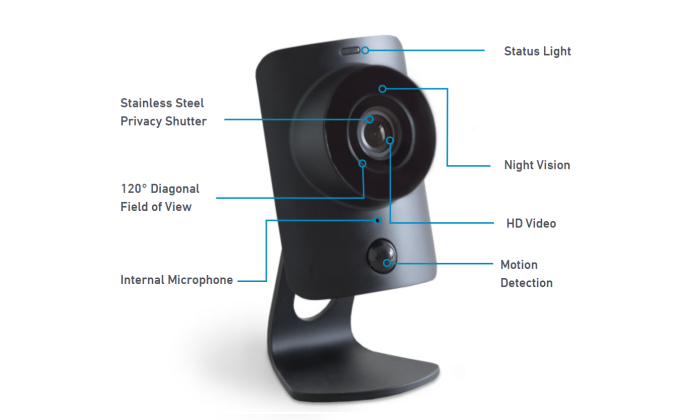
Because these cameras have cellular and WiFi connection, they only need the power to start working right away. This cuts down on setup hassles and gives more flexibility in terms of how far you can place cameras from the base station.
From the app, you can arm/disarm your system remotely. You can also create unique PIN codes so you know who exactly is accessing the building. Create one code for cleaners, one code for each employee, and grant or deny access without ever having to come in.
A lot of SMBs lease space that someone else is responsible for. When the landline goes down or there is a power outage, they can rely on SimpliSafe’s cellular cams with battery backup to maintain security.
Some of the highlights of a SimpliSafe business security system include:
- HD video/audio cameras
- Smart locks
- Sensors for entry, motion, glass break, temperature, and water
- 105dB siren (about as loud as a car horn)Smoke and carbon monoxide detectors
- Centralized dashboard for multi-site management24/7 alerts
I really like it for SMBs because the setup is truly DIY and covers all the bases of business security. They have dedicated business packages for offices, storefronts, and restaurants which come with tools designed to meet the challenges of each space.
Plus, professional monitoring services are really affordable. It’s 50¢/day for Standard and 83¢/day for Interactive, which comes with a lot more features.
With either plan, when an alarm is tripped, SimpliSafe confirms with video verification that the threat is real before dispatching police.
They also provide assistance with the permitting process for security systems, which takes another responsibility off the plate of SMBs located in cities or states with important regulations.
There are no contracts with SimpliSafe and you can cancel any time. On top of the extremely competitive price, SimpliSafe offers free shipping, free returns, and a 60-day money-back guarantee. They’ll even pay for the return shipping.
That gives you basically two months to figure out if SimpliSafe works in practice. And if it doesn’t, don’t pay.
#2 – Vivint — Best for Professional Monitoring
Vivint is a great professional business security system. For companies that can’t use a DIY solution, but they also don’t need the hefty services associated with commercial-grade security, Vivint strikes the right balance.
They have a wide range of equipment and 24/7 professional monitoring comes with every plan they offer.
Vivint doesn’t outsource monitoring to a third-party service. Since it’s kept in-house, the average wait time for an emergency is eight seconds. That’s 7.5 times faster than the national average.
Cellular connection with battery backup will keep the system operational during a power outage, so the 24/7 professional monitoring remains unbroken.
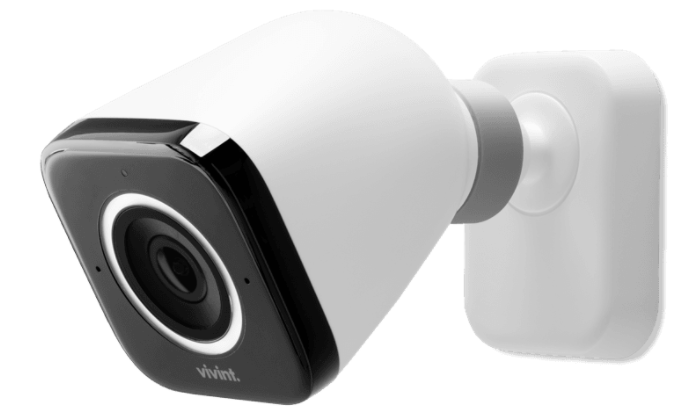
There are three motion-activated cameras that Vivint offers, all of which deliver real-time alerts to you and the Vivint security team.
My favorite, the Outdoor Camera Pro, comes with Smart Sentry detection, which recognizes human movement. It lets off a loud chirping noise that draws the intruder’s eyes up to the camera where a red recording light lets them know you’re on camera.
With the two-way voice feature, you can hear what’s happening and deliver your own choice words about the attempted intrusion.
Vivint’s outdoor camera also captures really high-quality images. With the 4k image sensor, it’s possible to zoom in on faces and license places, even in the dark.
Every camera Vivint makes is just as feature-rich as their outdoor cam, and I didn’t even cover everything that comes with it. Their other business security features are similarly robust, including:
- Wireless security camsPan and tilt cams
- Doorbell cams
- Door and window sensors
- Sensors: Door and window, recessed door, motion, tilt, glass break, temperature, and flood
- Smoke and carbon monoxide detectors
- Medical pendants
- Smart locksSmart thermostats
The Vivint Smart Drive stores all captured video, automatically creating clips whenever sensors detect unusual activity. Everything stored can be viewed, managed, and controlled on the mobile app.
The Smart Drive automatically stores 30 days of continuous footage. This is nice because businesses don’t always know something has happened immediately, even with professional monitoring.
If someone is playing funny money with the register, being able to look back and zoom in on the cash drawer can be crucial.
You can call Vivint to get a price for how much a business security system is going to cost. Be advised, the equipment is fairly expensive.
The Outdoor Camera Pro is $399.99 purchased alone, but they offer zero-interest payment plans broken down over the course of years to help keep the monthly payment competitive.
All Vivint equipment comes with a lifetime warranty and strong encryption to prevent the footage from being accessed by unauthorized users.
There’s just a lot of peace of mind you get with Vivint because you know they are always there if something happens.
#3 – Alarm.com — Best Professional Business Security System for SMBs
Alarm.com is famous for both its home and business security systems. Their technology is used to protect more than 5 million properties and they have an A+ rating from the Better Business Bureau.
For business, they are focused on serving small to mid-market business owners. This means they don’t have the same range of products as commercial-grade solutions, but what they do offer is tailor-made for the challenges SMBs face every day.
Their Smarter Business Security centralizes all security cameras, lights, and locks for easy automation and control. Information that the devices capture is reported on clear dashboards from the website or mobile app.
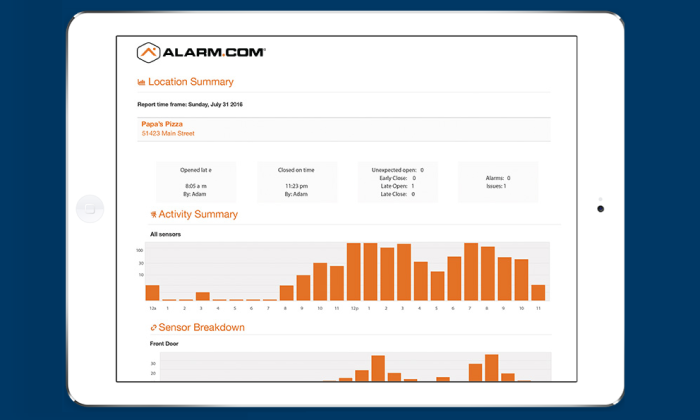
You can set schedules to automatically lock doors at a certain time each day of the week as an extra safeguard. If there is an intrusion detected, real-time viewing allows owners to see if the disturbance warrants calling the police.
Alarm.com can be deployed across multiple sites, where the reporting features can be really helpful in ways beyond business security.
For one, you can visualize trends, identifying rush times, and customer traffic.
And since the lights and the thermostat are connected to the alarm system, the building will always be comfortable when people are there and energy-efficient when they’re not. Alerts prevent a window from not being shut all the way, which limits waste and eliminates a potential security breach.
In terms of cameras and equipment, Alarm.com offers:
Indoor/outdoor camerasWired/wireless camerasFixed/Pan camerasSmart locksKeycard systemsEntry sensors
Analog cameras can be connected to your Alarm.com system and every camera they sell comes with any time mobile access, instant video alerts, intelligent clip capture, and real-time streaming.
To purchase an Alarm.com business security system, you’ll have to reach out to an authorized service provider in your area. Depending on your needs and requirements, all of their providers offer a range of self-service and professional installation options.
Alarm.com is a step above the full DIY systems. It unifies intrusion detection, access control, video surveillance, and energy management into a single, intuitive app.
Business owners are always informed and their property is always safe.
#4 – Alibi Security — Best for Upgrading Existing Security Systems
Alibi Security is an umbrella company that sells equipment from a number of high-end security brands. Because of this, they offer an incredibly wide range of devices that can tie into any system.
It’s a great commercial-grade option for companies that want to upgrade instead of replacing their existing infrastructure. No matter how you have deployed your system in the past, Alibi has the tools to help you improve it.
There’s just a stunning range of top-of-the-line equipment that can be adapted to fit any scenario. Just looking at security cameras, for instance, Alibi has:
- Cloud IP cameras
- HD-TVI Cameras
- Network IP cameras
- Wireless cameras
- Pan-tilt-zoom cameras
- Doorbell cameras
- Deterrent cameras
- Hidden cameras
- Micro camerasBoard cameras
- Snake cameras
What does a hidden camera look like? Alibi has some that look like ceiling speakers, motion sensors, and even smoke detectors.
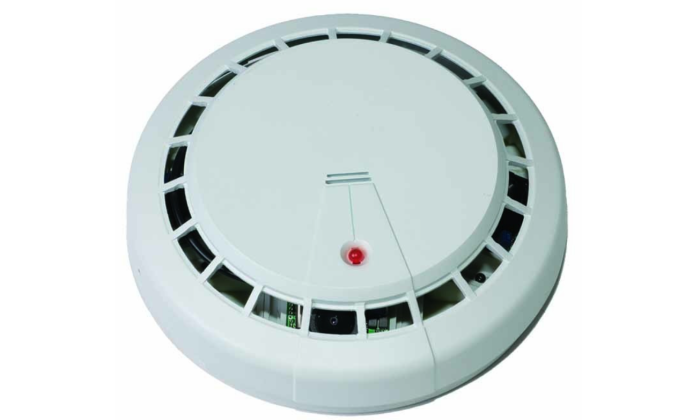
They have the video recording solutions to completely support any array of cameras—analog, IP, wireless… it doesn’t matter. All Alibi recorders have common management software, centralizing operations, and decreasing the learning curve for users.
When it comes to intrusion detection and access control, Alibi has a full set of hardware and software to set up the keypad, keycard, and request-to-exit systems.
Much of Alibi’s equipment is compliant with the National Defense Authorization Act, which means it’s good enough for the U.S. Military.
You’ll have to get in touch with a licensed Alibi dealer in order to get pricing. It’s going to be on the high end like other commercial-grade security solutions tend to be.
Where it stands out from its direct competitors is the ease with which Alibi’s equipment integrates with your existing hardware. Since all of their HD/TVI recorders have Hybrid+ technology, it’s not hard to migrate from analog to HD or to install a hybrid analog/HD solution.
Adding more cameras is also easy, as many Alibi recorders support up to 64 IP channels that are each pre-licensed and fully-enabled.
Easy to tie in and easy to scale out, Alibi is the choice for companies looking to beef up their security with the latest and greatest technology.
#5 – Wyze — Best For Affordable DIY Video Surveillance
Wyze has ridiculously low priced cameras that get the job done for businesses that need to record what happens on-site.
Really, Wyze is aimed at homeowners more than business, but if all you need is video surveillance, what’s the difference?
The latest version of the Wyze Cam is $19.99. It’s small, yet it’s got 1080p color night vision and IP65 weather resistance. The Wyze Outdoor Starter Bundle ($49.99), which comes with one outdoor cam and a required base station, lets you mount a cam anywhere.
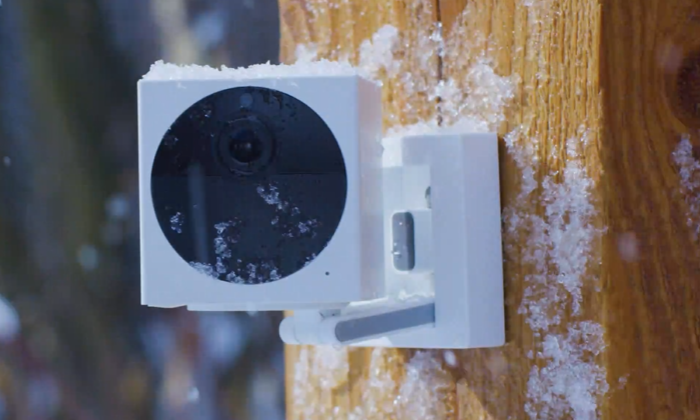
Really, anywhere. The outdoor cam is wire-free and powered by batteries that last 3-6 months. With Wyze, there’s a lot of freedom to get a video surveillance system set up at a very little cost.
The Wyze Cam Pan ($29.99) can spin 360° in under three seconds. It also has motion detection so it can follow the action. This is essentially at one-third to one-tenth the cost of most other cameras that can pan.
Some of the Wyze smart home products are really helpful for business owners. Wyze Bulbs, for instance, connect to WiFi to give you the ability to control them at once or individually.
Change the light color temperature to better suit the mood of a restaurant—soft and warm for the diners and then bright as day for the nighttime clean up crew. Set a schedule so lights come on during the night to make would-be intruders think someone is there.
Some of the other nice products and camera capabilities include:
- Doorbell camera/intercom
- Smart thermostats
- Smart locksMotion detection sirens
- Motion detection zonesMobile app
- Smoke and carbon monoxide alerts
Beyond the motion detection siren on the Wyze Cam, they don’t have any products for intrusion detection, though a new line of Wyze Sense products is on the horizon.
In terms of access control, they offer the smart lock ($99) and keypad ($20) that fits over most single-cylinder deadbolts. It will give you a record of everyone who keys in and out and alert you if the door is open.
For video storage, the Basic plan is free and comes with 14-day rolling cloud storage, though it only captures a 12-second video when it detects motion or sound. There’s also a five-minute cooldown period before you can see the video.
My guess is that a lot of business owners are going to want the CamPlus plan ($1.25/month per camera). It’s a very competitive price and comes with unlimited video length recordings and no cooldown period.
At the end of the day, several Wyze cameras are going to deliver 1080p video surveillance for well under $300 in the first year, including the cost of the equipment.
Summary
Some tasks are really hard to define. Securing a business is not one of them.
The goals are clear and the stakes are high. Offices, shops, restaurants, and warehouses are responsible for keeping their shared space safe.
It’s not just about protecting assets. A business’ reputation with staff and customers are on the line.
For SMBs that want a security system they can set up themselves, SimpliSafe is a really great option. It’s got the full range of intrusion detection, access control, and video surveillance necessary, yet the system remains easy to deploy and manage.
If you only need video surveillance, the best DIY option is definitely Wyze. The price is impossible to beat and the cameras are surprisingly good.
Should DIY security systems not rise to the challenge, Alarm.com can outfit a business completely. Whether they protect one or many sites, owners get total oversight of their business security in the sleek interface.
Vivint is an excellent choice for businesses that need professional monitoring. Their equipment is really solid and their security team will verify the incident over video before alerting the authorities. Cutting down on false alarms is huge for ensuring a quick, reliable response.
Looking at commercial-grade solutions, Alibi Security is a really strong choice. Not only do they offer best-in-class security solutions, but they’ll also integrate seamlessly with your existing stack. For businesses that want to evolve their security in the right direction, Alibi is it.
The post, Best Business Security Systems appeared first on Neil Patel.
Source: feedproxy.google.com

When IoTs Become BOTs, The Dark Side of Connectedness
Each day our lives become more connected. We revel in our mastery over our domain as we tap on smartphones to change the heat in our home, see who’s at the front door or remotely start our car on a snowy morning.

Connectivity makes our lives easier, and more enjoyable.
There is a dark side though to all of this connectedness, if we can control these devices then it’s possible others can as well.
Last Friday we saw a harbinger of what can be achieved with the Internet of Things (IoT) devices that are poorly designed.
At one point Dyn reported 10s of millions of IoT device IP addresses that were sending them huge volumes of bogus network traffic.
Dyn is one of the root Name Servers on the Internet.
This congestion effectively slowed access to a crawl for east coast US users of Amazon, Twitter, Github, Reddit, and many other popular sites.
The compromised IoT devices all appear to be built using the Swiss Army knife of Embedded Linux, BusyBox, and as such might not be readily patchable.
Most of these IoT devices are webcams, smart DVRs, and home routers, but they are just the tip of the 1.2 million device iceberg that is the Mirai Botnet.

To put this number in perspective the current active duty strength of the US Armed Forces is nearly the same number, 1.28 million.
Image all of our active-duty military sitting at keyboards running programs to attack a single website, that’s the power that “Anna_Senpai” the single person behind Mirai wields.
Now by contrast Mirai isn’t the largest BOTnet we’ve ever seen, others like Conficker or Cutwall were larger, but this is the first one built entirely of IoT devices.
So how can we cut Mirai off at the knees?
Well, it’s actually pretty simple, create a unique user id and password on all your IoT devices.
All the devices in Mirai were hijacked because the owners of these devices never changed the product’s default user id or password.
If you’re still running with the defaults on your home router and other IoT devices, please change them now.

You may be a slave to Mirai, and not even know it.
What if you’re the next target for Mirai, how can you defend yourself?
Turns out Dyn wasn’t the first victim, a month earlier Mirai was used to attack Brian Krebs, noted cyber security blogger.
Brian Krebs had recently published an article on a company that sold DDoS as a service.
At its peak the DDoS assault against his Blog reached 620 Gigabits/second, effectively silencing Krebs for a short time.
When attackers are this diverse the most effective solution is often to distribute the attack load across numerous devices and deploy special hardware filtering in silicon at the edge that is designed to mitigate these attacks.

Brian Krebs’s case,
In Brian Krebs’s case, he moved over to Google’s “Project Shield” a platform designed to host journalists who otherwise might be silenced by DDoS attacks.
Russell Stern has served as President and CEO at Solarflare Communications since 2004.
He was formerly President and CEO at JNI Corporation in San Diego, California. Prior to JNI, Stern served as General Manager and COO at Quantum Corporation.
Source: gigaom.com

5 Common Types of SPAM & How You Can Protect Yourself Against Them
If you own a website, especially one with English content, chances are that you will get spammed, sooner or later. If you don’t start protecting yourself as soon as possible, you will definitely have some trouble with it.
To help you out, we’ve gathered a list of the 5 most common types of SPAM and what you can do to protect yourself against them. You’ll see what exactly SPAM is, why people practice it and how you can fight it back.

If you’ve been in business for a while, then you’ve probably dealt with it already. However, if you’re just starting out, you probably have a lot of things on your mind. Protection against spam might get overlooked. It might not be a big problem at first, but it can get pretty bad if left unattended.
What Is SPAM and Why Does It Exist?
There are two definitions for SPAM:
- A tinned meat product made mainly from ham.
- Irrelevant or unsolicited messages are sent over the Internet, typically to a large number of users, for the purposes of advertising, phishing, spreading malware, etc.
Both these definitions are accurate. But why did I cover them both? Well, just as a fun fact. Internet SPAM actually gets its name from the canned meat brand called SPAM.
SPAM cans were very popular and would often take up large spaces in stores. You could find them everywhere in very large quantities.
When internet mass messaging started to arise, the name SPAM was mentioned somewhere on a forum. It stuck with it and the phenomenon eventually got more popular than canned food itself.
Today, ask someone if they know what SPAM is and they will probably refer to it as unsolicited messages over the internet.

In the early days of the internet, SPAM was usually limited to e-mails but, over the years, internet SPAM has evolved.
Many things are now considered to be SPAM, from sending e-mails to blasting comments on websites.
So why do people use SPAM as a marketing method? Well… in short, because it works. It’s becoming harder to do it because of filters and advanced technology, but it still works.
Cold selling is still very effective. If you’ve watched Wolf of the Wall Street then you know how this works.
The difference was that Jordan Belford was cold calling people he knew were interested in stocks. A spammer often doesn’t care about that.
They just collect a huge number of e-mails and then blast them with any offer they have. Not once, but continuously.
In SEO, SPAM is usually a byproduct of BlackHat SEO. In order to promote their offers, spammers use techniques like keyword stuffing and article spinning (an automatic rewriting of content, using software) as well as automatic link building.
You should never engage in such techniques, as it could harm your business and even bring legal issues.
However, this article isn’t about what you shouldn’t be doing, but about how to protect yourself when others try to do shady things. Although spam and scam have many things in common, we’re not going to cover the ‘business’ types behind SPAM, but the methods used to do it.
5 Most Common Types of SPAM
These being said, here are 5 of the most common methods spammers use and how you can effectively protect yourself against them.
1. Comment Spam
Comment spam is awful. If you get hit by one of these, you’ll be annoyed.
Comment spam is used to build backlinks.
The spammer uses software, such as ScrapeBox, to find potential targets and blasts them with comments. The comments are useless to the victim but create backlinks to the spammer’s website.
You might think that removing the possibility of adding links will discourage spammers to target your website.
However, this is rarely the case, since most spammers don’t spend too much time checking these things. They just blast everything in their way, as long as they’re related to their niche.
Have a glimpse at the website below. This is what happened because I forgot to protect from comment spam and left it unmonitored for a while:
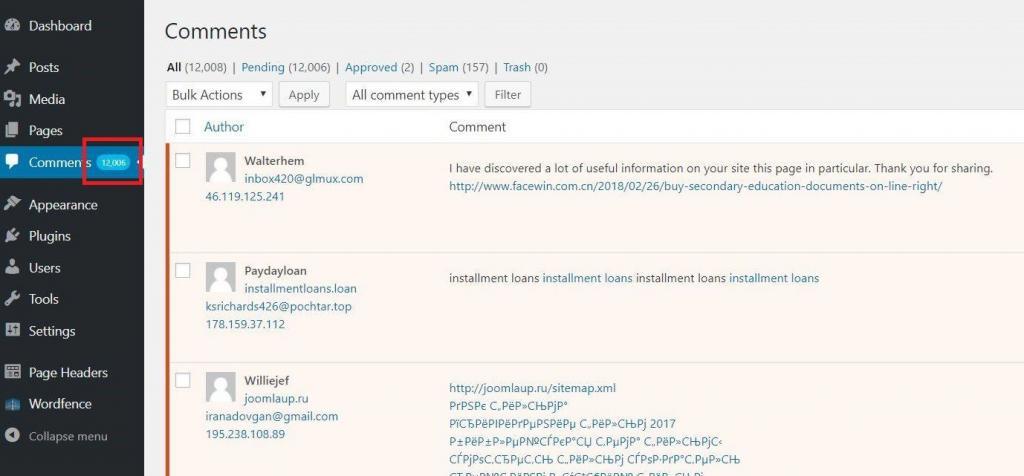
Website being spammed with comments
Yes, that’s right. Over 12,000 spammy comments. As you can see, none of these was actually live, since they weren’t auto-approved.
Things get even worse if you have them automatically approved, as spammers usually trade these assets between them.
The spam above resulted in my server getting slow and Google banning my IP for Gmail. That’s actually how I found out about the SPAM. The WordPress notifications were so many in such a short time that Google sent them directly in the Spam section, so I didn’t notice them until I couldn’t send any e-mails at all through my business addresses.
The mistake:
Not using a Captcha. I used this WordPress plugin to remove all comments at once. Manually deleting them would’ve taken months.
If you’re on another popular platform or CMS (Content Management System), I’m sure you can find similar plugins by searching Google.
Solution #1.
I added a Google Recaptcha plugin on every other section of the website, login page, contact forms, etc. You can use any captcha plugin, but note that there is software out there that can solve these automatically.
Spammers even use human Captcha solving farms from developing countries.
Solution #2.
Activate the Akismet Anti-Spam plugin. It comes pre-installed with WordPress, it’s easy to set up and it’s very effective. Again, similar plugins should be available for other platforms.
You should be safe to auto-approve comments with this plugin installed. However, I recommend that you spend some time each week manually approving comments.
Even with Captchas and Anti-Spam plugins, it’s still a good idea to manually approve comments on your website.
In the end, I removed the comments section altogether, since I don’t really need it on that website. But that’s not the best solution. It might sometimes be a fit but, in general, comments are very useful for SEO.
Even 1 year after the publication of some content, if it’s evergreen, comments will start rolling in. This will constantly update your page and we all know Google likes fresh content that keeps getting updated.
You can also force users to log in if they want to comment on your blog. However, this discourages even real users from commenting so it can harm you as well. It’s good however for an eCommerce store, where you most want clients to be commenting on your products.
Although spammy links might help a website rank in the short run, it’s not a suitable strategy for serious businesses.
As soon as Google catches a website committing SPAM (sounds like a crime now, it probably should be), it drops it and its chances of ever ranking again are usually pretty low.
Still, even with those risks, people still do it. It wouldn’t be the case, if it didn’t bring them any success (by success I mean $$$).
2. Trackback Spam
Trackbacks were created with the intention of being useful. In a way, they are. Their purpose is to notify the webmaster of new backlinks by creating a link back to the source of the backlink.
In other words, when someone links to you, your website generates a link back to them. This way, you can notice it and quickly establish a connection with the webmasters that mentioned you. This helps a lot with further promotion.
However, spammers quickly noticed that they can easily profit from this.
The mistake:
If trackbacks are left unmonitored, spammers can create links to your website from their website. Your website will then respond with a trackback.
After the trackback is live, they remove the link to your website, making it look like you’re the one linking to them. Trackback spam acts very much like comment spam.
Solution:
You can disable trackbacks and pingbacks from the Discussion Settings in the WordPress Dashboard.
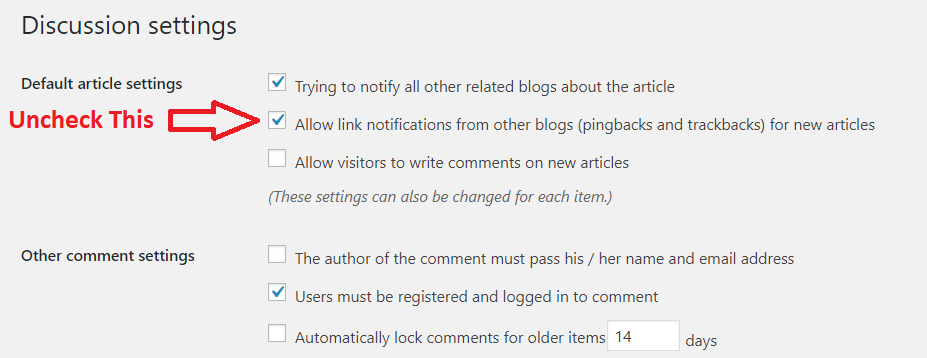
Disabling trackbacks from the WordPress Dashboard
Disabling trackbacks from the WP Dash won’t affect existing posts. You need to manually disable them. To do this quickly, click on All Posts.
From the Screen Options in the top right corner, select the number of items per page to 999. This will stress your internet and PC out, so if you think they can’t handle it, put a lower number and do the action multiple times, on all pages.
After that, select all your articles with the checkmarks and click on Edit. You should be bulk editing all your posts now. You can then disable the Trackbacks and hit the save button.
Note that if you disable trackbacks, you won’t be able to know who linked to you unless you use a backlink analysis tool or some web mention notification tool, like BrandMentions.
Since trackbacks are basically comments, you can use the Akismet plugin again to protect your website.
3. Negative SEO Attack
A negative SEO Attack is a type of SPAM that can really harm you and your business. Its purpose is to make Google think that you’re the one performing BlackHat SEO tactics.
It’s usually the work of nasty competitors trying to pull you down instead of lifting them up. Negative SEO can take many forms, like hacking a website, but we will be talking about mass link building.
Although Google said that Penguin 4.0 acts in real-time and will ignore spammy links, such as the ones created by Negative SEO Attacks, the truth is that Negative SEO Attacks are still effective.
cognitiveSEO clients commonly use the toolset after a sudden drop in rankings. Many times, they spot massive amounts of spammy and irrelevant links built in a short amount of time, obviously, not by them. Their backlink profile looks something like this:
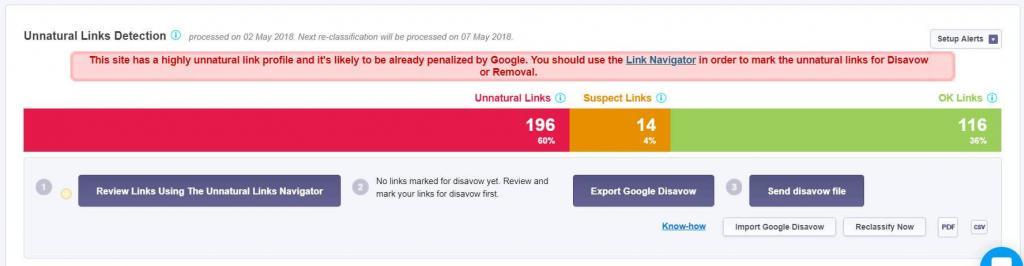
Screenshot from the cognitiveSEO Unnatural Link Detection Tool
Mistake:
Unfortunately, there’s not much you can do against negative SEO attacks and there is no obvious mistake except for not constantly monitoring your website. The links will be created on various websites and they are practically impossible to remove.
Your best bet is to use the Disavow Tool from the Google Search Console to tell Google you don’t want those links to be taken into account.
But how do you know which links are bad and which links are good? You’ve guessed it!
Solution:
You can use cognitiveSEO’s Unnatural Link Detection Tool. After the tool identifies the bad links, you can mark them for disavow and export them to a file formatted especially for the Google Disavow Tool.
The best protection against Negative SEO Attacks is prevention. You have to spot the attack as soon as it happens in order to effectively fight against it. Start tracking your backlinks now to keep your website safe.
4. Spiders, Bots and DDoS Attacks
Bots and Spiders come to your website for various reasons. It’s either a search engine crawler or a tool trying to get information from your website, such as what sites you’re linking to (wink wink).
Although they aren’t generally harmful, people can use them to overload your server’s bandwidth, firewall or CPU.
This type of attack is called a DDoS (Distributed Denial of Service) attack and it’s pretty much just a very large amount of fake traffic being sent to your website in a short amount of time.
Mistake:
Again, there is no obvious mistake here except for not keeping an eye on your website.
Solution#1:
The first thing you can do to protect yourself is to install a really good WordPress security plugin (like WordFence, for instance).
This will usually protect your website from most harmful things, such as brute force attacks, malware or any other hack attempts.
CloudFlare can also offer very effective DDoS protection. The tool passes the traffic coming to your website through its filters and only lets the good one pass.
The tool has a free version, it’s pretty easy to set up and even provides your website with free SSL. Before accessing your website, your users will see something like this:
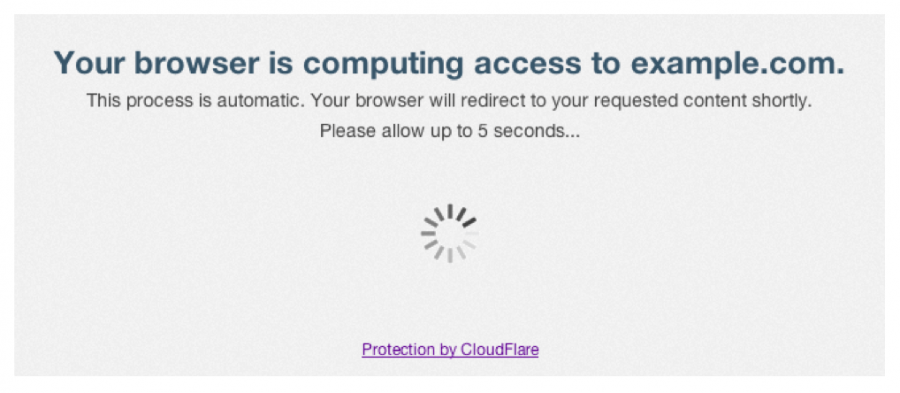
CloudFlare DDoS Protection loading screen
The downside of this is, as the image above says, +5 seconds loading time. Increased website load time can drop conversions.
Google likes fast websites and this sort of tool slows your website down. There’s a trick you can do to overcome this. It’s a little bit more of a hassle, but it works.
Solution #2:
You can use Google Analytics to alert you of traffic spikes so you can check them out quickly. If something looks suspicious, you can go into your CloudFlare account and enable the DDoS protection service temporarily.
In your Analytics Dashboard, go to Customization > Custom Alerts. There you can Manage Alerts and Create a new Alert. Set up your name, select Day for Periods, check the Email notification or even add a phone number.
Then, select “All traffic” and “Sessions greater than” for the alert conditions. In the Value field, you should enter your estimated daily traffic, times two. So, if you have 100 users per day, you can set up 200 as the value, if you have 500 you can set up 1000 and so on.
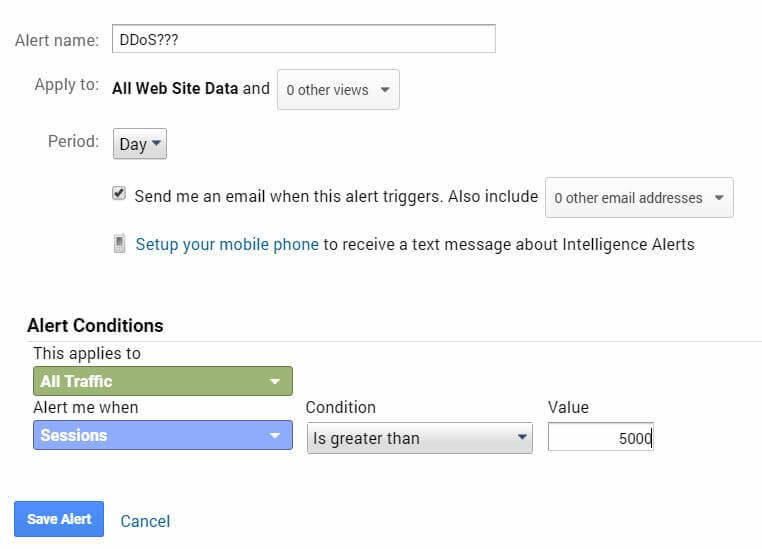
Creating high traffic number alert in Google Analytics
The alert will notify you whenever your daily traffic is double than usual. You constantly have to adapt this alert as your website grows. Hopefully, you’ll have to adapt it often.
The minimum time frame for the alert is one day. That’s plenty of time for attackers to crash your site. However, DDoS attacks are usually repeated and can last for days so it’s still a good thing to know that it’s happening.
If you search enough, there are probably other ways to get alerted faster when traffic is spiking, either via a plugin on the website itself or directly via the server.
5. E-mail Spam
E-mail Spam is really hard to fight against. If your e-mail gets on the hands of just one mass spammer, it’s pretty much compromised. Luckily for us, Google does a pretty good job at differentiating spam from real, useful e-mails.
However, there’s a downside. Most of the time, there’s a higher chance of important e-mails getting into the Spam folder, than spam e-mails getting into the inbox. I’m not sure if I preferred it the other way or which one would be better.

There are two ways you can get spammed on your e-mail address. One is via your contact form and the other one is through direct e-mail.
Solution #1:
The contact form issue is really easy to fix if you use a Captcha, just like for the Comments and Trackbacks SPAM. But, like many other websites, you probably have [email protected] somewhere on your website, be it on the contact page or in the footer section.
If you do, then know that your e-mail can be scraped and added to spam lists.
Solution #2:
Another way to protect yourself is to use variations such as name [@] yourdomain.com or name at yourdomain.com and so on. Another option would be to use an image of the e-mail address.
The downside is that the users’ experience will be lower, as they won’t be able to copy-paste the address. But nor will the bots.
You can use variations like a name at yourdomain.com instead of [email protected] to prevent your e-mail from being scraped.
Spammers can also get your e-mail through opt-in forms. If you had the shiny object syndrome in your early days of digital marketing, you’ve probably subscribed to hundreds, if not thousands of e-mail lists.
Well, chances are that some of those guys actually added your e-mail to their spam list.
Spammers also trade lists between them and cross-promote, so if you’re on just one spam list, be sure that you’ll be in another and another and another.
Solution #3:
If you’ve subscribed to too many e-mail lists, you can use Unroll.me to bulk unsubscribe from them. It’s a really useful tool.
I’ve realized spammers kept selling my address only when I used this tool to unsubscribe from everything and still got a ton of e-mails.
Anti-SPAM Golden Rules
Before you go, let’s recap some of the most important things that you should do and shouldn’t do in order to protect yourself from SPAM:
Always use Captcha:
Captcha is the first line of defence against SPAM in any circumstances. Without it, any bot or software can easily post something on your website.
If your website is crawlable and indexed by Google, make sure you have some sort of Captcha installed on your forms, login pages and comment sections.
Keep software up to date:
If your website’s software gets old, it also gets vulnerable. A client has recently spotted weird articles on her website that she did not post, as well as a multitude of comments rolling in.
It turned out that her website had been hacked and the hackers enabled comments and started adding guest posts with links to their websites. You should also install some sort of security plugin.
Don’t subscribe to e-mail lists with primary e-mail:
If you really need to download that free PDF, make sure you download it with an e-mail address that you won’t use daily or on which you don’t receive important e-mails.
You never know who lies behind that opt-in form. If you start getting spammed, you can miss important e-mails from clients and business partners.
Monitor your backlinks:
In order to prevent your website from a negative SEO attack, you have to constantly monitor your backlinks activity. Any sudden spikes in the number of backlinks pointing to your site can indicate the beginning of a link spam session. If ignored or overlooked, it can become a real pain.
I really hope this article will help you keep safe from SPAM. If you have any questions or suggestions, feel free to leave them in the comments section. The Captcha secured, spam filtered, manually approved comment section.
The post 5 Common Types of SPAM & How You Can Protect Yourself Against Them appeared first on SEO Blog | cognitiveSEO Blog on SEO Tactics & Strategies.
Source: cognitiveseo.com