
Tag Archives for " search marketing "

7 Reasons Why Yandex Matters for SEO
If you’re looking to break into the Russian online market, you’ve probably come across the search engine Yandex. At this point, you likely already want to optimize your site for Yandex SEO. However, before you start loading your site with Russian backlinks, let’s take some time to break down this search engine.
Just because you’ve optimized for Google doesn’t mean you’re fully optimized for Yandex. Fortunately, by the time we’re done here, you’ll walk away with both an improved site and a strong understanding of what makes this Russian powerhouse of a search engine so unique.
What Is Yandex?
Yandex is one of the Russian Federation’s leading search engines, making up nearly 60 percent of the Russian search engine market share. With 85 million monthly users, Yandex is the most visited online resource in Russia.
Think of Yandex as the Google of Russia. Of course, they dominate the search engine space in Russia, but that’s just the tip of the iceberg. Yandex supports Russian users with everything from food delivery and maps to news and a voice assistant.
While it may function a bit differently from the search engines you already know and love, Yandex can still be a powerful tool when leveraged properly.
If you’re looking to expand your brand into Russia, you’re going to want this search engine on your side. Plus, as one of the top five search engines worldwide, your brand can’t afford to be invisible to Yandex. That’s just leaving money on the table!
Why Should You Optimize for Yandex SEO?
Don’t make the mistake of thinking that this is a Bing versus Google situation. If you’re trying to break into the Russian market, Yandex is not optional.
Of course, the reason you’ll need to optimize is that it doesn’t operate the same way other search engines do. They prioritize different elements and focus on different factors.
When it comes to technical SEO, Yandex struggles with crawling and indexing JavaScript websites. Single-page applications developed in JavaScript aren’t pre-rendered or indexed by Yandex.
Yandex can use unique content result blocks and snippets to augment a search results page, just like Google. However, with Yandex, you can see how eligible you are for different result types. You’ll be able to easily identify the issues that impact your eligibility and optimize accordingly.
We’ll tackle the difference in behavioral factors and how certain signals impact your search results later, but for now, it’s worth mentioning that Google and Yandex don’t value the same factors equally.
Google may give user behavior signals some unspecified importance, but Yandex couldn’t be clearer. User signals matter to Yandex and their users, from traffic sources and search queries to platforms and conversions.
Yandex has its own unique frequency when it comes to SEO, which means that having a successful SEO marketing strategy depends on whether or not you can properly optimize.
Why Does Yandex Matter for Local SEO?
It’s important to keep in mind that local SEO works a bit differently in Russia. Since 2006, Yandex has allowed users to sift through national or regional search results. Yandex checks certain signals like your website’s IP address, contact info, and domain registration.
Why does that matter? Well, if any of that information is wrong or mislabeled, you likely won’t rank highly in local searches, regardless of your marketing strategy. Fortunately, Yandex’s Webmaster service can make regional binding a simple process.

Time after time, Russian consumers have shown they prefer relying on Yandex for their search engine needs. More importantly, trying to navigate the local SEO landscape without Yandex makes your marketing efforts significantly less effective, especially if you want to compete with established local brands.
If you want to dominate local Russian SEO, you’ll need the search engine that more than half of the country uses. When you’re optimizing for local SEO, it’s crucial that you make it as easy for locals to interact as humanly possible. It may take a bit of work to fully optimize for this search engine, but that’s the price of smart marketing.
7 Best Practices for Organic Yandex SEO
Now we understand how valuable Yandex can be to your brand. The only question left is how to properly optimize your site for Yandex.
Let’s start by taking a look at one of the pillars of effective SEO practices, maximizing the value of your copy.
1. Create Valuable Content
It’s impossible to talk about organic SEO without bringing up content optimization. While it’s always important to create compelling, engaging content, certain techniques can elevate your copy.
Right off the bat, we have to address how Yandex and other search engines use elements like keywords and word counts to determine a site’s ranking.
When it comes to keywords, you’re looking for a three to five percent keyword density. Once you go past 6 to 8 percent, you might be flagged by Yandex’s algorithms. You can be a bit more flexible with word count, but a good rule of thumb is to engage in some competitor analysis. If all the top-ranking results have 2,000 words, your article shouldn’t be 4,000 or 500 words.
As far as we know, Yandex evaluates content using at least two algorithms. Its AGS Filter functions as a way for Yandex to identify low-value content. If you’re familiar with Google’s Panda algorithm, it operates with the same goals in mind.
These low-quality sites are then flagged by the search engine, resulting in significantly lower rankings on the SERPs. In other words, make sure your content is both valuable and well optimized, or no one on Yandex will see your site.
2. Optimize Your Site Experience
The content you create is important, but search engines like Yandex take a more holistic approach when determining how to rank your site. As far as Yandex is concerned, your site should provide both high-quality content and an optimized user experience.

What does that look like? Well, sites with high bounce rates can struggle to rank highly. Bouncing occurs when a user lands on a page and leaves that page without any further interaction. To be clear, the amount of time a user spends on that page doesn’t matter. All that matters is whether or not they interacted with the site in some way.
The savvy site owners among you have probably already noticed that this definition can make bounce rate a tricky metric to account for. After all, let’s say someone clicks on your link and finds the answer they were looking for.
Now that they’re satisfied, they don’t really have a reason to interact any further. If they leave at that point, they’ve technically bounced, but the result was still valuable!
Fortunately, Yandex accounts for more than just bounce rate when determining a site’s ranking. Here are some techniques you can implement to create a more engaging site experience for users.
Increase your website loading speed, address problem areas on your site using heat maps, and ensure your content is easy to digest. If you already have a massive library of content, take some time to batch relevant articles together.
Not only can this reduce your bounce rate by leveraging a user’s interest, but it can also improve the navigational experience for your users.

3. Understand Meta Tags
Those of you with a background in Google SEO are likely familiar with meta tags and their importance. What you may not know is that Yandex takes meta tags much more seriously. In fact, sites with even slight meta tag mistakes can struggle to rank highly on Yandex.
Here’s how you’ll want to approach meta tag optimization for Yandex SEO. When it comes to title and description tags, your titles can be longer than Google’s. Still, your best bet is to hover around 60 characters, and you should aim to have 160-character description tags.
Also, if your tags are created automatically, check them! If they aren’t high quality, your site could easily drop in ranking. As for meta keywords, add a few target keywords per page.
While Russian speakers tend to use Cyrillic characters for their URLs, Yandex understands both Cyrillic and Latin characters.
When dealing with similar pages within your site, canonical tags function as a way to avoid potential issues with duplicate content. Keep in mind that even if you specify rel=canonical, Yandex won’t consider that an order. It can ignore it for a variety of reasons.
4. Make Your Site Mobile Friendly
The concept of making your website mobile-friendly is nothing new, especially after Google made AMP such a powerful SEO tool. Similarly, Yandex highlighted the value of mobile-friendly sites within their search engine. They even launched Turbo pages, which launched up to 15 times faster than standard pages.
Fortunately, the usual mobile optimization rules apply here. Keep your web design simple, make sure all your multimedia elements load quickly, make your buttons large enough to work on mobile. The key here is to maximize ease of navigation and consumption.

Optimizing your site for mobile is fantastic for your SEO, but it’s also an effective way to improve your user experience. Faster load times mean less waiting, which leads to more time engaging with your brand. You can review your mobile pages using the Yandex Webmaster tool.
Oh, and here’s a quick tip. Click on the tab on the lower right side that says “Ru” and click “En” to switch the language.
5. Analyze User Happiness
We’ve spent a lot of time covering the similarities between Google SEO and Yandex SEO, but it’s worth mentioning that Yandex has slightly different objective focuses. To put it bluntly, Yandex puts a massive emphasis on what we’ll call “user happiness.”
Let’s break user happiness into two categories: site quality and user behavior. In other words, Yandex evaluates whether your site is worth showing users and then how useful your site was for those users.
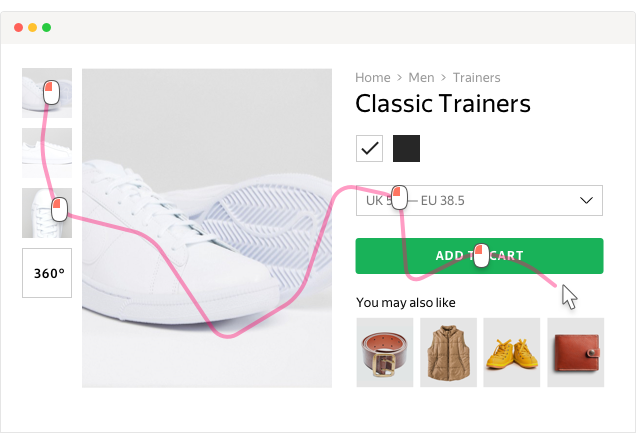
How does Yandex do this? It uses everything from user behavior signals to click-through rates to determine your positioning within both the Site Quality Index and on the SERPs.
When optimizing for Yandex SEO, you’ll need to analyze your traffic sources and optimize based on which sources are bringing the most visitors to your site. Your user search queries and target pages, as well as your platform specs, are all considered when determining your user happiness, so make sure you consider those metrics when optimizing.
Beyond that, Yandex uses an ICS score to evaluate the quality of your website. As far as Yandex is concerned, it’s not enough to provide the right answer with your copy. Your overall site experience should maximize user happiness.
Yandex tracks this by evaluating the number of visits users make, the number of time users spend on your site, and even whether they clicked on any ads! They then combine these results with human-completed surveys to determine a site’s accuracy and readability.
6. Don’t Overuse Backlinks
While this might not be a particularly complex point, it’s still a pretty important one. If you’re coming from the world of Google SEO, here’s your word of warning.
Backlinks might mean a lot to Google, but Yandex doesn’t rank them particularly highly. In fact, certain Yandex algorithms can severely punish your site if you’re using too many irrelevant links.
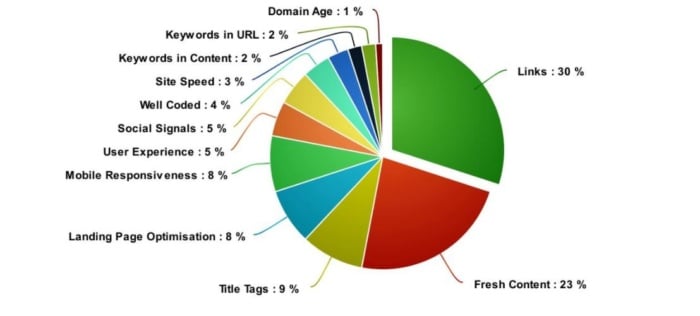
To be clear, there’s nothing wrong with relevant, valuable links that bring in traffic. But if your links don’t attract traffic? The Minusinsk algorithm is more than happy to restrict your site.
7. Leverage Yandex Metrica
Yandex Metrica is essentially their version of Google Analytics, with a few interesting features tacked on.
Their ability to detail user retention metrics is particularly useful, breaking down users by both session and goal completions. Of course, we can’t talk about Metrica without talking about their use of heatmaps.
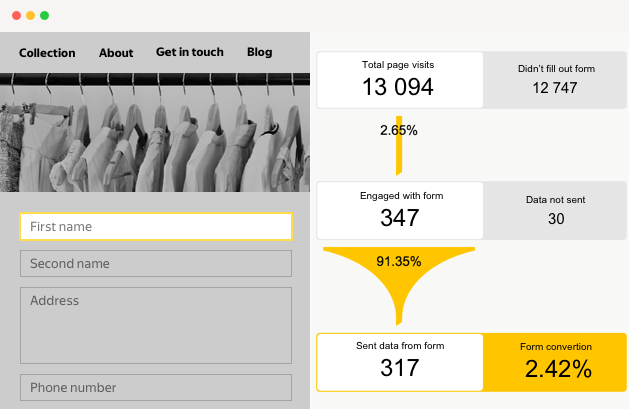
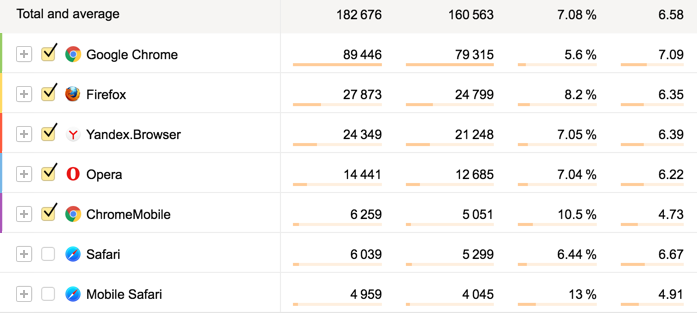
Since it’s directly tied into your analytics, you’re able to easily compare custom segments. That means you’ll have clear visual clarity when it comes to the differences between User Group A and User Group B. Beyond that, you’ll be able to change date ranges and even add session criteria to your analysis.
Yandex SEO Frequently Asked Questions
Is Yandex better than Google?
It’s not a question of better or worse. Yandex appeals to the Russian market, which makes it a great tool for marketing to that market.
How does Yandex search work?
Similarly to search engines like Google, just with a larger focus on the perceived “user happiness.” Those factors are tracked by the search engine algorithms and used to determine your site’s ranking.
How does Yandex compare to other popular search engines?
As far as objectives go, Yandex has the same end goal as other popular search engines. Identify the best, most relevant answer and provide it to users.
What are some challenges of SEO for Yandex?
Avoiding the overuse of backlinks, using meta tags properly, and ensuring the use of valuable content are some of the key challenges site owners face when optimizing for Yandex SEO.
Yandex SEO Conclusion
It’s easy to look at Yandex and imagine that it’s some impenetrable search engine that only a local could ever understand.
Fortunately, the reality is that Yandex has the same goals and objectives as any other reputable search engine. As long as your site is getting the best answers to the right people, Yandex will help your brand increase its visibility.
The key is to keep track of the slight differences in SEO optimization and, above all, protect the average user’s time and experience as much as possible.
Which of these Yandex SEO practices are you most excited to start implementing? Let me know in the comments below.
Source: neilpatel.com

Successful Running A Blog Tips To Help Build More Success
One way to boost your business or stand out personally is to start a blog.
Our society has certainly popularized blogs to the point where blog writers can achieve fame just for their blogs.
Still, there are some people who haven’t bothered learning to blog.
If you are ready to leave their company, take a look at the advice below.

Search Marketing
For your blog to be successful, ensure that search engine optimization is utilized within the content.
Since your goal is for individuals to visit your blog, you need to be sure it ranks high in search results.
Select a group of keywords, and make sure they appear in the title and body of blog posts so that you bring in a large number of visitors.
Updates
It is important to update your posts regularly when you are a blogger.
Many new to blog posting make the mistake of starting up a blog and then failing to update it enough.
Those that have become interested in your blogs will lose that interest if you don’t provide new material on a frequent basis.
Beginning bloggers should aim to post one blog a week and send out an email update when they do this.
Keep Life in Balance
Don’t let running a blog consume you; continue doing other activities not related to running a blog.
If you do not give yourself time to do things away from your computer, you may experience burnout.
Take a short walk, call a friend or take a quick break for a few minutes.
You’ll come back refreshed with a bunch of new ideas to include in your blog.

Stands Apart
Make sure your blog stands apart from the competition.
Readers will be attracted to unique content.
Address issues that no one else has yet tackled online.
Write about unique experiences or hobbies.
You can even provide detailed, specific information that readers who are into a particular topic long for.
What you want to do is have a reason that viewers choose your blog instead of another one.
Clear & Concise Blog
Keep your blogs as clear and concise as possible.
Provide as much detail as possible without putting your readers into a coma!
Blog readers don’t want to read through a long, verbose post just to find a little bit of information.
They want you to get to the point.

Use images in your posts.
The power of a well-chosen image to add interest and clarity to your subject matter can greatly improve the effectiveness of your writing.
This is particularly true about running a blog.
Pictures can say much more than words can.
So, always use images as often as possible in your posts.

Wrapping Up
So, you should be prepared to jump into the exciting world of blogs now.
With all the possibilities there are for blog posting, you should be able to find a topic that you are passionate about.
Always try to stay updated with the newest information and your blog will remain successful.

5 Small Ways to Boost SEO Rankings
SEO gets a bad reputation as being one of the hardest parts of marketing to succeed in.
We’re not going to say SEO is easy but we also don’t want you to think that boosting your SEO rankings is too far out of reach.
When it comes to your SEO strategy, you can have a long-term, super complex strategy that’s going to land you as the first search result for a search term.
And, you can have a short-term SEO strategy that just helps boost your way up to higher in the rankings.
It doesn’t have to be overly complex and most of it can be done in a few hours of work.
We’re going to focus on the latter in this article and show you the small ways that you can boost your SEO rankings.
These are all tasks that you can fit into a few hours of work and can make a big difference in the future.
A quick tip: Start using these tips on your new content so that you don’t have to go back and add them in later.
Here Are 5 Small Ways to Boost Your SEO Rankings.
#1: Structure Your Content For Readability
Part of a website page’s SEO ranking factor is page duration, a.k.a how long the visitor spent on that page.
There are a few ways to make sure that visitors don’t bounce off of your page (we’ll talk about more of those later) but one of the top ways is to make your content reader-friendly.
For example, you’ll notice in all of our DigitalMarketer articles that we have headers, bolded text, italicized text, emojis, images, and bullet points.
Our goal is to make you want to read our content, not see a wall of text and run the other way.
Here’s an example from our article, [Case Study] How DigitalMarketer Cut Our Cost Per Conversion By Over 50% In Less Than 7 days,
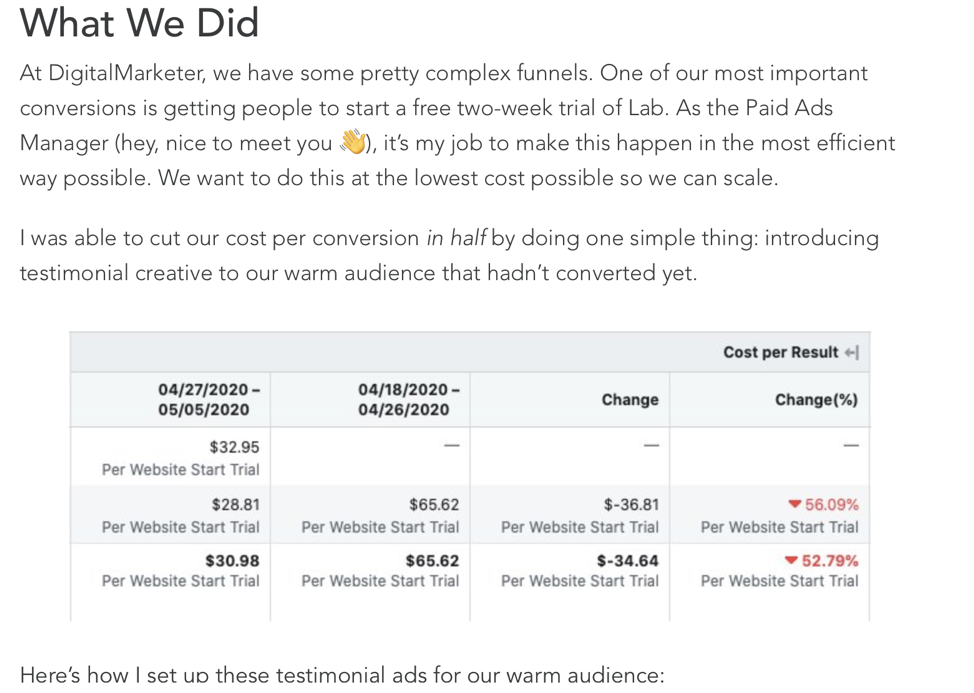
To make our content reader-friendly, we use:
- H2, H3, and H4 headers
- Bold and italicize text to break up long paragraphs of text or to highlight a particular sentence
- Emojis to bring some color and familiarity to our content
- Images as possible so you can see what we’re talking about instead of just reading about it
- Bullet points to help show our point without adding unnecessary filler words
All of this helps our website visitors come to an article, sales page, or landing page and be able to skim it over to see if it’s the content they were looking for.
If the answer is yes, they’ll stay a while and read what we have to say.
On top of making our content easier to read for humans, it also helps out with the Google bots who determine SEO rankings.
When we use keywords in our headers, we’re able to show Google that we’re talking about the keyword that we’re hoping to rank for.
This shouldn’t be confused with stuffing your headers with your keywords, that will just make sure your content feels unnatural and sales-friendly.
You can use how this article was structured as a blueprint for your own article.
You can also take a look at our sales page and landing page to see how we’ve structured those to be human and Google bot friendly.
#2: Fix Your Broken Links

This may not sound like a huge deal but if your content is full of broken links that lead to 404 pages, your readers and Google are going to be disappointed in you.
On the reader side, if they want to click-through to read or watch another piece of content that you told them about and the links are regularly broken, you’re creating a bad user experience.
For someone new to your brand and in the ‘Engage Stage’ of the Customer Value Journey, they’re going to make a subconscious judgment that you may not be totally trustable.
At this stage, you want your leads to see you as someone that always follows through with their promises.
404 pages do not tell them that.
On the Google bot side, 404 pages are going to show them your website visitors are coming to your page and leaving immediately.
That’s because each time a visitor sees a 404 page, they’re going to hop off that page in seconds.
Since there’s no content for them there, they have no reason to stick around.
This tells Google that your website isn’t providing the value that a visitor had hoped for, and your credibility is going to go down.
When your credibility decreases, Google favors the other websites with similar content that don’t have high bounce rates.

There are 2 types of broken backlinks that you want to fix:
- Internal backlinks from one page of your website to another
- Outbound backlinks from another website to your website

#3: Don’t Skip Out On Your Meta Description
While your meta description doesn’t have to do with your SEO ranking in terms of the content that you put into it—it does affect whether people click on your content or not.
You can boost your SEO ranking by having a killer meta description that makes people feel like it’s IMPOSSIBLE not to click on your article.
Your meta description is the excerpt that goes underneath the title of your page or post on Google.
For example, here’s the meta description for the website for our annual Traffic & Conversion Summit.

The meta description is the section below the title that reads, “The Premier Gathering of Digital Marketers on Planet Earth!”.
The goal of this meta description is to create a curiosity in the person that searched for our summit to want to click and learn more.
What does a premier gathering of digital marketers look like? Well, they have to click to find out.
A meta description can be for a landing or sales page of your website or it could be for a blog post.
If you’re writing a meta description for a blog post, you want to make sure that you’re showing what the reader is going to learn and planting a seed of curiosity so they’re motivated to find out.
For example, here’s an example of a meta description of our article, How To Attract Your Ideal Client:
Attracting your ideal client doesn’t have to be mind-boggling.
With the help of 1 tool, you’ll be able to successfully attract and convert your dream clients.
The title of the article and the first sentence in the meta description tell the reader they’re going to learn how to attract their ideal client and it’s not going to be as hard as they thought.
The second sentence that mentions the “1 tool” plants a seed of curiosity that helps them choose our article over the one mentioned below it in the search results.
Use your meta description to grab extra attention and motivate searchers to choose your content over the others.
#4: Update Older Content and Republish
Efficiency is key for every part of your marketing strategy (from content to SEO, to social).
If you have blog posts on your website already, you don’t necessarily need to be writing brand new content on a regular basis.
What about that post from a year ago that did kind of well but its pageviews are going lower and lower each month?
Instead of leaving it in blog post purgatory bring it back to the front lines.
You can run through old blog posts to see what you can add to them to update the information or to just make them better and then republish them under a new date.
To be clear, you don’t even need to create a new post, you can just change the publish date of the post to be the date that you publish it again.
We do this regularly at DigitalMarketer with our long-form Everything You Need To Know About… articles.
These are ultimate guides for content marketing, digital advertising, getting clients, etc.
Since we’re in an industry where strategies change pretty fast, we keep updating them to be valuable for the current moment.
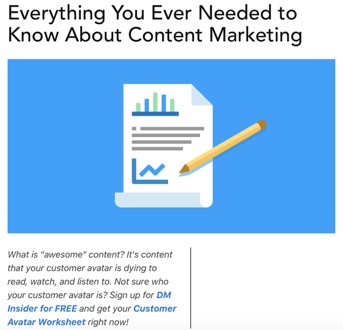
By updating our Everything You Need To Know guides with strategies working right now, we’re making them super valuable to our readers (they’re a one-stop-shop for all you need to know on that topic).
And by republishing them we’re showing Google that this fresh new info—not stale old content from 1+ years ago.
#5: Prioritize Your Content
What happens when you read an interesting headline, click the link to read more of the article, and are immediately bombarded with a drop-down ad, an ad on the side of the content, ads spread out every few paragraphs of the article, and an ad coming up from the bottom of the page?
We rarely think, “Wow, this is a great experience!”
We barely even bat an eye before we click back on our web browser.
That website owner can say goodbye to page duration and hello to an increased bounce rate.
While it’s extremelyyyy tempting to put pop-ups, Google ads, or ads for your own products all over your website, it’s a dangerous SEO game to play.
You’ll end up losing more than your gaining and that loss surpasses your SEO ranking.
The high bounce rate will have a negative effect on your ranking, but it will also have a negative effect on how website visitors view your brand.
If they know that you’re going to bombard them with ads when they’re just trying to read an article, how are they going to feel comfortable giving you their credit card?
When you’re focused on your SEO strategy, you’re usually focused on the first 3-4 stages of the Customer Value Journey.
You’re focused on getting people to subscribe or even convert on your tripwire.
But if somebody feels like your website page is a digital billboard, they’re not going to think the emails you send them are going to be much different.
They’ll worry that you’re just trying to get the sale, not actually help them solve their problem.
Guess what that does to your click-through rate.
Yep, you guessed it. 
Always prioritize your content first so you’re building a trustworthy relationship with your new website visitor.
This increases your page duration (and SEO ranking) and your chances of turning that visitor into a lead.

As promised, these are all fast ways that you can improve your SEO ranking—without having to spend hours and hours (or dollars and dollars) on getting the results you want.
And remember, these aren’t just tips that you can use on your current website.
You can also use them when creating all of your future content so that you’re being the most efficient SEO marketer possible.
And who doesn’t love the sound of that?
The post 5 Small Ways to Boost SEO Rankings appeared first on DigitalMarketer.
Source: digitalmarketer.com

The 34 Marketing Principles I Live By
Can you guess how long I’ve been a marketer?
7 years? Maybe 10?
Guess again.
I’ve been a marketer for 18 years now.
That’s a long time… And funny enough, I’ve also been an entrepreneur for the same amount of time as I’ve never really held a “corporate” job.
Many of you think I am smart, and I am great at marketing.
But let me burst your bubble… I am NOT smart, and I am NOT a great marketer.
Instead, I’ve just been doing everything long enough where I’ve learned what not to do.
See, the first 4 or so years of my marketing career went really slow and didn’t go the way I wanted.
This was mainly because I kept making mistakes.
And even worse, I kept repeating the same mistakes over and over again.
So, when I was around 20 years old, I created a list of marketing principles to never break because I wanted to ensure that I didn’t repeat the same mistakes over and over again.
Over time I kept adding to the list, and it has helped me succeed not only as a marketer but also as an entrepreneur.
Hopefully, the list of principles below helps you get to where you want in life.
I know it’s helped me tremendously.
The 34 Marketing Principles
Here goes:
Principle #1: Don’t be the first

Don’t Be the First
So many new marketing channels pop up, don’t be in a rush to try them all.
Especially when these channels are new and unproven.
You’re more likely to waste time than find wins.
At the same time, you don’t want to be the last either.
The key is to be an early adopter.
Once a channel is picking up steam, that’s when you want to jump on board and see if you can leverage it for your business.
Principle #2: Ride it while it lasts

Sail Safe
Every channel that works eventually gets saturated.
Some fade away, but most stick around, and some just don’t work as well.
For example, Facebook grew through sending out invitation emails to everyone in your email address book.
That just doesn’t work anymore.
Digg used to be an amazing site that drove 100,000 visitors to a site in less than 24 hours.
It doesn’t anymore.
Google AdWords used to be a cheap way to drive sales.
It still works, but it is expensive.
When you find a channel that is working amazingly well, push hard and milk it for as long as it lasts.
As time goes on, you’ll want to keep leveraging it, but you’ll naturally have to scale back as more competitors jump due to price increases.
Principle #3: Sales and marketing should be owned by one person

Sales cum Marketing Manager
To truly grow, you need to understand the whole picture.
From how someone comes to your site, to what they are looking for, to how to sell, upsell, and retain a customer.
You need to think about the whole cycle a customer goes through.
For that reason, a company eventually needs a Chief Revenue Officer (especially in the B2B world).
A CRO is someone in charge of both sales and marketing.
The departments can run separately, but they need one boss.
When both departments don’t roll up into one boss, there is typically is a disconnect.
This will cause the conversion rates to be lower.
Principle #4: Go all in during recessionary periods

The market moves in cycles.
When things go down people pull back on marketing.
Don’t optimize for short-term gains, optimize for the long run.
Marketing tends to be more cost-effective during recessionary periods.
This is when you should be spending more, doubling down, so that way you can beat your competition once the recession is over.
Principle #5: If you aren’t thinking long term, you won’t beat your competition

Most publicly traded companies optimize for a return within the first 12 months.
Most venture-funded companies have a 1 to 3-year outlook.
If you want to beat these companies, you need to have a 3-plus year outlook.
This will open up more marketing channels that your competition can’t look at due to investors and outside pressure.
With your marketing, it doesn’t mean you have to lose money for 3 or more years to beat your competition.
It means you just have to get creative.
For example, I know marketing costs are rising each year, so I’ve invested in software to generate visitors at a much lower cost than CPC advertising.
Doing these sorts of things requires patience as it can take years for creative ideas to come to fruition.
Principle #6: Never rely on one channel

Good channels eventually become saturated and it’s too risky if your marketing is solely based on one channel.
If it goes away or stops working for your business, it will crumble you.
You can’t control algorithms, and you can’t always predict costs. Focus on an omnichannel approach.
In other words, you can’t just do SEO or social media marketing.
You need to eventually try and leverage all of the major marketing channels.
Principle #7: Marketing tends to get more expensive over time
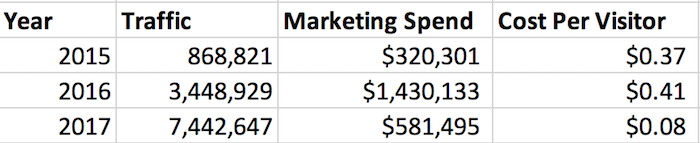
It’s rare for marketing to get cheaper.
You can’t control this.
As much as you focus on marketing, you have to focus on conversion optimization.
It’s the only way to keep you in the game as costs increase.
Try to run at least one A/B test each month.
And don’t run tests based on your gut.
Use both quantitative and qualitative data to make decisions.
Principle #8: Don’t take your messaging for granted

No matter how effective your traffic generation skills are, you won’t win if people don’t understand why they should buy from you over the competition.
A great example of this is Airbnb.
They beat Home Away and are worth roughly ten times more.
They both have a similar product and they both executed well.
Airbnb came out much later, but they nailed their messaging.
Spend time crafting and creating amazing messaging.
Typically, amazing messaging requires story-telling and understanding your customers.
You may have to survey your customers or talk to them over the phone, but eventually, you can come up with the right messaging using qualitative data.
And once you’ve figured out the right messaging, retest each year as market conditions can change, which will affect your messaging.
Principle #9: The numbers never lie

Opinions don’t matter!
Marketing should always be a data-driven approach.
Follow the numbers and keep auditing them as things will change over time.
What works now may not in the future due to external factors that you can’t control such as privacy and security concerns.
For example, if your users claim to hate exit popups, but the data shows an exit popup increases your monthly revenue by 10%, then continually use the exit popup.
People within the organization will complain and argue with you, but as long as you aren’t doing anything unethical, follow the data.
Principle #10: The best thing you can do is build a brand
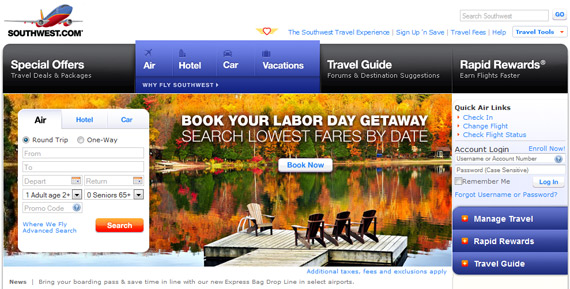
Whether it is a corporate or personal one, people connect with brands.
From Tony Robbins to Nike, people prefer brands. By building a brand, you are building longevity with your marketing.
Don’t ever take it for granted and start building it from day one.
No matter how small or big your company is, you should continually work on improving your brand.
From the story behind why it exists to showcasing it wherever you can push hard on branding.
In the short run, it will not produce a positive ROI, and it is hard to track the value of a growing brand, but it works.
When people want to buy sports shoes, they don’t always perform Google searches.
Instead, they just think “Nike.”
When people want a credit card, they think Visa, Mastercard, Discover, or American Express.
Brands are powerful and create longevity.
Principle #11: Always protect your brand

You’ll have opportunities to generate quick sales or traffic at the sacrifice of your brand image. Never do it.
It’s better to have less traffic and sales in the short run than it is to tarnish your brand in the long run.
If you tarnish your brand, you’ll find that it will be hard to recover and cost more money.
Principle #12: Don’t take shortcuts

Decision Making
Every time someone presents a social media or SEO shortcut, avoid it.
Typically, they won’t last long, and they could set you back through penalization.
It’s better to be safe and think long-term.
It will be tempting but say no.
Principle #13: Don’t market crap

Building a crappy product, service, or site just won’t cut it.
With the web being competitive and it being easier to start a site online, you need to make sure you have something incredible.
It’s 10 times easier to market something people love than it is to market something people don’t care about.
No matter how good of a marketer you are, it’s not easy to market something people don’t want.
So first focus on creating something amazing.
Principle #14: Hire a full-time affiliate manager from day 1
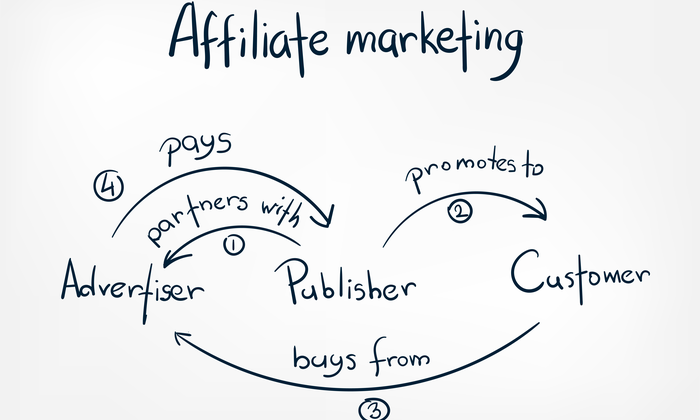
There are always people within your space who aren’t competitors and have an established user base.
Have a dedicated resource continually reaching out and partnering with these sites and companies.
It’s a good long-term way to grow without having to invest a lot of capital.
Even if your product or service isn’t ready, hire this person from day one as it takes 6 months to fully build up a good base of partnerships and affiliates.
Principle #15: Go against conventional marketing wisdom

Gmail
Doing what everyone else is doing won’t work for the long haul.
Doing the opposite usually works much better.
It may sound risky to go against the grain, but it is one of the best ways to grow when you are in a saturated market.
A simple example of this is how Gmail grew when it first came out.
Space was crowded and even though their tool was great, so were a lot of the competitors.
Gmail grew by creating the illusion of exclusivity.
People had to be invited by other members to get a @gmail.com email address.
Principle #16: If you aren’t scared, you’re not pushing the limits

A/B Testing
If you’re cheering about everything you are doing when it comes to marketing, something is wrong.
You need to be scared and be going through a mix of emotions every time you launch a new marketing campaign.
If you aren’t then you’re not pushing the limits.
Testing campaigns that your competition won’t ever dare to try, and, of course, be ethical when doing this.
Don’t burn your brand.
The bigger the risk, the bigger the reward.
Those who push the limits, tend to have a greater reward.
Principle #17: Don’t Be Unethical

You are going to have opportunities to gain quick wins at the cost of your customers.
Always put others first. It’s the only way to survive in the long haul.
In general, if you are going to have trouble sleeping at night, you shouldn’t be doing it.
A good example of this in marketing is how affiliates use forced continuity.
This is when they sell physical products for free as long as their customers pay for shipping.
What these customers don’t realize is that they are going to receive the same product every month and they will get a bill every month as well.
Don’t be unethical.
Principle #18: Get the right influencers onboard early

People tend to have a deeper connection with individuals over corporate brands.
Get influencers on board early, as it will help you attract customers faster.
Make sure your influencers are related to your business or else it won’t work and will just be a waste of money.
For example, if you are selling a B2B software you don’t want half-naked Instagram influencers promoting your product. It won’t work.
But if you are selling fashion products, having influencers on Instagram who have popular fashion channels will help drive sales.
Principle #19: Video is the future
People want to connect with you and your company.
If you aren’t integrating video within your marketing, you are making a big mistake.
Whether you like being on camera or not, the video should be in your strategy from day 1.
When you create videos, don’t just put them on your site.
Put the same videos everywhere… from social networks to asking other websites to embed your videos on their site.
You should even test running video ads as they tend to be more effective than text-based ads.
They are more expensive to run, but the conversion rate is typically higher.
Principle #20: You don’t know everything

Learn More
Marketing is always changing.
No matter how good you get at one tactic, never stop learning.
Having the attitude that you are great will only hurt you.
Have an open mind and be willing to learn from anyone, especially newcomers with little to no experience as they bring fresh insights.
Principle #21: Don’t Hire Arrogant Marketers

If you have arrogant marketers on your team, consider replacing them with people who are open to learning (assuming you aren’t breaking any HR laws).
Arrogant marketers are typically stuck in their ways and they aren’t open to change.
Just because someone doesn’t know as much, doesn’t mean they can’t learn.
Arrogant marketers tend not to experiment, and they prefer sticking with what they know.
Principle #22: Little Is the New Big

Social media has empowered everyone.
Don’t take people for granted, even if they don’t have money.
By helping everyone, it will cause your brand to grow in the long run.
Don’t worry about a direct ROI when helping others, it will cause word-of-mouth marketing.
Because of social media, everyone can impact your brand in a good or bad way.
So make sure it’s in a good way by helping everyone out (as much as it is feasibly possible).
Principle #23: Continually test what’s working
Because of external factors that you can’t control, things change over time.
For example, 3rd party authentications were used to boost conversion rates, but now people are concerned with using them because of privacy concerns.
Always retest what has worked in the past every 6 months to ensure it is still helping you.
When you don’t retest, you’ll find that your conversion rates will drop over time and you won’t know the cause of it.
Principle #24: The majority of people don’t read

If you write a masterpiece, expect the majority of the people to not read it.
Make sure your content and marketing landing pages are easy to skim.
Without this, you’ll lose out on a large portion of sales.
Things like design, spacing, colors, and typography all affect readability and how easy it is to skim.
Yes, messaging is important, but if no one reads it then you won’t generate sales.
Principle #25: Headlines are more important than content
Headlines
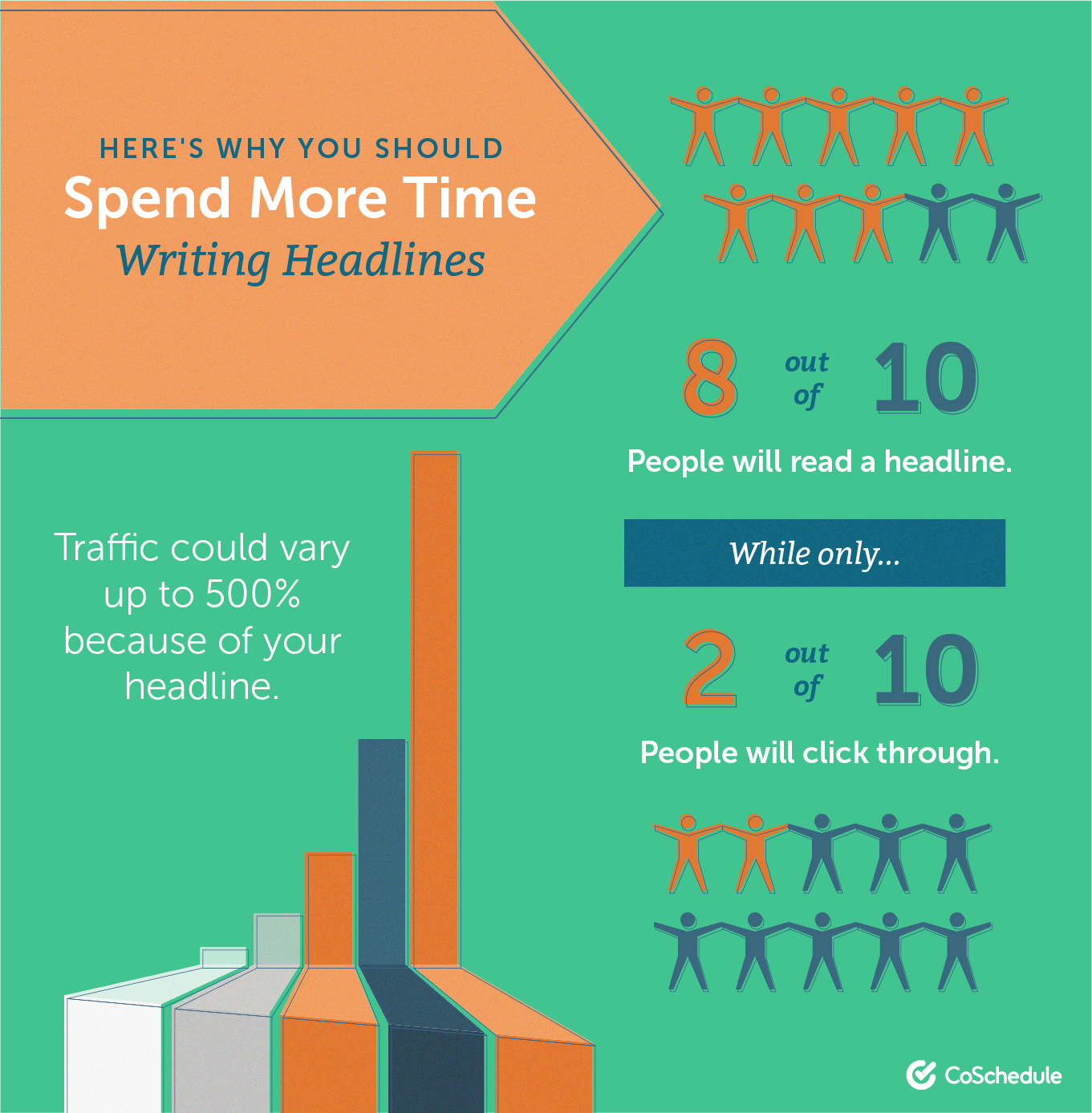
8 out of 10 people will read your headline, but only 2 will click through and read your content.
Spend as much time coming up with a headline as you do writing content.
If you have an amazing masterpiece and a terrible headline, it won’t get read.
You shouldn’t stop with one headline either.
Consider A/B testing a handful of headlines, as this will help you come up with a winning version.
Principle #26: Expand internationally once you’ve figured out your main market
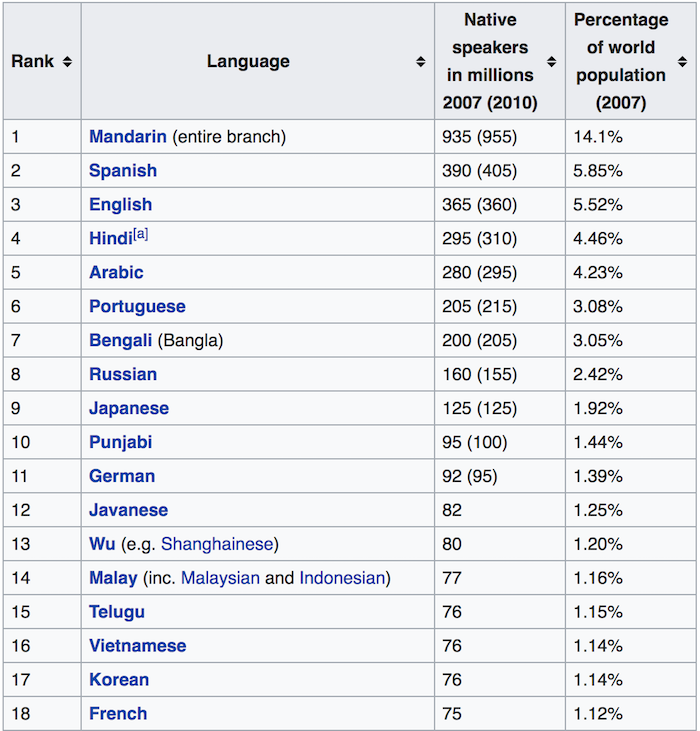
The English language is always competitive.
Translate your website, content, product, and service as quickly as possible (while maintaining quality, of course!).
It will open up more marketing opportunities and revenue streams.
When picking new markets, don’t just look at GDP look at the population as well.
If one region has a slightly lower GDP but a higher population, consider going after the one with a larger population first.
Principle #27: Be willing to start over every year

Business Growth
If you are expecting to grow by just doubling down on what worked in the past, your growth will slow down.
By having the mentality that you need to start over and redo all of your marketing initiatives each year, you’ll grow faster as you will be receptive to change.
This doesn’t mean you should ignore what worked for you in the last 12 months, it means that you need to keep doing that as well as go back to the drawing board to try new tactics.
Principle #28: Ideas are a dime a dozen, but good team members aren’t

You’ll have dozens of ideas that you’ll want to test, but if you don’t have people to take charge of them they won’t go anywhere.
Don’t bite off more than your team can handle.
If you want to grow faster, you need people to take charge and lead each of your marketing initiatives.
This will also allow you to fine-tune each channel and squeeze the most out of it.
And if you have dozens of ideas, don’t just hire any marketer.
If you don’t hire the right person, with experience, you’ll find that the marketing channel isn’t working out too well for you.
So take your time.
Principle #29: Don’t hire people you need to train if you want to grow fast

Training by Team Leader
There is nothing wrong with hiring people who need training, but it will cause your growth to slow down.
If you want more traffic and sales ASAP, you can’t hire people that need hand holding or training.
Hire marketers with industry experience that know how to get off and running from day 1.
Ideally, you should even consider hiring marketers who have worked for your competition and have done well for them.
Principle #30: It takes 3 months for a marketer to get ramped up
No matter how skilled of a marketer you hire, even if they come from your competition, it typically takes 3 months for them to find their groove.
So, when you hire them as a full-time employee or a contractor, be patient and be willing to give it at least 3 months before you decide what you want to do.
Of course, you should see results within the first 3 months (even if they are small) but you still need to be patient.
Principle #31: People love stories and always will

Storytelling goes back centuries.
They were effective back then and they still are today (and they will be tomorrow as well).
Integrate stories within your copy.
It will help you craft a better bond with your audience.
With a better bond comes higher conversion rates.
Principle #32: Don’t take trends for granted
If you see the market moving in a direction, even if you don’t think it will last forever, consider riding the wave.
Even if you don’t like the trend, you’ll find that it typically makes customer acquisition easier and more affordable.
Use tools like Google Trends to help you determine which trends are popular and to see how the market is moving.
A great example of this is MixPanel copied the KISSmetrics product, but they grew faster as they rode the mobile analytics trend, while KISSmetrics did not.
Principle #33: Optimize for revenue, not top of funnel metrics

In marketing, looking at numbers like monthly visitors is great, but it isn’t the most important metric. Optimizing for leads isn’t enough either.
Your tracking needs to encompass the whole funnel.
By optimizing for revenue you’ll be able to make better decisions and see faster growth.
When looking at your funnel, keep in mind that it shouldn’t stop with a purchase.
There are upsells, repeat purchases, cross-sells, and even churn to consider.
Principle #34: Follow the rule of 7
People need to hear about your brand or see your brand 7 times before they’ll convert into a customer.
In other words, you need to be everywhere if you want to win market share.
With every company having similar products and services, people have a hard time deciding who to buy from.
If your brand is more prevalent, people are more likely to choose you.
Make sure you are leveraging as many proven marketing channels as possible.
Conclusion
Some of the principles above may seem obvious to you while others may not.
But you’ll find that both you and your team will make many of the mistakes no matter how obvious they seem.
Whether it is the principles above or your own, consider creating a list of your own for your team to follow.
And it shouldn’t just be for marketing. I have lots of principles… especially in regards to entrepreneurship.
So what other principles should marketers follow?
Just leave a comment below with some of the principles you follow.
The post The 34 Marketing Principles I Live By appeared first on Neil Patel.
Source: feedproxy.google.com

Why SEO Is Important to Any Business Nowadays. Top 21 SEO Benefits
In the office, in the online world, on social media, on the phone, in the chat, everywhere people talk about SEO. Everybody who has a business has heard about SEO. But also anyone who has a business probably said at least once: Do I really need SEO? What can SEO do for me?
Since the moment SEO appeared in our lives, everybody in the field has started talking about it. It became a never-ending discussion. We want to know all the facets of SEO. Why is SEO important?
And this is what you’re about to find out: Top SEO benefits to inspire you and never let you underestimate search engine optimization.
Curiosity flourished and we wanted to put it simply into words and see the key benefits of SEO in the life of a business. We found 21 reasons why SEO is crucial to any business living on the internet.
Some us even keep talking while sleeping or keep thinking about SEO while staying in traffic or cooking and so on (*half-joking*). But leaving the joke aside, SEO doesn’t sleep. It’s alive.
If done right, it keeps your website alive, too, right there on the first page of Google, getting the attention of someone that might buy something from your site or recommend it to others.
If we’re looking at the evolution of the interest people put into SEO, we can see how beautifully it has grown over the years and it is constantly changing.
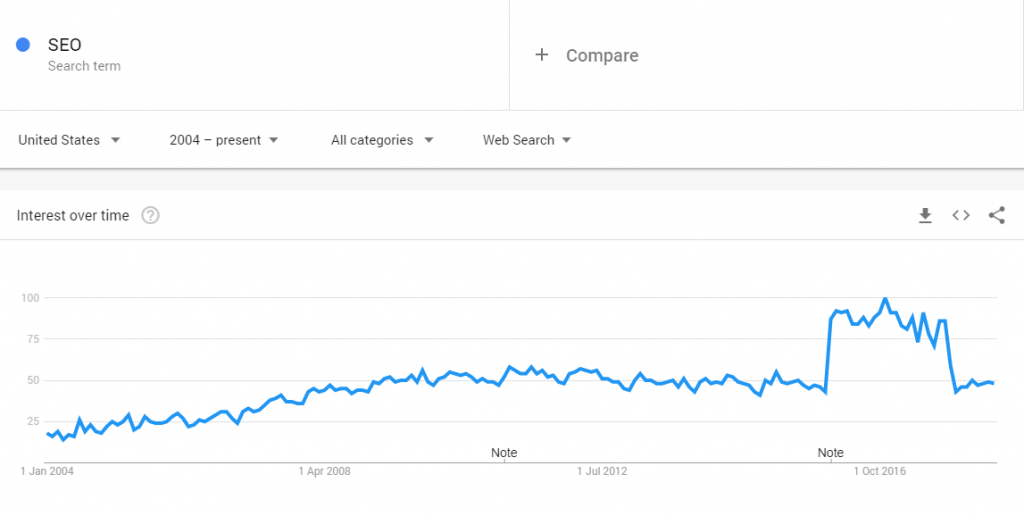
SEO is like the popular kid in school. Everybody talks about it. There are some groups that worship it and follow everything that it is doing, but there are also some groups that hate it, don’t like it, and speak badly about it.
Top 21 SEO Benefits
1. SEO Blends into Your Marketing Funnel
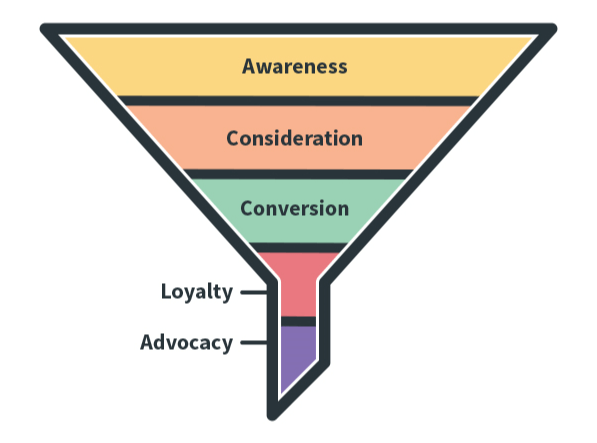
Your marketing funnel starts when the prospect hears about your brand in the awareness stage. It will continue when your brand generates interest, desire and will make them take an action afterward.
Source: www.aweber.com
SEO blends in all the stages of your marketing funnel. The most important step is the first one when you hook the user. But he must find your website. You need search engine optimization to get there, on the first page.
The inbound marketing sales funnel has three stages:
- top of the funnel (TOFU),
- middle of the funnel (MOFU) and
- bottom of the funnel (BOFU).
Each stage requires a proper set of marketing tactics and techniques, which includes SEO. So, when I was saying that SEO starts right at the top of the funnel, that happens because there is your audience, and you want to attract a larger portion of it.
Track top of funnel keywords (informational keywords), create content maps, and make your site’s structure user-friendly to keep the user as long as you can on your website and you’ll push them down the funnel.
In the TOFU stage, the user will land on your blog, which is the most common type of content.
For the middle of the funnel, your focus should be on creating high-quality content and have hooks on your website that will keep the user, such as a high loading speed, high quality, and lossless images, mobile-friendly website, un-broken pages, and lots of other technical SEO requirements.
Technical SEO has a great impact on the user’s behavior.
Engaging the users and sending them down the sales funnel can be achieved through CTAs, surveys, content downloads.
At the bottom of the funnel, you must persuade the user with other techniques. But up to this point, SEO blends very well in each stage of the funnel.
2. SEO Helps You Get into the Spotlight
When we talk about search engine optimization, we talk about creating the best version of our website to get user’s eyes, which nowadays means to be on the first page.
And that turns out to be a pain in the neck most of the time.
But it doesn’t need to be annoying. If you follow the natural path of things, SEO can help you achieve the desired position. Hard work and dedication can come a long way.
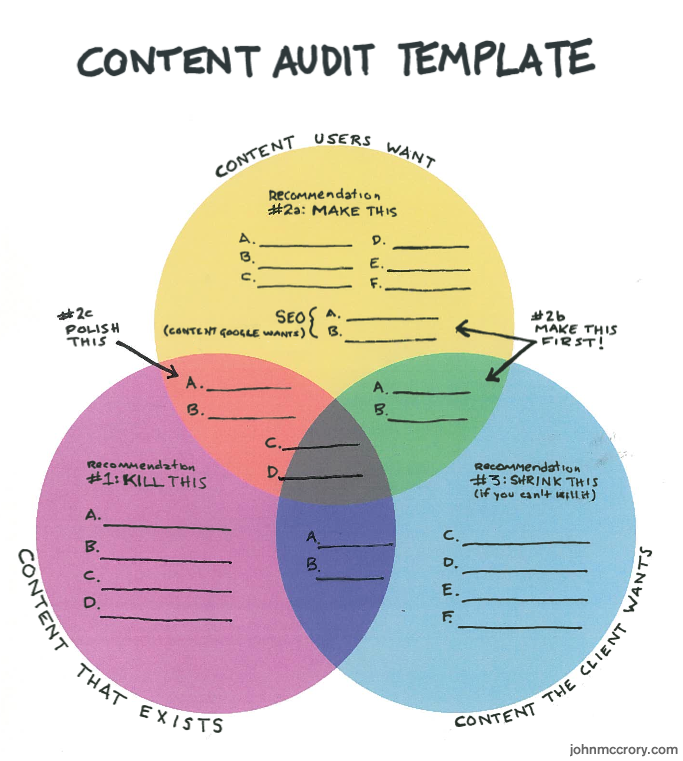
A content audit is needed at this stage, to understand the actual status and then decide what you have to optimize.
For a correct content audit, you must gather all the articles into a spreadsheet, add metrics (such as CTR, organic search traffic, internal and external links, shares, comments, rank) and order them to see the pages with the lowest metrics.
www.contentmarketingup.com
Use a tool for content optimization and voilà. You have awesome content. Get in the spotlight by promoting it and earn lots of links.
Once you’ve managed to get on the first page of Google, you’ll gain visitors, who might become clients. But once you’ve got there, you must work hard to stay put.
After that, you could take it up a notch. That means social sharing, emailing, promotion, internal linking in other pages that have high influence.
3. SEO Creates a Stronger Relationship with the Audience
If you managed to get on the first page in the search engines, that means you’ve gained the trust of Google or Bing. Which should lead to earning the trust of your audience.
Words play an important role in digital marketing and content is the pivot.
Content marketing is the most effective SEO technique. Websites with blog content have 434% more search engine-indexed pages than other business sites that don’t publish content.
If your page has a good user experience, the audience will like it and you have a great chance to create a strong relationship. But that is not the only indicator.
Quality content with valuable information that answers the audience’s questions using their own words is another indicator.
Integrate a comment section in your blog to hear your audience. Make sure you filter the spammy comments before publishing them.
User-generated content is a good sign of quality information. You can speak directly to your audience, hear their thoughts and opinions, allowing you to create a relationship quickly.
4. SEO Pulls out Traffic
Yes, that’s true. SEO can pull out qualified traffic. It turns out to search engines drive 300% more traffic to sites than social media.
If done right, SEO can pull your website on the first page, and from that moment you’ll have a lot to gain from. That means traffic, too.
If your website is in the sight of the viewer, then most probably they will enter your website.
So, the better you optimize your website on-site (with a proper headline, URL, meta description, cover photo, and pictures with alt-description), the higher the chances to attract the user to your website.
You need to differentiate yourself from the others and be the unicorn in a crowd of donkeys, as Larry Kim often says.
| Create unicorn content. This is your best, most magical content, performing among the top 3 percent of all your content. | |
 |
LARRY KIM |
| CEO MobileMonkey & Founder WordStream | |
5. SEO Is Cost-Effective Comparing to PPC
It is not justified that PPC is highly costly comparing to SEO, which is more effective. SEO has a long-term value, while PPC has a shorter lifetime value.
As long as you pay, you’ll appear in Google; if you stop paying, then your ad will disappear.
PPC is better to use when you launch a product or your business because at that stage it is harder to get awareness using SEO.
PPC works best for promoting products and commercial content because you invest money to gain clients and sales.
You invest in SEO for awareness, web traffic, and other metrics that lead to sales. But the thing is that you don’t need to invest so much money on SEO as you need on PPC.
SEO offers the better value in search marketing. That’s its true strenght.
Studies say that SEO has approximately 20X more traffic opportunities than PPC on both mobile and desktop.
And Search Engine Marketing Professionals Organization said that 87% of search engine dollars are spent on PPC vs. 11% spent on SEO efforts.
6. SEO Is Live 24/7
SEO can run free because it is live 24/7. Even when you’re sleeping, or you are offline, it can pull out your site and keep it in the sight of the visitors, because SEO never sleeps.
A unique perk of optimizing your website is the timeless characteristic. To understand how it works imagine you are looking for a specific product and searching the internet.
Each webpage from SERP is like a store you walk in and look around to see if they got what you’re searching for.
Those on the first page are open, near to you, and well-known businesses (let’s say). If your page is there, then you might get a chance to get a new lead.
But unlike a store, which has open and closing hours, your website has SEO, which means it is open all the time and can receive potential customers anytime.
Search engine optimization it is practically like an open sign.
7. SEO Increases Sales and Leads
Since we were talking about new leads and potential clients, SEO puts your website on the map and impacts the buying cycle.
The thing that differentiates it from other forms of marketing and adds value to it is the fact that sales will increase without having to increase proportionally your promotional costs.
You can start SEO and content with no monetary investment. But if you want to scale your business to get high revenue, then you’ll have to make some investments.
In case you want to start with no monetary investment, then you’ll have to put more effort into creating high-linkable content, optimize for money keywords and keywords with a high volume and sustain your content with emailing social media, syndication, and other ways to promote it.
8. SEO Improves Your ROI
SEO can push your marketing goals to better ROI comparing to other forms of marketing. Your website can be a prospect magnet, based on your high-quality keyword and be where your customers are.
If you are in the sight of the visitor, you’ll be able to direct them to your website and offer solutions to their questions/problems.
Your website should be the apple to the user’s pie. ❤
Jayson DeMers, the founder of AudienceBloom, had quite a unique approach to the way SEO works as an investment for each business:
| SEO works very much like the stock market. You choose your stocks (keywords) based on the knowledge you have at hand, and then you wait. You’ll likely experience periods of growth and decline (like ranking fluctuations), but one thing is certain: the stock market and SEO are both long-term endeavors. There’s no quick path to riches in either case. | |
 |
JAYSON DEMERS |
| Founder of AudienceBloom | |
SEO might have one of the biggest ROI compared to other marketing forms.
9. SEO Has the Greatest Impact on Lead Generation
The key to generating more leads for your business is optimizing your site for search engines. According to a study by NewsCreed, 57% of B2B marketers said that SEO has the greatest impact on lead generation.
To generate revenue and expand the local area of your business you must take the online stage and dominate your competitors. The way to do that is to have a well-optimized website.
SEO has the ability to enable the flow of leads, but you have to help it and optimize the inner content through:
- fitted keywords with high search volumes;
- high loading speed time websites;
- quality content;
- get ahead of your competitors by spying on their content and their SEO strategies.
Search engine optimization plays an important role in cultivating organic traffic and generating leads. The message you transmit through your content is very important.
Did they land on commercial or information content? There are money keywords and information keywords.
Depending on what type of content they landed on your website, it will give you a more accurate insight on the level of the sales funnel they came from: leads, prospects, and in the end clients.
According to a report by Chitika Insights, it seems that the number 1 position in Google gets 32.5 % of search traffic.
And the first 5 positions account for 75.7% of the search traffic. That’s a strong indicator of the power of SEO.
If your website is in the first 5 positions, then you’ll have a high chance of attracting leads.
10. SEO Traffic Is More Convertible
One other reason why SEO is crucial for any business online is the power of converting. Indeed, SEO traffic converts better.
Search traffic converts 10x higher than social media on desktops according to a study by SimilarWeb. Moreover, it seems like search is by far the largest traffic driver.
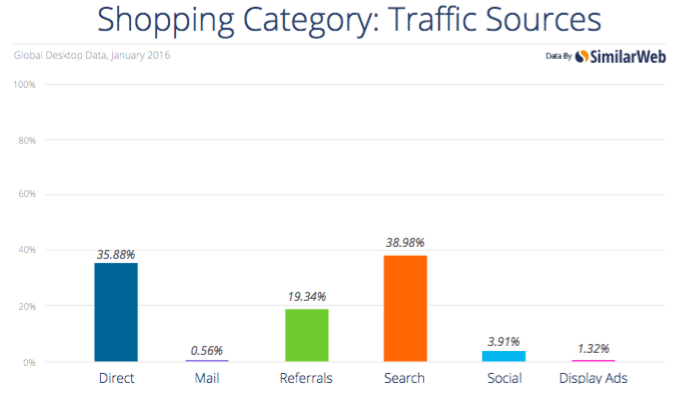
Studies talk by themselves. eMarketer discovered that 76% of US agencies worldwide said SEO provided an excellent or good return on investment (ROI). Which better reason to stick to SEO, than these results?
If you’ve managed to find the working SEO strategy for you, then you can’t go wrong and you’ll benefit from juicy results.
By positioning your website on search engines, your business will gain more conversions.
11. SEO Increases Brand Awareness
Besides all the SEO benefits in the internet marketing field that we’ve talked about, SEO has the power to make your brand discovered and remembered, but you have to help it, as usual.
The sale funnel is a long process, so the visitor has a long way before converting. They might not be prepared to buy from you, but the fact that they entered your website is a good opportunity.
They will be aware of what you’re offering before taking the action.
SEO helps your website to get awareness.
Let’s say you’re searching for something online, for “how to dye your hair at home” and you want to know more about that. It is the first time dyeing your hair, you don’t know anything about it.
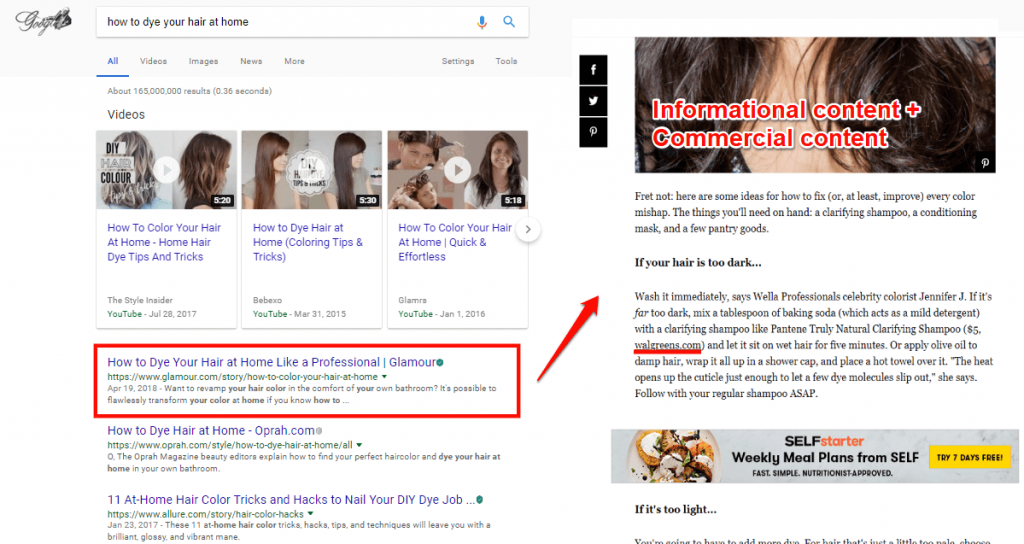
Just like in the example shown above, you find a website where you see informational content along with a commercial one (example of a product with the price and the name of the store).
In case you have a website like this, you might get benefits if people are buying for those type of websites.
Being one of the top results will bring awareness to your website. People will know more about you and might search your website for other information and take other actions around there.
12. SEO Increases Marketing Attribution
When your brand awareness increases, the marketing attribution will increase as well. Attribution represents the number of actions (“touchpoints”) a visitor is taking on your website.
Basically, it tracks down the events that engaged the user before converting them.
The more times users see your brand, the better chance to increase the marketing attribution. Better optimized pages, with quality content and trustworthy websites, will get you more “touchpoints” from the users.
Unfortunately, just a small amount of marketers use attribution in their marketing strategy.
A study by the Delhi School of Internet Marketing says that 34.1% of businesses don’t use any attribution model to measure marketing performance. And that’s sad.
Businesses that don’t use attribution might lose 50% of potential sales.
Those who used attribution and lead nurturing generated 50% more sales at 33% lower cost.
13. SEO Is One of the Best PR Strategy
You heard that right, SEO is one of the best PR strategies. You might think they came from two different worlds, but in the online world, SEO takes the form of public relations.
We all know that PR is the practice of spreading information about something (brand, product) or someone in the public eye. SEO can do exactly the same thing.
It will bring your brand to the public attention. But for that you need links and quality content, to rank in the top positions.
Links are a form of recognition for your website.
It means that those who linked to your website found useful and valuable information and want to share it with others.
This type of action can be categorized as word-of-mouth and PR movement. The more links, the more visibility for your website.
14. SEO Improves CTR
Optimized pages, with a high CTR, influence rankings and achieve top positions. That will improve the results, and get high CTR again.
It is an ongoing process. SEO and CTR are influencing one another.
A website that is very well optimized will get featured in SERP and will receive clicks, impressions. A top position in Google can have a high CTR.
| I can most certainly say with confidence that CTR is impacting rank. | |
|
LARRY KIM |
| CEO MobileMonkey & Founder WordStream | |
Usually, pages with a higher CTR tend to have higher conversion rates. Increasing your CTR by 2x will increase your conversion rate by 50%.
There are some ways to step up the game and increase your SEO and, therefore, your CTR:
- First, start by looking at those pages that have a low click-through-rate using Google Search Console (or Google Analytics):
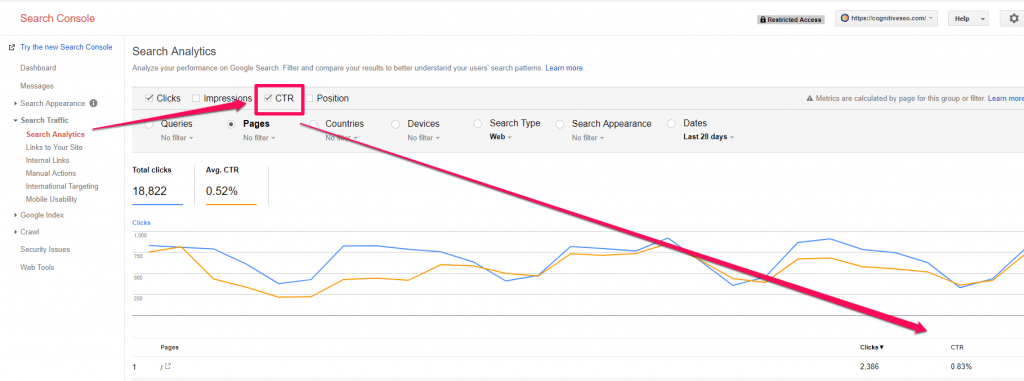
- Then look at the pages or queries that have a low CTR but high position. Start by optimizing those pages and their snippets.
- Another thing you could do is look at the duplicate content on your website and remake the meta descriptions and title tags that are duplicated.
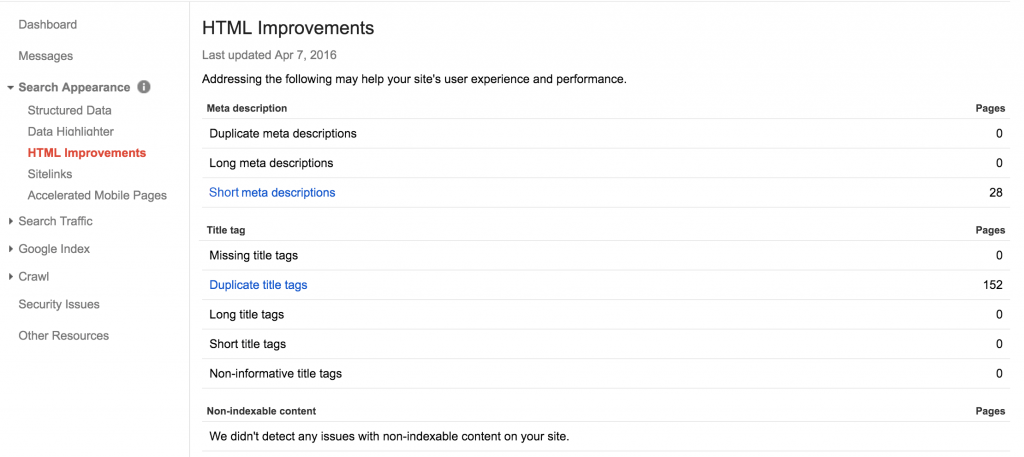
- Create unique titles that stand out in front of your competitors. Search for the keywords you want to rank in Google and look at the results you found. After that, create your headline by provoking an emotion.
15. SEO Can Eliminate Cold-Calling
Invest in SEO, rather than cold-calling. If you’re tired of sending emails, calling on the phone, or performing other forms of outreach, then SEO is the only “call” you have to make.
After all the reasons we’ve talked about why SEO is important, you can understand that it takes a few steps forward for your business and could eliminate cold calling.
It works pretty simply. Imagine you’d like to contact somebody regarding a proposition or collaboration idea.
If you have a well-known brand due to your SEO efforts (that means that it appears in the search results pages for important and convertible keywords) and say you are John from X (the brand you’re representing), then you’ll have a higher chance to get noticed.
The discussion can get to a positive result faster and the response rate can be higher.
16. SEO Builds Trust and Credibility
Google has lots of ranking factors and searches quality raters that analyze and evaluate ranking websites and pages.
Which only proves that Google takes a high interest in showing relevant, trustworthy, and newsworthy content to the visitor. SEO on the same note is providing trust and credibility to the website.
That type of strong indicator from a website will send quality signals to Google. Not to mention that SEO helps you grow your online reputation.
Sites that send a strong trustworthy signal have one or more of the following elements:
- HTTPS protocol;
- Security certification;
- Business blog with comments area;
- Social networking components;
- Current contact information;
- High-quality pictures, clean web design, and great UX;
- Recent activity on site (easy to see through the blog);
- Social media activity (social signals have a strong impact on SEO).
17. SEO Is a Long-Term Strategy
It takes approximately 6 months to see optimal website rankings for a new site, and it can go up to 12 months.
If you follow a natural path to grow a business online and follow Google’s quality guidelines to increase your website rankings, you have a high advantage.
Because once you get a place in the top positions of Google you rarely change it. The only times you can see a decrease in rankings is due to Google algorithm updates or high competition.
Studies have shown that search engine results had gotten more useful and relevant over time as 52% of consumers acknowledge.
The thing that I’ve seen working best for ranking in Google is content. Not any type of content, but quality content.
The key is to create informational content and connect it with the commercial type (through internal linking) to create linkable content and grow up your website.
A blog can go a long way. 72% of marketers say relevant content creation was the most effective SEO tactic according to Ascend2.
18. More Effective Than Other Traditional Strategies
SEO has proved a lot of times to be more effective than any other traditional strategy (passing flyers, print advertising, television, and radio or direct marketing) because the user is searching for something and receives the results.
It is not exposed to information that he doesn’t need at that moment (like it happens in the traditional marketing process).
The popularity of traditional marketing dropped over the years. Digital marketing started to rise and SEO has received the crown to rule over the empire.
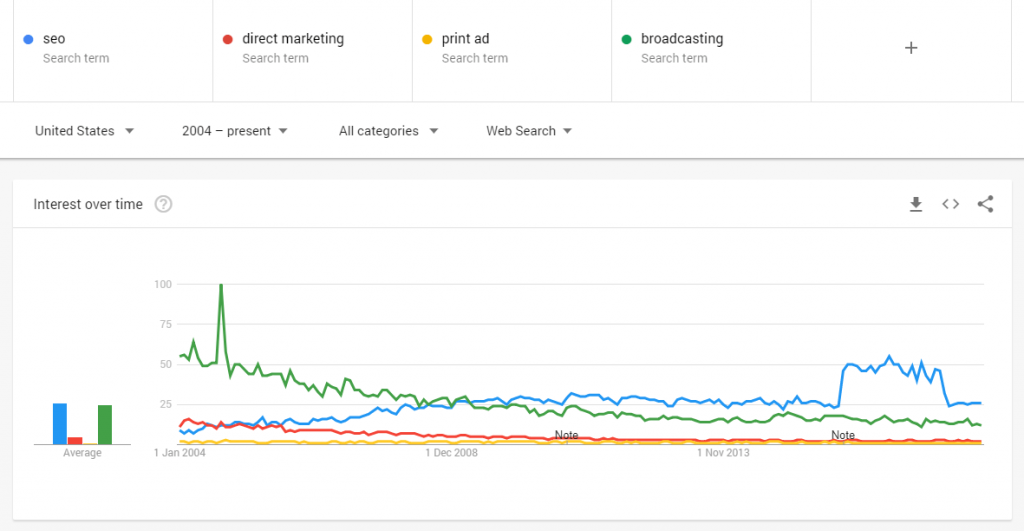
We can see how broadcasting had a tremendous drop in searches in 2009. Direct marketing had a slow death. And SEO had a natural growth in the last years.
We can’t say for certain that was the real evolution of how traditional marketing involved and SEO evolved, but we can point out people’s interest in them.
SEO starts by creating amazing content. The fact is that content will persuade the user into making an action.
93% of B2B companies say content marketing generates more leads than traditional marketing strategies, which can only prove the graphic from Google Trends.
19. SEO Can Help You Attract Great Individuals
If you have a strong website and people heard about you, you have a higher chance to attract talent.
In case you have open positions in your company and you are searching for some individuals that could fit your team, SEO can be a great “tool”.
On the same topic, TripAdvisor did something really cool in one of their recruitment processes. They were searching for someone in IT and did that through the robots.txt:

So, either you are using your website to send a message to future colleagues or offering information on sight, SEO can help you.
If you optimize the page for the job you’re offering, you might save some money spent on dedicated platforms or other sorts of promotion.
20. SEO Isn’t the Final Step, but the Center of Things
I hear a lot of people that designed their website and left SEO at the end like it’s some magic powder you can spray on top.
No! Wrong and wrong. When a new website is created, SEO is the first thing you should be considering, along with UX.
Take SEO into consideration when you develop your website’s architecture or decide the platform – CMS, the URL syntax, canonical URLs, other HTML codes important for having a reachable and clean website for the bots and users.
You wouldn’t like to be in the situation where you invested a lot of money in your website’s design and after that, you find out that Google doesn’t see your website as it should, the user doesn’t find the website in the search results or has a weird snippet.
And after all that investment, you have to spend more money to resolve the issues and make it visible.
21. SEO Can Boost Your Efficiency
All the benefits of SEO that we’ve talked about until now will help your business grow. And SEO is the one that multiplies your efforts. It delivers what is promised.
Optimizing your content will get you the benefit of getting a higher space into search, which means more keywords ranking on upper positions offering higher visibility in SERP.
We tried pushing the content optimization a step higher, by selecting a list of pages and making a massive content optimization a few months back.
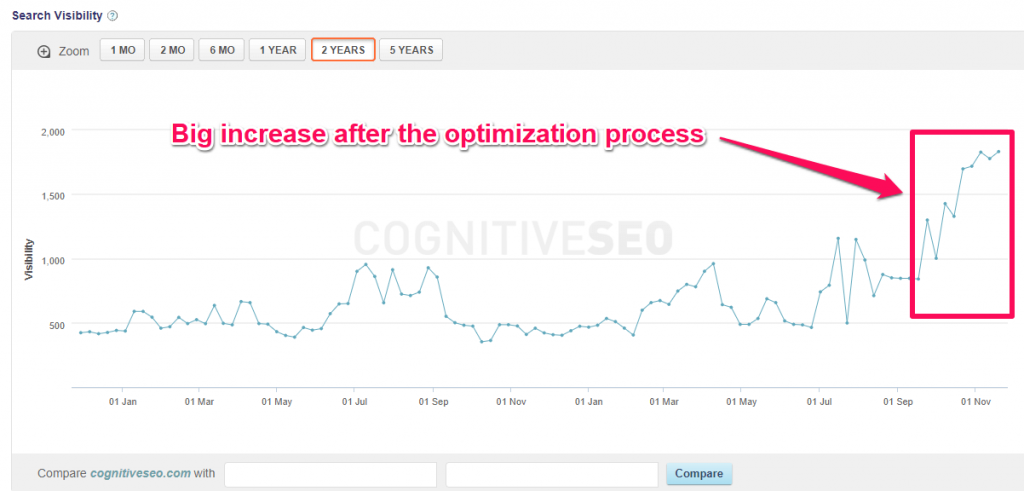
Source: https://explorer.cognitiveseo.com/?u=cognitiveseo.com&m=*U*#section/4
As you can see the evolution of the search visibility started to have a beautiful increase since the moment we’ve optimized the pages.
SEO is a digital business card.
If you manage to improve the rankings on your website, you can beat up competition and you can beat up skepticism, which is two of the biggest fishes to catch.
Conclusion
The perks of search engine optimization are several. Every SEO expert you ask will tell you how beneficial is SEO for a website.
SEO is laser-targeted, which means it can achieve great results and push your marketing goals upper.
It is one of the smartest marketing investments you can make at the moment we speak because in online SEO is the form of marketing that has the longest lifespan vs. money spent.
SEO will help you spread your wings through all the web. You need to include it in your marketing mix because it is a lifevest for your business.
You can’t survive without SEO, not now or never. It has lots of advantages that can bring awareness to your business and bring a higher impact on your marketing goals.
Driving traffic to your website can be easier once you’ve gained a high position of Google due to a well-done SEO campaign.
Either you’re building an SEO campaign for the first time or you’re doing this for a long time, you must always remember that SEO is a long-term strategy, and also a continuous process of improvement. Use this guide to SEO to get the results you desire.
The post Why SEO Is Important to Any Business Nowadays. Top 21 SEO Benefits appeared first on SEO Blog | cognitiveSEO Blog on SEO Tactics & Strategies.
Source: cognitiveseo.com

Does The Meta Description Tag Affect SEO & Search Engine Rankings?
There’s a lot of confusion when it comes to meta descriptions and SEO. Do they affect search engine rankings? Is it worth spending the time to write a good meta description?
Well, in theory, meta descriptions do not affect SEO. This is an official statement from Google, released in 2009.
However, since meta descriptions show in the search engine results, they can affect CTRs (click-through rates), which are linked to SEO & rankings. So, in practice, meta descriptions might have an impact on SEO.
Things are a lot more complicated than that. In order to better understand the topic, I recommend you to continue reading this article.
It will explain everything you need to know about the importance of meta description tags.
Index
Before we start, let’s make it clear for everyone what a meta description is.
What Is the Meta Description Tag?
HTML runs with tags. A tag is a set of characters that result in a command. In web development, these tags specify to the browser how elements should be structured on a web page.
The <meta> tag is a tag that contains data about the web page itself. It’s the data behind the data, just like in metaphysics.
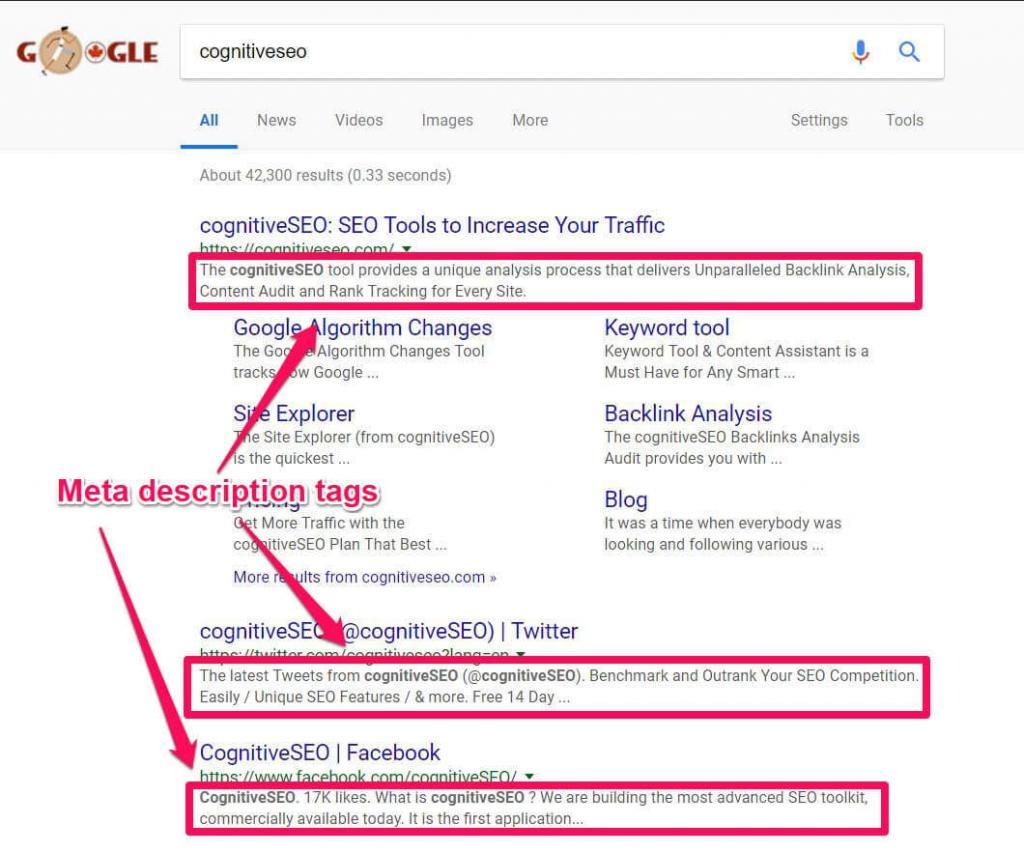
In our case, the meta description provides a summary of what the page is about. The users read it to figure out what they’re about to click on.
Google uses the meta descriptions (along with the title tag and the URL) to come up with search results on its pages.
You can usually recognize the meta description by taking a look at a web page’s search result. Here’s a branded search for the keyword “cognitiveSEO”:
If the meta description tag is missing, Google will just pick a piece of content from your page, which it thinks is the most relevant for the user.
I have a good example from no other than Wikipedia, the 5th most popular website on the planet. I’m not sure if it’s missing on this page only or if it’s a general thing, but… well, the meta description tag isn’t there.
But how do I know there’s no meta description tag? Well, the correct way of checking a meta description tag is to look into the source code of a web page. You can do this by hitting CTRL + U in Chrome, or by right-clicking the web page and selecting View Page Source.
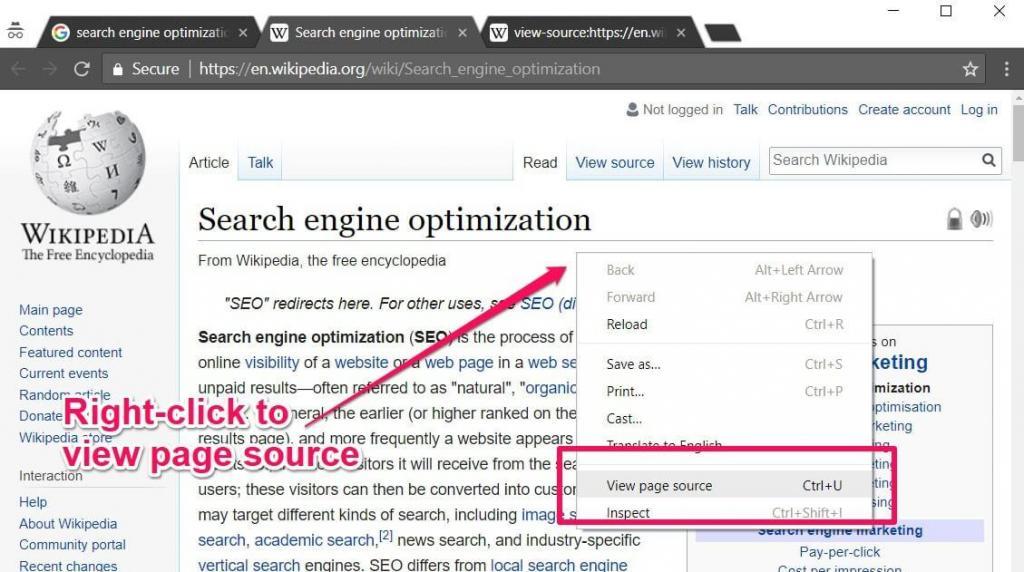
Then, just use the find function (CLTR + F) to search for <meta name=”description”. If you get the result, it’s there and you can view it. You can also see if it matches the one on the search results. If it’s not there… well… it’s not there.
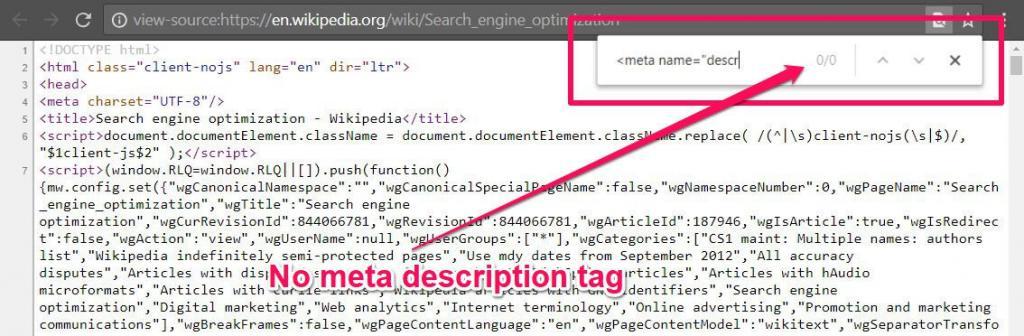
As you can see, in Wikipedia’s case, it’s not there. You can also search for variations, such as “description” or “<meta” in case the tag is written in a slightly different way. I made sure that Wikipedia doesn’t have it.
Even if the meta description tag is missing, Google does display something pretty relevant in the search results.
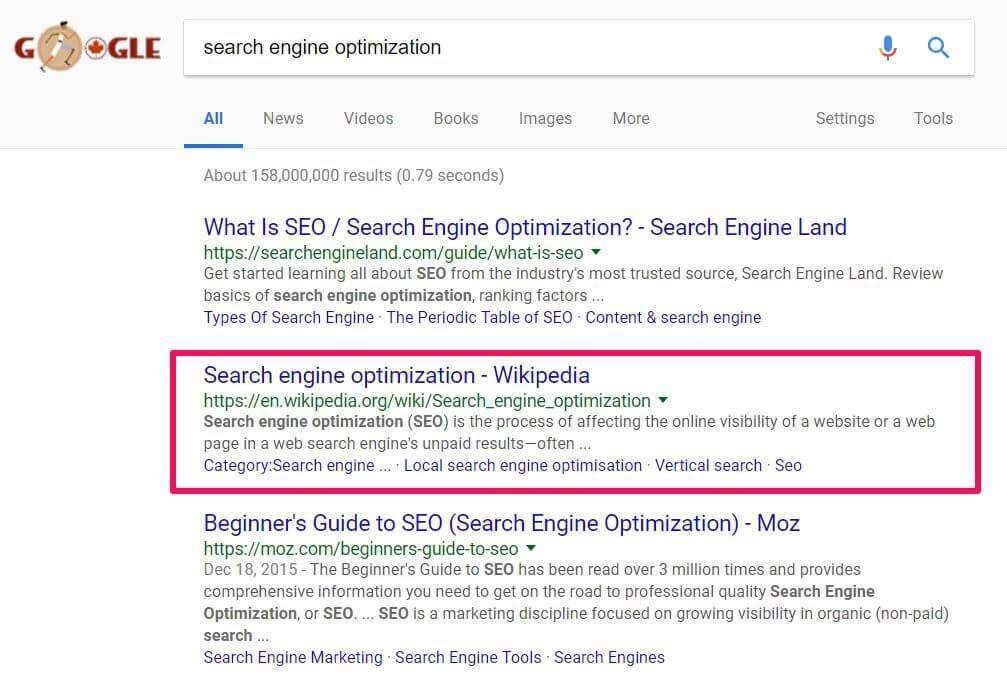
It’s actually a phrase taken from the content of the page. In this case, it’s actually the first paragraph. You can view it in one of the images above.
Although widely believed so, Google doesn’t always pick the meta description tag to display it in the search. Even if the meta description tag is there, Google can still alter the text shown in the results pages.
In fact, Google always chooses to pick what it wants. For example, if I add another keyword found on the homepage, Google will alter the text in the results to also show parts from that text.
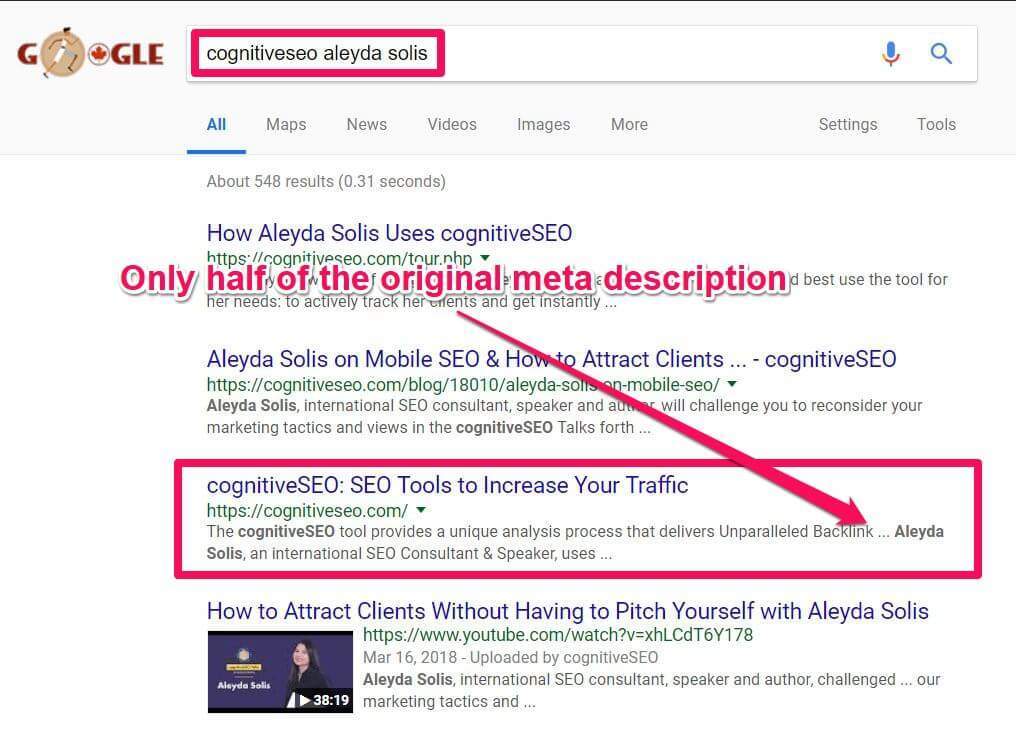
Sometimes, if Google thinks the description is completely irrelevant for the article, it will ignore it completely and pick something else.
Having control over what shows in the search engine results is very useful. You should craft your meta description well so that Google picks that instead of anything else.
We’ll talk about how to write good meta descriptions for SEO soon in the article, so keep reading.
Why Meta Descriptions Don’t Matter (In Theory)
A long time ago, meta descriptions were used to impact SEO directly. Search engines would parse these lines of text and look for keywords. A page would then be boosted on a keyword phrase if that particular keyword phrase was also found in the meta description (among with title tag and content).
I think you’ve figured out what followed. Obviously, people tried to abuse it by stuffing keywords in it, in an attempt to rank for as many phrases as possible. Since Google doesn’t like it when people abuse ranking factors, it made a big change in its algorithm, affecting everyone.
If this sounds familiar, then you might be mixing up the meta description tag with the meta keywords tag, which is actually obsolete (at least for Google).
Another common confusion is that meta descriptions matter for SEO and only meta keywords don’t matter.
I’ll clarify this right now:
In 2009, Google officially released a statement entitled “Google does not use the keywords meta tag in web ranking“.
But, because they were lazy, many people didn’t read through the entire post and missed the following section:
| Even though we sometimes use the description meta tag for the snippets we show, we still don’t use the description meta tag in our ranking. | |
 |
|
Even more, there is a video of Matt Cutts (Former Head of Spam @ Google) that talks only about the meta keywords tag not being used as a search ranking factor:
This doesn’t mean that Google completely ignores these meta tags, or all meta tags, as some users might think.
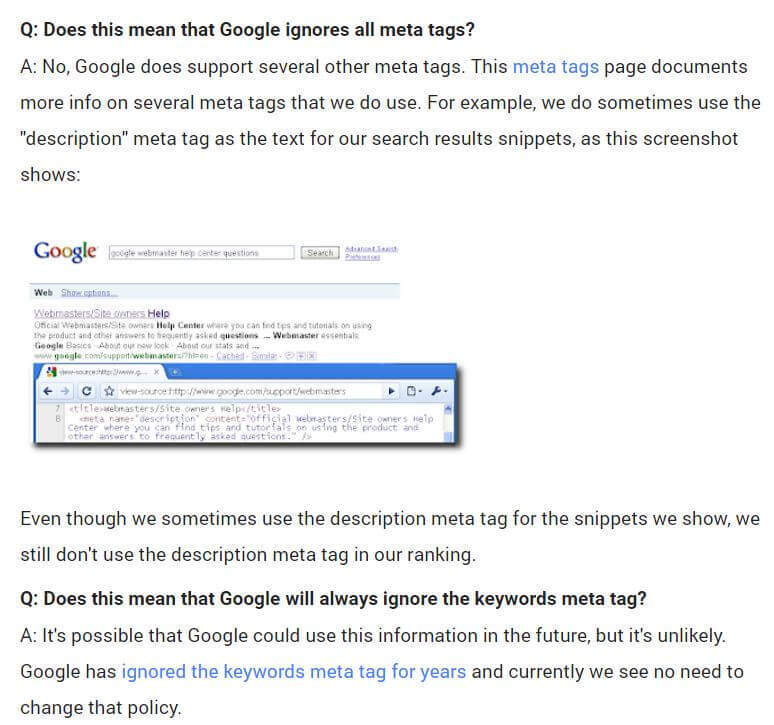
Although some people still use the meta keywords tag, it’s usually a good idea to show Google that you’re keeping up with the news.
Older websites still use meta keywords internally, for things like product search or sorting.
It’s also useful for Google Search Appliance. However, if you don’t use them, there’s no point in showing them.
Important note: Other search engines, like Yandex, still use the meta keywords tag as a search ranking factor. So if you’re trying to rank there, you should keep them. If your site is multilingual, you can try to keep the keywords meta tag for the /ru version and remove it from other languages that mainly use Google.
Why Meta Descriptions Matter (In Practice)
Ok, so Google says that meta descriptions don’t alter search engine rankings. But Google says many things and it’s also hard to find accurate information. As seen above, you have to carefully extract the semantics between the lines to clearly understand a topic. There’s more about the meta descriptions than just rankings.
Should you just ditch them altogether, if they don’t help with rankings? Hell no!
The description meta tag has a great importance and, indirectly, it might even affect search engine rankings.
How? Well, the short answer is: through CTR (click-through rate).
Meta Descriptions Can Affect CTR
The Click-through rate represents the percentage of users that click on your search result from the total number of users that view your search result. It’s the same principles as a conversion rate, but with a different, more specific name.
The formula for calculating CTR is: Clicks / Impressions * 100.
So, if you had 700 impressions and 20 people clicked on it, your CTR would be 20/700 * 100 = 2.86%. Or, much easier if you have 100 impressions and 5 clicks, then the click-through rate would be 5%.
But why do meta descriptions affect CTR? Well, the answer to that is pretty simple. On the search page, you have 3 elements that mix up in order to create your search result:
- Title tag
- URL
- Description (Meta description tag or other pieces of text)
If you take a look at the results on a Google search page, you can see that the meta description takes up about 50% of the space. Sometimes, even more.

Even if the title tag is the most important one, the description still matters. Google bolds important phrases in the description, which catch the eye. In order to make sense of the bolded phrases, you have to read the entire sentence or at least part of it.
The following example is a localized search result, so your search engine results might differ from mine. Nonetheless, it’s a good example of something that catches the eye.
Now I know nothing about shoes, so in my opinion, branding here doesn’t matter. For me, the most interesting result is the last one.
Why? Because it mentions things I’m actually interested in, before actually seeing the shoes. I might not like them, of course (although there are over 15000 models to choose from), but I sure do want that 85% discount and prices as low as $15.
For example, ASOS lists something about women. Well… I’m a man (a boy, at least) and I don’t care. Yoox has the luxury of getting 2 positions, which is great and also states something about delivery and online payments.
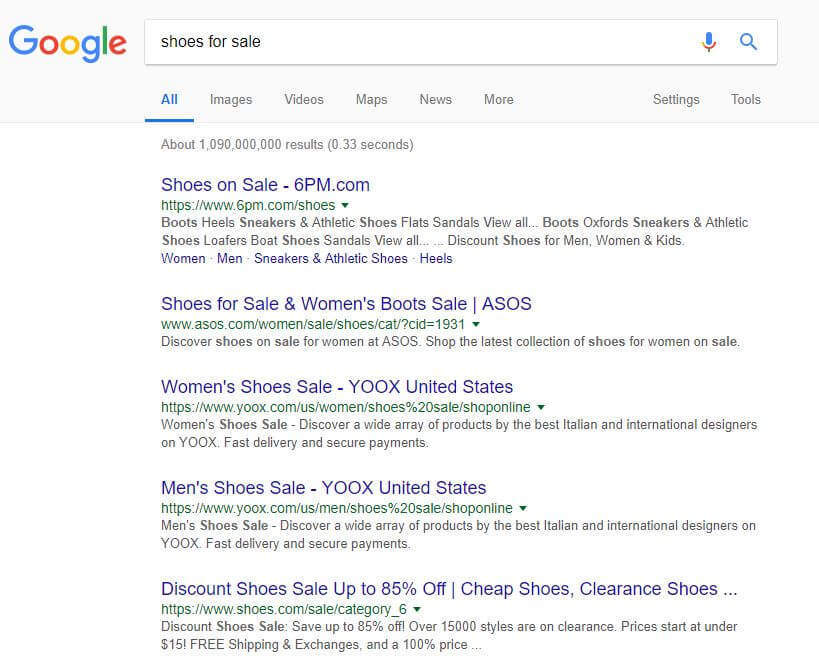
Now there could be a lot of other factors why the other websites are ranking higher. For once, shoes.com’s title is too long and the URL sucks.
Other websites might be linked to locations closer to mine. Then we could go into technical SEO issues and the number of referring domains.
Anyway, the results were inconsistent. Changing location from the US to the UK showed different results.
For example, 6 PM sometimes shown its own meta description and other times just showed menu elements, like in the picture above. In other cases, shoes.com showed at the top.
Now, the question that remains is: Does CTR affect SEO?
Well, according to Google, yes! Brian Dean also mentioned this in his famous article about top Google ranking factors, at number 135.
A wide number of other experts also agree that CTR is a Google ranking factor.

You see, Google gives a lot of importance to the user’s experience. If a user doesn’t click on your result, it has no experience whatsoever.
Your score is basically 0. Only after the user clicks on your result can Google take a look at things like scroll count or bounce rate.
Meta Descriptions Are Used by Other Web Platforms
Secondly, meta descriptions might be important for other platforms. Just to mention a few of them, think of Facebook and Twitter. When you share a link on these platforms, they extract data from the HTML in order to display titles, images and descriptions.
Now, these very popular platforms have their own tags. Twitter has Twitter Cards and Facebook uses the Open Graph tags to correctly display the required information.
However, many other web platforms might not have their own universally accepted tags and could rely on standard meta tags. Meta tags can also be important for apps and browsers.
Take advantage of custom tags, such as Twitter Cards and Facebook Open Graph. These will enable you to use different titles, descriptions and images across different platforms, which can increase your CTRs.
What works on search engines might not work on Facebook and what works on Facebook might not work on Twitter. This is mostly true with images. Facebook, for example, requires a specific size to display images nicely. Your website’s featured image might require a different size. Open Graph provides a solution to this issue.
How to Add Meta Description Tags
Writing meta description tags is easy.
Adding it is even easier.
You just have to edit your HTML template from the cPanel of your web hosting service and add the following code between your <head> & </head> tag on the page.
<meta name=”description” content=”Here goes the description that you want to be shown in Google”>
Sounds hard? Don’t worry, I’m joking. Although you can do it on plain HTML websites, most websites use databases which makes things different.
If you’re running on a popular CMS (Content Management System) like WordPress, you can use a plugin. The most popular one is Yoast SEO. It’s pretty easy to use.
After you install it, a box will appear under the article’s body, in the editor.
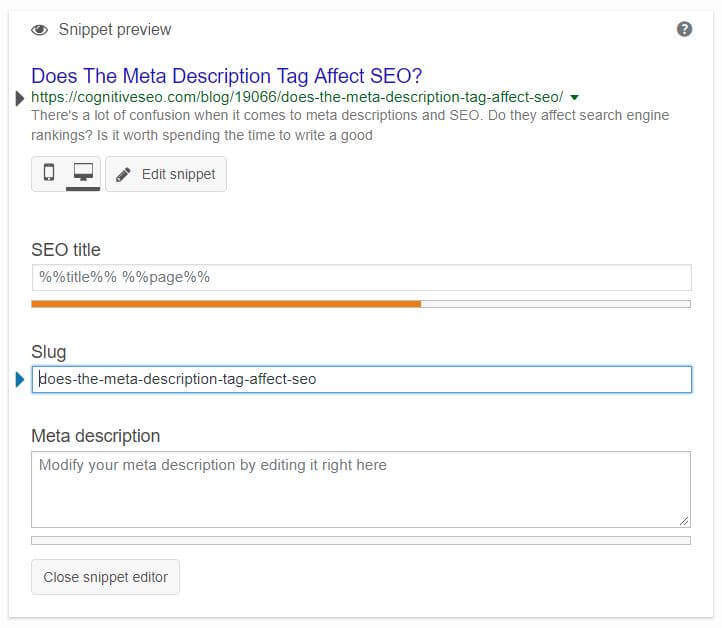
By default, WordPress uses the article/page heading as the <title> tag. A big advantage of using an SEO plugin is that you can use different titles on your site and on Google.
For example, maybe your heading doesn’t fit Google’s search engine results, but you really like it. You can keep that on your site and use the SEO plugin to display something shorter for the search engines.
If you click the preview, it will enable you to edit the fields. Right now, my fields are empty, but by the time I publish this article, they will be filled up accordingly.
If you click the social media tab on the left, it will also enable you to enter social media titles, descriptions, and images. This will add the correct tags to your HTML and display the proper elements on each platform.
There are similar plugins for most popular platforms. Some themes even have their own SEO fields sections. I recommend that you use Yoast though. It’s definitely the best.
How to Write Good Meta Description Tags
It’s difficult to master the art of copywriting. It is definitely more complex than I can cover in this section and takes years of practice, trial, and error to improve.
When you write meta descriptions, think about selling the user something in one short paragraph. You’re selling him the click to your website.
Focus keyword:
First of all, let’s discuss keywords. I’ve stated that you shouldn’t stuff keywords in when writing meta description tags. While this is good advice, it doesn’t mean that you shouldn’t add keywords at all.
It’s important to add focus keywords to your descriptions. Why? Because Google bolds them and people like to see what they search for.
If what they search for is in bold on your description, it reassures them that what they’re looking for lies behind that link.
If you’re targeting multiple keyword phrases, conduct some keyword research to identify the most important one. Use that in your description if others don’t fit. This brings us to the next important aspect…
Length:
Secondly, make sure you don’t exceed the number of characters. You might get your description cut in the wrong place and it won’t have the same impact anymore.
As of May 2018, the recommended length is around 160-180 characters. Google confirmed shortening the length back to its initial state, after expanding it to around 300 characters, less than 6 months before, in December 2017.
Interesting & Relevant:
You don’t have to deceive people. You just have to make them curious or excited. State out your discounts and premium features. Things that your competition doesn’t have.
It’s interesting how people add discounts and interesting things in their paid search (Google Adwords) descriptions, but stuff keywords instead in meta descriptions for SEO. They serve the same purpose!
Call to Action:
People like to be told what to do. If you view the source of this page (CTRL + U) and search for the description meta tag, you’ll see that I tell users to click the link. If you’re here through search engine rankings, it’s a clear sign that it worked. Add a call to action!
Every page should have its own, personalized meta description. This might be difficult for large eCommerce stores.
You can use patterns to generate similar descriptions but with different elements, such as focus keyword and discount amount.
However, be careful with duplicate meta descriptions, as this could tell Google that you have very similar pages and that could harm your website.
Conclusion
In short, Google says that meta descriptions do not directly impact search engine rankings. However, these descriptions can indirectly impact SEO through click through rates.
This is very important when you’re fighting between 1st, 2nd and 3rd place. There, things like technical SEO and backlinks tend to matter less. Google also has more room to play with the CTR, as the top 3 positions get about 80% of all the clicks.
Make sure you take advantage of the meta description tag and write your descriptions in a clever way, to convince users to click your link.
Do you use meta descriptions? What’s your experience with changing them? Did they have any impact on your click-through rates? Let us know in the comments section. Also, if you have any questions, feel free to ask them. We’ll gladly reply.
The post Does The Meta Description Tag Affect SEO & Search Engine Rankings? appeared first on SEO Blog | cognitiveSEO Blog on SEO Tactics & Strategies.
Source: cognitiveseo.com