
Tag Archives for " search engine optimization "

7 Reasons Why Yandex Matters for SEO
If you’re looking to break into the Russian online market, you’ve probably come across the search engine Yandex. At this point, you likely already want to optimize your site for Yandex SEO. However, before you start loading your site with Russian backlinks, let’s take some time to break down this search engine.
Just because you’ve optimized for Google doesn’t mean you’re fully optimized for Yandex. Fortunately, by the time we’re done here, you’ll walk away with both an improved site and a strong understanding of what makes this Russian powerhouse of a search engine so unique.
What Is Yandex?
Yandex is one of the Russian Federation’s leading search engines, making up nearly 60 percent of the Russian search engine market share. With 85 million monthly users, Yandex is the most visited online resource in Russia.
Think of Yandex as the Google of Russia. Of course, they dominate the search engine space in Russia, but that’s just the tip of the iceberg. Yandex supports Russian users with everything from food delivery and maps to news and a voice assistant.
While it may function a bit differently from the search engines you already know and love, Yandex can still be a powerful tool when leveraged properly.
If you’re looking to expand your brand into Russia, you’re going to want this search engine on your side. Plus, as one of the top five search engines worldwide, your brand can’t afford to be invisible to Yandex. That’s just leaving money on the table!
Why Should You Optimize for Yandex SEO?
Don’t make the mistake of thinking that this is a Bing versus Google situation. If you’re trying to break into the Russian market, Yandex is not optional.
Of course, the reason you’ll need to optimize is that it doesn’t operate the same way other search engines do. They prioritize different elements and focus on different factors.
When it comes to technical SEO, Yandex struggles with crawling and indexing JavaScript websites. Single-page applications developed in JavaScript aren’t pre-rendered or indexed by Yandex.
Yandex can use unique content result blocks and snippets to augment a search results page, just like Google. However, with Yandex, you can see how eligible you are for different result types. You’ll be able to easily identify the issues that impact your eligibility and optimize accordingly.
We’ll tackle the difference in behavioral factors and how certain signals impact your search results later, but for now, it’s worth mentioning that Google and Yandex don’t value the same factors equally.
Google may give user behavior signals some unspecified importance, but Yandex couldn’t be clearer. User signals matter to Yandex and their users, from traffic sources and search queries to platforms and conversions.
Yandex has its own unique frequency when it comes to SEO, which means that having a successful SEO marketing strategy depends on whether or not you can properly optimize.
Why Does Yandex Matter for Local SEO?
It’s important to keep in mind that local SEO works a bit differently in Russia. Since 2006, Yandex has allowed users to sift through national or regional search results. Yandex checks certain signals like your website’s IP address, contact info, and domain registration.
Why does that matter? Well, if any of that information is wrong or mislabeled, you likely won’t rank highly in local searches, regardless of your marketing strategy. Fortunately, Yandex’s Webmaster service can make regional binding a simple process.

Time after time, Russian consumers have shown they prefer relying on Yandex for their search engine needs. More importantly, trying to navigate the local SEO landscape without Yandex makes your marketing efforts significantly less effective, especially if you want to compete with established local brands.
If you want to dominate local Russian SEO, you’ll need the search engine that more than half of the country uses. When you’re optimizing for local SEO, it’s crucial that you make it as easy for locals to interact as humanly possible. It may take a bit of work to fully optimize for this search engine, but that’s the price of smart marketing.
7 Best Practices for Organic Yandex SEO
Now we understand how valuable Yandex can be to your brand. The only question left is how to properly optimize your site for Yandex.
Let’s start by taking a look at one of the pillars of effective SEO practices, maximizing the value of your copy.
1. Create Valuable Content
It’s impossible to talk about organic SEO without bringing up content optimization. While it’s always important to create compelling, engaging content, certain techniques can elevate your copy.
Right off the bat, we have to address how Yandex and other search engines use elements like keywords and word counts to determine a site’s ranking.
When it comes to keywords, you’re looking for a three to five percent keyword density. Once you go past 6 to 8 percent, you might be flagged by Yandex’s algorithms. You can be a bit more flexible with word count, but a good rule of thumb is to engage in some competitor analysis. If all the top-ranking results have 2,000 words, your article shouldn’t be 4,000 or 500 words.
As far as we know, Yandex evaluates content using at least two algorithms. Its AGS Filter functions as a way for Yandex to identify low-value content. If you’re familiar with Google’s Panda algorithm, it operates with the same goals in mind.
These low-quality sites are then flagged by the search engine, resulting in significantly lower rankings on the SERPs. In other words, make sure your content is both valuable and well optimized, or no one on Yandex will see your site.
2. Optimize Your Site Experience
The content you create is important, but search engines like Yandex take a more holistic approach when determining how to rank your site. As far as Yandex is concerned, your site should provide both high-quality content and an optimized user experience.

What does that look like? Well, sites with high bounce rates can struggle to rank highly. Bouncing occurs when a user lands on a page and leaves that page without any further interaction. To be clear, the amount of time a user spends on that page doesn’t matter. All that matters is whether or not they interacted with the site in some way.
The savvy site owners among you have probably already noticed that this definition can make bounce rate a tricky metric to account for. After all, let’s say someone clicks on your link and finds the answer they were looking for.
Now that they’re satisfied, they don’t really have a reason to interact any further. If they leave at that point, they’ve technically bounced, but the result was still valuable!
Fortunately, Yandex accounts for more than just bounce rate when determining a site’s ranking. Here are some techniques you can implement to create a more engaging site experience for users.
Increase your website loading speed, address problem areas on your site using heat maps, and ensure your content is easy to digest. If you already have a massive library of content, take some time to batch relevant articles together.
Not only can this reduce your bounce rate by leveraging a user’s interest, but it can also improve the navigational experience for your users.

3. Understand Meta Tags
Those of you with a background in Google SEO are likely familiar with meta tags and their importance. What you may not know is that Yandex takes meta tags much more seriously. In fact, sites with even slight meta tag mistakes can struggle to rank highly on Yandex.
Here’s how you’ll want to approach meta tag optimization for Yandex SEO. When it comes to title and description tags, your titles can be longer than Google’s. Still, your best bet is to hover around 60 characters, and you should aim to have 160-character description tags.
Also, if your tags are created automatically, check them! If they aren’t high quality, your site could easily drop in ranking. As for meta keywords, add a few target keywords per page.
While Russian speakers tend to use Cyrillic characters for their URLs, Yandex understands both Cyrillic and Latin characters.
When dealing with similar pages within your site, canonical tags function as a way to avoid potential issues with duplicate content. Keep in mind that even if you specify rel=canonical, Yandex won’t consider that an order. It can ignore it for a variety of reasons.
4. Make Your Site Mobile Friendly
The concept of making your website mobile-friendly is nothing new, especially after Google made AMP such a powerful SEO tool. Similarly, Yandex highlighted the value of mobile-friendly sites within their search engine. They even launched Turbo pages, which launched up to 15 times faster than standard pages.
Fortunately, the usual mobile optimization rules apply here. Keep your web design simple, make sure all your multimedia elements load quickly, make your buttons large enough to work on mobile. The key here is to maximize ease of navigation and consumption.

Optimizing your site for mobile is fantastic for your SEO, but it’s also an effective way to improve your user experience. Faster load times mean less waiting, which leads to more time engaging with your brand. You can review your mobile pages using the Yandex Webmaster tool.
Oh, and here’s a quick tip. Click on the tab on the lower right side that says “Ru” and click “En” to switch the language.
5. Analyze User Happiness
We’ve spent a lot of time covering the similarities between Google SEO and Yandex SEO, but it’s worth mentioning that Yandex has slightly different objective focuses. To put it bluntly, Yandex puts a massive emphasis on what we’ll call “user happiness.”
Let’s break user happiness into two categories: site quality and user behavior. In other words, Yandex evaluates whether your site is worth showing users and then how useful your site was for those users.
How does Yandex do this? It uses everything from user behavior signals to click-through rates to determine your positioning within both the Site Quality Index and on the SERPs.
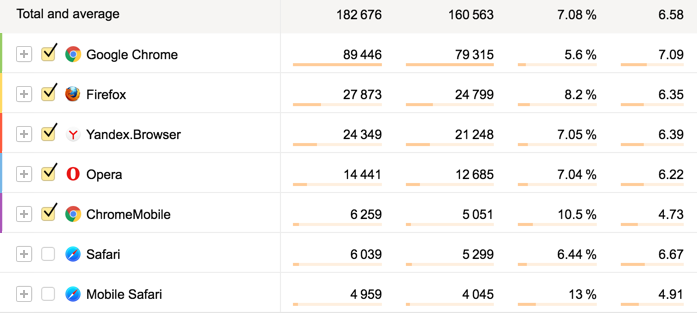
When optimizing for Yandex SEO, you’ll need to analyze your traffic sources and optimize based on which sources are bringing the most visitors to your site. Your user search queries and target pages, as well as your platform specs, are all considered when determining your user happiness, so make sure you consider those metrics when optimizing.
Beyond that, Yandex uses an ICS score to evaluate the quality of your website. As far as Yandex is concerned, it’s not enough to provide the right answer with your copy. Your overall site experience should maximize user happiness.
Yandex tracks this by evaluating the number of visits users make, the number of time users spend on your site, and even whether they clicked on any ads! They then combine these results with human-completed surveys to determine a site’s accuracy and readability.
6. Don’t Overuse Backlinks
While this might not be a particularly complex point, it’s still a pretty important one. If you’re coming from the world of Google SEO, here’s your word of warning.
Backlinks might mean a lot to Google, but Yandex doesn’t rank them particularly highly. In fact, certain Yandex algorithms can severely punish your site if you’re using too many irrelevant links.
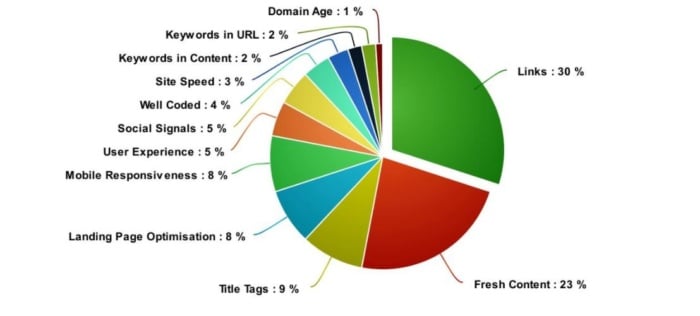
To be clear, there’s nothing wrong with relevant, valuable links that bring in traffic. But if your links don’t attract traffic? The Minusinsk algorithm is more than happy to restrict your site.
7. Leverage Yandex Metrica
Yandex Metrica is essentially their version of Google Analytics, with a few interesting features tacked on.
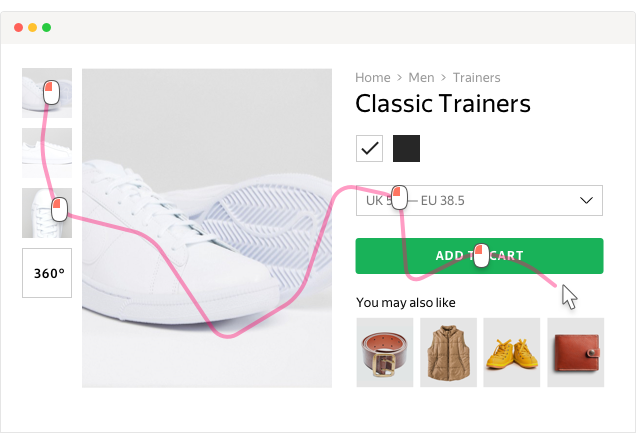
Their ability to detail user retention metrics is particularly useful, breaking down users by both session and goal completions. Of course, we can’t talk about Metrica without talking about their use of heatmaps.
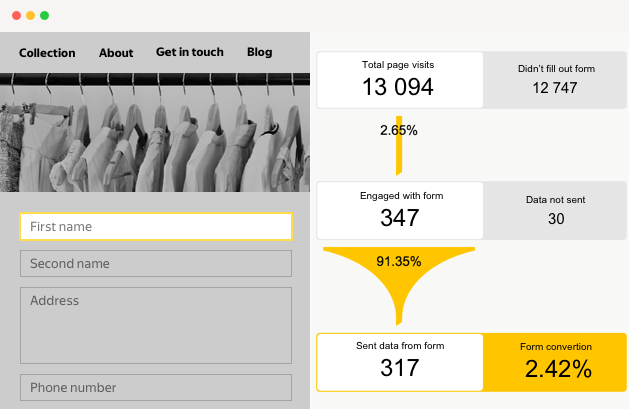
Since it’s directly tied into your analytics, you’re able to easily compare custom segments. That means you’ll have clear visual clarity when it comes to the differences between User Group A and User Group B. Beyond that, you’ll be able to change date ranges and even add session criteria to your analysis.
Yandex SEO Frequently Asked Questions
Is Yandex better than Google?
It’s not a question of better or worse. Yandex appeals to the Russian market, which makes it a great tool for marketing to that market.
How does Yandex search work?
Similarly to search engines like Google, just with a larger focus on the perceived “user happiness.” Those factors are tracked by the search engine algorithms and used to determine your site’s ranking.
How does Yandex compare to other popular search engines?
As far as objectives go, Yandex has the same end goal as other popular search engines. Identify the best, most relevant answer and provide it to users.
What are some challenges of SEO for Yandex?
Avoiding the overuse of backlinks, using meta tags properly, and ensuring the use of valuable content are some of the key challenges site owners face when optimizing for Yandex SEO.
Yandex SEO Conclusion
It’s easy to look at Yandex and imagine that it’s some impenetrable search engine that only a local could ever understand.
Fortunately, the reality is that Yandex has the same goals and objectives as any other reputable search engine. As long as your site is getting the best answers to the right people, Yandex will help your brand increase its visibility.
The key is to keep track of the slight differences in SEO optimization and, above all, protect the average user’s time and experience as much as possible.
Which of these Yandex SEO practices are you most excited to start implementing? Let me know in the comments below.
Source: neilpatel.com

How to Do Healthcare and Medical SEO
All SEO is not created equal. The average cosmetic brand or fitness brand can take the usual approach with SEO. Optimize some images, start ranking for keywords.
Medical SEO, on the other hand, is an entirely different animal. Search engines use different techniques to rank medical sites. There are serious limitations on both what you can and cannot say, with serious consequences if you make a mistake.
If you’re new to medical SEO, it can be a lot to manage. Fortunately, I’ve put together a list of tips that should make your medical SEO journey significantly easier.

Why Do Healthcare, Medical Professionals, and Businesses Need to Understand SEO?
Don’t the jargon fool you, the concept of SEO is actually pretty simple. SEO, or search engine optimization, is the process of making your site easier to find on Google.
Essentially, Google has a series of factors it uses to calculate how relevant a site is to a particular search. The more relevant you are, the higher you rank. Simple, right?
There are plenty of reasons healthcare professionals should focus on medical SEO, but the biggest selling point is usually the influx of new patients via website traffic. The better your SEO is, the more likely you are to get new patients.
10 Tips for Healthcare and Medical SEO
SEO is generally viewed as one of the building blocks of most successful digital marketing strategies. If you’re serious about making an impact online, SEO provides a relatively straightforward path to marketing success, as long as you know what to focus on.
1. Think of Your Patients and the Search Terms They Use to Find Medical Professionals
If you want to elevate your SEO, it’s important that you start considering the search terms people are using to find medical professionals. Keywords are one of the most vital elements in the SEO landscape, and medical SEO is no exception.
Search engines use keywords to connect users and their searches with relevant information. If you want search engines to find your brand online, you need to choose the right keywords. Of course, that still leaves us with an important question. How on earth do you identify high-quality keywords?
Keyword research is crucial but can be a challenge to wrap your head around at first. If you’re just getting started, you can use my free keyword search tool to get some clarity.
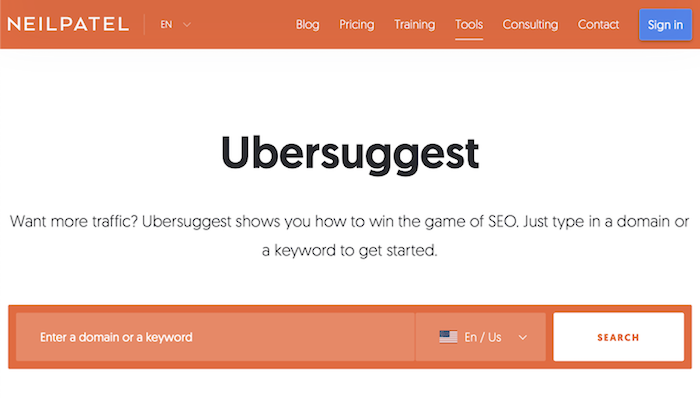
Fortunately, identifying the best keywords for your brand is less about stumbling onto a magic search term and more about understanding user intent. Eventually, you’ll want to start isolating pain points and cross-referencing your potential search terms with your competitor’s highest ranking keywords.
2. Focus on Earning a High EAT (Expertise, Authoritativeness, and Trustworthiness) Ranking
Keywords might be important, but they’re just the tip of the SEO iceberg. Search engines like Google have systems like EAT that can seriously impact your page rankings.
Search engines have a singular real commodity. When they help you get the answers you need fast, that’s a successful session. Search engines live and die by their ability to find users the right answer. In other words, if you want to rank highly and eventually end up on their first page, you need to provide genuine value. That’s where EAT comes in.

EAT stands for Expertise, Authoritativeness, and Trustworthiness, and it’s considered one of the most important factors for Google when determining overall Page Quality Rating. This is one of the ways Google separates the average amateur from the knowledgeable authority.
Understanding this system is particularly important for those in the medical field because of the unique approach to improving it. If you want to achieve a high EAT score, your content should be created by those with expert medical knowledge. Beyond that, that content should be regularly updated and reviewed.
3. Understand Language Limitations Specific to Healthcare and Pharma Fields
When it comes to medical SEO, there are some rather serious limitations to what you can do. For starters, the AKS or Anti-Kickback Statute establishes both criminal and civil prohibitions against knowingly and willfully offering, paying, soliciting, or receiving any remuneration directly or indirectly to induce or reward.
Plus, we can’t forget about the Stark Law. If a physician has a financial relationship with an entity, then they may not make a referral to the entity for the furnishing of designated health services.

Make no mistake, these aren’t suggestions. These limitations come with hefty price tags, with as much as $100,000 for trying to get around them.
That’s why as you develop your medical SEO strategy, it’s important you constantly ensure you aren’t violating any of your industry limitations. Competitor analysis is a great way to identify safe copy and content options if you’re ever unsure.
4. Make Your Site Navigation Easy and Intuitive for Users
When users can easily navigate your site, something interesting starts to happen. Simply put, the user actually sticks around. A site that’s confusing, poorly designed, structured, or optimized tests the user’s patience and creates friction. Sites that are easy to navigate improve your chances of keeping the user’s attention.

Beyond that, intuitive sites make exploring the site a more natural process. Your user should be able to quickly access the information they need and be presented with data that address their other pain points within your industry. The longer the user spends on your site, the more meaningful engagement you’ll receive.
Listen, there’s no denying that improving your user experience can improve your SEO. That being said, you shouldn’t just improve your site navigation because you’re developing a medical SEO strategy. Beyond the binary improvements to page ranking, your users will genuinely enjoy their time on your site, and I’d argue that’s just as important.
5. Adhere to Google’s YMYL (Your Money or Your Life) Rules
Medical SEO might have its own series of unique contributing factors to success, but easily one of the most important is what Google calls YMYL which stands for Your Money or Your Life. As far as Google is concerned, medical web pages are YMYL pages. Categorized as pages that could impact the future health, happiness, and financial stability of the users, Google holds medical pages to a high standard.

Why? Well, the answer is simple. The standards are higher because low-quality pages can be both dangerous and present serious medical consequences for users. One of the easiest strategies for improving your YMYL SEO ranks? Create high-quality content that’s both medically relevant and engaging. Speaking of creating content, let’s talk about content marketing.
6. Do Content Marketing
The term “content marketing” gets thrown around quite a bit in the digital marketing landscape, and with good reason. Creating valuable content is one of the easiest ways to both engage with and assist your audience.
If you’re not sure where to start, creating a regularly updated blog is typically a strong choice. Think of it this way. Your keywords and search terms are the bait, attracting users to your site. Your expertise and capacity are what users eventually agree to, once they see your value. One factor impacts the beginning of your user relationship, the other impacts the end.
Developing a content calendar and consistently making valuable content is the connective tissue between these two. When you have free content that people enjoy, you’re able to bring in traffic with your content. That traffic will then make it easier to improve your SEO through data and improve your visibility.
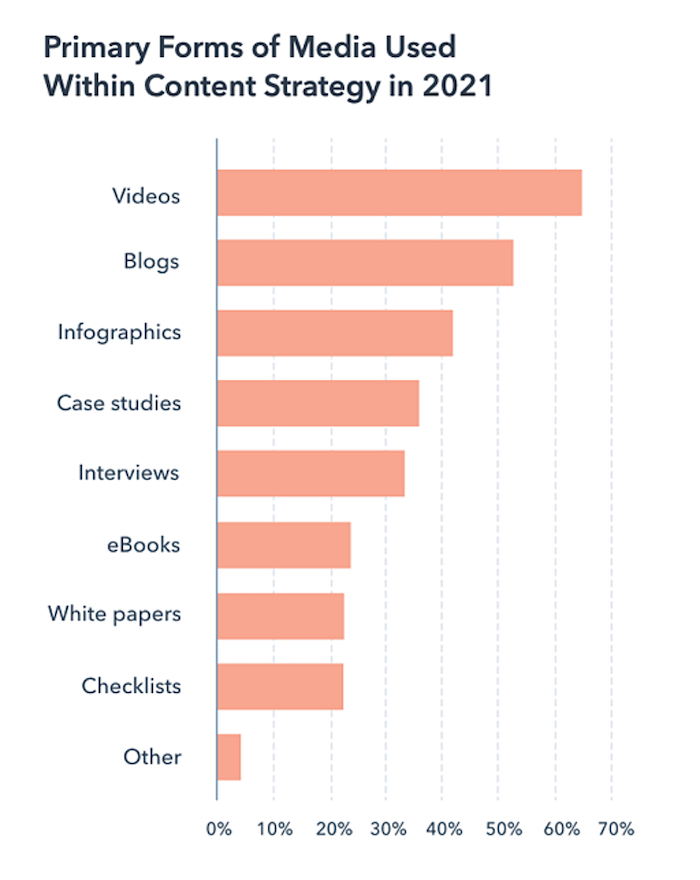
To be clear, you shouldn’t focus only on blog posts and white papers. Social media can indirectly impact your medical SEO ranking because you can get referral traffic. Don’t be afraid to branch out in other forms of media. With changing consumer behavior, video is maintaining its popularity.
7. Use Short, Logical URLs
It may not seem like a massive issue to you, but short URLs can have a massive impact on the way users interact with your brand.
URLs typically go unnoticed, because there are so many other exciting options to focus on for medical SEO.
Of course, this goes back to the issue of user experience. When users have negative experiences with your brand, they’re less likely to make that crucial first conversion. Likewise, when you reduce friction throughout your brand experience, users take notice.
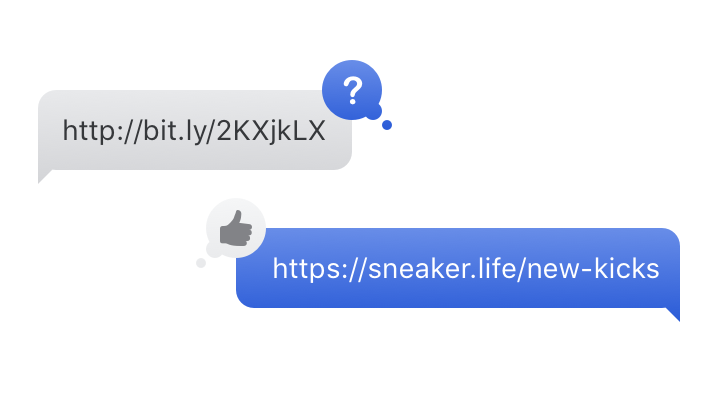
Short, logical URLs are just one of many signs that you care about your audience’s time and experience. Attention to detail matters and your site should be optimized for medical SEO at every angle.
8. Include Images of Staff, Your Office, and Your Equipment
You might think that just because we’ve been talking about blog posts and white paper, that there’s no room for other kinds of content on your site.
Fortunately, nothing could be further from the truth. Visual content can be a powerful tool, and visuals of your staff, office and equipment are some of the most useful styles of content you can share.
Right off the bat, adding these images increases the chances that your users will trust your brand. Beyond that, they’re a great way to increase conversions. Here’s a little trick you may not know about. You can add keywords to your own images. By placing your keywords in the image file manually, you can further optimize your medical SEO.
9. Identify Healthy SEO Practices
There are some guiding principles that you should be aware of, whenever you’re trying to identify healthy medical SEO practices.
As a general rule, you should be making copy, content, and pages primarily for users. There’s a temptation to create pages with SEO primarily in mind, but this is a common trap that businesses fall into.
Does it matter if Google thinks you’re interesting? Absolutely.
Is the user experience infinitely more important than some keyword optimization? Without a doubt.
Never try to trick your users into doing anything, it always backfires. Identify what makes your website unique, and what expertise you can bring to the site today to elevate the user experience.
10. Complete Your Google My Business Page
When it comes to SEO, there are certain contributing factors beyond your own site. One of the easiest ways to improve your SEO without touching your site is by completing your Google My Business page.
It might seem simple but make no mistake. This page can drastically change the way users experience your business online. Not only will this make local SEO more efficient, but it also puts you in Google’s local pack.
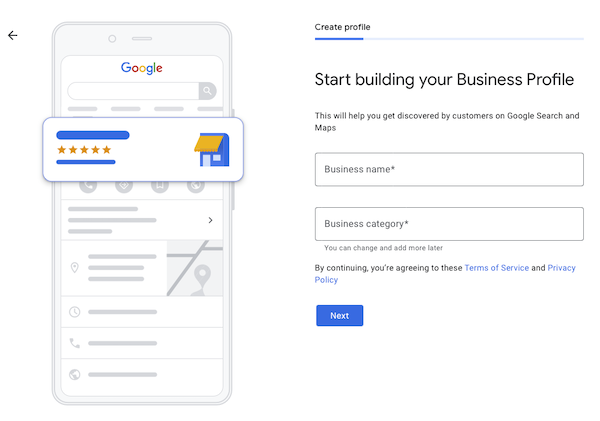
A local pack is a group of 4-5 business listings, appearing above organic search results. The logic here is that Google believes local results are more valuable than generic page results for a specific search term. In other words, you get a free boost in page ranking because you’re closer and more likely to be valuable.
Healthcare and Medical SEO Frequently Asked Questions
How long does it take for medical SEO to work?
Like any other form of SEO, medical SEO is not a quick fix. The idea is that gradually, over time, you’re creating an online presence that will outshine your competitors.
Are there healthcare SEO experts I can hire?
Absolutely! There are plenty of digital agencies that specialize in healthcare SEO, and some even offer free evaluations before getting started.
Is it better to use broad or specific targeted search terms in medical and healthcare SEO?
Generally, I like to experiment with both and use my results to inform future decision-making. That being said, focusing on specific terms makes content creation much easier.
Is it better to target diagnoses or symptoms when choosing keywords for healthcare and medical SEO?
It depends on your strategy. If you’re creating educational content, diagnoses can be pretty straightforward. If you’re trying to cast a wide net, and you have a good idea of what a symptom typically indicates, focusing on symptoms can be useful too.
Healthcare and Medical SEO Conclusion
The world of medical SEO might seem identical to your average SEO strategy at first, but looks can be deceiving. Medical SEO has plenty of unique challenges that businesses have to overcome, and quite a few limitations complicating things.
Still, the foundational elements of SEO are there. Focus on improving the user experience at every turn. Be thorough and reduce friction wherever you can. Establish online authority through content creation and create opportunities for meaningful engagement. If you’re able to do all that, your medical SEO strategy will blow your competition out of the water.
What’s your favorite SEO tactic that most people don’t know? Let me know in the comments below.
Source: neilpatel.com

Best WordPress Plugins
The best WordPress plugins make your site faster, increase traffic, and tighten website security for your visitors.
But you don’t want to overdo it.
Installing too many WordPress plugins can actually slow down your site.
Using certain plugins together can cause conflicts that you definitely want to avoid.

Disclosure: This content is reader-supported, which means if you click on some of our links that we may earn a commission.
I’ve got a good number of plugins on my blog, which gets millions of visitors each year.
You can fill out forms, sign up for membership content, and more–everything runs smooth.
It’s all about picking the right plugins that work together for your needs.
7 Best WordPress Plugins
I’ve put together a list of the seven best WordPress plugins you can install right now to improve your site.
After the reviews, I’ll show you how to evaluate your options and avoid issues.
#1 – WP Rocket Review – The Best for Speed Optimization
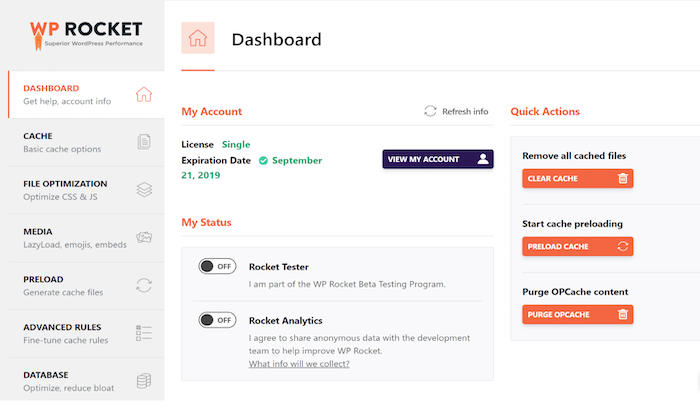
A WordPress site can put a lot of strain on your server, which increases the possibility of crashing your web server.
To avoid such unfortunate situations and ensure all your site loads super fast, you need a caching plugin like WP Rocket.
WP Rocket is a simple and effective plugin designed to boost your website speed and performance.
It doesn’t wait for someone to request a page to save it to cache.
Instead, it automatically builds your website cache, resulting in an immediate performance boost.
The plugin turns on recommended WordPress caching settings, such as page cache, gzip compression, and cache pre-loading automatically.
You can also activate other features like CDN support, lazy loading images, DNS prefetching, and minification to improve your page loading time and reduce bounce rate.
Starting at $49 for an annual license per site, WP Rocket is less than $5 a month.
There are solid WordPress cache plugins available, but WP Rocket is still my number one pick in the category.
It’s easier to use than some of the less expensive ones, which is probably why it is so popular.
There is no free trial, but WP Rocket does have a 14-day refund policy.
So you can try it risk-free to see how it impacts your site’s performance. Learn more.
#2 – Yoast SEO Review – The Best for Increasing Organic Website Traffic
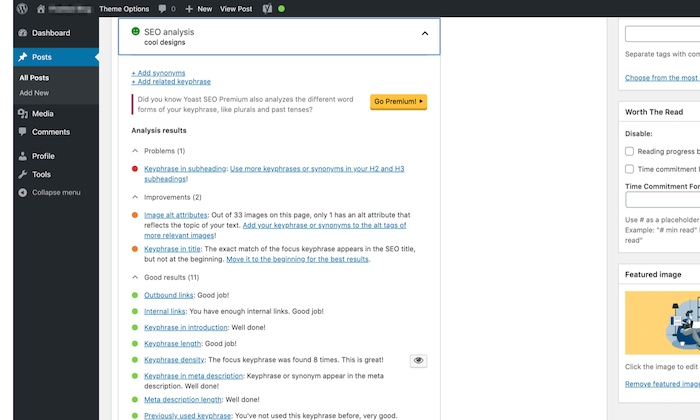
Users serious about search optimization trust Yoast SEO to reach their goals.
All you need to do is select a keyword, and the tool will then optimize your page around it.
Not only does it help you improve SEO, but it also analyzes your content readability.
It gives you real-time page analysis to optimize your content, images, meta descriptions, titles, and keywords.
No wonder it might be the most popular SEO tool in the WordPress plugin repository.
Further, Yoast checks the length of your sentences and paragraphs, whether you’re using enough transition words or subheadings, how often you use passive voice, and so on.
It tells Google whether or not to index a page or a set of pages too.
Although there’s a free version available, you can upgrade to the premium version for $89 per year that comes with extra functions, allowing you to optimize your content up to five keywords, among other benefits.
#3 – Akismet Review – The Best for Spam Protection
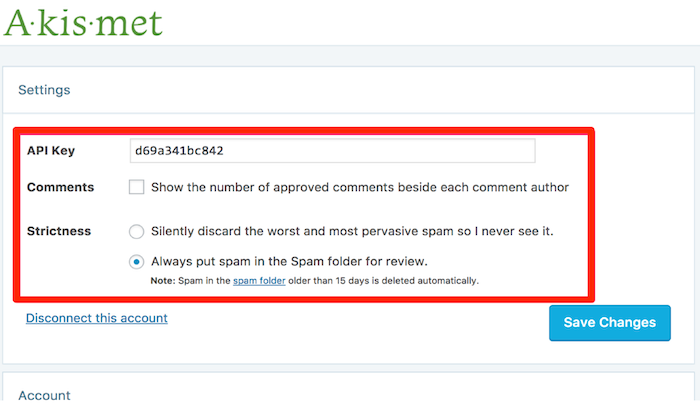
Nobody appreciates the opinions of bots.
Unfortunately, spam comments are an unavoidable price of website success.
With Akismet, though, you’ll be able to eliminate spam comments–no matter how genuine they look–effectively and effortlessly.
After all, it’s the official anti-spam plugin developed by Automattic, the parent company of WordPress.
There’s a possibility of the plugin missing out on a few spam comments or not identifying false positives.
You only need to tell it about them, and the plugin learns and gets better over time.
The plugin also checks your contact form submissions against its global spam database to weed out unnecessary and fake information.
Although free to download, you will need an Akismet.com API key to use the plug-in.
These keys are free for personal blogs, but businesses and commercial sites will have to opt for paid subscriptions.
#4 – Wordfence Security Review – The Best to Handle Security Concerns
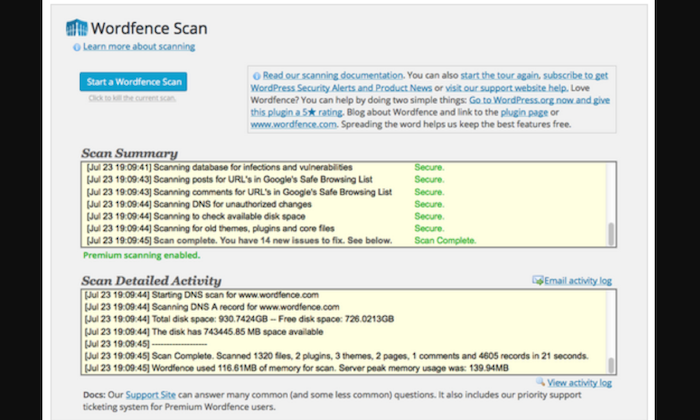
Wordfence Security is a WordPress firewall and security scanner plugin.
It offers your site full protection from malicious hackers, malware, spam, and other online threats.
It searches for malware and compares code, theme, and plugin files with the records in the WordPress.org repository, allowing it to verify its integrity and report any changes to you.
The plugin comes fitted with a web application firewall (WAF) called Threat Defense Feed that helps Wordfence identify and block malicious traffic.
Plus, it prevents brute force attacks by ensuring you set stronger passwords and limiting login attempts.
Wordfence firewall and security scanner will give you security risk alerts before your website is hacked, keeping it safe and secure.
It also comes with login security features that enable you to activate reCAPTCHA and two-factor authentication on your website.
A free version of Wordfence is available.
But you can also buy the premium plan at $99 per year to get extra security features like the real-time IP blacklist and country blocking option, along with support from professional support engineers.
#5 – UpdraftPlus Review – The Best for Site Backup

Many people fail to consider the importance of having a backup plugin.
Don’t make that mistake.
Thousands of sites get hacked daily.
WordPress sites are a really common target for hackers because it is so popular and a lot of non-technical folks use it.
Simply hoping you won’t be next on the list is just wishful thinking.
You have to be prepared, which is where backup plugins come in handy.
There are plenty of WordPress backup plugins online, but only a few are as powerful and user-friendly as UpdraftPlus.
It allows you to set up automatic backups and store your files on a remote location like Google Drive, FTP, email, and Dropbox.
Restoring your website from a backup is also super easy and can be done straight from the dashboard.
Other features include advanced reporting, database encryption, additional storage destinations like OneDrive, Azure, SFTP, and backup scheduling.
You have the option to either use the base version of UpdraftPlus or purchase its premium version that costs between $195-$399 a year, depending on the plan you choose.
#6 – MonsterInsights Review – The Best for Data Tracking
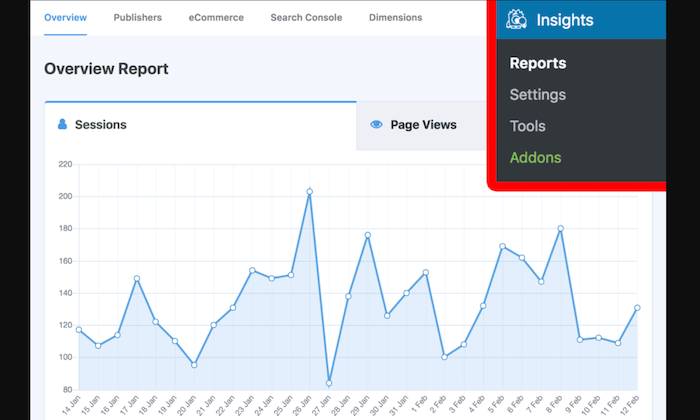
Data tracking is crucial for scaling and improving your website.
Without facts, all you’ll have are assumptions. MonsterInsights allows you to add, customize, and manage your Google Analytics-related web tracking services–all within your WordPress dashboard.
Google Analytics helps you improve your website, content, and better user experience by giving you key insights about how every webpage performs and which online campaigns bring in the most traffic and conversions.
Some of you may have heard of Google Analytics for WordPress.
It was the former name for MonsterInsights.
The name might’ve changed, but the purpose remains the same.
You can use it to view active sessions, conversion and bounce rate statistics, and keep track of outbound and internal links and downloads.
Other details like your total revenue, top products, and top referral sources will also be included.
With all the information readily available, you can work on creating a data-driven strategy to grow your business.
MonsterInsights has a free version that allows you to install Google Analytics, track data, see metrics on the dashboard, and run reports.
There is also a premium version that is more of an investment but includes post and page tracking, custom tracking and reports, AdSense tracking, and more.
The premium version starts at $99.50 per year with the Plus plan.
#7 – WPForms Review – The Best for Designing Contact Forms
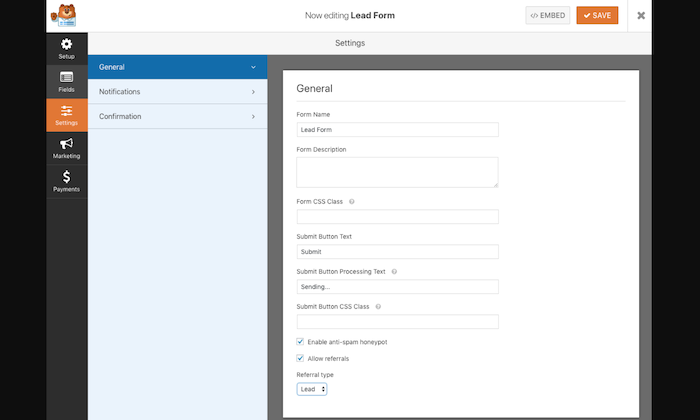
You can use WPForms to create appealing and highly-effective contact forms rather quickly, thanks to its drag-and-drop builder.
It comes with several cool features like smart conditional logic to ensure your visitors have an excellent customer experience, which, in turn, increases the chances of them submitting their contact information.
Moreover, WPForms can integrate with all popular marketing and payment platforms.
The free plan lets you create a secure contact form with ease.
But if you want access to more templates and advanced features to boost your lead generation efforts, the paid version would be more appropriate. The paid version starts at $39.50 per year for one site.
What I Looked at to Find the Best WordPress Plugin
I’ve compiled a list of a few factors you should consider to narrow down your search to determine the right fit for your website.
Every plugin’s page on the WordPress Plugin Repository contains detailed information about the plugin, its purpose, how to use it, and more.
Refer to this information to decide whether a specific plugin is a good fit for you.
Search the plugin directory and pick a few options you think will suit your needs best.
When it comes to making the final selection, use my tips below:
Free vs. Premium
We all like free things, but that doesn’t necessarily mean they’re better.
WordPress plugins are no exception.
Free plugins can be great if you don’t want to spend money right away, and most of them are enough to get the basic job done.
However, if you’re looking for more features or higher customization, most plugins will need to be upgraded to the premium version to unlock more features.
Contrarily, premium plugins are designed to ensure compatibility with new WordPress versions and provide better security.
On top of this, you get a more comprehensive selection of features to customize and enhance your site.
If monetary commitment is something you’re worried about, you’ll be pleased to know that most premium plugins are quite affordable.
So you won’t be breaking the bank anytime soon.
In the end, it’s your call. Just make sure you make the right choice for the functionality of your site.
Overall Plugin Ratings
The overall rating of a WordPress plugin can tell you a lot.
Previous users can rate a plugin up to five stars based on their experience.
Skip options that don’t have an average of at least (or almost) four stars.
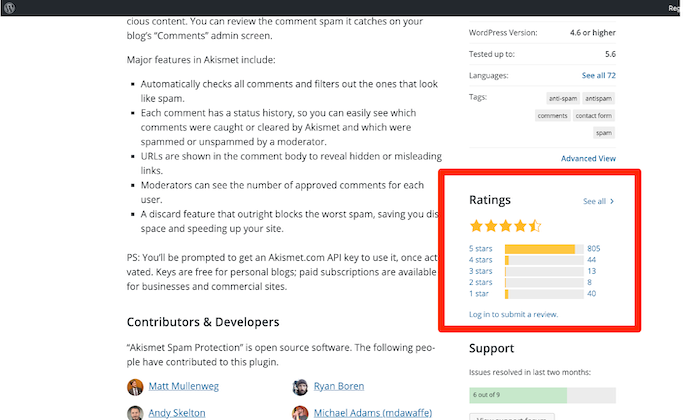
Plugins with a one-star, two-star, or three-star rating are mostly glitchy and create a lot of problems.
Whereas higher-rated plugins are well maintained, work well, and offer adequate support.
Otherwise, why would any user give them good ratings and reviews?
Go Through As Many User Reviews You Can
There’s no better way to determine the quality of a plugin than directly from users. This way, you know precisely whether a plugin is successful.
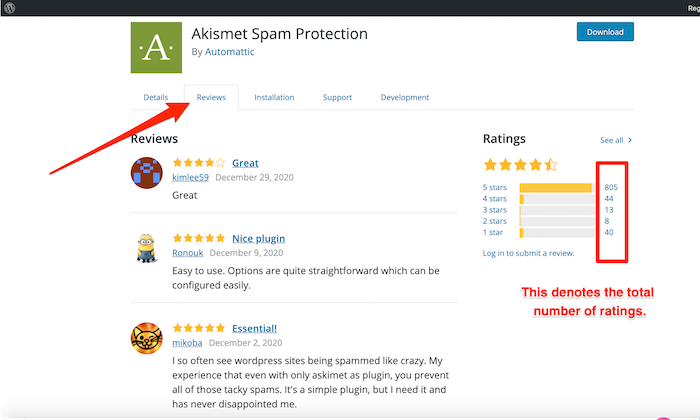
I would also recommend looking at the total number of ratings.
For instance, if a plugin has only been rated by five or seven people, it means it’s relatively new.
If they give a decent review, the average rating will automatically be higher.
It’s always better to download plugins with more users and reviewers.
So, not only should you read the user reviews, but also check the total number of reviews.
See How Active the Support Section Is
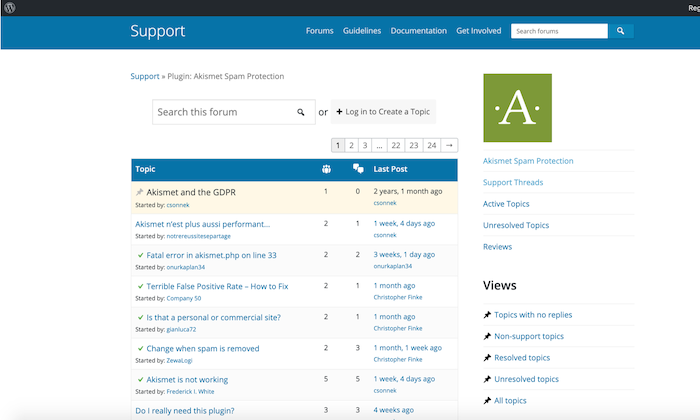
Every plugin on the WordPress plugin repository has a support forum.
Go through the support tab to check out the level of activity within these forums.
Regular activity is necessary as it indicates the developer is responsive and wants to deliver an excellent experience to its users by solving user-reported issues.
If you’re evaluating a premium plugin, their official website should be your go-to instead of the support tab.
Find out how easy it is to get support and whether it has the features you need.
Send a test email to see how fast the developers respond to check out their efficiency.
If a plugin has several unresolved threads or you don’t get an answer to your test email, it probably means the plugin is abandoned or that developers are not responding to user issues.
It could still work, yes. But you won’t get adequate support if you face problems.
Find Out the Frequency of Updates
The best plugins are updated regularly. If not, or if it has been a long time since their last update, they may not be well-maintained.
Of course, there can be some exceptions, but regular updates are still an important consideration.
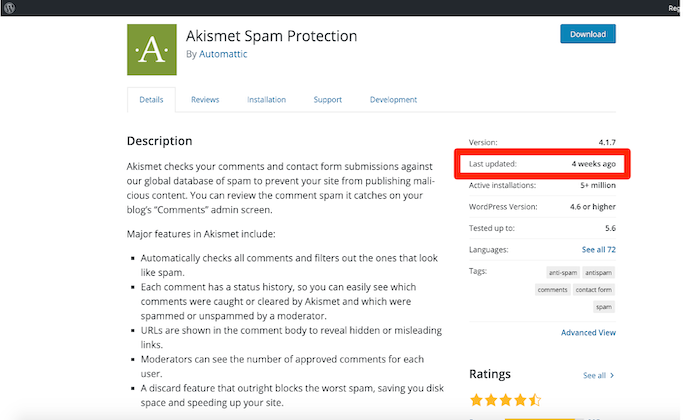
Ideally, plugin updates should be in line with WordPress’ core updates.
This ensures optimal compatibility and a good level of active implication from the plugin developer.
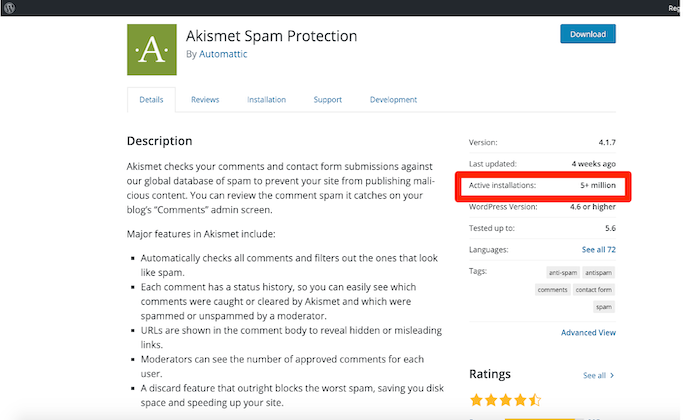
You can check exactly when a plugin was last updated by visiting the WordPress plugin repository.
Also, check out the Active Installations section.
This will give you an idea of the plugin’s popularity and whether it’s still relevant to the ever-changing market trends.
Conclusion
WordPress plugins can do it all, from designing and maintaining a website to optimizing it for search engines to enhance user experience.
Get started today with my top recommendations.
These are trusted products that can help you take your site to the next level.
Here’s the full list to recap:
- WP Rocket – The best for speed optimization
- Yoast SEO – The best for increasing organic website traffic
- Akismet – The best for spam protection
- Wordfence Security – The best to handle security concerns
- UpdraftPlus – The best for site backup
- MonsterInsights – The best for data tracking
- WPForms – The best for designing contact forms
Use Yoast to keep your SEO on point, and block spam and bots with Akismet.
Next, make sure your WordPress security remains uncompromised with Wordfence.
WP Rocket keeps loading times short, while UpdraftPlus can come to your rescue when you face compatibility issues or want to migrate your site.
Got a favorite plugin that I didn’t mention?
Comment below to let me know!
Source: feedproxy.google.com

Why SEO Does Not Work for You & Your Website
So, you’re wondering why SEO does not work for you and your website, right?
Haven’t you heard?! SEO is dead!
Dead from all the bad jokes about it.
Of course, SEO isn’t actually dead, but there are a few reasons why SEO might not be working for you and your site.

We’ve gathered 14 top-of-mind reasons why your SEO might not be working for your website.
Let’s go through them and see if something rings a bell.
- You don’t stick to the basics
- You don’t really understand what SEO is
- SEO just doesn’t fit your business/idea
- Your expectations are too high
- You’re not patient enough
- Your budget is too small
- You’re not focusing on mobile
- You don’t analyze and you underestimate your competition
- You’ve skipped keyword research
- You’re not prioritizing the right things
- You’re ignoring structure, click depth & internal linking
- You’re ignoring backlinks
- You don’t understand your audience
- You’ve externalized to the wrong SEO agency
- You’re not monitoring your results
1. You don’t stick to the basics
When people say SEO has some relation with magic, what they actually mean is that it’s very complex.
It would take several very long articles for me to fully explain how it works.
Yes, it implies user experience, link profile, content strategy, referral traffic or marketing campaigns. And all these SEO efforts might seem very complex.
However, SEO is more simple that you might think, in some ways.
In a nutshell, it’s the multitude of criteria that makes a website the best result for a particular keyword, in the sense that it satisfies the user’s intent.
What you must understand is that Google isn’t trying to rank websites based on some checklist.
Sure, it follows a list of criteria, but it also looks at historical data in the SERP and since Rank Brain has got involved, machine learning really made things a lot more complicated.
It’s hard for us humans to keep pace with how Google decides what actually makes a web page ‘the best one’.
At this point… I’m not sure even the makers themselves have any idea how things work anymore.
So, instead, focusing on the latest trends and techniques, try to focus more on the basics.
Do them well and do them consistently.
Sure, SEO and digital marketing experts like Neil Patel and Brian Dean always try new techniques and tweaks, but one thing’s for sure: They haven’t stopped posting!
Being consistent is difficult, but it’s also the key to success!
2. You don’t really understand what SEO is
So, we know Google is trying to rank the best page.
- But what does that actually mean?
- Does it mean the page with the most targeted keywords?
- The page with the best links?
- The page with the best content?
- Who wins the Google top organic results?
It’s the page that best satisfies the user’s intent. And in some cases, the website alone can’t do it!
Let’s say you want to rank high in the search engines for a very competitive eCommerce keyword. Well… if your offer isn’t good enough, you probably won’t.
If you want to rank for “shoes” but you only have 3 products in your store, you won’t be getting far.
If you want to rank for “cheap” but your prices aren’t cheap, again, you probably won’t have much success with it even if you optimize your website in this direction.
Moreover, many people don’t understand that high rankings within search results also reflect the quality of a business, at least to some extent.
For example, bad reviews on Google My Business can affect your local SEO rankings and your business listing and people don’t leave bad reviews because your SEO campaign sucks.
Sure, you can invest in search marketing and pump links into a website and get it to the top, but if the business itself doesn’t have the necessary infrastructure to properly satisfy clients (quality, shipping, support), the results won’t last for long!
I’ve seen sites pumping bad links and rushing to the top, only to fall ungracefully a short time after because they did not meet their user’s expectations.
3. SEO just doesn’t fit your business/idea
Another thing you should consider is that your business type should match SEO.
Usually, if you want to promote a short-term trending product, such as the fidget spinner, investing big and long term on SEO might not be the right choice!

Furthermore, if you need a quick turnover and you’re just getting started… SEO might not be the right channel for you, and you should look for PPC advertising or social media remarketing instead.
However, it’s not always a matter of SEO vs PPC. Usually, they go well together.
4. Your expectations are too high
The higher the expectations, the bigger the disappointment.
To be satisfied with your results, you’ll need to have realistic goals.
With SEO, you can’t really expect top rankings and huge website traffic in a month or two, if your domain has just been registered.
You can’t expect to outrank the online presence of a strong competitor with thousands of links, with a tight budget and no scaling even if you apply some good SEO tactics.
In some cases, the entire competition might be way out of your league.
That’s when you have to dig in deeper, to find those keyword opportunities that are easier to rank for.
You should still start with SEO as soon as possible, but start small.
Look for keywords with lower competition and build your way up before saying that SEO does not work for you.
5. You’re not patient enough
Sometimes you just need to be more patient.
Most SEOs will tell you upfront that it can take from 6 to 12 months to see the top positions.

Some will claim that they can get you to the #1 spot in the first month. It’s probably false and you should stay away from them.
You should always see progress in the first month.
If it’s a new website, that might be as little as the first pages getting indexed.
So, if you’re not yet in the position you’ve wished for but have increased in rankings compared to the previous month, just give it a little more time. You’re on the right path.
If you want to find out more about why it takes so long to rank in Google and other search engines and what you can do to speed things up, check out this article.
6. Your budget is too small
Actually… you CAN have high expectations. But for the right budget.
If your budget is too small, you might not be able to do everything you want and you might end up saying that SEO does not work for you.
SEO includes things like: good server, fixing technical SEO issues, keyword research, content marketing, social media, investing in links and many others.
If you want to scale it up quickly and efficiently, the truth is that you will need a substantial investment.

Clients often ask me: “Why is it that SEO takes so long?”
Sure, part of the answer is: “Because of Google.”
However, I’m always confident I can speed things up by scaling.
But why does scaling speed up the process, you may ask?
Well… it’s pretty straightforward:
- More content = more keywords covered faster
- More links = faster higher authority
- More monitoring = better / faster tweaking
- More programmers = faster site, more useful features, better UX, etc.
But all those above = more money.
- Are you developing the content for 5 categories per month? — Pump that to 10.
- Are you consolidating the site’s structure with 2 monthly blog posts? — Up it to blog posts.
- Are you securing 1-2 links per month? — Make that 5 and so on.
Many people get into SEO because they can use time instead of money to drive traffic to their websites and businesses.
However, time can’t scale things up. Only money can. If you want to rank faster, you’ll need to outsource some work.
7. You’re not focusing on Mobile
I know, I know, you’ve been hearing that Mobile SEO is very important and that most traffic is now coming from mobile devices.
The real thing here is that most professionals work from a desktop computer.
So, the first contact with any issue, be it web development or SEO-related, is on the desktop, most of the time.
Often times I find myself fixing a quick issue on the desktop and completely forgetting to check how it looks on mobile devices.

And although I browse websites on mobile (as a user), when a client asks me something or signals an issue, I immediately check it on my computer (the phone is busy at my ear anyway).
In SEO, you always have to keep in mind that Google uses mobile-first indexing.
If you’re mostly working from a desktop computer, like me, remember to always right-click in Chrome and hit inspect.
You can select multiple device types to stop any issues.
But sometimes, phones act differently than the desktop Chrome browser does (even when set on mobile view), so it’s always best to check on a physical phone itself.
And don’t forget to check on both Android and iOS.
Test if links work, test if scrolling works, test the entire checkout process, test, test, test.
Ask your friends to test, ask your mom to test ask your cat to test. If the cat can use it, you’re good to go.

In addition to that, consider that CSS hidden content also follows the mobile-first mentality.
Feel comfortable to combine desktop columns into sliders, or compress long paragraphs of text into dropdowns.
For example, on an eCommerce website, you might have a small description before your products, on the category page.
If on mobile devices the text pushes the products too far down, the users won’t be able to quickly see them when they load the page.
You can shorten the mobile description by using a ‘read more link which triggers a dropdown with the rest of the content.
8. You don’t analyze and you underestimate your competition
“If you know the enemy and know yourself, you need not fear the result of a hundred battles. If you know yourself but not the enemy, for every victory gained you will also suffer a defeat. If you know neither the enemy nor yourself, you will succumb in every battle.” – Sun Tzu
Deep, isn’t it?
Google Analytics and Search Console are very good friends, but they only show you data for your own website.
Sometimes, it’s not enough to only do research about yourself. You have to analyze your competition! Not doing this, might end up saying that SEO does not work for your website.
That’s why having an SEO Tools Set like CognitiveSEO is a good idea. You can analyze and monitor your competitors to see how they perform and find gaps.
So, if you want to improve your SEO campaigns, make sure you always perform an SEO Competitor Analysis.
9. You’ve skipped keyword research
New clients often come to me because they are not satisfied with the results they got from their previous SEO partners.
Many times, after a quick analysis, I can spot that the title tags and meta descriptions have not been optimized at all!
That lets me know that keyword research hasn’t been performed.
I’ve seen many ‘SEO pack’ offers around, which are mostly PBNs or different link-building tactics. 5 links per month… 10 links per month… and so on.
It baffles me and I don’t agree with it, but I guess it’s about money…
They’re easy to sell and can often offer quick results. But those results might only last a very short time and I can bet on who the contract you’ve signed covers (spoiler alert, it’s not you).
However, while those links might be helpful in certain situations, they probably won’t get you anywhere without the right keyword in the right places.
Make sure you do your keyword research!
10. You’re not prioritizing the right things
It might not be that you’re doing SEO wrong. It might just be that you’re doing the wrong type of SEO or at the wrong time.
Why put so much effort into getting that 100% PageSpeed score if your loading times are already between 1-3 seconds?
Why write more blog content when you haven’t finished optimizing your category pages?
- If you have a small website and no SEO has been performed, start with keyword research and title tags optimization.
- If you have a website with a lot of images, start by compressing your images.
- If you have a huge website with a lot of filters, make sure you prioritize crawlability and indexability by optimizing your faceted navigation.
Sometimes, it might be designed (if your website is too outdated for your audience). Other times, it might be UX.
It’s different from website to website.
That’s why an SEO audit is crucial for your website’s success, especially if your website is huge.
But not just any SEO audit will do. You need an SEO Audit that actually looks in-depth at all your issues and then prioritizes them properly.
11. You’re ignoring structure, click depth & internal linking
A website’s structure defines how easily users and search engines will navigate and understand your content.
Make sure you structure your website accordingly.
You should always keep important pages maximum 3 clicks away from your homepage.
If you’re using pagination, make sure all your pages are linked to from the first archive/category page.
Moreover, if you’re not doubling down already on internal links, you should.
Use your blog to always link to important pages, such as product category pages, using relevant and keyword-rich anchor texts.
There’s no penalty for using too many internal links. Well… just don’t make everything an internal link and you’ll be fine.
12. You’re ignoring backlinks
I’ve been fortunate enough to be able to help most of my clients rank high with very few links if any links at all.
But once in a while, there are projects that even the best SEOs can’t handle without actively pursuing backlinks.
I like to think of myself as being able to do everything without links, but I also what to be as efficient as possible.
Getting backlinks is not bad. They’re just used improperly.
In some cases, your website simply needs more authority. And the fastest way to build it is by having quality backlinks.
If the number of links your competitors have far outweighed yours, you’ll have a hard time outranking them.

Sometimes, it might just mean it takes longer to see results, considering you’re doing everything else right.
Other times, it’s just plain impossible.
Links can help you kickstart that initial progress to help you gain your client’s trust and secure a long-term deal.
The best thing you can do is to build relationships, through content marketing and shareable content, such as case studies or interviews with industry-leading experts.
Don’t just stop at link building.
Try to be involved and build a small community.
That’s what Google likes.
Sometimes, however… you can just buy the links.
Of course, you don’t want to buy and spammy links that might get your website penalized.
But it’s wise to understand that links are ads and ads are paid for. The internet works based on ads, so own it.
You can always follow your paid links (just like Google tells you to do).
Nofollow links can also improve rankings and I’ve seen this with my own eyes on my own clients.
13. You don’t understand your audience
The audience is much more important for SEO than you think. It can make or break your SEO strategies.
You might be saying: neh, SEO is not working for me when the actual problem is the way you tackle your audience.
You might have the best interest and the greatest information in your content marketing strategy. But if you don’t deliver it in the right format or tone of voice, you won’t be getting the best results.
Maybe your audience prefers video content. Then stop spending so much time writing articles. Just use your video scripts as repurposed content on your blog instead.

Make sure you understand your audience well and make decisions based on that.
14. You’ve externalized to the wrong SEO agency
I hate talking about this, but finding a good SEO company or digital marketing agency isn’t an easy task.
Even more… in the pandemic era of 2020-2021, people have rebranded as experts in digital marketing fields. Much to say… they’re not really experts.
So, be very picky when choosing who you work with. Here are some more things to look after when hiring an SEO company.
On the other hand, if you are an SEO company, here’s how to convince your clients to buy your SEO services.
15. You’re not monitoring your results
Correctly monitoring results is a very difficult task. Sometimes, is not that SEO does not work but monitoring results properly do not work.
That’s because monitoring isn’t just about traffic and conversion rate optimization.
It’s about discovering new opportunities to do things better.
But even so, whether it’s a drop in traffic or a drop in conversions, the sooner you see it, the sooner you’ll be able to fix it.

There are many tricks, such as using Google Search Console to identify secondary keywords for articles that are already ranking pretty well.
Go to the Performance Section, select a page that’s already ranking well and then go back to the Queries section. Activate Positions and CTR and look for those phrases that have a good click-through rate.
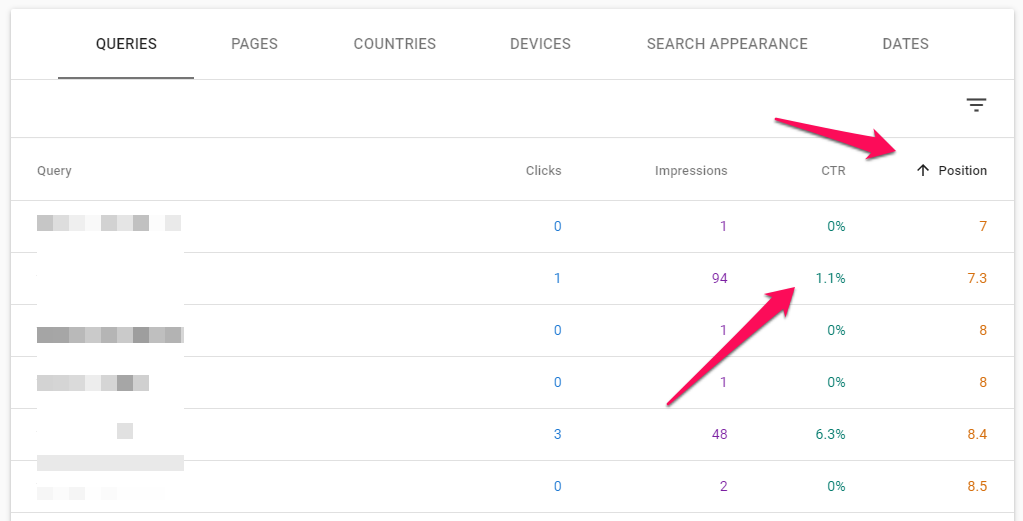
You can then start adding that keyword to your content to rank better for it in the search engines.
If you want even better results, try out the CognitiveSEO Content Optimization Tool.
Or, you can use a Secondary Dimension (Behaviour > Landing Page) on the Organic Traffic Channel in Google Analytics to figure out which pages converted the best.
Then you can mix those with the Google Search Console query data to know (with approximation) which set of keywords bring the most conversions.
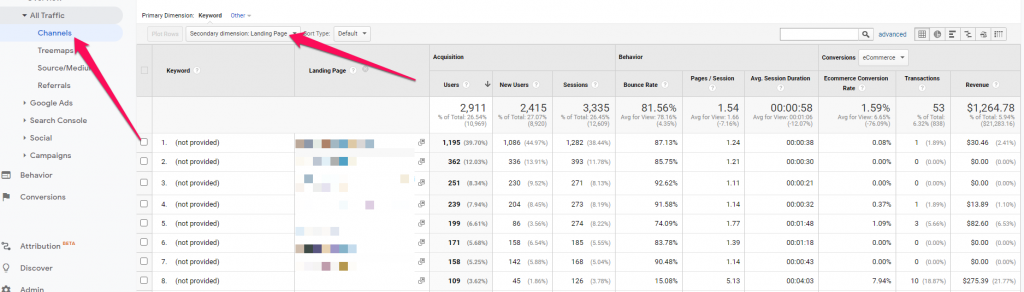
Tools such as Google Analytics have a lot of filters that can help you figure out what exactly happened on your website so make sure you use them for better SEO results.
I hope this list of 15 reasons why your SEO doesn’t work helps you figure out what you’ve been doing wrong or at least gives you a new perspective on your SEO campaigns.
Complex SEO strategies and tactics are awesome, but you always have to make sure you stick to the basics first.
Do you think there are other reasons why someone’s SEO strategy might not work? Share them with us in the comments section below.
The post Why SEO Does Not Work for You & Your Website appeared first on SEO Blog | cognitiveSEO Blog on SEO Tactics & Strategies.
Source: cognitiveseo.com

How to Boost Your SEO on DuckDuckGo
Google is just a part of the SEO puzzle. If you are only focusing on what Google wants, you could be missing a large portion of the search market who use other search engines, like DuckDuckGo and Bing.
When you think about search engine optimization, there’s a good chance that Google is the only search engine that comes to mind.
This assumption is a huge mistake, as the DuckDuckGo search engine has continued to gain in popularity with each passing year.
Google is just a part of the SEO puzzle. If you are only focusing on what Google wants, you could be missing a large portion of the search market who use other search engines, like DuckDuckGo and Bing.
“But,” you think, “isn’t SEO the same no matter what search engine you’re dealing with?”
Not quite.
Here’s why alternative search engines like DuckDuckGo are worth your time, and what to do if you want to rank outside of Google.
Are Alternative Search Engines like DuckDuckGo Worth the Effort?
Yes, Google is the most significant player when it comes to search engines. According to Statista, Google has a whopping 86% of the search engine market share.
But why trust only one platform when it comes to your business?
When you’re dependent on just one platform, you risk isolating some of your audience. That could put your entire business at risk.
Let’s say you’ve built your entire SEO strategy on Google and Google alone. What happens if a tiny change in the algorithm (which happens all the time) moves your site down in the rankings?
Your business could be in jeopardy.
But if you’ve optimized your site for alternative search engines, you’re in much better shape.
I’ve talked at length about different ways to drive web traffic that don’t focus on search engines, and I’d recommend them wholeheartedly when it comes to your strategy.
But there are also a few ways to adjust your SEO strategy to rank well in the DuckDuckGo search engine.
What is the DuckDuckGo Search Engine?
In a digital world where your searches often play directly into your targeted ads, it’s no surprise people are starting to realize how much their search history affects their privacy.
DuckDuckGo is a privacy-focused search engine that doesn’t track you, integrate with your social media, store your information, or use your search history to target you with ads.
Essentially, the technology behind DuckDuckGo delivers search results while blocking the trackers of other search engines (like Google) use.
You can install an extension on your browser (even Chrome), search directly from the DuckDuckGo website, or use their privacy browser app search without being tracked.
As their privacy policy will tell you, DuckDuckGo never stores personal information. Instead of gathering data to inform purchases, it’s all about a simple search experience.
DuckDuckGo also aims to get you out of so-called filter bubbles, which can tailor your web search experience based on things like personal preferences and political leanings.
Who Uses DuckDuckGo?
Since DuckDuckGo doesn’t track or gather information about users, it’s tough to find data about who, exactly, uses the search engine.
In general, DuckDuckGo users are security conscious and interested in tech news and software.
They tend to spend an average of 9.5 minutes on sites and have a much lower bounce rate.
This time indicates that, for some sites, DuckDuckGo may attract higher quality searchers.
Why Should You Care About DuckDuckGo SEO?
When it comes to search engines, several inspire name recognition. From Google to Yahoo to Bing, search engines tend to be a matter of personal user preference.
With 1.75% of the market share, DuckDuckGo is not as well known or used as Google.
But at the same time, 1.75% of the market share is still a large number of users.
In comparison, the highly recognizable Yahoo brand holds just 3.41% of the market share. MSN, a huge deal in the past, is now ranking way below DuckDuckGo with just 0.11% of the market share.
So while DuckDuckGo isn’t one of the top search engines, it shouldn’t be discounted, either.
Since DuckDuckGo’s biggest pull is that it doesn’t track users, the site itself says that they’re unsure how many users they have.
However, they do track search queries and reportedly see more than 56 million searches a day, and that number has been growing fast in recent years.
As mentioned above, those searchers also tend to stay on sites longer and have a lower bounce rate.
That means taking just a few steps to optimize for DuckDuckGo has the potential to attract millions of high-quality searchers.
DuckDuckGo vs. Google Search Engines
The major difference between the two search engines is that Google keeps track of things like IP addresses and search history, while DuckDuckGo doesn’t.
However, there are a couple of other things to keep in mind when it comes to differences between the two search engines (and they can affect how you’ll want to tailor your content for ranking).
- Search engine ads: Google tailors ads based on your search history, while DuckDuckGo tailors ads based on the results you’re currently viewing.
- User experience: Google and DuckDuckGo aren’t all that different when it comes to the user experience, as they’ll both pull up websites, images, maps, news, and video results when you search.
- Search results: Both search engines pull results from various players, but Google has been in the game longer, and it tends to show. DuckDuckGo still pulls quality results, but they’re less intuitive than those from Google.
DuckDuckGo also puts a ton of emphasis on their ability to break past the filter bubble used by search engines like Google.
This focus means their results are based on what you’re searching for right now, not what you’ve looked at in the past, possibly resulting in more accurate results for your current intent.
Doesn’t Google Incognito Follow the Same Principles?
While you might think that Google Incognito is similar to DuckDuckGo, it really isn’t.
With Google Incognito, all Google is doing is clearing your browser’s search history. Even with Incognito turned on your device, your activity isn’t necessarily private.
When you turn Google Incognito on, you’ll see a disclaimer telling you that your work or school may still see your information.
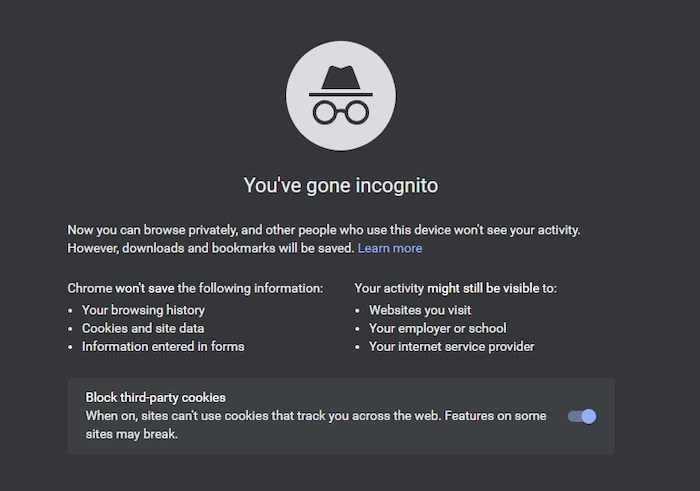
Screenshot of Google Chrome’s incognito mode
DuckDuckGo, on the other hand, doesn’t record or retain any of your searches or search data.
How to Approach SEO for DuckDuckGo
The DuckDuckGo search engine uses over 400 sources to get results for your searches.
DuckDuckGo uses crowd-sourced sites, traditional websites, and its own web crawler to look for search results.
- Just like optimization for most search engines, practicing good SEO techniques will serve you well with DuckDuckGo.
- Quality content, intentional sourcing, and a great website are things that will always make a difference.
When approaching search engine optimization for DuckDuckGo, a few things will make the biggest difference:
A Website Built For Good User Experience
The DuckDuckGo search engine’s entire purpose is to provide a tracking-free, simple, intuitive interface for people to use and trust.
Therefore, it makes sense that a well-built, user-friendly, high-quality website filled with quality content, links, and backlinks will be considered a more trusted site.
Good user experience means everything for your site and your business, whether it’s quick to load time, an intuitive web design, or efficient site navigation.
So, what does a good user experience look like on DuckDuckGo?
Here are a few tips to make sure your user experience great:
- Make sure your site is easy to navigate for users on mobile and desktop devices.
- Be careful with popups and other features that may frustrate users.
- Use headings, bullet points, and tables to make content easy to scan.
Without a good user experience, your site will take a nosedive in the rankings.
Earn and Include High-Quality Backlinks on Your Site
- Just like on Google, inserting high-quality backlinks into your content and link building,
- especially from sites with a high domain ranking, like the Wall Street Journal,
- will help your website rank.
Why does it matter?
A website that has taken the care and time to insert quality backlinks will supersede one that didn’t seem to care as much about link building or their backlink strategy.
DuckDuckGo offers this bit of advice on one of their Help Pages:
The ranking is a bit opaque and difficult to discern/communicate on an individual query basis because of all the various factors involved (and which change frequently).
Nevertheless, the best way to get good rankings (in pretty much all search engines) is to get links from high-quality sites.
You need to focus on adding high-quality links and earning high-quality backlinks if you want to rank well on DuckDuckGo.
The good news is Google and DuckDuckGo both consider your backlinks and links to your site as ranking factors. If you’ve gotten high quality links as part of your Google ranking strategy,
, you may already have a solid link profile that DuckDuckGo can take into consideration for their SERPs…
Choose Keywords With Care
Intentional keywords matter when it comes to SEO, especially when using constantly-evolving platforms like DuckDuckGo.
Peppering keywords through your content is helpful, but only when it makes sense to do so.
Use tools like Ubersuggest and AnswerThePublic to look for keywords and keyword phrases that relate to your content. Use these terms in headings and throughout the text where possible.
Just like with Google, you don’t want to stuff keywords in. Rather, use them naturally where it makes sense.
When you finally learn the art of weaving keywords into your content in a way that flows well and boosts quality, you’re on the right track.
Make Your Location Clear
Unlike other search engines like Google, DuckDuckGo doesn’t track where users are. So, it’s essential to make your location clear so you can rank for location-based searches.
Including hyperlocal keywords in your content and on your site is necessary if you want to show up in their search results. (And you should do this anyway. Even Google users don’t want to have to dig for your address.)
For instance, DuckDuckGo isn’t going to pull as accurate results from a query like “best marketing agencies near me.”
Here are the results from DuckDuckGo for that exact result:
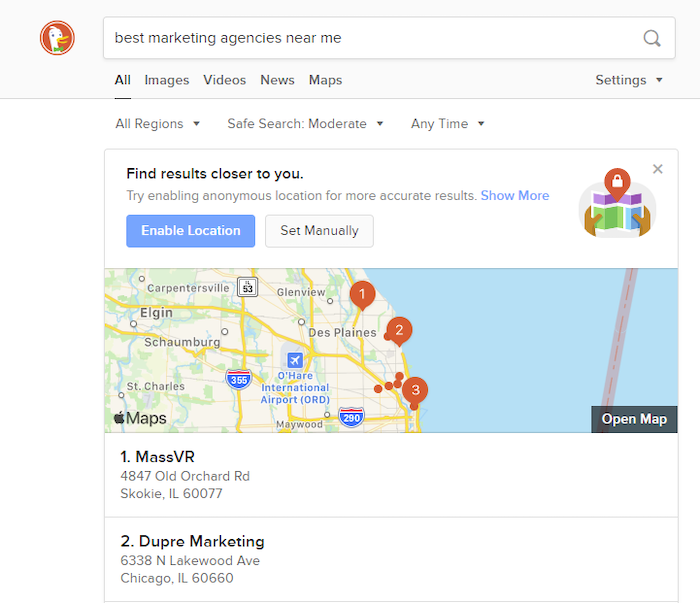
A DuckDuckGo local SEO example
They got the general area right, but not exactly. Google, on the other hand, hits it right on the nose:
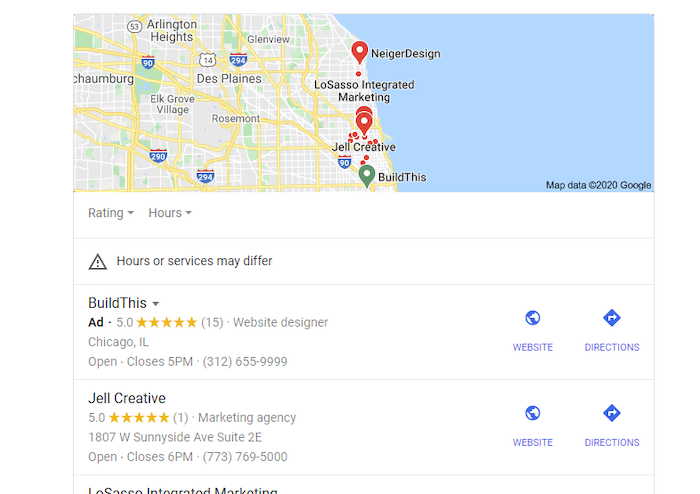
A DuckDuckGo local listing example
This might seem like a flaw in DuckDuckGo’s algorithm, but it’s actually what customers want. They don’t want search engines that track them.
Just keep in mind that DuckDuckGo is not quite as accurate for those “near me” searches.
They will, however, show accurate search results from queries like “marketing agencies Dallas Fort Worth” or “marketing downtown Dallas.”
Local businesses should research location-specific key terms. For example, including the neighborhood, city area, and even area code in your content can help your site rank in local search on DuckDuckGo.
Focus Elsewhere, Too
Since DuckDuckGo uses over 400 other sources for its search results, make sure your site is fully optimized for those other sources, too.
The DuckDuckGo crawler finds sites and indexes them by itself, but other sites, like Yahoo, for instance, will allow you to submit your site URL to them directly.
Since you can’t submit your URL to DuckDuckGo, you need to make sure you’re visible elsewhere on the web if you want to rank well. You need to have content-relevant sites like AskDifferent, Urban Dictionary, and Word of the Day if you want to rank well on DuckDuckGo.
Conclusion
When it comes to being successful in business, you’ve probably heard the same advice over and over: don’t ever rely on one stream of income, one method of business, or one way of getting things done.
- That advice goes for optimizing your site, too. While there are big players when it comes to search engines,
- like the ever-present Google,
- the big players aren’t the only players. When it comes to other search engines, like DuckDuckGo, you could be losing streams of revenue by only optimizing for Google.
On another note, SEO is fairly simple once you get the hang of it, and it continues to drive results.
No search engines are completely reinventing the wheel when it comes to SEO, and that includes DuckDuckGo.
You might just see some new, impressive growth by making a couple of tweaks and expanding your search engine worldview.
Have you been focusing on optimizing your site for alternative search engines like DuckDuckGo?
Let us know in the comments!
The post How to Boost Your SEO on DuckDuckGo appeared first on Neil Patel.
Source: neilpatel.com

How to Choose The Right SEO Agency
Today, there are hundreds, if not thousands, of SEO agencies out there.
And each one of them is good for something.
Thus, your question shouldn’t be, how do I find the right SEO agency, but how do I choose an SEO agency that’s right for me?

I’m glad you made it here, as I’ll guide you through how to avoid choosing an SEO agency that’s right for something not relevant to growing your business.
Deal?
Well, then, keep reading.
First things first, why do you need an SEO agency?
Know Your Goals and Desired Outcomes

Imagine you hurriedly booked a last-minute flight from New York to meet some business partners.
Thankfully, the airplane you boarded flew fast with no delays.
And you land safely at the airport.
On arrival, the announcer congratulates you for a safe journey and welcomes you to Beverly Hills in Texas.
Meanwhile, your intended destination was Beverly Hills in California.
You’ll regret the waste of your time, right?
Hiring SEO agencies is like boarding that airplane – each one could be great at flying your site’s organic ranking somewhere. Your first job before you start flying, therefore, is to ensure you choose and are on the right plane.
Thus, to choose and onboard an SEO agency that’s right for you, you must:
Know your business destination (your goals), and What you want to achieve when you get there (your desired outcomes).
In SEO, where you’re going requires a different airplane (or agency).
The main ones being:
- SEO-optimized content marketing
- Voice SEO
- Link building,
- Local SEO, and eCommerce SEO
And for outcomes?
You may need to:
- Rank your entire website or specific keywords higher
- Get more qualified traffic and leads, or
- Drive sales directly from organic search.
Your target business goals and outcomes determine what SEO strategies and tactics you’ll need.
And because no SEO agency is a one-size-fits-all for all strategies, industry verticals, and company sizes, knowing these basics lays the foundation for who you’ll partner with.
Hypothetical Examples:
Let’s take some hypothetical examples.
Example #1
Pretend that your goal is to show up on Google’s 1st page when certain people use certain words to search for certain information relevant to your business.
And the outcome?
You want to attract this set of people, educate them with engaging content, and pull them into your sales funnels.
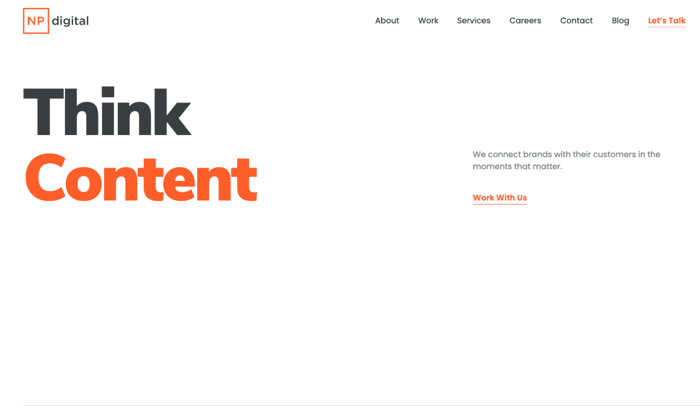
In this case, you’ll need an agency with expertise in SEO-optimized content marketing.
And you’ll need one with proven results in helping other companies achieve similar results:
Example #2
Okay, let’s assume you have freelancers creating excellent content pieces for your site.
But you realize Google isn’t ranking them for your target keywords.
Instead, when people search, content pieces below the quality of what you’re creating keep showing up on the top pages while yours languishes on Google’s 17th page.
This situation indicates your competitors probably have higher domain authorities or more backlinks pointing to their website and high-ranking content pieces.
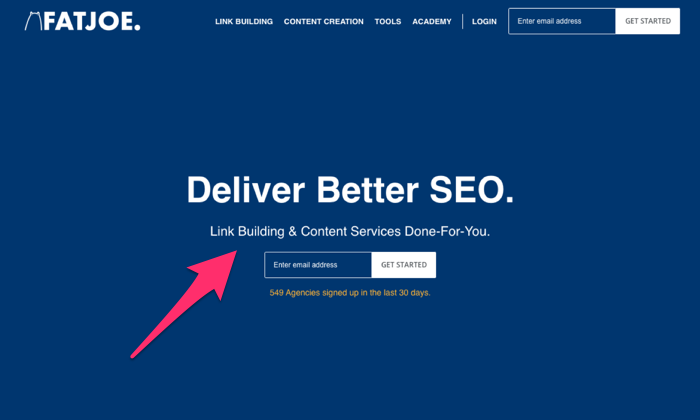
In this case, to increase your website’s domain authority, get relevant links pointing to your content, and boost ranking, you’ll need an SEO agency with expertise in link-building:
As you saw in both examples above, it’s easier to know what type of SEO agency is worth considering when you’re definite about your goals and outcomes.
Taking this first step to look at yourself in the mirror and know exactly what you need streamlines the selection process.
It also ensures you only shortlist agencies with expertise and experience driving other businesses to your intended destination.
But, it doesn’t end there.
Even with only a few dozen agencies to consider, choosing one that’s right for you still demands you look out for characteristics that prove they walk the talk.
Doing this further helps you vet and choose an SEO agency that’s perfect for you.
6 Characteristics That Make a Great SEO Agency
Regardless of the specific SEO needs you have, you’ll still find dozens, if not hundreds of agencies, vying for your business.
The search engine optimization service providers’ industry is valued at over $65 billion.
Thus, expect anyone with a laptop and internet access to make wild claims of being an SEO agency, as they yearn for a slice of the industry’s billions.
There are characteristics great SEO agencies possess. And you’ll find these traits in all the best SEO companies.
I’ll list the fundamental ones below.
Use them to vet an SEO agency from the list you shortlist before choosing to work with any.
1. A Defined Process to Execute SEO Strategies
Excellent SEO execution follows a battle-tested process.
As an SEO agency gains experience working with numerous clients, they outline their winning process to give potential customers a peek into how they deliver results.
Thus, each company with practical SEO experience has its own process.
And this makes it a characteristic of SEO agencies with proven results.
For example, at Neil Patel Digital, our process follows eight unique steps:
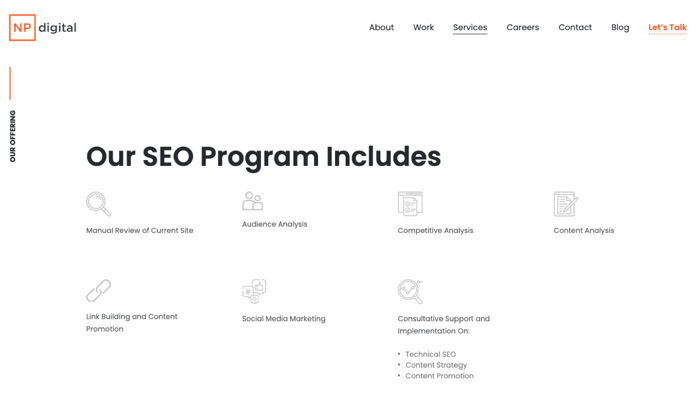
2. A Diverse Team of Specialists
The next characteristic to look out for before choosing an SEO agency is the team to put their process and recommendations to work.
A lot of thought goes into SEO execution.
From strategic ideation and leadership to account management and execution specialists, ask for the team who’ll work with you to achieve your goals.
Again, experienced SEO agencies are proud to make their team public:
3. An Impressive Client Portfolio
Results-generating SEO strategies are hard to manage from ideation to execution, but they also take time and commitment.
Thus, as exceptional SEO agencies work with clients to achieve results, displaying their clientele has become a common characteristic.
Doing this does two things.
It shows you they’re experienced. And it helps your decision to choose, using the type of companies they’ve worked with as a benchmark:
4. Real Customer Testimonials
If an SEO agency helped increase your website traffic, leading to more sales, you’d be open to giving them a testimonial, right?
In the same vein, when choosing an SEO agency, scan their website for what past customers say about them.
A common characteristic you’ll find with the best SEO agencies is the proud display of what happy customers say about their service:
5. Industry-specific Thought Leadership
Exceptional SEO agencies are always on the forefront of the latest trends, especially how it impacts rankings, traffic, and business in general.
In most cases, you’ll find a top executive of the company sharing insights via blogs, social media, and research papers, which makes them maintain thought leadership.
So, before you hire an SEO agency, check if they’re up to date and share recent trends about the SEO industry that help you keep pace with the market:
6. A Crisp-clear Company Culture
An SEO company may have the unique expertise you seek and all the characteristics listed above. Yet, their company culture may not fit with yours.
The truth is, exceptional SEO agencies don’t take on toxic clients; neither would you like to work with people whose values you don’t agree with.
To avoid this, top SEO companies have the characteristic of displaying their company culture, so potential customers can decide if working with them aligns with their culture:
How to Work With an SEO Agency
Most SEO agencies work as an extension of your in-house marketing team.
Thus, there are steps to working with an SEO agency that’s right for you.
These steps are essential, as they ensure your collaboration with them is successful.
Let’s explore the major ones.
1. Prepare your in-house, front-facing team
Before you work with an SEO agency, get relevant teams in your company on the same page.
Let them know why your company needs to hire SEO professionals and how working with them will impact your business.
Also, select those who’ll work directly with the SEO agency to drive the results you seek.
The people you choose would help to bridge the communication gap between your company and the agency.
Doing this ensures that there’s always someone to keep the SEO agency in sync with your company culture, goals for working with them, expectations, and timeline.
2. Discovery session
Working with an SEO agency could be to rank higher for target keywords, generate more traffic, drive sales, or all three.
But, no business case and needs are precisely the same. And SEO strategies that worked for company A may not work for yours.
Thus, take the time to share everything about your business as it concerns SEO with an agency you choose to work with. Doing this helps them develop custom strategies and plans unique to achieving your goals.
Exceptional SEO companies allow you to share this information with them via a discovery session:
3. Research and Recommendations
After you share your business situation, needs, and goals with an SEO company, be on the lookout for what they do next.
Top SEO agencies don’t jump into sending you quotes and invoices.
They delve into research, using what you shared with them to gain the right context about your business situation.
Doing this brings them on the same page with your company, target audience, business goals, and competition.
After this research, they usually share recommendations of what needs to be done to get maximum results.
They can send this recommendation via a report sent over email or talk you through it over a phone call.
4. Contract with Deliverables
After your discovery call and follow-up conversations, expect to receive a contract with deliverables from an SEO agency, if working with you looks like a good fit.
It’s best to share this contract with relevant members of your team, especially those working directly with the agency.
Ensure to go down to the nitty-gritty of the contract’s terms and conditions.
Also, share it with your legal department to avoid signing an agreement that hurts or binds your company in the future.
5. Onboarding, Project Scoping, and Management
To work with you, an SEO company would request access to some of your digital assets.
Depending on your work scope, such access could include your website or blog passwords, your analytics tools login codes, selected in-house staff, etc.
To kickstart a working relationship with your company, SEO agencies usually take you through a detailed onboarding process.
So, you should expect one.
Over this onboarding session, the scope of your project, delivery timelines, communication channels, and an understanding of how both parties manage your project is defined and communicated.
How to Find The Right SEO Agency For You
So far, I’ve outlined the characteristics of exceptional SEO agencies and walked you through some fundamentals steps to working with one.
But, as I established at the beginning of this guide, you don’t just need the right SEO agency, you need an SEO agency that’s right for you.
How do you find one?
To help you, we put together a list of companies that we believe to be the best in the business.
Also, we skipped SEO agencies who can’t even rank their site organically.
Finally, we looked away from digital marketing generalists who do everything under the sun for a quick buck.
The result?
What follows is our vetted list of the five best SEO companies of 2020 by the types of projects they’re exceptional at working on.
The 5 Top SEO Agencies
1. Neil Patel Digital – Best For SEO-optimized Content Marketing
At Neil Patel Digital, we’re great at SEO-optimized content marketing.
Our team of highly experienced SEO experts and content marketers brings decades of hands-on experience to the table.
We believe brands can influence how their customers think through the creation of the distribution of thoughtful, engaging content.
And we put this belief to work by partnering with forward-thinking companies to develop SEO-focused content, performance-based digital marketing strategies, and programs that get the attention it deserves.
When you work with us, you’ll deliver content the right types of content to your target audience at the right time:
2. Voice SEO – Best For Voice Search
Voice SEO started as a small team of SEO experts. Initially, they focused on using their SEO skills to help businesses like them to grow online.
Through dedication and close observation of the ever-changing SEO industry, Voice SEO realized the growing use of devices such as Alexa, Siri, and Google Echo, to query search engines.
Seeing that 50% of all online searches in 2020 would be voice-based, a statistic in the upward trend, Voice SEO followed the highest standards in SEO to narrow its focus on helping companies with voice search engine optimization:
3. ReachLocal- Best For Local SEO
When it comes to executing best-in-class local SEO strategies, ReachLocal needs no introduction.
This SEO agency is responsible for generating over 201 million local leads for more than 19,000 clients across the globe.
Not only are they the go-to company for practical and strategic local SEO executions, but ReachLocal’s experience also spans over 15 years, and they have offices in five continents:

4. FATJOE – Best For Backlinks Acquisition
FATJOE comes highly recommended for acquiring backlinks for SEO. Turn to this SEO agency if you need help generating high-value backlinks.
And you can do this with the assurance that even other SEO agencies rely on them for the same.
FATJOE was founded in 2012. Today, they’ve grown to become one of the world’s biggest outsourced link building agencies, and they serve more than 5,000 clients:
5. OuterBox – Best For eCommerce SEO
OuterBox is our pick for eCommerce SEO.
They’re an SEO and performance marketing company focused on helping eCommerce brands drive growth through search strategy, design, and conversion rate optimization.
Irrespective of which eCommerce platform your business is built on—Magento, WooCommerce, Shopify, Drupal, or others; OuterBox’s eCommerce search engine optimization strategies and tactics are effective and reliable:
Conclusion: Be Patient with Your Chosen SEO Agency
Choosing and partnering with an SEO agency, even one that’s perfect for you isn’t a get-rich-quick scheme.
It takes time before you’ll start seeing results.
However, it is worth the wait because once things kick-off, SEO is like a flywheel that gets better by the day and works like a vicious cycle:
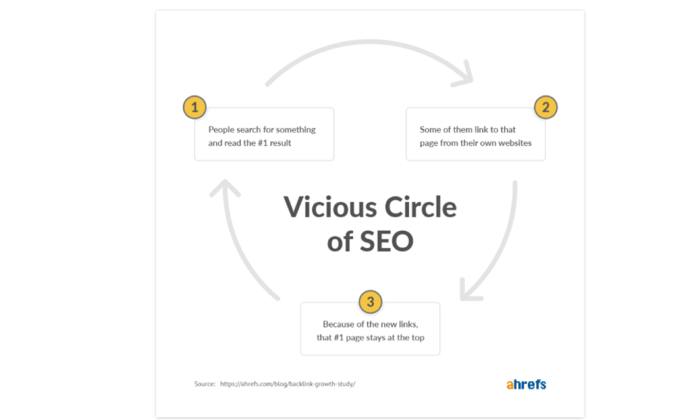
So be patient.
Only ensure you choose an SEO agency that’s right for you. And most notably, one with a diverse team of experienced experts who breathe SEO:
The post How to Choose The Right SEO Agency appeared first on Neil Patel.
Source: feedproxy.google.com

The 6 Best Digital Marketing Companies of 2021
Digital marketing covers everything from SEO and content marketing to email campaigns, social media strategy, and video marketing too.
With new digital marketing companies popping up left and right offering a bit of everything (and truly speaking to no one), it’s no surprise you’re having a hard time finding the right one.
The best thing to do is narrow down your options by bypassing those digital marketing companies trying to do too many things at once.
Why? Because true highly-niched experts are the best way to get the results you want (and deserve) for your business.
But, it’s not always easy to find those experts when you need them.
So, I put together a list of the top digital marketing companies who genuinely excel at what they do to help you find the right fit for your business depending on what you need.
Then, we’re going to talk about what makes them great and what to expect when working with them.
Let’s get started!
The 6 Top Digital Marketing Companies in the World
Digital marketing can be done from anywhere in the world.
So, it doesn’t matter if you’re living in New York and want to work with a company in Houston. Or living in London interested in an advertising specialist in Australia.
All this freedom does make it difficult to narrow down your choices.
But this list is a great place to start.
1. Neil Patel Digital — Best for content marketing and SEO
Let’s face it — consistent content creation and effective content marketing are the banes of a lot of business’s existence.
Pair that with constantly evolving search engine algorithms and you have a recipe for burnout and frustration (on top of your everyday to-do’s).
Thankfully there’s an easier way than staying on top of it on your own.
Neil Patel Digital was built by marketers — not bankers — interested in disrupting the way brands (and their target audience) think about the content they create, publish, and promote.
We’ve helped businesses like Facebook, Intuit, and Google, as well as small to medium-sized businesses, disrupt their industries with our holistic and authentic approach to content creation and search engine optimization.
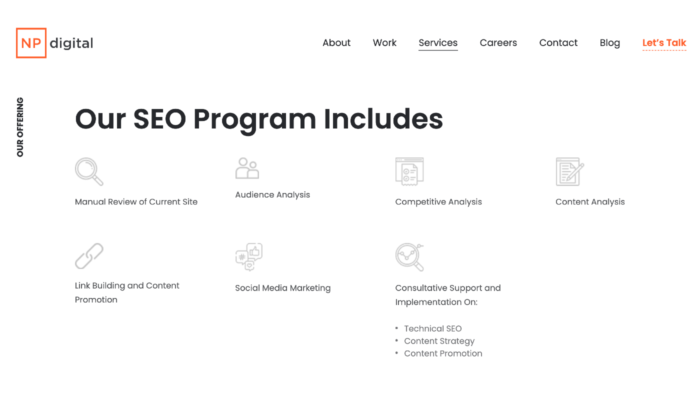
From research to execution to the promotion and ongoing optimization, we know a thing or two (or twenty) about helping your brand create the best content for the right people… and putting it in front of them as well.
Your business deserves to be heard and there’s no one more dedicated to making that happen than our team of professional experts equipped with my world-class digital marketing strategies.
Plus, with seven offices around the world, our team is here for you when you need us.
2. Cubicle Ninjas — Best for brand design and app/website development
You can have the best ideas and products in the world but without a brand that portrays your story and core values, you’re going to have a hard time connecting with your audience.
But cohesive brand design goes beyond the basics of graphic design best practices and Googling for free information until your eyes gloss over.
That’s where an experienced specialist comes in and saves the day.
Cubicle Ninjas uses a strategic combination of design and technology to develop innovative, inspiring, and one-of-a-kind branding designs paired with the mobile apps and websites brands need to stand out in our online world.
They’ve designed high-end customer experiences for companies like Red Bull, Microsoft, IBM, and Hilton but they also work with smaller boutique brands as well.
Cubicle Ninjas believe the best brands encompass visual, written, and interactive elements to create a cohesive customer experience through every stage of their journey from casual visitors to loyal repeat customers.
Their client-proven process works for businesses and projects of all sizes interested in developing a brand and creative assets that help them tell their story.
3. Storm Brain — Best for advertising and social media marketing
Social media seemingly changes by the second.
It feels impossible to keep up with new platforms, updated policies, and ever-changing social media marketing techniques on top of running your business.
But thankfully, you don’t have to.
Storm Brain is a digital marketing company specializing in effective advertising campaigns and social media marketing that helps brands of all sizes generate more leads, build brand ambassadors, and make more money with a strong focus on ROI.
They’ve worked with some big names like Zillow, Ford, and Citi Bank but they also work with smaller brands in a wide variety of industries.
Storm Brain focuses on planning, creating, and executing both paid and organic social media campaigns that help your audience connect with your brand across social media channels.
However, they specialize in Facebook and paid social media advertising.
Their four-step strategic approach centers around your target audience and capitalizes on paid media, owned media, and earned media to ensure your brand is in front of the right people.
4. Mad Mind — Best for eCommerce development and product branding
As a product-based business, you have different marketing roadblocks than service-based or blogging-based businesses.
And there are a lot of other branding elements coming into play as well.
Thankfully, Mad Mind is here to help.
They’re a creative digital marketing studio for both large and small eCommerce brands looking to develop cohesive branding from their website design down to the smallest details of their product packaging.
Brands like Lyft and Sony Music trust Mad Mind to help them create an impactful brand, attract the right people, and turn them into lifelong paying customers.
Furthermore, they’ve been featured on Shark Tank, The Los Angeles Times, and Vogue.
From WordPress, WooCommerce, and Shopify development to custom websites and thoughtful eCommerce branding, their team of “marketing geniuses” delivers powerful results and dynamic marketing strategies you can leverage for years to come.
5. Pop Video — Best for video and visual content marketing
Video and visual content marketing are booming right now.
But it’s no secret planning, creating, and producing videos feels overwhelming and downright difficult, to say the least.
The good news is… you don’t have to do it all yourself.
Pop Video specializes in doing the heavy lifting (read: video creation, execution, repurposing, editing, etc.) for you.
They know your audience expects more than one-off videos and other types of visual content. And they also believe your business deserves better, as well.
They don’t call themselves a “lean, mean, content-generating machine” for nothing.
Pop Video has partnered with hundreds of brands including Phillips 66, Academy Sports + Outdoors, and Mattress Firm to revolutionize the way their audiences consume and interact with digital content.
However, they don’t just produce great videos.
They help you create a library of visual assets by repurposing content as well so you can walk away with all the visual content marketing material you need.
6. Action Rocket — Best for email marketing and design
There’s a reason 93% of B2B brands use email to distribute the content they create — it works.
But starting your email list and growing it into a database of raving fans and customers isn’t easy.
Most businesses know this and do everything they can to avoid it like the plague.
Good thing you have another option.
Action Rocket is an email marketing studio leveraging strategic approaches, creative thinking, and in-depth customer journeys to develop results-driven email marketing campaigns.
Furthermore, they’ve worked with some huge names you may have heard of like QVC, Unicef, and American Express.
However, they also work with businesses of all sizes anywhere in the world.
Action Rocket offers courses, workshops, and training as well as world-class email campaign creation services so you can start leveraging one of the most effective forms of digital marketing for your business.
7 characteristics that make a great digital marketing company
Now you know my top recommendations.
So, let’s talk about what makes these digital marketing companies great and what to look for if none of the companies above match what you’re after.
These are the key steps in how to pick the right digital marketing agency.
1. A great website and digital marketing strategy
Smart digital marketers understand the importance of having a well-designed website and an effective digital marketing strategy.
So, it makes sense to expect your digital marketing company to have both, especially if they offer web design or custom development services.
Take a look around their website, sign up for the email list, and peek at their social media profiles to make sure they’re practicing what they preach.
And if they’re not… move on to a digital marketing company that is.
2. An impressive portfolio
Agencies use their portfolio to show off their best work.
So, look through their published portfolio pieces to see examples of the types of work they produce for their clients.
This also gives you an idea of the types of clients they frequently work with.
Pay close attention to the style and quality of what they do and make sure it closely aligns with what you hope to get out of working with them.
Furthermore, look at the list of clients they have to see if you recognize any of the names.
If anything seems off or doesn’t fit what you’re looking for, move on to a digital marketing company that feels like a better fit for you and your business.
3. Aligned company culture and core values
It’s important to work with companies that value the same things and have a strong company culture you can appreciate to get the results you hope to achieve (without wanting to pull your hair out).
Do you prefer a creative and collaborative atmosphere or a more rigid and structured approach?
Look at the words, phrases, and photos they use on their website to get an idea of how they work and make sure it’s a good match to what you’re looking for.
Some digital marketing companies use humor and playfulness while others are more serious.
So, decide what type of experience you want to have and find a company that matches that.
Example: Would you use the word “disruptive” to describe your brand and vision?
4. A diverse team with appropriate specializations
It’s important to hire a digital marketing company with the right team that can deliver the results you’re hoping for.
If you’re looking for high-end brand design services, make sure they have an experienced team of designers to take on your project.
Or maybe you’re interested in a custom-coded website.
Check out that company’s team on their about page (if they have everyone listed there) or on LinkedIn to make sure they have an experienced designer and a coder or developer on staff.
5. Timely and effective communication
Strong communication is one of the most important parts of a fruitful and beneficial partnership between a company and its digital marketing company.
So, it’s important to consider their communication skills and overall customer service before hiring them.
You can do this by evaluating the responses you get and how long it takes for them to respond to your messages and questions before giving them any money.
This doesn’t always work but if they take weeks to respond to a simple question, consider moving on to someone else.
6. Realistic promises and proven results
Before scheduling a consultation or reaching out for more information, look through their website to make sure their promises are realistic.
Furthermore, look to see if you can find any data-driven case studies they have regarding the type of results they regularly produce for their clients.
If they’re promising unrealistic things and making outlandish claims on their website, that’s a huge red flag.
Why? Because this means they probably don’t understand how the industry works and they don’t have any actual client results to share.
7. Real-world client testimonials
93% of consumers turn to customer reviews and testimonials when deciding to buy something.
They do this because it helps justify the expense and ensure they’re going to get what they pay for.
So, you should do the same.
Keep an eye out for detailed and honest customer reviews or testimonials to give you an insight into what working with the company is like.
If you can’t find any, they probably haven’t worked with many clients and they may be inexperienced.
Which… is fine if you’re on a budget. But it’s not fine if you’re looking for the best possible solution for your business.
What to expect from a great digital marketing company
Now you know what to look for, so let’s talk about what to expect when working or partnering with a digital marketing company.
The details of each phase look different for every business out there.
But, the fundamentals remain the same regardless of the company you choose to work with.
Phase 1: discovery and research
The best digital marketing companies want to learn everything there is to know about your business from top to bottom.
This usually happens through a series of phone calls/zoom chats and detailed questionnaires so they can get to know you and what you’re looking for. They’ll also do a deep dive into your target market, audience, and competition.
Phase 2: developing a plan of action
Once they know who you are and what you’re looking for, they’ll work with you to develop a detailed timeline and plan of attack to get the job done well and on time.
Phase 3: executing the plan of attack
Once everyone agrees on the plan, it’s time to start executing.
Your digital marketing company will work through the process of creating and finalizing everything you both agreed to during phase 2.
This includes building infrastructure, creatives, ongoing strategies, and anything else you need to achieve the results you’re after.
Again, this looks different for different types of projects and the company you’re working with.
Depending on the complexity of your project, this could take anywhere from a few days to several months (or even a few years depending on the type of partnership).
Phase 4: results and offboarding
After everything is complete, good digital marketing companies will walk you through the results and outcomes you achieved by working together.
From there, you’ll discuss the next steps and how to move forward on your own (or what happens next if your partnership isn’t over).
Digital marketing = long-term relationships and results
Investing in digital marketing is a huge step in the right direction for your business.
But, these strategies don’t return results overnight and they generally tend to ramp up over time.
So, expect a long-term relationship with your digital marketing company.
The longer you work with them, the more fine-tuned they are to your needs, and the quicker they can get to work producing even better long-term results for you and your business.
So, whether you choose one of my top recommendations or scout out your own, use the tips and best practices we talked about to make a smart, educated decision… like the future of your business depends on it.
Because it does!
Have you worked with any digital marketing companies recently? How did it go and did you get the results you hoped for?
The post The 6 Best Digital Marketing Companies of 2020 appeared first on Neil Patel.
Source: neilpatel.com

5 Small Ways to Boost SEO Rankings
SEO gets a bad reputation as being one of the hardest parts of marketing to succeed in.
We’re not going to say SEO is easy but we also don’t want you to think that boosting your SEO rankings is too far out of reach.
When it comes to your SEO strategy, you can have a long-term, super complex strategy that’s going to land you as the first search result for a search term.
And, you can have a short-term SEO strategy that just helps boost your way up to higher in the rankings.
It doesn’t have to be overly complex and most of it can be done in a few hours of work.
We’re going to focus on the latter in this article and show you the small ways that you can boost your SEO rankings.
These are all tasks that you can fit into a few hours of work and can make a big difference in the future.
A quick tip: Start using these tips on your new content so that you don’t have to go back and add them in later.
Here Are 5 Small Ways to Boost Your SEO Rankings.
#1: Structure Your Content For Readability
Part of a website page’s SEO ranking factor is page duration, a.k.a how long the visitor spent on that page.
There are a few ways to make sure that visitors don’t bounce off of your page (we’ll talk about more of those later) but one of the top ways is to make your content reader-friendly.
For example, you’ll notice in all of our DigitalMarketer articles that we have headers, bolded text, italicized text, emojis, images, and bullet points.
Our goal is to make you want to read our content, not see a wall of text and run the other way.
Here’s an example from our article, [Case Study] How DigitalMarketer Cut Our Cost Per Conversion By Over 50% In Less Than 7 days,
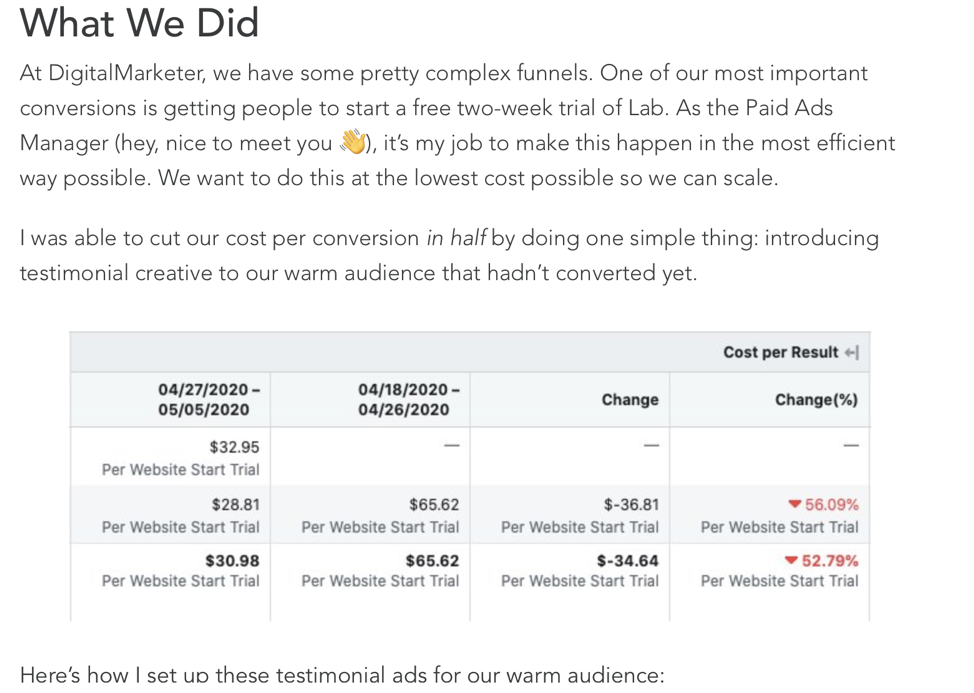
To make our content reader-friendly, we use:
- H2, H3, and H4 headers
- Bold and italicize text to break up long paragraphs of text or to highlight a particular sentence
- Emojis to bring some color and familiarity to our content
- Images as possible so you can see what we’re talking about instead of just reading about it
- Bullet points to help show our point without adding unnecessary filler words
All of this helps our website visitors come to an article, sales page, or landing page and be able to skim it over to see if it’s the content they were looking for.
If the answer is yes, they’ll stay a while and read what we have to say.
On top of making our content easier to read for humans, it also helps out with the Google bots who determine SEO rankings.
When we use keywords in our headers, we’re able to show Google that we’re talking about the keyword that we’re hoping to rank for.
This shouldn’t be confused with stuffing your headers with your keywords, that will just make sure your content feels unnatural and sales-friendly.
You can use how this article was structured as a blueprint for your own article.
You can also take a look at our sales page and landing page to see how we’ve structured those to be human and Google bot friendly.
#2: Fix Your Broken Links

This may not sound like a huge deal but if your content is full of broken links that lead to 404 pages, your readers and Google are going to be disappointed in you.
On the reader side, if they want to click-through to read or watch another piece of content that you told them about and the links are regularly broken, you’re creating a bad user experience.
For someone new to your brand and in the ‘Engage Stage’ of the Customer Value Journey, they’re going to make a subconscious judgment that you may not be totally trustable.
At this stage, you want your leads to see you as someone that always follows through with their promises.
404 pages do not tell them that.
On the Google bot side, 404 pages are going to show them your website visitors are coming to your page and leaving immediately.
That’s because each time a visitor sees a 404 page, they’re going to hop off that page in seconds.
Since there’s no content for them there, they have no reason to stick around.
This tells Google that your website isn’t providing the value that a visitor had hoped for, and your credibility is going to go down.
When your credibility decreases, Google favors the other websites with similar content that don’t have high bounce rates.

There are 2 types of broken backlinks that you want to fix:
- Internal backlinks from one page of your website to another
- Outbound backlinks from another website to your website

#3: Don’t Skip Out On Your Meta Description
While your meta description doesn’t have to do with your SEO ranking in terms of the content that you put into it—it does affect whether people click on your content or not.
You can boost your SEO ranking by having a killer meta description that makes people feel like it’s IMPOSSIBLE not to click on your article.
Your meta description is the excerpt that goes underneath the title of your page or post on Google.
For example, here’s the meta description for the website for our annual Traffic & Conversion Summit.

The meta description is the section below the title that reads, “The Premier Gathering of Digital Marketers on Planet Earth!”.
The goal of this meta description is to create a curiosity in the person that searched for our summit to want to click and learn more.
What does a premier gathering of digital marketers look like? Well, they have to click to find out.
A meta description can be for a landing or sales page of your website or it could be for a blog post.
If you’re writing a meta description for a blog post, you want to make sure that you’re showing what the reader is going to learn and planting a seed of curiosity so they’re motivated to find out.
For example, here’s an example of a meta description of our article, How To Attract Your Ideal Client:
Attracting your ideal client doesn’t have to be mind-boggling.
With the help of 1 tool, you’ll be able to successfully attract and convert your dream clients.
The title of the article and the first sentence in the meta description tell the reader they’re going to learn how to attract their ideal client and it’s not going to be as hard as they thought.
The second sentence that mentions the “1 tool” plants a seed of curiosity that helps them choose our article over the one mentioned below it in the search results.
Use your meta description to grab extra attention and motivate searchers to choose your content over the others.
#4: Update Older Content and Republish
Efficiency is key for every part of your marketing strategy (from content to SEO, to social).
If you have blog posts on your website already, you don’t necessarily need to be writing brand new content on a regular basis.
What about that post from a year ago that did kind of well but its pageviews are going lower and lower each month?
Instead of leaving it in blog post purgatory bring it back to the front lines.
You can run through old blog posts to see what you can add to them to update the information or to just make them better and then republish them under a new date.
To be clear, you don’t even need to create a new post, you can just change the publish date of the post to be the date that you publish it again.
We do this regularly at DigitalMarketer with our long-form Everything You Need To Know About… articles.
These are ultimate guides for content marketing, digital advertising, getting clients, etc.
Since we’re in an industry where strategies change pretty fast, we keep updating them to be valuable for the current moment.
By updating our Everything You Need To Know guides with strategies working right now, we’re making them super valuable to our readers (they’re a one-stop-shop for all you need to know on that topic).
And by republishing them we’re showing Google that this fresh new info—not stale old content from 1+ years ago.
#5: Prioritize Your Content
What happens when you read an interesting headline, click the link to read more of the article, and are immediately bombarded with a drop-down ad, an ad on the side of the content, ads spread out every few paragraphs of the article, and an ad coming up from the bottom of the page?
We rarely think, “Wow, this is a great experience!”
We barely even bat an eye before we click back on our web browser.
That website owner can say goodbye to page duration and hello to an increased bounce rate.
While it’s extremelyyyy tempting to put pop-ups, Google ads, or ads for your own products all over your website, it’s a dangerous SEO game to play.
You’ll end up losing more than your gaining and that loss surpasses your SEO ranking.
The high bounce rate will have a negative effect on your ranking, but it will also have a negative effect on how website visitors view your brand.
If they know that you’re going to bombard them with ads when they’re just trying to read an article, how are they going to feel comfortable giving you their credit card?
When you’re focused on your SEO strategy, you’re usually focused on the first 3-4 stages of the Customer Value Journey.
You’re focused on getting people to subscribe or even convert on your tripwire.
But if somebody feels like your website page is a digital billboard, they’re not going to think the emails you send them are going to be much different.
They’ll worry that you’re just trying to get the sale, not actually help them solve their problem.
Guess what that does to your click-through rate.
Yep, you guessed it. 
Always prioritize your content first so you’re building a trustworthy relationship with your new website visitor.
This increases your page duration (and SEO ranking) and your chances of turning that visitor into a lead.

As promised, these are all fast ways that you can improve your SEO ranking—without having to spend hours and hours (or dollars and dollars) on getting the results you want.
And remember, these aren’t just tips that you can use on your current website.
You can also use them when creating all of your future content so that you’re being the most efficient SEO marketer possible.
And who doesn’t love the sound of that?
The post 5 Small Ways to Boost SEO Rankings appeared first on DigitalMarketer.
Source: digitalmarketer.com

Use These Tips To Have Fun With Your Blog
Blogging is attractive to many people because almost everyone has things they want to express to the world.
Everyone wants to share their views or knowledge, but it can be hard to do this in a way that is both interesting and accessible to readers.
The following article will show you how to accomplish the writing blog goals you have set for yourself.

Be certain that your blog takes advantage of search engine optimization (SEO).
Your ultimate goal includes people reading your blog, so have it visible in search engine results.
Keywords should be contained within the title, and within the blog article itself, if the reader numbers are to be increased.
Don’t let blogging take over your life.
You do not want to burn yourself out, so plan on staying away from your blog at some point in the day.
Take time out for a walk, visit with friends or just take a five-minute break.
When you have had time to relax, your brain will return to work, ready to make excellent content.
Blog about interesting, relevant topics.
Ordinary chores like doing the laundry and cleaning the kitchen are familiar to everyone.
Unless your blogs are unique when writing about common topics, people won’t read them.
Focus your blog on something that you know people will want to read.
Keep in mind that your overall goal is to gain regular readers for your site.

Be authentic and real.
Don’t be a “know it all”. Remain an open book. Be that way all the time.
This will help your blog to stand out as one that is individual in nature and easy to read.
Reaching for perfection is great, but don’t dwell on it.
It is not the end of the world if you make a mistake, and post something that is incorrect.
You have a specific point of view that is all your own.
Summon Guest Bloggers for Quality Content
Invite other bloggers who have found success to write guest blog posts on your blog.
This brings in more quality content.
You’ll also gain traffic from their blog to yours.
Try using more than one additional blogger to add quality content to your blog and increased page views.

Be sure to use images when you’re making posts.
Everyone knows that a picture can represent more than mere words.
The inclusion of images in your blog can enhance your blog by breaking up text content.
Images, when combined with thoughtfully written posts, can communicate more than words alone.
This is why you should include images as often as possible.
As previously discussed, blog posting is attractive to people because everyone has something that they want others to know about.

Everyone has things to say.
Determining the best way to share your message means that you will have to make certain choices.
The advice that was contained in this article was given for you to maximize any advantage you can within your blog and spreading your particular message.

❤ 14 Lovely SEO Tips for Valentine’s Day
It’s that time of the year when everybody is feeling deeply in love and thinking about presents and plans for Valentine’s Day. On this special occasion, we thought that a few SEO tips can really help both business owners to get more clients and customers, to buy the perfect gift for the beloved person.

A true love story doesn’t work without its successful ingredients.
The same goes with SEO and UX – which is a true love story, SEO & content writing, SEO & PPC, SEO & social media.
Different love stories, all bound to succeed if there’s commitment, honesty, transparency, and hard work.
SEO can be a nightmare, but also a blast.
Getting your website ready for the occasion is a huge deal, so UX, content optimization, social activity, mobile setup, good website architecture should not be missing from your plate.
14 Lovely SEO Tips
Below you can see our top SEO tips recommendations for online marketers that want to hook the client and offer beautiful V-Day experiences besides creating a long-term relationship.
1. Find the Correct Timing to Meet Users’ Wishes and Needs
Correct timing is, just like in every relationship, highly valuable.
You have to know when to enter the market and promote your business.
For that, you must know your audience and understand their needs and be prepared to offer what they are ready to receive.
Since we’re talking about Valentine’s Day, which we know it’s a seasonal period, the preparations should start at least a month before the official event.
Google Trends can be used as a research tool to see the evolution of searches for different queries and topics.
If you take a look at the next screenshot, you can see that the searches for Valentine’s Day start during Christmas.
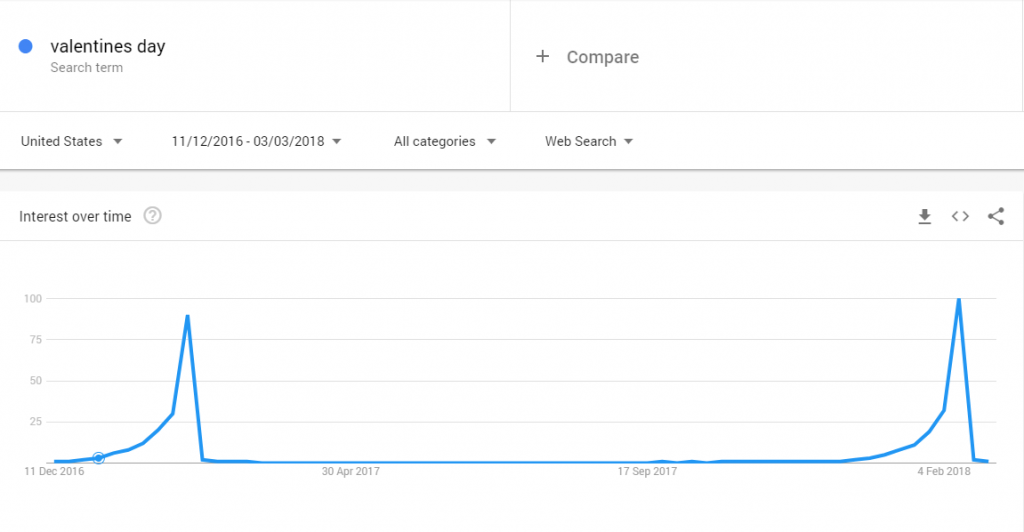
Marketers should launch their campaign early; when there’s interest in the trend and they can start to build upon that.
14th of February is the peak of the season.
That means most people buy, search and get inspiration on the celebration day as we can see from the screenshot above.
In addition to the timing topic, we’ve got to mention something we’ve written on the blog a little time ago.
You all know that through our hundreds of written articles and tips gathered on the blog, we’ve learned together with you, our readers, some pretty valuable lessons.
A few months ago, we talked on our blog about startup fails and gathered digital marketing tips from owners for all sorts of situations.
And one of the companies had a problem regarding bad timing.
Calxeda, the company that started to provide computers based on the ARM architecture moved faster than their customers’ understanding. They had problems getting in line with clients’ knowledge levels.
Finding topics of interest and relevant queries and jumping into the online world at the perfect timing shouldn’t be a painstaking task.
In the next digital marketing tips, I’ll show you how to select the right keywords to have an accurate representation of the topic.
2. Select the Proper Keywords for the Occasion
We’ve talked about finding the proper keyword for the occasion.
And that implies keyword research.
Our top favorites keyword research tools are Google Keyword Planner and Keyword Tool and Content Assistant.
They both can help you get quality keywords recommendations for optimizing your website.
Google Keyword Planner aggregates data on average monthly search volume, competition, cost per click, localization.
You have to search for a query and the tool will offer some keyword ideas.
As you can see in the screenshot below, we could use “Valentine’s Day gifts”, “Valentine’s Day gift ideas” or simply “Valentine’s Day ideas” amongst other combinations.
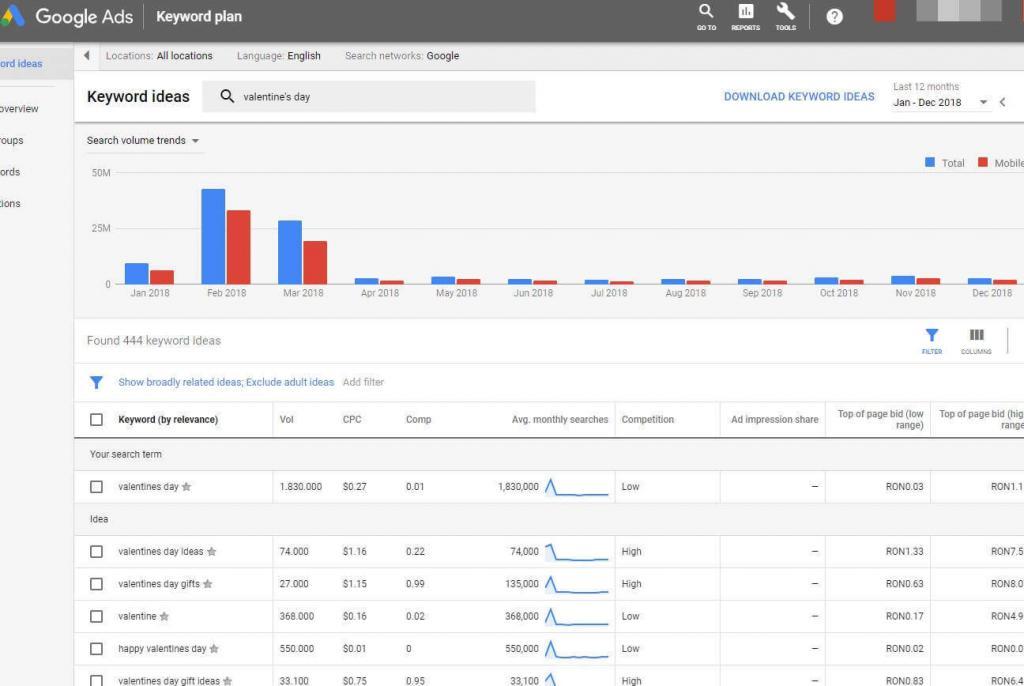
For more segmentation and accuracy on keywords, you can use Keyword Tool and Content Assistant.
You have the option to see recommendations based on their typology:
- having all terms: which mean you find all the keywords that contain all the combination of words;
- phrase match: a combination of keywords that contain the query you’ve searched for;
- Search suggestions: informational type of keywords; (in the tool you can also find brand keywords and commercial keywords)
- focus keywords: those keywords that are recommended by Google in the Searches related to your query section, on the first page of search results;
- questions: question-type of queries (what, why, how, who, when.. and so on)
- or group topic: where you can find groups based on a particularity.
Besides the part where you get keyword ideas and have lots of ways to filter and get what you need, there’s the competitive analysis section.
In Ranking Analysis you can find your top competitors for a specific keyword and take inspiration.
You can get some topic ideas from your competition, too.
Basically see what they are writing, what type of content is ranking for that keyword (product page, homepage, blog post, youtube video, and so on), how many words are on a page.
If you look closely at the screenshot, you can see that the searched keyword is commercial, which means the content that answers this query should be commercial, too.
After a full-size study on the market, you are ready for content optimization.
3. Content Optimization Would Be like a Good Catch on Tinder
Content optimization: everybody wants it and needs it, just like a good catch. I think that SEO & content marketing is the perfect marriage.
Before SEO found its true love – the content gal – it was all over the internet fooling around together with spammy links, in its black hat SEO period.
Everybody has teenage memories, but for SEO, the black hat was a tough time.
Content strategy is salvation.
It’s a treat!
How you try to optimize your content should be a sweet ride, not a bumpy road though.
Content Assistant is your best buddy because it shows tips and keyword recommendations.
In the screenshot below you can copy-paste the content from your webpage, or simply import the URL.
Based on that, you can see keywords you should use once, or more often.
For a smart piece of content, try and add those keywords naturally into the page, as synonyms, or directly instead of other keywords.
Get ideas on how easy it is to read and how many words are on a page.
You don’t have to create blockbuster content for Valentine’s Day, you just have to create content that the users want.
Try and add pictures and create short sentences, because they are easier to follow.
Below you can see an example of a good page for Valentine’s Day.
It has a simple introduction, eye candy images, and a presentation.
Then you can see ideas for the occasion.

4. Speak on Your User’s Language as You’re Speaking to Your Perfect Date
Language, terminology, and context can’t miss from the secret love recipe. As an online marketer you must know your audience, what their needs, and ”talk the talk” are.
For enticing the user to convert, you’ll have to speak their language, otherwise, they disappear as fast as they entered the website.
Use words they know, don’t overcomplicate the meaning of the sentences or use complex phrases.
Avoid insider language.
There are 6 golden rules for speaking the same language as your users:
1. Write short and simple sentences.
There are tools for scanning content and calculating a readability score.
Content Assistant has integrated the Flesch–Kincaid readability tests designed to indicate how difficult a passage in English is to understand.
2. Observe word order typology
It is Subject + Verb + Object (SVO).
3. Keep short paragraphs.
It is highly important to have “breathable” spaces between paragraphs so that the users can read the article faster and get an idea from all of it.
Otherwise, they will be stuck in the introduction, get bored, annoyed, and leave the website.
4. Use the first voice.
It would be like talking to somebody, making a conversation, and not making assumptions in vain.
5. Lose the jargon.
Valentine’s Day should not use any jargon, or language for a specific niche, or something more technical, because that’s not the case.
You need to write for everybody to attract a bigger piece of the pie from the market.
Make sure the content is using normal language, understandable to non-specialists or technical persons.
6. Spell out acronyms on the first reference.
For example, don’t use the language of millennials.
5. UX Is Your Perfect Match
Self-explanatory: visitors will have a good experience on-site if it looks ok, with hearts, cupids; everything is in place and doesn’t take too long to load.
Yes, content is a must but it is highly important to have good UX that accompanies it.
Great content with bad user experience would be like a smart date, who arrives looking sloppy; looking like they didn’t prepare for the meeting at all. If that was a real situation it would be like leaving the gym without showering and going out looking sweaty and smelly.
I mean, you had great talks before the meeting, but if they show up like this when they first meet you, it’s like they didn’t make any effort, and basically, don’t care.
Which in terms of UX and content, should never happen. You must show interest in the user and really practice it.
UX is one way to show it.
UX is like frosting on the cake. It completes it and makes it more appealing. And easier to digest.
Just take a look at the next screenshot: Can you read the next text?
Well actually you can not because of two reasons: one, it’s in a foreign language and two, the diacritics are looking funny.
UX can arrange your website and make it look better.
For Valentine’s Day especially, when everything has to be perfect and look more appealing, it’s important to have an easy-to-read website.
That means:
- readable font (size and font type);
- line and paragraph spacing;
- avoiding bright or neon colors for text;
- high-quality pictures that load fast on web pages;
- creating a high-speed loading website;
- not using bright color text on images or textured background with colored text (like the example below)

6. Don’t Place Content Marketing in the Friend Zone
We’ve previously talked about content optimization and its importance.
We really hope you didn’t skip it. Content marketing isn’t something you need to miss and it truly needs your attention.
Content marketing isn’t about rewriting history but making it.
For a successful content marketing campaign, you need to put in action all the steps included by this strategic marketing approach, which means creating, publishing, and distributing content.
While the first two steps are highly important, a lot of people forget about the last one – distribution.
Content marketing doesn’t mean only the writing process.
Content distribution refers to the way you share your content through online platforms.
Amplification is a good technique to reach a wider audience and distribute your content.
The good thing about this last step is the fact there are lots of ideas you can implement.
Maybe some of the most effective and interesting are the next actions for content amplification:
- try email outreach;
- use content syndication on websites such as Medium;
- post on Zest.is app to attract new audiences;
- Share your content on Mix, a replacement to Stumbleupon;
7. Create Themed Landing Pages to Look like a Fancy Location
Having a webpage designed for the occasion will be highly appreciated.
For product pages, you can create categories for her and him, for types of gifts, for the longevity of the relationship, for the type of person you want to offer the gift (friend, lover, married partner).
For example, the website below has designed a love calendar and additional categories of gifts by the day such as:
- Hug day specials
- Flowers for Valentine’s Day
- Valentine gift combos
- Cakes for Valentine’s Day
- Chocolates for Valentine’s Day
- Personalized gifts and so on
That is an example of good practice for an innovative way of presenting Valentine’s Day gift ideas.
There are lots of options. Either you use page builder in WordPress to create a template or use different fonts, themed pictures & icons designed by the same template.
Don’t forget the singles! Create a category for single people, too.
They might be an unexplored niche for certain products.
Being a holiday that is associated with spending money, targeting singles might be an unexpected way to generate new leads and make singles invest money in themselves.
8. Use Internal Links to Have a Strong Foundation
As it has been proven numerous times until now, internal links are rising in popularity. Dawn Anderson says that:
Internal links are often as powerful as external links.
Dawn AndersonInternational SEO consultant & Digital Marketing Lecturer Move It/ @dawnieando

Since you’re trying to hook the user and increase their time spent on the website, internal links are the connections you should build.
Internal links are like tree roots. Anchoring in the website ground to collect information to supply the user.
Internal links work in a similar way as external links do.
They carry value and can improve the performance for certain pages and make them acquire better positions on search engines.
The more internal links pointing to one page of your website, the greater the value of that page within the website.
For example, if you have a page with 10 internal links pointing to it, it will have a higher value than a page with 3 internal links.
If you link to another page from that page with 10 internal links, it will pass greater value than linking from the ones that only have 3 links.
To put them into a more romantic lighting, internal links are like memories you create with your better half. There might be times when you find yourself in a situation that is connected to something you experienced as a couple in the past.
For a website, you create internal links to redirect the user to a piece of information that could help them, in addition to what they’re already reading.
Put into another perspective, when a page has no links to it, that page does not exist because no one will ever be able to access it. Internal links can help pages from your website get noticed and receive backlinks.
Site Audit allows you to analyze the internal links and find the issues.
For example, you can see orphan pages, which are pages that are not linked to from another section of your site and cannot be found by search engine crawlers.
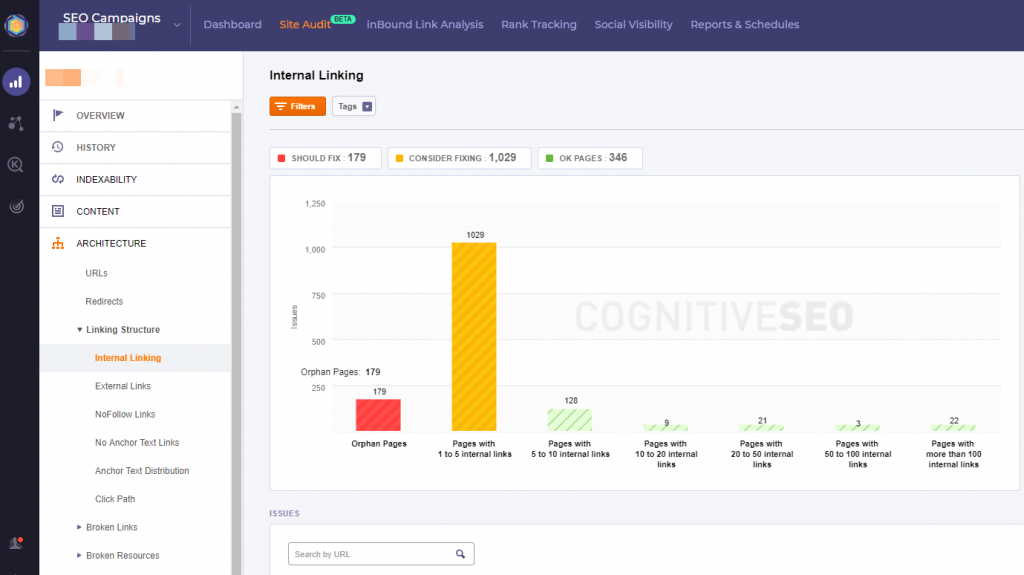
A good internal link appears when the need arises.
Basically, if you’re writing about a heart-shaped cake recipe, you can link to similar recipes that would work great with these instructions.
Another good example, since we’re talking about heart-shaped cakes, is linking to other articles on how to make icing colors so that the users see how to make red icing or create buttercream flowers or link to products available on sites, such as food colors and more.

9. Don’t Use Nofollow Links Like in a Friends with Benefits Relationship
Nofollow links are like those intriguing, already-know-what’s-gonna-happen telenovelas.
Some say it’s good, some say it’s bad, but if Google lets them on this planet, that means they should exist. An equal distribution of both do-follow and no-follow links is ok.
Also, if you have fewer do-follow links still ok. In case you have more do-follow links than no-follow ones, the situation might not look so bright.
Using only no-follow links will be like a friends-with-benefits relationship. Sooner or later it will blow up in your face, and somebody will get hurt. Most probably you.
In our recent study, we discovered that unnatural backlink profiles are related to a high number of no-follow links.
We analyzed 100,000 unnatural links to see their effect and discovered that websites with highly unnatural backlink profiles have over 70% no-follow links.
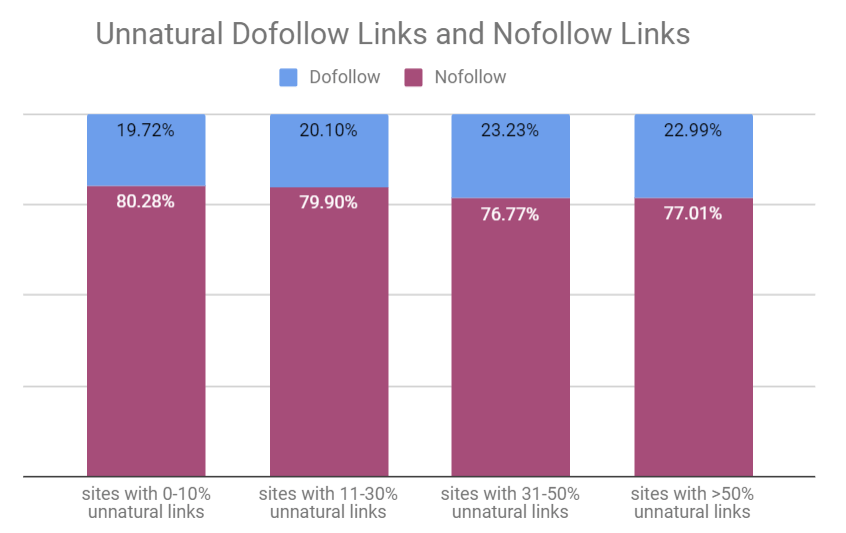
Since you want to attract visitors on Valentine’s Day and basically rank on Google to gain organic traffic, it’s important not to fall into any trap.
Don’t overstep on Google’s shoes, because it can become a bitter mother-in-law.
10. Use Images for Eye-Contact
A relevant and high-quality sized image can attract users and help them remember the information better.
A study by Brain Rules shows that people remember only 0% of a piece of the information three days later after they hear it, rather than 65% of the information if a relevant image is paired with that same piece.
That happens because 70% of all your sensory receptors are in your eyes.
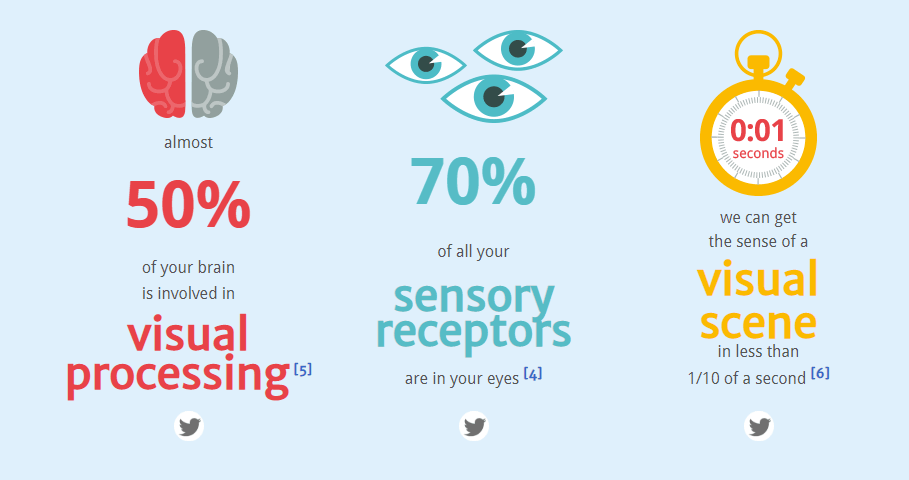
Source: neomam.com
Images can keep your users more on the site.
People can follow directions with text and illustrations 323% times better than people following directions without illustrations.
Using relevant visual content can do your website a lot of good in terms of SEO too.
Recently, Google’s John Mueller commented in a hangout that it’s worthwhile to have unique images on each page not only as a good branding move but possibly as a search engine optimization one as well.
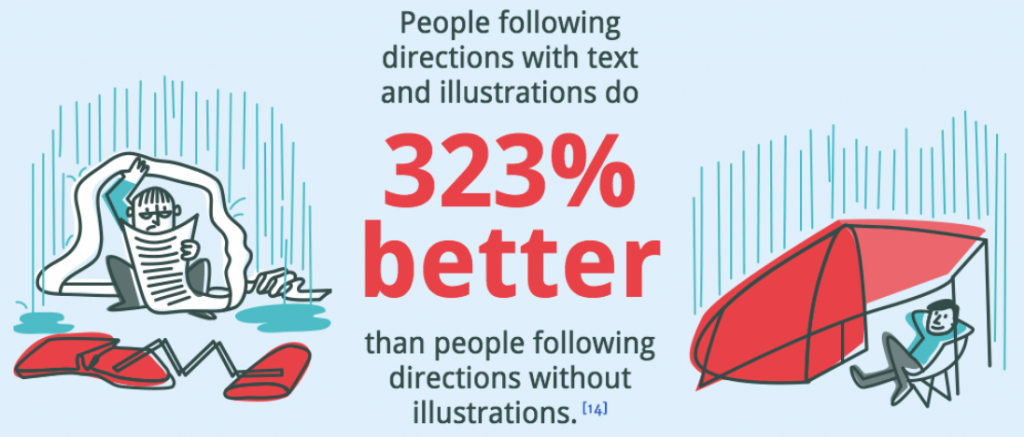
Having original images on every page of your website isn’t going to catapult your site to position zero.
But, it may help you get your images featured in the answer box or in the image box results, which is great brand exposure.
Valentine’s Day is all about the visuals, beautiful scenery, and romantic looks, so you can’t skip this part.
The page should express romanticism and give you a warm hug feeling.
An example of a Valentine’s Day campaign for brand awareness that used images as a creative and smart was is Practo, an app for finding the right doctors for your problems.
The campaign was called #HealthyBreakups and you can see below some illustrations.
It could inspire you to do better campaigns for online advertising.

11. Social Media Is Your Wing Man
Previous studies (proudly conducted with lots of love by us) show that on average, social presences (which includes likes, shares, and comments on Facebook, plus shares on Google+, LinkedIn, and Pinterest) are negatively associated with site rank, that means the higher the average number of shares, comments, and likes on social networking sites, the better ranking websites have in Google.
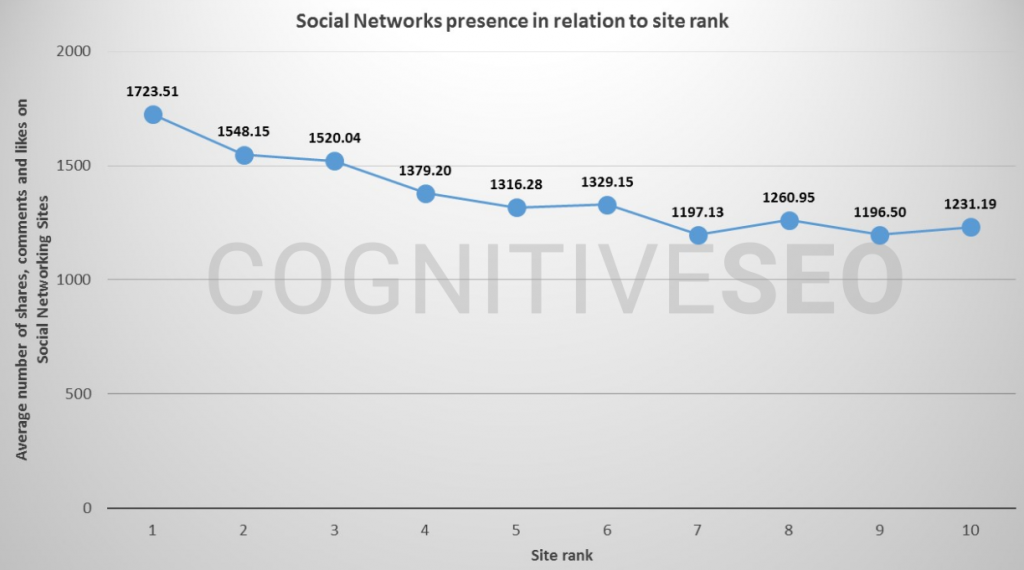
A proper campaign distributed on social media can have a high impact and collect site traffic and leads.
Social Media doesn’t impact SEO directly but rather influences it in an indirect way, in the long run.
The 2017 Total Retail Survey by PWC shows that 47% of shoppers choose either “social networks” or “visual social networks” as their main sources of inspiration.
And that is a good practice because you can see what others are doing and see what hashtags are trending.
You can create social media marketing campaigns for everything. And the message is very important.
If you want to be remembered, you need something short and smart.
Take for example the #LoveInOtherWords campaign created by the publishing company Penguin Random House (PRH) in India.
Our love is hard-bound!#LoveInOtherWords#PunnyValentines#ValentinesDay pic.twitter.com/gEdgqBLIwt
— Penguin India (@PenguinIndia) February 13, 2016
12. Setting AMP Is like Offering a Beautiful Valentine’s Day Gift to Your Partner
AMP is a good implementation for websites that have a slow loading time. Developers claim that an accelerated mobile page is capable of loading up to 4 times faster than a regular HTML page.
AMP is not mandatory, but it is desirable.
Google regularly stated that AMP is not a ranking factor, but encourages webmasters to build them.
As a business owner, you want the best and according to experts, mobile pages built with AMP are likely to outperform existing mobile pages in terms of speed.
AMP setting can be a plus for your website during Valentine’s Day when you want everything to work smoothly.
13. Have a User-Friendly Website to Create the Most Intimate Atmosphere
A proper strategy for having a user-friendly website is a fundamental part of SEO.
Your website needs to be device-friendly especially if we’re talking about sales because you want sales on Valentine’s Day.
And lots of them.
It is a self-understandable fact that mobile searches have increased together with the increase of mobile devices purchased.
More than that, Statista has found that mobile traffic globally has a larger share of internet usage than desktop traffic, which is 52.64%.
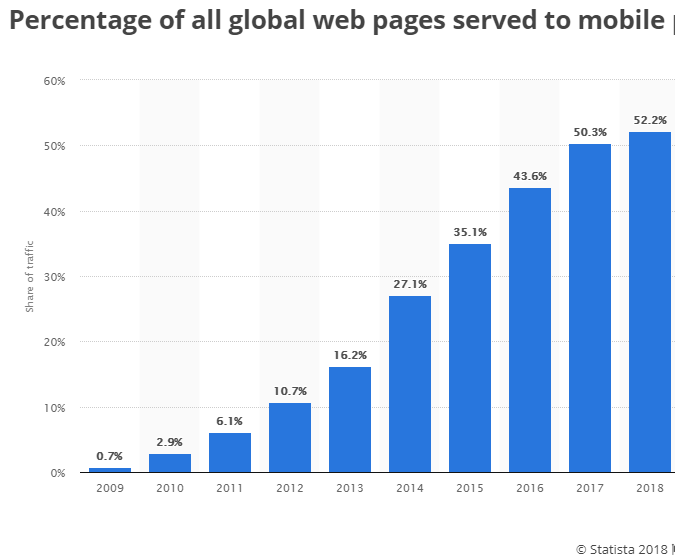
As a recommendation, you should have a responsive website.
Also, all the well-designed features, pop-ups, and ads appearing on the website must also be very well-thought.
Try installing plugins to make the website work smoothly with all the additional information that loads on-page for Valentine’s Day.
14. Create a Natural Flow on Site like an Itinerary for Your Loved One
Just like you’re following instructions for getting to the fancy restaurant with your better half on Valentine’s Day, it’s natural to give similar instructions to the users that want to search for information on your site.
Site architecture and a well-thought sitemap are in the driver’s seat of the limousine you could be riding.
You are imagining yourself drinking campaign in the limousine, aren’t you?
You’re not the only one. [*guilty giggling*]
Using a sitemap doesn’t guarantee that all the items in your sitemap will be crawled and indexed, as Google processes rely on complex algorithms to schedule crawling. However, in most cases, your site will benefit from having a sitemap, and you’ll never be penalized for having one.
A sitemap is where you provide information about your web pages and the connections between them. An XML Sitemap explains to Google how your website is organized.
You can create sitemaps and add them in Search Console.
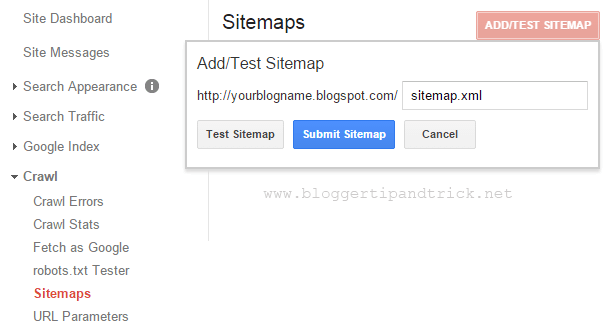
Search engines like Google read the sitemap file to more intelligently crawl your site.
A sitemap tells the crawler which files you think are important to your site.
In case you are having any issues regarding your sitemap, use the Site Audit and find out the crawled pages, the included URLs, and check sitemaps’ HTTP status codes.
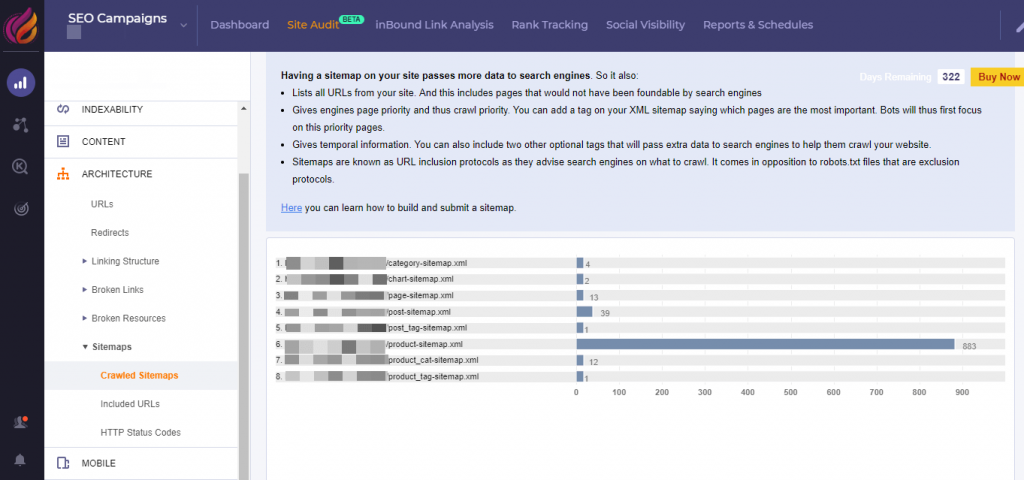
Conclusion
Valentine’s Day is a special occasion that should target both couples and singles for successful results.
You need SEO and a smart marketing strategy driven by awesome content with good UX, relevant pictures, and good architecture on the website.
A successful receipt for good rankings and lots of sales on Valentine’s Day requires you to follow our heart-shaped cake receipt.
You start from the bottom-up using lots of layers, which includes the site architecture layer, then the UX buttercream filling, the second layer is content marketing covered on top by content and image optimization as the buttercream filling.
For the top, you’ll need AMP and mobile setting crumb coat and for decorations, you’ll need links icing, and social media sprinkles.
And there it is: a really nice, clean, smooth SEO layer cake.
Of, course you can add more layers, more decorations to it. It all depends on the business.
Good luck “baking” and growing your love and your business!
The post ❤ 14 Lovely SEO Tips for Valentine’s Day appeared first on SEO Blog | cognitiveSEO Blog on SEO Tactics & Strategies.
Source: cognitiveseo.com