
Tag Archives for " search engine marketing "

The 8 Most Important SEO Metrics to Track
As marketers we love SEO.
There’s so much data that you can snag from your website that can tell you how many website visitors you had, where they came from, and whether or not they opted-in to your offer.
Marketers = data hoarders, which makes SEO a very, very fun part of our jobs.
Give us the data and we’ll make a marketing strategy out of it, all while tracking the most important metrics that will help us achieve it.
But, what are those metrics?
8 Most Important Metrics to Track Your SEO Ranking
Let’s take a look at the 8 most important metrics to track your SEO ranking when you’re first getting started.
#1: Organic Traffic
Alright, let’s start with the obvious.

To know if all the time you’re spending on your SEO strategy is worth it, you need to know what your organic traffic metrics look like.
Organic traffic is the number of website visitors coming to your website from a search.
You didn’t pay for them to be there or refer them through another website—these visitors found you by hitting search on Google. 
Your organic traffic metric is sooo important because it’s going to give you an overview of how well you’re ranking and what’s working best for you.
You can use Google Analytics (for free!) to see your organic search sessions, new users, bounce rate, and page duration.
#2: The Keywords You Rank For
There are 2 types of keyword rankings you’re interested in when it comes to SEO.
We’ll explain the first one here, the keyword you ARE ranking for here, and the second type below.
This metric tells you what keyword you currently rank for—whether you want to or not.
For example, an ecommerce office supply company might rank for notebooks without having put a serious effort into ranking for the keyphrase “notebooks.”
This is great because notebooks are definitely a product they sell, and it gives them a starting point to say, what else do we want to rank for?

To find what keywords your website currently ranks for, you can use Google Search Console.
#3: The Keywords You Want to Rank For
But what about the keywords you WANT to rank for?
In our example above, the office supply ecommerce company probably wants to rank for… “office supplies.”
Notebooks are great and fit their niche, but ranking for “office supplies” could make a huge difference for their business.
This is why you want to keep track of the keywords you want to rank for.
You’ll want to do a deep dive to see how many searches certain keywords have each month and then give those search results a thorough look through to see where the opportunities are to rank for them.

You can use a tool like SearchVolume.io or Keywords Everywhere to see what the search volume is for a keyword.
Then, you can figure out what keywords are worth putting your time and energy toward ranking for.
#4: Alexa Ranking
We’re going to pull a Gary Vee quickly and remind you that voice search is a BIG DEAL.
Ranking on voice search (depending on your industry) could have monumental results on your business.
Ranking for your ideal keywords on Google is important, and ranking on Alexa is the next step.
Forty-eight percent of consumers in an Adobe survey said they use voice for web searches.
Out of that 48%, 85% were using voice on their phones and 39% used it on their Amazon Alexa or Google Home.
Even if the voice doesn’t seem like a huge deal for you now—it’s worth looking into how it could be a big deal in the future.

Tools like Alexa.com can give you SEO analysis, competitive website analysis, keyword research information, and more depending on how important your Alexa search ranking is.
#5: Backlinks to Your Site vs. Competitors
Tracking your backlinks will give you an idea of how good your content is.

If it’s really friggin’ good content, you’re going to notice a lot of free backlinks coming your way.
But tracking your competitor’s backlinks will help you see what THEIR really friggin’ good content is, and where you’re missing the mark.
If you see a ton of backlinks to a specific blog post—this is a great sign.
The post is valuable enough for other websites to cite it in their content, which is bumping your post up in the search rankings. (Oh yeah, oh yeah!) 
You can see backlinks to your website on Google Search Console and backlinks to your competitors using a tool like Moz.
#6: Page Speed
This is one of those metrics that sounds like something you’d put at the end of your SEO to-do list—but in reality, it should be one of the first.
Page speed is going to have a big impact on your bounce rate.
Your bounce rate is the percentage of website visitors who clicked off of your website a few seconds after visiting.
This rate is a negative indicator to Google that your content isn’t what they were looking for—which means Google’s going to want to find somebody else to replace you in the rankings.
Not only is your bounce rate affected by page speed, but nowadays Google will push your SEO ranking down if your page speed is slow.
The general rule of thumb is to have your page speed be less than 2 seconds.

You can use Page Speed Insights by Google to see the page speed of each of your web pages.
#7: Social Traffic
Tracking your social traffic is necessary for a business that’s putting time, money, and effort into a social media strategy.


If your call to action on Instagram isn’t turning followers into website visitors—it’s time to rethink your social media strategy.
Your social traffic will tell you how many website visitors are coming from social media channels like Facebook, Instagram, YouTube, and Twitter.
By tracking these metrics you can see how well your social strategy is going, how well a campaign is performing, or what type of social media offers are creating big spikes in your website traffic.
Google Analytics will show you how many website visitors came from social media channels.
#8: Organic Conversions
Ahh, last but not least—organic conversions.
How many website visitors that found you from a Google search are opting into your offer?
We saved this for last because this metric is going to define your SEO strategy moving forward.
Having 100,000 monthly website visitors is incredible… but only if you’re able to convert at least 10% of them into subscribers or customers.
Organic conversions are your look at how well your content is converting website visitors into email subscribers, motivating these visitors to opt-in for a lead magnet, or buying a tripwire offer.
Inside of Google Analytics, you’ll be able to define conversion goals so you can see how well your content is converting traffic.
SEO seems big and scary, but just by looking at the number of times, we mentioned FREE Google tools that will help your SEO rankings (6!) we have to give them credit for helping us out.
Google wants your content to rank well, use these metrics to keep your SEO strategy sharp and to see where you can do a little better.

The post The 8 Most Important SEO Metrics to Track appeared first on DigitalMarketer.
Source: digitalmarketer.com

Here’s Why Your Business Needs SEO in 2019. 10 Reasons to Invest in SEO
SEO doesn’t let you down, that’s why you need to focus on it. You shouldn’t avoid it. It’s not your ex; it is your partner for the long run — the one that you should have for better and worse.

SEO is like a marriage: sometimes you don’t get it, sometimes you fight against it, sometimes you are inseparable, but you are together because you can’t exist one without the other.
We’ve put together a pros list with essentials tips to understand why your business needs SEO in 2019, or in the future, in general.
- SEO Offers Long-Lasting Results for a Business
- You’ll Receive Impressive ROI
- Organic Search Is Often Times the Primary Source of Traffic
- SEO Can Be Cheaper Than Other Paid Search Strategies
- SEO Is Quantifiable
- SEO Offers Credibility and Trust to Your Audience
- Voice Search Keeps Growing and You Need Higher Visibility in Search
- You Can Push Your Audience Down the Funnel With the Right Type of Content
- You Can Get More Customers and More Traffic with Local SEO
- You Can Get New Opportunities for Your Business
Want to know the importance of SEO for small businesses?
Or you’d like to find out if SEO is a good investment for 2019, or maybe why SEO is important for your online success?
Then search no more, this is the place where you’ll find the answers to those questions.
There were lots of changes and things happening in 2018.
We experienced a new Google Search Console with new crawl limits, a few Google products improvements, lots of Google algorithm updates, and more rankings factors added to Google’s algorithm.
Everything that happened last year can be a trigger point for 2019 so you need to keep focusing on SEO this year.
10 Reasons to Invest in SEO
1. SEO Offers Long-Lasting Results for a Business
SEO is a long-term strategy that will bring you long-term benefits.
It has a noticeable impact on your business.
You probably heard or maybe you’ve asked yourself this question: “How long will it take me to get ranked #1 for my keywords?”
I’ve seen lots of business owners and companies that start doing search engine optimization and, after a month or two, they just give up and say “SEO doesn’t work” or “We didn’t get the results we needed to justify the cost.”
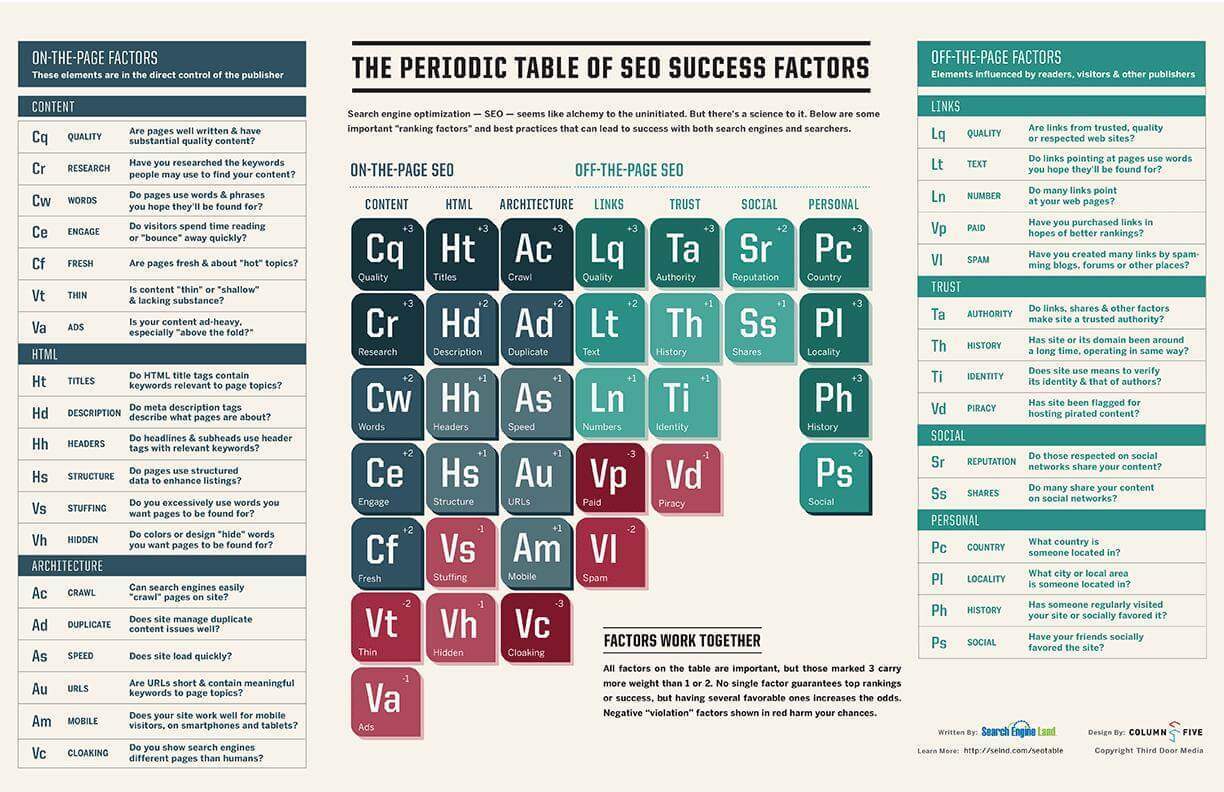
If you start a new website, it is important to know that you’ll see results in approximately 6 to 12 months.
It might seem a big period of time for some, but if done correctly, it will keep your website on SERP and the results you get can last for years.
This can have high SEO importance for small businesses that are struggling to succeed.
If you have had a business for some time, then you know how important it is to keep your portfolio and generate conversions.
Having search visibility is a great asset for achieving results. SEO can help you by offering visibility in SERP and afterward with monetary results, but you have to invest in it – time and money.
There are lots of factors that should be taken into consideration when we think about SEO.
You need expertise and a feasible plan to achieve SEO success.
SEO is and will be a good investment for an online business, which brings us to the next point.
2. You’ll Receive Impressive ROI
SEO brings a great return on investment if you have a healthy budget and an ongoing process.
Don’t set unrealistic expectations. Budget 6 to 12 months of SEO, otherwise you risk losing money, and you’d better use that budget for something else.
Paying for just a few months won’t bring you the results you’re longing for and you’d be like throwing money outside the window.
BrightEdge says that over 40% of revenue is captured by organic traffic and you’d better optimize your website to maximize your organic searches.
More than that 18% of local smartphone searches led to a purchase within a day.
An investment in SEO is an investment in your business’s future.
It is a long-term strategy, as we’ve mentioned before, and it shouldn’t be seen as an immediate way of generating sales.
A long-haul plan will bring you a return on investment because SEO is an online marketing strategy with one of the best ROIs.
Karin Foster, SEO Consultant with years of expertise in consulting businesses with SEO Strategy implementation, says it better:
If you invest in a long-term SEO plan with a reliable company, the question concerning a decent return will be a matter of time.
Long-run investment is always a good idea since no one wants to be a one-hit-wonder.

It might be hard to calculate ROI, but you have lots of analytics you can track and evaluate your goals.
Even so, organic SEO is way more powerful than other online marketing tactics, even stronger than paid search ads.
SEO is about 5.66 times better than paid search.
Below you can see what to expect out of SEO:
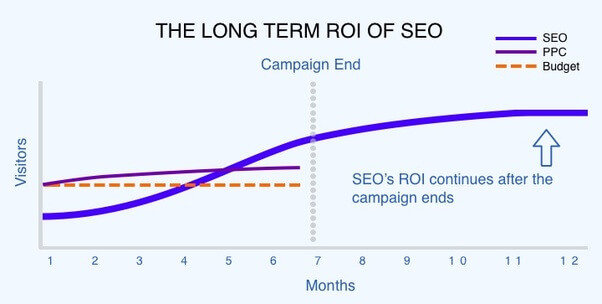
The results in the first months of using SEO might be awfully small.
But after the 6th month, things start to soar.
You’d have to wait until the big leads come pouring, and you’ll need SEO for that.
3. Organic Search Is Often Times the Primary Source of Traffic
Organic search is accountable for a huge part of a website traffic source.
Lots of studies strengthen the value of organic search and its importance.
According to BrightEdge, 51% of all website traffic comes from organic search and only 10% from paid search, 5% for social, and 34% of all other sources.
Search visibility is a great asset and Google owns a significantly larger piece of the search market than competitors such as Yahoo, Bing, Baidu, Yandex, DuckDuckGo, and others more.
We all know the importance of a trusted website; a website that everybody likes is always liked by Google.
Quality and constant website optimization will keep the website as a trusted source by Google and be qualified as a good ranking position on the first page of the search engine results.
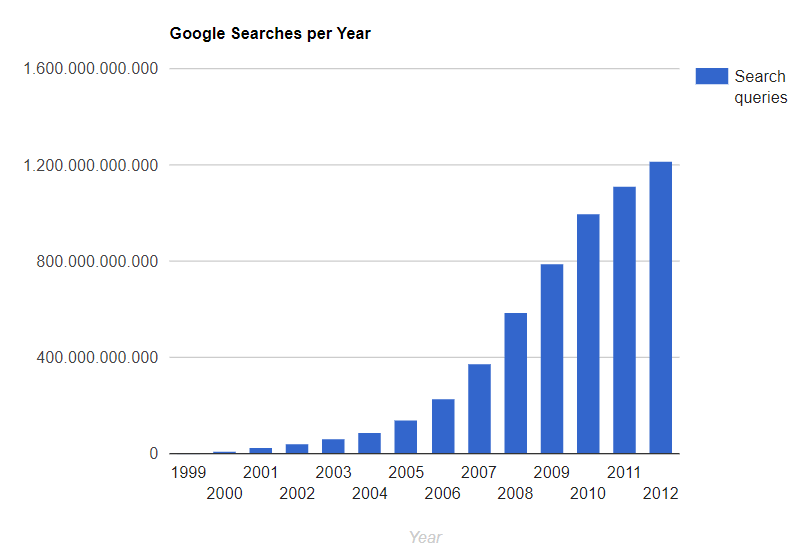
There are over 40,000 search queries every second on average on Google, which means 3.5 billion searches per day.
4. SEO Can Be Cheaper Than Other Paid Search Strategies
It can be cheap if we take into consideration a 6-month plan.
For SEO you need to invest a lot more money in the first phase, compared to other paid advertising methods where you have to pay from month to month if you want to keep receiving traffic on your website.
Paid search marketing, compared to search engine optimization, has a shorter time for returning conversion, but your business should invest to see results.
As long as you keep paying for results, you’ll get them, which in the long term is not so equitable as SEO.
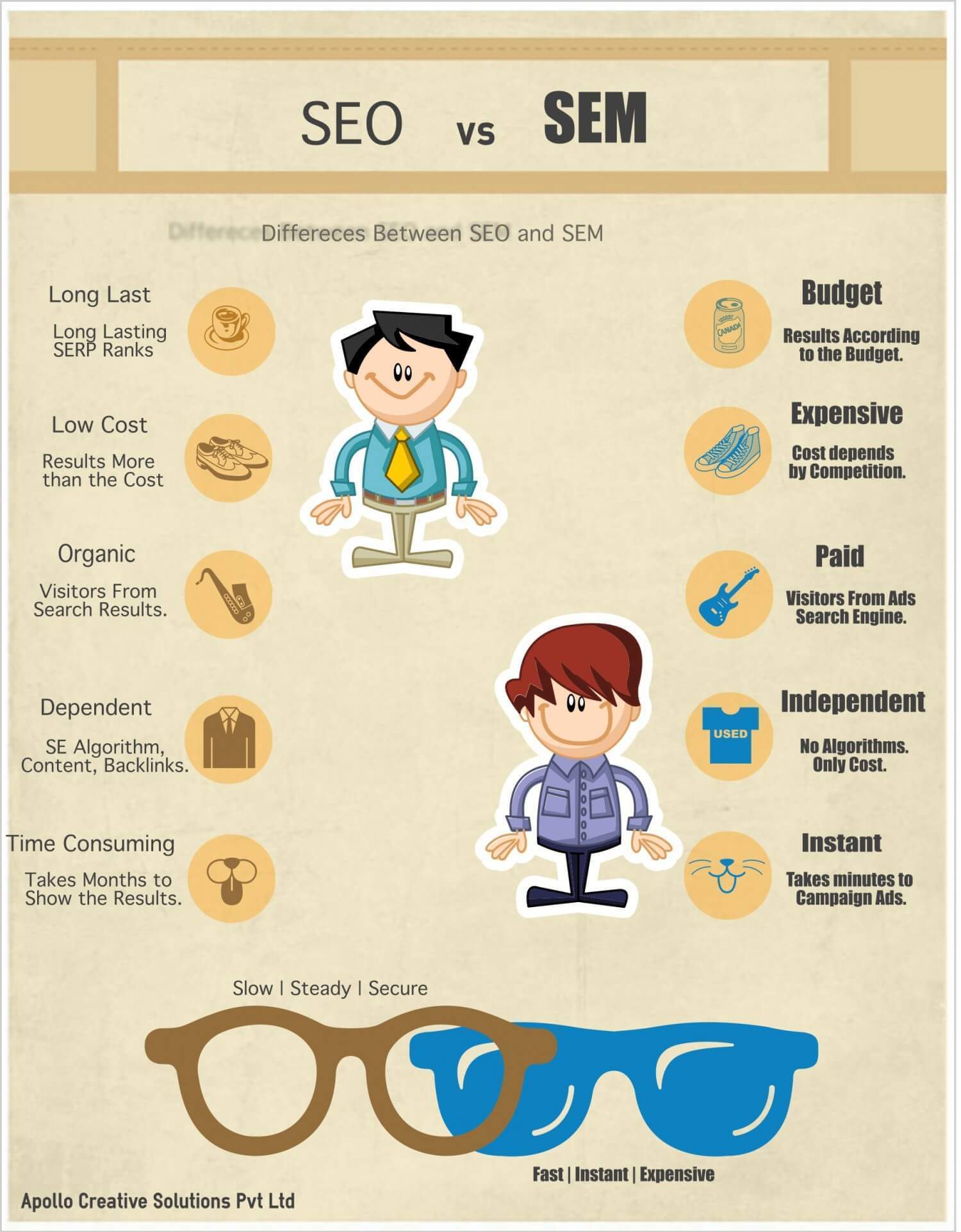
SEO converts more efficiently, SEM has more speed.
The seach engine marketing includes every form of paid advertising for your business.
Lots of people don’t invest in search engine optimization because it is expensive at first and desire to look for cheaper alternatives that unfortunately don’t have continuity and stability.
For every 1 click on a paid search result, the organic results generate 8.5 clicks. – Exquisite
SEO has leverage on improving search engine visibility at a cheaper cost than SEM.
The first one is a true investment in your business’s future and not a marketing cost.
Good SEO implementation is a vast wellspring that will bring water for years to come.
5. SEO Is Quantifiable
SEO will provide lots of analytics data for your website.
The only struggle you’ll encounter is pulling the data yourself and making decisions for improving your results.
It might be a little tricky to understand the data and you’ll have to chew on it more before taking any actions.
Any good SEO practitioner will start by finding the rotten data from the pile, which shouldn’t be a big challenge.
There are tools that can help you keep track of your website’s performance.
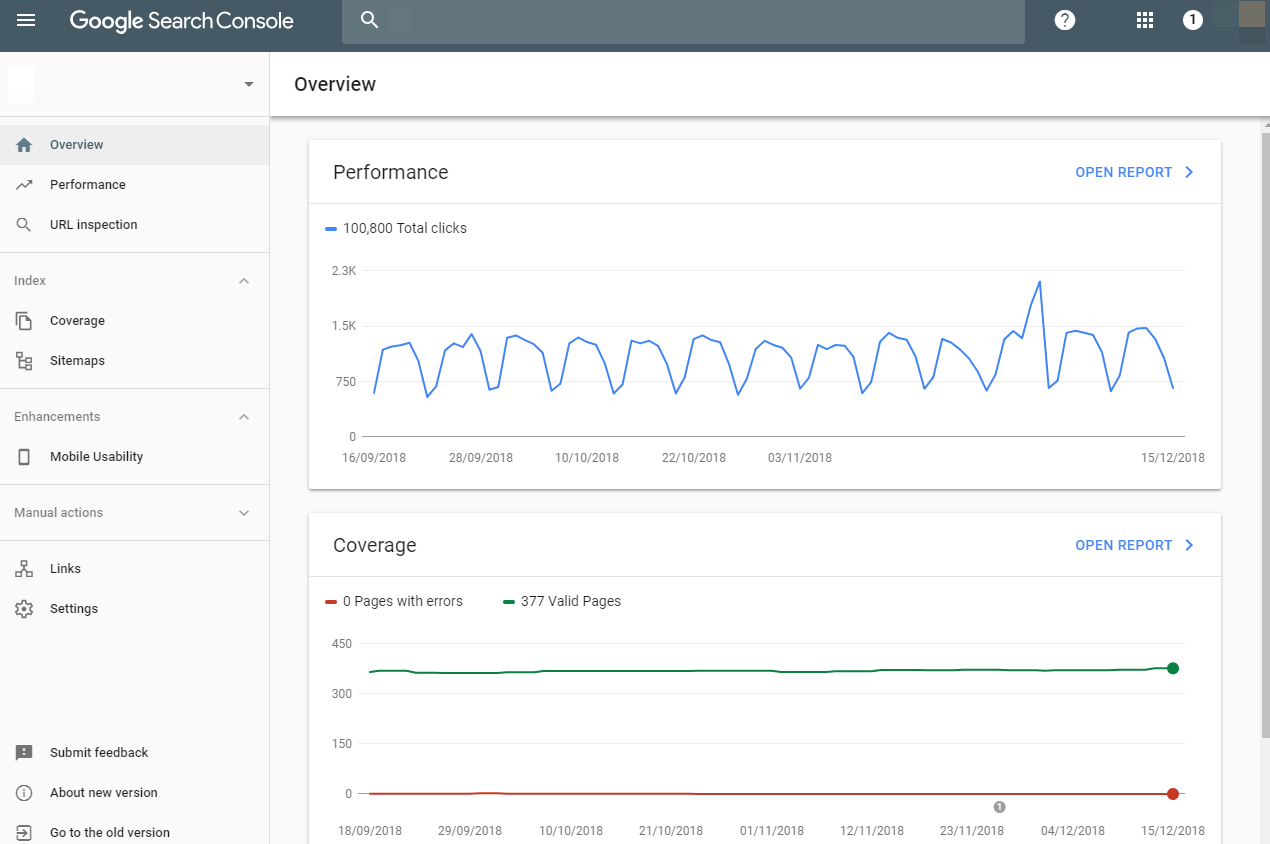
Google Search Console provides data regarding pages that have the best performance, mobile issues regarding your content on-site, indexability.
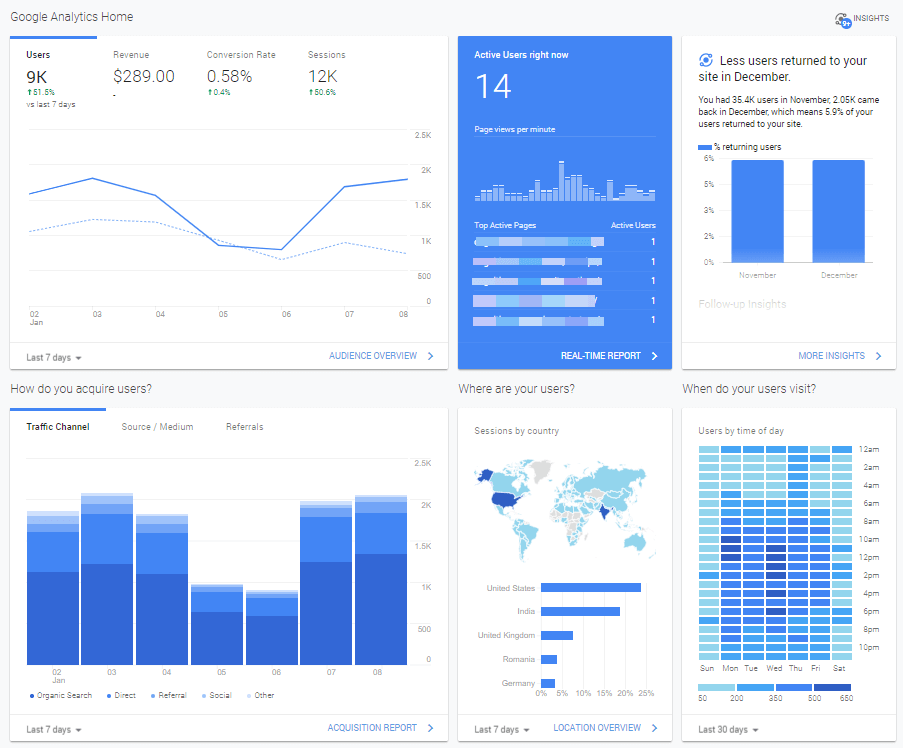
Google Analytics gives all sorts of data regarding your website and third-party apps if connected.
You can see information about:
- your audience: what they like, what they read, and so on;
- traffic sources & other channels of collecting users: different websites, paid ads, paid search, social and more;
- viewed content and behavioral actions on site: most clicked pages, particular events.
On top of these two tools, you can opt-in for SEO tools, that show lots of other features such as authority pages, competition ranking, linking situations, on-site errors, duplicate content, slow page speed, content marketing gaps, lack of mobile friendliness and so much more.
Mobile traffic has experienced high growth in the last few years. e traffic worldwide.
You shouldn’t forget about these elements if you want to grow your business.
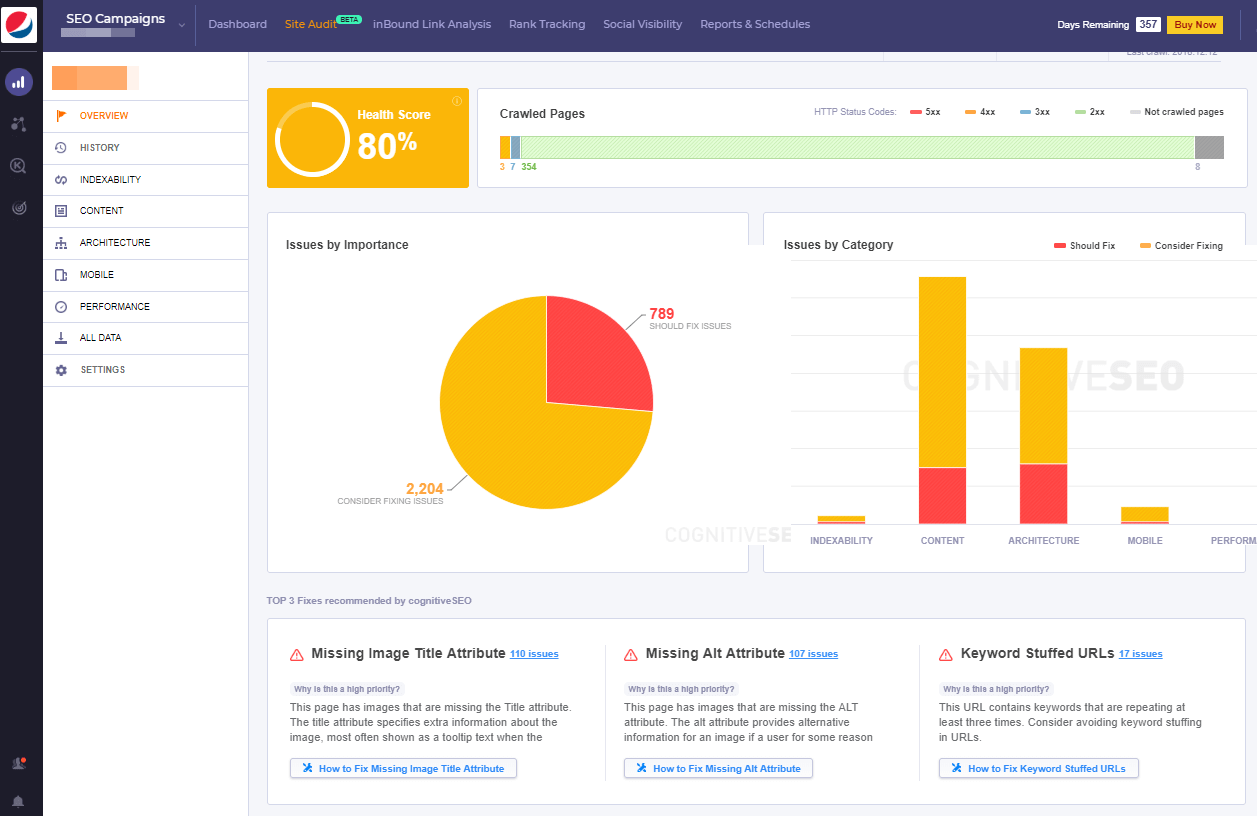
A proper way to start would be to make a site audit, then look at the traffic that comes your way and check those pages to see if you need to improve them or redirect the link if the content is obsolete.
Next on the agenda would be backlinks evaluation and competitive analysis.
So start with on-site technicalities, then move to SEO off-site elements.
6. SEO Offers Credibility and Trust to Your Audience
2019 for sure means trust and credibility more than ever, with the latest migration to HTTPS.
That means the goal of SEO should be to build trust and credibility to Google, to the user.
User experience and SEO together mean business success.
In the old days of SEO, it was simpler to rank by taking all sorts of shortcuts.
Now, the internet user plays one of the most important roles.
You need to know your target audiences very well and to fuel their appeal for your brand to build authority.
That way you’ll have the opportunity to quantify your marketing efforts.
Everybody wants traffic, trust, and credibility, but few people really know that UX is involved in this process.
If you gain trust and credibility, your website will earn authority, but authority doesn’t come easy.
And for that, you need to offer valuable information, have a clean and easy-to-use website.
It takes time, patience, effort to make your audience trust your brand and the content you provide.
Every business growth needs UX in its lead generation strategy.
UX is less about looks and more about usability.
Website design such as easy navigation and intuitive site structure is a starting point for creating user-friendly websites.
It is very important to have relevant content and description for each section of your menu and every page that you have.
Speak the language of the user and don’t try to change the wheel on the natural funnel process otherwise, the user will feel disoriented.
Sherry Bonelli, who specialized in SEO with 19 years of digital marketing experience, explains the connection between SEO and UX, and why they need to work together.
SEO and UX go hand-in-hand in creating a successful website experience for both your human visitors and the search engines.

Effective SEO relies on three pillars: authority, relevance, and trust.
Google has something called the Trust Factor, which is a combination of lots of factors that calculate how trustful a site is.
The more trustful a site is, the more likely articles will be ranked higher on Google.
A website is considered to be less trustworthy because it has harmful and/or has low-quality content.
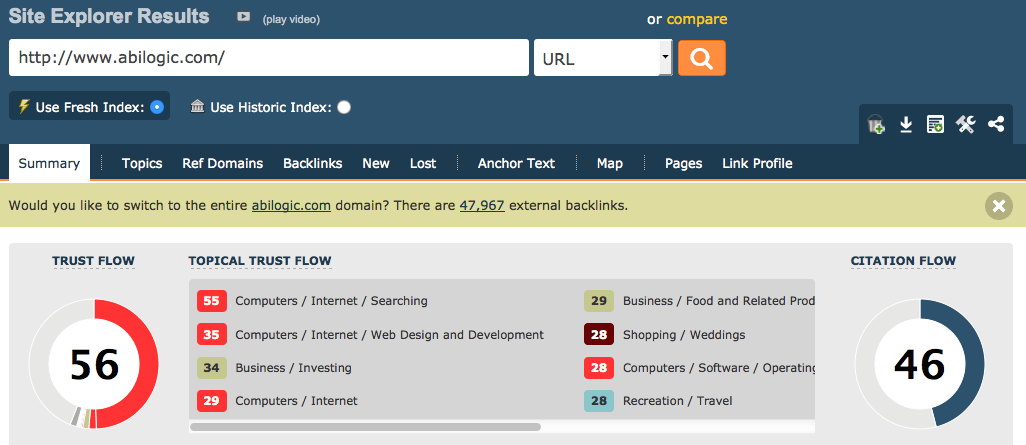
If you want to see how trusted your website is, there are tools that can tell you on a scale from 0 to 100.
For example, Majestic Trust Flow is such a metric that is weighted by the number of clicks from a seed set of trusted sites to a given URL, or Domain.
7. Voice Search Keeps Growing and You Need Higher Visibility in Search
Voice search has increased tremendously in the last few years. Even studies showed that.
Mary Meeker’s annual Internet Trends report shows that voice search queries are now 35 times larger than they were in 2008 (when voice search was launched).
ComScore says 50 percent of all searches will be voice searches.
There’s no doubt that voice search has had accelerated growth and will become even bigger in 2019.
Lots of brands developed voice search technologies for assistant apps that listen to the user and give audio results based on their queries.
SoundHound, an audio and speech recognition company has found 4 categories of voice search queries:
- Personal assistant: that includes to-do lists, scheduled meetings and all sorts of events, texting, calling on the phone plus other day-to-day activities.
- Fun and entertainment: buying and listening to music, searching movies, TV series, and similar actions.
- General information: web search, news, publications, and similar media.
- Local information: searching for restaurants, hotels, and places nearby, traffic jams.
You need to make your audience more aware of your brand and make them hear about you more often.
It will help you by raising your brand awareness and get further benefits such as authority, traffic, revenue.
When implementing SEO is very important to know your users, to connect with them, and make them recognize you by the particularity that you have.
This way you’ll be memorable and breed brand recall, so you get more customers to stick with your brand.
You need to make them always look and search for you.
8. You Can Push Your Audience Down the Funnel With the Right Type of Content
SEO starts right at TOFU, which is not food.
It means the top of the funnel.
You might make a correlation with food, and think of it as an appetizer.
Because SEO is in the first league, where your audience is.
You have to attract a large portion of users right from the start, and then push them down the funnel through the middle of the funnel (MOFU) and bottom of the funnel (BOFU) by using other techniques.
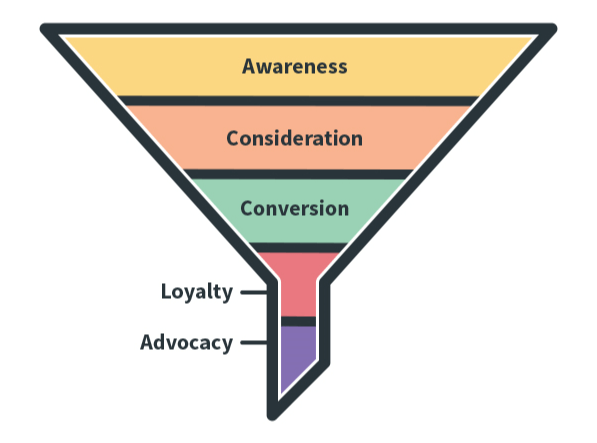
Source: www.aweber.com
In the first phase of the buying cycle, the user lands on our page and you have to maintain them thereby offering valuable content and useful information.
So the process of search optimization starts with keyword research, understanding your audience, learning their language.
There are other technical SEO elements that should be taken into consideration, such as a high loading speed, high quality, and lossless images, mobile-friendly websites, un-broken pages, and so on.
9. You Can Get More Customers and More Traffic with Local SEO
If we’re talking about the reasons why you need to invest in SEO, then local optimization should be on the list.
Due to the increase of mobile searches and voice searches, local SEO has started to dominate the SEO trends.
Now, it became mandatory for every online business.
Searching for any business location on maps helps the user have more trust and knowledge of your business.
It can get to you faster and receive recognition through reviews.
Google My Business is a great way to start your local search engine optimization process.
There you can add NAP (name, address, phone) information and you can connect your website, link social account, add pictures, and a lot more.
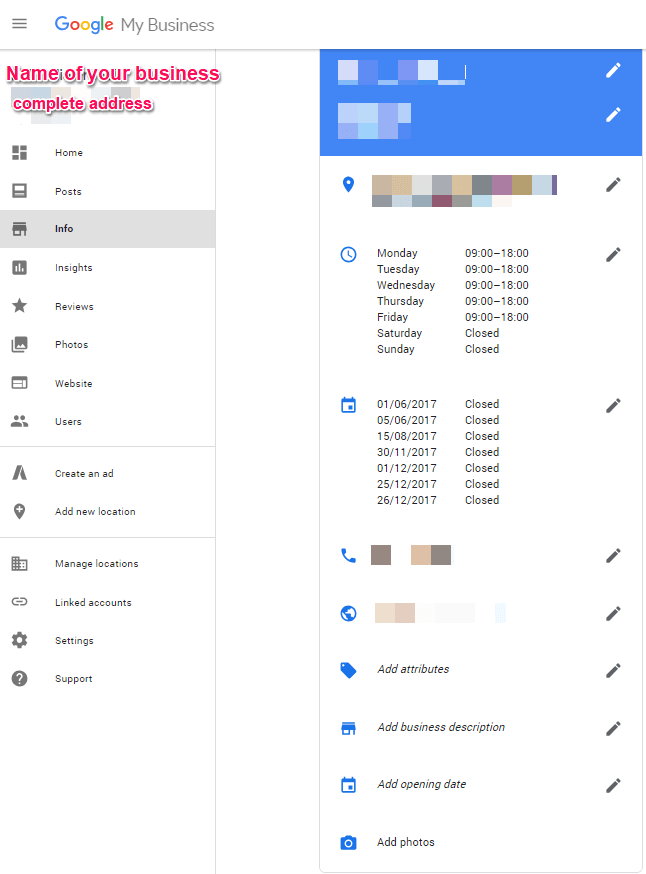
For example, you have a restaurant near the stadium in Madrid and one of your customers is visiting the stadium and afterward decides to eat.
Then they look for a place that they like nearby them and end up in your restaurant.

You can use local optimization for your blog and search for local keywords to include in your articles and also to boost your rankings by targeting top positions in Google.
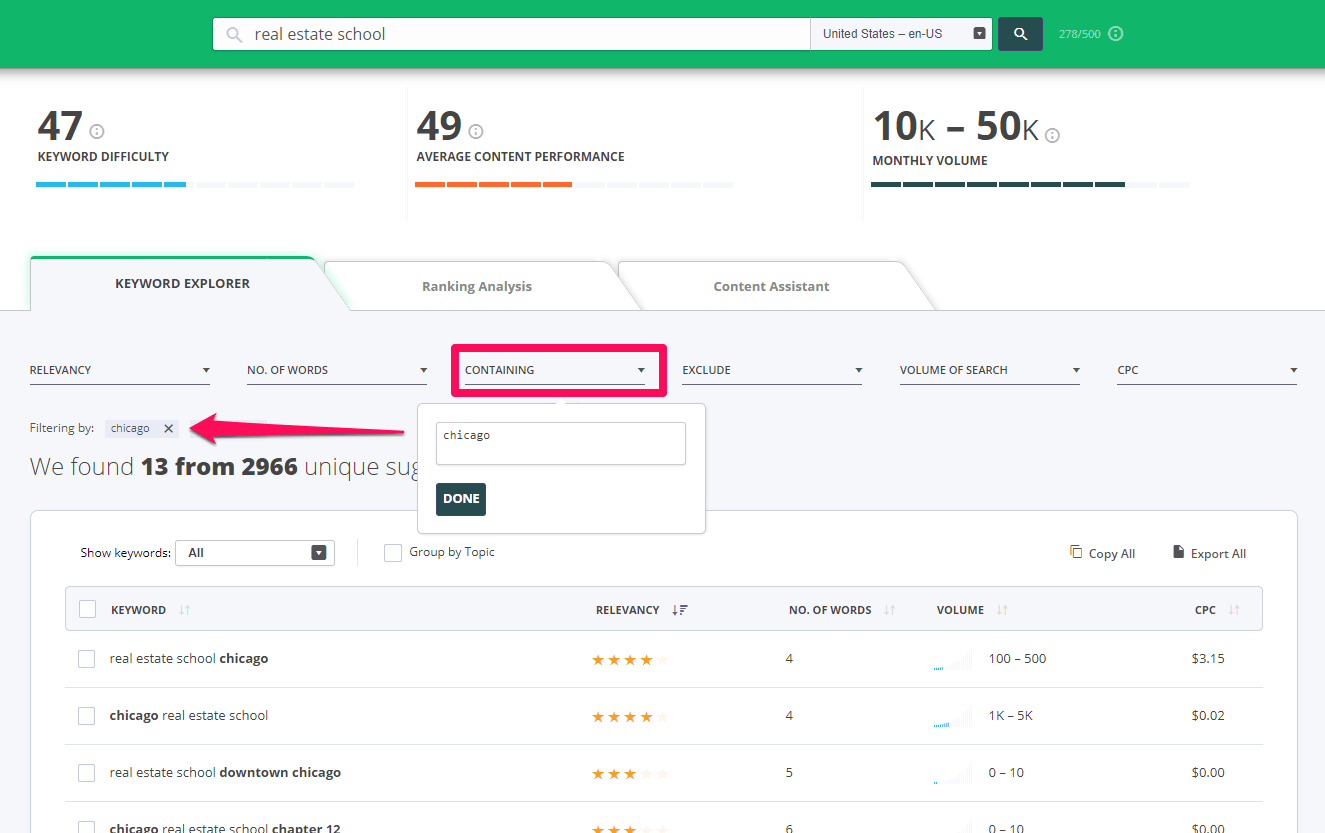
If you are targeting a specific location, then use the Keyword Tool and Content Assistant, which is very simple and easy.
For example, if you are targeting a real estate school and your business location is Chicago there are two situations:
- If you want to target only the people from Chicago or who are in Chicago, my recommendation would be to choose the “real estate school” and set the local tracking.
- In case you want to target other cities besides Chicago, you should choose the option to track “real estate school in Chicago” so you’ll see all the searches made from other cities.
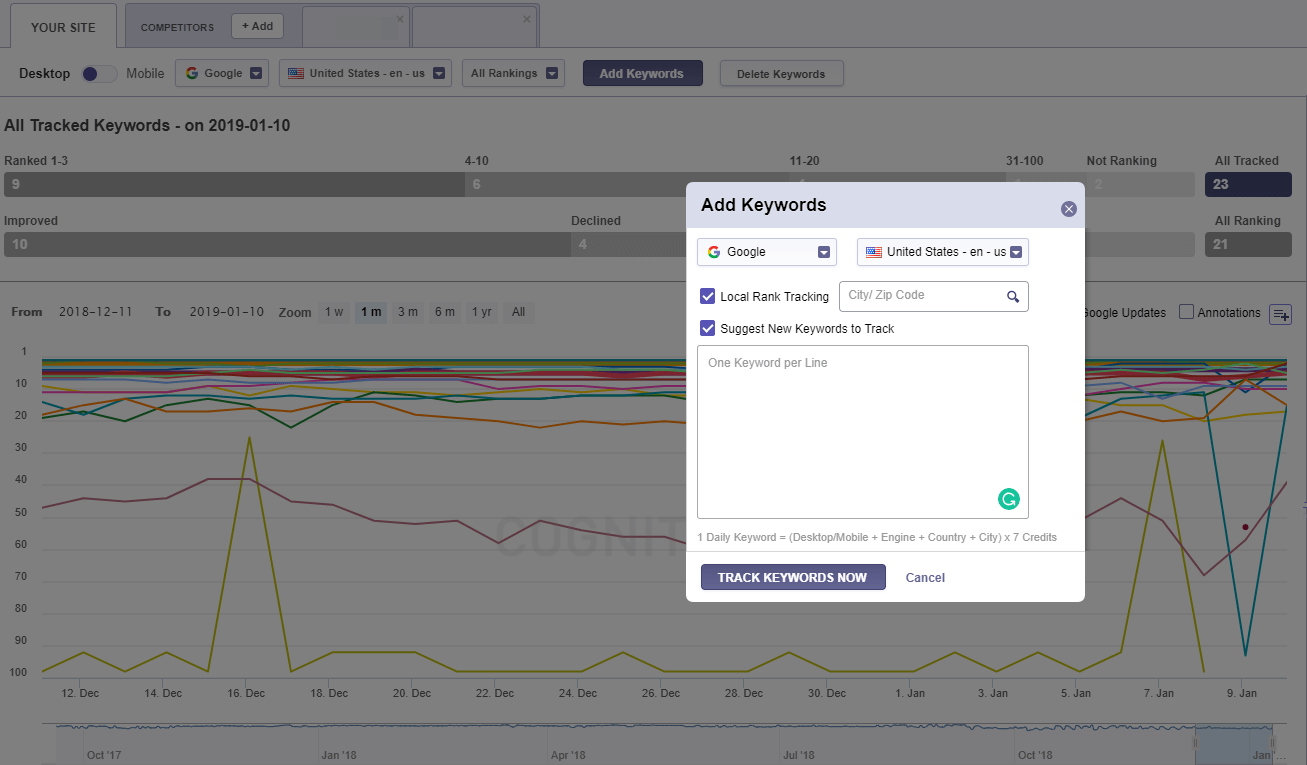
Rank Tracking is a good tool for local searches and tracking. You can add the keywords and see the evolution:
10. You Can Get New Opportunities for Your Business
High-quality SEO can bring you lots of possibilities for building a better business and a bigger brand.
Not only will you improve your business, but you’ll also make it sparkle.
When people understand your brand due to a quality search engine optimization process then you reached a new phase in your business growth.
If you have a well-known brand, people will search for you, share your content, ask for guest-post and contact you for collaborations.
It can become a love mark, a concept that is used when brand loyalty goes beyond reason.
And to create a love mark you need great stories that trigger sensorial effects which go beyond the monitor.
It is also important to demonstrate commitment and empathy to the audience.
Conclusion
SEO is an important part of any inbound marketing plan because it helps people find (then share) your content.
Businesses should invest in SEO to get the desired results.
Implementing quality SEO has lots of benefits for your business, no matter how big or small it is.
It will always be beneficial to make the most of your SEO and increase the opportunities to grow.
Comparing to other paid search tactics, SEO has the guarantee of a long-term relationship.
You’ll invest, and get the results for a more extended period.
You don’t have to pump money to keep it going.
If done correctly, it will go on by itself.
The post Here’s Why Your Business Needs SEO in 2019. 10 Reasons to Invest in SEO appeared first on SEO Blog | cognitiveSEO Blog on SEO Tactics & Strategies.
Source: cognitiveseo.com

Does Google PageRank Still Matter Today? A Retrospective View in the PageRank History
It was a time when everybody was looking and following various strategies to increase the PageRank score for their websites. PageRank was developed as a way to measure the importance of a website in order to rank it. Google uses the algorithm by counting the number of links and checking their quality. Everybody check PageRank (PR) for their website by using the toolbar and compare their website to others if wanted.

While this worked for lots of years, Google removed the PageRank toolbar in 2013, when things started to change, mainly because of the high amount of link spamming.
Today we’ll talk about all these changes that surround the Page Rank topic and the link-building community, by finding out if it’s still alive or not.
The question that stands on everybody’s mind is: is PageRank really gone? Matt Cutts gave an accurate answer in 2013, which can be as valuable today as it was back then regarding the need for PageRank.
He said that they will continue to support it until people will continue using it. My guess is that they took it off from the public sight view because it continued to do more harm than good, but they didn’t really stop using it.
They wanted to stop spammers that used PageRank as a way to make illegal money and use artificially inflated links to get high PR.
Let’s dive in and find out what is the official statement and what do experts think about this algorithm update.
1. The Renewed Google PageRank Patent Used as a Ranking Algorithm
After PageRank was so fashionable, then left alone to disappear into the ‘nothingness’ of the Internet, it was brought back into the sight of the public eye. So, what’s changed? What does this mean for you?
As a Google representative says, this update does not change anything for webmasters or SEOs in how their sites show up in Google search.
In multiple ways and times, representatives from Google explained that they will continue to use PageRank internally within its ranking algorithm. More than that, Google updated the PageRank algorithm patent.
Confirmed! “Having spoken with @methode it’s clear, #Google is still using the #pagerank algorithm” –@Dixon_Jones laying down the #Backlinks law in our webinar here: https://t.co/Hm8beOyQdC pic.twitter.com/y4WbHNZvEF
— DeepCrawl (@DeepCrawl) November 22, 2017
More than that, Google updated the new patent regarding the PageRank. Yes, PageRank is still used in our algorithms, among a number of other signals,” a Google Spokesperson confirmed.
Bill Slawski, Google Patent guru, debated the topic in lots of his posts and started a Twitter thread on this after he wrote on his blog about the new Google PageRank Patent update
Do You Believe that Google is still using PageRank now that the original patent (and Google’s exclusive license to use it has expired?
— Bill Slawski ⚓ (@bill_slawski) May 8, 2018
A few weeks ago Google updated the PageRank patent after they’ve shut down the toolbar, to stop people from focusing on the numbers. Before starting to freak out, which should not be the case, let’s see what was updated in Google’s algorithm.
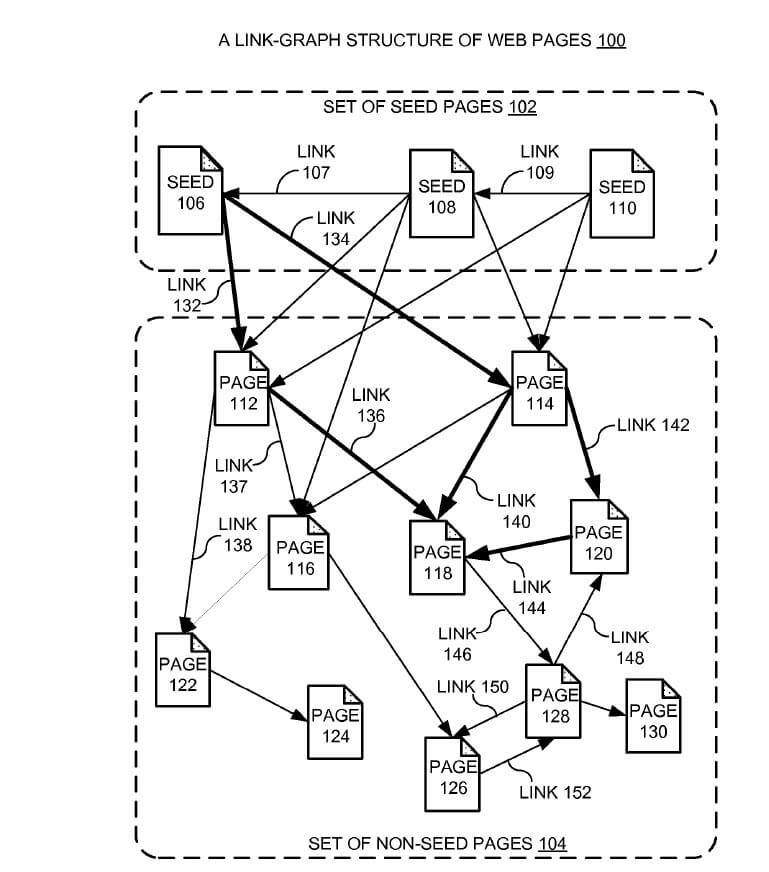
One embodiment of the present invention provides a system that ranks pages on the web based on distances between the pages, wherein the pages are interconnected with links to form a link graph. More specifically, a set of high-quality seed pages are chosen as references for ranking the pages in the link graph, and shortest distances from the set of seed pages to each given page in the link graph are computed.
Google patentProducing a ranking for pages using distances in a web-link graph
Moreover, Google explains how the distances of pages attached to the links determine the ranking scores associated with those specific pages.
Each of the shortest distances is obtained by summing lengths of a set of links which follows the shortest path from a seed page to a given page, wherein the length of a given link is assigned to the link based on properties of the link and properties of the page attached to the link. The computed shortest distances are then used to determine the ranking scores of the associated pages.
Google patentProducing a ranking for pages using distances in a web-link graph
The link graph explained in the patent update can be viewed in the image below:
I know … it looks like the one from the Labyrinth of Crete, the myth of the Minotaur. You’d better hear Bill Slawski talk on the patents.
Google’s decision to stop people from accessing the PageRank score was very inspired. They continue saying that quality content and natural links are the best choices and that decisions must have been taken sooner.
People shouldn’t focus on the numbers. It is not something you should follow and can be a hard thing to achieve only by looking and trying absurdly to get links from pages with a high PR.
The PageRank Patent update helps them qualify pages based on lots of other rank factors.
2. The Role Played by Pagerank in Search Engines Results
Google PageRank was one of the first algorithms used for “sorting” the search results. Google confirmed it:
The heart of our software is PageRank™, a system for ranking web pages developed by our founders Larry Page and Sergey Brin at Stanford University. And while we have dozens of engineers working to improve every aspect of Google on a daily basis, PageRank continues to play a central role in many of our web search tools.
PR wasn’t the sole factor in the way web pages were ranked, but it has high importance in the search engine optimization process. Google used lots of other sophisticated text-matching techniques to show relevant web pages for each search query.
The nice part was that everyone could see the PageRank for their website and for their competitors, as well, by using the Google toolbar PageRank.
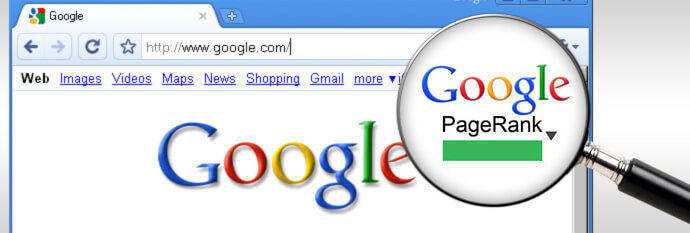
PR enjoyed some years of glory when it was something that everyone was using and following to get high scores. Which eventually will lead to page boost to get featured in the first results of Google search.
Inevitable, every good thing at some point is used for bad purposes. The same thing happened with Google PR. Spammers artificially inflated the backlink profile just for the sake of having lots of links on domains with high PR.
The problems appeared when some people focused on getting a large number of high PR pages with little effort without realizing it is not enough. They avoided content and lots of other ranking factors which had great importance as well.
Spammers started selling and promising PageRank boost. The blame fell on the PageRank (and on the so-called experts) for lots of things: spammy emails asking for links, trashy comments with links, forums filled with shady links.
The PR has begun to decline when Google launched Chrome with the possibility to search from the address bar built-in (see the picture below). You could search directly in the address bar and even if you wanted to get the Google toolbar, which was irrelevant at this point, you couldn’t because Google never released a version for Chrome.

Besides the selling and buying business for links with high PR, it seems that multiples websites experienced PageRank loss because of the switch from HTTP to HTTPS. Some site owners refer to it, and since there was nothing to restore it, they basically gave up on PR.
3. Google Shut down the Pagerank Toolbar. Why & How This Impacted SEO
After the launch of Chrome, when Google began to lose the attention on PageRank, other browser dropped the support for it. Firefox in 2011, Google removed it in 2016, and they have been officially closed it down from Internet Explorer, too.
@szymonslowik @methode @rustybrick Yes, it’s true. https://t.co/5iohiJ6wjQ has some comments from us. Do you use the toolbar?
— John ☆.o(≧▽≦)o.☆ (@JohnMu) March 9, 2016
Some wanted to keep using it, while others were expecting Google to do this sooner especially after John Mueller’s announcement that they stopped updating the PageRank scores.
He was asked in one Google Hangout why there are so many PR6 sites that are spammy and are getting away with it, even if he reported the problem various times in over one year.
At 19:00 you can check the whole conversation and John Mueller’s response:
There are a few things where we do take action that you might not see directly. Toolbar PageRank is something that we have not updated for about a year now, and we’re probably not going to be updating it going forward.
John MuellerWebmaster Trends Analyst at Google

That being said, he gave another reason why the Google PR toolbar died, slowly but inevitably. Even if Google removed the toolbar scores from the public view, the marks of those who changed the web will remain.
Unfortunately, black hat SEO hurt you, the internet, and everyone else.
Retiring the PageRank display from Toolbar helps avoid confusing users and webmasters about the significance of the metric.
The SEM Post had a talk with a Google spokesperson regarding their decision to remove PageRank from Google Toolbar and they confirmed it is was related to the final user:
As the Internet and our understanding of the Internet have grown in complexity, the Toolbar PageRank score has become less useful to users as a single isolated metric. Retiring the PageRank display from Toolbar helps to avoid confusing users and webmasters about the significance of the metric.
You shouldn’t believe everything you are told in a blink of an eye. It wouldn’t hurt you to take things with a grain of salt.
Conclusion
Long story short, the long debate regarding the Google PageRank patent should be taken into consideration, but people shouldn’t freak out about it. Search engine optimization will work as it did until now and rankings won’t be shaken up by this update.
Google PageRank update isn’t something scary. It was an algorithm update; something that needed to be done. The PageRank wasn’t updated for a long time.
If you did your job right, then nothing is going to change for you. What everybody should remember is to focus on quality links, since they always worked and always will be in style.
The post Does Google PageRank Still Matter in 2018? A Retrospective View in the PageRank History appeared first on SEO Blog | cognitiveSEO Blog on SEO Tactics & Strategies.
Source: cognitiveseo.com