
Tag Archives for " Reputation Management "

4 Reputation Management Realities That All Brands Now Face
What do Beyoncé, Kate Middleton, and Harrison Ford have in common? Other than having devoted fan bases, they’re celebrities who have a reputation for giving very few interviews. They control their messaging tightly.
While Beyoncé and Kate Middleton choose to go directly to their fan bases with highly choreographed messaging through their social media channels, Harrison Ford is one of only a very few celebrities who aren’t on social media at all.
However, whether or not they choose to connect with their fans online, none of these celebrities can stop the millions of rabid fans who run fan accounts, who post to Reddit and Instagram, and who analyze their every move through YouTube videos and blog posts.
Why does this matter for you and your business?
Just like celebrities, the rise of fan culture on the internet has fueled both a huge boom in brands’ abilities to control their own reputations, as well as the decentralization of where reputation management lies.


We are now able to build communities of like-minded customers and brand fans. With that comes the responsibility of monitoring a growing array of websites and spaces where brands rate products, review services, comment, and ask for help.
4 Key Considerations of Reputation Management
Ratings and Reviews Are No Longer a Choice
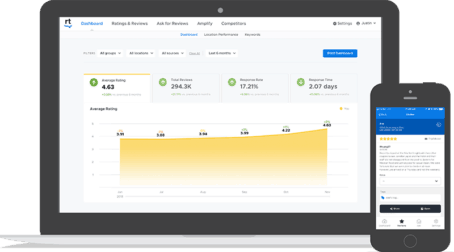
“The rating trusted most by consumers is 4 stars followed by 4.5 and 5 stars,” according to review software company ReviewTrackers.
Many years ago, I worked for a well-known arts & crafts brand. At that time, the company I worked for gave the ability to customers to rate and review patterns (the directions consumers would use to create their craft projects), but not the products themselves.
The thinking was that we didn’t want the companies’ own products to have negative reviews. And yet, study after study shows that a few negative reviews actually bolster trust in reviews overall. Furthermore, customers tend to trust relatively positive reviews most (see above quote from ReviewTrackers).
What brands must do is not only encourage reviews with open arms but encourage customers to look at positive reviews as social proof. Today, that same company has embraced product reviews both on their website and in their digital marketing efforts.
And this goes beyond B2C brands. Brands as wide-ranging as US Bank, the fifth-largest commercial bank in the US whose reviews are mostly on Google My Business, to DeSantis Breindel, a New York City-based branding consultancy whose reviews are on platforms like Clutch (both brands are clients of Convince & Convert) are not only monitoring and responding to reviews but also using reviews to feed their marketing efforts (see below).

It’s Not Just What They Say, It’s What You Do
“39 percent of social media complainers who expect a reply want it to come within sixty minutes, yet the average response time from businesses is five hours,” found research by Jay Baer and Edison Research.
In 2016, C&C founder Jay Baer wrote, “Haters are not your problem….Ignoring them is.” That reality is more true now than ever before.
Customers expect help with their issues, and when you don’t respond to negative reviews, your prospective customers will hold you accountable for that inaction.

To positively impact your reputation, treat reviews as an opportunity for customer service and excellent customer experience. Respond to your reviews; add context; thank brand fans and address fan haters.
Social Listening Is More Complex Than Ever
“Word of mouth is directly responsible for 19% of all purchases, and influences as much as 90%,” says the book Talk Triggers by Jay Baer and senior strategist Daniel Lemin.
Outside of owned review channels, brands must monitor reviews and conversations on channels from Facebook and Reddit to the bumper crop of industry-specific review sites such as Zocdoc and Healthgrades.

Using monitoring tools like Meltwater and Sprinklr helps brands to stay on top of what’s being said. Beyond sentiment and topics, brands must make sure that they are leveraging the built-in AI to analyze conversations for trends to keep on top of what their proactive messaging needs to be.
Not sure how to leverage these social listening tools to uncover this data? Consulting firms like Premium Blend can help to build strong queries and implement effective listening processes.
Again, it’s not just knowing what people are saying, but also using this data to shape what your brand should be talking about to be relevant to your customer base.
Showcase Your Customers’ Words and Stories
Reputation management is the reactive part of our work, but we also have the opportunity for reputation marketing. Leverage the stories that your customers are telling about you to market your products/services to prospective customers.
Whether you’re aggregating real customer social media posts like Korean beauty brand Hanacure does on their @hanacureeffect Instagram account or you’re using a tool like SocialProve to pop-up notifications to website visitors that indicates when others have purchased on your website, you’re engaging in reputation marketing.

What are some ways that your brand can leverage customer stories as social proof?
- Proactively turn user-generated content (UGC) into social media campaigns
- Leverage customer reviews and quotes on landing pages
- Showcase real customer feedback in advertising
- Address questions you’re getting from Quora, Reddit, and/or your own communities as content
- Create animated videos featuring customer reviews
- Integrate real questions into your chatbot scripts or FAQs
- Highlight your review scores using in your top-navigation and/or footer
3 Questions to Ask Yourself
- Your customers are already out there talking about your brand—are you encouraging them to do so in the places that help you to strengthen your reputation?
- Are you showcasing the level of customer experience that your prospects can expect from your team?
- Are you reassuring prospects that others like them trust you?
That’s your opportunity with reputation management. Don’t waste it.
The post 4 Reputation Management Realities That All Brands Now Face appeared first on Content Marketing Consulting and Social Media Strategy.
Source: convinceandconvert.com

Best Online Reputation Management
Building a solid online reputation can take years. A few negative reviews (even fake ones) can threaten your good name in heartbeat. What do you do?
If you’re already managing a lot, your best bet is outsourcing it to an ORM, or an online reputation manager.
There’s a lot to know. Handling negative reviews on Yelp, Google, and Glassdoor is a lot of work. Each platform has different rules and procedures. Responding to a public relations crisis requires yet another skill set.
It can be far more cost-effective to have a professional resolve the issue quickly.

Disclosure: This content is reader-supported, which means if you click on some of our links that we may earn a commission.
Best Online Reputation Management Companies
To help you put your best foot forward, I’ve compiled a list of the very best online reputation management companies. Along with in-depth reviews of each option, I’ve included a short buyer’s guide to help you approach your decision.
#1 – Podium Review — The Best for Instantly Generating Positive Reviews
Reputation management can be proactive or reactive. A lot of people think of this service as cleaning up bad reviews or navigating bad press. But a proactive approach focuses on generating high-quality customer reviews to keep your reputation sterling.
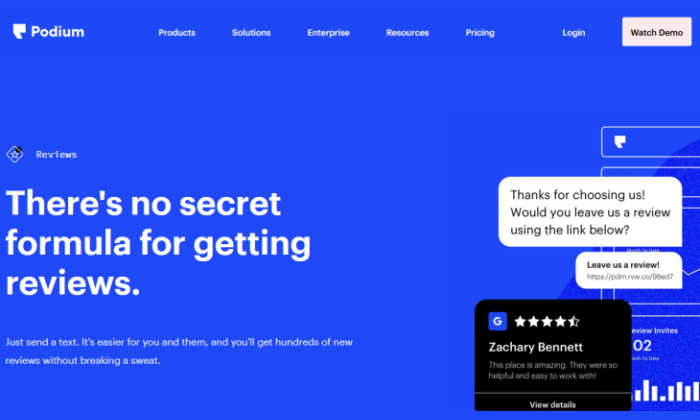
Podium is the best tool for doing that because it is foremost a messaging platform that gets happy customers to leave Google and Facebook reviews through texting.
See, getting five-star feedback every time is a matter of striking while the iron is hot. With Podium, you can capitalize on positive customer interactions instantly, ending the conversation with a simple message and link.
As I said, Podium is foremost a messaging platform. Within it, you manage customer messages across several platforms—like Facebook messages and SMS—in one convenient interface. Podium throws in a free, textable business number for each of its clients.
That’s why the software is so effective at seizing upon opportunities to scoop up good reviews. You can respond to customers across all the major channels, so your team is always prompt to help. Then, they can finish with an invitation to review your company, complete with a short, safe link that will take the customer to any of your review pages.
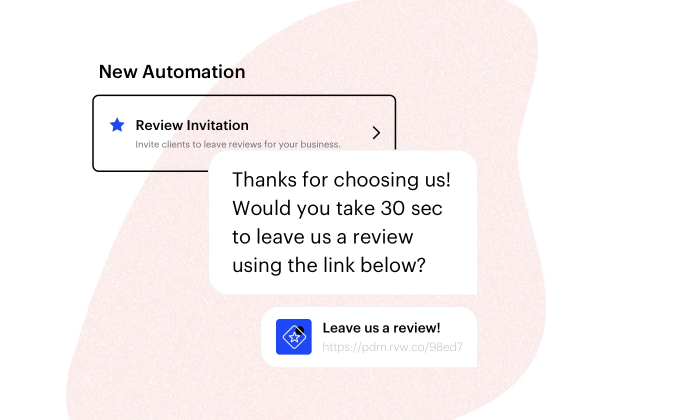
Podium automates this process for you, which is important because your team isn’t always going to have a free minute between customers to send an invitation to review. It also makes it easier on the customer, so they only need to take a few seconds to leave a review and improve your reputation.
So, maybe you’re interacting on Facebook Messenger, but you can point folks to review you on Angi (formerly Angie’s List) or Capterra.
You can also use the software to set up a live chat widget on your websites to add another convenient channel for customer messaging.
Podium’s paid plan allows you to generate and send customer surveys. Identify pain points and get some insights about what’s making your customers happy.
Podium Starter is the way to try this platform out for free. It comes with the following essential features:
ReviewsWebchatUnified messaging dashboardTextable business number
Podium doesn’t have any set paid packages, but you can easily request a quote to get an idea of the cost and full feature set.
Don’t waste any more time chasing down customer reviews. Wield Podium and improve your reputation and overall messaging capabilities today.
#2 – Go Fish Digital Review — The Best for Managing Reviews
I’ve listed Go Fish Digital as the best agency for managing reviews, and while that’s true, Go Fish Digital also wows with the option of full-service reputation management used by the likes of Geico, Ford, and Airbnb.
With Go Fish, you can gain a thorough insight into your customers’ reviews and comments online.
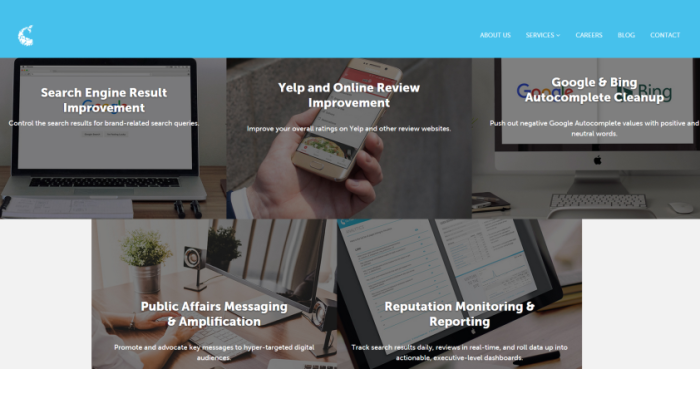
They work closely with huge review sites like Yelp to manage negative reviews by advocating for review removal on your behalf through their agency tools. They also work to get your best Yelp reviews to the top for more visibility.
They’re exhaustive in their brand monitoring abilities and monitor all corners of the internet like Wikipedia and Reddit threads to create a plan of action in your favor.
Go Fish’s review management works by pushing positive content to higher visibility with SEO, adjusting copy in public places where you’re mentioned, cleaning up Google autocomplete, and even promoting positive information about your business wherever your target audience is.
As they create results, they keep you up to date with a relevant score you can see on their dashboard.
To be clear, Go Fish is a reputable ORM that does not post false reviews for you. Still, their Yelp review management service is one of their strong suits.
Some of their best review management features are:
- Managing negative Google reviews
- Negative auto-complete cleanup often generated from those reviews
- A dashboard that keeps you updated on your brand’s daily search results
- Crafting a strategy for your business to encourage the best reviews possible
- Creating and delivering a strong case on your behalf for negative review removal to the Yelp team
For pricing, you’ll have to contact them directly to get a quote.
As with most ORMs, their prices change depending on the size of your business and the specific services you’re looking for.
Get in touch with Go Fish to get an initial quote.
#3 – Reputation Rhino Review — The Best for Individuals and Small businesses
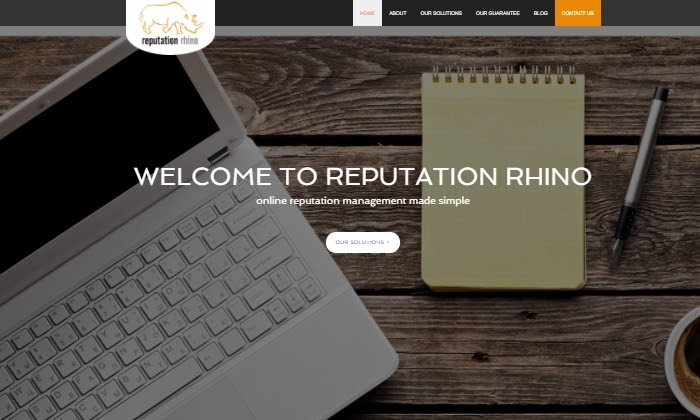
If you’re wondering who exactly needs reputation management, Reputation Rhino’s answer is ‘everyone.’ That’s why it’s the best ORM for solopreneurs and small businesses.
Reputation Rhino is a leading online reputation manager based in New York with clients like Disney, Microsoft, and Nestle. They offer a number of reputation solutions for almost any scenario imaginable, including ones that cater impressively to an individual and their personal brand.
It doesn’t matter if you’re a doctor, university, hotel, or contractor, Reputation Rhino helps you with Glassdoor, Yelp, and YouTube review removals, social media management, and even an SEO strategy to put the best parts of your brand (or yourself) front and center.
Do you have terrible images that need to get removed from Google? They can do that. Do you need to fight against libel and personal defamation? Their team of public relations specialists can do that, too. These are services an individual or small business may not know how to do or not have time to take care of.
Their best ORM services for individuals include:
- A personalized strategy to defend against smear campaigns
- Suppressing negative online search results
- Adding an extra layer of protection to your personal privacy
- Eliminating news articles, forum comments, and negative content
As an individual or SMB, you might be nervous about investing money into an ORM. To help, Reputation Rhino offers a 30-day money-back guarantee that can ease your worries about whether they’ll deliver. If you need a more personal approach to reputation management, Reputation Rhino is happy to work with you individually.
Their pricing starts at $1,000. But you’ll have to contact them for a personalized package.
Get started with Reputation Rhino and request more information.
#4 – Reputation Resolutions Review — The Best for Crisis Management
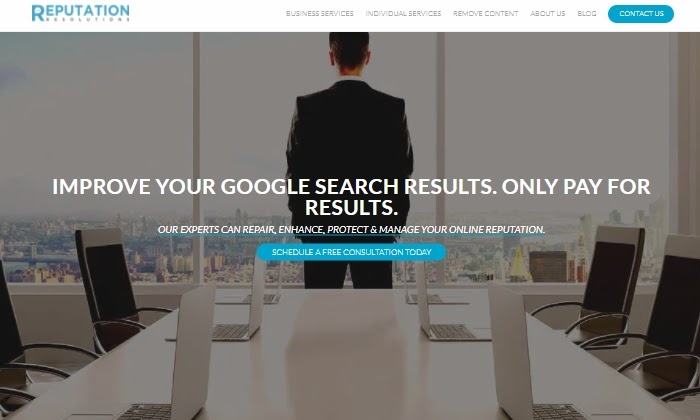
Unlike other ORMs out there, Reputation Resolutions is the go-to agency for crisis management that can start working on your behalf in 24-72 hours.
A combination of their speedy response, a team of attorneys, a wide array of solutions, and a seasoned professional team makes them the best ORM for enterprise-level reputation and crisis management.
Maybe your business is an established corporation, but there’s been a sudden increase of negative reviews, you’re dealing with a handful of loud, angry customers online, or there is negative propaganda about you in the media. Ouch. Reputation Resolutions provide everything you need to turn a crisis around.
Here’s a quick rundown of their top-tier crisis management features:
- Cyber forensic investigation
- News article removal
- Court record removal
- Thorough and ongoing reputation monitoring
- Private information removal
- Unwanted image removal
If you’re a smaller or mid-sized business looking for a management agency to simply take care of negative reviews, Reputation Solutions isn’t the agency for you.
Alternatively, if you’re an established, well-known business in need of comprehensive PR management, attorneys, or copyright infringement services, then look no further than what Reputation Solutions can offer you.
To get a pricing quote, email or call them for a free consultation, and they will learn more about you and tailor their services to your specific needs.
#5 – Big Leap Review — The Best for SEO And Content Management
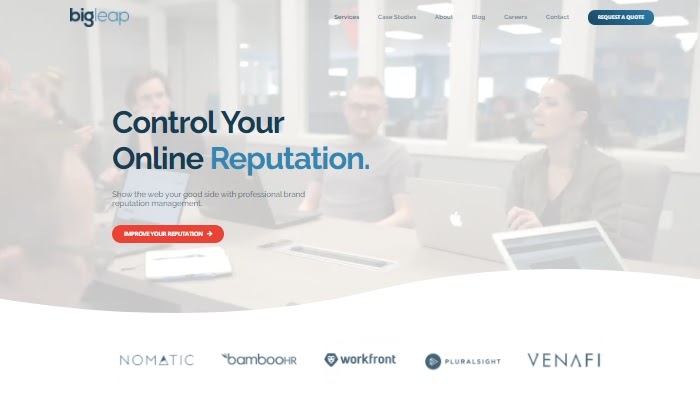
Big Leap’s ORM services are designed around one thing: content management. Their award-winning content marketing strategy centers around burying the negative and growing the positive.
This is fantastic news for you if you’re looking for an ORM that cares deeply about gaining customer trust through a long-term strategy.
If your marketing strategy is mainly through content, you’re not as concerned about a sudden PR crisis, or Yelp reviews are mostly irrelevant to your sales success, then Big Leap’s trust-building approach can help you create results.
They begin by scouring the internet for every mention of your business. They do social media and search audits, along with a competitive analysis, to give them the bigger picture of where your reputation lies.
Then they create a positive content strategy tailored specifically for you through brand-strengthening content and social media campaigns. As they execute their content strategy, Big Leap regularly reports back to you with updated results.
Some of their best ORM content management features include:
- Brand name monitoring
- Content strategy, creation, and promotion
- Site optimization
- Constant workflow updates on content strategy execution
Big Leap doesn’t list their prices publicly, but you can request a quote on their site.
#6 – NetReputation Review — The Best for Improving Reputation with Content Development
Some companies have damage control as their foremost priority with reputation management. Others are starting as unknowns that want to become more recognizable brand names.
In either case, one of the most potent solutions is building out your content and web properties, which is what NetReputation excels at.
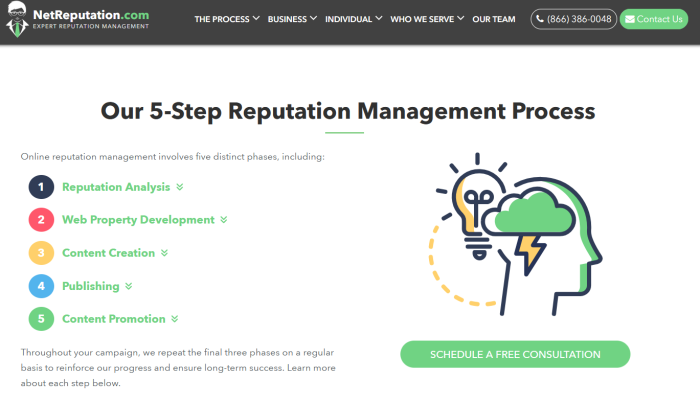
Their five-step process creates an end-to-end strategy for building up your reputation.
Start with NetReputation’s thorough analysis of your content, websites, social media profiles and pages, search results, reviews, and more. Then, let them guide you through creating better web properties and content and promoting them both.
And while that’s a great offering, you may have heard similar promises before. “Content is king” and all. But, NetReputation shows their work along the way, so you can have full confidence you’re not just screaming into the void.
Indeed, you can rest assured that you not only have full visibility into your reputation-improving content campaigns—NetReputation builds it with you and lends their expertise to plan strategy and allocate efforts with Swiss watch precision.
Here are just a few aspects they can integrate into your company’s ORM strategy after their initial analysis:
- Social media profile creation and optimization
- Website and Schema development
- Wikipedia page creation, monitoring, and editing
- Blog posting and scheduling
- Content updates and optimization
- Cross-channel promotion
- Guest/expert posts
- Content removal
- General and local SEO strategy
They’ll keep you in the loop every step of the way. So if you want to deemphasize one effort in favor of another, they’ll listen and work with you to adjust plans and action items.
With content being produced to fit all the aspects listed above and more, you and NetReputation can improve digital sentiment about your brand across the board.
NetReputation goes deep into this process for every client. Get your free consultation today and see for yourself how far they’ll go to make your organization’s online reputation sterling.
#7 – InternetReputation.com Review — The Best for Eradicating Private Information
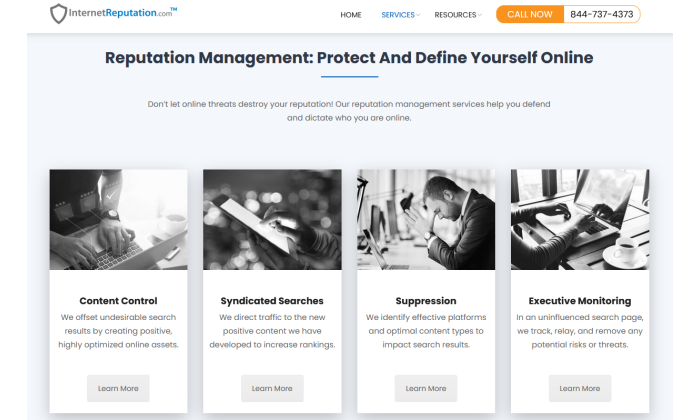
Reputation management for individuals is an emerging use case for reputation management platforms and one that is becoming more useful for a wider swath of people.
Within personal brand management is the need to carefully share enough about you to build your presence and reputation without divulging private information.
InternetReputation.com handles personal reputation management and privacy monitoring with aplomb.
Individuals, from entrepreneurs and business owners to budding public figures or influencers, can utilize their Reputation Station tool to monitor digital sentiment and online information about their personal brand.
It’s an insightful, centralized dashboard for gauging reputation, tracking ORM campaign progress, and ordering services to boost your standing. Tasks, assets, files, goals, metrics, and resources are all kept in one handy area to give you a 360-degree view of your reputation.
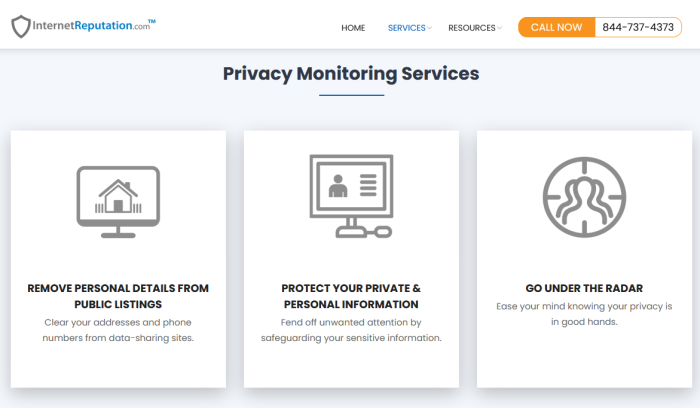
But privacy monitoring is where InternetReputation.com separates itself more from the rest of the ORM pack.
Have personal details online you don’t want to be on public listings? Remove addresses, phone numbers, full names, and more.
You get a customized, all-encompassing package from InternetReputation.com to help keep your private information away from everyone’s eyes. Their proprietary tool removes sensitive information from data sharing sites in a blink and makes sure it isn’t propagated any further.
Plus, you get access to Infosweep to append your privacy monitoring efforts with your reputation monitoring ones. Infosweep notifies you of new mentions and instances of your details becoming publicly visible online.
Altogether, this presents a wide-ranging tool for individuals looking for full visibility and improvements to their personal brands and reputations. Reach out to IntenetReputation.com for a quote for your bespoke ORM solution today.
What I Looked at to Find the Best Online Reputation Management
Unfortunately, there isn’t a singular “best” reputation manager that fits every business like a glove. If there was, then this guide wouldn’t be necessary.
Different ORMs cater to different services. This can mean some are better than others at crisis management, online monitoring, online review management, SEO-focused branded content strategy, or even supplying attorneys to advocate on your behalf.
First, are you building a new online reputation from scratch? Maybe you’re trying to improve a negative reputation? Or are you being proactive and investing in maintaining a good one?
You have to determine where you are on your reputation management journey. Then you can think about a few factors that can refine your search even more.
Business Size and Type
Your company size generally correlates with the size of your reputation. Obviously, the bigger and more varied your sales channels, the more work you’ll have managing how you look online.
Your business’s size can also dictate the amount you’ll want to invest in ORM services. Some questions to consider are: What is your estimated current business reach? What types of distribution channels do you sell through or publish content on? Are you a service-based business, an organization, or an e-commerce store?
When choosing the best ORM for you, these are some key questions to consider before moving forward. If your business isn’t a complex enterprise, you won’t need a costly ORM that specializes in litigation, video removal, or a team of expert attorneys.
Marketing Strategy
Your marketing strategy also determines the type of online reputation management you need.
Do you primarily sell via a content creation strategy? Do you sell on multiple e-commerce platforms? Is your business big enough that it sells through on-air advertising? Do you already have a strong social media presence that drives sales?
Go Fish is a great choice if you want to manage reviews, whereas Big Leap is going to be more effective for managing content. Which is more important for your business’s reputation?
Outlining how you primarily reach your customers will help you narrow down your search. If you don’t, it might affect how well your ORM can deliver results.
Long-Term Crisis Management
Think about the future of your business and its reputation. Sure, at some point you might need to put out a reputation fire that caught you by surprise ASAP. Or maybe you’re only getting started and want your name out there in the short-term in a positive light to drive more sales.
But do you have a long-term plan for managing reputation crises that will inevitably come up in the future?
This will determine which ORM can deliver on either your short-term or long-term goals. Each one is built differently to cater to your business goals, as we’ll see further in this guide.
Conclusion
You don’t have to suffer from a bad reputation that only seems to be out of your hands. There are plenty of agencies out there that can help lighten your reputation management load once you’ve reached out and established a relationship with them.
Here are all my top recommendations to get the help you need today:
- Podium – The best for instantly generating positive reviews
- Go Fish Digital – The best for managing reviews
- Reputation Rhino – The best for individuals and small businesses
- Reputation Resolutions – The best for crisis management
- Big Leap – The best for SEO and content management
- NetReputation – The best for improving reputation with content development
- InternetReputation.com – The best for eradicating private information
Online reputation management agencies can indeed offer a lot of the same services. But look closer to find what they specialize in. Hopefully, this in-depth guide helped shed light on which of the top ORMs can work for you.
Check out each agency on this list and get a quote from the one that fits you best to start managing your online reputation now.
Source: feedproxy.google.com

Can Negative Brand Mentions Hurt Your Rankings? The Answer Might Surprise You!
We all keep hearing that any publicity is good publicity. But is it really so? And, more importantly, is it the same for SEO? We’ve all heard about the link-building technique using unlinked Brand Mentions It’s a good method and, as far as we know, it works very well.

Disclosure: This content is reader-supported, which means if you click on some of our links that we may earn a commission.
But what if the unlinked brand mention that you’re so excited about turns out to be a RipoffReport post?
What if it’s a blogger complaining about your services, or a news publisher reporting on some incident regarding your brand?
- How Web Brand Mentions Affect SEO Today
- How Does Google Treat Negative Brand Mentions
- Will Negative Brand Mentions Affect Your Google Rankings?
- How to Deal With Negative Brand Mentions
Should you also get a link from this kind of source as well? Will it help you or will it harm your website’s rankings? Well, you’re about to find out!
In this article, we will dissect how Google treats this matter and find out if negative brand mentions impacting your rankings and SEO efforts. So, keep reading.
1. How Web Brand Mentions Affect SEO Today
In general, we all know that good branding and PR will positively affect our business. It makes sense. People love well-established brands with a lot of satisfied customers and great deals.
For example, most people would still buy an iPhone over a Xiaomi Phone, although some models apparently have similar characteristics and lower prices.
People buy from certain brands because of trust and authority. To obtain the audience’s trust, a brand must be well established and have good PR.
For your business to flourish online, besides earning the customers’ and audiences’ trust, you also have to win the search engine’s trust.
Customer and search engine trust kind of go hand in hand, but, from what we know, SEO works based on some algorithms.
There are many important factors that lead to authority, from domain age and security to backlinks, CTR, and branded searches.
We’ll ignore domain age, as it’s not really something we have control over, but we’ll be focusing on the other ones.
1.1 Brand Anchor Text Backlinks
As presented in this link building lessons article, websites with a high percentage of branded anchor text backlinks tend to rank higher than the ones with a high percentage of commercial anchor text backlinks.
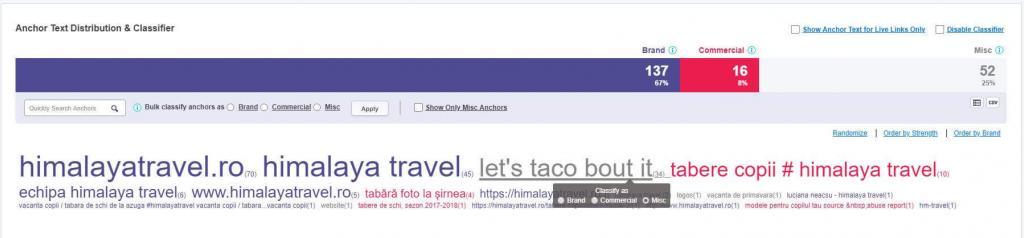
Screenshot from the cognitiveSEO Tool showing anchor text distribution for a top-ranking website in its niche
The cause for this phenomenon is probably Google’s association of these links with naturalness.
When talking about you on the web, people are more inclined to link to your website through a branded or URL anchor text, rather than through a commercial anchor text.
1.2 Unlinked Brand Mentions or Google Implied Links
A website can also have a high number of unlinked brand mentions across the web. They are often called citations and are very popular within the local SEO field.
While these probably don’t provide as much value for SEO as backlinks do, they certainly have an impact. Google actually has a patent on that so we know it’s true. It defines them as implied links:
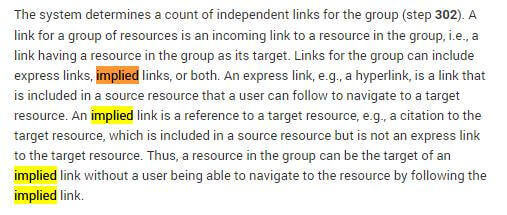
Screenshot from Google’s patent defining implied links
The key element here is relevancy. The citations you’re getting to your local business should reflect the location of your business.
If you’re in Seattle but get citations from Russian websites that mostly mention Russian businesses using Cyrillic characters, don’t expect your rankings to grow very fast.
On the other side, if your business targets a global market, then it makes sense to have all sorts of unlinked mentions across different countries. Relevant content is also important, so don’t spam on every site.
Also, keep in mind that mentions that do contain backlinks, especially dofollow ones, have a lot more impact on your search engines than mentions that don’t.

How unlinked mentions compare to linked mentions.
That’s chainmail armor. Get it? … course … it has links? (ba-dum tsss)
So, generally speaking, Google does take a look at your unlinked brand mentions and the content surrounding those mentions, but it’s better if you can get a link back to your website from them.
That way you can be sure that you maximize the potential of the mention, as it’s both a mention and a link at the same time.
And remember, you want to get mentions from reputable websites that are relevant to your niche and geographic targeting, be them linked or unlinked.
Creating them yourself using the same IP might turn out to be a waste of time and could actually get you into some trouble.
A great way of finding your unlinked mentions is Brand Mentions, a web mention monitoring tool.
It has a lot of advanced features, but this is one of the best, as it enables you to establish a connection with webmasters that mention you and potentially acquire a link.
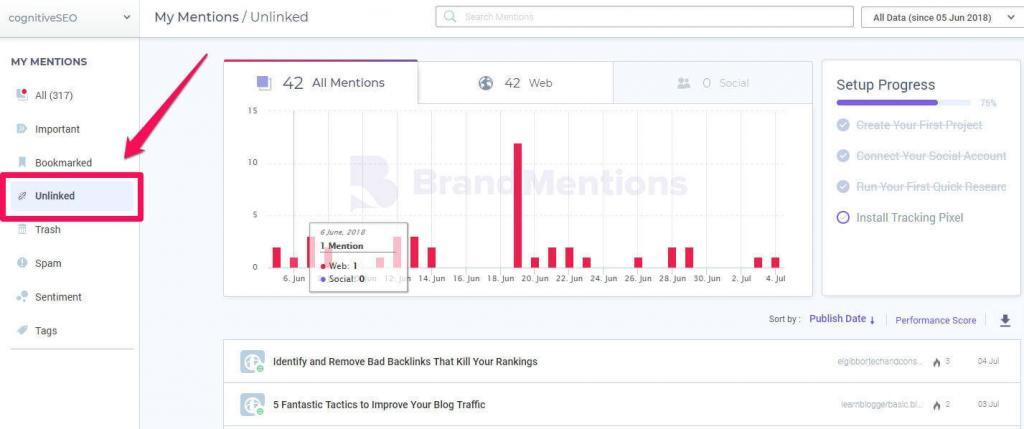
Screenshot from the Brand Mentions tool showcasing the potential to discover unlinked web mentions
1.3 Branded Search Queries
We can categorize search queries into two types: branded and non-branded. A non-branded search query would be a “keyword tool” and a branded search query would be a “cognitiveSEO keyword tool”.
You want to be ranked on both of them. If you’re not ranking for your own brand name, that is kind of bad. You either chose the wrong brand name, or you’re heavily penalized by search engines.
Each of the two has a catch:
Non-branded keywords, for example, have a high search volume, which means a lot of potential customers. However, there’s a lot of competition there, so they are harder to rank for and the CTR might be lower.
Branded Keywords, on the other side, have probably a low search volume, but they are very easy to rank for (if you are that brand) and the conversion rates are very high, as usually the users already know what they want.

Although this is speculative, some experiments and observations (including some of our own) have shown that branded keywords can eventually increase the rankings for non-branded keywords.
So, if a lot of people search for “your brand + keyword” and click on your website, you should also see an increase in rankings on the “keyword” itself.
Rand Fishkin also agrees on this and explains it in his following video of the Whiteboard Friday:
This being said, it’s always a great idea to work on your PR so that people search for your brand on the web and associate products with your brand.
Not only will it increase conversion rates, but it can also help with rankings on non-branded keyword versions.
2. How Does Google Treat Negative Brand Mentions
Ok, so we know that Google likes branded anchor text links and looks at brand mentions across the web to establish your website’s authority.
But, in real life, having more mentions isn’t necessarily better. What if you have thousands of negative reviews, mentions related to fraud, or other bad stuff?
That could affect your business deeply, or even send it into bankruptcy.
2.1 Google’s Search Quality Evaluator Guidelines
Google’s algorithms can’t yet determine what is good and what is bad. That’s why the company has set up a team of humans (around 10,000 or so) to take care of the job.
The initiative doesn’t only target brand mentions. The purpose of these evaluators is to help improve the quality of the search results in general.
Unlike the manual spam team, which can apply manual actions on websites, the search quality evaluators can’t directly influence search rankings.
Instead, they follow these guidelines to evaluate websites and provide feedback about the search results to Google.
From the guidelines, we can observe that Google demands the lowest rating to be given to websites with negative or malicious reputation.
One criterion would be harmful pages that contain malware or that are phishing for information (page 37), but we can also see on page 43 that the evaluators should consider low BBB ratings and other sources that expose fraudulent behavior.
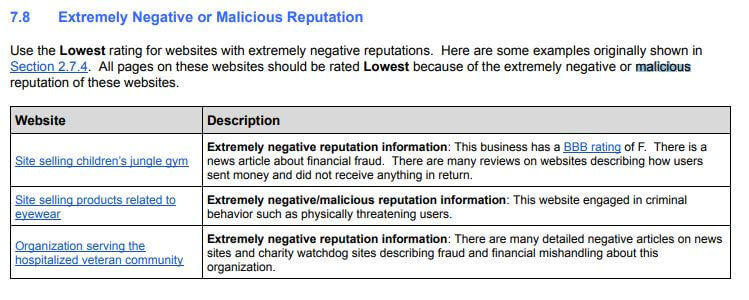
Screenshot from the Search Quality Guidelines
We can also include the issue of Fake News. Fake News websites purposely create these fake stories as shocking as possible, not to influence people necessarily, but to gain hype on social media, which brings traffic to their websites which eventually makes them money from ads.
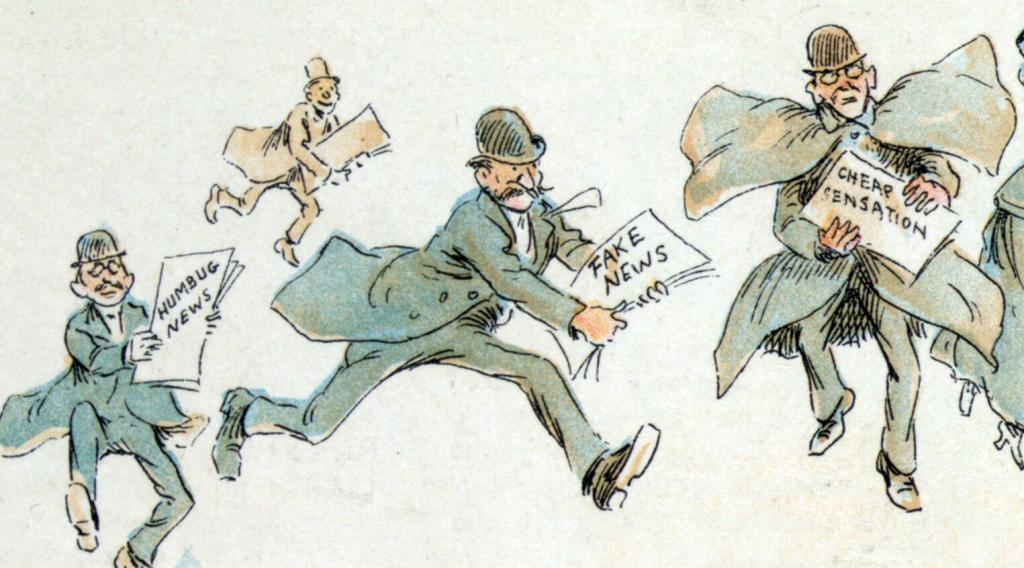
These fake stories can ultimately even rank high in Google for specific keywords.
Fake News has a big impact on Political Campaigns, as messages spread through Fake News often influence the decisions of uninformed and naive voters.
You can watch the following video for reference about why fake news is so popular:
So far, it’s a known fact that social media hype, backlinks, and a lot of mentions can get you ranking at the top.
Unless the story is critically dangerous, such as one that incites violence, it can rank there for a very long time without any manual action being taken.
Google also has an initiative in which it will work closely with journalists to combat fake news.
The search quality evaluators also play an important role, as they can provide patterns that fake news websites use, which can help the algorithm raise a red flag much easier.
However, the subject is a lot more sensitive. Malaysia, for example, has passed a law against fake news which could be punished with over $100,000 in fines and up to 6 years of jail time.
This raises questions about free speech and corruption (in that particular case).
The same thing goes with Google, as they would literally have to censor some websites if they consider them to be fake news websites by not giving them a chance to rank for certain keywords.
2.2 How The Google Algorithm Works
After the evaluators provide their feedback and Google compiles the info, it gets fed to the algorithm. This way, over time, Google starts understanding the patterns of fake news or malicious websites and websites with a very bad reputation.
It’s hard to tell what exactly the algorithm will be based on, but I can speculate looking for reviews in structured data or similar implementations, articles related to fraud or other criminal activities, and even news sites or videos.
It can then follow patterns, affecting an entire server or network of similar sites related in any way with the initial penalized low quality/reputation website.
One thing’s for sure: Google’s algorithms will be constantly improving and will eventually be able to understand if a business has a very bad reputation or if it’s involved in any suspicious or criminal activities.
3. Will Negative Brand Mentions Affect Your Google Rankings?
If we’re only talking about a small part of your customers leaving negative reviews or a couple of bloggers trashing you for not accepting their promotion offer, there’s nothing to worry about. In fact, it might actually benefit you if you can get backlinks.
However, if we’re talking about massive PR drops, thousands of complaints, serious fraud, and the press going crazy over it, then yes, it probably will.
But not in the way you might think it will. To be more exact, it won’t directly impact your rankings, but they will ultimately drop because of other indirect factors.
3.1 Is All Publicity Good Publicity?
If you know about the White Moose Cafe, then you probably know about all the scandals regarding the vegans and the bloggers. If not, here’s some input:
So there are actually two stories. One is about some vegan complaining about the restaurant having no vegan food in it.
The vegan community started blasting the Hotel’s (yes it’s actually a Hotel, not a Cafe) Facebook page with 1-star reviews. The hotel then started mocking the vegan community.
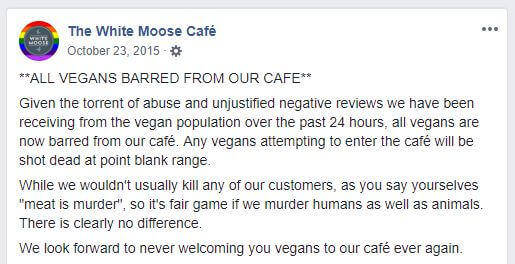
This created a lot of hype with more vegans turning red and massively hitting the 1-star review button but, on the other side, there were a lot of people defending the White Moose Cafe.
More recently, a similar story took place after a YouTube content creator asked for free accommodation in exchange for exposure on her channel.
The Hotel’s owner mocked her and the bloggers’ community started rolling in with 1-star reviews. The owners now posted about banning all bloggers from their hotel, just as with vegans, above.
Again, a lot of people were defending the White Moose Cafe and, after all this hype, the hotel’s Facebook Page still stands at 4.4 out of 5 stars.
The White Moose Cafe kept pumping their jokes by sending the blogger a bill for publicity services, topping over $6 million. While it might sound exaggerated, it’s actually pretty accurate.
Considering the amount of hype the posts got around social media and how many news publications caught up on the story, the price seems fair.
The blogger actually gained a fair 10,000-20,000 subscribers and most of her complaint videos were monetized.
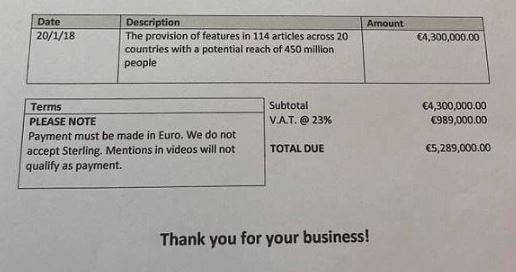
Paul, the owner of the White Moose Cafe, actually has a great post about this in which he elaborates upon the topic and explains how controversy can be a great way of promoting your business, as long as you don’t get trashed completely (what if it was all actually a setup and they actually worked together?).
The secret is to also have one side defending your point of view. Another thing you can do is simply ask questions instead of expressing an opinion.
While I don’t actually agree with trolling and insulting other people for publicity, I have to admit that I find it kind of funny at the same time, being both a vegan and a blogger myself.
Paul has some strong points of view and reading through his blog you can actually see that he’s not a bad person.
Now, these aren’t really negative brand mentions, as overall, the hotel seems to have gained more than it lost. But there are some that might actually get you into trouble.
3.2 Handling Negative Mentions From a Search Point of View
When users search the web, they often look for reviews. If it’s a product, they look for other people who have previously bought and used it. If it’s a service, they look upon other client’s experiences.
Reviews have a big impact on the purchase decision of a client, as the following survey shows:
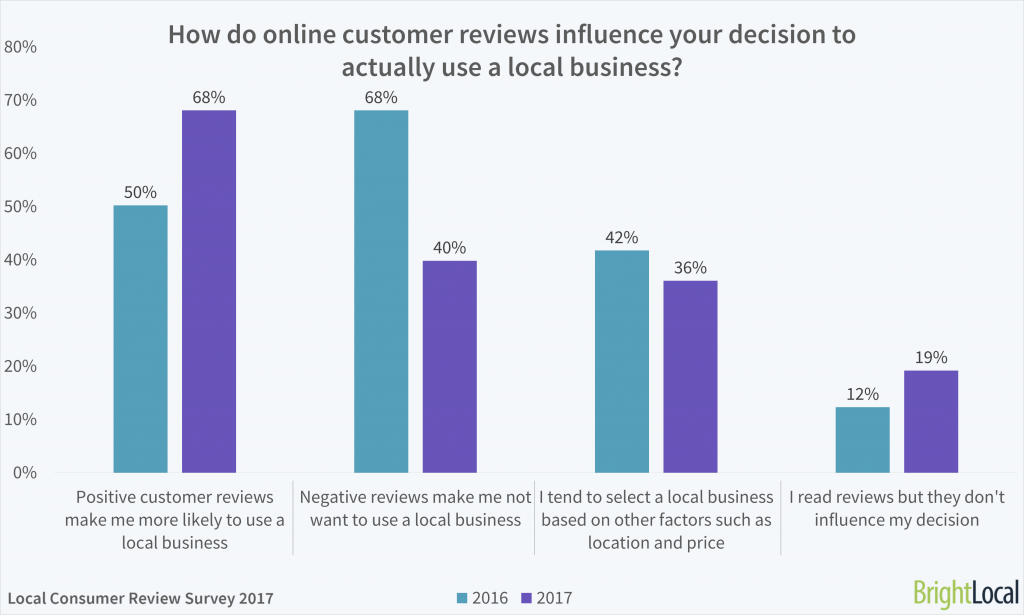
Now some people are aware that not all negative reviews are accurate, but there are some review sites that are very trustworthy or, better said, credible.
One of them, for example, is RipoffReport, which lists scams, usually in the digital marketing field.
People can comment on them, so usually there’s a community of people complaining instead of just an individual.
I had this user interested if they can make a RipoffReport post mocking one of his clients rank lower, as it was occupying one of the first 5 positions on their main brand search.
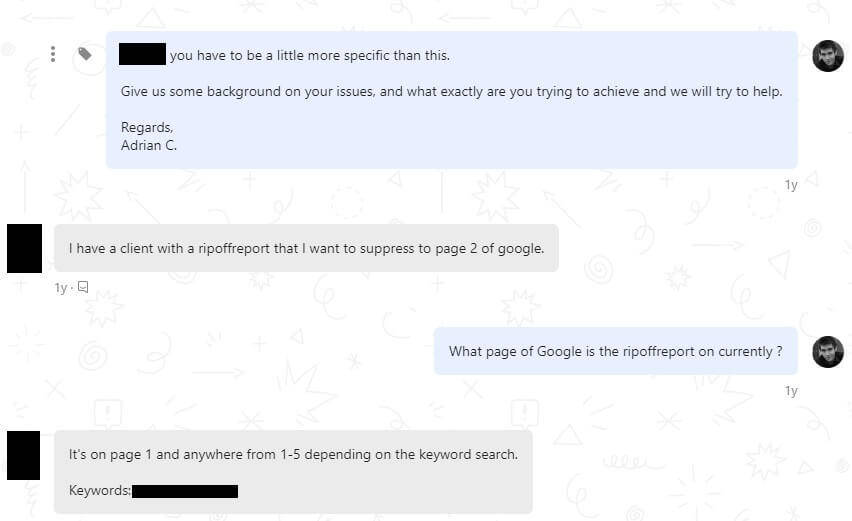
Screenshot from Intercom showing discussion. I censored the user’s name, photo, and website for protection.
I told him that the only thing he can do is get the post removed somehow, although I knew he didn’t have any chance.
I can’t show off the Google results as I’d probably have to blackout 99% of the image, but you have my word, that RipoffReport is ranking high for their brand name and, considering the things said in that post, it doesn’t look very good for the company.
If you’re in a similar situation or your overall number of reviews is under 3 stars, then you should consider taking serious action on the quality of your products/services.
Sometimes it might not be entirely your fault. For example, people might be complaining about the slow shipping. But if it is so, then change the shipping company you work with.
People really care about reviews and if they avoid your website because of this, it kind of resembles a bad user experience, which we know Google cares a lot about and could potentially affect your rankings.
If this also results in a lower number of branded searches for your website, then it might also have a negative impact on your rankings.
3.3 Handling Negative Mentions From a Backlinks Point of View
As long as the link isn’t coming from malicious websites with malware or a very spammy link profile, I can’t really see how they could directly affect your rankings.
If someone wants to give you a negative example, they might or might not link to you. However, if they do link, they will probably do it through nofollow links which will still benefit your rankings.
So far, we don’t have any data on links surrounding negative mentions, but we do know that links from malicious or spammy websites are bad.
The only way they could affect you is that users from the article that speaks badly about you might be able to land on your website, resulting into more negative reviews.
3.4 The Role of Artificial Intelligence
Eventually, we will reach a point where Google will become a true AI.
At that point, whatever the search quality evaluators have done so far, Google will be able to do it itself, probably an infinite times better.
Fake news will be a thing of the past and the bot might even be able to distinguish between true fake news or hate speech and offenses and jokes.

Image Source: popsci.com
We’re not quite there yet, but it’s definitely something that Google’s trying to achieve. At that point, we’ll probably also reach the singularity and Google will have already found a solution to world hunger and all human problems so we won’t have to worry about SEO anymore.
4. How to Deal With Negative Brand Mentions
Well, the best way of dealing with them is not having them…
No, seriously, if your company is convicted for some sort of crime, you probably have bigger problems on your head.
That’s not going to be easy to erase and even if you rebrand yourself, through the power of social media and social justice warriors you can’t stay undercover for long.
While you should constantly improve your customer care sector, there are some natural negative reviews and brand mentions that you can’t avoid with 100% accuracy.
People are more likely to leave a review after a negative experience than they are after a positive one, so you’re already at a disadvantage.
The best way of dealing with negative reviews is to answer them, deal with them, learn from them and improve your services.
Sometimes, people are jerks. They rate your product or service 1 star for no real reason.
For example, I’ve seen people just saying “It’s a bad product” without specifying why and others leaving a 1-star review because it didn’t match their expectations, comparing a low-end product with a high-end one, even though it was a good value for the price.
However, by explaining your point of view in the comments you have the opportunity to get your side of the story listened to.
For example, I’ve recently read a comment in which one client was complaining about the CPU not matching his socket and that he sent it back but the store wouldn’t accept the return.
The store replied and said that the CPU’s pins were damaged and that they even tried to repair it themselves but didn’t succeed.
By addressing the issues in the negative reviews, not only can you turn a customer’s frown into a smile but you can also show the other clients that you care, that you are sorry for what happened, and that you are willing to learn and improve.
4.1 How do you find Your Negative Mentions
It’s hard dealing with negative brand mentions if you can’t track them, don’t you think?
Well, Brand Mentions actually has a great feature that can sort out the good from the bad and make your life a lot easier.
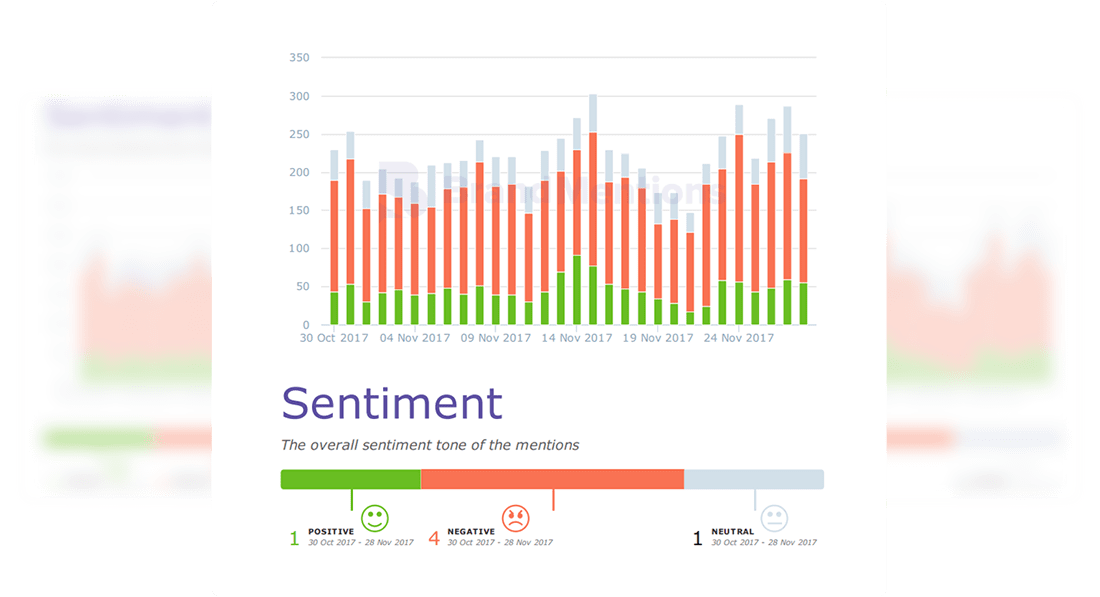
Reputation management from Brand Mentions
So, if you want to manage your reputation you can always use the sentiment analysis feature, segment your mentions and deal with them a lot better.
Conclusion
So, in the end, it seems like negative brand mentions don’t directly impact your search engine rankings.
However, if these mentions result in lower branded searches, or if other news sites rank above you on branded queries, then you might eventually suffer some SEO consequences as well
Have you ever experienced bad PR or negative brand mentions? If yes, did it affect your rankings? Did you manage to fix the issue?
If yes, how? If not, maybe we can discuss it and find a solution. Feel free to start a discussion in the comments section below.
The post Can Negative Brand Mentions Hurt Your Rankings? The Answer Might Surprise You! appeared first on SEO Blog | cognitiveSEO Blog on SEO Tactics & Strategies.
Source: cognitiveseo.com