
Tag Archives for " ranking "

15 Conversion Rate Optimization Tips to Boost Your Rankings
Conversion rate optimization, or CRO, is the process of optimizing your website to increase the completion of a specific action. In most cases, the desired action is an actual sale, but not always.
Desired actions could include demo sign-ups, downloading an asset from your website, trying out a new tool, or signing up for your newsletter. If it helps you grow your business, it’s a conversion—and it can be optimized.
The beauty of these conversion rate optimization tips is they work regardless of your intended conversion method.
CRO Tip 1: Add Site Search to Your Website
Up to 30 percent of visitors will use a search box if it’s offered. Unfortunately, nearly 84 percent of companies don’t optimize their on-site search to meet user expectations.
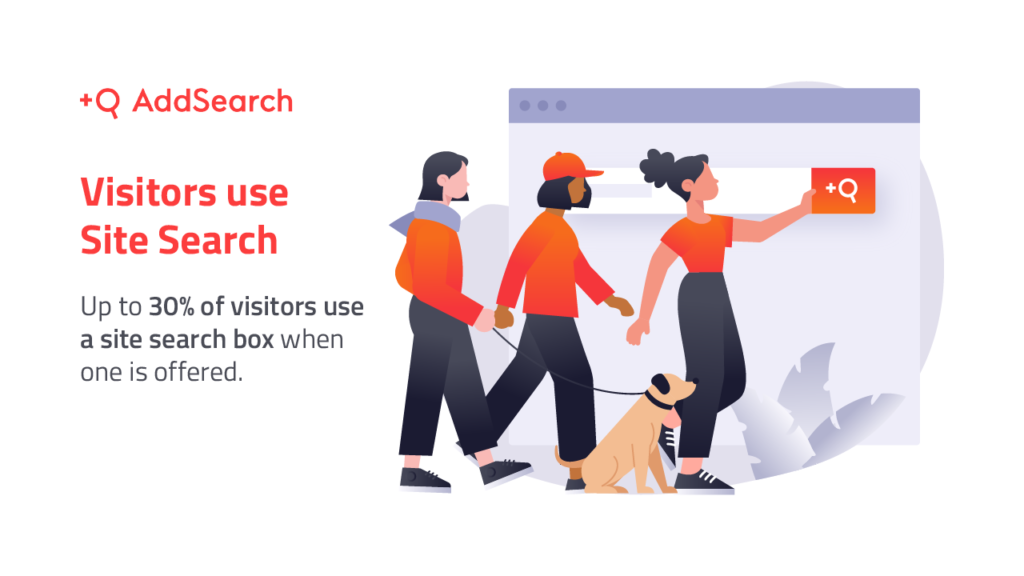
This means if your website doesn’t already include a site search, it’s time to consider adding it.
The main benefit of site search is user experience. However, data from search results can provide valuable insights into user behavior by showing you exactly what they’re searching for.
This information can help you tailor content to meet those needs or add new pages to your site to fill any gaps.
You may even be able to identify users in different parts of the funnel based on the search terms they use. This information can help you to narrow your customer’s most common questions and pain points, helping you tailor the website experience to their needs.
If you use WordPress, you can add a site search using a widget. If you use Webflow, they’ll actually let you customize it. Wix and Squarespace make it easy to add site search as well.
CRO Tip 2: Ensure Forms Are Easy to Fill Out
The average form abandonment rate is 68 percent—which means most people won’t finish filling out your form.
Website forms serve many purposes, including newsletter signup, lead magnet acquisition, and product/service inquiry.
Keep in mind: the easier a form is to fill out, the higher your expected conversion rates.
According to Hubspot research, a typical form has about 5 fields on average—and forms that are A/B tested get about 10 percent higher conversion rates.
In my experience, simple is better.
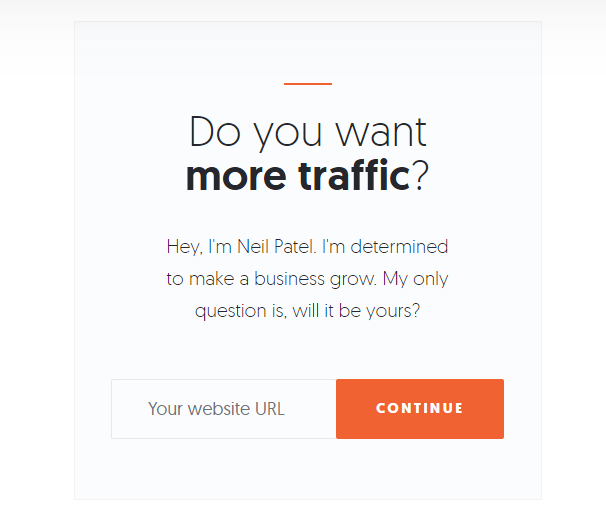
This is an example of a simple form I use on my blog. All the user needs to do is enter their website’s URL and the action is complete. It doesn’t get much simpler than that.
A few ways to ensure your forms are easy to fill out:
- make form names clear use proper HTML formatting
- use relevant sample placeholder text (I used “Your website URL” in the example above)
- have a distinct and easy-to-local submission button
CRO Tip 3: Improve your CTAs
If you want to improve conversions, CTAs are low-hanging fruit. The average CTA click-through rate is just 4.23 percent, but many factors can impact what helps your CTA convert.
For example, if you include more personalization in your CTAs, conversion rates can improve more than three times as much.

That’s why you should continually test CTAs to see what works and what needs improvement. You’d be surprised at how quickly user preference can change!
Start by testing these CTA elements:
- copy
- colors placement
- button shape
- button size page placement
Consider testing different types of CTAs as well. Here’s how CTA types convert, according to a study by Vye Agency:
- button CTAs have an average CTR of 5.31 percent
- text CTAs have an average CTR of 2.06 percent
- designed CTAs have an average CTR of 3.53 percent
When it comes to branding, consistency is key. However, using colors outside of your branding palette for CTAs is worth trying. Colors within your palette might blend in too well with the rest of your site, making them easy for website visitors to overlook.
CRO Tip 4: Run User Testing
Poor usability can kill your business. 70 percent of online businesses fail because of poor usability.
If you’re in e-commerce, your conversion rates could increase by 35 percent by just improving the design and flow of the user checkout process.
User testing is the way to get valuable data that can help you get more conversions across your website. So it’s important to get this process started as quickly as possible.
One of the most common ways to run UX testing is with heat maps, which show how users navigate your site and what interactive elements they’re clicking on.
You’ll see if they’re looking at your links, navigation bar tabs, CTAs, and so on. Some heat maps even incorporate eye-tracking software to show where your users look first.

There are several heat mapping tools on the market, but my favorites are Crazy Egg and Hotjar. If you decide to use Hotjar, the process for setting them up is very simple and straightforward.
CRO Tip 5: Add More (Better) Social Proof
More consumers than ever read social proof. In fact, 77 percent of users say they always or regularly read online reviews before buying.
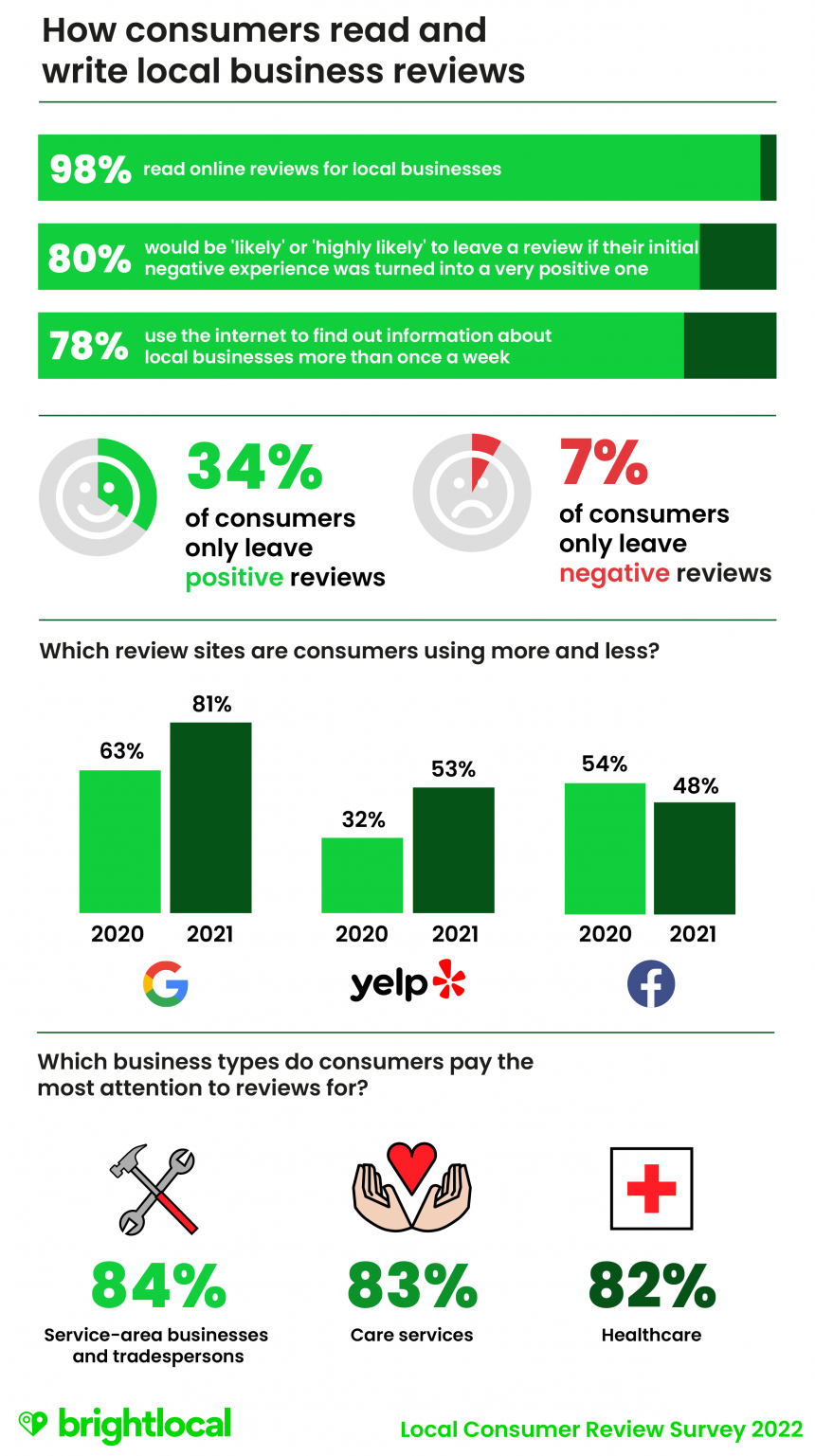
You want to leverage customer loyalty as often as you can. Why? It’s free marketing and brand exposure. Even better, reviews can drive revenue.
According to Womply, businesses with more than average reviews across earn 54 percent more in annual revenue
It is also easy to create.
Social proof is a simple and great way to leverage user-generated content for your brand. This can include positive reviews and ratings, creative social media posts about your brand shared by customers and influencers, user-submitted content like photography, and more.
The benefit of adding more social proof to your website is it shows other users that other people trust you. Trust and credibility play a big factor in getting more conversions.
To add more social proof, try:
- Send a follow-up email asking for reviews.
- Host a contest with a branded hashtag on social media.
- Include a card with a branded hashtag when shipping physical products.
If you want to do it on a larger scale, consider automated tools like HotFomo and OptinMonster.
CRO Tip 6: Add Chatbots or Live Chat
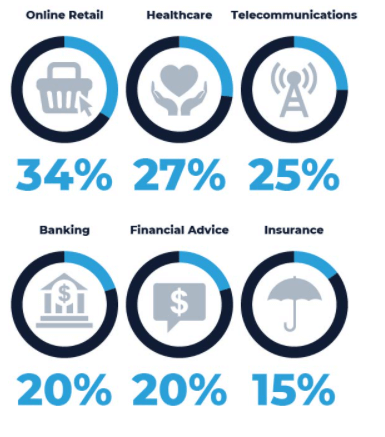
If you have a question, wouldn’t you rather get the answer fast? That’s the idea behind chatbots. No matter how great your customer service is, sometimes call queues to get long.
The good news? Users like chatbots. The average satisfaction rate of chatbots is 87.58 percent. They can also reduce customer service costs. One study predicts chatbots will save businesses $8 billion in customer service costs by 2022.
These tools help your brand build an instant connection with customers, making them more likely to purchase your product or service. Here are a few ways to leverage chatbots;
- answer FAQ
- qualify leads
- suggest related products
- troubleshoot common issues
- Share information about new products
- increase your email list
With so many chatbot options available, it can be challenging to find the right one. I recommend focusing on native channel integrations to narrow your search.
If you want an app with widespread integration options, consider Landbot, which offers chat features through the web, WhatsApp, Facebook Messenger, and API.
Perhaps you just need to integrate with Facebook Messenger? In that case, Chatfuel is an affordable solution.
Make sure that whatever chatbot you choose aligns with your business goals.
CRO Tip 7: Review Customer Persona and Adjust Your Messaging
A customer persona is a fictional snapshot of your ideal customer. Personas are commonly used by marketing agencies and businesses to give their target audience a human face. They can help drive leads, increase conversions, and shorten the sales cycle.
According to MarTech, creating a persona can increase email CTR by 14 percent—and conversion rates by 10 percent.

The gap between who you think your ideal customer is and your actual customers may be more significant than you think.
For example, if your personas are businesswomen in their early 30s but your customer base is primarily homemakers in their 50s, there’s going to be a massive disconnect in how you approach your target audience.
Here are six steps you can take to make sure you are targeting the right customer personas:
- Make a list of your highest value customers.
- Use a customer persona template to create a new persona.
- Start adding details from your highest value customers.
- Start with demographics like location, age, budget, education, etc.
- What channels do your highest value customers use to find you?
- Add that to your persona as “methods of communication.” Look at the content they consume—what does that tell you about their motivations?
- Add those to your template.
- Repeat the process for every product or service you offer.
It’s important to realign your customer personas with your messaging, sometimes as frequently as every two or three months. In some cases, this could mean tailoring your brand approach altogether to connect with the new target audiences working.
CRO Tip 8: Use Targeted Lead Magnets
Lead magnets are a free resource (like an ebook or guide) given away in exchange for user data. The most common lead magnets are PDFs or videos, but there are plenty of media types to use.

The best part? They work.
Fifty percent of marketers say lead magnets increase their conversion rates.
The more targeted your lead magnets, the more effective they are likely to be. The key is to get creative with your targeting.
You could even consider creating some more interactive lead magnets like quizzes or online calculators. According to LeadQuizzes, the average quiz has a lead capture rate of 31.6 percent.
The way you target your magnet will depend on your product or service. For example, if you serve a geographical area, it may make sense to target leads based on location. Other websites might target leads based on industry or how they got to the site.
Here are a few other targeting options:
- time on page
- type of content
- whether they’ve purchased before
- industry
- customer persona
- location
- time period (for example, a pop-up for an upcoming event)
Not sure how to add targeting to your lead magnet strategy? These lead magnet tools can help.
Whatever type of lead magnet you decide to create, be sure it aligns closely with your intended customer. Since the goal of lead magnets is to collect user data, you want to make sure the offer is valuable to your intended audience as well as your business.
CRO Tip 9: Use Pop-Ups Carefully
Pop-ups have an average conversion rate of 3.09 percent, which makes them ripe for CRO.
I have a love/hate relationship with pop-ups because they walk such a fine line between being beneficial (for you and your customer) and incredibly annoying. However, when done right, pop-ups can be an invaluable conversion tool.
In fact, Marketing 112 increased its conversion rates by 62 percent by adding a pop-up to its website.
First and foremost, your pop-ups should respect universal UX rules. These include fast load times, visible exit options (like the example from Wishpond below), and platform-appropriate size.
There should also be limits as to how often users see the pop-up. For example, a user who bypasses the pop-up once shouldn’t be bombarded with it on each page of your site they navigate.
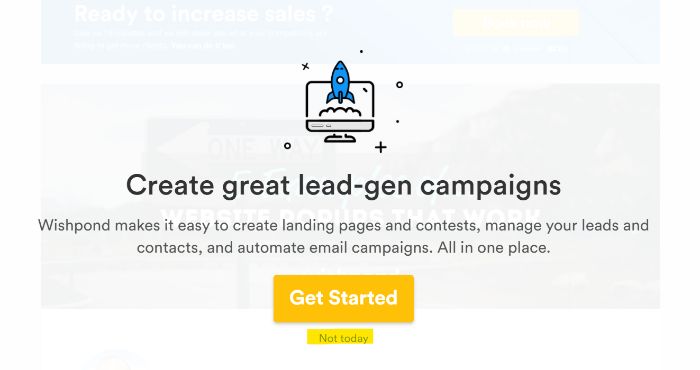
When it comes to conversions, keep the messaging short with minimal effort to take the desired action.
You can also implement A/B testing to see how users interact with different versions of the pop-up. This is important for optimizing conversion rates across the board.
CRO Tip 10: Check Your Site Speed
If your site loads slowly, all of the conversion rate optimization tips in the world won’t make a difference. In fact, website conversion rates drop by 4.2 percent for each additional second your site takes to load.
Even more surprising? More than 80 percent of sites don’t meet acceptable speeds.
Fortunately, there are plenty of free sites and tools that let you test your site speed and troubleshoot common issues.
PageSpeed Insights and Pingdom are two of the industry leaders in this domain. These tools have been around for years and offer the most in-depth testing and troubleshooting. They first look at contentful paint, time to interact, and total blocking time to calculate your overall score.
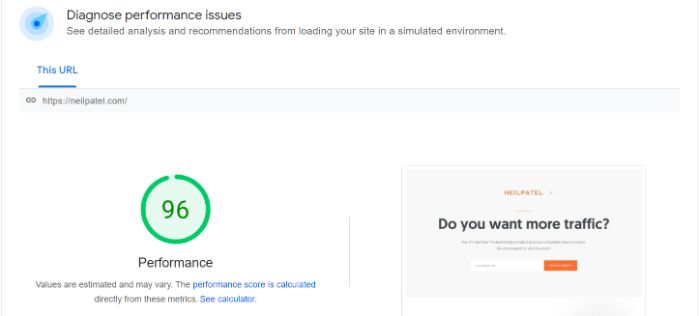
What are some of the most common issues that slow down site speed?
- render-blocking JavaScript
- poorly optimized CSS
- large media files
- bulky code
While some of these may require a database engineer or developer to resolve, you can usually start to tackle some issues (like large media files) on your own.
CRO Tip 11: Recover Lost Sales by Following up on Abandoned Carts
According to the Baymard Institute, the average cart abandonment rate is 69.82 percent. That rate is even higher on mobile where the average shopping cart abandonment rate is 85.65%.

Recovering just a fraction of those missed sales could do wonders for your conversion rate.
If the main benefit of CRO is converting users already on your site, then abandoned cart users are the cream of the crop. They actively started the transaction but didn’t complete the purchase.
There may be some obvious reasons for this, such as a discount code no longer being valid or high shipping rates. Whatever the reason, you should always aim to recover the lost sales using (almost) any means necessary.
In fact, if e-commerce sites just fixed checkout usability issues in their process, they could increase conversion rates by 35.26 percent. This translates into more than $200 billion in recovered sales from the e-commerce industry alone.
Here are some other ways you can recover abandoned carts:
- automated email flow
- son-site push notifications
- retargeting ads
- personal outreach
- automated social outreach
You don’t want to harass potential customers who have abandoned carts, but you do want them to feel wanted. Sending just one email could help you recover up to 29.9 percent of these sales.
You may want to play with your outreach timelines to find the right approach for your customer base.
CRO Tip 12: Make Sure Landing Pages Match Your Messaging
The average landing page converts just 2.35 percent of the time across all industries. If you want to be a top performer in your sector, you should be aiming for conversion rates above 10 percent.
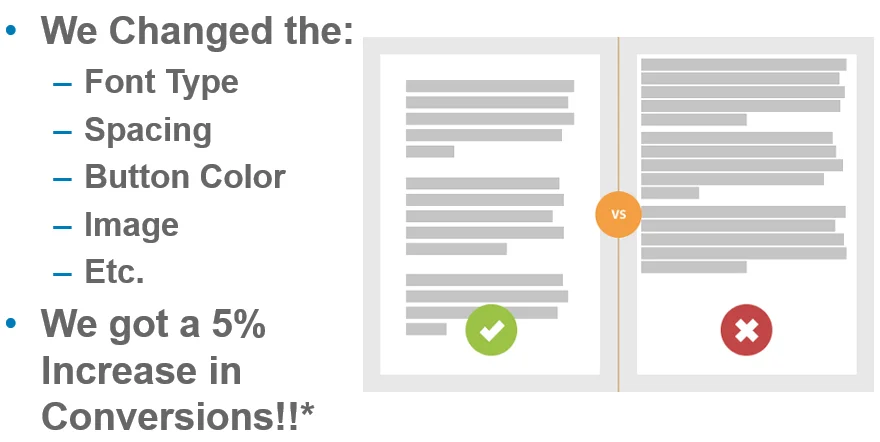
So, how do you increase your landing page conversion rate?
One way is to ensure the messaging on your landing page matches the ad or copy that brought them there in the first place. This creates a more cohesive experience, showing users that your page is the right fit for what they want. It will also help improve your PPC quality score.
Here’s how to match your messaging:
- use similar language in your landing page and ad (especially the main keywords)
- keep branding consistent (include your logo and use brand colors)
- use a clear CTA on both your ad and landing page
Just imagine how off-putting two distinct messaging styles can be to the user. Imagine if you agreed to a job interview for a tech company and found out it was a restaurant when you arrived. It would feel like a bait and switch, right?
While a difference in messaging between an ad and landing page isn’t quite as off-putting, it’s close. The differences can be jarring and steer users away.
When creating your landing pages and ad copy, make sure you have a clear focus in mind. This would start with your keyword research when you select the target phrase for the page. You can include some secondary keywords on the landing page as well if you plan to use them in your ad copy.
CRO Tip 13: Target High Intent Users
High intent users are very close to making a buying decision. According to a report by the CMO Council, 87 percent of B2B buyers say that online content has a major or moderate impact on the vendor they choose.
That means there’s an extremely high opportunity to improve your content to convert these users.
How can you target high-intent users?
As previously mentioned, looking at the internal search terms users interact with on your site is one way to get an idea of content that works. Someone at the bottom of the funnel might be trying to distinguish between different options, so they’ll be looking more closely at shipping timeframes and return policies.
Here are a few other strategies:

- Add high-intent keywords to your ads and landing pages.
- Use the information from your internal search to gauge what keywords are and how your customer base interacts with them.
- Build content that targets customer pain points.
- You can often identify these pain points with SERP analysis of high-intent keywords.
- Pay attention to intent data.
- Contact users who visit your pricing page, return to your site several times, or book a demo but don’t follow up.
High intent users are ready to convert, so don’t leave them hanging.
CRO Tip 14: Optimize Your Content
If your content isn’t performing well, it’s time to re-evaluate and optimize it. The first thing to check is title tags.
According to Backlinko’s research of more than 11 million Google search results, sites that include the main keyword in their title tag are far more likely to rank higher.
Content optimization looks at a number of factors including:
- Make sure the keyword is used several times content length variance (add or remove content)
- check image optimization, such as size and alt tags
- add stats and new research check meta and SEO titles
- add keywords to more headings
- add a frequently asked questions section
- make sure you aren’t cannibalizing traffic from other content on your site
For time and efficiency, you don’t have to do all of the above. Instead, research the top 10 results on Google for your target keyword and see how they are structuring their content.
Their approach is clearly having an impact on their ranking and can provide a path for you to improve your search engine rankings.
CRO Tip 15: Before You Make Changes, See What Works Now
It’s easy to see all of the things that need to be improved, but what about the things that are working?
There are likely some areas of your website that are already working. For those, look for patterns in what the data is telling you, determine what the essential parts that led to the results might be, and come up with an approach to replicate this across your site.
If you aren’t sure how to approach this yourself, you can hire a professional to audit conversions across your website and highlight what is working well. This process alone could uncover a lot of great things you’ve been doing but probably don’t realize.
The last thing you want to do is a major content overhaul that loses conversions from pages or strategies that are already working.
Frequently Asked Questions About Conversion Rate Optimization Tips
What is conversion rate optimization?
Conversion rate optimization (CRO) is the process of increasing the conversion percentage for a website or mobile application. The aim is to increase the number of people taking the desired action in relation to the number of visits by improving customer experience and testing interactive elements.
What is the most effective CRO strategy?
There’s no one way to approach conversion rate optimization. However, a good CRO strategy will focus on user experience optimization, customer journey analysis, and website performance.
Is CRO different for ecommerce?
The benefits of CRO are the same whether they’re being implemented for an ecommerce site or not. However, the processes may differ slightly. When it comes to ecommerce, the conversion funnel has a larger part to play than it might on a non-ecommerce site.
How can conversion optimization affect your return on investment?
In simplest terms, CRO aims to make the most of the site traffic you already have. By increasing the conversion of your existing traffic, you have the potential to lower your customer acquisition costs.
Conclusion: Conversion Rate Optimization Tips
When you consider the fact that customer acquisition is more than half of the battle, it makes sense to focus heavily on conversion rate optimization.
After all, converting more of your existing website traffic could drastically reduce customer acquisition costs.
You’ll notice most CRO tips focus on improving the user experience and enhancing the customer journey. That’s because they tend to have the most significant impact. However, you don’t have to implement all of these CRO strategies immediately. Think about which will have the most significant impact and test those first.
Which of the CRO tips above do you think will have the most impact on your conversion rate?
Source: neilpatel.com

How to Dominate Google in 2021
Here’s the four-step SEO strategy that will help you dominate Google rankings in 2021:
SEO is becoming harder and harder.
It takes longer to rank and you have to spend more money to get results.
The reality is, you can’t wait forever to get results, and you have no choice but to leverage SEO because everyone else is doing it.
So, what should you do?
Well, the first thing you need to do is adjust how you think about SEO.
SEO isn’t only about rankings. To be honest, I don’t even track them for my own site. It’s about getting the right kind of traffic.
You know, the visitors who are ready to buy.
Instead of teaching you how to rank for competitive terms, which is going to be even more difficult in 2021, I’m going to break down a formula that will give you much faster results and sales in this ultra-competitive environment.
Best of all, I am going to break it down into four steps as I know you don’t have the time to do everything.
SEO Strategy for 2021
Here’s the four-step SEO strategy that will help you dominate Google rankings in 2021:
Google Ranking Step #1: Attract Customers Before They are Ready to Buy
The most expensive keywords to go after are buyer intent keywords. You know, the ones where someone types in a keyword and is ready to spend money right then and there.
That will always be the case. Not just from an SEO standpoint, but even a pay per click standpoint.
So should you ignore these valuable keywords?
Of course not. More so, you have to go after them no matter how long it takes to rank. You just have to be patient.
In the short run, there are other keywords with similar search patterns. Now, they aren’t as lucrative because they are more informational related.
Here’s the kicker: People research before they buy. If you can grab those searchers at the start of the journey, you can get their clicks (and purchases) for little to no money.
So how do you find the keywords that aren’t as competitive that have a similar search pattern?
Use Ubersuggest (and the accompanying free Chrome extension as you look through SERPs).
Here’s how it works:
Let’s say you are selling beard oil but you know the term is competitive and will take you a lot longer to rank for than you have.
Ubersuggest will show you all of the terms people search for on Google that has a similar search pattern to the term “beard oil.”
In other words, think of it as Google Trends in reverse. With Google Trends, you type in a query and it shows you how well the term performed over time. Using Ubersuggest, you get a list of queries that have a similar trend pattern to the main keyword you want to rank for.
In other words, if you know the term “beard oil” will cause a sale, Ubersuggest will show you other terms that match the same pattern (some keywords will be relevant while others will not).
Type in “beard oil” or the term you want to rank for into Ubersuggest, then click “Keyword Ideas.” It’ll show you a list of related suggestions, but some of those terms still have pretty high intent–not quite what we are looking for.
Click “Related.”
Here’s what I got:
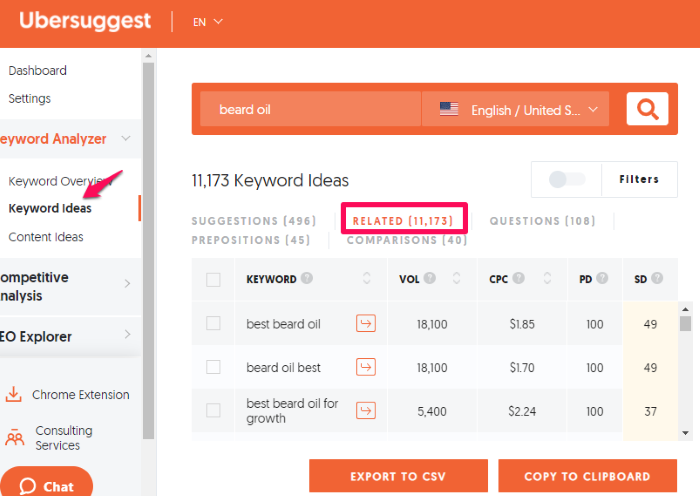
As you can see from the image above, people type in terms like best beard oil. Other terms include beard oil vs balm, what does beard oil do, and beard oil recipes.
If you write in-depth blog content about those phrases, you’ll appeal to a similar audience. Some of those keywords may not cause a sale right away, but what we’ve found over and over again is that if you write content related to your main subject, a lot of your blog readers will come back within a few weeks and purchase.
That’s how most people generate their sales from content marketing.
You don’t even have to write blog content, you can just create new landing pages targeting those new keywords.
Most people who sell beard oil probably don’t focus on catching those top of the funnel terms.
Google Ranking Step #2: Land and Expand
Everyone focuses on ranking for new terms. But there is an issue, it’s hard to rank for new terms.
Even though SEO has a huge ROI, it’s a strategy that requires patience.
Here is the thing: you can get results faster if you use the land and expand strategy.
Here’s how it works. Log into Google Search Console. Next, click on “performance” and you will see a list of terms that you currently rank for:
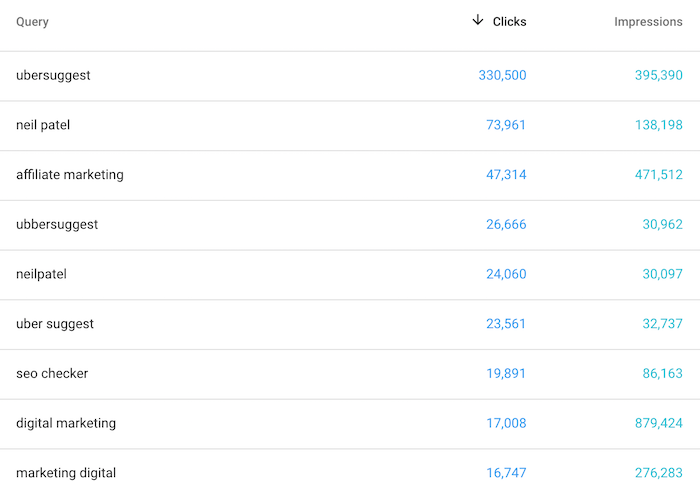
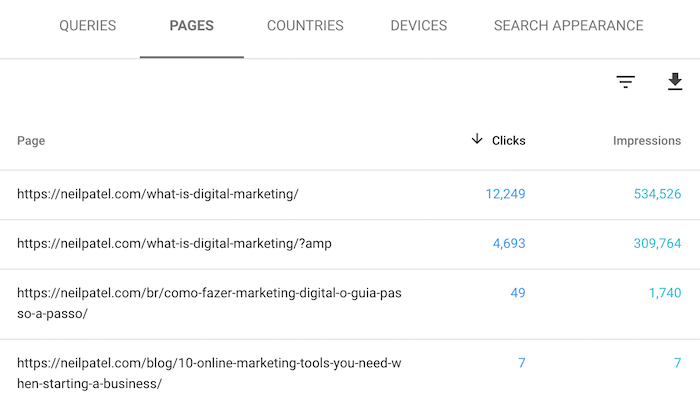
Then I want you to click on one of the most popular terms you already rank for and then click on pages.
You should see a report that shows you the URL that ranks for the term on Google. You need this URL because you will be modifying this page.
Now I want you to take that term and put it into Ubersuggest. Once the report loads, click on “Keyword Ideas” in the navigation. You’ll see a report that will look something like this:
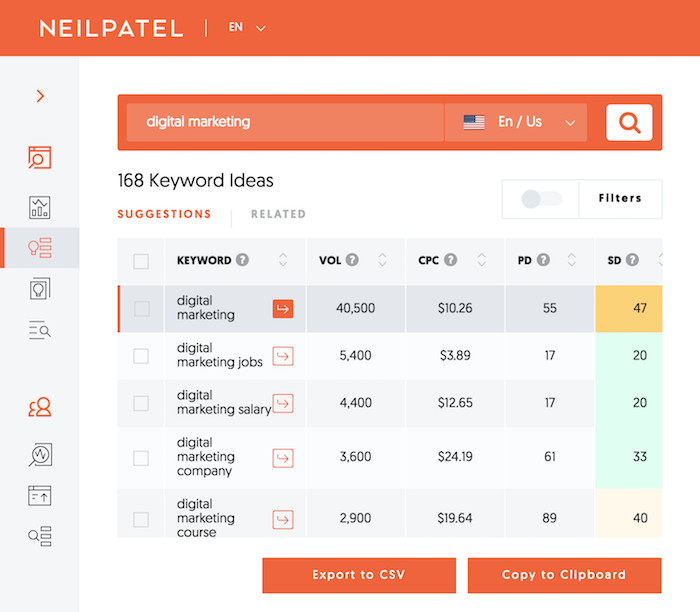
You’ll see a laundry list of long-tail phrases. Take the ones that are buyer-intent related and add them to the page that already ranks for the head term.
When adding the long tail phrases, make sure you adjust your content to be relevant to those keywords. And pick the ones that are highly related to your product or service. Just stuffing them into your page without adjusting the content is spammy and won’t provide a good user experience to searchers.
What you will find is that because you are already ranking for the head term, typically you will shoot to page one within 30 to 60 days for the long-tail variation by adjusting your content. It’s a quick win!
But the key to this strategy is to pick the right longtail keywords. Don’t just look at traffic numbers, focus on terms that you know will cause a sale or a lead.
Google Ranking Step #3: Build a Brand
Google has been placing more emphasis on brands. In other words, if you have a strong brand, you’ll rank faster.
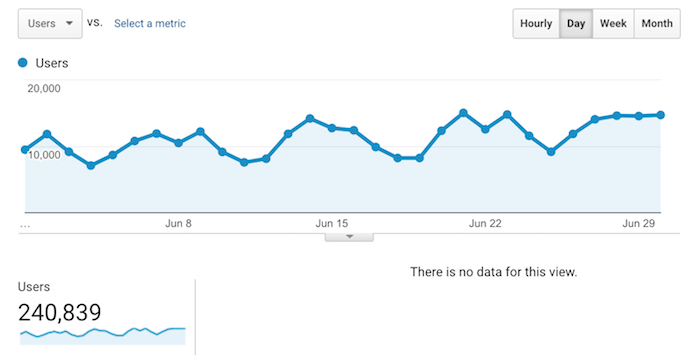
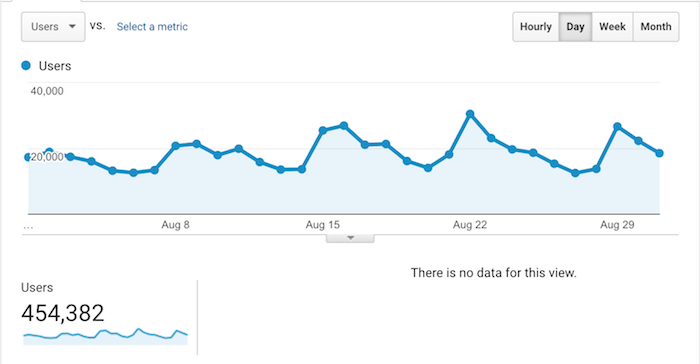
When I really started focusing on brand building, my traffic went from 240,839 in June 2016:
To 454,382 in August 2016:
As the Ex-CEO of Google said:
Brands are the solution, not the problem. Brands are how you sort out the cesspool.
In other words, if you want to succeed on Google in the long run, you have to build a brand. As your brand grows, your search traffic will as well.
The way to monitor your brand growth is Google Trends. Type in your brand name into Google Trends as well as a few of your competitors to see how you are stacking up.
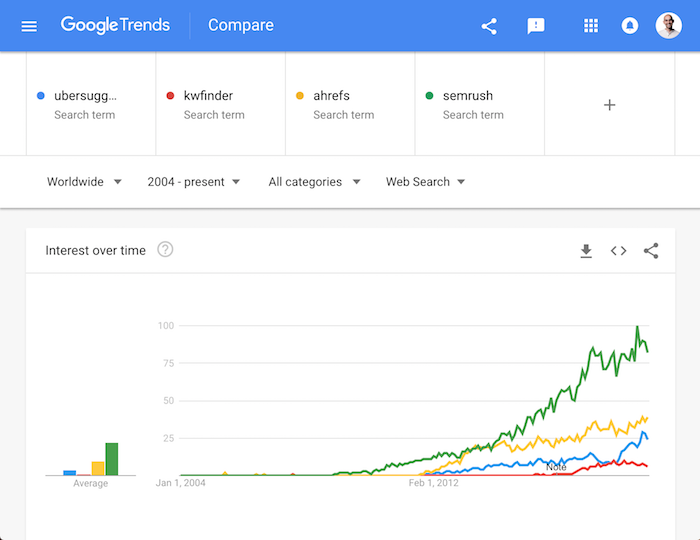
Sadly, there isn’t a quick hack to skyrocket your brand. There is, however, a formula that works for both personal and corporate brands.
What is the formula?
You do something bold!
Sure people can tell you to blog, speak at conferences, run ads; but none of that helps you build a brand that has a loyal following because everyone else is already doing the same things (or trying at least).
What your competition isn’t doing is being bold. If you want a brand like Tony Robbins or Apple, bold is the way to go.
So how do you do something that is bold?
Well, let’s first start with a personal brand (although I recommend that you build a corporate one instead).
Do the Opposite
When it comes to building a personal brand, you’ll have to take the opposite approach of most people in your space. Whatever is working for them won’t work for you.
No one cares for the copycat, especially when they are satisfied with the original solution.
In other words, if you do exactly what your competitor is doing no one will care to follow you.
Let me give you examples of how to do the opposite of your competition:
Genuinely help people:
A lot of people blog and participate on social media, but how many people take the time to respond to their community? As far as I can tell, less than 1%. Just look at me. For years, I’ve responded to comments on my blog, Facebook, and even YouTube.
Most people don’t take the time; doing the opposite has helped me build a connection. And if you are wondering why I do this it’s because when I started out I had no money and people helped me. I’m just trying to do the same.
Writing 10x content:
When I got into blogging, everyone was doing it. So I had to find a way to separate myself. I did this by writing in-depth guides–not those 5,000-word blog posts,
I am talking about 30,000-word guides. On top of that, I spent money on the design so they would look beautiful.
Creating video content:
When I got into the digital marketing community, there were already large conferences that had thousands of attendees. I thought speaking at all of them would help my brand, and they did to some extent, but I was just another speaker.
Very few people in my space were creating video content. So now instead of giving speeches at conferences, I give them on YouTube, Facebook, and LinkedIn.
I reach more people without having to travel and the content lives on forever (and is available for free to everyone!).
That’s how I stood out from my competition and built a personal brand. Then I did it for years because brands aren’t built overnight.
If you aren’t sure on how to do the opposite of your competition when it comes to your personal brand leave a comment and I’ll try and give you some ideas.
Now let’s go into building a brand for your company. It all comes down to one thing:
Be Bold
No matter what you are selling online you have competition. It doesn’t matter if you are a B2B or a B2C business, you have competition, which means it is going to be hard for your brand to stand out.
So, how do you differentiate yourself?
You do so by being bold.
Let me give you an example. In the United States, there are tons of options for cell phone carriers. So how do you stand out when everyone offers the same phone and competitive pricing?
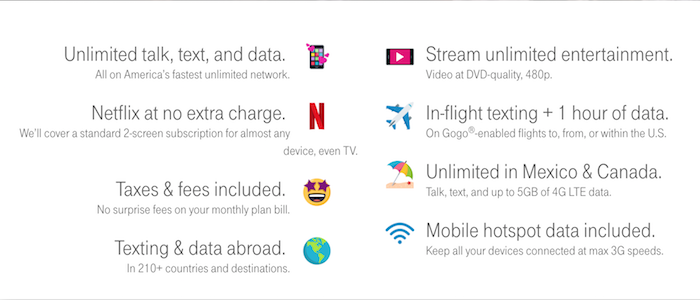
Well, T-Mobile separated itself by offering free Netflix, unlimited data, and free-roaming.
And you don’t have to be a big company to do something bold.
When Zappos started selling shoes they decided to do a few things differently. First, they offered a refund policy that lasted 1 year. Just think about that–if you return a shoe to them 12 months later, the chances are it’s out of style and they won’t be able to resell it.
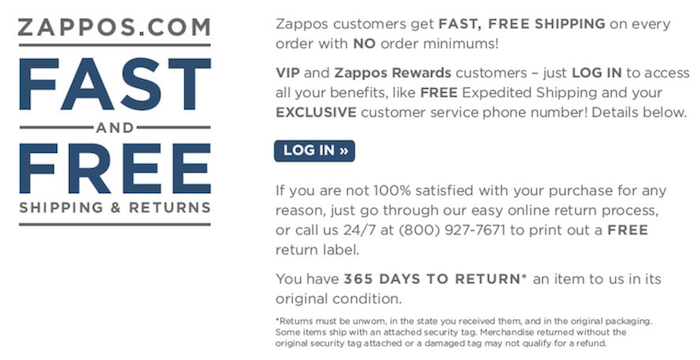
Then they decided to randomly upgrade their shipping. So instead of ground shipping, they would randomly upgrade you to two-day or next-day air.
Amazon crushed their competition the moment they rolled out their Prime program. When it first came out, you would get free 2-day shipping on all Prime products for just $99 a year. What a ridiculously amazing offer.
Now that’s being bold!
Being bold doesn’t have to break your bank account. You don’t have to do something like Amazon and T-Mobile; it can be as simple as providing amazing customer service when you are in an industry that’s known for terrible support.
If you are unsure of how you can be bold with your business, leave a comment and I will try and give you some ideas. Make sure you provide an overview of your business so I can give you halfway decent ideas. 😉
Of course, being bold won’t build your brand overnight (it takes years) but you should see growth each quarter. If you aren’t, that means you aren’t being bold enough.
Google Ranking Step #4: Build a Better Mousetrap
A mousetrap? Why would you want to build a mousetrap?
Link building is still important. Sure, Google is looking at many other factors now, but link building still helps with rankings.
But it is harder to build links than it used to be back in the day. Everyone is blogging… heck, there are over 440 million blogs and over a billion if you count Tumblr, Medium, and WordPress.com.
Yes, that means there are more sites to hit up and ask for a link but everyone is doing that.
So how do you build links when everyone is getting those spammy emails asking for a link, such as the one below?
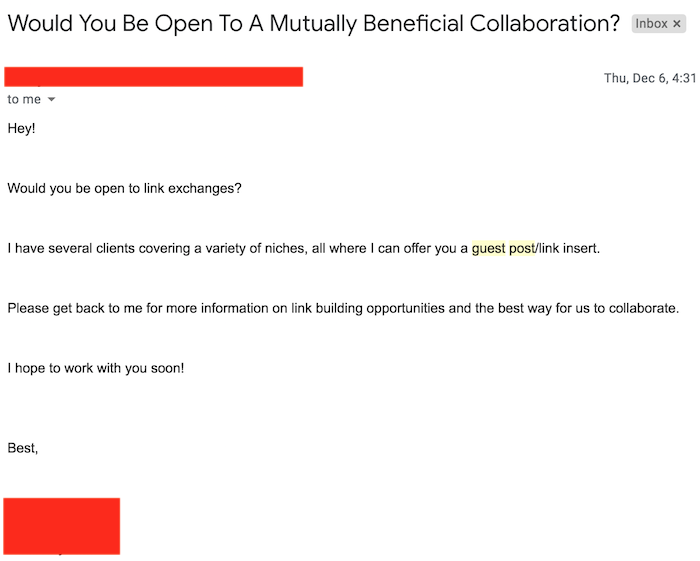
You have to build a better mousetrap. Something so amazing that everyone wants to link to it without you asking.
It used to be detailed guides but seeing 10,000-word guides that have fancy designs are more common these days than when I started creating them.
They still work, especially when it comes to brand building, but they just aren’t as effective when it comes to link building.
Same with infographics, they used to get tons of social shares and links (they still do to some extent), but they aren’t as effective as they used to be.
So what kind of mousetrap do you need to build? You could start off with something that people are used to paying for.
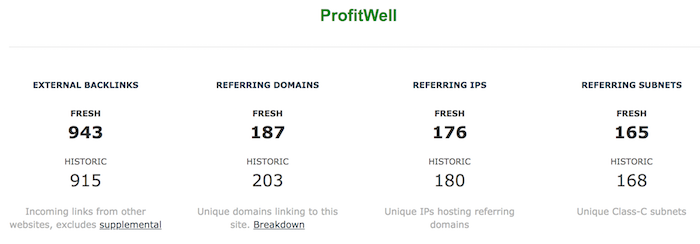
For example, the consulting firm Price Intelligently released a free analytics software called ProfitWell.
With very little marketing, they were able to generate 943 backlinks from 187 domains.
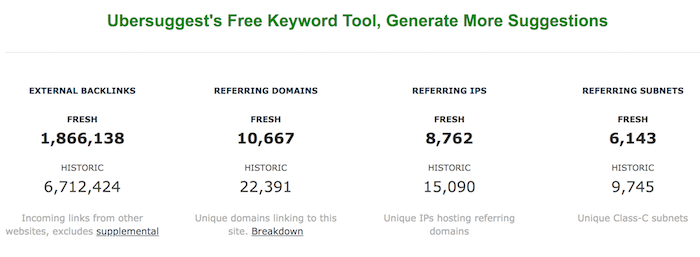
I also did this with Ubersuggest.
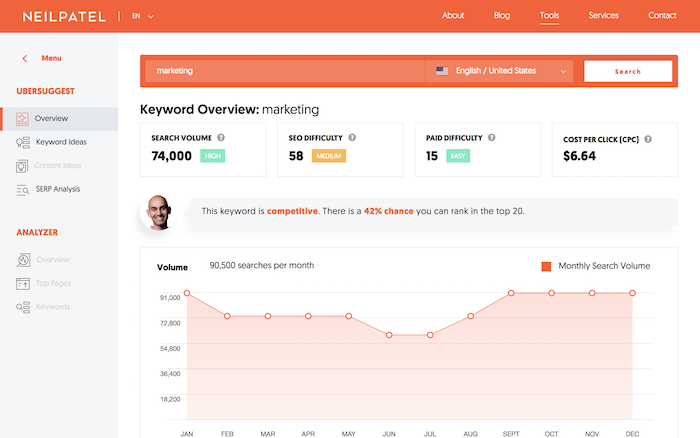
I put in more effort into marketing, so I was able to generate 10,667 unique backlinks.
A great example in the consumer space (this would do wonders for e-commerce sites as well) is animated infographics. Everyone has seen infographics, so Aminagraffs decided to make their infographics animated, which caused them to go viral.
Here’s part of their infographic that breaks down how a car motor works.
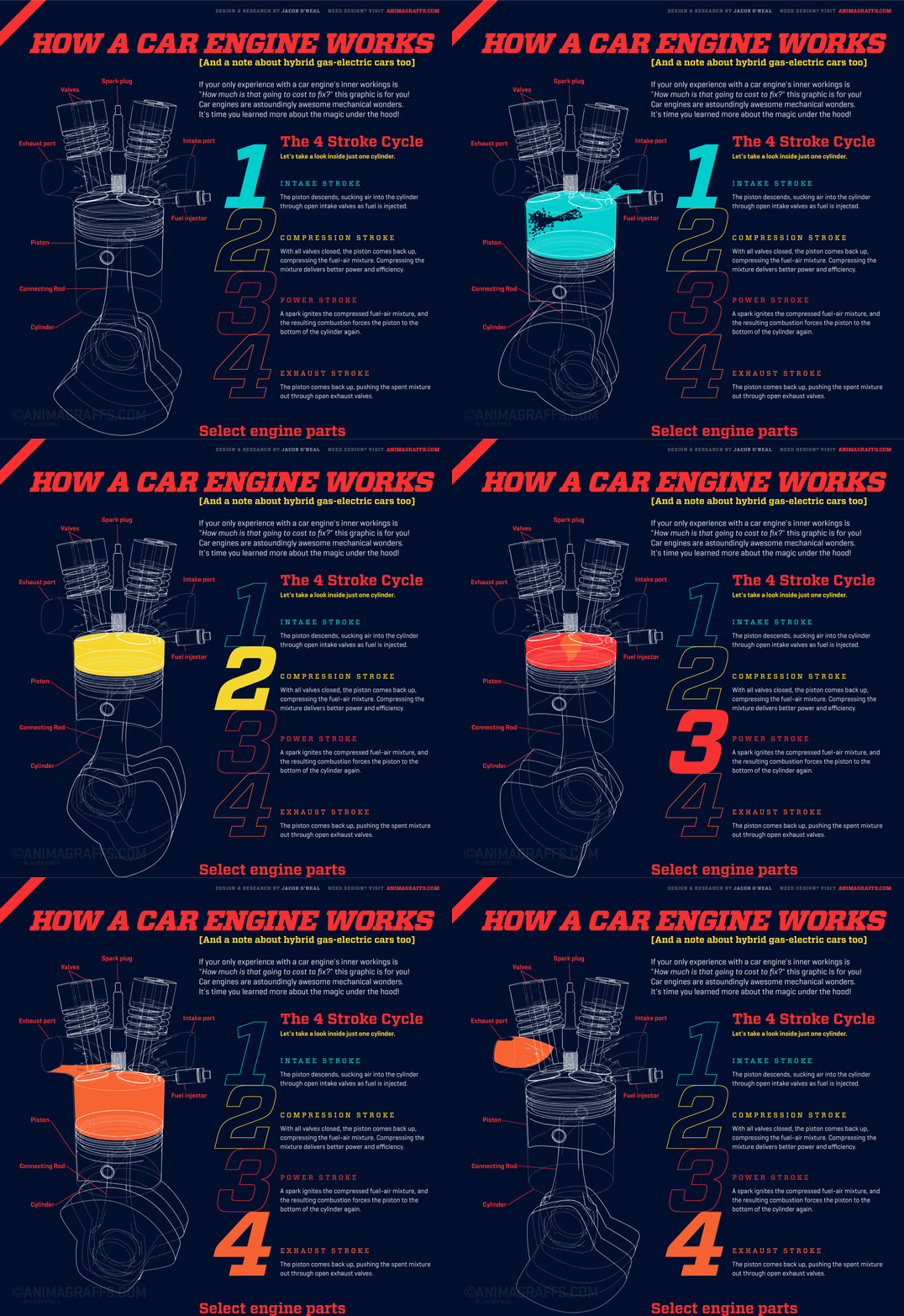
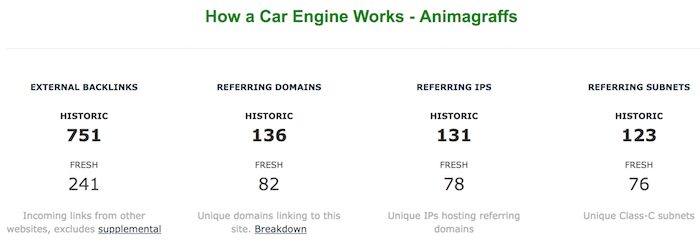
Best of all, the Amimagraphs founder didn’t do any marketing; the graphic just spread. Even with no marketing, it generated 751 backlinks from 136 domains and over 200,000 visitors.
If you want to use old-school link building tactics, you can, they just won’t help you as much in 2021. So, get creative and build a better mousetrap.
When you build a good mousetrap, you may be worried about cost. But there is a different way to think about it:
How much would you be spending on marketing to get the same results?
People make fun of me for what I am doing with Ubersuggest and think it is silly that I can “lose” $150,000 or so a month. But if I had to buy that traffic, it would cost me much more than $150,000. Even though my mousetrap is expensive, it is still cheaper than paid ads.
You don’t have to go as far as me. Doing what Animagraffs is affordable. I paid them $750 to create an animated infographic for me. I’m not sure what they charge these days, but I bet you can find someone on the web who will do it for a few hundred bucks.
Conclusion
Instead of thinking of SEO in the traditional sense, I want you to shift your strategy.
SEO is only going to get harder, Google is going to continually change their algorithm in ways you may not like. But one thing is for certain: the traditional way of doing SEO will get you results, just not in the timeframe you want.
So, follow the four steps above. They are unconventional, but the industry is so competitive and saturated that you have no choice but to think outside of the box.
So what other unique strategies are you going to leverage in 2021?
The post How to Dominate Google in 2021 appeared first on Neil Patel.
Source: feedproxy.google.com

Here’s What You Should Do When Your Search Rankings Drop
If you’ve ever done SEO, you know how good it feels to see your rankings go up.
You put a ton of hard work into moving up in the SERPs and it finally pays off.
But then the unexpected happens. Your rankings drop.
Few things in SEO are more discouraging than a fall in the rankings.
It makes you feel like everything you did was useless.
You wonder what went wrong or if you made a mistake. You beat yourself up for not doing it right.
You’re back to square one again, and you have to start all over.
Or do you?
In my experience, that’s not always the case.
My rankings have dropped more times than I can count. At first, I panicked.
As I learned more, I found out that it’s not the end of the world if you go down a position or two.
It’s obviously not ideal, but there’s a lot you can do to fix it.
That’s what I’m going to show you today.
Even if your rankings are where you want them to be, you need to be aware of how to bring them back up when they drop (because they will).
Analyze the drop
Before you take action to raise your rankings, you need to track your rankings, ideally on a daily basis so you can see if they are increasing or decreasing.
The reason you want to track your rankings on a daily basis is that Google makes 3200 algorithm changes per year, which is a bit more than 8 algorithm changes per day.
Hence you don’t really have a choice but to track your rankings daily.
So how do you do that?
First, you’ll want to head to the Ubersuggest dashboard and click on “Add Your First Project”.
It’s as simple as adding in your URL.
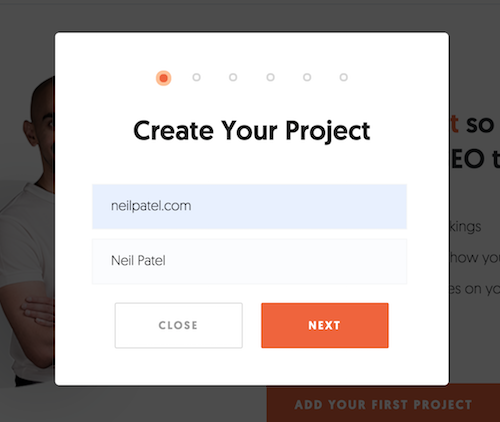
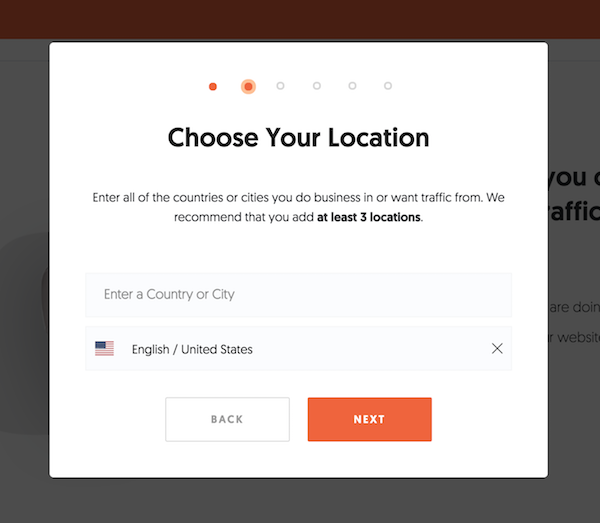
Then select the locations you do business in and want traffic from.
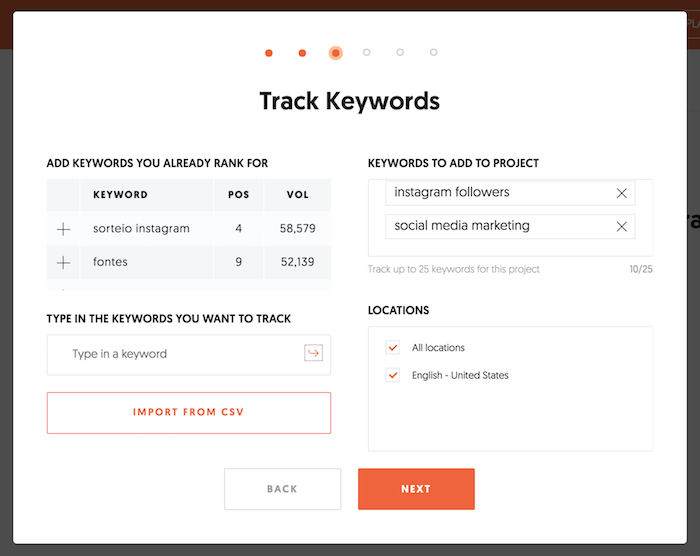
Then add in the keywords you currently rank for or want to go after.
And of course, set up your traffic preferences.
Make sure you select “daily” rank tracking and you turn on mobile rank tracking.
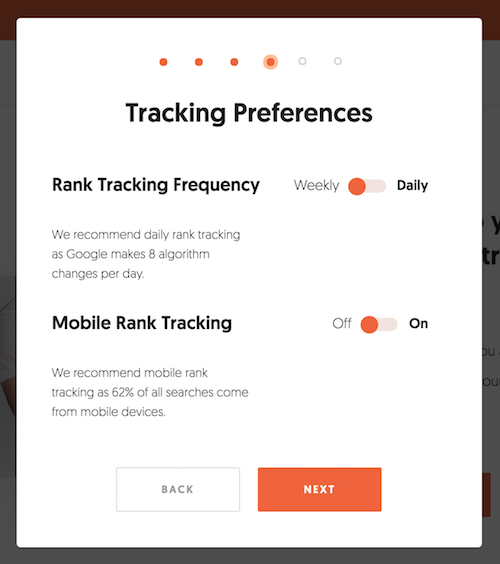
And then you’ll be good to go.
Then you will be notified via email when your rankings go down (or up) as there is no way you are going to have the time to manually check every day.
Or when you log into your Ubersuggest dashboard you’ll see an updated view of your site:
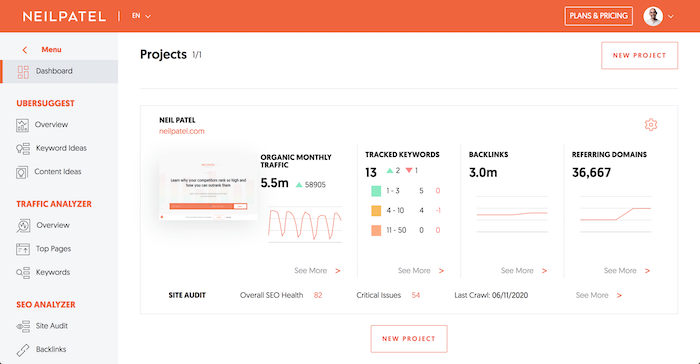
And then when you drill down into your rankings you’ll see a report of what is increasing or decreasing.
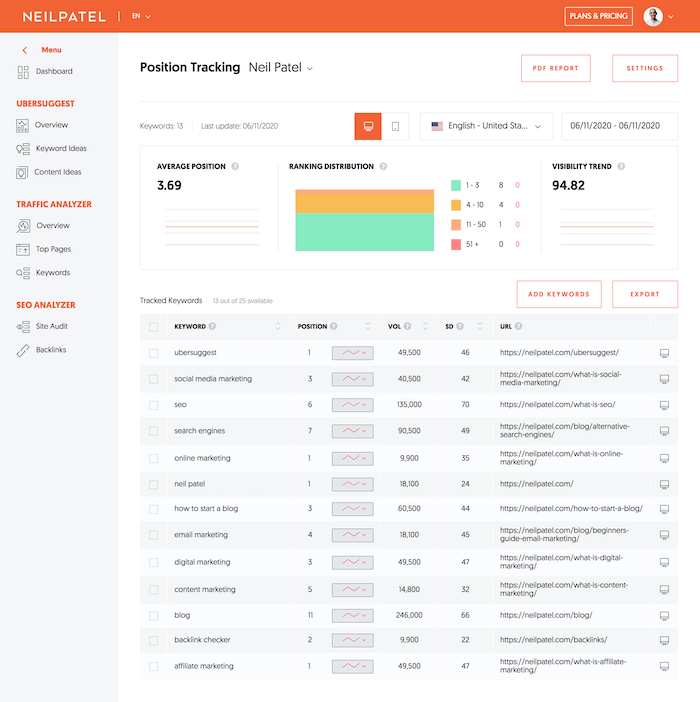
Now when looking at your rankings it is normal for them to fluctuate a few spots here or there… but if you see all of your rankings all of a sudden drop, then you know you need to do something.
Did you get penalized?
In most cases, your site has not been penalized and you don’t need to worry about this.
If you didn’t do anything fishy like “buying links” you don’t really need to worry about a penalty.
If you are unsure, read through this list and ask yourself if your site is guilty of any of these SEO sins.
If so, identify the problems and take steps to fix them.
Even if you haven’t done anything on that list, you could still have gotten a penalty.
Google’s algorithms are updated frequently, and they’re incredibly complex.
They take hundreds of factors into account when considering ranking.
One day, your site might not deserve a penalty, and the next, it might.
It’s important to understand the types of penalties: manual and algorithmic.
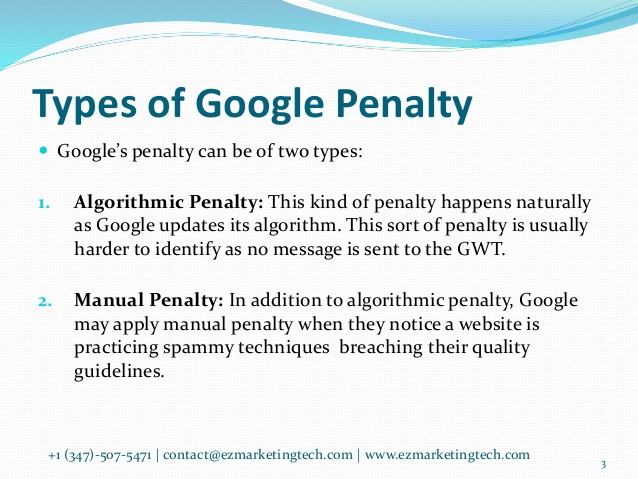
Source: Slideshare.net
Manual penalties are given out by Google’s webspam team when they get alerted of suspicious activity.
This could be the result of having unnatural links, or someone could have filed a spam report against you.
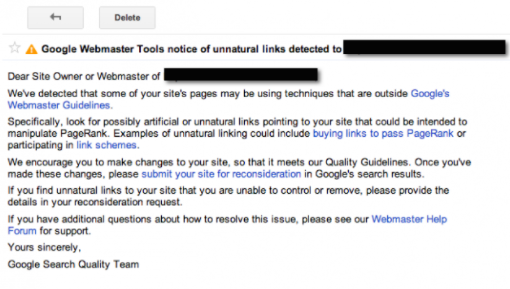
If you’ve received a manual penalty, you should have gotten a notification in Google Webmaster Tools.
Here’s an example of a message about unnatural links:
The other type of penalty is an algorithmic penalty.
These penalties are harder to track because there’s no definitive way of knowing you received one.
To determine if you’ve gotten an algorithmic penalty, you have to understand how Google’s algorithms work.
If you find that you’re doing something an algorithm doesn’t like, there’s a good chance you’ve got a penalty.
But you also have to think about new penalties.
If your rankings dropped randomly, check Moz’s handy directory of Google’s algorithm updates to see if there’s a new one at work.
A new algorithm could be the reason why you’re seeing lower rankings.
If that happens, research the algorithm and find out what it’s penalizing.
One cool way to keep track of new penalties (and a bunch of other Google-related stuff) is to follow Gary Illyes, John Mueller, and Google Webmasters on Twitter.
Gary and John, in particular, give out a ton of awesome advice, and you can often find them talking with other Twitter users.
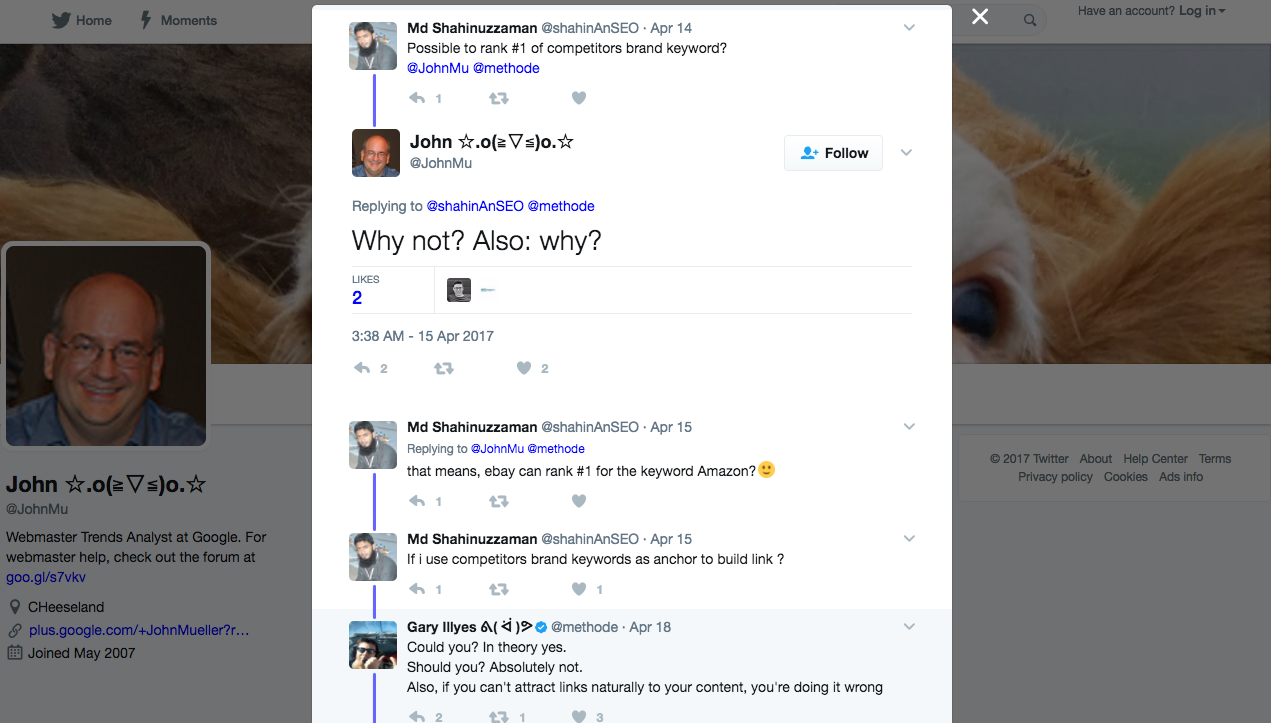
You can even ask them a question directly and get it answered… you may not get a response, but it is worth a shot.
Do you have link problems?
This is a big one.
Think of links as the currency of SEO. It’s essentially how you “gain” authority.
So it’s no surprise that a strong link profile is correlated with high rankings.
The flipside is that a weak link profile is correlated with low rankings.
I spend lots of time working with clients on SEO, and I’ve seen lots of sites that have numerous link problems.
Usually, the business isn’t aware.
That’s because weak links are the silent killer of SEO. That’s why you need to make sure your link profile is robust.
First, conduct a link audit of your site. Here’s a step-by-step guide on how to do that.
For the short version, use a backlink analysis tool like SEMrush Backlink Checker to see where your bad links are.
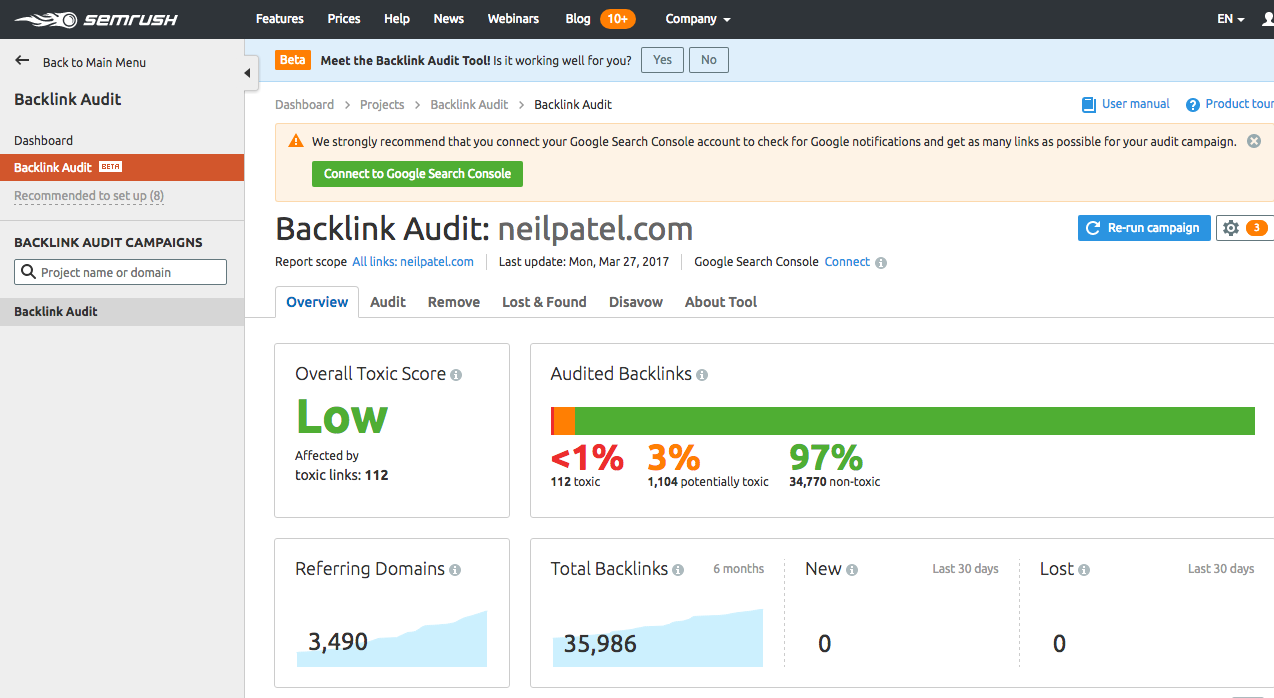
When you find bad links, contact those sites and nicely ask them to remove the link.
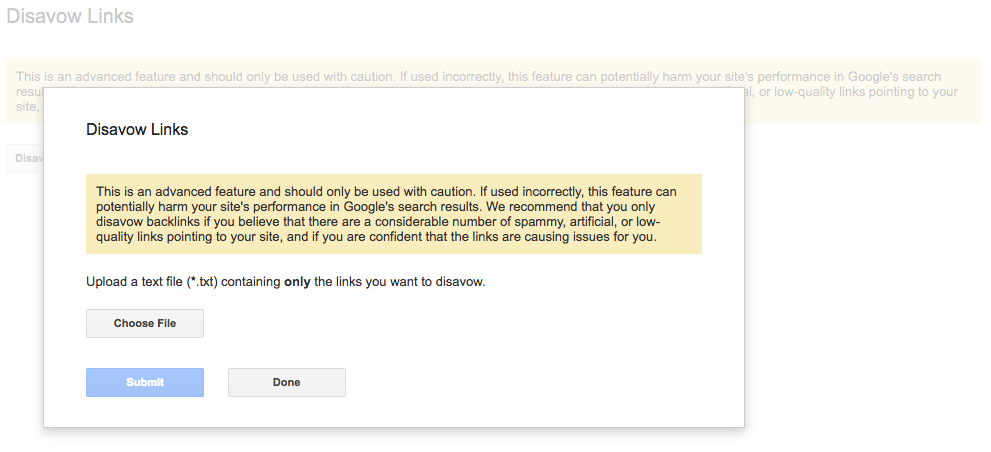
If that doesn’t work, use Google’s Disavow tool as a last resort.
 However, I’ve found that about 90% of the time, conducting a backlink audit will help you find bad links.
But there’s a problem here. Often, the reasons behind link problems aren’t so obvious.
If your link profile looks okay after an audit, there could still be problems. Here are a few of the issues your link profile could be facing.
Losing links
Did you know you can lose links? Both internal and external links?
It could be the cause of your ranking drop as well.
Yep, you can lose internal links even if it’s to content you already own.
Let’s talk about those first.
If you often relaunch, rebrand, or redesign your site, you may lose some links along the way.
Why does this happen?
It has to do with redirects and transitioning your site over smoothly.
Let’s talk about site transitions first. If you deleted an old blog post, then links to that post aren’t going to work.
In turn, this will weaken the internal linking structure of your site and compromise your SEO.
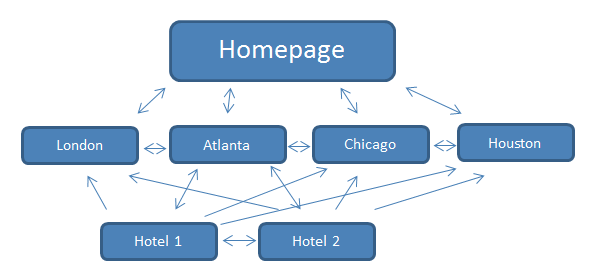
You’ll have one less link, which is removing a part of your internal linking network.
This isn’t optimal because it means two things:
- You’ll have to fix the link
- You’ll have less content on your site to link to.
That’s why I recommend not deleting content unless you absolutely have to.
You can always update it.
That’s just one example of a lost link.
Another reason you could lose an internal link is a faulty redirect.
This often happens with 301 redirects. I’ve talked about 301s before, but there’s a unique issue you need to be aware of.
Because a 301 is called a permanent redirect, lots of people assume that the redirect will always work.
But it doesn’t.
Here’s precisely how a 301 redirect works:
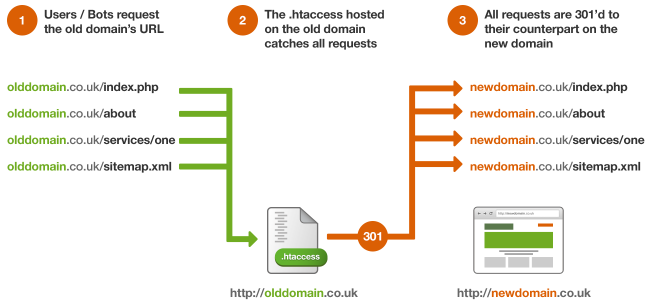
If you just set up a new site, you can 301 from the old domain to the new one without a hitch. The issue is when you revamp your site more than once.
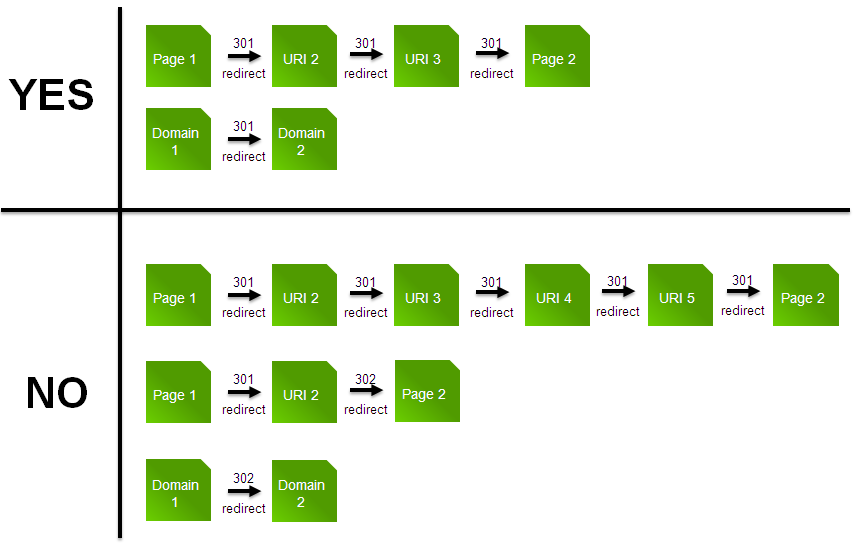
That’s because redirects from older versions of a site are rarely passed on to newer ones.
On top of that, if you get a new domain and an older domain expires, it could cause a significant loss in traffic because the 301s will no longer work.
It’s messy.
If you discover a bad 301 giving you problems, you need to fix that.
First, you need to find the target links your 301s are trying to go to.
If those links are dead, you’ll most likely need to remove the link.
You could also put the old content back up or create new content to keep the link on your page.
This is a good idea if the page in question gets a lot of traffic.
You need to do what’s best for your visitors. If they’ll miss out on great, comprehensive content, you should make sure that content is still on your site.
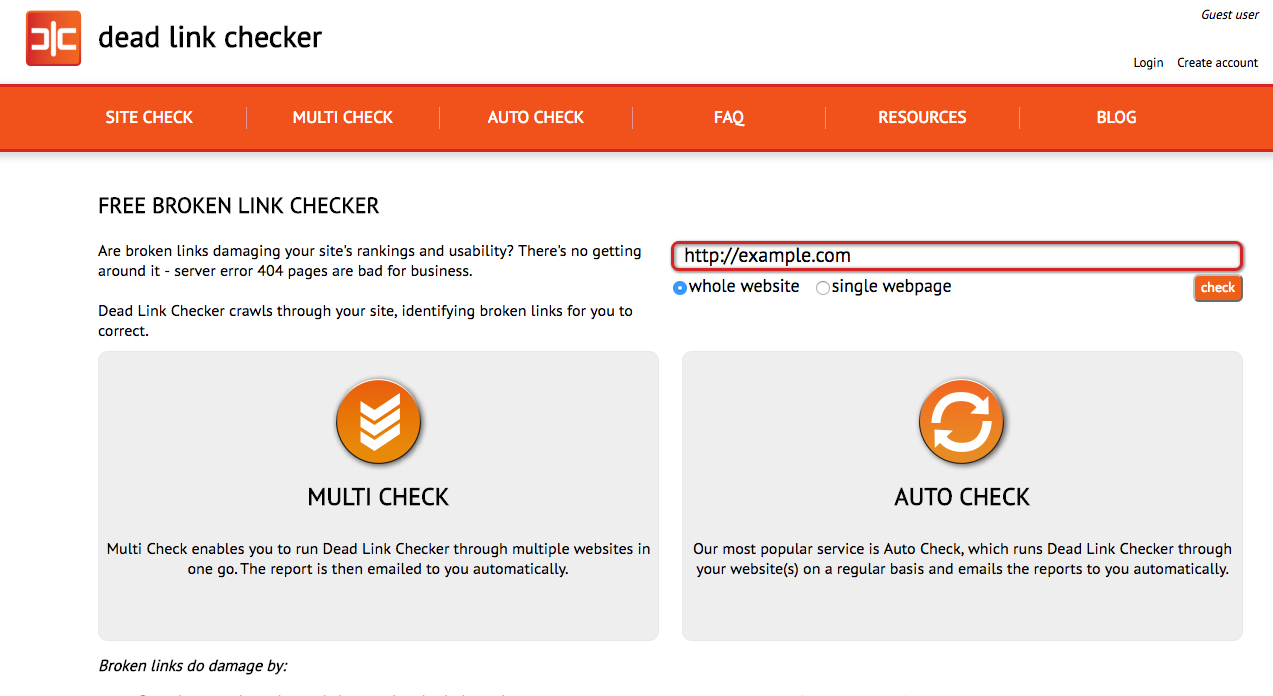
You should also check for broken links.
You can use a tool like deadlinkchecker.com to do this:
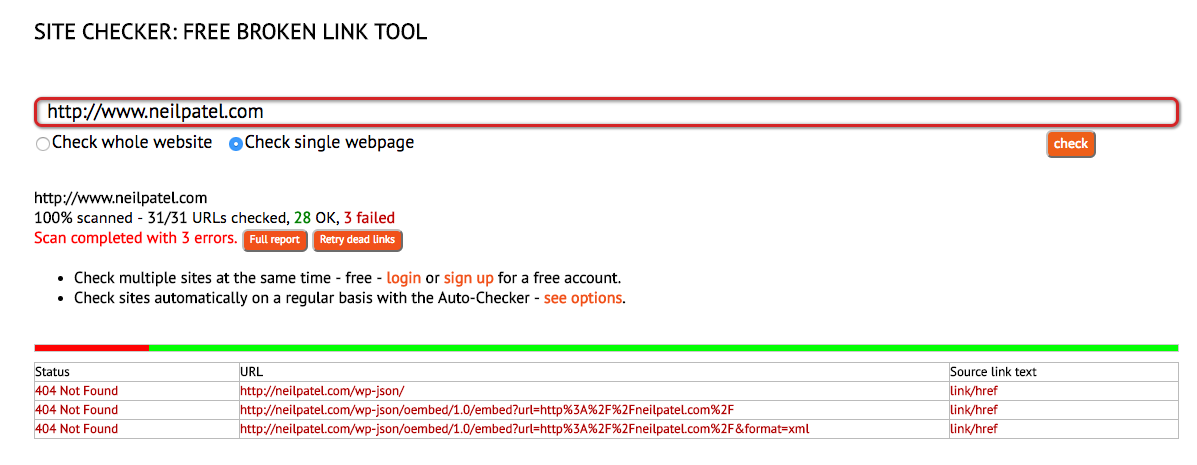
Ideally, you want to see no errors:

But if you do see errors, you’ll be able to see the URLs that aren’t behaving correctly:
But what about outbound links? If you find an outbound link that no longer works, just remove it and replace it by linking to another authority site.
Finally, let’s talk about backlinks you’ve gotten from other sites.
Go here and type in your URL.
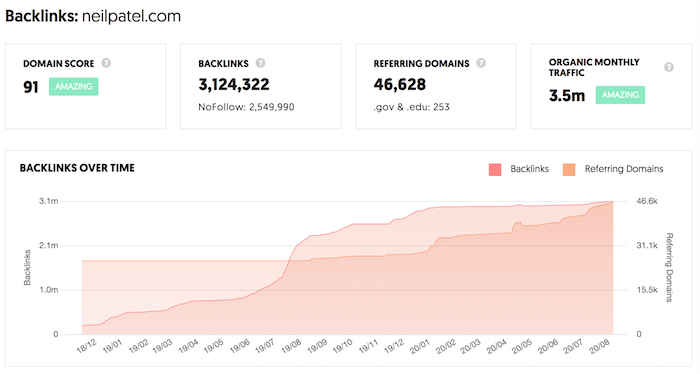
If you see your link chart going up and to the right, you are fine. If it is going down, then we have to fix it. For example, using Ubersuggest you can see which sites don’t link to your anymore.
And for those sites, you can use a template like this one to get those links back:
Hi [Name of site owner],
I hope you’re doing well!
You linked to my site a while back, and I want to thank you for that. However, it looks like the link is actually gone.
The link appeared in your [piece of content/page here], but it seems that it’s not there anymore.
Here’s the page on my site you linked to: [Link URL here]
If you could put the link back up, I’d really appreciate it. I’m a big fan of your site, and it’d be my pleasure to return the favor if I can.
Sincerely,
[Your name]
Most people will ignore you, but a percentage of the people you email will link back.
Polish up your site
If all else fails, you might need to spend some time improving your site.
I’m talking about design, user experience, and speed. Each of these is integral to a site that performs and ranks well.
I’ll go over each category briefly:
Design
Having a mobile-friendly design is important as there are more searches on mobile devices using Google than there are for desktop.
If you’re not considering mobile users first, you need to start doing that.
Having a mobile-optimized site isn’t as simple as making sure your site is responsive.
That’s definitely important, and you should do that, but it’s not enough by itself.
Think about making all of your content mobile-friendly.
There’s one big reason you should focus on this. Google has a mobile-first index.
That alone should be more than enough to persuade you to focus on mobile-first design.
You might want to read my article on mobile usability for more information on this.
User experience (UX)
This is another reason why a responsive design is so important.
Your mobile users should have a great experience that’s designed for mobile devices.
Similarly, your desktop users should have a great experience that’s designed for desktops.
If your UX is bad either way, you will lose visitors.
If you take a look at the most popular sites in your niche, you’ll notice that 9 times out of 10, they’ll have great UX.
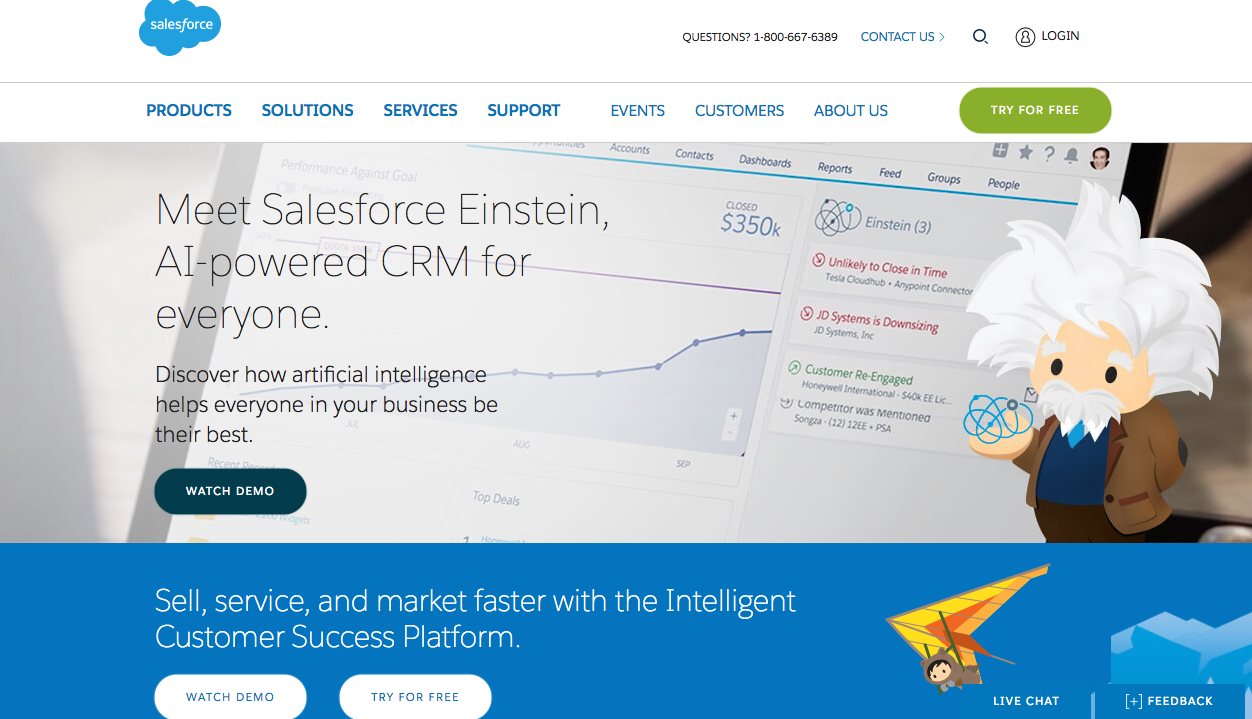
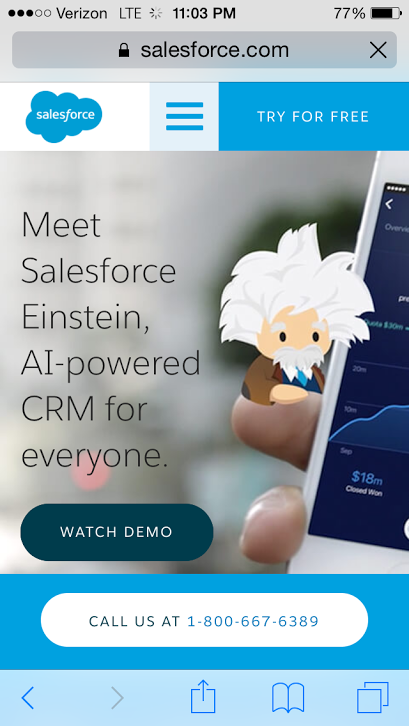
Say you’re in SaaS. Without a doubt, Salesforce is one of the biggest SaaS players in the niche.
And sure enough, their desktop and mobile UX is fantastic.
Desktop:
Mobile:
This is what you should strive for when polishing your own site.
Speed
Search engines (and people) love fast-loading pages. In fact, 47% of customers expect a page to load in 2 seconds or less.
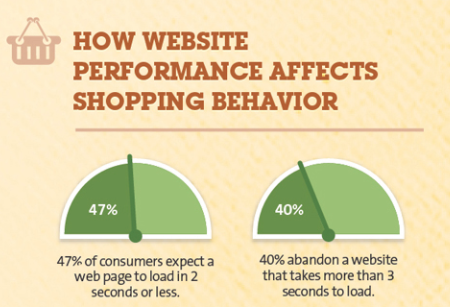
So if your site speed is longer than 2 seconds, you could lose traffic.
Yikes.
Making your site faster is a long-term strategy.
You have to monitor your site and make sure nothing’s dragging it down.
Start by adding compression.
Next, make sure your server has adequate speed.
It should be no longer than 200 milliseconds.
You can test your site speed by using Ubersuggest’s “Site Audit” feature.
Type in your URL and click “Search.”
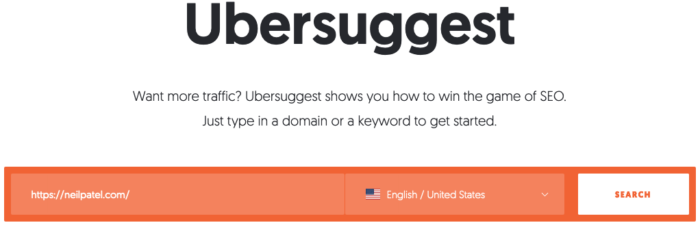
From there, click “Site Audit” in the left sidebar and scroll down to “Site Speed.” Here’s what you’ll see:
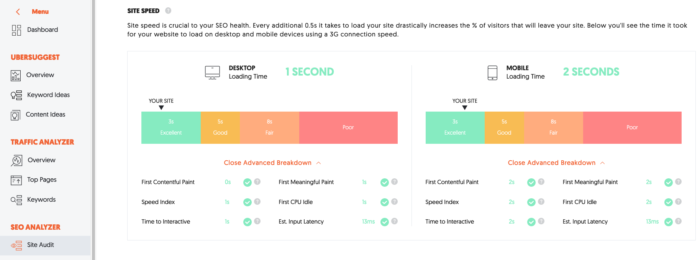
There are tons of factors that can cause slow site speed, so the best way to prevent slowness is to keep your site as lightweight as possible.
And Ubersuggest will break down how to do that and what to fix.
As a rule of thumb, if you have anything unnecessary on your site, remove it so your speed is the best it can be.
Don’t forget about content
Through Ubersuggest we track millions of popular sites around the world to get better data insights on algorithm changes.
We know for certain that 641 sites we track are updating old content on a daily basis.
Can you guess how many of them saw a search traffic dip of 10% or more from the last algorithm update?
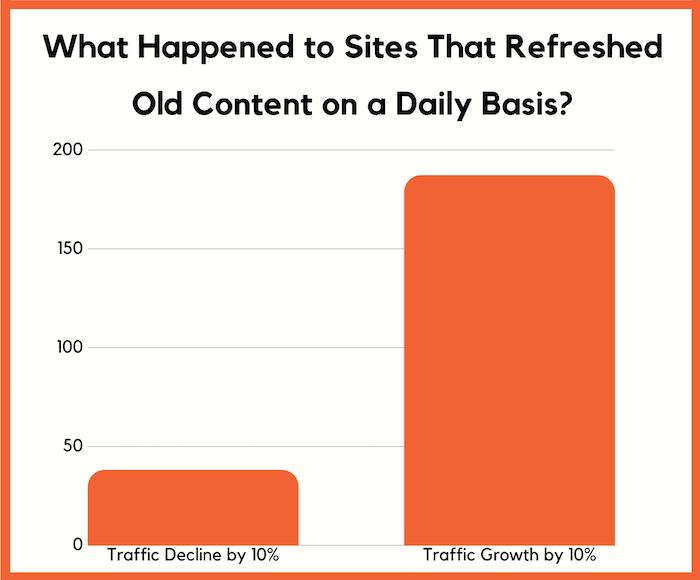
Only 38! That’s 5.92%, which is extremely low.
What’s crazy, though, is that 187 sites saw an increase in their search traffic of 10% or more.
So make sure you are keeping your old content up to date.
Because why would Google want to rank old, stale content, when they can rank something fresh and useful for people?
Another strategy I love to deploy is to expand my content that is already ranking well.
For example, let’s say you rank for the term “digital marketing”.
You’ll want to head to Ubersuggest and type in the phrase “digital marketing”.
You’ll see a report that looks like this:
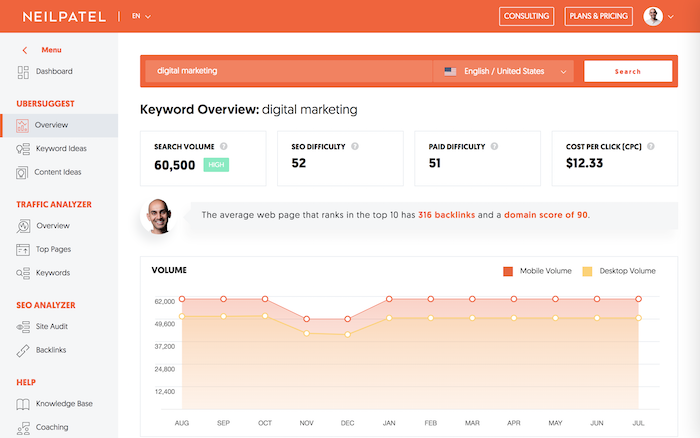
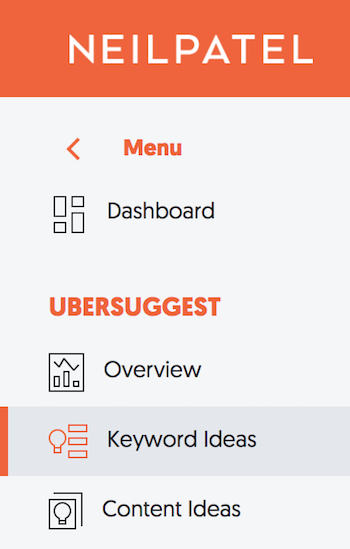
From there in the left navigation bar, click on “keyword ideas”.
You should now see a report that looks like:
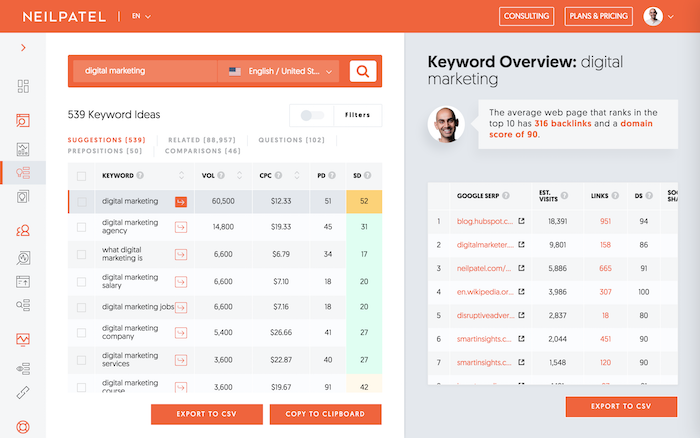
This will give you a list of keywords that are similar, long-tail terms that also are searched frequently.
If you rank for the main term, it is easy to also rank for the longer tail terms.
So make sure you add the relevant ones to your content.
It may seem tedious but go through 100s if not 1000s of keywords in the keyword ideas report as it will allow you to get quick traffic gains.
When adding the new keywords into your content, don’t just stuff them in there.
It has to flow naturally and make sense for your website visitor.
And if you can’t make it make sense for a particular keyword, don’t do it… put the user first.
Remember you are writing for humans, not Google.
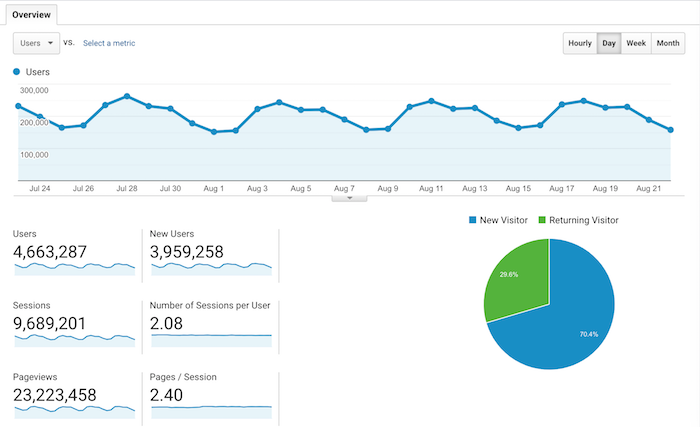
Now the strategy I broke down here may seem simple and silly, but it’s one of the big reasons why I am getting roughly 9 million visitors a month.
Conclusion
Going down a position or two in the rankings happens to the best of us.
It’s even happened to me.
If this happens, don’t panic.
Almost every client I’ve had who’s experienced a loss of rankings got really scared when it happened.
You probably felt this way too. But you don’t need to worry.
You can easily bounce back from a ranking drop.
Don’t believe me? Give these strategies a try.
These aren’t just little tips.
They’re tried-and-true methods that will help you reclaim your spot on Google.
No one deserves to lose ranking when they have an amazing site that users love.
What’s more, it’s easy to fix.
Don’t let the initial shock stop you from getting your ranking back.
So, when was the last time your rankings dropped?
The post Here’s What You Should Do When Your Search Rankings Drop appeared first on Neil Patel.
Source: feedproxy.google.com

Why SEO Is Important to Any Business Nowadays. Top 21 SEO Benefits
In the office, in the online world, on social media, on the phone, in the chat, everywhere people talk about SEO. Everybody who has a business has heard about SEO. But also anyone who has a business probably said at least once: Do I really need SEO? What can SEO do for me?
Since the moment SEO appeared in our lives, everybody in the field has started talking about it. It became a never-ending discussion. We want to know all the facets of SEO. Why is SEO important?
And this is what you’re about to find out: Top SEO benefits to inspire you and never let you underestimate search engine optimization.
Curiosity flourished and we wanted to put it simply into words and see the key benefits of SEO in the life of a business. We found 21 reasons why SEO is crucial to any business living on the internet.
Some us even keep talking while sleeping or keep thinking about SEO while staying in traffic or cooking and so on (*half-joking*). But leaving the joke aside, SEO doesn’t sleep. It’s alive.
If done right, it keeps your website alive, too, right there on the first page of Google, getting the attention of someone that might buy something from your site or recommend it to others.
If we’re looking at the evolution of the interest people put into SEO, we can see how beautifully it has grown over the years and it is constantly changing.
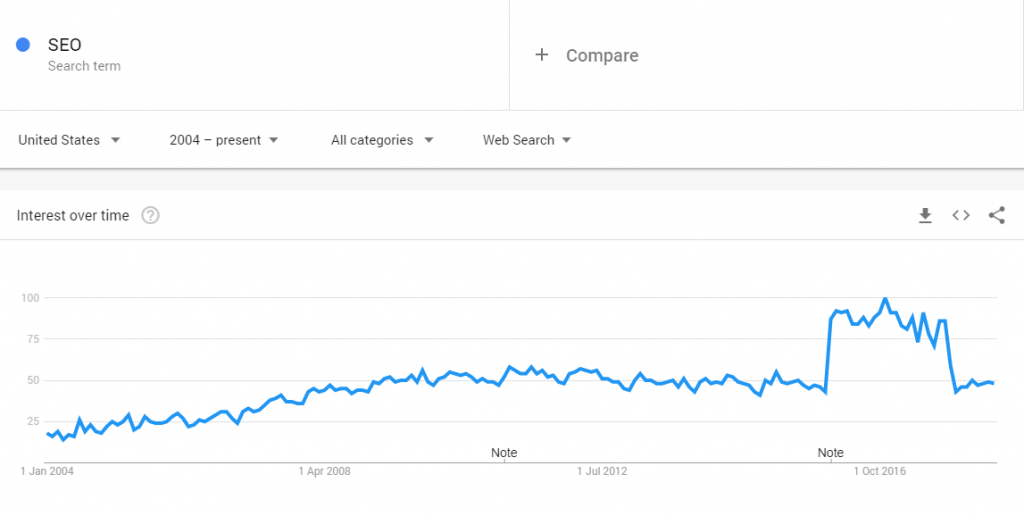
SEO is like the popular kid in school. Everybody talks about it. There are some groups that worship it and follow everything that it is doing, but there are also some groups that hate it, don’t like it, and speak badly about it.
Top 21 SEO Benefits
1. SEO Blends into Your Marketing Funnel
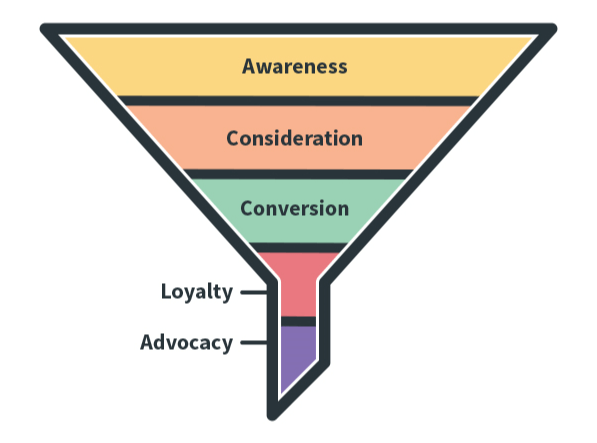
Your marketing funnel starts when the prospect hears about your brand in the awareness stage. It will continue when your brand generates interest, desire and will make them take an action afterward.
Source: www.aweber.com
SEO blends in all the stages of your marketing funnel. The most important step is the first one when you hook the user. But he must find your website. You need search engine optimization to get there, on the first page.
The inbound marketing sales funnel has three stages:
- top of the funnel (TOFU),
- middle of the funnel (MOFU) and
- bottom of the funnel (BOFU).
Each stage requires a proper set of marketing tactics and techniques, which includes SEO. So, when I was saying that SEO starts right at the top of the funnel, that happens because there is your audience, and you want to attract a larger portion of it.
Track top of funnel keywords (informational keywords), create content maps, and make your site’s structure user-friendly to keep the user as long as you can on your website and you’ll push them down the funnel.
In the TOFU stage, the user will land on your blog, which is the most common type of content.
For the middle of the funnel, your focus should be on creating high-quality content and have hooks on your website that will keep the user, such as a high loading speed, high quality, and lossless images, mobile-friendly website, un-broken pages, and lots of other technical SEO requirements.
Technical SEO has a great impact on the user’s behavior.
Engaging the users and sending them down the sales funnel can be achieved through CTAs, surveys, content downloads.
At the bottom of the funnel, you must persuade the user with other techniques. But up to this point, SEO blends very well in each stage of the funnel.
2. SEO Helps You Get into the Spotlight
When we talk about search engine optimization, we talk about creating the best version of our website to get user’s eyes, which nowadays means to be on the first page.
And that turns out to be a pain in the neck most of the time.
But it doesn’t need to be annoying. If you follow the natural path of things, SEO can help you achieve the desired position. Hard work and dedication can come a long way.
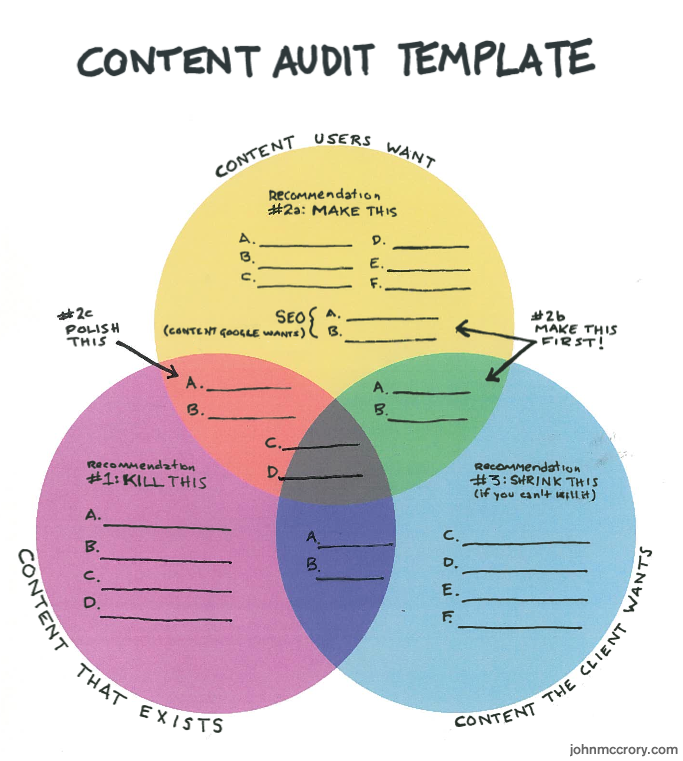
A content audit is needed at this stage, to understand the actual status and then decide what you have to optimize.
For a correct content audit, you must gather all the articles into a spreadsheet, add metrics (such as CTR, organic search traffic, internal and external links, shares, comments, rank) and order them to see the pages with the lowest metrics.
www.contentmarketingup.com
Use a tool for content optimization and voilà. You have awesome content. Get in the spotlight by promoting it and earn lots of links.
Once you’ve managed to get on the first page of Google, you’ll gain visitors, who might become clients. But once you’ve got there, you must work hard to stay put.
After that, you could take it up a notch. That means social sharing, emailing, promotion, internal linking in other pages that have high influence.
3. SEO Creates a Stronger Relationship with the Audience
If you managed to get on the first page in the search engines, that means you’ve gained the trust of Google or Bing. Which should lead to earning the trust of your audience.
Words play an important role in digital marketing and content is the pivot.
Content marketing is the most effective SEO technique. Websites with blog content have 434% more search engine-indexed pages than other business sites that don’t publish content.
If your page has a good user experience, the audience will like it and you have a great chance to create a strong relationship. But that is not the only indicator.
Quality content with valuable information that answers the audience’s questions using their own words is another indicator.
Integrate a comment section in your blog to hear your audience. Make sure you filter the spammy comments before publishing them.
User-generated content is a good sign of quality information. You can speak directly to your audience, hear their thoughts and opinions, allowing you to create a relationship quickly.
4. SEO Pulls out Traffic
Yes, that’s true. SEO can pull out qualified traffic. It turns out to search engines drive 300% more traffic to sites than social media.
If done right, SEO can pull your website on the first page, and from that moment you’ll have a lot to gain from. That means traffic, too.
If your website is in the sight of the viewer, then most probably they will enter your website.
So, the better you optimize your website on-site (with a proper headline, URL, meta description, cover photo, and pictures with alt-description), the higher the chances to attract the user to your website.
You need to differentiate yourself from the others and be the unicorn in a crowd of donkeys, as Larry Kim often says.
| Create unicorn content. This is your best, most magical content, performing among the top 3 percent of all your content. | |
 |
LARRY KIM |
| CEO MobileMonkey & Founder WordStream | |
5. SEO Is Cost-Effective Comparing to PPC
It is not justified that PPC is highly costly comparing to SEO, which is more effective. SEO has a long-term value, while PPC has a shorter lifetime value.
As long as you pay, you’ll appear in Google; if you stop paying, then your ad will disappear.
PPC is better to use when you launch a product or your business because at that stage it is harder to get awareness using SEO.
PPC works best for promoting products and commercial content because you invest money to gain clients and sales.
You invest in SEO for awareness, web traffic, and other metrics that lead to sales. But the thing is that you don’t need to invest so much money on SEO as you need on PPC.
SEO offers the better value in search marketing. That’s its true strenght.
Studies say that SEO has approximately 20X more traffic opportunities than PPC on both mobile and desktop.
And Search Engine Marketing Professionals Organization said that 87% of search engine dollars are spent on PPC vs. 11% spent on SEO efforts.
6. SEO Is Live 24/7
SEO can run free because it is live 24/7. Even when you’re sleeping, or you are offline, it can pull out your site and keep it in the sight of the visitors, because SEO never sleeps.
A unique perk of optimizing your website is the timeless characteristic. To understand how it works imagine you are looking for a specific product and searching the internet.
Each webpage from SERP is like a store you walk in and look around to see if they got what you’re searching for.
Those on the first page are open, near to you, and well-known businesses (let’s say). If your page is there, then you might get a chance to get a new lead.
But unlike a store, which has open and closing hours, your website has SEO, which means it is open all the time and can receive potential customers anytime.
Search engine optimization it is practically like an open sign.
7. SEO Increases Sales and Leads
Since we were talking about new leads and potential clients, SEO puts your website on the map and impacts the buying cycle.
The thing that differentiates it from other forms of marketing and adds value to it is the fact that sales will increase without having to increase proportionally your promotional costs.
You can start SEO and content with no monetary investment. But if you want to scale your business to get high revenue, then you’ll have to make some investments.
In case you want to start with no monetary investment, then you’ll have to put more effort into creating high-linkable content, optimize for money keywords and keywords with a high volume and sustain your content with emailing social media, syndication, and other ways to promote it.
8. SEO Improves Your ROI
SEO can push your marketing goals to better ROI comparing to other forms of marketing. Your website can be a prospect magnet, based on your high-quality keyword and be where your customers are.
If you are in the sight of the visitor, you’ll be able to direct them to your website and offer solutions to their questions/problems.
Your website should be the apple to the user’s pie. ❤
Jayson DeMers, the founder of AudienceBloom, had quite a unique approach to the way SEO works as an investment for each business:
| SEO works very much like the stock market. You choose your stocks (keywords) based on the knowledge you have at hand, and then you wait. You’ll likely experience periods of growth and decline (like ranking fluctuations), but one thing is certain: the stock market and SEO are both long-term endeavors. There’s no quick path to riches in either case. | |
 |
JAYSON DEMERS |
| Founder of AudienceBloom | |
SEO might have one of the biggest ROI compared to other marketing forms.
9. SEO Has the Greatest Impact on Lead Generation
The key to generating more leads for your business is optimizing your site for search engines. According to a study by NewsCreed, 57% of B2B marketers said that SEO has the greatest impact on lead generation.
To generate revenue and expand the local area of your business you must take the online stage and dominate your competitors. The way to do that is to have a well-optimized website.
SEO has the ability to enable the flow of leads, but you have to help it and optimize the inner content through:
- fitted keywords with high search volumes;
- high loading speed time websites;
- quality content;
- get ahead of your competitors by spying on their content and their SEO strategies.
Search engine optimization plays an important role in cultivating organic traffic and generating leads. The message you transmit through your content is very important.
Did they land on commercial or information content? There are money keywords and information keywords.
Depending on what type of content they landed on your website, it will give you a more accurate insight on the level of the sales funnel they came from: leads, prospects, and in the end clients.
According to a report by Chitika Insights, it seems that the number 1 position in Google gets 32.5 % of search traffic.
And the first 5 positions account for 75.7% of the search traffic. That’s a strong indicator of the power of SEO.
If your website is in the first 5 positions, then you’ll have a high chance of attracting leads.
10. SEO Traffic Is More Convertible
One other reason why SEO is crucial for any business online is the power of converting. Indeed, SEO traffic converts better.
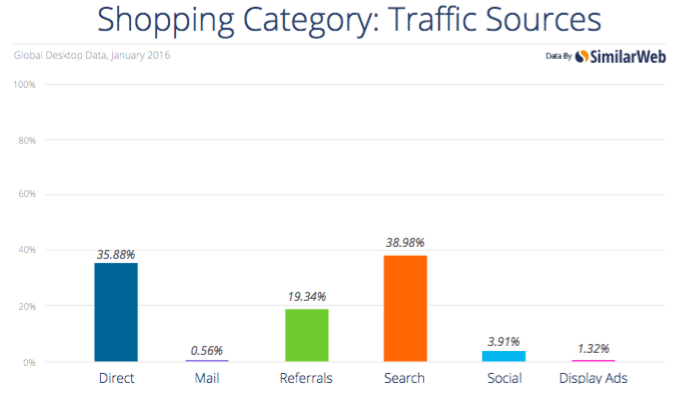
Search traffic converts 10x higher than social media on desktops according to a study by SimilarWeb. Moreover, it seems like search is by far the largest traffic driver.
Studies talk by themselves. eMarketer discovered that 76% of US agencies worldwide said SEO provided an excellent or good return on investment (ROI). Which better reason to stick to SEO, than these results?
If you’ve managed to find the working SEO strategy for you, then you can’t go wrong and you’ll benefit from juicy results.
By positioning your website on search engines, your business will gain more conversions.
11. SEO Increases Brand Awareness
Besides all the SEO benefits in the internet marketing field that we’ve talked about, SEO has the power to make your brand discovered and remembered, but you have to help it, as usual.
The sale funnel is a long process, so the visitor has a long way before converting. They might not be prepared to buy from you, but the fact that they entered your website is a good opportunity.
They will be aware of what you’re offering before taking the action.
SEO helps your website to get awareness.
Let’s say you’re searching for something online, for “how to dye your hair at home” and you want to know more about that. It is the first time dyeing your hair, you don’t know anything about it.
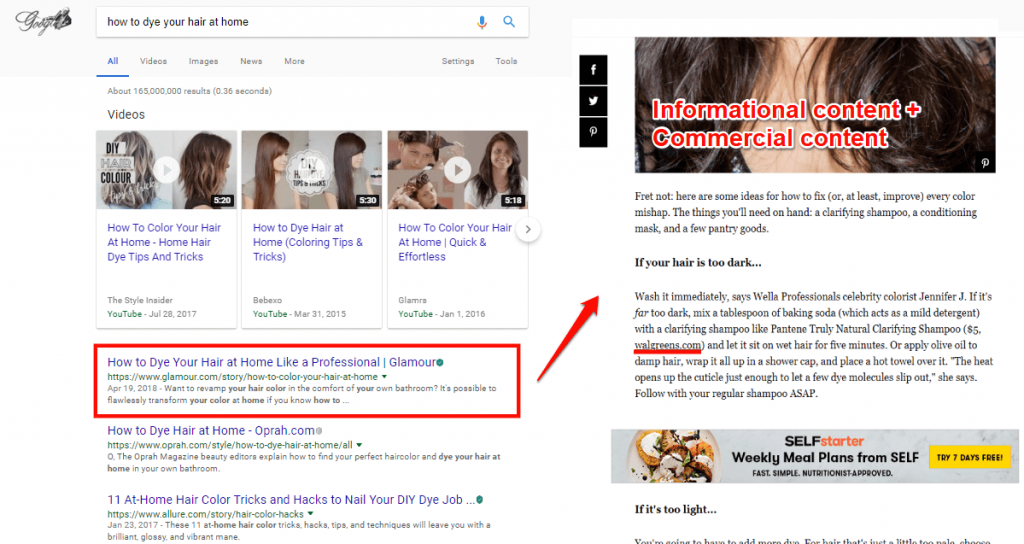
Just like in the example shown above, you find a website where you see informational content along with a commercial one (example of a product with the price and the name of the store).
In case you have a website like this, you might get benefits if people are buying for those type of websites.
Being one of the top results will bring awareness to your website. People will know more about you and might search your website for other information and take other actions around there.
12. SEO Increases Marketing Attribution
When your brand awareness increases, the marketing attribution will increase as well. Attribution represents the number of actions (“touchpoints”) a visitor is taking on your website.
Basically, it tracks down the events that engaged the user before converting them.
The more times users see your brand, the better chance to increase the marketing attribution. Better optimized pages, with quality content and trustworthy websites, will get you more “touchpoints” from the users.
Unfortunately, just a small amount of marketers use attribution in their marketing strategy.
A study by the Delhi School of Internet Marketing says that 34.1% of businesses don’t use any attribution model to measure marketing performance. And that’s sad.
Businesses that don’t use attribution might lose 50% of potential sales.
Those who used attribution and lead nurturing generated 50% more sales at 33% lower cost.
13. SEO Is One of the Best PR Strategy
You heard that right, SEO is one of the best PR strategies. You might think they came from two different worlds, but in the online world, SEO takes the form of public relations.
We all know that PR is the practice of spreading information about something (brand, product) or someone in the public eye. SEO can do exactly the same thing.
It will bring your brand to the public attention. But for that you need links and quality content, to rank in the top positions.
Links are a form of recognition for your website.
It means that those who linked to your website found useful and valuable information and want to share it with others.
This type of action can be categorized as word-of-mouth and PR movement. The more links, the more visibility for your website.
14. SEO Improves CTR
Optimized pages, with a high CTR, influence rankings and achieve top positions. That will improve the results, and get high CTR again.
It is an ongoing process. SEO and CTR are influencing one another.
A website that is very well optimized will get featured in SERP and will receive clicks, impressions. A top position in Google can have a high CTR.
| I can most certainly say with confidence that CTR is impacting rank. | |
|
LARRY KIM |
| CEO MobileMonkey & Founder WordStream | |
Usually, pages with a higher CTR tend to have higher conversion rates. Increasing your CTR by 2x will increase your conversion rate by 50%.
There are some ways to step up the game and increase your SEO and, therefore, your CTR:
- First, start by looking at those pages that have a low click-through-rate using Google Search Console (or Google Analytics):
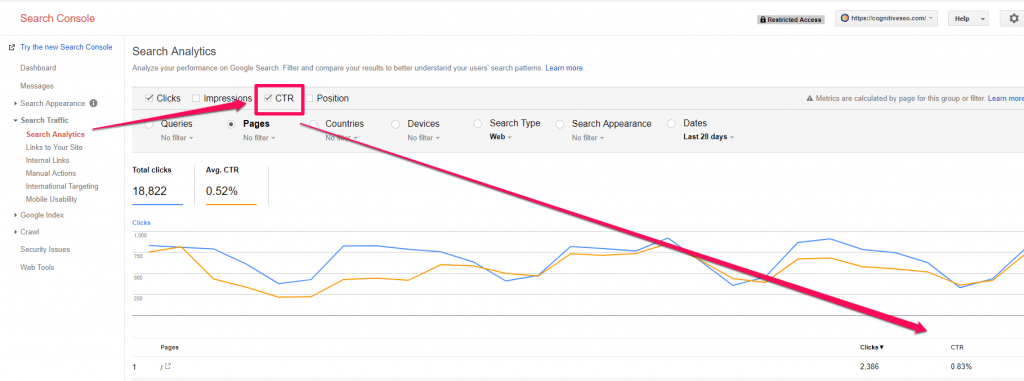
- Then look at the pages or queries that have a low CTR but high position. Start by optimizing those pages and their snippets.
- Another thing you could do is look at the duplicate content on your website and remake the meta descriptions and title tags that are duplicated.
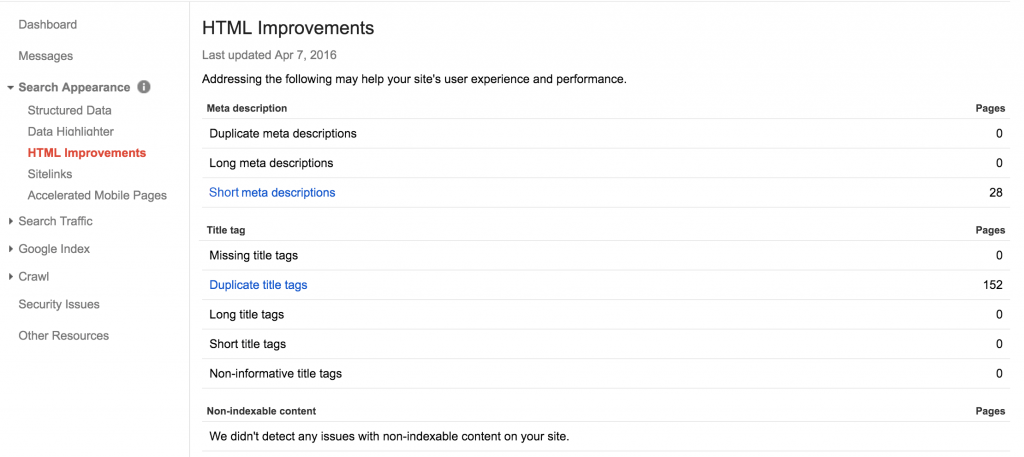
- Create unique titles that stand out in front of your competitors. Search for the keywords you want to rank in Google and look at the results you found. After that, create your headline by provoking an emotion.
15. SEO Can Eliminate Cold-Calling
Invest in SEO, rather than cold-calling. If you’re tired of sending emails, calling on the phone, or performing other forms of outreach, then SEO is the only “call” you have to make.
After all the reasons we’ve talked about why SEO is important, you can understand that it takes a few steps forward for your business and could eliminate cold calling.
It works pretty simply. Imagine you’d like to contact somebody regarding a proposition or collaboration idea.
If you have a well-known brand due to your SEO efforts (that means that it appears in the search results pages for important and convertible keywords) and say you are John from X (the brand you’re representing), then you’ll have a higher chance to get noticed.
The discussion can get to a positive result faster and the response rate can be higher.
16. SEO Builds Trust and Credibility
Google has lots of ranking factors and searches quality raters that analyze and evaluate ranking websites and pages.
Which only proves that Google takes a high interest in showing relevant, trustworthy, and newsworthy content to the visitor. SEO on the same note is providing trust and credibility to the website.
That type of strong indicator from a website will send quality signals to Google. Not to mention that SEO helps you grow your online reputation.
Sites that send a strong trustworthy signal have one or more of the following elements:
- HTTPS protocol;
- Security certification;
- Business blog with comments area;
- Social networking components;
- Current contact information;
- High-quality pictures, clean web design, and great UX;
- Recent activity on site (easy to see through the blog);
- Social media activity (social signals have a strong impact on SEO).
17. SEO Is a Long-Term Strategy
It takes approximately 6 months to see optimal website rankings for a new site, and it can go up to 12 months.
If you follow a natural path to grow a business online and follow Google’s quality guidelines to increase your website rankings, you have a high advantage.
Because once you get a place in the top positions of Google you rarely change it. The only times you can see a decrease in rankings is due to Google algorithm updates or high competition.
Studies have shown that search engine results had gotten more useful and relevant over time as 52% of consumers acknowledge.
The thing that I’ve seen working best for ranking in Google is content. Not any type of content, but quality content.
The key is to create informational content and connect it with the commercial type (through internal linking) to create linkable content and grow up your website.
A blog can go a long way. 72% of marketers say relevant content creation was the most effective SEO tactic according to Ascend2.
18. More Effective Than Other Traditional Strategies
SEO has proved a lot of times to be more effective than any other traditional strategy (passing flyers, print advertising, television, and radio or direct marketing) because the user is searching for something and receives the results.
It is not exposed to information that he doesn’t need at that moment (like it happens in the traditional marketing process).
The popularity of traditional marketing dropped over the years. Digital marketing started to rise and SEO has received the crown to rule over the empire.
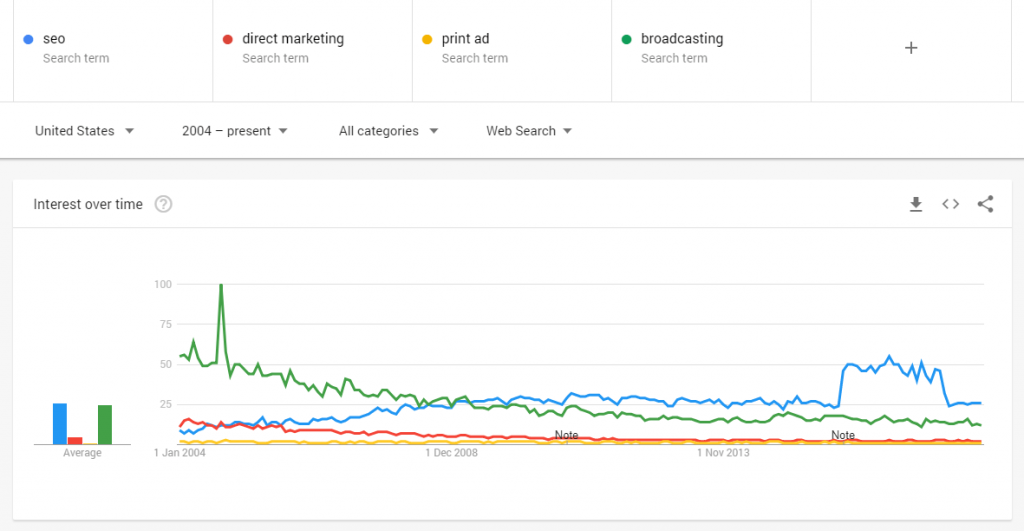
We can see how broadcasting had a tremendous drop in searches in 2009. Direct marketing had a slow death. And SEO had a natural growth in the last years.
We can’t say for certain that was the real evolution of how traditional marketing involved and SEO evolved, but we can point out people’s interest in them.
SEO starts by creating amazing content. The fact is that content will persuade the user into making an action.
93% of B2B companies say content marketing generates more leads than traditional marketing strategies, which can only prove the graphic from Google Trends.
19. SEO Can Help You Attract Great Individuals
If you have a strong website and people heard about you, you have a higher chance to attract talent.
In case you have open positions in your company and you are searching for some individuals that could fit your team, SEO can be a great “tool”.
On the same topic, TripAdvisor did something really cool in one of their recruitment processes. They were searching for someone in IT and did that through the robots.txt:
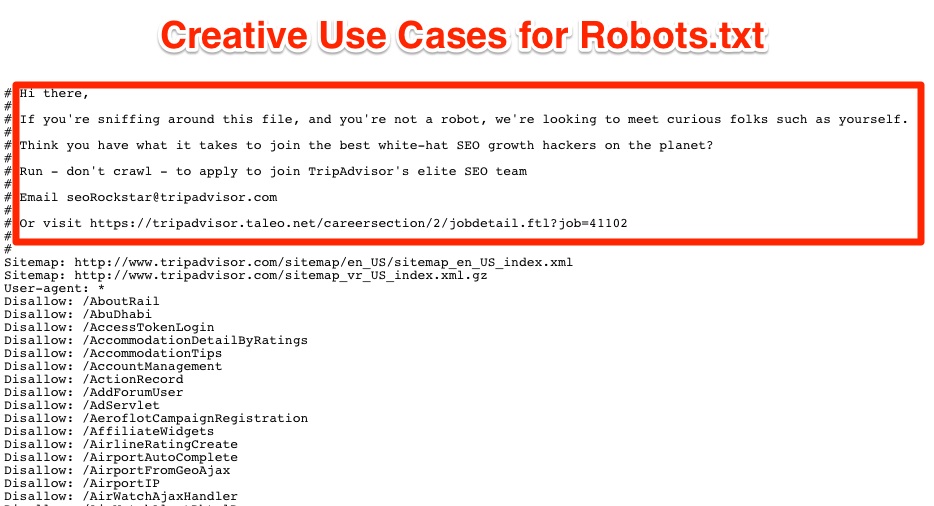
So, either you are using your website to send a message to future colleagues or offering information on sight, SEO can help you.
If you optimize the page for the job you’re offering, you might save some money spent on dedicated platforms or other sorts of promotion.
20. SEO Isn’t the Final Step, but the Center of Things
I hear a lot of people that designed their website and left SEO at the end like it’s some magic powder you can spray on top.
No! Wrong and wrong. When a new website is created, SEO is the first thing you should be considering, along with UX.
Take SEO into consideration when you develop your website’s architecture or decide the platform – CMS, the URL syntax, canonical URLs, other HTML codes important for having a reachable and clean website for the bots and users.
You wouldn’t like to be in the situation where you invested a lot of money in your website’s design and after that, you find out that Google doesn’t see your website as it should, the user doesn’t find the website in the search results or has a weird snippet.
And after all that investment, you have to spend more money to resolve the issues and make it visible.
21. SEO Can Boost Your Efficiency
All the benefits of SEO that we’ve talked about until now will help your business grow. And SEO is the one that multiplies your efforts. It delivers what is promised.
Optimizing your content will get you the benefit of getting a higher space into search, which means more keywords ranking on upper positions offering higher visibility in SERP.
We tried pushing the content optimization a step higher, by selecting a list of pages and making a massive content optimization a few months back.
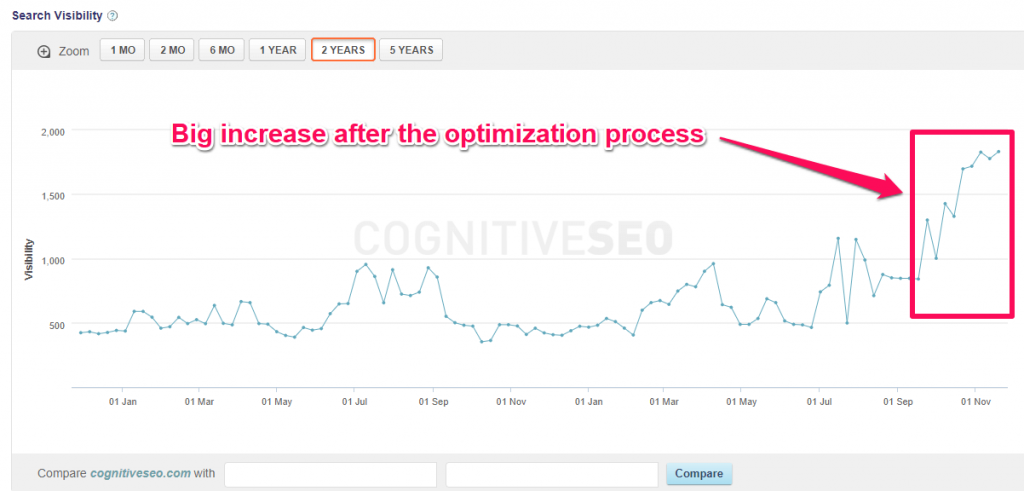
Source: https://explorer.cognitiveseo.com/?u=cognitiveseo.com&m=*U*#section/4
As you can see the evolution of the search visibility started to have a beautiful increase since the moment we’ve optimized the pages.
SEO is a digital business card.
If you manage to improve the rankings on your website, you can beat up competition and you can beat up skepticism, which is two of the biggest fishes to catch.
Conclusion
The perks of search engine optimization are several. Every SEO expert you ask will tell you how beneficial is SEO for a website.
SEO is laser-targeted, which means it can achieve great results and push your marketing goals upper.
It is one of the smartest marketing investments you can make at the moment we speak because in online SEO is the form of marketing that has the longest lifespan vs. money spent.
SEO will help you spread your wings through all the web. You need to include it in your marketing mix because it is a lifevest for your business.
You can’t survive without SEO, not now or never. It has lots of advantages that can bring awareness to your business and bring a higher impact on your marketing goals.
Driving traffic to your website can be easier once you’ve gained a high position of Google due to a well-done SEO campaign.
Either you’re building an SEO campaign for the first time or you’re doing this for a long time, you must always remember that SEO is a long-term strategy, and also a continuous process of improvement. Use this guide to SEO to get the results you desire.
The post Why SEO Is Important to Any Business Nowadays. Top 21 SEO Benefits appeared first on SEO Blog | cognitiveSEO Blog on SEO Tactics & Strategies.
Source: cognitiveseo.com

How to Identify and Remove Bad Backlinks That Kill Your Rankings
Since the last Penguin 4.0 (Real-time) update, lots of things have changed in terms of quality backlinks. Bad backlinks have remained the same, though, even if they were created some time ago with no intent to harm a website, or there was an arranged negative SEO attack or maybe a spammy link-building campaign, with the purpose to rank high & fast.
 We’ve tackled this matter before, yet, we felt the need of updating this topic for 2018.
Toxic links have a higher effect on a website now than they ever had before. They can eat your whole website alive and stick it down, in the last pages of SERP.
How, you might ask? Well, Google Penalties caused by unnatural links coming from:
- Link Networks
- Footer Links
- Blogrolls & Other Blocks of Links
- Site-Wide Links
- Blog Comments
- Forum Profile Links & Signatures
- Web Directory Links
- Article Directory Links
- Anchor Text Distribution
To be prepared for the long ride and have a clean website, you should know that it requires two easy steps for a correct backlinks assessment.
First, identify toxic backlinks and then remove bad backlinks. Some of the most known types of low-quality links are presented below.
We thought on them through a guide to help you easily identify the unnatural links (link networks and low-quality links) that, maybe, caused the drop in your rankings. After that, you are served with tips and recommendations to clean your website of those links.
The SEO world has evolved so much in the past few years, which means the quality guidelines have become more strict.
Links started to become somehow a problem, because of the amount of spam on the web. After reading this post, you will be able to identify low-quality links that hurt your rankings.
How to Remove Bad Backlinks
The steps for a clean website are simple. First, you need to identify the most damaging referring domains that are linking to your website, following the black hat links filtering explained below, and then remove and disavow the unnatural links.
Here are 4 steps to remove bad backlinks for your website:
- Identify your bad links (you’ll find how exactly from this article).
- Search for the contact information of the website you have the link on.
- Contact the webmaster asking him to remove the link. If you don’t get a response within 2 weeks, go to the next step.
- Disavow the links and upload the file to Google.
Disavowing all the bad links doesn’t have to be a chore. In the cognitiveSEO, you have to use the Unnatural Detection which is a helpful buddy.
It will save you tons of time, energy, and money. Below you can see a screenshot from the tool.

You have to click on the unnatural link bar chart and a new window will all the spammy links will pop up instantly:
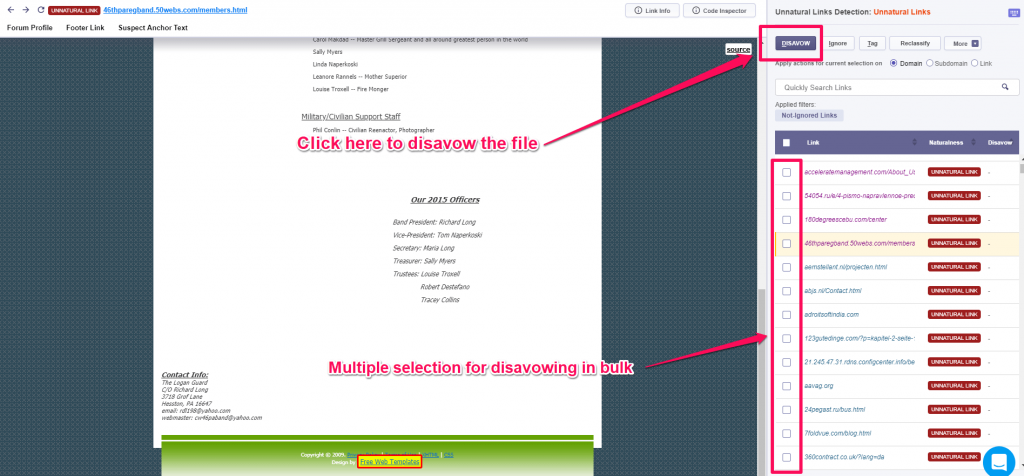
You have to select the links that are bad and disavow them. Either you do that individually or perform bulk actions.
All those disavowed links will be gathered in a file format agreed by Google, which you can download and send it from the tool directly to Google.
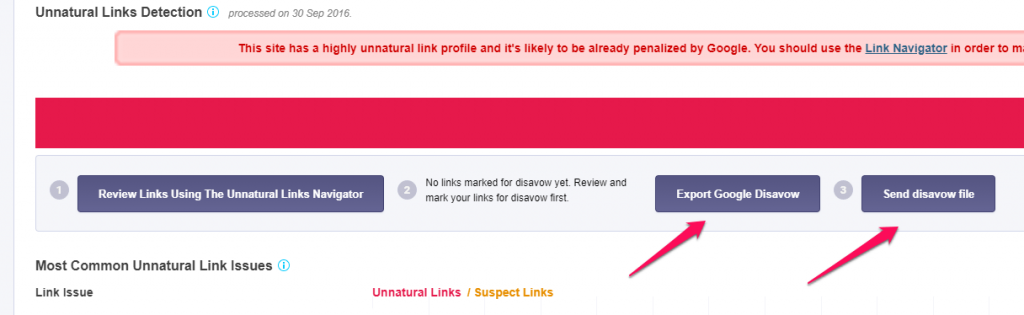
The disavowing process applies to all categories of links explained below.
1. Link Networks
Over 90% of the Link Networks are easy to spot, both by the human eye and by the Google algorithm.
Most Link Networks have the following common patterns:
- Architected from blogs and forums, because they are easy to automate and replicate.
- Links try to look as natural as possible by being put inside the content of a blog post or forum thread.
- The owner of a link network rarely makes the effort to generate links back to each of the generated blog posts. This means that each and every post has a probability of having 0 or a small number of backlinks pointing to them.
- Each site from the link network links out to at least 2 common money sites.
To find the links coming to your website from link networks you need to filter down the backlinks by blog posts and forum thread links, that are positioned in content and have a low metric (link influence, domain influence) and a low number of incoming links to the actual backlink.
The hardest part is to filter large lists of links by the tag in Content and type of link (blog post, forum page, etc).
You can either do it by hand or use a tool that has the ability to make these classifications.
Health Plan to Quickly Identify Backlinks Coming from Link Networks
By using cognitiveSEO, and applying a couple of filters, you can easily find those links exactly.
Order descending by Link influence to see the lowest quality pages first. Browse a bit through the links and use the link preview feature to quickly preview those pages.
In our case we found 316 low-quality links coming from different pages on various link networks. (17% of their entire backlink profile)
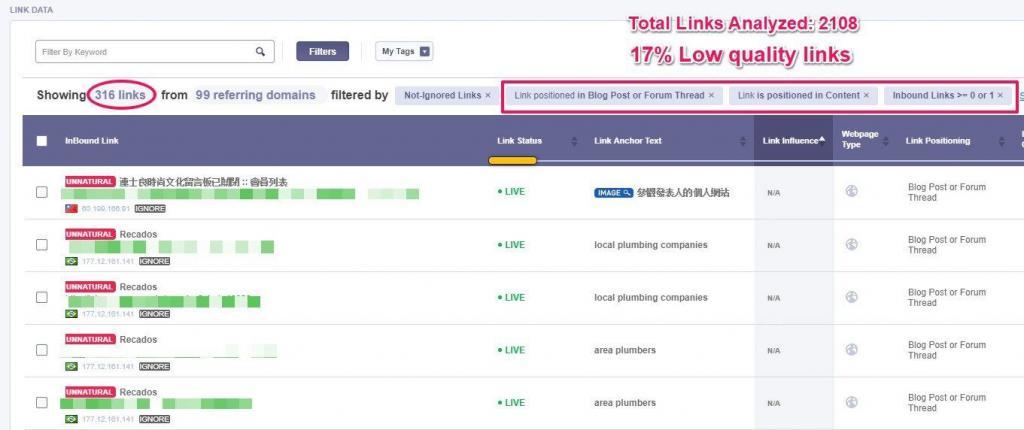
To remove bad links, such as link networks, you should know something first.
Any of the following types of links can be both natural or artificial. The difference is how they were acquired in terms of link velocity and link distribution over the entire backlink profile of a site.
To identify if your backlink profile is unnatural, you should always compare your site to your competitors and check for major discrepancies between the backlink profiles of those sites.
I usually compare my site with the top 5 leaders in the industry and then compare my site with 5 other sites that are trying to break into the niche.
There are always things that come up when doing such an in-depth analysis.
You should compare metric distributions, such as link and/or domain influence, link and/or domain trust flow, link and/or domain citation flow. These are only the basic comparisons that you can make.
The more advanced ones are when you start to compare links classified by webpage type, link type, in content versus not in content links, link position and so on.
2. Footer Links
Footer links were totally legit 6 years ago, but they started to make a lot of mess because of websites who abused of this technique.
That’s one of the reasons why Google placed site-wide links into the link schemes list. Those links can distort your analysis and do not present any value from an SEO point of view.
Imagine if you have one link from one domain compared with 100 links from the same domain.
First of all, the value of that single-domain link is higher than each individual link coming from the same domain.
There was a question on the same issue on the Google Webmaster help forum:
Are sitewide backlinks considered good or bad by Google? Or do they just count as 1 link from the whole domain?
Matt Cutts answered very clearly:
| From an algorithmic point of view, at some point, it becomes asymptotically diminishing returns. And it doesn’t help you anymore. | |
 |
MATT CUTTS |
| Former head of the webspam team at Google | |
If they see a link from a domain they will count it as one, and if they see multiple links from the same domain, they might still count them as one.
From the manual point of view, you will receive a penalty, because Google doesn’t trust those links and performs manual actions quite often.
In case you have a high number of footer links, you will definitely raise a red flag to Google. Usually, footer links are acquired from sites that:
- sell links;
- are involved in link exchange schemes;
- have widgets or plugins installed (usually for SERP manipulation);
- “powered by” links ( ex: WordPress);
- partners of your business;
- clients that link back to you.
If you find only a few links compared to your entire backlink profile then there is no real problem here. If instead, you get a long list of links, you might have a problem.
There are situations when Google missed to flag footer links. One example is for Godaddy, where they have almost 90% of their links coming from footer links.
We checked their site with the cognitiveSEO tool after they were exposed by Yoast explaining GoDaddy’s spammy link-building techniques.
Every website created using a WordPress editor through GoDaddy has a footer text with a link such as “Powered by Do Daddy”.
The thing is that they are still following this practice, but now you have the option to remove that text by yourself.
Health Plan to Quickly Identify Footer Links
The cognitiveSEO.com allows you to select all the links that appear in blocks of links in the footer of the linking pages.
For this site, we extracted 625 low-quality footer links (10% of their entire backlink profile).
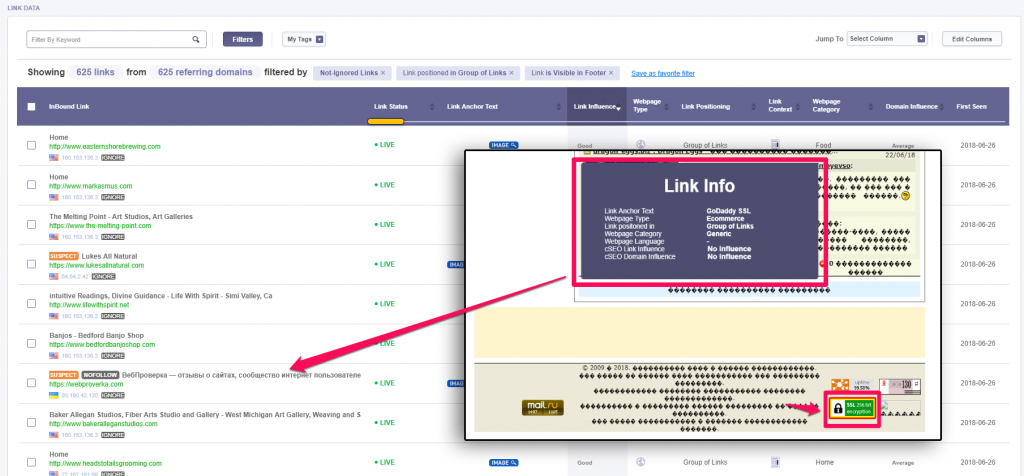
There are options when you can easily spot the links that came from footer sections or groups of links.
In the cognitiveSEO tool, you have a deep-link analysis where you can spot the inconsistency. Take, for example, the screenshot below:
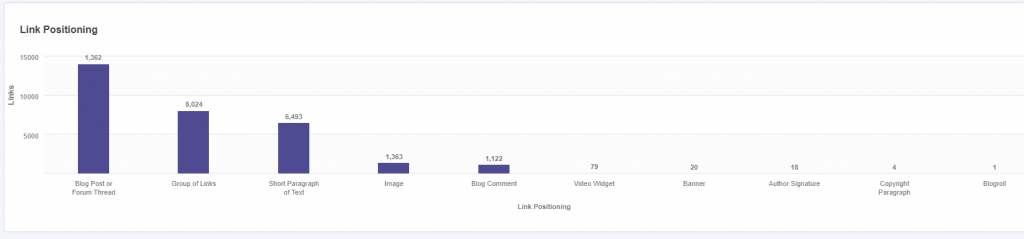
On the site used for this example (www.addictinggames.com) we saw they had lots of links coming from Blog Posts or Forum Threads, which might not be bad (depending on the intent).
But the alarming situation starts when you look at the number of links coming from groups of links: 8,024, which is a lot.
All those links must be reviewed individually and disavowed quickly otherwise, I hear the penalization alarm.
After a quick research in Site Explorer, we saw that the site suffered a massive drop in rankings because they were penalized. Since then, they haven’t been able to regain their search visibility.
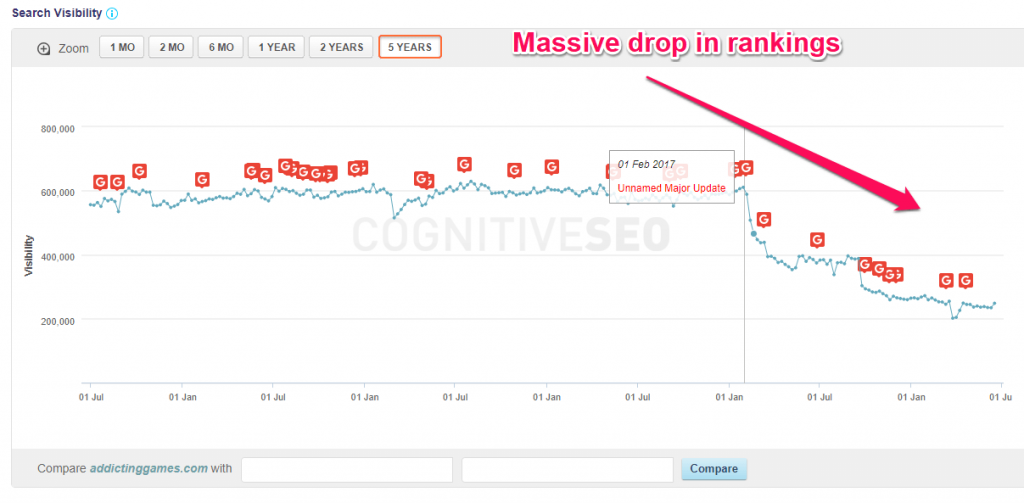
3. Blogrolls & Other Blocks of Links
Blogrolls were abused so much, that they tend to be very carefully analyzed by the Google algorithm nowadays.
This category includes both blogroll links and groups of links that do not fit into the blogroll pattern.
Here is an example of a website that used to abuse search engines and is not a blogroll. The domain uses widgets that are installed on various websites where webmasters get to place their links.
Too many links that fit these patterns might be viewed as unnatural by the Google algorithm and you might get penalized for them. Some of those links can fall into the sitewide link category.
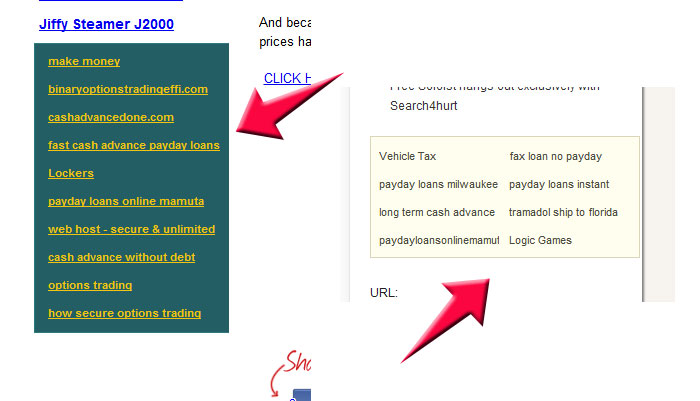
Make sure you don’t have advanced link widget networks listed as site-wides, as they might get flagged faster.
Like all of the other types of links presented in this guide, it all comes down to how they were integrated into your link profile.
Health Plan to Quickly Identify Blogroll and Groups of Links
A couple of filters away, you will get another list of low-quality backlinks that might hurt your rankings. In our case, we got other 424 low-quality links.
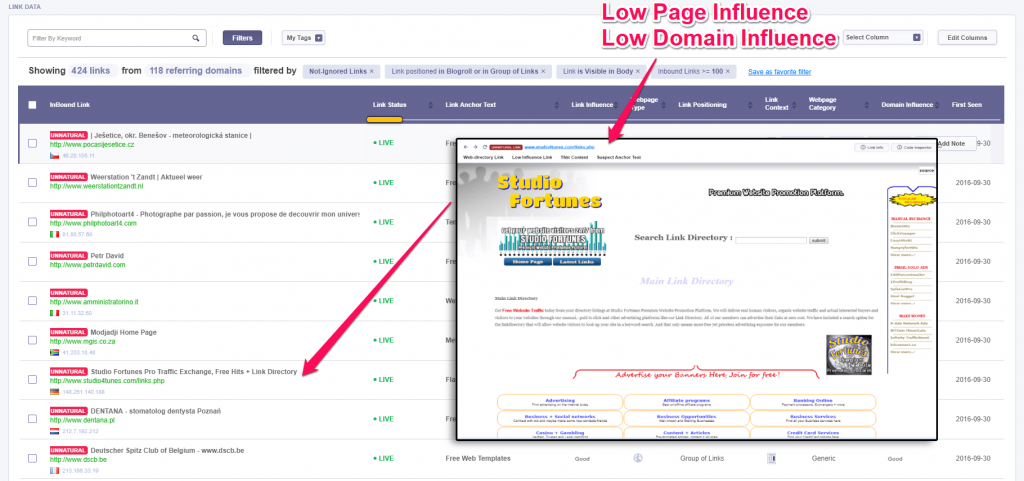
We analyzed that specific backlink in Site Explorer to see some metrics.
We discovered that the page and domain had low influence carrying lots of links (47,365) coming from only 45 referring domains. That is a clear sign of unnatural links.
The problem was the website had lots of other unnatural issues and their backlinks profile was filled with spammy links. 88% of their whole links are unnatural.
If you find yourself in a similar situation, all the unnatural links must be disavowed, and then you should immediately submit the disavow file to Google to cut the connection with that spammy links that can dreadfully bury your website.
4. Site-Wide Links
Site-wide links will definitely hurt your rankings.
Site-wide links are another example of toxic backlinks. They are old news on the Google landscape. Site-wides are devalued and can hurt your rankings so easily. If your domain does not have the necessary authority and receives a couple of site-wides from some low-quality sites, your site will get penalized by Google.
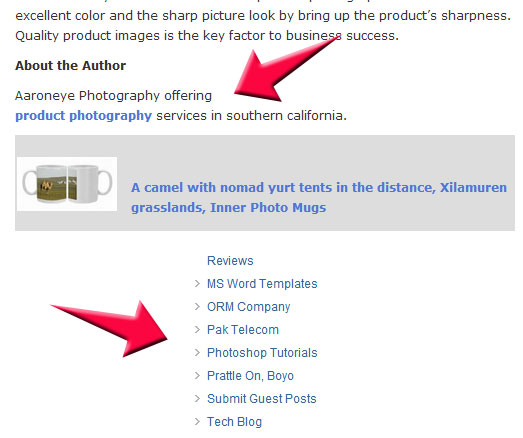
The idea behind the site-wide links is quite simple.
It is more important to have more root domains link to your domain than to have many links coming from fewer root domains that link to your domain.
There are site-wide links that will not hurt your rankings, and it all depends on the site the site-wide is put on.
If that site is considered an authority and that site-wide link is not correlated with other factors such as high link velocity, then that site-wide could help you.
Health Plan to Quickly Identify Site-Wide Links
Luckily, it’s quite easy to discover these types of links with cognitiveSEO as it’s a Sitewide Chart, dedicated to this matter.
You will get a chart with the distribution of sitewide links. If it is a high number, click on the pie and check those links individually.
In our case, we got 21% of the whole backlink profile coming from sitewide links.
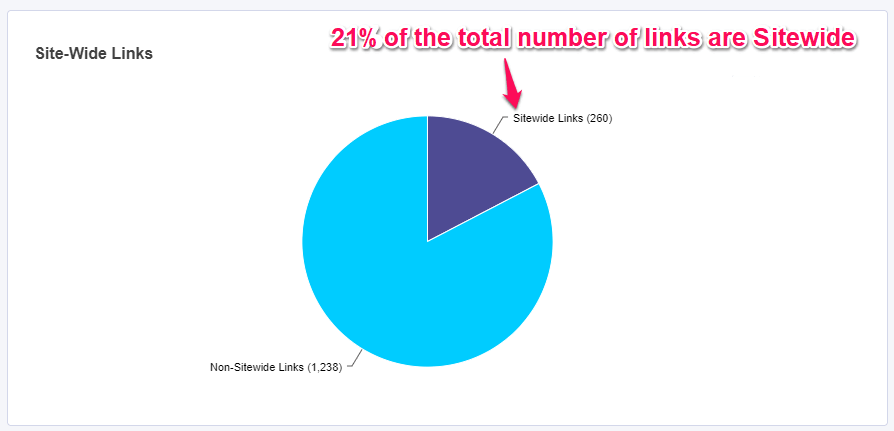
The website has lots of sitewide links that carry almost no value. Below you can see an example of a backlink for that website:
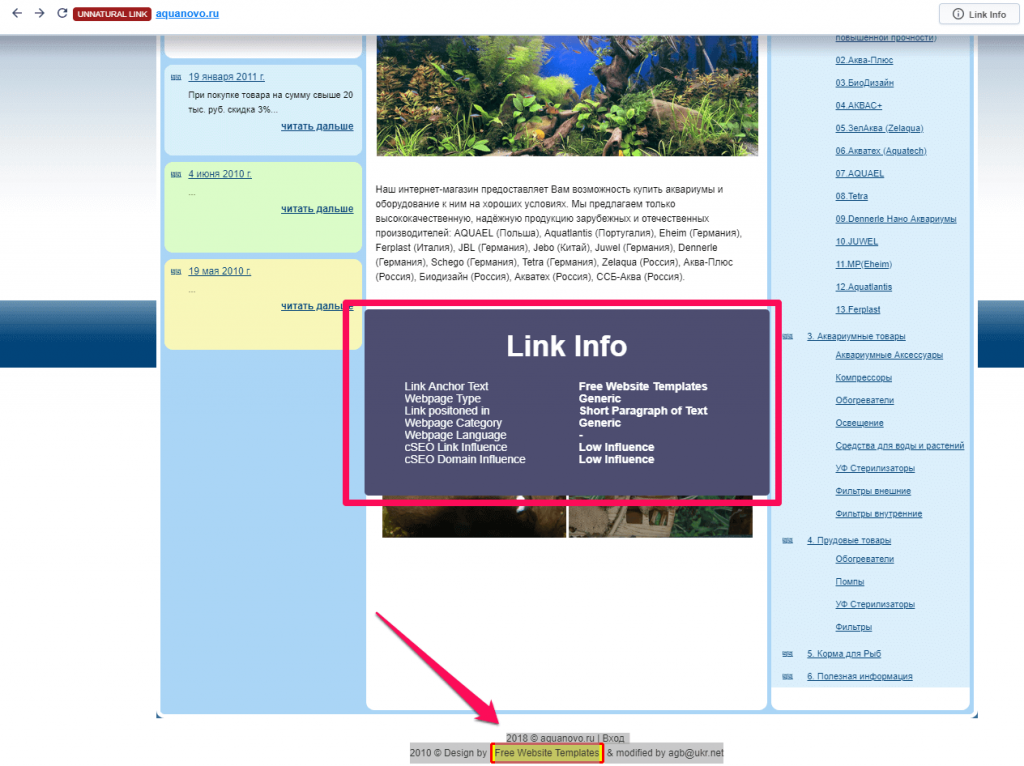
There are multiple problems with this link. Besides the fact it is sitewide, it is also hidden, written in white font. I had to highlight it to see the full text.
Note: A site-wide link is considered to be a link that is automatically replicated across a large number of pages from the same site. Do not misclassify a site-wide as 10 different links coming from 10 different articles on Techcrunch for example. Those are not considered site-wides. Our software has a built-in algorithm that matches different patterns and concludes whether a link is a TRUE SITE-WIDE or not.
5. Blog Comments
Blog comment spam evolved on the back of the search engines.
Comment spam is a form of spamdexing (keyword stuffing) and it has been around since the beginning of the internet.
There are several tools that help spammers post comments automatically with the final aim to reach higher rankings in the search engines.
That is why most of the comments are marked as nofollow by the blogging platforms so that Google will not index them.
Even so, spam commenting is a huge phenomenon and everyone that owns a blog knows how much comment spam they receive.
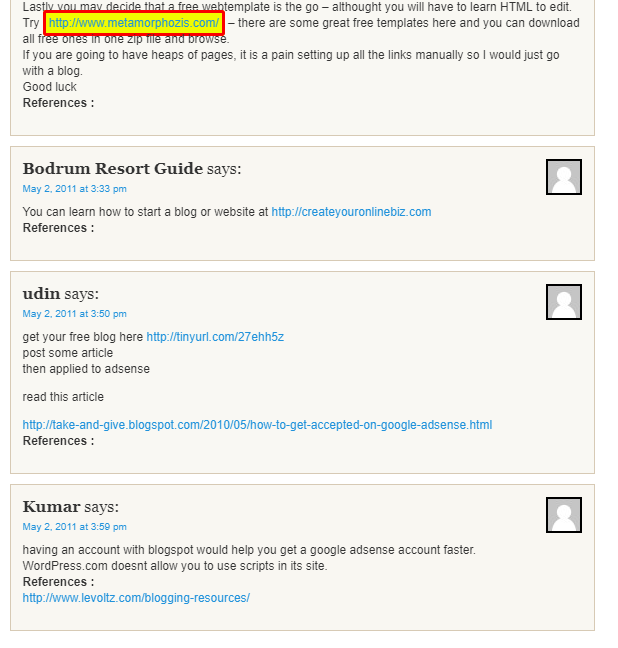
Health Plan to Quickly Identify Blog Comment Links
You can easily find both nofollow and dofollow links that are coming from blog comments.
For a quick review of the whole list of links that come from blog comments, you can go straight to the Link Positioning chart and click on the Blog Comment bar.
We found a website that focused on building links through this technique:
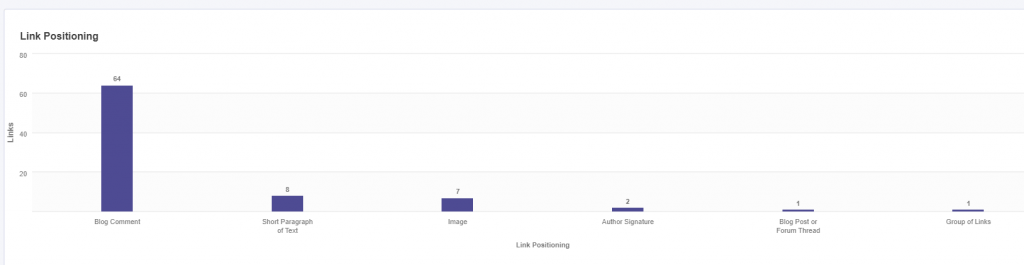
We looked through their links and found out the website took advantage of this black-hat technique and left spammy blog comments on websites that weren’t even related to their website.
Not to mention it used an anchor text that has a spammy appearance, considering the circumstances.
The website is a free library of e-books and resources and the website they’re linking to is about website development. Not quite related, I might add.
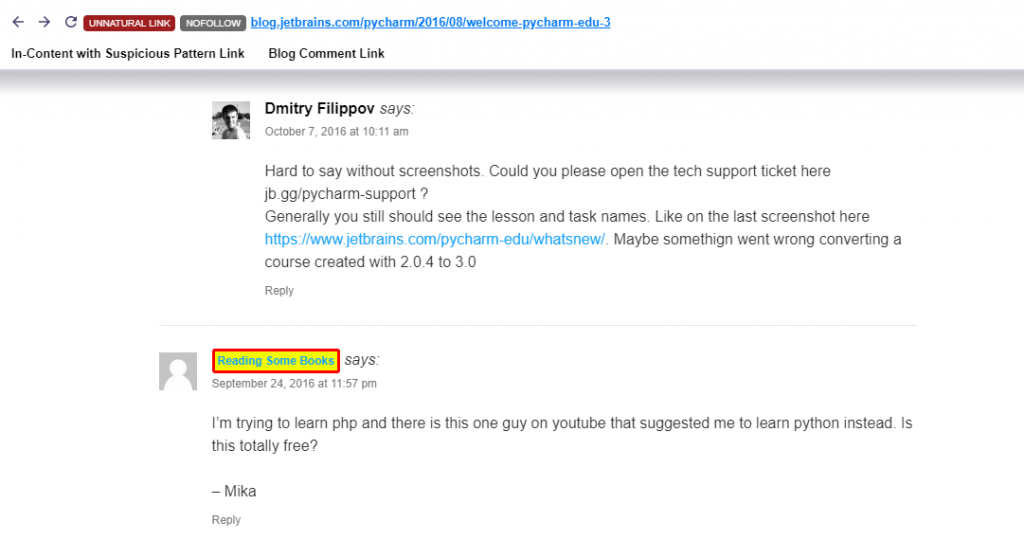
6. Forum Profile Links & Signatures
Forums are abused the same way blogs are.
Having people discuss on your site in forums is the most natural thing that can happen to a site. It means your site generated some buzz in its niche.
But, if you are doing link building using fake forum profiles, signatures, and posting content and links automatically on forums, this will appear in your backlink profile and could hurt your ranking when Google will flag it.
These kinds of patterns can be easily identified by Google. Below is an example of an unnatural link that comes from a forum.
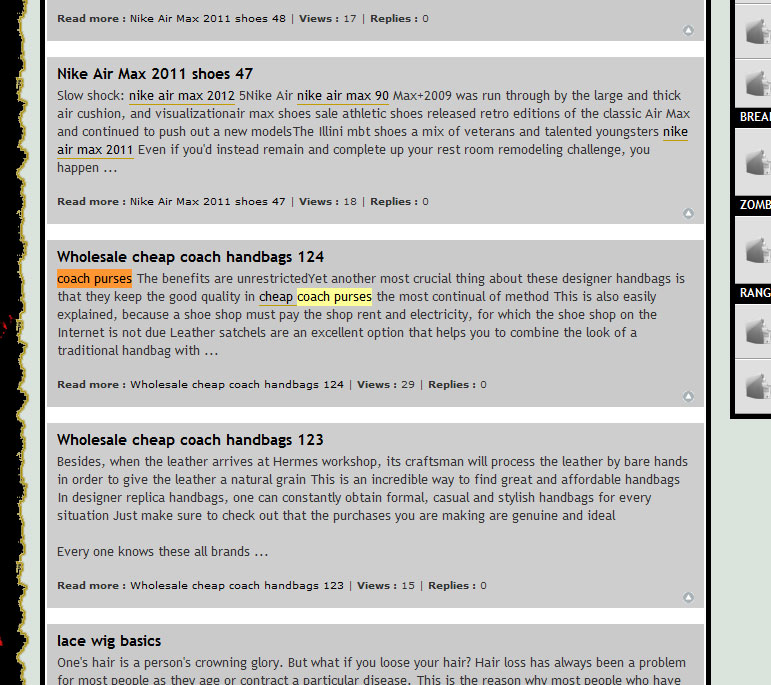
Health Plan to Quickly Identify Forum Links
Again, cognitiveSEO makes it easy to identify links coming from forum threads. If you want to check signatures and profiles, you should search for Link Position » Short Paragraph of Text, Group of Links. You’ll get a list of links as you can see in the next screenshot.
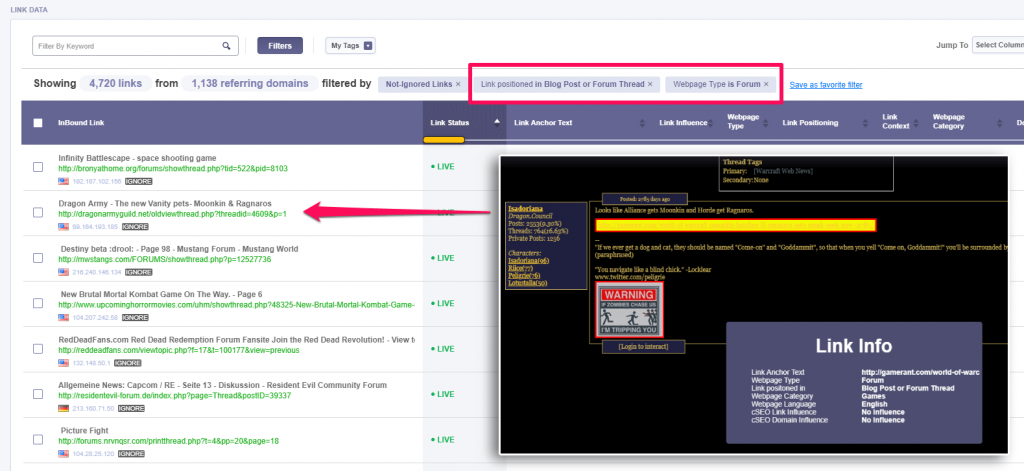
In our example, you can find a preview page with some link info. The link has no influence and nor does the domain.
In case you want a quick analysis, you go straight to the Link Positioning chart and review the links from the Blog Post or Forum Thread.
The website we analyzed had a lot of links coming from this source. 15% of the whole backlink profile is coming from blog posts or forum threads.
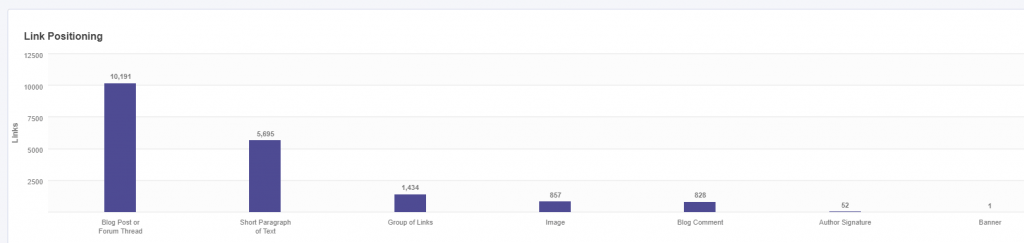
7. Web Directory Links
Forget Web Directory submission services that promise hundreds of directory registrations.
Having too many links coming from web directories is not always a good sign. This might raise a flag to the Google algorithm.
You do not need hundreds of directories to be listed on, only a few quality ones that are well known in your niche.
If you have a high percentage of links coming from directory submissions (manually or automatically), that were created some time ago or are freshly added (it doesn’t matter), you will raise the link velocity flag, and get penalized.
An example of web directory links you can see in the next screenshot. Basically, it is a list with a short description of brands, with a title and a link.
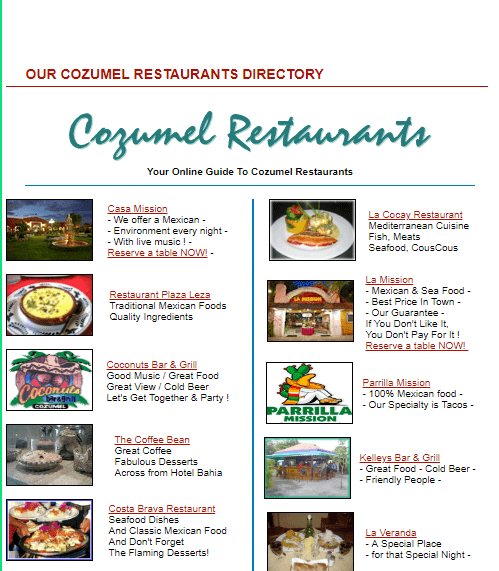
Health Plan to Quickly Identify Web Directory Links
If you get a long list and it represents a big percentage of your inbound link profile (similar to the next screenshot), then this might signal a problem that you need to investigate even further.
The cognitiveSEO is monitoring backlinks and evaluates the unnaturalness of the whole website by offering percentages for the unnatural links, suspect links, and ok links, letting you know if you are in danger.
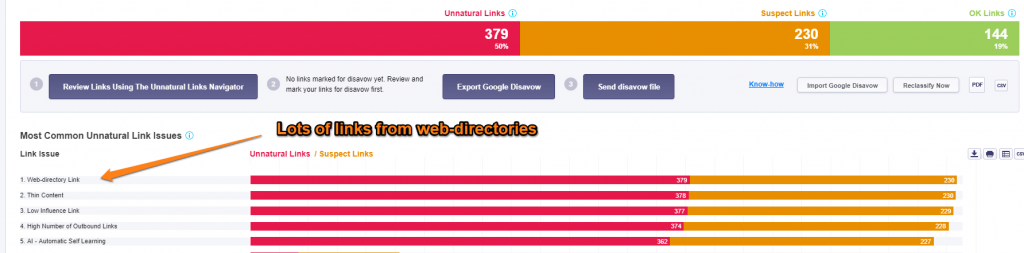
In case your website has lots of unnatural links and red areas (like the one above) you should use the disavow tool and cut the connection to your website from all the spammy links.
Out of curiosity we looked through the unnatural links and found lots and lots of links that came from spammy directories, filled with hundreds of outbound links, just like the one below.
There you could see that the page had lots of other issues, such as low influence links, thin content, a high number of outbound links, and so on.
You should remove the link immediately.
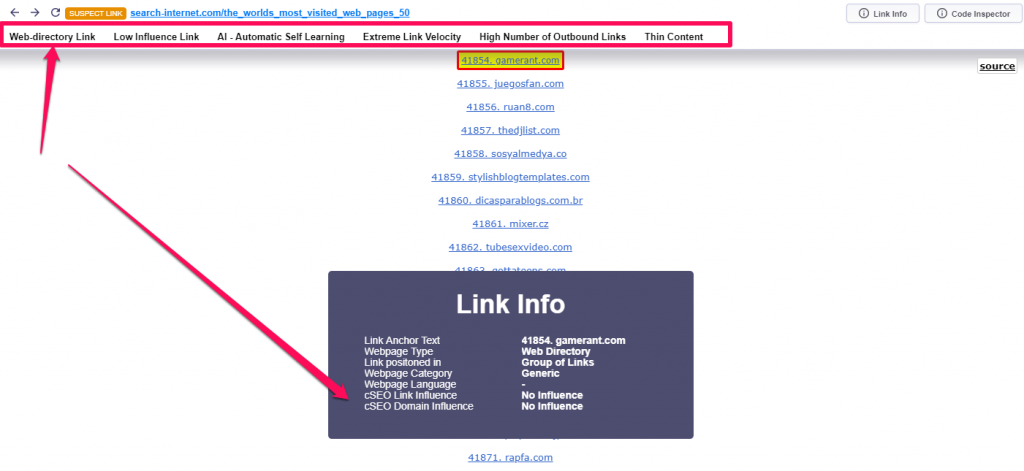
8. Article Directory Links
Avoid cheap content!
This is the best advice you could get. Having too many links from article directories is a sign that something unnatural is going on.
Article directories and the sites they linked the most, were already hit by Panda in the last few years.
Below is one way to find your article directory links so that you can further investigate them.
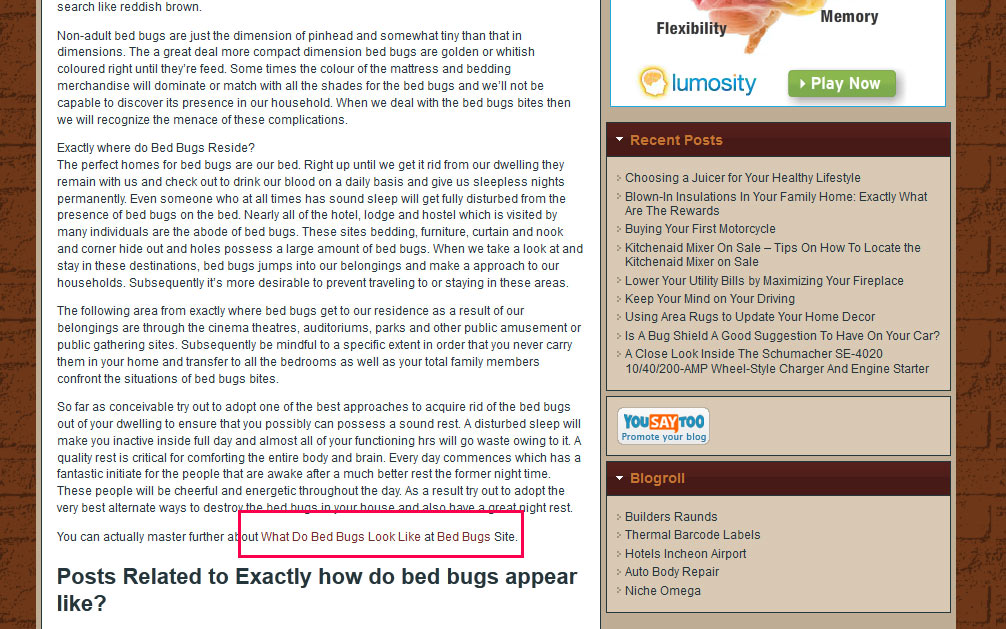
Article directories, if not created following qualitative guidelines, can be potentially harmful.
Health Plan to Quickly Identify Article Directory Links
Below you can see a print screen for the article directory links identify with our tool.
We got 49% unnatural link profile out of their total unnatural links (23,594). Their total unnatural link profile is 87%.
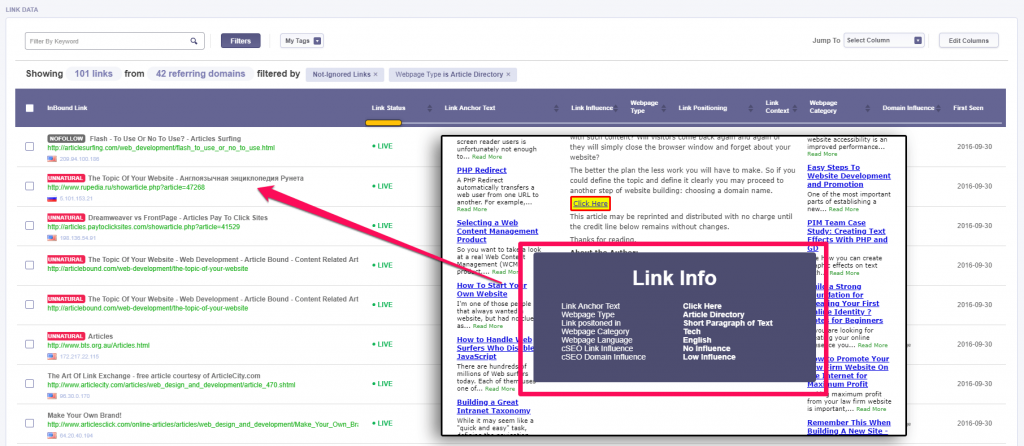
The website received multiple hits from Google algorithm updates. This was easy to spot in their search visibility. In the last 5 years, they were hit by lots of penalizations from Google.
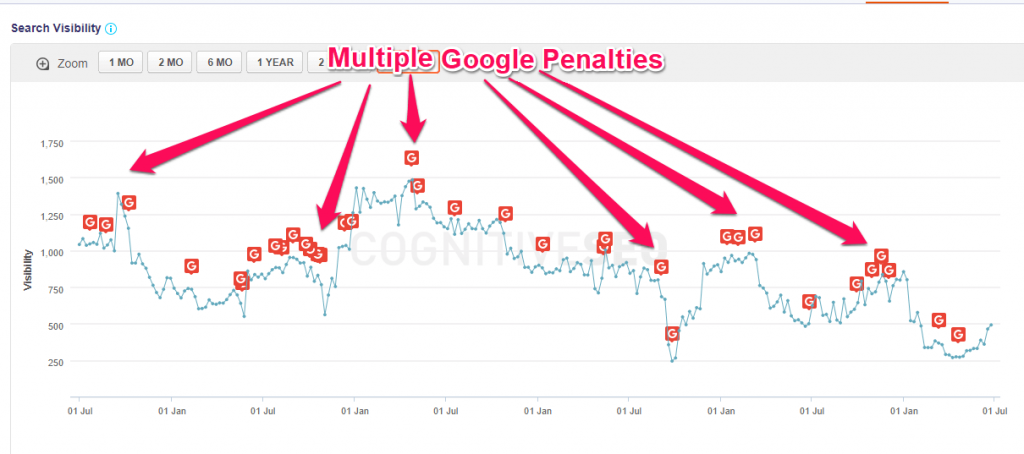
In cases like these, it is very important to disavow all the spammy links in bulk and clean the website. In 2018, a website shouldn’t have such toxic links.
Try to monitor your backlinks to never find yourself in this situation.
9. Anchor Text Distribution
Over optimized anchor text does not look natural at all!
Anchor text is either:
- brand keywords (domain name keywords or the actual brand name);
- money keywords;
- navigational keywords (click here, website, source, and so on).
In cognitiveSEO, you can easily classify and review your anchor texts.
You’ll get an analysis as you can see below. The natural distribution of anchor text would look like this.
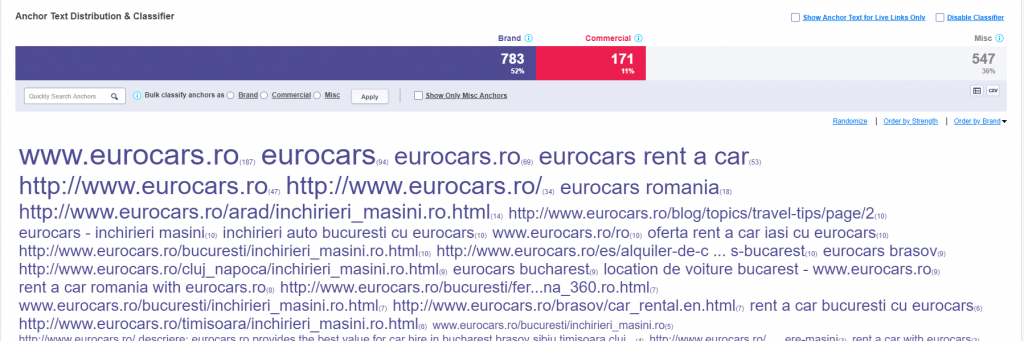
An artificial anchor text distribution looks like this:
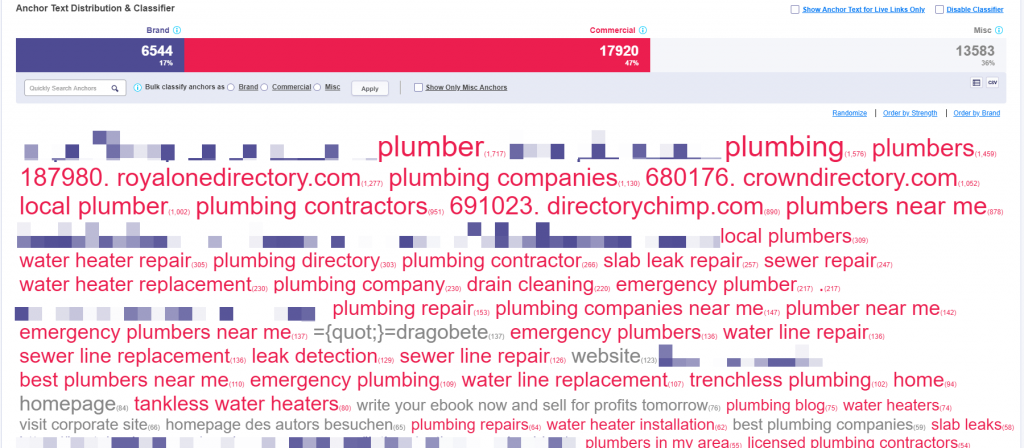
If your anchor text is over-optimized, you are likely to be hit by Google because most of the time commercial anchor texts carry unnatural links.
Consider a natural anchor text strategy, collaborate with other brands and influencers.
Create valuable content and offer qualitative services to get recommendations and good links.
Conclusion
I hope all the SEO tips and the step-by-step guide will help you identify the potentially toxic links that generated problems with the Google penalties.
Use the cognitiveSEO tool to investigate your link data and get a comprehensive link audit.
The tool shows all the data in one place, and monitors backlinks side by side with your competition.
Don’t build links that can harm your website, even if they used to work. Now, they don’t anymore.
Use these tactics to identify bad links and remove them before Google takes action and penalizes your site.
The sad part is that the black hat is bad for everyone, and it is hurting the internet. Be good, create quality and Google will love you.
The post How to Identify and Remove Bad Backlinks That Kill Your Rankings appeared first on SEO Blog | cognitiveSEO Blog on SEO Tactics & Strategies.
Source: cognitiveseo.com