
Tag Archives for " Pinterest "

8 Free Ways to Find Blog Content Ideas That Convert
If you’re a content writer, you have a blog, or work for a company, you might have struggled with this question before: How do I find good blog topic ideas? There might have been situations when you didn’t have any ideas and you had to write something just to keep your users engaged.

For everyone that has stumbled on this, I understand (you).
I know what you’re feeling.
And you’re not alone.
For somebody who writes on a daily basis, you need to be like a factory of fantastic ideas and give valuable information to the audience, because they need it.
They are looking for guidance in every possible way.
Most of you have to become factory ideas overnight, but there are solutions for you during the day.
How to Find Topic Ideas Effortlessly?
That’s why we thought about the following effortless ways and platforms to find topic ideas:
- Look for Q&As on Quora
- Use BrandMentions to Spy Your Competitors for Content Ideas
- Get Inspired Using Pinterest
- Uncover Trends and Identify Influencers on BuzzSumo
- Check Google News for Current Events
- Follow Influencers’ Articles on LinkedIn
- Get Ideas from Discussions in Facebook Groups and Reddit Communities
- See What Other People Are Sharing on Zest
Finding the right content topic is essential, but the way you write it is also important.
Good content writers will always be in demand, just like Joel Klettke points out.
“We don’t need to hire a writer. We’ve got formulas and a template!” pic.twitter.com/HREhKHCimw
— Joel K (@JoelKlettke) September 18, 2018
1. Look for Q&As on Quora
Quora is an abundance of information and continuous resource for content writers, users, noobies, and people wanting to find specific answers to their problems.
The information is organized and edited by users, which makes it easy to understand the user behavior.
Besides all the ideas, you get the advantage of seeing what language and vocabulary people use, the way of writing, and asking questions.
And after you got some inspiration, you can write the article.
Then you can answer questions by pointing people to your article.
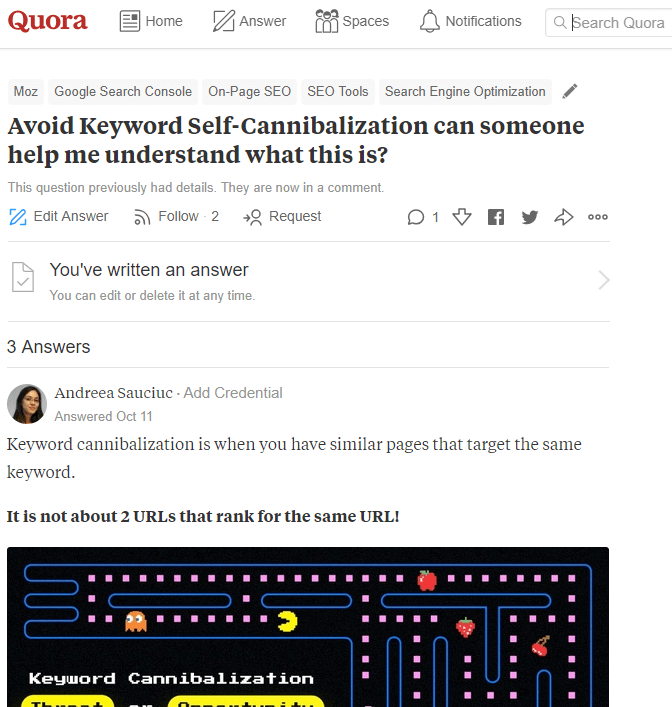
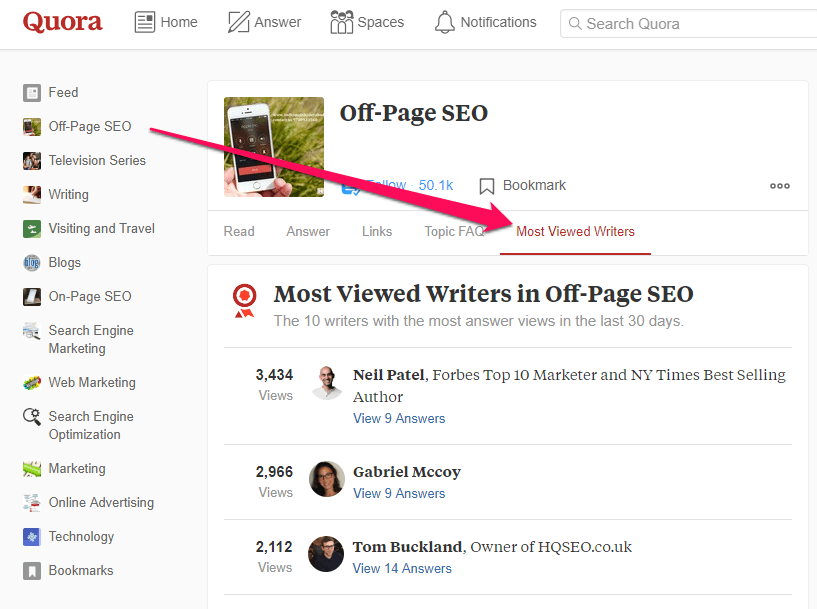
Quora is a great space for keyword research and headings/titles inspiration.
For example, if we use the screenshot below and we want to write about keyword cannibalization, we can see if most people use a focus keyword such as – avoid keyword cannibalization or the question type such as – what is keyword cannibalization.
The site is divided into topics, which makes it easy to search for ideas and get insights into what people are looking for.
There is an entire community on Quora where a lot of people and experts on every subject you can imagine are actively contributing with knowledge.
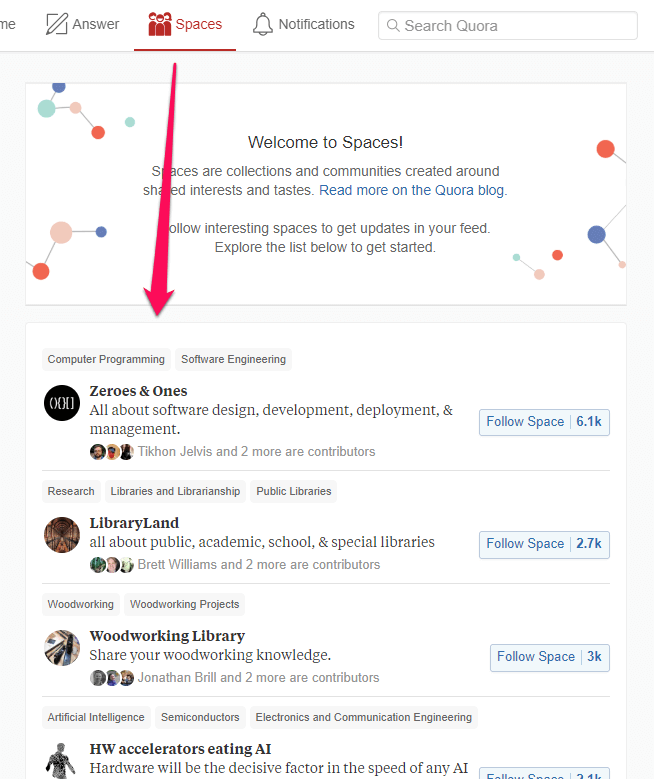
If you are focused on a specific topic, use the newly launched Spaces and follow the community that interests you.
Besides all the ideas we’ve talked about, there are other things Quora is good at.
Only by using a few clicks, you can:
- find what people are looking for.
- Search for general keywords on Quora and see questions regarding your topic.
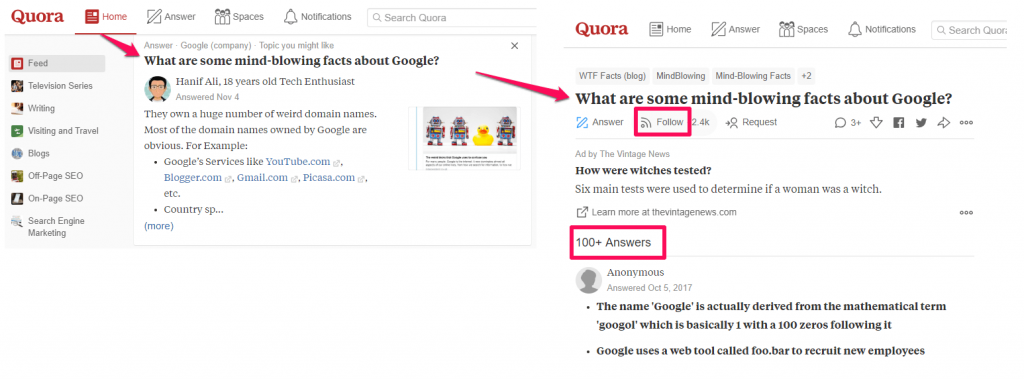
- get updates on trending topics right on the homepage.
read sourced research from experts and get their permission to quote them in your new article.
find every influencer that you can contact for outreach.
2. Use BrandMentions to Spy Your Competitors for Content Ideas
Wouldn’t it be a shame to miss an opportunity to talk about something that has great traction and create a massive, evergreen blog post that will get a good social media score and links 3 years after you’ve written it?
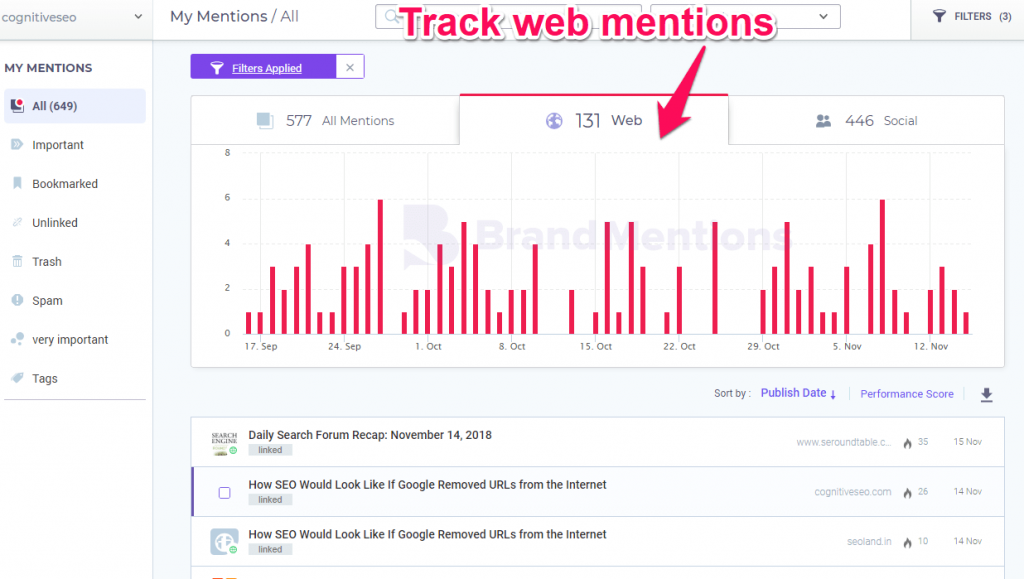
We’ve previously talked about the advantages of using a social monitoring tool, such as ‘BrandMentions”, that gives insights based on what find online.
You can spy on your competitors to see what are they writing, what type of content gets more engagement.
And based on the response they get from the audience, you can see the topics of interest and try to create a better piece of content than theirs.
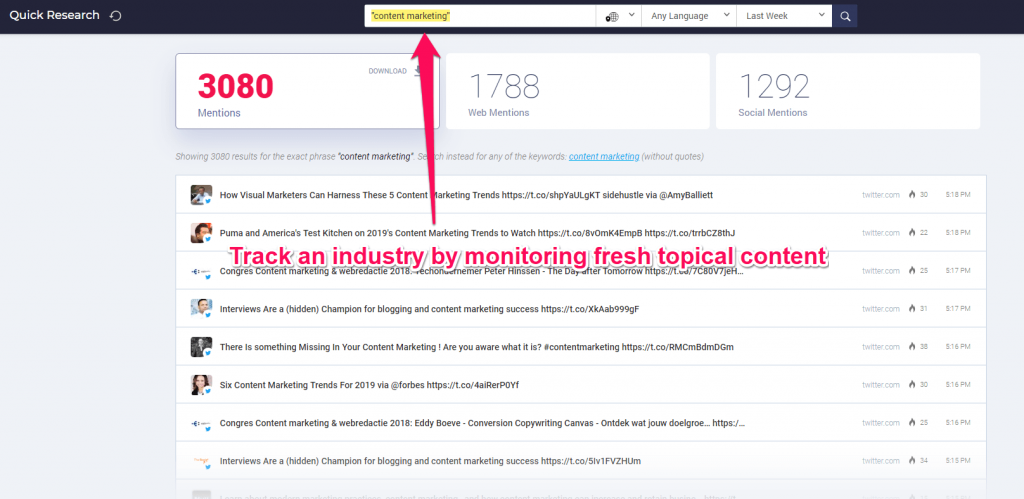
You can monitor fresh topical content related to your business and create better content in your niche.
You just have to search for a topic and the tool will show you the results.
Whenever your brand is being brought up on the web, a marketing opportunity is rising and that applies to your competitors as well.
If you know what people are talking about them and find their strengths and weaknesses, you’ll know what to offer to the audience and steal them from your competition.
Using a social monitoring tool such as BrandMentions helps you manage the mentions and go right on the spot by offering live support.
You can find what people are saying about a specific brand and not necessarily to it, because there might be lots of untracked brand mentions, without any direct link to the brand.
For example, people might talk on social media but not place the @ before the name of the brand.
And we must remember that it’s not only influencers in your industry who mention brands on the web but there are also lots of other people that are consumers.
3. Get Inspired Using Pinterest
Another free way to find content marketing ideas is using Pinterest.
The motto of the platform describes it very well: Discover recipes, style home ideas, inspiration, and other ideas to try.
So inspiration is at its place on Pinterest.
If you’ve never used Pinterest until now, then you did miss on lots of great opportunities.
The social media content you get here, might not be found on the other social channels.
You can use Pinterest to:
- get free ideas for blog posts.
- create content that your audience actually wants.
- find keywords you should use in your blog post to help with SEO on Pinterest.
The process is very simple and very intuitive for beginners.
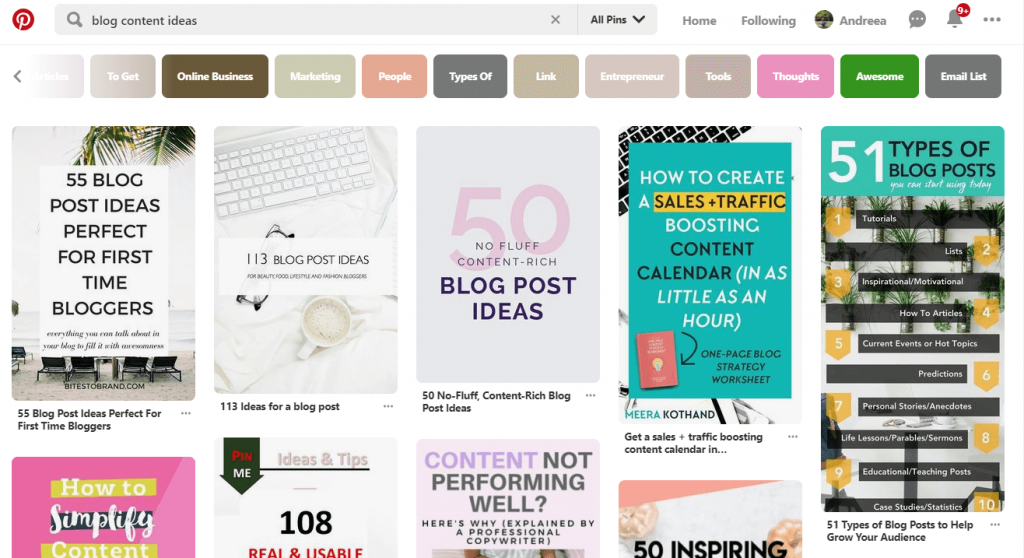
You just have to search for a keyword, such as a blog:

Then look in the search suggestions box for other keywords that are used for searches and get topic ideas and headings that intrigue the user.
Look at the most popular keyword suggestions, such as marketing (blog marketing), for beginners (blog for beginners), ideas (blog ideas), tips (blog tips), and so on.
That means there are a lot of new bloggers looking to learn about blogging or bloggers that are in the marketing field and search for ideas and so on.
Getting those recommended keywords means that those are what your audience is searching for.
Use those keywords in your titles tags and description.
If you decide to use Pinterest, then those keywords should be into your pin description and heading to boost your Pinterest “SEO rankings”.
So that when people are searching for those keywords, your post gets a higher chance of being on the top.
That’s how easy it is to get creative content marketing ideas using Pinterest.
4. Uncover Trends and Identify Influencers on BuzzSumo
BuzzSumo can help you generate new content ideas and see what the audience craves.
You can search for popular topics and see results based on total engagement, evergreen score, number of links, and more.
You have lots of filters available to go into deeper analysis and get more accurate results based on your needs.
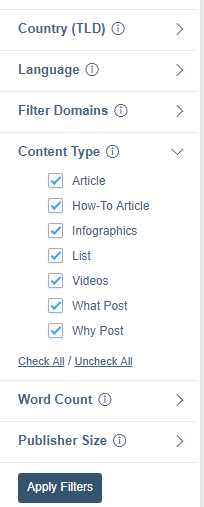
For example, we searched for video marketing and we wanted to see the pages with the highest engagement.
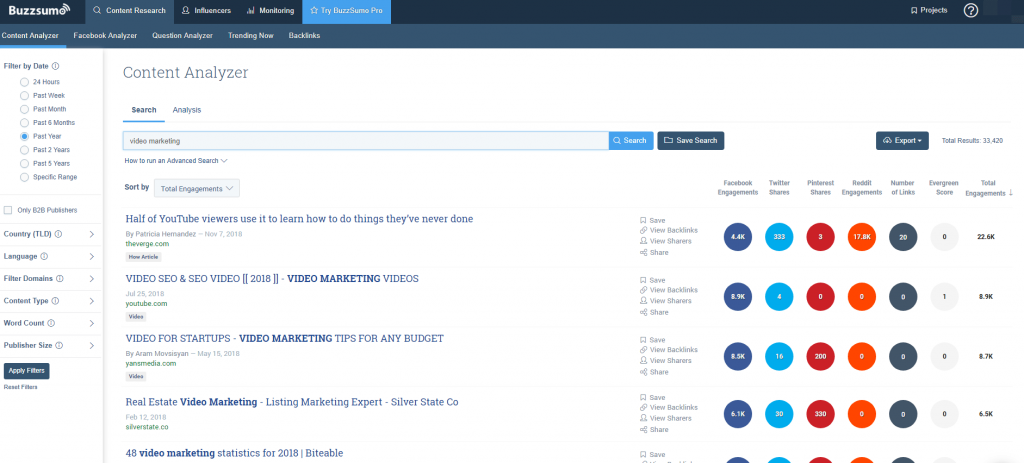
Another great thing about this tool is that you can get some ideas of keywords based on the results you get.
If we look at the search we’ve made for video marketing, we can see that video and SEO, or video marketing tips or video marketing statistics are valid recommendations we could use in our content.
5. Check Google News for Current Events
Google News can fit very well in your content strategy to see what is trending in digital marketing and other industries.
It is the easiest way to look for current events and news in your industry.
An interesting news piece relevant to your query can be used to write quick, creative, and even controversial content.
You can search for anything regarding digital marketing or business, technology, entertainment, science, sports, and many more.
Or search for things you might be interested in, based on what you find in other categories, and get directions from there.
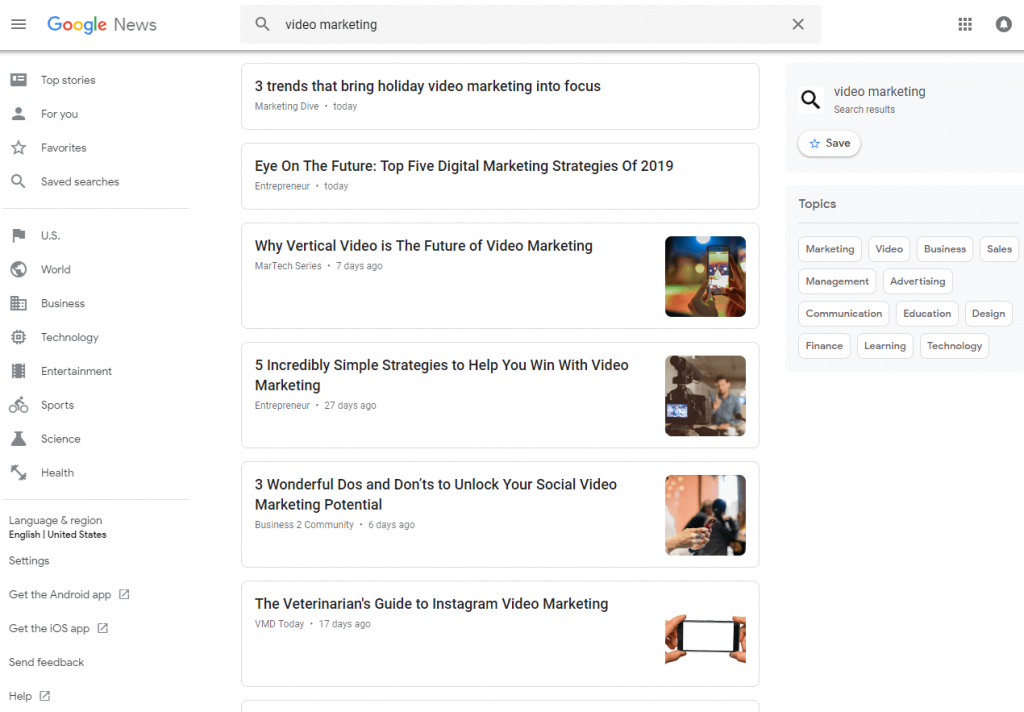
If you want awareness and have a relevant audience then finding a news hook for your pieces could be the solution.
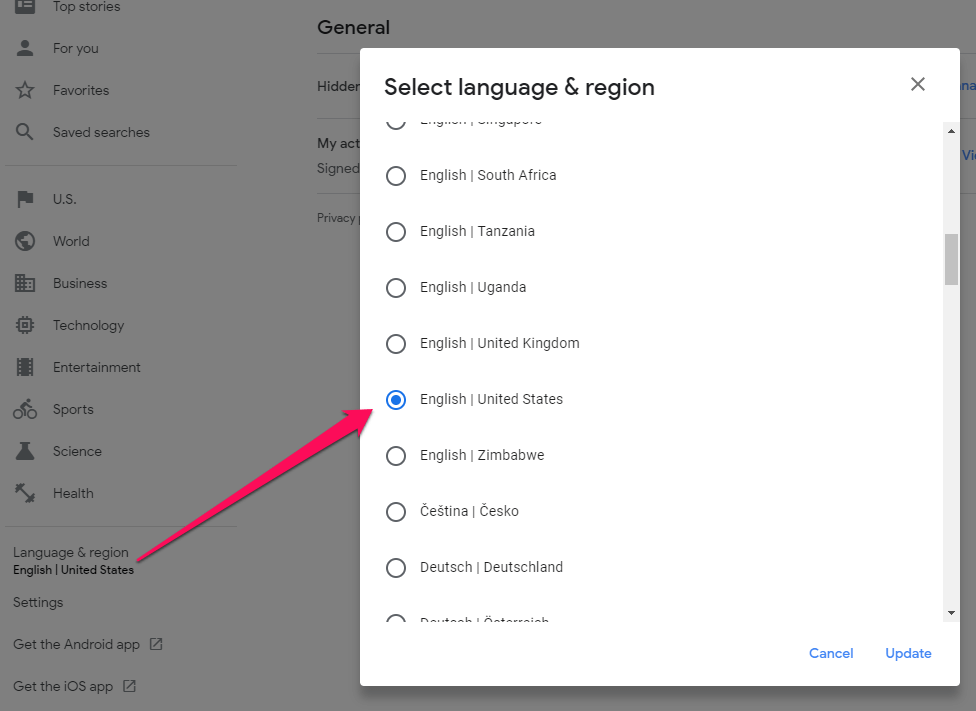
You have the possibility to select the language and the country and get more personalized results, which afterward can be saved in your account.
6. Follow Influencers’ Articles on LinkedIn
LinkedIn is a professional social media platform that you could use to connect with experts and people that write valuable information.
You can comment and create connections and, most important of all, you can get inspired by what they are writing and talking about on LinkedIn.
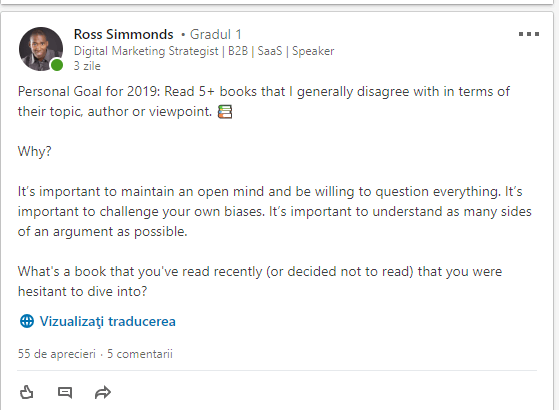
You can find the posts they make and the questions they ask by scrolling on the homepage:
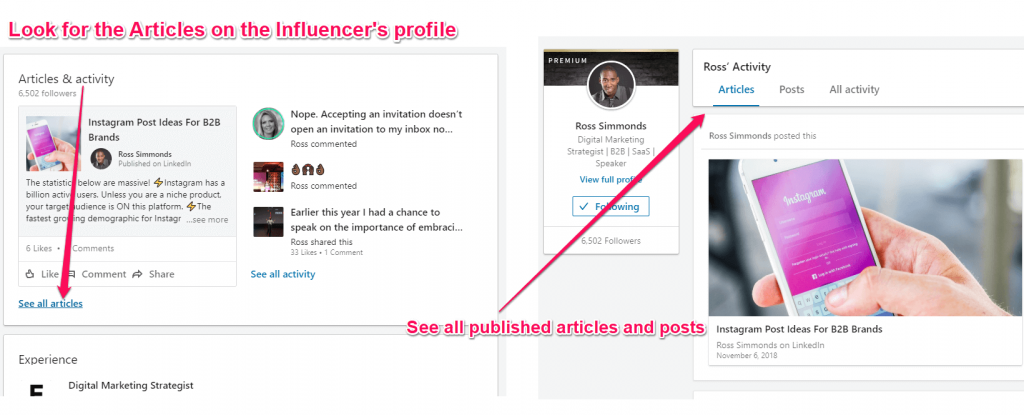
You can go deeper and look at their published articles.
LinkedIn Pulse is the platform owned by LinkedIn where influencers write their articles.
If you get an idea and write about it, then you can contact the influencer and let them know that you quoted them in one of your articles and they can check the blog post once it’s published.
After that, you can ask them for a share or you can share their post by tagging them.
It will create a snowball effect and you can get more people to share your content afterward and get new contacts that you can ask for their ideas in your next piece of contact.
For example, you can create a blog post asking a single question to industry influencers where you could quote their answer.
And then repeat the sharing process to build a strong online presence.
It works very well as a growth hacking technique, too.
LinkedIn is a great source of inspiration.
And it makes it easy to get exposure for yourself and your business if you decide to share your articles there.
7. Get Ideas from Discussions in Facebook Groups and Reddit Communities
Social media marketing is a powerful way for businesses of all sizes to reach prospects and customers and get new content ideas.
Facebook Groups is an underrated asset. It is a strong base for an active community.
You can see new trending topic discussions, recommendations, tips, new insights from business owners and specialists.
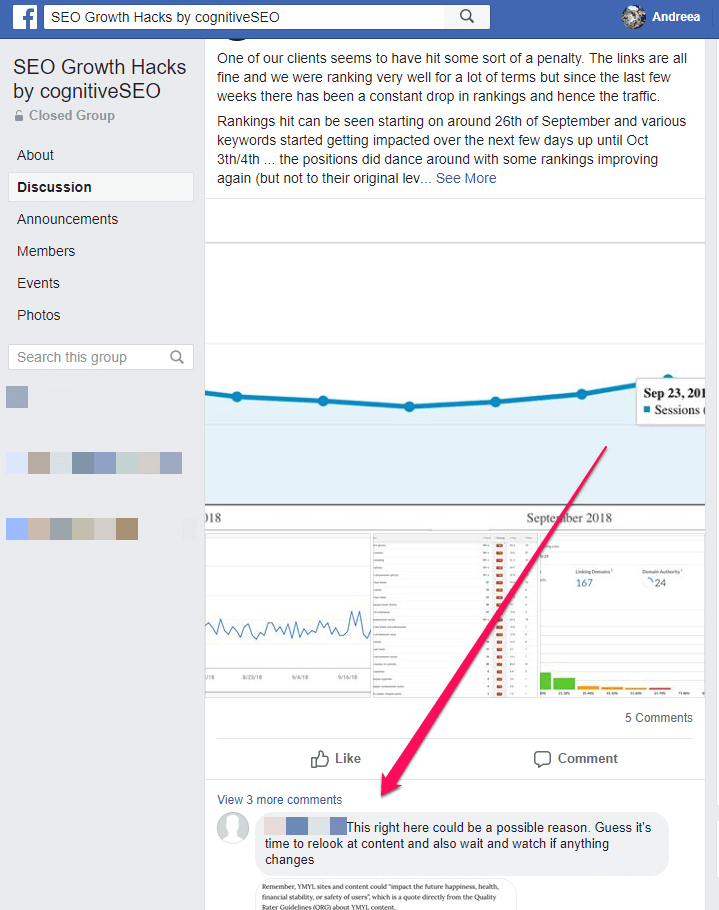
You can use communities in case you have any doubts about a specific topic.
Let’s say, for example, that you heard lots of times that multiple links coming from one and the same domain are considered to have lower value, so unique linking domains are typically a more reliable metric than link count.
And you’d like to know if anybody experienced a situation when this statement isn’t true and get some examples that you could use in your article (of course, after asking for permission).
Or you can ask for tips on client retention and see what comments and answer you get and use them in creating a new piece of article.
The combinations are endless.
You just need to be in the right community, where people comment and are active.
There are lots of content types that work differently on every social platform, so make sure you get ideas and adapt the message to the type of audience you target.
8. See What Other People Are Sharing on Zest
I usually use Zest for finding new blog post ideas.
Right after you enter the page, you’ll see each article in a box format which includes the title, the cover attached, and a short description.
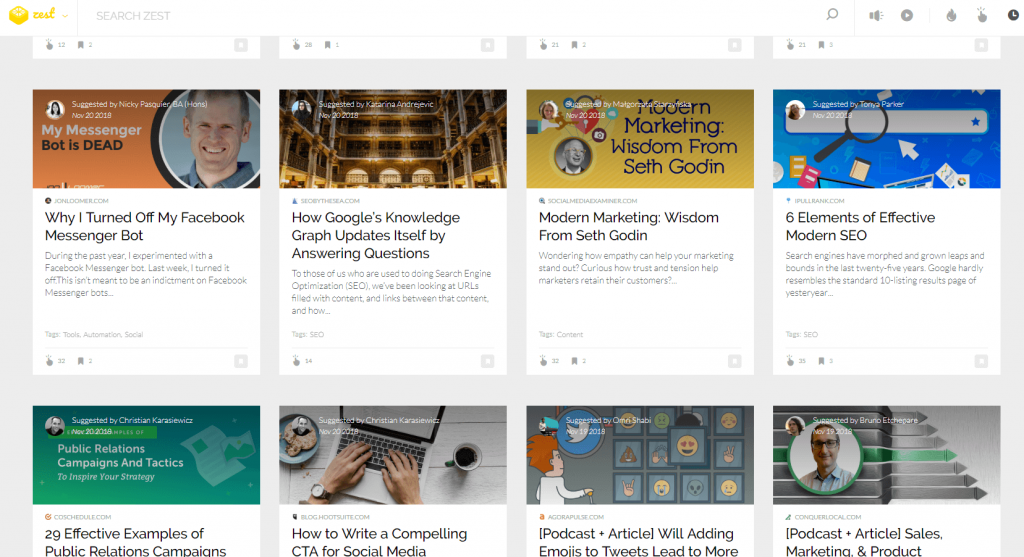
The friendly design works very well to skim through the content and makes it very easy to share and save in your account for future inspiration.
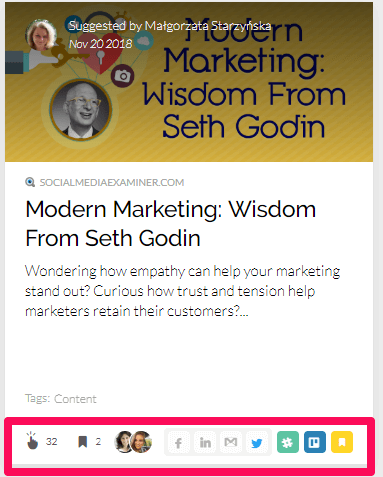
There are other ways than scrolling to search for content on Zest.
You can apply specific tags and get the articles that are related.
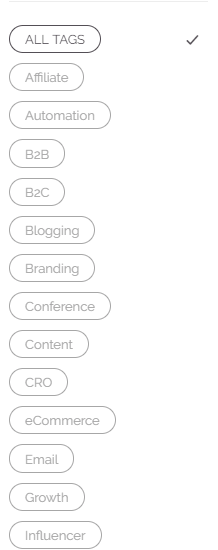
Other options for filtering results are by the type of content (audio, video), shares, clicks, or latest posts.

There are lots of experts that share their articles here.
You can follow people and get instant notifications. It is very easy to use and easy to share content, as well.
This comes in handy if you want to amplify your content and give it a boost after publishing.
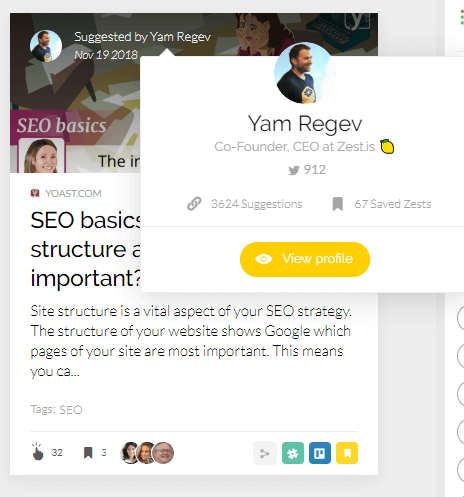
If you haven’t used it before, you should definitely start now because it is a gold mine.
Don’t miss all the Zest from the content marketing juice.
Your content needs all the zest and personality you can get.
Conclusion
As a farewell message and recommendation after all these tips, I shall leave you with one that can complement the other ideas and it could help you be a better content creator.
Grow the skill of becoming content savvy, which means developing the ability to see valuable content everywhere.
The content creation process can be hard, but there are lots of ways to make it easier.
Whether you’re in the bus/metro/car and see a commercial ad or somebody reading an interesting book (look at the title), reading posts on social media, listening to the radio or podcasts, watching a video/movie, reading something online or skimming through the news, you must see content inspiration everywhere.
This way you’ll never run out of blog post ideas again.
The post 8 Free Ways to Find Blog Content Ideas That Convert appeared first on SEO Blog | cognitiveSEO Blog on SEO Tactics & Strategies.
Source: cognitiveseo.com

The Definitive Guide To Leveraging Social Media for Online Sales
71% of Internet users in the United States actively use social media networks.
That means (almost) three out of four people can potentially be reached, interacted with, and persuaded through social media.
Marketers everywhere are trying to harness social media to improve customer experience, boost brand awareness, and increase sales.
Andrew Hubbard turned a $4,000 investment in Facebook ads into $36,449 in profits.
And, it’s not just for marketers.

Online retailers are also using social media to drive revenue.
A women’s online clothing store supporting a non-profit wildlife conservation organization saw a 192% increase in social media sales with Facebook leading to new customer acquisition.
So, to help you increase sales for your business, I’m going to show you how to use social media to drive sales.
To begin, you have to use the right social channels to reach the right people.
Use the right social channels to reach your target audience
As much as we’d all love to master every social platform, it’s about as likely as winning every lottery by only playing Powerball.
Just like the same winning numbers aren’t going to score you that sweet jackpot for every active lottery game, no blanket strategy can net you big wins on every network.
Why?
Because the preferences, demographics, and interaction styles change between each.
Some of this is the result of design constraints.
But some of it comes down to plain old user bases, which is why it’s so important to choose your channels wisely.
Facebook – the crown king of social media
Facebook may be the crown king of social media in terms of growth and frequency of use, but that doesn’t make it the best choice for your business.

Because there’s one crucial thing you have to remember about Facebook.
Just because it reaches more users than other networks doesn’t mean it reaches more of your users.
And that’s ultimately who matters most when deciding on a social platform.
Just look at the social channels these top brands choose to engage with their audience.
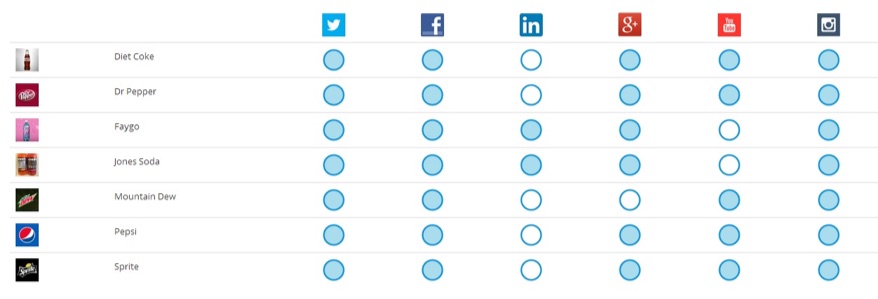
As Michelle Vroom, founder of Vroom Communications explains, “Each channel is used in different ways, and should be used in different ways. There’s no ‘one size fits all.’”
Carnival Cruise Example:
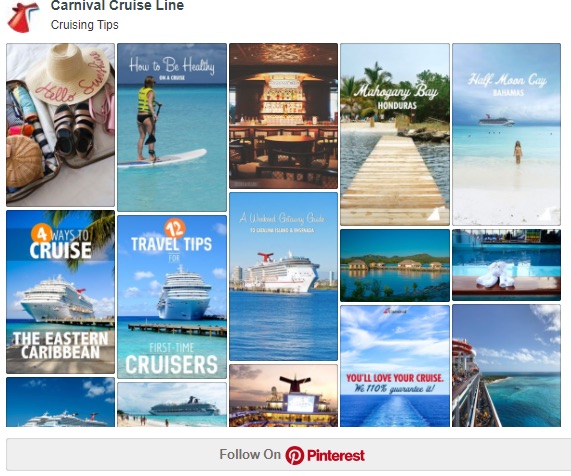
Carnival Cruise is an excellent example of how to leverage the right social channels to reach your target audience.
Carnival Cruise Line wanted to reach more “rookie” cruisers. It also wanted to keep its costs down to a minimum. For them, Pinterest was a golden goose.
Its campaign on Pinterest saw a 14% increase in click-through rate while its CPC was as much as 71% lower than the same outreach tactics on other networks.
How did they get such money-saving numbers while boosting customer acquisition?
By going to the right network to reach the right people.
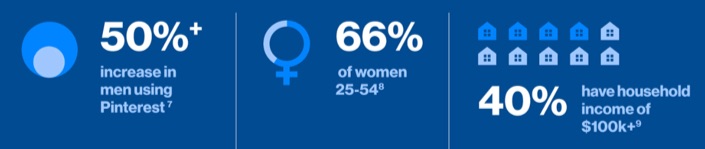
After all, who’s more likely to go on a first-time cruise: a college freshman still shopping a Top Ramen diet or a family that pulls in an income in excess of $100k?
According to Pinterest’s self-reported demographics, the latter accounts for 40% of their user base.
Flight Media saw similar results when they doubled down on their Instagram efforts. Instagram didn’t just surpass Facebook, but it became their top social media performer.
To the tune of 58% of their total lead generation.
Check this out.
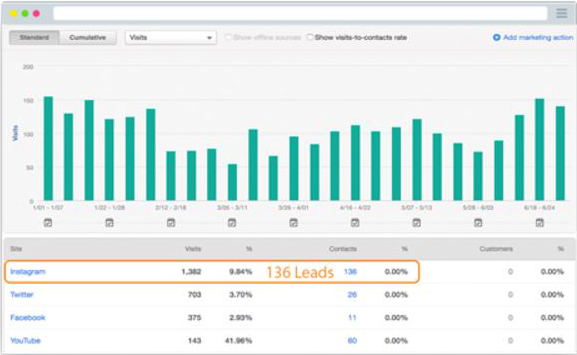
And all of that happened in just a few months.
So, as you can see, identifying your target demographics and meeting them on their platform of choice can help rake in new customers and save on marketing spending.
And sometimes, as demonstrated in the above examples, that platform isn’t always Facebook.
Use paid promotion and buyable pins to increase sales
Paid promotion programs vary between networks in terms of delivery and cost, and you can’t throw a stick without hitting a sales-boosting success story.
Don’t believe me? Check these out.
57th. design, a high-end furniture design house, and retailer get at least 35% of its revenue directly from Pinterest, using its “Promoted Pins” feature to great effect.

Here’s another.
OGX, a beauty and hair care retailer specializing in natural and exotic ingredients, pulled its U.S. sales up by 8% using Facebook’s advertising platform.

And all of that in four weeks. When you consider there’s barely a grocery store in the U.S. that doesn’t feature OGX’s products, that sales lift is huge.
Let’s make it a trifecta and look at one more.
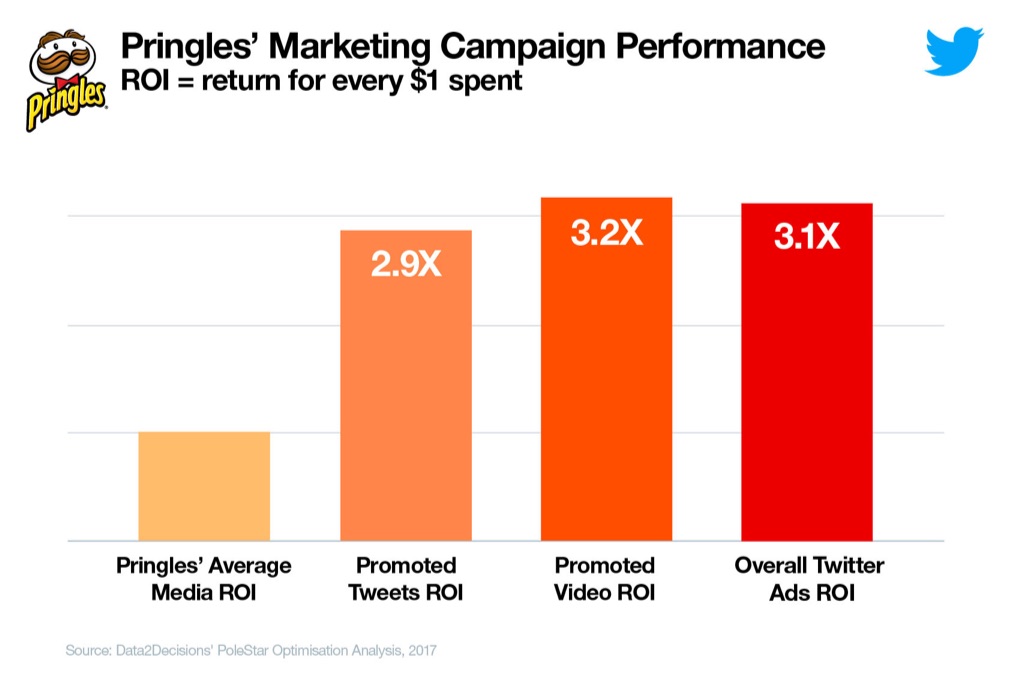
Pringles, the tube of chips that makes us uncomfortably aware of how much we can eat in one sitting, nets a 2.9x ROI on promoted tweets for every dollar spent.
So, if a paid promotion isn’t part of your social media strategy, you’re missing out. But how do you find the program and format that fits your products and budget best?
Start by experimenting with A/B testing.
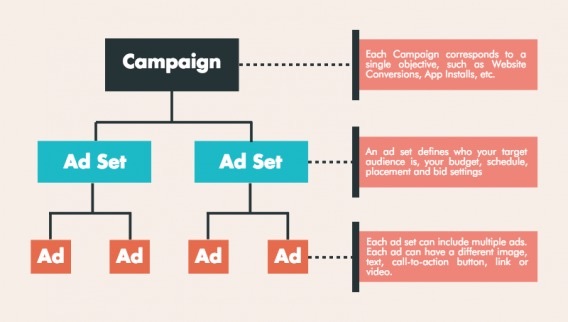
That’s what SHEIN, an online fashion retailer, did with Instagram’s paid promotion program.
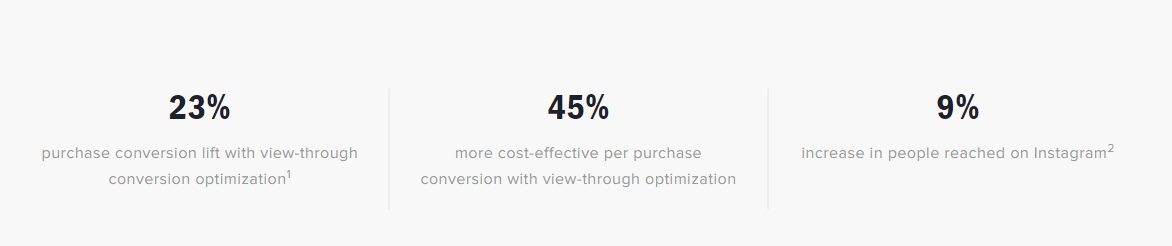
Running three concurrent experiments with different ad formats, SHEIN tracked its conversion rates with Facebook pixel to land on the format that worked best for its customers.
Best as in 8.5% more than other ad formats for a total of 23% conversion lift.
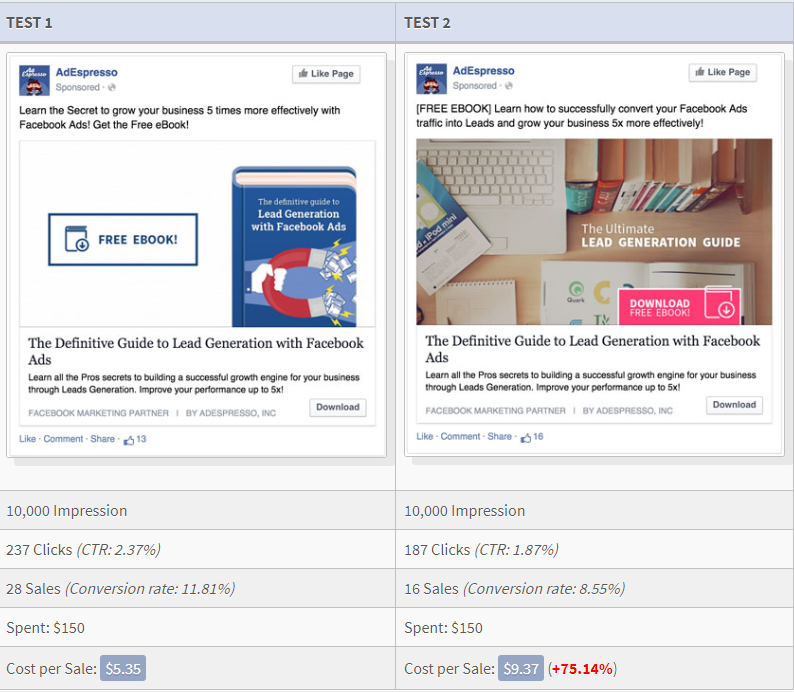
They’re not the only ones who know the value of an excellent side-by-side, either.
AdEspresso uses a similar approach for its Facebook ads.
That said, paid promotion isn’t the only way to bring customers indirectly from a social platform.
Pinterest, where 93% of users use pins to plan purchases, is also a gold mine of potential increased revenue.
Buyable pins, which allow users to complete their purchase Pinterest, have yielded some awesome results for e-commerce stores looking to grow sales and new customer acquisition.

Did I mention the best part yet? They’re free to use for approved businesses.
Look at the results for Gardener’s Supply Company, an online retailer of landscaping supplies.
Using buyable pins boosted its sales by 300%, and 95% of the pin purchases were new customers.
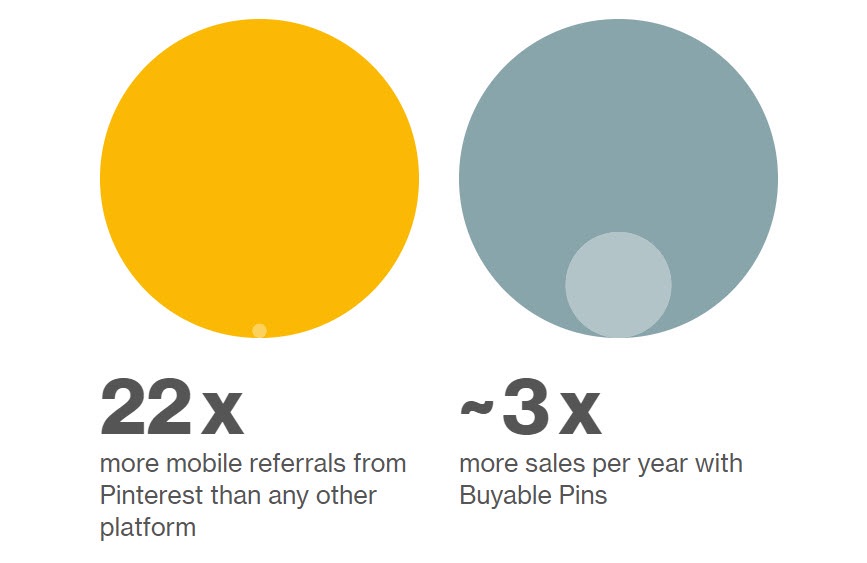
FlyAway BlueJay saw similar results. Buyable pins drove 20% of the retailer’s sales, and 100% of the purchases were from brand new customers.
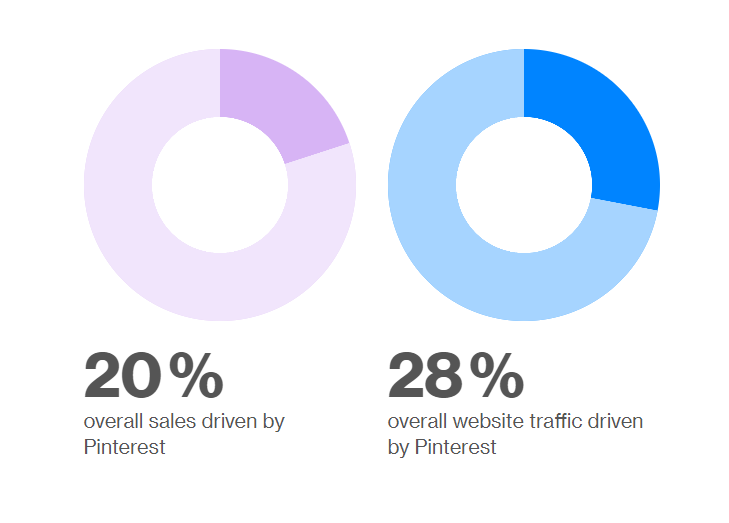
Holly Feld, the owner of FlyAway BlueJay, said this about her experience with buyable pins:
“Buyable Pins makes Pinterest more user friendly for both people shopping for the perfect gift and for businesses trying to reach new clients.”
This is the gist of it:
Every social network has a paid promotional program that can turn over a massive profit and put your sales into the stratosphere.
On Pinterest, buyable pins can take you even further into the e-commerce cosmos.
So, get out there, shop your options, and get ready to open your doors for new customers, stellar ROI, and huge traffic with paid promotion.
Leverage emotion to draw customers in
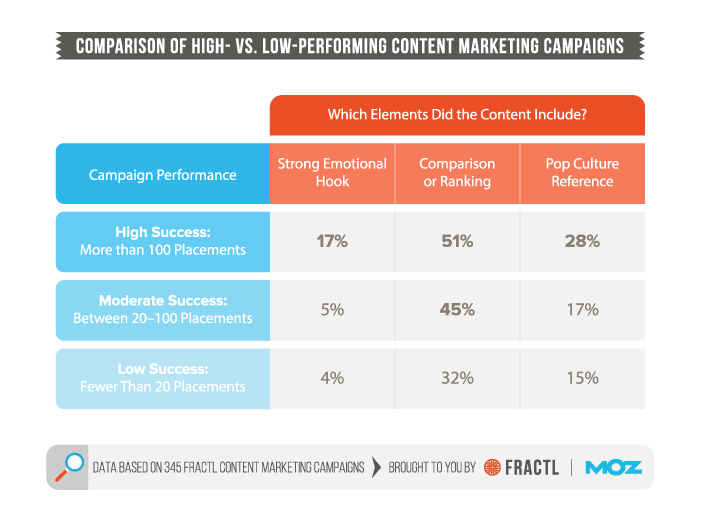
Content with high emotional impact is three times more likely to achieve mega-success than campaigns without it.
And, it’s not just for B2C organizations. Emotional marketing can be hugely profitable for both B2C and B2B organizations.
Here’s what Michal Zarankin, the former head of digital marketing for Pendo, had to say about it:
“I think that the strategies and tactics to make an impact on people’s decisions lay in the same places for B2C and B2B. B2B marketers should use emotional marketing if it makes sense for their entire strategy.”
But hold up: what exactly is emotional marketing and what makes it so different from other types of marketing? And more to the point, what can it do for your sales?
Emotional marketing, at its core, is storytelling.
And, it’s powerful enough to boost your repurchase rate by as much as 300%.
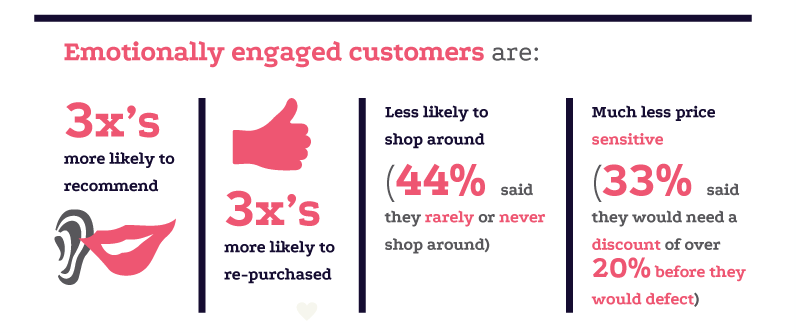
Emotional marketing is taking real-life situations and using them to drive a point home, whether that’s to prevent teens from texting and driving or get people to buy more of your products.
We might love stats in the marketing world, but consumers respond better with emotions. 31% of advertisers reported significant gains with the use of emotional marketing.
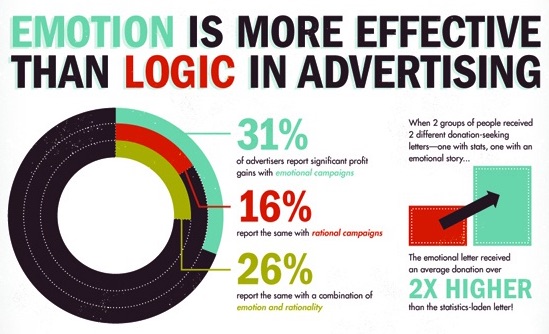
But just how significant?
Beats, the now-premiere headphone company, climbed to the top of consumer’s wishlists with three different story-based campaigns that were rooted in emotion.
The most remarkable part of Beats’ success is that almost all of the campaigns started with little to no budget.
You read that right.
Its product rose to acclaim through campaigns that could barely cover the monthly rent in most metropolitan cities – if at all.
Here’s another example of emotional marketing driving sales.
Back in 2008, a Subaru was nothing special. Dependable, decent, but it didn’t strike a chord with anyone. That all changed with the “Love” campaign.

Turning its focus to emotional storytelling, Subaru rose from the ashes of lackluster reception and is currently riding a 73-month long streak of growth, netting 647,956 sales in 2017.
Since launching their emotionally charged campaigns, Subaru’s marketing has evolved, but the core of it – the emotional resonance – has stayed the same.
Subaru officials put it this way: “Our target demographic is experience seekers. It’s the same as eight years ago, only we are reaching more of them, in better ways.”
Let’s look at one more example of emotional marketing in action, this time, specifically on social media.
Knorr, a food and beverage brand, wanted to get millennials talking (and buying) its products. Thus, the “Love at First Taste” campaign was born.
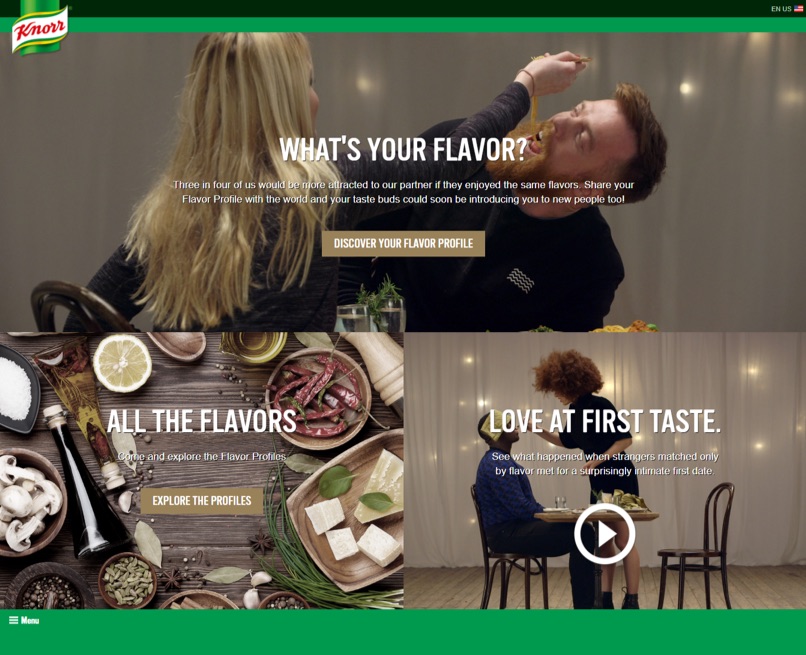
Wildly creative, this campaign leveraged emotional connection with other people – intimacy – to grow its reach across its target demographics on social media.
It used YouTube to drive its film content, Facebook to get shares flowing, and Twitter to spark the conversation with millennials.
The results went well above its expectations.
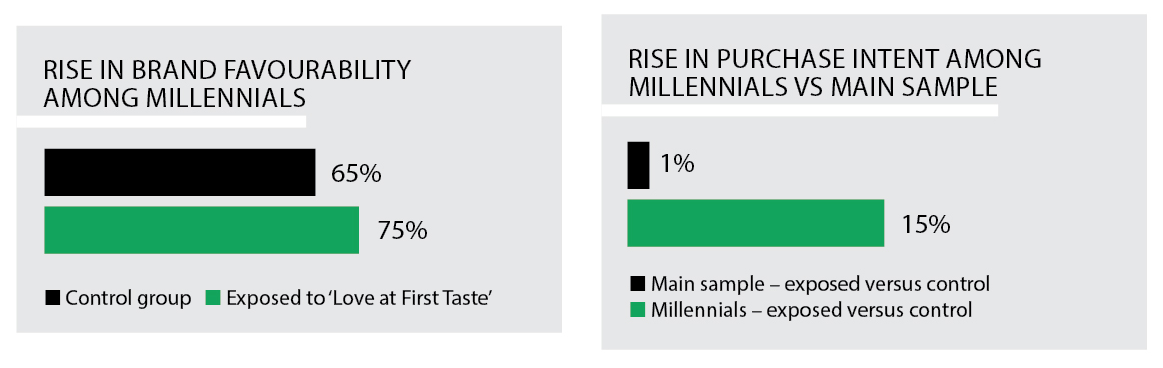
Globally, they saw a 13% rise in purchase intent across all demographics! That’s insane, especially when you consider the previous year’s increase came in at a paltry 1.25%.
OK, you’re sold.
Emotional marketing is effective for sales, offline, online, and when used in social media.
But, how do you incorporate that into your social media strategy?
First, understanding your audience is key.
The more emotional reactions you can elicit, the more shares and engagement you’re going to get with your posts.
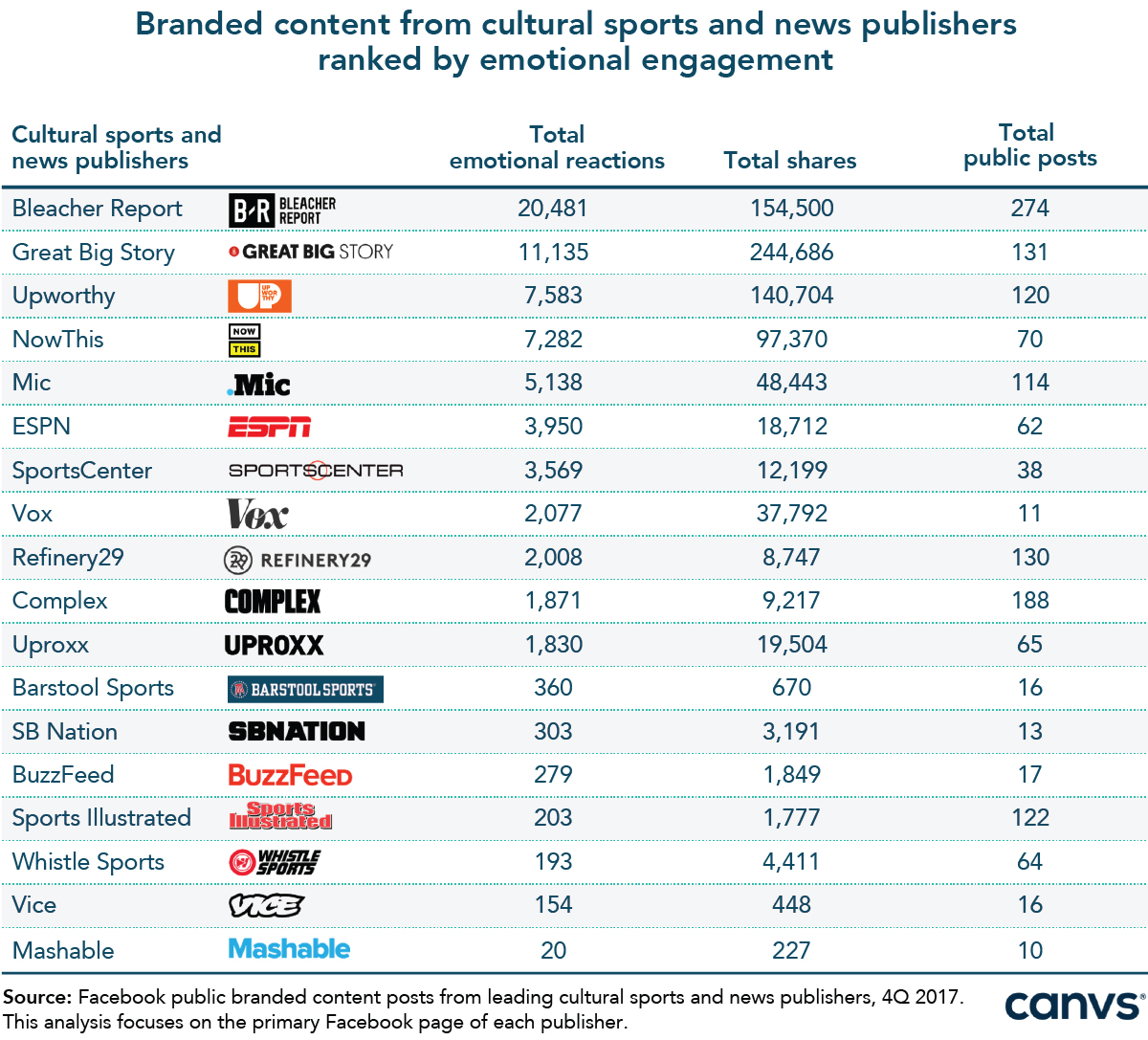
One of the most reliable ways to use emotional marketing on social media is using milestones.
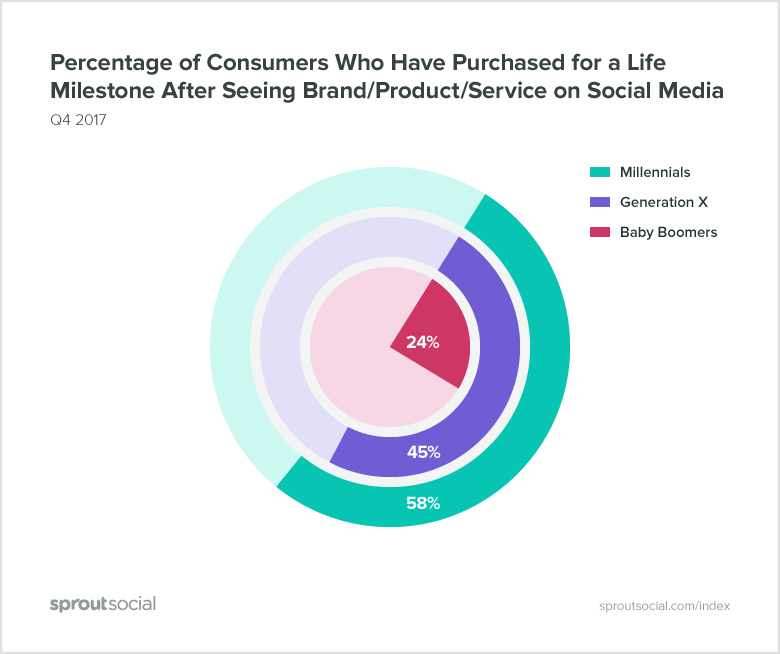
Over half of millennials have made a purchase for a milestone after seeing the associated products on social media.
Here’s a sample of milestones – and their brand associations – you can use as inspiration for working into your social media.
Knorr, our above example, leveraged “relationships.” Subaru used “family,” and Beats used a combination of “personal accomplishment” and “professional.”
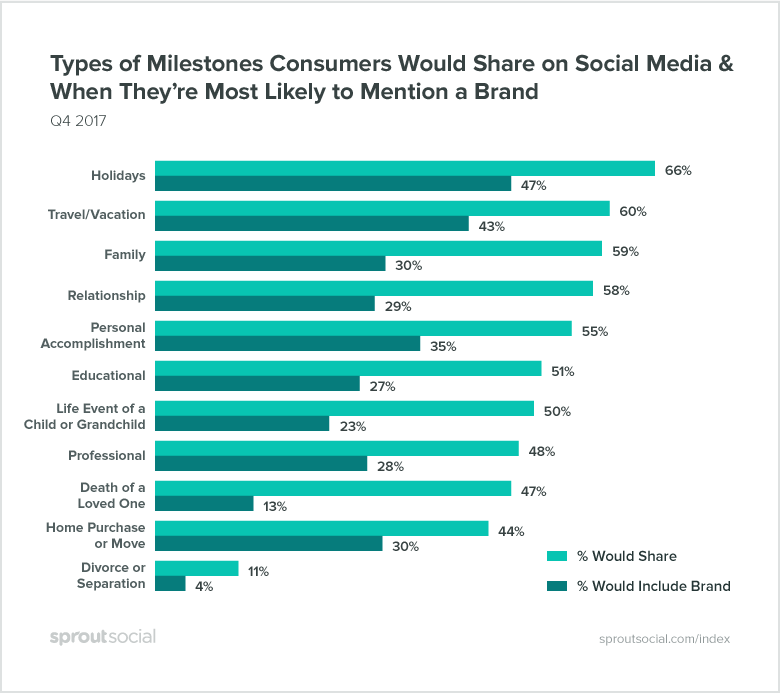
Here’s how it all breaks down:
Emotions are like a roadmap for your products.
As SmartBug Media’s Jennifer Lux explains…
“If you can truly understand the sentiments that drive buyers’ actions, you can cultivate an engagement strategy to result in those collective emotional triggers along the path to purchase.”
So, stop writing bland posts and start incorporating emotion-driven marketing and milestones. Your sales and followers will thank you.
Deliver more than a sales pitch
Do you remember the last time you got trapped in an uncomfortable conversation with a neighbor running one of those catalog businesses?
How, thirty seconds into the conversation, you started wishing for a meteorite to deliver you from their sales pitch?
Your customers feel the same way. They don’t want to listen to you sell, sell, sell.
That lands you in the spam or annoying territories (or both). And that translates into losing followers, especially your older users.
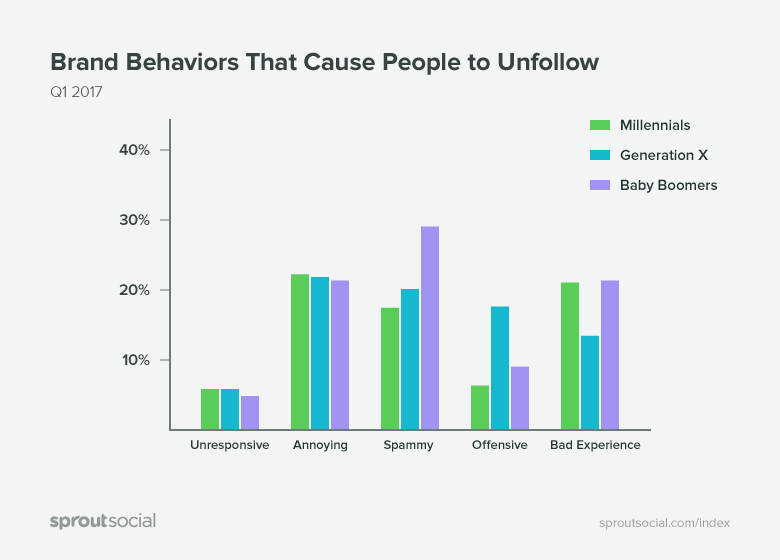
So you need targeted content to keep your social media from self-sabotaging.
Which is a cinch if you’ve got a content marketing budget set up and a writer on hand.
And if you don’t, it’s worth investing in one. The best content marketing strategies include both curated and original content.
Curated content may save you time, but the extra effort and expense required for original content can have a significant impact on directing users to your website.
More traffic means more sales opportunities.
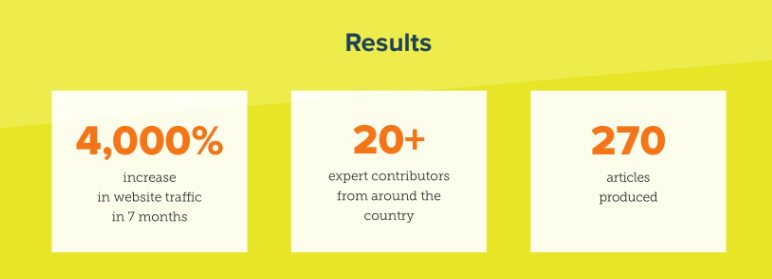
But in case you’re not sold on the necessity of original content, consider HotPads.
Using original content, the online rental marketplace was able to pull in 4000% more traffic in just seven short months.
At this point you might be thinking: OK, why not just go with all original content then?
Beyond the time and money investment, you should be sharing both curated and original content with your audience because both help your audience.
And more to the point, because both drive consumers on social media to make purchases.
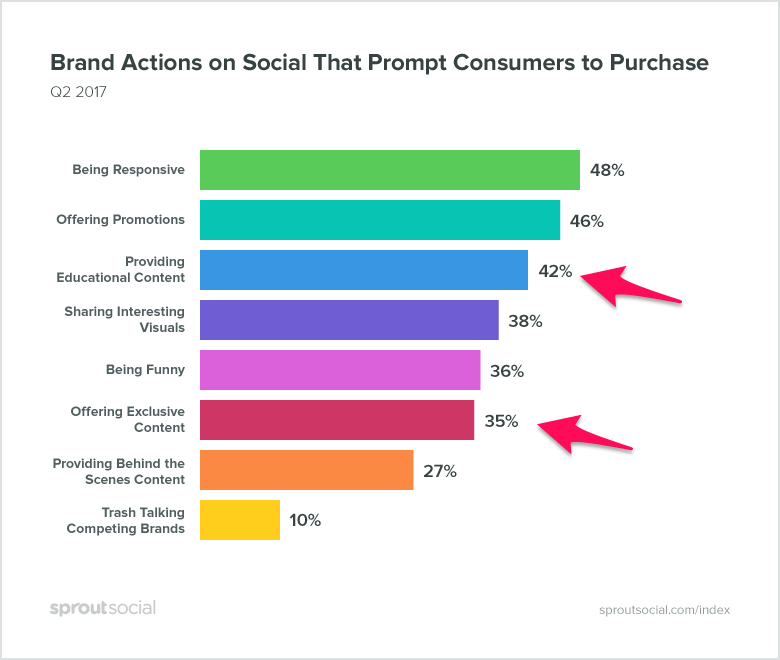
So make sure your social channels aren’t just one long sales pitch after another to keep your customers happy (and more importantly, consuming).
OK, there’s one final pillar you need to hit to leverage social media to drive your online sales. It’s a simple one, but it’s vital: being social.
Increase revenue with influencer marketing
Engaging with users is critical to keep them coming, but it isn’t limited to direct conversations.
In fact, there are a lot of creative approaches to engagement that have yielded some powerful rewards.
Take Nicaila Matthews’ approach.
She used a five-day social media challenge to build her business and help her users reap the rewards with her. The numbers are pretty staggering.
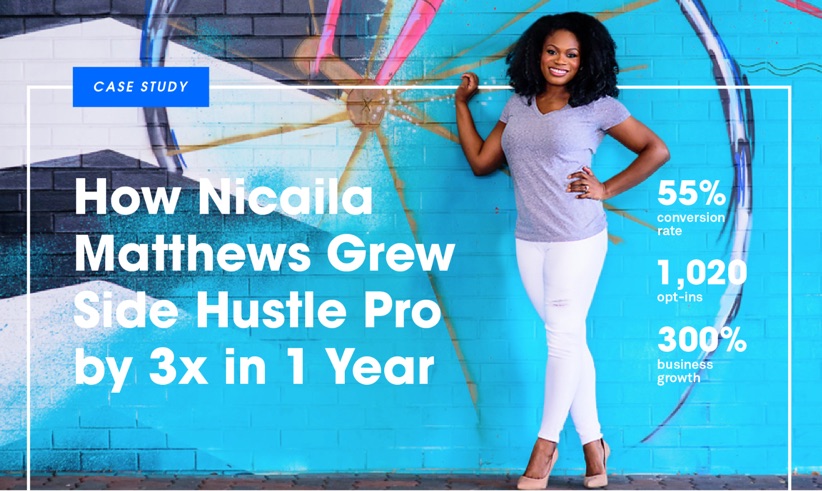
The setup was simple.
Matthews used a combination of organic social growth and paid social advertising to spread the word of her free challenge and direct users to a sign-up page.
Her challenge helped users grow their own Instagram followings and featured five live sessions (that later became evergreen content after the challenge ended).
Using live engagement and great content netted Matthews 1,020 leads in just five days.
She then used those opportunities to upsell her premium product packages and start moving leads into conversions. Brilliant, right?
Want an even savvier way to drive users to your products without having to create a lick of content for it?
Let users generate your content instead.
Better yet, use an influencer to net content, sales, and engagement.
The ROI on influencer marketing has been estimated up to as much as eleven times higher than traditional marketing techniques.

Here are just a few companies that have yielded some epic rewards with influencer marketing.
Daniel Wellington, a watch company, built its entire sales strategy on influencer marketing and sold its one-millionth watch within three years of launch.
Want an even more staggering result?
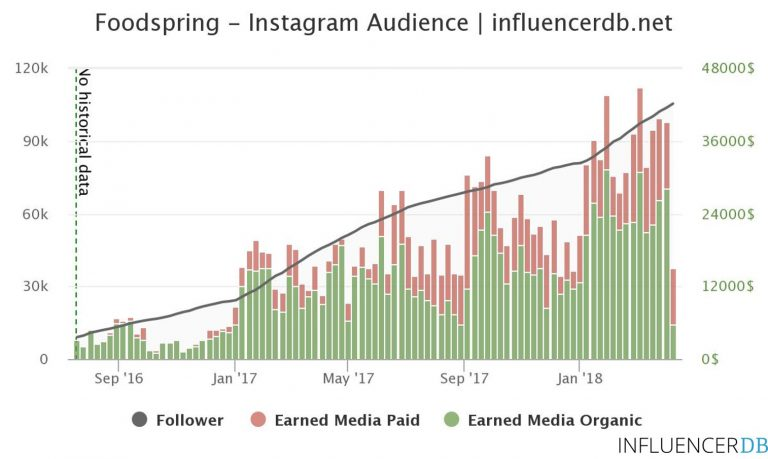
Foodspring, a culinary upstart catering to the fitness-minded consumer, grew its earned media value 750% in one year thanks to influencers.
Influencer marketing isn’t just for newcomers looking to make waves. Well-established brands like Bigelow Tea have netted some impressive results, too.
To the tune of an 18.5% increase in sales.
But in case you’re not sold on influencer marketing yet, let’s look at one more example.
Gerber Lil’ Beanies boosted its national sales by 5% thanks to a comprehensive influencer campaign.
This campaign netted Gerber Baby almost 10,000 pieces of content and a quarter million interactions across different social platforms. Which is crazy when you consider this:
It had just under 350 influencers working to promote its products. Which means for every influencer, it netted roughly 800 engagements!
OK, that’s all well and good, but how do you capitalize on influencer marketing if you’re working with a baby-sized budget? Go for influencers who already want to promote your product.
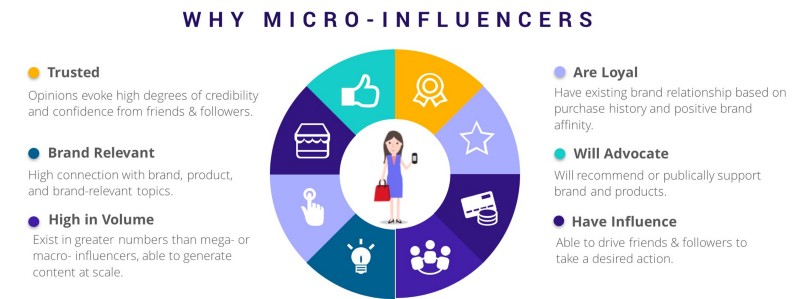
Alternatively, reach out to “micro-influencers.”
These homegrown social media players can deliver high engagement, they’re easier to find than macro-influencers, and they’re often significantly cheaper.
Ready for some good news?
Finding influencers that fit both your budget and niche is easier than ever.
One of my favorite tools for finding influencers is Influence.co.
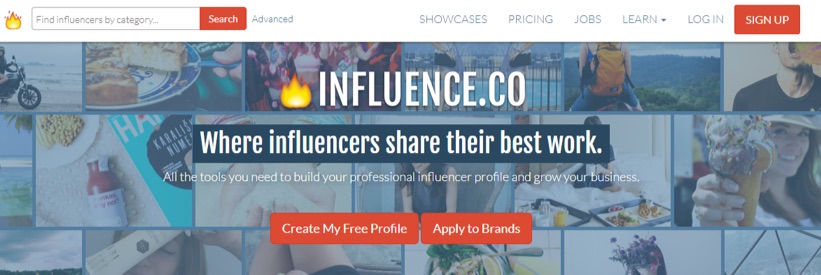
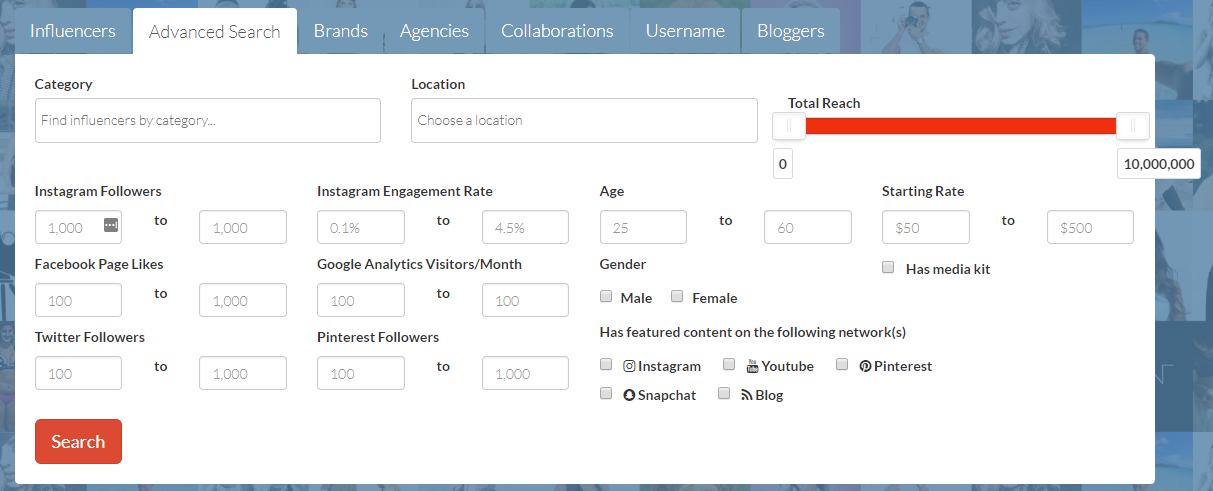
Organized visually and including an exhaustive tagging system, Influence.co makes it easy to filter influencers by industry, follower count, local area, and so much more.
Think of it as a freelance platform specifically for influencers. One that puts the power in your hands to find the perfect people for your budget and products.
You can start by checking out its collections, the hand-selected cream of the influencer crop.
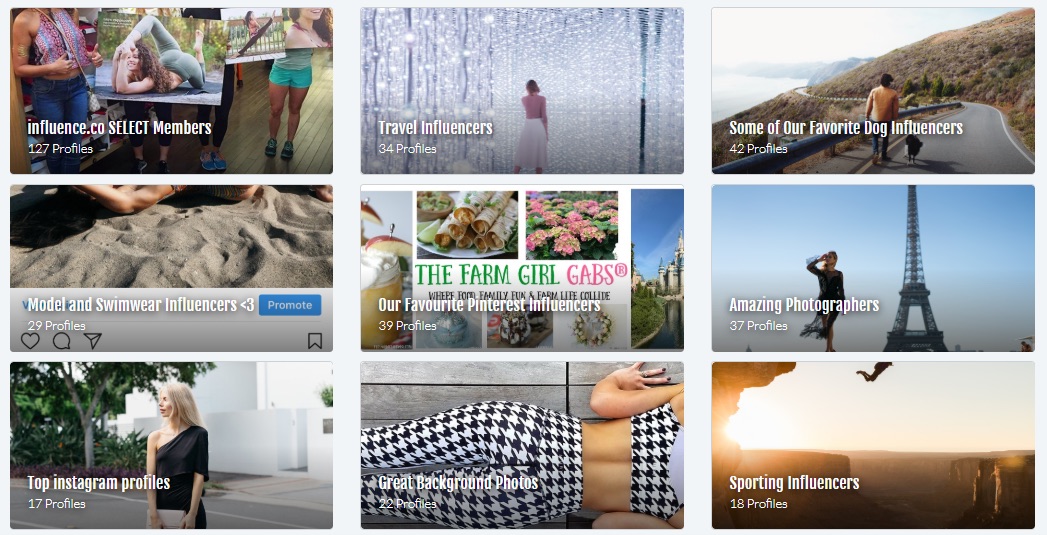
But the real power of this platform is its advanced search.

Check out the options for filtering influencers.
Nice, right?
With Influence.co, it’s easy and free to find the right people to work with your brand.
Basically, here’s the deal.
Social media can drive sales and generate leads, but you have to be involved and get the right players on the board to see the bucks roll in.
Reach out to your users, get involved in the community, and work with influencers to drive your online sales, bulk up your content, and elevate brand engagement. It’s that simple.
Conclusion
The most important aspect of using social media for online sales is going where your customers already are. Different demographics like different networks.
Find your target demographics and build your presence where they’re already comfortable. That isn’t always going to be Facebook.
Once you’ve nailed down your networks, use paid promotion to get some serious ROI and sales traction. The “buyable pins” on Pinterest are also a great option for online retailers.
Want your products to stand out in the sea of social media? Leverage emotion to engage with your customers…and their wallets.
But don’t just focus on your products. Users will drop like flies if your channel is a day-in, day-out sales pitch.
Instead, give your followers a combination of stellar original and curated content to make your brand worth following.
Finally, leveraging your social media to get people invested in your products requires one simple but pivotal action: be social.
Engage with users, whether it’s through user-generated content or clever campaigns like the one run by Nicaila Matthews to generate over 1k leads in five days.
Alternatively, bulk up your content and boost your sales by turning to influencers. Don’t think you have the budget for influencer marketing? Reach out to “micro-influencers” instead.
They’re often cheaper, well-trusted, and much easier to reach than star-studded endorsements. Influence.co is a great way to find them.
The social media game may not be the easiest around, but it can be rewarding with the right metrics and approach. Use this guide to give your products some pop with social media.
What social media strategies have you leveraged to increase sales?
About the Author: Neil Patel is the co-founder of Neil Patel Digital.
Source: feedproxy.google.com