
Tag Archives for " online marketing "

The Easiest Way to Build Links
Link building sucks.
It’s time-consuming and hard.
But as an SEO, you have no choice but to build links… assuming you want to rank on Google.
So, today I am announcing a new Ubersuggest feature, that makes link building faster and easier.
Here’s how…
What is the easiest way to get links?
What if you could only focus your link-building efforts on sites that are highly likely to link to you?
Sounds great right…
Well, you can.
Just think of it this way… what are the sites that are most likely to link back to you?
It’s actually the ones that link to your competitors.
For example, if there were 300 sites that linked to 4 of your competitors, but they don’t link to you yet, reaching out to those 300 sites should create a large chunk of new backlinks for you.
Because if they are willing to link to your competition, they usually won’t mind linking to you as well.
On the flip side, if there are sites that don’t link to you or any of your competitors if you hit them up, then chances are, they will ignore you and not link to you.
So how do find these easy link opportunities?

Introducing Backlink Opportunities by Ubersuggest
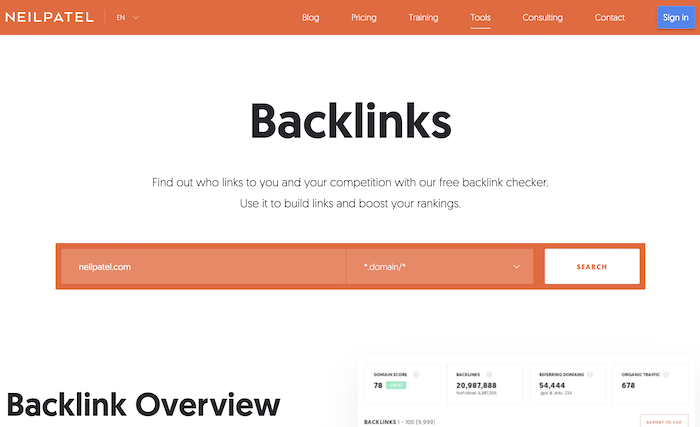
I want you to first go here. Then type in your URL and click on “search”.
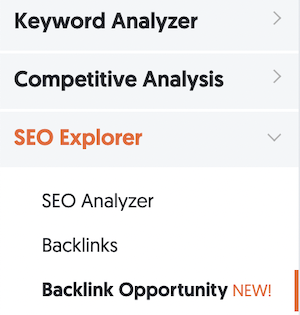
In the left-hand navigation click on “Backlink Opportunity”.
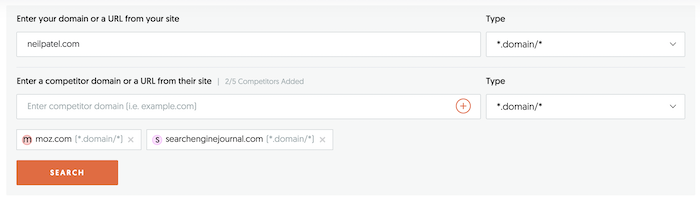
In this report make sure you put your URL at the top and enter in a few of your popular competitors.
As you can see, I put in Moz and Search Engine Journal.
Make sure you click the “+” button when adding each of your competitors and then hit “search”.
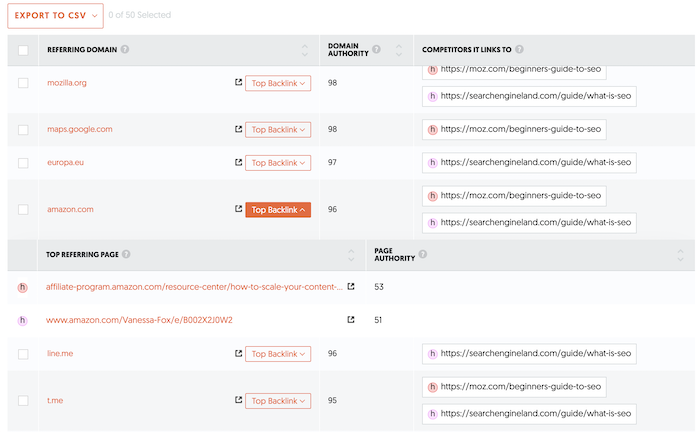
Within seconds you’ll see a report of who links to your competitors, but not you.
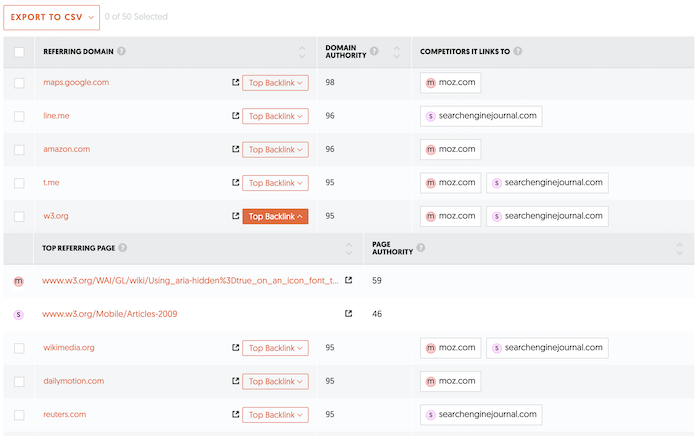
You’ll then want to drill down on each domain to see the exact URL that links to your competitors.
Some of the links may not be a good fit, such as the Google Maps page linking to Moz… unless you have a physical office location.
But others, such as the W3.org site, could be a great opportunity.
Wait, it gets better
The example above shows you all of the people that link to your competitors but not you.
But it is on a domain level.
With link building, it’s easier to get links when you have a similar blog post to your competition.
For example, let’s say I Google the term “SEO”. Here’s what I see on Google.
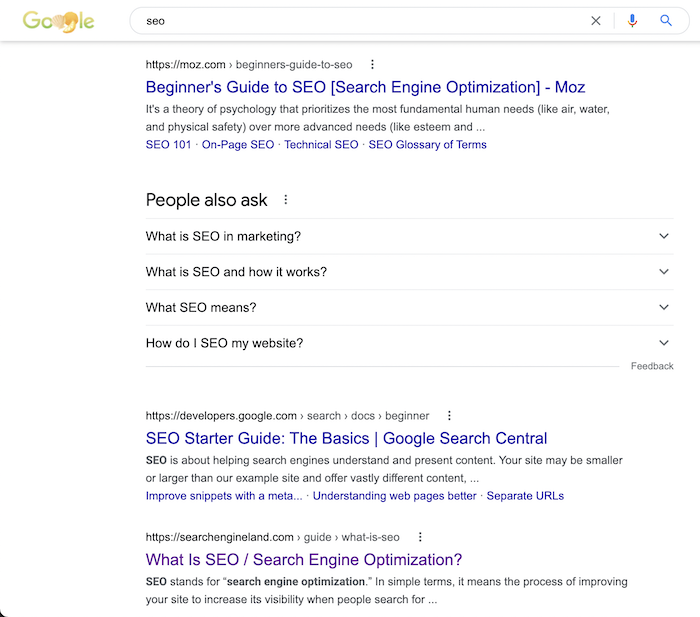
Both Moz and Search Engine Land rank above me.
I can take the exact URLs that rank above me and put them into the Backlink Opportunity report.
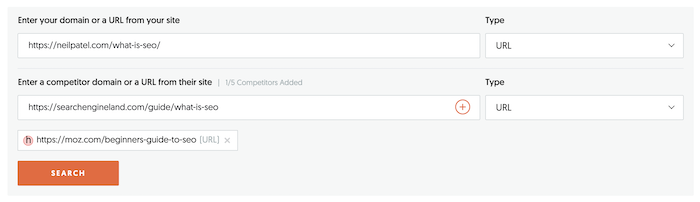
When adding competing URLs to the Backlink Opportunity report, you’ll want to select “URL” instead of “Domain” so you can see who links that specific URL.
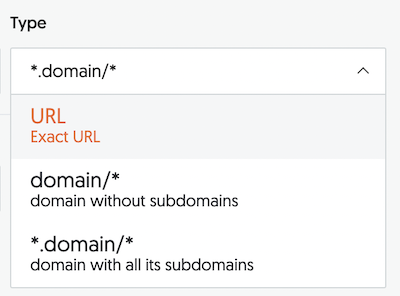
This is important because Moz and Search Engine Land may have articles around topics that I don’t cover.
But their articles on SEO that rank above me are about SEO basics.
And the article I have that ranks below them is on SEO basics.
For that reason, it is highly relevant to see who links to the pages that rank above me because there is a good shot, I can convince one of those sites to link to me.
Sending out the email
Once you have a list of sites you want to outreach to, you are probably wondering… “how do I figure out who to email”, right?
Using Hunter.io you can get the email address for any site for free.
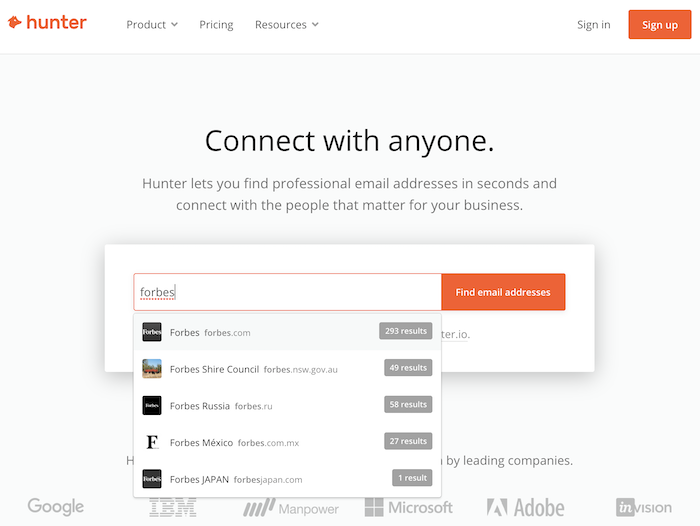
Once you have a person’s email, send them a custom email.
For example, for the people who link to Moz’s SEO beginner guide and Search Engine Land’s beginner’s article, I may send something like this…
Hey John,
You already know SEO is changing fast, hence you wrote an article on up-and-coming SEO trends.
But one thing I noticed is you didn’t talk much about AI and how it is going to impact SEO.
And the articles you linked to on Moz and Search Engine Land don’t cover that either.
Yet at conferences, it’s one of the buzzing topics that everyone is curious about.
I actually have a few examples of the use of AI in SEO here [insert link].
If you think it’s valuable feel free and add it to your site. 🙂
Thought it would help your readers.
Cheers,
Neil Patel
PS: By the way, I just shared one of your articles on Twitter… you can check it out here.
My outreach emails are very custom. Using generic outreach emails doesn’t work too well with link building.
When I send out 100 emails based on opportunities from the Backlink Opportunity report, I aim for at least 15% of the sites to link back to me.
Keep in mind I am specifically using the report to see who links to similar competing articles that rank higher than me on Google. It’s very specific, but that is why it works.
Conclusion
If you haven’t, go here and put in your URL. Try out the Backlink Opportunity report and tell me what you think.
Start off by seeing who links to your competition and hit up those sites one by one to see if they are willing to link to you.
It works… just reach out to 10 sites and day and do it for a month. You will see results.
So, what do you think about this new report?
Source: feedproxy.google.com

How to Run an Omnichannel E-Commerce Marketing Campaign
This article walks you through precisely what omnichannel e-commerce looks like, why it is crucial for e-commerce brands, and how you can create your own killer omnichannel e-commerce marketing campaign.
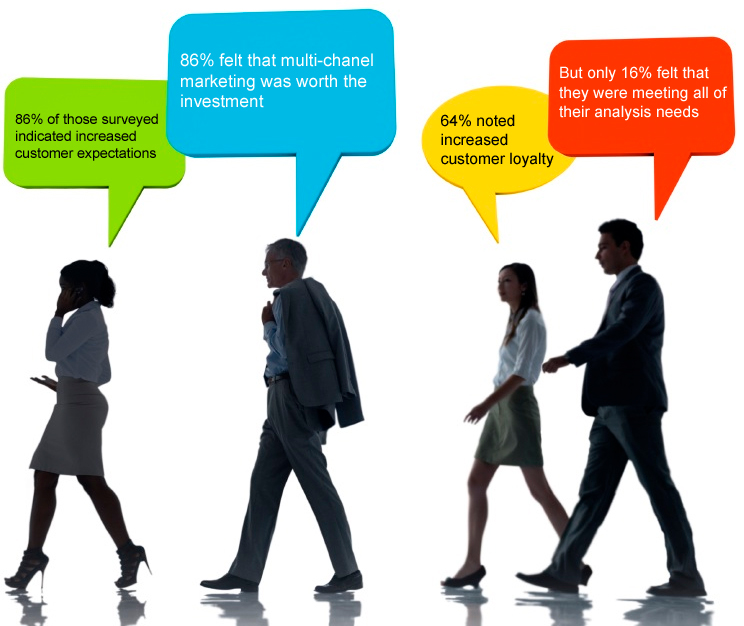
Think back to the last time you made a big online purchase. If you’re like most consumers, there’s a good chance you interacted with the brand multiple times on different channels using different devices before you paid.
The customer journey isn’t straightforward anymore (if it ever was). It’s a meandering path where customers visit brands on different platforms before converting. To successfully target and convert consumers across every channel and platform, you need a unified marketing strategy. That’s the crux of an omnichannel e-commerce marketing campaign.
This article walks you through precisely what omnichannel e-commerce looks like, why it is crucial for e-commerce brands, and how you can create your own killer omnichannel e-commerce marketing campaign.
What Is Omnichannel E-commerce?
Omnichannel e-commerce is a marketing approach that creates a unified customer experience across multiple platforms.
Specifically, omnichannel retailers deliver the same experience across every channel and create a seamless experience that transcends individual platforms.
This is different from multichannel e-commerce, where brands sell across different channels but offer different experiences.
While consumers may be able to shop on social media, a website, and a brick-and-mortar store, they can’t move seamlessly between them.
There is one other form of commerce: single-channel e-commerce.
This is when brands only sell through one channel.
That could be a traditional store, an online shop, or a marketplace like Amazon.
This approach limits brands to just one platform, which can be devastating if that platform makes changes.
With omnichannel e-commerce, customers hop from device to device, or platform to platform during the conversion process. As a brand, you need to keep up.
Why Is an Omnichannel E-commerce Strategy Important?
An omnichannel e-commerce experience sounds better than a multi-channel or single-channel experience, right?
That’s reason enough to adopt an omnichannel approach, but it’s not the only reason you should.
Omnichannel e-commerce provides a better customer experience and allows your brand to take advantage of new platforms, increase customer retention rates, and boost sales.
Omnichannel E-Commerce Strategies Provide a Better Customer Experience
Google reports that 85 percent of online shoppers start the purchase process on one device and finish it on another. Why does that matter?
Convenience rules when it comes to e-commerce; just ask Amazon.
It’s not enough to offer a great selection, competitive pricing, and next-day delivery, however.
Brands must show up where their customers are and offer a seamless experience when they switch devices or channels.
Take off your marketer’s cap for a second and remember that most consumers don’t view their shopping experience as separated.
It’s all one journey to them, and that’s exactly how an omnichannel e-commerce experience approaches it.
As you can see from the infographic by Invesp below, customers can use an omnichannel experience in several different ways.
They can:
- check the availability of products
- reserve or buy items and pick them up in-store
- have constant access to their profile information
- enjoy a personalized shopping experience regardless of platform

Omnichannel Is the Future of E-commerce
Want to future-proof your brand? Omnichannel is the way to go.
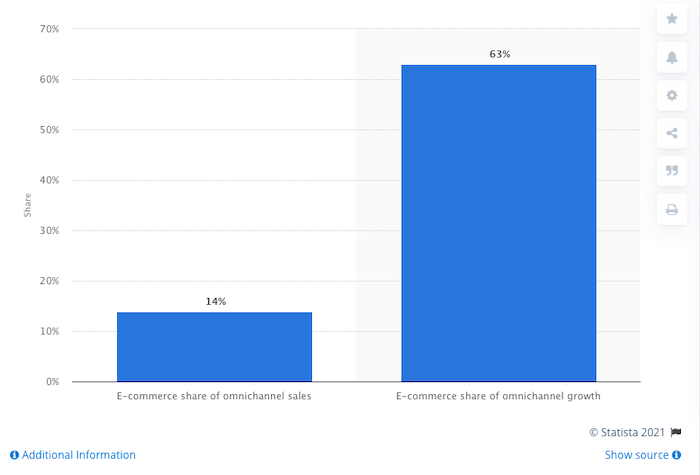
Statista found e-commerce accounted for 14 percent of omnichannel sales in 2019, but it accounted for a whopping 63 percent of omnichannel growth—which means omnichannel is growing fast.
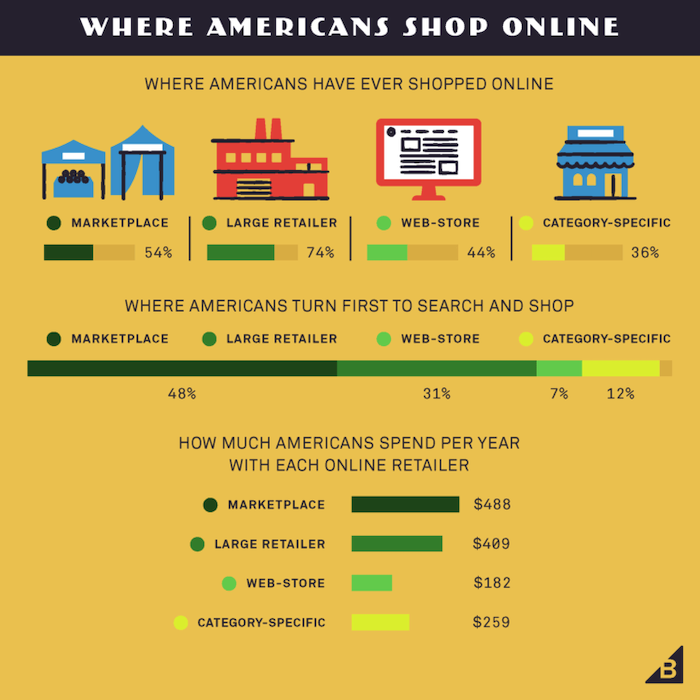
According to BigCommerce’s Omnichannel Retail report, consumers shop fairly evenly between different online stores, even though the bulk of spending happens on marketplaces like Amazon and large retailers.
Increase Customer Retention Rates and Sales
An omnichannel marketing strategy isn’t just good for customers; it can be incredibly profitable.
Customers keep coming back to stores that offer an omnichannel approach.
A survey by Aspect Software finds organizations that leverage an omnichannel strategy see 91 percent better year-over-year customer retention rates than businesses that don’t.
If you’re serious about generating repeat online sales, omnichannel marketing is the way to go.
Omnichannel customers are better customers in the long run, too.
IDC finds these consumers have a 30 percent higher lifetime value than single-channel shoppers.
Research also shows 47 percent of shoppers who engage with brands on 10 or more channels purchase from their favorite brands at least once a week.
That’s compared to 21 percent of shoppers who engage across one to four channels.
8 Tips for Building a Successful Omnichannel E-commerce Marketing Campaign
Omnichannel e-commerce marketing is essential for brick-and-mortar or digitally native brands that want to drive more e-commerce traffic and increase e-commerce sales in the years ahead.
Here’s what it takes to run a successful campaign.
#1 – Identify Each Channel’s Opportunities
Every channel is important in an omnichannel e-commerce strategy, but they play different roles.
Begin by identifying where your customers spend the most time, how they interact with these channels and the types of products they normally buy there.
Some channels are more suited to advertising particular products, while others may be better for customer service.
For example, an enterprise software company probably won’t get many direct conversions from Twitter, but they can still engage prospective customers there.
Keep in mind, your omnichannel strategy shouldn’t include every single marketing platform.
If none of your customers use TikTok, there’s no point creating a presence there.
Omnichannel should focus on the channels your customers use.
#2 – Understand Your Customer’s Needs
An omnichannel approach should put your customers front and center.
Every business likes to think they know their customers, but how much do you really know about them?
Now is the time to find out.
Think about the channels where your customers hang out.
What content do they like to see on those channels?
When are they most likely to convert?
These are the questions you have to answer.
You can use data to understand how customers interact with your brands across each channel, but don’t be afraid to speak with them directly through surveys and polls.
This may help you uncover things you didn’t know about the buyer’s journey.
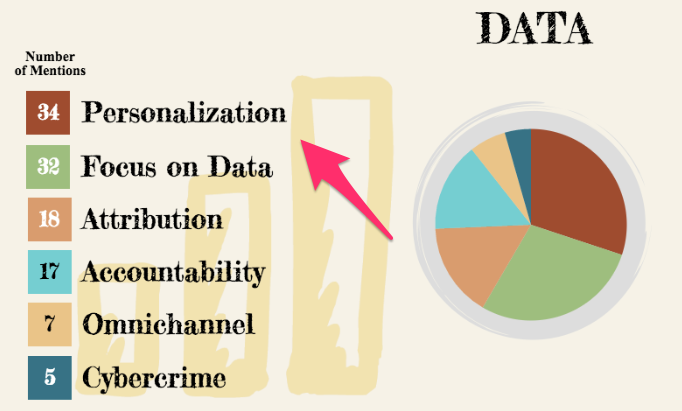
#3 – Personalize Ads and Messages
Customers expect more than an omnichannel experience; they expect personalization at every touchpoint on every channel.
They want to land on your website and see the products they frequently buy.
They expect the emails in their inbox to contain offers and marketing messages relevant to them.
The trouble is, 67 percent of marketers are not providing customers with contextual, personalized messages.
You don’t need to personalize your messaging for every individual customer, however. Instead, segment your audience into smaller groups that have the same traits.
These traits can include:
- demographics
- shopping patterns
- favorite channels
- favorite products
- spending amounts
Personalization strategies can even be implemented in stores.
It may be a little more complicated recommending related products online, but setting up kiosks or equipping shopping assistants with mobile devices can help bring the online experience in-store.
#4 – Keep Your Brand Voice Consistent
Apple, Nike, Wendy’s; there are some companies with instantly recognizable brand voices. Why? Because they have an unfailing commitment to maintaining consistency across every channel.
It doesn’t matter if you see an Apple ad on TV or in print, read the copy on their website, or even watch one of their product launches.
The language and tone of voice are exactly the same.
That’s the secret to developing a great omnichannel e-commerce marketing strategy.
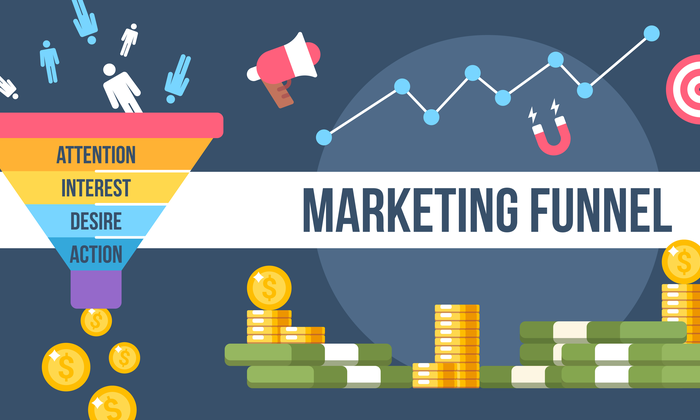
The more consistent your messaging and tone of voice are, the less likely consumers are to get confused and fall out of your marketing funnel.
At the same time, they’ll find your message much more engaging.
It’s one thing to be hit with a promotional message in an email. It’s another thing to see that same message on social media, your website, and in-store.
Your promotional strategies should also be consistent.
It’s not an omnichannel marketing strategy if you’re running separate promotions in-store and online and aren’t allowing either shopper to use the other channels’ promotions.
#5 – Make Each Channel and Touchpoint Shoppable
With an omnichannel experience, customers should be able to purchase wherever they interact with your brand.
Your online and brick-and-mortar stores are a given, but can they make purchases on social media channels or your app?
This wasn’t possible a couple of years ago.
Thanks to some pretty significant updates on the major social media platforms, it is now possible to drive sales through Instagram, Facebook, and Pinterest.
Don’t stop there, though. Consider expanding your reach to marketplaces like Amazon and Etsy, if appropriate.
As we saw in the breakdown of omnichannel e-commerce spending above, marketplaces have the second-largest share of shoppers and drive the most sales.
Sure, in an ideal world, it’s better if customers buy your products on your own website.
But having customers purchase on Amazon allows you to engage with them and bring them to your website.
#6 – Keep Testing and Gathering Data

Your omnichannel e-commerce marketing campaign will need to evolve over time.
Consumer habits change, new channels emerge, and existing platforms become less important.
That’s why gathering data and continuing to test and refine your campaign is so important.
More data allows you to better optimize your campaign, and, ultimately, be more successful.
Test your campaign as a whole and run live A/B tests on your personalized messaging to each customer segment.
Tweaking headlines, body copy, and images can dramatically improve engagement and conversion rates.
#7 – Back It Up in the Back Office
There’s no point in developing a killer omnichannel marketing campaign if your backend operations can’t follow through on your promise.
Specifically, inventory visibility and management should be top of the list.
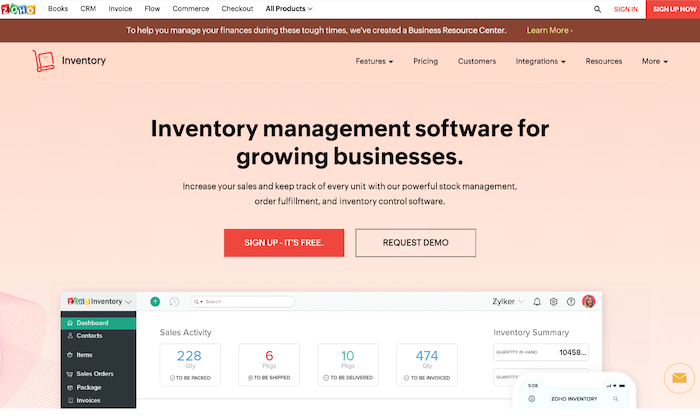
Use an inventory management system that centralizes inventory across warehouses and physical storefronts, so no customer orders an out-of-stock product.
Shipping, fulfillment, and returns are also important.
Customers should have the ability to purchase their products in several ways, whether that’s having purchases delivered to their door or picking them up from their nearest store.
The same goes for returns. In-store and online returns are essential components of a true omnichannel approach.
Conclusion
Omnichannel marketing for e-commerce stores is becoming the norm.
Customers expect a seamless experience when switching between devices and channels, and it’s your responsibility to deliver it.
Omnichannel marketing significantly improves the customer experience, but it also drives better engagement, creates better customers, and leads to more sales.
That puts it up there with some of the biggest factors of e-commerce success.
If you want to succeed with e-commerce, omnichannel marketing isn’t a strategy; it’s a requirement.
Want help setting up your marketing campaigns to align with your omnichannel e-commerce strategy? Let us know and our agency can help.
Which are the most important channels for your omnichannel e-commerce marketing campaign?
Source: feedproxy.google.com

7 Steps to Create Your First Online Challenge
Have you seen someone running an online challenge and used your marketing brain to realize they were strategically growing their audience and getting customers?

That happened to us a few months ago, so we ran our own challenge to see what the fuss was about.
Let’s just say things went really well.
Our challenge brought in 8 figures in revenue and we realized you needed to be using them too.
Online challenges work because they align with why digital marketing exists in the first place.
Digital marketing helps you acquire new customers, build lists, and position your brand.
It also helps your customer avatars consume your content and actually get results (before they even hire you or buy your products!).
We love digital marketing because it creates highly engaged and super loyal customers that buy from you over and over again.
And online challenges are a great addition to the digital marketing world.
With online challenges, you can achieve all of these marketing objectives in one shot.
But, ONLY if the challenge is well-designed and well-executed.
Benefits of Online Challenges
What is a well-designed challenge?

As the Founder of 100X Academy and expert challenge creator, Pedro Adao has found a well-designed challenge serves as:
- A free lead magnet An entry-point offer
- A resource to perfectly position a webinar
- A part of an email sequence
- Or a way to send the hottest traffic to your sales page
“Two and a half years ago I was unknown in the marketing world, yet here I am able to share this with you today. You have no idea what’s on the other side of this framework,” explains Pedro who now helps businesses, like us, launch highly successful challenges.
He’s watched and led different industries through challenges that all get the same results.
More engagement, more leads, and more customers.
We know digital marketing is effective, but why do challenges work so well?
Why are Challenges So Effective?
Last year Pedro decided to give his $3,000 challenge away for free.
He realized that while helping his challenge participants with free content, they were giving him free data.
It was a win-win situation where everybody was able to come out of the challenge with something they didn’t have before.
With 19,000 participants he was able to gather data that told him what he needed to know about his audience and how he could use it to build challenges, offers, and campaigns in the future.
“Using that information, I was able to get $111,855 in gross sales.”
Sometimes challenges are all about making money upfront, but as Pedro found, other times they can be used as an investment opportunity.
He invested his time into the free challenge and in return was able to get to know his customer avatar better than before.
Pedro’s tip for running free challenges is to give your participants a small upsell and then use some of that money toward paid ads for future challenges.
Using this model, Pedro was able to make $2 million in his last challenge.
A well-designed and executed challenge shows your customer avatar 2 very important things:
- How much you care
- How much you know
Here’s exactly how to do that.
How to Create Your First Online Challenge
We’re going to show you Pedro’s 7 essentials for creating an online challenge, based on questions you’ll ask yourself about your challenge.
But, before we get into those questions let’s make sure that you have the foundation of what a great online challenge is.
A challenge needs all 5 of these parts to be successful:
- Time-Bound Event (5–90 days)
- Focused on ONE primary outcome
- Prospects agree and commit to taking action at the beginning
- Deliver live, daily actionable training
- Issue daily wins that give them momentum
The goal of your challenge is to take cold audiences and turn them into highly-engaged customers.
To do that, you need to know why you’re running your challenge in the first place.
The 7 Essential Challenge Design Decisions
Every challenge starts with these 7 decisions.
Each decision essentially builds out your challenge, so by the time you answer the last question you just need to implement it.
Let’s start with the first question, why are you even running this challenge?
#1: Why are you running this challenge?
There can be different incentives to run a challenge.
Like we talked about before, Pedro was able to run a challenge just to collect data on his audience.
Using that data, he was able to create another challenge that brought in figures of revenue.
Yet, Pedro’s also launched challenges, and helped businesses with their challenges, that have focused on making money.
There is no right or wrong answer when it comes to why you’re running your challenge.
It’s just about what makes the most sense for your business goals right now.
Align your challenge with those goals and use it to amplify your outcome.
Here are a few reasons you could run a challenge:
Learn about your market with surveys and data
Gather social proof that shows your services/products get results
Create testimonials from happy challenge participants
Make money by leading into your high-ticket offer
Once you’ve figured out why you’re running your challenge, the next step is to figure out what you’re going to sell.
#2: What are you selling on the back of the challenge?

Even if you’re just collecting data for this challenge, you can still put your participants through an email series that brings them to your high-ticket offer (or an entry-point offer).
The key to selling in your challenge is to only have ONE offer.
Just like a sales page, you don’t want to confuse your audience.
As Pedro puts it, you want to create an offer that’s such a win for your participants that they feel like they couldn’t possibly lose out on this opportunity.
Depending on how much this offer is, you’ll present it in different ways:
- If your offer is $2,995 or below, use a sales page
- If your offer is $3,000+ have an application that goes to a sales call
Through Pedro’s experience, he’s found that $995 seems to be a hot price point for offers (but of course this can vary by niche).
Now that you know why you’re running your challenge and what you’re going to offer, it’s time to figure out your big idea.
#3: What’s the big idea?
CEO of DigitalMarketer Ryan Deiss talks about big ideas a lot.
Big ideas create movements and movements are exactly what you want your business to be known for.
That’s when you’ve created such a profound relationship with your audience that their identity is tied to your company.
The key to creating your big idea is to figure out what problem you’re solving.
Based on the problem, you’ll piece together your big promise.
What happens after someone takes your challenge?
Here are Pedro’s big idea tips:
- Make it cool and something they want
- Tackle the biggest obstacle or problem your customers believe they have
- The goal has to be believable
- Go for a measurable outcome
Big ideas help your messaging.
They show your audience how well you know them and what they need right now.
That’s when we can bring in the Customer Avatar Worksheet.
#4: Who is the challenge for?
When it comes to figuring out who your challenge is for, we have the perfect resource for you.
The Customer Avatar Worksheet is a DigitalMarketer signature method for learning all the right details about your customer avatar.
As you piece together your challenge, use the customer avatar worksheet for your messaging and figure out the pain points you can solve for your participants.

The goals, challenges, and paint points section of this worksheet are going to be *extremely* helpful in figuring out how to run a challenge that gets the attention of your customer avatar.
As you start to write the copy for your challenge, take a look at the Possible Objections section so you can ease your prospective participants’ hesitations to join.
Now it’s time for the logistics like duration, free or paid model, and of course, a name.
#5: How long does your challenge need to be to deliver the promise?
Pedro suggests running a challenge for 5-90 days.
What you’re looking for is the amount of time it will take your participants to reach the big promise outcome that you promised.
That’s why you want your goal to be believable.
If you tell your audience that you’ll help them build an 8-figure business in 5 days, it’s going to be pretty hard to get them to believe that.
But, if you tell your audience you’ll help them get lower CPA on Facebook in 90-days—that’s believable.
Make sure to take into account how long your customer avatar would want to participate in a challenge.
#6: Is your challenge free or is it paid?
As Pedro’s experience running challenges has taught him, “There are pros and cons to free and paid challenges.”
They both work well and it all comes back to your initial goal for your challenge.
Why are you running it in the first place?
If you want to collect data on your audience as Pedro did, you could run a free challenge so you can get as many participants as possible.
The more participants, the more data you can get.
If you want to use the challenge to make money on your newest service offering, using the challenge as an entry-point offer can help with increasing conversions from participants.
#7: What’s the challenge name?
Last but not least, it’s time to name your challenge.
As much as you want to be super creative with your challenge name, the reality of sticking to what’s clear over clever in marketing applies here too.
Luckily Pedro has some naming and tagline pro tips.
Use these answers to put together a challenge name that explains:
- How long is the challenge?
- How much is the challenge?
- What’s the payoff of the challenge?
- Who’s the challenge for?
Below we’ve highlighted some examples of online challenges that you can use as inspiration.
Examples of Online Challenges
EPIC Challenge
Roland Frasier ran a challenge titled, Ethical Profits in Crisis: Laser Target 5 “Zero Cash Down” Acquisitions in 5 Days or Less.
This title describes how long the challenge is, what the payoff of the challenge is, and who the challenge is for.
Without reading further into the landing page, you already have a pretty good idea as to whether or not this challenge is something you’re interested in.
The EPIC Challenge cost $55 and lasted for 5 days with 75-minute live and highly-interactive online workshops that explained how to find 5 potential M&As anywhere in the world.

The Seven Day 2020 Convergence Challenge
Here’s a free challenge that Pedro ran last year called The Seven Day 2020 Convergence Challenge.
The big idea? “Discover How To Unlock and Unleash The Redemptive Power Of Convergence In Your Life In 7 Days Or Less .”
Just like Roland’s EPIC Challenge, Pedro calls out exactly who this challenge would be for in his title and subtitle.
Anyone interested in convergence is going to hop on this train—while anyone who isn’t his customer avatar will know it’s not for them.

The 21 for 21’ Challenge
In November 2020, DigitalMarketer hosted the 21 for 21’ Challenge, a challenge to help our audience create a 21-step stimulus plan for 2021 with 21 growth levers.
The challenge ran for 12 days and featured some of DigitalMarketer’s most popular leaders.
It was a free challenge with the slogan of helping you make 201 your best year ever.

These online challenges were able to bring in thousands of leads and customers.
We’re not writing about online challenges for fun here (even though we LOVE talking about marketing strategies).
We’re writing about them because they’re something you need to be trying.
Online challenges are a great way to connect with your audience and give them a taste of what it’s like to work with you or buy your high-ticket offers.
When it comes to the Customer Value Journey, they’re great for that initial Conversion Stage, creating lots of excitement during the Excite Stage and bringing those leads right to Ascension.
Use these 7 steps to create your first online challenge—and make sure to let us know how it goes.
The post 7 Steps to Create Your First Online Challenge appeared first on DigitalMarketer.
Source: digitalmarketer.com

Learn A Lot About Writing A Blog With This Information
It is not uncommon for individuals to desire a greater online presence.
Building up an audience is crucial to having a successful online business or community.
Writing A Blog is a great way to make your online presence known, and this piece offers some great tips for getting started.

Respond Well
Read and respond to the feedback given on your post without letting it affect you emotionally.
There is always a critic, no matter the subject.
Use the constructive criticism you receive to upgrade your blog.
Post polite responses to any negative comments and put them behind you.
By doing this, you will show your readers that you know how to take the high road and build their respect, as well as your readership.
Link Social Media with Blog
Let your readers follow you more easily by providing them with relevant social media links.
Using LinkedIn, Twitter, Facebook, and other popular social networks will make you much more visible in the blogosphere, as well as improve your profits.
Using a portal will give you lots of options to communicate and reach out to the readers and possibly draw more readers in.

Encourage User Participation
Let your readers post comments and let them know what you think of what they say.
This lets the reader participate in your blog and you can develop a bond with them.
If your readers see that you reply to other people’s comments, they will come back to check your response to their own comments.
Mailing List
Start a mailing list for the blog as soon as possible.
The sooner you get started on it, the easier it will be to expand as your blog grows.
You can use this list later on to make money.
Creating a list of valid email addresses from your readers will help you avoid ignoring the opportunities you have to turn readers into customers.
Write more informally for a blog than you would for an article or business report.
Blogs are social formats.
Treat it that way. Speak to your bloggers like they are your friends, and they will visit more often.

Think of Content Distribution
Placing your blog articles on the Internet in a variety of places is important.
This will allow you to reach a wider audience.
Never restrict the number of channels through which you can achieve your objectives.
It is wise to get the largest number of readers out of every move you make.
Try every idea you have to build your readership.

Posting Schedule
Create a schedule for blog posts and then abide by it.
There are new blogs showing up every single day, and if you are not posting on a consistent basis, your visitors may start looking for someone that does.
While taking time out during the holidays will be understood, lack of regular posting at all other times will not likely be forgiven easily.
Now that you’ve read this article, you know how to create an excellent blog, and you know what writing a blog can do for you.
Be sure to apply these tips so you can create exciting and interesting blog posts for all to read.

How to Use the Customer Avatar Worksheet to Nail Your Copy
Copy is one of the most important parts of your marketing strategy—but it’s also one of the most intimidating.
And with good reason.
Writing copy can be REALLY hard.
How should you know what to say in your email campaign that’s going to make someone decide to finally buy your product?
We have a solution for you.
The type of solution that’s going to spell out exactly what to say when you want a reader to become a subscriber or a subscriber to become a customer.
Excited? So are we!
We’re going to show you how to write copy specifically based on your customer avatar.
If you haven’t heard of it, we have a Customer Avatar Worksheet that helps you figure out exactly who your customers are.
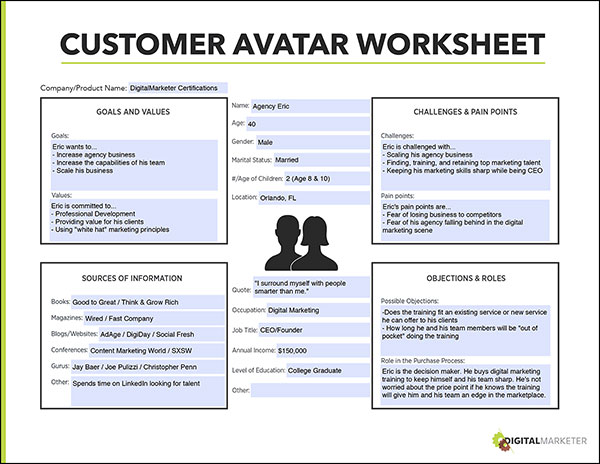
This worksheet talks about their pain points, challenges, goals, values, and buying power.
It even talks about what podcasts they listen to, what YouTube channels they’re watching, and what books are on their bookshelf.
We get so specific that by the end of it you’re going to be able to tell us the name, age, and marital status of your ideal customer.
Why do you need to know THIS MUCH about your customers?
Because that’s how you figure out what you need to say to them to show you have the solution (aka product) they are looking for.
Let’s get into it!
Use Your Customers’ Pain Points and Challenges to Remind Them of What Happens if They Don’t Solve Their Problem
Every customer is just a person with a problem looking for a solution.
That solution is your product and your copy is going to convey how well your product solves their problem.
A lot of the time, businesses have great products—they just don’t know how to show their customer avatar the value of those products.
That’s where this copy comes in.
Your customer avatar’s problem is causing them pain points and challenges.
For example, at DigitalMarketer, we teach you how to be a great marketer.
Our customer avatar’s pain point is that they’re struggling with their marketing efforts for their small business.
Their challenge is that they don’t know where or how to improve.
We have courses and workshops to teach them how to become really, really good marketers.
That means that our copy is going to talk about how tough it is to market and not see the conversion and traffic you were hoping for (pain point), and not know how to improve (challenge).
Copy that converts talks about the pain point and challenges a customer is struggling through without your solution.
Let’s look at another example that you’ve probably seen a few hundred times in your life—a weight loss program.
Customers of this program have the pain point that they want to lose weight and the challenge of not being able to stick to workout routines long enough to see a payoff.
You’ve seen the copy on magazines or website ads saying, “Lose 20 pounds in one month and only workout ONCE a week!”
While we’ve been inundated by these types of advertisements for workouts, there’s a reason—they worked.
Why?
Because the copy pointed out the customer’s pain point (being 20 pounds overweight) and their challenge (not being able to stick to workout routines… working out only once a week is totally doable!).
See what’s going on here?

Talk About Their Goals and Values to Show Them the After State They’ll Experience Once They Have Your Solution
Your customers have goals that are bigger than just your product’s solution.
For example, our business owner customers have a big goal of making more money for their company—marketing is just the turbo boost they’ll use to reach that goal.
These goals go hand-in-hand with their values.
For example, our business owner customers also value the experience of owning a successful company and the freedom that gives them.
This makes writing copy that motivates them to buy our products much easier.

We can show them how our courses and workshops will help them make more money, help them attain that successful company vision, and feel like they’ve reached the ultimate entrepreneurial dream: freedom.
Every customer has goals and values.
For example, an ecommerce trendy clothing company for women has customers who have a goal of being fashionable.
Their customers value how they look and the feeling that it gives them.
This ecommerce company can use its copy to talk about how owning certain products will help them achieve their goals and in turn, live their values.
Show Your Customers How Well You Know Them by Talking About the Books, Podcasts, Gurus, Etc. That They Look Up to
Who are you more likely to buy a product from, your best friend or a stranger on the street?
If you said best friend, you’re with the majority. If you said stranger on the street, you’re the ultimate “Yes Woman/Man.” 
When you’re writing your copy, you want to talk about your customer’s pain points, challenges, goals, and values. You also want to show them how well you know them.
By referencing books that have impacted their lives, podcast episodes that were just published in your industry, or something that a guru that everyone looks up to is doing—you’re showing them how well you know them.
You move past marketing to…” Wow, these people really get me.”
For example, a financial business blog could mention the Robinhood Snacks Daily podcast.
They know their ideal reader is probably listening to this financial podcast every morning, so by referencing this specific podcast their readers are going to know that this blog gets them.
Or, let’s say that one of the biggest movers and shakers of your industry just published a book.
You’d want to reference that book in your copy, showing how “in the know” your business is.
And just like that, you move from a stranger on the street to (virtual) best friend.
Tell Them How to Get Your Solution Based Off on Their Buying Power
Every customer has different levels of buying power.
For example, the ecommerce trendy clothing company’s customers have total buying power.
Their customers are the ones that is going to put their credit card information in and hit the purchase button.
But not every customer has the same level of power.
For example, a marketer who wants to attend our annual Traffic & Conversion Summit might need to have their boss greenlight the purchase.
In that case, you want your copy to show that you know they’ll need help with getting their boss to buy the ticket for you.
To do this, we create an email template that marketers can use to send their bosses and show them why it would be valuable for them to come to the Traffic & Conversion Summit.
In our drip email campaign, we’ll make sure to link out to that email template in our copy so that our customers know that we’re not leaving them high and dry wishing for a ticket.
We’ve got them covered.
And that’s how you can use the Customer Avatar Worksheet to nail your copy by writing exactly what your customers need to hear.
Download the Customer Avatar Worksheet for free below so you can start writing conversion-driving copy.
The post How to Use the Customer Avatar Worksheet to Nail Your Copy appeared first on DigitalMarketer.
Source: digitalmarketer.com