
Tag Archives for " negative reviews "

Can Negative Brand Mentions Hurt Your Rankings? The Answer Might Surprise You!
We all keep hearing that any publicity is good publicity. But is it really so? And, more importantly, is it the same for SEO? We’ve all heard about the link-building technique using unlinked Brand Mentions It’s a good method and, as far as we know, it works very well.

Disclosure: This content is reader-supported, which means if you click on some of our links that we may earn a commission.
But what if the unlinked brand mention that you’re so excited about turns out to be a RipoffReport post?
What if it’s a blogger complaining about your services, or a news publisher reporting on some incident regarding your brand?
- How Web Brand Mentions Affect SEO Today
- How Does Google Treat Negative Brand Mentions
- Will Negative Brand Mentions Affect Your Google Rankings?
- How to Deal With Negative Brand Mentions
Should you also get a link from this kind of source as well? Will it help you or will it harm your website’s rankings? Well, you’re about to find out!
In this article, we will dissect how Google treats this matter and find out if negative brand mentions impacting your rankings and SEO efforts. So, keep reading.
1. How Web Brand Mentions Affect SEO Today
In general, we all know that good branding and PR will positively affect our business. It makes sense. People love well-established brands with a lot of satisfied customers and great deals.
For example, most people would still buy an iPhone over a Xiaomi Phone, although some models apparently have similar characteristics and lower prices.
People buy from certain brands because of trust and authority. To obtain the audience’s trust, a brand must be well established and have good PR.
For your business to flourish online, besides earning the customers’ and audiences’ trust, you also have to win the search engine’s trust.
Customer and search engine trust kind of go hand in hand, but, from what we know, SEO works based on some algorithms.
There are many important factors that lead to authority, from domain age and security to backlinks, CTR, and branded searches.
We’ll ignore domain age, as it’s not really something we have control over, but we’ll be focusing on the other ones.
1.1 Brand Anchor Text Backlinks
As presented in this link building lessons article, websites with a high percentage of branded anchor text backlinks tend to rank higher than the ones with a high percentage of commercial anchor text backlinks.
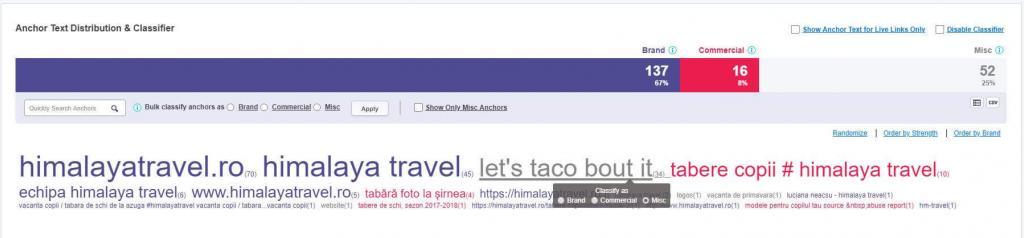
Screenshot from the cognitiveSEO Tool showing anchor text distribution for a top-ranking website in its niche
The cause for this phenomenon is probably Google’s association of these links with naturalness.
When talking about you on the web, people are more inclined to link to your website through a branded or URL anchor text, rather than through a commercial anchor text.
1.2 Unlinked Brand Mentions or Google Implied Links
A website can also have a high number of unlinked brand mentions across the web. They are often called citations and are very popular within the local SEO field.
While these probably don’t provide as much value for SEO as backlinks do, they certainly have an impact. Google actually has a patent on that so we know it’s true. It defines them as implied links:
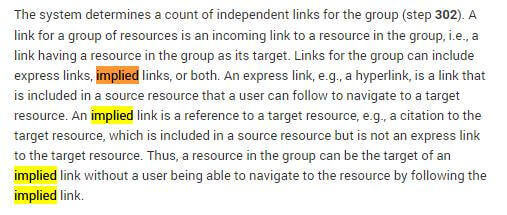
Screenshot from Google’s patent defining implied links
The key element here is relevancy. The citations you’re getting to your local business should reflect the location of your business.
If you’re in Seattle but get citations from Russian websites that mostly mention Russian businesses using Cyrillic characters, don’t expect your rankings to grow very fast.
On the other side, if your business targets a global market, then it makes sense to have all sorts of unlinked mentions across different countries. Relevant content is also important, so don’t spam on every site.
Also, keep in mind that mentions that do contain backlinks, especially dofollow ones, have a lot more impact on your search engines than mentions that don’t.

How unlinked mentions compare to linked mentions.
That’s chainmail armor. Get it? … course … it has links? (ba-dum tsss)
So, generally speaking, Google does take a look at your unlinked brand mentions and the content surrounding those mentions, but it’s better if you can get a link back to your website from them.
That way you can be sure that you maximize the potential of the mention, as it’s both a mention and a link at the same time.
And remember, you want to get mentions from reputable websites that are relevant to your niche and geographic targeting, be them linked or unlinked.
Creating them yourself using the same IP might turn out to be a waste of time and could actually get you into some trouble.
A great way of finding your unlinked mentions is Brand Mentions, a web mention monitoring tool.
It has a lot of advanced features, but this is one of the best, as it enables you to establish a connection with webmasters that mention you and potentially acquire a link.
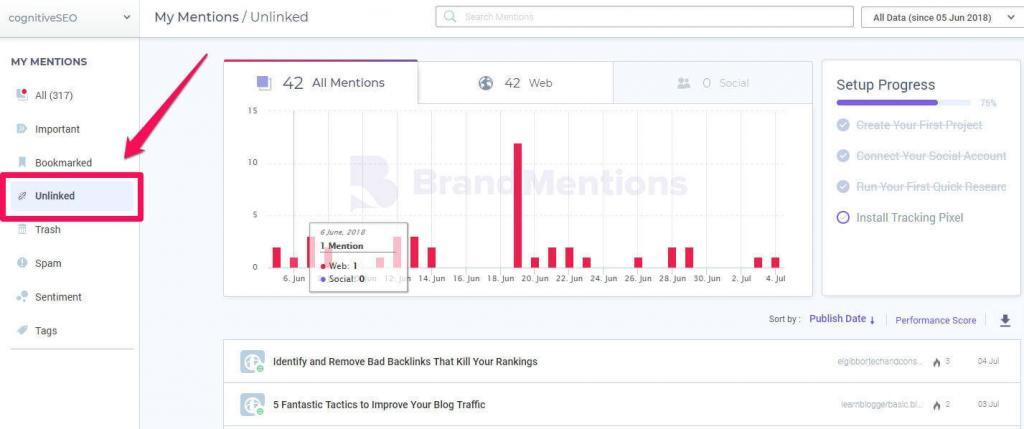
Screenshot from the Brand Mentions tool showcasing the potential to discover unlinked web mentions
1.3 Branded Search Queries
We can categorize search queries into two types: branded and non-branded. A non-branded search query would be a “keyword tool” and a branded search query would be a “cognitiveSEO keyword tool”.
You want to be ranked on both of them. If you’re not ranking for your own brand name, that is kind of bad. You either chose the wrong brand name, or you’re heavily penalized by search engines.
Each of the two has a catch:
Non-branded keywords, for example, have a high search volume, which means a lot of potential customers. However, there’s a lot of competition there, so they are harder to rank for and the CTR might be lower.
Branded Keywords, on the other side, have probably a low search volume, but they are very easy to rank for (if you are that brand) and the conversion rates are very high, as usually the users already know what they want.
Although this is speculative, some experiments and observations (including some of our own) have shown that branded keywords can eventually increase the rankings for non-branded keywords.
So, if a lot of people search for “your brand + keyword” and click on your website, you should also see an increase in rankings on the “keyword” itself.
Rand Fishkin also agrees on this and explains it in his following video of the Whiteboard Friday:
This being said, it’s always a great idea to work on your PR so that people search for your brand on the web and associate products with your brand.
Not only will it increase conversion rates, but it can also help with rankings on non-branded keyword versions.
2. How Does Google Treat Negative Brand Mentions
Ok, so we know that Google likes branded anchor text links and looks at brand mentions across the web to establish your website’s authority.
But, in real life, having more mentions isn’t necessarily better. What if you have thousands of negative reviews, mentions related to fraud, or other bad stuff?
That could affect your business deeply, or even send it into bankruptcy.
2.1 Google’s Search Quality Evaluator Guidelines
Google’s algorithms can’t yet determine what is good and what is bad. That’s why the company has set up a team of humans (around 10,000 or so) to take care of the job.
The initiative doesn’t only target brand mentions. The purpose of these evaluators is to help improve the quality of the search results in general.
Unlike the manual spam team, which can apply manual actions on websites, the search quality evaluators can’t directly influence search rankings.
Instead, they follow these guidelines to evaluate websites and provide feedback about the search results to Google.
From the guidelines, we can observe that Google demands the lowest rating to be given to websites with negative or malicious reputation.
One criterion would be harmful pages that contain malware or that are phishing for information (page 37), but we can also see on page 43 that the evaluators should consider low BBB ratings and other sources that expose fraudulent behavior.
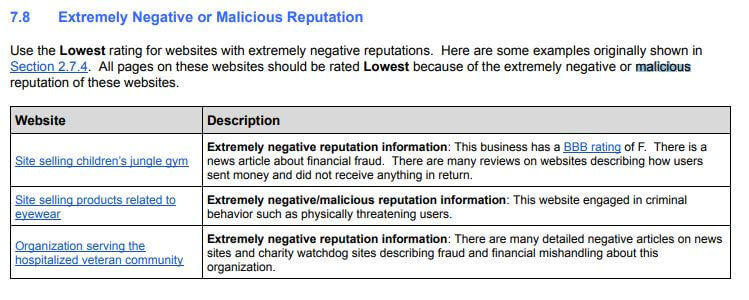
Screenshot from the Search Quality Guidelines
We can also include the issue of Fake News. Fake News websites purposely create these fake stories as shocking as possible, not to influence people necessarily, but to gain hype on social media, which brings traffic to their websites which eventually makes them money from ads.
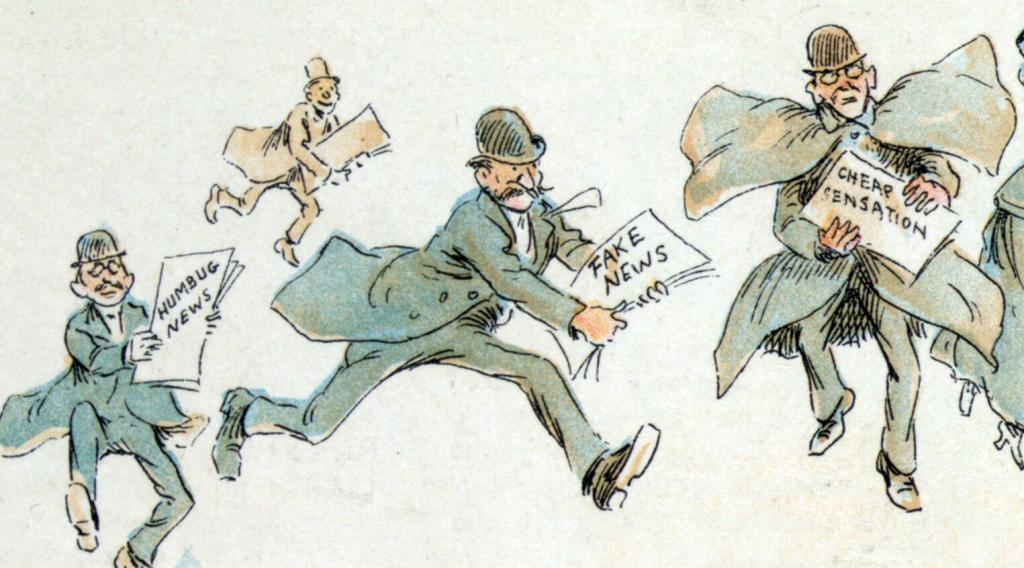
These fake stories can ultimately even rank high in Google for specific keywords.
Fake News has a big impact on Political Campaigns, as messages spread through Fake News often influence the decisions of uninformed and naive voters.
You can watch the following video for reference about why fake news is so popular:
So far, it’s a known fact that social media hype, backlinks, and a lot of mentions can get you ranking at the top.
Unless the story is critically dangerous, such as one that incites violence, it can rank there for a very long time without any manual action being taken.
Google also has an initiative in which it will work closely with journalists to combat fake news.
The search quality evaluators also play an important role, as they can provide patterns that fake news websites use, which can help the algorithm raise a red flag much easier.
However, the subject is a lot more sensitive. Malaysia, for example, has passed a law against fake news which could be punished with over $100,000 in fines and up to 6 years of jail time.
This raises questions about free speech and corruption (in that particular case).
The same thing goes with Google, as they would literally have to censor some websites if they consider them to be fake news websites by not giving them a chance to rank for certain keywords.
2.2 How The Google Algorithm Works
After the evaluators provide their feedback and Google compiles the info, it gets fed to the algorithm. This way, over time, Google starts understanding the patterns of fake news or malicious websites and websites with a very bad reputation.
It’s hard to tell what exactly the algorithm will be based on, but I can speculate looking for reviews in structured data or similar implementations, articles related to fraud or other criminal activities, and even news sites or videos.
It can then follow patterns, affecting an entire server or network of similar sites related in any way with the initial penalized low quality/reputation website.
One thing’s for sure: Google’s algorithms will be constantly improving and will eventually be able to understand if a business has a very bad reputation or if it’s involved in any suspicious or criminal activities.
3. Will Negative Brand Mentions Affect Your Google Rankings?
If we’re only talking about a small part of your customers leaving negative reviews or a couple of bloggers trashing you for not accepting their promotion offer, there’s nothing to worry about. In fact, it might actually benefit you if you can get backlinks.
However, if we’re talking about massive PR drops, thousands of complaints, serious fraud, and the press going crazy over it, then yes, it probably will.
But not in the way you might think it will. To be more exact, it won’t directly impact your rankings, but they will ultimately drop because of other indirect factors.
3.1 Is All Publicity Good Publicity?
If you know about the White Moose Cafe, then you probably know about all the scandals regarding the vegans and the bloggers. If not, here’s some input:
So there are actually two stories. One is about some vegan complaining about the restaurant having no vegan food in it.
The vegan community started blasting the Hotel’s (yes it’s actually a Hotel, not a Cafe) Facebook page with 1-star reviews. The hotel then started mocking the vegan community.
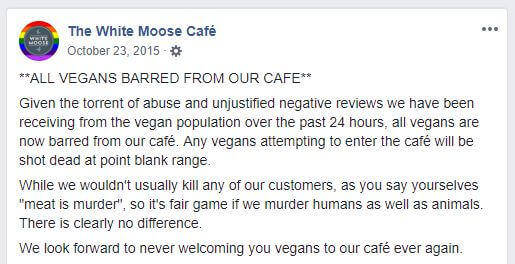
This created a lot of hype with more vegans turning red and massively hitting the 1-star review button but, on the other side, there were a lot of people defending the White Moose Cafe.
More recently, a similar story took place after a YouTube content creator asked for free accommodation in exchange for exposure on her channel.
The Hotel’s owner mocked her and the bloggers’ community started rolling in with 1-star reviews. The owners now posted about banning all bloggers from their hotel, just as with vegans, above.
Again, a lot of people were defending the White Moose Cafe and, after all this hype, the hotel’s Facebook Page still stands at 4.4 out of 5 stars.
The White Moose Cafe kept pumping their jokes by sending the blogger a bill for publicity services, topping over $6 million. While it might sound exaggerated, it’s actually pretty accurate.
Considering the amount of hype the posts got around social media and how many news publications caught up on the story, the price seems fair.
The blogger actually gained a fair 10,000-20,000 subscribers and most of her complaint videos were monetized.
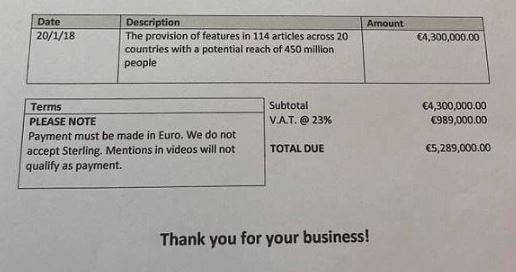
Paul, the owner of the White Moose Cafe, actually has a great post about this in which he elaborates upon the topic and explains how controversy can be a great way of promoting your business, as long as you don’t get trashed completely (what if it was all actually a setup and they actually worked together?).
The secret is to also have one side defending your point of view. Another thing you can do is simply ask questions instead of expressing an opinion.
While I don’t actually agree with trolling and insulting other people for publicity, I have to admit that I find it kind of funny at the same time, being both a vegan and a blogger myself.
Paul has some strong points of view and reading through his blog you can actually see that he’s not a bad person.
Now, these aren’t really negative brand mentions, as overall, the hotel seems to have gained more than it lost. But there are some that might actually get you into trouble.
3.2 Handling Negative Mentions From a Search Point of View
When users search the web, they often look for reviews. If it’s a product, they look for other people who have previously bought and used it. If it’s a service, they look upon other client’s experiences.
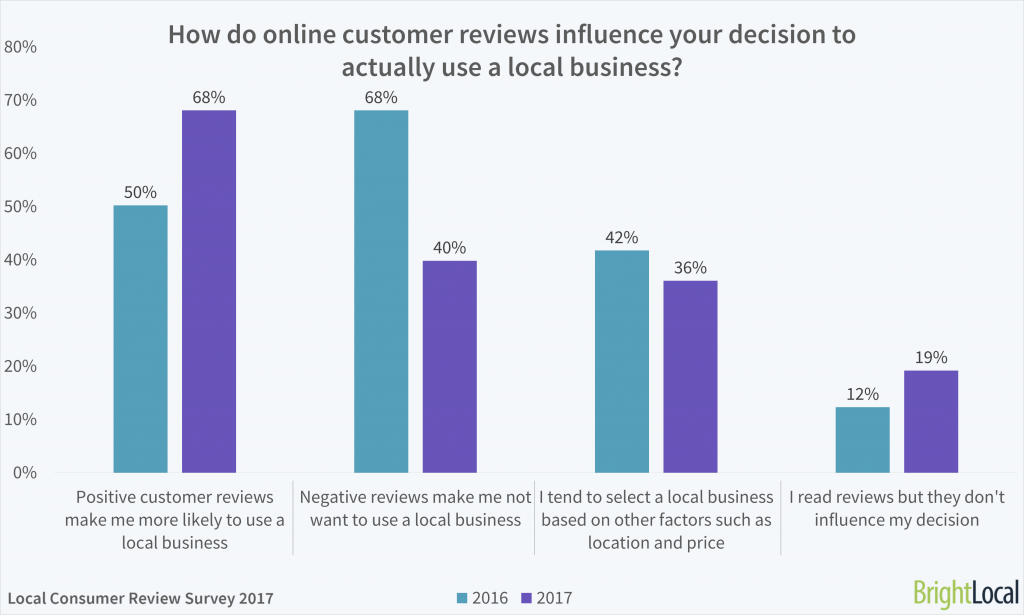
Reviews have a big impact on the purchase decision of a client, as the following survey shows:
Now some people are aware that not all negative reviews are accurate, but there are some review sites that are very trustworthy or, better said, credible.
One of them, for example, is RipoffReport, which lists scams, usually in the digital marketing field.
People can comment on them, so usually there’s a community of people complaining instead of just an individual.
I had this user interested if they can make a RipoffReport post mocking one of his clients rank lower, as it was occupying one of the first 5 positions on their main brand search.
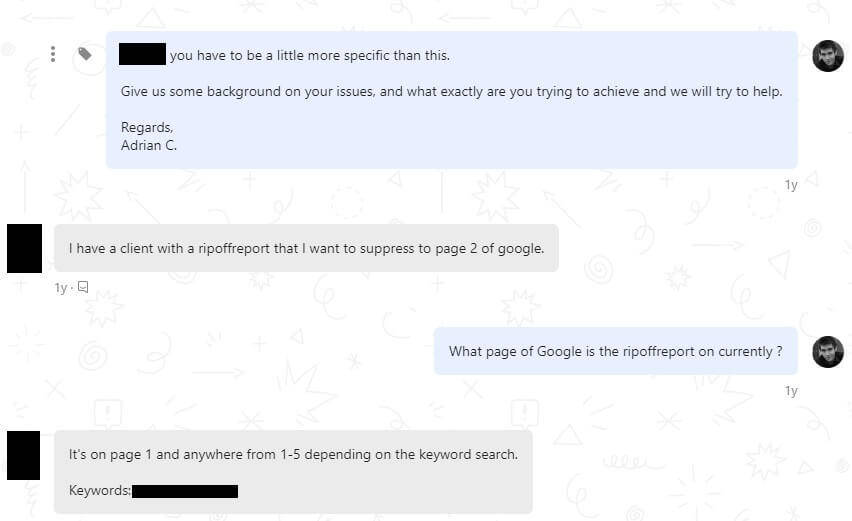
Screenshot from Intercom showing discussion. I censored the user’s name, photo, and website for protection.
I told him that the only thing he can do is get the post removed somehow, although I knew he didn’t have any chance.
I can’t show off the Google results as I’d probably have to blackout 99% of the image, but you have my word, that RipoffReport is ranking high for their brand name and, considering the things said in that post, it doesn’t look very good for the company.
If you’re in a similar situation or your overall number of reviews is under 3 stars, then you should consider taking serious action on the quality of your products/services.
Sometimes it might not be entirely your fault. For example, people might be complaining about the slow shipping. But if it is so, then change the shipping company you work with.
People really care about reviews and if they avoid your website because of this, it kind of resembles a bad user experience, which we know Google cares a lot about and could potentially affect your rankings.
If this also results in a lower number of branded searches for your website, then it might also have a negative impact on your rankings.
3.3 Handling Negative Mentions From a Backlinks Point of View
As long as the link isn’t coming from malicious websites with malware or a very spammy link profile, I can’t really see how they could directly affect your rankings.
If someone wants to give you a negative example, they might or might not link to you. However, if they do link, they will probably do it through nofollow links which will still benefit your rankings.
So far, we don’t have any data on links surrounding negative mentions, but we do know that links from malicious or spammy websites are bad.
The only way they could affect you is that users from the article that speaks badly about you might be able to land on your website, resulting into more negative reviews.
3.4 The Role of Artificial Intelligence
Eventually, we will reach a point where Google will become a true AI.
At that point, whatever the search quality evaluators have done so far, Google will be able to do it itself, probably an infinite times better.
Fake news will be a thing of the past and the bot might even be able to distinguish between true fake news or hate speech and offenses and jokes.

Image Source: popsci.com
We’re not quite there yet, but it’s definitely something that Google’s trying to achieve. At that point, we’ll probably also reach the singularity and Google will have already found a solution to world hunger and all human problems so we won’t have to worry about SEO anymore.
4. How to Deal With Negative Brand Mentions
Well, the best way of dealing with them is not having them…
No, seriously, if your company is convicted for some sort of crime, you probably have bigger problems on your head.
That’s not going to be easy to erase and even if you rebrand yourself, through the power of social media and social justice warriors you can’t stay undercover for long.
While you should constantly improve your customer care sector, there are some natural negative reviews and brand mentions that you can’t avoid with 100% accuracy.
People are more likely to leave a review after a negative experience than they are after a positive one, so you’re already at a disadvantage.
The best way of dealing with negative reviews is to answer them, deal with them, learn from them and improve your services.
Sometimes, people are jerks. They rate your product or service 1 star for no real reason.
For example, I’ve seen people just saying “It’s a bad product” without specifying why and others leaving a 1-star review because it didn’t match their expectations, comparing a low-end product with a high-end one, even though it was a good value for the price.
However, by explaining your point of view in the comments you have the opportunity to get your side of the story listened to.
For example, I’ve recently read a comment in which one client was complaining about the CPU not matching his socket and that he sent it back but the store wouldn’t accept the return.
The store replied and said that the CPU’s pins were damaged and that they even tried to repair it themselves but didn’t succeed.
By addressing the issues in the negative reviews, not only can you turn a customer’s frown into a smile but you can also show the other clients that you care, that you are sorry for what happened, and that you are willing to learn and improve.
4.1 How do you find Your Negative Mentions
It’s hard dealing with negative brand mentions if you can’t track them, don’t you think?
Well, Brand Mentions actually has a great feature that can sort out the good from the bad and make your life a lot easier.
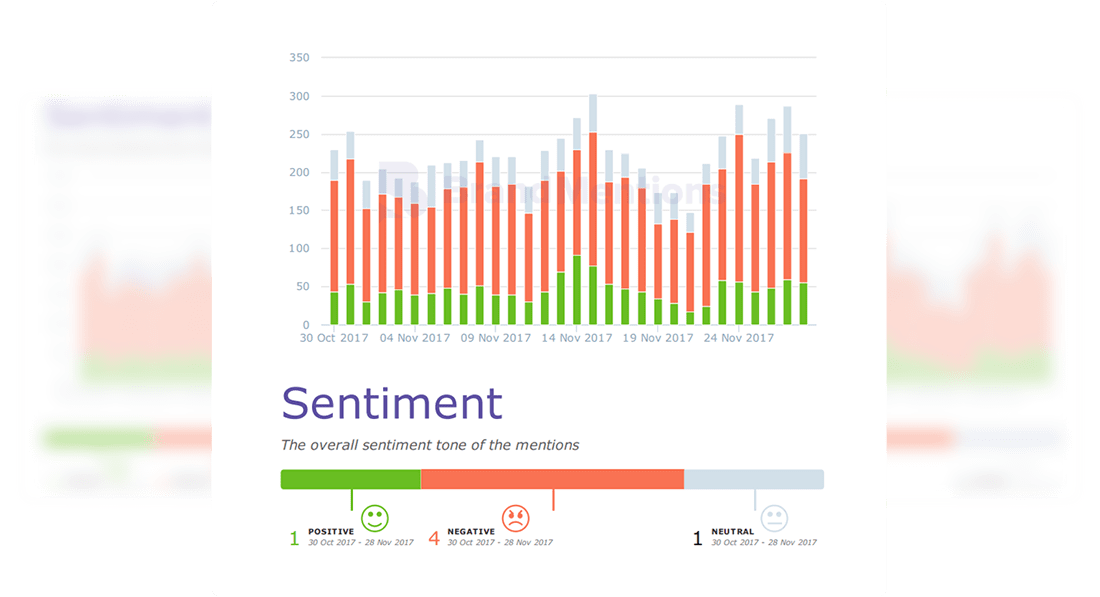
Reputation management from Brand Mentions
So, if you want to manage your reputation you can always use the sentiment analysis feature, segment your mentions and deal with them a lot better.
Conclusion
So, in the end, it seems like negative brand mentions don’t directly impact your search engine rankings.
However, if these mentions result in lower branded searches, or if other news sites rank above you on branded queries, then you might eventually suffer some SEO consequences as well
Have you ever experienced bad PR or negative brand mentions? If yes, did it affect your rankings? Did you manage to fix the issue?
If yes, how? If not, maybe we can discuss it and find a solution. Feel free to start a discussion in the comments section below.
The post Can Negative Brand Mentions Hurt Your Rankings? The Answer Might Surprise You! appeared first on SEO Blog | cognitiveSEO Blog on SEO Tactics & Strategies.
Source: cognitiveseo.com

Your Business Needs More Negative Reviews. Here’s Why
Do you work hard to earn great reviews for your business?
If so, you’re not alone. Most businesses strive to get as many five-star reviews as possible. And it’s not hard to imagine why.
Before you buy something online, drive across town to a restaurant you’ve never tried, or download an app, what’s the first thing you do?
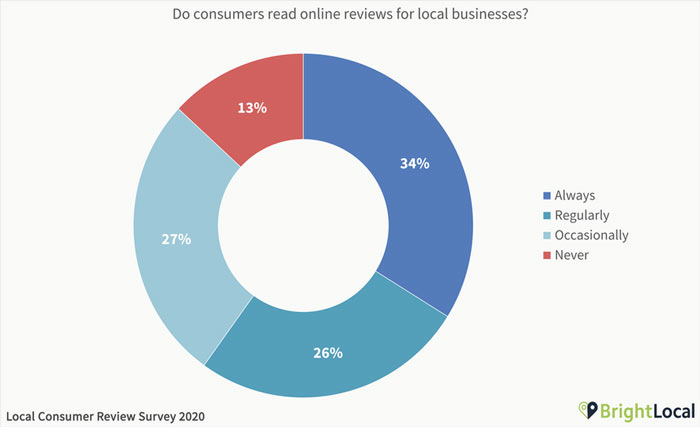
You probably check the reviews. If they’re bad, you probably won’t purchase an item or try a new restaurant. But if they’re good, you’ll likely give it a try.
So you should do everything in your power to try and get five-star reviews across the board and prevent any negative reviews, right?
Actually, that shouldn’t be your goal.
Believe it or not, earning perfect reviews isn’t critical for your business. In fact, negative reviews can actually help your business in ways you may have never expected.
If you’ve put all of your focus on avoiding negative reviews, you’re going about reviews all wrong.
You may find that hard to believe, but it’s true.
Here’s why you need negative reviews and some of the ways that they can be beneficial for your business.
The importance of negative reviews and how they can help your business grow
Before the digital era, we all relied on our friends and families for testimonials. But now, we rely on so many other factors to make our final decisions about companies.
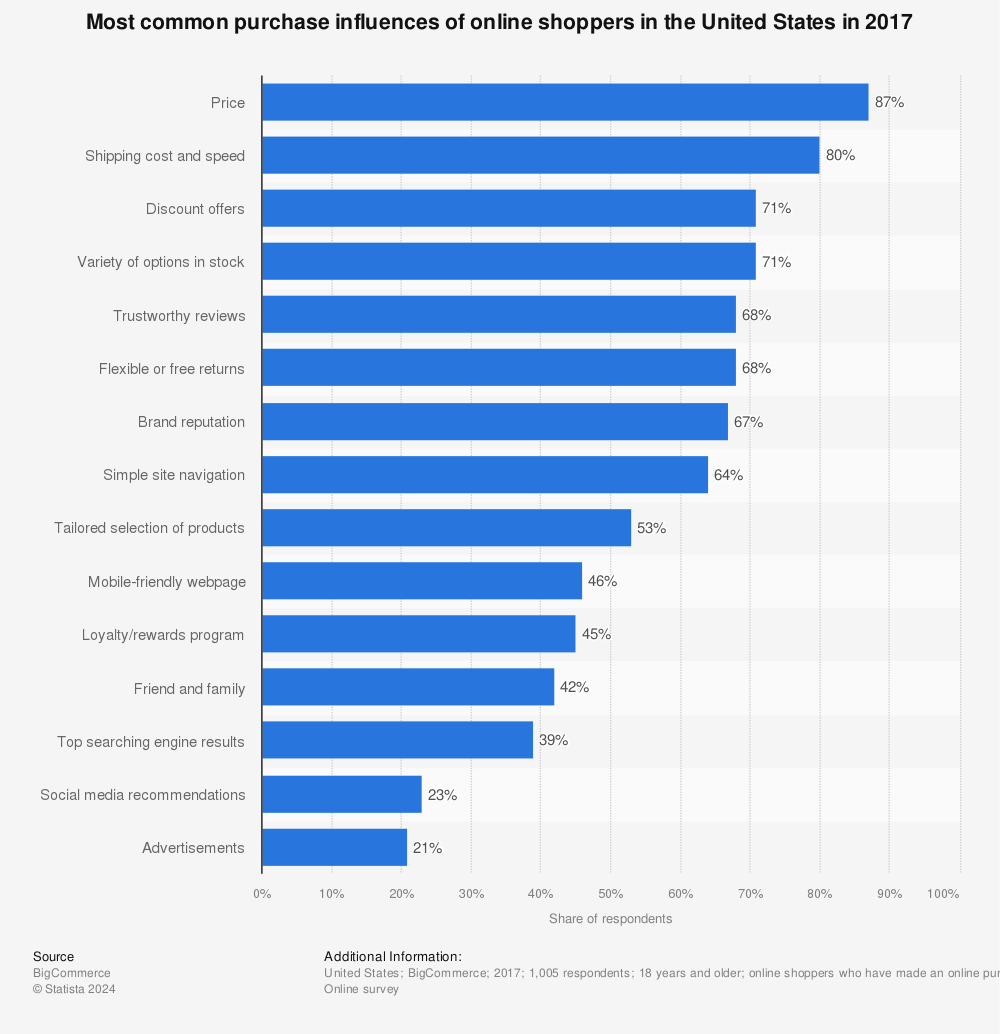 Find more statistics at Statista
It appears that trustworthy reviews now have a bigger influence on online purchase decisions than family and friends do for 68% of US shoppers.
Recommendations from friends and family influence only 42% of consumers.
Instead, rewards programs, brand reputation, and trustworthy online reviews have taken the place of good, old-fashioned word-of-mouth recommendations.
A 2017 study by Power Reviews once again confirms the growing consumer dependence on ratings and reviews.
Today, 97% of consumers read product reviews before making a purchase decision. 89% of them consider online reviews to be an essential resource in the process.
On the flip side, 85% of consumers look for negative reviews in order to make informed purchase decisions. And this number skyrockets to 91% among consumers from the ages of 18-29.
Why?
Because bad reviews give customers a sense of the worst-case scenario. They want to know what can go wrong to understand just how much it will matter to them.
Too many positive reviews can seem fake to some shoppers, so you have to watch out.
But how do consumers determine if a review is truly authentic and trustworthy?
BrightLocal’s study shows that Facebook and Yelp are the two most-trusted review sources for local searches. Google comes in third.
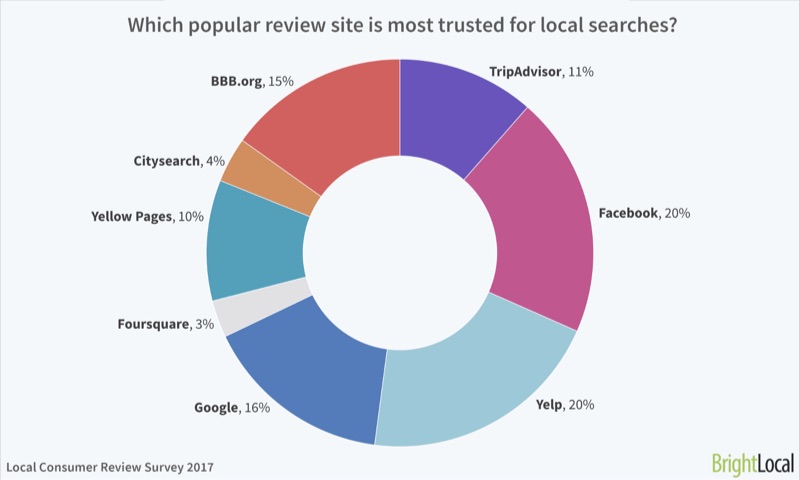
Out of all these review platforms, Yelp seems to have the most strict rules and regulations.
This explains the fact that the average review score on Yelp is 3.65, which is the lowest out of these platforms. The average reviews on the others major platforms are 4.42 on Facebook, 4.3 on Google, and 4.25 on Tripadvisor.
Therefore, Yelp may be the most reliable place to gauge reviews.
And these ratings matter for your bottom line. An extra rating star on Yelp translates into a 5% to 9% revenue growth, which is an impressive but dangerous correlation.
Reviews really can make or break your brand’s growth. But on any platform, you will inevitably receive some negative reviews. So, how do you respond to them?
You should start by coming up with a game plan.
Create a game plan before you respond to negativity
The way that a business treats a negative review can tell you a lot about them.
Don’t panic. Don’t ignore them. Instead, embrace them.
Some brands like Wendy’s are even using negative reviews as a chance to make a splash on social media and go viral.
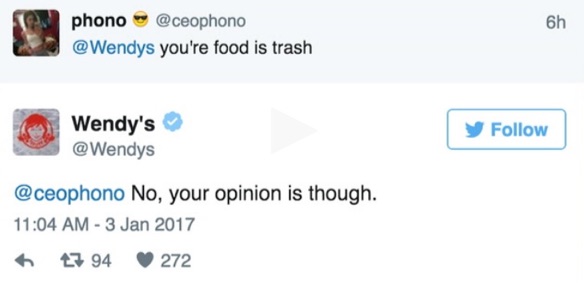
However you choose to embrace negative reviews, you need to come up with a game plan before you say anything back to your customers.
But customers expect businesses to respond to their reviews quickly. 51.7% of consumers expect businesses to respond to their negative reviews within seven days.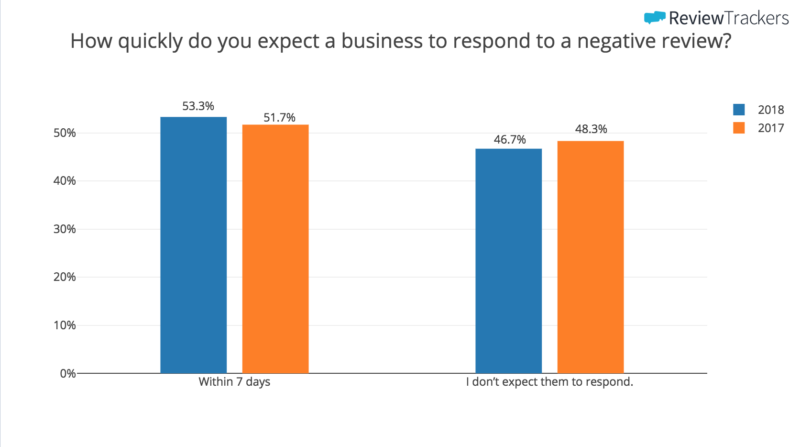
So if you do happen to receive a negative review, you need to act fast.
Being aware of your customers’ complaints should be your number-one priority for customer service.
The first thing you need to keep in mind is that not all negative reviews are valuable.
There are two types of negative reviews.
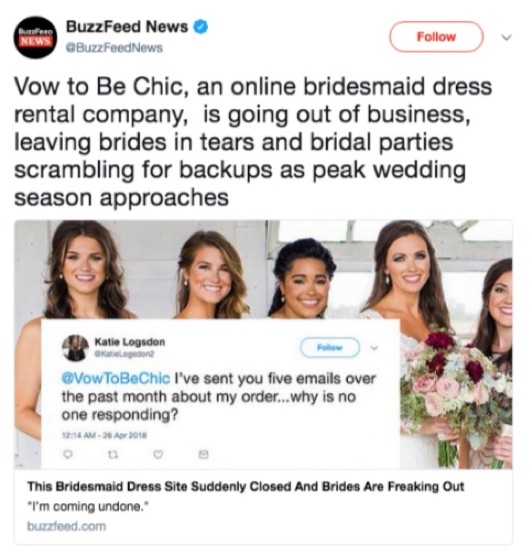
The first type is reviews from disappointed customers who have had a real negative experience like those who were part of the Vow to Be Chic wedding rental scandal:
And then, there are the troll types who seek attention and potential monetary gain.
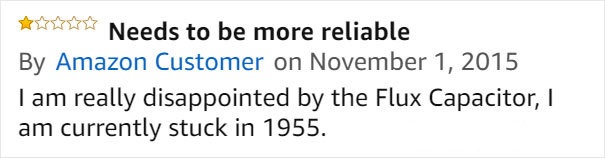
Some people might want to take advantage of the leverage that leaving a bad review might give them by blackmailing you or threatening to leave a bad review if you don’t give them a refund.
And you can’t insure your business against trolls.
Constructive feedback, on the other hand, is a gold mine for any business. It is a form of valuable, direct, instructional feedback from the people who matter most.
And a negative review will only stay negative forever if you ignore it and never address it.
So having a game plan to respond to these complaints is what will set you apart from companies who choose to ignore them.
Decide on a communication strategy that will match your brand identity and tone of voice. Try to keep it consistent across all review platforms.
Zappos never fails to respond to negative customer reviews, and they give their responses a positive twist. Take a look at a recent response they gave to a complaint on their Facebook page.

The brand offered to send the customer a new replacement pair, and they recommended that she keep or give away the shoes that don’t fit.
It’s pretty hard to argue with an attitude like that.
Depending on the personality of your brand, you can choose to be friendly and conversational like Zappos or more formal but tactful like Marriott.
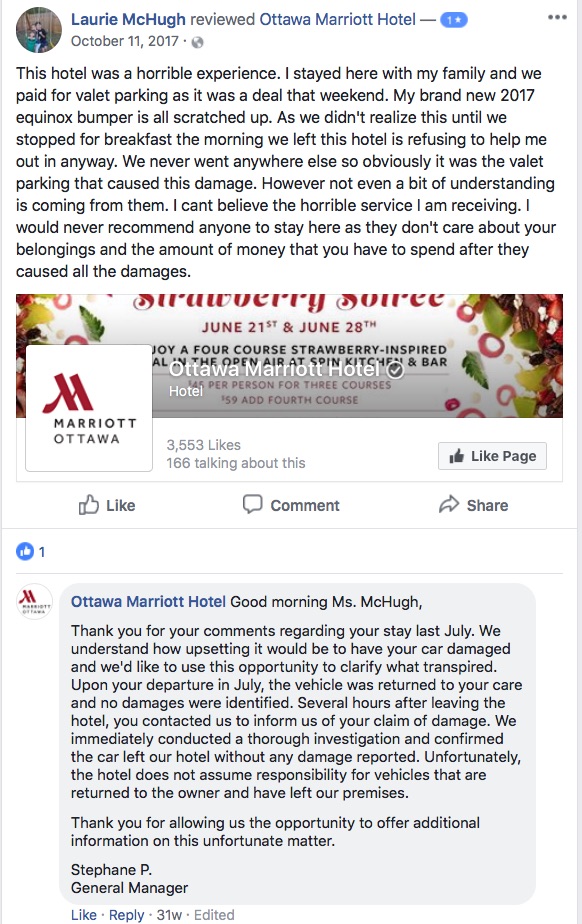
Whichever way you choose to go, make sure that you remain genuine. Don’t answer with a template. Take the time to actually investigate each issue and respond accordingly.
You should think of each negative review as an opportunity to show your customers that you care.
Here’s what Marina Cheal, Chief Marketing Officer at Reevoo, said at the Motor Trader Summit last year:
“Rich reviews drive engagement and people stay on-site longer. Bad reviews are a brilliant way of showing that if something does go wrong you have credibility in how you deal with the issue. It shows you care about the customer.”
Believe it or not, bad reviews have the power to improve your conversion rates, too.
Bad reviews improve your conversion rates
If your business gets only positive reviews, consumers might question whether those reviews are legitimate or not. Not everyone will, but those who are a little bit more cautious might.
And with so many fake and paid reviews circulating on almost every review platform, this is becoming a real issue.
Amazon’s fake positive review problem has recently become huge.
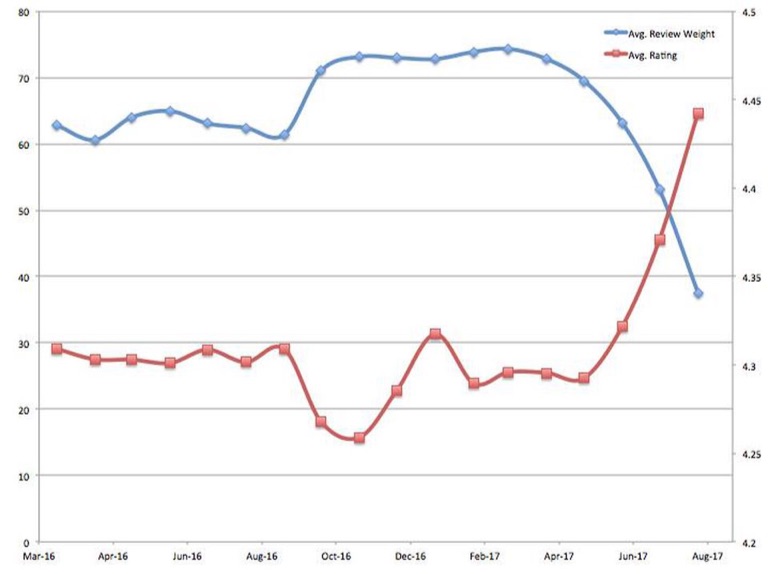
As the average rating has risen, the average review weight has taken a huge nosedive.
There are even Facebook groups that incentivize people to write fake reviews of Amazon products.
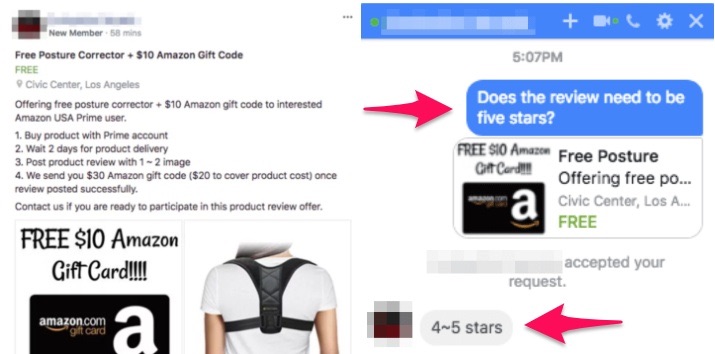
On the other hand, having a healthy mix of both positive and negative reviews will help build trust in your business more quickly.
A study by Northwestern University’s Spiegel Research Center discovered that likelihood of someone purchasing a product with five reviews is 270% greater than a product with no reviews.
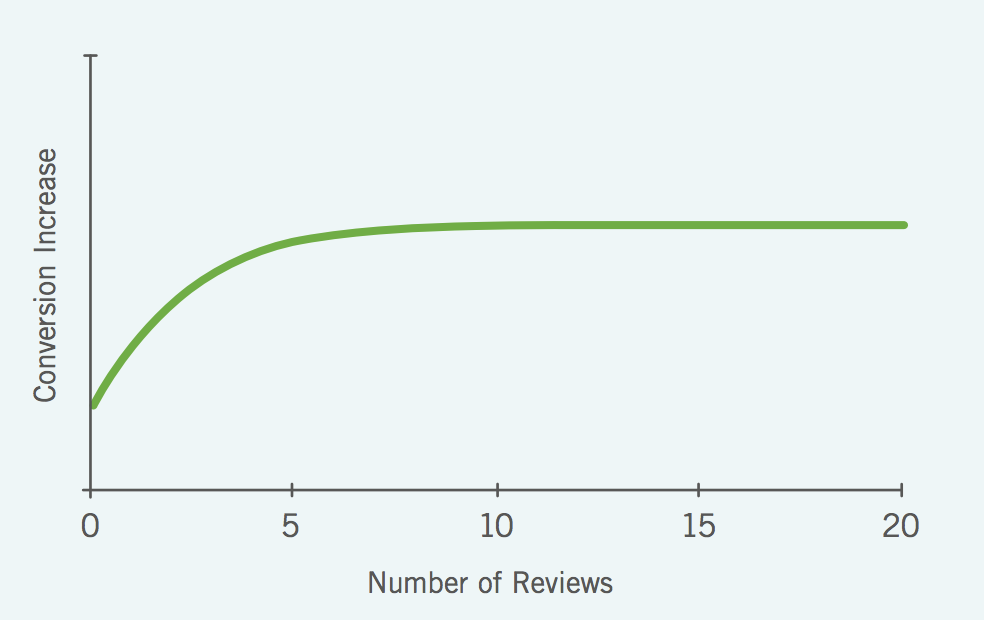
That means having five reviews, whether good or bad, can increase your number of purchases by nearly four times.
And a mixture of good and bad is helpful so that you don’t fall into the “too-good-to-be-true” category.
So, what is a healthy mix of good and bad reviews?
What amount of bad reviews will boost your conversion rates instead of driving customers away?
Anywhere between 4.2 and 4.5 stars is an ideal average.
More stars does not equal more sales. When your positive reviews appear with a few negative reviews, you reduce buyer skepticism.
But you obviously you don’t want to end up with too low of an average. A lot of customers use rating filters to simplify their searches, so you may not even show up when they search for products if your average reviews are below four stars.
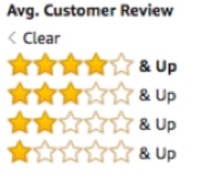
If your ratings are low, don’t fret. It actually doesn’t take a lot to increase your ratings.
A recent study of TripAdvisor found that one-third of the hotels were able to increase their rounded ratings by half a star or more within six months of their first management response.
In a nutshell, here’s the logic that this all boils down to:
Customers actively seek authentic and trustworthy businesses. No business is perfect, so negative reviews will assure those who read them that the reviews are authentic.
Negative reviews show your human side
Negative reviews are a perfect stage for you to shine as a business with top-notch customer service. It is an opportunity to show that there are actual people behind your business.
Customer service is not just about assisting a purchase. It’s about solving any problems that come up before, during, or after a purchase and preventing them from happening again.
Poor customer service will cost your company big time.
Tons of consumers have abandoned a business due to poor customer service. As you can see, this figure has grown over the last couple of years.
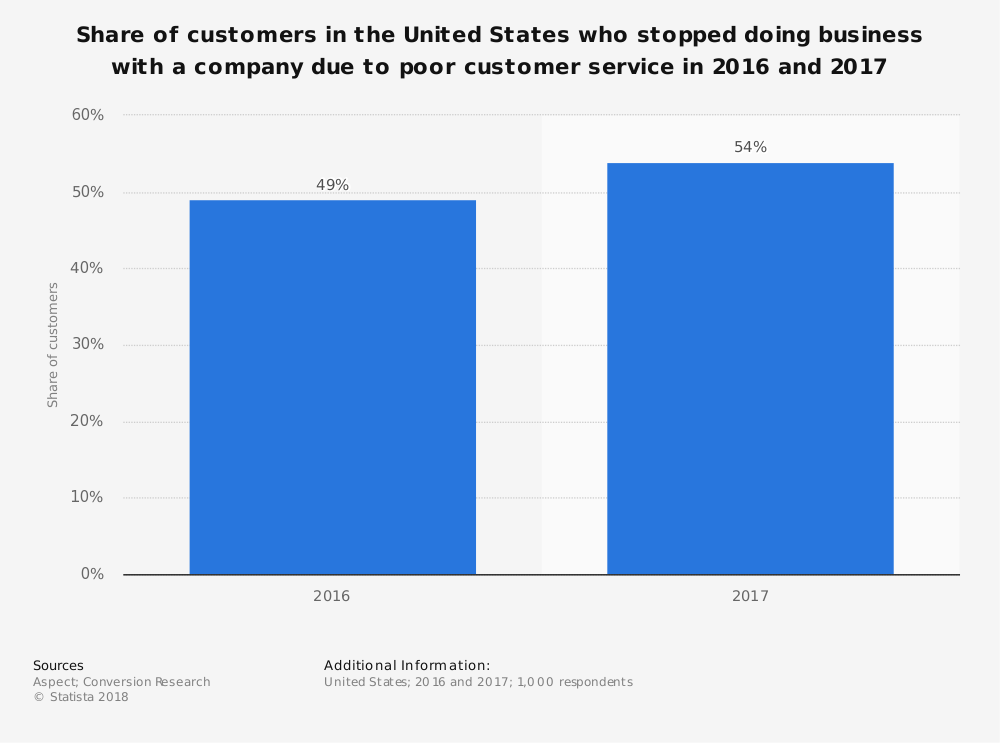
And it’s only going to keep increasing.
So customer service is still a huge deciding factor for customers making purchase decisions and for you retaining existing customers.
According to numbers from Kingfisher Inc, acquiring a new customer is five times as expensive as retaining an existing customer.
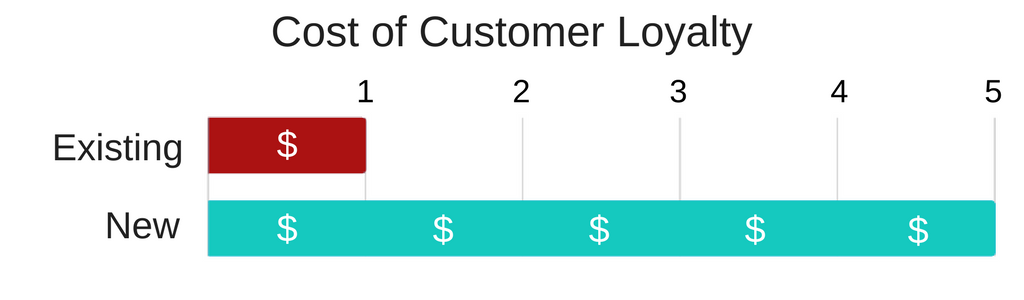
Responding to negative reviews will help you keep your current customers coming back for more.
It’s a good idea to respond to all reviews — both good and bad.
On the one hand, your negative reviews give your company a chance to show it’s human side.
On the other, responding to positive reviews will help you show appreciation for your happy customers, whose reviews matter most in the long run.
The biggest challenge to responding to every review is that you may receive an overwhelming quantity of reviews. Quite often, it requires a whole team of customer service heroes to handle reviews on all channels.
And all of your customer service reps need to know how to respond well.
Here are some essential tips to keep in mind when replying to negative reviews.
1. Get to the bottom of the issue.
Always try to verify what the reviewer says by conducting a quick internal investigation with your staff.
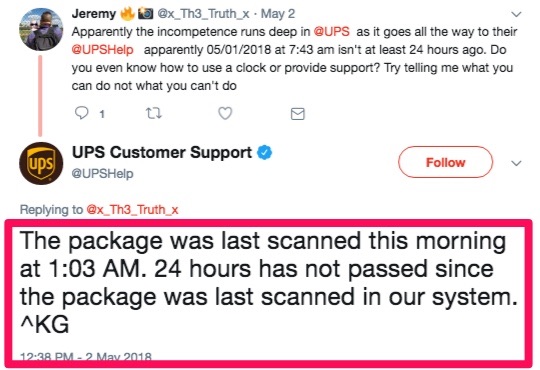
You always want to try to understand what happened.
2. Hold back your emotions and do not get defensive.
Sometimes, the reviews will be unfair and even false. Remember to always stay respectful and factual in your response like Amazon in the example below.
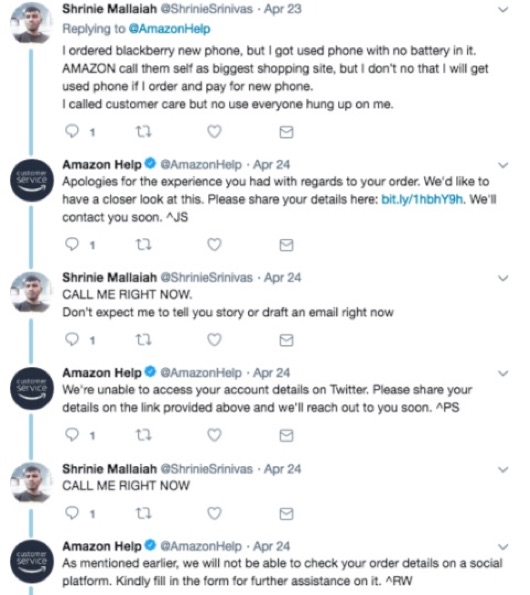
3. Show genuine empathy.
Sometimes, the only thing that a disappointed customer needs is a simple apology.
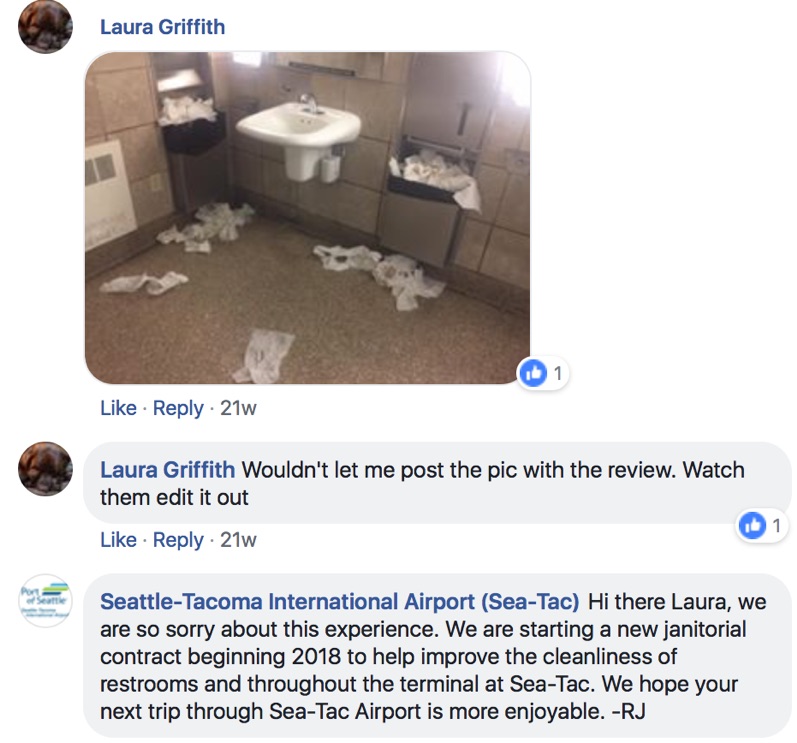
When you respond to reviews with an honest apology, your customers will know that you truly care.
4. Take the problem offline.
If you feel like the issue is escalating, it makes sense to continue the discussion privately rather than commenting back and forth.
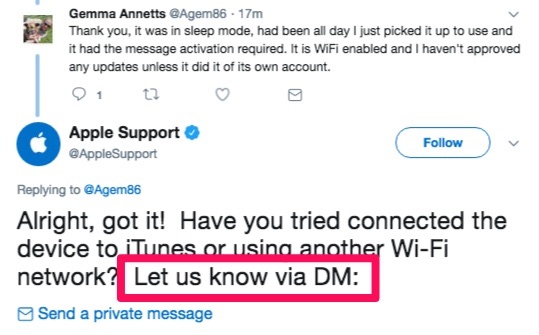
5. Respect the rules.
Many businesses offer discounts and coupons to make up for their mistakes, but some platforms consider this a violation of trust or even bribing.
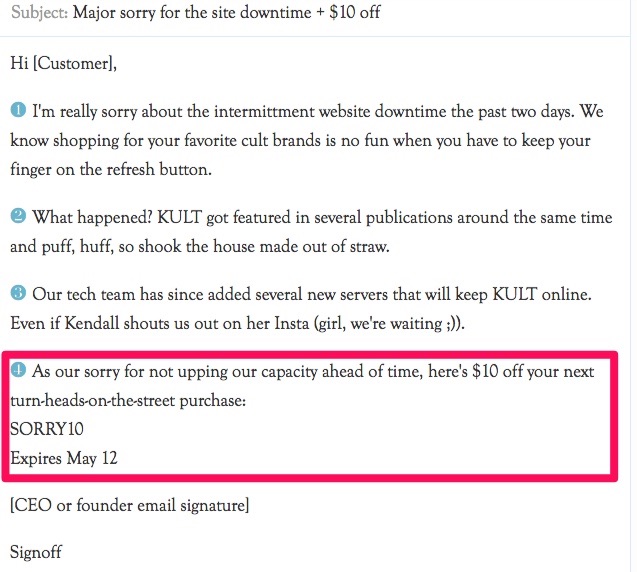
Like in the example above, email the coupon or discount instead of posting it on a social media site.
Never forget to tell your side of the story to defend your brand, either.
Don’t be afraid to tell your side of the story
Bad reviews are not always your fault. But when a number of things add up to a negative customer experience, your business might suffer.
If somebody were to falsely accuse you of a crime, you would do anything in your power to prove your innocence.
When a review is simply untrue, you might need to do the same.
Sometimes, you need to share your side of what really happened.
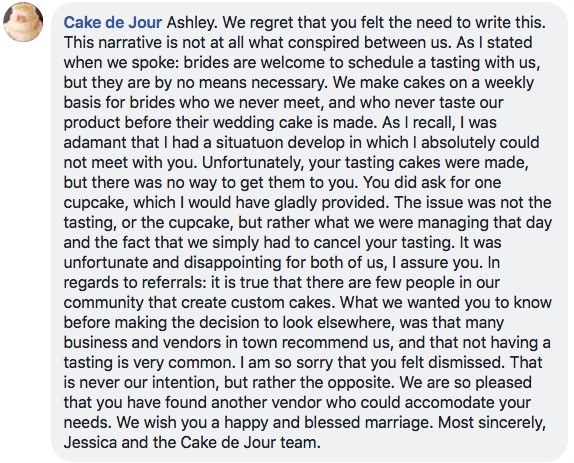
That way, future customers who come across your page and see negative reviews can read your account of the story and make an informed decision for themselves about what really happened.
When you can gracefully articulate the facts and show off the benefits of your business at the same time, you can take a negative situation and spin it into a positive one.
When you satisfy your customers, you’ll encourage them to stay loyal to you.
Satisfying unhappy customers encourages loyalty
Answering each and every customer review is a must. But it’s even more important to actually solve your customers’ problems.
Nothing is more disappointing than a regular “we apologize for any inconvenience caused” type of response with nothing but a bunch of meaningless words.
That’s not helpful or satisfying. It’s annoying.
And being timely with your detailed solution is also important.
Data from HBR shows that brands that respond to customer issues quickly have more chances to retain customers.
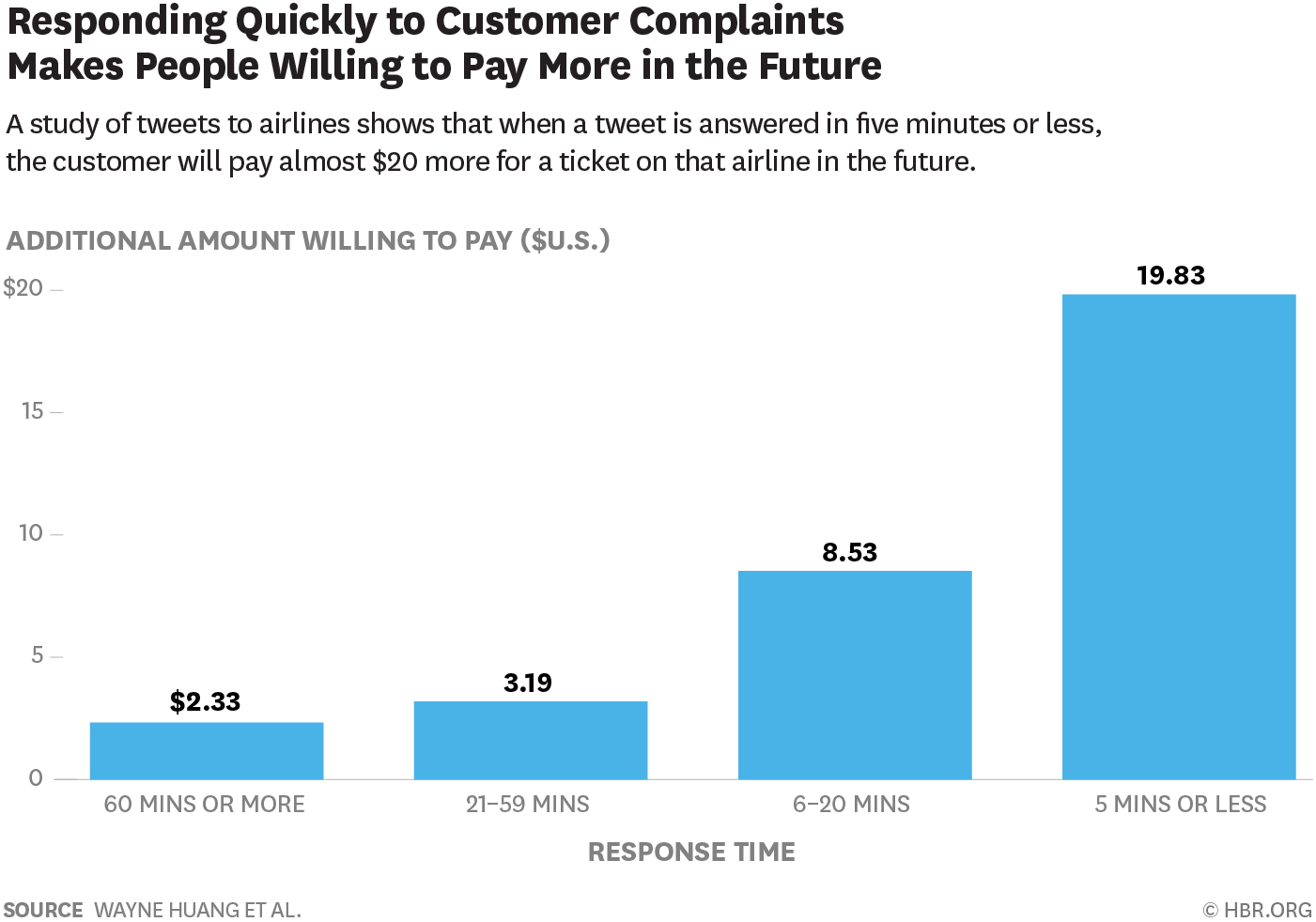
The quicker you respond, the more customers will be willing to pay for your products and services in the future.
In this study, customers were willing to spend almost $20 more for a ticket from an airline that responded to their complaints in less than five minutes.
That same study found that customers of wireless carriers who got their issues resolved with customer service reps were willing to pay $8 more for their wireless plans.
But what is even more fascinating is that customers were willing to pay an extra $6 for wireless services from the brand even if the carrier didn’t solve their problems. Just getting a response was enough to make willing to pay a little bit more.
Obviously, there are customer problems that you can’t resolve for a number of reasons.
But this study shows that even a simple expression of empathy can go a long way in diffusing frustration and providing good customer service.
Delta’s pizza party is a great example of how brands can provide good customer service through empathy.

They ordered 600 pizzas for their passengers who experienced delays because of severe weather in Atlanta.
Here’s what Julieta McCurry, Delta’s Managing Director of U.S. Marketing Communications and Sponsorships, said:
“Empathy always has and continues to drive our experience design, service and delivery. With a new year, we renew that commitment.”
Another benefit of responding to angry customers is engaging them in a conversation. Making a personal connection with a dissatisfied customer can make all the difference.
When your customer service reps do this, it’s a good idea to have them sign their initials or names when responding.
This way, customers will feel more comfortable following up on their issues later on. Many brands use this, including Burt’s Bees.
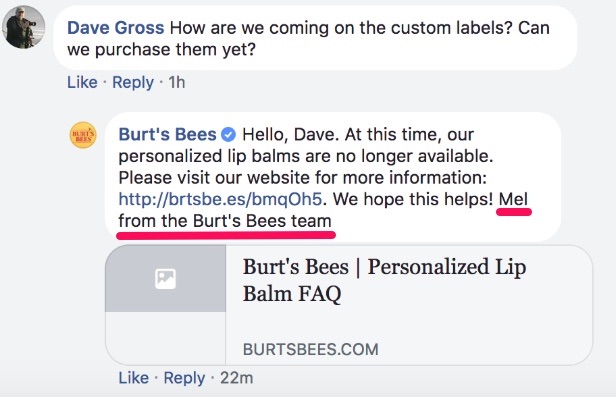
Encourage customer service agents to add their names to tickets and responses for a personal touch.
All in all, you should always think of negative feedback as a chance to improve.
Negative feedback is an opportunity to improve
Customer satisfaction has never been more important than it is today.
Around half of all startups fail. And that’s not just true about tech startups. That’s true of businesses in nearly every industry.
Take a look at this 2017 graph from Failory. The highest failure rate occurs in the information industry where 63% of startups fail.
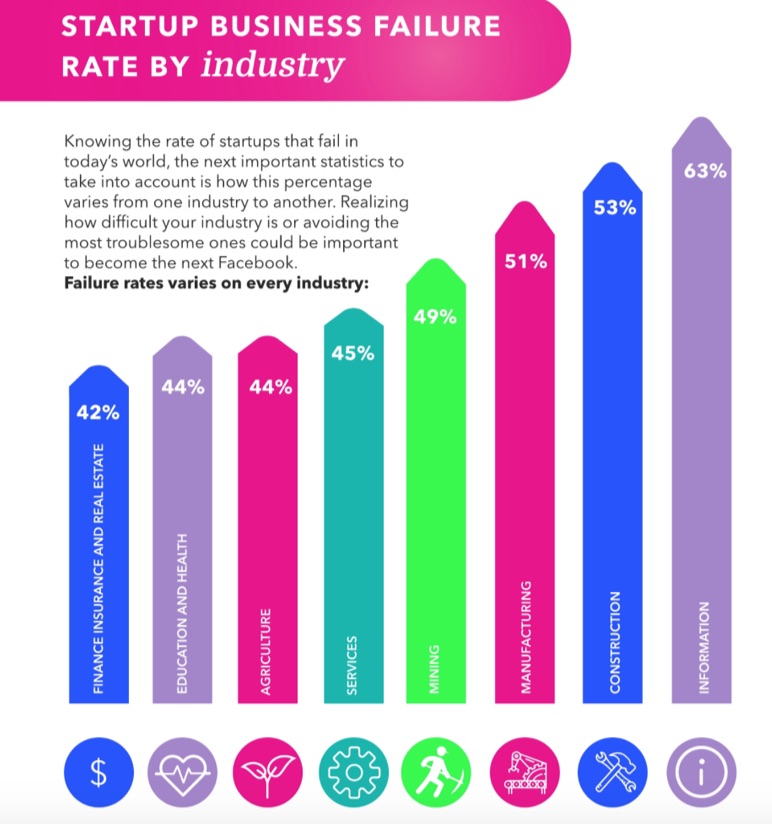
But having a sound customer retention strategy can increase your odds of success, and review management is a big part of it.
Treat every kind of feedback you receive as a gift. It is a free piece of information that you can use to improve and grow your business.
There is no better way to know if your business does well than asking your customers.
That’s why there are so many businesses carry out customer surveys every year.
Big brands spend tons of resources on conducting customer satisfaction surveys even though customers often abandon them without finishing them.
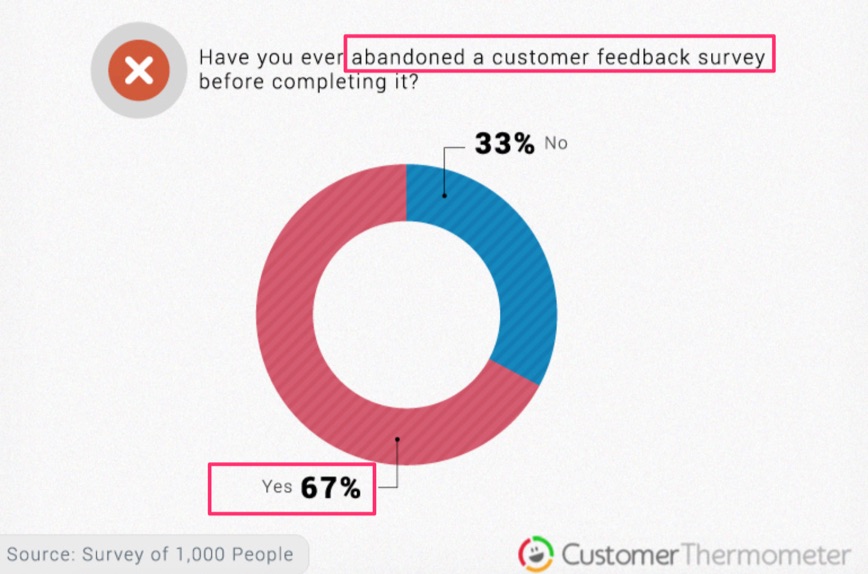
As you can see, it’s difficult to get customers to complete surveys. That means that getting voluntary feedback is invaluable.
It can help you uncover and resolve key consumer pain points. This, in turn, can help your business grow.
Just look at how Domino’s recovered from the viral prank video scandal back in 2009 calling their product “edible cardboard.”
Their stock went from $4 per share in 2008 to $215 per share in 2017.
Keep in mind that not every customer will bother to leave a negative review.
However, the ones that do are probably not alone. There will be a lot of customers who feel the same way but never express their opinions. They just leave without you even knowing.
It’s always good to show love to your unhappy customers and strive for a second chance with them. But that’s not the only way to use negative reviews for your business growth.
If you dig deeper into those reviews, you will be able to find actual business ideas. This is especially true for digital businesses like SaaS or other web-based services.
Many of these businesses utilize tools like UserVoice to bring customers into the product development process itself.
Here’s how it works.
When a customer is unhappy about certain aspects of the product, customer service agents encourage the user to submit a feature request in UserVoice.
If the feature gets enough upvotes, it ends up on the product roadmap.
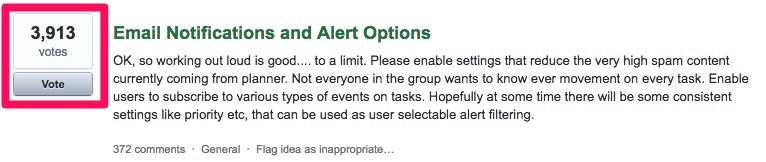
No one can tell you how to improve your services or products better than your own customers, so never miss a chance to listen to what they have to say.
For instance, Buffer used customer feedback to validate the idea of having a video upload feature. This idea came from a customer request.
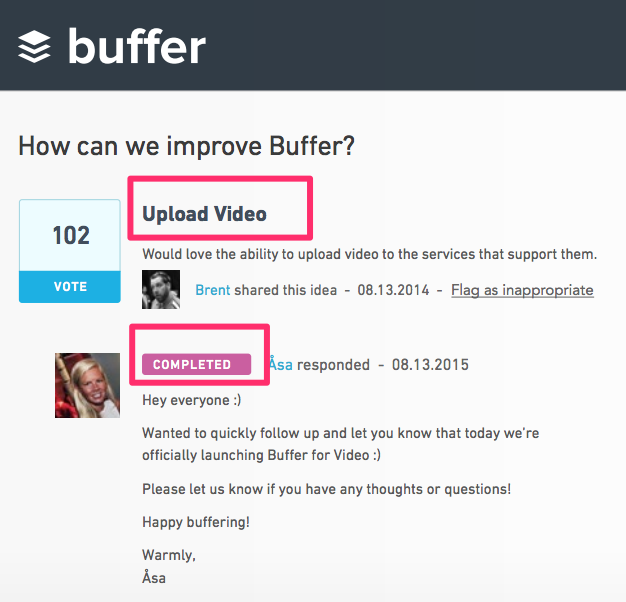
Buffer soon implemented this feature, and it was a success in terms of customer collaboration.
Don’t view all of your negative reviews as threats. Strive to learn from them and use them to improve as a company.
Conclusion
Most businesses do everything they can to avoid negative reviews. And in many ways, this makes sense.
But not all negative reviews are bad. In fact, they can be helpful in several ways.
Bad reviews help build trust. Today, buying fake reviews is as easy as getting any other service, which makes it difficult for shoppers to identify businesses with trustworthy ratings.
Negative reviews create a healthy balance and help shoppers see that your public reviews are trustworthy. Ultimately, they’ll trust your business more because of them.
Negative feedback is also a gold mine of opportunity. But you need a game plan before you respond to a customer.
When it comes to customer interactions, do you want to be casual, formal, or somewhere in the middle? You should decide this before you begin responding.
Customer complaints are a powerful tool to uncover internal problems on time and fix them before they go out of control. For this reason, they can help to boost your conversion rates.
So, it is important to monitor all review platforms regularly.
This feedback provides invaluable insights into customer satisfaction, which would otherwise require more effort and resources.
It also provides a chance to showcase your customer care excellence and your human side. Be empathetic with reviews and apologize when you should.
You shouldn’t ignore any reviews whether they’re positive or negative. Answering your customers’ feedback promptly and consistently translates into actual sales increases.
This means that every review that remains unanswered is a lost opportunity to retain existing customers and attract new prospects.
You also need to address reviews that aren’t true. You need to defend your brand against false claims. In most cases, that’s better than ignoring them.
When you satisfy unhappy customers, you’ll be encouraging brand loyalty. And negative feedback is simply an opportunity to improve overall.
But never forget to treat your happy customers with as much care and attention as the ones who complain. Happy customers are the best marketing. And it’s a free opportunity.
Each review is a free piece of information that you can use to grow your business. Treat each one as a gift.
In what ways have negative reviews benefited your business?
About the Author: Neil Patel is the co-founder of Neil Patel Digital.
Source: feedproxy.google.com