
Tag Archives for " more "

Find the Right B2B Influencer or KOL for Your Brand
B2B KOL and influencer programs are a topic of nearly every conversation these days. Our friend Lee Oden at TopRank Marketing conducted a survey in early 2021 about the use of B2B influencer marketing and found these incredible stats, along with many others.
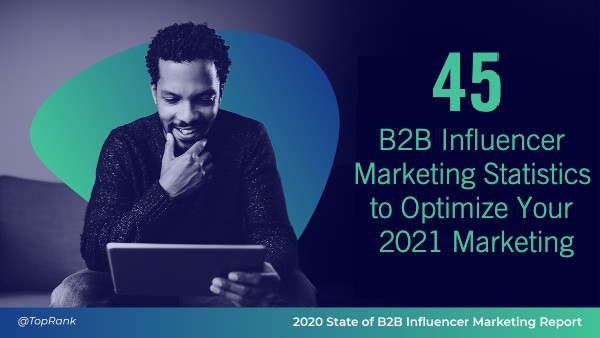
- 74% of marketers agree that influencer marketing improves customer and prospect experience with the brand
- 63% of marketers agree that marketing would have better results if it included a B2B influencer marketing program
From our view, we don’t see that trend slowing down anytime soon.
Influencer vs. KOL
Some may say it’s merely semantics but the word “influencer” infers a YouTube or TikTok celebrity smiling big to schill their use of the latest teeth whitener and the term, “key opinion leader” (KOL)” is emerging as the preferred term for B2B partnerships.

Key Opinion Leaders are what the B2B community is looking for, right? These partnerships are MUCH less about “buy now!” and more about learning something new from a trusted source or having a brand experience where sales are the last metric to be measured as the success of a partnership.
At Convince & Convert, we’ve concepted, recruited, created and managed dozens of KOL programs for clients over the years. Almost every project revolves around helping the audience gain insights or perspectives from KOLs in their area of expertise and not about direct sales.
This is the case in our most recent work with Cisco to source and creates short-length video series and blog posts for their partner marketing platform.
Over the course of the program, we’ve built relationships with our KOL’s and the partner audience at Cisco has also built affinity and trust in the knowledge they bring each month.
Not a week goes by that our own Jay Baer isn’t approached to be a KOL for various brands and contribute his thought leadership, marketing prowess, and digital personality to a campaign or brand platform.
Other C&C team members including Zontee Hou, Mary Nice, Daniel Lemin and Jenny Magic also get asked to contribute content as a KOL around digital marketing strategy and customer experience.
Working on both sides of the KOL programming has given us unique insights about how to make a program successful and what matters when negotiating a rate.
How to Approach KOL Selection
TopRank’s survey found that “39% of marketers say their top challenge with influencer marketing is that the process is too manual” and we couldn’t agree more! Our clients look to us to take out that manual work for them and deliver KOL results with as minimal extra work as possible.
Having perspective on what content creation and campaigns need from both a brand and a KOL perspective has given us a unique angle when working with KOL engagements.
Sourcing B2B KOLs for Your Brand:
We use our network of contacts as well as subscribe to several software platforms which support our discovery and vetting of potential KOLs.
Software platforms we currently use include:
– Social media marketing analytics with advanced competitive analysis, SEO, social reporting, and content marketing tools.
– Helps PR and marketing teams monitor media coverage across both news and social media and enhance brand management.
– Crawls tens of millions of social and web profiles to find what (and who) your audience reads, listens to, watches, follows, shares, and talks.
– Specialises in providing influencer marketing software and supporting professional services to help brands scale their influencer programs.
Once we have our starting list we make KOL dossiers that outline each potential KOL, the reach, content types, audience profile and other interesting information about the individual.
The dossiers bring the KOLs to life, similar to how personas would in a marketing plan as well. It allows our clients to see and relate to potential KOLs much more so than a spreadsheet of text.
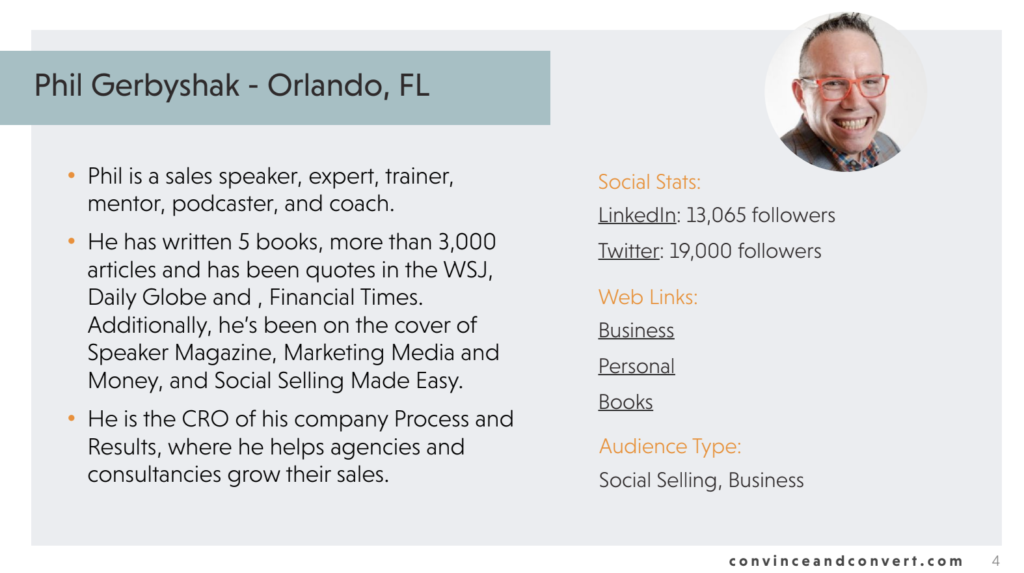
This takes the work the software provides for surfacing potential KOLs and overlays actual manual review and research from one of our team members.
(We visit each KOLs page, watch multiple pieces of content on all channels, review other brands they may work with, assess quality and style of content produced and confirm audience reach numbers from the software).
We like to research 2-3x the number of final KOLs our client is targeting so that we have provided a solid look at the opportunities and competition (or not) in a category. From the set of dossiers, we narrow in on our top individuals to pursue.
Selecting B2B KOLs:
Now comes the educated guesstimate part of this work.
Each of the KOLs will have different levels of compensation, preferred channels to activate and affiliation with our client.
Before we pick up the email or phone to approach a KOL we hyper study the following parts of our dossier:
From there we work on a payment range we believe to be equitable based on the work request and experience.
KOL Payment: The Wild West
Some of you may know I worked with Jay in the early 2000s at an ad agency in Phoenix. In those early days, I would place the online media for our clients. One such campaign was for a client who created and sold koozies.
Their koozies had suction cups on them so that the gel coat on your boat wouldn’t get ruined as you enjoyed an ice-cold beverage while cruising around the lake.
As media kits and banner ads overall were few and far between, we would literally search the web for sites we thought would be a good fit and call (on a desk phone!) the owner or main contact of the site.
(see: title of Webmaster) We’d start with an offer of a hundred dollars and see how it landed to know if we completely offended them or had just made a great deal, working our way down the list of potential banner placements.
And even in 2021, B2B KOL negotiations feel a lot similar but certainly more than a few hundred dollars.
We took this question to our friends at Onalytica, the biggest B2B influencer database. With a platform like theirs, it is easier to negotiate and process payment for a KOL, but it still requires conversation and a fair bit of guesstimation.
Each individual person and set of content pieces come with their own negotiations. Valuing the relationship and offering a fair and equitable rate will go much farther in B2B KOL partnerships than budget savings.
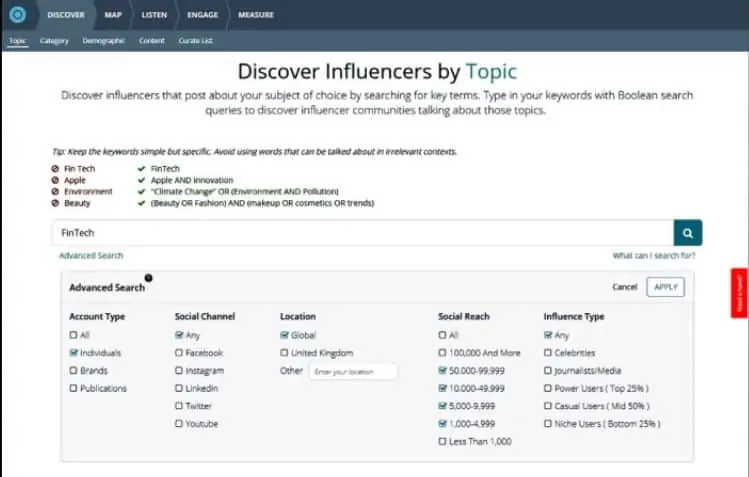
Onalytica platform
The Good News For Finding B2B KOLs
Lucky for all of us, rate cards and reports in the area are increasing, giving at least a clue or a starting point to custom negotiations with KOL’s of interest.
Even for Convince & Convert, we’ve worked on a general rate card in the form of our media kit for the types of content we regularly create for clients.

It takes into consideration the expertise our collective team brings to any KOL engagement.
As we work on behalf of clients to strategize and plan their KOL engagements, we use our rate card as the barometer for gauging the starting offers and rate negotiations with the KOLs selected.
A recent report by Intellifluence included more than 1200 influencers asking them about compensation expectations for mainstream pieces of content. And while the influencers included were likely working with more B2C than B2B brands, we found these areas to universally apply:
- Cash is preferred. “Nearly 70% of those surveyed said they liked to get paid in cash and in the product.” For B2B marketers – particularly MarTech brands, think about how you can sweeten your offer or enhance the relationship with a KOL by offering a license, upgrade or similar in addition to direct payment.
- Particularly for C&C clients, video is a common content type in our KOL programs. In the Intellifluence survey, influencers wanted brands to realize how much pre-work goes into creating a quality video.
For B2B marketers, when you are working with KOLs acknowledge that the hard work is in the prep and polish of a video. While the output may be only a few minutes of finished content, a worthwhile KOL will spend time to plan, script, and use quality equipment to shoot the video.
One area we tend to do for our clients is we do the post-production work – asking a KOL to send us clean video and we add any captions, logos and bumpers to the final cut. This works well because most of our KOL interactions are part of multi-episode shows.
Frequently Asked Questions:
QA: 1
What type of content (webinar, blog post, social post, etc) would be a fit not only for our client campaign but also fits with the KOLs style and audience set?
We have repeatedly found that when we approach a partner KOL with a specific ask or deliverable they are increasingly able to agree or negotiate the contract more quickly.
Giving them something thoughtful to react to goes a long way in the negotiation process.
QA: 2
How large does this KOLs audience reach? (followers, average engagement, etc) How key is their audience to establishing our objectives?
An exercise in quantity vs. quality if you will: Depending on the goal for the campaign, one or the other could sway the amount of negotiation you are willing to engage in.
Although leaning toward B2C, this recent Intellifluence survey has some starting points on price per post expectations and by channel direct from influencers which is a must-read.
QA: 3
Which other brands does this KOL work with or represent? How do those brands affect or overlap our client’s brand?
Usually, we work with 6-10 KOL’s at a time and are creating an episodic type show for our client. Explaining the overall campaign and creative direction the KOL is part of also provides context and company, increasing the knowledge of the outcome for the KOL helps to gain trust, especially for new relationships.
Working with B2B KOLs is a Work in Progress
Someday we’ll have the “ultimate pricing guide to B2B KOL engagements” but until that is created, we’d break it down to building a relationship with your KOLs is key and fair compensation and clear deliverables go a long way in a long term partnership.
The post Find the Right B2B Influencer or KOL for Your Brand appeared first on Content Marketing Consulting and Social Media Strategy.
Source: convinceandconvert.com

Social Media Trends You Need to Know in 2021
It’s that time of year again — time to review the social media trends we expect to shape the upcoming year. Let’s dive in now to our annual list of social media trends to watch in 2021, according to the Convince & Convert social media consulting team:

Companies Will Need to Address Social Media Team Burnout
“On one hand, many social teams have been elated to finally be seen as a vital part of their organizations because higher-ups have recognized just how valuable social media has been for communicating in real-time through COVID-19 and other major crises.
On the other hand, social teams are burning out with having to be always on with social customer care (which also includes being the target of a lot of misplaced vitriol) and also having to be the first to communicate through a lot of shifting situations and serious crises, in addition to dealing with all of the personal hardships that come with living through a pandemic.
Social media burnout has been a huge topic with a lot of Social Pros podcast guests over the last few months. I’ve also heard the concern from our clients in higher education.
In fact, according to Sprout Social, ‘88% of social marketers [in higher ed] say the pandemic has made their work much harder, and nearly half don’t have adequate support or resources to manage their mental health. Checks out.”

Anna Hrach, Strategist
Fee-based Fan Communities Will Grow
“Many businesses continue to suffer from a lack of organic reach in social media. Concurrently, consumers are increasingly gravitating toward smaller, more intimate topical communities (see the rise of Facebook Groups popularity as an example).
Simultaneously, 2020 saw a big move in the direct-to-consumer space, both in terms of e-commerce (as evidenced by Instagram shopping), and content (look at the explosive growth of OnlyFans and similar).
In 2021, we’ll see these trends converge, and brands will begin to adopt fee-based communities that give superfans exclusive access to content, exclusive products, and more.
This is the post-modern version of the Membership Club, and will give smart brands the ability to build advocacy and word-of-mouth among core customers who are willing to pay a small monthly fee to interact with one another, and the business.”

Jay Baer, Founder, Convince & Convert
Building Trust Through Content Delivered By and Featuring Humans
“Sure, for a long time, people have talked about the erosion of trust in brands, but never before have brands had to face it more head-on than 2020.
It should become the default that content is carried by human beings — whether that is influencers, your employees, or other subject-matter experts.
People don’t just need to trust because it feels good; people have to put their every action and every purchase through a filter of safety and economic impact.
It’s time to up-level content — not necessarily in production value, but in human connection. Is it harder? Yes. Is it the right thing to do? Yes.”

Mary Nice, Strategist
The Rise and Resurgence of Private Groups and Platforms
“As noise increases on social media, many are looking to customize their experiences by joining private groups and forums based on causes and personal interests.
There has been a rise in the number of Facebook Groups and membership, and Instagram is now seeing the use of its Threads or sharing Stories with specific friends.
Many people are also going to or returning to private and semi-private online forums for education, entertainment, networking, and mutual interest.”

Christin Kardos, Community Manager
Influencers Will Become Vital in B2B, not Just B2C
“According to the 11th Annual B2B Content Marketing Benchmarks, Budgets, and Trends report from CMI/MarketingProfs, 89% of B2B marketers use social media for content distribution, but only 24% used Media/Influencer relations.
It’s no surprise that in the last decade, social media has become an extremely fragmented and noisy place, and therefore, brands both in B2B and B2C will find that their dollars go further when they collaborate with individuals whom their audience trusts.
Whether these are macro-influencers or micro-influencers, co-creating content that comes from these trusted voices will help brands to break through the noise AND reach broader audiences.”

Zontee Hou, Co-lead, Consulting
Socially-conscious Values Extend to Imagery as Well
“Nearly 80% of people globally have said it isn’t enough to have people of various ethnicities, backgrounds, and appearances in advertising but that they expect companies to do a better job at capturing people’s true lifestyles and cultures, according to new research by Getty Images.
Searches have increased year-over-year for ‘diversity’ (up 133%), ‘culture’ (up 115%), ‘real people’ (up 115%) and ‘inclusion’ (up 126%).
From May to June alone, customer searches for diverse images increased by 200%, and searches for images around unity and equality increased by 500%, trends that are believed to be intensified due to anti-racism protests.
Side note: our client, AARP, partnered with Getty to create more authentic images of people 50+.”

Jenny Magic, Marketing Strategist
Social Media Is Part of Everyone’s Job
“Social media has been a core part of the business for more than a decade. Long gone are the days where ‘playing on that Facebook thing’ was only supposed to happen on lunch breaks.
In the age of coronavirus, social media has become more important than ever to business survival and success.
Your employees are your greatest social media assets. In fact, 45% of consumers are more likely to research a product or service when a brand’s employees post about that product or service.
Social media skill sets go beyond marketing and communications roles. They are less frequently required but especially needed, in customer service, HR, sales, and research.
Even in roles without direct ties to content, messaging, design, lead gen, sales, or service, we’re still asking employees to be good at social media to power our internal advocacy efforts.
Employee advocacy programs continue to be a top trend because their success to humanize a brand and amplify storytelling is undeniable at scale.
Businesses must provide social media policy guidelines and resources for their employees to master social media skills, as this technology is more akin to email than VR in today’s business world.”

Lauren Teague, Strategist
Use of User-generated Content Grows
“User-generated content has become an increasingly reliable social media marketing tactic. Brands and consumers find this type of content more authentic and trustworthy.
A majority of users trust UGC when it comes to influencing their buying decisions, and people want to see real-life experiences.
We will see a surge in UGC content this year through platforms such as TikTok and Instagram.”

Leanna Pham, Brand Marketing Intern
Questions About Any of These Social Media Trends? Ask a Convince & Convert Strategist!
Simply fill out the form below to request a no-cost consultation with a strategist on our team. We’d love to get to know you.
The post-Social Media Trends You Need to Know in 2021 appeared first on Content Marketing Consulting and Social Media Strategy.
Source: convinceandconvert.com

12 Marketing Tools We Are Thankful for This Year
At Convince & Convert, we are thankful to have so many awesome marketing tools at our disposal. Let’s dive in now to our list of 12 marketing tools we are thankful for this year.
Back in the early-ish days of marketing technology in 2011, there were about 150 martech solutions available.
But now, there are a seemingly endless number of marketing tools. In fact, according to Scott Brinker’s most recent Marketing Technology Supergraphic, there are around 8,000 martech solutions, up from about 7,000 in 2019. Incredible!
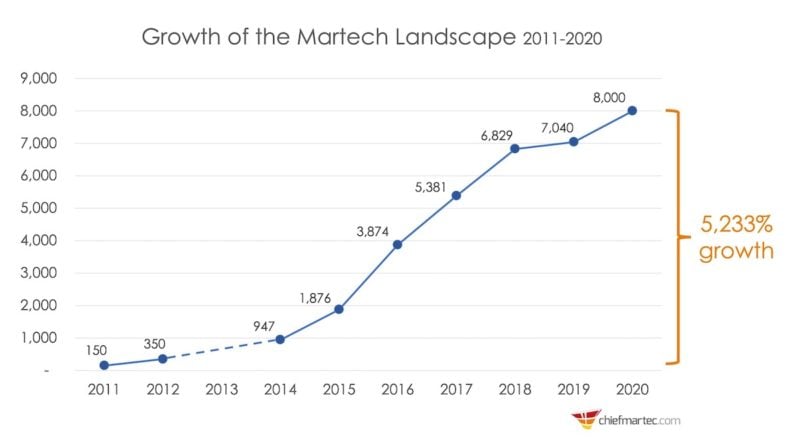
Image courtesy of ChiefMarTech.com
At Convince & Convert, we are thankful to have so many awesome marketing tools at our disposal and to work with so many amazing marketing technology companies (check out our content marketing creation services when you have a sec).
In the spirit of Thanksgiving, we asked our team to share some of their favorite marketing tools this year. This list is in no way conclusive — if it were, we would be writing a book and not a blog post. A few of the tools are from C&C clients (accessiBe and SharpSpring), most are tools we use daily, and all are tools we love!
Let’s dive in now to our list of 12 marketing tools we are thankful for this year, plus a few additional shoutouts for marketing solutions we love but just didn’t have the bandwidth to cover in this blog post.
List of 12 Marketing Tools We Are Thankful for This Year
#1: SparkToro
Audience intelligence platform
“This is a relatively new tool from Rand Fishkin and his associates that is an easy and illuminating way to find circles of influence online. I use it to find possible collaborators, websites to sponsors, podcasts to sponsor, and even search terms and hashtags of interest. It’s a flexible tool that should be part of every project and program.”
Jay Baer, Founder, Convince & Convert
#2: Miro
Visual collaboration software
“Miro is my favorite new tool for visualizing content like org charts, content workflows, brainstorming, user stories, whatever. It’s basically an online whiteboard for collaborating visually, which is so helpful now that the entire world is remote.”
Fun Fact: The Miro template library has hundreds of layouts just waiting for you to try them out!

Jenny Magic, Strategist
….and Anna Hrach loves Miro too!
“I’m with Jenny on this, and she was the one that brought it to my attention. I love Miro for visualizing information and content and remote/virtual collaboration. Plus, they have a ton of existing templates (over 150+) to work from that are all easily customizable.
The free version of Miro is also fantastic, so it’s easy to try out and see if the tool is a good fit for any organization. Miro also has over 70+ integrations, including Slack and Google Drive, so it fits into a lot of existing virtual workflows.”
Anna Hrach, Strategist
#3: accessiBe
Automated web accessibility
“Over my twenty-year career in digital, I have learned A LOT from web development teams and website requirement documents. What I love about the approach accessiBe has developed is there is virtually ZERO code changes needed to ensure your site is not only ADA compliant but also a positive experience for visitors.
The dashboard is simple to configure, allows for your branding to be matched, and adjusts to the needs of each site visitor without sweeping code changes. At an affordable price, this tool is a win for site visitors, a win for site developers, and a win for marketers. The legal team will likely find it a win as well!”
Fun Fact: accessiBe estimates that “the disabled population in almost every society is about 20% of the residents.” This has a huge impact on the function and services your website can (and should) be offering the entirety of your audience.
In addition, check out our recent technology tour of accessiBe, with special guest Rafi Glantz.

Kelly Santina, Director of Operations
#4: RivalIQ
Social media analytics
“It’s vital to be able to monitor your social media performance and compare it to your peers or competitors, so you can continue to learn, iterate, and improve performance. RivalIQ is one of our go-to tools to benchmark our clients’ competitors on social media.
Not only can we monitor growth rate, breakout posts, and look for boosted posts, we can also use RivalIQ’s ability to tag content to analyze the best performing types of content by medium and content.
RivalIQ also makes it easy to bring data from Facebook, Instagram, LinkedIn, and other platforms into one place to create attractive, easy to use dashboards to share with clients and internal teams.”
Fun Fact: Highly data-driven organizations are 3X more likely to report significant improvements in decision-making, according to PwC research.
Side note: Our founder Jay Baer is an investor in RivalIQ, but our team would still use the solution, even if he weren’t.
Zontee Hou, Director of Strategy
#5: ScreamingFrog
SEO spider tool and crawler software
“Despite the odd name, this SEO spider is a powerful and flexible site crawler, able to crawl both small and very large websites efficiently while allowing the user to analyze the results in real-time. It gathers key onsite data to allow SEOs to make informed assessments, both on your own internal site or a competitors’ site.
This is primarily used to identify SEO best-practices and shortcomings (there are always more than one would think), but also helps in content identification that may be difficult to find via main navigation options.
They offer a free version (limited to 500 URLs) and a paid license option.”

Anthony Helmstetter, Strategist
#6: Airtable
Cloud collaboration
‘” As the resident Airtable queen at C&C, I have both convinced and converted the consulting team of the power of Airtable. A cloud-based DIY software solution uses tools we’re familiar with, like databases, spreadsheet grids, and calendars, to create unique ways to get work done.
Airtable offers flexibility and an ecosystem for pulling together any project. In the past year, Airtable has super-powered the product with pro-level automation, apps, collaboration, and integrations.
At C&C, we use Airtable for a range of client and internal tasks and project management. My favorite use cases bring together audience journey maps, content gap analysis, and content marketing production into a single (massive) tool, as we did for clients like Oregon State Ecampus.
Tracking the team submissions for our ‘People We Love’ series is emotionally rewarding and brings our team closer together.
To get started, check out the numerous base templates Airtable gives away for free. Then go deeper into the Universe to see how others use this powerful tool to manage their professional and personal lives.”
Fun Fact: Over 15 million bases have been created on Airtable. And their content is also awesome.
Lauren Teague, Strategist
#7: SharpSpring
Marketing automation and CRM
“When I joined Convince & Convert, we were using a simple email solution to deploy blast-style emails. No lead scoring. No drip campaigns. No automation. No A/B testing.
As we ramped up our efforts, we quickly reached the limits of our previous solution (we were actually A/B testing emails by uploading our email list to Google Sheets and random sorting—not good!), we evaluated a few marketing automation solutions and finally selected SharpSpring.
Like all marketing technology transitions, there were a few bumps along the way, but within a few months, we got into a good rhythm and really ramped up our efforts.
The automation is really easy to set up, and unlike most of the solutions we evaluated, SharpSpring has a built-in CRM, which was key for us. We are a lean sales & marketing team, so we don’t have the resources to manage a standalone CRM.
We’re now 18 months into our initial setup, and we continue to grow and optimize our efforts. Plus, the support team is only an email, phone call, or chat away. Big fans!”

Megan Leap, Director of Content
#8: SEMrush
SEO and content marketing
“The other tool I love geeking out in is SEMrush. There’s nothing more exciting than seeing our rankings improve for key terms! The Keyword Magic Tool is ridiculously useful — especially the ‘Questions’ tab. I get a ton of inspiration for our content in SEMrush, and it’s helped us achieve big gains in our SEO.”
– Megan Leap
#9: Litmus
Email testing & analysis
“I first was introduced to Litmus over 12 years ago when the web developer I worked with used it to test and check the rendering of HTML on emails. Since then, I’ve signed up for it in every single digital marketing position I’ve had.
It’s easy to sell a solution to your boss when it makes your job easier, your marketing more effective and keeps your brand on-point. I even used it for browser testing, but Litmus has since retired that feature in order to focus on email. If you’re sending emails, you need to make sure they render correctly on all browsers and in all email clients.”
– Megan Leap
#10: AgoraPulse
Social media management
“AgoraPulse is our go-to tool for social listening and engagement. We use this tool daily to monitor brand/name mentions and to engage with our community. We use the browser-based dashboard during normal business hours and the mobile app when on the go.
Three standout features of AgoraPulse are its ability to gather comments and activity on Facebook and Instagram ads, its ability to monitor YouTube comments, and its insights on Instagram Stories.”
Christin Kardos, Community Manager
#11: CoSchedule
Content marketing management
“I probably use CoSchedule more than anyone on our team. We use it for planning social media content, sponsored content, podcasts, and more. There’s no better way to manage and plan multiple types of content across business units and virtual teams (both internal and external). I love it. It keeps me sane.”
Side note: Our founder, Jay Baer, is an investor in CoSchedule, but we’d still use it regardless.
– Christin Kardos, Community Manager
#12: BuzzSumo
“BuzzSumo offers a great place to start when thinking about content planning. It offers effective ways to stay on the pulse of what is trending in traditional media and in social. It also provides a great place to identify influencers and get new ideas for different topics within your planned content pillars.”
Mary Nice, Strategist
Notable Mentions
This wouldn’t be a “marketing tools we are thankful for” post without a few other shout outs. In no particular order, here are a few more martech solutions we love that you should check out too:
- Ceralytics (content intelligence platform)
- NetLine (B2B content syndication)
- Oracle Marketing Cloud (integrated digital marketing solutions)
- Cisco WebEx (video conferencing and online meetings)
- Podium (messaging tools for local business)
- Calabrio (workforce optimization)
- Cision (cloud-based communications/PR)
The post 12 Marketing Tools We Are Thankful for This Year appeared first on Content Marketing Consulting and Social Media Strategy.
Source: convinceandconvert.com

3 Key Reasons to Use Augmented Intelligence Tools in Digital Marketing

Reasons to use AI
Do terms like “AI” and “machine learning” make you think of robots and science fiction?
These technologies are being used everywhere, and the age of AI is already in full swing.
AI and technology offer a solution to inefficiency. Deloitte has shown that 83 percent of early adopters of AI and cognitive technologies achieved either “moderate” or “substantial” benefits.
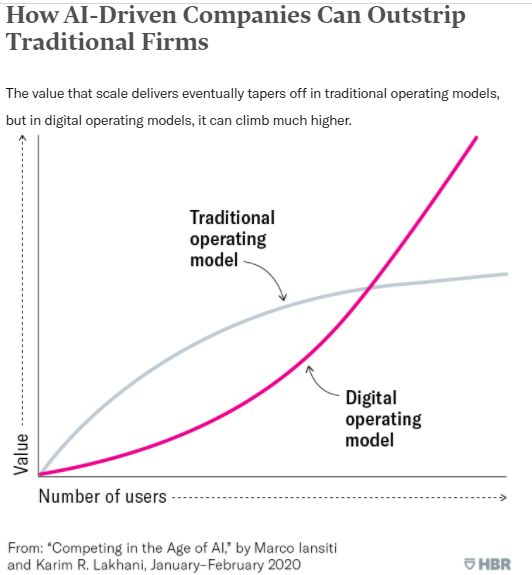
AI vs. traditional comparison
AI is somewhat part of augmented intelligence tools’ technology, but how is it used in marketing right now?
What is Augmented Intelligence?
Gartner defines “augmented intelligence” as “a human-centric partnership model of people and artificial intelligence working together to enhance cognitive performance.”
What that means is that augmented intelligence isn’t just about creating super-smart machines. It’s about creating technology that can help you and your brain do things better.
Augmented intelligence is sometimes also called intelligence automation (IA).
How is Augmented Intelligence Different From Artificial Intelligence (AI)?
Artificial intelligence is all about computers making decisions. But augmented intelligence is about you making better decisions, with the help of a computer.
Let’s dive into some specific examples so we can see how this works:
Artificial Intelligence Examples
Artificial intelligence operates on its own, without help from humans.
That might make you think of autonomous killer robots, but the reality is usually a little less exciting.
Ever used a grammar checker tool? Lots of those use AI to give you more sophisticated grammar recommendations.
Even Google Docs uses an AI grammar checker. Google’s engineers train the model using correct sentences. It’s then able to predict whether sentences are correct or incorrect on their own, without needing to be programmed with every single grammar rule.
Know where else Google uses AI? In its search engine algorithms.
Updates like RankBrain and BERT have brought AI to the search engine, and SEOs have needed to update their strategies accordingly with AI SEO.
Augmented Intelligence Examples
Now that we’ve seen how AI is used, how is augmented intelligence used? How are its applications different from AI?
Augmented intelligence is a pretty general term. You can use it to talk about basically any machine that helps humans enhance their capabilities and make better decisions, even something as simple as a compass or telescope.
But in practice, augmented intelligence is usually used to talk about automated systems that need direction or input from humans to function. Augmented reality tools, like Google Glass, are just one example.

Virtual Try on glasses
Augmented intelligence can be used in a bunch of different fields. It can support financial professionals in making regulatory decisions, or help health care professionals make medical decisions.
The augmented intelligence tool gives recommendations, and then the human makes the final call. Feedback from humans helps the tool to learn and grow continuously.
Why would you want to use augmented intelligence when you could use “true AI?” Well, augmented intelligence allows us to do more with the technology we currently have, without needing to wait for AI to advance.
It also adds a human element to the decision-making process, which can be helpful for complying with regulation in some industries. Plus, with augmented intelligence, we can take advantage of new technologies while also continuing to use human talent.
But the best thing about augmented intelligence? When humans and machines work together, they can achieve better results than one or the other working alone.

Wayfair Furniture AR
For example, an experiment by a team from a Harvard Medical School hospital at the Camelyon Grand Challenge showed that an algorithm could accurately detect breast cancer 92% of the time, while a human pathologist accurately detected it 96% of the time. When the pathologist worked together with the algorithm, the results were accurate 99% of the time.
Overall, augmented intelligence is just a different philosophy that can help us get the most from AI, without needing really sophisticated capabilities.
How Can Augmented Intelligence Help Your Business?
The truth is, augmented intelligence can do huge things for your company.
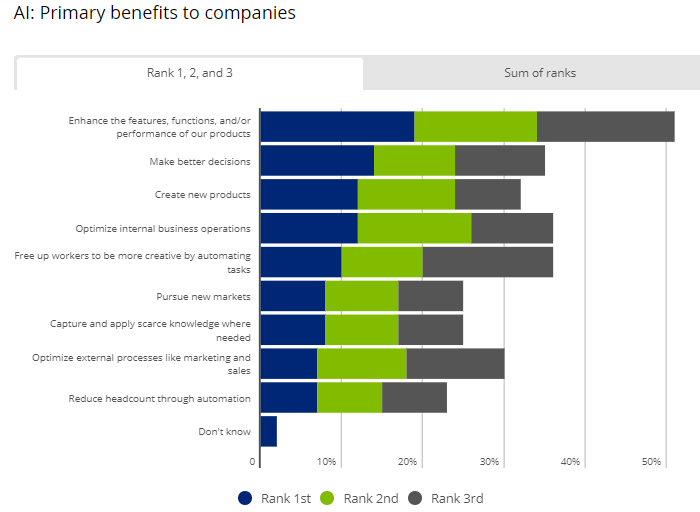
Benefits of AI to companies
There are tons of different ways to use augmented intelligence. There’s probably an IA application out there that can help you streamline and improve every single area of your business.
Here’s an example: Augmented intelligence can help you sell things online.
Think about the last time you thought about buying something online. What were some reasons you might have hesitated before making a purchase?
You might not want to lay out money for certain items before trying them out in person. Furniture, glasses, clothes are examples of products users want to see how they look up close before you buy.
Enter augmented intelligence. With augmented reality (AR) applications, your customers can “try on” things virtually. Even if they’d prefer to shop from home, they can still get a feel for your merchandise.
Want to know how this works in practice?
Check out some of the companies using augmented reality to sell furniture (Wayfair), glasses (EyeBuyDirect), and makeup (MAC Cosmetics).

MAC-cosmetics
To use the virtual try-on tools, you can upload a photo or open your webcam, and the tool will show you what the product looks like in real life.
But sales aren’t the only area where augmented intelligence can help your business.
Want to make your product safer? Car companies are already using augmented reality to help drivers spot dangers on the road and avoid looking down at their phones.
Want to thrill your customers with a cool new feature? Google did that when they introduced internet searchers to AR animals.
You can improve your customer service with augmented intelligence, too. Chatbots can help answer some more straightforward customer questions, freeing up more time for your human staff. IA can also help support your customer service reps when they need more information to help customers.
Finally, just like with sales, product, and customer service, augmented intelligence tools can take your marketing efforts to the next level.

AR in action
Here are three crucial reasons why you should use augmented intelligence tools to supercharge your marketing.
#1 – Augmented Intelligence Creates Positive Customer Experiences
If you use augmented intelligence to create an extra cool or innovative product, your marketing will basically be halfway done for you. An awesome customer experience pretty much markets itself. Just look at all the videos people have made about Google’s AR animals:
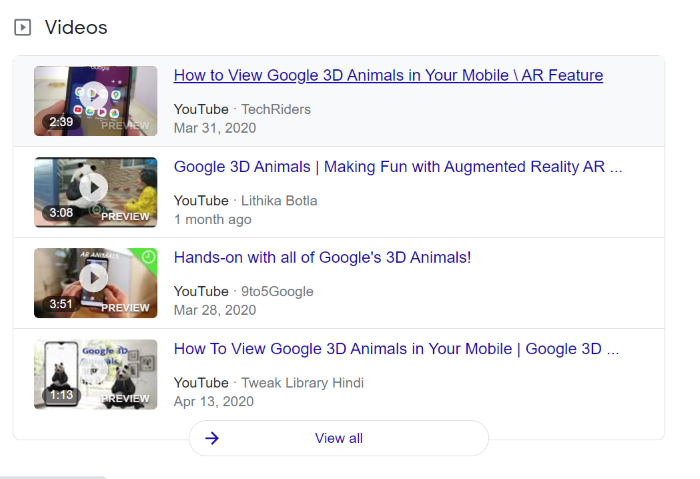
Check out all these articles people have written about Wayfair’s augmented reality feature for furniture:

If you make something interesting enough, you might end up getting lots of new backlinks and traffic without even trying.
Besides creating new product features, you can also improve your customer experience with augmented intelligence in other ways.
For instance, customers are more likely to be satisfied if they can get their questions answered faster with technology like automated chatbots, as mentioned above.
You can also use augmented intelligence to help personalize the customer experience. An example of this would be user recommendations. You’ve probably seen these on YouTube on the right-hand side:
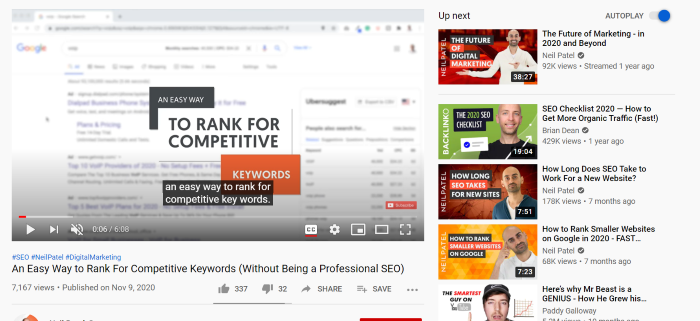
And on Amazon as suggested product examples:
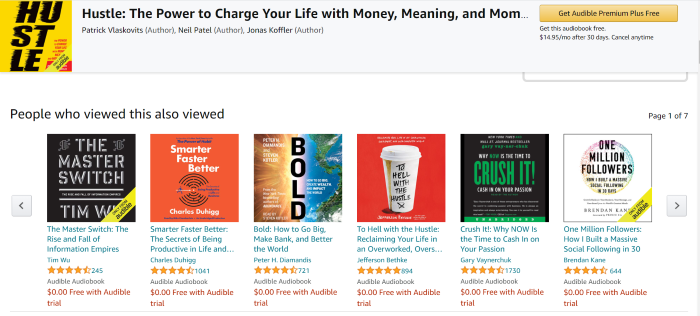
These websites use algorithms to make recommendations based on the videos you’ve already watched or products you’ve already shown interest in. When you click on a recommendation, you’re sending a signal to the algorithm that the recommendation was relevant.
Recommendations help you offer a better experience by helping your customers find things they might be interested in. They are also a way to convince customers to stay on your website for longer.
#2 – Augmented Intelligence Can Reduce Busywork
Another major reason why companies are interested in automation is that it saves time. According to WorkMarket’s 2020 In(Sight) Report, over half of employees think they could save 240 hours every year through automation.
IA can help your marketing department save time in lots of different ways. If you’re currently using data for strategic planning, augmented intelligence tools can help.
You can use these tools to help clean data sets, forecast future trends with predictive modeling, or even keep an eye on competitors, social trends, and customer feedback. This can help you create more effective marketing plans more quickly.
If you decide to use augmented intelligence in your marketing, you won’t be alone. According to a Forrester report, 46% of respondents say that marketing and sales teams are leading AI adoption.
It’s no wonder marketers are excited to adopt this technology. Hubspot found that using AI software cut the time one agency spent on reporting by 97 percent.
#3 – Augmented Intelligence Can Help Write Content
Here’s another way that augmented intelligence can help with your marketing: It can help you write better content, faster.
If you’re a marketer, you know that writing quality content takes serious time and effort.
A survey by Orbit Media Studios states that the average blog post takes almost four hours to write. That’s actually a 63% increase over 2014 when the average blog post took just under 2.5 hours.
If you’re wondering why the writing time has gone up so much, it’s because Google’s algorithm updates have started to favor long-form content.
Besides the actual writing, researching, adding photos, and publishing also take up lots of time, not to mention content planning and SEO.
Augmented intelligence can helpfully write text, but it can’t add much research, facts, or emotions to it.
AI’s writing style can be a little different from what we’re used to, so it needs human polishing.

That’s an excerpt from an article written by an AI, published in The Guardian.
As you can see, AI can write sentences, but you might need to edit or adjust them to fit your content needs.
Even if you don’t want a robot to write your articles, you can still use augmented intelligence tools to help you in your writing. Spelling and grammar checkers, like Grammarly, are a good example of this.
Augmented intelligence can also help you create better content by coming up with more relevant topics for your audience.
If you’re using augmented intelligence for data collection and analytics, you can use the knowledge you gain from that to help you write more data-driven, personalized content.
If you want to do a content audit to review the content that’s already on your website, augmented intelligence can help with that, too.
Augmented Intelligence is Becoming the Norm
It looks like AI, and automation in general, are here to stay. McKinsey predicts that “half of today’s work activities could be automated by 2055.”
With “AI’s adoption increasing year-on-year,” marketing departments are leading the charge.
Augmented intelligence offers the perfect approach to AI, because it’s all about pairing AI’s strengths with human strengths.
Conclusion
As a marketer, you’re all about staying ahead of the competition.
To do that, you’ll need to have the best tools, including artificial intelligence.
However, a lot of people are skeptical about AI. In fact, research by PwC shows that 67% of CEOs think AI and automation will have a negative impact on trust in their industry over the next five years.
With augmented intelligence tools, you don’t have to rely on AI alone. Instead, you can use AI’s strengths and human strengths together to get better results.
If you’ve already started using augmented intelligence in your marketing, or if you’re thinking about using it soon, tell us about your experience in the comments.
The post 3 Key Reasons to Use Augmented Intelligence Tools in Digital Marketing appeared first on Neil Patel.
Source: feedproxy.google.com