
Tag Archives for " Internet of Things "

Report: A developer’s checklist for deploying the internet of things
Our library of 1700 research reports is available only to our subscribers.
We occasionally release ones for our larger audience to benefit from.
This is one such report.
If you would like access to our entire library, please subscribe here.
Subscribers will have access to our 2017 editorial calendar, archived reports, and video coverage from our 2016 and 2017 events.
A developer’s checklist for deploying the internet of things by Rich Morrow:
The “things” in the “internet of things” (IoT) encompass a wide range of devices:
- sensors and sensor arrays like the Nest and SmartThings,
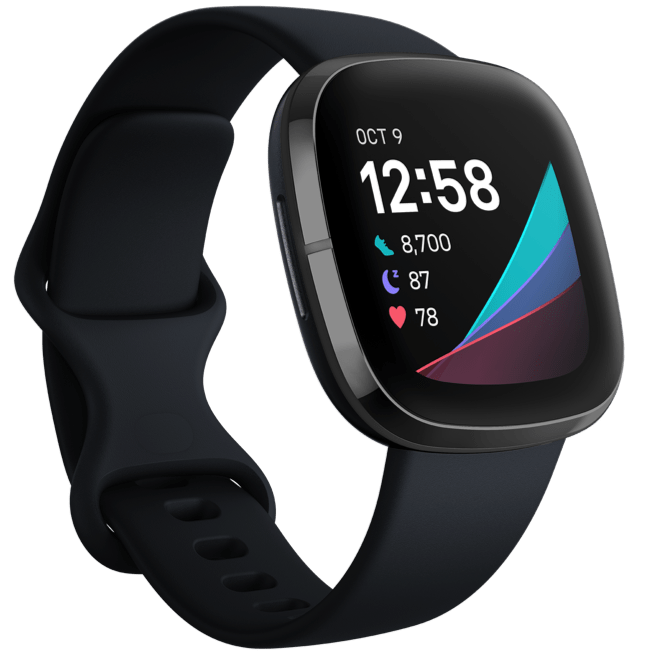
- wearables like the Pebble smartwatch and Google Glass,
- and embedded technologies like Tesla and Ford’s Smart Cars.

Even Samsung, the current leader of the mobile space, has its eyes set on the smart-home market, with refrigerators that will text you (or the Amazon Grocery delivery truck) when you’re out of milk.
The possibilities are staggering, but these “things” represent some significant challenges to app developers.
Developers, in particular, will have to cope with an unprecedented explosion of supported devices and form factors, extensive network optimizations to make both the front end and back end more responsive, highly capable edge devices to which more processing may (and should) be pushed, and finally, a plan to capture, process, and wrangle business value and from all of the data these devices generate.

While each development project will require different skills, and the IoT is still in its earliest stages, there are certain tools with which budding IoT developers should be familiar.
To read the full report click here.
Source: gigaom.com

IoT in the Enterprise: Who’s Doing it, What’s Happening and What’s Working?
Whether in the mainstream media, the tech press or in business circles, a lot has been made of the Internet of Things (IoT). But IoT is about a lot more than internet connectivity for far-flung machines and devices.

It’s about collecting sensor readings and other data from those “things.”
Why is providing value from that data so important?
A confluence of factors in technology and business has given rise to IoT’s utility and the fascination around it.
Trends Giving Rise to IoT
The combination of cloud computing, streaming data, Big Data analytics, artificial intelligence, and the broader prospect of digital transformation have created a readiness in the market for generation, consumption, and analysis of time-series data that is machine- and sensor-produced.

While many of us may think of IoT in the consumer realm, conjuring up images of home automation and turning lights on and off with our personal digital assistants, it’s the industrial realm where IoT really shines.
For the most part, it’s sensor devices found in engine rooms, factories, elevators, automobiles (both self-driving and conventional), turbines, farms, and other industrial settings, that are leading the charge.
Sensors can report all types of conditions including temperature, moisture, pressure, the number of people in close proximity, the working order of a given component, or raw images and video.
Companies can monitor what these sensors are reporting, and can do so repeatedly, over very short intervals.
While sensors used to just tell us if conditions were within a normal range, now they can do much more.
Instead of just reading current conditions, this data can be saved and analyzed so that historical conditions can be correlated with certain phenomena.
Doing this facilitates the construction of predictive models so that certain sensor-reported conditions can be used to forecast specific phenomena. For example, patterns in the temperature of a piece of equipment may provide tell-tale signs of an impending failure.
And it probably goes without saying, being able to forecast such breakdowns before they happen can vastly reduce stress and revenue shortfalls stemming from lapses in operational continuity.
The above provides an operations-based explanation for why IoT is such a phenomenon, but what about the business reasons?
There are several. For one, companies are shifting their computing infrastructure from a mostly on-premises approach to a hybrid approach with some assets in the cloud.
When analytics is one of the workloads that move to the cloud, things get teed up nicely for IoT.

Not only does cloud storage allow for arbitrarily large data sets, but it allows them to grow over time, even geometrically, as necessary.
And since sensor data originates from remote locations, storing it in the cloud works well.
There’s no reason to store data on-premises that doesn’t originate there.
On the other hand, data that does originate from and is stored on-premises may be needed in the analysis work, along with the sensor data.
That means the analytics system in play must be capable of both blending data from different data sets and working in a hybrid on-premises/cloud modality.
In fact, modern cloud-based analytics systems can do this very well, further facilitating the IoT workflows.
Perhaps the most important precondition for IoT, though, is the yearning businesses have to work with data in real-time, acting on new conditions as soon as they arise. IoT data—and the patterns for processing it—are completely aligned with that principle, often referred to as a data-driven culture.

Further, because IoT sensor readings are formatted as time-series data (successive point-in-time recordings of the sensor readings), they lend themselves well to AI and predictive analytics, both of which work extremely well with time-series data, as the predictions are often just additional, extrapolated data points in the series.
All of these technological developments and breakthroughs combine to serve as the cradle for digital transformation, a broad term that describes the journey to data mastery and data-driven outcomes.
In fact, when the essence of IoT is considered, digital transformation is what it’s all about: getting real-time data on the operations of a business, performing immediate descriptive and predictive analytics on it, and acting on the results.
Background on the Survey
With all of that in mind, Gigaom surveyed a large group of Enterprise customers (300 Enterprise IT Executives) to learn about the IoT initiatives in their organizations.
Our goals were to determine the inspiration for IoT initiatives, the business units responsible for pushing them, the groups that provided the funding, as well as those units that led them.
And beyond the quest for general knowledge about which business units play which role, we wanted to know how IT (information technology) and OT (operations technology) collaborated for IoT initiatives.
We also wanted to gain insight into the relative maturity of organizations’ IoT projects, and the organizations’ IoT maturity overall.
Also, as with all Gigaom surveys, we asked several categorizing questions—for example, size of the organization and the industry it works within—up-front, so that we could drill down to, and correlate answers to the other questions with these subgroupings.
Beyond learning who is driving IoT and what relative maturity of organizations doing IoT, we also set out to determine the scope of the projects, the general rate of success in their implementation, and how different companies implementing IoT approach vendor selection, as they proceed from planning to project implementation.
Like IoT itself, the overall goal of this survey was to discern things both descriptive and prescriptive.
We wanted to see what customers have done, how much they’ve covered, how they’ve done it, and what impact these choices may have had on their success.
Source: gigaom.com

When IoTs Become BOTs, The Dark Side of Connectedness
Each day our lives become more connected. We revel in our mastery over our domain as we tap on smartphones to change the heat in our home, see who’s at the front door or remotely start our car on a snowy morning.
Connectivity makes our lives easier, and more enjoyable.
There is a dark side though to all of this connectedness, if we can control these devices then it’s possible others can as well.
Last Friday we saw a harbinger of what can be achieved with the Internet of Things (IoT) devices that are poorly designed.
At one point Dyn reported 10s of millions of IoT device IP addresses that were sending them huge volumes of bogus network traffic.
Dyn is one of the root Name Servers on the Internet.
This congestion effectively slowed access to a crawl for east coast US users of Amazon, Twitter, Github, Reddit, and many other popular sites.
The compromised IoT devices all appear to be built using the Swiss Army knife of Embedded Linux, BusyBox, and as such might not be readily patchable.
Most of these IoT devices are webcams, smart DVRs, and home routers, but they are just the tip of the 1.2 million device iceberg that is the Mirai Botnet.
To put this number in perspective the current active duty strength of the US Armed Forces is nearly the same number, 1.28 million.
Image all of our active-duty military sitting at keyboards running programs to attack a single website, that’s the power that “Anna_Senpai” the single person behind Mirai wields.
Now by contrast Mirai isn’t the largest BOTnet we’ve ever seen, others like Conficker or Cutwall were larger, but this is the first one built entirely of IoT devices.
So how can we cut Mirai off at the knees?
Well, it’s actually pretty simple, create a unique user id and password on all your IoT devices.
All the devices in Mirai were hijacked because the owners of these devices never changed the product’s default user id or password.
If you’re still running with the defaults on your home router and other IoT devices, please change them now.
You may be a slave to Mirai, and not even know it.
What if you’re the next target for Mirai, how can you defend yourself?
Turns out Dyn wasn’t the first victim, a month earlier Mirai was used to attack Brian Krebs, noted cyber security blogger.
Brian Krebs had recently published an article on a company that sold DDoS as a service.
At its peak the DDoS assault against his Blog reached 620 Gigabits/second, effectively silencing Krebs for a short time.
When attackers are this diverse the most effective solution is often to distribute the attack load across numerous devices and deploy special hardware filtering in silicon at the edge that is designed to mitigate these attacks.

Brian Krebs’s case,
In Brian Krebs’s case, he moved over to Google’s “Project Shield” a platform designed to host journalists who otherwise might be silenced by DDoS attacks.
Russell Stern has served as President and CEO at Solarflare Communications since 2004.
He was formerly President and CEO at JNI Corporation in San Diego, California. Prior to JNI, Stern served as General Manager and COO at Quantum Corporation.
Source: gigaom.com
IoT in the Enterprise: Who’s Doing it, What’s Happening and What’s Working?
Whether in the mainstream media, the tech press or in business circles, a lot has been made of the Internet of Things (IoT). But IoT is about a lot more than internet connectivity for far-flung machines and devices. It’s about collecting sensor readings and other data from those “things.”
Why is providing value from that data so important? A confluence of factors in technology and business has given rise to IoT’s utility and the fascination around it.
Trends Giving Rise to IoT
The combination of cloud computing, streaming data, Big Data analytics, artificial intelligence, and the broader prospect of digital transformation have created a readiness in the market for generation, consumption, and analysis of time-series data that is machine- and sensor-produced.
While many of us may think of IoT in the consumer realm, conjuring up images of home automation and turning lights on and off with our personal digital assistants, it’s the industrial realm where IoT really shines.
For the most part, it’s sensor devices found in engine rooms, factories, elevators, automobiles (both self-driving and conventional), turbines, farms, and other industrial settings, that are leading the charge.

Sensors can report all types of conditions including temperature, moisture, pressure, the number of people in close proximity, the working order of a given component, or raw images and video.
Companies can monitor what these sensors are reporting, and can do so repeatedly, over very short intervals. While sensors used to just tell us if conditions were within a normal range, now they can do much more. Instead of just reading current conditions, this data can be saved and analyzed so that historical conditions can be correlated with certain phenomena.
Doing this facilitates the construction of predictive models so that certain sensor-reported conditions can be used to forecast specific phenomena. For example, patterns in the temperature of a piece of equipment may provide tell-tale signs of an impending failure.
And it probably goes without saying, being able to forecast such breakdowns before they happen can vastly reduce stress and revenue shortfalls stemming from lapses in operational continuity.
The above provides an operations-based explanation for why IoT is such a phenomenon, but what about the business reasons?
There are several. For one, companies are shifting their computing infrastructure from a mostly on-premises approach to a hybrid approach with some assets in the cloud. When analytics is one of the workloads that move to the cloud, things get teed up nicely for IoT.
Not only does cloud storage allow for arbitrarily large data sets, but it allows them to grow over time, even geometrically, as necessary.

And since sensor data originates from remote locations, storing it in the cloud works well. There’s no reason to store data on-premises that doesn’t originate there.
On the other hand, data that does originate from and is stored on-premises may be needed in the analysis work, along with the sensor data. That means the analytics system in play must be capable of both blending data from different data sets and working in a hybrid on-premises/cloud modality.
In fact, modern cloud-based analytics systems can do this very well, further facilitating the IoT workflows.
Perhaps the most important precondition for IoT, though, is the yearning businesses have to work with data in real-time, acting on new conditions as soon as they arise. IoT data—and the patterns for processing it—are completely aligned with that principle, often referred to as a data-driven culture.
Further, because IoT sensor readings are formatted as time-series data (successive point-in-time recordings of the sensor readings), they lend themselves well to AI and predictive analytics, both of which work extremely well with time-series data, as the predictions are often just additional, extrapolated data points in the series.
All of these technological developments and breakthroughs combine to serve as the cradle for digital transformation, a broad term that describes the journey to data mastery and data-driven outcomes.

In fact, when the essence of IoT is considered, digital transformation is what it’s all about: getting real-time data on the operations of a business, performing immediate descriptive and predictive analytics on it, and acting on the results.
Background on the Survey
With all of that in mind, Gigaom surveyed a large group of Enterprise customers (300 Enterprise IT Executives) to learn about the IoT initiatives in their organizations.
Our goals were to determine the inspiration for IoT initiatives, the business units responsible for pushing them, the groups that provided the funding, as well as those units that led them.
And beyond the quest for general knowledge about which business units play which role, we wanted to know how IT (information technology) and OT (operations technology) collaborated for IoT initiatives.
We also wanted to gain insight into the relative maturity of organizations’ IoT projects, and the organizations’ IoT maturity overall.
Also, as with all Gigaom surveys, we asked several categorizing questions—for example, size of the organization and the industry it works within—up-front, so that we could drill down to, and correlate answers to the other questions with these subgroupings.
Beyond learning who is driving IoT and what relative maturity of organizations doing IoT, we also set out to determine the scope of the projects, the general rate of success in their implementation, and how different companies implementing IoT approach vendor selection, as they proceed from planning to project implementation.
Like IoT itself, the overall goal of this survey was to discern things both descriptive and prescriptive. We wanted to see what customers have done, how much they’ve covered, how they’ve done it, and what impact these choices may have had on their success.
Read more: gigaom.com