
Tag Archives for " Influencers "

How to Identify and Win the Right Influencers to Promote Your B2B Product
Influencer marketing has been on the rise for several years now and it is not showing any signs of slowing down.
People trust people they follow, and it is true in both ecommerce and B2B sectors, although it is a bit different in the latter because marketers and salespeople have larger decision-making units to keep in mind when they sell to businesses.
There’s no impulse shopping in the B2B sector (or at least not as much as in retail), so influencer marketing has to rely on long-term relationships between influencers and their target customers.
How to Identify and Win the Right Influencers to Promote Your B2B Product
How do you find the right influencers to help you sell your B2B product and how can you turn them into your brand ambassadors?
Step 1: Find the right pitch
Depending on the nature of your B2B product, you are likely to be after several types of influencers, including:
- Your target company’s employees
- Your (inactive and current) competitors’ promoters
- People who post or write on related topics (and may be unaware of solutions yet)
- Companies that sell matching products (possible partners), etc.
Obviously, you cannot use one generic pitch for all of them. “Hi there, I think you will find our product interesting” is not going to get anyone on board.
There are different ways to make your platform appealing for different types of influencers:
- Affiliate marketing (i.e., paying a commission to your influencer for each successful sale)
- Broken link fixing (offering your solution as an update to an article that lists broken or outdated solutions)
- Free tool access (inviting influencers to use your tool for free), etc.
Finding the right tools to make your pitch more appealing will help you onboard more influencers. Try utilizing your sales demos to demonstrate the power of your product.

Walnut is a great tool to include in your pitch as it helps you create reusable and interactive demos which can be easily customized for each pitch type or even influencer:
Here’s a great guide on how to utilize Walnut to target different types of influencers and decision-makers.
Step 2: Focus on the right metrics
In B2B, marketers always know precisely what kind of an audience their product is made for: They know the narrow niche and even the size of the company that would need it.
In this type of laser targeting, finding the right influencers is not about the size of the following or even the amount of content they are producing. They need to find social media users who can influence those few people that can make a buying decision within their target company.
Those social media users may have 10 or 100 followers and even post as rarely as once a month but if their message reaches the right people, they are considered influencers.
Using the right tools to identify these micro-influencers is key.
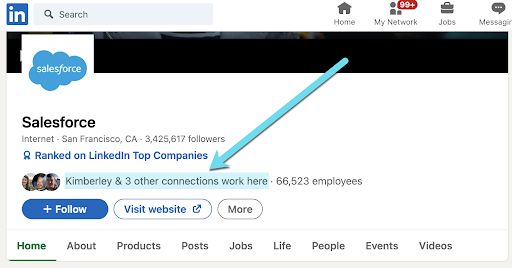
Linkedin is a great platform to start. It shows you how you are connected to employees of your target company so you can reach out and get introduced to the right people:
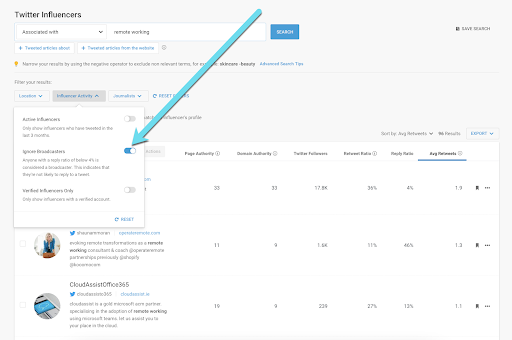
Another great tool to use here is Buzzsumo which allows you to find people who tweet on a topic of your interest.
Depending on the nature of your B2B business, you can play with smart metrics inside Buzzsumo to find Twitter users who engage with their followers:
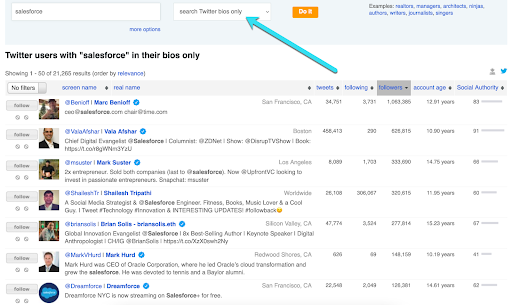
Finally, Twitter bio search tools like Followerwonk and (again, Buzzsumo) should be used here as well as they will find you to find people who mention your target company in their bios (as they likely work there):
Step 3: Research your competitors’ promoters
Another great way to find the right influencers is to identify who is promoting your closest competitors (or, even better, your past competitors who closed their businesses).
This is where good old backlink research is useful. SEO SpyGlass is a great tool to use here as they allow you to clearly see how your competitors are acquiring their backlinks and quickly find backlink gap opportunities — websites that are linking to your competitors but not you.
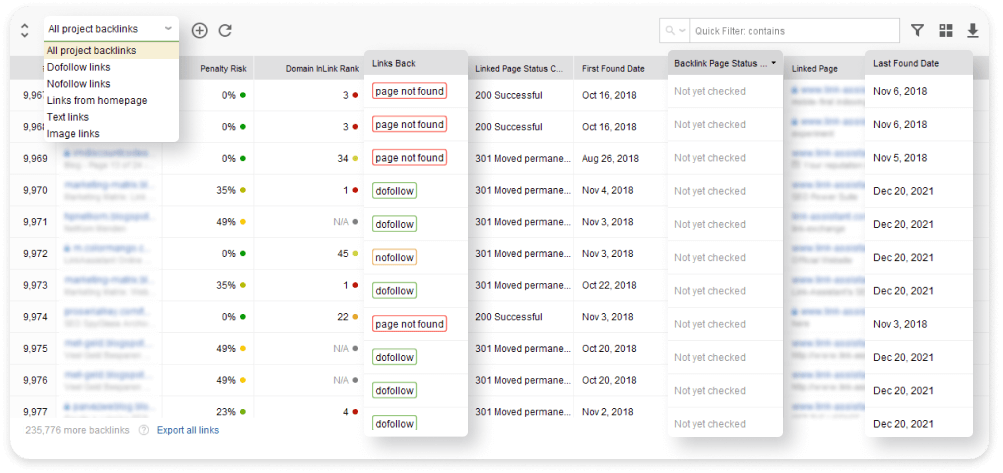
Another useful tactic to use here is social media monitoring as it will let you stay on top of your active competitors’ influencer management tactics. Awario is a great tool here because it has a handy boolean search feature allowing you to laser target your monitoring based on sources and purposes of your monitoring:
Step 4: Develop an effective outreach strategy
Once you have defined your pitches, start collecting your data for your outreach. It is a good idea to start a spreadsheet with your defined influencers, their target pitch, contact details (including their social media accounts), and any notes.
There are all kinds of WordPress solutions to share this document with everyone inside your organization.
Hunter is a great way to find the email addresses of your target influencers and website owners. They also have a handy Email Verifier for you to verify any contact details you manage to find.

This will save you time and money enabling you to use valid email addresses:
Email verification is your first step to creating a high quality email marketing database.
Step 5: Value those connections
This is the most crucial step: Your influencer marketing is never actually complete. You need to keep in touch with those influencers who chose to reply whether they agreed to work with you or simply sent a generic reply.
Keep talking to them on social media. Send them updates on your product development. Share your achievements and milestones.
It is not about bombarding them with your emails and social media messages. Only send them important updates that they may really find interesting.
It is a good idea to create a separate brand to consolidate your (hopefully) ever-growing community of influencers. This may be as simple as setting up a private Facebook group or as advanced as creating a new community-driven website.
BeRush is a great example of the latter: SEMRush is using this site to keep in touch with the international community of its affiliates. It includes a Q&A inside, product updates, as well as all kinds of materials to help their affiliates better position the product to their audience.

Namify is a great tool to find a great name for your community-driven project. There’s also a huge database of great business names they are offering as ideas:
Unite your whole company (your marketing, customer support, sales, product development teams) around one common goal: Keeping in touch with your influencers. Tying SEO and sales are the only way to make your B2B outreach strategy work.
Find the Right Influencers and Soar!
Finding the right influencers to help you sell your B2B product is a great way to create a consistent stream of new sales that won’t depend on Google’s algorithm whims or your advertising budgets.
It is also very rewarding because you get a chance to turn those influencers into advocates who will remain loyal for years and help you build brand awareness and improve your product. Good luck!
The post How to Identify and Win the Right Influencers to Promote Your B2B Product appeared first on Content Marketing Consulting and Social Media Strategy.
Source: convinceandconvert.com

Three Tricks to Get the Most Awesome Influencers to Collaborate with You
Influencer collaboration offers some absolutely incredible benefits and, when done right, it can actually turn your business around and help you find a new exciting direction.

But it is also not easy.
Sure, you can jump onto some influencer marketing platform and connect to everyone there. But this approach is extremely limiting.
Like with any other marketing tactic out there, there’s a vicious circle involved here: If it’s easy, it’s not effective.
In fact, your most valuable influencers are the hardest to get on board for collaboration. They are already successful and extremely busy. In their eyes, your brand is just another business that’s trying to make money off them.
These influencers don’t have time to join any special platforms connecting them to businesses because they have no shortage of businesses pitching their products to them.
To get top-ranked influencers to collaborate, you will need some creative approaches and conversation starters. Here are a few ideas:
1. Find Common Connections
So you know exactly who you’d like to work with to promote your project. You’ve emailed, followed, and even sent a public message tagging that influencer. There was no reply o. Or maybe there was a quick reply stating it was not a good time.
In both cases, trying the same outreach method makes no sense. This is a good time to check if you have any common connections who can help.
Nothing works better than a personal introduction, even in our globalized world of virtual relationships.
In my previous article on influencer marketing tools I’ve mentioned how Linkedin can be a useful tool for identifying common first- and second-tier connections.
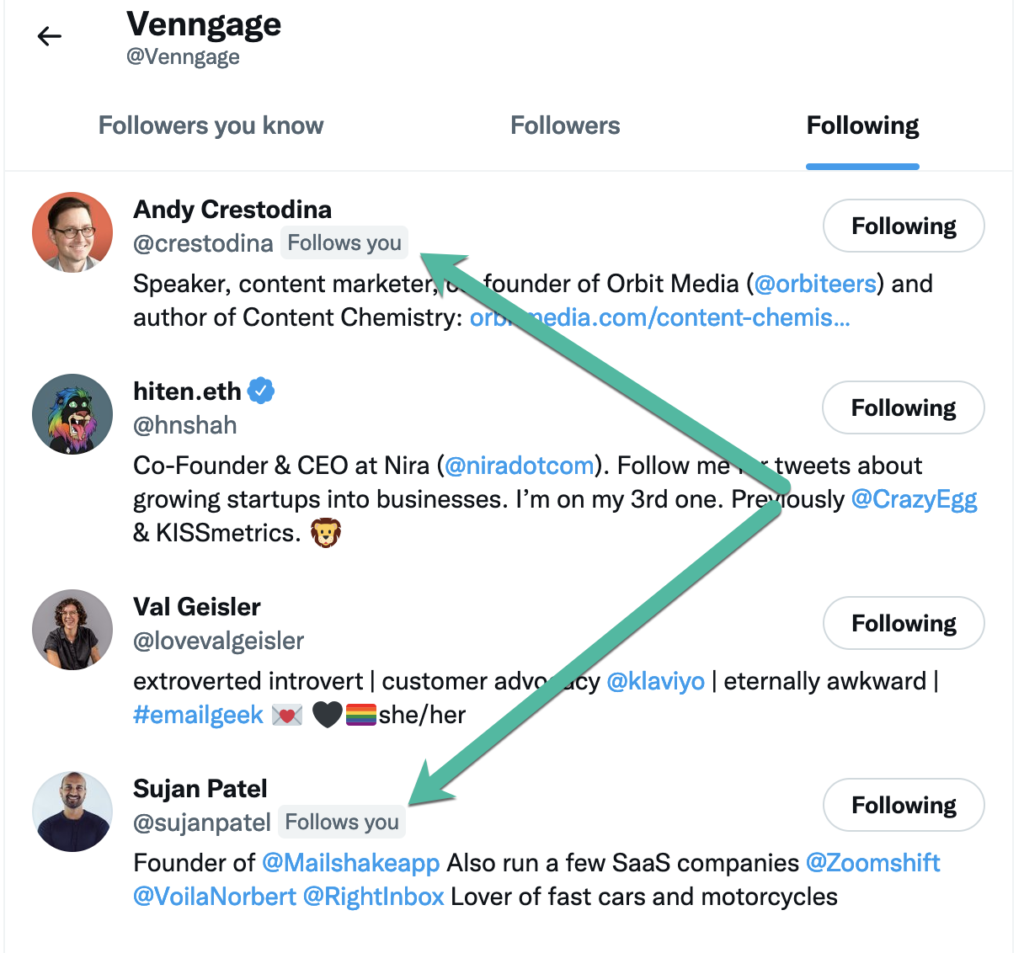
Yet, Linkedin won’t work for any niche or any influencer. Twitter is a better option which would work for just about anyone. Twitter will show your common connections (if you have any) when you land on the influencer’s profile:
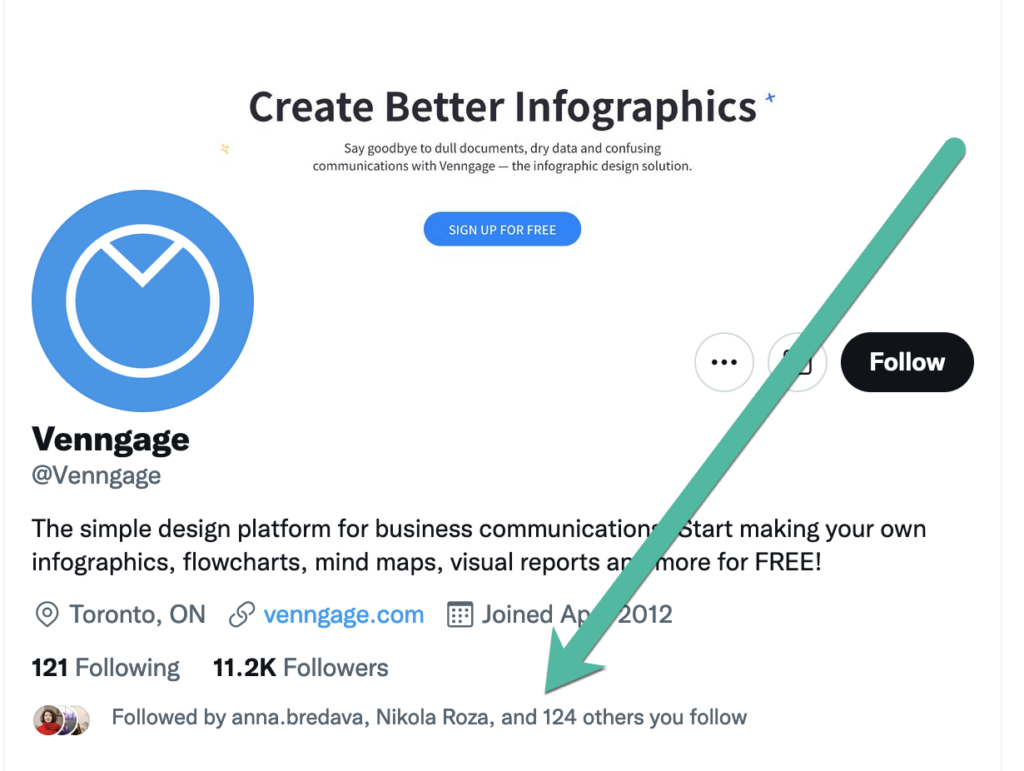
While this is a good indicator that your influencer and you have much in common, these are people you follow who also follow that influencer. These are not mutual connections.
You can click through to the “Following” link on your influencer’s profile and manually find who of those people follow you as well:
But what if you don’t really have any common connections?. What if your business is new and your Twitter is not that well connected to have anything in common with influencers?.
This is where you can use a tool called Twiangulate that identifies common friends of any two Twitter accounts.
- Check if your friend has any connection to that influencer’s connections
- Find common followers of two competing businesses
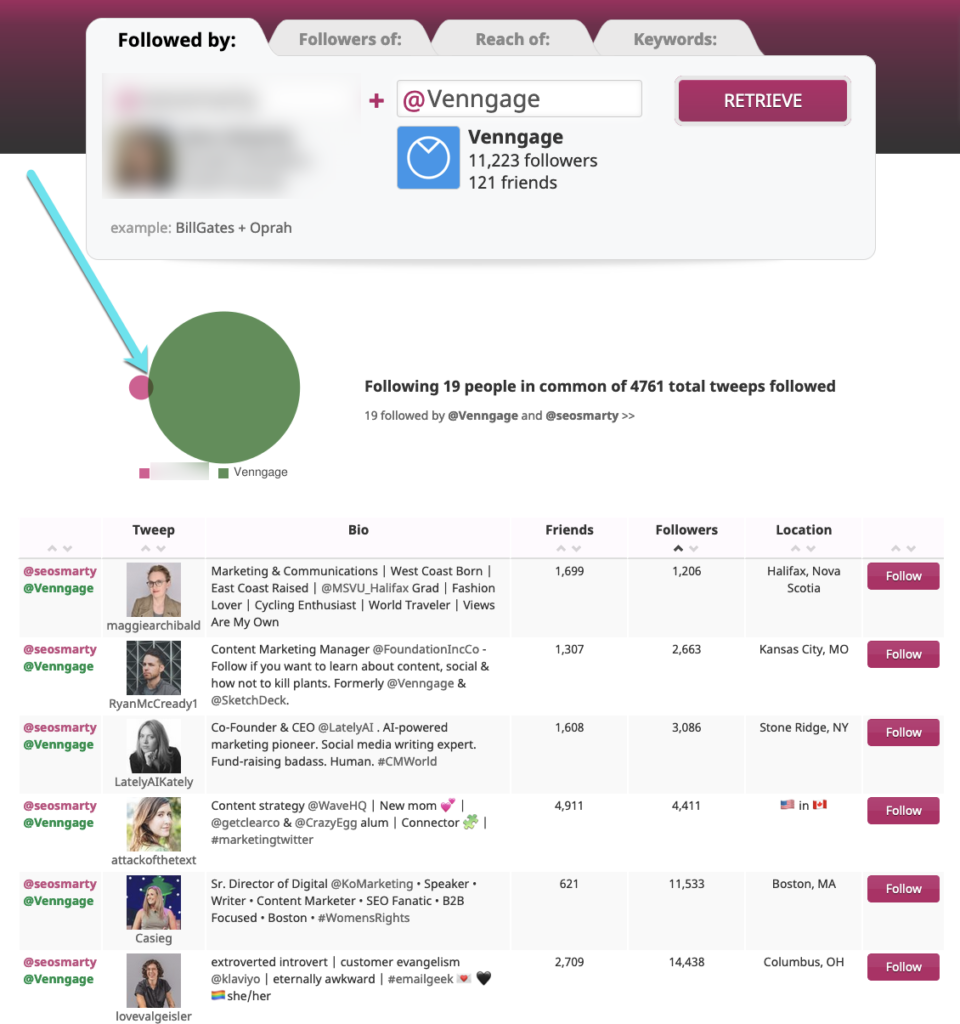
Now all you need is a quick intro from a friend or his/her help to reach out to a common connection.
2. Monitor Their Blog and Social Media Bios
Another great trick to get an influencer’s attention for collaboration is a timely message:
- Congratulate them on a career change or a new project launch
- Offer help with spreading the word on their new product
- Provide feedback on their site redesign
- Post a review of their newly published book, etc.
When things like that happen, you are bound to get under your influencers’ radar.
How to time your email or post well?
Set up a tool called Visualping to track changes of your influencer’s About pages or Home pages. Visual Ping allows you to select an area of any page to monitor, so you can even monitor your influencer’s bio on Twitter or Instagram:
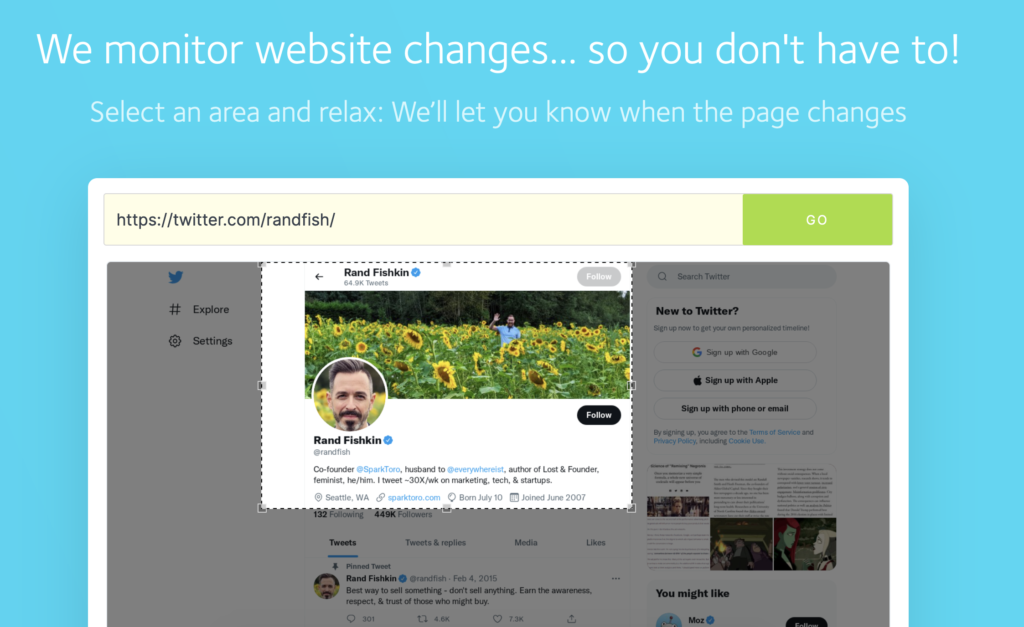
You can choose how you want to be alerted: Via email, text, and/or Slack. I recommend choosing email, and using Gmail for that because it conveniently stores automated notifications in a separate folder, so you will see them only once.
Helps to avoid clutter! Here’s a detailed overview of the tool’s features and capabilities.
3. Rank for Their Brand or Product Name
Finally, another great way to become your influencers’ best friend is to send traffic to them: Interview them or review their product. Ranking a page for a branded query is pretty doable because the competition is often manageable.
All you need to do is to create content with your influencer’s name in the title tag and in the article. You do need to give it some time to rank, and you will likely need to send some links from your own site, at least.
When creating content for the influencer-driven page, try running their name through Text Optimizer which will suggest concepts Google is associating with that name:
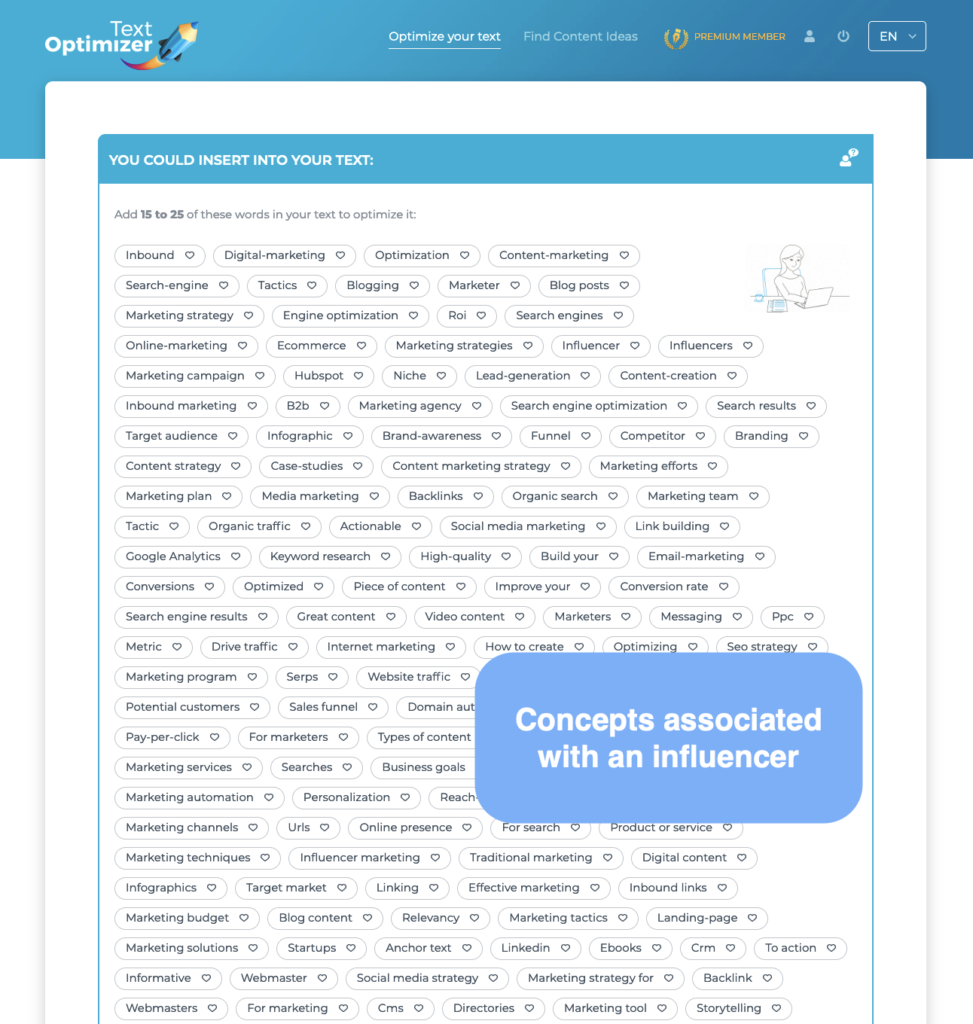
Another solid advantage of this tactic is that you will associate your site with a well-known niche entity which will help Google identify you as a brand as well. Google is using lots of ranking signals, so this one is just a piece of a huge puzzle. However every bit helps!
Once your page is ranking in Google, chances are your influencer will reach out, or you can use that page as a conversation starter.
Pro Tip: Keep Your Influencers Engaged!
Good influencers are hard to find, so make the best of those connections you manage to build!
One of the most effective ways to keep your influencers motivated is to invite them to join your affiliate program, especially if you manage that right!
It is a good idea to treat your affiliate and/or influencer marketing program as part of your community-building strategy. Getting your influencers on board isn’t enough. You need to keep them in love with your product, and this is where your relationship management efforts will come in handy.
Set up a Facebook group to keep your affiliates connected to your brand and one another. Set up a separate site where you could integrate your ticket system, a discussion board, and even a private blog to keep your affiliates updated on your company’s news.
A lot of brands treat their affiliate/influencer program completely separate from their main industry. SEMrush is just one example.
This gives you more freedom as to how you want to collaborate with your newly acquired promoters:
- Here are a few easy options to set up a community on a new domain
- This tool can help you pick a new name for your community-driven project.
You Got This!
Some connections are hard to build but any connection is worth the effort. From experience, the strongest partnerships arise from multiple touchpoints here and there, and the most valuable connections always need some work. Good luck!
The post Three Tricks to Get the Most Awesome Influencers to Collaborate with You appeared first on Content Marketing Consulting and Social Media Strategy.
Source: convinceandconvert.com