
Tag Archives for " influencer "

What’s the Difference Between a Content Creator and an Influencer?
In today’s internet-focused age, words like “content creator” and “influencer” are thrown around on nearly every social media platform. Have you ever wondered: What do these terms really mean? Is it the same thing? How do the two roles differ from the perspective of a user or consumer?
In a nutshell, the content creator is a broad term describing someone who produces some form of content, including but not limited to blog posts, videos, photography, and reels.
Influencers can also create such content, but they’re better known for their connection to their audience (i.e., the “influence” they have on their followers).
Still, confused? Let’s dive deeper into the world of content creators and influencers to understand exactly what they do and what makes them different from each other.
What Do Content Creators Do?
Content creators create content for blogs and social media platforms. This can include YouTube videos, TikTok reels, and text-based posts on social media sites like Facebook, Twitter, Instagram, LinkedIn, etc.
The content they produce is typically original and may be shared for money, audience building, brand awareness, or just as a way to share their talents online.
For example, “Insta poets,” bloggers, and newsletter writers are typically seen as content creators.
Here is an example of content on Instagram shared by the account @poets.

Content creators aren’t limited to texts, though. They can specialize in video, audio, and visual content, among other forms.
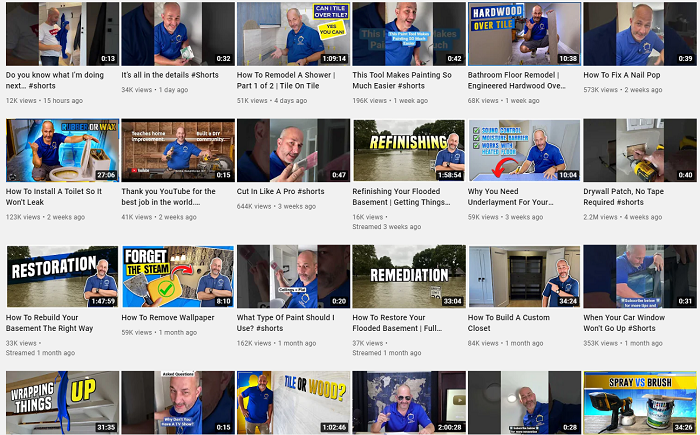
Here’s an example of a YouTube content creator Home RenoVision DIY.
What Do Influencers Do?
Influencers are popular individuals on social media and other content-sharing platforms who leverage their substantially large followings to promote certain brands and lifestyles.
This can be very beneficial for brands and small businesses looking to reach new users and build brand awareness.
When you see someone with thousands of followers flaunting a beauty or wellness product with a “sponsored” tag, they’re probably an influencer.
Influencers promote products and lifestyles through photos, videos, blogs, reels, and other forms of “viral” media.
Influencers often create content; that’s where the confusion comes from.
However, the difference is influencers are more focused on audience engagement, promotions, and portraying a certain image about themselves and their lives to sustain and grow their influence.
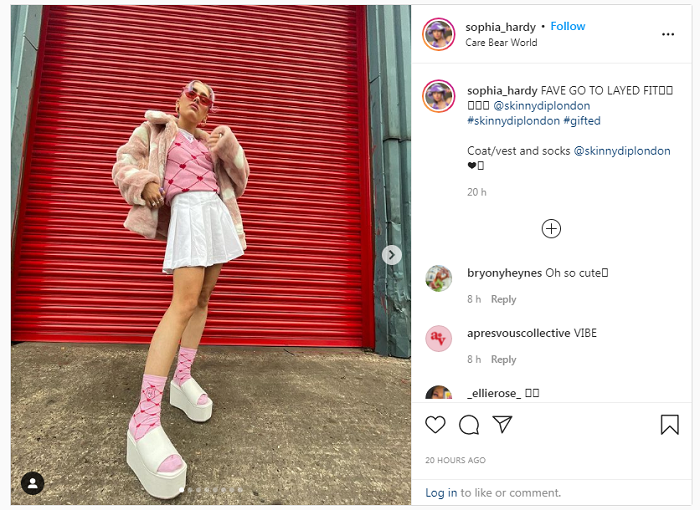
See this post by fashion influencer @sophia_hardy on Instagram, for example.
Content Creators Vs. Influencers: Skills
Content creators and influencers have some overlapping skills. These typically include proficiency with technology, writing and communication skills, photography, and audience management.
While some individuals may be more proficient at one skill than others, most digital creators and influencers need these skills in some capacity to thrive in their field.
Common skills:
- communicating ideas effectively
- basic tech proficiency
- managing client expectations
- admin tasks like invoicing, managing emails, follow-ups, etc.
Beyond the common overlapping skills, the two groups also need some specific skills to succeed. For instance, influencers need to have a strong understanding of how social media and audience engagement works.
Their entire process depends on leveraging these talents.
Influencer skills:
- photo editing
- video editing
- social media management
- audience management
- live streaming
- promotion
- knowledge of advertising
- niche expertise in a particular industry
Content creators can benefit from these skills too, but writing, recording, editing, and publishing content may be a bigger priority for them. Content creators also need to be good storytellers to create engaging content.
Nowadays, many content creators also excel at SEO and digital marketing to help themselves and their clients achieve key business goals.

Content marketing skills:
- above-average writing proficiency
- SEO
- digital marketing
- storytelling
- handling content management systems
- content research
- keyword research
- audience research
- broad knowledge of a particular industry
Content Creators Vs. Influencers: Strategy & Goals
The biggest difference between content creators and influencers lies in their goals and the strategies they use to achieve these objectives.
Content creators develop content marketing strategies. These include publishing schedules, topic research, keyword research, audience targeting, social media plans, and other digital marketing elements.
Content creators work with brands, agencies, business owners, and other clients to understand their current marketing needs and develop SMART plans to achieve their business goals.
Content creators earn money by developing content strategies and content items like blogs and videos for others, or by uploading media on their own accounts for ad revenue, affiliate sales, and paid subscriptions.
This way, they either get paid directly by a client seeking their services or through their own efforts by building an audience that wants to pay to consume their content.
Influencers work differently. They work with a primary goal to “influence” the audience. They work to build strong relationships with their followers. They constantly strive to increase engagement on their posts and ensure they have an optimal web presence.
Influencers also accept sponsorships from brands to promote products and lifestyle ideas. In exchange for money or free products, these users upload reviews, product photos, and videos, or sponsored posts on their social media accounts.
Many influencers make a huge share of their income through these sponsored posts, but not all influencers make enough money to make a living out of sponsorships. Some do it as a side hustle, while others do it for fame and status in society.
For instance, the following graphic by Influence.co shows the research findings highlighting the top ways popular influencers make money.
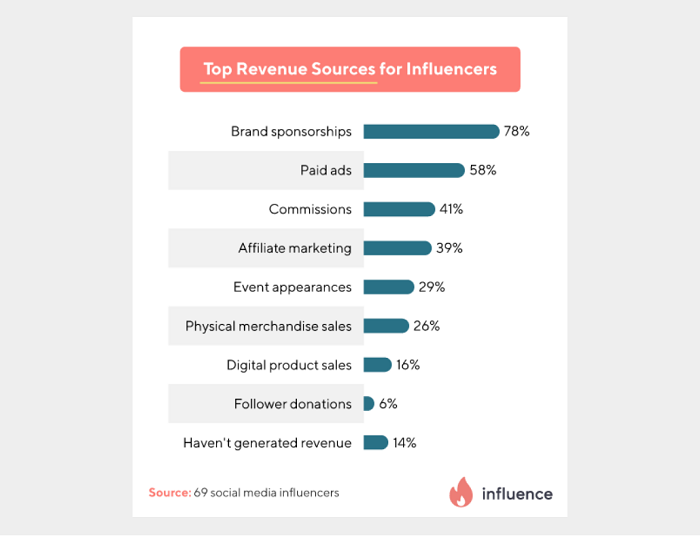
However, several influencers with millions of followers do reach a stage in their career where they’re regularly pulling in six figures from brand deals and sponsored posts.
Content Creators Vs. Influencers: Tools
Content creators and influencers use a variety of tools to meet their goals.
Content creators typically use the following tools:
- Blogging platforms like WordPress (free and paid features) to create and publish content.
- Google Trends (free) for keyword research and understanding current trends.
- SEMrush Topic Research Tool ($99.95 a month) for getting content ideas.
- AnswerthePublic (free) to get blog and research ideas around a specific topic.
- Grammarly (free and paid features) to catch typos and improve writing.
- Hemingway App (free) to detect reading level, reduce passive voice, and polish writing.
- Unsplash (free) to get free-of-cost, royalty-free images to use anywhere.
- Audacity (free) to create and edit audio files for podcasts and other audio formats.
This is far from being an exhaustive list. Different content creators use different tools based on their needs and end goals, but I hope this list gives you a great place to start your search.
Influencers typically use the following tools:
- Social media platforms (free and paid features) to post influential content and build an audience.
- Canva (free and paid features) to create engaging graphics in a variety of formats.
- Remove.bg (free and paid features) to remove background clutter from photographs.
- Sprout Social (starting at $99 a month) to schedule social media posts and track analytics.
- Influence.co (free and paid features) as a social media style directory to find influencers and work with sponsoring brands.
- TweetDeck (free) to organize tweets and feeds for easier access.
- Intellifluence (free and paid features) to collaborate directly with brands and agencies for sponsorships.
Again, different influencers will use a combination of these tools (or something completely different) based on how they work, but this list can be a good place to start looking.
Content Creators Vs. Influencers: Which Is Right for My Business?
Now that you know more about what content creators and influencers do, how they work, and which tools they use, it’s time to think about which of the two would be right for your business.

Whether you’re planning to work with content creators, influencers, or both, each option has its pros and cons. Let’s discuss some of those below.
Working With Content Creators
Let’s start by highlighting the pros and cons of working with content creators. Know that there will always be some individual differences based on how each person works, but many content creators share the following traits.
Pros:
- Content creators are well-versed with digital marketing and can add more value to your marketing campaigns.
- Content creators can offer more than one skill. They can write about your product but also offer photographs and videos for a more comprehensive final product.
- Content creators tend to be good storytellers. They can weave in narratives and strong research findings to strengthen your story and position your brand effectively.
Cons:
- Content creators may or may not have huge followings. Many content creators don’t have a massive influence on their audience, so you won’t necessarily get millions of impressions on your post.
- Content creators typically don’t take on sponsored posts, so your content may not be advertorial in nature.
- Some content creators have specific processes of how they work, and they might not be able to tailor their content to match your marketing needs.
Working With Influencers
Now let’s look at the pros and cons you can experience when working with influencers across different industries.
Pros:
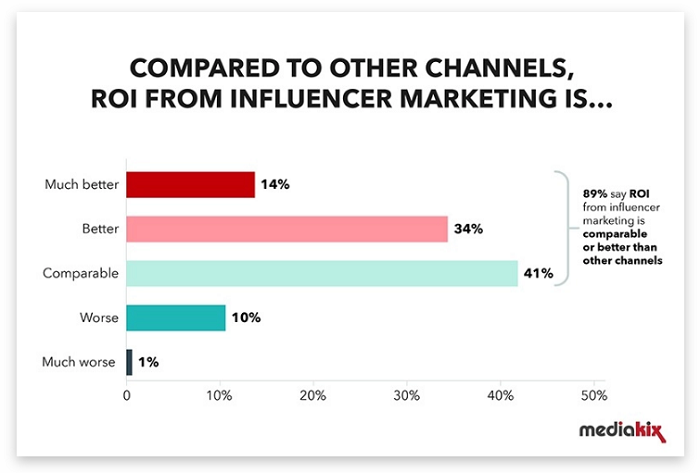
- Influencer marketing offers a great return on your investment. Studies show nearly 90 percent of marketers feel influencers provide comparable or better ROI than other marketing channels.
- Influencers have strong relationships with their audiences, so your posts can get a lot of engagement.
- Working with influencers can help you target specific audiences. For instance, beauty influencers have a lot of followers interested in beauty and wellness products so you can market to them directly.
Cons:
- Influencers may have huge followings but still be subpar content creators.
- Not every influencer can make the most engaging post so often there’s no guarantee of quality.
- Influencers may have fake followers. Today many influencers buy followers or have fake accounts to boost their apparent credibility making it very difficult to vet them before partnership.
- A lot of social media users dislike engaging with influencers, so you’re essentially cutting off a huge portion of your target audience by working only with influencers.
The bottom line here is that both influencers and content creators have something to offer, but you have to carefully consider your needs before choosing to work with any one of them.
Finally, remember that some content creators do double as influencers, offering you the best of both worlds.
Content Creators Vs. Influencers: Frequently Asked Questions
Here are some frequently asked questions about content creators and influencers.
Do content creators or influencers drive better ROI?
Statistically speaking, influencers tend to drive better ROI as they have a bigger audience, larger followings, and more consistent engagement on their posts.
What are the key differences between content creators and influencers?
Content creators are more focused on creating and publishing content, while influencers are more focused on building an audience, promoting brands, and maintaining the status quo.
They also operate differently. Content creators create original content for sharing knowledge or building a brand, while influencers post sponsored content for money and popularity.
How do I find the right influencers for my brand?
You can find the right influencer for your brand by using free and paid research tools like Intellifluence, Influence. co, and popular social media apps. You can also look at who your competitors are working with and where they find relevant influencers.
Are YouTubers content creators?
YouTubers are typically called content creators as they upload videos and popular content on a fairly consistent schedule. Viral YouTubers can become influencers once they have a large following and start accepting sponsored deals.
Conclusion: Content Creators Vs. Influencers
Working with content creators and influencers can benefit your marketing efforts. Content creators can help build an effective content marketing strategy, while influencers can help you reach more targeted users through sponsored posts.
Want to learn more about digital marketing and how to work with content creators and influencers? Read my guide on influencer marketing and content marketing strategy.
What is the most surprising difference between an influencer and a content creator you learned today?
Source: feedproxy.google.com

5 Influencer Marketing Myths for 2021
Influencer marketing is not new but it is constantly changing and marketers have thoughts. Below are 5 common influencer marketing myths we’ve heard and want to debunk.

Myth #1: Influencer marketing is a fad.
Actually, this may be true, sort of. Hear me out.
Post-COVID data shows a 37% decrease in brands working with influencers and a 41% drop in the efficiency of influencer marketing.

However, brands are still investing in influencer marketing, specifically through nano and micro-influencers. I see this shift as a more strategic approach to influencer marketing and a way to redefine a tactic fraught with issues.
So, is influencer marketing a fad?
In terms of brands spending lots of money on influencers with large followings? Potentially.
However, in my opinion, influencer marketing in terms of nano and micro-influencers — specifically ones that resonate with niche audiences — is here to stay & will become an important part of a strategic marketing mix.

So, what does this mean for marketers?
Keep influencer marketing on your radar and dive deep into your personas to see if nano and micro-influencers could connect you with your audience.
Myth #2: Influencer marketing is only successful for younger generations.
Marketers around the world are trying to woo the next generation of consumers with influencer marketing. In fact, there are over 15 million search results for “influencer marketing to Gen Z.”
Meanwhile, “influencer marketing to Gen X” and “influencer marketing to Boomers” have less than 10 million results combined.
What’s up with that?
I think it mostly comes down to the myth that influencer marketing is only for younger generations, which is simply not true.

In fact, older generations are spending more and more time on social media and shifting their shopping habits toward online retail, delivery services, and subscriptions which means brands have more opportunities than ever to engage across generations. Gen X and Boomers also control the vast majority of disposable income in the US.

While some marketers are writing strategies around younger influencers, terms like “Grandfluencers” and “elderly influencers’ are becoming more popular. Influencers like Joan MacDonald and Helen Winkle are over here living their best lives as 70-year-old-plus influencers with almost 5 million followers combined.
Gen X also has some fabulous influencers like Arlinda McIntosh and Ana Pejkanovic.
So, what does this mean for marketers?
If your audience includes Gen X and/or Boomers, influencer marketing may be worth a try.
Myth 3: Influencers have to have large followings to be effective.
We covered this a bit in myth #1, but let’s dive deeper.
Traditionally, influencer marketing means utilizing a social media user with a large following. Today, that definition is changing.
While mega influencers (social users with millions of followers) are the first thing many people think of when they think “influencers,” other groups are growing in popularity.

However, there are differing opinions on how many followers each group has, especially in the micro and nano categories where some marketers say nano influencers can have as little as 500 followers and still be effective.
- Mega: 1M+ followers
- Macro: 100K+ followers
- Micro: 10K+ followers
- Nano: 500 to 10K followers
While influencers generally have a conversion rate of around 3%, nano influencers are converting at upwards of 30% in some cases.
What does this mean for marketers?
Marketers should look for opportunities to work with influencers with niche communities and remember that large followings don’t equal better.
Myth 4: Influencer marketing doesn’t work for B2B companies.
This is simply not true.
- Linode, a cloud hosting company, has seen 15%-20% customer growth through its YouTube influencer strategy.
- Microsoft teamed up with National Geographic photographers on an Instagram campaign that resulted in over 3.5 million likes and over 1K user-generated content uploads.
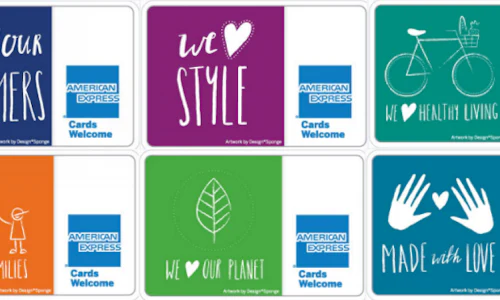
- American Express utilized small business owners as influencers in their Love My Store campaign resulting in 400,000 orders of the Love My Store decals.
- Aegora, a professional marketplace, tapped into freelancers across industries to be part of an influencer campaign. The campaign generated over 500 signups.
What does this mean for B2B marketers?
B2B marketers should explore ways to bring influencers into their marketing, whether it’s through employees, customers, or social media influencers.
Myth #5: Influencer marketing has no rules.
In an October 2021 news release, the Federal Trade Commission said they’ve officially put hundreds of businesses on notice for “fake reviews and other misleading endorsements”. The penalty for misleading consumers is up to $43,792 per violation.

What does this mean for marketers?
It means there are rules you need to follow, and you shouldn’t be a jerk and mislead and deceive people. Familiarize yourself with the FTC endorsement guidelines and comply to avoid headaches and hardships.
2021 Influencer Marketing Myths Debunked!
There you have it! Five myths we wanted to address so you can decide if a dip in the influencer pool is a worthy exploration by you and your team.
The post 5 Influencer Marketing Myths for 2021 appeared first on Content Marketing Consulting and Social Media Strategy.
Source: convinceandconvert.com

Aligning Nano & Micro-Influencers with Your DEI Marketing
You’ve probably heard it a million times already, but authenticity and relatability are EVERYTHING. Social justice movements continue to surge on social media platforms and more people are speaking up about matters that align with their own values. It’s taking a lot more than just simple traditional marketing to speak to your audience.

According to the Consumer Culture Report by 5W Public Relations, 83% of people feel that it is crucial that the brands that they choose to support are in alignment with their values.
In this new world of social, more consumers are going to be testing these boundaries with businesses through DEI (Diversity, Equity, and Inclusion) marketing.
You’re going to need to prioritize building trust within your brand’s community. One of the most effective ways to tackle this is through nano & micro-influencers.
Nano & Micro-influencers for DEI Marketing

Listen, being the biggest and the most popular doesn’t matter as much as it used to. Studies find that 92% of customers trust a micro-influencer more than a traditional ad or an endorsement from celebrities.
Because these types of influencers are known to have smaller-scale platforms (typically under 100,000 followers), the demand to work with them is much less compared to macro-influencers (over 100,000 followers).
Nano & micro-influencers focus on a specific niche or area of interest and are generally recognized as industry experts or topic specialists. Most importantly, they normally agree to collaborate only if the product/brand meets their values and the needs of their audience.
After putting two and two together, let’s be real: More brands need to take more intentional actions towards implementing DEI efforts within their influencer marketing strategies and beyond.
Want your brand to make its mark on society? Here’s how you need to go about incorporating the power of nano & micro-influencers into your DEI initiatives.

Be Small & Focused
Like we discussed before, nano & micro-influencers have a niche. Their niche typically trusts them to speak about certain topics and gives their audience a sense of belonging. Look for influencers who would interest your ideal customer.
We have been tackling this for B2B especially, so take a look at how to locate B2B influences and afford them here.
Think about your audience and search for compatible nano/micro-influencers who look like they are already a part of your existing target. This will prove to be beneficial in terms of trust and building your brand’s credibility.
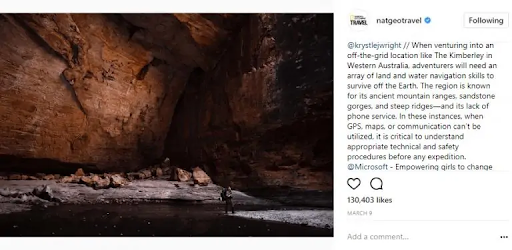
Microsoft, a technology brand, partnered with National Geographic for a unique B2B influencer marketing campaign this year. They leveraged some of the most famous adventure photographer macro and micro-influencers on Instagram for this. Each of the 30 photos featured the story of a woman adventurer or scientist.
“97% of influencers — said that their audiences react positively to the DEI-related content that they share, leading to steady or increased engagement on this content.”
Never Forget Authenticity
According to the Morning Consult study, 88% of people say it’s important for influencers to be authentic and genuinely care about their interests.
Nano & micro-influencers already have a story to tell. Figure out how they can tie in THEIR story with YOUR brand’s story to create a cohesive thought for your DEI promotional campaign.
Try to link up with influencers who are able to reflect their “real-self” successfully on social media. This will allow your brand to utilize this for better positioning in the minds of your customers.
Be Intentional About Making Strides Towards DEI
Before you go and reach out to a nano/micro-influencer, BE INTENTIONAL!
Don’t just throw out a campaign advocating for diversity, equity, or inclusion just because everyone else is doing it. DEI is not a trend.
DEI is not a trend. How will your brand take steps towards diversity, equity and inclusion?
Consumers and influencers want brands they love to show support towards things that they deeply value. It’s crucial that brands are consistently doing it regardless of what everyone else is doing. Nano/micro-influencers build a platform through advocating about things that matter to them. So if your brand is looking for a one-off opportunity, they’ll easily notice that and likely call you out on it.
If you want to take a more intentional direction with your DEI initiatives, then make your marketing more inclusive by diversifying your persona types.
Figure out EXACTLY who you’re looking for within this landscape. Besides looking at sectors of diversity such as gender, age, ethnicity, or disability status, look at how your desired influencer interacts with their audience, how they speak, and how they usually develop content for their following.
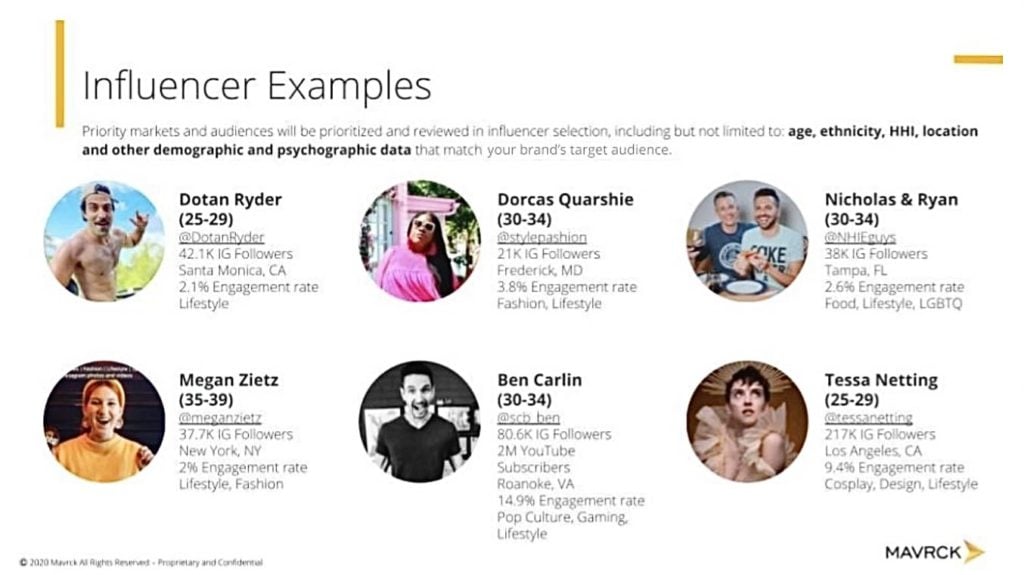
Example by MAVRCK of how to organize your list of nano/micro-influencers by their specific focuses.
2022 Goals: Grow Your DEI Efforts with Influencers
If you want to get the most out of your upcoming marketing strategies in 2022, it’ll be in your best interest to start focusing your efforts towards thoroughly understanding your brand values and how you can properly recruit people to represent them.
By doing this, you can start curating content that directly taps into the values of your audience while also growing your DEI efforts.
The post Aligning Nano & Micro-Influencers with Your DEI Marketing appeared first on Content Marketing Consulting and Social Media Strategy.
Source: convinceandconvert.com