
Tag Archives for " influencer marketing "

What No One Talks About When it Comes to Successful B2B Influencer Marketing
Whether you’re just starting to explore B2B influencer marketing efforts or you’re well on your way to putting influencer content in place, there are myriad articles that can help you plot out the major steps to success.
However, many of those articles don’t quite dive deep enough into some of the often overlooked yet oh-so-critical details that happen in between those big steps.
Sometimes, that understanding comes from experience. In this case, it comes from our experience, and we’re happy to share it so you can avoid common mistakes and missteps along your B2B influencer path to success.
You Need More B2B Influencer Meetings Than You Are Thinking
Whenever anyone talks about the process of getting B2B influencer marketing efforts off the ground, they make it sound like all you need is to identify influencers, reach out, agree on the scope and then content magically appears.
While that process is kind of true, it’s also not the whole picture either. It actually leaves out a plethora of meetings.
No one wants another meeting on their calendars, but conducting a lot of the right meetings is essential for B2B influencer marketing success.

Instead of one big meet-and-greet-scoping-contracting-kickoff meeting, schedule smaller, more intentional meetings:
- Initial meet-and-greet: You’re forming a new business relationship, so use this time to get to know the influencer on a personal and professional level. Talk about what they like to create, what they don’t like to create, the topics they usually cover, their upcoming availability, and overall bandwidth. Also, let them get to know you and/or your team, too.
- Vision/goal setting meeting: After the meet-and-greet call, come back to the table with some initial ideas and options for how you and the influencer can work together, but make sure there’s room for the influencer to ideate and brainstorm, too. This should be the time you both talk about goals for working together.
- Formal scoping call: Once you and the B2B influencer are on the same page for the vision and goals, put together a formal scope of work based on your conversation. Be sure to include essential information, like what exactly is being created, when and for how much. Then, go through all of it, together. Make sure any gray area is cleared up and all questions are answered.
- Official project kickoff: Formally kickoff the project(s) to signify the official start of the scope. Get on the same page about deadlines, assign the main point of contact for the influencer, and set creation expectations. While this seems like it might be over-the-top, it’s also creating a fresh start and giving everyone clear direction on how and when to move forward.
Regular check-in meetings (as needed): Depending on the final B2B influencer scope, you may want to have weekly, biweekly or monthly check-ins, just to make sure you’re on the same page and give yourselves the opportunity to talk through any details or issues that may come up along the way.
Of course, your meeting cadence and schedule will be completely dependent on what you’re using B2B influencer marketing for and what the scope of engagement looks like. Just be prepared to have a lot more meetings than you might think are necessary.
Also, remember to keep every meeting focused on accomplishing the next steps or a specific set of goals. That way, meetings will never feel excessive and they’ll be more like working sessions instead.
Tailor Your B2B Influencer Marketing Ask to the Influencer’s Talents
Not all influencers are writers. Not all influencers are speakers. Not all influencers are social media and content marketing strategists. It’s actually incredibly rare to find a B2B influencer who can do it all, so don’t jump into B2B influencer conversations with the expectation that they can. Instead, tailor your content to their talents.

While this may seem obvious, it can be hard to remember when you have a big vision and finally find a B2B influencer who is a great match for your goals and organization or get wrapped up in brainstorming.
Of course, you’re going to want them to create all the amazing things and be part of exciting co-creation efforts! They also might feel pressured to live up to those expectations or feel like it’s a deal-breaker if they can’t, so don’t put them out there, to begin with.
Just keep in mind that you likely aren’t the world’s best writer, editor, videographer, speaker, social strategist, and content marketing specialist all rolled into one, so don’t expect your B2B influencers to be the same either.
Be Prepared to Get B2B Influencer Content in Other Ways
Let’s say you have tailored the influencer marketing ask to the influencer’s talents, but they don’t have the bandwidth to take on a huge ebook project, or the availability to put together a full webinar, or even the time to put together a blog series. That’s ok because you can get creative with how B2B influencers can create and contribute:
- Interview B2B influencers: Have them get camera-ready and sit down for an old-fashioned interview. Give them questions that can help you get the content you need to piece together an ebook, a social series, blogs, and more.
- As a bonus: because they’re camera-ready, you can slice up and reuse the recordings of that interview, with influencer permission, of course.
- Have them record short-form videos: B2B influencer contributions don’t have to be massive all the time. Simply having a great idea + short-form video can be really powerful. This is exactly what Oracle Marketing Clouds did for their On the Fly series, where B2B influencers recorded short pieces of marketing advice while on the go in airports, train stations, and more.
Use a staff writer to work with the influencer: Sometimes you might just have to help the B2B influencer get their thoughts out of their head and onto paper, which may take a staff writer working directly with them. In this scenario, have the writer set up multiple working sessions with the B2B influencer. Then, the staff writer can bring the influencer’s own words to life.

Yes, it might be ideal to have B2B influencers create and deliver their own content from start to finish, but that just might not be possible all the time. Thankfully, there are plenty of backup options to still get that great B2B influencer-originated content.
Treat B2B Influencers Like a Contractor and a Client
While you may technically be “hiring” a B2B influencer, they don’t work for you. They’re working with you. Instead of viewing the relationship as you hiring someone to create content, look at your B2B influencers more like contractors or clients.
It’s a mutual working relationship that takes a lot of work, and they have other clients and a whole other business of their own to run, too.
Also, B2B influencers are very, very connected to a much larger network, and they know through the grapevine who is great to work with and who they wouldn’t work with again.

Need Help with Making Your B2B Influencer Marketing Successful?
Our team of strategists is here to help you. Contact us today.
The post What No One Talks About When it Comes to Successful B2B Influencer Marketing appeared first on Content Marketing Consulting and Social Media Strategy.
Source: convinceandconvert.com

How to Identify and Win the Right Influencers to Promote Your B2B Product
Influencer marketing has been on the rise for several years now and it is not showing any signs of slowing down.
People trust people they follow, and it is true in both ecommerce and B2B sectors, although it is a bit different in the latter because marketers and salespeople have larger decision-making units to keep in mind when they sell to businesses.
There’s no impulse shopping in the B2B sector (or at least not as much as in retail), so influencer marketing has to rely on long-term relationships between influencers and their target customers.
How to Identify and Win the Right Influencers to Promote Your B2B Product
How do you find the right influencers to help you sell your B2B product and how can you turn them into your brand ambassadors?
Step 1: Find the right pitch
Depending on the nature of your B2B product, you are likely to be after several types of influencers, including:
- Your target company’s employees
- Your (inactive and current) competitors’ promoters
- People who post or write on related topics (and may be unaware of solutions yet)
- Companies that sell matching products (possible partners), etc.
Obviously, you cannot use one generic pitch for all of them. “Hi there, I think you will find our product interesting” is not going to get anyone on board.
There are different ways to make your platform appealing for different types of influencers:
- Affiliate marketing (i.e., paying a commission to your influencer for each successful sale)
- Broken link fixing (offering your solution as an update to an article that lists broken or outdated solutions)
- Free tool access (inviting influencers to use your tool for free), etc.
Finding the right tools to make your pitch more appealing will help you onboard more influencers. Try utilizing your sales demos to demonstrate the power of your product.

Walnut is a great tool to include in your pitch as it helps you create reusable and interactive demos which can be easily customized for each pitch type or even influencer:
Here’s a great guide on how to utilize Walnut to target different types of influencers and decision-makers.
Step 2: Focus on the right metrics
In B2B, marketers always know precisely what kind of an audience their product is made for: They know the narrow niche and even the size of the company that would need it.
In this type of laser targeting, finding the right influencers is not about the size of the following or even the amount of content they are producing. They need to find social media users who can influence those few people that can make a buying decision within their target company.
Those social media users may have 10 or 100 followers and even post as rarely as once a month but if their message reaches the right people, they are considered influencers.
Using the right tools to identify these micro-influencers is key.
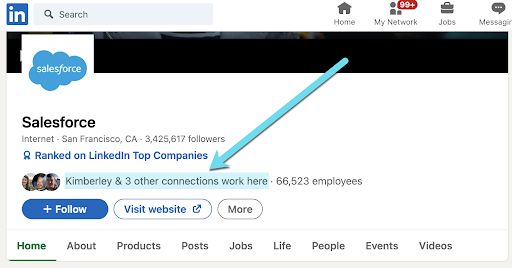
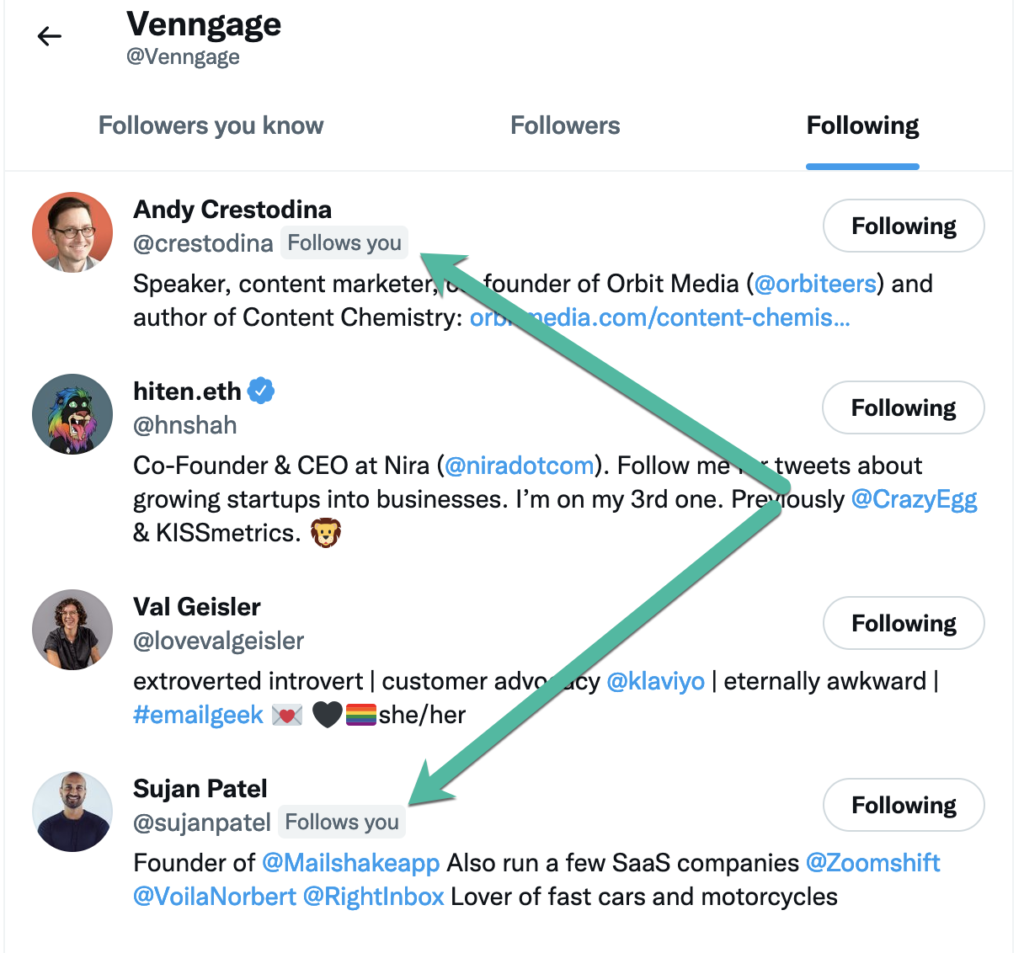
Linkedin is a great platform to start. It shows you how you are connected to employees of your target company so you can reach out and get introduced to the right people:
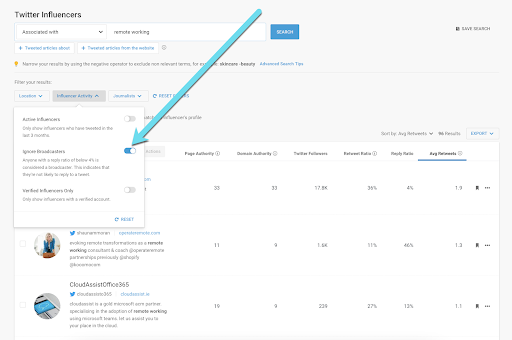
Another great tool to use here is Buzzsumo which allows you to find people who tweet on a topic of your interest.
Depending on the nature of your B2B business, you can play with smart metrics inside Buzzsumo to find Twitter users who engage with their followers:
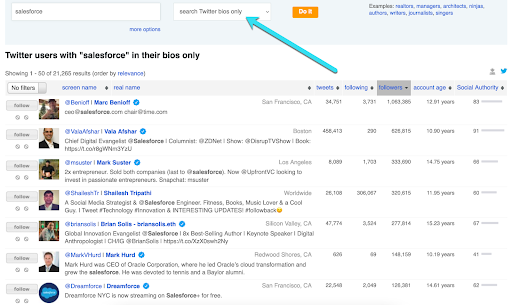
Finally, Twitter bio search tools like Followerwonk and (again, Buzzsumo) should be used here as well as they will find you to find people who mention your target company in their bios (as they likely work there):
Step 3: Research your competitors’ promoters
Another great way to find the right influencers is to identify who is promoting your closest competitors (or, even better, your past competitors who closed their businesses).
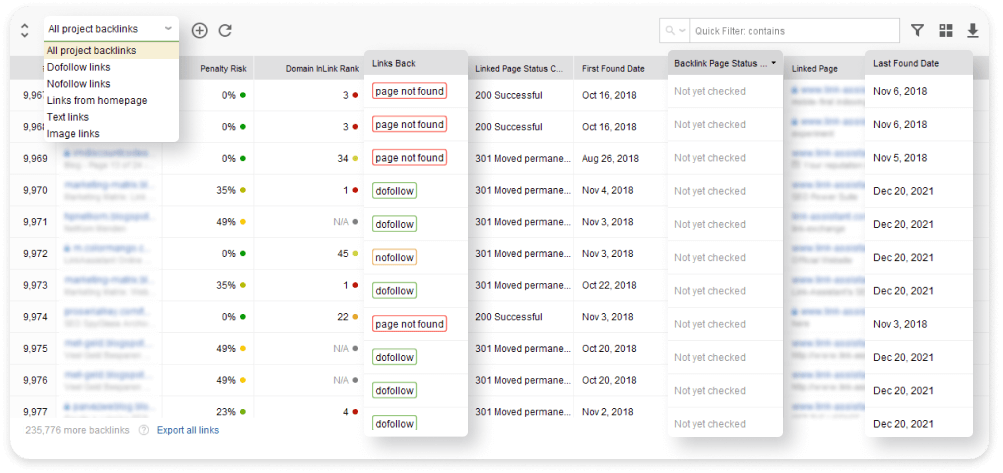
This is where good old backlink research is useful. SEO SpyGlass is a great tool to use here as they allow you to clearly see how your competitors are acquiring their backlinks and quickly find backlink gap opportunities — websites that are linking to your competitors but not you.
Another useful tactic to use here is social media monitoring as it will let you stay on top of your active competitors’ influencer management tactics. Awario is a great tool here because it has a handy boolean search feature allowing you to laser target your monitoring based on sources and purposes of your monitoring:
Step 4: Develop an effective outreach strategy
Once you have defined your pitches, start collecting your data for your outreach. It is a good idea to start a spreadsheet with your defined influencers, their target pitch, contact details (including their social media accounts), and any notes.
There are all kinds of WordPress solutions to share this document with everyone inside your organization.
Hunter is a great way to find the email addresses of your target influencers and website owners. They also have a handy Email Verifier for you to verify any contact details you manage to find.

This will save you time and money enabling you to use valid email addresses:
Email verification is your first step to creating a high quality email marketing database.
Step 5: Value those connections
This is the most crucial step: Your influencer marketing is never actually complete. You need to keep in touch with those influencers who chose to reply whether they agreed to work with you or simply sent a generic reply.
Keep talking to them on social media. Send them updates on your product development. Share your achievements and milestones.
It is not about bombarding them with your emails and social media messages. Only send them important updates that they may really find interesting.
It is a good idea to create a separate brand to consolidate your (hopefully) ever-growing community of influencers. This may be as simple as setting up a private Facebook group or as advanced as creating a new community-driven website.
BeRush is a great example of the latter: SEMRush is using this site to keep in touch with the international community of its affiliates. It includes a Q&A inside, product updates, as well as all kinds of materials to help their affiliates better position the product to their audience.

Namify is a great tool to find a great name for your community-driven project. There’s also a huge database of great business names they are offering as ideas:
Unite your whole company (your marketing, customer support, sales, product development teams) around one common goal: Keeping in touch with your influencers. Tying SEO and sales are the only way to make your B2B outreach strategy work.
Find the Right Influencers and Soar!
Finding the right influencers to help you sell your B2B product is a great way to create a consistent stream of new sales that won’t depend on Google’s algorithm whims or your advertising budgets.
It is also very rewarding because you get a chance to turn those influencers into advocates who will remain loyal for years and help you build brand awareness and improve your product. Good luck!
The post How to Identify and Win the Right Influencers to Promote Your B2B Product appeared first on Content Marketing Consulting and Social Media Strategy.
Source: convinceandconvert.com

5 Influencer Marketing Myths for 2022
Influencer marketing is not new but it is constantly changing and marketers have thoughts. Below are 5 common influencer marketing myths we’ve heard and want to debunk.
Myth #1: Influencer marketing is a fad.
Actually, this may be true, sort of. Hear me out.
Post-COVID data shows a 37% decrease in brands working with influencers and a 41% drop in the efficiency of influencer marketing.
However, brands are still investing in influencer marketing, specifically through nano and micro-influencers.
I see this shift as a more strategic approach to influencer marketing and a way to redefine a tactic fraught with issues.

So, is influencer marketing a fad?
In terms of brands spending lots of money on influencers with large followings? Potentially.
However, in my opinion, influencer marketing in terms of nano and micro-influencers — specifically ones that resonate with niche audiences — is here to stay & will become an important part of a strategic marketing mix.
So, what does this mean for marketers?
Keep influencer marketing on your radar and dive deep into your personas to see if nano and micro-influencers could connect you with your audience.
Myth #2: Influencer marketing is only successful for younger generations.
Marketers around the world are trying to woo the next generation of consumers with influencer marketing. In fact, there are over 15 million search results for “influencer marketing to Gen Z.”
Meanwhile, “influencer marketing to Gen X” and “influencer marketing to Boomers” have less than 10 million results combined.
What’s up with that?
I think it mostly comes down to the myth that influencer marketing is only for younger generations, which is simply not true.
In fact, older generations are spending more and more time on social media and shifting their shopping habits toward online retail, delivery services, and subscriptions which means brands have more opportunities than ever to engage across generations.

Gen X and Boomers also control the vast majority of disposable income in the US.
While some marketers are writing strategies around younger influencers, terms like “Grandfluencers” and “elderly influencers’ are becoming more popular.
Influencers like Joan MacDonald and Helen Winkle are over here living their best lives as 70-year-old-plus influencers with almost 5 million followers combined.
Gen X also has some fabulous influencers like Arlinda McIntosh and Ana Pejkanovic.
So, what does this mean for marketers?
If your audience includes Gen X and/or Boomers, influencer marketing may be worth a try.
Myth 3: Influencers have to have large followings to be effective.
We covered this a bit in myth #1, but let’s dive deeper.
Traditionally, influencer marketing means utilizing a social media user with a large following. Today, that definition is changing.
While mega influencers (social users with millions of followers) are the first thing many people think of when they think “influencer,” other groups are growing in popularity.

However, there are differing opinions on how many followers each group has, especially in the micro and nano categories where some marketers say nano influencers can have as little as 500 followers and still be effective.
- Mega: 1M+ followers
- Macro: 100K+ followers
- Micro: 10K+ followers
- Nano: 500 to 10K followers
While influencers generally have a conversion rate of around 3%, nano influencers are converting at upwards of 30% in some cases.
What does this mean for marketers?
Marketers should look for opportunities to work with influencers with niche communities and remember that large followings don’t equal better.
Myth 4: Influencer marketing doesn’t work for B2B companies.
This is simply not true.
- Linode, a cloud hosting company, has seen 15%-20% customer growth through its YouTube influencer strategy.
- Microsoft teamed up with National Geographic photographers on an Instagram campaign that resulted in over 3.5 million likes and over 1K user-generated content uploads.
- American Express utilized small business owners as influencers in their Love My Store campaign resulting in 400,000 orders of the Love My Store decals.
- Aegora, a professional marketplace, tapped into freelancers across industries to be part of an influencer campaign. The campaign generated over 500 signups.
What does this mean for B2B marketers?

B2B marketers should explore ways to bring influencers into their marketing, whether it’s through employees, customers, or social media influencers.
Myth #5: Influencer marketing has no rules.
In an October 2021 news release, the Federal Trade Commission said they’ve officially put hundreds of businesses on notice for “fake reviews and other misleading endorsements”. The penalty for misleading consumers is up to $43,792 per violation.

What does this mean for marketers?
It means there are rules you need to follow, and you shouldn’t be a jerk and mislead and deceive people. Familiarize yourself with the FTC endorsement guidelines and comply to avoid headaches and hardships.
2022 Influencer Marketing Myths Debunked!
There you have it! Five myths we wanted to address so you can decide if a dip in the influencer pool is a worthy exploration by you and your team.
The post 5 Influencer Marketing Myths for 2022 appeared first on Content Marketing Consulting and Social Media Strategy.
Source: convinceandconvert.com

5 Influencer Marketing Myths for 2021
Influencer marketing is not new but it is constantly changing and marketers have thoughts. Below are 5 common influencer marketing myths we’ve heard and want to debunk.

Myth #1: Influencer marketing is a fad.
Actually, this may be true, sort of. Hear me out.
Post-COVID data shows a 37% decrease in brands working with influencers and a 41% drop in the efficiency of influencer marketing.

However, brands are still investing in influencer marketing, specifically through nano and micro-influencers. I see this shift as a more strategic approach to influencer marketing and a way to redefine a tactic fraught with issues.
So, is influencer marketing a fad?
In terms of brands spending lots of money on influencers with large followings? Potentially.
However, in my opinion, influencer marketing in terms of nano and micro-influencers — specifically ones that resonate with niche audiences — is here to stay & will become an important part of a strategic marketing mix.

So, what does this mean for marketers?
Keep influencer marketing on your radar and dive deep into your personas to see if nano and micro-influencers could connect you with your audience.
Myth #2: Influencer marketing is only successful for younger generations.
Marketers around the world are trying to woo the next generation of consumers with influencer marketing. In fact, there are over 15 million search results for “influencer marketing to Gen Z.”
Meanwhile, “influencer marketing to Gen X” and “influencer marketing to Boomers” have less than 10 million results combined.
What’s up with that?
I think it mostly comes down to the myth that influencer marketing is only for younger generations, which is simply not true.

In fact, older generations are spending more and more time on social media and shifting their shopping habits toward online retail, delivery services, and subscriptions which means brands have more opportunities than ever to engage across generations. Gen X and Boomers also control the vast majority of disposable income in the US.

While some marketers are writing strategies around younger influencers, terms like “Grandfluencers” and “elderly influencers’ are becoming more popular. Influencers like Joan MacDonald and Helen Winkle are over here living their best lives as 70-year-old-plus influencers with almost 5 million followers combined.
Gen X also has some fabulous influencers like Arlinda McIntosh and Ana Pejkanovic.
So, what does this mean for marketers?
If your audience includes Gen X and/or Boomers, influencer marketing may be worth a try.
Myth 3: Influencers have to have large followings to be effective.
We covered this a bit in myth #1, but let’s dive deeper.
Traditionally, influencer marketing means utilizing a social media user with a large following. Today, that definition is changing.
While mega influencers (social users with millions of followers) are the first thing many people think of when they think “influencers,” other groups are growing in popularity.
However, there are differing opinions on how many followers each group has, especially in the micro and nano categories where some marketers say nano influencers can have as little as 500 followers and still be effective.
- Mega: 1M+ followers
- Macro: 100K+ followers
- Micro: 10K+ followers
- Nano: 500 to 10K followers
While influencers generally have a conversion rate of around 3%, nano influencers are converting at upwards of 30% in some cases.
What does this mean for marketers?
Marketers should look for opportunities to work with influencers with niche communities and remember that large followings don’t equal better.
Myth 4: Influencer marketing doesn’t work for B2B companies.
This is simply not true.
- Linode, a cloud hosting company, has seen 15%-20% customer growth through its YouTube influencer strategy.
- Microsoft teamed up with National Geographic photographers on an Instagram campaign that resulted in over 3.5 million likes and over 1K user-generated content uploads.
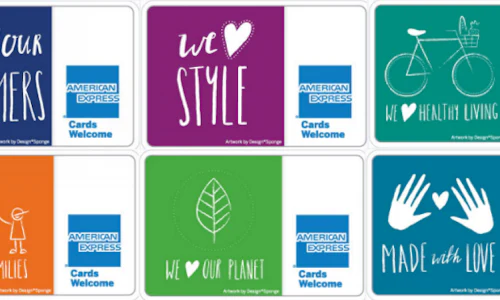
- American Express utilized small business owners as influencers in their Love My Store campaign resulting in 400,000 orders of the Love My Store decals.
- Aegora, a professional marketplace, tapped into freelancers across industries to be part of an influencer campaign. The campaign generated over 500 signups.
What does this mean for B2B marketers?
B2B marketers should explore ways to bring influencers into their marketing, whether it’s through employees, customers, or social media influencers.
Myth #5: Influencer marketing has no rules.
In an October 2021 news release, the Federal Trade Commission said they’ve officially put hundreds of businesses on notice for “fake reviews and other misleading endorsements”. The penalty for misleading consumers is up to $43,792 per violation.

What does this mean for marketers?
It means there are rules you need to follow, and you shouldn’t be a jerk and mislead and deceive people. Familiarize yourself with the FTC endorsement guidelines and comply to avoid headaches and hardships.
2021 Influencer Marketing Myths Debunked!
There you have it! Five myths we wanted to address so you can decide if a dip in the influencer pool is a worthy exploration by you and your team.
The post 5 Influencer Marketing Myths for 2021 appeared first on Content Marketing Consulting and Social Media Strategy.
Source: convinceandconvert.com

How to Create a Successful Influencer Marketing Campaign Using Webinars
Webinars are an invaluable content marketing product designed to bring in high-quality leads for your sales team.
For most Convince & Convert readers, it is almost common knowledge that webinars are an invaluable content marketing product designed to bring in high-quality leads for your sales team.
However, there’s a certain mystique surrounding webinars:
- Should they be high-end in terms of production value to convey equivalence in professionalism to the product itself?
- Should they be low-fi recordings with off-the-cuff experts to provide a behind-the-scenes look on how to truly win with the product?
- Should they be pre-recorded and scripted?
- Should they be a question-and-answer free-for-all?
How should a company go about creating an effective webinar?

Like all mediums, webinars are complex, and the right answer depends heavily on the product and team using them.
For initial setup, the following guide on how to create a webinar is instructive in determining a rough format.
Once the rough format is decided on, a company can decide on how to ensure the webinar is effective by touching on the relevant psychological triggers necessary to induce the end purchase.
However, there are some gaps in the overall setup process, which this article hopes to augment.
Namely, a company needs to be cognizant of who is being targeted and how best to influence those people.
Then, how to make sure they are aware of the campaign in the first place.
Stay on target

When it comes to psychological triggers of purchase, you first need to have a much deeper understanding of who exactly you’re trying to influence.
Take into account the various cultural, social, personal, and psychological factors that might come into the purchasing decision, but also the decision to click the initial registration button and to show up.
Without delving too deep into this piece of the puzzle, consider where your target audience is located.
- Are they going to be available to join your webinar when it’s scheduled? If the product being sold is designed for their job, normal work hours make sense. If it is a side hustle, consider kicking it off after 5 pm or so.
- Are there language considerations? If the target audience is of a radically different socioeconomic status, consider the platform and minimum technical requirements for the webinar to make it as frictionless as possible.
- What’s the age range of the audience? Is the product geared towards an older audience? Younger? Hip, casual, conservative, professional?
- Why is the audience joining you? Is it to learn? Is it out of motivation to succeed, or even fear?
Once the various sociological and psychological profiling is complete to the point of having a more solid grasp of exactly who the target market is, a company can devote resources to find the ideal influencers to make it a success.
Enter influencers
To dispel the obvious myths, influencers are not just about Kim K and her sisters hawking the latest facial cream on Instagram.
While that is still an absurdly successful use case, every marketing medium and product combination can benefit from the right influencers.
It’s just a matter of choosing the right influencer type for the campaign.
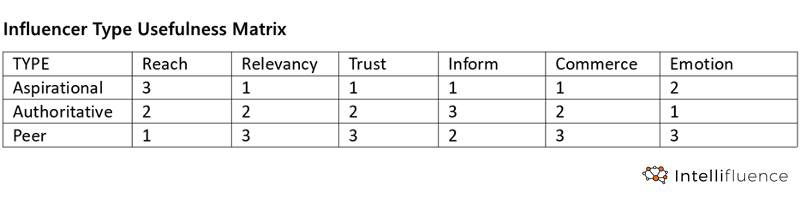
The influencer type usefulness matrix from Intellifluence
Influencers can generally be bucketed into three main categories:
- Aspirational. For ease of definition, aspirational can be thought of as the Kim K celebrity example above.
- Authoritative. These influencers are key for webinars. Authoritative influencers are the trusted subject matter experts, even in a narrowly defined field.
- Peer. Peer influencers would be akin to your colleagues and industry peers, from the B2B perspective.
Why do we care so much about authoritative influencers for your webinar campaign?
Using the usefulness matrix above, we can determine what influence type is best suited for the sociological and psychological profiling work performed earlier on the target audience.
Reach matters.
Of course, but given the educational nature of webinars, the ability to inform in a trusted and relevant manner that is geared towards commerce is the winning combination.
Peer influencers also rate quite highly, which we can layer on in a later step.
For example, Jay Baer hosts webinars for Convince & Convert’s client, SharpSpring.
Jay is an authoritative influencer in marketing and marketing technology, and also helps drive registrations for virtual events through email, social, and word-of-mouth marketing.

Jay is an authoritative influencer who hosts and presents webinars for clients.
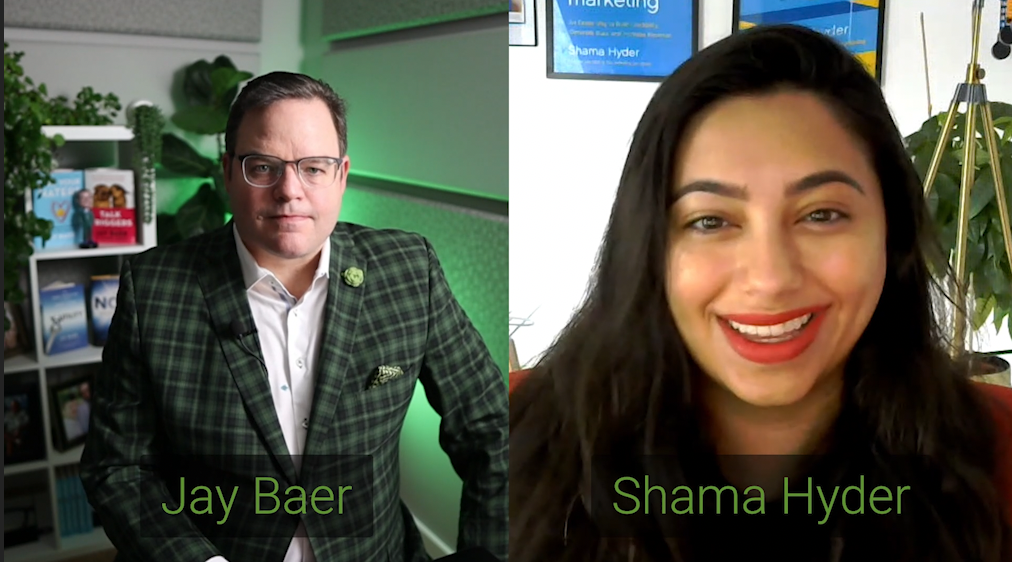
Jay also brings together additional authoritative influencers like Shama Hyder.
How to use authoritative influencers on your webinar
Pay them!

The article could have been as short as that previous sentence and still would not have been a waste of a company’s time.
If a company can pay a renowned expert in its field to host a webinar on how they have had success using YOUR product, you’ll make sales.
If you can’t get authorities, you can incentivize some walkthroughs from existing customers to prospective customers, aggregating the peer signal.
Host, co-host, or syndicate?
In the short example above, the recommendation is to pay the expert to host a webinar for his audience and followers regarding how to use your product as the expert sees fit, co-hosted with you for co-citation proximity (this is the leeching authority trick).
As a follow-up step, syndicate the webinar out to your prospective audience via email with the ability to participate in a follow-up company-hosted webinar series where your sales staff interact in more of a Q&A nature.
Since trust has already been established with tacit expert approval, the subsequent webinars can move deeper into the sales channel.
Bring on the wolf pack
In the penultimate stage of the process, the goal is to result in multiple prospective customer touches and funnel starts.
Use an on-going webinar series to keep people in the funnel
One simple way to do this is by recording an ongoing webinar series for those prospective customers, using your top product users as the weekly/monthly/quarterly experts.
This series is recorded and then syndicated through the following authoritative channels: YouTube and blogs.
As these peer-level users are already in love with your product, you can comp their usage of it as compensation in many cases.
Famed influence professor Cialdini would refer to this as unity: the desire to remain in the wolf pack.
Encourage peer influencers to promote your webinar
This can be as simple as pushing for peer influencers to share the webinar signup details over Twitter and Facebook, utilizing a series of relevant hashtags and a brief personal story of why they’ll be attending the webinar.
Make this easy for them by providing a standard promotional copy in a Google Doc.
Drive registrations with email
Another overlooked influencer syndication method is e-mail. Convince & Convert is great at email marketing with Jay’s personal updates that seamlessly interweave a narrative with a branded goal.
When a relevant email influencer is used to connect their audience with your upcoming webinar, wonderful things can happen, which is why companies like Intellifluence are willing to throw money at such influencers.
They can drive amazing signups!
Get some press
Finally, to tie the entire webinar campaign neatly with an influencer bow, consider running a targeted press relations campaign to extend your perceived authority on the subject and garner some additional eyeballs to your work.
The goal of this step is not to submit a generic PR Newswire report and hope for the best.
For the best results, target the journalists that have actively written on your industry and/or on webinar marketing in the past.
You are now doing something amazing, which their audience could benefit from knowing about.
Become the expert

If you’re just starting out in your content marketing journey and this entire process seems daunting, don’t despair.
You can become that authority yourself by taking the initial step and writing on the B2B subject matters you know about.
In due time, you’ll be the expert being paid to share your thoughts on a webinar.
The post How to Create a Successful Influencer Marketing Campaign Using Webinars appeared first on Content Marketing Consulting and Social Media Strategy.
Source: convinceandconvert.com