
Tag Archives for " gaps "

How to Identify and Close Your Keyword Gaps
Would you like to uncover new traffic-driving search queries for your site?
I bet you are thinking, “Yes, of course,” right now.
If so, here is a new idea for you: Perform a keyword gap analysis.

What is Keyword Gap Analysis?
Keyword gap analysis (also referred to as content gap analysis) analysis means identifying ranking opportunities your site is missing.
Usually, it involves analyzing which queries your close competitors are ranking for and your site is not.
But there are various ways to identify content gaps.
Why is Keyword Gap Analysis Important?
There are many different ways people search for the same thing online.
It may be impossible for a single team to foresee all of those.
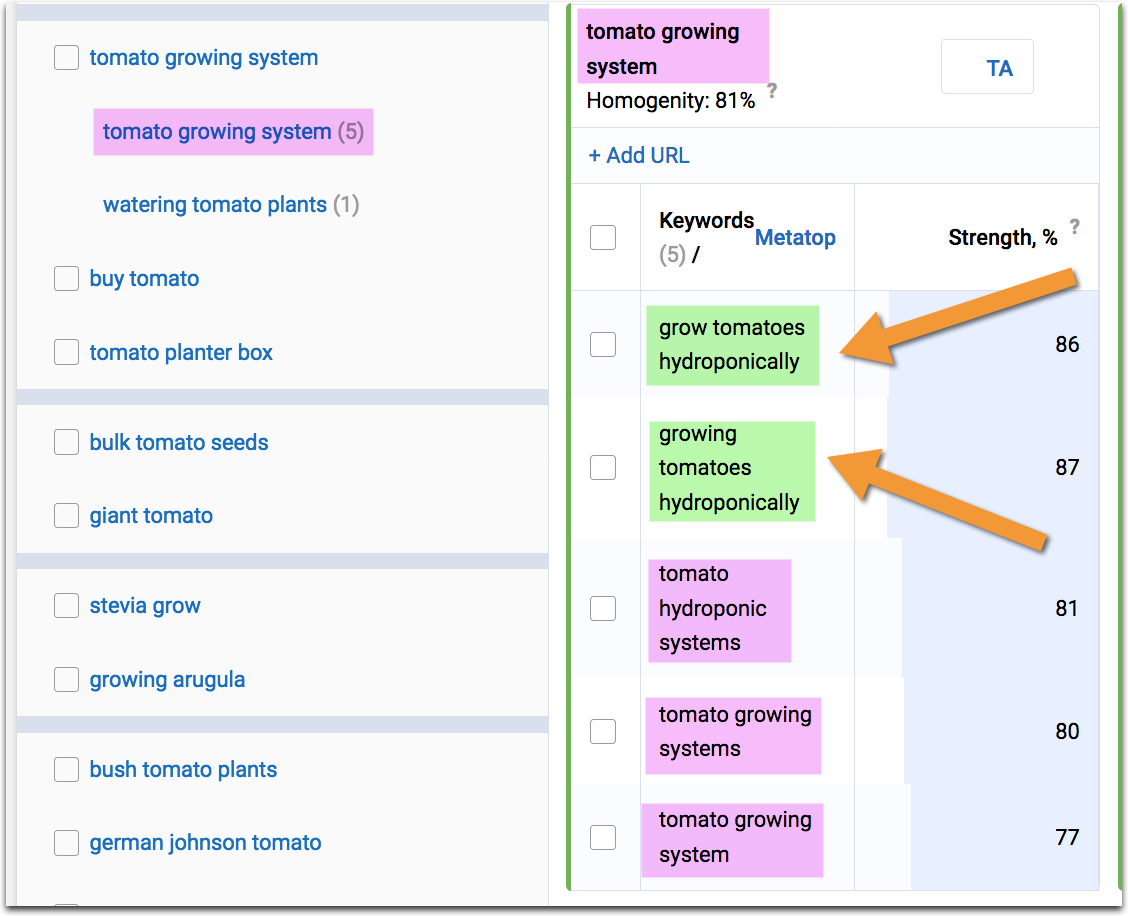
Even if you think you are pretty good at keyword research, there is one step you have always have to start with: your core term.
But what if your customers have a different idea of what that core term should be? If so, you are missing a huge chunk of keywords.
There can be synonyms, local terms, jargon, etc. you are not considering.
There may be products or product features you are not offering.
There may be problems your service is solving, but you fail to mention them on your site.
In all of those cases, content/keyword gap research is helpful.
How to Perform Keyword Gap Analysis
Here is how to perform keyword gap analysis:
1. See what your competitors are ranking for, but you are not.
This type of analysis is available through any SEO platform these days. My two favorite ones are:
Spyfu
Spyfu offers an easy and quick way to find your keyword gaps.
All you need is to enter your domain.
The tool will identify your organic or paid competitors and generate the list of keywords that you are missing.
In Spyfu, the feature is called Kombat, and it allows you to research your keyword gaps based on the following intersections:
- Keyword universe: Keywords unique to any of the entered domains
- Weakness: Keywords both of your competitors are ranking, but you are not.
- Exclusive keywords: Keywords that are unique to your domain (your competitors’ keyword gap).

The detailed view will let you see and export all your missing keywords together with their search volume and “keyword difficulty” that takes into account various factors (like title optimization, quality of backlinks pointing to the page, etc.)
What I love about Spyfu’s tool is that it allows you to find keyword gaps for both organic and paid keywords.
You’ll find similar sections inside Ahrefs and Semrush, but I don’t believe either of those offers paid keyword research.
Ahrefs
As mentioned, Ahrefs’s “content gap” tool works similarly to Spyfu’s.
What I like about Ahrefs is that it helps you research a section of your site, not just your domain or URL.
I find it pretty handy when I want a close look at a specific part of the site and identify higher-level gaps.

For example, if you were to analyze a flower shop using Ahrefs, you would be able to investigate keyword gaps for its /special-offers/ section, including all URLs that are included in that section.
This is a very handy option to have, especially if you are dealing with a large and/or multi-category site.
2. Semantic Analysis
Unlike Spyfu and Ahrefs, Text Optimizer doesn’t look at your specific competitors. Instead, it:
- Takes your search query
- Performs a search for it in Google or Bing
- Grabs search snippets those returned
- Applies semantic analysis to identify underlying concepts and entities
- Reads your content and identifies related concepts you failed to include in your copy.

There is no need to include ALL the suggestions in your content.
But the more you include, the closer the gap between your page and its organic competitors will be.
I like the tool because it pushes you to create longer, better-researched copy.
3. Your Own Analytics
Finally, you can also find content gaps within your own website analytics.
Look for under-performing pages—pages that seem to send people off from your site and pages that don’t engage your audience.
These pages obviously need some help.
Finteza is a web analytics suite that focuses on conversion and engagement analysis.
For example, if I see a graph like this, I know there’s a page that doesn’t perform well:

This is an obvious sign of a content gap:
- This page does rank and brings clicks to the site, so we cannot just trash it
- Yet, the page fails to engage anyone, so it needs content gap research.
At this point, I’d look at competing pages to see how they cater to the target audience, which questions they address, how they engage their visitors, and how their copy is better than mine.
Here are more ways to diagnose and fix lead generation problems on any content-based page, and here’s how to use analytics to improve conversions.
There are many more analytics solutions out there— here are more options.
How to Close Those Content Gaps

Keyword gap research is not simply a content optimization technique.
By identifying keyword gaps, you may discover new ways to present your products (e.g. colors, sizes, etc.), such as content-based landing pages that address problems your customers are facing and introduce your products as a solution.
Chances are, you will need to involve your product development, customer support, sales, and reputation management teams, as many gaps you are discovering can be turned into new product ideas, selling points, and competitive advantages.
While researching your newly discovered queries, look for other things you can pick up during your research.
What are your competitors doing better?
Maybe it is a nice page layout, an engaging content element, or a new way to structure content — there’s always something more to learn from your competitors.
The post How to Identify and Close Your Keyword Gaps appeared first on Content Marketing Consulting and Social Media Strategy.
Source: convinceandconvert.com