
Tag Archives for " e-commerce "

How To Use Google Images to Drive E-commerce Sales Before Your Competitors Catch On
What if the biggest source of your SEO traffic wasn’t from the front page of Google? At least, not the front page exactly. Imagine that there was a backdoor of sorts that could lead to a healthy amount of organic traffic. It’s a completely legal, whitehat SEO backdoor too, so there’s no chance you’ll be penalized.

And if you leverage yourself correctly, that organic traffic can naturally turn into a sale for your e-commerce site.
If that situation were to exist, it could change the SEO landscape for quite some time.
It may surprise you then to learn that our imaginary backdoor example already exists.
Because with some of the recent changes in how Google allows image searches, the front page has gotten a little bit bigger.
I want to show you what’s changed, and then give you some quick hacks that can help you drive more e-commerce sales by focusing on optimizing for Google image searches.
The new and improved Google image search
Google’s image search has been a stalwart feature of the search engine since 2001 when searches for Jennifer Lopez’s green Versace dress broke the Internet.
Since then, the service has been improved upon in stages and built into a massive image library.
Best guesses estimate that Google has indexed around one trillion images to date, and that’s probably on the conservative side.
So in February of 2018 when Google and Getty Images announced that they would be partnering up, it turned some heads.
The reason given in the press release was that this change was meant to provide a better experience for both Google users and visual content creators.
And according to a tweet from Google’s Danny Sullivan, this was also part of a broader effort by Google to help connect search users with helpful websites.
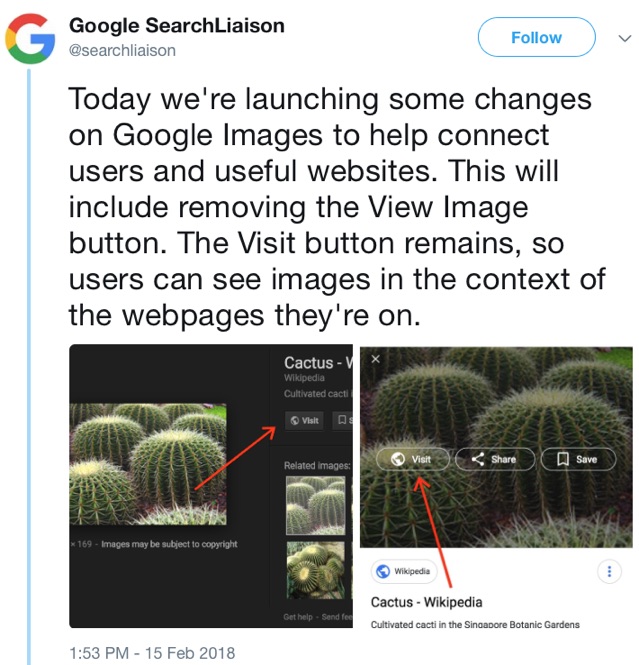
That sounds a lot like normal, run-of-the-mill SEO talk on the surface.
And since most of the media coverage of this change centered around the fact that Google had removed the “View Image” option with this update, it was easy to miss the real change here.
To make the waters even muddier, Danny later tweeted that this particular change was part of a settlement with Getty Images.
Thus, it further cemented the idea that this change was just another ordinary Thursday for Google.
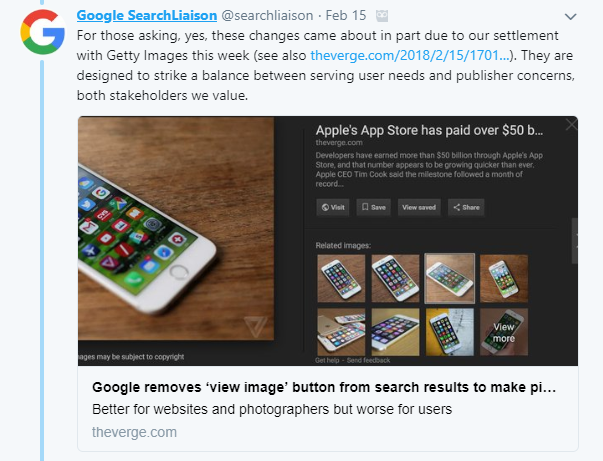
But when you look a little deeper at what actually changed, this transition has a more significant impact than what you may believe at first glance.
Because while it seems that removing the “View Image” option and replacing it with “Visit” is just meant to annoy desperate college students, it’s actually a shift in the way we search via images.
Or, to put it more plainly, it means you can now try to rank for the front page of Google image search to get organic traffic.
One of the less-heralded statistics from the last few years is that 72% of search engine users search for images before making a purchase.
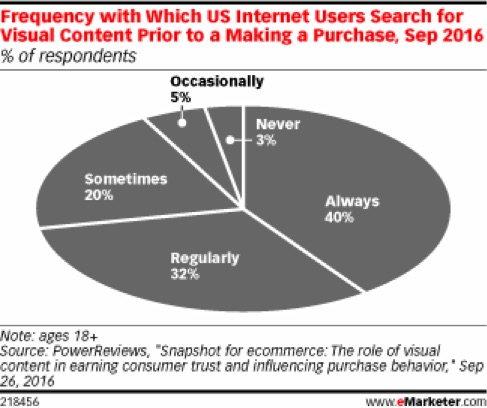
That means that when someone comes to your site via a search engine, there’s a good chance their search started with Google images.
Before these changes, websites weren’t typically in the limelight.
The uproar that surrounded the removal of the View Image option seems to indicate that most users searched for images to use for another purpose.
But now, if someone wants to download or save an image, they have to click through to the website.
That means you have an opportunity to sell to them now, where before they would never see your brand.
So in a way, Google has created a new and improved channel for customer acquisition that flew completely under the radar.
Let me show you an example of how this could work.
Say you search for a pair of binoculars to take hiking this summer.
You search for binoculars and then decide you’d rather find a set that looks more compact.
Here’s the “front page” of your search in Google.
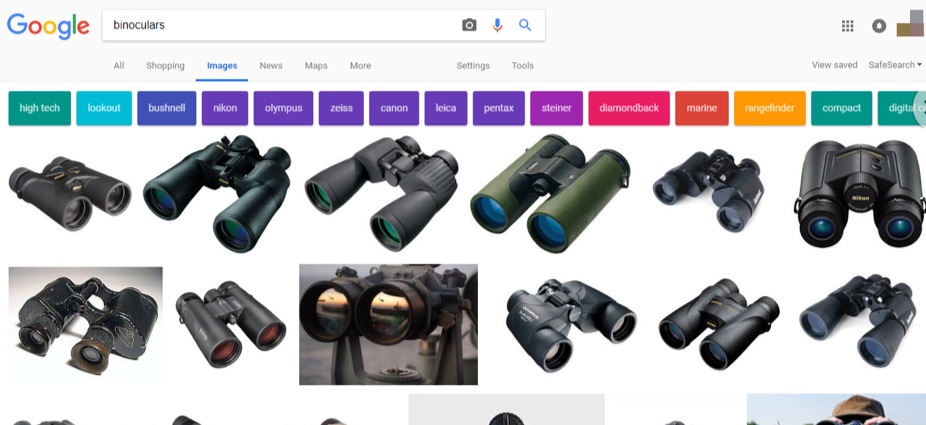
None of this is branded, there aren’t any ads, and it’s fairly simple to browse through and find a set of binoculars that meets your needs.
If you click on an image, a window will expand and display a larger version of the image.
You’ll also see an option to Visit, Save, View Saved, or Share.
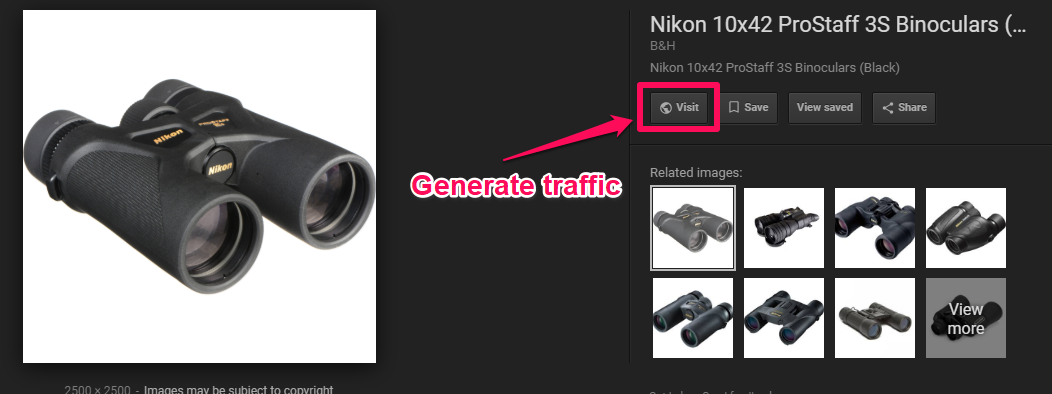
If a user decides to visit this site, they’ll have generated traffic via a Google image search.
And since they’re in the mood to potentially buy, your best bet is to have these images attached to a product page like this one.
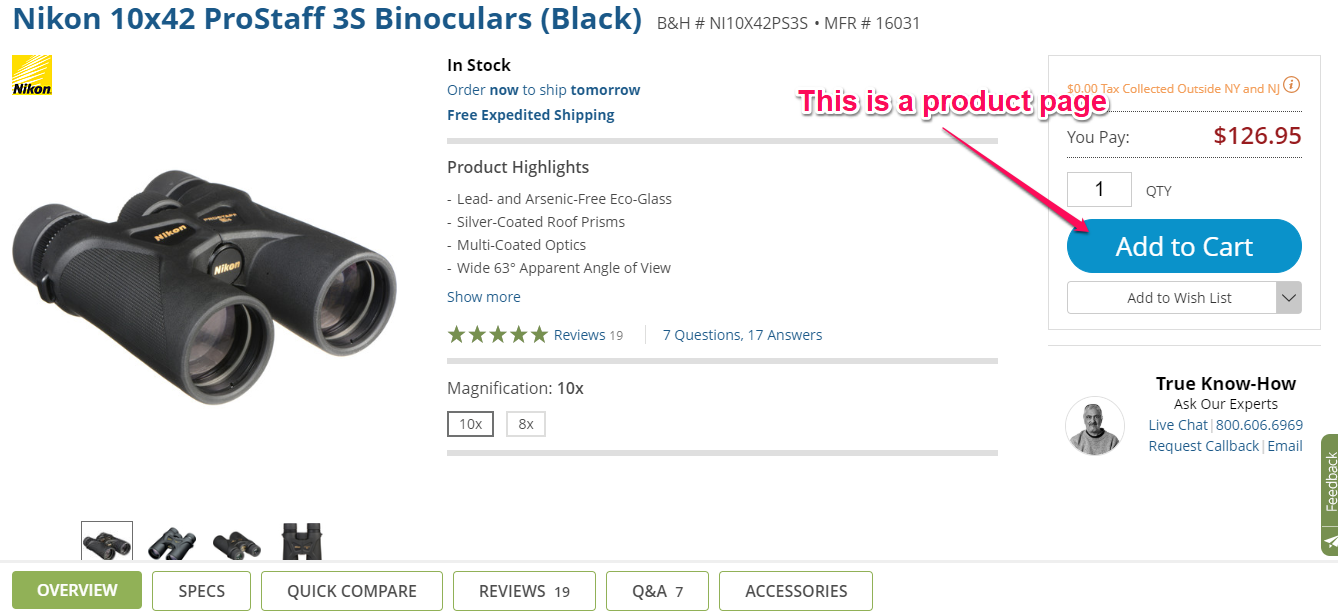
At this juncture, I want to point out that this is technically the “top ranked” image on Google.
It’s on a site for the brand B&H Photo Video, and very clearly linked to a product page.
So without knowing the actual stats of this site and page, I would say that there’s a good chance that more than a few sales have closed through the exact path I’ve shown you.
But the interesting aspect here is that this page is not on the actual front page of Google.
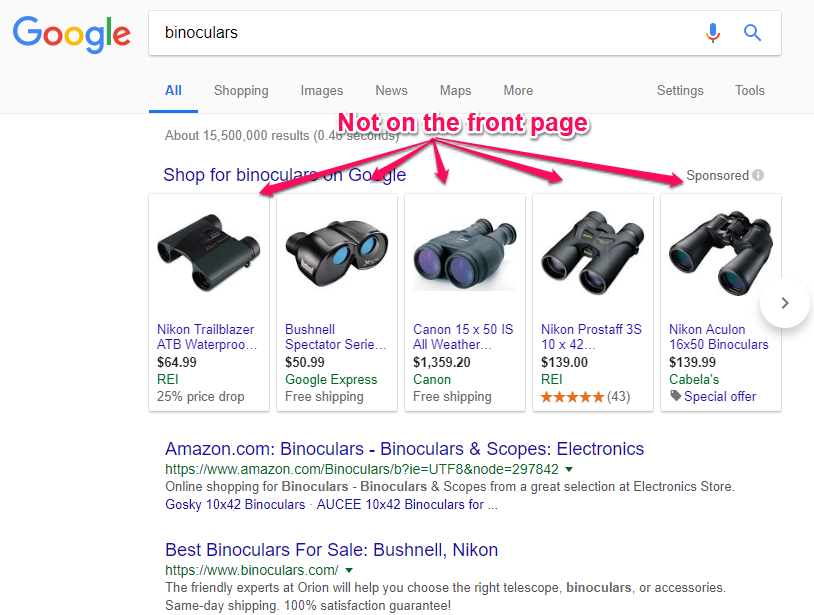
It’s not in the sponsored ads, nor is it competing with Amazon or Binoculars.com in the rankings below.
In fact, I scrolled through and didn’t even find this website in the top 10 pages on Google’s search results.
So it’s even more incredible that this image is at the very top of an image search, and it clearly displays an opportunity for more brands to do the same thing.
Especially considering that it wasn’t until my second visit that Google put sponsored ads into my image results:
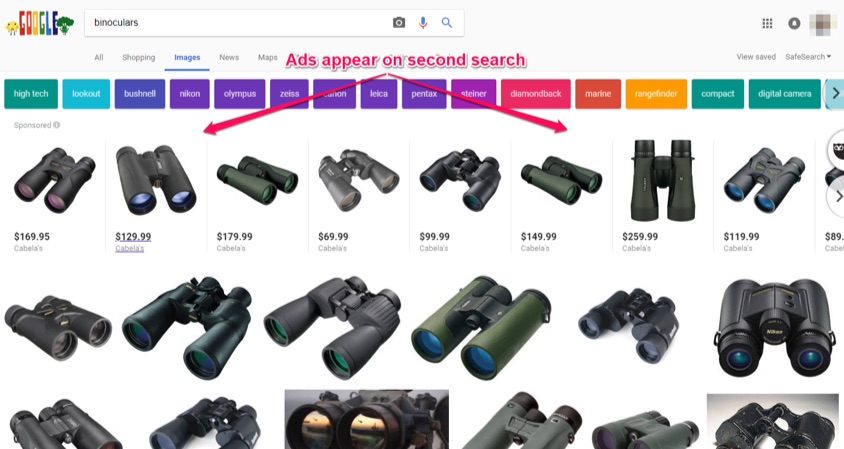
With this new visit-oriented searching system, Google has created a backdoor for small brands to sell with organic traffic despite otherwise strong search results.
E-commerce marketing professionals now have a viable window to create a new and improved channel for generating sales.
By focusing on the SEO of the images on your product pages, you can now rank on an image search that can result in more revenue for your business.
So for the rest of this article, I want to share some quick hacks that you can start to implement on your images in order to capitalize on this development.
Hack #1: Optimize file names and alt tags
As Google crawls your site, it relies on your site’s code to tell you if there are any images on your pages that contribute to the overall value of the page.
So when optimizing your images for SEO, the very first place you should start is by ensuring that the products on your site have descriptive file names and alt tags.
Here’s a relatively simple example of a descriptive vs. non-descriptive file name.

If Google were to crawl your site and see a series of numbers followed by .jpg, all it can tell is that there is an image.
But with the keywords of corgi, puppies, adoption, and NYC added, Google can accurately assess the contents of the image and rank accordingly.
This is also part of what ensures that your image will appear in a Google image search to begin with.
From there, the next part of your image that you’ll need to optimize is your alt tag.
Much like your file name, alt tags signal to Google what your image contains.
Each alt text is embedded in the HTML of your website so that when Google crawls your site, it can “see” the image.
Here’s an example from the earlier binoculars page:
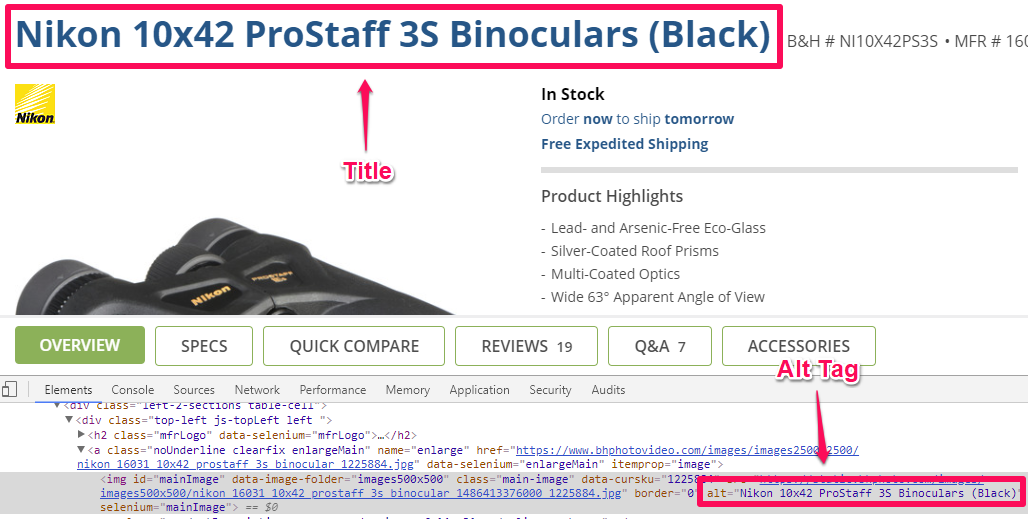
Notice that the alt tag, in this case, is the same as the product’s title.
It contains the keyword “binoculars,” and is an accurate description of the true contents of the image.
It’s a fairly straightforward bit of text that once again will make all the difference on a search engine results page.
And thankfully, it’s incredibly easy to set both your alt tags and change your file name if you’ve built your site on WordPress.
When you upload an image, all you have to do is select that image to see this menu:
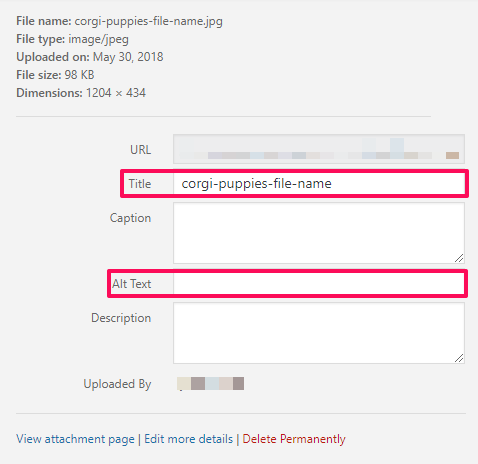
From here, you can change your file name and alt text appropriately.
This will position your images so that when Google crawls your site, it can potentially rank you on its image search.
Without these simple elements, you’ll struggle to rank at all.
But image-based SEO that will help you truly stand out requires investing in some more complex techniques, like leveraging user-submitted images.
Hack #2: Use unique images
You may think that this point goes without saying, but the vast and repetitive use of stock photography online would seem to say otherwise.
Creating and using relevant imagery will ultimately help you draw a Google image search user in and convince them to click through to your site.
For example, if you were to search online for a lawyer in your area only to see something like this:
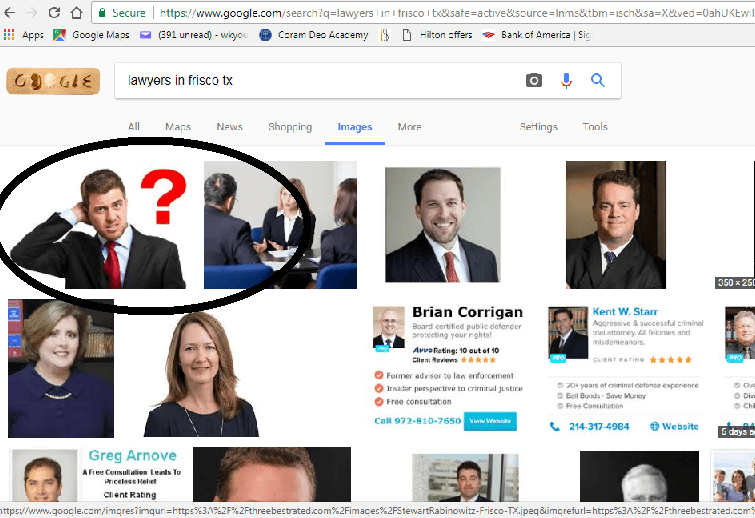
Chances are you wouldn’t click on that image.
So when in doubt, use a relevant and interesting image for every page on your site, and especially for your product pages.
Even if you have to invest in a professional photographer, the effort and money can be worth it.
The last thing you want is for someone to pass up your site because your image isn’t the most relevant to their search.
Hack #3: Leverage user-submitted images
The average Internet user is pretty skeptical, myself included.
That’s why so many brands now turn to social proof as a means to improve audience engagement and drive sales on their e-commerce sites.
But how can social proof help you get to the top of Google’s image search?
The answer lies in utilizing user-generated social proof image content strategically across your site.
Social proof is one of the best ways to increase trust in your brand and improve conversions.
Typically, this type of proof comes in the form of testimonials or case studies that brands leverage in various ways across their site.
But with how image-oriented our current social media lives are, we now see a vast amount of user-generated social proof content in the form of pictures.
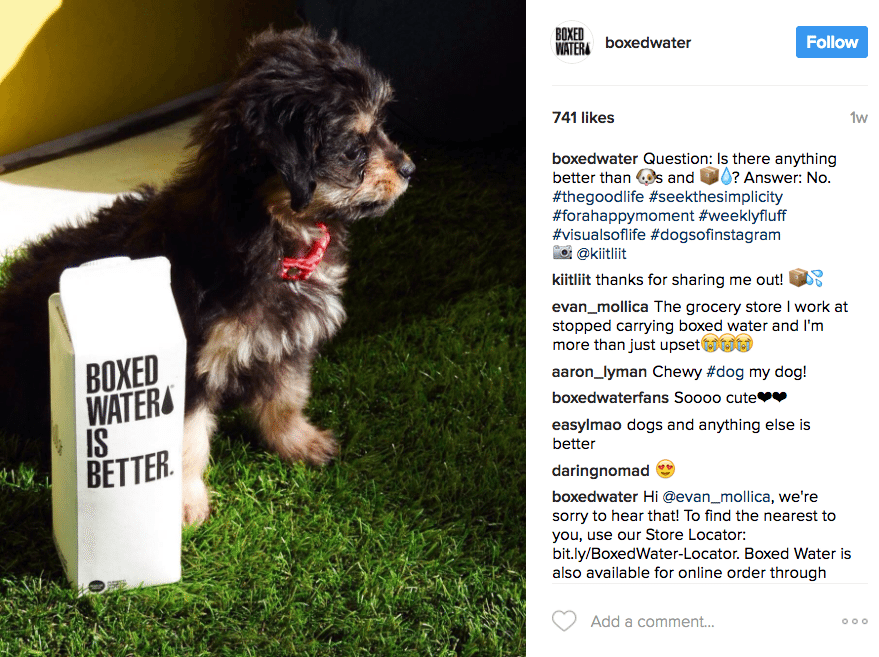
Sites like Instagram and Snapchat have changed the way we interact with images, and can now further improve the way you optimize your images’ SEO.
The result means that you can start finding user-generated content by merely interacting with and incentivizing your social media audience.
The key to these images is that they have to be sincere and truly user-generated.
You also need to ensure that you integrate your user-generated images on the right page.
And of course, you need to ensure that you’re legally using the images you end up placing on your site.
But once you have all your ducks in a row, a great idea is to implement your user-generated images on your product pages.
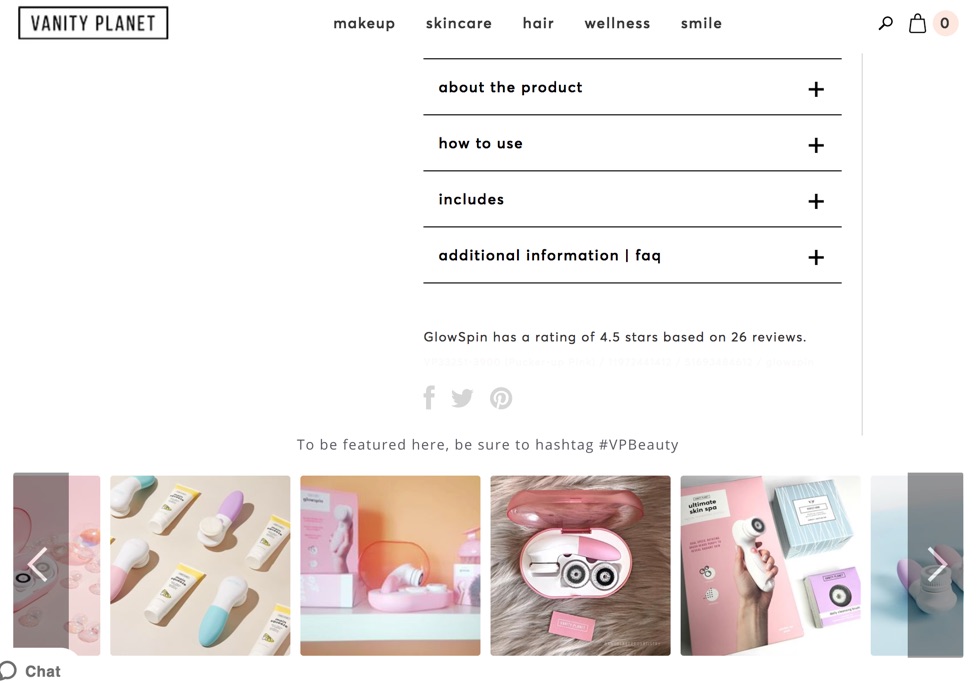
As you can see, the bottom image scroll is comprised of user-generated images that used the #VPBeauty when posting on social media.
The company browsed these images for the highest quality options that it felt showed the best side of their brand.
Then, it embedded these images on their product pages to provide immediate social proof when a visitor sees them.
And since these images are on your website and can be optimized accordingly, they can rank on a Google image search and potentially bring more traffic to your site.
Hack #4: Reduce your load time
Fast-loading images are one of the cornerstones of SEO.
If a user can come to your site and quickly load an image that contributes to their overall experience, Google has ways of noticing.
Recent studies have shown that images on websites are typically the largest elements that need to be loaded by a user.
In fact, images on average comprise more than half the data of most web pages.
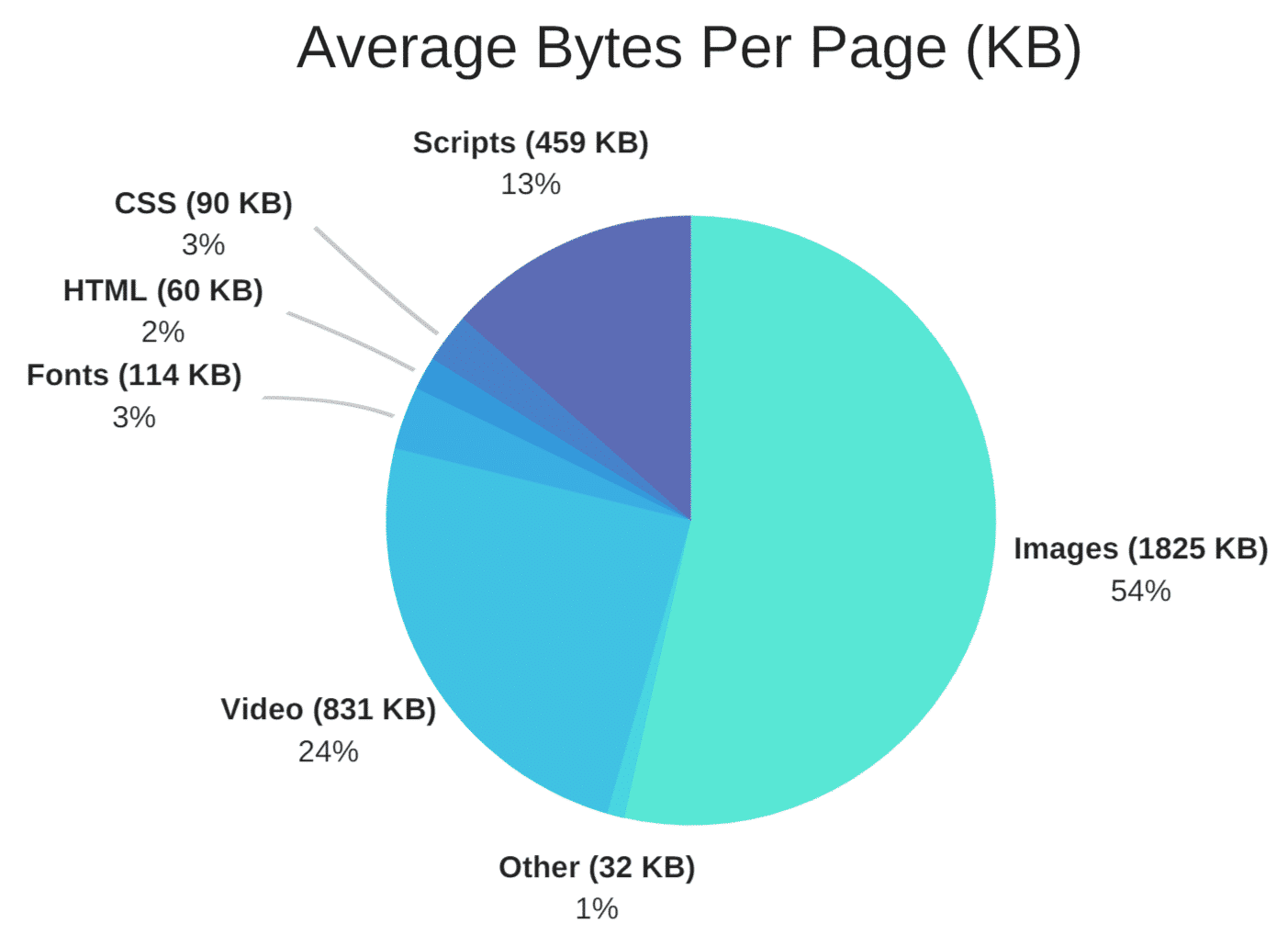
So when you’re optimizing your product page, there’s a good chance that the image you use is slowing down your site.
And since bounce rates tend to grow rapidly with longer load times, Google sees image size as a significant SEO factor.
That means in order to rank your images on either the front page or an image search, you need to find a way to create a smaller image.
That is where image compression comes in.
Image compression is the practice of taking a large, bulky image file and effectively shrinking it to a fraction of its size.
When there’s less to load, your site loads faster.
Generally speaking, image compression can yield results like this:

This image is clear, sharp, and pleasant to look at.
If I weren’t telling you it was a compressed image, you probably never would have guessed.
But look at what happens when you take this same image and compress it even more:

The colors go all wrong, the lighting is poor, and it makes the image hard to look at.
This is the darker side of what can happen if you compress too much.
There isn’t too much difference in size between these two photos.
The first is about 350 KB, and the second is about 70 KB.
And when you compare that to a photo that may contain thousands of KB, then you begin to see how much this helps improve your load time.
So compressing images is a balancing act.
Go too far, and you get a bad image.
Don’t go far enough, and you’re undermining your SEO efforts altogether.
But how can you easily optimize your photos to ensure that they load faster and rank higher?
To start with, I recommend testing the speed of your site using Google’s PageSpeed Insights.
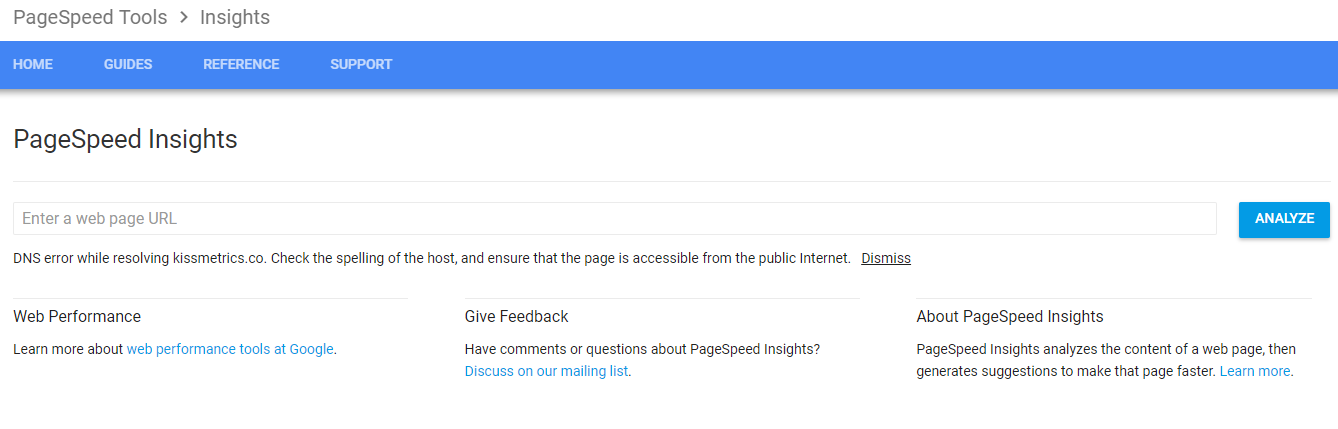
This will let you methodically insert the URLs of your product pages to test how quickly they load.
If you see less than optimal results, PageSpeed Insights will give you a breakdown of which elements will improve your site’s load speed.
If you see the option to Optimize images, you can click the drop-down menu below to see what needs to be fixed.
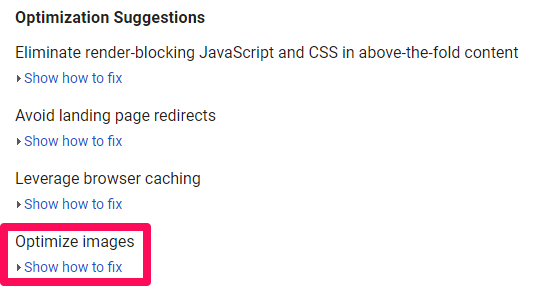
PageSpeed Insights will tell you the exact file or files that need to be compressed, as well as how big of a reduction it needs.

Once you find out which files need to be compressed, I recommend using a site like JPEGMini to help you complete the task with just a few clicks.
Other options are TinyJPG or ImageOptim (Mac only). Choose lossless compression so you don’t lose image quality.
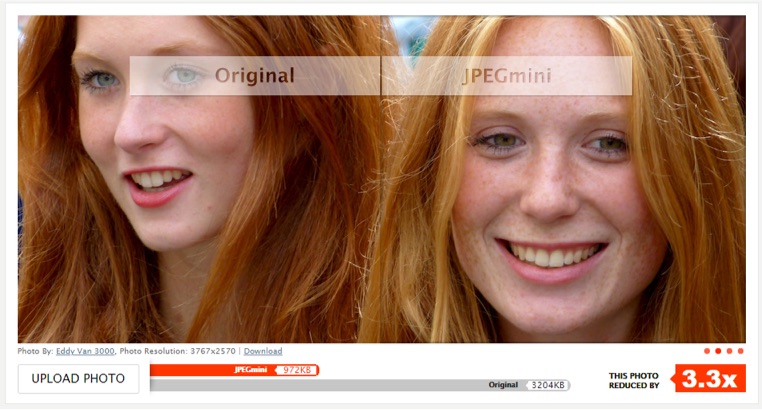
As you can see, there’s arguably no noticeable difference in the quality of these images to the naked eye.
But in Google’s case, it would notice a clear difference between the original file and the resulting compression that’s more than three times smaller.
This can drastically increase your load time, and even put you under the bar recommended by PageSpeed Insights.
All you have to do is upload your photo with a few clicks.
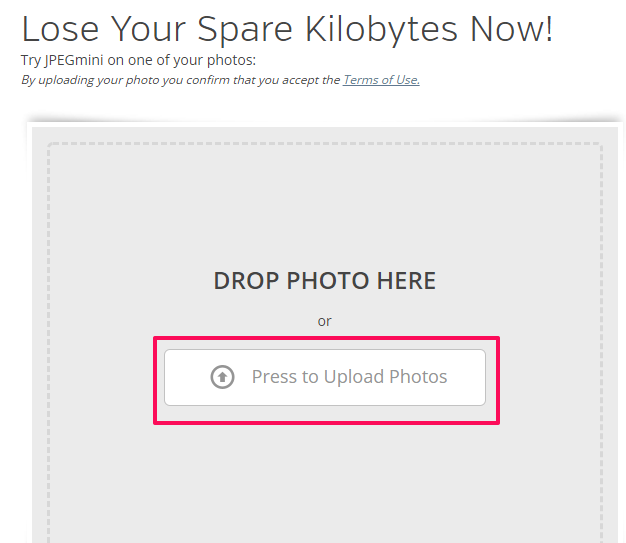
Then let their system work its magic.
You’ll have a compressed file that’s indistinguishable from the original that’s much, much smaller.
In one case, a brand had let its site load speed drop to abysmal levels in a way that started tanking its traffic.
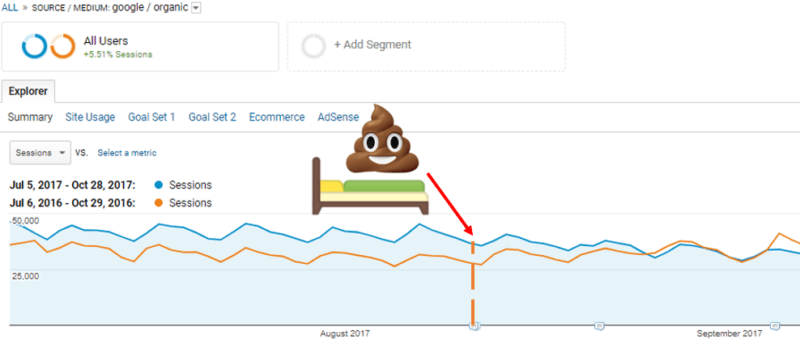
It even got to the point where PageSpeed Insights showed a zero score for their optimization.
In a large-scale effort to combat this, it overhauled its image sizes and compressed the size of its web pages as much as possible.
As a result, it saw a return to “normal” traffic levels.
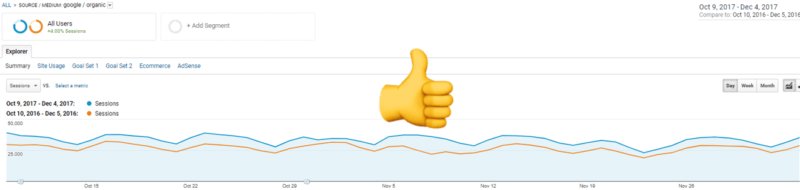
This is a clear signal that image size matters when it comes to your SEO.
If you let your images slow down your site, then you run the risk of turning away your users and decreasing the chance of a sale.
And if your image is too big, it’s very likely that Google will rank another image over it in its image search.
So if you want to drive your e-commerce sales with image search, it’s highly recommended to start implementing crisp, compressed images on your product pages.
This will increase the chances of organic traffic, and could ultimately help you edge out your competition.
Conclusion
Google image search has come a long way since 2001, and it seems the ride isn’t over.
With its new partnership with Getty Images, the way we search and use images on Google seems to have changed in favor of the brand that gets there first.
Sites that don’t even rank on the top few pages of Google can still have a fighting chance if its images are optimized and rank well.
And since the majority of e-commerce shoppers browse images before they buy, this development has clear implications for online sellers.
So to help set your brand apart, you need to optimize your images for SEO before your competitors catch on.
Start by ensuring that your alt tags and file names are optimized so that Google can “read” your images appropriately.
And of course, make sure that the images you use are both relevant to your search and interesting enough to make a user want to click.
Then, start leveraging your social media presence to build a pool of user-generated content.
These images will provide social proof and allow you to optimize even more images for SEO.
And finally, take steps to ensure that large image files aren’t negatively impacting your site’s load time.
If you approach your images correctly, you will have further optimized your site for Google’s image search and put your SEO in a better position altogether.
Has your brand seen traffic from Google image search? What worked for you?
About the Author: Neil Patel is the cofounder of Neil Patel Digital.
Source: feedproxy.google.com

5 Most Important Factors for Success in E-commerce (Make Sure You Hit These)
E-commerce seems to be eating up the retail world right now.
We’re seeing longtime brick-and-mortar retail brands closing or going bankrupt that we never would have expected to see disappear ten years ago.
Take Toys “R” Us for example. After more than 60 years in business, they are liquidating and closing all of their remaining U.S. stores.

On the other hand, the digital world is an exciting place to be, with business owners starting their very own digital brands and competing in the digital marketplace.
Most brick-and-mortar stores have been forced into creating an online presence.
But it isn’t always easy to hit it big online. You have to know what some of the trade secrets are if you want to make it to the top.
Here are the five most important factors for success in e-commerce that you can’t afford to ignore.
First, let’s talk about why so many e-commerce businesses struggle in the first place.
Why do many e-commerce businesses struggle?
There are many common reasons for the e-commerce struggle, and stores in different industries will face different hardships.

But there are some general battles that all e-commerce businesses have to fight.
Around 80% of all e-commerce businesses fail. And there are three common reasons why customers are likely to leave you in the dust:
- Customers don’t know how to use your site
- Product value isn’t clear
- Navigation is difficult
Have no fear. The solution to solving these problems may be simpler than you think.
For starters, people aren’t judging your business initiatives or products on their own merits. Customers simply want what they want when they want it.
And sometimes, their expectations can be pretty high. Especially online.
If you have too many shipping options on your site, you’ll deter customers who want their products quickly.
As many as 80% of American shoppers say that shipping price and speed are very or extremely influential in determining where they shop.
That’s why you should offer fast and free shipping when you can, like apparel brand Shongolulu, which offers free shipping on orders that are $30 or more.
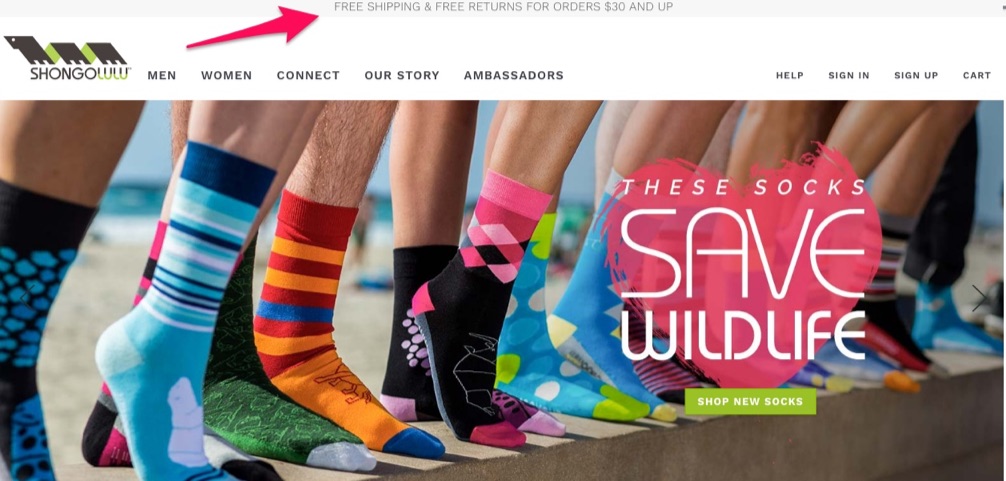
When customers don’t have to pay for shipping, they’ll be more likely to pull the trigger on a purchase that they can’t touch, feel, or try out because there’s less risk involved.
Customers don’t want to wait forever to get what they ordered, either, so if you’re willing to provide free shipping, choose a fast option.
At the beginning of the last year, the National Retail Federation speculated that online retail would grow 3x faster than the rest of the retail industry, with mobile e-commerce sales soaring.
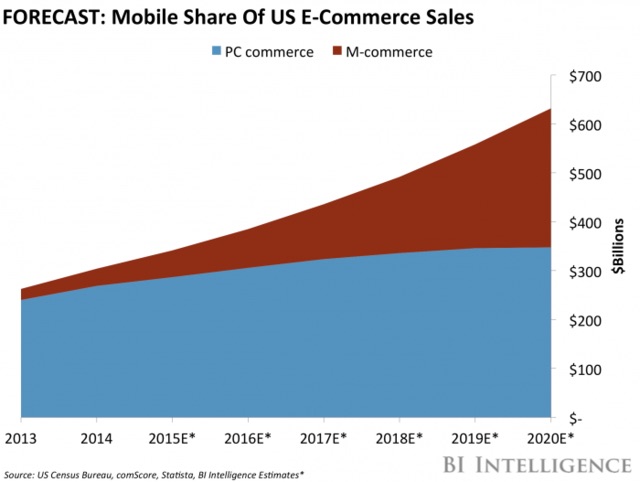
The rise of online shoppers has also shortened consumers’ patience. Online shoppers are looking for convenience.
They don’t want to deal with difficult return policies or long waits for orders.
Aside from long wait times and tricky shipping options, struggling businesses fail to take the following into account:
- Branding
- SEO
- User Experience
- Transparency
- Engagement
But the good news is that starting an e-commerce business today is perfectly doable. And so is taking each of these factors into account, which can help you stand out from competitors.
5 Most Important Factors for Success in E-commerce
The first step is building your brand with some great values behind it.
1. Your brand is your purpose
Your e-commerce business has a brand at the core of its identity, whether you know it or not.
To find out what it is, you have to think about what you do and why you do it.
Your brand embodies a set of values related to your business’s central endeavors. Some older brands aren’t aging well, because they don’t really have a clear mission.
Or they do, but they don’t disclose it.
In the last year, Enso’s World Value Index analyzed 150 brands according to how Americans identify their purpose and how well their purpose aligned with customer values.
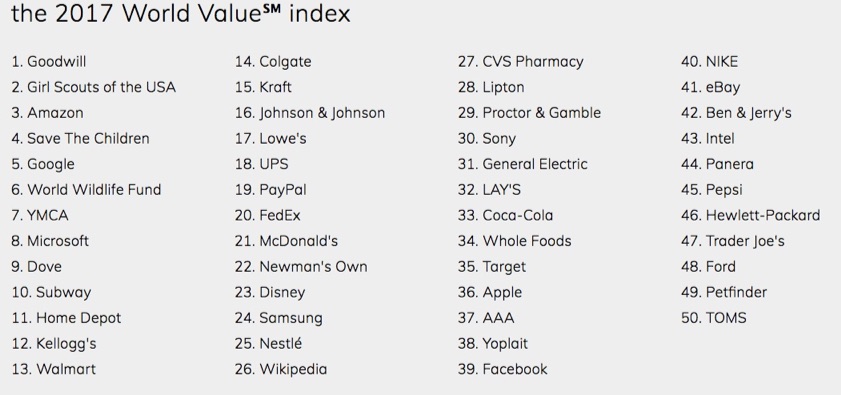
The research also looked at the extent to which each company motivates brand advocacy and purchase.
The results were vastly different for different demographics. Baby Boomers rated Newman’s Own to be number seven on the list, while millennials rated the company to be number 81.
The brand could lose its allure if they fail to appeal to millennials since their generation is much larger than the Baby Boomers and three times the size of Generation X.
And by this year, millennials are expected to outnumber Baby Boomers are America’s largest generation yet, according to the Pew Research Center.
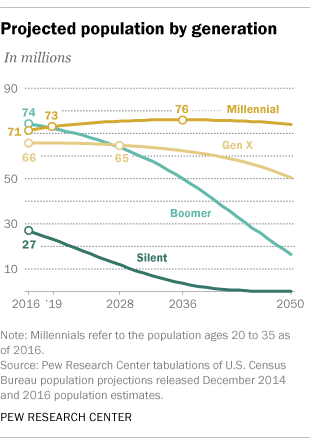
AAA, Pfizer, and Samsung were also ranked much lower by millennials than Boomers:
- AAA: millennial rank: No. 92; Boomer rank: No. 26
- Pfizer: millennial rank: No. 136; Boomer rank: No. 65
- Samsung: millennial rank: No. 74; Boomer rank: No. 19
The bottom line? Deviating from your brand hurts your message.
And when you hurt your message, you hurt your brand. Your brand persists on your customers’ unique perceptual map.
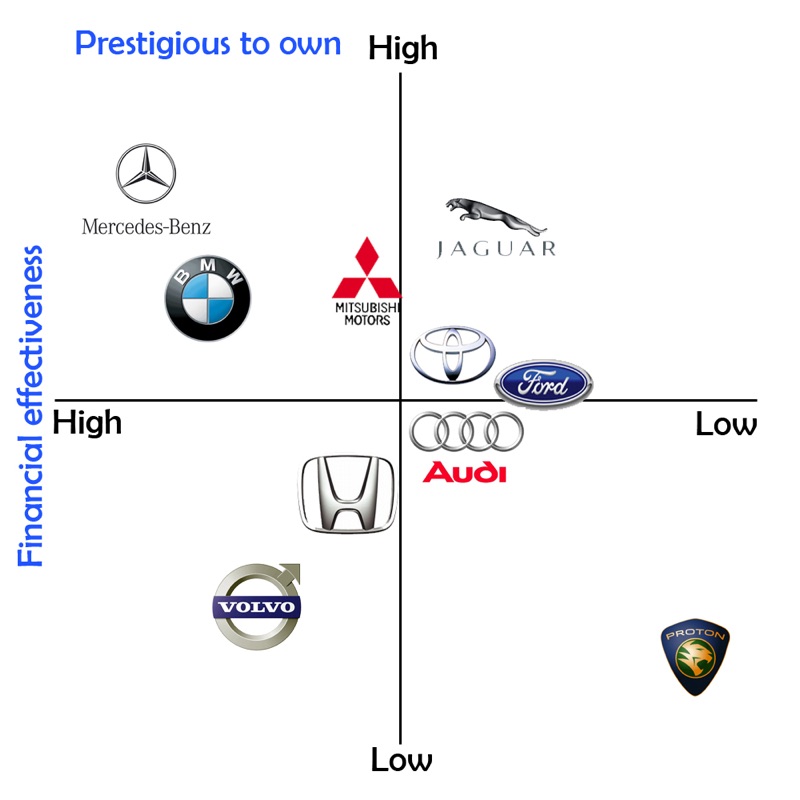
They build assumptions about your brand’s identity based on interactions with your company, and they aren’t likely to forget their first impression.
This means that they remember you when choosing to make another purchase. How they remember you impacts how they will review you.
As many as 31% of consumers are likely to spend 31% more on products and services from businesses with excellent reviews, while negative reviews can drive away 22% of customers.
A whopping 85% of customers trust online reviews as much as they trust personal recommendations.
Dissatisfied customers are more likely to share bad stories with friends & family than satisfied customers are likely to share good stories.
While happy customers might tell a few friends, unhappy customers will tell even more.
That means you’ll have a whole lot more “anti-referrals” on your hands than positive recommendations.
When you aren’t establishing your brand as the go-to, your competitors are.
In the digital era, your competition is no longer confined to the shop across the street.
If a stronger brand offers the same type of product that you do, they will gladly eat your market share.
That’s why you need a unique selling proposition, or USP, to win them over.
The point of a USP is to differentiate your product. The value of your USPs only comes into play after your prospects enter your funnel.
When your brand is weak, competitors with better brands will absorb customers. Marketing is more effective in conjunction with a strong brand.
Good marketing takes the brand’s voice and extends it outward to reach qualified leads.
If the brand doesn’t expand its core identity, it will struggle to reach its target audience.
And saturation from marketing campaigns may expose weak spots on a poor brand’s armor to a higher volume of people.
That’s why you always have to match good marketing with brand values.
You’ll need to do some SEO, too.
2. SEO brings in traffic
Google is sort of like an usher that decides which websites get to mingle near the top of the organic search engine results.
But with constant algorithm updates, it can be pretty hard to keep up.
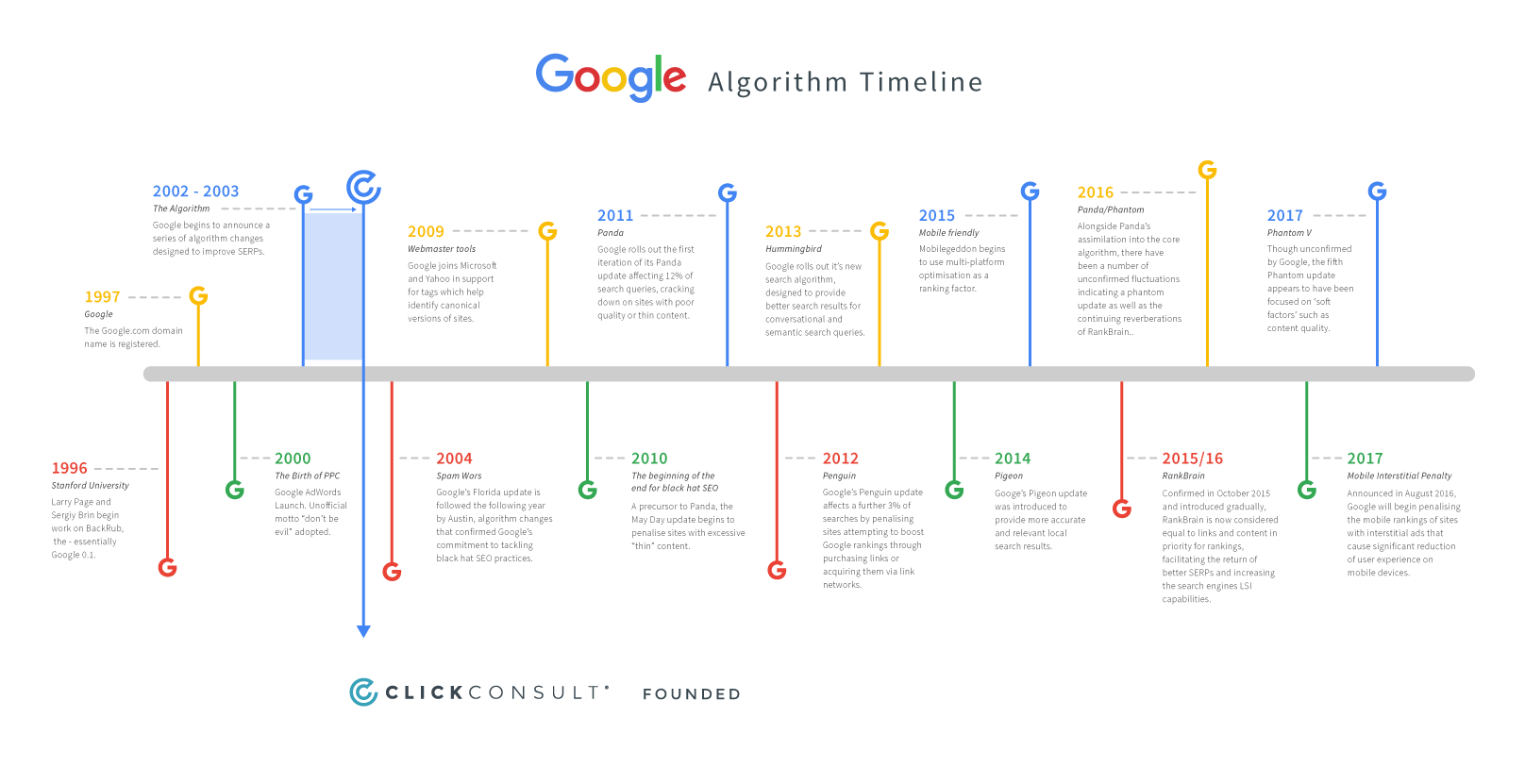
The Fred algorithm update, which launched on March 8, 2017, targets websites violating Google’s webmaster guidelines.
Most sites affected are ones with low-quality posts that were created solely to generate ad revenue.
So if you have any of these posts on your site, you could risk messing up your current rankings (or worse – losing high rankings altogether).
Review Google’s Search Quality Guidelines regularly and avoid posting too much content that is ad-centered.
If you do show ads or affiliate content on your site, make sure that the pages you run them on are relevant and high-quality, like this Buzzfeed post sponsored by Adidas:
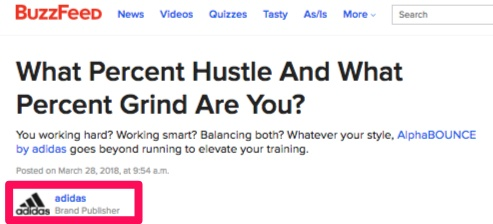
If you try and trick Google into thinking your page is about something valuable but it’s really just scattered with affiliate links, you’ll risk your rankings.
Landing pages with relevant keywords will receive a higher Google ranking and be more likely to show up during relevant searches, too.
Keyword research can help you learn how to position your page content.
Use a tool like Google Adwords Keyword Planner or Ubersuggest to get started. Just enter a keyword to uncover related words to target for.
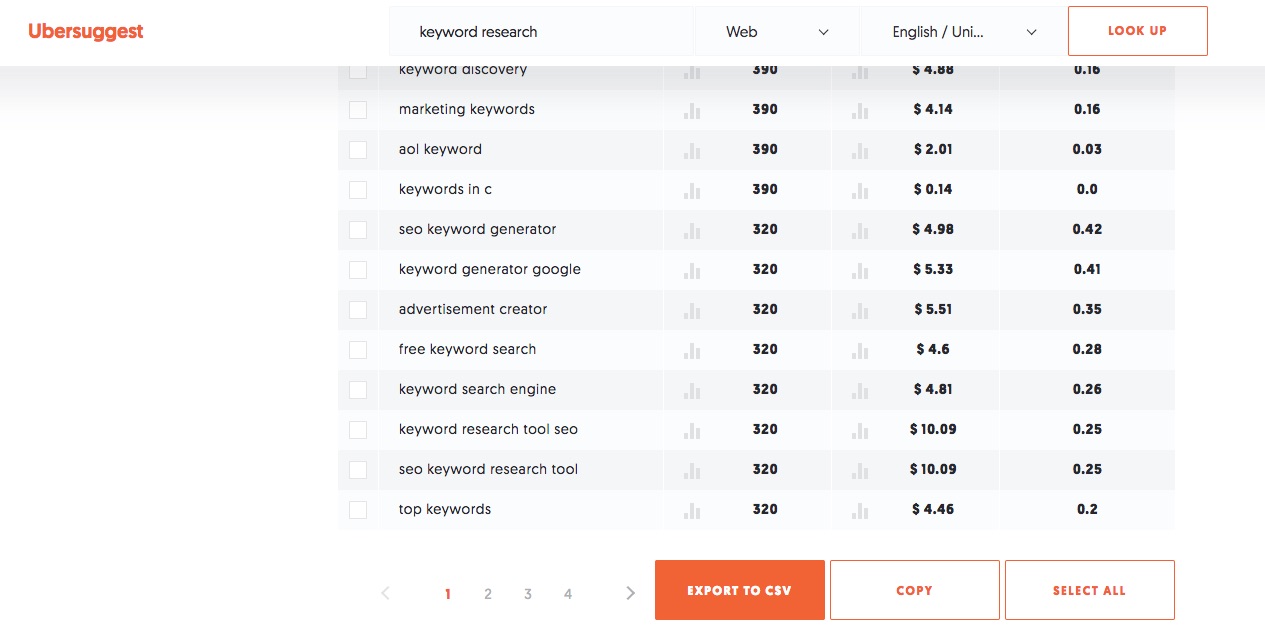
Remember that your brand is also a keyword. Highly qualified traffic will be searching for your brand name, so you want to rank for that.
But if you “hack” SEO to bring additional, potentially unqualified traffic to your site, you won’t like what happens next.
The idea of SEO is to give searchers the most qualified results for their queries. Pages that use exploitative or lazy tactics get penalized by Google.
All in all, SEO is something worth spending extra time strategizing around. Use this beginner’s manual to get started.
Once you’ve mastered SEO, turn your attention over to user experience (UX).
3. Customers love a great user experience
If you want to funnel traffic toward a desired action, like making a purchase, you need to optimize UX.
If site visitors get confused, they’ll leave. Site navigation should always be easy.
On your website, you have to make it clear what your business does. For example, Scott’s makes it clear that they sell lawn care products.
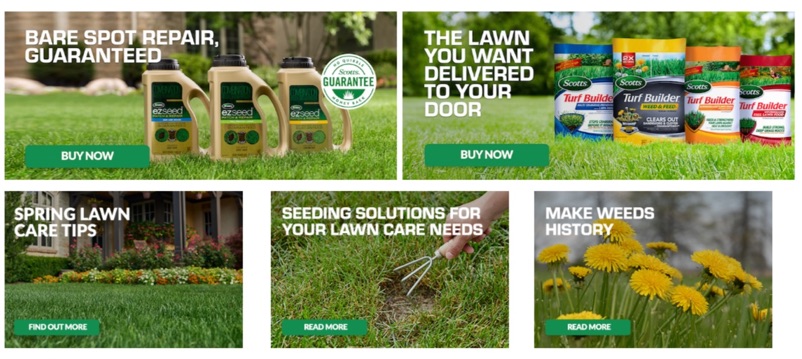
Reinforce what your brand does on your site. What’s obvious to you might not be obvious to someone else.
How did they get to this landing page? Why is the landing page content relevant? Use a clear, concise call to action.
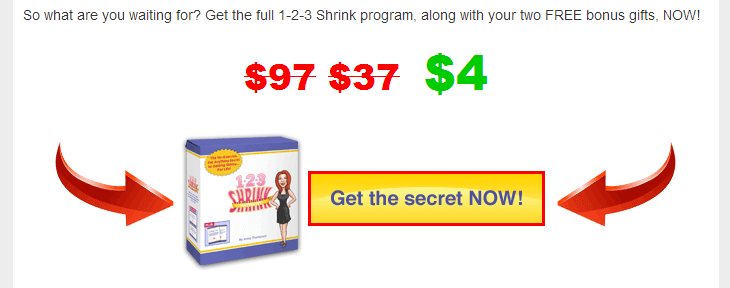
You should also make sure the shopping cart is easy to view and access. The checkout process must be straightforward.
Nobody wants to deal with a checkout process that makes purchasing your product harder than it needs to be.
Embed interactive content into your website (if appropriate). This includes:
- Videos
- Animated images
- Games
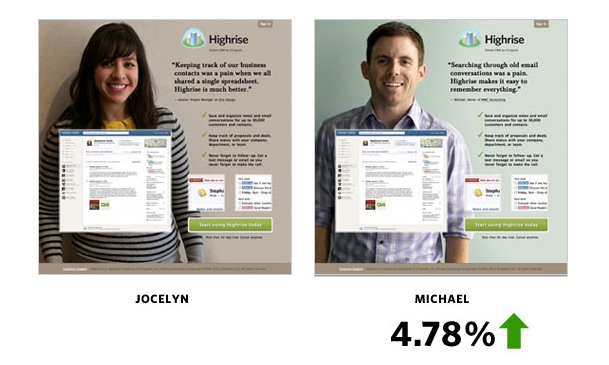
Always use A/B testing to figure out what works best.
Employ a tool such as Unbounce to weigh 2 or more page designs against each other for effectiveness in maximizing sales.

Pick whichever design version wins.
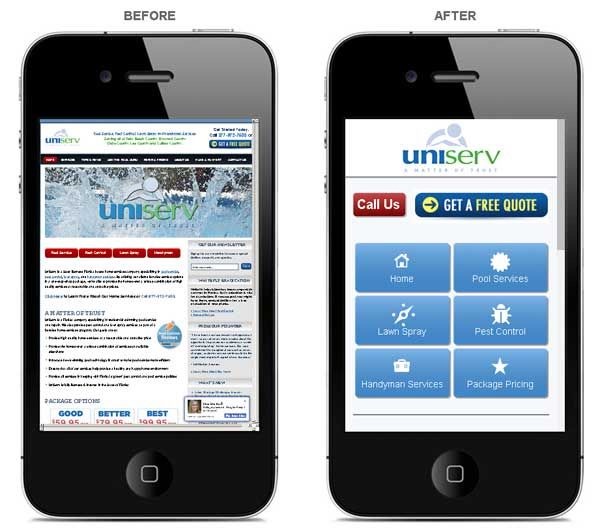
Don’t forget to optimize UX for mobile, too, since more and more consumers are shopping over mobile in 2018.
Ensure that your print is large, that load times are three seconds or less, and that the mobile version of your site is easy to navigate via touch.
Basically, the mobile version of your site shouldn’t look exactly like your regular website.
If you want to succeed in the e-commerce world, you have to be transparent with your customers, or they might not trust you.
4. Transparency builds trust
One of the easiest ways to come across as transparent is to make your contact information visible right on your website.
Your traffic should be able to find your email address and phone number at the bottom or top of every page on your site.
You can also add a “Contact Us” page, like this one from Tune:
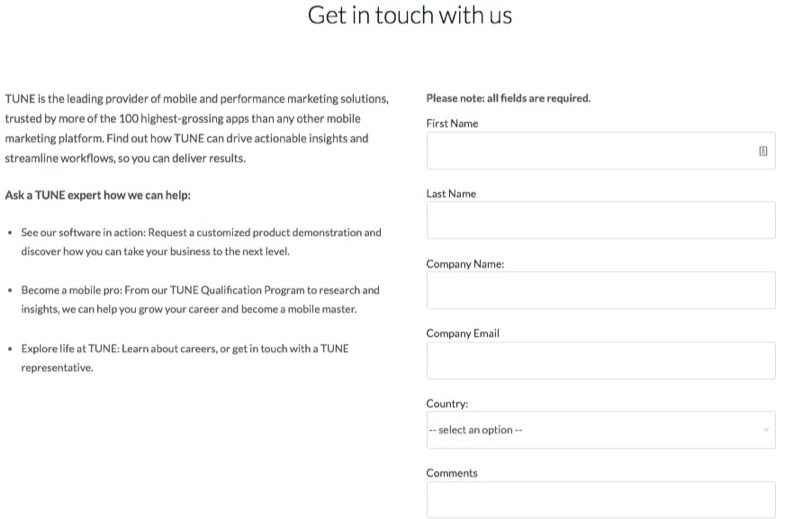
That way, customers will know how they can get in touch with you (and that you’re a real business with a real address).
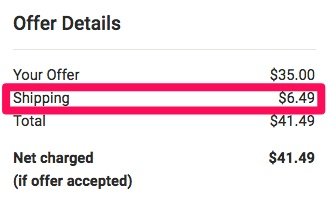
When it comes to charges, be upfront. No one likes hidden fees. Ever.
If you charge extra for shipping and handling, make sure that this is communicated to prospects before they reach the checkout page.
Don’t forget to give prospects outstanding product information, either.
Your product isn’t what’s bouncing traffic, which is good news. In fact, your product could be the best solution to your customers’ problems.
The bad news? Your product’s value isn’t translating.
Web visitors don’t have a physical store location to experience. Instead of getting to play with your products, they only see whatever information is available.
The quality of product information and attached images can make or break your sales pipeline.
Give a thick description of your product pages. Don’t forget to highlight key benefits, like Apple.

And make sure your product is priced competitively.
An overpriced product may be perceived as not offering utility equal to its price. An underpriced product may be suspicious or appear less valuable than similar products with higher prices.
Don’t price your item for more than you would pay as a customer. Or for more than your product is worth.
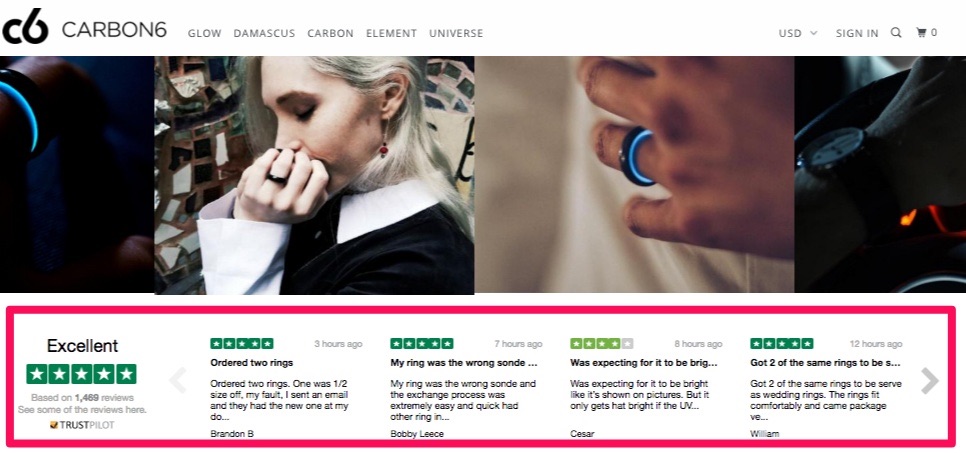
Drive that worth by sharing testimonials and reviews on your website, like Carbon 6 Rings.
If you want to find e-commerce success, you’ll need engaged website visitors. Here’s how to get them.
5. Boost overall engagement
The easiest way to boost engagement with your store is to use organic social media outlets to promote your brand in real-time.
Luckily for you, I have guides on how to boost engagement on just about every platform:
- Instagram – How to get started with Instagram
- YouTube – How to get started with YouTube
- Facebook – How to get started with Facebook
- LinkedIn – How to get started with LinkedIn
- Pinterest – How to get started with Pinterest
Content marketing matters. According to the Content Marketing Institute, 42% of B2C content marketers consider themselves to be “very committed to content marketing.”
If you haven’t already, build a blog about your industry and product lines.
Help your customers by sharing useful information or earn new prospects by answering their queries, like Patagonia.
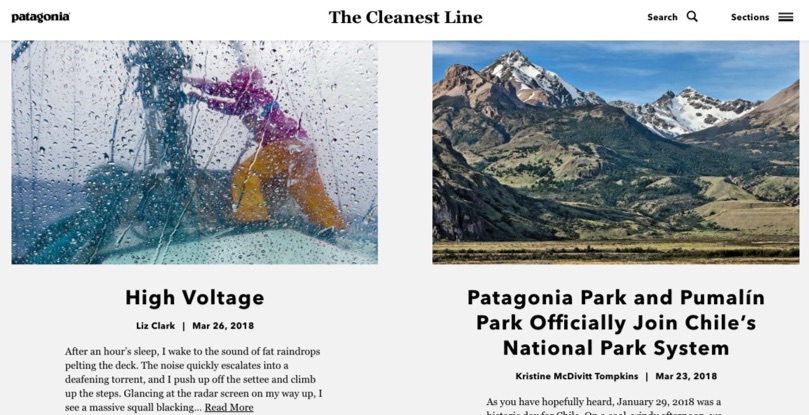
You could even write blog posts about product development updates. Did you just schedule a new product launch on the calendar? Write about it.
Tell your customers why the new product is useful, what the features of it are, and when it will be available.
This will create interest in the new item before it even launches.
Blog content boosts engagement because it helps build backlinks. And every time your website is linked to, you gain brand awareness.
Now that you’ve established a strong brand, a fantastic user experience, relevant content and customer transparency, you can begin actually spending your ad budget.
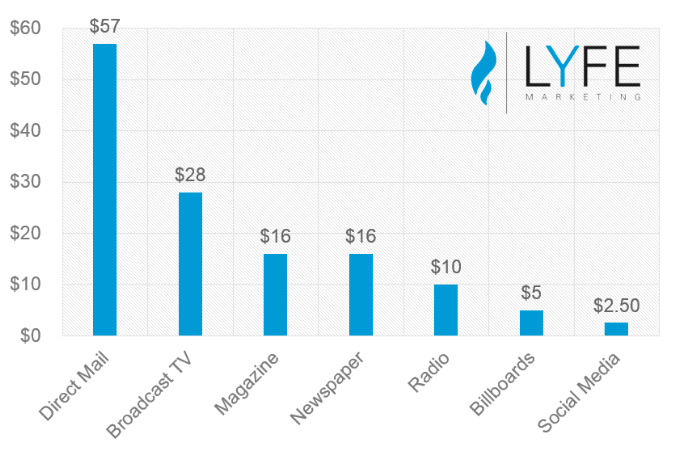
Try spending some of your ad budget on direct mail advertising or social media advertising. Choose wisely between the two, though.
Out of all paid advertising options, social media is the least expensive. With direct mail, you will spend an average of $57 for every 1,000 people you reach.
The amount spent to reach 1,000 people for social media advertising? Only $2.50.
Promote a few of your tweets or create some sponsored Facebook or Instagram ads.
You can also build a community from your brand. People tend to bond with others who have the same interests as them.
Your customers will probably want to connect with others who love your products (and company) just as much as they do. And they’ll probably promote what you’re selling for you.
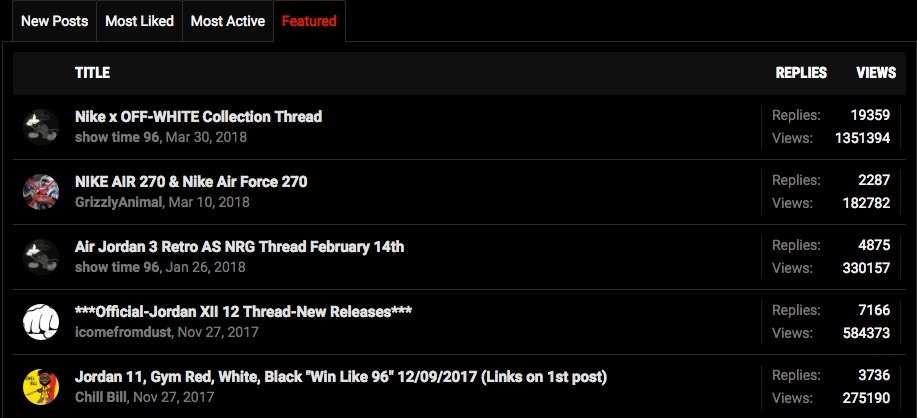
Allow them to connect by building a “forums” or “community” section of your website.
Shoot for something similar to NikeTalk, a forum site where Nike customers can post and comment on their own content.
Another great way to build engagement is to host some events. What’s the harm in throwing a party for some added PR?
Host a product launch party to let people try out your new stuff. You could even host a party they can bring their dogs to, like Structure Winery’s Wine for Wags event.

If you’re an online-only store, host your event in a public space, like an events center.
Create a hashtag related to your event, add it to your Facebook calendar, and send out invites to your followers. Drumming up some interest is as simple as that!
At the event, encourage users to share their own photo with the tag or post your own images to social media, like this post from Heritage Agents.

Center the entire event around your brand. Be sure to have your products out for sale during the event.
Talk with customers about what your products can do for them and how they can make their lives better. Hand out business cards with your website URL and social media handles.
Just because your website is located online doesn’t mean that you can’t boost overall brand engagement by meeting customers in person.
If you want to sweeten the pot, you could even give away a few items as door prizes or as trophies for interactive “contests” during the event.
Conclusion
The days of brick-and-mortar stores dominating the entire world of retail are long gone.
The digital landscape is here to stay, making online stores the best place to sell.
But making it big online is a lot harder than it seems. And tons of e-commerce businesses struggle to stand out in such a saturated crowd.
Customers who don’t know how to use your site, hidden shipping costs, unknown product value, poor navigation, and more are to blame.
Luckily, you can take control of your e-commerce store’s success.
First, understand that your brand needs to stand for something, and you need to let people know exactly what that is.
Your brand’s values should align with customers’ values, serve a purpose, and support ethical operations.
SEO brings in traffic, so you have to work on optimizing your rankings. Do some keyword research and add keywords to your site to pull in more customers.
But don’t try and cheat the system, or Google might penalize you, which could lead to a decrease in rankings.
Customers love awesome UX. Make it clear what you’re selling and add in CTAs so that you can funnel people through your site’s pages.
Optimize your site for mobile users, too.
Build transparency by adding contact information to your site, disclosing any additional fees or shipping costs before checkout, and embedding customer reviews.
This helps to build trust with shoppers.
Don’t forget to boost overall engagement rates. Get active on social media, create a blog with valuable content or product updates, or run some paid ads online.
Build a “forum” or “community” section on your website where users can come together or host some events to draw out a crowd for a good time.
Promote your event beforehand (and during) to create interest. Be sure to center the event around your brand and your products.
What are some important factors for your e-commerce success?
About the Author: Neil Patel is the cofounder of Neil Patel Digital.
Source: feedproxy.google.com