
Tag Archives for " deep learning "

How Could Deepfakes Change Marketing?
Below, I’m breaking down exactly what these videos are, the drawbacks of using them, and the different ways marketers are currently using deepfakes to create stronger campaigns.

Deepfakes are receiving a lot of bad press.
U.S. Sen. Marco Rubio (R-Fla.) called the technology a propaganda weapon.
Facebook’s COO Sheryl Sandberg said deepfakes raise the issue of not believing what you see.
Investigative journalist Rana Ayyub was targeted with a deepfake pornography video to discredit and silence her.
With so much negativity around tech, is there any chance of it bringing good into the world?
Yes! The possibilities when you combine AI technology with marketing are exciting and can change how we speak with our customers forever.
When used with positive intent, they are a potent marketing tool.
Below, I’m breaking down exactly what these videos are, the drawbacks of using them, and the different ways marketers are currently using deepfakes to create stronger campaigns.
What Are Deepfakes?

Have you seen a YouTube video of Barack Obama calling Donald Trump a “complete dipshit?”
What about Jon Snow apologizing for the disastrous season finale of Game of Thrones?
If you answered yes, you’ve seen a deepfake video.
The term “deepfake” was coined in 2017 and is a combination of “deep learning” and “fakes.”
It uses deep learning technology (a branch of machine learning) to create the dupe.
Artificial Intelligence (AI) learns what the source face looks like at different angles and then superimposes it onto an actor’s face, essentially creating a mask.
For example, let’s say you have a database of audio clips or video files of a person.
You could create a hyper-realistic fake video of celebrities discussing the future of cinema or revenge porn.
Hollywood has already taken advantage of deepfakes by transposing real faces onto other actors.
The most notable example is bringing Carrie Fisher back to life for a short scene in Rogue One: A Star Wars Story.
While many fear the technology being used for nefarious ends (more on this below), deepfakes offer a range of intriguing possibilities.
You can create apps to try a new hairstyle or use it to help doctors with medical diagnoses.
The Drawbacks of Using Deepfake Technology
With the rise of deepfake technology, it’s not hard to understand why some people are skeptical and even terrified of it becoming widely adopted.
After all, the advances in this technology make it harder to distinguish what is real and fake.
It can lead to serious dangers like fake news, putting words in politicians’ or celebrities’ mouths, and ruining someone’s life with fake pornography.
Lack of Trust
Deepfakes can breed a culture of mistrust and not knowing what to trust.
If the president holds a press conference inciting violence, but it’s a deepfake, how do you know what to believe?
For example, a deepfake of Mark Zuckerberg made the rounds on the internet.
The video shows Facebook’s CEO giving a speech about how the platform “owns” its users and crediting an organization called Spectre for Facebook’s success.
Increase in Scams
Another con is the opportunity it provides for scammers.
Audio deepfakes have already been used to defraud people out of money.
For example, a German energy firm’s U.K. subsidiary paid nearly $243,000 into a Hungarian bank account after a scammer mimicked the German CEO’s voice.
The core message for both examples is not knowing what is real.
Consumers are already doubting what they are reading online with social media sites like Facebook, Twitter, and Instagram, adding fact-checking processes to content.
Deepfakes can create more distrust of everyone around us and make us question everything we are seeing and hearing.
7 Ways Marketers Can Use Deepfakes
With all the backlash and potential pitfalls of deepfake technology, can marketers use it for good?
The answer is yes!
Some of the world’s biggest brands are already experimenting with deepfakes and using them to create unique and engaging content.
As long as you’re transparent about using the technology, you can create a more dynamic consumer journey.
1. Dynamic Campaigns With Influencers to Increase Reach

Imagine having an influencer agree to an ad campaign and only provide you with 20 minutes of audio content and a few video shots.
No lengthy photoshoot or filming days required.
Not only does it help you save time, but it opens the door to creating dynamic campaigns, a.k.a. microtargeted ads at scale.
Case in point: David Beckham’s 2019 malaria awareness ad.
The deepfake had the soccer star speaking in nine languages and is an excellent example of how this technology can increase a campaign’s reach.
Translating an ad into multiple languages also allows brands to enter new markets seamlessly and speak to consumers in their native tongue while still benefiting from the influencer or celebrity’s likeness.
2. Hyper-Personalized Campaigns for Your Audience
-min.png?width=2400&name=HS%20Blog%20Infographic%20v2%20(1)-min.png)
While some people want to ban deepfakes because of how they can be used to deceive people, it’s a creative and groundbreaking technology for marketers when used for good.
If you’re in the fashion industry, you could easily show models with different skin tones, heights, and weights.
With the average person seeing thousands of ads per day, using this tech to create psychological ownership and see the product as an extension of themselves is vital to cut through the noise.
It also helps marketers create hyper-personalized ads.
The benefits of creating a shopping experience catered to multiple segments mean you can reap the rewards of personalized marketing.
3. Product Ownership to Increase Sales
Another way to create ownership with deepfakes is using the technology to create personalized videos of your clients using or wearing your products.
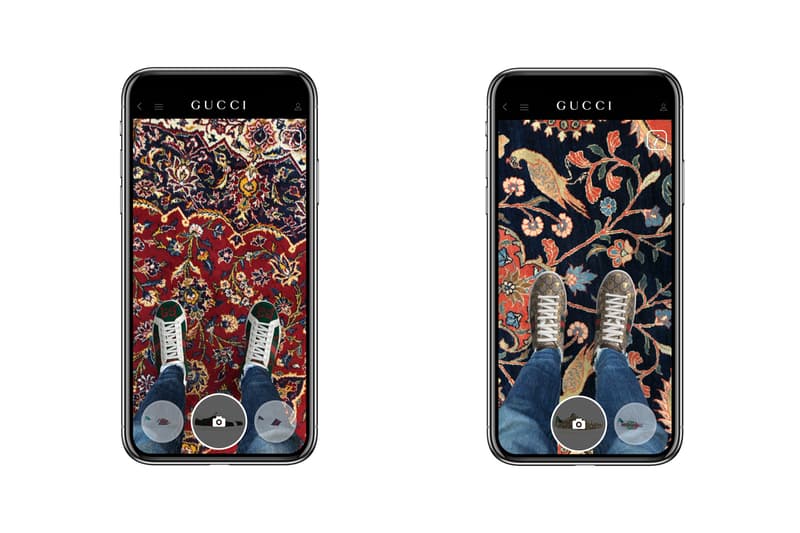
For example, Reface AI lets users virtually try on the new Gucci Ace sneaker as part of a virtual try-on haul.
Users can browse through the footwear options and view it on foot by pointing the phone at their feet.
Savvy marketers know the likelihood of a sale increases if people feel like they own the product.
It doubles down on the sensory experience where the longer someone spends looking and holding a product, the more likely they will buy it.
Deep learning can help stimulate the same experience with a deepfake of the customer behind the wheel of the latest BMW or a makeup look with the newest MAC eyeshadow palette.
4. Host Exhibitions and Events Anywhere in the World

For the events and art industries, deepfakes open up a world of exciting possibilities.
Technology can help you recreate objects or people anywhere in the world at the same time.
An example is the Dalí Museum in St. Petersburg, Fla., which uses a deepfake of Salvador Dalí to greet guests.
It creates a more engaging experience for visitors and brings the surrealism master back to life.
Dalí’s video was created by using over 6,000 frames of video footage from past interviews and 1,000 hours of machine learning to overlay it onto an actor’s face.
What makes the deepfake even more impressive is that Dalí is interactive.
The video has more than 190,000 possible combinations depending on a person’s answers.
While we already have holographic concerts for iconic musicians like Michael Jackson, deepfakes would create a more hyper-real experience for attendees.
Art exhibitions can use technology to display artworks around the world simultaneously.
Marketers can take it one step further and create deepfakes of product prelaunch (like the new iPhone) to generate buzz and create an interactive Steve Jobs to answer questions about the latest device.
5. Use Deepfakes to Entertain Your Audience

Marketers can use deep learning to create ad campaigns we would have never been able to do 20 years ago.
State Farm is leading the pack with its ad for The Last Dance, an ESPN documentary on Michael Jordan and the Chicago Bulls.
Using deepfake technology, State Farm superimposed 1998 SportsCenter footage to make it look like Kenny Mayne predicted the documentary.
The ad’s success led to a follow-up ad with Keith Olbermann and Linda Cohn “predicting” Phil Jackson’s success when he left Chicago to lead the Lakers.
These deepfakes serve to purely delight audiences and create a viral piece of content for the brand.
6. Market Segmentation and Personalization
One of the most successful deepfake examples using market segmentation is the 2018 Zalando campaign with Cara Delevingne.
The campaign’s concept was to create awareness around Zalando now delivering Top Shop fashion to people in the most remote parts of Europe.
With a single video shoot, they created 60,000 bespoke video messages for every tiny town and village in Europe using deepfake technology to produce alternative shots and voice fonts.
Then using Facebook’s ad targeting, they showed users the specific video which mentioned their hometown.
The campaign received more than 180 million impressions, and Top Shop sales increased by 54 percent.
This can help marketers eliminate further customer generalizations or affinity grouping and create content that speaks to people on a more individual level.
7. Educating Consumers With Deepfakes
Do you have a product with a learning curve?
You can use deepfake technology to educate your customers on how to use it and improve their skills.
For example, if you’re a camera brand like Canon, you can use an AI instructor to help novice photographers learn faster.
The technology can point out compositional mistakes, advise on camera settings, and help them slowly master their device.
At trade shows, you could have potential customers practice taking photos, learning from the AI, or testing their skills against the deepfake.
It can help create an interactive experience, put the product in the person’s hands, and start building brand loyalty.
Conclusion
Of course, there’s always going to be a few bad apples.
While some people are causing mayhem with deepfakes, there are plenty of golden opportunities for marketers.
This technology allows you to create hyper-personalization, duplicate your marketing efforts instantly, increase brand loyalty, and use product ownership to increase sales.
What are your thoughts on using deepfakes in marketing? Do you think its potential to do good outweighs the bad?
Source: neilpatel.com

AI Operations: It Can’t Be Just an Afterthought
In the worlds of machine learning (ML) and deep learning (DL), operations and deployment is a subject that often falls by the wayside.
And the split reality between everyday on-premises Artificial Intelligence (AI) work and the industry’s fascination with more aspirational cloud-based AI work only makes matters worse.

Reasons to use AI
For the adoption of AI/ML/DL to be actionable for Enterprise customers, the full spectrum of on-premises and cloud-based work needs to be accommodated.
Deployment and operations across environments need to be consistent.
On-premises provisioning and deployment should feel cloud-like in ease-of-use, and hybrid scenarios need to be handled robustly.
Installation and management of frameworks and models need to be handled too.
Join us for this free 1-hour webinar, from GigaOm Research, to explore these matters.

The Webinar features GigaOm analyst Andrew Brust and special guests, Adnan Khaleel from Dell EMC, and Professor Sambit Bhattacharya of Fayetteville State University, a customer of Bright Computing.
This webinar is sponsored by Dell EMC, NVIDIA, and Bright Computing.
In this 1-hour webinar, attendees discover:
- How cross-premises AI deployment is both necessary and achievable
- What “AI Ops” looks like today, and where it’s going
- The sweet spot of ML/DL training workloads between the data center and cloud
Register now to join GigaOm Research and Dell EMC for this free expert webinar.
Who Should Attend:
- CIOs
- CTOs
- Chief Data Officers
- Data Scientists
- IT/Data Center specialists
- DevOps professionals
Source: gigaom.com

Voices in AI – Episode 70: A Conversation with Jakob Uszkoreit
About this Episode
Episode 70 of Voices in AI features host Byron Reese and Jakob Uszkoreit discuss machine learning, deep learning, AGI, and what this could mean for the future of humanity.
Jakob has a master’s degree in Computer Science and Mathematics from Technische Universität Berlin.
Jakob has also worked at Google for the past 10 years currently in deep learning research with Google Brain.
Visit www.VoicesinAI.com to listen to this one-hour podcast or read the full transcript.

Transcript Excerpt
Byron Reese: This is Voices in AI, brought to you by GigaOm. I’m Byron Reese. Today our guest is Jakob Uszkoreit, he is a researcher at Google Brain, and that’s kind of all you have to say at this point. Welcome to the show, Jakob.
Q:1
Let’s start with my standard question which is: What is artificial intelligence, and what is intelligence if you want to start there, and why is it artificial?
Jakob Uszkoreit: Hi, thanks for having me.
Let’s start with artificial intelligence specifically.
I don’t think I’m necessarily the best person to answer the question of what intelligence is in general, but I think for artificial intelligence, there are possibly two different kinds of ideas that we might be referring to with that phrase.
One is kind of the scientific or the group of directions of scientific research, including things like machine learning, but also other related disciplines that people commonly refer to with the term ‘artificial intelligence.’

But I think there’s this other may be a more important use of the phrase that has become much more common in this age of the rise of AI if you want to call it that, and that is what society interprets that term to mean.
I think largely what society might think when they hear the term artificial intelligence, is actually automation, in a very general way, and maybe more specifically, automation where the process of automating [something] requires the machine or the machines doing so to make decisions that are highly dynamic in response to their environment and in our ideas or in our conceptualization of those processes, require something like human intelligence.
So, I really think it’s actually something that doesn’t necessarily, in the eyes of the public, have that much to do with intelligence, per se.
It’s more the idea of automating things that at least so far, only humans could do, and the hypothesized reason for that is that only humans possess this ephemeral thing of intelligence.
Q:2
Do you think it’s a problem that a cat food dish that refills itself when it’s empty, you could say has a rudimentary AI, and you can say Westworld is populated with AIs, and those things are so vastly different, and they’re not even really on a continuum, are they?
General intelligence isn’t just a better narrow intelligence, or is it?
So I think that’s a very interesting question.
Whether basically improving and slowly generalizing or expanding the capabilities of narrow bits of intelligence, will eventually get us there, and if I had to venture a guess, I would say that’s quite likely actually.
That said, I’m definitely not the right person to answer that.
I do think that guesses, that aspects of things are today still in the realms of philosophy and extremely hypothetical.

Q:3
But the one trick that we have gotten good at recently that’s given us things like AlphaZero, is machine learning, right?
And it is itself a very narrow thing.
It basically has one core assumption, which is the future is like the past.
And for many things, it is: what a dog looks like in the future, is what a dog looked like yesterday.
But, one has to ask the question, “How much of life is actually like that?”
Do you have an opinion on that?
Yeah, so I think that machine learning is actually evolving rapidly from the initial classic idea of basically trying to predict the future just in the past, and not just the past as a kind of encapsulated version of the past.
So, it’s basically a snapshot captured in this fixed static data set.
You expose machines to that, you allow it to learn from that, train on that, whatever you want to call it, and then you evaluate how the resulting model or machine or network does in the wild or on some evaluation tasks, and tests that you’ve prepared for it.

It’s evolving from that classic definition towards something that is quite a bit more dynamic, that is starting to incorporate learning in situ, learning kind of “on the job,” learning from very different kinds of supervision, where some of it might be encapsulated by data sets, but some might be given to the machine through somewhat more high-level interactions, maybe even through language.
There are at least a bunch of lines of research attempting that.
Also quite importantly, we’re starting slowly but surely to employ machine learning in ways where the machine’s actions actually have an impact on the world, from which the machine then keeps learning.
I think that that’s actually something [for which] all of these parts are necessary ingredients if we ever want to have narrow bits of intelligence, that maybe have a chance of getting more general.
Maybe then in the more distant future, might even be bolted together into somewhat more general artificial intelligence.
Listen to this one-hour episode or read the full transcript at www.VoicesinAI.com
Byron explores issues around artificial intelligence and conscious computers in his new book The Fourth Age: Smart Robots, Conscious Computers, and the Future of Humanity.
Source: gigaom.com

Voices in AI – Episode 63: A Conversation with Hillery Hunter
About this Episode
Episode 63 of Voices in AI features host Byron Reese and Hillery Hunter discuss AI, deep learning, power efficiency, and understanding the complexity of what AI does with the data it is fed.
Hillery Hunter is an IBM Fellow and holds an MS and a Ph.D. in electrical engineering from the University of Illinois Urbana-Champaign.
Visit www.VoicesinAI.com to listen to this one-hour podcast or read the full transcript.

Transcript Excerpt
Byron Reese: This is Voices in AI brought to you by GigaOm, I’m Byron Reese. Today, our guest is Hillery Hunter. She is an IBM Fellow, and she holds an MS and a Ph.D. in electrical engineering from the University of Illinois Urbana-Champaign. Welcome to the show, Hillery.
Thank you it’s such a pleasure to be here today, looking forward to this discussion, Byron.
Q: 1
So, I always like to start off with my Rorschach test question, which is: what is artificial intelligence, and why is it artificial?
You know that’s a great question. My background is in hardware and in systems and in the actual compute substrate for AI.
So one of the things I like to do is sort of demystifying what AI is.
There are certainly a lot of definitions out there, but I like to take people to the math that’s actually happening in the background.
So when we talk about AI today, especially in the popular press and such and people talk about the things that AI is doing, be it understanding medical stands or labeling people’s pictures on a social media platform, or understanding speech or translating language, all those things that are considered core functions of AI today are actually deep learning, which means using many-layered neural networks to solve a problem.
There are also other parts of AI though, that is much less discussed in the popular press, which includes knowledge and reasoning and creativity and all these other aspects.
And you know the reality is where we are today with AI, is we’re seeing a lot of productivity from the deep learning space and ultimately those are big math equations that are solved with lots of matrix math, and we’re basically creating a big equation that matches in its parameters to a set of data that it was fed.

Q: 2
So, would you say though that it is actually intelligent, or that it is emulating intelligence, or would you say there’s no difference between those two things?
Yeah, so I’m really quite pragmatic as you just heard from me saying,
“Okay, let’s go talk about what the math is that’s happening,” and right now where we’re at with AI is relatively narrow capabilities.
AI is good at doing things like classification or answering yes and no kind of questions on data that it was fed and so in some sense, it’s mimicking intelligence in that it is taking in sort of human sensory data a computer can take in.
What I mean by that is it can take in visual data or auditory data, people are even working on sensory data and things like that.
But basically, a computer can now take in things that we would consider sort of human process data, so visual things and auditory things, and make determinations as to what it thinks it is, but certainly far from something that’s actually thinking and reasoning and showing intelligence.
Q: 3
Well, staying squarely in the practical realm, that approach, which is basically, let’s look at the past and make guesses about the future, what is the limit of what that can do?
I mean, for instance, is that approach going to master natural language for instance?
Can you just feed a machine enough printed material and have it be able to converse?
Like what are some things that the model may not actually be able to do?
Yeah, you know it’s interesting because there’s a lot of debate.
What are we doing today that’s different from analytics?
We had the big data era, and we talked about doing analytics on the data.
What’s new and what’s different and why are we calling it AI now?
To refer to your question from that direction, one of the things that AI models do, be it anything from a deep learning model to something that’s more in the knowledge reasoning area, is that they’re much better interpolators, they’re much better able to predict on things that they’ve never seen before.
Classical rigid models that people programmed in computers, could answer “Oh, I’ve seen that thing before.”
With deep learning and with more modern AI techniques, we are pushing forward into computers and models being able to guess on things that they haven’t exactly seen before.
And so in that sense, there’s a good amount of interpolation influx, whether or not and how AI pushes into forecasting on things well outside the bounds of what it’s never seen before and moving AI models to be effective at types of data that are very different from what they’ve seen before, is the type of advancement that people are really pushing for at this point.
Listen to this one-hour episode or read the full transcript at www.VoicesinAI.com
Byron explores issues around artificial intelligence and conscious computers in his new book The Fourth Age: Smart Robots, Conscious Computers, and the Future of Humanity.
Source: gigaom.com

Voices in AI – Episode 62: A Conversation with Atif Kureishy
About this Episode
Episode 62 of Voices in AI features host Byron Reese and Atif Kureishy discussing AI, deep learning, and the practical examples and implications in the business market and beyond.
Atif Kureishy is the Global VP of Emerging Practices at Think Big, a Teradata company.
He also has a B.S. in physics and math from the University of Maryland as well as an MS in distributive computing from Johns Hopkins University.
Visit www.VoicesinAI.com to listen to this one-hour podcast or read the full transcript.

Transcript Excerpt
Byron Reese: This is Voices in AI, brought to you by GigaOm, I’m Byron Reese. Today my guest is Atif Kureishy.
He is the Global VP of Emerging Practices, which is AI and deep learning at Think Big, a Teradata company.
He holds a BS in Physics and Math from the University of Maryland, Baltimore County, and an MS in distributive computing from Johns Hopkins University.
Welcome to the show Atif.
Atif Kureishy: Welcome, thank you, appreciate it.
Q: 1
So I always like to start off by just asking you to define artificial intelligence.
Yeah, definitely an important definition, one that unfortunately is overused and stretched in many different ways.
Here at Think Big we actually have a very specific definition within the enterprise.
But before I give that, for me in particular, when I think of intelligence, that conjures up the ability to understand, the ability to reason, the ability to learn, and we usually equate that to biological systems or living entities
And now with the rise of probably more appropriate machine intelligence, we’re applying the term ‘artificial’ to it, and the rationale is probably because machines aren’t living and they’re not biological systems.
So with that, the way we’ve defined AI, in particular, is: leveraging machine and deep learning to drive towards a specific business outcome.
And it’s about giving leverage for human workers, to enable higher degrees of assistance and higher degrees of automation.
And when we define AI in that way, we actually give it three characteristics.
Those three characteristics are the ability to sense and learn, and so that’s being able to understand massive amounts of data and demonstrate continuous learning, and detecting patterns and signals within the noise if you will.
And the second is being able to reason and infer, and that is driving intuition and inference with increasing accuracy again to maximize a business outcome or a business decision.
And then ultimately it’s about deciding and acting, so actioning or automating a decision based on everything that’s understood, to drive towards more informed activities that are based on corporate intelligence.
So that’s kind of how we view AI in particular.
Q: 2
Well, I applaud you for having given it so much thought, and there’s a lot there to unpack.
You talked about intelligence being about understanding and reasoning and learning, and that was even in your three areas.
Do you believe machines can reason?
You know, over time, we’re going to start to apply algorithms and specific models to the concept of reasoning.
And so the ability to understand, the ability to learn, are things that we’re going to express in mathematical terms no doubt.
Does it give it human lifelike characteristics? That’s still something to be determined.

Q: 3
Well, I don’t mean to be difficult with the definition because, as you point out, most people aren’t particularly rigorous when it comes to it.
But if it’s to drive an outcome, take a cat food dish that refills itself when it’s low, it can sense, it can reason that it should put more food in.
And then it can act and release a mechanism that refills the food dish, is that AI, in your understanding, and if not why isn’t that AI?
Yeah, I mean I think in some sense it checks a lot of the boxes, but the reality is, being able to adapt and understand what’s occurring.
For instance, if that cat is coming out during certain times of the day ensuring that meals are prepared in the right way and that they don’t sit out and become stale or become spoiled in any way.
And that is signs of a more intelligent type of capability that is learning the behaviors and anticipating how best to respond given a specific outcome it’s driving towards.

Q: 4
Got you. So now, to take that definition, your company is Think Big.
What do you think big about? What is Think Big and what do you do?
So looking back in history a little bit, Think Big was actually an acquisition that Teradata had done several years ago, in the big data space, and particularly around open source and consulting.
And over time, Teradata had made several acquisitions and now we’ve unified all of those various acquisitions into a unified group, called Think Big Analytics.
And so what we’re particularly focused on is how do we drive business outcomes using advanced analytics and data science.
And we do that through a blend of approaches and techniques and technology frankly.

Listen to this one-hour episode or read the full transcript at www.VoicesinAI.com
Byron explores issues around artificial intelligence and conscious computers in his new book The Fourth Age: Smart Robots, Conscious Computers, and the Future of Humanity.
Source: gigaom.com

Voices in AI – Episode 61: A Conversation with Dr. Louis Rosenberg
About this Episode
Episode 61 of Voices in AI features host Byron Reese and Dr. Louis Rosenberg talking about AI and swarm intelligence. Dr. Rosenberg is the CEO of Unanimous AI. He also holds a B.S., M.S., and a Ph.D. in Engineering from Stanford.
Visit www.VoicesinAI.com to listen to this one-hour podcast or read the full transcript.

Transcript Excerpt
Byron Reese: This is Voices in AI, brought to you by GigaOm. I’m Byron Reese and today I’m excited that our guest is Louis Rosenberg.
He is the CEO at Unanimous A.I. He holds a B.S. in Engineering, an M.S. in Engineering, and a Ph.D. in Engineering all from Stanford. Welcome to the show, Louis.
Dr. Louis Rosenberg: Yeah, thanks for having me.
Q: 1
So tell me a little bit about why do you have a company? Why are you CEO of a company called Unanimous A.I.?
What is the unanimous aspect of it?
Sure. So, what we do at Unanimous A.I. is we use artificial intelligence to amplify the intelligence of groups rather than using A.I. to replace people.
And so instead of replacing human intelligence, we are amplifying human intelligence by connecting people together using A.I. algorithms.
So in laymen’s terms, you would say we build hive minds. In scientific terms, we would say we build artificial swarm intelligence by connecting people together into systems.

Q: 2
What is swarm intelligence?
So swarm intelligence is a biological phenomenon that people have been studying, or biologists have been studying, since the 1950s.
And it is basically the reason why birds flock and fish school and bees swarm—they are smarter together than they would be on their own.
And the way they become smarter together is not the way people do it. They don’t take calls, they don’t conduct surveys, there’s no SurveyMonkey in nature.
The way that groups of organisms get smarter together is by forming systems, real-time systems with feedback loops so that they can essentially think together as an emergent intelligence that is smarter as a uniform system than the individual participants would be on their own.
And so the way I like to think of an artificial swarm intelligence or a hive mind is as a brain of brains.
And that’s essentially what we focus on at Unanimous A.I., is figuring out how to do that among people, even though nature has figured out how to do that among birds and bees and fish, and have demonstrated over millions of years and hundreds of millions of years, how powerful it can be.

Q: 3
So before we talk about artificial swarm intelligence, let’s just spend a little time really trying to understand what it is that the animals are doing.
So the thesis is, your average ant isn’t very smart and even the smartest and isn’t very smart and yet collectively they exhibit behavior that’s quite intelligent.
They can do all kinds of things and forage and do this and that, and build a home and protect themselves from a flood and all of that. So how does that happen?
Yeah, so it’s an amazing process, and it’s worth taking one little step back and just asking ourselves, how do we define the term intelligence?
And then we can talk about how we can build a swarm intelligence.
And so, in my mind, the word intelligence could be defined as a system that takes in noisy input about the world and it processes that input and it uses it to make decisions, to have opinions, to solve problems and, ideally, it does it creatively and by learning over time.
And so if that’s intelligence, then there are lots of ways we can think about building artificial intelligence, which I would say is basically creating a system that involves technology that does some or all of these systems, takes in noisy input, and uses it to make decisions, have opinions, solve problems, and does it creatively and learning over time.

Now, in nature, there’s really been two paths by which nature has figured out how to do these things, how to create intelligence.
One path is the path we’re very, very familiar with, which is by building up systems of neurons.
And so, over hundreds of millions and billions of years, nature figured out that if you build these systems of neurons, which we call brains, you can take in information about the world and you can use it to make decisions and have opinions and solve problems and do it creatively and learn over time.
But what nature has also shown is that in many organisms—particularly social organisms—once they’ve built that brain and they have an individual organism that can do this on their own, many social organisms then evolve the ability to connect the brains together into systems.
So if a brain is a network of neurons where intelligence emerges, a swarm in nature is a network of brains that are connected deeply enough that a superintelligence emerges.
And by superintelligence, we mean that the brain of brains is smarter together than those individual brains would be on their own.
And as you described, it happens in ants, it happens in bees, it happens in birds, and fish.

And let me talk about bees because that happens to be the type of swarm intelligence that’s been studied the longest in nature.
And so, if you think about the evolution of bees, they first developed their individual brains, which allowed them to process information, but at some point, their brains could not get any larger, presumably because they fly, and so bees fly around, their brains are very tiny to be able to allow them to do that.
In fact, a honeybee has a brain that has less than a million neurons in it, and it’s smaller than a grain of sand.
And I know a million neurons sounds like a lot, but a human has 85 billion neurons. So however smart you are, divide that by 85,000 and that’s a honeybee.
So a single honeybee, very, very simple organism, and yet they have very difficult problems that they need to solve, just like humans have difficult problems.

And so the type of problem that is actually studied the most in honeybees is picking a new home to move into.
And by a new home, I mean, you have a colony of 10,000 bees and every year they need to find a new home because they’ve outgrown their previous home and that home could be a hole in a hollow log, it could be a hole at the side of a building, it could be a hole—if you’re unlucky—in your garage, which happened to me.
And so a swarm of bees is going to need to find a new home to move into. And, again, it sounds like a pretty simple decision, but actually, it’s a life-or-death decision for honeybees.
And so for the evolution of bees, the better decision that they can make when picking a new home, the better the survival of their species.
And so, to solve this problem, what colonies of honeybees do is they form a hive mind or a swarm intelligence and the first step is that they need to collect information about their world.
And so they send out hundreds of scout bees out into the world to search 30 square miles to find potential sites, candidate sites that they can move into.
So that’s data collection. And so they’re out there sending hundreds of bees out into the world searching for different potential homes, then they bring that information back to the colony and now they have the difficult part of it: they need to make a decision, they need to pick the best possible site of dozens of possible sites that they have discovered.
Now, again, this sounds simple but honeybees are very discriminating house-hunters. They need to find a new home that satisfies a whole bunch of competing constraints.
That new home has to be large enough to store the honey they need for the winter. It needs to be ventilated well enough so they can keep it cool in the summer.
It needs to be insulated well enough so it can stay warm on cold nights. It needs to be protected from the rain, but also near good sources of water.
And also, of course, it needs to be well-located, near good sources of pollen.

And so it’s a complex multi-variable problem. This is a problem that a single honeybee with a brain smaller than a grain of sand could not possibly solve.
In fact, a human that was looking at that data would find it very difficult to use a human brain to find the best possible solution to this multi-variable optimization problem.
Or a human that is faced with a similar human challenge, like finding the perfect location for a new factory or the perfect features of a new product or the perfect location to put a new store, would be very difficult to find a perfect solution.
And yet, rigorous studies by biologists have shown that honeybees pick the best solution from all the available options about 80% of the time.
And when they don’t pick the best possible solution, they pick the next best possible solution. And so it’s remarkable.
By working together as swarm intelligence, they are enabling themselves to make a decision that is optimized in a way that a human brain, which is 85,000 times more powerful, would struggle to do.
And so how do they do this? Well, they form a real-time system where they can process the data together and converge together on the optimal solution.
Now, they’re honeybees, so how do they process the data? Well, nature came up with an amazing way. They do it by vibrating their bodies.
And so biologists call this a “waggle dance” because to humans when people first starting looking into hives, they saw these bees doing something that looked like they were dancing because they were vibrating their bodies.
It looked like they were dancing but really they were generating these vibrations, these signals that represent their support for their various home sites that were under consideration.
By having hundreds and hundreds of bees vibrating their bodies at the same time, they’re basically engaging in this multi-directional tug of war.
They’re pushing and pulling on a decision, exploring all the different options until they converge together in real-time on the one solution that they can best agree upon and it’s almost always the optimal solution.
And when it’s not the optimal solution, it’s the next best solution. So basically they’re forming this real-time system, this brain of brains that can converge together on an optimal solution and can solve problems that they couldn’t do on their own.
And so that’s the most well-known example of what a swarm intelligence is and we see it in honeybees, but we also see the same process happening in flocks of birds, in schools of fish, which allow them to be smarter together than alone.
Listen to this one-hour episode or read the full transcript at www.VoicesinAI.com
Byron explores issues around artificial intelligence and conscious computers in his new book The Fourth Age: Smart Robots, Conscious Computers, and the Future of Humanity.
Source: gigaom.com
5 Common Misconceptions about AI
In recent years I ran into a number of misconceptions regarding AI, and sometimes when discussing AI with people from outside the field, I feel like we are talking about two different topics. This article is an attempt at clarifying what AI practitioners mean by AI, and where it is in its current state.

The first misconception has to do with Artificial General Intelligence or AGI:
1. Applied AI systems are just limited versions of AGI
Despite what many think, the state of the art in AI is still far behind human intelligence. Artificial General Intelligence, i.e. AGI, has been the motivating fuel for all AI scientists from Turing to today.
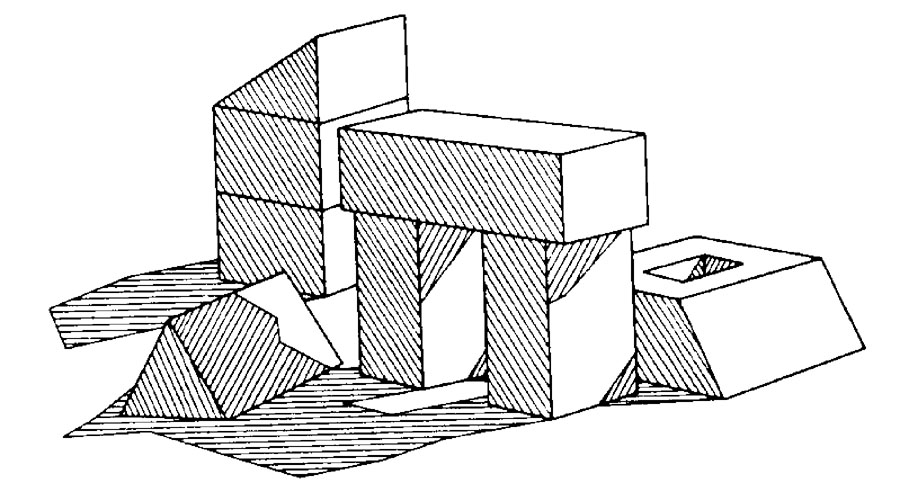
Somewhat analogous to Alchemy, the eternal quest for AGI that replicates and exceeds human intelligence has resulted in the creation of many techniques and scientific breakthroughs.
AGI has helped us understand facets of human and natural intelligence, and as a result, we’ve built effective algorithms inspired by our understanding and models of them.
However, when it comes to practical applications of AI, AI practitioners do not necessarily restrict themselves to pure models of human decision-making, learning, and problem-solving.
Rather, in the interest of solving the problem and achieving acceptable performance, AI practitioners often do what it takes to build practical systems.
At the heart of the algorithmic breakthroughs that resulted in Deep Learning systems, for instance, is a technique called back-propagation.
This technique, however, is not how the brain builds models of the world. This brings us to the next misconception:
2. There is a one-size-fits-all AI solution.
A common misconception is that AI can be used to solve every problem out there–i.e. the state-of-the-art AI has reached a level such that minor configurations of ‘the AI’ allows us to tackle different problems.
I’ve even heard people assume that moving from one problem to the next makes the AI system smarter as if the same AI system is now solving both problems at the same time.
The reality is much different: AI systems need to be engineered, sometimes heavily, and require specifically trained models in order to be applied to a problem.
And while similar tasks, especially those involving sensing the world (e.g., speech recognition, image or video processing) now have a library of available reference models, these models need to be specifically engineered to meet deployment requirements and may not be useful out of the box.
Furthermore, AI systems are seldom the only component of AI-based solutions. It often takes many tailor-made classically programmed components to come together to augment one or more AI techniques used within a system.
And yes, there are a multitude of different AI techniques out there, used alone or in hybrid solutions in conjunction with others, therefore it is incorrect to say:
3. AI is the same as Deep Learning
Back in the day, we thought the term artificial neural networks (ANNs) was really cool. Until that is, the initial euphoria around its potential backfired due to its lack of scaling and aptitude towards over-fitting.

Now that those problems have, for the most part, been resolved, we’ve avoided the stigma of the old name by “rebranding” artificial neural networks as “Deep Learning”.
Deep Learning or Deep Networks are ANNs at scale, and the ‘deep’ refers not ‘too deep’ thinking, but to the number of hidden layers, we can now afford within our ANNs (previously it was a handful at most, and now they can be in the hundreds).
Deep Learning is used to generate models off of labeled data sets. The ‘learning’ in Deep Learning methods refers to the generation of the models, not to the models being able to learn in real-time as new data becomes available.
The ‘learning’ phase of Deep Learning models actually happens offline, needs many iterations, is time and process-intensive, and is difficult to parallelize.
Recently, Deep Learning models are being used in online learning applications. Online learning in such systems is achieved using different AI techniques such as Reinforcement Learning, or online Neuro-evolution.
A limitation of such systems is the fact that the contribution from the Deep Learning model can only be achieved if the domain of use can be mostly experienced during the offline learning period.
Once the model is generated, it remains static and not entirely robust to changes in the application domain.
A good example of this is in ecommerce applications–seasonal changes or short sales periods on ecommerce websites would require a deep learning model to be taken offline and retrained on sale items or new stock.

However, now with platforms like Sentient Ascend that use evolutionary algorithms to power website optimization, large amounts of historical data are no longer needed to be effective, rather, it uses neuro-evolution to shift and adjust the website in real-time based on the site’s current environment.
For the most part, though, Deep Learning systems are fueled by large data sets, and so the prospect of new and useful models being generated from large and unique datasets has fueled the misconception that…
4. It’s all about BIG data
It’s not. It’s actually about good data. Large, imbalanced datasets can be deceptive, especially if they only partially capture the data most relevant to the domain.

Furthermore, in many domains, historical data can become irrelevant quickly.
In high-frequency trading in the New York Stock Exchange, for instance, recent data is of much more relevance and value than, for example, data from before 2001, when they had not yet adopted decimalization.
Finally, a general misconception I run into quite often:
6. If a system solves a problem that we think requires intelligence, that means it is using AI
This one is a bit philosophical in nature, and it does depend on your definition of intelligence. Indeed, Turing’s definition would not refute this.

However, as far as mainstream AI is concerned, a fully engineered system, say to enable self-driving cars, which does not use any AI techniques, is not considered an AI system.
If the behavior of the system is not the result of the emergent behavior of AI techniques used under the hood, if programmers write the code from start to finish, in a deterministic and engineered fashion, then the system is not considered an AI-based system, even if it seems so.
AI paves the way for a better future
Despite the common misconceptions around AI, the one correct assumption is that AI is here to stay and is indeed, the window to the future.
AI still has a long way to go before it can be used to solve every problem out there and to be industrialized for wide-scale use.
Deep Learning models, for instance, take many expert PhD-hours to design effectively, often requiring elaborately engineered parameter settings and architectural choices depending on the use case.
Currently, AI scientists are hard at work on simplifying this task and are even using other AI techniques such as reinforcement learning and population-based or evolutionary architecture search to reduce this effort.
The next big step for AI is to make it be creative and adaptive, while at the same time, powerful enough to exceed human capacity to build models.
by Babak Hodjat, co-founder & CEO Sentient Technologies
Source: gigaom.com