
Tag Archives for " customers "

How to Convert Curious Customers with FAQ Pages
FAQ pages may not be the first page you think of when building content for your website. However, if you don’t have one or if the ones you do have aren’t working, now is the time to get them right.
Whether you realize it or not, your customers have a lot of questions. If you watch and listen, you may notice the same ones come up frequently.
Those are the questions your frequently asked questions page should target.
Why Your Website Should Include FAQ Pages
The most obvious reason for a FAQ is to provide your customers with a place to have their top questions answered. We can all think of a time when we’ve turned to these pages to learn more about a product or service or discover certain features or options.
However, that’s only the beginning.
Pages dedicated to frequently asked questions do more than just answer questions, customers can also scroll through to learn more about a variety of topics and features. That information can push them to convert.
FAQ pages are also really valuable real estate for SEO purposes. By default, your frequently asked questions, and their associated answers, are full of relevant keywords and phrases that your target audience is probably searching for. You can capture longtail keywords in ways that are natural and human, rather than keyword stuffing.
These question-and-answer layouts are also a good way to snag the featured snippets Google provides in their search results.
7 Tips for Effective FAQ Pages
Creating FAQ pages starts with intention. Use the goals of your FAQ pages, including all the reasons provided above, to guide your strategy. Here are tips to build better FAQ pages.
1. Research Long Tail Frequently Asked Question Keywords
Longtail keywords are essential for a great SEO plan. To rank high in relevant searches related to your brand, or even to be on the first page, you have to be incorporating longtail keywords into your site content.
FAQ pages are one of the easiest and most obvious places to do just that.
Furthermore, longtail questions can also inform what those questions should be.
Start with Google. That can be an excellent resource for finding out exactly what real people are searching for.
Let’s look at an example.
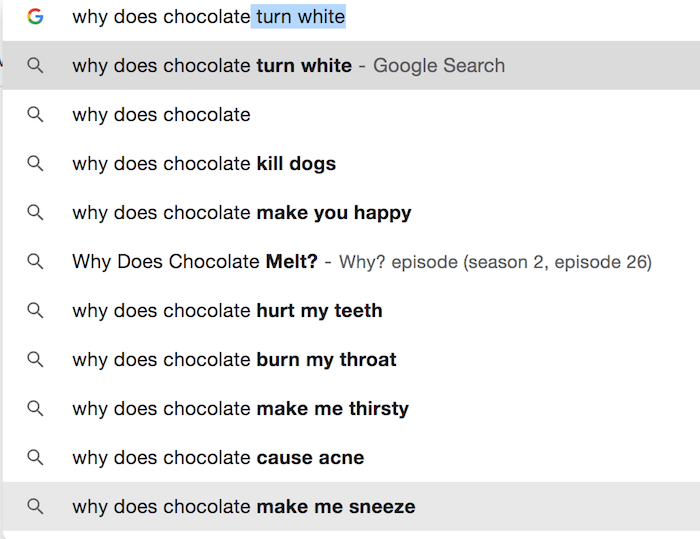
If you make and sell chocolate, you’ll want to know what people want to know about chocolate. Here are a few auto-filled results from Google.
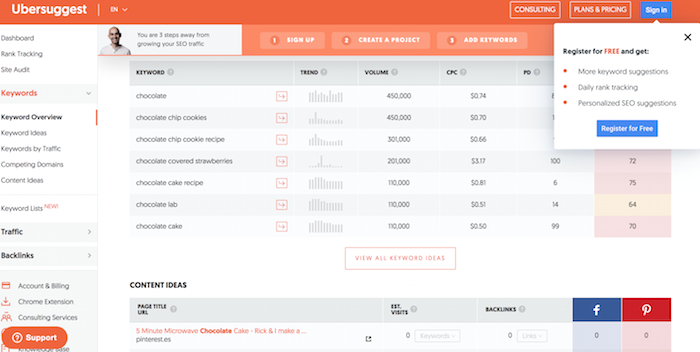
You can also use a tool like Ubersuggest, which shows top related keywords and content suggestions. Use these for inspiration.
You can use tools like Quora or Answer the People to learn what people are asking about a particular topic.
2. Dive into Your Site Search Data
Another way to understand what people are asking about your topic is to dig into the search data on your website. If you have a search function on your site, you can review what people search. What topics do they research the most?
If people take the time to use your site search, it means that information is important—and finding the right answer might impact whether or not they convert.
Make sure to answer those questions, but also provide ample CTAs to capture those warm leads. This could include email captures in exchange for discounts, links to product pages, or places to learn more.

Having those answers in one place is critical. If they can get their answers quickly and thoroughly, they are more likely to stay engaged.
3. Ask Your Customer Service Team
If you need more inspiration for your FAQ pages, try talking to your customer service team.
Chances are, they answer the same questions time and time again. Those are the questions you want to capture on your frequently asked questions page. If people are calling your customer support system with those questions, many other people probably ask the same questions—and they might not call in.

Answering frequently asked questions on your website means everyone finds the information they need—and you can free up your customer service team for other requests.
If you’re a one-person shop, this is even more important. Your own inbox is probably full of the same questions.
You can also make your customer service team’s job easier by making sure each question is hyperlinked individually, using jump links or anchor links. This means each question and answer has its own URL you can include in customer service messages.
Also, have a place to collect email addresses, through newsletter signups or downloadable lead magnets.
4. Analyze Your Customer Reviews
Customer reviews are another source of FAQ information. Rather than relying on data from people still in the buying cycle, customer reviews provide insights into what real customers, who went through the whole sales process, think about your product or service.
You may see similar regretful comments, such as “I wish I had known this before I bought” or “If I had known this, I would have ordered differently.” Your frequently asked questions page can help to mitigate those frustrations by being upfront, open, and thorough in explaining your products and services.

You’ll also see positive reviews, such as their favorite part of the purchase or things that helped to convince them to purchase. Those are the topics and concepts you want to highlight in your frequently asked questions to give warm leads an extra push.
5. Categorize by Concept
As you gather FAQ questions, you might find yourself with quite a long list. It can get overwhelming quickly. If your list is long (say more than 12 to 15), organize them into categories. This will make the creation process easier and help users find the information they need.

Some questions may be so similar that combining them makes more sense. As you do, remember to go back to those longtail keywords to ensure the questions you use on your FAQ pages reflect what people are actually searching for.
6. Keep It Simple
FAQ pages can get complicated very quickly. It’s tempting to answer every possible question with every bit of information you have. Sometimes though, you can get lost in the weeds and lose your customers.
Focus on the questions your customers find the most pressing or confusing, as we talked about above. Then, make sure your answers are straightforward and easy to understand.

It’s easy to get lost in the jargon and details you are so familiar with. However, that might confuse your customers even more.
Instead, focus on the big picture and provide simple answers. If they want to learn more, they can continue to engage, which we will talk about next.
7. Give Them Something to Do Next
As helpful as FAQ pages are, they aren’t the end goal. You want traffic to convert, not just read a page or two. Make sure your answers, and the page as a whole, include opportunities for further engagement.

If there are deeper details they can explore in another format, such as a blog post, white paper, or video, be sure to send them there using CTAs to “related content.”
Examples of Effective FAQ Pages
Do you need some examples of effective FAQ pages to inspire your own. Let’s look at a few sites that are getting it right.
First up, Spoonful of Comfort makes it super simple to scroll through and learn about how their service works.
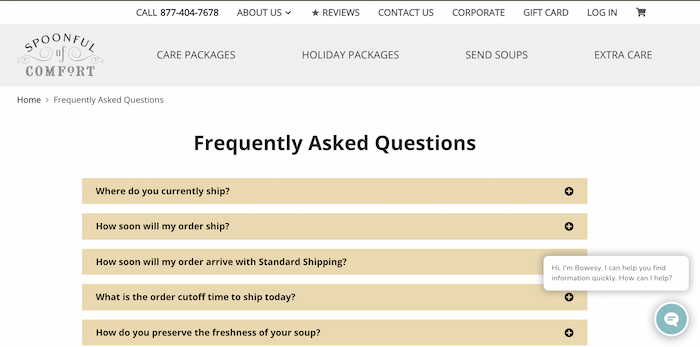
You can see each question is written separately, with the question in an accordion you can open to read the answer. This ensures readers can find the question they want without getting lost in the details.
They are also well-organized and get to the heart of what customers are concerned about, rather than sharing every possible one.
Also, don’t miss the chatbot in the lower right corner. As you scroll through the questions, you can pop over to the chatbot and for more information. This is a great way to get people who are warmed to your brand closer to conversion.
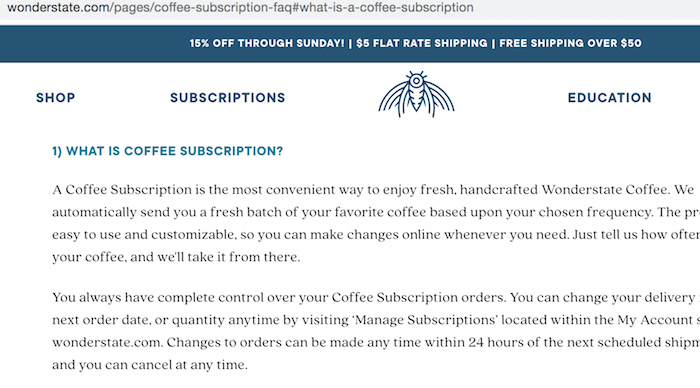
Wonderstate Coffee’s FAQ page showcases how to make each question a URL that can easily be shared.
You’ll also notice they don’t get caught up in the nitty-gritty, but instead, share the basics and focus on converting. They use this space to continue to sell to a warmed audience.
Frequently Asked Questions About FAQ Pages
What questions should be on an FAQ page?
Your FAQ page should include the most-asked questions your customers and site visitors have.
Where can I find FAQs to include on my website?
Search your target key terms and look for “people also ask” questions in Google. Chatbots, customer service lines, and on-site search may also offer insights into the questions your audience asks the most.
How many questions should a FAQ page have?
I suggest at least 10 for a full FAQ page. Most businesses can find at least that number to answer concisely. The exact number is less important than being organized and concise. If you need more than 15 or 20, break them into groups.
Should I think about SEO when creating FAQ pages?
FAQ pages are a great place to build on-page SEO. Research long-tail keywords and questions people ask when they are searching for topics related to your brand.
FAQ Pages Conclusion
Frequently asked questions meet people where they are in their customer journey. They help people understand your differentiators and value proposition.
They can take site visitors from “I don’t get it” to “I need it!” FAQ pages also serve as a warehouse of information about topics that may confuse people on their buyer’s journey.
Remember that while frequently asked question pages are useful for SEO and driving organic traffic, they shouldn’t stop there. Make sure to include calls to action to help people convert from curious to customers.
Do you have a frequently asked questions page? Why or why not?
Source: neilpatel.com

Customer Satisfaction: Benefits, Examples & Importance
Customer satisfaction is crucial to the success of your business. No matter how innovative your product or competitive your pricing, if your customers are ultimately unhappy, they’re not going to stick around.
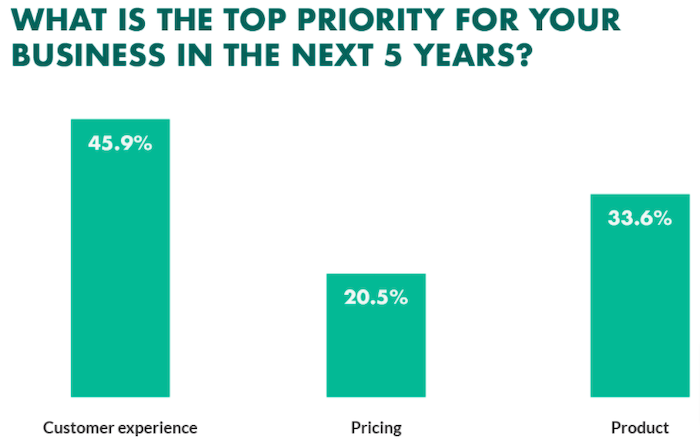
As such, it’s no surprise 45.9 percent of businesses surveyed in 2020 named customer experience as their number one priority over the next five years:
What exactly do we mean by “customer satisfaction?”
Why is it so important, and what can you do to improve it?
Read on to find out.
What Is Customer Satisfaction?
Customer satisfaction is a measure of how people feel when interacting with your brand. It can be influenced by any number of factors, such as:
- perceived product quality
- perceived product value
- convenience
- customer expectations
- communication
- complaint handling
Every brand, no matter how successful, wants to improve customer satisfaction.
To do that, they need to define two things:
- Who their customers are?
- What does it take to satisfy them?
Part one isn’t as simple as it sounds. Let’s take the example of a hospital. It might have two distinct customer bases:
- The patients it treats
- The insurance companies sell patient data to
Clearly, those two audiences have very different goals, and keeping them happy requires two vastly different approaches.
To make matters even more complicated, satisfying one audience may sometimes be detrimental to the other’s happiness.
4 Benefits of Customer Satisfaction
Customer satisfaction is more than just a “nice to have.” Getting it right has specific, tangible benefits, including:
1. Increase Brand Loyalty
Never take your customers for granted.
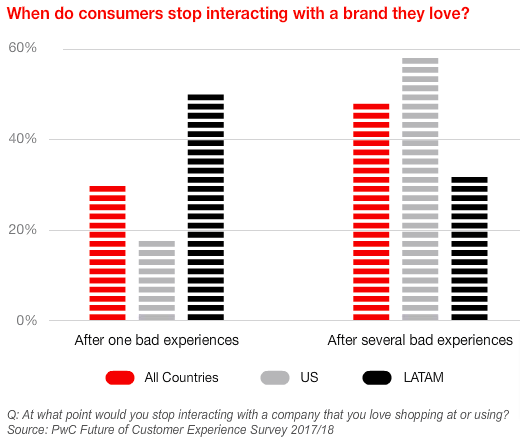
According to PwC, 59 percent of U.S. consumers who love a product or brand would ditch it after several poor experiences.
More concerningly, almost one in five would do so after a single bad experience.
On the flip side, if you do everything in your power to keep customers happy, it stands to reason they’ll be more likely to stick around for the long term.
2. Boost Trust
According to Edelman, 81 percent of consumers say brand trust is a deal-breaker or a deciding factor in their purchase decisions.
Yet trust is pretty thin on the ground, with just 34 percent of consumers saying they trust most of the brands they use or buy from.
How do you make your brand more trustworthy?
One way is to improve satisfaction. According to a study from Eastern University Sri Lanka, customer satisfaction logically precedes customer trust; those two things rarely exist in isolation.
3. Attract Positive Word of Mouth
Word-of-mouth marketing is extremely valuable.
To give just one example, 87 percent of consumers read online reviews for local businesses in 2020, up from 81 percent in 2019.
Unfortunately, consumers are significantly more likely to share negative reviews than they are positive ones.
According to American Express, U.S. consumers tell an average of 15 people about bad experiences, whereas they only share good experiences with 11 people.
In other words, it’s a numbers game.
You know consumers are naturally less inclined to shout about the good stuff you do, but if your customer satisfaction is high, you’re well placed to reap the benefits of word-of-mouth marketing.
4. Grow Your Audience and Sales
We already know satisfied customers are more likely to tell their friends and family about your brand, which in turn gets you in front of a wider audience.
However, did you know those satisfied customers will also spend more?
According to the same American Express survey referenced above, U.S. consumers are prepared to spend 17 percent more if a brand delivers excellent service.
What’s more, 84 percent of companies that improve customer experience report an upturn in revenue.
How to Measure Customer Satisfaction
It’s not enough to simply hope your customer satisfaction will improve.
You need concrete plans to drive it forward, backed by robust data.
To do this, you need to gather customer feedback through polls, surveys, and feedback sessions.
Here are three types of feedback to collect to help you measure customer satisfaction and examples of questions to ask.
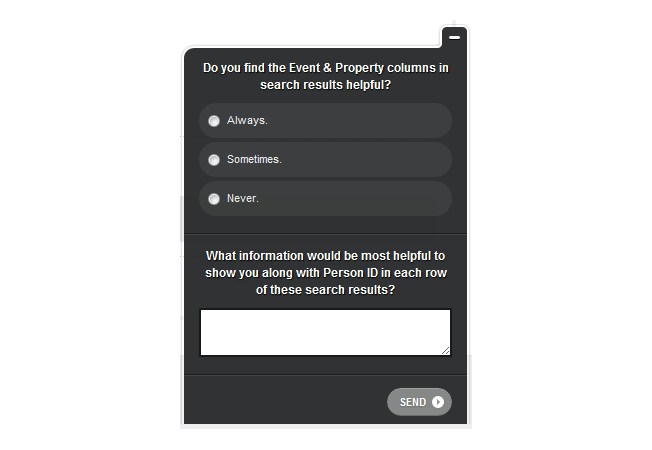
1. Overall Satisfaction
It can be helpful to gauge a customer’s general opinion of your product or service before drilling down into the specifics.
Positive answers indicate they are happy with their purchase decision, while negative ones suggest they have some degree of buyer remorse.
Example question: Overall, how satisfied are you with [Product X]?
2. Repurchase Intent
Given the close ties between customer satisfaction and loyalty, it makes sense to use a customer’s repeat purchasing plans to measure their general happiness.
Consumers who say they are likely to buy again may also be more likely to leave positive reviews or share their experiences with friends and family.
Example question: Will you shop at [Company X] again in the next month?
3. Word of Mouth
NPS customer satisfaction surveys are centered on a single question about whether or not the customer would recommend a given brand or product.
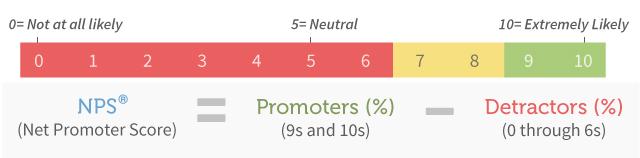
This sort of feedback allows companies to understand whether the user’s experience aligns with their expectations.
Example question: Would you recommend [Company X] to your family and friends?
3 Steps to Improve Customer Satisfaction
Data is the key to improving customer satisfaction.
However, data alone can’t transform your customers from unhappy to loyal.
You have to focus on gathering data effectively, then use those insights to take action. Follow these three steps to make it happen:
1. Conduct Customer Surveys
Surveys play a key part in your quest to improve customer satisfaction, so the feedback you generate must be useful.
Unfortunately, there are no guarantees.
Even if your survey is perfect, customers don’t always tell the truth about how they feel.
What’s more, they might make mistakes when completing your survey.
In either case, you’re not getting a true picture of customer satisfaction.
However, there are some proactive steps you can take to generate more impactful feedback.
Concentrate on keeping your survey as short as possible to capture more responses.
Research from SurveyMonkey shows completion rates drop off when surveys contain more questions:
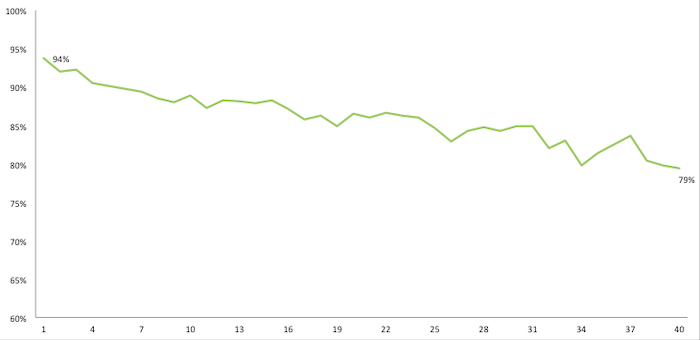
Surveys containing ten questions have an average completion rate of 89 percent, dropping to 79 percent for 40-question surveys.
It may not sound like much, but it means if you’re surveying 1,000 customers, you’ll get 100 more responses from the 10-question version.
In other words, if a question doesn’t have the potential to yield unique insights, it shouldn’t be in your survey.
Also, it pays to remember the purpose of polls and surveys isn’t to “cook the books.” You’re not trying to earn artificially high scores by confusing or manipulating respondents.
Instead, you’re trying to get an accurate picture of what customers actually think about your brand.
Avoid leading or loaded questions, which attempt to steer people toward a certain answer. For instance:
- Bad question: Thousands of customers have left five-star reviews for [Product X]. Would you do the same?
- Good question: How likely are you to recommend [Product X] to a friend?
2. Monitor Social Media Mentions
Customer surveys will only get you so far because they only gather opinions from the types of people who are happy to fill in surveys—which might exclude a huge chunk of your audience.
For a more accurate view of customer satisfaction, keep a close eye on social media, too.
Tools like Linkfluence and Mention help monitor brand mentions and conversations relevant to your company and product. They even use machine learning to assess the sentiment of those mentions.
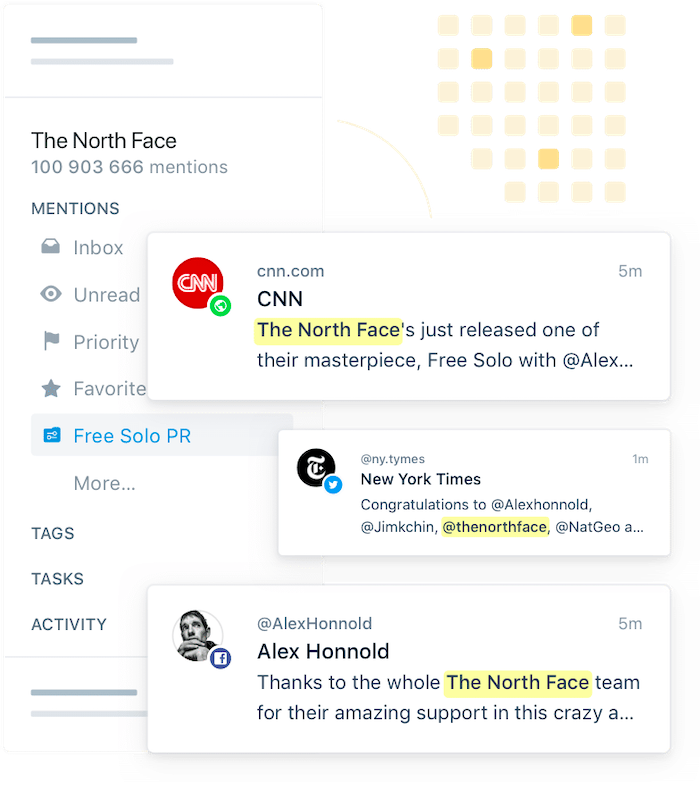
This gives you access to a broader customer pool than potential survey respondents and ensures you’re on hand to help customers when they need it.
3. Implement Constructive Feedback
Once you’ve gathered a bunch of feedback, it’s time to take action.
One of the biggest challenges is to identify an effective, repeatable way to prioritize those actions.
After all, it’s unlikely every customer wants the same thing.
Some might be asking for faster shipping; others might want a slicker checkout experience.
Transparency is key.
Most consumers are pretty reasonable, and they understand you have finite resources.
Make it clear you’ve heard their feedback and, if the demand exists, you’ll work on a fix.
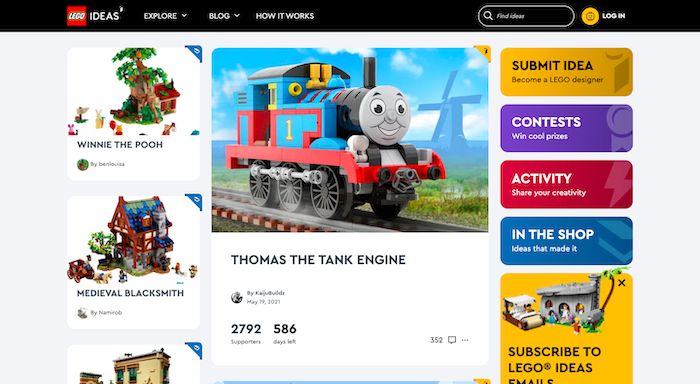
LEGO has come up with an ingenious way to do this.
It created a dedicated site, LEGO Ideas, where brick-building fans can submit product ideas.
If an idea gathers 10,000 votes from the community, it’ll be considered for production.
3 Customer Satisfaction Examples
Looking for inspiration to level up your customer satisfaction?
Check out these three examples of brands that are rocking it:
1. IBM
Tech giant IBM was named the number one company for customer satisfaction in the latest Drucker Institute Company Ranking.
Its success stems from its customer-centric approach to software development, which involves making decisions based on the goals and ambitions of end-users, not just how they use a specific tool.
Speaking to Harvard Business Review, IBM’s VP of Platform Experience Charlie Hill explained: “We want to bring our design thinking muscles to explore and play with how the user’s experience could be better in the future.”
Key Takeaway
Put your customer first. Whether you’re selling a piece of software or a pair of shoes, think about what problems brought them to you in the first place, and what success looks like to them.
2. Chick-fil-A
Ranked top of the American Customer Satisfaction Index across all industries,
Chick-fil-A stands out thanks to its superb in-restaurant customer service.
Its staff is regularly named the friendliest of drive-through brands, and they also outshine the competition on order accuracy.
This is no easy feat when it’s up against huge global names like KFC, McDonald’s, and Starbucks.
Key Takeaway
Invest in your people. Whether they’re dealing with shoppers in-store or helping them online, their professionalism and courtesy have a huge impact on your customer satisfaction rating.
3. Trader Joe’s
Grocery chain Trader Joe’s has an NPS score of 62.
For context, the average score in the grocery niche is 24.
The brand stands out by truly going the extra mile for its customers.
In one famous example, a Reddit user told how the chain broke its “no deliveries” policy to help out an 89-year-old who was snowed in during the holidays.
The comments on that viral post are littered with other Redditors recounting their own experiences of receiving superb service from Trader Joe’s.
Key Takeaway
Give your team members a degree of autonomy to delight customers.
It should be quick and easy for them to get signoff on the sorts of small, spontaneous acts of kindness that can make the biggest difference to consumers.
Customer Satisfaction FAQs
Q: What does customer satisfaction mean?
A: This is how you measure your customers’ experience to see if it meets or falls short of their expectations.
Q: Why is customer satisfaction important?
A: Growing companies are more likely to prioritize customer success than companies that don’t have a growth mindset.
Q: What are the benefits of high customer satisfaction?
A: Customers trust recommendations from others and look at reviews before deciding to convert with a business.
High satisfaction means a customer is more likely to recommend your business and leave a positive review.
Q: How does customer satisfaction help branding?
A: High customer satisfaction can increase brand loyalty and trust.
Q: How do you improve customer satisfaction?
A: To satisfy your customers, you need to understand what they want.
Collect data through surveys, polls, and feedback sessions, and monitor brand mentions through social media.
Q: What happens if customers are not satisfied?
A: Unhappy customers are unlikely to keep buying from your brand.
What’s more, they’re highly likely to tell people about negative customer experiences through reviews, social posts, and word of mouth, which can damage your reputation.
Conclusion of Customer Satisfaction Guide
Customer satisfaction is crucial to your business, regardless of your product, industry, or niche.
You must make it a priority.
That’s true today, and will only increase in importance in the years to come.
Collect, analyze, and use data on customer satisfaction for every stage of your sales funnel, every interaction, and every product launch.
Pick and choose your moment, of course, as no one wants to be inundated with surveys all the time, but no area is off-limits for selectively surveying and asking for feedback.
That’s how you improve, grow, and turn your customers into your biggest marketing asset.
What factors do you think are most important to improving customer satisfaction?
Let me know in the comments below:
Source: feedproxy.google.com

Your Annual Target Audience Check-Up
If you know marketing, then you know: it is absolutely crucial that you are hitting your target audience right in the bullseye, every time. And if you don’t know marketing we are so glad you are here to learn!
In this article, we are going to teach you how to do a quick “check-up” on your current target audience to make sure your advertising is being pointed in the right direction!

Skeptical about the need to reassess your target audience?
Maybe you have more followers on Facebook than all of your competitors combined!
Pretty impressive, right?
Well, maybe.
A high follower count can play into a common misconception that Alexandrea Harrelson, CEO of Harrelson Media, dubbed “the follower fallacy”
which is the idea that the number of followers you have determines your influence.
In reality, it is more important to have a high engagement rate than a high follower count.
For example: if you have 100,000 followers with a 10% engagement rate, you are essentially reaching fewer customers than if you had 50,000 followers and a 50% engagement rate.
The moral of this paragraph is to keep reading and keep an open mind!
So here is the check-up.
There are 3 checkpoints—each one represents a key component of a perfect target audience.
This is a great chance for self-evaluation and to potentially catch any issues with your current advertising direction.
Anytime you just aren’t seeing the conversions you want or you are worried that your audience isn’t cutting it, just run through this target audience check-up, and get yourself back on track.
Checkpoint 1: Are You Making Followers or Friends?

Obviously, most people trust their friends more than they trust advertisers.
And let’s be honest, that’s smart of them.
But what does it mean for us, as the marketers who are trying to initiate symbiotic relationships between our customers and our businesses?
It can encourage a healthy identity crisis.
In checkpoint 1, you want to make sure you aren’t falling prey to the follower fallacy.
Remember that calculation we did at the beginning?
Let’s use simple numbers this time.
You have 10 followers on Instagram, but your posts average around 3 likes and 1 conversion.
That means you have 7 followers who do nothing but inflate your ego.
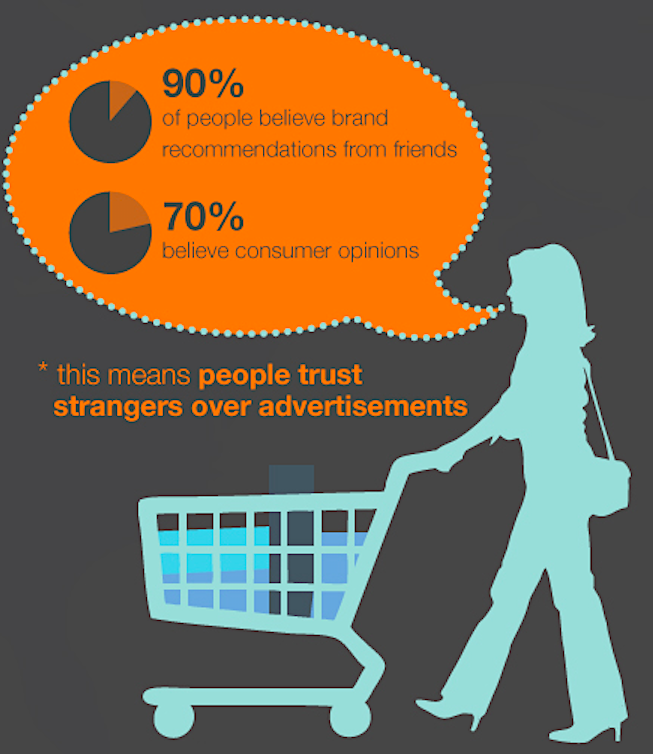
Ideally, you want all your followers engaging with your content and getting excited about your product, but in this scenario, you would be best off buckling down and making sure those 3 fans who liked the post know you see them and you’re grateful for them!
This creates brand loyalty and what we like to call friendship.
This lets you better cater to who really cares about your business, instead of chasing down dead leads.
It also gives you greater bandwidth to figure out what you are doing right and do it!
So it is your job to transform your followers into friends.
Followers might drop a like or a comment,
- but friends will also be loyal and maybe even introduce you to their friends…
- who may turn into more friends…
- who will introduce you to their friends…
it’s a beautiful cycle.
Properly focused target audiences will make your followers/friends feel seen and promote that symbiotic relationship we were talking about earlier.
You’re prioritizing them and giving them a great product, while they are coming back, again and again, to re-buy or bring in new customers.
If this “friendship” idea feels foreign to you, we encourage you to step back and think about why your followers aren’t friends.
Likely, the root of the problem lies in your target audience.
Maybe it has become stagnant and you have simply outgrown it.
Or maybe you are focusing on the wrong groups of people—some demographics are over-sold to or are just plain wrong for your business.
If you haven’t already, challenge yourself to turn half, or even a quarter of your followers into friends by the end of the year.
We promise the results will amaze you.
Checkpoint 2: How well do you know your buyer [persona]?
And if you are really trying to make more “friends,” you’ll want to know something about them.
This is how you can start calibrating your perfect target audiences.

What is your ideal customer doing this weekend?
How will your product help them do it better?
These are the kind of questions that help us get in our customers’ heads and figure out how to make their experience with our company even better.
You can compile the answers to these questions in a customer avatar worksheet, which is your fictional “ideal” customer.
This profile helps you define and back up your target audience.

Your buyer persona (or customer avatar) should be more than a quick sketch of some demographics and how much money they spend on your site.
- When, if ever, is your ideal customer going to be interested in a new hobby?
- What are their plans for reacclimating as the pandemic is ending?
- Where do they spend most of their time online?
Some of these questions relate to marketing more obviously than others, but all of them should affect the way you are engaging with these customers.
If your target audience is single, you need to think about how often your content is portraying couples.
If they are still concerned about the virus, maybe try using masked-up models.
Making in-depth buyer persona profiles can be a great resource for your marketing team, especially if you struggle to present a united front, or have just lost sight of your customers’ complexity.
This reflects back on Checkpoint 1.
If your buyer is really your bestie, you’ll know exactly how to get them to “hang out” with your business.
And after a while, they start thinking of you as a friend too.
Checkpoint 3: Are you aiming for the right number of targets?

A criticism of target audiences as a marketing strategy is that they promote exclusivity in your customer base.
Forever focusing on a single demographic can neglect potential customers and ultimately inhibit business growth… it can also give your competitors an edge against you if they are equipped to include the customers you are leaving out in the cold.
In light of this acute criticism, we encourage every brand to keep adding target audiences as they grow.
Note: if you are a small business just getting the hang of things, it may be more appropriate to hone in on one primary demographic.
Just make sure you aren’t building yourself a box you can’t climb out of!
Be careful not to explicitly exclude any demographic if you can help it; that could be a costly regret in the future.
So essentially, there are two extremes you may swing into: too many targets, or not enough.
If you have bitten off more than you can chew, you need to take a close look at the numbers:
- which demographic is bringing you the most clients?
- which demographic is costing you the most to advertise to?
- which demographic hosts the least conversions for your business?
Your analytics will likely make it pretty clear which targets you are hitting and which ones are a waste of darts (and money! and time!).
Or maybe you aren’t targeting enough demographics.
A sure sign that this is the case is if your current market (the same one that has always worked! that you love!) is bottoming out and your returns are down.
This is a cause for celebration!
Your exhausted market probably means your marketing and product were so successful that they covered a whole demographic of people.
Buttttt it also points to a need for expansion.
Here is the story of the NFL’s new target audience to help inspire you.
In 2010, the NFL launched its first-ever women-oriented apparel campaign.
Fast forward to 2021 and there is a section of the website dedicated to women, which has proven extremely successful and lucrative.

The NFL knew that expanding their clothing lines to include women’s styles was a good investment because they spent time collecting data: 41.9 million women tuned in for Super Bowl XLIV and more than 45 million women watched NFL games each weekend.
You can mimic the NFL’s success by observing your followers on social media or your website traffic.
Who is showing up that you aren’t currently advertising to?
These groups make ideal target audiences because you already have evidence that they are interested in your business.
Notice how this checkpoint came after “how well do you know your buyer.”
If the first checkpoint made you realize you need more high-quality “friends”, you know you need to double down on honing your target audience.
And once you give the second checkpoint a big green checkmark, it may be time to consider expansions.
Well… how are you feeling?
We hope this article has instilled some confidence in your current target audience or at least given you a good direction to head in.
But if it has raised some questions or left you wondering if you need a marketing MRI, DigitalMarketer has tons of options in our lab platform to help you with your targeting!
Remember: make friends, get to know them, and invest your time in the groups you really love.
The post Your Annual Target Audience Check-Up appeared first on DigitalMarketer.
Source: digitalmarketer.com

Subconscious Selling: Your Customers Won’t Buy Without These 3 Elements
Your customers are social, plugged-in, and savvy.
Selling to them (even with high-impact direct response) isn’t easy. Which is why today, I’m giving you some contrary advice…
Stop focusing on features and benefits. Stop hyping up your copy. Instead, sell your product on a subconscious level, and you’ll have customers drooling with desire before they know what hit them.
Keep reading and I’ll give you 3 ways to do just that. Plug these essential elements into your marketing to drive customer sales naturally and easily.
1. Social Proof
Think benefits sell? Think again. To sell your product, you need to build trust. Seth Godin says it well:
Without trust, marketers know that there are no sales. Trust means the prospect believes not only that the product being sold will actually solve his problems, but that if for some reason it doesn’t, the company will make good on its reputation of performance.
Today’s consumers assume marketers are trying to take advantage of them, so it’s important to establish credibility in all your marketing. But here’s the thing: You don’t actually have to prove you’re trustworthy if you can show that other people already trust you.
This concept, called social proof, was made popular by Robert Cialdini in his book, Influence. In it, he explains that we “view a behavior as more correct in a given situation to the degree that we see others performing it.”
To see how powerful this concept is, we have to take a quick dive into biology.
In 1992, scientist Giacomo Rizzolatti noticed that monkeys’ brains would fire not only when they performed an action, but when they saw someone else perform that action too. He later discovered the same tendency in humans.
Sell your product on a subconscious level, and you’ll have customers drooling with desire before they know what hit them.
This phenomenon, dubbed “mirror neurons,” explains why you laugh when everyone else in a meeting laughs (even if you didn’t hear the joke), and why you wince when someone falls or hold your breath when your kids are learning to swim underwater. It also explains why, when you see an actor dressed in the newest fashion, you want to wear something similar.
When you see them getting second glances, your brain starts firing as if you were getting those looks. And your subconscious brain tells you that you’ll be just as sexy and successful if you wear the same type of clothes.
As Martin Lindstrom says in his book Buy-ology, “It’s as though you’ve just bought an image, an attitude, or both.”
What This Means for Marketers
Social proof isn’t just smart marketing, it’s a mandate if you want more customer sales. And it’s as easy as showing other people enjoying or benefiting from your products. While there’s no limit to the number of ways you can do this, 3 come immediately to mind.
a. Case Studies
Share stories of real people using and enjoying your product. How you tell the story doesn’t matter: use written case studies, videos, and interviews. What’s important is that you show how your product or services are helping people reach their goals.
The secret to powerful case studies is this: site real numbers and specific details. Notice the headline in this case study for LinkedSelling. It doesn’t site “massive growth” or “impressive returns.” It spells out “400% ROI.”

b. Endorsements & Testimonials
Make it a regular practice to ask customers for a testimonial. Then use them liberally to sell your product.
Ideally, you’ll collect enough to create a “Reviews” page. This one, from Boom! by Cindy Joseph, starts off with text reviews…

…followed by a collage of images showing how well the product works on real women:

When you get a testimonial from someone with celebrity status—either because their name or the company they work for is easily recognizable—by all means, feature it. On Single Grain, this testimonial by the Director of Marketing for Amazon Alexa carries weight because we believe anyone who works for Amazon knows their stuff.

As you can see, when other people show confidence in you—especially if it’s someone well-respected by your community—it’s easier for others to trust you too. That makes it easy to push people off the fence and increase customer sales.
c. Customer Logos
Another way to communicate trust is to pull back the curtains a bit and let prospects see who else uses your product. When they see brands they respect on the list, you gain instant credibility.
For example, this impressive list shows you how many big brands trust Single Grain.

Notice the link to “view case studies” prominently displayed below the graphic. This makes it easy for prospects to get even more details about how Single Grain works.
PRO TIP: Any time you can add specifics to your marketing, you boost your credibility. So turn all general statements into specifics by adding precise numbers, brand names, and facts.
2. Scarcity
Cialdini calls this “The Rule of the Few.” He says:
The idea of potential loss plays a large role in human decision making. In fact, people seem to be more motivated by the thought of losing something than by the thought of gaining something of equal value.
As soon as you hear something is off-limits, you want it.
It’s true. As soon as you hear something is off-limits, you want it. If a book is going out of print, you want to buy it. And if a product is only available until midnight tonight—even if you don’t need it right away—you’re inclined to buy it… just in case.
That’s how scarcity drives customer sales. It makes you aware that you might miss out if you don’t take action.
What This Means for Marketers
Consider Black Friday offers that promote just 100 electronics at 75% off or an 80% discount only till 10 am The fact that the offer is limited drives people to stand in line for hours before the store opens or to physically wrestle with one another for the prize.
How can you do this in your digital marketing? Check out this email from DigitalMarketer’s Founder and CEO, Ryan Deiss:

Ryan is a master at leveraging scarcity in his marketing. Look at how he piles it on in this email:
- There’s a “special link” that gives you a discount. “Special” makes you believe it’s not available to everyone, which creates a feeling of exclusivity.
- The discount is only available through Monday at midnight. So there’s a time limit pushing you to respond now.
- Seats sell out every year. If you don’t act quickly, you could miss your chance to attend.
- And if you don’t honestly believe the event will sell out, you might be motivated by the “best seats” reference. Again, a bit of exclusivity makes you feel you might miss something if you don’t click through and buy your ticket.
Scarcity can be achieved through limited inventory, a deadline, or making something only available on certain dates or times. You can use it in emails to make people click through, in your sales pages to make people take action, and as a value-add offer before or after purchase.
PRO TIP: Any time you can reduce or reverse risk, you’ll improve response rates. Absorb as much of the risk as possible with a strong guarantee, lengthy trial period, or ridiculously low price.
3. Sensory Language
Deep in your brain’s temporal lobe is an almond-shaped cluster of neurons that some experts call your lizard brain. Known as the amygdala, this primitive part of your brain is both pre-verbal and pre-logical. So it can trigger action before you have time to think about it.
Neuromarketers also call it a “buying brain,” because pushing its buttons leads to a Buy Now response that’s almost instinctive. Here’s how Dr. A. K. Pradeep says it in his book The Buying Brain:
The basic lesson is that human brains process much of their sensory input subconsciously.
Our senses are taking in about 11 million bits of information every second.
Our thinking brains—that part of thinking in which we are aware of thinking—can only process, at best, 40 bits of information per second.
The subconscious level of the brain is where elements that are essential to marketing success such as initial product interest, purchase, intent, and brand loyalty are formed, and where they reside.
In other words, spark desire by connecting with people’s primitive brains, and you can generate a buying response without manipulating anyone. People want to buy without knowing why.
The result? More customer sales.
What This Means for Marketers
Research shows that mirror neurons (that’s the monkey-see-monkey-do thing we talked about a few minutes ago) can be stimulated by reading as well as observing. For example, read this:
Yawn.
Just reading the word makes you want to yawn.
That’s especially good news because you can’t pump smells and velvety softness over the internet. But you can stimulate the subconscious with sensory words.
Engaging the buying brain is as simple as tickling the five senses in your writing. Sight is easy (pictures). But you can also evoke scents, touch, sounds, and taste. Let me show you what I mean in this example from Lawrence Bernstein.

“Like the windows in a store” creates a mental image. (I visualize a big display window with mannequins in high-fashion dresses.)
“Created on the fly” gives you a sense of speed or motion.
Circled words—melt, explosive, verbal dynamite—are sensory. You can see, feel, or hear them.
He could also have said something like this:
- “Pepper your writing with these irresistible words and your prospects will feel compelled to buy.” (Taste)
- “Build a rock-solid foundation for your sales pitches by using words that hit hard as nails.” (Touch)
Now notice how naturally these words fit into the copy. Sensory writing is nothing more than good writing. It reads naturally and isn’t likely to be perceived as hype or manipulation. But it excites people’s primitive brains and makes them more likely to respond.
PRO TIP: After you’ve written your sales page, go through it to find places where sensory language could be added naturally. In particular, replace being verbs (is, was, are) with active verbs and make sure you help people see themselves using your product.
Selling to the Subconscious
Your customers may love to buy, but they don’t want to be sold.
Your customers may love to buy, but they don’t want to be sold. Your job, then, is to sell your product to the subconscious brain, so you trigger desire before they know what hit them.
Fortunately, it’s easy if you sprinkle your sales copy with social proof and sensory language, then mix in an element of scarcity.
Before you know it, you’ll have people drooling over your products without ever knowing why.
(NOTE: Want more clicks from Facebook, Twitter, and your own blog? Copy and paste these 72 proven headline formulas and get more clicks to your content now. Plus, get 3 simple hacks to optimize any headline in 12 seconds or less. Learn more now.)

The post Subconscious Selling: Your Customers Won’t Buy Without These 3 Elements appeared first on DigitalMarketer.
Source: digitalmarketer.com

Want to Double Sales? Pull One of These 4 Levers
Let’s just get right to it…
Here is the formula for doubling sales…
L x C x M x f = GP
Where…
L = leads
C = customers
M = margin
f = frequency of purchase
It looks like this…
Leads x Customers x Margin x Frequency = Growth Potential
Doubling any of the variables above (leads, customers, margin, frequency of purchase) will double your sales.
Double them all and you will 16X your business.
- Can you double them all? Doubtful.
- Can you double one of them?
- Two of them?
- Even 3 of them? Absolutely.
In other words, there are 4 levers you have available to grow your business…
- Increase the number of leads
- Increase the number of customers
- Increase the margin
- Increase the frequency of purchase
Let’s look at each “growth lever” in turn…
How to Double the Number of Leads
Want more leads?
You either need…
- A Lead Magnet
- More Lead Magnets
- Better Lead Magnets
A Lead Magnet looks like this…

If you click on that “Download Now” button you will be asked for your email address to receive the content.
Here’s another Lead Magnet…

A Lead Magnet is simply an irresistible bribe offering a specific chunk of value to a prospect in exchange for their contact information.
The key word in the above definition is SPECIFIC.
In nearly every case (assuming you are getting traffic to your Lead Magnet) the reason a Lead Magnet is not performing well is because it doesn’t solve a specific problem.
This is a terrible Lead Magnet…
But this one isn’t much better…

In both cases, there is no specificity.
Our testing shows that a Lead Magnet that solves a specific problem can convert over 60% of the traffic to a Lead Magnet offer into a lead.
Take another look at the two Lead Magnet examples above and study the use of specificity…
If you want to double your leads—start with your Lead Magnet.
Start with SPECIFICITY.
How to Double the Number of Customers
Let me be clear…
This section is NOT about doubling profit—it’s about double the number of customers you are acquiring.
Big difference.
Acquiring customers is NOT the same thing as acquiring profit. In fact, in some cases acquiring customers will cause negative cash flow.
In other words, while acquiring customers can lead to profitability—customer acquisition is NOT about profitability.
It’s about activating BUYERS.
To do that, we use something called a Tripwire Offer.
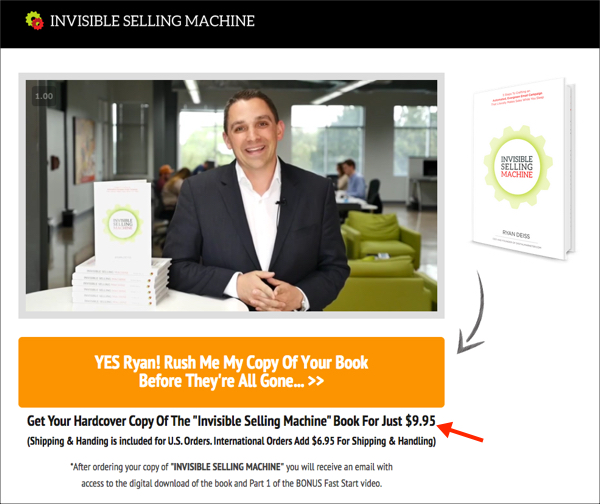
Here’s one from us…
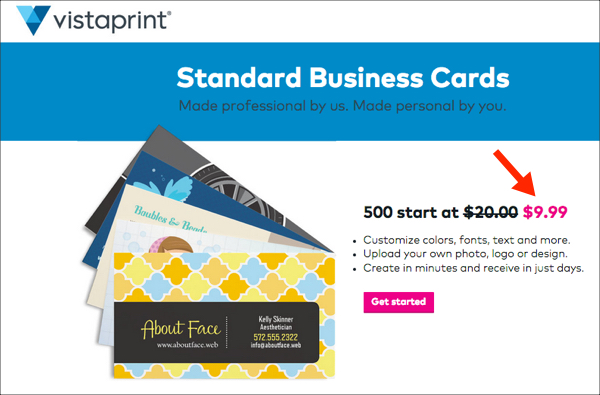
And here’s one from VistaPrint…
And here’s another from GoDaddy…
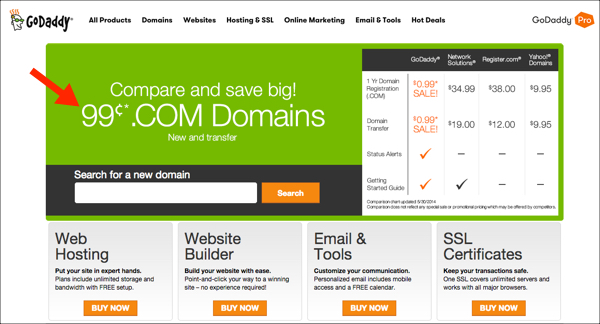
We’re not going to get rich selling $9.95 books. VistaPrint doesn’t expect their $9.99 for 500 business cards offer to meet payroll. And GoDaddy shareholders don’t expect $.99 domains to keep the lights on.
We’re simply acquiring BUYERS.
Notice the price point on these offers:
- $9.95 for a book
- $9.99 for 500 business cards
- $.99 for a domain name
We’re not exactly asking for a blood oath here—these are high-value, low barrier-to-entry offers intended that are designed to acquire customers.
If you want to double your number of customers—create a solid Tripwire offer.
But don’t expect that offer to make you more profitable. For that, you’ll need to work on your margin…
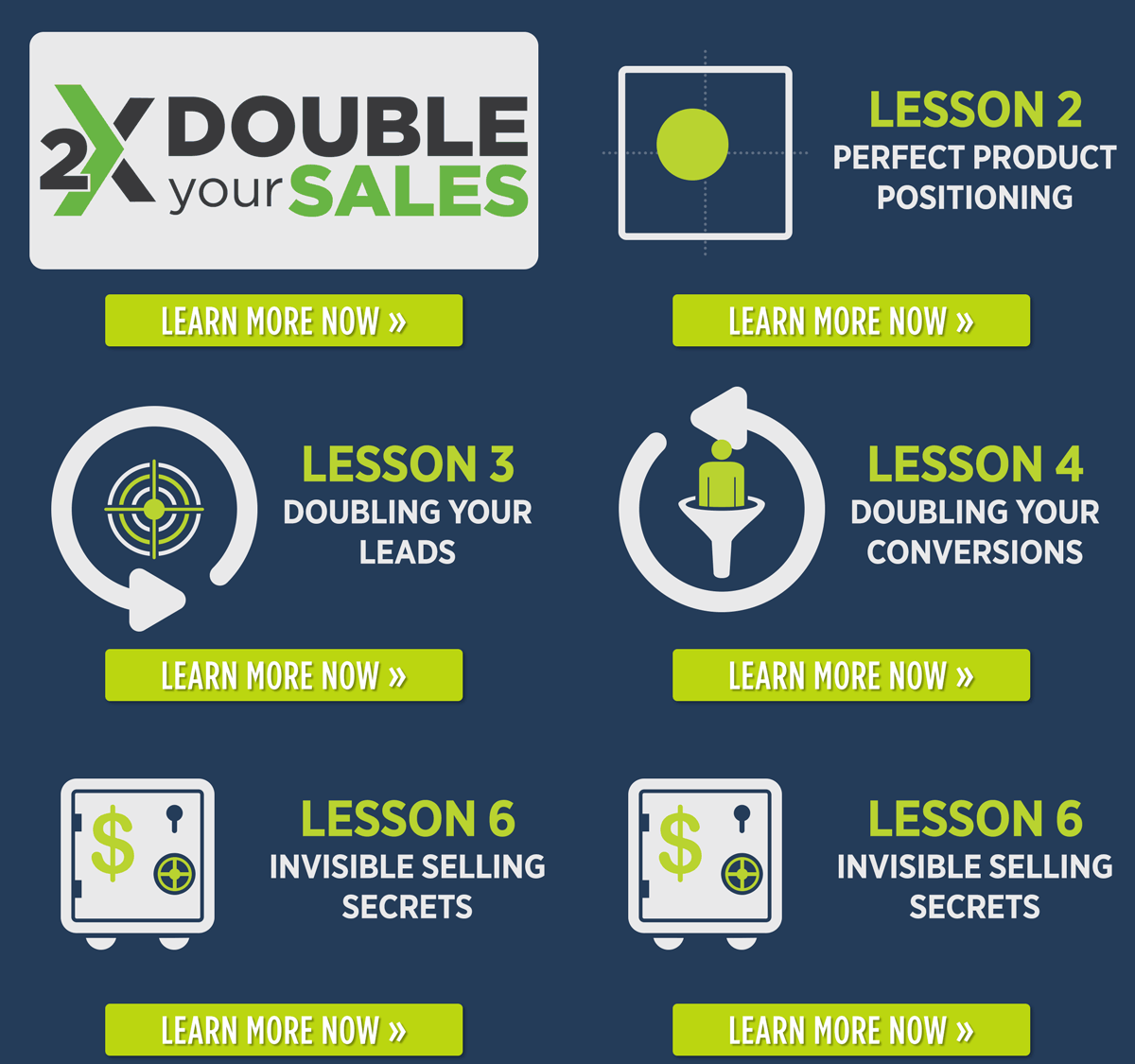
(NOTE: Want to Learn 6 ways to Double Your Business? You can do so in this free 6-week course.)
How to Double Your Margin
Of course, DigitalMarketer doesn’t only sell books.
And VistaPrint and GoDaddy have more than just business cards and domains to sell.
In fact, VistaPrint has a number of ways they can increase the value of that $9.99 transaction.
First, I can add a backside to my business cards for as little as $2.99…
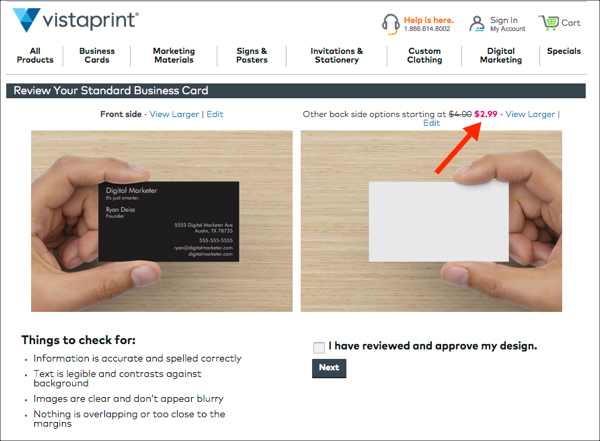
From here I can…
- Add to my quantity (Up to $139.99)
- Upgrade to a “brilliant finish” (Additional $29.24)
- Get better paper stock (Additional $11.24)
- Buy one of those fancy business card holders (Up to $8.99)
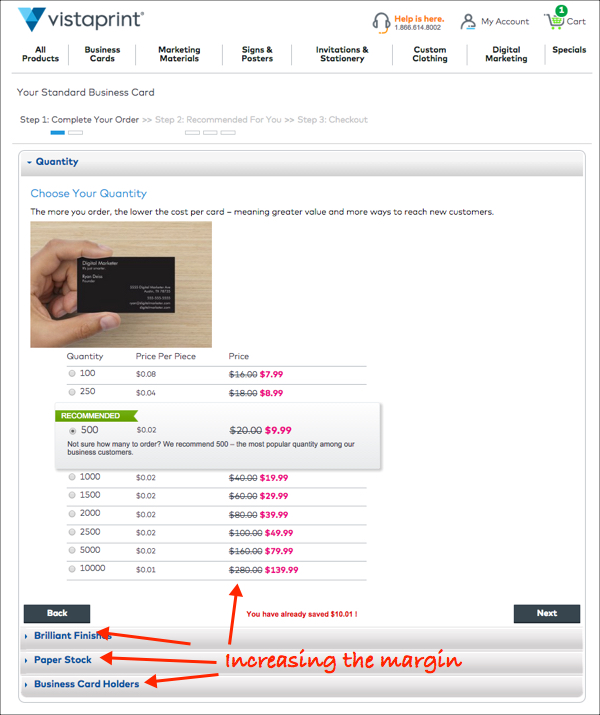
Actually, before it’s all said and done I can buy…
- Pens
- Car Door Magnets
- Letterhead
- Hats
- Business Card Magnets
- Mousepads
- T-shirts
- and on and on…
Every offer is relevant. Every offer is consistent with my original intent to get promotional materials for my business.
Every offer is intended to increase margin.
What’s going to happen if I start down the registration process for a $.99 domain from GoDaddy?
First, they’ll offer to bundle the .net, .org, and .info version of the domain with the .com…

Smart.
Then, they start upselling private registration, hosting, website design, and email…
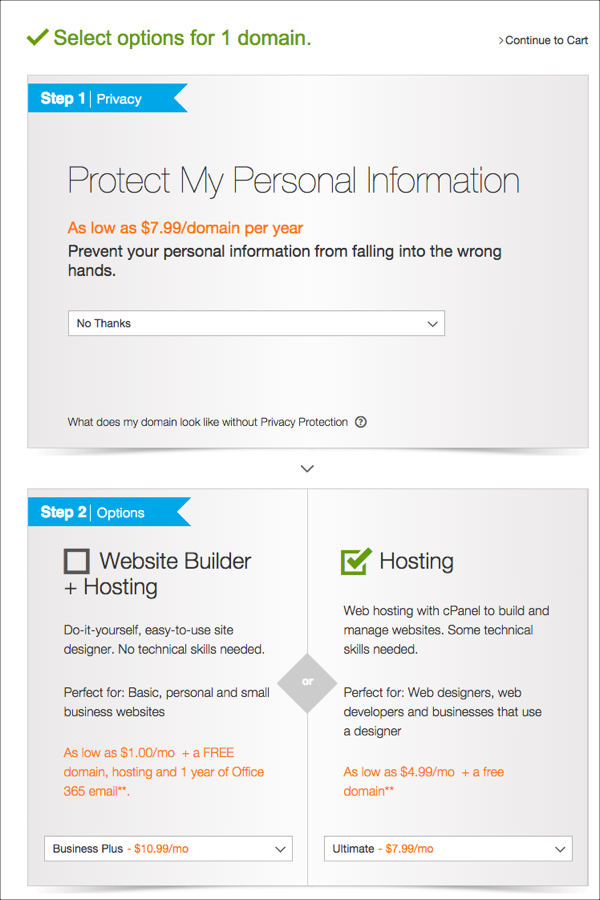
And it doesn’t stop there.
They’ll offer multi-year registration, search engine optimization, and social media services.
As for DigitalMarketer, we follow the purchase of my $9.95 book about email marketing with a content series designed to sell our $1,997 flagship email marketing training called The Machine.
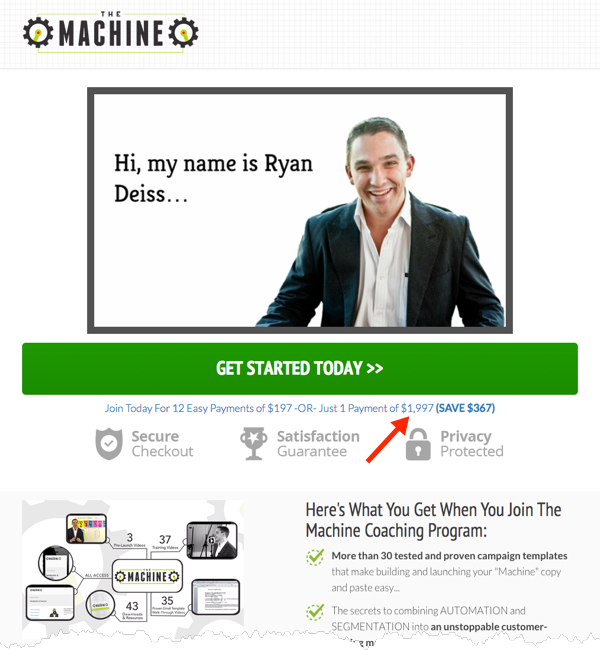
Do you think making $1997 sales to customers that originally purchased a $9.95 offer increases our profit margin?
You bet it does.
And the additional offers made by VistaPrint and GoDaddy (and every other business that understands how to increase margin) are where the real money is made.
These upsell, cross-sells, bundles, etc. are what makes the cost of customer acquisition worth it.
Looking to double your margin?
Ask this simple question: “What else can I sell to the customers I am acquiring?”
How to Double the Frequency of Purchase
Ok, time for the last piece of the formula: Purchase Frequency.
What if you could get customers to buy twice as often? Sales would double.
To do that, you need constant, strategic communication.
We call it The Return Path.
The fact is that most sales don’t occur on the first visit, so without follow-up in place—you’re leaving an enormous amount of sales on the table.
These are all forms of The Return Path…
- Exit Offers: A popup offer that appears when a prospect attempts to exit a page
- Ad Retargeting: Digital ads that show to prospects based on their prior behavior (Translation: Those ads that follow you around the web after your visit a web page)
- Automated Email Follow-Up: A strategic email marketing plan that brings leads and buyers back to offers and content again and again
This last tactic, email follow-up, is the most effective way to double purchase frequency.
Every email you send should have one of five purposes…
- Indoctrinate: Teach them who you are
- Engage: Get them to buy
- Ascend: Get them to buy more
- Segment: Learn what they want to buy next
- Reengage/Win Back: Reactivate disinterested subscribers
Email follow-up is so critical that we’ve created an entire article on building an email marketing machine here.
If you want to double purchase frequency—you need a Return Path.
Are you seeing the power of these “Growth Levers?”
Good news: I have created a FREE 6-part “Double Your Sales” course for those that want more detail, more examples, and more explanation.
In the FREE “Double Your Sales” course you’ll learn…
* Lesson 1: Discover the 4 unique “Growth Levers” that can increase the sales and profits of a business
* Lesson 2: How to perfectly position your offer so it gives your prospects EXACTLY what they want
* Lesson 3: Increasing Your Leads… the 3 vital elements of any lead magnet
* Lesson 4: Increasing Your Conversions… learn the most under-utilized business asset that can literally double… even TRIPLE your conversion rates overnight
* Lesson 5: Increasing Your Profits… learn 5 of the 3-word phrase that will increase your average profit per customer
* Lesson 6: How to set up an “Invisible Selling Machine” in your business to increase your sales frequency…
Register for the “Double Your Sales” course by clicking on the image below…
Have a question?
Ask the DM team and 12,220 other members in the DM Engage Facebook Group!
Not a DM Lab Member? Learn more here.
The post Want to Double Sales? Pull One of These 4 Levers appeared first on DigitalMarketer.
Source: digitalmarketer.com

The Definitive Guide To Leveraging Social Media for Online Sales
71% of Internet users in the United States actively use social media networks.
That means (almost) three out of four people can potentially be reached, interacted with, and persuaded through social media.
Marketers everywhere are trying to harness social media to improve customer experience, boost brand awareness, and increase sales.
Andrew Hubbard turned a $4,000 investment in Facebook ads into $36,449 in profits.
And, it’s not just for marketers.

Online retailers are also using social media to drive revenue.
A women’s online clothing store supporting a non-profit wildlife conservation organization saw a 192% increase in social media sales with Facebook leading to new customer acquisition.
So, to help you increase sales for your business, I’m going to show you how to use social media to drive sales.
To begin, you have to use the right social channels to reach the right people.
Use the right social channels to reach your target audience
As much as we’d all love to master every social platform, it’s about as likely as winning every lottery by only playing Powerball.
Just like the same winning numbers aren’t going to score you that sweet jackpot for every active lottery game, no blanket strategy can net you big wins on every network.
Why?
Because the preferences, demographics, and interaction styles change between each.
Some of this is the result of design constraints.
But some of it comes down to plain old user bases, which is why it’s so important to choose your channels wisely.
Facebook – the crown king of social media
Facebook may be the crown king of social media in terms of growth and frequency of use, but that doesn’t make it the best choice for your business.

Because there’s one crucial thing you have to remember about Facebook.
Just because it reaches more users than other networks doesn’t mean it reaches more of your users.
And that’s ultimately who matters most when deciding on a social platform.
Just look at the social channels these top brands choose to engage with their audience.
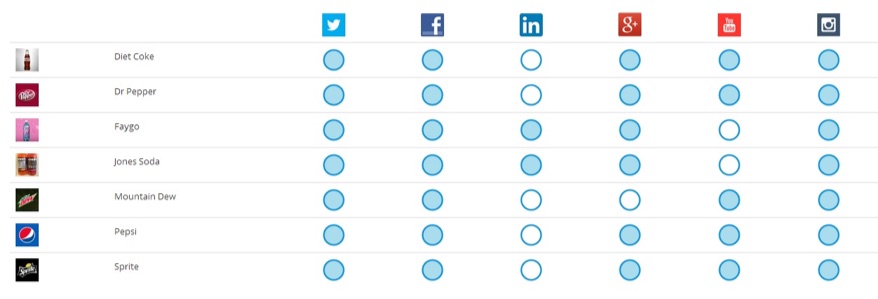
As Michelle Vroom, founder of Vroom Communications explains, “Each channel is used in different ways, and should be used in different ways. There’s no ‘one size fits all.’”
Carnival Cruise Example:
Carnival Cruise is an excellent example of how to leverage the right social channels to reach your target audience.
Carnival Cruise Line wanted to reach more “rookie” cruisers. It also wanted to keep its costs down to a minimum. For them, Pinterest was a golden goose.
Its campaign on Pinterest saw a 14% increase in click-through rate while its CPC was as much as 71% lower than the same outreach tactics on other networks.
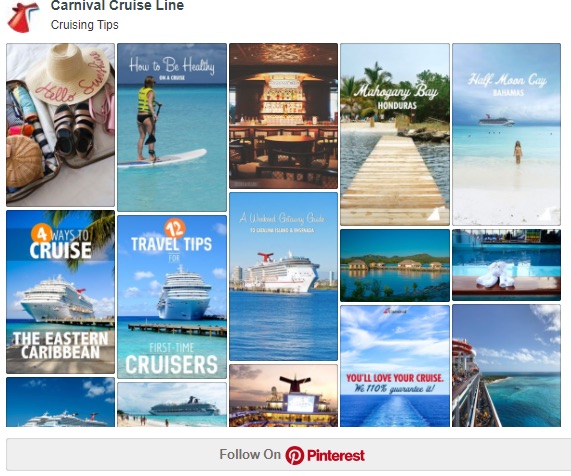
How did they get such money-saving numbers while boosting customer acquisition?
By going to the right network to reach the right people.
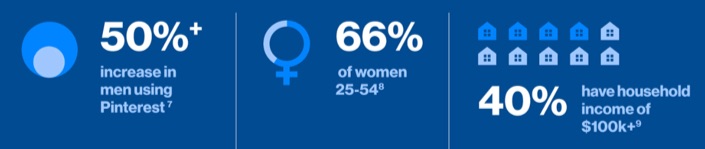
After all, who’s more likely to go on a first-time cruise: a college freshman still shopping a Top Ramen diet or a family that pulls in an income in excess of $100k?
According to Pinterest’s self-reported demographics, the latter accounts for 40% of their user base.
Flight Media saw similar results when they doubled down on their Instagram efforts. Instagram didn’t just surpass Facebook, but it became their top social media performer.
To the tune of 58% of their total lead generation.
Check this out.
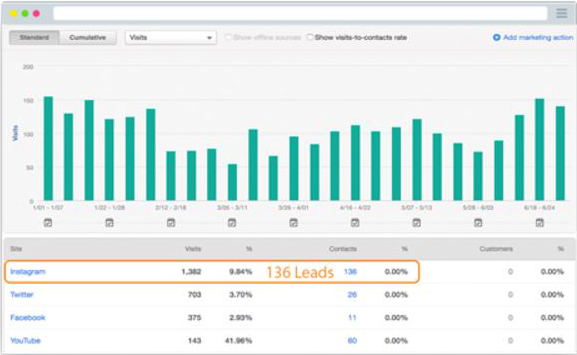
And all of that happened in just a few months.
So, as you can see, identifying your target demographics and meeting them on their platform of choice can help rake in new customers and save on marketing spending.
And sometimes, as demonstrated in the above examples, that platform isn’t always Facebook.
Use paid promotion and buyable pins to increase sales
Paid promotion programs vary between networks in terms of delivery and cost, and you can’t throw a stick without hitting a sales-boosting success story.
Don’t believe me? Check these out.
57th. design, a high-end furniture design house, and retailer get at least 35% of its revenue directly from Pinterest, using its “Promoted Pins” feature to great effect.

Here’s another.
OGX, a beauty and hair care retailer specializing in natural and exotic ingredients, pulled its U.S. sales up by 8% using Facebook’s advertising platform.

And all of that in four weeks. When you consider there’s barely a grocery store in the U.S. that doesn’t feature OGX’s products, that sales lift is huge.
Let’s make it a trifecta and look at one more.
Pringles, the tube of chips that makes us uncomfortably aware of how much we can eat in one sitting, nets a 2.9x ROI on promoted tweets for every dollar spent.
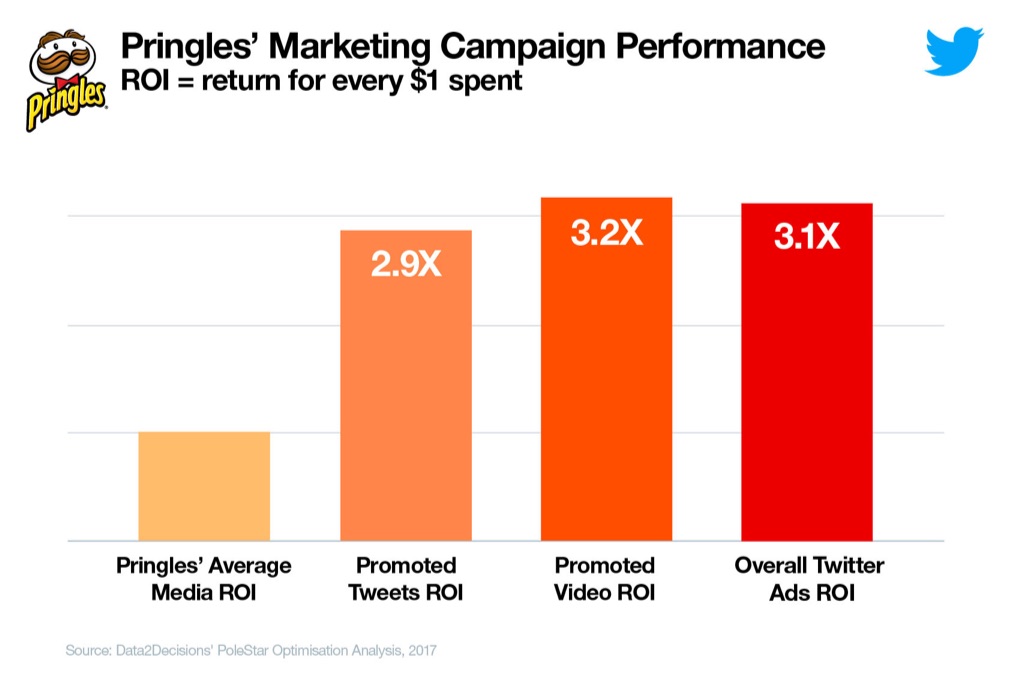
So, if a paid promotion isn’t part of your social media strategy, you’re missing out. But how do you find the program and format that fits your products and budget best?
Start by experimenting with A/B testing.
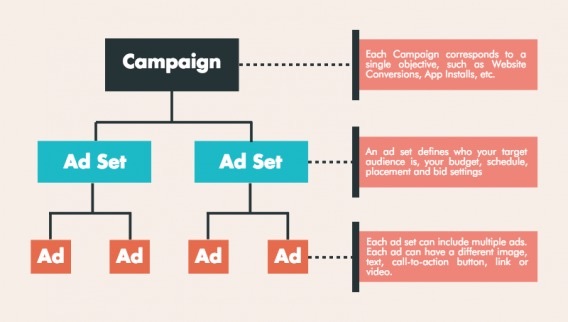
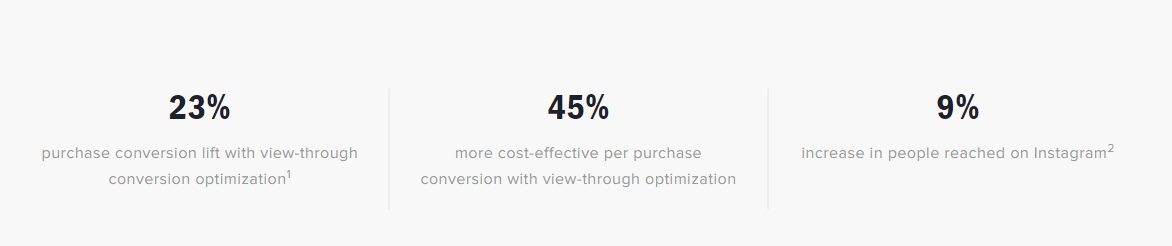
That’s what SHEIN, an online fashion retailer, did with Instagram’s paid promotion program.
Running three concurrent experiments with different ad formats, SHEIN tracked its conversion rates with Facebook pixel to land on the format that worked best for its customers.
Best as in 8.5% more than other ad formats for a total of 23% conversion lift.
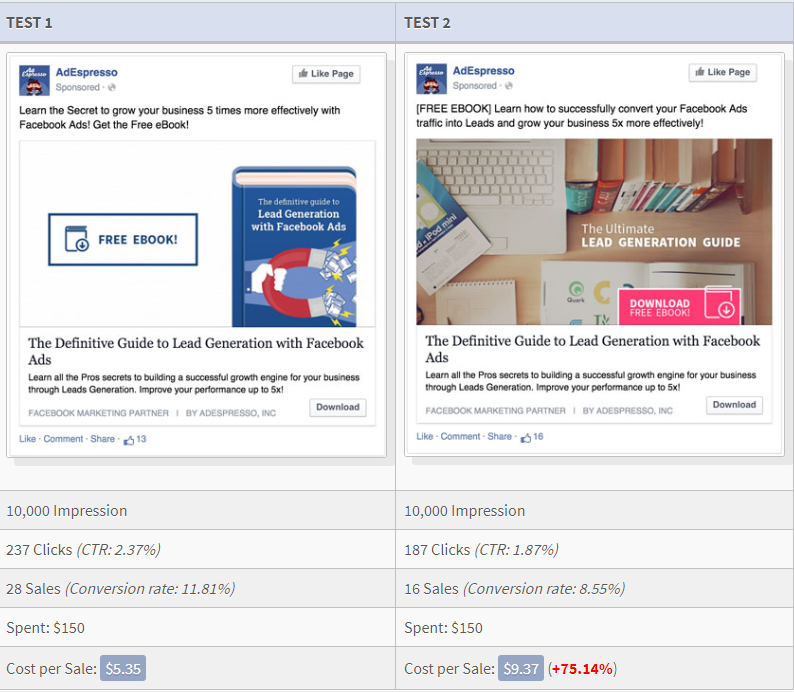
They’re not the only ones who know the value of an excellent side-by-side, either.
AdEspresso uses a similar approach for its Facebook ads.
That said, paid promotion isn’t the only way to bring customers indirectly from a social platform.
Pinterest, where 93% of users use pins to plan purchases, is also a gold mine of potential increased revenue.
Buyable pins, which allow users to complete their purchase Pinterest, have yielded some awesome results for e-commerce stores looking to grow sales and new customer acquisition.

Did I mention the best part yet? They’re free to use for approved businesses.
Look at the results for Gardener’s Supply Company, an online retailer of landscaping supplies.
Using buyable pins boosted its sales by 300%, and 95% of the pin purchases were new customers.
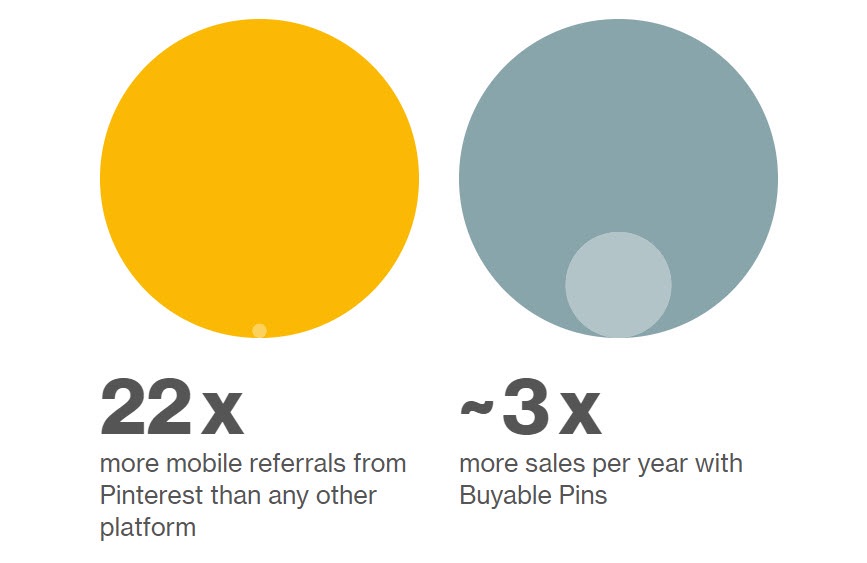
FlyAway BlueJay saw similar results. Buyable pins drove 20% of the retailer’s sales, and 100% of the purchases were from brand new customers.
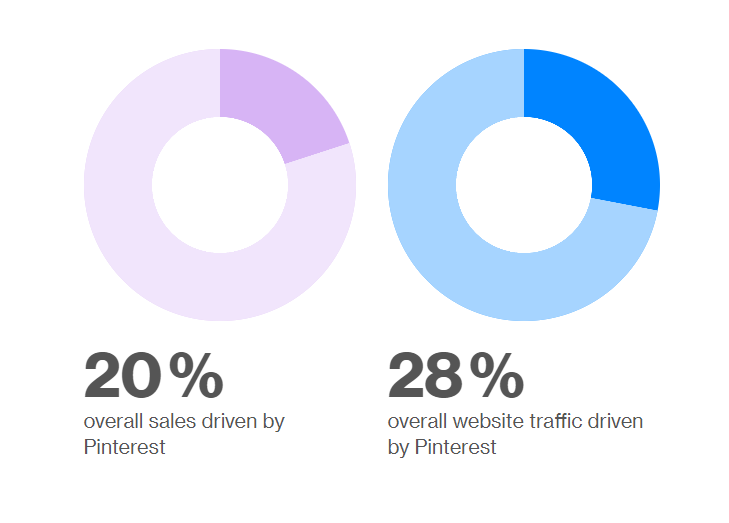
Holly Feld, the owner of FlyAway BlueJay, said this about her experience with buyable pins:
“Buyable Pins makes Pinterest more user friendly for both people shopping for the perfect gift and for businesses trying to reach new clients.”
This is the gist of it:
Every social network has a paid promotional program that can turn over a massive profit and put your sales into the stratosphere.
On Pinterest, buyable pins can take you even further into the e-commerce cosmos.
So, get out there, shop your options, and get ready to open your doors for new customers, stellar ROI, and huge traffic with paid promotion.
Leverage emotion to draw customers in
Content with high emotional impact is three times more likely to achieve mega-success than campaigns without it.
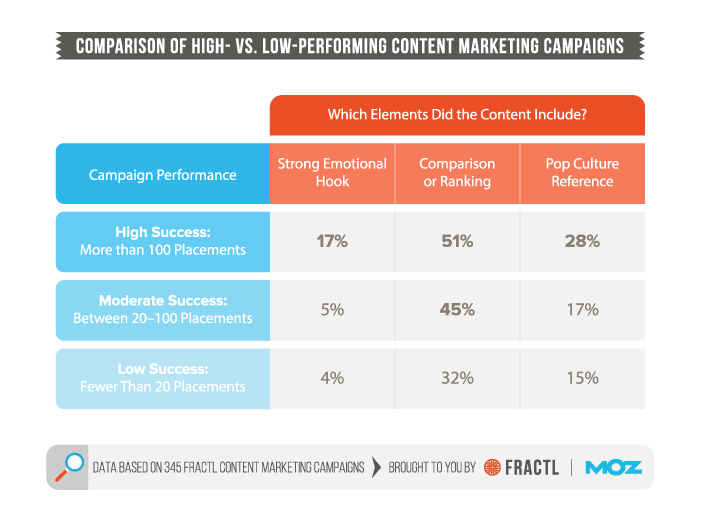
And, it’s not just for B2C organizations. Emotional marketing can be hugely profitable for both B2C and B2B organizations.
Here’s what Michal Zarankin, the former head of digital marketing for Pendo, had to say about it:
“I think that the strategies and tactics to make an impact on people’s decisions lay in the same places for B2C and B2B. B2B marketers should use emotional marketing if it makes sense for their entire strategy.”
But hold up: what exactly is emotional marketing and what makes it so different from other types of marketing? And more to the point, what can it do for your sales?
Emotional marketing, at its core, is storytelling.
And, it’s powerful enough to boost your repurchase rate by as much as 300%.
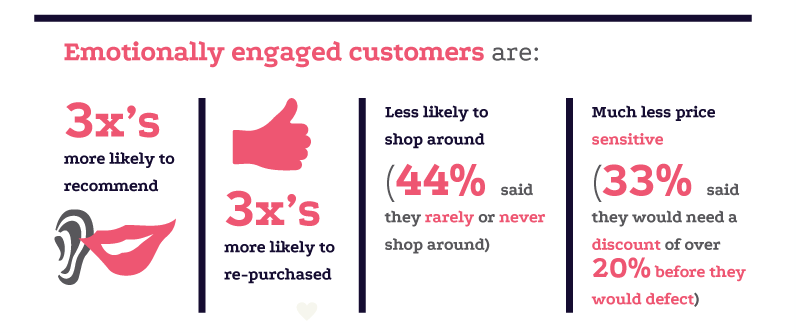
Emotional marketing is taking real-life situations and using them to drive a point home, whether that’s to prevent teens from texting and driving or get people to buy more of your products.
We might love stats in the marketing world, but consumers respond better with emotions. 31% of advertisers reported significant gains with the use of emotional marketing.
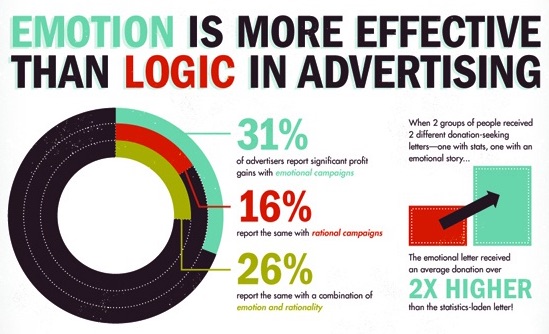
But just how significant?
Beats, the now-premiere headphone company, climbed to the top of consumer’s wishlists with three different story-based campaigns that were rooted in emotion.
The most remarkable part of Beats’ success is that almost all of the campaigns started with little to no budget.
You read that right.
Its product rose to acclaim through campaigns that could barely cover the monthly rent in most metropolitan cities – if at all.
Here’s another example of emotional marketing driving sales.
Back in 2008, a Subaru was nothing special. Dependable, decent, but it didn’t strike a chord with anyone. That all changed with the “Love” campaign.

Turning its focus to emotional storytelling, Subaru rose from the ashes of lackluster reception and is currently riding a 73-month long streak of growth, netting 647,956 sales in 2017.
Since launching their emotionally charged campaigns, Subaru’s marketing has evolved, but the core of it – the emotional resonance – has stayed the same.
Subaru officials put it this way: “Our target demographic is experience seekers. It’s the same as eight years ago, only we are reaching more of them, in better ways.”
Let’s look at one more example of emotional marketing in action, this time, specifically on social media.
Knorr, a food and beverage brand, wanted to get millennials talking (and buying) its products. Thus, the “Love at First Taste” campaign was born.
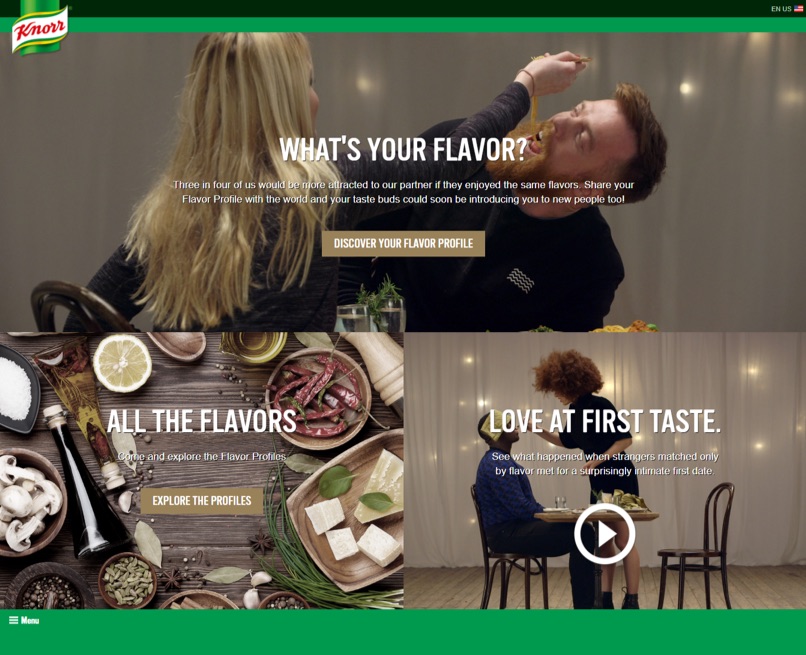
Wildly creative, this campaign leveraged emotional connection with other people – intimacy – to grow its reach across its target demographics on social media.
It used YouTube to drive its film content, Facebook to get shares flowing, and Twitter to spark the conversation with millennials.
The results went well above its expectations.
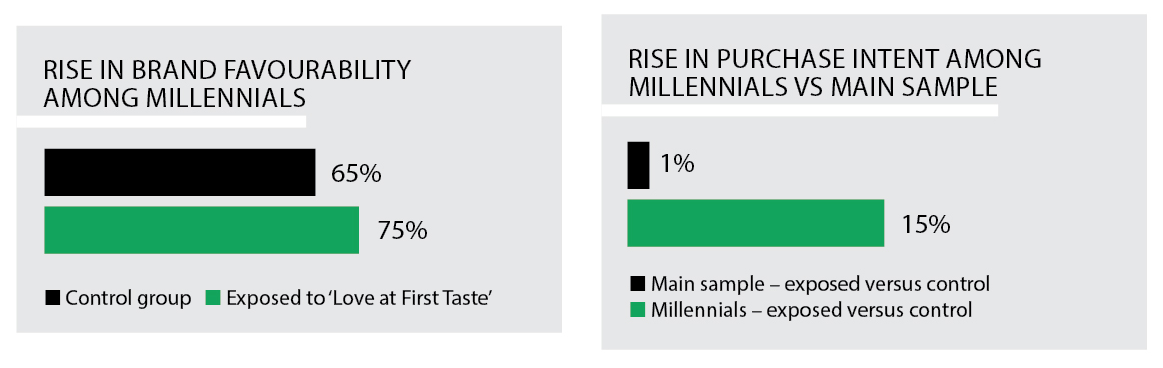
Globally, they saw a 13% rise in purchase intent across all demographics! That’s insane, especially when you consider the previous year’s increase came in at a paltry 1.25%.
OK, you’re sold.
Emotional marketing is effective for sales, offline, online, and when used in social media.
But, how do you incorporate that into your social media strategy?
First, understanding your audience is key.
The more emotional reactions you can elicit, the more shares and engagement you’re going to get with your posts.
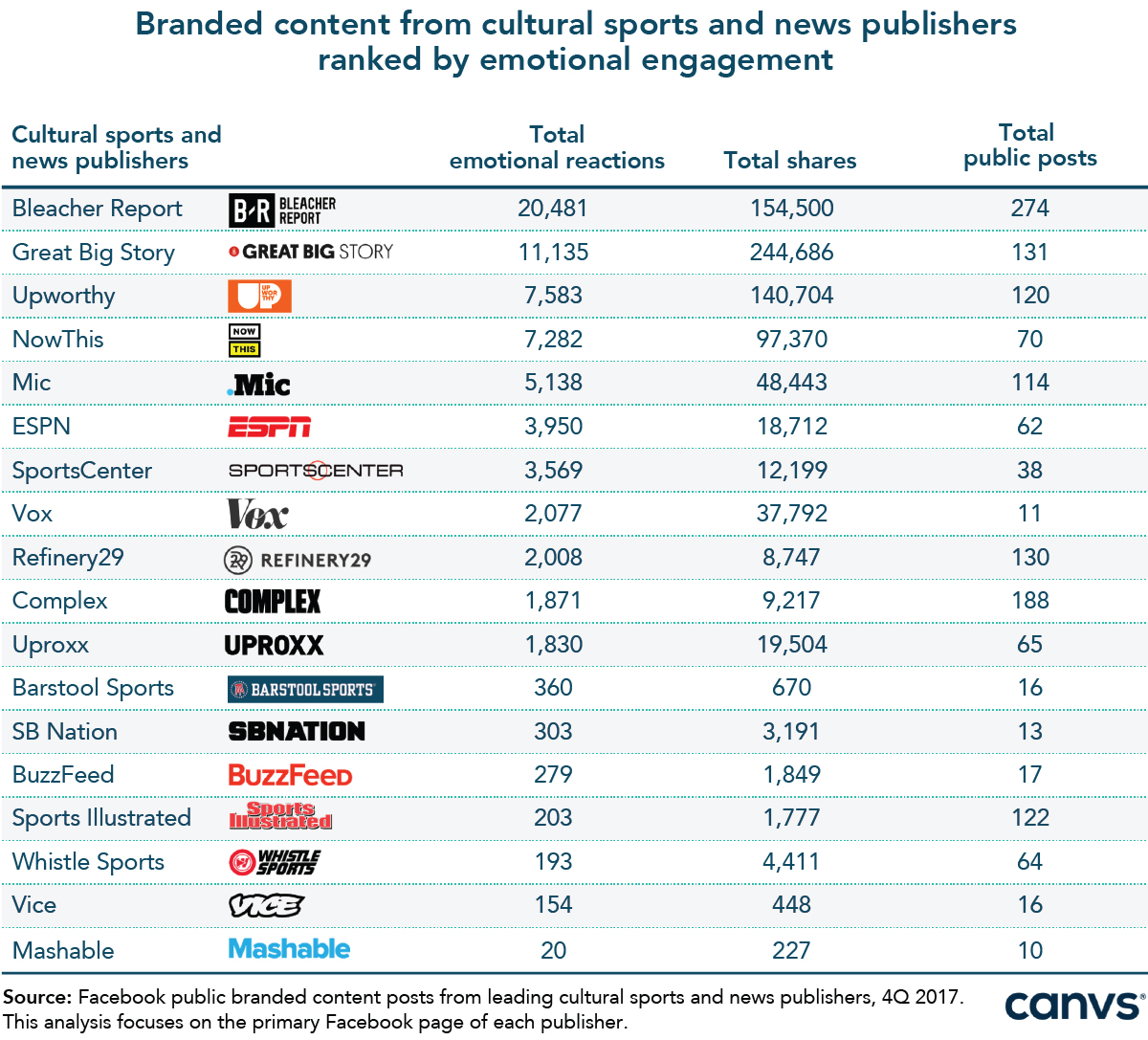
One of the most reliable ways to use emotional marketing on social media is using milestones.
Over half of millennials have made a purchase for a milestone after seeing the associated products on social media.
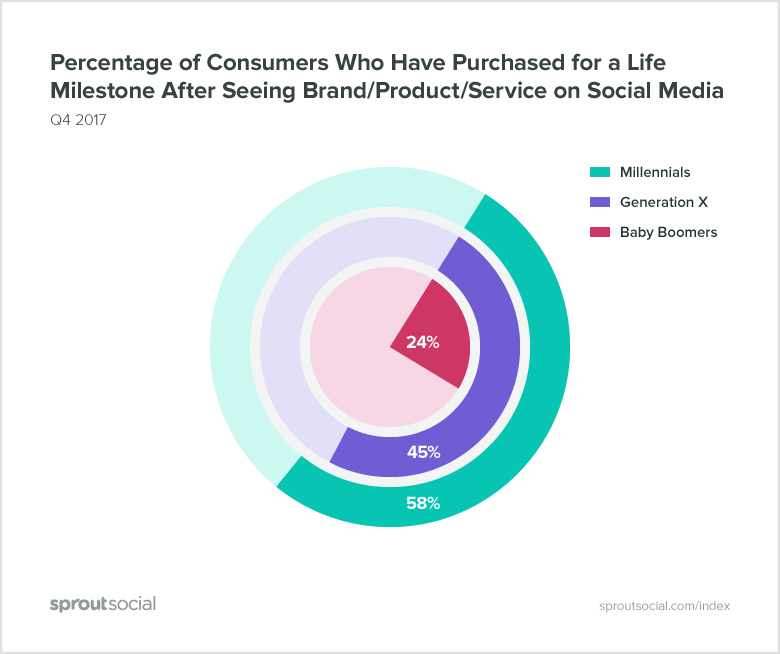
Here’s a sample of milestones – and their brand associations – you can use as inspiration for working into your social media.
Knorr, our above example, leveraged “relationships.” Subaru used “family,” and Beats used a combination of “personal accomplishment” and “professional.”
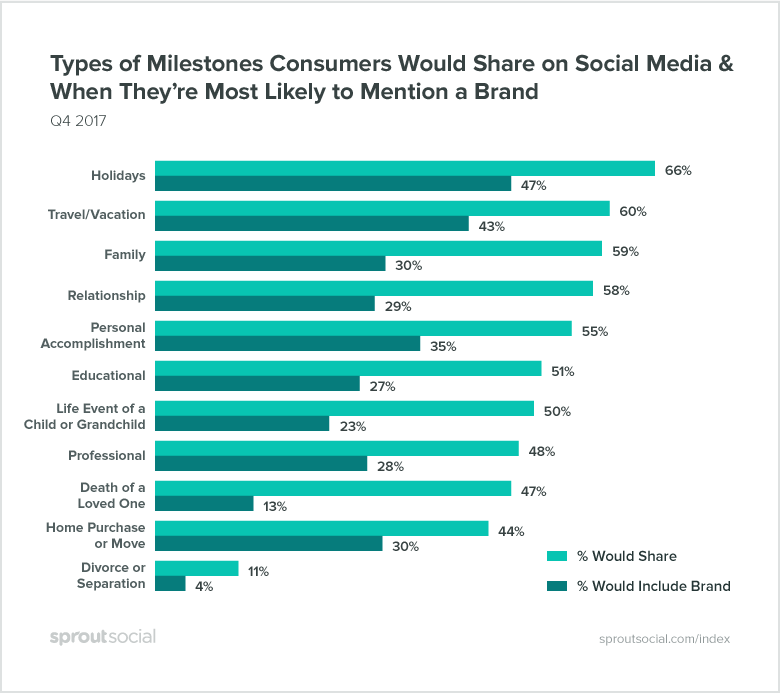
Here’s how it all breaks down:
Emotions are like a roadmap for your products.
As SmartBug Media’s Jennifer Lux explains…
“If you can truly understand the sentiments that drive buyers’ actions, you can cultivate an engagement strategy to result in those collective emotional triggers along the path to purchase.”
So, stop writing bland posts and start incorporating emotion-driven marketing and milestones. Your sales and followers will thank you.
Deliver more than a sales pitch
Do you remember the last time you got trapped in an uncomfortable conversation with a neighbor running one of those catalog businesses?
How, thirty seconds into the conversation, you started wishing for a meteorite to deliver you from their sales pitch?
Your customers feel the same way. They don’t want to listen to you sell, sell, sell.
That lands you in the spam or annoying territories (or both). And that translates into losing followers, especially your older users.
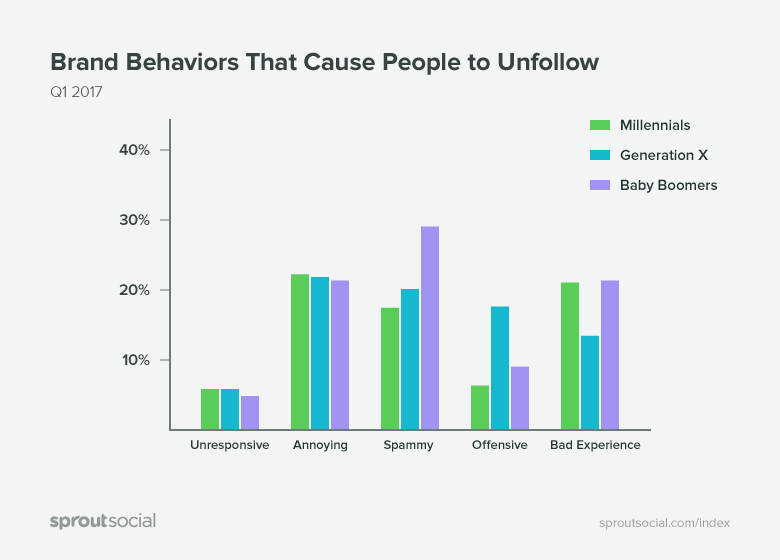
So you need targeted content to keep your social media from self-sabotaging.
Which is a cinch if you’ve got a content marketing budget set up and a writer on hand.
And if you don’t, it’s worth investing in one. The best content marketing strategies include both curated and original content.
Curated content may save you time, but the extra effort and expense required for original content can have a significant impact on directing users to your website.
More traffic means more sales opportunities.
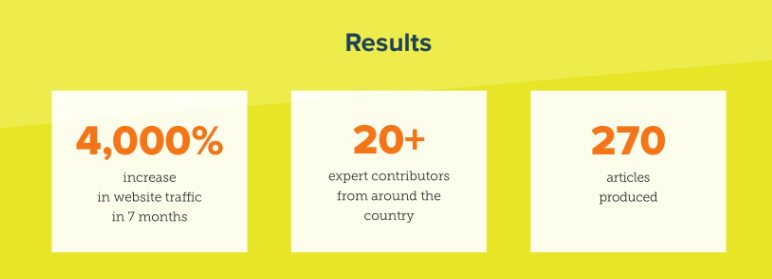
But in case you’re not sold on the necessity of original content, consider HotPads.
Using original content, the online rental marketplace was able to pull in 4000% more traffic in just seven short months.
At this point you might be thinking: OK, why not just go with all original content then?
Beyond the time and money investment, you should be sharing both curated and original content with your audience because both help your audience.
And more to the point, because both drive consumers on social media to make purchases.
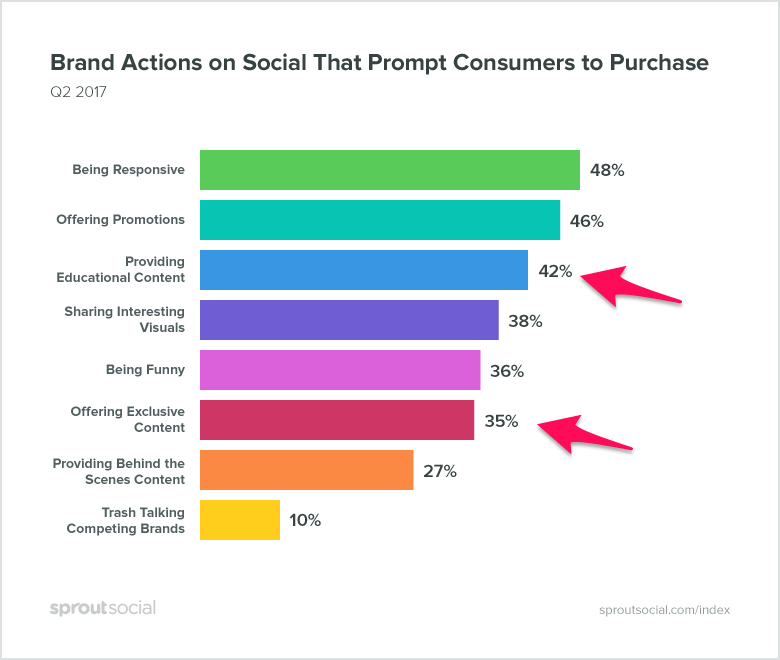
So make sure your social channels aren’t just one long sales pitch after another to keep your customers happy (and more importantly, consuming).
OK, there’s one final pillar you need to hit to leverage social media to drive your online sales. It’s a simple one, but it’s vital: being social.
Increase revenue with influencer marketing
Engaging with users is critical to keep them coming, but it isn’t limited to direct conversations.
In fact, there are a lot of creative approaches to engagement that have yielded some powerful rewards.
Take Nicaila Matthews’ approach.
She used a five-day social media challenge to build her business and help her users reap the rewards with her. The numbers are pretty staggering.
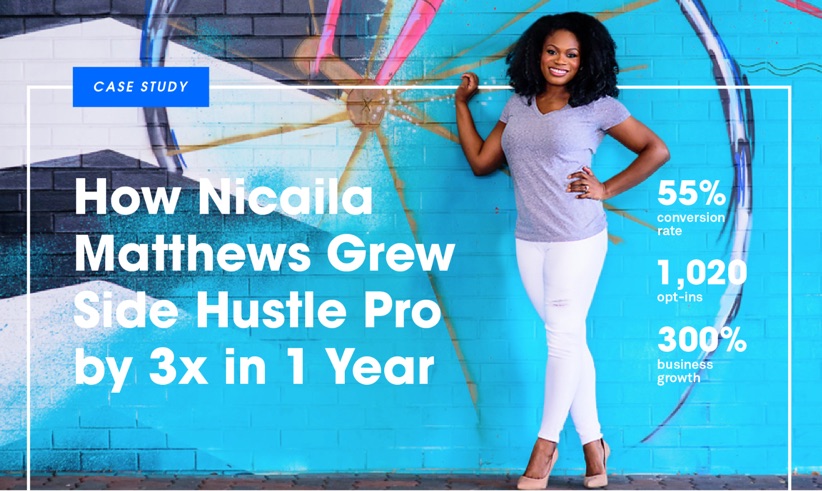
The setup was simple.
Matthews used a combination of organic social growth and paid social advertising to spread the word of her free challenge and direct users to a sign-up page.
Her challenge helped users grow their own Instagram followings and featured five live sessions (that later became evergreen content after the challenge ended).
Using live engagement and great content netted Matthews 1,020 leads in just five days.
She then used those opportunities to upsell her premium product packages and start moving leads into conversions. Brilliant, right?
Want an even savvier way to drive users to your products without having to create a lick of content for it?
Let users generate your content instead.
Better yet, use an influencer to net content, sales, and engagement.
The ROI on influencer marketing has been estimated up to as much as eleven times higher than traditional marketing techniques.
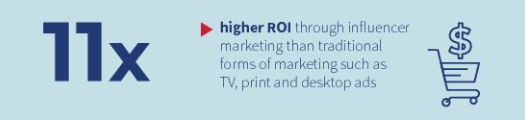
Here are just a few companies that have yielded some epic rewards with influencer marketing.
Daniel Wellington, a watch company, built its entire sales strategy on influencer marketing and sold its one-millionth watch within three years of launch.
Want an even more staggering result?
Foodspring, a culinary upstart catering to the fitness-minded consumer, grew its earned media value 750% in one year thanks to influencers.
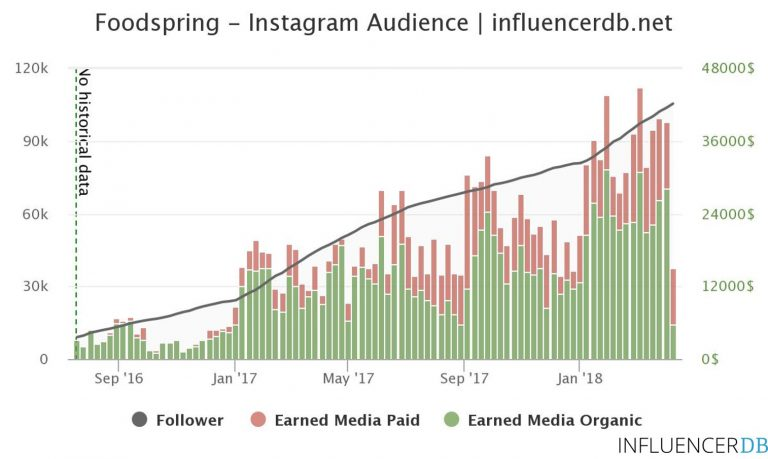
Influencer marketing isn’t just for newcomers looking to make waves. Well-established brands like Bigelow Tea have netted some impressive results, too.
To the tune of an 18.5% increase in sales.
But in case you’re not sold on influencer marketing yet, let’s look at one more example.
Gerber Lil’ Beanies boosted its national sales by 5% thanks to a comprehensive influencer campaign.
This campaign netted Gerber Baby almost 10,000 pieces of content and a quarter million interactions across different social platforms. Which is crazy when you consider this:
It had just under 350 influencers working to promote its products. Which means for every influencer, it netted roughly 800 engagements!
OK, that’s all well and good, but how do you capitalize on influencer marketing if you’re working with a baby-sized budget? Go for influencers who already want to promote your product.
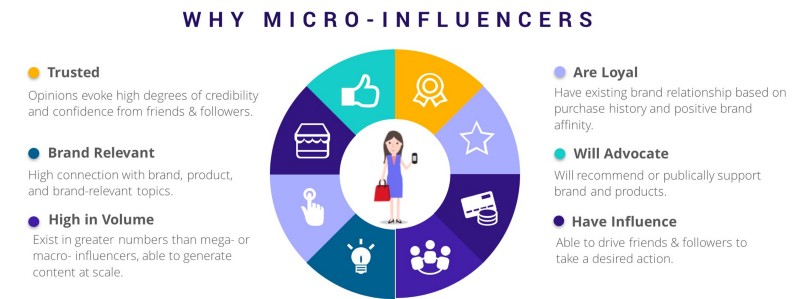
Alternatively, reach out to “micro-influencers.”
These homegrown social media players can deliver high engagement, they’re easier to find than macro-influencers, and they’re often significantly cheaper.
Ready for some good news?
Finding influencers that fit both your budget and niche is easier than ever.
One of my favorite tools for finding influencers is Influence.co.
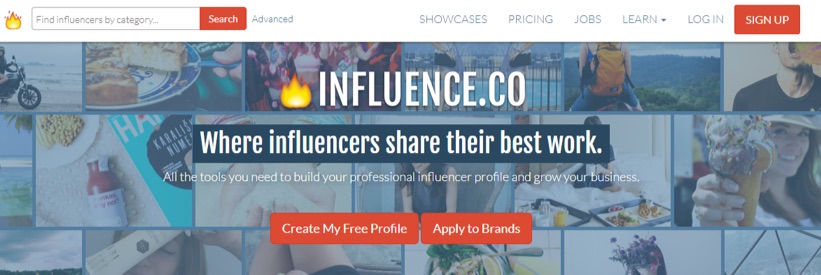
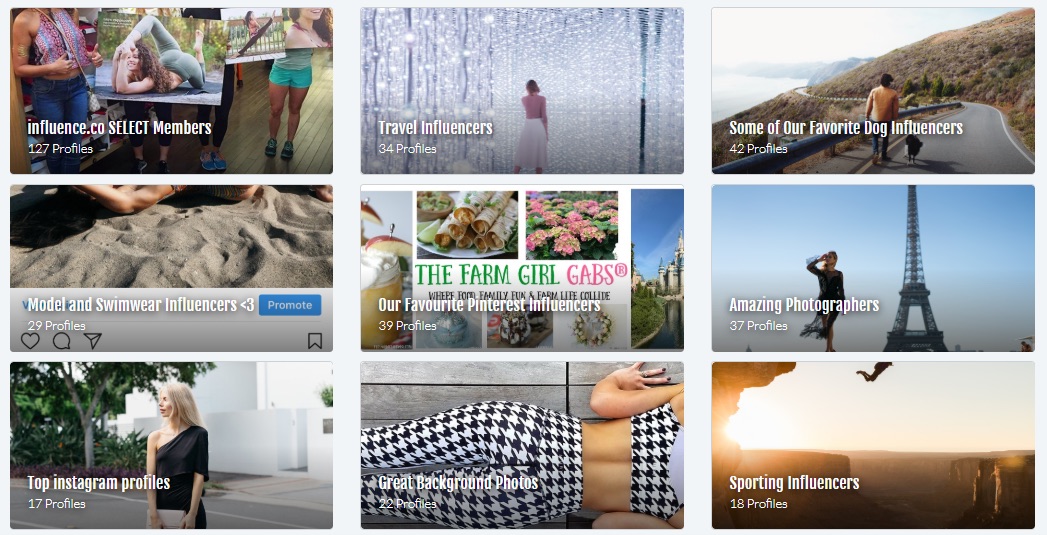
Organized visually and including an exhaustive tagging system, Influence.co makes it easy to filter influencers by industry, follower count, local area, and so much more.
Think of it as a freelance platform specifically for influencers. One that puts the power in your hands to find the perfect people for your budget and products.
You can start by checking out its collections, the hand-selected cream of the influencer crop.
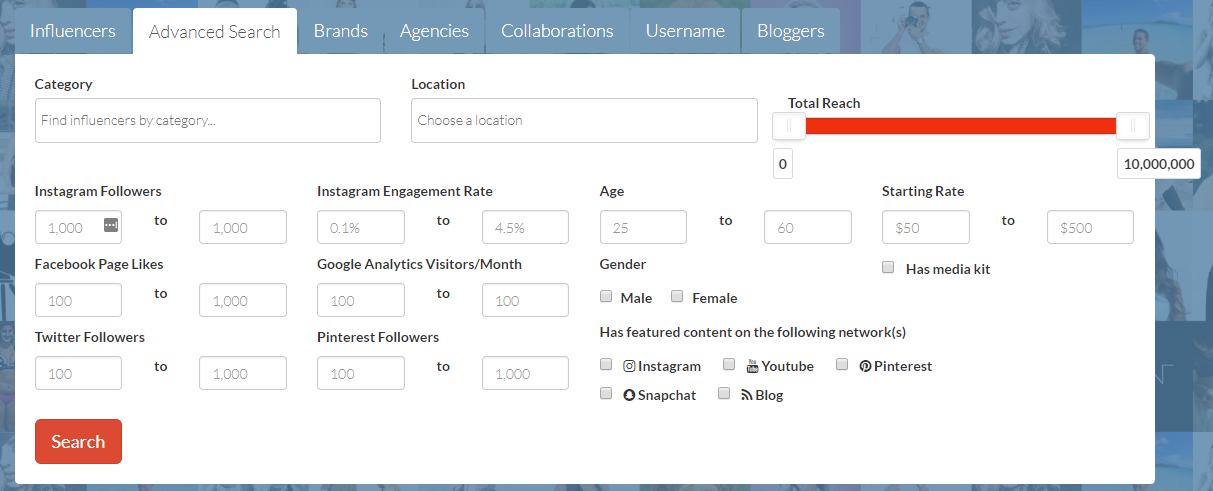
But the real power of this platform is its advanced search.

Check out the options for filtering influencers.
Nice, right?
With Influence.co, it’s easy and free to find the right people to work with your brand.
Basically, here’s the deal.
Social media can drive sales and generate leads, but you have to be involved and get the right players on the board to see the bucks roll in.
Reach out to your users, get involved in the community, and work with influencers to drive your online sales, bulk up your content, and elevate brand engagement. It’s that simple.
Conclusion
The most important aspect of using social media for online sales is going where your customers already are. Different demographics like different networks.
Find your target demographics and build your presence where they’re already comfortable. That isn’t always going to be Facebook.
Once you’ve nailed down your networks, use paid promotion to get some serious ROI and sales traction. The “buyable pins” on Pinterest are also a great option for online retailers.
Want your products to stand out in the sea of social media? Leverage emotion to engage with your customers…and their wallets.
But don’t just focus on your products. Users will drop like flies if your channel is a day-in, day-out sales pitch.
Instead, give your followers a combination of stellar original and curated content to make your brand worth following.
Finally, leveraging your social media to get people invested in your products requires one simple but pivotal action: be social.
Engage with users, whether it’s through user-generated content or clever campaigns like the one run by Nicaila Matthews to generate over 1k leads in five days.
Alternatively, bulk up your content and boost your sales by turning to influencers. Don’t think you have the budget for influencer marketing? Reach out to “micro-influencers” instead.
They’re often cheaper, well-trusted, and much easier to reach than star-studded endorsements. Influence.co is a great way to find them.
The social media game may not be the easiest around, but it can be rewarding with the right metrics and approach. Use this guide to give your products some pop with social media.
What social media strategies have you leveraged to increase sales?
About the Author: Neil Patel is the co-founder of Neil Patel Digital.
Source: feedproxy.google.com

The 1-2 Punch to get more new Customers and more Repeat Purchases.
Your customers are your greatest asset
The one thing shared across all great ecommerce companies is a large, loyal customer base. The keys to building that kickass customer base are well known, but easier said than done:

Getting new customers
Turning each new customer into a high LTV fanatic.
Acquiring new customers is top-of-mind and top-of-spend for most ecommerce companies we speak to every day.
But, there’s something that we don’t see happening enough, and that’s getting the most out of each customer to accelerate growth.
Focusing on building great customers, who will then in turn help you get more new customers causes a snowball effect and accelerates your growth. That’s the 1-2 punch.
A self-feeding engine of growth
Here we look at using Alliioop and ReferralCandy, to gain more first-time customers and then turn them into repeat purchasers that increase overall LTV and drive explosive growth.
The chart below shows the amazing growth impact of repeat purchases. Getting from 1 purchase to 3.5 purchases per customer per year will drive your growth and margins–almost 20x over five years.
It’s the difference between a slow growth grind and an accelerating rocket.
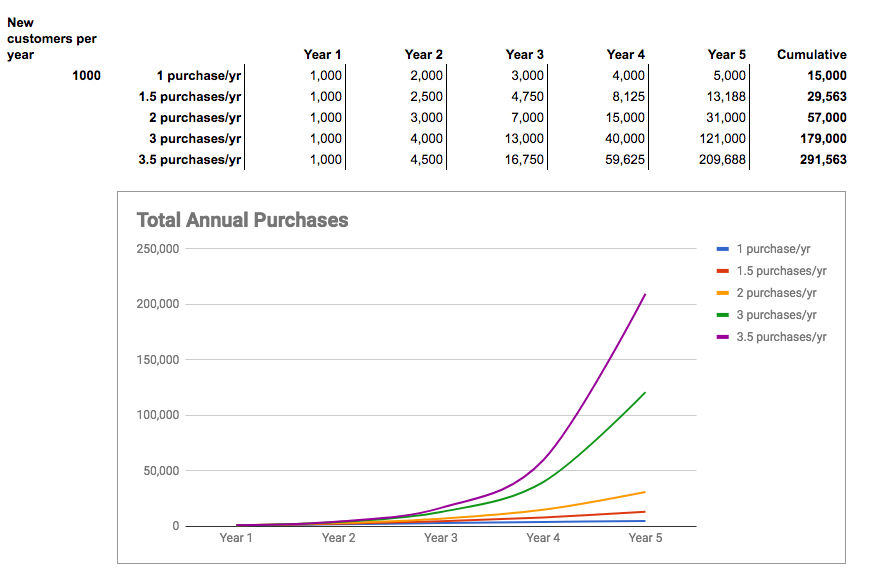 A graph illustrating the power of repeat purchases for your company growth
The reality is, you cannot do this without customer referrals or a deep understanding of your customers and their behavior allowing you to better serve them.
To rely too heavily on paid customer acquisition is not sustainable.
Turn your customers into referrers – and better customers – with ReferralCandy
At ReferralCandy, they think of your existing customer base as your best source of new customer acquisition.
If you are an ecommerce merchant, you already know the importance of getting word-of-mouth sales on your online store.
If your product is able to solve your customers’ needs and you provide them with a great shopping experience, it’s very likely that they will recommend you to their friends and family.
If you don’t have a referral program, however, there’s very little you can do to encourage your customers to keep referring you to their friends and family. Think of your customers like your best salespeople:
- They know your future customers personally
- They are recommending products and services in an altruistic way
- They are trustworthy to their audience
There are several studies proving that referral programs help businesses get better customers (they’re more profitable, they’re less likely to leave, and they have higher lifetime value) but you can also use them to build loyalty with your existing clients.

Your customers will keep you in mind for future recommendations – but also for future purchases.
ReferralCandy makes it very easy to set up an effective referral program, reducing friction on the customer end and improving the customer experience.
Choose your rewards – cash, store credit, discounts, or free products, easily share your program through email and on-site pop-ups and that’s it!
ReferralCandy allows a scalable and highly cost-effective channel to drive new customer acquisition. Once they become a customer, Alliioop enables you to drive more effective and timely engagements with your customers and increase repeat purchases.
Building a kickass customer base just got easier
Building a large, loyal customer base takes time and effort–and both art and science. It requires that you understand what makes customers tick–and what doesn’t.
It’s not always about sending discounts and special offers, though those do work.
Referrals are one part, but you must also deliver well-timed content, advice, product recommendations, as well as those special offers to add value, build appreciation and drive loyalty. That’s exactly why we created Alliioop.
Getting results with Alliioop
Alliioop is will make you more effective in doing the two most important things for growing your loyal customer base.
Sell more to your existing customers by automatically sending emails and Facebook ads at the right moment triggered on data and behavior–not hope and luck.
Attract more customers that are just like your best customers by building a Facebook Custom
Audience with your high-lifetime customers and attract more of the same.
Make your Shopify site soar
Getting started and realizing results is easy with our Shopify and Facebook integrations. Plus our pre-built reports and segments come to life right after you turn it on, with these key capabilities:
- Reporting: We’ve pre-built a suite of reports that will show you everything from high-level conversion metrics, to campaign performance, LTV and the details of every customer path. You get insights highlighting what you should do next to increase conversions.
- Segmentation: Sending highly targeted messages requires powerful segmentation. You can segment on anything and the segments are dynamic–meaning people are added and removed from segments in real-time–not stale, static lists.
- Facebook: Keeping your Facebook Custom Audiences fresh and on target is cumbersome. We automatically add and remove people from your Facebook Custom Audiences based on their behavior. This keeps your audiences fresh and your ads more on target–and effective.
- Anonymous user tracking: We can show you what users did before they gave you their email address. So you get the real-time-to-purchase picture and can personalize welcome messages with products they previously viewed or abandoned.
- Automation: Driving all these engagements requires serious automation. Alliioop monitors all your customer behavior and triggers the engagements automatically. So as you build more granular targeting over time, we manage all the delivery so you can scale.
Use Alliioop and ReferralCandy together
The key to making this work is using the 2 solutions together to maximize your growth. Take your existing customer base and empower them to refer their friends and family (after all – they get a benefit as well when they refer someone who makes a purchase) with ReferralCandy.
Use Alliioop to gain insights you’ve never been able to glean before and better understand, segment, and engage with your customer base.
By only sending timely and relevant messaging you’ll show your customer you understand and respect them more than your competition.
Click here to schedule a personal demo and learn how Alliioop can help you grow your ecommerce company. If you’d like to see ReferralCandy, click here.
Source: feedproxy.google.com