
Tag Archives for " customer satisfaction "

Customer Satisfaction: Benefits, Examples & Importance
Customer satisfaction is crucial to the success of your business. No matter how innovative your product or competitive your pricing, if your customers are ultimately unhappy, they’re not going to stick around.
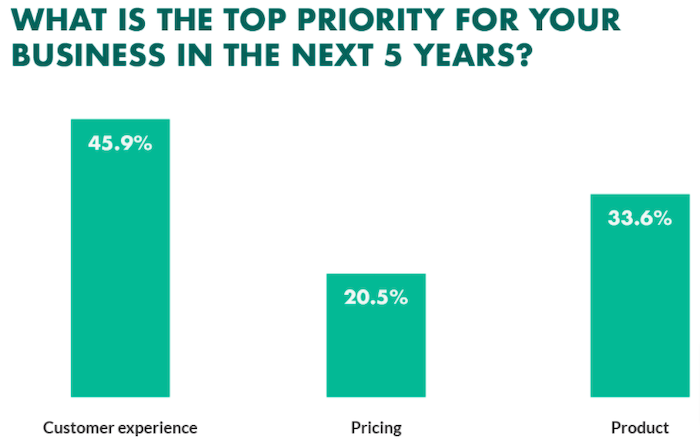
As such, it’s no surprise 45.9 percent of businesses surveyed in 2020 named customer experience as their number one priority over the next five years:
What exactly do we mean by “customer satisfaction?”
Why is it so important, and what can you do to improve it?
Read on to find out.
What Is Customer Satisfaction?
Customer satisfaction is a measure of how people feel when interacting with your brand. It can be influenced by any number of factors, such as:
- perceived product quality
- perceived product value
- convenience
- customer expectations
- communication
- complaint handling
Every brand, no matter how successful, wants to improve customer satisfaction.
To do that, they need to define two things:
- Who their customers are?
- What does it take to satisfy them?
Part one isn’t as simple as it sounds. Let’s take the example of a hospital. It might have two distinct customer bases:
- The patients it treats
- The insurance companies sell patient data to
Clearly, those two audiences have very different goals, and keeping them happy requires two vastly different approaches.
To make matters even more complicated, satisfying one audience may sometimes be detrimental to the other’s happiness.
4 Benefits of Customer Satisfaction
Customer satisfaction is more than just a “nice to have.” Getting it right has specific, tangible benefits, including:
1. Increase Brand Loyalty
Never take your customers for granted.
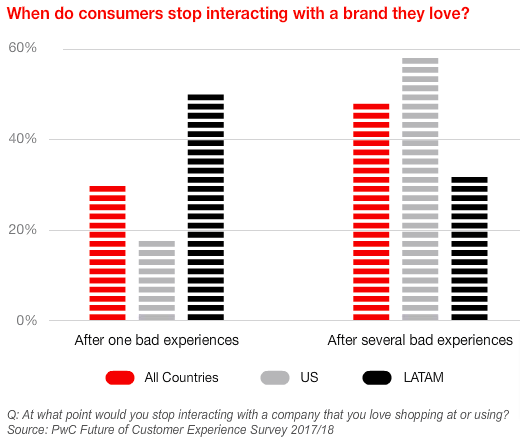
According to PwC, 59 percent of U.S. consumers who love a product or brand would ditch it after several poor experiences.
More concerningly, almost one in five would do so after a single bad experience.
On the flip side, if you do everything in your power to keep customers happy, it stands to reason they’ll be more likely to stick around for the long term.
2. Boost Trust
According to Edelman, 81 percent of consumers say brand trust is a deal-breaker or a deciding factor in their purchase decisions.
Yet trust is pretty thin on the ground, with just 34 percent of consumers saying they trust most of the brands they use or buy from.
How do you make your brand more trustworthy?
One way is to improve satisfaction. According to a study from Eastern University Sri Lanka, customer satisfaction logically precedes customer trust; those two things rarely exist in isolation.
3. Attract Positive Word of Mouth
Word-of-mouth marketing is extremely valuable.

To give just one example, 87 percent of consumers read online reviews for local businesses in 2020, up from 81 percent in 2019.
Unfortunately, consumers are significantly more likely to share negative reviews than they are positive ones.
According to American Express, U.S. consumers tell an average of 15 people about bad experiences, whereas they only share good experiences with 11 people.
In other words, it’s a numbers game.
You know consumers are naturally less inclined to shout about the good stuff you do, but if your customer satisfaction is high, you’re well placed to reap the benefits of word-of-mouth marketing.
4. Grow Your Audience and Sales
We already know satisfied customers are more likely to tell their friends and family about your brand, which in turn gets you in front of a wider audience.
However, did you know those satisfied customers will also spend more?
According to the same American Express survey referenced above, U.S. consumers are prepared to spend 17 percent more if a brand delivers excellent service.
What’s more, 84 percent of companies that improve customer experience report an upturn in revenue.
How to Measure Customer Satisfaction
It’s not enough to simply hope your customer satisfaction will improve.
You need concrete plans to drive it forward, backed by robust data.
To do this, you need to gather customer feedback through polls, surveys, and feedback sessions.
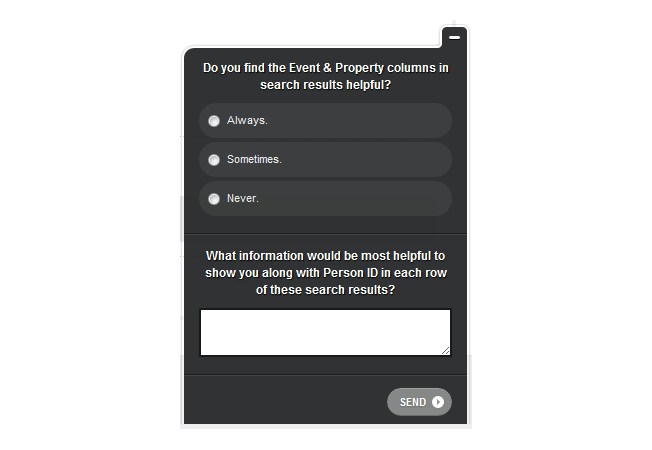
Here are three types of feedback to collect to help you measure customer satisfaction and examples of questions to ask.
1. Overall Satisfaction
It can be helpful to gauge a customer’s general opinion of your product or service before drilling down into the specifics.
Positive answers indicate they are happy with their purchase decision, while negative ones suggest they have some degree of buyer remorse.
Example question: Overall, how satisfied are you with [Product X]?
2. Repurchase Intent
Given the close ties between customer satisfaction and loyalty, it makes sense to use a customer’s repeat purchasing plans to measure their general happiness.
Consumers who say they are likely to buy again may also be more likely to leave positive reviews or share their experiences with friends and family.
Example question: Will you shop at [Company X] again in the next month?
3. Word of Mouth
NPS customer satisfaction surveys are centered on a single question about whether or not the customer would recommend a given brand or product.
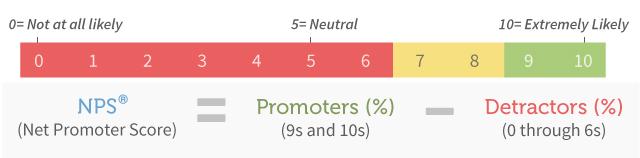
This sort of feedback allows companies to understand whether the user’s experience aligns with their expectations.
Example question: Would you recommend [Company X] to your family and friends?
3 Steps to Improve Customer Satisfaction
Data is the key to improving customer satisfaction.
However, data alone can’t transform your customers from unhappy to loyal.
You have to focus on gathering data effectively, then use those insights to take action. Follow these three steps to make it happen:
1. Conduct Customer Surveys
Surveys play a key part in your quest to improve customer satisfaction, so the feedback you generate must be useful.
Unfortunately, there are no guarantees.
Even if your survey is perfect, customers don’t always tell the truth about how they feel.
What’s more, they might make mistakes when completing your survey.
In either case, you’re not getting a true picture of customer satisfaction.
However, there are some proactive steps you can take to generate more impactful feedback.
Concentrate on keeping your survey as short as possible to capture more responses.
Research from SurveyMonkey shows completion rates drop off when surveys contain more questions:
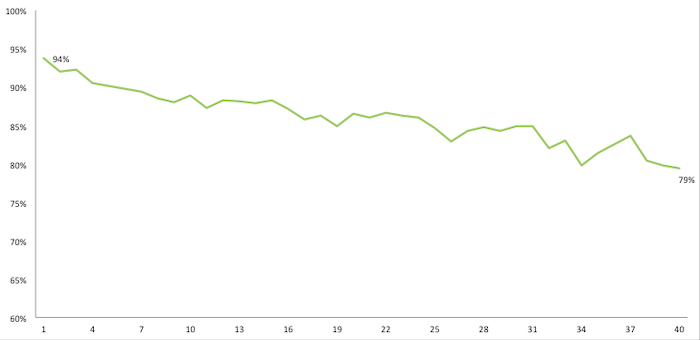
Surveys containing ten questions have an average completion rate of 89 percent, dropping to 79 percent for 40-question surveys.
It may not sound like much, but it means if you’re surveying 1,000 customers, you’ll get 100 more responses from the 10-question version.
In other words, if a question doesn’t have the potential to yield unique insights, it shouldn’t be in your survey.
Also, it pays to remember the purpose of polls and surveys isn’t to “cook the books.” You’re not trying to earn artificially high scores by confusing or manipulating respondents.
Instead, you’re trying to get an accurate picture of what customers actually think about your brand.
Avoid leading or loaded questions, which attempt to steer people toward a certain answer. For instance:
- Bad question: Thousands of customers have left five-star reviews for [Product X]. Would you do the same?
- Good question: How likely are you to recommend [Product X] to a friend?
2. Monitor Social Media Mentions
Customer surveys will only get you so far because they only gather opinions from the types of people who are happy to fill in surveys—which might exclude a huge chunk of your audience.
For a more accurate view of customer satisfaction, keep a close eye on social media, too.
Tools like Linkfluence and Mention help monitor brand mentions and conversations relevant to your company and product. They even use machine learning to assess the sentiment of those mentions.
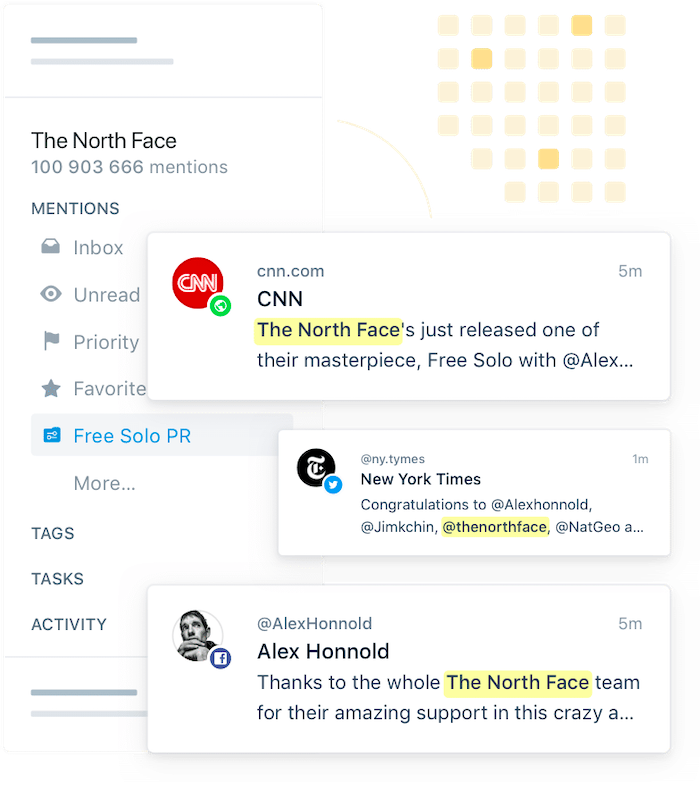
This gives you access to a broader customer pool than potential survey respondents and ensures you’re on hand to help customers when they need it.
3. Implement Constructive Feedback
Once you’ve gathered a bunch of feedback, it’s time to take action.
One of the biggest challenges is to identify an effective, repeatable way to prioritize those actions.
After all, it’s unlikely every customer wants the same thing.
Some might be asking for faster shipping; others might want a slicker checkout experience.
Transparency is key.
Most consumers are pretty reasonable, and they understand you have finite resources.
Make it clear you’ve heard their feedback and, if the demand exists, you’ll work on a fix.
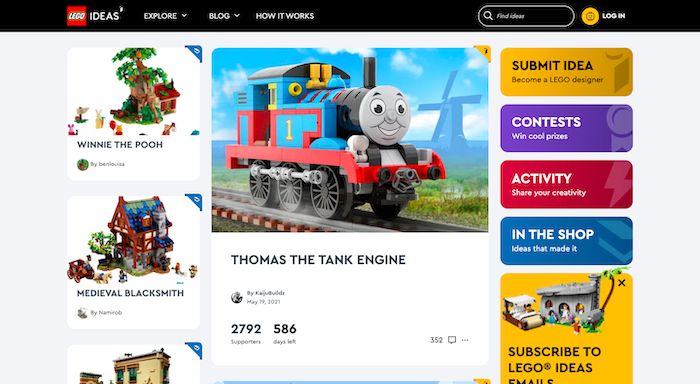
LEGO has come up with an ingenious way to do this.
It created a dedicated site, LEGO Ideas, where brick-building fans can submit product ideas.
If an idea gathers 10,000 votes from the community, it’ll be considered for production.
3 Customer Satisfaction Examples
Looking for inspiration to level up your customer satisfaction?
Check out these three examples of brands that are rocking it:
1. IBM
Tech giant IBM was named the number one company for customer satisfaction in the latest Drucker Institute Company Ranking.
Its success stems from its customer-centric approach to software development, which involves making decisions based on the goals and ambitions of end-users, not just how they use a specific tool.
Speaking to Harvard Business Review, IBM’s VP of Platform Experience Charlie Hill explained: “We want to bring our design thinking muscles to explore and play with how the user’s experience could be better in the future.”
Key Takeaway
Put your customer first. Whether you’re selling a piece of software or a pair of shoes, think about what problems brought them to you in the first place, and what success looks like to them.
2. Chick-fil-A
Ranked top of the American Customer Satisfaction Index across all industries,
Chick-fil-A stands out thanks to its superb in-restaurant customer service.
Its staff is regularly named the friendliest of drive-through brands, and they also outshine the competition on order accuracy.
This is no easy feat when it’s up against huge global names like KFC, McDonald’s, and Starbucks.
Key Takeaway
Invest in your people. Whether they’re dealing with shoppers in-store or helping them online, their professionalism and courtesy have a huge impact on your customer satisfaction rating.
3. Trader Joe’s
Grocery chain Trader Joe’s has an NPS score of 62.
For context, the average score in the grocery niche is 24.
The brand stands out by truly going the extra mile for its customers.
In one famous example, a Reddit user told how the chain broke its “no deliveries” policy to help out an 89-year-old who was snowed in during the holidays.
The comments on that viral post are littered with other Redditors recounting their own experiences of receiving superb service from Trader Joe’s.
Key Takeaway
Give your team members a degree of autonomy to delight customers.
It should be quick and easy for them to get signoff on the sorts of small, spontaneous acts of kindness that can make the biggest difference to consumers.
Customer Satisfaction FAQs
Q: What does customer satisfaction mean?
A: This is how you measure your customers’ experience to see if it meets or falls short of their expectations.
Q: Why is customer satisfaction important?
A: Growing companies are more likely to prioritize customer success than companies that don’t have a growth mindset.
Q: What are the benefits of high customer satisfaction?
A: Customers trust recommendations from others and look at reviews before deciding to convert with a business.
High satisfaction means a customer is more likely to recommend your business and leave a positive review.
Q: How does customer satisfaction help branding?
A: High customer satisfaction can increase brand loyalty and trust.
Q: How do you improve customer satisfaction?
A: To satisfy your customers, you need to understand what they want.
Collect data through surveys, polls, and feedback sessions, and monitor brand mentions through social media.
Q: What happens if customers are not satisfied?
A: Unhappy customers are unlikely to keep buying from your brand.
What’s more, they’re highly likely to tell people about negative customer experiences through reviews, social posts, and word of mouth, which can damage your reputation.
Conclusion of Customer Satisfaction Guide
Customer satisfaction is crucial to your business, regardless of your product, industry, or niche.
You must make it a priority.
That’s true today, and will only increase in importance in the years to come.
Collect, analyze, and use data on customer satisfaction for every stage of your sales funnel, every interaction, and every product launch.
Pick and choose your moment, of course, as no one wants to be inundated with surveys all the time, but no area is off-limits for selectively surveying and asking for feedback.
That’s how you improve, grow, and turn your customers into your biggest marketing asset.
What factors do you think are most important to improving customer satisfaction?
Let me know in the comments below:
Source: feedproxy.google.com

How to Craft a Customer Satisfaction Guarantee that Builds Trust and Increases Sales
A strong customer satisfaction guarantee reverses risk.
It removes the risk from the customer and places it squarely on you. If the product doesn’t satisfy, the customer doesn’t lose. You do.
People know you’ll only be willing to do that if you’re absolutely sure your product is good.
Your guarantee, then, is a statement of confidence.
Your guarantee, then, is a statement of confidence. And when you ooze confidence, your customers feel it too.
In short, there’s no better way to build trust than with a bold guarantee…
4 Elements of a Power-House Customer Satisfaction Guarantee
In the book, How to Create Irresistible Offers, Bob Bly lists 4 key elements of a strong guarantee. Get these right and you’ll have a guarantee that builds trust and increases sales.
Let’s take a look at each…
![How to Create Irresistible Offers: The Easiest Way on Earth to make Your Marketing Generate More Leads, Orders, and Sales by [Robert W. Bly]](https://m.media-amazon.com/images/I/51Wg--MmQ4L.jpg)
1. Customer Satisfaction Guarantee Length
This is the time period of the guarantee—how long it lasts.
Ten days is the shortest you should go. Lifetime is the longest. The most common are 30, 60 or 90 days, or a year.
As you might guess, the longer the time period, the stronger the guarantee. But beware. Although a lifetime guarantee is compelling, it’s not always the best idea.
Let’s say you sell an information product and, after a few years, the information becomes outdated. Your customers could use the product for decades (and get every benefit you promised) then suddenly decide it isn’t relevant and ask for their money back.
I’ve also heard of people getting into financial distress, then seeing your product and remembering the lifetime guarantee. They return it simply to pay the rent that month.
Your best bet is a guarantee period that gives customers time to use the product and be certain it works for them, plus a little extra.
My recommendation: Shoot for a year or less as the length of your guarantee.

2. Customer Satisfaction Guarantee Conditions
Guarantees may or may not be unconditional. You can place any conditions you feel are appropriate, as long as you communicate them clearly.
For instance, the B.S. Inner Circle isn’t as no-hassle as you’d expect. They call it a “100% satisfaction guarantee.” But they include a few conditions:
- You have to have purchased the product from their resource center
- You must return all parts of the product, including forms, bonus materials, and original packaging
- Returns must be in “like new” condition
- Failure to comply will result in a 10% restocking fee
It sounds like they’ve had some abusers and needed to find a way to protect themselves. But pit this guarantee against other 100% guarantees, and you probably agree it’s not as powerful.
When buyers see lots of conditions or hoops they have to jump through to qualify for a guarantee, they get nervous. The more conditions, the lower their trust levels. In short, this type of guarantee can hurt, not help, conversions.
That being the case, if you don’t place conditions on your returns, say so.
Fewer conditions yield better results, so keep them to a minimum.
Call it an “unconditional, no-questions-asked, money-back guarantee.” Create a seal that makes it stand out. Then place it where everyone can see it.
As Idaho Mountain Touring does with Bontrager gear…

Bottom line: Fewer conditions yield better results, so keep them to a minimum.
(NOTE: Before you can start targeting your audience, you need to know who your ideal customer is, where they are, and what they will buy. Download our proven Customer Avatar Worksheet now and get clear on who you’re selling to.)

3. Customer Satisfaction Guarantee Coverage
What exactly is being guaranteed? Does your money-back guarantee cover shipping and handling or other fees? Or does it only cover the product? Be careful that you’re clear about what’s covered and what’s not.
Here’s where you can get creative with your guarantee.
For example, a free trial often incentivizes action better than an offer to buy now, especially for first-time customers. Add a few bonuses, a coupon, and an offer to exchange any product customers don’t love don’t love.
That’s what Audible does in this persuasive offer. The only thing they could do to make it better is to add a literal guarantee. (Their “cancel anytime” message is as close as they get.)

I like the way Bob Bly does it in his sales letters. This one is for a training manual, but the same gutsy guarantee is used on all his ebooks.

Here’s why it works:
- It’s long: a full 3 months
- You don’t have to return the ebook
- No questions will be asked
Essentially, Bob has removed every trace of risk.
But there are no rules, and you can offer any type of guarantee you want. For example, a price guarantee. This one comes from Best Buy:

If you sell a product that people must buy in advance of a project, you can reduce risk by guaranteeing they won’t be stuck with leftovers. U-Haul does that with moving boxes:

What are other guarantees you could offer?
- Guarantee the quality of your product
- Guarantee that your product has fewer problems
- Guarantee that it lasts longer
Determine why people resist purchasing (or purchasing more), then create a guarantee that covers that situation.
Here’s an odd-ball guarantee: Dan Kennedy has actually guaranteed his sales letters. In a direct mail piece, he offers a “reward” if you read the entire promotion and feel it was a waste of your time.
The letter begins like this:
“How can something sent to you free be guaranteed?
Here’s my promise: if you read the attached, admittedly lengthy letter about your speaking business and listen to the enclosed audio cassettes and watch the enclosed video, and you honestly feel I’ve wasted your time, just jot me a note to that effect on the back of this certificate and I’ll either pay you $25.00 or donate $50.00 to Habitat For Humanity, your choice.” (Source: The Ultimate Sales Letter.)
Craft a guarantee that covers as much as possible and removes as much risk as possible. Your best bet is to determine why people resist purchasing (or purchasing more), then create a guarantee that covers that situation.
4. Customer Satisfaction Guarantee Activation
When does the guarantee period begin? And what do customers have to do to get their guarantee?
With products, this may seem obvious. The guarantee begins as soon as you take ownership: when you purchase when the product arrives in the mail, or after you download it. But what about events?
Most businesses turn the first few hours or the first day as a trial period. Here’s how AWAI does it:

The key is to clearly communicate not only the conditions of the guarantee but how to collect.
This brings up another good point: Be very clear about what people can expect.
Rite Aid does this by letting people know how long it will take for their return to be processed:

Okay, so you’ve got the 4 elements to craft a customer satisfaction guarantee. Your next step is to determine…
Where to Place Your Guarantee
Now, this step depends.
If it’s a gutsy guarantee that no one else in your industry is offering, test it in your headline or make your guarantee prominent.
Hyundai made news when they introduced their 10-year/100,000-mile Powertrain Limited Warranty.
Now, their Assurance Promise has its own tab on their website.

Now, if you’re writing a traditional sales letter, place it in the offer, just below the price presentation.
(RELATED: The Most Persuasive Word in the English Language (Plus 3 Sales Letter Formulas That Put It to Work))
It’s also a good idea to repeat your guarantee on the purchase page. That way you can calm those last-minute buyer jitters.
The Bottom Line
If trust is the new currency—and it is—a strong guarantee is your key to profits.
People aren’t comfortable with risk, so even if they’re drooling over your product, if they feel there’s any risk of loss, they’ll resist taking action.
On the other hand, if you remove risk by taking the full brunt of any misunderstandings or dissatisfaction, you’ll significantly improve your chances of closing the sale.
A strong guarantee is your key to profits.
So, your task is simple:
- Come up with the strongest guarantee you can afford to make
- Make it bigger than any other guarantee in your industry, as proof that you believe your product is better
- Be creative. Look for anything that creates buyer resistance and craft a guarantee that removes the risk
- Stand behind your promises
If you truly believe in your product, this shouldn’t be hard.
Communicate your confidence clearly, and you’ll be rewarded with higher sales.
(NOTE: Before you can start targeting your audience, you need to know who your ideal customer is, where they are, and what they will buy. Download our proven Customer Avatar Worksheet now and get clear on who you’re selling to.)
The post How to Craft a Customer Satisfaction Guarantee that Builds Trust and Increases Sales appeared first on DigitalMarketer.
Source: digitalmarketer.com