
Tag Archives for " credit "

Best Small Business Loans
Unless you’re independently wealthy, most small business owners need a loan at one point or another. From paying for startup costs to expansion projects, equipment, or unexpected incidents, quick access to funding will make it easier for your company to grow.

Disclosure: This content is reader-supported, which means if you click on some of our links that we may earn a commission.
Whether you’re launching a brand new venture or own an established business, there are so many different small business lending options out there to consider.
Which small business loan is best for you? This guide contains everything you need to know on the subject.
The Top 6 Options For Small Business Loans
How to Choose the Best Small Business Loans For You
Small business loans come in all different shapes and sizes. So as you’re evaluating different options, there are specific considerations that must be examined. I’ll explain each one in greater detail below.
Lender
When most people think about getting a loan, they automatically assume that a bank is their only option.
But in addition to small local banks and national bank chains, there are lots of other lenders that can provide your small business with capital.
You can explore credit unions, crowdfunding sites, P2P lenders, loan marketplaces, nonprofit lenders, and even alternative lending solutions.
The qualification requirements and loan terms will vary from lender to lender.
Loan Type
Most lenders offer multiple types of loans for small business owners.
Some common small business loan types include SBA loans, lines of credit, installment loans, short-term loans, equipment loans, commercial real estate loans, and merchant cash advances.
In some cases, you’ll need to provide the lender with more information about what you’ll be doing with the funds.
For example, an equipment loan couldn’t be used to purchase inventory, and a commercial real estate loan couldn’t be used to buy a new vehicle.
Lines of credit are great options to have since they can be used for lots of different purposes.
We’ll talk more about these different loan types in greater detail shortly.
Capital Required
The loan amount you’re seeking also needs to be taken into consideration.
There’s a big difference between $5,000, $50,000, and $5 million.
Certain lenders are better for microloans and small amounts, while others are known for lending large sums of cash.
Take a look at the minimum and maximum amounts available before you apply for a loan.
Generally speaking, you shouldn’t apply for more than you need (unless it’s a line of credit). Otherwise, you’ll have higher interest payments.
Minimum Qualifications
In most cases, you won’t qualify for every type of loan. So pay close attention to these terms before you apply, or you’ll just be wasting your time (and potentially hurt your credit).
Some lenders will only loan money to companies that have been in business for a certain number of years.
There are also some cash flow requirements, annual revenue requirements, and business owner credit score requirements for certain loans.
Loan Terms
The loan terms are crucial when you’re evaluating different options. How soon will you need to pay the money back? What interest rates will you be paying?
Make sure you look beyond the dollar amount and take a deeper look at the terms.
Businesses with bad credit won’t have access to the lowest interest rates and loan terms.
So you’ll definitely want to shop around until you’re comfortable with the options presented to you.
The Different Types of Small Business Loans
There are tons of different small business loans out there.
But I want to quickly highlight the most popular options to give you a better understanding of how they work.
SBA Loan
SBA loans are backed by the Small Business Administration.
This federal agency helps businesses gain access to better funding resources.
These loan amounts typically range from $50,000 to $5 million with terms from 10-25 years.
SBA loans usually have great rates (since the SBA reduces the lender’s risk), but they can be tough to qualify for.
The process to apply and get approved for an SBA loan can be slow.
Business Line of Credit
Lines of credit are great for those of you who need flexibility. Instead of receiving a lump sum of cash, you can borrow up to your credit amount as needed.
Business lines of credit can range anywhere from $1,000 up to $500,000.
It’s usually easy to qualify for a line of credit if you’ve been in business for more than a year and have $50,000+ in annual revenue.
Interest rates vary based on the lender, your credit score, and other qualification terms.
But you’ll only pay interest on the amount you borrow on the revolving line.
Term Loan
Term loans are funded quickly. In some instances, you can receive cash within 24 hours of getting approved.
It’s common for term loans to be used for working capital, equipment, operations, and more.
Some of these loans are short-term and must be paid back as early as 12-24 weeks.
Others have repayment terms in the 1-5 year range.
Term loans typically have fixed interest rates or flat fees, so your payments won’t increase throughout the lifetime of the loan.
Merchant Cash Advance
With a merchant cash advance program, small businesses can borrow against future earrings to secure capital.
These loans are repaid with a daily percentage of your credit card sales, as previously agreed upon with the lender.
Most merchant cash advances can be used for a wide range of needs.
Similar to a term loan, you can usually get access to funds quickly as well.
It’s easy to get approved for a merchant cash advance, but the interest rates are usually high.
Equipment Financing
The name is pretty self-explanatory here—the money from equipment financing must be used to purchase equipment.
But it’s worth noting that the term “equipment” is pretty broad.
In addition to things like conveyor belts, forklifts, and machinery, other types of equipment like accounting software, or payment processing systems would also fall into this category.
Equipment financing is usually secured by the equipment you’re purchasing.
If you fail to repay the loan, the lender can seize the equipment.
Business Credit Card
Credit cards and loans are obviously not the same.
But a business credit card can potentially be a great option to finance certain purchases.
Some cards offer businesses introductory promotions like 0% APR financing within the first year of opening an account.
So you can potentially buy something at 0% interest by putting it on your new credit card (assuming it’s less than your credit amount).
But beyond the introductory offer, credit cards will have significantly higher interest rates than other types of loans.
You can read my reviews of the best business credit cards here.
Secured Loans
A secured loan requires some type of collateral in order for you to qualify. This is common for high-risk businesses. If the business defaults on the loan, the lender will seize the collateral.
Since secured loans don’t pose as much of a risk to lenders, the interest rates are usually low.
Unsecured Loans
An unsecured loan is the exact opposite of a secured loan. Businesses can borrow money without having to put up any collateral.
In order to qualify for an unsecured loan, your business usually needs to have a long track record of profitability and success without any liens or outstanding debts.
If the lender thinks you’re at a high risk of default on the loan, they might require you to secure the loan with collateral.
Crowdfunding Loans and P2P Loans
These types of loans are sourced from a pool of investors.
You can get these loans from crowdfunding websites with small amounts collected from the general public or get them from alternative lending platforms where individuals offer P2P loans as a source of income.
If you can’t qualify for a traditional loan, you might consider a crowdfunding or P2P borrowing option.
Examples of Small Business Loans
#1 – Fundbox Review — Best For Short-Term Loans
Fundbox is used by 100,000+ businesses across a wide range of industries.
Technically, they offer business lines of credit. But the repayment period on the amount you borrow gets paid back over a 12 or 24-week plan, which falls into the short-term loan category.
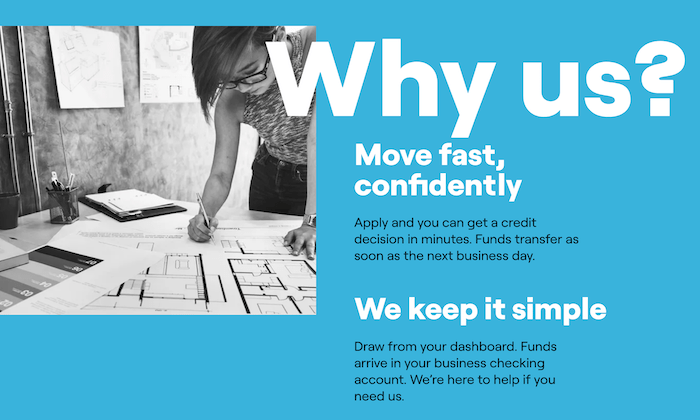
Using Fundbox is simple, and you’ll get fast access to cash whenever you need it.
To apply, you just need to connect your bank account and accounting software, so Fundbox can view your financials.
You’ll only pay for funds that you draw from your line of credit, so you can use Fundbox multiple times for various short-term loans.
There’s no penalty for early repayments.
Before you withdraw funds, Fundbox gives you a transparent calculation of the principal, interest amount, and weekly payments due.
So you can plan accordingly and know exactly how much you owe each week for the duration of the loan.
Fundbox is perfect for short-term situations when you need a little extra cash. It’s commonly used for late invoices payments, unplanned expenses, and to float small businesses during periods of slow sales.
Apply online, and get a decision within minutes. Funds can be transferred to your account as soon as the next business day.
#2 – Funding Circle Review — Most Versatile Loan Options
Funding Circle is an industry leader in the small business lending category. It’s a popular choice for businesses that want fast and affordable loan options.
With a single application, Funding Circle will provide you with multiple loan types and options to choose from.
Loan types and funding solutions provided by this lender include:
- SBA loans
- Business term loans
- Merchant cash advances
- Business lines of credit
- Invoice factoring
- Working capital loans
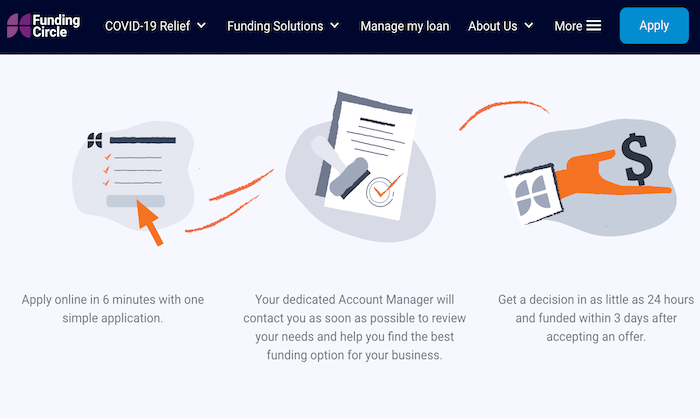
You can get a decision in less than 24 hours and gain access to funds within three days of getting approved.
Funding Circle has term loans from $25,000 to $500,000 and SBA loans from $20,000 to $5 million.
I also like Funding Circle because the platform makes it easy for you to manage your loan online.
Apply on their website by filling out an application—it takes just six minutes to complete.
#3 – Accion Review — Best For Startups
Accion is a nonprofit organization dedicated to helping small business owners and entrepreneurs fund their startups.
In fact, Accion is the largest nonprofit lending network in the US.
Accion offers term loans of up to $250,000 at an affordable rate.
You can apply online or over the phone to get a tailored solution that fits your unique needs.
Here are some of the business types that Accion commonly lends money to:
- Women-owned businesses
- Minority-owned businesses
- Food and beverage businesses
- Small businesses
- Startups
- Veteran owned businesses
- Business owners with disabilities
- Green businesses
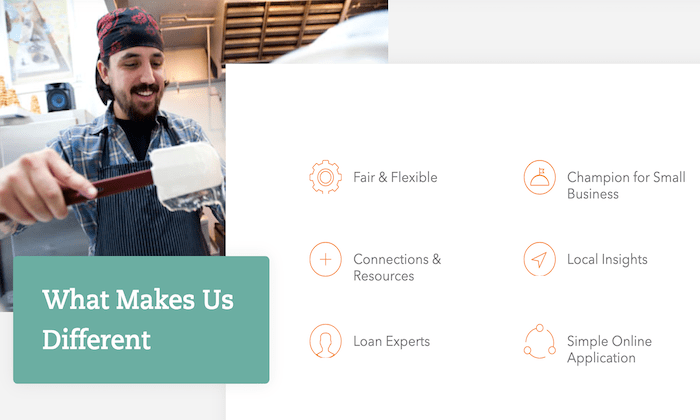
Accion also has a wide range of small business resources available to help you achieve success in your industry.
With 25+ years of experience in the small business lending space,
I strongly recommend Accion to startups and other businesses in the categories listed above.
#4 – Lendio Review — Best Small Business Loan Marketplace
Lendio isn’t a small business lender. But it’s one of the most popular online marketplaces for business loans.
If you want to compare loan options from 75+ lenders with a single platform, look no further than Lendio.
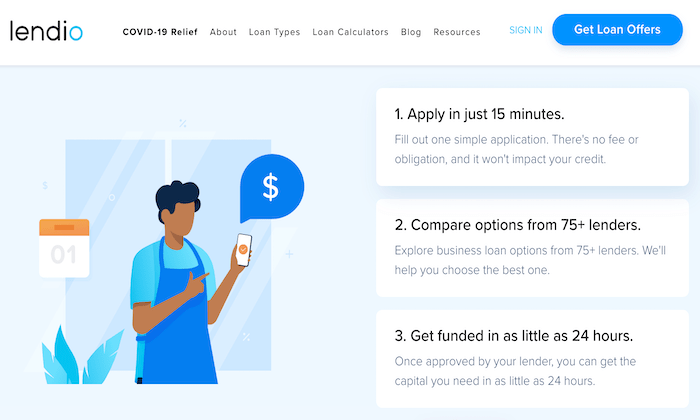
This marketplace has facilitated $10+ billion in funding to 216,000+ small businesses.
There is a wide range of loan types available through Lendio’s network of lenders, including:
- Startup loans
- Term loans
- Commercial mortgages
- Short term loans
- SBA loans
- Merchant cash advances
- Business lines of credit
- Business credit cards
- Equipment financing
- Accounts receivable financing
- Business acquisition loans
I also like Lendio because they provide additional resources for small business owners, like financing calculators and bookkeeping guidance.
Just fill out some quick information about your business online to get loan offers from lenders in the Lendio network.
#5 – OnDeck Review — The Best For Revolving Credit
OnDeck has delivered $13+ billion to businesses across the globe.
They offer term loans of up to $250,000 and business lines of credit up to $100,000.
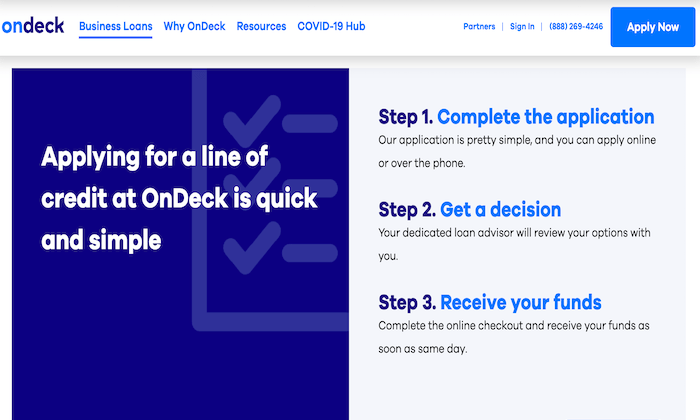
I like OnDeck because it’s so simple. After you complete an application online or over the phone, a dedicated loan advisor will go over your options with you.
OnDeck offers to fund as early as the same business day.
Your line of credit from OnDeck is a great option for working capital.
Only withdraw what you need, when you need it, and just pay interest for the amount borrowed.
Repay your line of credit over a 12-month term agreement with automatic weekly payments and no prepayment penalties.
To qualify, you must be in business for at least a year with a minimum personal FICO score of 600 and annual revenue of $100,000+.
OnDeck periodically reviews your credit profile. So you can automatically qualify for higher credit line limits without having to apply for an increase.
You’ll also benefit from a consolidated weekly payment on all withdrawals, so you won’t have to worry about making multiple payments.
#6 – Kiva Review — Best 0% Interest Small Business Loans
If you need a microloan and you’re not in a rush to get it, Kiva will let you borrow up to $15,000 at 0% interest—no strings attached.
As a global nonprofit, Kiva has helped 2.5+ million entrepreneurs raise $1+ billion.
The only downside of Kiva is that it takes quite a bit of time to actually get the loan.
So it’s not ideal for businesses that need cash fast.
First, you need to fill out an online application that can take up to 30 minutes to complete.
Then you need to prove your creditworthiness by convincing your friends and family to loan you money, which is about a 15-day process.
Finally, you can go public on Kiva and make your loan visible to 1.6+ million lenders across the world (an additional 30 days).
On the positive side, you’ll have up to 36 months to repay your loan at 0% interest. It’s tough to beat that deal.
But if you’re looking for large sums of cash as fast as possible, this won’t be the best choice for your business.
Summary
If your small business needs money, there are lots of different small business loan options for you to consider.
Which one is the best?
The answer depends on a wide range of factors, like the amount you need, the loan type, the lender, and more. Regardless of your situation, you can find the best loan options for your business based on my recommendations in this guide.
The post, Best Small Business Loans appeared first on Neil Patel.
Source: feedproxy.google.com

Best Business Credit Cards
A business credit card is much more than just a convenient payment method; it’s a way for you to earn rewards and benefits for your company. But all business credit cards are not created equally. Navigating the waters and trying to find the best option for your business can be tough, especially with hundreds of choices to consider.
Disclosure: This content is reader-supported, which means if you click on some of our links that we may earn a commission.
A business credit card is much more than just a convenient payment method; it’s a way for you to earn rewards and benefits for your company.
The best business credit cards offer features like purchase protection, membership rewards, travel insurance, and some even pay you cash.
Your next big purchase could result in a free flight, a free night in a hotel, or even a few hundred dollars back into your pocket. You can’t get these types of benefits if you’re using checks or ACH transfers for business purchases—credit cards are the only way to access these perks.
But all business credit cards are not created equally. Navigating the waters and trying to find the best option for your business can be tough, especially with hundreds of choices to consider.
Which one is the best? It’s tough to name just one, but I’ve narrowed down the top five that I can recommend with conviction.
The Top 5 Options For Business Credit Cards
- American Express Blue Business Plus
- Chase Ink Business Preferred
- Brex Mastercard Corporate
- Hilton Honors American Express Business Card
- Capital One Spark Classic
How to Choose the Best Business Credit Card For You

Not every business has the same needs when it comes to purchasing.
It’s important to find a card that’s designed to reward you the most for your spending habits.
So as you’re shopping around and evaluating different cards, keep these considerations in mind:
Credit Score
The very best business credit cards typically require a minimum credit score to apply.
If you have a new business and haven’t established a long history of business credit quite yet, it could be tough to get these cards.
The business owner’s credit score is also a factor that needs to be taken into consideration here.
If your personal score is high, then you should be able to get these cards, even if your business is new.
For those of you with poor business credit and a low personal credit score, you might have to apply for a secured credit card until you can boost your score.
Never apply for cards if you don’t meet the minimum qualification terms.
If the credit company pulls a hard credit check and rejects your application, it could lower your score even more.
Type of Rewards

Nearly every business credit card offers some type of membership reward.
These can come in the form of cashback, points, travel perks, and more.
Which type of rewards do you want?
There’s really no right or wrong answer here.
Some businesses prefer cashback because it’s easier to understand.
Others like to accumulate points and then redeem those points for other types of benefits.
Membership Fees
How much will the business credit card cost you?
Generally speaking, the higher the annual fee, the better the rewards.
But with that said, most businesses won’t necessarily need rewards that justify an expensive yearly fee.
There are plenty of great free business credit cards to consider.
Other cards might cost up to $600, while the majority fall somewhere in between.
My rule of thumb is this—only pay an annual fee if you can justify it with the rewards that you’re actually going to use.
Spending Categories
It’s common for business credit cards to offer better rewards in certain spending categories.
Examples include food, gas, or travel.
Let’s say a card offers you 5% cashback in the travel category (flights, hotels, Uber, etc.).
That’s great; but if you only travel for work once per year, it might not be enough of a reason to get that card.
But if you have a fleet of 20 vehicles on the road and all of your drivers will have an employee card, it makes sense to have a card that rewards you for gas purchases.
Bonus Offer
This shouldn’t make or break your decision. But most business credit cards will offer you a significant bonus for signing up.
For example, if you spend $10,000 in the first three months using a new credit card, you could get 100,000 points—or something along those lines.
This can be a great opportunity to rack up points, cash back, or get other benefits.
I wouldn’t go out of my way to buy things that I don’t need.
But if you have a big purchase coming up, consider putting it on your new card so you can redeem the bonus offer.
Just understand that this is a marketing strategy the card companies use to entice new sign-ups.
So don’t let an appealing bonus offer distract you from the annual fees or other factors in your cardmember agreement.
The Different Types of Business Credit Cards
Before we get into the reviews of my favorite business credit cards, I want to quickly explain the different types of cards that you can choose from.
Cash Back Rewards Cards
Cards that offer cash back are pretty straightforward. Depending on the card, you can get a certain percentage of your card spending credited back to your account at the end of each month.
This is usually applied automatically.
Some cards offer a fixed cashback percentage on all purchases, such as 2% or 3%.
Others will have higher percentages on specific categories, like 3% on gas, 2% on travel, 1% on everything else.
You might even find cards that change the cashback percentage based on your annual spendings, such as 4% cashback on the first $50,000 spent in a calendar year, and 2% on everything after.
Points Rewards Cards
A business credit card that rewards you with points is a little bit more complex. But these can be extremely advantageous if you know how to use them properly.
Unlike cash-back rewards, you’ll need to manually redeem your points to get the benefits.
You could potentially save your points for one big purchase and get something for free, or use them periodically to get discounts every month.
In some cases, you might even be able to redeem your points for cashback as well.
Airline Affiliate Credit Cards
Certain credit cards are associated with specific airlines.
Your perks will be even better when you travel with that airline.
For example, you might get free checked bags, lounge access, double rewards points on all purchases through that airline, and complimentary upgrades.
These cards make sense for those of you who travel frequently and are loyal to a particular airline.
Just make sure that the airline has a hub in your closest airport and flies to the places you frequently travel for work; otherwise, it won’t be worth it.
Hotel Affiliate Credit Cards
Similar to airline credit cards, a hotel affiliate card will give you extra rewards for being loyal to a certain hotel chain.
You might even get rewarded with one or two free nights every year, included with your membership fee.
These types of cards are perfect for people who frequently travel for work. I
t’s common for hotel rewards cards to offer benefits like free wi-fi, free breakfast, and free upgrades.
Depending on the card, you might automatically qualify for a membership status with that hotel as well.
Employee Credit Cards
Some business credit cards will allow you to get extra cards for your staff.
Most do this for free (because they want to encourage spending), but others might charge a small fee.
If you want to distribute cards to your employees, look for a business credit card that will give you some control over that spending.
I’m sure you trust your staff, but you don’t want them to run wild and spend erratically.
So you can potentially set spending limits on those employee cards as a way to control how those cards get used.
Secured Business Credit Cards
If you have poor credit or no credit, you might have trouble qualifying for a traditional credit card.
But secured business credit cards are an excellent way for you to build credit. Here’s how they work.
You’ll deposit money into an account, and that amount essentially becomes your credit limit.
If you fail to make your payments, then the card company can just take the funds from that account.
But by making on-time payments every month, you can build your credit and ultimately apply for a regular credit card, without having to secure it with a deposit.
The Examples of Business Credit Cards
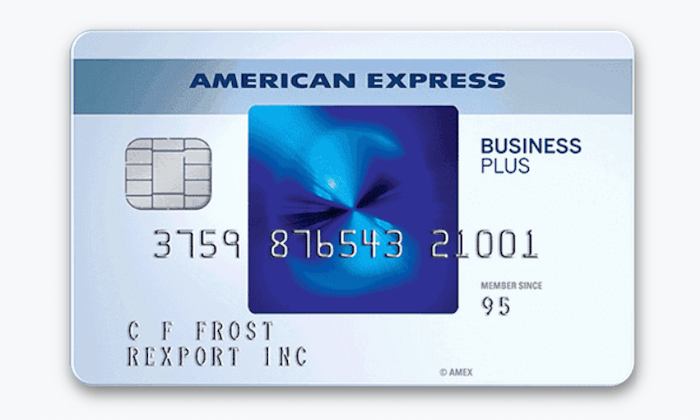
#1 – Amex Blue Business Plus Review — The Best For Everyday Purchases
The Blue Business Plus card from American Express is perfect for those of you who want a great business credit card with no annual fee.
You can apply online and get a decision in as little as 30 seconds.
Earn 2x points on your first $50,000 in purchases every year; then unlimited 1x points on everything after—no category restrictions.
- Free employee cards and rewards points based on employee spending
- Up to $300 in statement credits for Dell, DocuSign, and FedEx
- Expanded buying power for purchases above your spending limit
- Vendor pay features by Bill.com
- Set up account alerts
- Manage everything directly from the Amex mobile app
- Expense management tools, year-end summary, and online statements
American Express has the best customer service team in the industry, which is another great perk of this card.
For those of you who prefer cash back instead of rewards points, the Amex Blue Business Cash card is essentially the same thing (with 2% and 1% cashback).
So that’s another option to consider with no annual fee.
#2 – Chase Ink Business Preferred Review — Best For Travel Rewards
If you travel frequently but don’t want a card that’s associated with just one hotel or one airline, Chase Ink Business Business Preferred will be a top choice for you to consider.
New cardmembers will get 100,000 bonus points (worth about $1,250 towards travel) after spending $15,000 within the first three months of opening a new account.
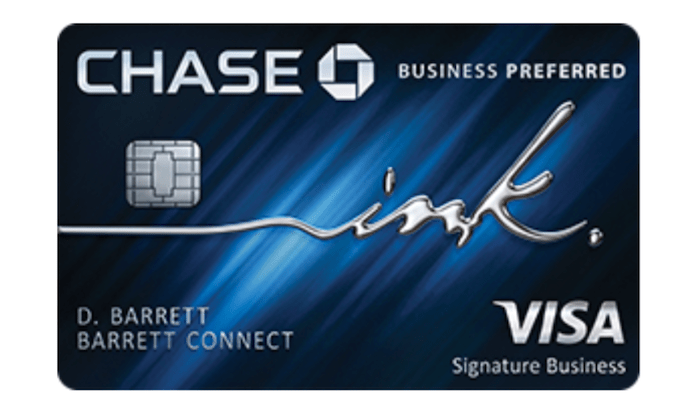
Here’s an overview of why I like this card so much:
- Earn 3x points on the first $150,000 on travel, shipping, internet, cable, phone, and advertising purchases each year
- Earn 25% more when you redeem travel purchases through Chase
- Ultimate Rewards
- Free employee cards with the ability to set individual spending limits
- No foreign transaction fees
- Travel protection and purchase coverage
- Fraud protection and personalized account alerts
For business owners and employees that frequently travel for work, the Chase Ink Business Preferred card is an excellent choice.
This card has a $95 annual fee. You can apply online to get started.
#3 – Brex Mastercard Corporate Review — The Best Business Credit Card For Startups
The Brex Mastercard Corporate card is a bit unique compared to other options on our list.
This card is branded as “the first corporate card for startups.”
In simple terms, the card aims to provide smaller companies and startups with rewards similar to cards designed for larger corporations.
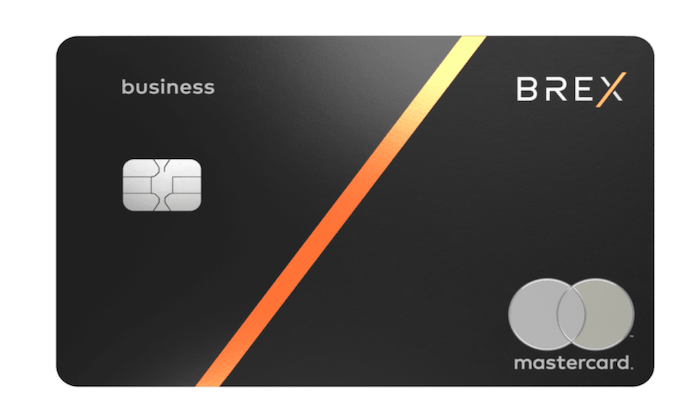
The business Mastercard from Brex is a popular choice for tech startups.
Here are some noteworthy highlights:
- No hidden fees or personal guarantees
- Apply in 5 minutes, and a virtual card gets activated upon approval
- Credits on services like AWS
- 7x points on remote collaboration tools (Slack, Zoom, GoToMeeting, Gong, etc.)3x points on food delivery (UberEats, Grubhub, DoorDash, etc.)
- 2x points on recurring software (Salesforce, Slack, GitHub, etc.)1x points on all other purchases
You can redeem your points for travel, miles, or statement credits.
While the card is made for startups, you need to have a high cash bank balance to qualify.
You’ll need at least $50k in the bank to be considered, along with other qualifications.
#4 – Hilton Honors American Express Business Card Review — Best For Hotel Rewards
If you travel frequently you’re loyal to Hilton’s extensive portfolio of hotels, look no further than the Hilton Honors Amex Business card.
For a limited time, new cardmembers can earn 130,000 Hilton Honors bonus points after spending $3,000 in eligible purchases within the first three months of opening a new account.
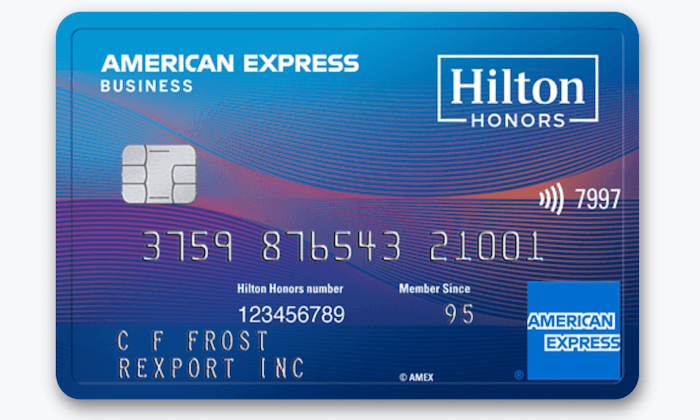
Once approved, you’ll automatically qualify for Hilton Honors Gold status.
This comes with perks like an 80% bonus on all base points, complimentary room upgrades, and more.
Here’s a quick look at some of the other top features and benefits associated with this card:
- Free weekend night reward (after spending $15,000 in a year)
- Second free weekend night reward (after spending $60,000 in a year)
- 10 complimentary visits to 1,200+ airport lounges each year
- Hilton Honors Diamond status after $40,000 in purchases
- No foreign transaction fees
- 12x points earned per dollar spent on Hilton hotels
- 6x points earned per dollar spent on gas, telephone services, shipping, restaurants, flights, and car rentals
- 3x points earned per dollar spent on all other purchases
This card can be yours for the low cost of just $95 per year. That price is easily justifiable if you travel frequently.
#5 – Capital One Spark Classic Review — The Best For Building Bad Credit
As I mentioned earlier, not everyone will qualify for business credit cards with the best rewards.
If you have poor credit, you’ll need to build that credit before you can apply for certain cards.
For those of you who fall into this category, I strongly recommend the Capital One Spark Classic card.
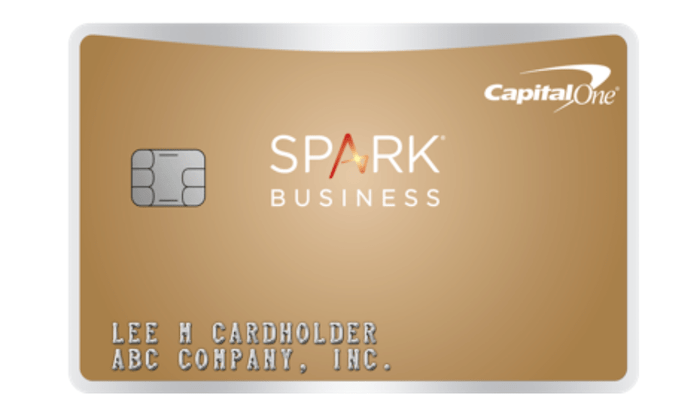
Even if you’ve recently defaulted on a loan or have a limited credit history, you should be able to qualify for this card. Here’s an overview of its benefits:
- No annual fee
- Unlimited cashback on all purchases
- Free employee cards (with the ability to track employee spending while earning rewards)
- Zero fraud liabilityAutomatic fraud alerts via text, email, or phone
- Ability to pick your own monthly due date
- Automatic payments so you don’t have to worry about forgetting
- No foreign transaction fees
- Roadside assistance for auto emergencies (like jumps, tows, and tire changing)
- Free extended warranty and protection on eligible purchases
When it comes to cards with no annual fee for businesses with bad credit, you won’t find a better option than the Spark Classic card from Capital One.
Summary
Before you apply for a business credit card, make you follow the methodology and buying guide that I explained earlier.
When it comes to finding the best option for your business, I strongly recommend the cards reviewed in this guide. Regardless of your situation, I’m confident that one of those options will suit your needs.
The post, Best Business Credit Cards appeared first on Neil Patel.
Source: feedproxy.google.com