
Tag Archives for " content "

What No One Talks About When it Comes to Successful B2B Influencer Marketing
Whether you’re just starting to explore B2B influencer marketing efforts or you’re well on your way to putting influencer content in place, there are myriad articles that can help you plot out the major steps to success.
However, many of those articles don’t quite dive deep enough into some of the often overlooked yet oh-so-critical details that happen in between those big steps.
Sometimes, that understanding comes from experience. In this case, it comes from our experience, and we’re happy to share it so you can avoid common mistakes and missteps along your B2B influencer path to success.
You Need More B2B Influencer Meetings Than You Are Thinking
Whenever anyone talks about the process of getting B2B influencer marketing efforts off the ground, they make it sound like all you need is to identify influencers, reach out, agree on the scope and then content magically appears.
While that process is kind of true, it’s also not the whole picture either. It actually leaves out a plethora of meetings.
No one wants another meeting on their calendars, but conducting a lot of the right meetings is essential for B2B influencer marketing success.

Instead of one big meet-and-greet-scoping-contracting-kickoff meeting, schedule smaller, more intentional meetings:
- Initial meet-and-greet: You’re forming a new business relationship, so use this time to get to know the influencer on a personal and professional level. Talk about what they like to create, what they don’t like to create, the topics they usually cover, their upcoming availability, and overall bandwidth. Also, let them get to know you and/or your team, too.
- Vision/goal setting meeting: After the meet-and-greet call, come back to the table with some initial ideas and options for how you and the influencer can work together, but make sure there’s room for the influencer to ideate and brainstorm, too. This should be the time you both talk about goals for working together.
- Formal scoping call: Once you and the B2B influencer are on the same page for the vision and goals, put together a formal scope of work based on your conversation. Be sure to include essential information, like what exactly is being created, when and for how much. Then, go through all of it, together. Make sure any gray area is cleared up and all questions are answered.
- Official project kickoff: Formally kickoff the project(s) to signify the official start of the scope. Get on the same page about deadlines, assign the main point of contact for the influencer, and set creation expectations. While this seems like it might be over-the-top, it’s also creating a fresh start and giving everyone clear direction on how and when to move forward.
Regular check-in meetings (as needed): Depending on the final B2B influencer scope, you may want to have weekly, biweekly or monthly check-ins, just to make sure you’re on the same page and give yourselves the opportunity to talk through any details or issues that may come up along the way.
Of course, your meeting cadence and schedule will be completely dependent on what you’re using B2B influencer marketing for and what the scope of engagement looks like. Just be prepared to have a lot more meetings than you might think are necessary.
Also, remember to keep every meeting focused on accomplishing the next steps or a specific set of goals. That way, meetings will never feel excessive and they’ll be more like working sessions instead.
Tailor Your B2B Influencer Marketing Ask to the Influencer’s Talents
Not all influencers are writers. Not all influencers are speakers. Not all influencers are social media and content marketing strategists. It’s actually incredibly rare to find a B2B influencer who can do it all, so don’t jump into B2B influencer conversations with the expectation that they can. Instead, tailor your content to their talents.

While this may seem obvious, it can be hard to remember when you have a big vision and finally find a B2B influencer who is a great match for your goals and organization or get wrapped up in brainstorming.
Of course, you’re going to want them to create all the amazing things and be part of exciting co-creation efforts! They also might feel pressured to live up to those expectations or feel like it’s a deal-breaker if they can’t, so don’t put them out there, to begin with.
Just keep in mind that you likely aren’t the world’s best writer, editor, videographer, speaker, social strategist, and content marketing specialist all rolled into one, so don’t expect your B2B influencers to be the same either.
Be Prepared to Get B2B Influencer Content in Other Ways
Let’s say you have tailored the influencer marketing ask to the influencer’s talents, but they don’t have the bandwidth to take on a huge ebook project, or the availability to put together a full webinar, or even the time to put together a blog series. That’s ok because you can get creative with how B2B influencers can create and contribute:
- Interview B2B influencers: Have them get camera-ready and sit down for an old-fashioned interview. Give them questions that can help you get the content you need to piece together an ebook, a social series, blogs, and more.
- As a bonus: because they’re camera-ready, you can slice up and reuse the recordings of that interview, with influencer permission, of course.
- Have them record short-form videos: B2B influencer contributions don’t have to be massive all the time. Simply having a great idea + short-form video can be really powerful. This is exactly what Oracle Marketing Clouds did for their On the Fly series, where B2B influencers recorded short pieces of marketing advice while on the go in airports, train stations, and more.
Use a staff writer to work with the influencer: Sometimes you might just have to help the B2B influencer get their thoughts out of their head and onto paper, which may take a staff writer working directly with them. In this scenario, have the writer set up multiple working sessions with the B2B influencer. Then, the staff writer can bring the influencer’s own words to life.

Yes, it might be ideal to have B2B influencers create and deliver their own content from start to finish, but that just might not be possible all the time. Thankfully, there are plenty of backup options to still get that great B2B influencer-originated content.
Treat B2B Influencers Like a Contractor and a Client
While you may technically be “hiring” a B2B influencer, they don’t work for you. They’re working with you. Instead of viewing the relationship as you hiring someone to create content, look at your B2B influencers more like contractors or clients.
It’s a mutual working relationship that takes a lot of work, and they have other clients and a whole other business of their own to run, too.
Also, B2B influencers are very, very connected to a much larger network, and they know through the grapevine who is great to work with and who they wouldn’t work with again.

Need Help with Making Your B2B Influencer Marketing Successful?
Our team of strategists is here to help you. Contact us today.
The post What No One Talks About When it Comes to Successful B2B Influencer Marketing appeared first on Content Marketing Consulting and Social Media Strategy.
Source: convinceandconvert.com

2022 Social Media Prediction: The Year of the Creator
Twitter launched Communities, everyone launched a creator fund, and TikTok became the #1 website in 2021. All of these events and more have built a foundation for the creator economy to take off and shape the future of social media.
According to SignalFire, there are over 50 million content creators driving the creator economy, a “class of businesses built by independent content creators, curators, and community builders… plus the software and finance tools designed to help them with growth and monetization (SignalFire).”
The creator economy is the antithesis of the 9-5 cubical grind and overly polished online profiles. After months of lockdown and a global pandemic, consumers are pursuing purpose and looking to creators to provide an authentic escape.
This means several things for marketers:
- Niche, online communities are going to grow
- User-generated, creator, and authentic influencer content will become a necessity while brand content will continue to decline in reach and engagement
- Employee creators and employee brands will be differentiators

Niche, Online Communities Are Going to Grow
The rise of niche, online communities and groups is happening across the digital world. On Facebook alone, there are 1.8 billion users utilizing groups with the average user claiming membership to 5 or more groups.
Communities around gaming have skyrocketed with GWI reporting gaming amongst Gen Z has drastically overtaken TV in terms of interests. Google reports a 70% increase in searches containing “online games with friends” while Discord boasts millions of members in their gaming channels.
Oftentimes these communities are built around creators or moderators with immense influence.
Personally, I am part of 7+ communities on Facebook and a handful of groups across other channels. Each group meets a need or desire the others cannot. The groups are relatively small but have an immense influence on buying decisions and other choices I make.
- #BookTok in TikTok? I have screenshots of 7 books I am going to buy when I get a chance.
- The $100K Club Facebook group? I opened a Chime high-yield savings account the day Tori Dunlap suggested to
- Twitter’s Marketing Twitter community? I’m just one of 800 members and growing
- Reddit’s r/CatsAreAssholes? I have two cats that are jerks and these people just get me
For brands, this means looking at your audience in a new light and asking how you can build an online community, not just a following.

User-generated, Creator, and Authentic Influencer Content Will Be Essential
Younger generations shape our demand for fashion, products, celebrities, music, media, and more, which is why all brands, including brands with older audiences, should pay attention to Gen Z.
According to PR Daily, 13- to 17-year-olds are spending 56% of their media consumption time with user-generated content, a huge jump compared to other generations.

This means brands posting too much brand content are going to continue to see decreases in reach and engagement while UGC, creator, and authentic influencer content will become essential for performance.
What do I mean by authentic influencer content? Well, there is a measurable backlash to the pre-pandemic influencers who carefully curated glamour and luxury in each photo.
“If [Gen Z] is a sign of where global consumer sentiment is headed, it’s likely the “polished” curated self we’ve come to know won’t have the same impact it once did; this would clear a path for more diversity and self-expression in the influencer sector (GWI).”

We are seeing the rise of nano- and micro-influencers and creators because they tend to have smaller, niche followings and a more authentic look and feel.
What does this mean for brands? It means adapting your strategies to include these content types or being okay with declining content performance.
Employee creators and employee brands will be differentiators
LinkedIn’s Editor in Chief, Daniel Roth, recently wrote about the rise of the creator employee, which describes the balance between employment and being a creator.

As a marketer in social media, I see friends and colleagues navigate being a creator and employee all the time with mutual benefits to both their employer and their own careers.
For many brands, the idea of employees building personal brands is foreign and concerning but I think the benefits outweigh the risks. Daniel Murray explains it best, “employers are either threatened they will lose that employee, think it’s taking time away from their work, or they are worried about their brand.
But on everything they post, especially on LinkedIn, it has the company they work for [displayed]. So they can see this as free impressions and also as a tool for attracting future talent.”
Here at Convince and Convert, many of our strategists are known in the industry in their own right thanks to their personal brands, which means we win business across industries thanks to those personal brands.
So, what does this mean for brands? I would start with identifying employees interested in creating and then providing them the tools and space to do so.
Is Your Brand Ready for the Year of the Creator?
Brands are going to need to look for community building opportunities, ways to significantly increase their external, authentic content, and empower their employees to represent the brand as employee creators.
Start with a simple audit of your social channels. What is your current mix of content types? How can you increase the amount of external, authentic content?
The post-2022 Social Media Prediction: The Year of the Creator appeared first on Content Marketing Consulting and Social Media Strategy.
Source: convinceandconvert.com

How to Align Your SEO and Sales Teams
Have you figured out your marketing strategy for 2022 yet?
Here’s a great idea for you: Embrace collaborative marketing. Aligning your different teams is likely to open up many new opportunities for your business.
According to the recent research by Convince and Convert and Ascend2, 50% of marketers claim that integrating marketing and sales teams has proved to be very successful at achieving strategic goals.

This is huge.
Here’s how to align two of your most isolated teams: Sales and SEO.
Foster Content Marketing Collaboration
All marketing is driven by content and that includes SEO and sales. For both teams, content is fundamental. Without content, there are no rankings or sales:
- Google relies on content to identify if a page is relevant to a search query and if it satisfies a searcher’s intent. Relevancy and search intent are two key ranking signals.
- In sales, content is the most important driving force behind buyers’ journey. Content can directly impact purchasing decisions, as many studies confirm.
According to Forbes, more than 60% of B2B buyers say they are able to make their purchase decision exclusively based on digital content, without talking to sales reps or going through demos.
So why is there such a huge disconnect between SEO and sales content? Why do these two content strategies often exist separately without informing or helping each other?
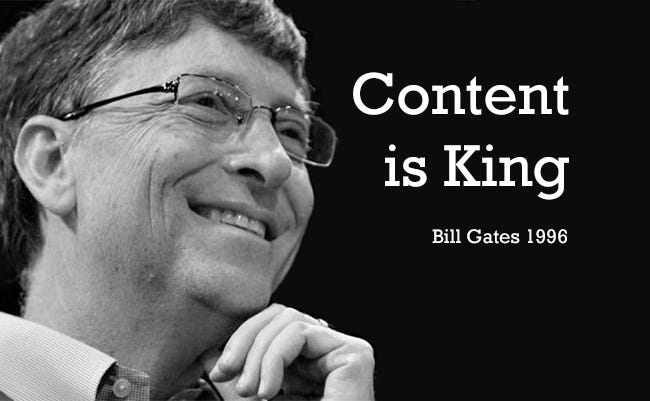
“Content is King” has long been a marketing buzz phrase, especially in the B2B industry. However content is only King if it enables sales.
Too often there’s a discrepancy between those producing content and organizational teams who are trying to leverage it.
The resulting problem is two-fold:
- Sales reps lack the right content they can use to effectively engage with prospects
- SEO content creators lack sales reps’ insight which would enable them to create content that addresses the real struggles of their target audience.
Ways to Integrate SEO and Sales
Content can be the driving source for removing your organizational silos and encouraging cross-team collaboration.

How can SEO and content marketing teams collaborate on creating an integrated content strategy?
- Encourage the two teams to brainstorm on content ideas together
- Let the customer support and sales teams keep a shareable record of questions your actual customers are asking them. Any of those can and should be content ideas for the SEO team to research in terms of demand (search volume) and difficulty.
- Foster creativity from both of the teams: What are their thoughts on content promotion opportunities.
- Do they have any viral content ideas?
- Let both the teams explore further opportunities. For example, let your SEO team figure out ways to reuse sales enablement content for ESP purposes. Many of those sales demos can be used as public content that can target all kinds of long-tail ranking opportunities.
Help Them Understand Your Customers Better
When you work on traffic numbers all day, it is too easy to forget that there are real people behind those numbers.
Both SEO and sales team have unique access to valuable insights on who is your business’s target customer and how to serve them better:
- Sales teams talk to your current and future customers on a daily basis. They know their struggles and what they are looking to solve. Sharing this information with the SEO team will empower your SEO strategy with more data your competitors have no access to.
- Your SEO team knows exactly what your customers are searching for and which questions they are asking. They know the demand behind each search term and they can report on how your competitors are targeting each search query.
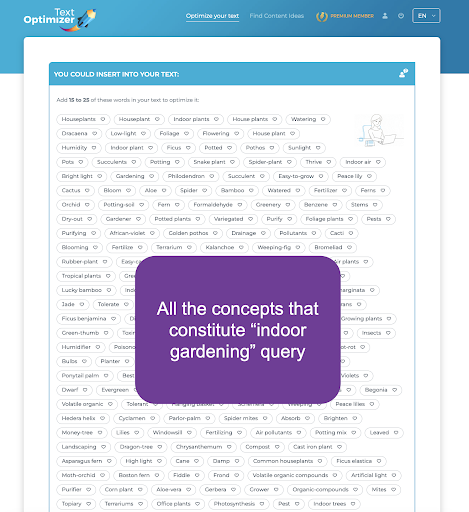
Text Optimizer allows you to better understand concepts behind any search query and help you find the ways to meet your customers’ needs easier:
Share Your Web Analytics Insights
Let the SEO team share their web analytics insights: What are the effective paths that bring those leads through the site down the conversion funnel? What works best in terms of engaging your site visitors and turning them into leads?
All of that information will help your sales team focus on what works best and nail their lead generation and onboarding strategy.
Encourage your SEO team to create custom analytics dashboards and hold regular meetings to give. This will give your sales team access to web analytics data they can understand.
Google Analytics is the first option that comes to mind. But there are also web traffic statistics solutions offered by your hosting provider, as well as many Google Analytics alternatives.
Whatagraph is an easy way to create custom reports that are delivered weekly and are very easy to understand even for a non-technical person:
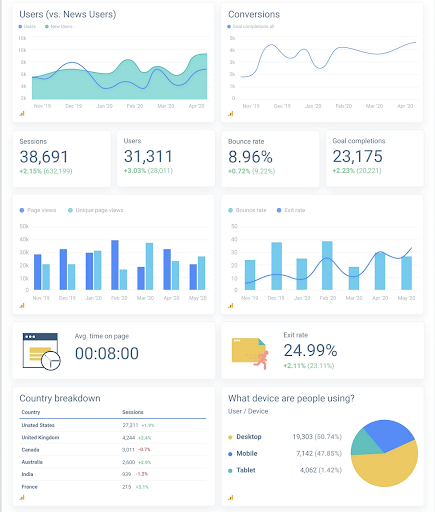
You can also integrate your web analytics into your website dashboard using these templates to let your whole company access it at any time.
Open up More Business Opportunities
The cross-team collaboration will likely discover more unexpected opportunities for you and your business. For example, letting your sales team access your SEO data may help them identify industry gaps and define your product’s unique value proposition.
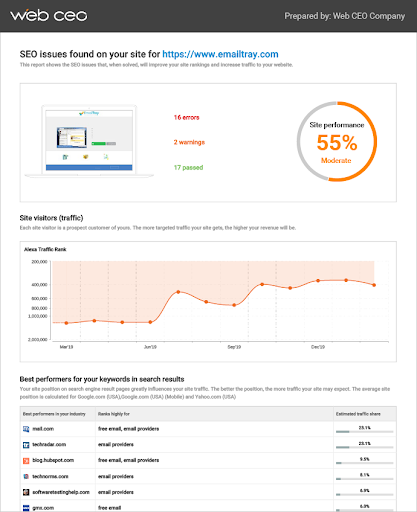
You can also discover new product or service opportunities. For example, this SEO lead generation tool can help you expand your services pretty easily.
Widgets like this help integrate SEO into the sales process in the most efficient way.
Conclusion
The power of cross-team collaboration is almost limitless. SEO and Sales collaboration can give you that competitive advantage your business needs. By combining numbers with actual sales experience, you can empower both teams.
The concept of unified communications has become even more important for business survival after COVID hit and many teams moved to work from home.

Finding more ways to let your (remote) teams keep in touch and collaborate is more important than ever.
Hopefully, the above ideas would come useful!
The post How to Align Your SEO and Sales Teams appeared first on Content Marketing Consulting and Social Media Strategy.
Source: convinceandconvert.com

How to Make Social Advocacy Part of Your Employees’ Daily Routine
Your employees each have a morning ritual. Grab a cup of coffee. Scroll through Facebook’s News Feed. Respond to emails. Dial into a conference call. Start the workday.
What if your company could become a part of employees’ daily routines? What if there was a way for you to use this downtime to inform others and increase brand awareness?
Welcome employee social advocacy! By tapping into a daily habit that already exists, you can create social advocacy and amplify your marketing efforts.
According to a 2016 survey from Bambu by Sprout Social, seven in ten employees are using social media at work. Blocking popular networks and monitoring browsing history isn’t going to stop anyone from checking Facebook—especially when 11 percent of those surveyed admitted to using social media during bathroom breaks.
Instead of trying to fight a habit that’s already ingrained in your workplace culture, embrace it! Encourage your employees to use their time on social to speak on your brand’s behalf. By outlining the individual benefits, identifying existing champions, and educating and empowering employees, you can strategically build a powerful advocacy program.
Answering the Question: What’s In It for Me?
One of the biggest hurdles in getting people involved in an advocacy program is convincing them that there’s a personal benefit. Before you introduce a formal or informal program, you need to answer the frequently asked question, “What’s in it for me?”.
The best way to do this is by not only communicating but also demonstrating the benefits of sharing company content on social.
Collect and share testimonials from sales representatives who have seen an increase in revenue by sharing curated content. Who has had success at positioning themselves as thought leaders within the marketplace? Identify a new employee who learned about the position through a social post.
If these use cases aren’t applicable, try surveying engaged employees to learn what they think is most valuable.

Additionally, you need to demystify the idea using social media at work negatively impacts productivity. Believe it or not, four in five people believe that.
Sure, there’s always going to be the 10 percent of surveyed employees who spend over two hours on social. However, a vast majority spend less than an hour scrolling through their feeds.
You may want your employees to hit the ground running sharing your awesome content, but that may not happen right away. What’s most important, initially, is that your employees are reading the information you’re posting. You want them to experience a more transparent and forthcoming workplace.
Identifying and Educating Existing Internal Advocates
Do a quick search on Instagram of your office location and a Twitter query of your branded hashtag. These employees are your initial allies and should be the first group of stakeholders you bring into your employee advocacy initiatives.
That’s what Katie Gear, Area E-Commerce Marketing Manager for Hyatt hotels in Chicago, Indianapolis, and Cincinnati, did when she first launched her advocacy efforts. Gear spoke with Sprout Social’s Community Outreach Manager, Sarah Nagel, about how she scaled her program and identified its first participants.
“Harness employees who are already sharing. Create a more meaningful conversation with their employer, and keep the dialogue they’re already participating in more open-ended,” Gear told Nagel.
Gear identified these brand advocates by searching social and approaching directors in sales and marketing. She asked them who from their teams would be a good fit. 54 percent of those surveyed responded that they don’t have a lot of guidance on how to use social media to advocate for their company.
To address this, Gear followed up by hosting informal social media 101 classes for Instagram, Facebook, and Twitter.
“The courses help them understand what I’m doing with the content and what I look for—and what content works best on what channel,” Gear told Nagel.
So, first, identify and then educate existing internal advocates to help you implement a more effective employee advocacy program. Leverage this highly engaged focus group for feedback. Lean on their insights to help revise your efforts before rolling it out to a larger audience.
Empowering Your Employees
Participants in your program shouldn’t view engaging with company news and relevant content as extra work—otherwise, they won’t opt-in.

In fact, 53 percent of employees surveyed don’t think that the marketing team makes it easy for them to advocate for the company on social media. Don’t make engaging with your brand more cumbersome than it needs to be.
Along with internal education on social media best practices, you need to streamline the sharing process and provide your employees with all the tools they need to be the best advocates possible.
When you’re sharing social content with your team, try this:
- Accompany each post with suggested social messaging per each popular network.
- Include a note with each piece of content that tells why what you’re sharing is important and who the internal stakeholders involved with the initiatives are.
- If you’re citing a third-party source, make sure you’re highlighting a reputable publication.
- Make sure that you’re asking your team members to share content and information that they think would resonate with all of the company’s employees or a departmental audience. Employee engagement, just like social media, should be a two-way dialogue.
Quantifying Employee Advocacy Success
Strategizing and implementing an employee advocacy program takes time and resources. Be sure that you’ll be able to measure the impact of your efforts. Adding UTM codes to the end of each piece of owned content you share with employees will make it easy to track, measure, and benchmark.
Some of the same social metrics you apply to your marketing efforts can be applied to your advocacy initiatives.

Keep in mind that those surveyed were 16 times more likely to read a social media post from a friend than from a brand. 81 percent of participants went as far as saying they would rather see a friend’s social post than a brand’s post.
Keep a close eye on your efforts, and continue to use the data and anecdotal feedback you receive to revise and refresh your program.
Cheers to Your Advocacy Leaders!
As your program gains momentum, your employees will see that advocating on social media isn’t as confusing or hard as they may think. Be sure to start out with a proper framework and approach. Getting your employees to incorporate advocacy into their daily routines can be a seamless and mutually beneficial process.

This post was originally written by Andrew Caravella and updated by Michelle Saunders in 2021.
The post How to Make Social Advocacy Part of Your Employees’ Daily Routine appeared first on Content Marketing Consulting and Social Media Strategy.
Source: convinceandconvert.com

Using the Google Search Trends 2021 Report to Generate Content Ideas
As marketers, we’re constantly attuned to Google’s ever-changing algorithm, keeping an eye toward shifts in prioritization and SERPs.
Google is pretty good at equipping users (and businesses) with information about what it considers important by providing resources like their search engine optimization (SEO) guides and the annual Search Trends report.
The Google Search Trends report can be an incredible asset that allows you to dig into users’ search habits and gain access to a steady stream of content ideas.
In this blog, we’ll unpack how to mine the Google Search Trends report for content gold to flesh out your content calendar into 2022 and beyond.

What Is the Google Search Trends Report?
Published each year, the Google Search Trends report aggregates the highest-ranking terms for the year.
Curious readers—or those of us looking for content ideas—can visit the mini-site to explore search volume through several lenses.
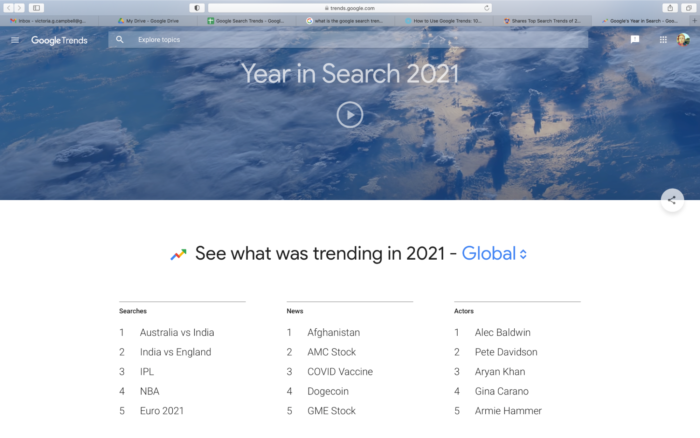
You can break it down by region and then a topic, including categories like actors, TV shows, sports teams, songs, and many more.
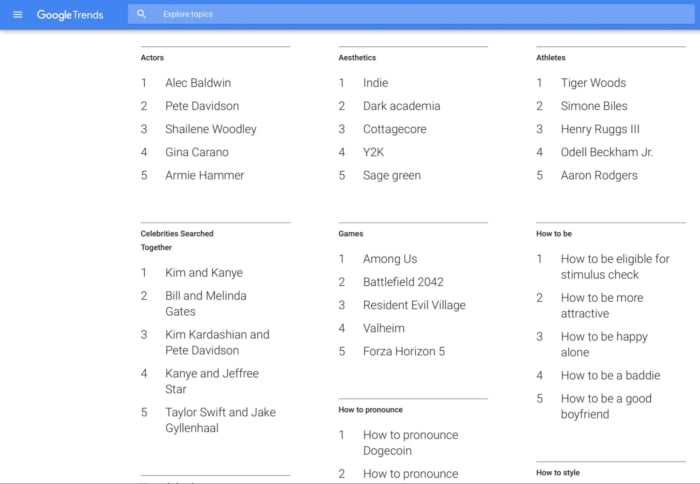
While this report can certainly generate year-end nostalgia, it also offers a unique perspective into the terms that gained the most search volume and traction in the last year.
For marketers, that data can be gold.
Top Trends from the 2021 Google Search Trends Report
Regardless of what region you’re researching, you’ll find a common theme in this year’s report: perseverance.
2021 saw searchers looking for “how to heal” and “how to be hopeful.” This theme resonated in more concrete searches as well with high volume searches including, “how to start a business in 2021” and “how to get a job in 2021.”
Entertainment was another balm in a complicated year. We looked to Google for distraction and clarification, typing in searches like “Squid Game” and “Amanda Gorman.”

Here are a few other Google Search Trends that got a lot of attention around the globe this year:
- Australia vs India
- India vs England
- IPL
- NBA
- Euro 2021
- Copa América
- India vs New Zealand
- T20 World Cup
- Squid Game
- DMX
In the United States, here’s what users were most interested in overall:
- NBA
- DMX
- Gabby Petito
- Kyle Rittenhouse
- Brian Laundrie
- Mega Millions
- AMC Stock
- Stimulus Check
- Georgia Senate Race
- Squid Game
While these searches can entertain, they can also inform your content strategy, by helping you create content that users are likely to be interested in.
How to Use the Search Trends Report to Generate Content Ideas
Struggling to come up with fresh, new content ideas? I’m no stranger to the frustration that comes with this.
Using Google Search Trends, you can determine what topics users are interested in, increasing engagement while building relationships and goodwill.
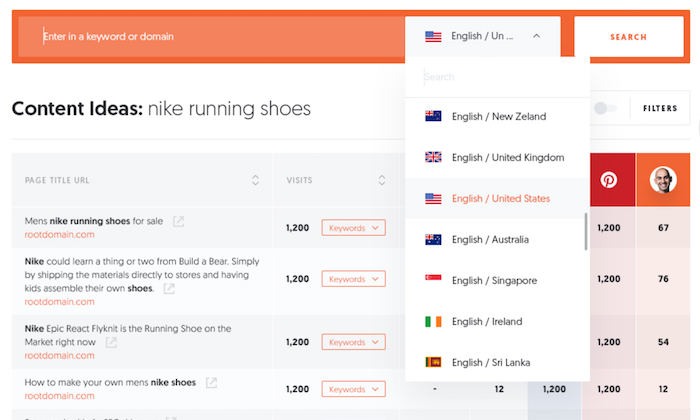
Below, I’ll break down the five best strategies for harnessing the insights associated with the search trends report to generate content ideas.
1. Use Popular Search Terms and Find a Unique Angle to Cover the Topic
While a blog post about the permanence of the cottage come aesthetic might be popular, this topic may not align with your brand. However, also topping the aesthetics search list is “sage green,” a topic that might be related to more industries.
Whether you’re a small boutique or a landscaping company, you can take advantage of this particularly high-volume query and build out a content plan to address it.
Sage green might not be in your wheelhouse.
If that’s the case, look for other search terms that might meet your audience’s interest in some way.

This part of the Search Trends reports breaks down searches by different topics, including:
- culture
- economy
- entertainment
- environment
- health and wellness
- news and events
- philanthropy
- representation sports
“How to maintain mental health” was searched more than ever in 2021—most industries could leverage that to provide mental health advice and tips to their audience. For example, I might write about how to maintain mental health as a remote digital marketer or how to help your remote team maintain their mental health.
By aligning your audience’s interest with a popular search query, you not only increase the visibility of your content, you also offer your existing and would-be audience a fresh perspective within your industry.
2. Search for Topics Using the Search Bar
Suppose you’re curious about the search visibility behind a certain query. In that case, you can use the Google Search Trends report to explore how much a specific term resonates, as well as related queries and terms.
For example, we searched “digital marketing.”
In addition to highlighting the term’s prominence, the report also offers tons of valuable detail. We could build a content strategy with a pretty solid idea of what type of content will and won’t resonate from this one search.
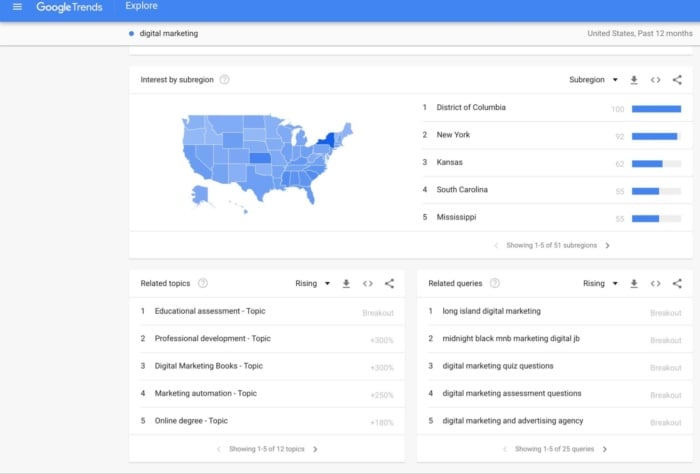
In the “related topics” section, I see terms like education assessment and professional development, which means a list of digital marketing courses or training might do well.
Search the name of your industry and the main key terms you target and see what content ideas pop up.
3. Use the Google Trends Report to Find Topics that Appeal to Gen Z
In 2019, Gen Z officially outnumbered millennials, tallying 32.2 percent of the world’s population.

Even more impactful, Gen Z makes up over 40 percent of U.S. consumers.
Consider this: a third of the world’s population is Gen Z. You’re doing your brand a huge disservice if you don’t consider how to speak to this massive, tech-empowered group.
After you’ve identified topics you know resonate through your search bar exploration, how can you ensure your content resonates with this unique group?
The answer is pretty straightforward.
Your content needs to be more interactive and appealing.
Here’s how to do that:
Create More Interactive Content
The more opportunities audience members have to interact with your content, the more likely they will.

By incorporating interactive elements, you encourage action. Next time you’re planning content, consider including a poll, stickers, or slider that allows your audience to truly engage with your brand.
Personalize Your Messages
Gen Z grew up amid a time of increased personalization. In fact, they’ve come to expect it. Be sure that you use every personalization opportunity to reach this coveted demographic.
Time-Sensitive
Fear of missing out, or FOMO, is still very much a thing. Take advantage of this fear by incorporating time-sensitive offers into your content, forcing your audience members to take action or miss out on a one-day-only deal.
Make Your Content More Visually Appealing
It’s no secret that Gen Zers flock to platforms like Instagram and TikTok, home to bite-sized video content. Take advantage of this content preference by drawing inspiration from the short, visually appealing videos that spread like wildfire.
4. Create Content Around Topics You’re Passionate About
It’s always easier to create compelling content around topics that resonate with you. As you peruse the 2021 Google Search Trends, keep an eye toward topics that resonate personally with both you and your brand identity.
Start by looking at the major search terms in each main topic I listed out above. Let’s say you work or own a coaching business and are looking for more topic ideas.

A quick look at popular “culture” topics shows us doom scrolling is the most popular topic in the culture section. How can you use that to your advantage? By matching it to your brand identity.
As a coach, you might write about how to avoid doom scrolling, how doom scrolling impacts your job search, or create a challenge to encourage your followers to stop doom scrolling and improve their mental health (which was another popular search term, as you might recall!)
After identifying high-performing topics, create a content plan to address them. Will you create blog posts, ebooks, or courses? Can you use these ideas in other areas of your marketing, like paid ads?
5. Identify New Niches
If you’re searching for a new niche, Google Search Trends is a great way to identify rapidly-expanding niches that may have content gaps you can fill.
To see search growth for a particular topic, simply set your search duration to “2003 to present,” so you can see long-term traffic on the topic.

This can also help you see when topics are most popular in a specific year, allowing you to plan your content publication around timeframes when Google users are historically searching for specific terms each year.
For example, topics around “fly fishing” tend to peak in the summer, when the weather’s nice. Tips for Black Friday marketing tend to peak in late November, as you might have guessed.
Frequently Asked Questions About the Google Search Trends 2021 Report
What is the most searched thing on Google in 2021?
Globally, the highest-volume search term was “Australia vs India.” In the United States, the most searched term in 2021 was “NBA.”
How do you find what is trending on Google?
Google releases its year-end search trend report once a year. In these pages, you’ll find the highest-volume search phrases in a variety of different categories, as well as through a geographical lens.
Throughout the remainder of the year, you can visit Google trends to see what the world is searching for.
How can you capitalize on search trends in marketing?
You can use search trends to power your content plan, perform keyword research, find seasonal trends, optimize your SEO strategy for video, and find related terms to outperform your competitors.
What are the search trends for late 2021?
The most popular search trends for late 2021 include mammography, why people are quitting their jobs, back to work bonus, potluck, small business Saturday, and how to become a volunteer firefighter.
Conclusion: Google Search Trends 2021 Report
The Google Search Trends report provides a nostalgic look at the year in review, with pop culture topics like Squid Game and news stories like the disappearance of Gabby Petito. However, they’ve also given us a tool we need to gain greater visibility into search patterns.
By mining these trends for insights into search patterns and behavior, you can create a content plan that speaks to the topics users care about.
The uses of the Google Search Trends report go beyond content ideas. You can also perform in-depth keyword research, use popular trends in your ad copy, and find new niches to target.
As you wade into your 2022 content planning, keep an eye toward the information Google has generously handed over—your click-through rate (CTR) will thank you.
What’s the most useful thing you’ve learned from the Google Search Trends report?
Source: neilpatel.com

Improve Your SEO Results By Cleaning Up Your Content
If you publish content on an ongoing and consistent basis, I’m willing to bet actual money, and without looking at your analytics first, that you have a handful of blog posts that are performing really well for your organic search goals. The rest is most likely a mountain of content that, at best, ranks at a solid “meh” on the performance scale.

If you’re just continuing to create, optimize and publish new content on top of that mountain of existing underperforming content, I have bad news for you: you’re making your content and SEO life so much harder than it needs to be.
That’s because that mountain of the content may seem harmless, but it could actually be doing more harm than good. It’s high time you clean up your old content.
Removing underperforming and outdated content has the potential to massively boost SEO success
While we all know the organic search is about far more than keywords now, it’s been a long time since “search engines love fresh content” has been the SEO world’s go-to mantra. The problem is that we all still have a massive amount of content that was created under those outdated efforts. It’s all just hanging around on our websites.
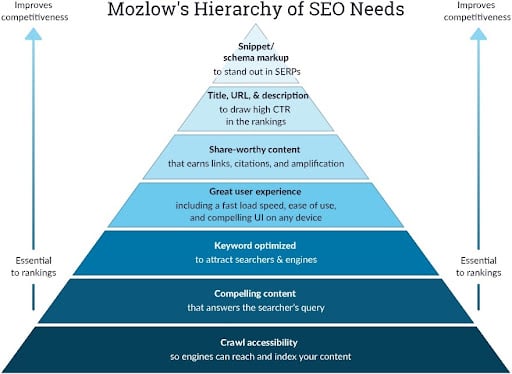
MOZ.com perfectly illustrates just how much quality content affects rankings
Yet still, even if that content is old and outdated and doesn’t bring in the results we want and need, a lot of clients and content publishers we talk to are hesitant to touch or remove content. They fear even bigger SEO dips. But, when done right, this isn’t the case.
Massive content cleanup efforts from two of digital marketing’s biggest publishers show how properly removing outdated content actually helped their SEO efforts quite a bit:

Search Engine Journal studied the results of deleting content on their own site over the course of 20 months and saw a significant year-over-year increase in pageviews and organic traffic.

Hubspot deleted more than 3,000 pieces of outdated content from their blogs and saw a clear boost in their SEO results.
Need more to help convince you it’s time to clean up and remove your outdated content? No problem.
- Andy Crestodina at Orbit Media asked seven experts to share their experiences with “pruning content” and how it affected SEO results. Three reported huge increases in search traffic, while others noted a clearly improved user experience.
- Even Neil Patel himself notes that safely removing outdated content “is crucial to the overall health of your website and overall digital marketing strategy.” In addition, he notes that it’s not just about SEO efforts, it’s also about content that accurately reflects your brand and provides the best experience possible.
Easy with the content machete! Don’t go cutting away so quickly.
Of course, deleting content has to be done the right way. You can’t just slash and hack away at content and expect results. It involves a lot of time and effort with initiatives like:
- Auditing content from a qualitative and quantitative standpoint
- Content mapping and redirect strategies
- In-depth technical SEO mapping and planning
- Lots and lots and lots of redirects
But the results can clearly be worth it, as we saw in the brands and examples noted before.
Not ready to delete? At least update outdated content.
Taking on the task of deleting outdated content can be a lot. If you don’t have the time to do it the right way, don’t do it at all…or at least not yet.
Deleting content has to be done the right way. You can’t just slash and hack away at content and expect results.
Instead, focus first on giving old content and blogs a fresh update. This will help boost SEO traffic and drive even more engaged visits by following a few basic best practices:
Start with content that you still think brings value or has potential: Review them to make sure they’re still relevant in some way to your organization and your audience.

Great Content

Updating Content
Update any outdated references: Bring in new data points, provide more or additional context (where appropriate and necessary), and remove anything that is no longer applicable or relevant. Also, focus on content quality here, not just quantity.
Optimize content according to your current SEO strategy: This includes technical SEO pieces and also metadata.

Optimize Content

Republish Content
Republish and re-promote: Include a note about when the content was originally published and when it was updated, when appropriate (like in the case of blogs, articles, whitepapers, etc.). Promote on social channels, in newsletters, on podcasts, etc., when relevant and appropriate.
When done right, the effort is worth the impact.
Cleaning up, removing, and refreshing old, outdated content isn’t an easy task, nor should it be done hastily. However, when done right, the results can be impressive and significant. It can help break the cycle of just focusing on publishing more new content on top of old outdated content.
The post Improve Your SEO Results By Cleaning Up Your Content appeared first on Content Marketing Consulting and Social Media Strategy.
Source: convinceandconvert.com

SEO for a New Site: Checklist
Starting SEO for a new site is overwhelming, especially if you haven’t done it dozens of times already.
In fact, the process can be quite intimidating, as there are so many technical tasks involved.
SEO for a new site is one of those most intimidating tasks new site owners tend to shy away from and set aside.
SEO for a New Site: Checklist
Here’s a guide that will make it doable for you:
1. Don’t Take Your Domain Name Lightly
Spend some time on this step: Your domain name will hardly have any direct impact on your organic search visibility but it will be important for your brand name recognizability.
What doesn’t matter for SEO:
- Domain age (when it was registered)
- Exact-match keywords in the domain name
- Top-level domain (as long as it is not a regional/localized TLD), i.e. don’t stress if you cannot find a .com domain.
What does matter for SEO:
- Domain meaning: Its topical associations. A good domain can get more people to click your snippet when they search
- Domain length: Too long or hyphenated domains may look spammy and hurt your brand.
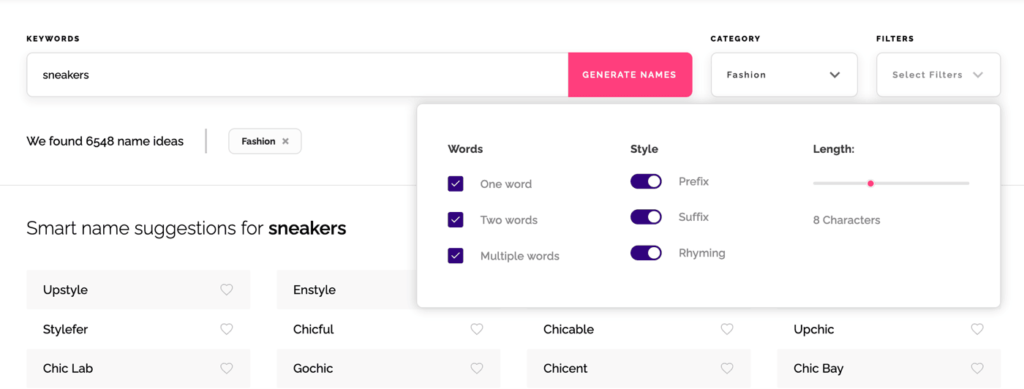
With all of that in mind, take your time. Picking a domain is a huge decision. Use this business name generator that discovers some snappy names with meaning. You can also set how long your name should be and which category it should fall under:
Once you have your domain, search Google for your name to make sure there are no existing brands in your niche that you’ll have a problem overcoming in branded search.
2. Use WordPress
WordPress is the easiest platform to set up a site. And it is also incredibly SEO-friendly and flexible.

No other content management platform has so many years of fine-tuning and such a rich directory of plugins. You can do just about anything with WordPress without having to code anything.
WordPress is free, most plugins are free or freemium, and all it takes is a few-click installation on most hosting providers.
WordPress also doesn’t require a lot of optimizing, especially at the beginning. All it takes:
- Choose a theme. Unlike your domain name, this will be easy to change down the road, so focus on the theme being lightweight rather than pretty. Here are a few fastest themes out there
- Enable HTTPS: Here’s a detailed guide on doing that on WordPress
- Set your permalinks to “Post name” and choose your time zone in “General Settings”
- Publish some fundamental content to give search engines something to crawl. More on this below:
3. Set up Your E-A-T Right Away
The first thing you can do when launching a new site is to start with Lorem ipsum text on your fundamental pages: About us, Contact, Privacy Policy, etc.
Those types of pages convince your first visitors that you are a trusted business to deal with and send quality signals to Google.
Make sure your E-A-T is set up well:
- Your foundation pages (About us, Terms of Service, Contact us, etc.)
- Your website security information (how is your visitors’ privacy protected?)
- Basic facts about your business
- Some social proof from beta testers or first product buyers
- Your author bylines detailing why they have expertise on a topic
- Links to your social media profiles
- More importantly, your service or product pages. What is it you are selling?
Ensure your service pages are as descriptive as possible. In order to achieve that, try adding not just text but also some videos that demonstrate the key benefits of your products or services.
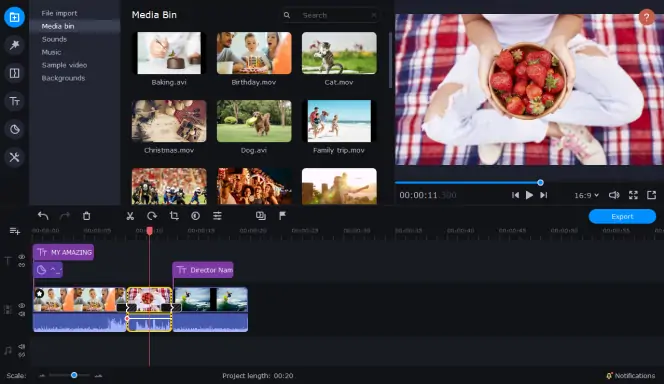
Also, since the majority of visitors prefer watching videos with sound off, make it convenient for them by adding subtitles, so that they can get to the meat of the matter even without having to listen to them.
You want your first visitors as well as search engines to know right away!
4. Start with the Least Competitive Search Queries
One of the biggest challenges of optimizing SEO for a new site is that you have no unique data to rely on.
Any data that you are going to use at this point is public, so you have zero competitive advantage unless you get really smart and creative.
When launching SEO for a brand new site, you need at least This content targeting definitive search queries at a minimum:
- Pages describing your services/products: These will target high-intent queries
- Initial content putting your products in the educational courses: What are those problems your products help solve? These could also be use cases.
#2 is where you can focus on less competitive search queries to start generating some organic search traffic earlier and send those visitors to your key “money” pages.
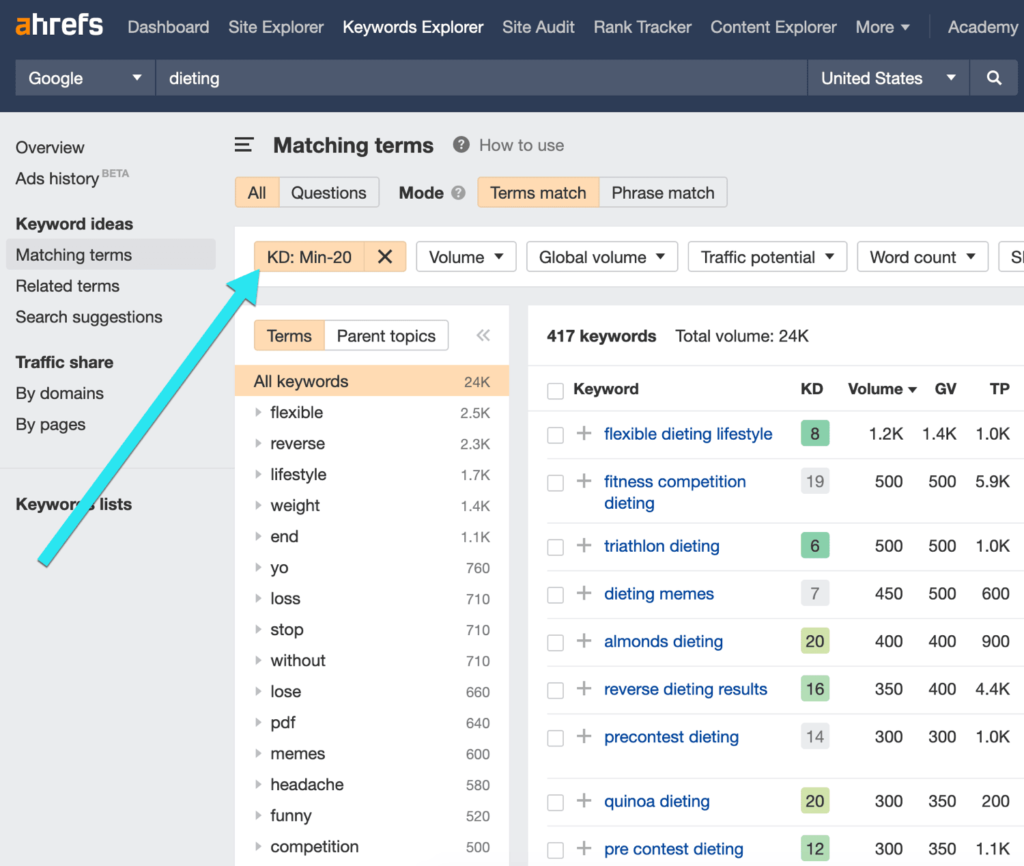
Ahrefs is a great tool to find those low-hanging-fruit keywords to target when starting a new site. The platform offers a “Difficulty” metric that shows how difficult it will be to rank for each keyword on page 1.
For a brand new site, you may want your keyword “difficulty” to be no higher than 20. For that you will need to create a filter inside the Keyword Explorer:
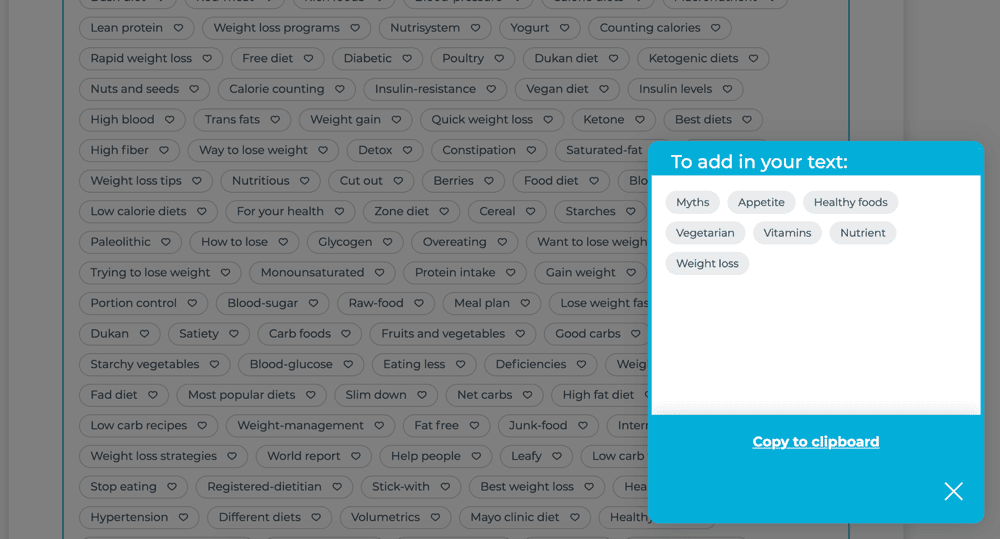
When creating your content, use Text Optimizer to build semantically relevant context and include related concepts:
5. Start Monitoring Your Progress
You want to start collecting your site’s data as early as possible. This will help you get ahead of your competition by utilizing your own data and making more informed decisions. You don’t have to do lots of web tracking systems.

These three will be enough:
- Google Analytics
- Facebook Pixel (especially if you are starting an ecommerce site and planning to use retargeting ads down the road)
- Google Search Console: Google will start collecting data about you as soon as they discover you but things like sitemaps may speed things up.
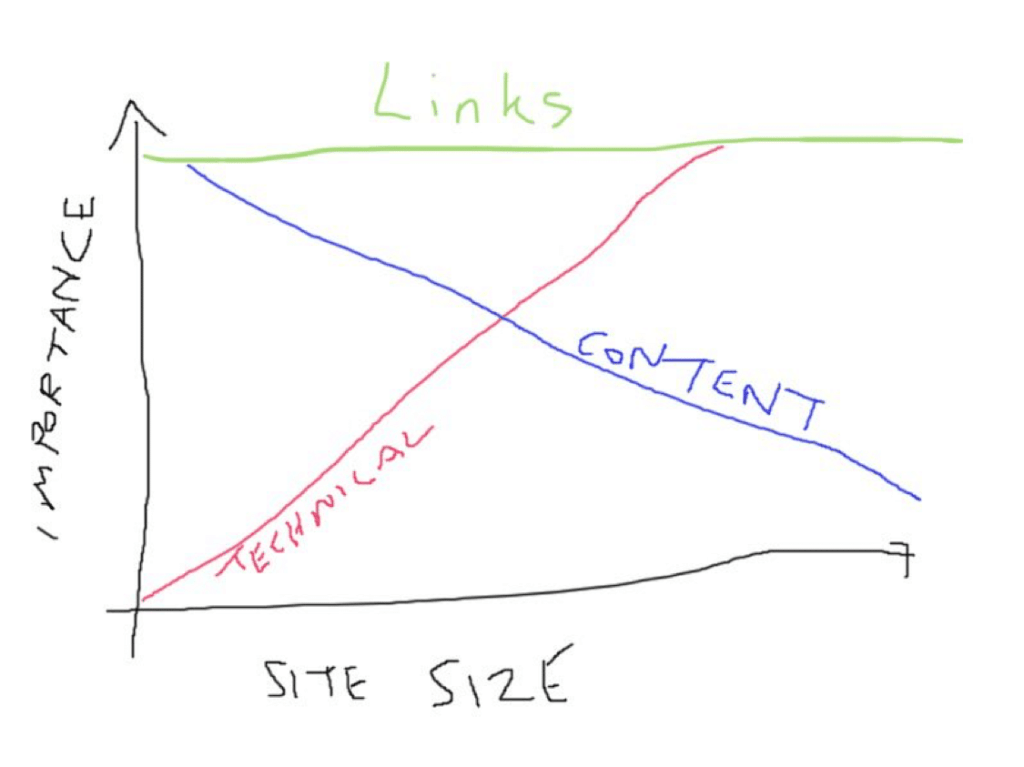
6. Focus on Content-to-Content Links
Links will help your site get discovered by Google as well as start growing its credibility. No site should be launched without a smart link acquisition strategy.
Links are still key to organic search visibility, so there’s no search engine optimization strategy without links.
Self-serving link building is a risky tactic that can bury your website in penalties and filters, and the risk is even higher for new sites that have no good record with Google.
With that in mind, don’t be in a hurry and try to avoid any link acquisition tactics where you can control the anchor text of the link.
There are a few powerful and safe link building tactics, and most of them come down to one process:
- You create useful and truly unique content assets. (e.g. an original study)
- You reach out to media publications for them to consider covering it.
It takes time and effort but you just cannot put a price on contacts you’ll be building underway. Make sure you build strong relationships with all the publishers that chose to link to your content. Every further outreach campaign will be easier from there.
Your New Site Is On Its Way to Ranking
SEO for a new site is mostly about building a foundation. You don’t have to do everything perfectly when starting a site. You just need to lay a good foundation to start collecting data and expanding.
SEO takes time, so whatever you do, don’t expect fast results. Google needs to start crawling your site and forming your opinion about your content before they know it is worth showing up for its users.
The post SEO for a New Site: Checklist appeared first on Content Marketing Consulting and Social Media Strategy.
Source: convinceandconvert.com

How to Use Video Marketing for Lead Generation
According to forecasts, 2022 is the year where online videos will make up more than 82% of all consumer internet traffic—putting platforms like YouTube, TikTok, Instagram at the center of any marketing strategy.
But how can you use video marketing to generate highly qualified leads or even hit a given marketing goal?
In this article, you will learn how to turn your video content into a lead-generating asset and make the most of it.
Turn Your Video Content Into a Lead-Generation Asset
Although 74% of B2B marketers believe that video converts better than any other type of content, many companies still struggle to harness the potential of video marketing.
In a study, Wistia found that only 22% of B2B brands use video content for lead generation purposes. So, one can assume that the other 78% are not doing it because they either have no idea how or are doing it the wrong way.
Actually, if you want to generate leads using video content, it makes sense to turn your videos into a lead-generating asset before expecting any results, especially if you are in the B2B space.
Think about it, while dancing cat videos can generate results in a B2C context, it won’t cut it if you’re selling products to businesses.
Here are two lead-generating assets you’ll need to leverage to get results:
- On-site knowledge base.
- Video course (Can be onsite, offsite, or both).
The first type of asset is gated, while the second type is not—especially since its purpose is to engage viewers.
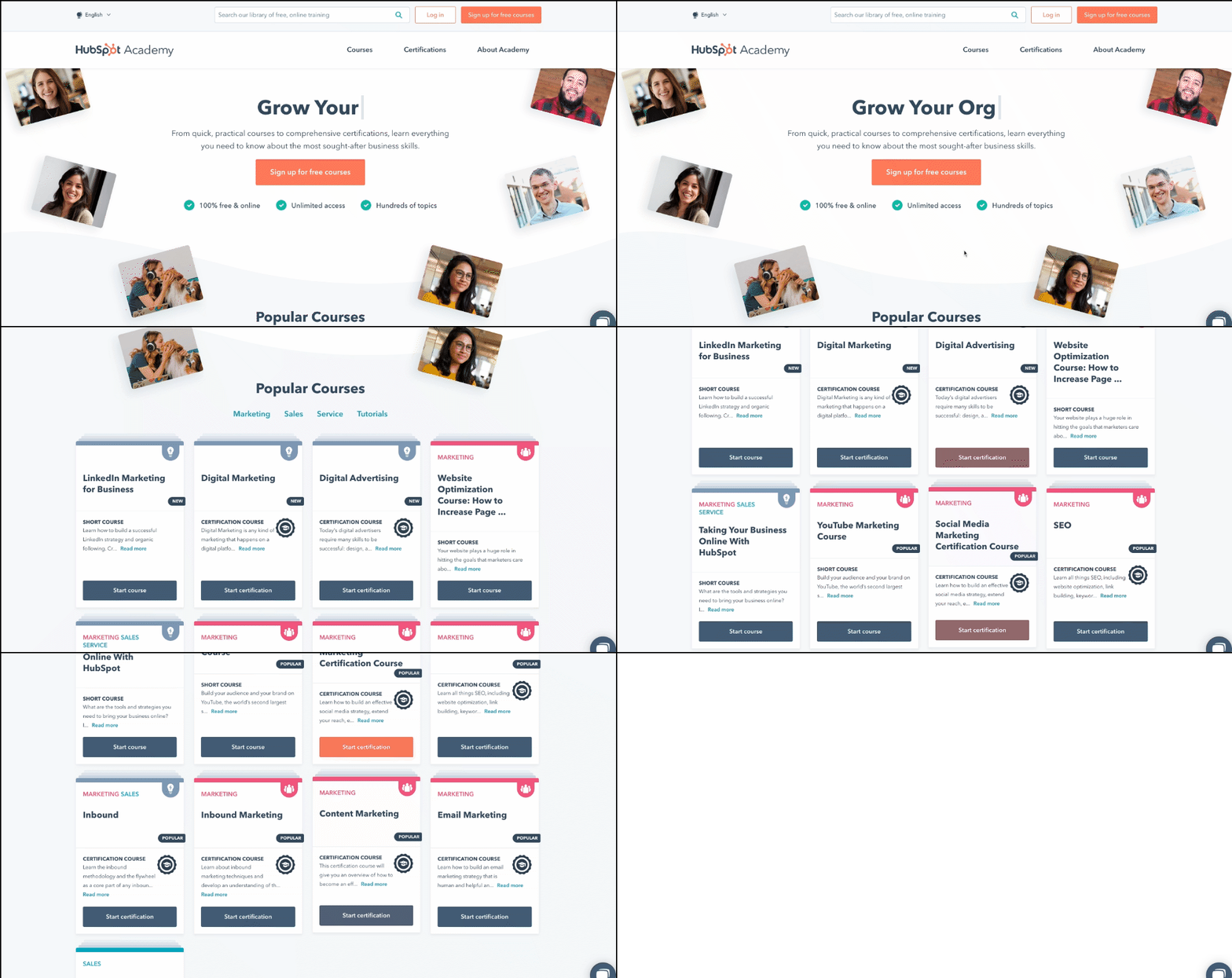
A great example of an on-site knowledge base is the Hubspot Academy, home to much free gated content curated by Hubspot.
On the other hand, Yoast is a perfect example of a brand that leverages on-site and off-site video courses on its site and Udemy.
The Benefits of Your Lead-Generating Assets
The first benefit of planning your video marketing strategy around a lead-generating asset is that it allows you and your entire marketing team to have a 360-degree view of how to direct your video creation efforts.

The second benefit is that these assets can be used to fuel the top and middle of your sales cycle. As a result, your website will get more engagement and traffic from people who simply want to be informed or make informed purchase decisions.
The third benefit is that, when gated, your video content can help you collect email addresses—which can help you turn some visitors into leads and ultimately into customers.
Note that regardless of whether it is off-site or on-site, your lead-generating asset will still generate results. For example, if you host courses on Coursera or CXL, you can tap into the audience engaging with your courses on these platforms and win new leads.
Things To Consider When Creating Lead Generating Assets
VA video content that acts as a lead generation asset must contain several things to be effective.

It must be based on a popular search query.
As controversial as it may sound, leads are a byproduct of web traffic. Think about it, before you can convert a visitor into a lead, you need to have visitors first. That’s why it’s essential to choose a keyword that has a search intent—this way, your video can rank and generate traffic on its own.
It must be aligned with the products you sell.
According to a study, most of the 1,000 most frequently searched prompts on search engines are how-to questions. Meaning that your audience/viewership has a gazillion problems, and they expect you to help them find solutions. So make sure your videos cover problems your product solves and position yourself as the ideal solution.
It should not be too specific.
An Ipsos’ study on advertising found that both visual and written content wear out. This means that if you don’t diversify your video content, it will wear out—and lose engagement. You’ll want to add fresh videos regularly to re-engage your current viewers, which a super-specific topic won’t give you the flexibility to do.
It must be relatable.
Not only does your video content need to align with your overall brand values, but it also needs to be relatable from the viewers’ perspective. So instead of going heavy on brand awareness, try to double down on brand affinity. Think about it—just because someone knows your brand doesn’t necessarily mean they will buy your product.
Adobe is a perfect case study to illustrate the above criteria. They have a course on Photoshop on their website and Udemy. Each course requires the use of Photoshop, which is an Adobe product.
When you search for the Photoshop course, you will find that the course on Udemy ranks first and the one on adobe.com ranks second.
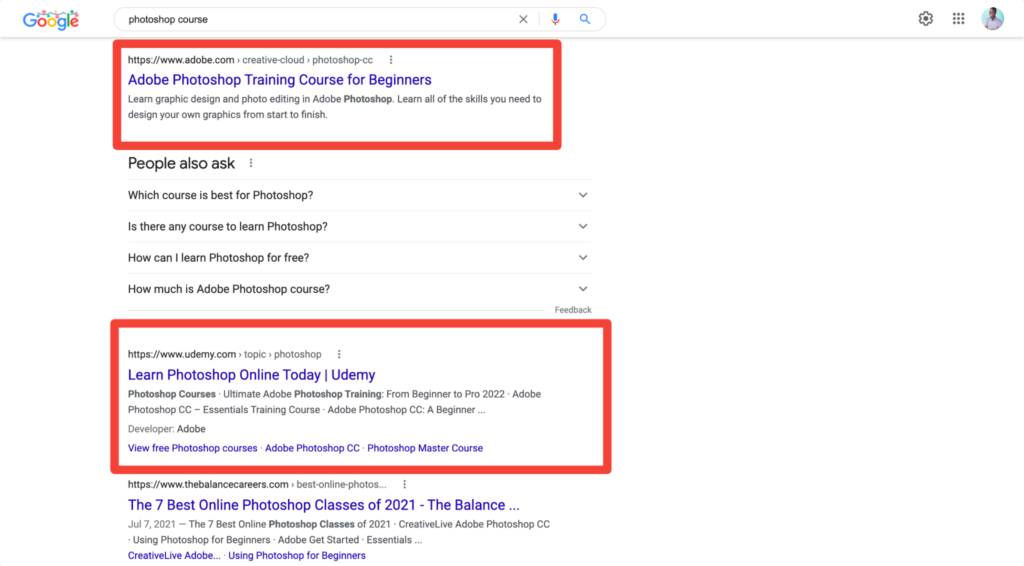
Plus, Photoshop is a vast topic, so Adobe can keep adding content as they create it.
Now that you know what makes a great lead-generating video content, here are some types of videos you can leverage to get optimal results.
Choose The Right Video Type to Fuel Your Marketing Strategy
Below are three types of videos you can leverage to generate more leads.
Influencer-backed videos
CXL and Fullfunnel.io are perfect examples of companies that put influencer-driven video content into action.
CXL partners with experts (influencers) to produce free and paid courses and often webinars.
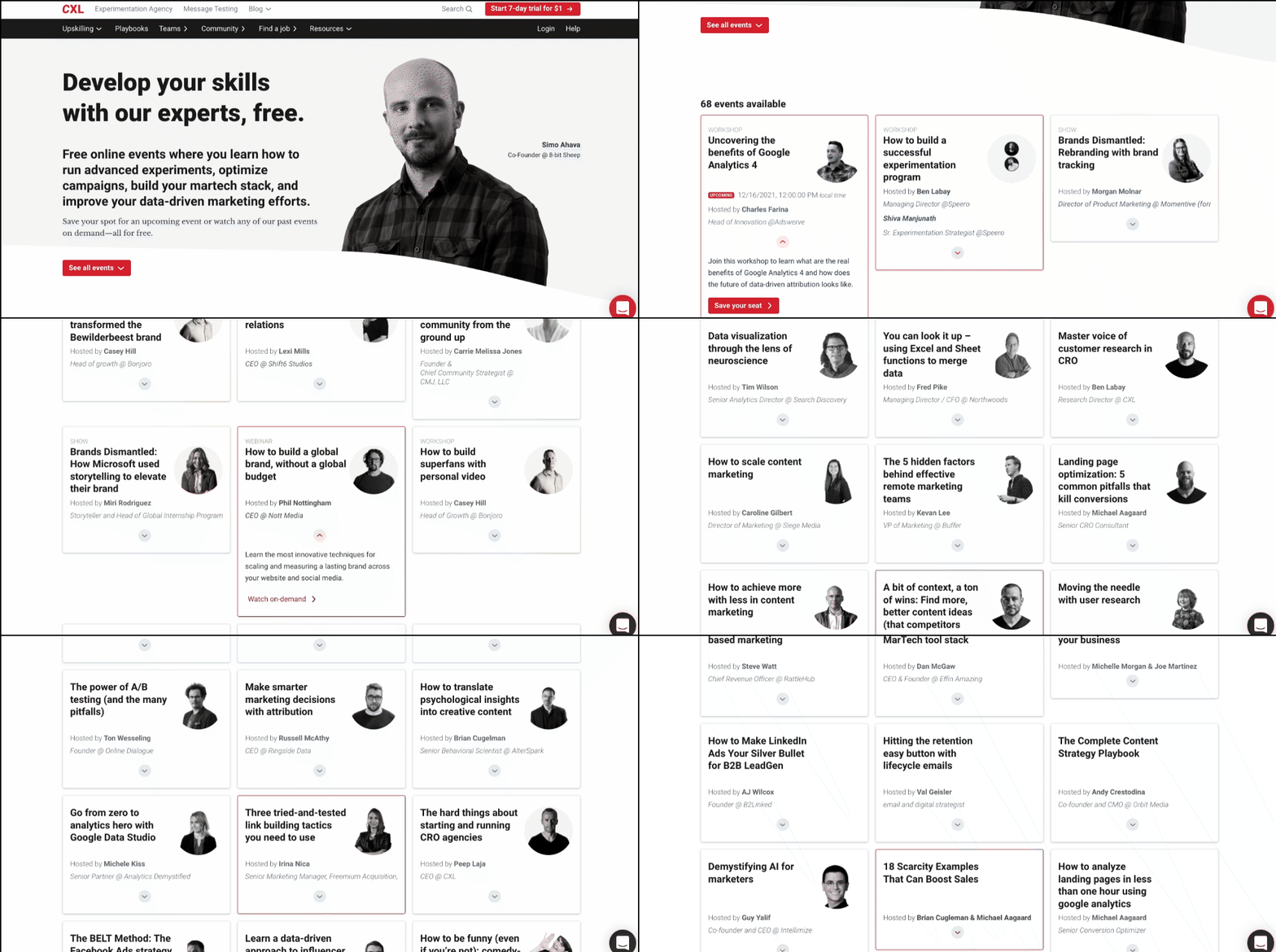
You don’t have to pay to watch these videos, but if you want to get a sneak peek or access these courses, you have to opt-in with your email addresses and names. CXL uses this video marketing strategy to fuel its courses’ subscribers base.
Andrei Zinkevich and Vladimir Blagojević from Fullfunnel.io use the same strategy except that their content is free to access and does not require opt-in.
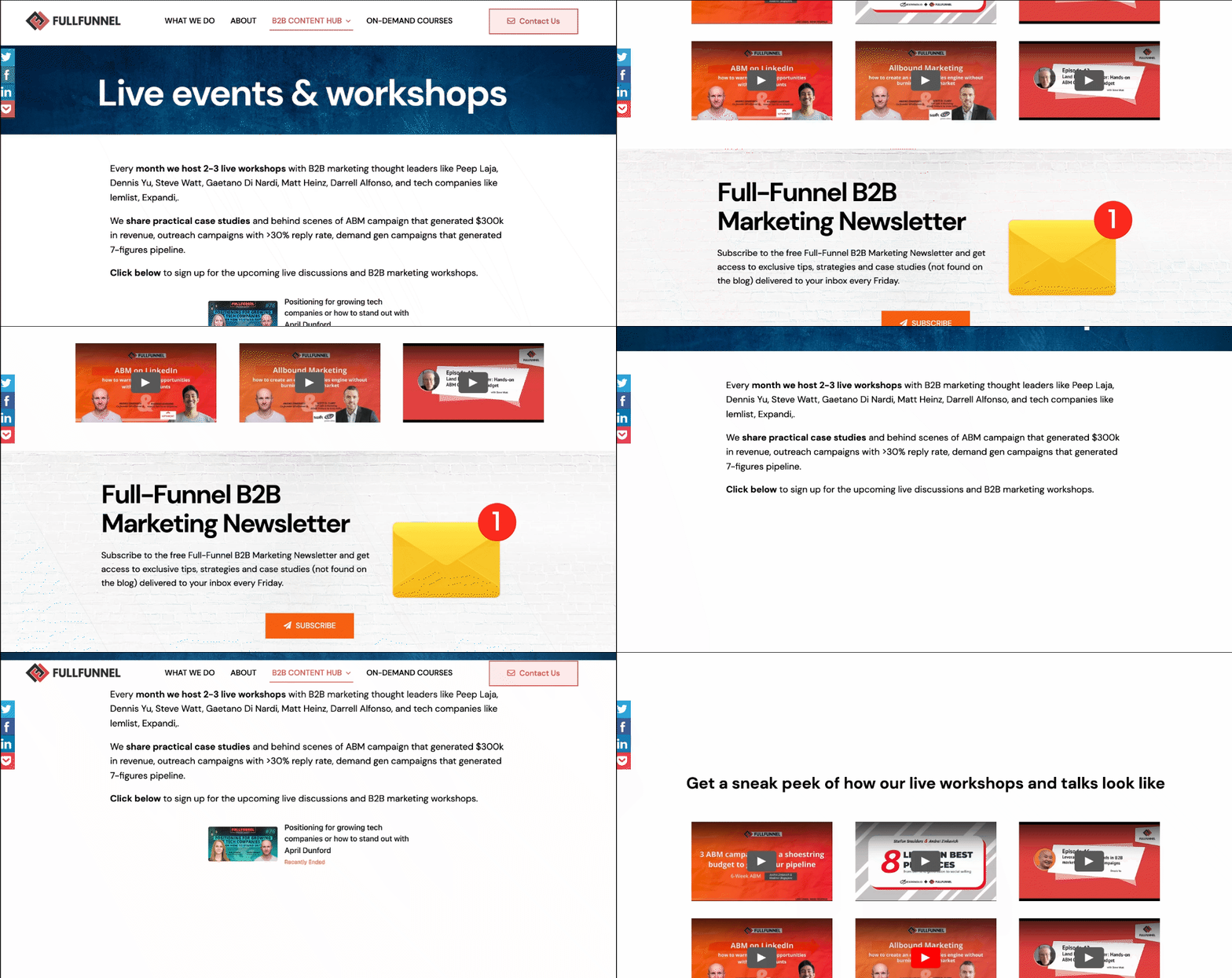
On the other hand, the end goal of their webinars is to build awareness, help viewers solve their problems, and position Fullfunnel.io’s services as the ideal solution to viewers’ problems. So far, this strategy has helped them grow the demand for their service.
The beauty of this type of video content is that it lets you tap into the fan base and authority of guest influencers to fill your lead pipeline before and after the video sessions. It’s the ideal way to educate, engage, and convert leads—all at the same time.
Demo videos
Whether you are selling a SaaS product or any other solution to B2B brands, chances are you are already leveraging demo videos.
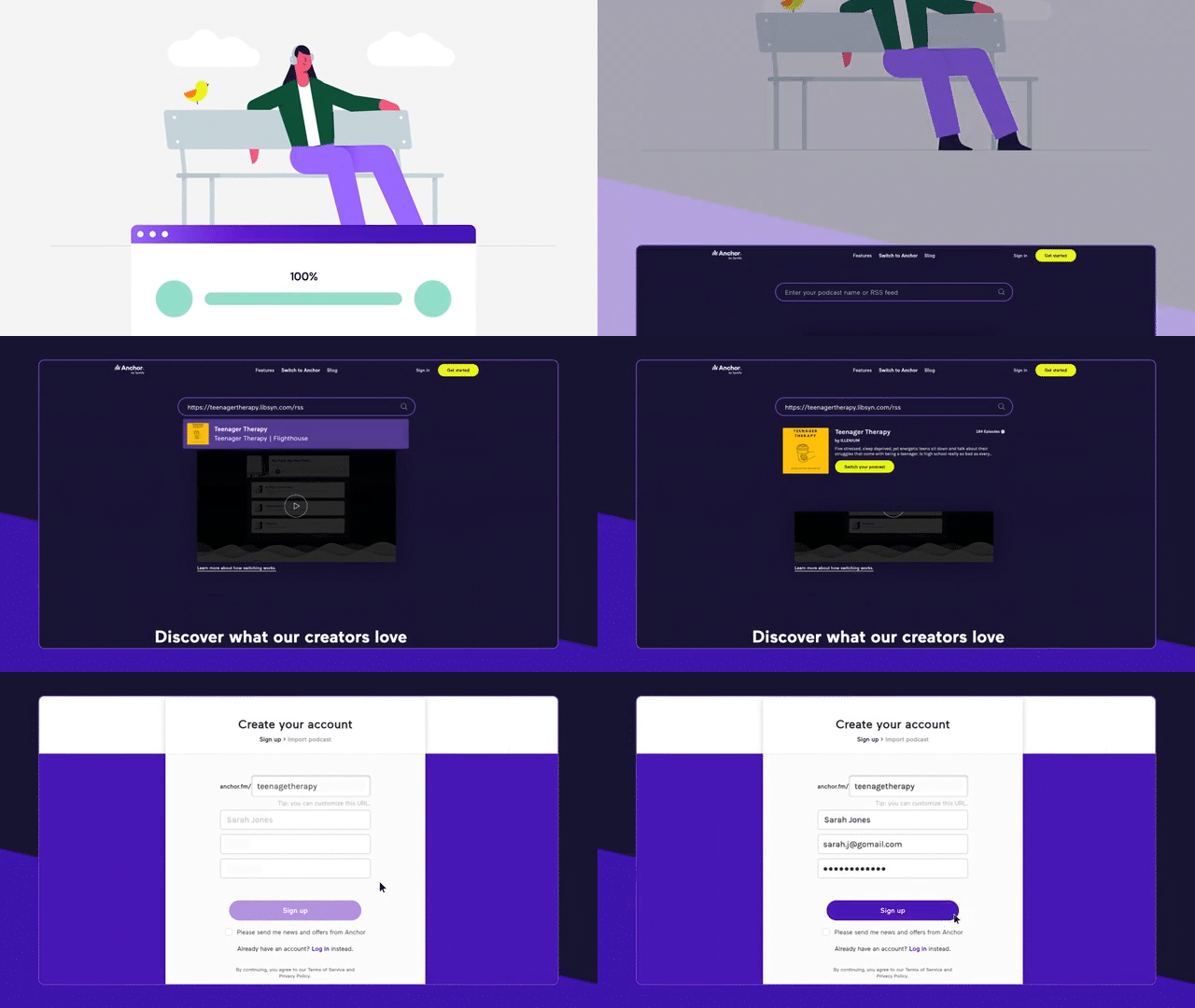
Demo videos, contrary to popular belief, make significant content assets. For example, Wistia uses demo videos to educate their audience and as a channel to make a query (place a form or even include a CTA at the end of the video). And Vidi uses them as a FAQ to clarify user questions and engage them even more.
Salesforce is another example of companies that leverage demo videos as lead-generating assets. Salesforce gates each of its product demos so that visitors have to exchange information before they can access the company’s resources.
Testimonial videos
Ninety-two percent of consumers trust a brand that someone has recommended to them, even if it’s a stranger. Couple that with the fact that people trust testimonial videos more than traditional text-based testimonials.

By inviting your established users to create video content (testimonial videos) to recount their experience using your product, your soon-to-be customers and prospects will have a more objective idea of the value proposition of your product.
Testimonial videos are also a type of user-generated content that allows companies to move prospects quickly through their sales cycle and accelerate the buying decision. In fact, these types of videos add credibility—it’s not just you saying what can be done; it’s actual users showing how they benefit from your product.
Repurpose Your Video Content to Suit All Your Marketing Channels
Creating and editing a video takes a lot of time, so there’s no reason to use it only once.
Here’s what Michael Pirone, co-founder of Vidico, has to say about it.
“You can leverage many distribution channels to get the word out about your videos and your product. Spend time getting to know your target audience and share your videos where they will have the most impact.”
Ways to make your videos work as a marketing flywheel
Here are three ways to make your videos work as a marketing flywheel.
1. Repurpose video on your blog.
A study showed that videos are 50 times more likely to appear on the first page of Google than text results. So by posting your videos on your blogs like Neil Patel and CoSchedule do, you’re more likely to rank and engage your audience.
2. Add a full transcript next to your video.
Doing transcripts for your videos has two benefits. The first is that transcripts attract search engines with relevant keywords, which in itself is a ranking factor.

The second is that transcripts provide an opportunity for backlinks and internal linking. Without text, there is none of that. The other advantage is that visitors who don’t want to watch the whole video can still browse the transcript.
You can also put your transcripts together and turn them into gated downloadable content.
3. Create short videos.
In this age of TikTok and Instagram, short-form video is KING. However, not every B2B brand has its audience on TikTok. In this case, you can share these videos on LinkedIn. A great example of this is Chris Walker of Refine Labs.
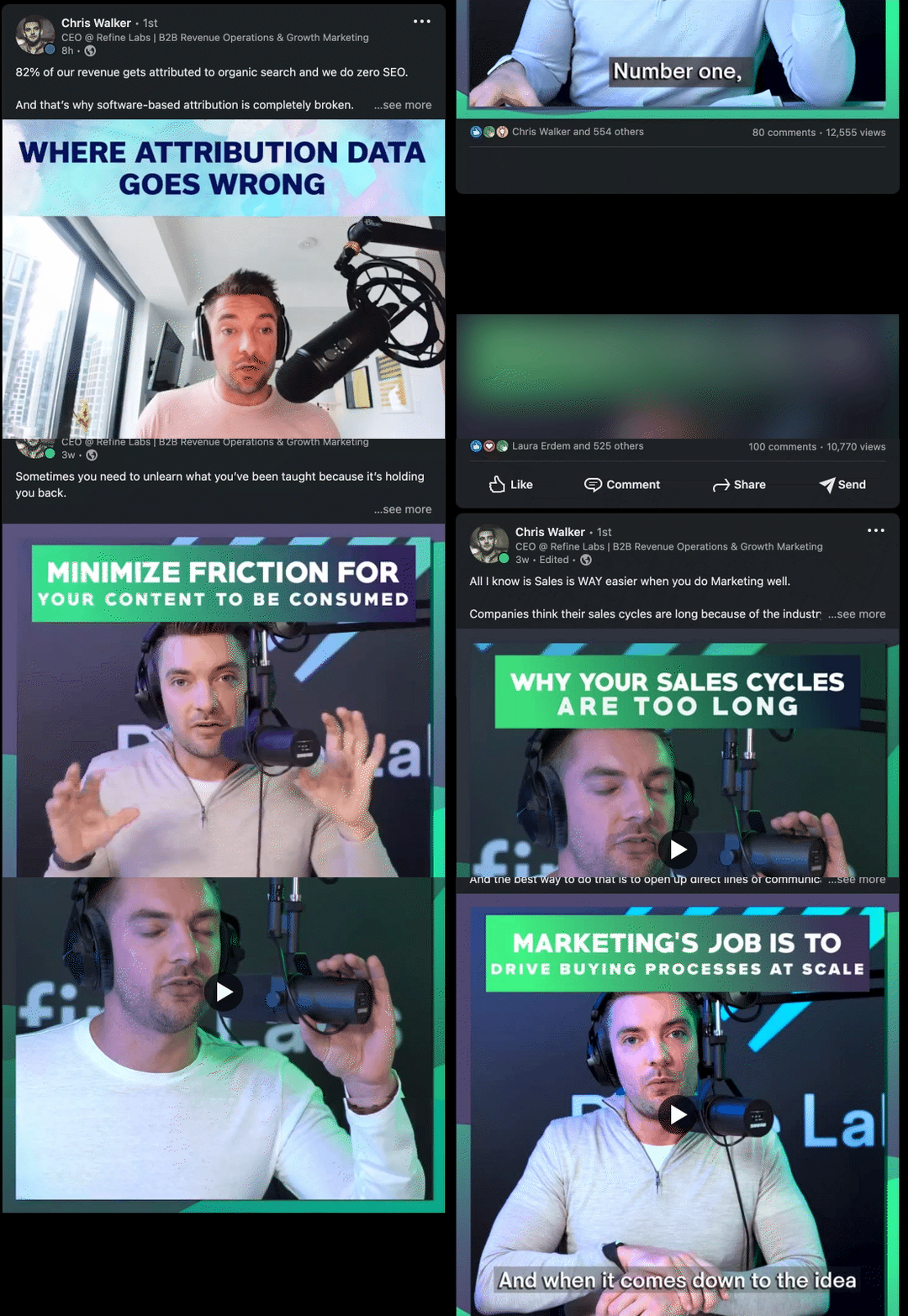
His short videos on Linkedin get thousands of views and serve as an awareness and nurturing campaign for Refine Labs.
The post How to Use Video Marketing for Lead Generation appeared first on Content Marketing Consulting and Social Media Strategy.
Source: convinceandconvert.com

6 Ways to Integrate SEO Across Teams
When I started in digital marketing, I splattered meta-data and keywords into content like Pollock. I am not proud of this because not only does this date me, but it is also horrifically against best practices as we see them today. If you ever read anything along the lines of “California vacation lovers and those who love California vacations? For the best California vacation, look no further than these California vacations,” I send my deepest apologies.
Fast forward 20 years, I’m now happy to say that organic SEO best practices have dramatically improved, both for the marketer and the end-user. As we move into 2022, it’s more important than ever to remember search does not take place in a silo. It should be a thoughtful, integrated strategy running across the complete customer experience.
6 Keyways to Integrate SEO Across Your Organization
Not sure how to integrate SEO? We have six key ways to de-silo your search integration across your organization when it comes to working with search engine optimization teams, agencies, or practitioners.
#1. Search Meets Research, Personas, and the Audience Journey

Search traffic provides a treasure trove of qualitative and quantitative information about your audiences’ needs, vernacular, attitudes, and more.
- Do people talk about your travel product by saying “vacation” or “trip”?
- Do high school students looking for information about their college of the chosen search for “ASU”, “Arizona State”, or “Arizona State University”?
- When searching for enterprise software, do your customers say “platform,” “tool,” or “technology”?
Using search data helps you discern what will resonate best with your audience. Couple this with surveys, stakeholder interviews, and digital data and you have a solid (and quantifiable) foundation for your personas and audience journeys.
When search teams share high-level keyword information across the organization, it can help support everything from media relations to product development to recruitment and beyond.
#2. Integrate SEO and UX
According to “SEO For Everyone” authors Rebekah Baggs & Chris Corak, search and user experience teams shouldn’t be kept on separate tasks (or quite frequently within separate silos). These practitioners or teams often have some of the same goals in mind: ensure the site is easy to find, navigate, use, and enjoy. Although, they may approach the process of getting to the end goal differently.
Don’t let the idea of The One Perfect Keyword create tunnel vision—you want to be looking at the bigger, more nuanced picture. An improved user experience means people stay on the page longer, interacting further with your site, not clicking the back button, revisiting the site anew, and sharing your content—all boons for SEO. The better the overall site experience (think UX, load times, mobile navigation, et al.), the more likely you’ll reach the coveted top ten in SERP.
– Baggs & Corak
#3. Search and….. the Offsite Experience?

During my Britney-and-Justin-era SEO days, I didn’t anticipate I’d be planning for SEO even before the site experience began.
Today Google wants you to stay on Google.
Don’t let the idea of The One Perfect Keyword create tunnel vision—you want to be looking at the bigger, more nuanced picture. Click To Tweet
It is now critical that search marketers consider how their content is presented, consumed, and shared even before the user gets to their site. Examples of this include maps, movie listings, local listings, and product descriptions.
As top search results provide answers via the SERP itself, search marketers and content creators need to button up content, images, and calls to action even before a user steps foot on your site.
#4. Search and Social
One of my favorite mash-ups over the years has been searching and social. It’s interesting to find how to search keywords and activities on your site overlap with social engagement conversions and customer care. This isn’t revealed through a pretty Venn diagram.
This typically looks like a psychologist blot experiment with various overlaps in bizarre and unpredictable ways.
As the great resignation continues and teams have more and more to do (with fewer resources, patience, and stamina), one way to offset that workload is figuring out ways to collaborate, leverage each other’s expertise, and do more together, outside of the SEO silo.
Top social sites for search engine optimization (and content distribution, amplification, and atomization too!) include LinkedIn, Pinterest, Medium, Twitter, and Meta (the artist formerly known as Facebook).
According to Pinterest, 444 million people globally come to Pinterest every month to get inspired. Last year, 88% of Pinterest users purchased a product as a result of their New Year’s Resolutions.
#5. SEO, Meet Creative and Content

Content marketers and writers need to ensure content is not just “me me me” or “product product product” copy.
What questions does your audience need answering? In what cadence? Where? Why? How (video vs text vs app, for example)? I can promise with 99% accuracy it’s not, “why are these SaaS tool features so yummy?”
Creativity is critical too. According to Google’s John Mueller:
Sometimes those small differences do play a role in regards to how people perceive your website. If, for example, you have something that is on a financial topic and people come to you and say, “well, your information is okay but it’s presented in a way that looks very amateurish,” – then that could reflect how your website is perceived. And in the long run could reflect something that is visible in search as well.
Poor design can lead to high bounce rates and short time on site, adversely impacting ratings. Search marketers working on their 2022 goal or to-do list might consider adding “meet with the creative team” (over coffee or cocktails works!)
For a goldmine of additional insights from Google’s John Mueller Bookmark This: 57 SEO Insights
#6. SEO and Video

With YouTube continuing to dominate as a primary search engine, optimizing videos for SEO should be on your radar as well. Videos should mirror your search keywords, be thoughtfully optimized, and mirror the sophistication of your brand, both from a creative and UX perspective.
Keep your eye on:
- Channel trailer, featured video, and channel sections
- Channel name, description, and site links
- Profile picture, banner image, and video watermark
- SRT Files,Tags, & Hashtags
- Titles and headlines for thumbnails
Now’s The Time To Integrate SEO
To help phase your efforts, begin by learning what terms and topics your audience is searching for, build content focusing on those phrases and issues, and use the research to understand the highest interest levels. Focus your content initiatives on those first.
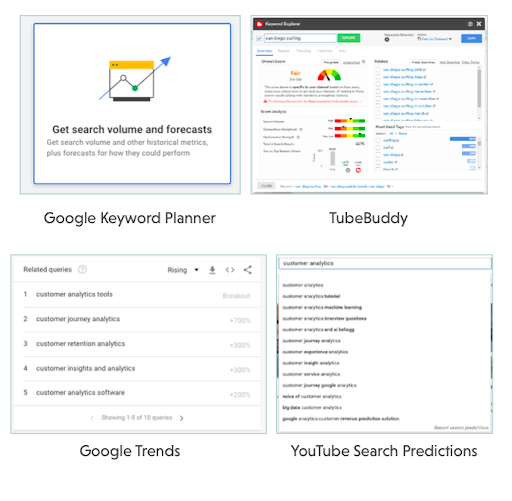
In addition, tools like TubeBuddy, Google Keyword Planner, Google Trends, and YouTube Search Predictions will help you learn what is working – and what’s not as you integrate SEO.
The post 6 Ways to Integrate SEO Across Teams appeared first on Content Marketing Consulting and Social Media Strategy.
Source: convinceandconvert.com

The Questions You Need to Ask Before You Join TikTok
Note: This post is based on a webinar hosted by Jay Baer with our friends from Visit California and ICUC Social. You can watch it on-demand, too.
Perhaps you’ve been waiting for TikTok to fade out and run its course as the next “it” app. You expected it to go the way of Vine, Meerkat, and its predecessor, Musical.ly.
Being cautious of “the next big thing” is understandable for social media marketers who likely are already tapped with content strategies for Facebook Lives, tweet threads, Stories, and Snaps–but you may want to join TikTok now since isn’t going anywhere anytime soon.
Here’s why:
TikTok is Now the Most Downloaded App
Since its launch in 2018, TikTok has consistently ranked one of the most downloaded apps worldwide. In 2020, TikTok finally surpassed Facebook as the most downloaded app worldwide and in the United States.
While it has a reputation for being a “Gen Z” space, now 53% of TikTok users in America are 30 years or older, which is similar to how Twitter’s users align.

It’s not just the popularity of the app that is noteworthy. TikTok users spend more time on the platform each month than Facebook users do on Facebook. For TikTok’s users, the app is a primary source of both information and entertainment. It’s just as sticky, if not more sticky than Facebook is today. That’s quite remarkable.
Why Users Are Choosing to Join TikTok
TikTok bridges the gap between a social network and a television network. Serving up very short video clips in an endless stream, TikTok became a more social version of video streaming replacing other sources of entertainment including TV time.
Users are actively engaging with videos they see on feeds and the For You Page (FYP), a whopping 92% of users say they take action after watching videos on TikTok.
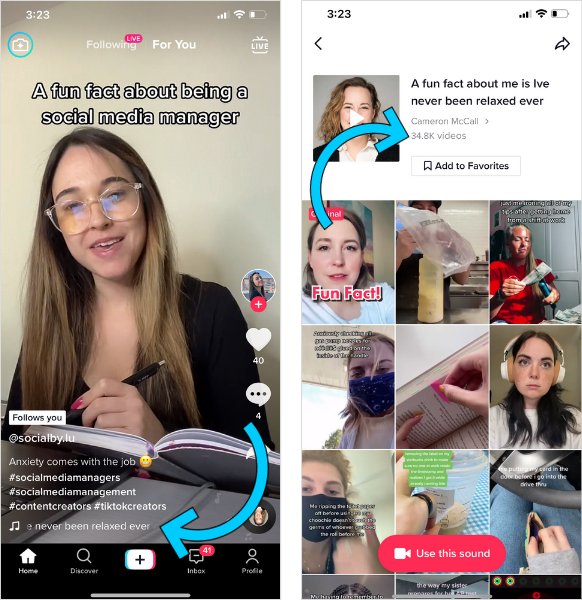
Impressively, a quarter of users buy or research products immediately after seeing TikTok videos–and that immediacy is something new for marketers who are used to the challenge of assigning attribution for social content.
TikTok users find ads on the platform are more attention-grabbing than other social networks and are more likely to engage or follow up as a result.
What Makes TikTok Different?
We can refer to TikTok as a social media kaleidoscope.
While it looks, feels, and acts as a social network, the user experience is meaningfully different from other social channels. The differences are what set TikTok apart, but those differences also pose challenges to social media content creators and brand marketers who must grasp an entirely different way to create and produce video content.
Brand accounts are permitted on TikTok but they work differently than an individual user. The content that is made and published for TikTok was entirely different when it originated than creating for other social networks (until Instagram copied it with Reels).
Engaging with fans happens, but differently. Measuring and tracking success on TikTok also looks different, too.
One of the biggest differences marketers must be aware of is reach. TikTok is based on an algorithm, but the TikTok algorithm itself is programmed differently than creators are traditionally used to.
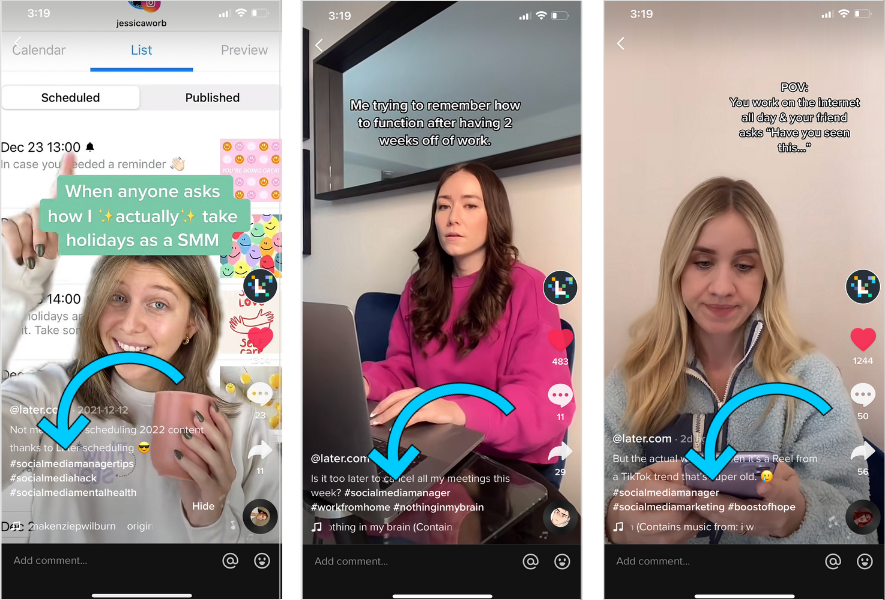
Content is democratized in a way that Facebook, Twitter, and other channels have never created an opportunity for. On TikTok, this primarily happens on the FYP.
For creators, there is a real possibility for hyper-acceleration thanks to the algorithm and how it allows for viral impressions. Many TikTok users have a similar story of going from a few to thousands of followers literally overnight or with one video.
There are many niche communities that brands and creators can tap into to begin growing their presence.
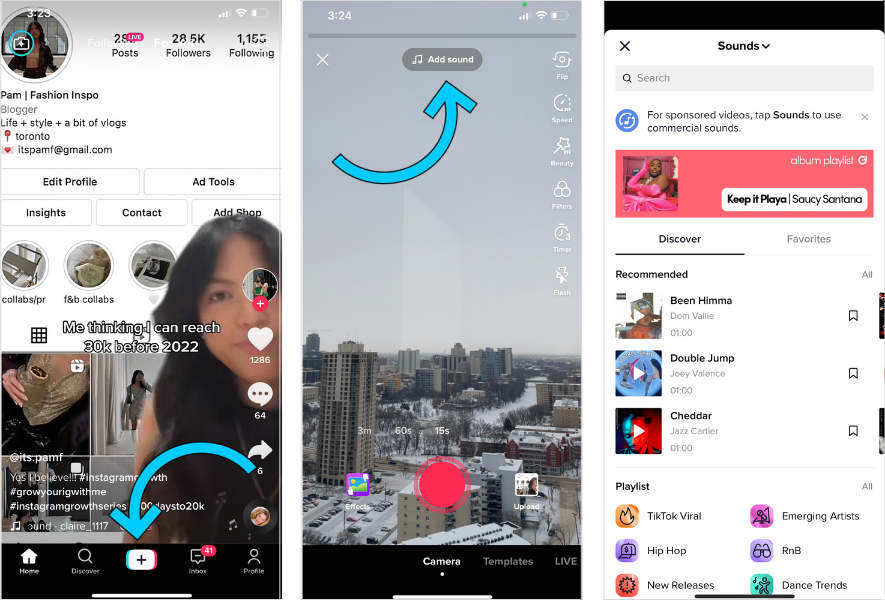
How to Get Started on TikTok
Before you decide to join TikTok, your team should answer these 8 questions:
1. Should your brand even be on TikTok?
Increasingly the answer is “yes” if you are looking for audiences that are A) more globally driven, B) not just Gen-Z, and C) resources for content creation and testing are available.
2. How will you measure TikTok’s success?
TikTok views are auto-played and align to a more standard video impression. Other key metrics on the TikTok dashboard include retention, engagement, and followers. Pro tip: the desktop dashboard is far richer than on the mobile app.
3. How much time and effort can you devote to TikTok management?
Consider what time you must spend to create, publish and engage in vertical video. Consistency is key to TikTok success, and that can be a heavy lift for marketers.
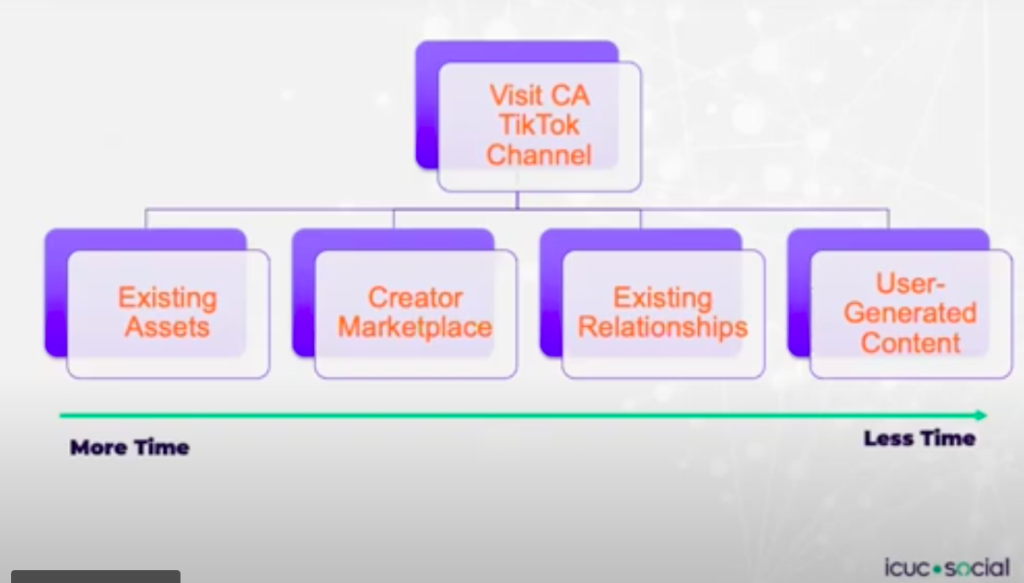
This chart shows four levels of content that Visit California has planned to include on their channel, ranked across a time commitment spectrum.
4. What should your content strategy be on TikTok?
Boil it down to this — very cool video visualizations paired with strong audio choices. Because TikTok is such a unique channel, it absolutely requires dedicated content.

Repurposing Reels or other videos isn’t going to play for TikTok audiences. A robust content plan must include branded hashtags, branded effects, leveraging creators, experimentation, and testing.
5. How often should you post on TikTok?
For creators, posting one to three times a day on TikTok isn’t just normal, it is expected. That lift is probably out of range for most brands getting started. It’s okay to ramp up from a few times a week to daily, but be sure to test how consistent posting affects success metrics.
6. What should your community engagement approach be on TikTok?
No matter how often you are posting, daily engagement is key for staying current with trends and taking advantage of what’s hot–including hashtag challenges, branded effects, and viral music sounds. It’s best to have someone logging in every day to stay current with what’s happening.

7. Should you use paid TikTok ads?
The first video that pops when the app opens is always a sponsored video called the top view. Sponsored ads also appear through the newsfeed.
Branded hashtags and branded effects are other ways brands can increase reach and engagement. Our recommendation is to get good and consistent at organic before boosting videos or layering in branded content.
8. How often should you revisit your TikTok strategy?
Stay close to the strategy as a brand channel launches and content ramps up. Know that the channel is also evolving as quickly as the communities and creators themselves.
Sticking to a quarterly review is a good cadence to look at content pillars, micro-influencers, hashtags, and content choices.
Ready to Join TikTok?
No matter when you join TikTok and implement your branded TikTok strategy, give room to experiment and try new things. While this social network isn’t brand new anymore, it certainly is new and different to most social media marketers and creators. While that can be nerve-wracking, it’s also quite exciting.
The post The Questions You Need to Ask Before You Join TikTok appeared first on Content Marketing Consulting and Social Media Strategy.
Source: convinceandconvert.com