
Tag Archives for " content marketing trends "

8 B2C Content Marketing Statistics and Trends for 2021
As we dive headlong into 2021, let’s take a look at a few B2C key content marketing statistics and trends that will help us plan for the year ahead.
When we build strategies for our clients at Convince & Convert, we usually help them plan for the next 12-24 months.
However, in this incredibly unusual pandemic period, it feels like we are often changing gears every six months to keep abreast of current considerations and market conditions.
I’m sure you feel it too: the only certainty is change.
Yet, there are absolutely things we can learn from the changes and shifts within our industry.
And we can use those lessons to prepare ourselves for what may come.
That is why I’m so grateful that our friends at Content Marketing Institute and MarketingProfs produce their long-running annual report,
The most recent of which–B2C Content Marketing Benchmarks, Budgets, and Trends: Insights for 2021–allows us to look at both this moment in time and the historical trends.
If you’re a B2B marketer, be sure to read my takeaways from their B2B report.
Full disclosure: I often speak at CMI and MarketingProfs events, and MarketingProfs is a former client of my company Media Volery. However, all opinions in this piece are mine.
B2C key content marketing statistics and trends
As we dive headlong into 2021, let’s take a look at a few B2C key content marketing statistics and trends that will help us plan for the year ahead.
1. More than 80% of B2C content marketers saw budgets stay the same or increase in the second half of 2020.
It may be counterintuitive, but a majority of B2C content marketers saw their budgets stay stable or even increase over the last year.
My assumption would be that because content marketing tends to be used more often in the case of higher ticket goods and services, those consumers may have been less economically impacted by the pandemic.
Indeed, they may have had more disposable income to spend in 2020 with less travel and activities available.

In 2021, while I believe that many B2C brands may be able to spend similar budgets, I urge you to be thoughtful and flexible about how and where you spend that budget.
Instead of events, you may spend that money on influencer campaigns.
Instead of experiential marketing, you may focus on the fundamentals of email marketing.
Things can still change on a dime; having flexibility, rather than discreet line items, will make the process smoother.
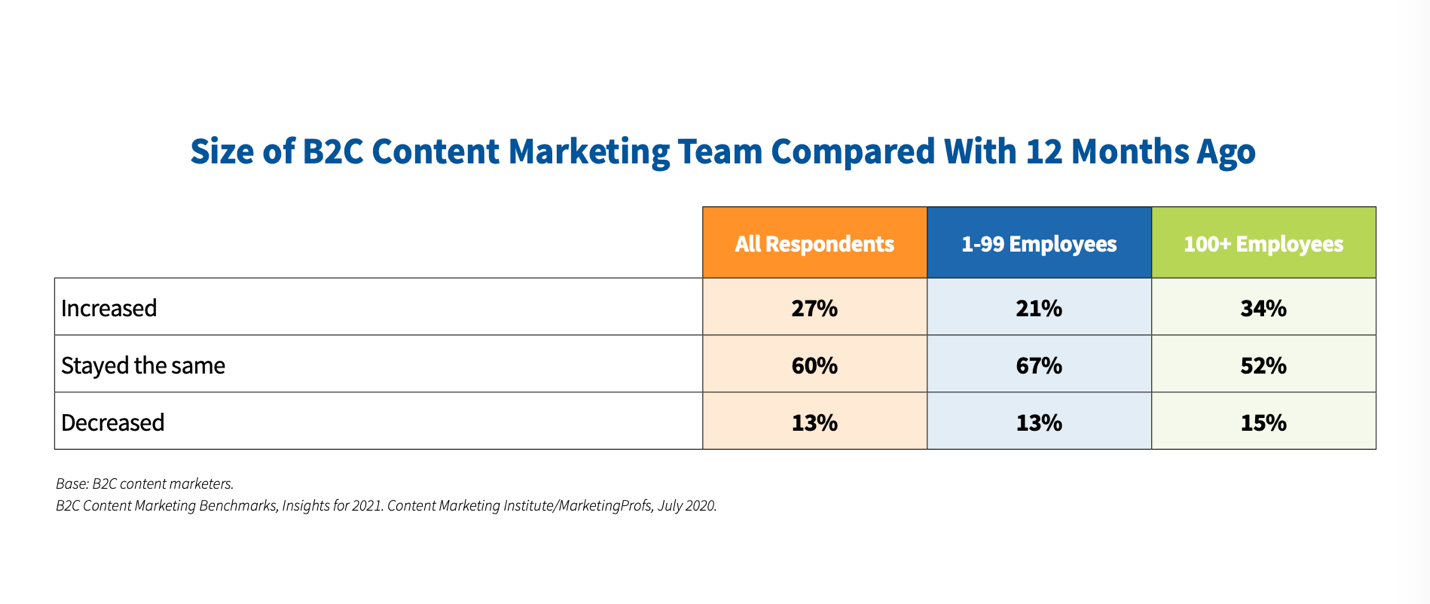
2. Content marketing teams are stable; most teams stayed the same size or even grew.
As with budgets, we saw that on the B2C side, the majority of content marketing teams stayed the same size, and more than a quarter (27%) increased in size over the last year.
This stability indicates that content marketing practices, on average, are mature and valued enough within their organizations that they’re continuing to see growth.
Thinking through the roles and skills that would be most useful for your team in 2021 should be a key part of your budget and planning considerations.
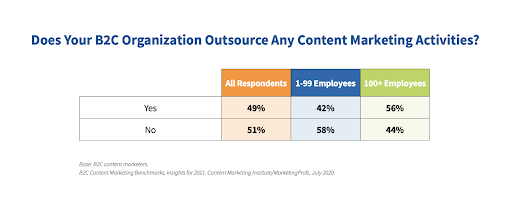
3. 49% of B2C organizations outsource at least some content marketing activities.
In the previous point, I note that while most organizations have kept their teams the same size, 40% have made some changes.
This may relate to the fact that organizations are split nearly in half in terms of outsourcing marketing activities.
Furthermore, smaller companies are a little more likely not to outsource, perhaps choosing to hire for part-time or full-time roles.
What we see with our own clients is that, while adding headcount can help with bandwidth issues, those roles aren’t always the most efficient at solving the challenges within the organization.
Outsourcing areas where you need a higher level of expertise, such as graphic design for specific channels or event production, can help your team to focus on their core competencies.
Next, what do those organizations that outsource focus their energies on?
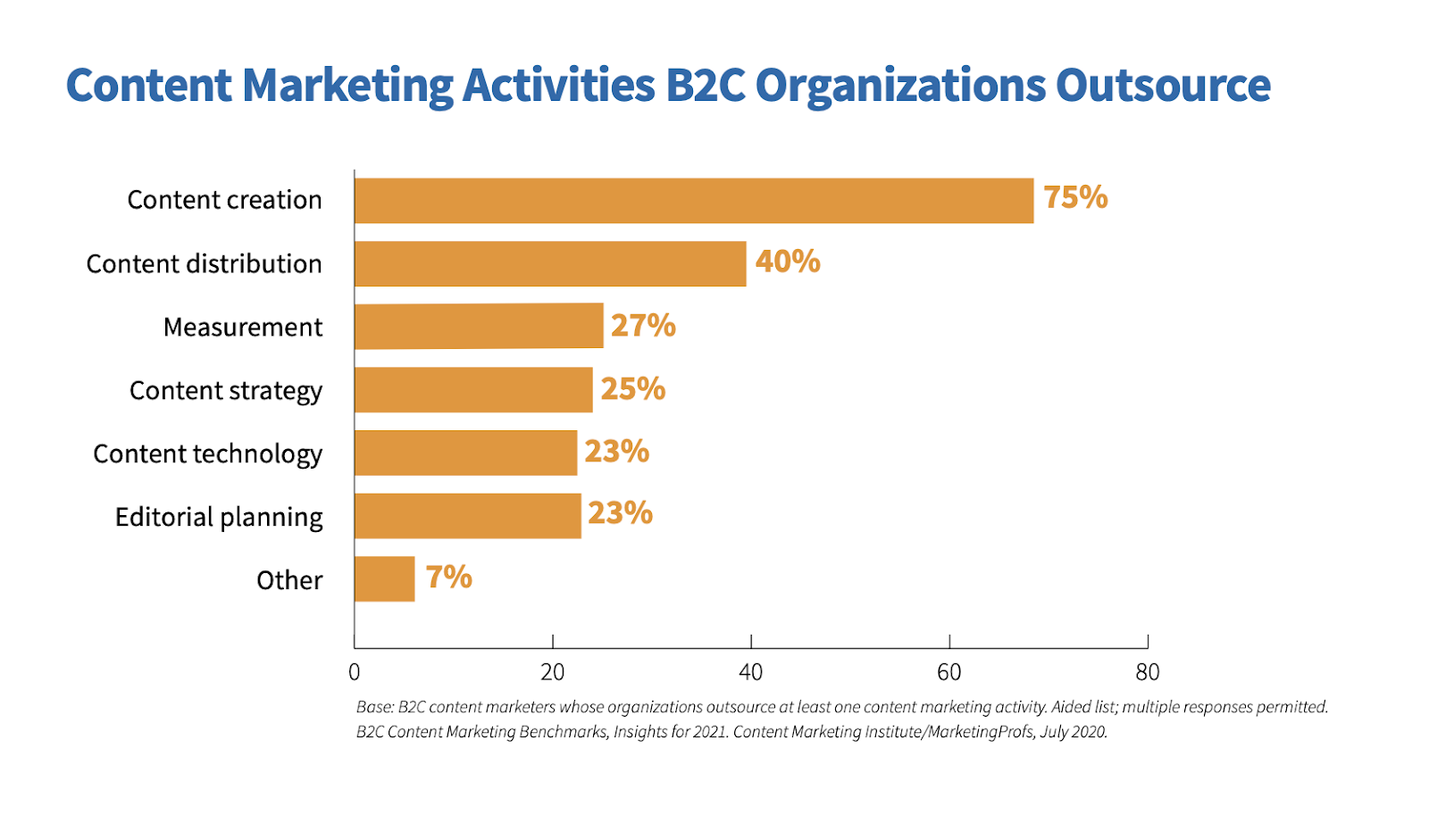
4. Of the activities organizations outsource, 75% outsource content creation.
It’s no surprise, but as with other years, we see that time and bandwidth is the main challenge that organizations are solving for.
What we see working with both major B2B and B2C brands is that content creation is a popular area to outsource because of its time intensity, but the best content leverages the expertise and relationships of the organization.
That’s what builds trust and provides the most long-term value through content marketing–not capturing unqualified leads through chasing keywords.
Therefore, outsourcing smarter–through subject matter experts and influencers whom your target audience trusts–can be a powerful way to increase the value of your content marketing.
5. What’s changed during the pandemic? A majority of organizations changed their targeting/messaging strategy and/or editorial calendar, yet only 34% reexamined their customer journeys.
It’s understandable that organizations would shift targeting/messaging strategies in the short term, but as we enter the second year of this new way of living, adjusting the models of our customer journeys is vital.

We must understand the new realities that our core customers face, and we must acknowledge that some of our customers may have entirely new considerations.
Think about people who used to shop in business districts who now work from home, or about parents who used to have childcare and now have less time between raising their children and work. How can you stay relevant to them while also respecting their time, bandwidth, and priorities?
Taking the time now to re-survey your audiences, do focus groups of your top customers, and remap your customer journeys will allow you to be more thoughtful about what touchpoints your customers need.
6. How have content types changed in the last year? More video, live-streaming, and virtual events compared to the year before.
According to the report, “Virtual events/webinars/online courses increased to 39% from 27% […] Livestreaming content increased to 35% from 13%.”
The media that we’re using to communicate with our audiences have shifted based on the new reality of social distancing, but my prediction would be that there’s more to come.
Many of these shifts will become permanent and/or highly impact our audiences’ expectations of how content is made available to them.

If you’re not already investing in video and virtual event capabilities within your organization, if you’re not training your teams to think about how IGTV or YouTube Live could be incorporated into the experiences you offer your audience from a content marketing perspective, you need to get on that train ASAP.
This isn’t just about the long slide into more video content; it’s about the fact that our audiences need more safe methods to connect with others in their communities.
That’s why platforms like Clubhouse are gaining traction: the human interaction and connection that’s available through them.
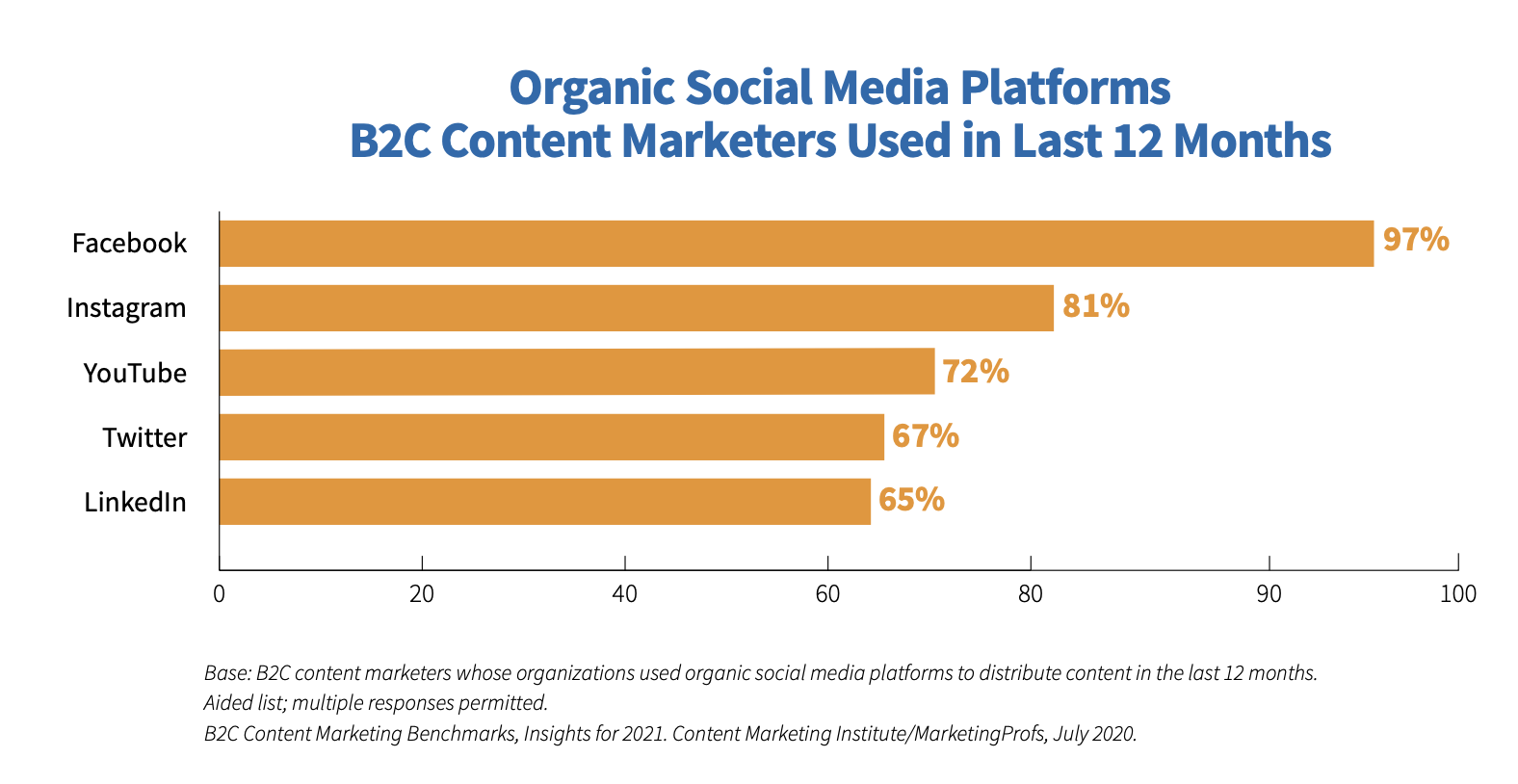
7. The dominant social media channels are still dominant in B2C.
According to the report, organic social media use is similar to last year’s report, with two exceptions:
- Instagram increased to 81% from 74%.
- YouTube increased to 72% from 62%.
This information isn’t really a surprise given my previous point about human connection, but the data set doesn’t consider collaboration/participation-centric channels like TikTok (which has recently rolled out self-serve advertising aimed at small businesses) or Clubhouse, which may become a sleeper hit among B2C communities.
Will those channels become important within your industry over the next year or two?
This is the time to experiment and identify where the opportunities may lie.
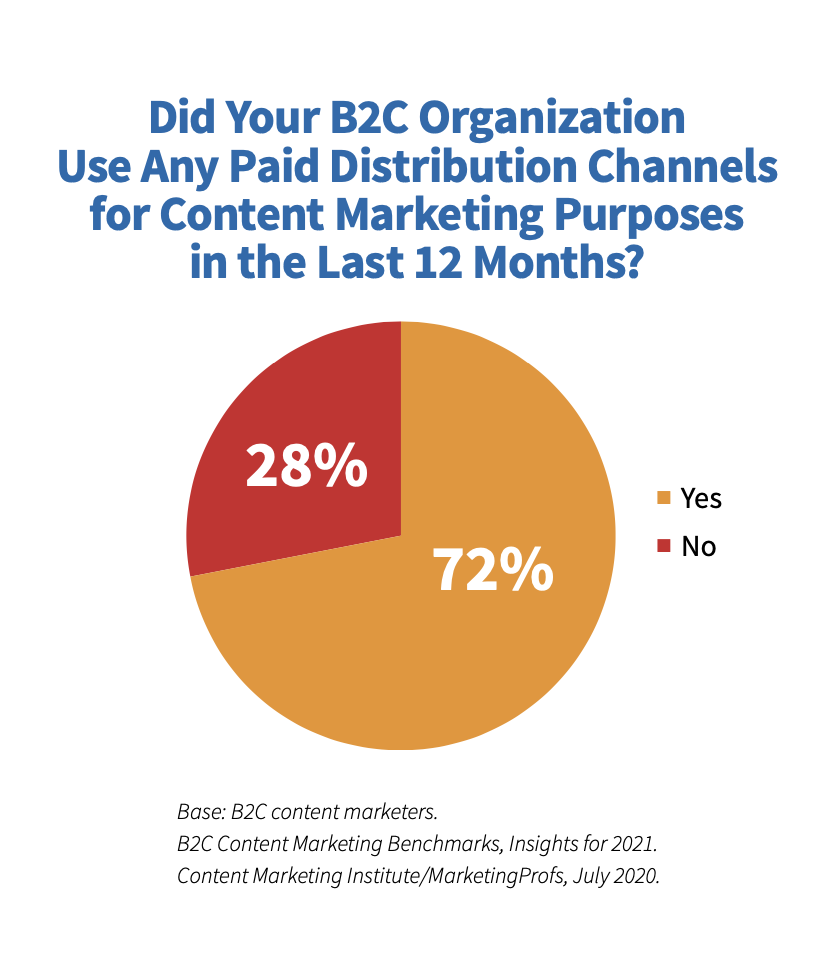
8. Surprisingly, the percent of B2C marketers using paid distribution channels for content marketing went down as compared to the previous year’s report.
I’ve said it previously, and I’ll say it again: paid distribution channels are more necessary than ever to get our content in front of audiences. It’s the nature of the beast, as companies like Google, Facebook, and their competitors more aggressively compete for ad dollars.
Yet, the report says, “72% of B2C marketers used paid channels to distribute content in the last 12 months, compared with 85% the previous year.”
What then explains the downward shift in ad dollars among survey respondents?
My guess is that because of the narrow wording of this question, budgets may have been shifted from promoting content to direct sales-oriented promotions.
However, we know those purchase decisions are often supported by content marketing assets and efforts.
Therefore, this shift in the budget could be hindering not helping purchase decisions.
That’s why my earlier point about understanding the shifting customer journeys is more important than ever.
Convince & Convert president Jay Baer has spoken at length about the ways in which we need to rewire your business during this time, and it continues to be true.
Based on these observations on how the last year has impacted the practice of content marketing, keep in mind these three guiding principles to move forward in 2021:
- Your audience’s lives are drastically different and, therefore, their behaviors and considerations are too. Be sure you have a shifted your fundamental understanding of what they need.
- It’s not just about what content you create but how it allows your audience to engage. Your audience is looking for content that allows them to feel more connected during these isolating times.
- Make sure you’re nimble and flexible about where and how you use your content marketing budget, considering the needs of your audience. What’s worked previously cannot be a guide for the coming year or two.
The post 8 B2C Content Marketing Statistics and Trends for 2021 appeared first on Content Marketing Consulting and Social Media Strategy.
Source: convinceandconvert.com

5 Content Marketing Trends to Keep in Mind for 2021
What is 2021 going to look like for content marketers? Is there any way to get prepared? Let’s dive in now to these 5 content marketing trends for 2021.

As the COVID-19 pandemic continues to progress around the world, it’s important to continuously evolve your content marketing strategy—now more than ever.
What is 2021 going to look like for content marketers? Is there any way to get prepared?
Let’s dive in now to these 5 content marketing trends for 2021.
5 Content Marketing Trends for 2021
1. Competition Is Continuing to Grow
The year of COVID-19 driven lockdowns has shown just about any business one simple truth: if you are not online, you do not exist.
These days, most sales have moved online, and there’s no reason to believe it’s changing any time soon.
With more businesses investing more in online marketing, the competition is inevitably growing. These days, we are all forced to invest more time and money into getting our content noticed.
Yet, my favorite thing about content marketing is that creativity and flexibility can win over big budgets, and that is not going to change!
2. Content Is Part of the Buyer Journey
With more people stuck at home and forced to use technology to stay connected to the world, it is obvious that digital content is becoming a more important part of the buyers’ journeys.
Today’s (and next year’s) consumers are more web-savvy and use technology more often, regardless of age. And they expect quick answers; otherwise, they will go to the next page on the list.
Consumers turn to technology to fulfill an immediate need. Google claims that more than 90% of their users use devices for help and inspiration while in the middle of the task.
New consumers are “well-advised,” “right here” and “right now,” with Google having introduced the term “micro-moments” to describe consumers’ expectation of an immediate answer in the moments they want to know, go, do, and buy.
Your content needs to fulfill those immediate needs and do a good job of making answers easy to find. Tools like Text Optimizer help create content in the problem/question + solution/answer format, allowing you to address popular questions on any topic.
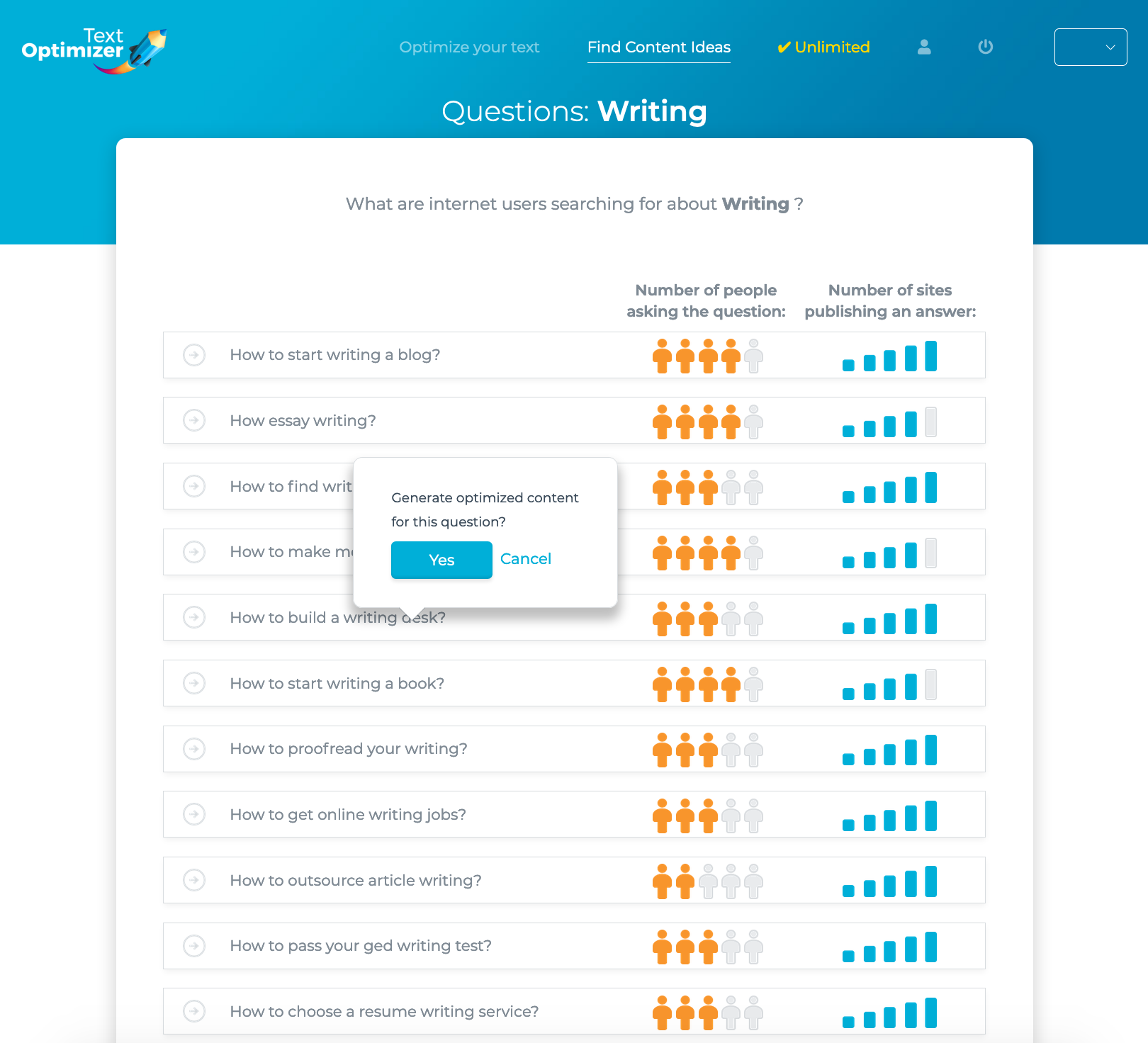
Tools like Text Optimizer help create content in the problem/question + solution/answer format, allowing you to address popular questions on any topic.
On top of that, think “mobile-first” — it’s no longer enough to have a mobile-friendly website. You need more mobile assets to better serve customers. Examples of mobile assets to invest in include mobile apps and in-game mobile marketing. But even if you lack the budget for the standalone assets, you can take smaller steps to mobile-friendly brand discovery and optimization:
- Create mobile-focused (i.e. simplified) CTAs and lead-generation forms
- Create faster, clutter-free conversion funnels allowing “Buy now“ one-click options
- Optimize for local searches. Let’s not forget that “Near me” is one of the most popular mobile search queries.
- Investing in the efficient management of your business local listings is one the most effective ways to get discovered through mobile search
- Use third-party plugins to integrate mobile-experience enhancing features. Examples include integrating auto-complete for your in-site search engines (for quicker product discovery), faster mobile opt-in options, etc.
- Include 5-second testing and mobile experience in your regular website auditing
3. Content-Driven Remarketing Is Always a Good Idea
As the competition is getting tougher and buyer journeys are becoming more complicated, generating actual sales from your content is not going to be easy.
Most of your site readers will come, find their answers, and leave to complete their tasks.
This is where content-driven personalization is going to help.
What is content-driven personalization?
Content-driven personalization is about encouraging your returning site users to continue whatever they were doing when they initially left your site.
For example, if a user reads half of your tomato-growing guide, offer them a free tomato-growing checklist or guide when they come back in a week or so. There are a few powerful ecommerce solutions that allow this functionality.
Finteza is one advanced tool that allows you to create personalized experiences for your site returning users to engage them further. Specifically, you can target your on-site CTAs to each returning user based on their past browsing journey through your site.
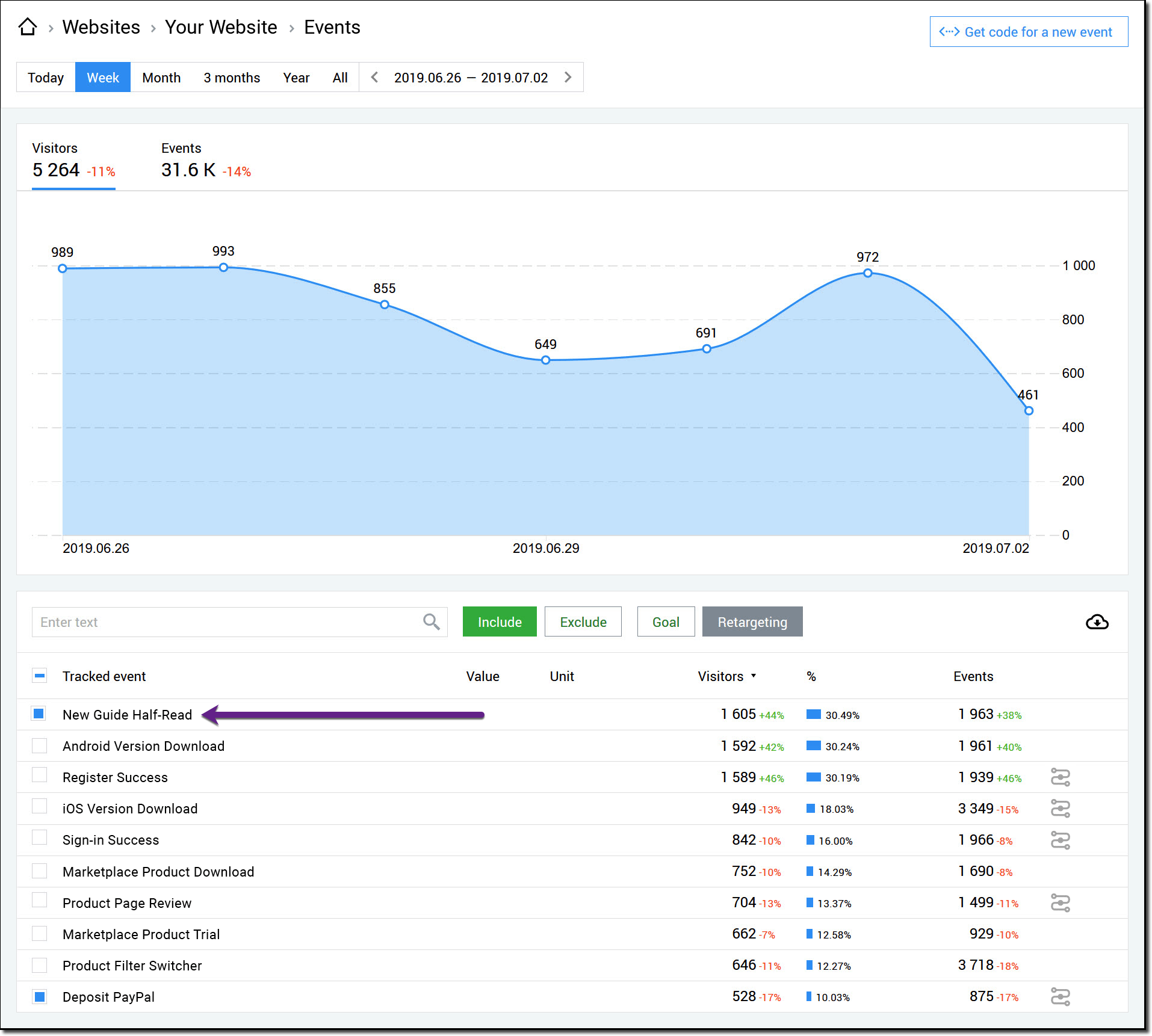
Finteza is one advanced tool that allows you to create personalized experiences for your site returning users to engage them further.
Here are a few more content personalization techniques to adopt now (those that require no in-house technology or outside help):
- Set up email/marketing automation campaigns based on past engagement data, e.g. link clicked, ebook downloaded, etc. (Most email marketing platforms support automated workflows)
- Offer over-the-top content services (this can be done through existing VOD solutions.)
- Embrace advanced advertising with Google and Facebook ads (here’s a great guide on Facebook advertising to help.)
- Use AI-based writing tools to factor in data into your content creation process
- Create “on-request content” channels delivering content automatically when requested through chatbots (there are currently a few powerful solutions allowing you to create smart self-learning chatbots using easy-to-use visual editors).
Find one or more personalization technology partners that will fit your budget and needs. Luckily, there are quite a few powerful players in the marketing personalization space.
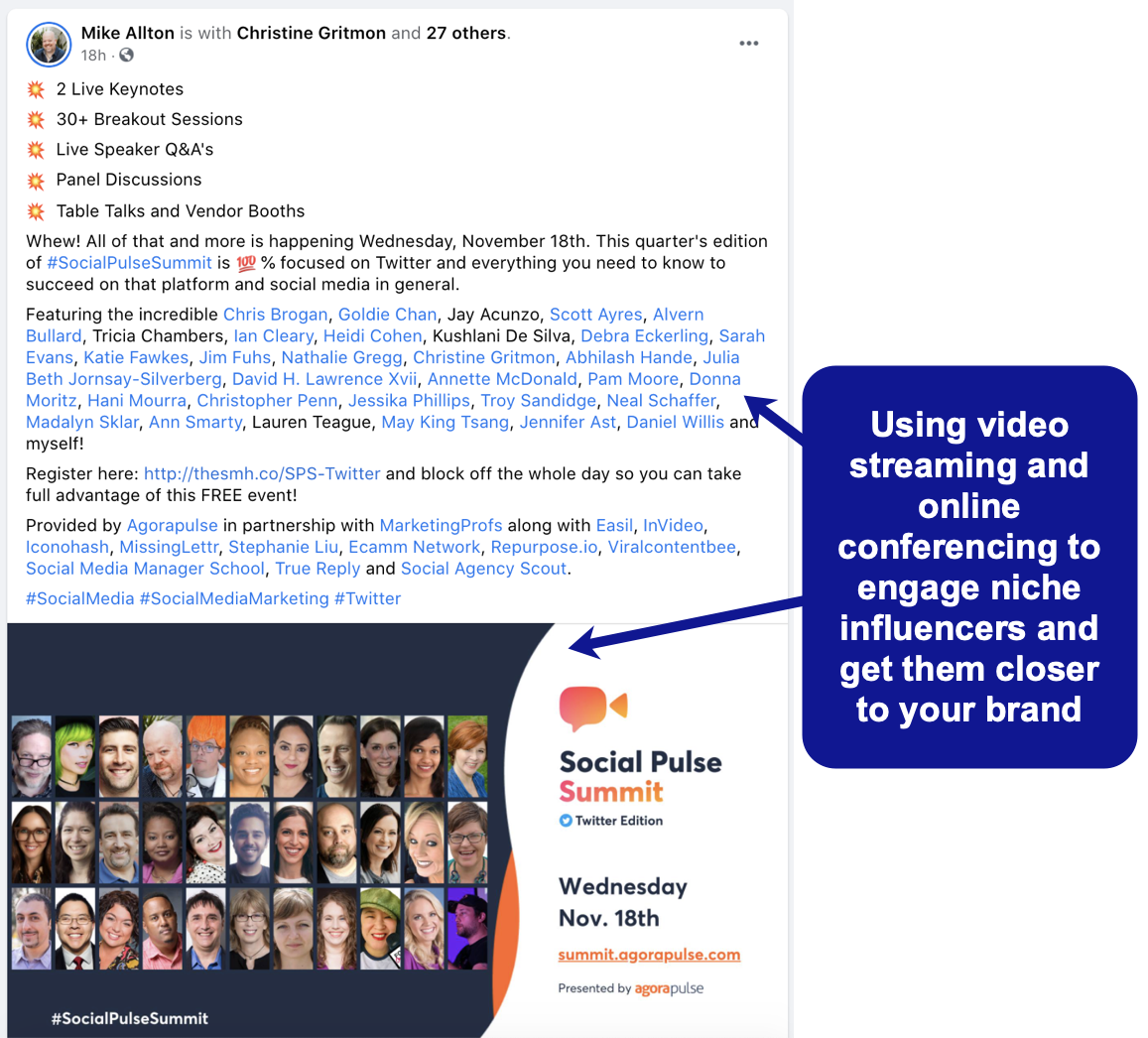
4. Streaming Video Content is Getting Even More Popular
As in-person meetings and conferences are still mostly impossible, video streaming has become even more popular than it was last year.
Just about every brand I know has hosted a virtual event or online conference this year. Streaming videos have become an effective way to engage niche influencers, generate leads, and even create an additional income method.
And most importantly, it has become much easier to execute.
Admittedly, as of last year, I personally never had enough time to figure out live streaming software. This year, I am well-versed with about three of them! I can record, co-host, stream to multiple channels, etc.
And most people are like that too! Think about all the teachers who suddenly become experts in Google Meets, and all remote workers who have no choice but to figure out Zoom meetings. Video streaming has become the new norm for both content creators and consumers.
5. Multi-Channel Marketing is More Important Than Ever
Finally, being everywhere is more important than ever because consumers are quickly adapting to new technology and exploring new channels. Brands need to keep up!
Luckily, there are plenty of cross-marketing tools that allow you to publish content on multiple platforms and keep an eye on everything. These include Cyfe, Agorapulse (or alternatives), Paper.li, etc.
On the bright side, the more channels you include in your marketing plan, the more demographics you will learn to cater to. Cross-channel marketing allows you to amp up your marketing game on many levels by:
- Giving you access to more data
- Allowing you to analyze more diverse buyer journeys
- Forcing you to get more organized and learn to make sense of more tasks.
Conclusion
The old marketing adage “Content is King” is still very much true. Consumers are still driven by the thirst for content. But the pandemic and fast-evolving technology is changing the ways content is delivered. While just a few years ago, creating cool video and visual content was quite enough to engage a customer, these days, businesses are forced to look for more content formats and channels to stand out.
The post 5 Content Marketing Trends to Keep in Mind for 2021 appeared first on Content Marketing Consulting and Social Media Strategy.
Source: convinceandconvert.com

11 Content Marketing Trends That Will Affect Your SEO
The digital marketing industry is continuing to evolve, and you need to keep up with the content marketing trends that appear. SEO and content marketing should always be best friends, one should not live without the other.
That’s how we come to the idea of searching the trends in content marketing that influence SEO so you know what to expect and how to place yourself on the wave and not against it.
We’ve talked about the importance of content on our blog on multiple occasions, especially since Google started to focus its ranking signals on content.
We even researched how you can rank on top Google positions without links with a proper content strategy in place.
Content Marketing Trends:
With so many trends to choose from in the content marketing area, we had a hard time narrowing down the ones that will have a high impact on SEO, but nevertheless, here they are:
- Natural Language Search & Voice Search Content
- Optimized Content for User Search Intent
- Personalized Content Experiences
- Content Creation Process Has Reconfigured Its Steps
- Content Marketing Will Be Written Only for Content Marketers
- Context Is the New Era of SEO
- Influencer Marketing Has More Power
- Customers Expect Full Transparency
- Video Content Is the Most Preferred Type of Content
- Native Advertising Is Rising Rapidly
- Bite-Sized Content Revolution
Having such a handful list of goodies, it’s time to make the content marketing strategy, prepare our tools and get to work.
Now that we have passed the springtime and we’re heading into the sunny summer, we have to be prepared, otherwise, we risk getting burnt.
We don’t need just suncream but also our bag of knowledge and the life ring to help us stay above the water.
Content has been a highly debated topic since Google said it is one of the top three ranking signals.
Especially if your brand is focused on the strategy directly to consumers and you sell directly to the end customers then your content is an asset.
Your website content needs to be correctly optimized and highly accurate to drive content traffic and then sales.
That’s why you need to be aware of the trends to make your content stand up.
1. Natural Language Search & Voice Search Content
Voice search is one of the content marketing trends that is increasing viciously.
According to Google, 20% of mobile searches are now voice searches.
Moreover, voice-activated content has constant growth.
This trend has a high influence on SEO. In the screenshot below you can see how much the voice search accounts from all the searches performed on the search engines.
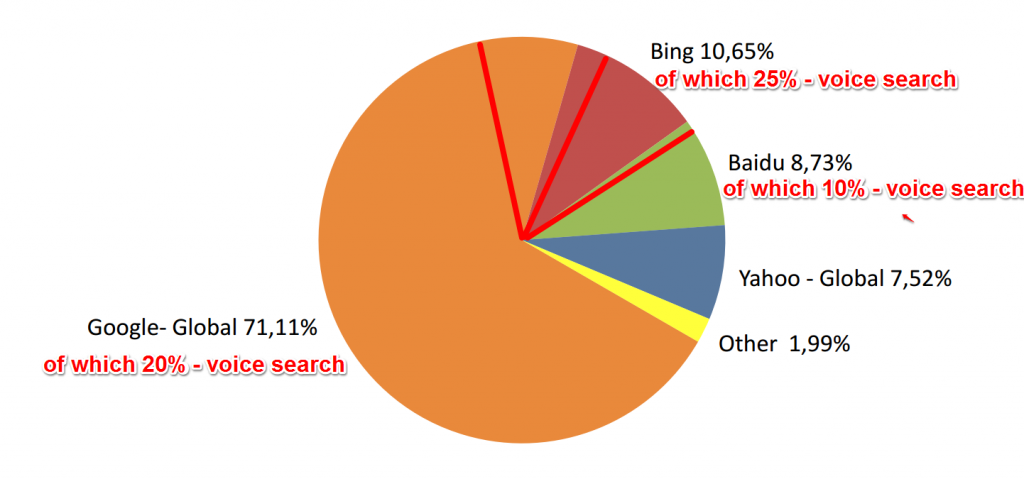
The print screen is taken from a study on the effect of voice search on SEO we conducted some time ago.
You would be surprised what we discovered!
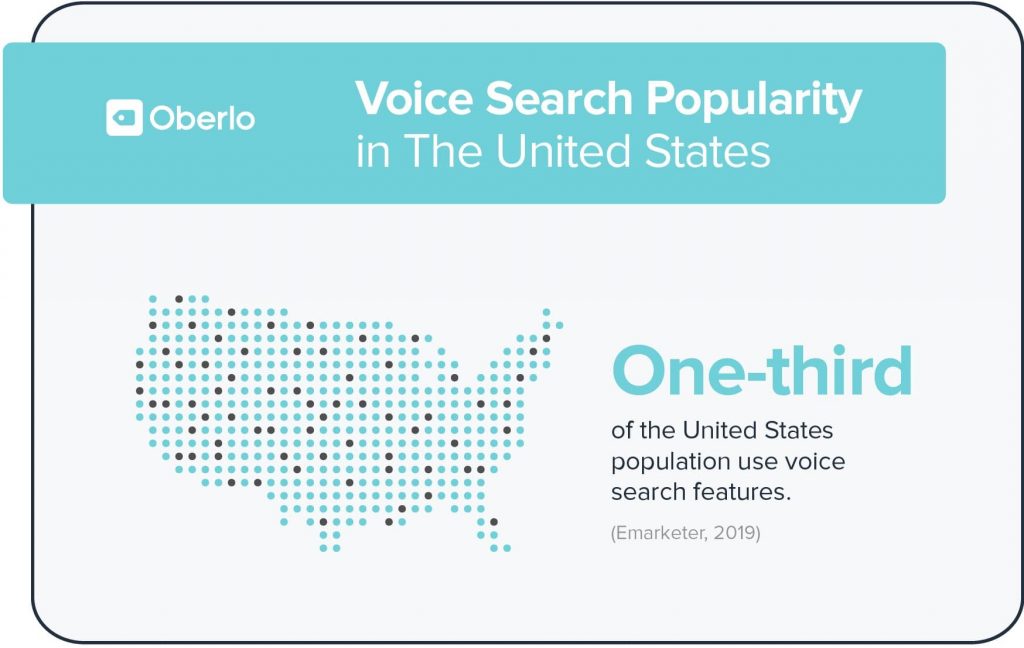
- An increasing number of people in the United States are using voice to conduct searches.
- An Emarketer study shows that one-third of the US population uses voice search.
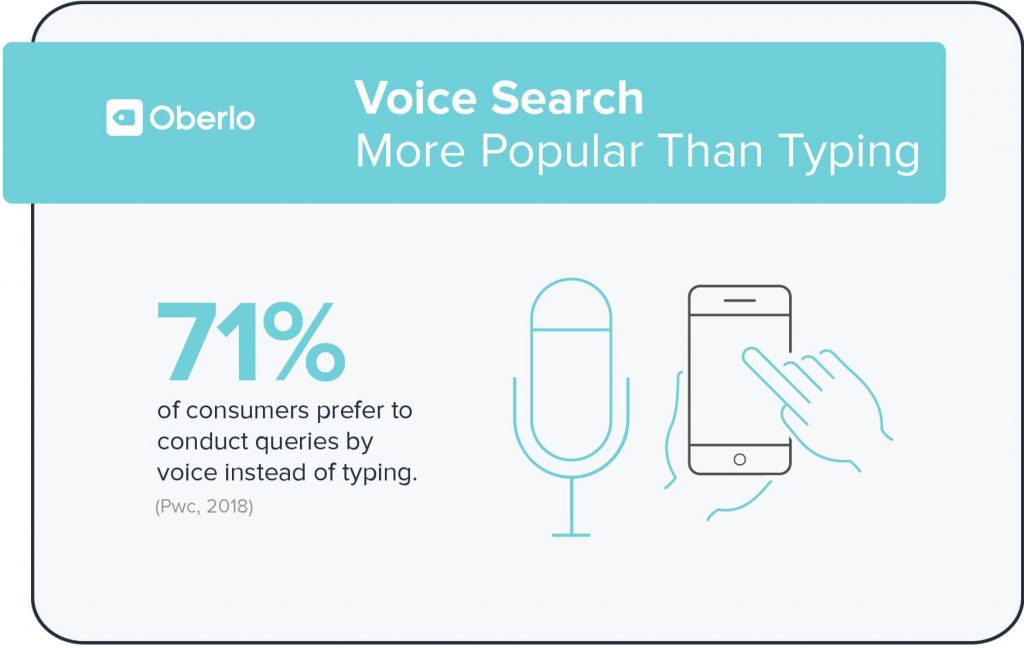
- A comparison beside search typed queries and. 71 percent of consumers prefer to use voice searches (PricewaterhouseCoopers).
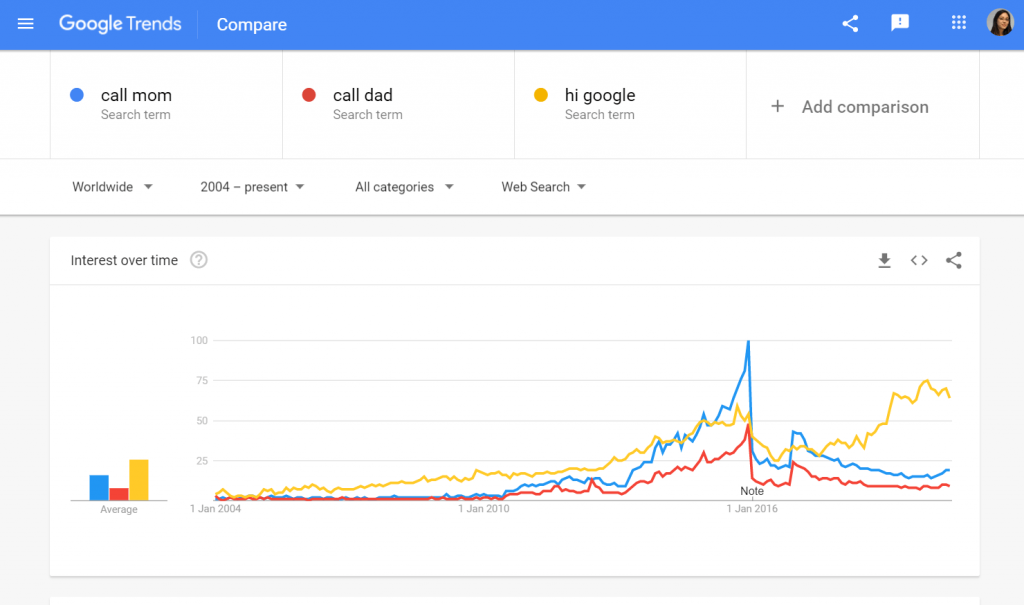
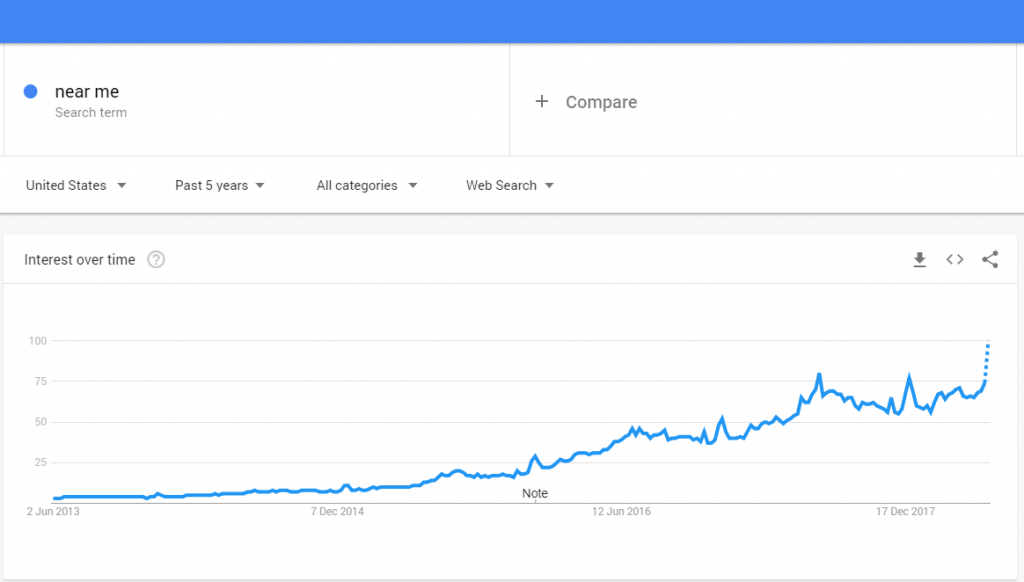
We performed some searches in Google trends to understand the evolution and to have a clearer understanding of how voice search can revolutionize the SEO world (and if that’s a true fact).
We then added some other search terms to compare.
We wanted to see if there is a difference between an organic growth and an explosive one.
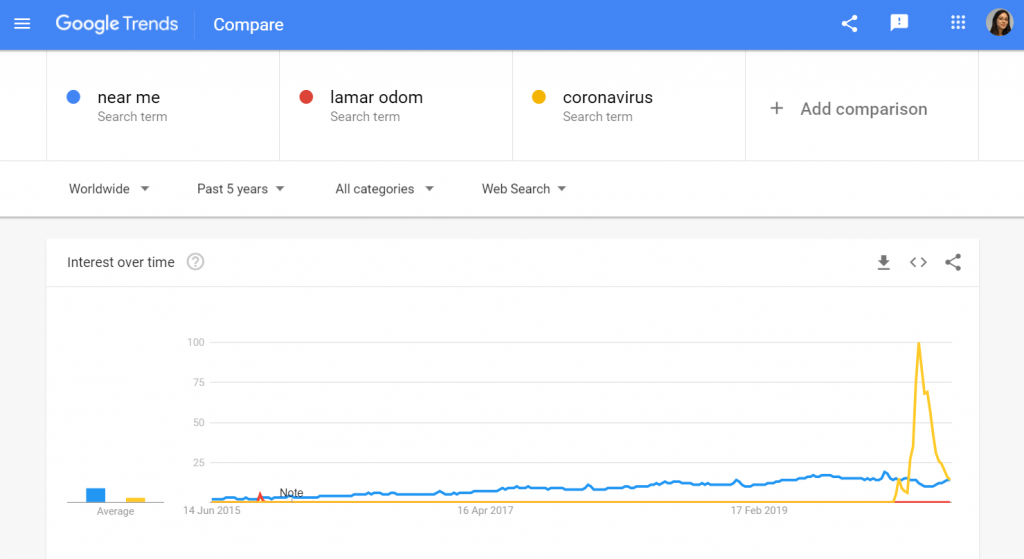
We discovered that SEO was on the safe side, but not for long.
We can still use our SEO and digital marketing knowledge as the voice revolution might be close but not yet underway.
As a recommendation, I would suggest using natural language and create relevant content that is easy to read, just like you are talking with somebody and not over-optimizing for the sake of SEO “success”.
Build a content strategy optimization for voice search and use conversational marketing.
For example, if you want to use chatbots make sure they have a natural language (conversational marketing) and they are easy to implement and relevant to your website.
When asking a question in your article, try to respond to it in a full sentence, giving a specific response, make it easy to skim, and invest in building trust.
Try using a conversational tone in your content and optimize for long phrases or even questions.
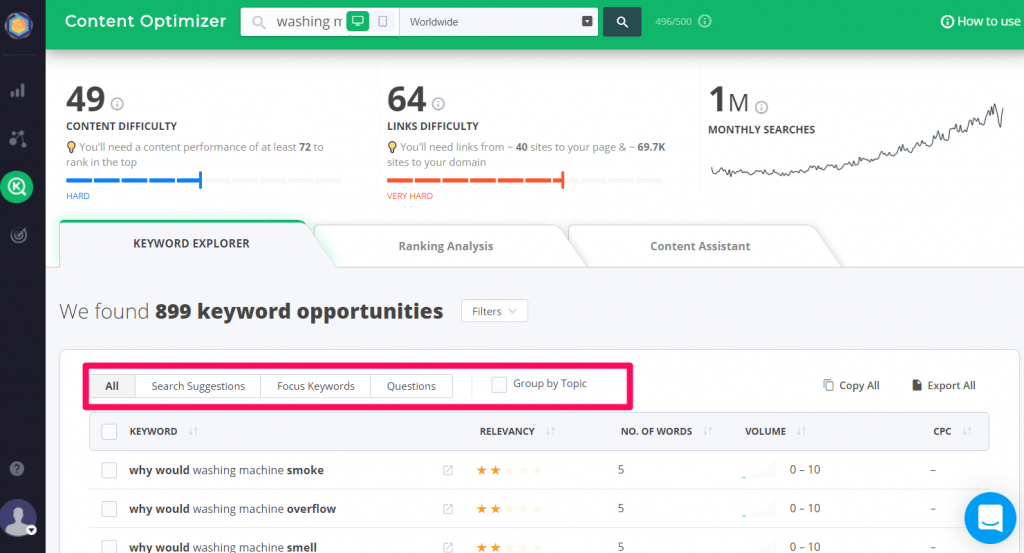
The keyword tool has an option that allows you to receive a recommendation based on your search terms.
And you can choose to see all the questions and the metrics attached to them.
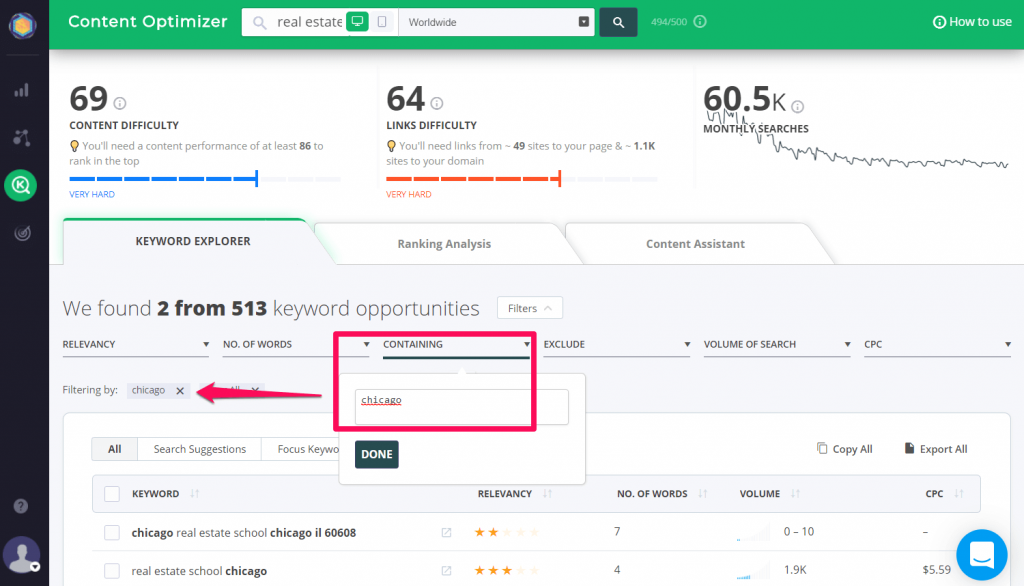
One other thing you should do is optimizing for local searches since they started to take a hike in searches.
As you could see from our study on voice search, there were a lot of “near me” searches.
2. Optimized Content for User Search Intent
Content and search engines together changed the way they work.
They are now in sync, have strict rules, which are definitely content marketing trends you should follow.
The trend in content shifted the focus on the user, and Google is trying to deliver better optimized and personalized content to each user – hence the user search intent.
To understand the user search intent you need to perform a lot of keyword research.
If you understand what your users want and what their intent is when they are searching for a specific query, half of the job for ranking on that keyword is done.
To better understand your audience, perform keyword research, look through analytics, and conduct studies to find out what is their paint point, if they find what they need on your website.
If the bounce rate is high that means they don’t find what they are looking for (based on the keyword they search and got on your page).
Then check your content and see if it is misleading, answers to the title/topic you’re targeting.
See what keywords do they look for on your website search box, then follow their path through the pages they navigate and design the customer journey map.
There are lots of ways to better understand your audience and optimize your content for user search intent.
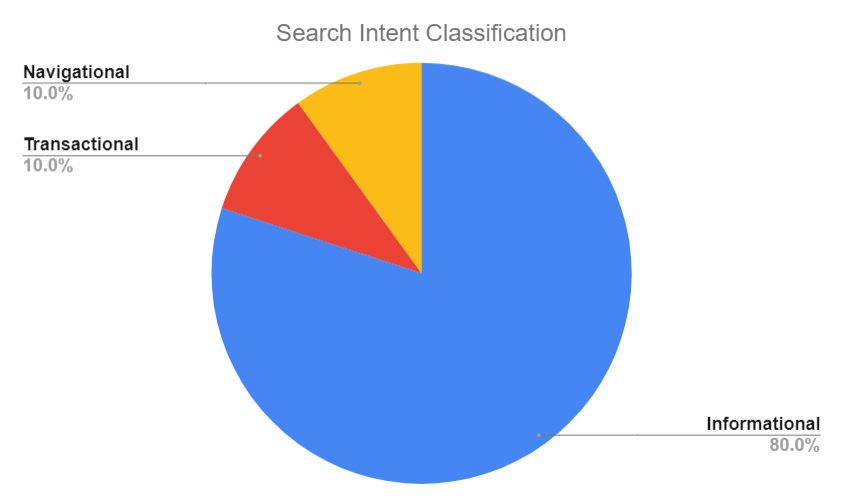
We’ve conducted a thorough guideline on how to identify & best optimize for user search intent based on three types of user search intent:
- informational,
- navigational,
- and transactional.
3. Personalized Content Experiences
Personalized content is the new buzzword in the content marketing trends world.
Studies have shown that this year we’ll have more content than before, and this story has been around for some years.
Several dozens of pieces of content might be published by the end of this year.
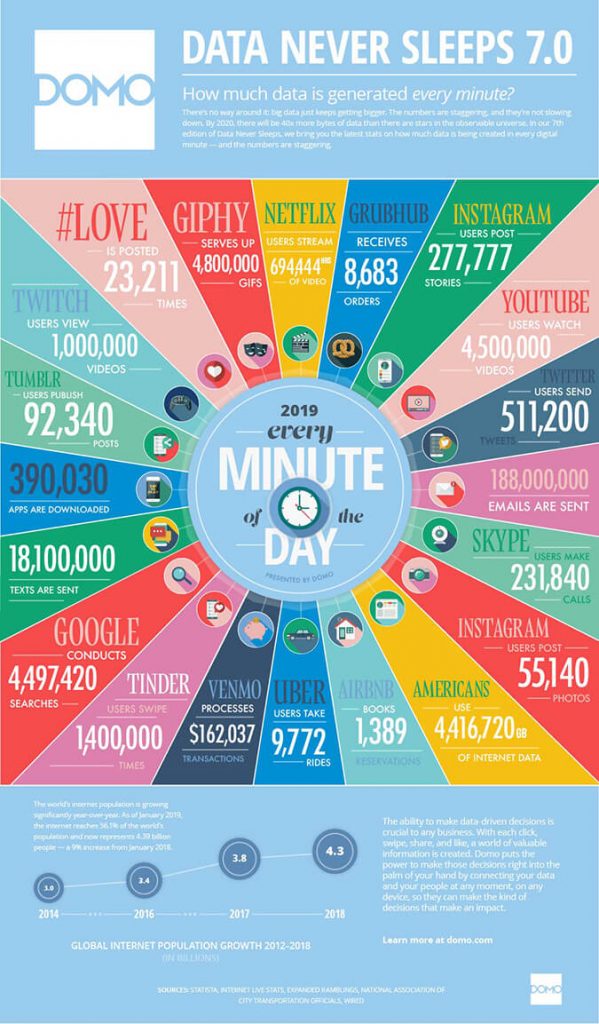
For example, Domo, the American software company which specializes in business intelligence software, performed their research and shared the results through their Data Never Sleeps 7.0 project (the fifth year since it started).
In the graph below you can see how much data is flooding the internet every minute of the day.
Personalized content creates a connection between the brand and the customer and has lots of benefits.
According to Evergage’s 2019 Trends in Personalization Survey Report respondents saw that personalized content delivers better customer experiences.
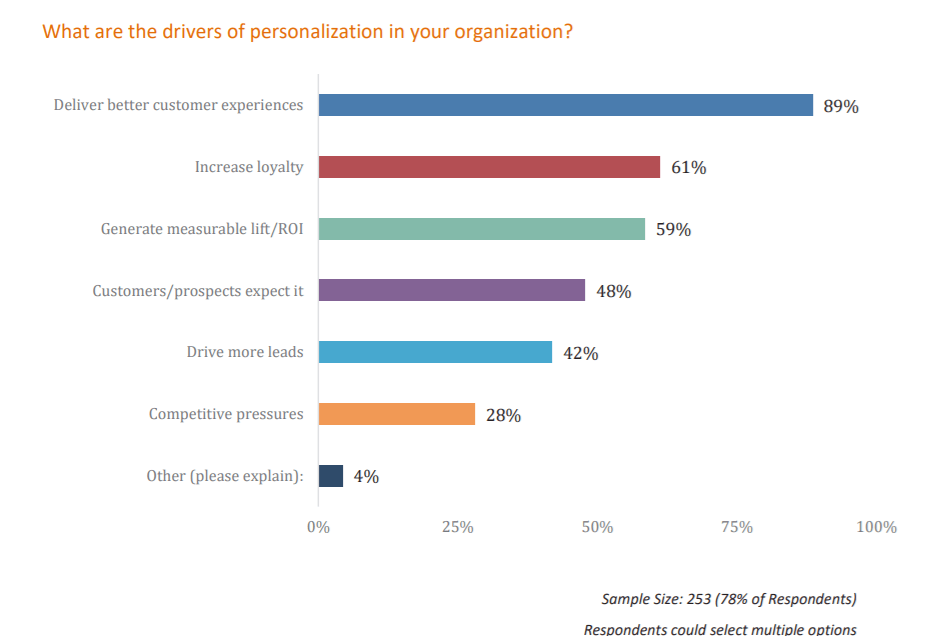
That being said, with all the data coming around and bombarding the reader with information from all sides, your content must stand out.
That’s how the personalized content appeared.
The readers feel important when you address them in person.
Studies show that personalized content is more effective and powerful and website visitors convert better when they are targeted through customized content.
88% of U.S. marketers reported seeing measurable improvements due to personalization.
Personalization has started to become critical in the future of content marketing.
It is a content marketing trend that has a big influence on SEO.
That means more appropriate content for each user, based on their last searches on site, on their last activity on social media, on the actions taken on-site, and so on.
For example, one user downloads an e-book from your site.
Next time you could offer similar e-books, or you could welcome them by name on your site.
Go further, and send them personalized emails.
It is more personal, and you get a chance to fulfill your readers’ needs.
Creating personalized experiences through adaptive content can increase your results and bring more conversions.
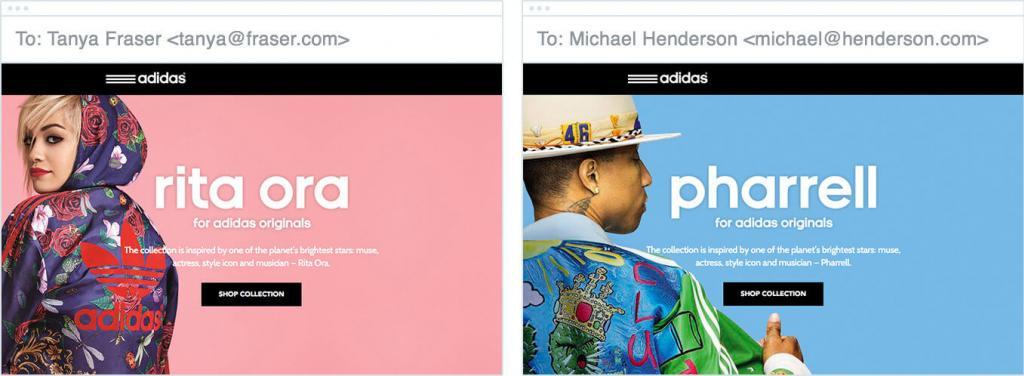
Adidas used the personalization technique to send different emails to women and men, which was very smart and appealed better to each gender. Below you can see an example:
Source: www.campaignmonitor.com
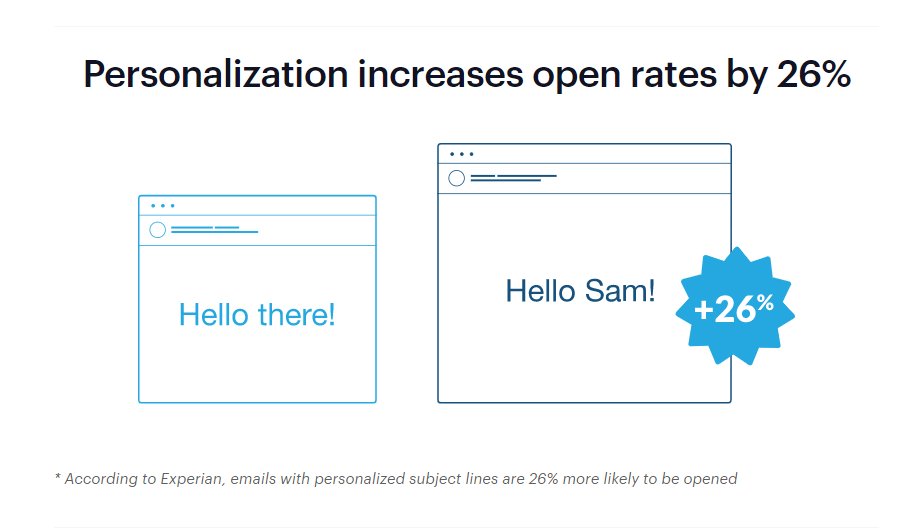
Personalized emails experienced an increase of 26% open rate.
And the nice part is that everyone can take advantage of this technique.
And this is just one example.
You can create content only for your users, or you can offer special prices for them, depending on your digital business.
For example, Answer applies special discounts in the checkout step for users who are in the VIP club, meaning those who passed their first purchase.
If you’re using personalized content, you’ll have higher scores and in the end, a strong and good impact on SEO.
Not to mention you’ll improve the user experience.
You’ll need to rely on automatization and create segments, and collect behavioral data to maximize your SEO efforts.
4. Content Creation Process Has Reconfigured Its Steps
We all know that people used content creation by starting with a keyword they wanted to rank for (usually a long tail one, to get a high volume of traffic) and creating content around it.
The deceiving part of this content creation process was that it started to attract a lot of thin content just for the sake of ranking high in Google, with no intention of serving the user.
The content creation process changed and now follows a more natural and more user-friendly path.
Now you have to start with finding a content gap or a problem and getting the answers to that through your content.
Then perform a keyword search for your topic, optimize it, promote it, and so on.
If a few years ago people started with the keyword, now they are beginning with the topic by looking on social media sites; forums, or client’s questions, reviews, feedback, comments, or support questions.
There is a lot of content at the moment, and having an article that addresses a pertinent question and has answers to readers’ needs, will secure you a safe place in Google.
It is a necessity.
Following high rankings in Google with no value content is no longer an option.
Google trend is an option for following popular topics, based on their searches.
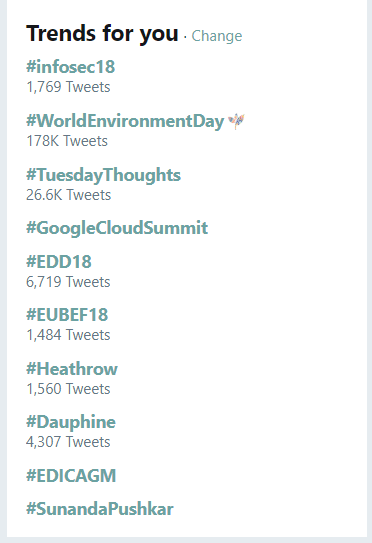
Follow popular websites in your industry, or follow trending hashtags on Twitter.
Another way to get ideas would be to steal the spotlight from your competitors.
BrandMentions can you where your competitors are mentioned, what influencers endorse them, the top website, and resources where they are featured.
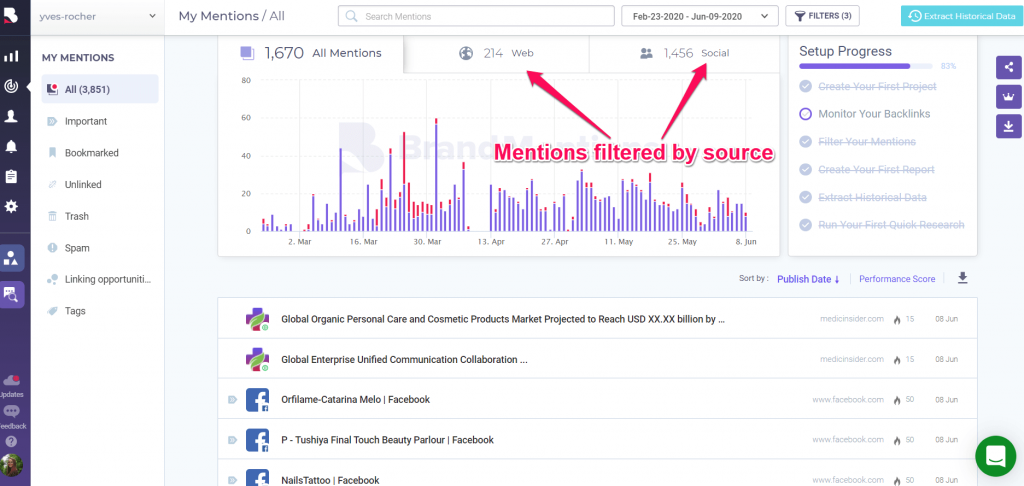
The new content creation process can bring you lots of benefits if you try to respond to the questions and needs of your audience, instead of following keywords to rank for with no value-added.
Another influencer marketing software you could use is OSI Affiliate Software.
You can easily manage any referral program to generate more traffic and conversions.
5. Content Marketing Will Be Written Only for Content Marketers
We are living hard times, especially in the content marketing world.
Unfortunately, content marketing is starting to be addressed to content marketers.
How will this affect SEO you might ask? Tremendously.
The Marketoonist said the evolution of content marketing is simple: we write content for content marketers.
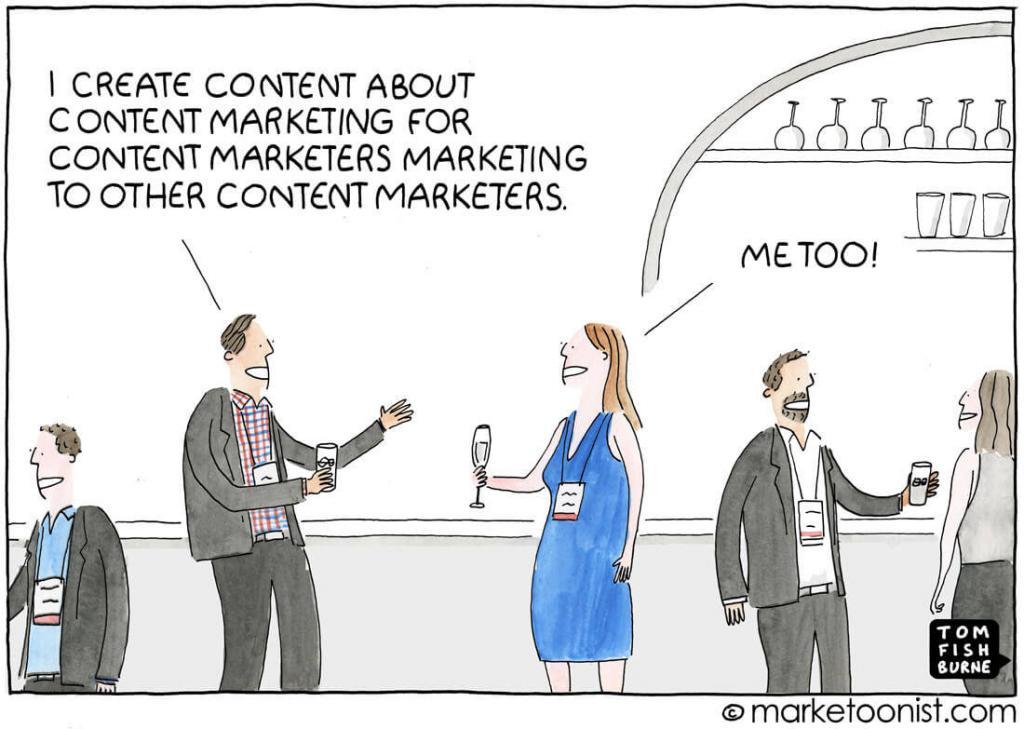
We got to the point where there is so much content written from one minute to another, that I’m sure a lot of content is rewritten in some parts.
Let’s think of it this way. You go to a conference where lots of experts gather and start talking on a topic, and for sure multiple ideas will pop up and at least 5 people will write about what was discussed.
Each has a unique style, that’s for sure, but inevitably some ideas will be similar. You can’t avoid it.
On top of that, there are a lot of people who use tools for rewriting content that already exists on the web.
That falls into the dark hat category.
We all know that article spinning is not accepted.
If you are using this technique, you are putting your website in danger.
Instead, if you’re trying to offer valuable content and write content for the content marketers, you must keep up with it.
There is high competition out here, you must have information that educates the audience and offers engaging content.
Attract and retain your potential customers. You must be prepared to play in the big league.
Don’t write what is already there.
Make it personal and talk from your experience.
6. Context Is the New Era of SEO
A new content marketing trend is embracing the content culture and the knowledge-sharing industry.
It is about the patents that talk about context and how the search will change its form.
The trend started with the saying “context is king”. After all the time we heard content is king, now the times changed and a new concept will rule the whole kingdom.
Google’s attention on the user intent when searching started to have a high significance because context is something beyond keywords.
Now, Google is trying to focus on user intent to offer more accurate and personalized results.
We discussed previously the patents that concern the context topic and we discovered the role it has and if it can impact SEO.
Through context, Google aims to show topical search results, which is very well exemplified in the next screenshot:
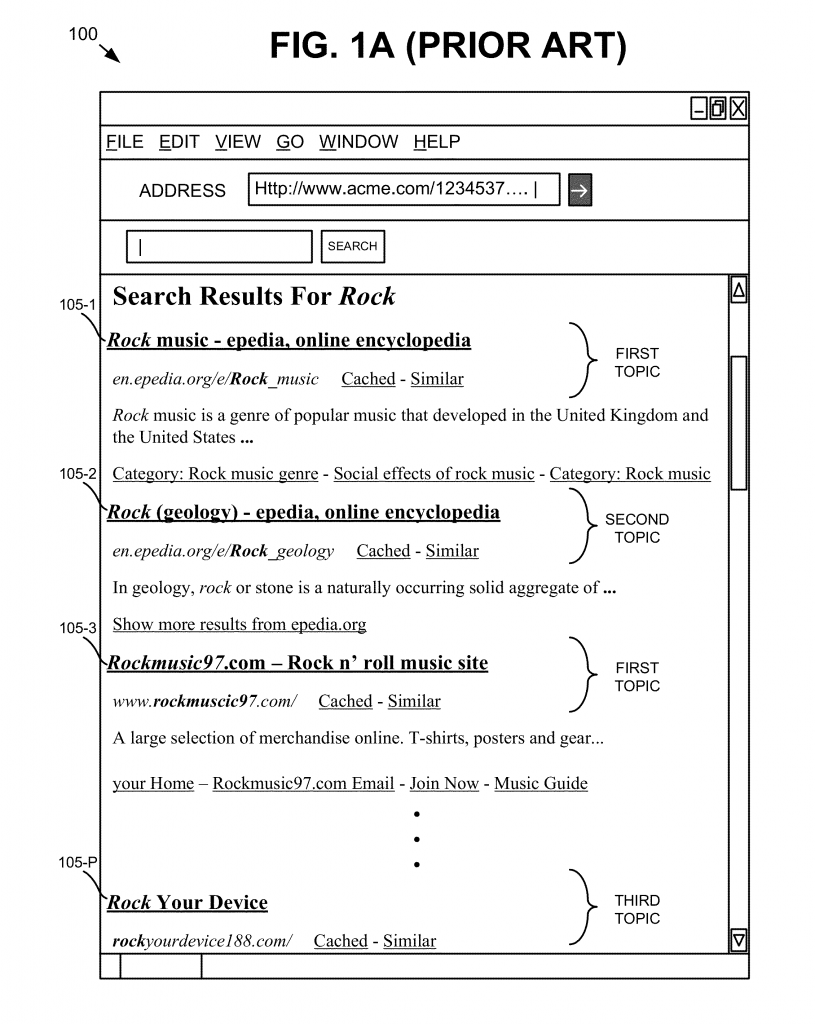
After we explored the patent and tested it out ourselves to see how search results look like, we thought of the implications it might have on search engine optimization.
We should focus on lots of other indicators, besides keywords.
We need to create a relationship between terms and concepts in content.
For example, if we are writing about “Volleyball rules”, then you need to think of all the keywords and phrases that are related to your topic and include them there.
Make sure you think of the users’ intent.
What are they trying to find out?
What are their questions?
And try to offer responses in a friendly tone, depending on your topic.
The content must answer the title.
You should use synonyms of your title, and not repeat the focus keyword hundreds of times.
7. Influencer Marketing Has More Power
Influencer marketing is a popular tactic and a growing trend.
According to a study by Nielsen, 83% of consumers trust recommendations from their peers over advertising.
People trust recommendations from individuals over brands.
Another research on the same topic by NoGre, a graduate education community, says that 88% of consumers trust online recommendations as much as personal ones.
Moreover, Celebrity Intelligence conducted a study where they saw that the ROI generated by influencer marketing is 11x times higher than banner ads.
Another study says that influencer marketing yields a $6.50 return on investment for every dollar spent.
Lots of brands already use influencers for promoting their services, because influencers influence the decisions of the people who follow them.
Besides that, they bring a lot of benefits, such as:
- Influencers can produce more shareable content for brands;
- The brand-influencer relationship can be a long-lasting partnership;
- Influencer campaigns can spread across multiples platforms to achieve a wider range of influencers;
- Influencers sharing qualitative images and original content;
Gal Gadot has become the CEO (Chief Experience Officer) of Huawei; she is also the ambassador of the latest handset.
She appeared in their video marketing campaigns and she published social media content from Huawei smartphone as you can see in the next screenshot:
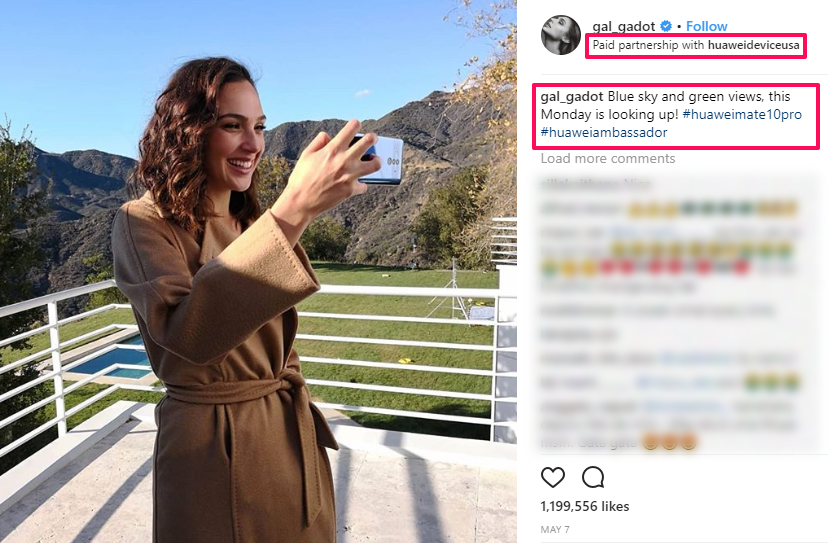
Visual content is highly appreciated by users and due to the type of product, they had a lot to gain from their collaboration with the actress.
Another interesting campaign we’ve discovered from Huawei was in a collaboration with the presenter of Asia Express in Romania.
Asia is a place with lots of beautiful and intriguing experiences and Huawei Mate 10 Pro was the great companion for taking the best shots of the show through the eyes of the presenter on Instagram.
You could follow the path of the competition by following the hashtag #huaweimate10pro (and #asiaexpress).
Below you can see some screenshots:

Lots of the pictures were part of the Huawei campaign and all of them had the hashtag #huaweimate10pro.
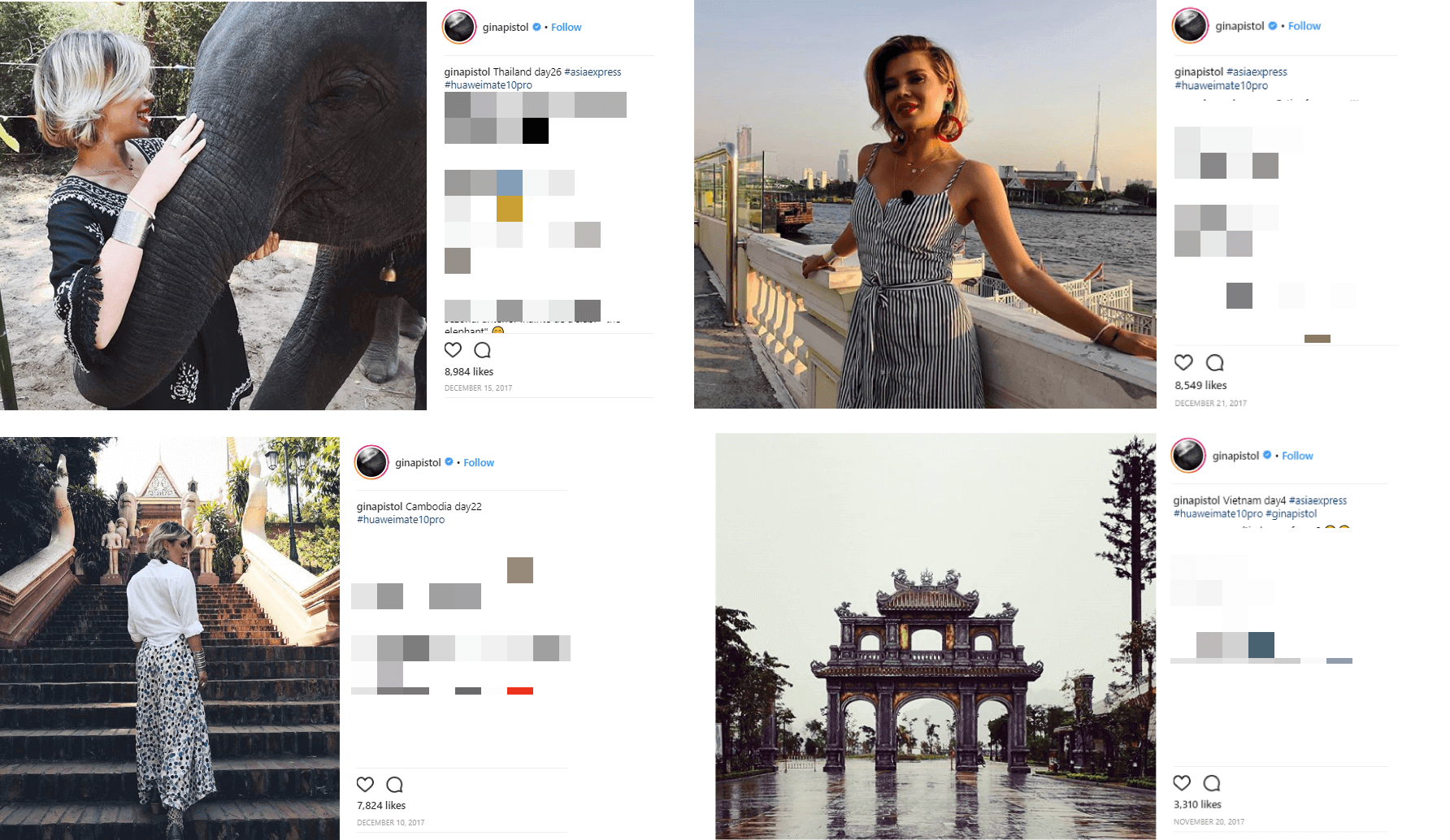
The marketing tactic Huawei follows, by collaborating with influencers, leads to fulfilling their marketing purposes by driving traffic and sales.
These examples are well-known and effective practices and they can give high flexibility to the brand to promote the product or service through an influencer.
It generates quality content, and you can offer related information and accurate digital content through content curation.
SEO can have a lot to gain from the influencer marketing trend because you can create articles and content to support your campaign and explain what you did and create a story around it.
Not to mention, if you have an innovative idea, you can create word-of-mouth and lots of links will “flood” your backlink profile.
8. Full Transparency for a Beter Customer Experience
The Global Trust in Advertising survey by Nielsen shows that Europe has the lowest trust rate in advertising compared with the other continents.
That explains, on the other side, the reason for the GDPR’s existence.
This change can improve people’s trust and create a better world on the web.
Below you can see the results of the research:
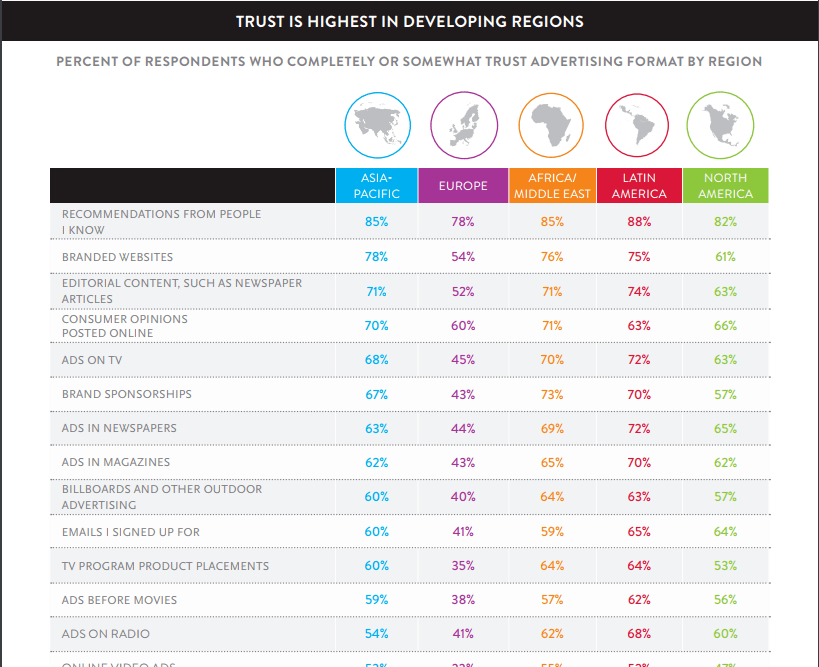
The EU General Data Protection Regulation (GDPR) created a lot of fuss.
We are still new to this change and how it affects the website and business owners.
Until 25 May 2018, all websites had to update their policy for transparency and let users know what & how their data would be used by publishers.
Lots of webmasters sent emails to users to give their consent to continue using the website.
Also, when accessing the site for the first time, you had to give your consent before reading the content.
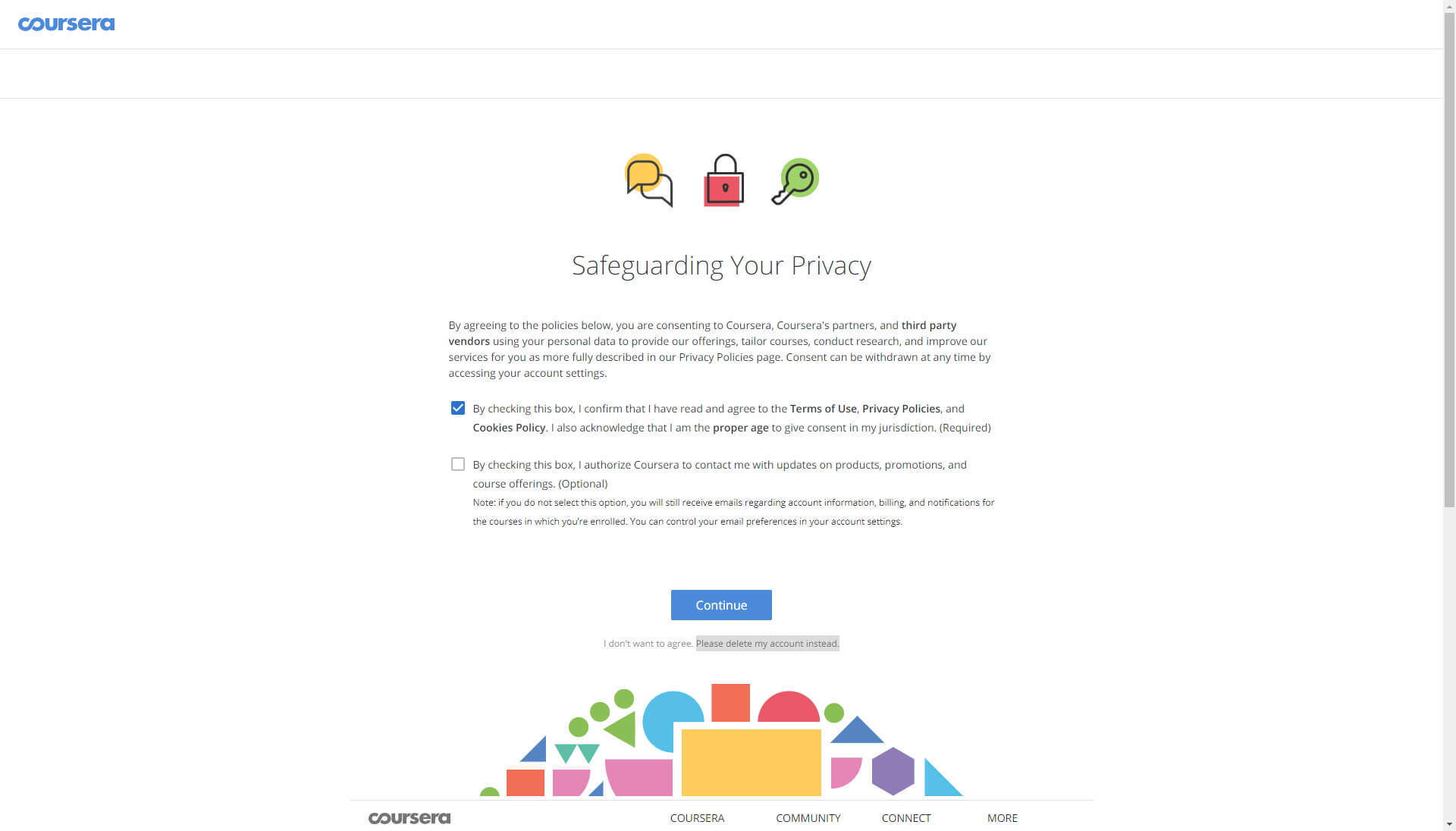
The fact is that customers expect transparency and feel safe knowing what information you are using, whom you give it to, and what they can share or not.
9. Video Content Is the Most Preferred Type of Content
As you probably expected, video consumption has tremendously increased in volume in the last year and it’s one of those content marketing trends that are here to last.
Here are some interesting stats to understand the dimension of the idea:
- YouTube has over a billion users, almost one-third of total internet users;
- 87% of online marketers use video content (OutBrain);
- Having a video on a landing page can increase conversion by 80% (EyeView);
- Demo viewers of a product are 1.81x more likely to purchase than non-viewers (Mill For Business);
- 51% of marketing professionals worldwide name video as the content format with the best ROI (Insivia).
And these are only a few numbers. There are lots of other studies and analyses that show video is one of the most effective and engaging types of content.
Video content has become the most preferred format of content, for sure.
According to a study by Outbrain, 86% of marketers prefer video and Livestream, instead of blog posts, slideshows, articles, or others.
We already took advantage of this trend, as lots of other experts and brands did, by creating podcasts and learning videos for those who want to know more about SEO and marketing.
cognitiveSEO talks are interviews with experts on the industry that we tackle with lots of ideas on how to create a better company, to increase traffic, to become better specialists, and follow insights on their success story.
If you’re a Facebook user or Twitter user, then create video content there and share it with your target audience.
Make sure your video has high quality and the message is easy to understand.
Look at your competitors to see what they are doing (wrong or right).
Use live videos. They are so popular right now.
And the great thing about them is whenever you post a live video as a brand on Facebook, it automatically sends a notification to all of your fans that you are”live” and they can view your video.
Take advantage of that.
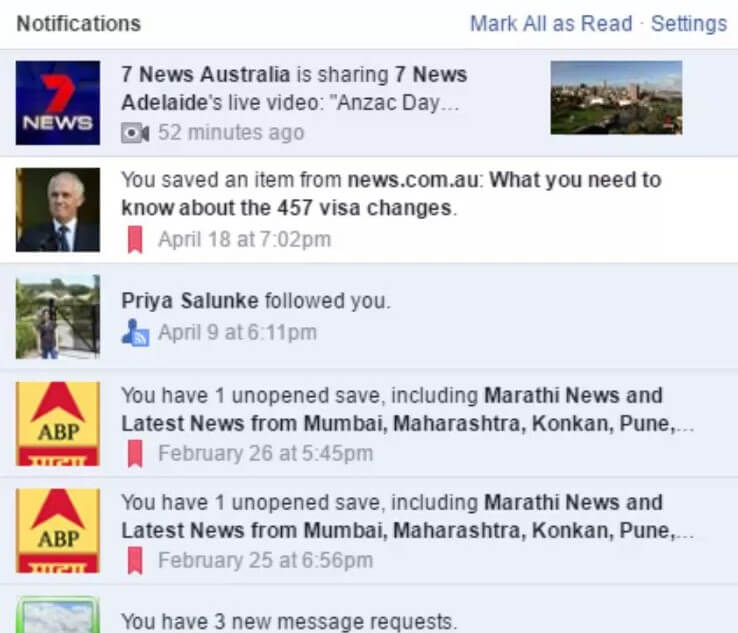
Try to talk about what interests your users. Invite them to tell what questions they have.
For example, Gary Vaynerchuk has the “Ask Gary” live streams on Periscope regularly where he gathers 5-6k simultaneous viewers.
Kindly ask them to subscribe or like the video at the end, as that is a common practice.
10. Native Advertising Is Rising Rapidly
Native advertising is known to take the lead and grow faster in the years that will come.
It’s one of the content marketing trends you can’t ignore. Just like personalization had a great impact on the audience, native advertising has a higher chance to convert the viewers.
Research by Native Advertising Institute says that more publishers are adopting native advertising. 51% of them already have.
In the same research, it is stated that an overwhelming number of publishers (82%) are positive toward native advertising.
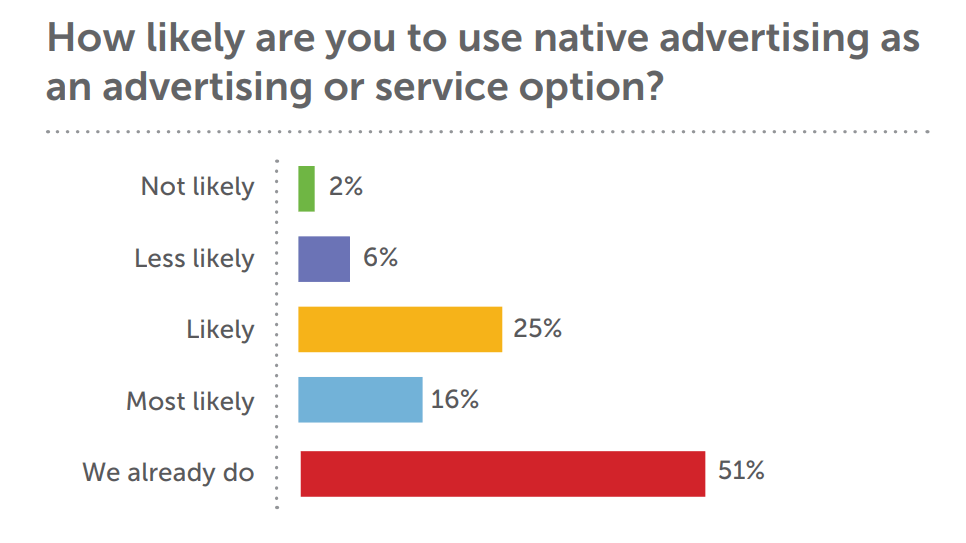
All these numbers can work very well for you and can bring you revenue if you decide to use a native advertising campaign.
There are platforms that can help you share high-quality content and increase the number of traffic through content amplification.
Outbrain and Taboola are two examples of content distribution platforms where content sharing is very easy to implement.
A good example of a successful native advertising campaign is the one from CNN.
They used a native advertising campaign that helped them increase their revenue by 60%.
Create was the team that was responsible for the development, production, and delivery of all branded content for CNN International Commercial clients.
Branded content and native advertising have exploded in the last couple of years.
It is an upward trend that other publishers are also experiencing.

James Hunt
Vice President Create Group, CNN International Commercial’s in-house marketing, and global brand studio
11. Bite-Sized Content Revolution
The length of a piece of content has always been a topic of discussion.
Bite-sized content changed the way we consume media.
We are bombarded with information from lots of channels and our attention span has changed because of that.
We can get easily distracted.
Twitter revolutionized the way information was distributed.
You had a limitation of 140 characters so that tweets could fit into single SMS messages.
Then they increased to the limit to 280 characters.
It was the only time the company increased the number of Tweets, for parity in language.
According to their researchers, 9% of tweets reach the character limit in English compared to the Japanese, which was only 0.4%.
The way we write and use social media marketing to share information changed the way we read and consume content, as well.
And that’s got a strong effect on content marketing and content marketers.
Bite-sized content has lots of advantages such as fighting against boredom, and it is easier to remember because it is essential, and it is adaptable to the readers.
Bite-sized content works very well for those who are avid users of social networks and newsreaders or those who are used to find chunks of information at their fingertips.
Millennials are maybe the biggest consumers of such type of content.
You should follow the “bite-sized content” trend if you want to attract other categories of readers.
Or in case you are used to serving long content with lots of points and topics of discussion, such as listicles, and cover a larger audience.
If you want to nail this trend down and explore it to get the wave of readers, you should try to cover the news and other information that is fresh, by offering more value and more information in an easy-to-read article.
Start investing your time in bite-sized content if your target audience consumes this type of content.
Conclusion
Content marketing is a changing industry just like any other.
We were witnesses at the video content that changed the rules of how we see content nowadays, becoming at one point the most preferred type of content.
Influencer marketing comes quickly to the forefront and if you use the right influencer and concept you have a high chance to craft great content around it and create word-of-mouth that will mean: brand awareness, more content, higher visibility, and increased traffic.
The content marketing trends focus will fall on the personalization, context, and natural language in your articles.
Everybody is looking for experiences.
That’s one of the reasons why native advertising has increased so rapidly and will grow even higher.
Paid advertising can be an excellent choice if you are using it for content amplification to promote various content formats you have available on your website.
All editorial calendars should include content distribution.
The recommendations from our article will help you get started with making your content trend-approved.
Kick your marketing approach a notch.
Follow the guidelines and implement a better content strategy to achieve your marketing goals.
Your content marketing efforts will pay off.
Investing in content is better when you’re thinking smart and strategically.
Content marketing trends can show some directions.
The post 11 Content Marketing Trends That Will Affect Your SEO appeared first on SEO Blog | cognitiveSEO Blog on SEO Tactics & Strategies.
Source: cognitiveseo.com