
Tag Archives for " Content Ideas "

Using the Google Search Trends 2021 Report to Generate Content Ideas
As marketers, we’re constantly attuned to Google’s ever-changing algorithm, keeping an eye toward shifts in prioritization and SERPs.
Google is pretty good at equipping users (and businesses) with information about what it considers important by providing resources like their search engine optimization (SEO) guides and the annual Search Trends report.

The Google Search Trends report can be an incredible asset that allows you to dig into users’ search habits and gain access to a steady stream of content ideas.
In this blog, we’ll unpack how to mine the Google Search Trends report for content gold to flesh out your content calendar into 2022 and beyond.

What Is the Google Search Trends Report?
Published each year, the Google Search Trends report aggregates the highest-ranking terms for the year.
Curious readers—or those of us looking for content ideas—can visit the mini-site to explore search volume through several lenses.
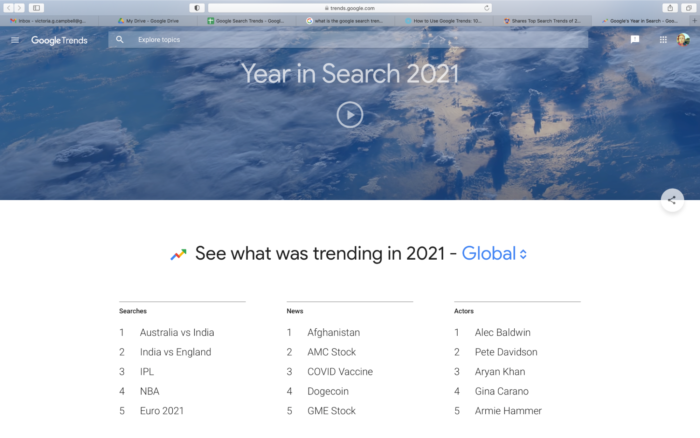
You can break it down by region and then a topic, including categories like actors, TV shows, sports teams, songs, and many more.
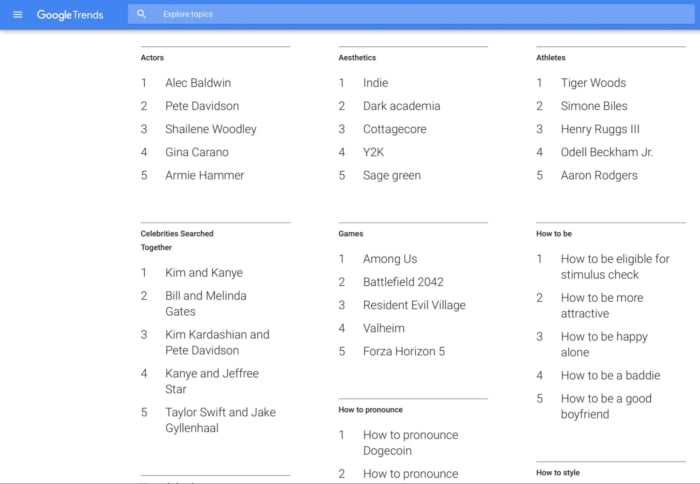
While this report can certainly generate year-end nostalgia, it also offers a unique perspective into the terms that gained the most search volume and traction in the last year.
For marketers, that data can be gold.
Top Trends from the 2021 Google Search Trends Report
Regardless of what region you’re researching, you’ll find a common theme in this year’s report: perseverance.
2021 saw searchers looking for “how to heal” and “how to be hopeful.” This theme resonated in more concrete searches as well with high volume searches including, “how to start a business in 2021” and “how to get a job in 2021.”
Entertainment was another balm in a complicated year. We looked to Google for distraction and clarification, typing in searches like “Squid Game” and “Amanda Gorman.”

Here are a few other Google Search Trends that got a lot of attention around the globe this year:
- Australia vs India
- India vs England
- IPL
- NBA
- Euro 2021
- Copa América
- India vs New Zealand
- T20 World Cup
- Squid Game
- DMX
In the United States, here’s what users were most interested in overall:
- NBA
- DMX
- Gabby Petito
- Kyle Rittenhouse
- Brian Laundrie
- Mega Millions
- AMC Stock
- Stimulus Check
- Georgia Senate Race
- Squid Game
While these searches can entertain, they can also inform your content strategy, by helping you create content that users are likely to be interested in.
How to Use the Search Trends Report to Generate Content Ideas
Struggling to come up with fresh, new content ideas? I’m no stranger to the frustration that comes with this.
Using Google Search Trends, you can determine what topics users are interested in, increasing engagement while building relationships and goodwill.
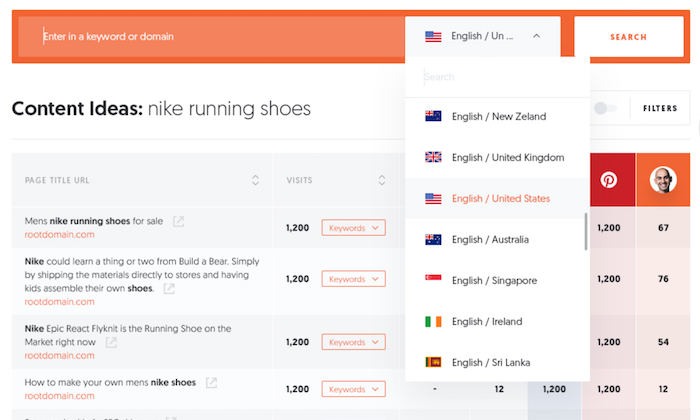
Below, I’ll break down the five best strategies for harnessing the insights associated with the search trends report to generate content ideas.
1. Use Popular Search Terms and Find a Unique Angle to Cover the Topic
While a blog post about the permanence of the cottage come aesthetic might be popular, this topic may not align with your brand. However, also topping the aesthetics search list is “sage green,” a topic that might be related to more industries.
Whether you’re a small boutique or a landscaping company, you can take advantage of this particularly high-volume query and build out a content plan to address it.
Sage green might not be in your wheelhouse.
If that’s the case, look for other search terms that might meet your audience’s interest in some way.

This part of the Search Trends reports breaks down searches by different topics, including:
- culture
- economy
- entertainment
- environment
- health and wellness
- news and events
- philanthropy
- representation sports
“How to maintain mental health” was searched more than ever in 2021—most industries could leverage that to provide mental health advice and tips to their audience. For example, I might write about how to maintain mental health as a remote digital marketer or how to help your remote team maintain their mental health.
By aligning your audience’s interest with a popular search query, you not only increase the visibility of your content, you also offer your existing and would-be audience a fresh perspective within your industry.
2. Search for Topics Using the Search Bar
Suppose you’re curious about the search visibility behind a certain query. In that case, you can use the Google Search Trends report to explore how much a specific term resonates, as well as related queries and terms.
For example, we searched “digital marketing.”
In addition to highlighting the term’s prominence, the report also offers tons of valuable detail. We could build a content strategy with a pretty solid idea of what type of content will and won’t resonate from this one search.
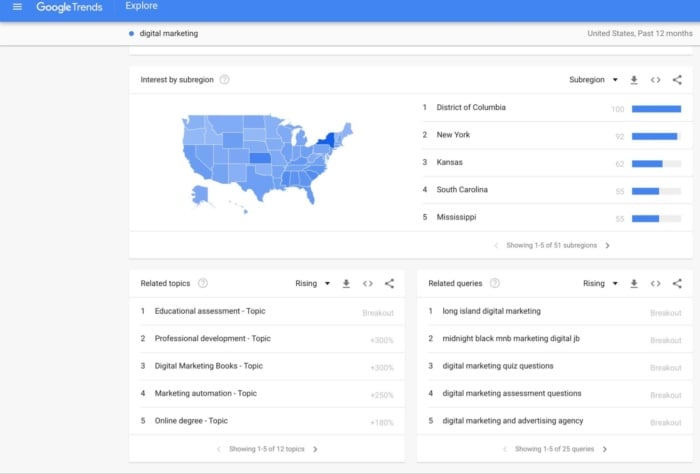
In the “related topics” section, I see terms like education assessment and professional development, which means a list of digital marketing courses or training might do well.
Search the name of your industry and the main key terms you target and see what content ideas pop up.
3. Use the Google Trends Report to Find Topics that Appeal to Gen Z
In 2019, Gen Z officially outnumbered millennials, tallying 32.2 percent of the world’s population.

Even more impactful, Gen Z makes up over 40 percent of U.S. consumers.
Consider this: a third of the world’s population is Gen Z. You’re doing your brand a huge disservice if you don’t consider how to speak to this massive, tech-empowered group.
After you’ve identified topics you know resonate through your search bar exploration, how can you ensure your content resonates with this unique group?
The answer is pretty straightforward.
Your content needs to be more interactive and appealing.
Here’s how to do that:
Create More Interactive Content
The more opportunities audience members have to interact with your content, the more likely they will.

By incorporating interactive elements, you encourage action. Next time you’re planning content, consider including a poll, stickers, or slider that allows your audience to truly engage with your brand.
Personalize Your Messages
Gen Z grew up amid a time of increased personalization. In fact, they’ve come to expect it. Be sure that you use every personalization opportunity to reach this coveted demographic.
Time-Sensitive
Fear of missing out, or FOMO, is still very much a thing. Take advantage of this fear by incorporating time-sensitive offers into your content, forcing your audience members to take action or miss out on a one-day-only deal.
Make Your Content More Visually Appealing
It’s no secret that Gen Zers flock to platforms like Instagram and TikTok, home to bite-sized video content. Take advantage of this content preference by drawing inspiration from the short, visually appealing videos that spread like wildfire.
4. Create Content Around Topics You’re Passionate About
It’s always easier to create compelling content around topics that resonate with you. As you peruse the 2021 Google Search Trends, keep an eye toward topics that resonate personally with both you and your brand identity.
Start by looking at the major search terms in each main topic I listed out above. Let’s say you work or own a coaching business and are looking for more topic ideas.

A quick look at popular “culture” topics shows us doom scrolling is the most popular topic in the culture section. How can you use that to your advantage? By matching it to your brand identity.
As a coach, you might write about how to avoid doom scrolling, how doom scrolling impacts your job search, or create a challenge to encourage your followers to stop doom scrolling and improve their mental health (which was another popular search term, as you might recall!)
After identifying high-performing topics, create a content plan to address them. Will you create blog posts, ebooks, or courses? Can you use these ideas in other areas of your marketing, like paid ads?
5. Identify New Niches
If you’re searching for a new niche, Google Search Trends is a great way to identify rapidly-expanding niches that may have content gaps you can fill.
To see search growth for a particular topic, simply set your search duration to “2003 to present,” so you can see long-term traffic on the topic.

This can also help you see when topics are most popular in a specific year, allowing you to plan your content publication around timeframes when Google users are historically searching for specific terms each year.
For example, topics around “fly fishing” tend to peak in the summer, when the weather’s nice. Tips for Black Friday marketing tend to peak in late November, as you might have guessed.
Frequently Asked Questions About the Google Search Trends 2021 Report
What is the most searched thing on Google in 2021?
Globally, the highest-volume search term was “Australia vs India.” In the United States, the most searched term in 2021 was “NBA.”
How do you find what is trending on Google?
Google releases its year-end search trend report once a year. In these pages, you’ll find the highest-volume search phrases in a variety of different categories, as well as through a geographical lens.
Throughout the remainder of the year, you can visit Google trends to see what the world is searching for.
How can you capitalize on search trends in marketing?
You can use search trends to power your content plan, perform keyword research, find seasonal trends, optimize your SEO strategy for video, and find related terms to outperform your competitors.
What are the search trends for late 2021?
The most popular search trends for late 2021 include mammography, why people are quitting their jobs, back to work bonus, potluck, small business Saturday, and how to become a volunteer firefighter.
Conclusion: Google Search Trends 2021 Report
The Google Search Trends report provides a nostalgic look at the year in review, with pop culture topics like Squid Game and news stories like the disappearance of Gabby Petito. However, they’ve also given us a tool we need to gain greater visibility into search patterns.
By mining these trends for insights into search patterns and behavior, you can create a content plan that speaks to the topics users care about.
The uses of the Google Search Trends report go beyond content ideas. You can also perform in-depth keyword research, use popular trends in your ad copy, and find new niches to target.
As you wade into your 2022 content planning, keep an eye toward the information Google has generously handed over—your click-through rate (CTR) will thank you.
What’s the most useful thing you’ve learned from the Google Search Trends report?
Source: neilpatel.com

How to Use Google Translate for Content Ideas
Content, content, content. At times, it seems it’s all marketers think about. Even so, you may eventually find yourself in a content desert, desperately searching for a well of fresh content ideas.
Disclosure: This content is reader-supported, which means if you click on some of our links that we may earn a commission.
You’ve exhausted every Google search, every whiteboard brainstorm.
However, there’s one strategy you may not have thought of.
Have you explored industry blogs in other languages with Google Translate? If not, it’s time to go international.
In this post, we break down the why and how of using Google Translate to generate content ideas.
4 Ways to Use Google Translate for Content Ideas
Google translate is an incredible resource, so it’s no wonder that in addition to having over 100 languages, we can look to the translating superpower for content ideas.

Below, we unpack the four best ways to generate new content ideas.
1. Check Out Top Blogs Around the World
Looking to broaden your content horizons?
Start by broadening your search horizons.
If you’ve exhausted industry content ideas in your native language, look beyond your linguistic borders to other voices in the industry.
By enabling Google Translate to translate websites, you can explore far beyond any language barriers that may exist and find troves of content to inspire you to create your own, similar asset in your language.
To begin searching for content in other languages, you must first select a different language through Chrome settings, either through the app or through your browser.
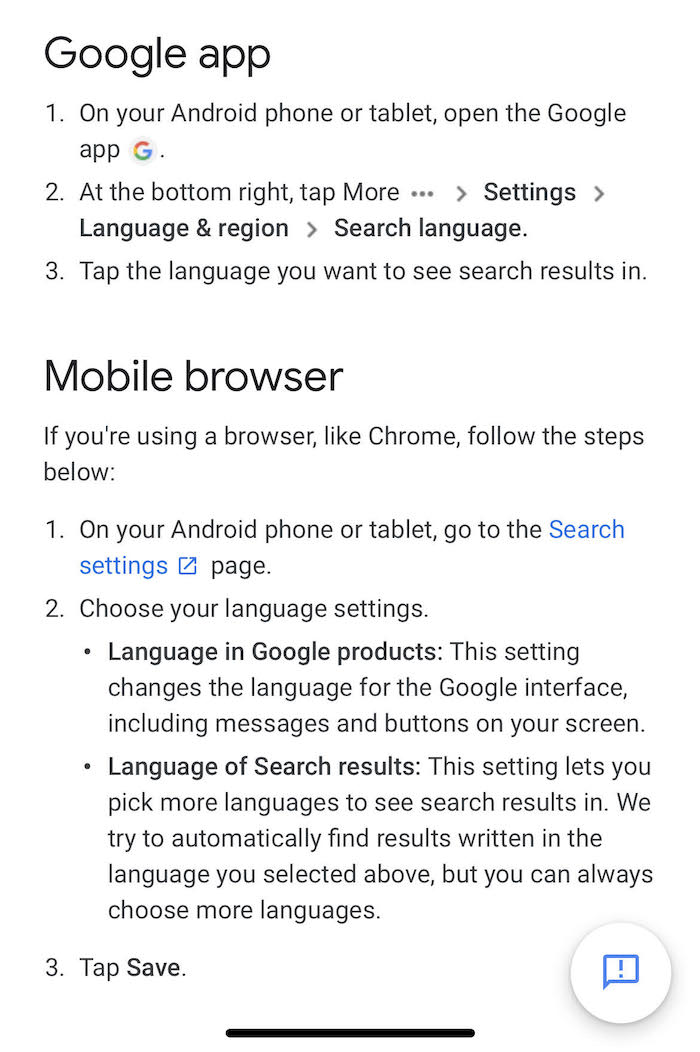
Now begin searching within your new language settings. When you encounter a page you want to be translated, simply:
- Open Google Chrome
- Navigate to the page you would like translated
- Click “Translate” at the top of the page
Et voilà! You have a fully translated page that you can borrow inspiration from for your next blog post, white paper, infographic, or graphic.
2. Explore Social Media Brand Accounts for Different Countries
Don’t stop your inspiration search at mere Googling: head to social accounts to find brands from different companies.
Let’s take Twitter, for example.
You can change the language settings for your app through the browser views by visiting Settings.
After you’ve changed to the language you’d like to search, explore what top brands in the space are sharing and saying.
For example, we changed our language to French and searched #digitalmarketing to see what was trending conversationally.
From there, we dug into French digital marketing corporations, exploring their social presence, websites, and blogs, all in search of content inspiration.
While we uncovered a number of topics and enviable content, we were particularly taken with this social post that shared stock images to use with a current, global event.

3. Find Globally Trending Topics
If we stay in the Twittersphere, trending topics tend to be in your country, if not in your locale.
To enable all globally trending topics from your browser, simply:
Select #Explore from the left-hand column of your homepage
From there, click the gear icon in the top right of the screen
The location window will open, displaying a box ticked that reads “Show content in this location
”Untick the box, displaying more options
Select the Explore option button to find all the locations where Twitter is available
Select your desired locations to see the trending topics
By exploring topics outside of your own worldview, you can find new areas of discussion and new niches in need of filling.
These hashtags can allow you to tailor your content to the larger conversation.
4. Dig Into Your Industry Internationally
While we’ve covered exploring by hashtag, you can also discover inspiring content through finding the top influencers or companies in your specific sphere.
A lot of aggregation sites provide a ranking for industry leaders in other countries.
When we searched for the best digital marketing agencies in Germany, we pared down a list of 20 to a list of 10.
From there, we navigated to their websites and explored their blogs.
By exploring what other digital marketers are creating globally, we can tap into trends larger than those before us, borrow content ideas and find inspiration across borders.
5 Tips for Using Google Translate to Generate Content Topics
While finding content that relates to your field is a feat in itself, you want to ensure the content you’ve found is truly relevant.
Below, we break down five tips to keep in mind as you explore international content waters.
1. Be Aware of Cultural/Linguistic Nuances
While looking for inspiration and ideas across continental divides is all well and good, if you use Google Translate, be aware of cultural and linguistic nuances that can change the meaning and interpretation of the text.
For example, colloquialisms hardly ever translate across linguistic divides.
In these cases, if you’re borrowing heavily from existing text, you must be sure to adjust the language to reflect terminology that makes sense for your reader.
Otherwise, your work will go to waste completely.
2. Be Cognizant of Being Offensive
Wading into a larger conversation always poses a risk for the unindoctrinated.
If you choose to use Google Translate to enter an ongoing discussion about an industry topic, be sure you’ve educated yourself on the nuances and realities of said topic.
Regardless of intent, there is always the possibility your entrance into the conversation may not be as productive as you had hoped.
In terms of borrowing from existing content, read the translation with an eye toward how it will be perceived by your future audience, reworking and removing anything that may not come across as intended.
3. Discover Content in Industry-Adjacent Niches
Perhaps you’ve gone through all of the search exercises noted above and still came up empty-handed.
To look even deeper into your topic, explore industry-adjacent niches that can help drive even more content ideas.
Let’s stay with our digital marketing example.
Rather than casting a net that wide, we can delve into email marketing, and from email marketing into email metrics, and from email metrics into strongest email calls to action (CTA).

By moving beyond the overarching umbrella of your industry, you can find more granular content that speaks to your market, providing you inspiration and guidance along the way.
4. Explore Content All Around the World
With 109 languages and counting, there’s no limit to content you can explore with Google Translate.
As you get accustomed to delving into different languages, go beyond your usual searches and seek out different points of view from different individuals.
With each search, you can find more and more content inspiration and involve yourself in the global, ongoing conversation about the largest trends, topics, and issues impacting your field.
5. Keep SEO in Mind
As a marketer, you’re well aware of the importance of search engine optimization (SEO) on your content, regardless of format.
When you use Google Translate to translate a content piece, you will have to reoptimize the piece for SEO to ensure that it meets your standards and drives searchability.
Be sure to include your respective keywords and adjust content as needed to reflect your goals throughout any piece that goes through Google Translate.
Frequently Asked Questions About Google Translate
Is translated content considered duplicate content?
In short, no. The translated content is not duplicate content.
With different words and phrases, nuances and colloquialisms, translated content is entirely different from its origin.
To learn more about this, watch this excerpt from Google’s John Mueller.

How do I get Google to automatically translate a page?
To get Google to translate for you, simply follow these three steps:
1. Open Google Chrome
2. Navigate to the page you would like translated
3. Click “Translate” at the top of the page
How can Google Translate help me find content ideas?
By harnessing Google’s translation powers, you can find inspiring content from all over the world to recreate for your own brand.
What’s more, you can join a larger conversation that is ongoing globally, widening your audience reach even further and establishing you as an international thought leader.
Is Google Translate accurate?
For everyday use, Google Translate is pretty accurate.
For the specific use of searching for content inspiration, Google Translate is very accurate.
With that said, be sure to read for linguistic nuance and appropriateness before sharing or replicating in total.
/cdn.vox-cdn.com/uploads/chorus_image/image/68934786/VRG_ILLO_1777_AK_science.0.0.jpg)
Google Translate Conclusion
As the demand for quality content continues to rise in every industry, it is vital marketers identify new sources to inspire and replicate content that hasn’t been duplicated by every brand in your industry.

By looking beyond the traditional bounds of your content-sphere, you can tap into conversations and ideas that can inspire similar content creation, while simultaneously inviting you into a global conversation about your industry.
As you explore more and more languages, be sure to keep nuance and perception in mind.
Don’t forget to continuously optimize any borrowed content for SEO so your version of the content can rank as high as possible.
What’s the best place you’ve found content inspiration?
Source: neilpatel.com

8 Free Ways to Find Blog Content Ideas That Convert
If you’re a content writer, you have a blog, or work for a company, you might have struggled with this question before: How do I find good blog topic ideas? There might have been situations when you didn’t have any ideas and you had to write something just to keep your users engaged.

For everyone that has stumbled on this, I understand (you).
I know what you’re feeling.
And you’re not alone.
For somebody who writes on a daily basis, you need to be like a factory of fantastic ideas and give valuable information to the audience, because they need it.
They are looking for guidance in every possible way.

Most of you have to become factory ideas overnight, but there are solutions for you during the day.
How to Find Topic Ideas Effortlessly?
That’s why we thought about the following effortless ways and platforms to find topic ideas:
- Look for Q&As on Quora
- Use BrandMentions to Spy Your Competitors for Content Ideas
- Get Inspired Using Pinterest
- Uncover Trends and Identify Influencers on BuzzSumo
- Check Google News for Current Events
- Follow Influencers’ Articles on LinkedIn
- Get Ideas from Discussions in Facebook Groups and Reddit Communities
- See What Other People Are Sharing on Zest
Finding the right content topic is essential, but the way you write it is also important.
Good content writers will always be in demand, just like Joel Klettke points out.
“We don’t need to hire a writer. We’ve got formulas and a template!” pic.twitter.com/HREhKHCimw
— Joel K (@JoelKlettke) September 18, 2018
1. Look for Q&As on Quora
Quora is an abundance of information and continuous resource for content writers, users, noobies, and people wanting to find specific answers to their problems.
The information is organized and edited by users, which makes it easy to understand the user behavior.
Besides all the ideas, you get the advantage of seeing what language and vocabulary people use, the way of writing, and asking questions.
And after you got some inspiration, you can write the article.
Then you can answer questions by pointing people to your article.
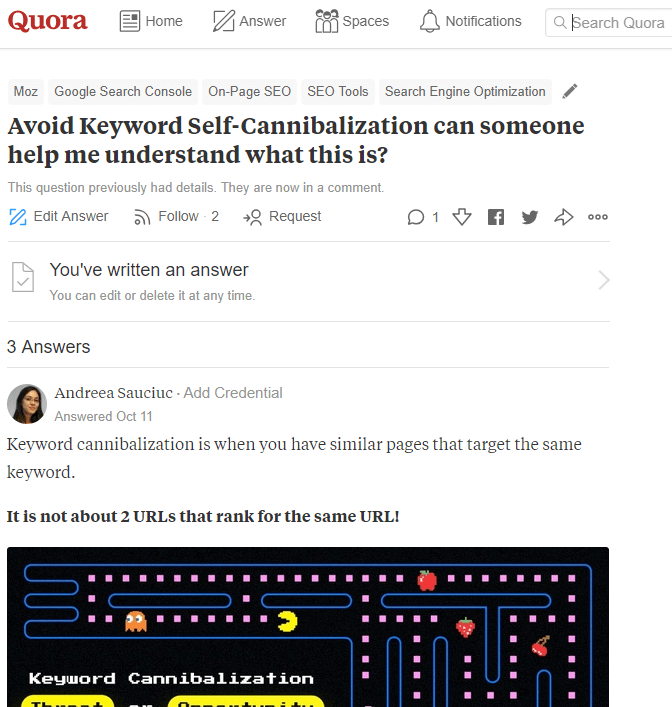
Quora is a great space for keyword research and headings/titles inspiration.
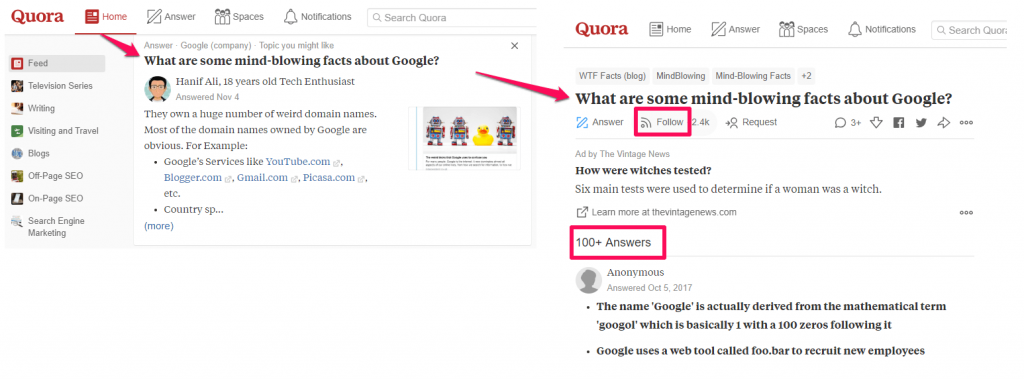
For example, if we use the screenshot below and we want to write about keyword cannibalization, we can see if most people use a focus keyword such as – avoid keyword cannibalization or the question type such as – what is keyword cannibalization.
The site is divided into topics, which makes it easy to search for ideas and get insights into what people are looking for.
There is an entire community on Quora where a lot of people and experts on every subject you can imagine are actively contributing with knowledge.
If you are focused on a specific topic, use the newly launched Spaces and follow the community that interests you.
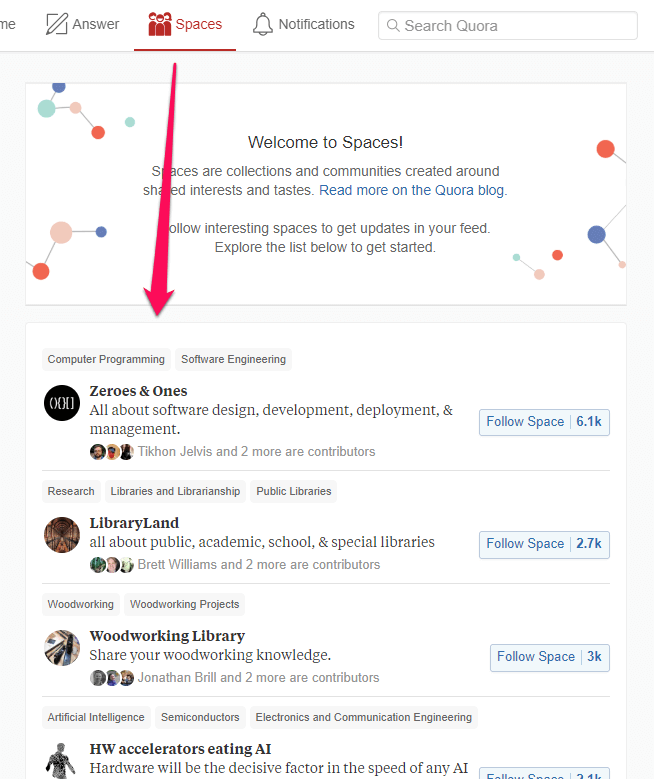
Besides all the ideas we’ve talked about, there are other things Quora is good at.
Only by using a few clicks, you can:
- find what people are looking for.
- Search for general keywords on Quora and see questions regarding your topic.
- get updates on trending topics right on the homepage.
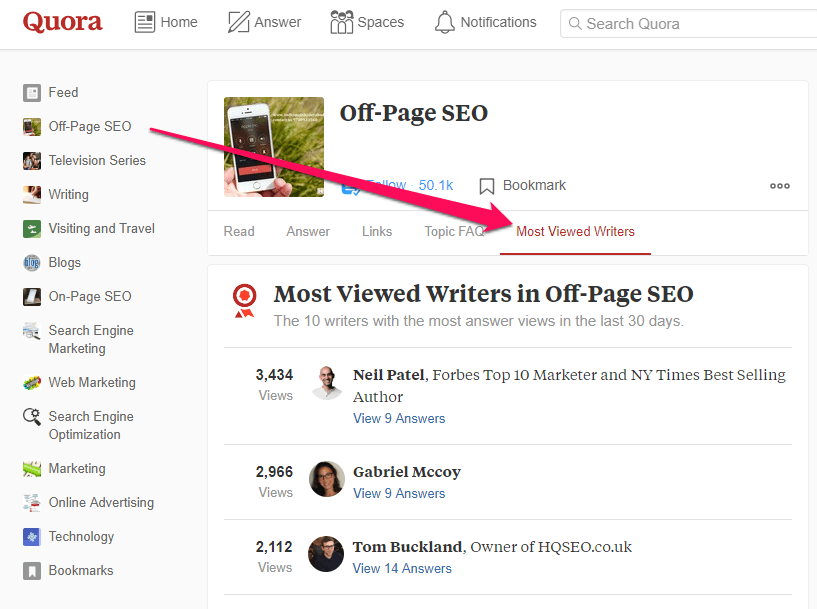
read sourced research from experts and get their permission to quote them in your new article.
find every influencer that you can contact for outreach.
2. Use BrandMentions to Spy Your Competitors for Content Ideas
Wouldn’t it be a shame to miss an opportunity to talk about something that has great traction and create a massive, evergreen blog post that will get a good social media score and links 3 years after you’ve written it?
We’ve previously talked about the advantages of using a social monitoring tool, such as ‘BrandMentions”, that gives insights based on what find online.
You can spy on your competitors to see what are they writing, what type of content gets more engagement.
And based on the response they get from the audience, you can see the topics of interest and try to create a better piece of content than theirs.
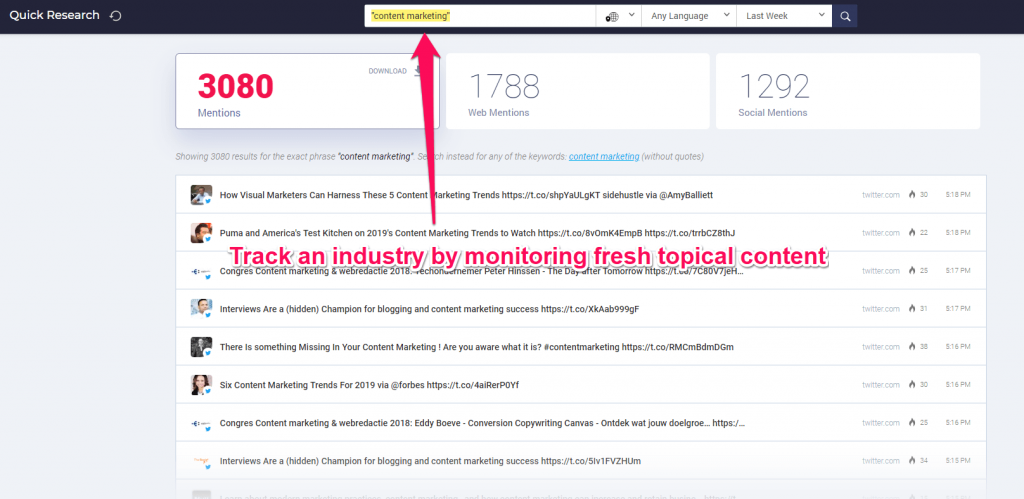
You can monitor fresh topical content related to your business and create better content in your niche.
You just have to search for a topic and the tool will show you the results.
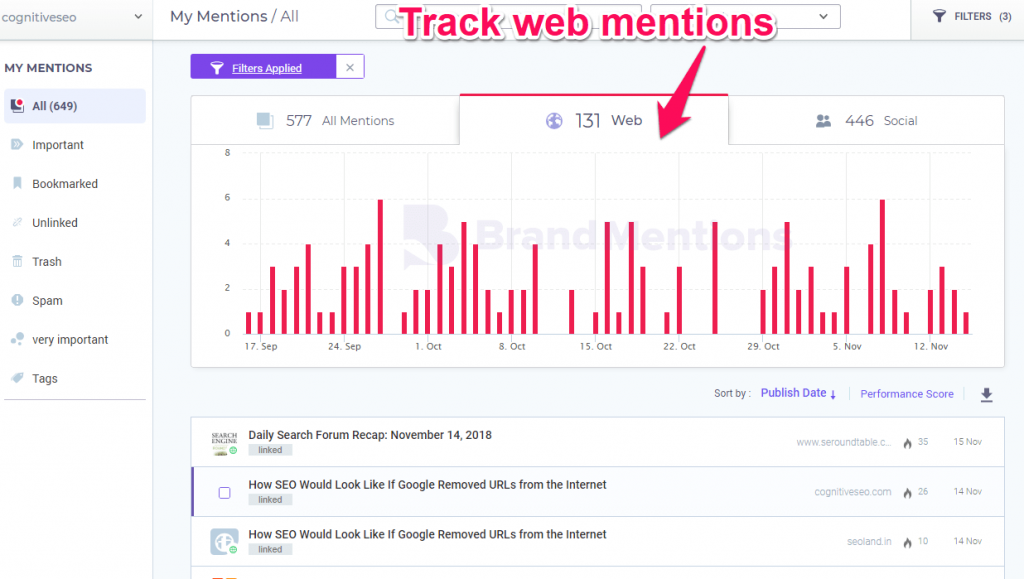
Whenever your brand is being brought up on the web, a marketing opportunity is rising and that applies to your competitors as well.
If you know what people are talking about them and find their strengths and weaknesses, you’ll know what to offer to the audience and steal them from your competition.
Using a social monitoring tool such as BrandMentions helps you manage the mentions and go right on the spot by offering live support.
You can find what people are saying about a specific brand and not necessarily to it, because there might be lots of untracked brand mentions, without any direct link to the brand.
For example, people might talk on social media but not place the @ before the name of the brand.
And we must remember that it’s not only influencers in your industry who mention brands on the web but there are also lots of other people that are consumers.
3. Get Inspired Using Pinterest
Another free way to find content marketing ideas is using Pinterest.
The motto of the platform describes it very well: Discover recipes, style home ideas, inspiration, and other ideas to try.
So inspiration is at its place on Pinterest.
If you’ve never used Pinterest until now, then you did miss on lots of great opportunities.
The social media content you get here, might not be found on the other social channels.
You can use Pinterest to:
- get free ideas for blog posts.
- create content that your audience actually wants.
- find keywords you should use in your blog post to help with SEO on Pinterest.
The process is very simple and very intuitive for beginners.
You just have to search for a keyword, such as a blog:

Then look in the search suggestions box for other keywords that are used for searches and get topic ideas and headings that intrigue the user.
Look at the most popular keyword suggestions, such as marketing (blog marketing), for beginners (blog for beginners), ideas (blog ideas), tips (blog tips), and so on.
That means there are a lot of new bloggers looking to learn about blogging or bloggers that are in the marketing field and search for ideas and so on.
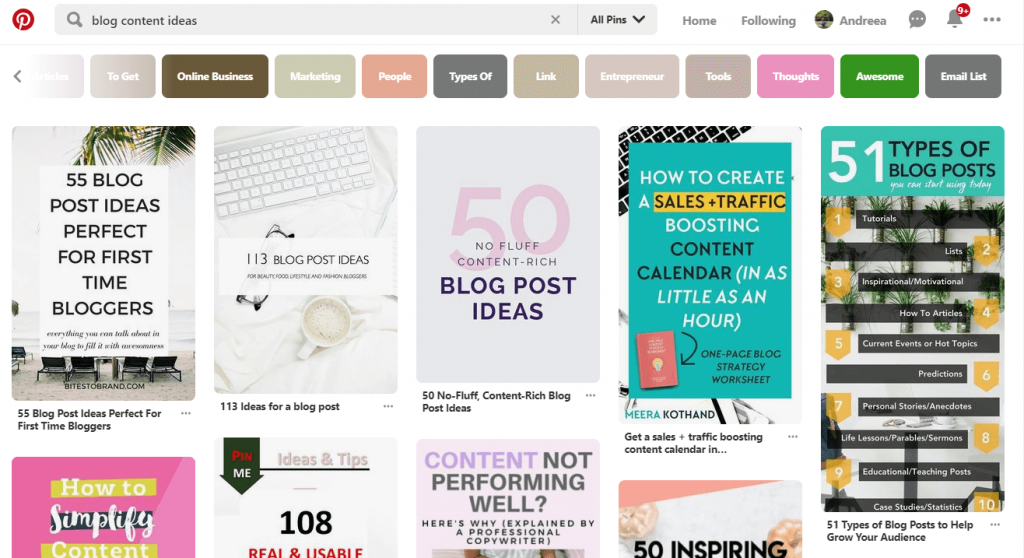
Getting those recommended keywords means that those are what your audience is searching for.
Use those keywords in your titles tags and description.
If you decide to use Pinterest, then those keywords should be into your pin description and heading to boost your Pinterest “SEO rankings”.
So that when people are searching for those keywords, your post gets a higher chance of being on the top.
That’s how easy it is to get creative content marketing ideas using Pinterest.
4. Uncover Trends and Identify Influencers on BuzzSumo
BuzzSumo can help you generate new content ideas and see what the audience craves.
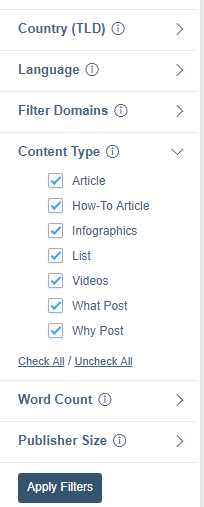
You can search for popular topics and see results based on total engagement, evergreen score, number of links, and more.
You have lots of filters available to go into deeper analysis and get more accurate results based on your needs.
For example, we searched for video marketing and we wanted to see the pages with the highest engagement.
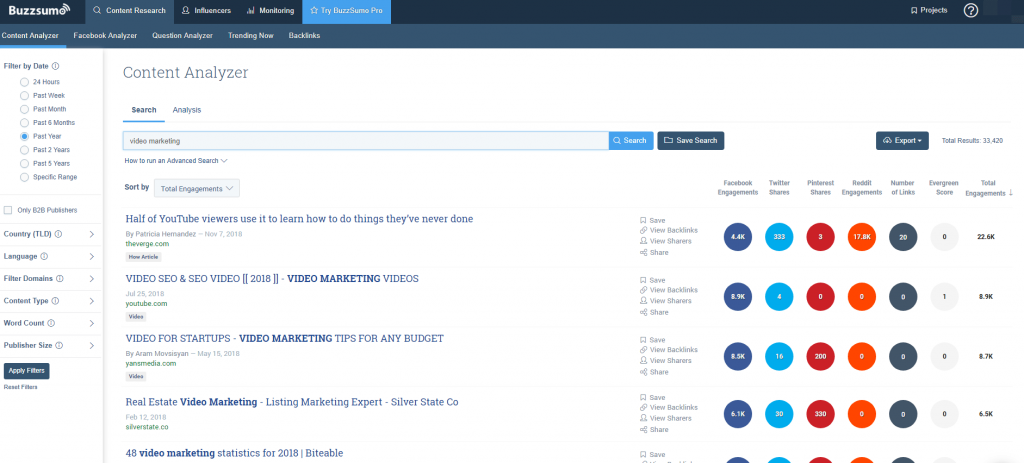
Another great thing about this tool is that you can get some ideas of keywords based on the results you get.
If we look at the search we’ve made for video marketing, we can see that video and SEO, or video marketing tips or video marketing statistics are valid recommendations we could use in our content.
5. Check Google News for Current Events
Google News can fit very well in your content strategy to see what is trending in digital marketing and other industries.
It is the easiest way to look for current events and news in your industry.
An interesting news piece relevant to your query can be used to write quick, creative, and even controversial content.
You can search for anything regarding digital marketing or business, technology, entertainment, science, sports, and many more.
Or search for things you might be interested in, based on what you find in other categories, and get directions from there.
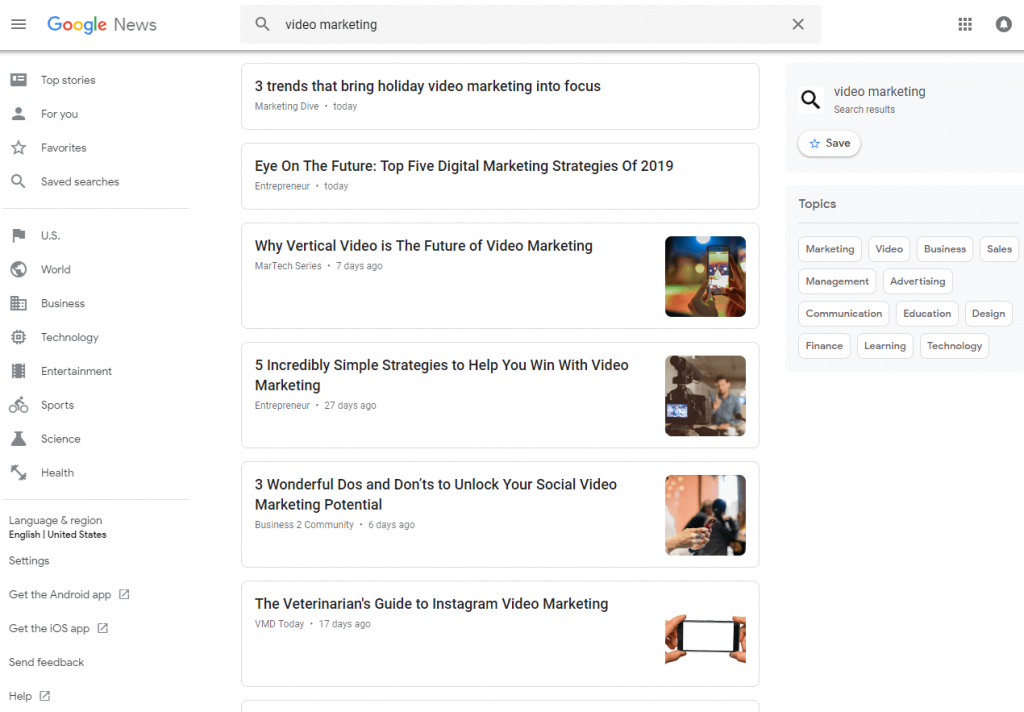
If you want awareness and have a relevant audience then finding a news hook for your pieces could be the solution.
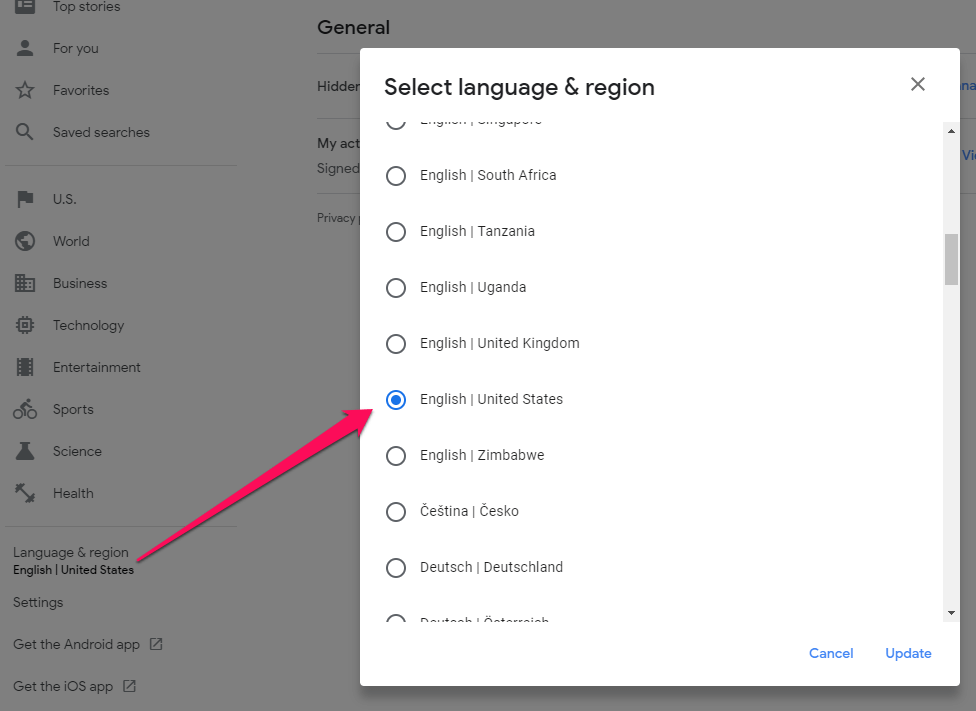
You have the possibility to select the language and the country and get more personalized results, which afterward can be saved in your account.
6. Follow Influencers’ Articles on LinkedIn
LinkedIn is a professional social media platform that you could use to connect with experts and people that write valuable information.
You can comment and create connections and, most important of all, you can get inspired by what they are writing and talking about on LinkedIn.
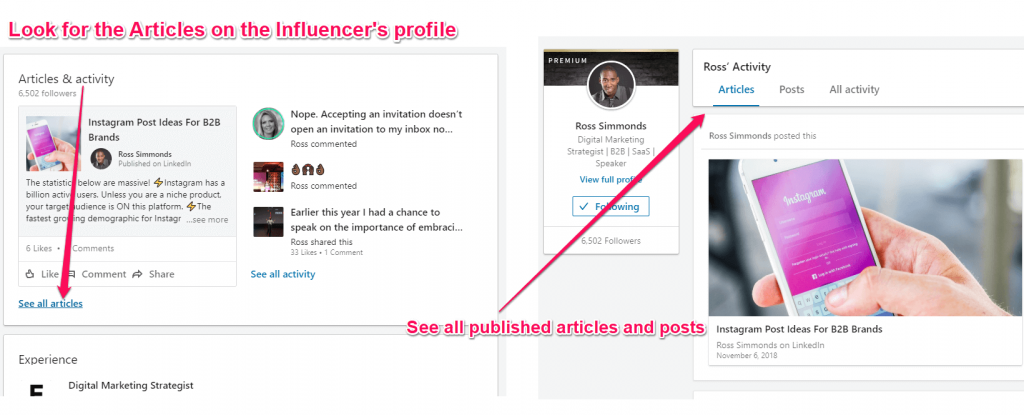
You can find the posts they make and the questions they ask by scrolling on the homepage:

You can go deeper and look at their published articles.
LinkedIn Pulse is the platform owned by LinkedIn where influencers write their articles.
If you get an idea and write about it, then you can contact the influencer and let them know that you quoted them in one of your articles and they can check the blog post once it’s published.
After that, you can ask them for a share or you can share their post by tagging them.
It will create a snowball effect and you can get more people to share your content afterward and get new contacts that you can ask for their ideas in your next piece of contact.
For example, you can create a blog post asking a single question to industry influencers where you could quote their answer.
And then repeat the sharing process to build a strong online presence.
It works very well as a growth hacking technique, too.
LinkedIn is a great source of inspiration.
And it makes it easy to get exposure for yourself and your business if you decide to share your articles there.
7. Get Ideas from Discussions in Facebook Groups and Reddit Communities
Social media marketing is a powerful way for businesses of all sizes to reach prospects and customers and get new content ideas.
Facebook Groups is an underrated asset. It is a strong base for an active community.
You can see new trending topic discussions, recommendations, tips, new insights from business owners and specialists.
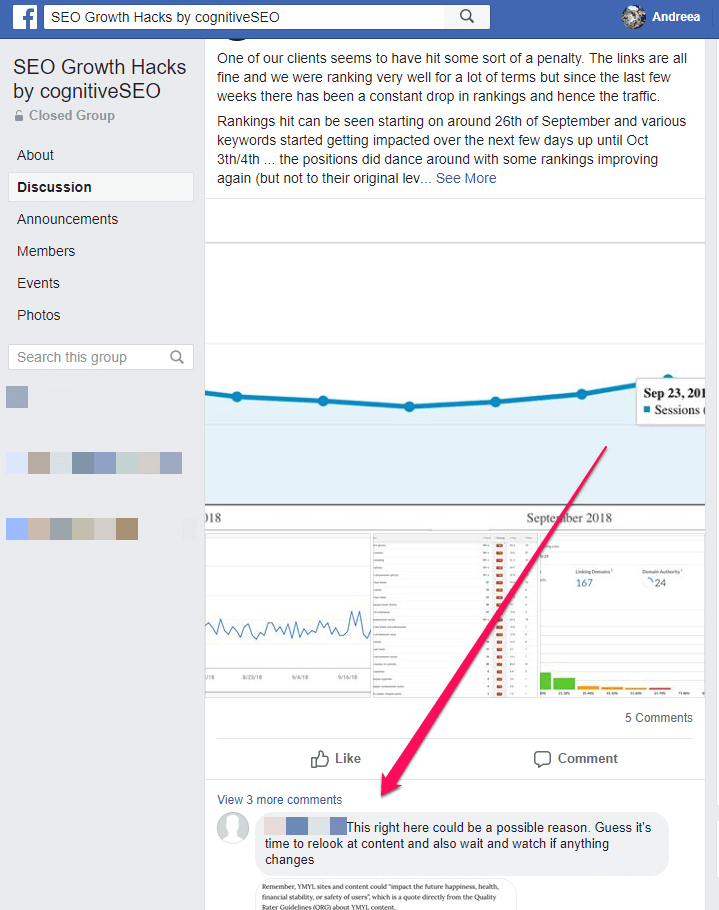
You can use communities in case you have any doubts about a specific topic.
Let’s say, for example, that you heard lots of times that multiple links coming from one and the same domain are considered to have lower value, so unique linking domains are typically a more reliable metric than link count.
And you’d like to know if anybody experienced a situation when this statement isn’t true and get some examples that you could use in your article (of course, after asking for permission).
Or you can ask for tips on client retention and see what comments and answer you get and use them in creating a new piece of article.
The combinations are endless.
You just need to be in the right community, where people comment and are active.
There are lots of content types that work differently on every social platform, so make sure you get ideas and adapt the message to the type of audience you target.
8. See What Other People Are Sharing on Zest
I usually use Zest for finding new blog post ideas.
Right after you enter the page, you’ll see each article in a box format which includes the title, the cover attached, and a short description.
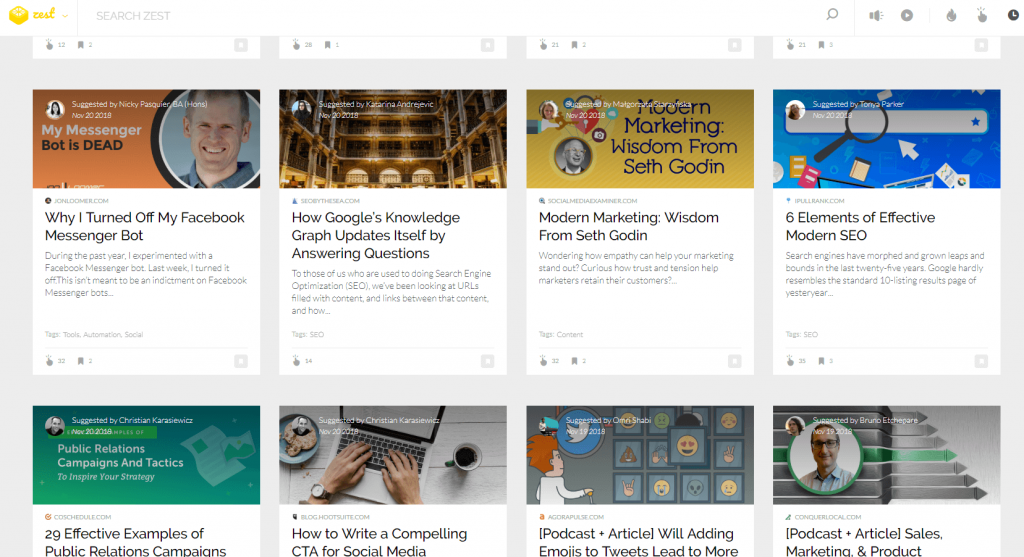
The friendly design works very well to skim through the content and makes it very easy to share and save in your account for future inspiration.
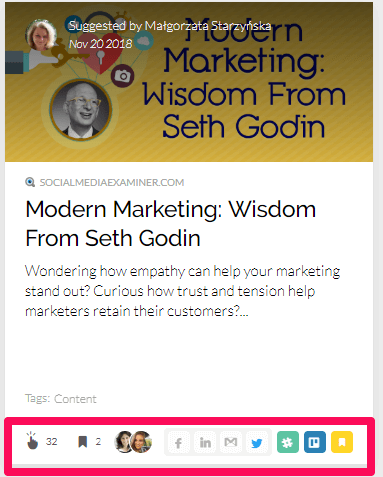
There are other ways than scrolling to search for content on Zest.
You can apply specific tags and get the articles that are related.
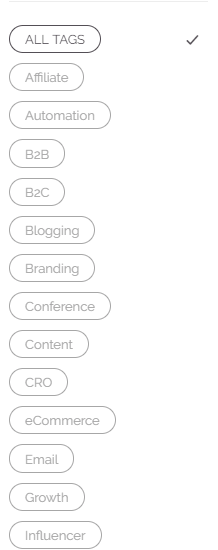
Other options for filtering results are by the type of content (audio, video), shares, clicks, or latest posts.

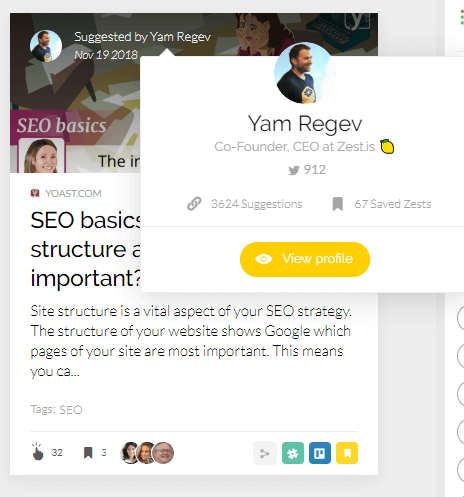
There are lots of experts that share their articles here.
You can follow people and get instant notifications. It is very easy to use and easy to share content, as well.
This comes in handy if you want to amplify your content and give it a boost after publishing.
If you haven’t used it before, you should definitely start now because it is a gold mine.
Don’t miss all the Zest from the content marketing juice.
Your content needs all the zest and personality you can get.
Conclusion
As a farewell message and recommendation after all these tips, I shall leave you with one that can complement the other ideas and it could help you be a better content creator.
Grow the skill of becoming content savvy, which means developing the ability to see valuable content everywhere.
The content creation process can be hard, but there are lots of ways to make it easier.
Whether you’re in the bus/metro/car and see a commercial ad or somebody reading an interesting book (look at the title), reading posts on social media, listening to the radio or podcasts, watching a video/movie, reading something online or skimming through the news, you must see content inspiration everywhere.
This way you’ll never run out of blog post ideas again.
The post 8 Free Ways to Find Blog Content Ideas That Convert appeared first on SEO Blog | cognitiveSEO Blog on SEO Tactics & Strategies.
Source: cognitiveseo.com