
Tag Archives for " #Brands "

2022 Social Media Prediction: The Year of the Creator
Twitter launched Communities, everyone launched a creator fund, and TikTok became the #1 website in 2021. All of these events and more have built a foundation for the creator economy to take off and shape the future of social media.
According to SignalFire, there are over 50 million content creators driving the creator economy, a “class of businesses built by independent content creators, curators, and community builders… plus the software and finance tools designed to help them with growth and monetization (SignalFire).”
The creator economy is the antithesis of the 9-5 cubical grind and overly polished online profiles. After months of lockdown and a global pandemic, consumers are pursuing purpose and looking to creators to provide an authentic escape.
This means several things for marketers:
- Niche, online communities are going to grow
- User-generated, creator, and authentic influencer content will become a necessity while brand content will continue to decline in reach and engagement
- Employee creators and employee brands will be differentiators

Niche, Online Communities Are Going to Grow
The rise of niche, online communities and groups is happening across the digital world. On Facebook alone, there are 1.8 billion users utilizing groups with the average user claiming membership to 5 or more groups.
Communities around gaming have skyrocketed with GWI reporting gaming amongst Gen Z has drastically overtaken TV in terms of interests. Google reports a 70% increase in searches containing “online games with friends” while Discord boasts millions of members in their gaming channels.
Oftentimes these communities are built around creators or moderators with immense influence.
Personally, I am part of 7+ communities on Facebook and a handful of groups across other channels. Each group meets a need or desire the others cannot. The groups are relatively small but have an immense influence on buying decisions and other choices I make.
- #BookTok in TikTok? I have screenshots of 7 books I am going to buy when I get a chance.
- The $100K Club Facebook group? I opened a Chime high-yield savings account the day Tori Dunlap suggested to
- Twitter’s Marketing Twitter community? I’m just one of 800 members and growing
- Reddit’s r/CatsAreAssholes? I have two cats that are jerks and these people just get me
For brands, this means looking at your audience in a new light and asking how you can build an online community, not just a following.

User-generated, Creator, and Authentic Influencer Content Will Be Essential
Younger generations shape our demand for fashion, products, celebrities, music, media, and more, which is why all brands, including brands with older audiences, should pay attention to Gen Z.
According to PR Daily, 13- to 17-year-olds are spending 56% of their media consumption time with user-generated content, a huge jump compared to other generations.
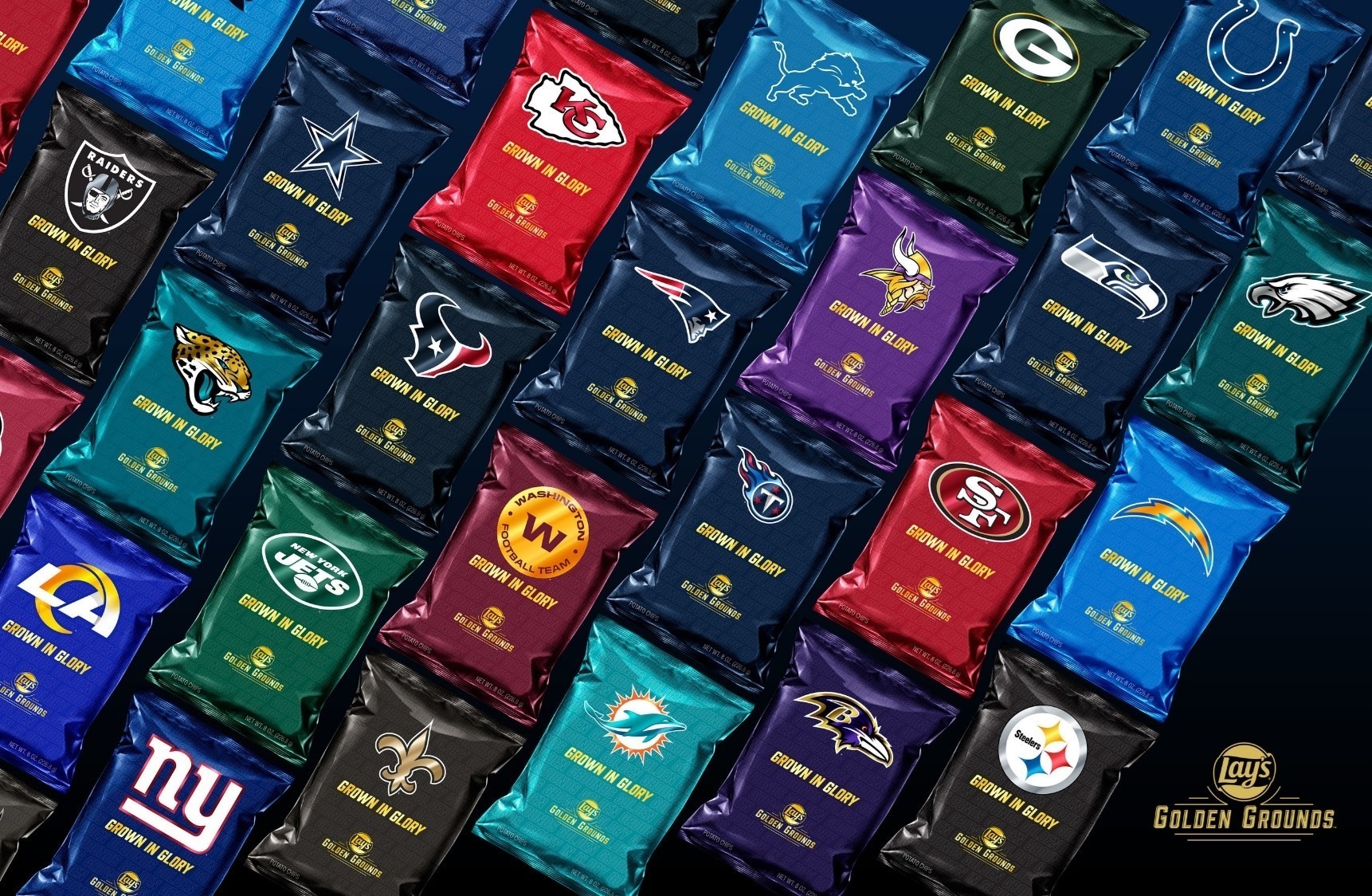
This means brands posting too much brand content are going to continue to see decreases in reach and engagement while UGC, creator, and authentic influencer content will become essential for performance.
What do I mean by authentic influencer content? Well, there is a measurable backlash to the pre-pandemic influencers who carefully curated glamour and luxury in each photo.
“If [Gen Z] is a sign of where global consumer sentiment is headed, it’s likely the “polished” curated self we’ve come to know won’t have the same impact it once did; this would clear a path for more diversity and self-expression in the influencer sector (GWI).”

We are seeing the rise of nano- and micro-influencers and creators because they tend to have smaller, niche followings and a more authentic look and feel.
What does this mean for brands? It means adapting your strategies to include these content types or being okay with declining content performance.
Employee creators and employee brands will be differentiators
LinkedIn’s Editor in Chief, Daniel Roth, recently wrote about the rise of the creator employee, which describes the balance between employment and being a creator.

As a marketer in social media, I see friends and colleagues navigate being a creator and employee all the time with mutual benefits to both their employer and their own careers.
For many brands, the idea of employees building personal brands is foreign and concerning but I think the benefits outweigh the risks. Daniel Murray explains it best, “employers are either threatened they will lose that employee, think it’s taking time away from their work, or they are worried about their brand.
But on everything they post, especially on LinkedIn, it has the company they work for [displayed]. So they can see this as free impressions and also as a tool for attracting future talent.”
Here at Convince and Convert, many of our strategists are known in the industry in their own right thanks to their personal brands, which means we win business across industries thanks to those personal brands.
So, what does this mean for brands? I would start with identifying employees interested in creating and then providing them the tools and space to do so.
Is Your Brand Ready for the Year of the Creator?
Brands are going to need to look for community building opportunities, ways to significantly increase their external, authentic content, and empower their employees to represent the brand as employee creators.
Start with a simple audit of your social channels. What is your current mix of content types? How can you increase the amount of external, authentic content?
The post-2022 Social Media Prediction: The Year of the Creator appeared first on Content Marketing Consulting and Social Media Strategy.
Source: convinceandconvert.com

2021 Social Media Benchmark Report: 4 Takeaways for Your Social Refresh
Take a peek into the Convince & Convert team messaging threads and you’ll find us sharing all sorts of research and new data. In fact, when the Rival IQ 2021 Social Media Benchmark report was first released, Corynn shared it with the note, “TL;DR–everyone needs more carousels.”

You can stop reading now if that’s all you need to refresh your social content plans. But for the rest of you, I’ve got a few more ideas.
The Social Media Benchmark report is an annual study from Rival IQ, our friends in the social content performance data business. The 2021 edition evaluates thousands of brand accounts across 14 industries to set the benchmarks that marketers use to measure social content performance.
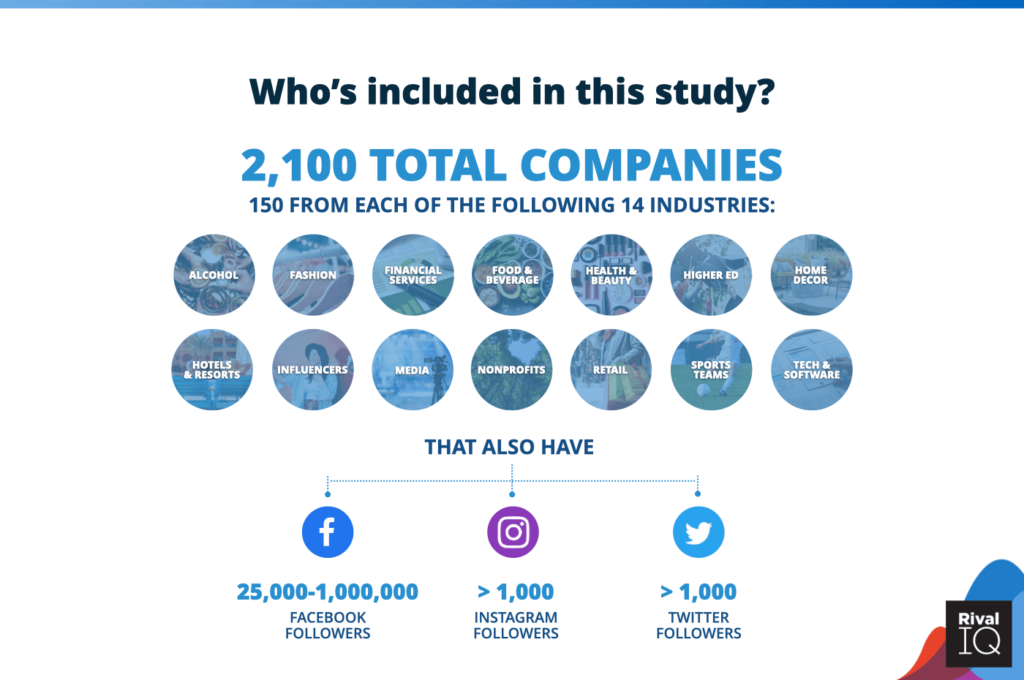
Keep in mind that most of the data analyzed were pulled from 2020/early 2021. Social media platforms are constantly shifting their algorithms to respond to new content types, technology, and audience habits.
What is presented in any benchmark study shouldn’t be taken as gospel, but it does enlighten how to plan for your 2022 social media content strategy.
4 Cues For Your Social Media Strategy Refresh
1. Posting every weekday may be “expected” but is not necessary.

Creating enough content to post once a weekday on each channel is a common expectation of social teams. Yet as social media engagement rates decline or stay stagnant, brands respond with fewer main feed posts on each channel.
Rival IQ discovered that brands posted on Facebook on average the most per week; but outside of Media brands sharing 53.5 posts a week (7.5 a day!), the average was 5.5 posts weekly.
We’ll take the exception with the finding that brands are only posting content on Instagram four times a week. The API that makes data available is news feed specific. Yet remember that Instagram has 12 different ways in the channel to serve up content or connect with audiences.
This data point is a bit misleading because we can’t accurately benchmark Stories, Reels, Highlights, and Guides with the API.
Twitter was the channel that saw the most volume by brands, almost 3x more tweets than Instagram news feed posts. But Instagram is the clear social media royalty based on Engagements. Instagram audiences responded with more than 7x engagements than on Twitter, on just one-third of the total content.
Quality Over Quantity of Posts Matters Most

No doubt you’ve heard quality outranks quantity. This is especially true for B2B brands that are building content to support longer awareness and consideration timelines in their customer’s decision journey.
Focus on creating less social media content that resonates more with key audiences.
Show up in the nooks and crannies of social media channels; focus on different content outlets, like Reels, Stories, and Reddit threads. Even better, explore participation in ways that create more 1:1 micro-connections with your audience.
Direct interaction with audiences in spaces like AMAs, TwitterChats, Audio Rooms, and even DMs can go a long way with building affinity with audience members.
When everything is important, nothing stands out. So when there is actually an opportunity for different-than-usual content, make it shine. Increase frequency around real-time opportunities, like events, webinars, launches, behind-the-scenes. Take a cue from Media and Sports, which hyper-focus on wall-to-wall coverage of the top story or game day. Media and Sports teams tweeted more than all of the other industries combined.
When everything is important, nothing stands out.
2. Mix Up Content Types

We’ve been saying “Video Wins Social” for several years. While in some instances that can be true, the social media benchmarking data shows that in main news feed posts, actually photos and carousels now outrank videos for engagement.
The algorithm may prioritize video content when it’s available, but audiences care less. The reality is that even today, video is still more difficult for content teams to produce at scale unless it is a core part of the business (media, sports, etc). That’s why video appears less frequently as a post type across most industries.
What can B2B brands do without a consistent video workflow? Remember that in today’s visually dominated social feeds, carousels and photos perform well. Avoid posting a simple status in text-only on Twitter or Facebook, especially when it’s easy enough to include a GIF, image, or infographic.

Carousel impressions are repeated in a user’s news feed if they don’t engage the first time. On subsequent impressions, Carousels will display images two and three. You don’t have to win with the first image in a Carousel. Be sure the second and third ones are just as compelling.
3. Identify And Measure What Metrics Matter
An engagement rate is calculated based on all measurable interactions on a post. Social networks are diversifying how audiences choose to engage with any post on their newsfeed–Facebook alone has up to six emotional reactions along with commenting, sharing, and saving posts.
Does an Angry reaction carry more weight or meaning than a Laugh? How does Love compare to a Share?
A better way to measure engagement is to identify what specific reactions are most valuable for your brand. Metrics are like pizza toppings–each one of us has our favorites, so we tend to always stick with those and overlook the other options.
Measure specific, meaningful reactions as a percentage of total engagements to ensure you don’t lose sight of engagements that move the needle. Padding posts to garner more “Likes” to hit engagement numbers is easy to do — but Likes don’t pay the bills (even for Influencers).
Take a Look at Your Own. Social Metrics
Rival IQ acknowledged a better way to measure engagement rates is by using the engagement rate per post metric. Engagement rate per post is the [best] metric because it controls for post volume and audience size and helps marketers understand how they’re doing in relation to their competitors.
Unfortunately, social network APIs continue to skinny the data that is publicly available, so Rival IQ and others cannot do this type of competitive reporting at scale. But you can with your own native metric reports.
4. Plan Seasonal Content and Align Hashtags Accordingly
Hashtags were all about the holidays on Instagram and Twitter this year, so that signals brands must keep up with content that aligns with the seasons. Work ahead by identifying these in your annual and quarterly editorial calendars and planning.
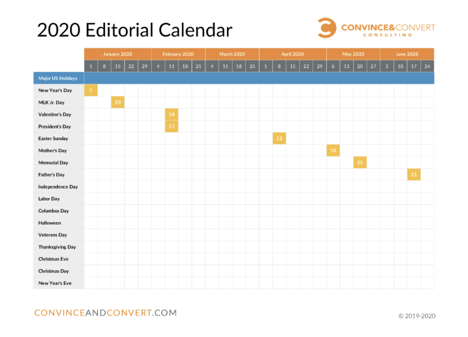
Planning in advance means your team is better positioned to capitalize on seasonal content by finally deploying all the “next year we should do this” ideas that are missed after the fact.
Hashtags that performed consistently well across all industries included: giveaways, alcohol-related, or those relating to holidays and current events. One smart note from the social media benchmark report is that hashtags are not equally used across social media channels.
Use research and hashtag tools to identify the right hashtags and how many to use for each social channel. Update these monthly or quarterly for best effect.
—
Get started with benchmarking and analyzing social content performance with the Head to Head Social Snapshot, where brands can see 1:1 performance against the Rival IQ benchmarks.
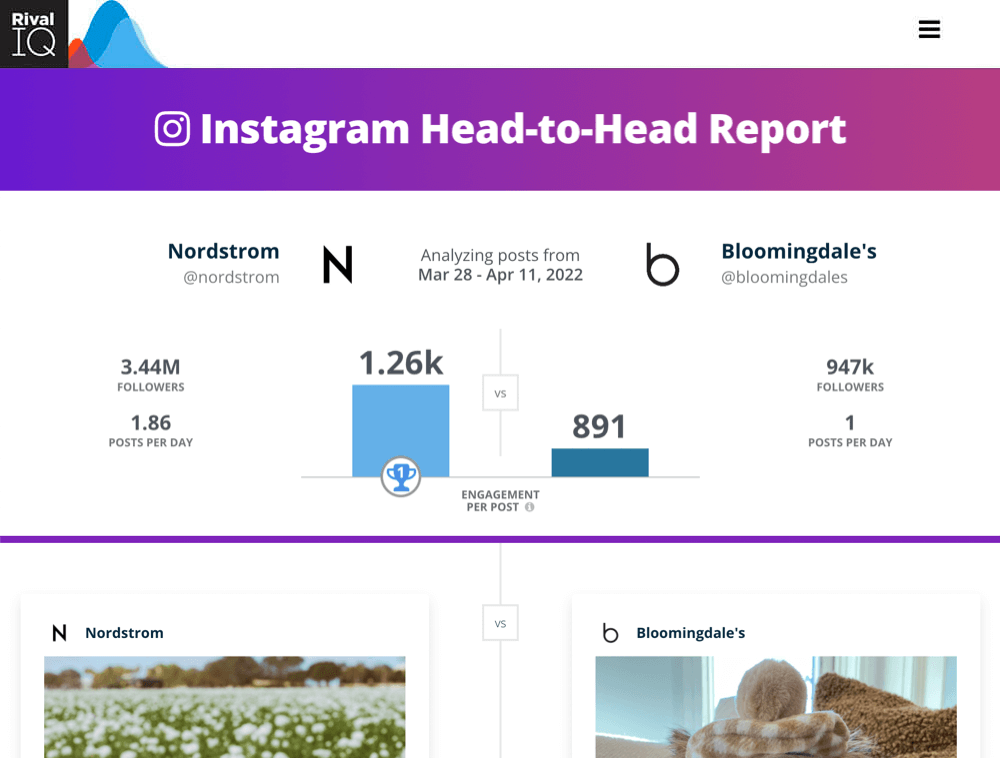
Go further by completing a social media audit that identifies the insights to set up strategic decisions for next year’s social media plans. I built a self-paced, free course that explains social auditing and insights, available to guide you through using social media metrics to audit and build social media strategy.
How will you approach social media differently in 2022? Tweet me @LaurenTTeague to let me know.
The post-2021 Social Media Benchmark Report: 4 Takeaways for Your Social Refresh appeared first on Content Marketing Consulting and Social Media Strategy.
Source: convinceandconvert.com

How to Do Healthcare and Medical SEO
All SEO is not created equal. The average cosmetic brand or fitness brand can take the usual approach with SEO. Optimize some images, start ranking for keywords.
Medical SEO, on the other hand, is an entirely different animal. Search engines use different techniques to rank medical sites. There are serious limitations on both what you can and cannot say, with serious consequences if you make a mistake.
If you’re new to medical SEO, it can be a lot to manage. Fortunately, I’ve put together a list of tips that should make your medical SEO journey significantly easier.

Why Do Healthcare, Medical Professionals, and Businesses Need to Understand SEO?
Don’t the jargon fool you, the concept of SEO is actually pretty simple. SEO, or search engine optimization, is the process of making your site easier to find on Google.
Essentially, Google has a series of factors it uses to calculate how relevant a site is to a particular search. The more relevant you are, the higher you rank. Simple, right?
There are plenty of reasons healthcare professionals should focus on medical SEO, but the biggest selling point is usually the influx of new patients via website traffic. The better your SEO is, the more likely you are to get new patients.
10 Tips for Healthcare and Medical SEO
SEO is generally viewed as one of the building blocks of most successful digital marketing strategies. If you’re serious about making an impact online, SEO provides a relatively straightforward path to marketing success, as long as you know what to focus on.
1. Think of Your Patients and the Search Terms They Use to Find Medical Professionals
If you want to elevate your SEO, it’s important that you start considering the search terms people are using to find medical professionals. Keywords are one of the most vital elements in the SEO landscape, and medical SEO is no exception.
Search engines use keywords to connect users and their searches with relevant information. If you want search engines to find your brand online, you need to choose the right keywords. Of course, that still leaves us with an important question. How on earth do you identify high-quality keywords?
Keyword research is crucial but can be a challenge to wrap your head around at first. If you’re just getting started, you can use my free keyword search tool to get some clarity.
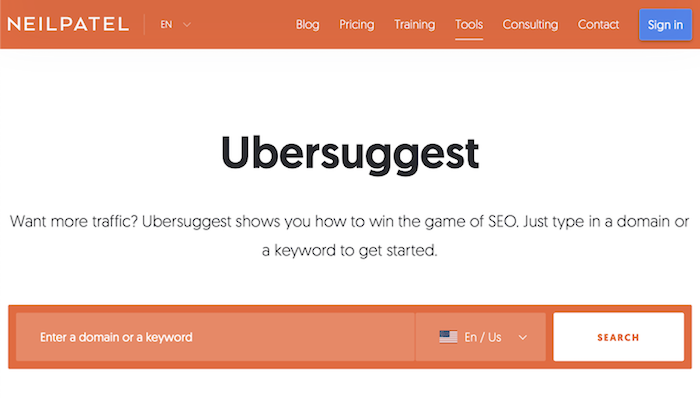
Fortunately, identifying the best keywords for your brand is less about stumbling onto a magic search term and more about understanding user intent. Eventually, you’ll want to start isolating pain points and cross-referencing your potential search terms with your competitor’s highest ranking keywords.
2. Focus on Earning a High EAT (Expertise, Authoritativeness, and Trustworthiness) Ranking
Keywords might be important, but they’re just the tip of the SEO iceberg. Search engines like Google have systems like EAT that can seriously impact your page rankings.
Search engines have a singular real commodity. When they help you get the answers you need fast, that’s a successful session. Search engines live and die by their ability to find users the right answer. In other words, if you want to rank highly and eventually end up on their first page, you need to provide genuine value. That’s where EAT comes in.

EAT stands for Expertise, Authoritativeness, and Trustworthiness, and it’s considered one of the most important factors for Google when determining overall Page Quality Rating. This is one of the ways Google separates the average amateur from the knowledgeable authority.
Understanding this system is particularly important for those in the medical field because of the unique approach to improving it. If you want to achieve a high EAT score, your content should be created by those with expert medical knowledge. Beyond that, that content should be regularly updated and reviewed.
3. Understand Language Limitations Specific to Healthcare and Pharma Fields
When it comes to medical SEO, there are some rather serious limitations to what you can do. For starters, the AKS or Anti-Kickback Statute establishes both criminal and civil prohibitions against knowingly and willfully offering, paying, soliciting, or receiving any remuneration directly or indirectly to induce or reward.
Plus, we can’t forget about the Stark Law. If a physician has a financial relationship with an entity, then they may not make a referral to the entity for the furnishing of designated health services.

Make no mistake, these aren’t suggestions. These limitations come with hefty price tags, with as much as $100,000 for trying to get around them.
That’s why as you develop your medical SEO strategy, it’s important you constantly ensure you aren’t violating any of your industry limitations. Competitor analysis is a great way to identify safe copy and content options if you’re ever unsure.
4. Make Your Site Navigation Easy and Intuitive for Users
When users can easily navigate your site, something interesting starts to happen. Simply put, the user actually sticks around. A site that’s confusing, poorly designed, structured, or optimized tests the user’s patience and creates friction. Sites that are easy to navigate improve your chances of keeping the user’s attention.

Beyond that, intuitive sites make exploring the site a more natural process. Your user should be able to quickly access the information they need and be presented with data that address their other pain points within your industry. The longer the user spends on your site, the more meaningful engagement you’ll receive.
Listen, there’s no denying that improving your user experience can improve your SEO. That being said, you shouldn’t just improve your site navigation because you’re developing a medical SEO strategy. Beyond the binary improvements to page ranking, your users will genuinely enjoy their time on your site, and I’d argue that’s just as important.
5. Adhere to Google’s YMYL (Your Money or Your Life) Rules
Medical SEO might have its own series of unique contributing factors to success, but easily one of the most important is what Google calls YMYL which stands for Your Money or Your Life. As far as Google is concerned, medical web pages are YMYL pages. Categorized as pages that could impact the future health, happiness, and financial stability of the users, Google holds medical pages to a high standard.

Why? Well, the answer is simple. The standards are higher because low-quality pages can be both dangerous and present serious medical consequences for users. One of the easiest strategies for improving your YMYL SEO ranks? Create high-quality content that’s both medically relevant and engaging. Speaking of creating content, let’s talk about content marketing.
6. Do Content Marketing
The term “content marketing” gets thrown around quite a bit in the digital marketing landscape, and with good reason. Creating valuable content is one of the easiest ways to both engage with and assist your audience.
If you’re not sure where to start, creating a regularly updated blog is typically a strong choice. Think of it this way. Your keywords and search terms are the bait, attracting users to your site. Your expertise and capacity are what users eventually agree to, once they see your value. One factor impacts the beginning of your user relationship, the other impacts the end.
Developing a content calendar and consistently making valuable content is the connective tissue between these two. When you have free content that people enjoy, you’re able to bring in traffic with your content. That traffic will then make it easier to improve your SEO through data and improve your visibility.
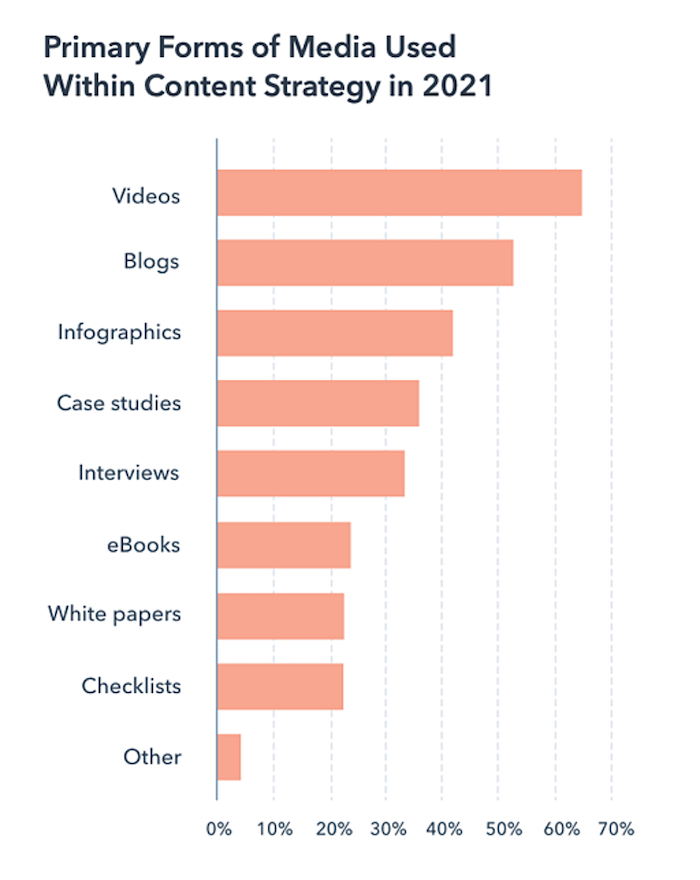
To be clear, you shouldn’t focus only on blog posts and white papers. Social media can indirectly impact your medical SEO ranking because you can get referral traffic. Don’t be afraid to branch out in other forms of media. With changing consumer behavior, video is maintaining its popularity.
7. Use Short, Logical URLs
It may not seem like a massive issue to you, but short URLs can have a massive impact on the way users interact with your brand.
URLs typically go unnoticed, because there are so many other exciting options to focus on for medical SEO.
Of course, this goes back to the issue of user experience. When users have negative experiences with your brand, they’re less likely to make that crucial first conversion. Likewise, when you reduce friction throughout your brand experience, users take notice.
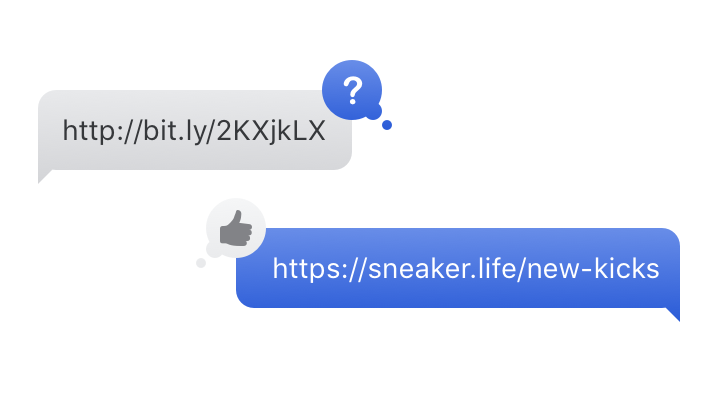
Short, logical URLs are just one of many signs that you care about your audience’s time and experience. Attention to detail matters and your site should be optimized for medical SEO at every angle.
8. Include Images of Staff, Your Office, and Your Equipment
You might think that just because we’ve been talking about blog posts and white paper, that there’s no room for other kinds of content on your site.
Fortunately, nothing could be further from the truth. Visual content can be a powerful tool, and visuals of your staff, office and equipment are some of the most useful styles of content you can share.
Right off the bat, adding these images increases the chances that your users will trust your brand. Beyond that, they’re a great way to increase conversions. Here’s a little trick you may not know about. You can add keywords to your own images. By placing your keywords in the image file manually, you can further optimize your medical SEO.
9. Identify Healthy SEO Practices
There are some guiding principles that you should be aware of, whenever you’re trying to identify healthy medical SEO practices.
As a general rule, you should be making copy, content, and pages primarily for users. There’s a temptation to create pages with SEO primarily in mind, but this is a common trap that businesses fall into.
Does it matter if Google thinks you’re interesting? Absolutely.
Is the user experience infinitely more important than some keyword optimization? Without a doubt.
Never try to trick your users into doing anything, it always backfires. Identify what makes your website unique, and what expertise you can bring to the site today to elevate the user experience.
10. Complete Your Google My Business Page
When it comes to SEO, there are certain contributing factors beyond your own site. One of the easiest ways to improve your SEO without touching your site is by completing your Google My Business page.
It might seem simple but make no mistake. This page can drastically change the way users experience your business online. Not only will this make local SEO more efficient, but it also puts you in Google’s local pack.
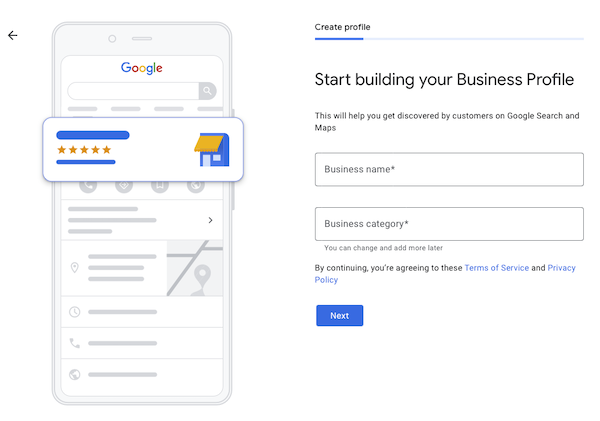
A local pack is a group of 4-5 business listings, appearing above organic search results. The logic here is that Google believes local results are more valuable than generic page results for a specific search term. In other words, you get a free boost in page ranking because you’re closer and more likely to be valuable.
Healthcare and Medical SEO Frequently Asked Questions
How long does it take for medical SEO to work?
Like any other form of SEO, medical SEO is not a quick fix. The idea is that gradually, over time, you’re creating an online presence that will outshine your competitors.
Are there healthcare SEO experts I can hire?
Absolutely! There are plenty of digital agencies that specialize in healthcare SEO, and some even offer free evaluations before getting started.
Is it better to use broad or specific targeted search terms in medical and healthcare SEO?
Generally, I like to experiment with both and use my results to inform future decision-making. That being said, focusing on specific terms makes content creation much easier.
Is it better to target diagnoses or symptoms when choosing keywords for healthcare and medical SEO?
It depends on your strategy. If you’re creating educational content, diagnoses can be pretty straightforward. If you’re trying to cast a wide net, and you have a good idea of what a symptom typically indicates, focusing on symptoms can be useful too.
Healthcare and Medical SEO Conclusion
The world of medical SEO might seem identical to your average SEO strategy at first, but looks can be deceiving. Medical SEO has plenty of unique challenges that businesses have to overcome, and quite a few limitations complicating things.
Still, the foundational elements of SEO are there. Focus on improving the user experience at every turn. Be thorough and reduce friction wherever you can. Establish online authority through content creation and create opportunities for meaningful engagement. If you’re able to do all that, your medical SEO strategy will blow your competition out of the water.
What’s your favorite SEO tactic that most people don’t know? Let me know in the comments below.
Source: neilpatel.com

How to Bolster Your Brand’s Reputation By Giving A Damn
At the risk of stressing something that marketing professionals well know, your product is only as good as your brand. But we need to take a moment and reflect on why this axiom is as important now as ever.
Just as the pandemic has upended our lives, it has upended our businesses. Businesses have been burdened by the same pandemic realities everyone is going through. They are trying to figure out how to not just survive but thrive amid the uncertainty.
Businesses need a partner, not just a product. And in an era of trust and transparency, they need a partner they can count on.
The values you stand for, delivering on what you promise, doing what’s right because you care are all critical to your brand’s reputation.
The Power of a Brand That Actually Really Cares
In short, you give a damn.
Doing anything less is a gamble. Research indicates that corporate reputation has a significant influence on price, perceived service quality, and brand preference.

You can lose customers to bad experiences and aggressive competitors. Your credibility can get dragged through the social media gauntlet. If you don’t actively work to bolster your brand’s reputation, you are exponentially at risk from negative PR.
Without a strong brand, you can’t recover as quickly, while customer loyalty and affinity can weather nearly any storm. Here are some ways to bolster your brand’s reputation. They aren’t particularly difficult. But they do require courage and commitment.
Be True To Your DNA (aka “Transparency and Genuineness Are Key”)
Be true to your core values in what you do and what you say. What do you stand for? And how do you demonstrate that each day?
Businesses want to work with businesses that are transparent and genuine. If a business outwardly projects itself one way — say a creative, outside-the-box trailblazer — yet inwardly operates much differently — a buttoned-up corporate plodder — your clients will pick up on the ruse.
When your external image accurately reflects your internal self, on the other hand, you build trust.
It is no surprise that Patagonia, a company with a global reputation for high-quality products and corporate and environmental responsibility, is atop the 2021 Axios Harris Poll 100 reputation rankings.
Even the words you use matter. Be bold and authentic in what you say because it signals what you really mean. At Ceros, one of our core values is, “We give a s***.”

At Ceros, we regularly go above and beyond just selling our product to providing creative inspiration throughout the process, from hands-on training to community support.
We have a team of people who can help a business with what it needs even when doing so requires going beyond “the contract.” We make this investment because we care.
We give a damn.
Being true to your DNA also proves invaluable when a public relations crisis erupts. Remember when Starbucks received widespread criticism in 2018 after two Black men were arrested on suspicion of trespassing after asking to use the bathroom? Starbucks didn’t press charges and later reached a financial settlement with the men.
But the coffeehouse chain that has consistently advocated corporate social responsibility didn’t stop there. The company apologized publicly, fired the employee who called the police, and announced it would close its U.S. stores for a day to give anti-bias training to 175,000 employees.
Starbucks practiced what it preached.

Don’t Be Lame (aka “Be a Trusted Business Partner, Not Just a Product or Service Provider”)
Businesses need an ally, not just a product or service provider. Think of the challenges they face: supply chain troubles, labor difficulties, the pace of technological change, the pandemic.
They need a business partner they can trust to help them navigate their needs and bring solutions to their problems. You need to deliver on exactly what you say you would, and if for some reason you can’t, you need to roll up your sleeves and help. Customer service is not a status page.
Your reputation also extends to your own business partners and how they do business. How they treat their own employees and think about the world can reflect back upon you.
Don’t Be Thanos (aka “Win The Battle For Hearts and Minds”)
Humanize your brand. Businesses have become too transactional in their relationships with customers. But customers are people, and people are emotional. Emotion influences their buying experience.
Show how your brand has a broader impact on society, whether it’s environmental, social, or other causes. Research indicates that corporate social responsibility can elevate a brand’s equity and reputation.

Take AIG, for example. The global insurer stresses the importance of diversity, philanthropy, and volunteerism and makes deep financial and other commitments to those causes. Earlier this year, it released it’s first Environmental, Social, and Governance Report to measure and manage its efforts in these endeavors. AIG isn’t just making promises. AIG is holding itself accountable, as well.
Become An Advocate For Someone Who Needs One
I once worked for a diagnostic company that made blood glucose testing strips at about a third of the cost of the popular brand-name version. The brand-name manufacturer, a multibillion-dollar company, filed a patent infringement case, which made national news.
During the case, we heard stories from people with diabetes who with our strips could afford to test themselves at recommended frequency levels to avoid complications and live a better life.
We knew we faced an uphill battle in this David versus Goliath legal dispute. And yes, we had a business interest in the outcome. But we became emotionally invested in the lives of the people who were going to be most affected. We unintentionally became advocates in a way that we had not been before. We were their collective voice.
Your reputation isn’t just about your business and how you solve problems for customers. It’s also about how you can represent the voices of other people who matter.
Who Are You Fighting For?
Your brand is a powerful yet fragile thing. It can boost profits, customer goodwill, company morale, and the communities we live in, or if too largely ignored, can begin your organization’s slow march toward irrelevancy. By being true to yourself, a valued business partner, and an advocate for others, you can help your brand stand out.
The post How to Bolster Your Brand’s Reputation By Giving A Damn appeared first on Content Marketing Consulting and Social Media Strategy.
Source: convinceandconvert.com

4 Reputation Management Realities That All Brands Now Face
What do Beyoncé, Kate Middleton, and Harrison Ford have in common? Other than having devoted fan bases, they’re celebrities who have a reputation for giving very few interviews. They control their messaging tightly.
While Beyoncé and Kate Middleton choose to go directly to their fan bases with highly choreographed messaging through their social media channels, Harrison Ford is one of only a very few celebrities who aren’t on social media at all.
However, whether or not they choose to connect with their fans online, none of these celebrities can stop the millions of rabid fans who run fan accounts, who post to Reddit and Instagram, and who analyze their every move through YouTube videos and blog posts.
Why does this matter for you and your business?
Just like celebrities, the rise of fan culture on the internet has fueled both a huge boom in brands’ abilities to control their own reputations, as well as the decentralization of where reputation management lies.


We are now able to build communities of like-minded customers and brand fans. With that comes the responsibility of monitoring a growing array of websites and spaces where brands rate products, review services, comment, and ask for help.
4 Key Considerations of Reputation Management
Ratings and Reviews Are No Longer a Choice
“The rating trusted most by consumers is 4 stars followed by 4.5 and 5 stars,” according to review software company ReviewTrackers.
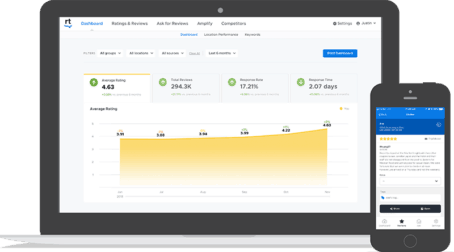
Many years ago, I worked for a well-known arts & crafts brand. At that time, the company I worked for gave the ability to customers to rate and review patterns (the directions consumers would use to create their craft projects), but not the products themselves.
The thinking was that we didn’t want the companies’ own products to have negative reviews. And yet, study after study shows that a few negative reviews actually bolster trust in reviews overall. Furthermore, customers tend to trust relatively positive reviews most (see above quote from ReviewTrackers).
What brands must do is not only encourage reviews with open arms but encourage customers to look at positive reviews as social proof. Today, that same company has embraced product reviews both on their website and in their digital marketing efforts.
And this goes beyond B2C brands. Brands as wide-ranging as US Bank, the fifth-largest commercial bank in the US whose reviews are mostly on Google My Business, to DeSantis Breindel, a New York City-based branding consultancy whose reviews are on platforms like Clutch (both brands are clients of Convince & Convert) are not only monitoring and responding to reviews but also using reviews to feed their marketing efforts (see below).

It’s Not Just What They Say, It’s What You Do
“39 percent of social media complainers who expect a reply want it to come within sixty minutes, yet the average response time from businesses is five hours,” found research by Jay Baer and Edison Research.
In 2016, C&C founder Jay Baer wrote, “Haters are not your problem….Ignoring them is.” That reality is more true now than ever before.
Customers expect help with their issues, and when you don’t respond to negative reviews, your prospective customers will hold you accountable for that inaction.

To positively impact your reputation, treat reviews as an opportunity for customer service and excellent customer experience. Respond to your reviews; add context; thank brand fans and address fan haters.
Social Listening Is More Complex Than Ever
“Word of mouth is directly responsible for 19% of all purchases, and influences as much as 90%,” says the book Talk Triggers by Jay Baer and senior strategist Daniel Lemin.
Outside of owned review channels, brands must monitor reviews and conversations on channels from Facebook and Reddit to the bumper crop of industry-specific review sites such as Zocdoc and Healthgrades.

Using monitoring tools like Meltwater and Sprinklr helps brands to stay on top of what’s being said. Beyond sentiment and topics, brands must make sure that they are leveraging the built-in AI to analyze conversations for trends to keep on top of what their proactive messaging needs to be.
Not sure how to leverage these social listening tools to uncover this data? Consulting firms like Premium Blend can help to build strong queries and implement effective listening processes.
Again, it’s not just knowing what people are saying, but also using this data to shape what your brand should be talking about to be relevant to your customer base.
Showcase Your Customers’ Words and Stories
Reputation management is the reactive part of our work, but we also have the opportunity for reputation marketing. Leverage the stories that your customers are telling about you to market your products/services to prospective customers.
Whether you’re aggregating real customer social media posts like Korean beauty brand Hanacure does on their @hanacureeffect Instagram account or you’re using a tool like SocialProve to pop-up notifications to website visitors that indicates when others have purchased on your website, you’re engaging in reputation marketing.

What are some ways that your brand can leverage customer stories as social proof?
- Proactively turn user-generated content (UGC) into social media campaigns
- Leverage customer reviews and quotes on landing pages
- Showcase real customer feedback in advertising
- Address questions you’re getting from Quora, Reddit, and/or your own communities as content
- Create animated videos featuring customer reviews
- Integrate real questions into your chatbot scripts or FAQs
- Highlight your review scores using in your top-navigation and/or footer
3 Questions to Ask Yourself
- Your customers are already out there talking about your brand—are you encouraging them to do so in the places that help you to strengthen your reputation?
- Are you showcasing the level of customer experience that your prospects can expect from your team?
- Are you reassuring prospects that others like them trust you?
That’s your opportunity with reputation management. Don’t waste it.
The post 4 Reputation Management Realities That All Brands Now Face appeared first on Content Marketing Consulting and Social Media Strategy.
Source: convinceandconvert.com

What Brands Need to Know About Misinformation and Disinformation
There are no earthworms in beef jerky sticks. It is important I state that upfront, lest anyone not read this post in its entirety.
Misinformation Opened A Can Of Worms For Me

Beef jerky was my earliest memory of encountering misinformation. I always seemed to be running late at lunch when I was in grade school.
Waiting in line for mediocre school food was both unexciting and also put me at risk of running late to my after-lunch class.
So I often used my lunch money to buy snacks from the school cafeteria’s snack bar. That generally involved chips, cookies, and Slim Jim beef jerky sticks (for protein, naturally). Oh, how I loved Slim Jim.
A fellow classmate nudged me one day and told me – so everyone around could hear – that beef jerky contains earthworms. Specifically, “earth bait.”
He took “earth bait” to mean “earthworm” and thought I should know. He was not a kid I generally liked so his opinion held little sway, but I was curious about the idea and frankly rather grossed out. I investigated my now unfurled Slim Jim plastic sleeve. There was, in fact, no earthworm or earth bait on the list of ingredients.
Among the many other very questionable ingredients, one did stand out to me, though: erythorbate. This is a commonly used preservative and, if you say it fast it does in fact sound like “earth bait.” I suppose this is the origin of the myth that beef jerky contains earthworms.
Misinformation and Disinformation’s Impact on Brand
This misinformed concept regarding Slim Jim remains in circulation today. If you search on Google for erythorbate, you’ll see a “People also ask” result: “Is Erythorbate a worm?”
This leads you to an advisory from the USDA that confirms its origins (it’s highly refined, according to the USDA, and is closely related to vitamin C) and also states in plain English: Erythorbate is NOT earthworms. They get phone calls to their hotline.

This is an example of simple misinformation spreading somewhat innocently. We’ve heard a lot about mis- and disinformation and bad actors during recent elections, ongoing political feuds around Covid-19, and during congressional hearings when certain social media executives claim to be tamping it down.
What’s the Difference Between Misinformation and Disinformation?
It is important to clarify that misinformation and disinformation are different things.
Misinformation, as I noted, is generally spread without malice or intent. Disinformation, on the other hand, is generally organized and has a specific outcome in mind.
For example, if someone started an anti-beef-jerky coalition they might benefit from spreading the false fact that beef jerky contains earthworms. There is not, to my knowledge, a coalition of this nature behind the aforementioned falsism.
This distinction is subtle but important. It’s highly likely that your brand or organization will find itself in the midst of misinformation from time to time. It’s also increasingly probable that you could be in the crosshairs of a disinformation campaign, too.
A September 2021 study by the Network Contagion Research Institute found that disinformation is increasingly being used against brands of all types.

Be Prepared to Protect Your Brand
How should you prepare for and respond to misinformation and disinformation when you see it?
1. Always be listening.
Active social media listening is the best way to detect false information before it catches on. This is a baseline activity and its benefits reach far beyond identifying potential misinformation.
Look at the data carefully to examine for a common language in comments or user-generated posts. Also, look broadly at posts your community managers are responding to and search for comments that might be otherwise overlooked in day-to-day community management (particularly if your team is large or the duty for responding rotates among different humans).

2. Create your brand interactions carefully.
Brands themselves sometimes contribute to a sense of confusion. Be extra clear about things that could cause confusion (like deals or things that have limited availability).
Also consider how you phrase Tweets and messages, especially if your brand is prone to phrasing things as a question. There are times when asking a question sparks community engagement. But it’s not always necessary. NPR, citing Betteridge’s Law, actually trains journalists to generally avoid it.

3. Correct the record.
If you encounter false information it’s important to answer it with truth and link to a source where readers can further verify if they so choose. It is also important to do this promptly.

4. Context matters.
If it is clear from a customer’s message that they are using your product or service and have encountered something that sparks a question, it’s probably not the misinformation.
This brings me to my final point…

5. Consider the source.
If someone shows up in your feed for the first time with clearly false information, take a moment to look at their other posts. Check to see if they’re a prospect or customer. If not, it is possible it may be a troll out to spread bad information about you.

Got Questions?
These steps do not remove the risk of mis- or disinformation targeting your organization, but they are helpful defensive maneuvers that can limit the impact. Questions? Let us know.
The post What Brands Need to Know About Misinformation and Disinformation appeared first on Content Marketing Consulting and Social Media Strategy.
Source: convinceandconvert.com

The Guide to Using UGC Marketing to Create Deeper Audience Connections
User-generated content, or UGC, is exactly what it sounds like: anything that people outside the professional marketing team are creating around or about your brand, product, or service.
UGC has been gaining significance in recent years as a powerful marketing tool for digital agencies and marketers. It is a way to create a sense of community between the brand and its target audiences.

Why should my brand consider using UGC for marketing?
UGC can help brands establish themselves as an authority in their field while also increasing their bottom line with increased revenue from new customers or repeat customers who are happy with the company.
It also helps differentiate the brand from its competitors because it creates an emotional connection with its customers by showing how they care about what they do and who they serve.
Online UGC takes the form of content, broadly. Specifically, that includes (and isn’t limited to):
- Social media posts
- Recommendations and reviews
- Photography and photo galleries
- Video
- Fan art
- Reddit threads
- TikTok challenges
- Blog posts
- Unboxing videos
- GIFs
- User testimonials
- Posts with branded hashtags
User-generated content is an excellent way for companies to create buzz about their brand. It can also be used by B2B brands in order to connect with potential customers.
More connections create a stronger relationship.

What are the benefits of leveraging UGC as a brand?
UGC is a powerful tool for marketing because it automatically creates greater trust amongst customers, can provide valuable insights into customer needs, and automatically generates fresh content on a consistent basis.
Build trust
It’s well documented by research presented in Edelman’s Trust Barometer, that people trust humans like themselves the most — and they trust brands the least. Brands that can incorporate a mix of user-generated content into the marketing mix can build more trust with customers.
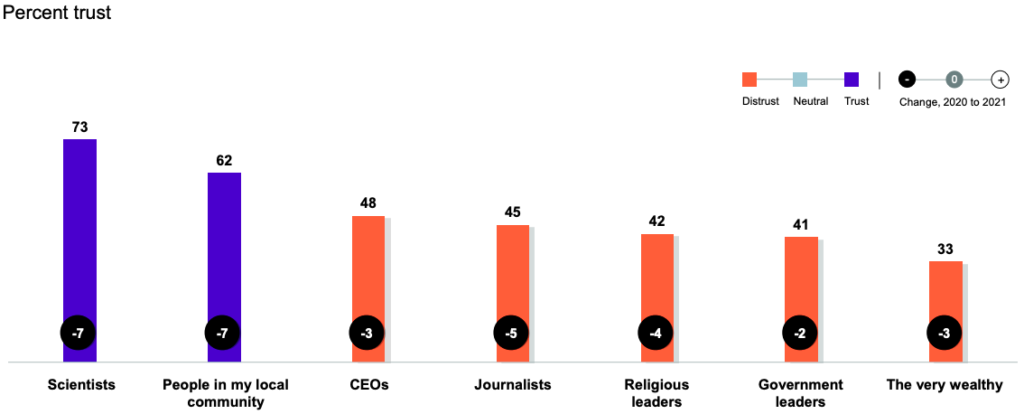
UGC lends an air of authenticity and even transparency. It builds trust because the brand is putting forth what your customers are saying about a brand, product, or service.
Discover customer insights
Brands that embrace the power of UGC in their marketing campaigns are able to create a more relevant and authentic relationship with their intended audience. UGC is about giving customers a voice that is their own, not influenced by the company or its employees.

Searching for and following UGC provides some of the best opportunities to engage with your customers and potential customers. When brand advocates feature your brand to their friends, family, and followers, they will usually have done this without being paid or incentivized to do so.
Without any gatekeepers, they are free to post both the good and (hopefully) constructive critiques about what they would do differently.
It’s easy to get wrapped up in criticisms or bad reviews. The best brands find a way to take this as feedback and learn from it, even if they don’t republish the content or take the opportunity to respond.
Generate fresh content
It shouldn’t come as a surprise that creators are everywhere. Many of them are really good at creating content in a variety of mediums. As mentioned above, there are several ways that content comes to life.
When a customer creates in a way that resonates with them, it will likely also resonate with another member of your audience.
There may be a temptation to slightly change UGC before it’s reposted. STOP. When using UGC that the creators have shared, refrain from editing their content in any way.
Use it as it was meant to be original. These unfiltered views into customers’ experiences with a brand are exactly what audiences need to see to build trust.
Is UGC useful in B2B?
UGC is absolutely useful in B2B, along with B2C and other entities. B2B marketers are also in the business of building trust and building brand advocates. Achieving this is a two-way street.
First, build trust with the audience by amplifying other people’s voices, their recommendations, their product videos, their testimonials, and case studies. For most B2B brands, we discover UGC in places where ratings, reviews, and demonstrations are content cornerstones.
Identifying the creators who are talking about your brand in these channels is a good way to a source who might be able to create more content for you.
Spend time searching on YouTube, Instagram, TikTok, and other video channels for creators who post reviews, explainers, and demonstrations featuring the brand, product, or service. You may be shocked to find just how many product demos and tutorials are online that are never made by the employees who created the actual product.
Discovering and amplifying reviews and demonstrative content allows B2B brands to leverage UGC for building trust with their audience. This creates more and deeper connections with the people who are likely some of the best customers.
At the same time, marketers are deepening the relationship with key customers by amplifying their experiences and using previously shared content.
If there is a good relationship forming with a customer or client who is creating UGC about the brand, product, or service, then B2B marketers should consider a step forward in formalizing content co-creator relationships to maximize the UGC opportunities.
Co-creating content empowers creators to use their vision and voice while allowing the brand a bit more input but in the overall direction. Remember that ultimately the customer is responsible for the end product.
In some of these relationships, co-created content looks similar to influencer marketing. However, there’s still space between full-on influencer marketing and leveraging what somebody was inspired or motivated to create.
How can we encourage UGC for my brand?
While brands can’t create their own user-generated content, they absolutely can encourage the creation, which we see all the time. During Northern Arizona University’s Giving Day 2020, the first 1,000 donors earned a pair of branded Lumberjacks socks.
The package included a small card that instructs the recipient exactly what to do to create a social media post while wearing the socks. The card listed what hashtag to use, the specific university account handle to tag in a post, a suggestion for photo styling, and of course the prompt to share online.
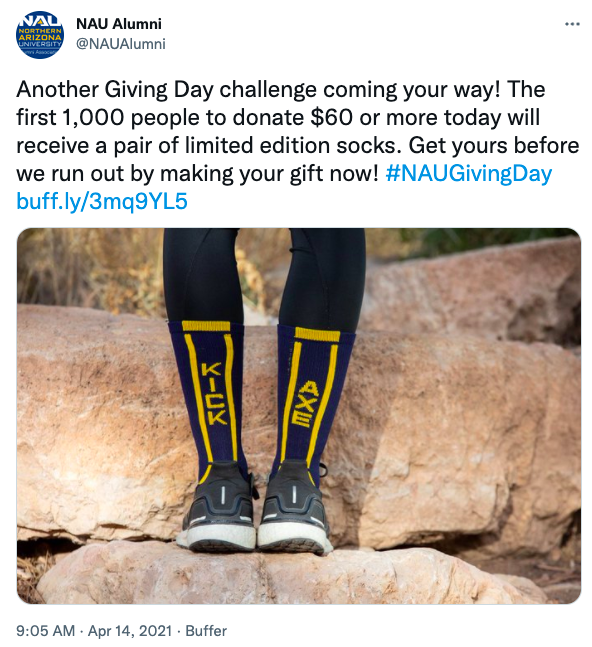
This approach to UGC isn’t new. For a decade or longer, we’ve used social media to ask and inspire audiences to share their experiences with brands. The difference today is that people often create content of what they deem shareable before they’re asked.
Even so, campaigns perform better when creators are guided by specific instructions, including hashtags and @mentions, what channels to post, and post types.
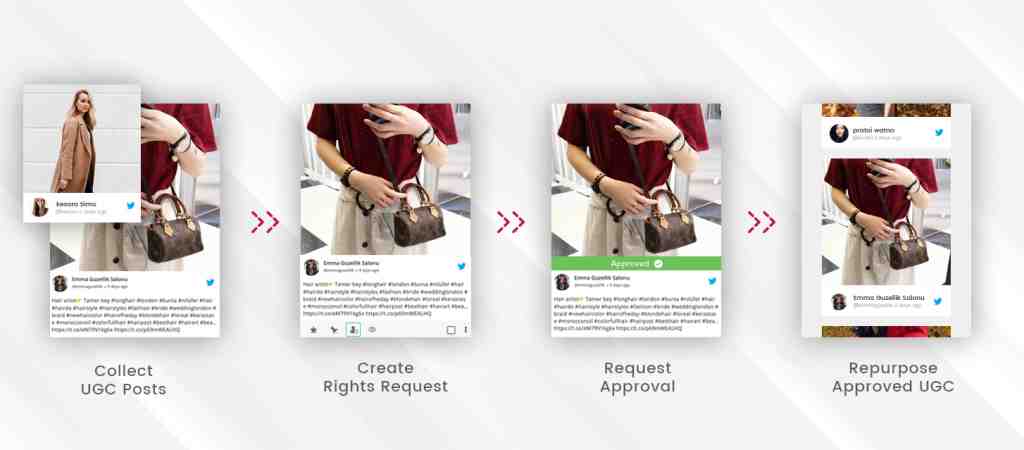
There are discovery platforms or tools for marketers to discover user-generated content across the web, even when a brand is not explicitly tagged or mentioned. Some tools allow marketers to contact the original creator and manage those relationships and permissions within the tool.
How do you get approval for using UGC?
By following a couple of clear-cut rules, brands can absolutely use and leverage user-generated content.
First, you have to find the content, which happens best when using active social listening programs. To find the user-generated content that people are posting on your behalf, marketers must use robust social listening.
A robust listening program goes beyond account tags and keyword searches queued up. Also look at hashtags and non-tagged mentions of your brand, including brand name, your product and service terms, and keywords.
Search across general social feeds and hashtags as well. Take it a step beyond brick-and-mortar or physical locations by using location-based aggregators to find content that is tagged with a location.
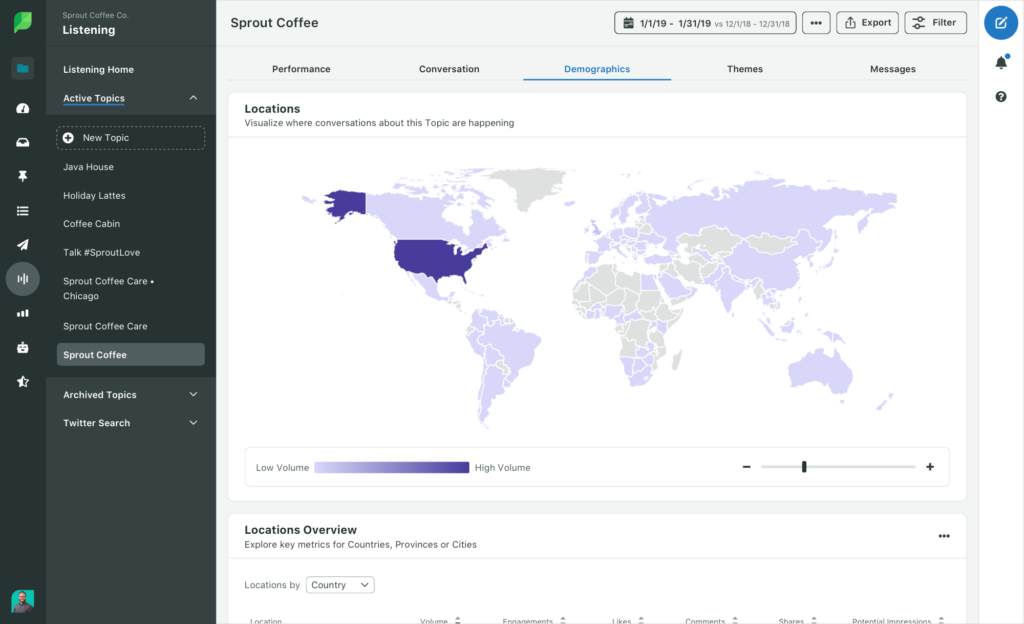
Credit: Sprout Social
User-generated content can come from consumers or from employees of the company. When it comes from consumers, permission needs to be granted before the material is shared on a company’s social media channels or used elsewhere on their website.
A lot of that happens just in direct messages, but some of that happens in the aggregate tools that you’re using as well.
One-to-one connections are how a brand moves someone from being an audience member into becoming a fan.
There are two types of copyright: exclusive rights and moral rights. If someone creates a photo or video expressly for you, like in the co-creation example, this is an example of needing exclusive rights to use the content. A case of moral rights is when a creator produces content as a hobby or as an independent creator, and grants permission to the brand to amplify.
In either case, get approval from the original creators of the content you want to share. Travel and tourism brands often use a hashtag in Instagram bios with a disclaimer that states by using this hashtag, the user allows others to share the content.
Otherwise, reach out to the original creator and secure permission from them to use the content in any marketing channels. To use any photography, video, or art, seek out the moral rights granted by the creator.
Credit: Tagboxx
Testimonials and reviews that are publicly posted on Google or Yelp, your Facebook page, or G2 Crowd can be reposted without explicit permission.
Even so, smart marketers will try to identify and get in contact with the customer. Doing so creates additional touchpoints with that customer.
Asking permission from the original creator to use their content creates goodwill between you and that creator. That establishes a more direct, one-to-one connection with a brand advocate.
Those one-to-one connections are how a brand moves someone from being an audience member into becoming a fan. Creating one-to-one connections is done easily, but it’s overlooked all the time by marketers.
Social media allows for us to create micro-connections simply, with just a push of a button, a heart on a reply, a simple DM.
The more one-to-one micro-connections that occur, the deeper the relationship and the more strings are connected between the brand and an audience member. More connections create a stronger relationship.
What is the best way to amplify user-generated content?
User-generated content is a way for companies to leverage the power of consumer word-of-mouth in order to promote their brand. UGC works really well, obviously, in social media, through sharing, retweeting, and reposting.
While not used as frequently in email newsletters, UGC can perform well in the right template. Create a content block for a fan shout-out or a UGC feature within the email and encourage others to use a branded hashtag when creating their own content.
Brands that have their own online community or group should incorporate UGC consistently. Doing so will inspire other customers and advocates to create their own content and share it with you. Increasing the cadence of UGC on the brand’s behalf provides more opportunities to amplify brand advocates.
The post The Guide to Using UGC Marketing to Create Deeper Audience Connections appeared first on Content Marketing Consulting and Social Media Strategy.
Source: convinceandconvert.com

Four Trends Driving the Future of Consumer Identity
Data privacy and consumer identity have been topics of conversation in the ad tech industry for a long time now. With the widespread use of the internet and the desire for companies to be more transparent with their motives, consumers are getting smarter about how their data is gathered online.

This new insight has sparked countless debates over what resources are and aren’t acceptable for companies to use and has led to big-name platforms, such as Apple and Google redefining their privacy policies.
Advertisers are able to reach consumers in new and meaningful ways with so many online channels at their disposal. However, the promise of value-based advertising has fallen short, with several voices calling for changes to the way consumer identity data is handled.
Trends such as consumer action, privacy regulations, the abolishment of third-party cookies, and the rise of the walled garden have all contributed to the rapidly changing landscape of the ad tech industry, and have made it important for companies to innovate their data and identity strategies.
There are currently four trends driving the future of consumer identity that marketing professionals should keep top of mind as they continue improving the brand/consumer relationship:
The Consumer is More Than a Participant
With so many data-driven insights comes the tendency for brands to shift away from human-based marketing and instead of seeing consumers as cookies, cohorts and user IDs.
By taking data gathered from consumers to best target them based on their personal wants and needs, companies hope to connect with their audience in more relevant ways.
While the average consumer values personalized marketing, they’re getting much smarter in their ability to recognize what’s truly valuable and what’s simply noise.
As consumer behavior changes, brands must shift towards a conversation-based approach instead of seeing consumer engagement as an end goal to be reached.
With the introduction of AI-based technologies comes the eagerness to automate consumer processes. Brands should be careful in taking this approach. Simply automating all processes can take away the dynamic and responsive aspects of marketing that consumers have come to value.
Instead, companies looking to evolve with consumer wants should be integrating AI with pre-existing ideas of human creativity and intelligence to bring to life answers to the questions consumers search for.

Implementing a creative ad tech system helps to streamline and automate across the creative process, allowing brands to marry large-scale personalization with consumer wants and needs.
Due to the boom of social media, consumers can connect with brands at various touchpoints across the customer journey.
Instead of a blanket advertising approach, brands must take into account the fact that the vast majority of consumers are likely to make a purchase from a brand that puts effort into personalized marketing.
Utilizing a creative personalization solution has the power to create 1:1 personalized experiences at the level the market has grown to demand.
Navigating Consumer Identity Privacy
The momentum around consumer privacy regulations has grown in recent years. Privacy regulations such as CCPA and GDPR require the consent of users and a designated opt-out policy and give consumers the right to demand their data be corrected if inaccurate.
Ultimately, these laws require brands to be transparent about how they collect, use and share customer information, bringing even more attention to how consumer data is being handled.
Brands need to take a proactive approach toward data privacy in order to avoid serious consequences.
Identity solutions, such as LiveRamp’s RampID and Unified ID 2.0 (an open-source ID framework using consumers’ anonymized email addresses gathered from a user logging into a website or app), offer brands a way to personalize communications with their audiences across all media channels while still adhering to privacy regulations via acquired consent.
Identity and consumer privacy will continue to be major themes across the industry for years to come. Combining data-driven identifiers with creative automation platforms allows companies to set themselves up for long-term success.
They must ensure that they’re still meeting consumers at the right places with the right messaging with privacy in mind.
Cookie and Device ID Deprecation
Consumers have been standing up to demand more fairness and transparency for their privacy online. Browsers and device manufacturers have also been on the same page.

With Google’s decision to moving away from third-party cookies (now delayed until 2023) and Apple integrating key privacy changes into their iOS 14.5, players in the direct-to-consumer market are creating big disruptions in the data-driven advertising space.
The industry is quickly pivoting from a world of ubiquitous consumer data to one where it’s significantly more controlled, managed and safeguarded.
These changes leave brands little choice but to turn away from traditional advertising methods and find new ways to harness consumer data, such as first-party cookies through privacy-compliant technologies.
Companies should keep in mind that traditional use cases for third-party cookies won’t simply disappear, but will instead evolve.
By maxing out the value of first-party data to effectively personalize experiences for consumers, brands will be in a better position to ride out these changes and evolve with the industry.
These changes may seem daunting to an industry that has depended on third-party cookies and device ID methods for decades, but a shift towards first-party data offers an opportunity for companies to take a step back and really dig into their personalization strategies to best optimize their consumer relationships.
Walled Garden vs. Open Web

The walled garden ecosystem is growing rapidly as big players such as Amazon and Facebook erect walls to protect their data and assets.
These walled gardens are incredibly disruptive to the future of data-driven advertising, as they block the gathering of data from any outside advertisers.
There has been conversation around publishers and ad tech companies banding around a new unified ID, however, it’s too soon to tell whether these efforts will be fruitful.
According to a 2020 Harris Poll, online users spend 66% of their time on the open web, and 34% behind walled gardens.
However, the open web-only accounts for 40% of total ad spend, whereas 60% of brands are putting their money behind walled gardens in the hopes of reaching more consumers.
For publishers and marketers to survive this large-scale shift of content to closed ecosystems, companies need to improve their first-party data and bolster their direct relationships with consumers instead of relying on platforms such as Google and Facebook to connect them.
Between You and Me
Advertisers who have consistently viewed cookies as the end-all-be-all for personalization tactics are going to have to get smart about their next move.

Respecting consumers’ desire for privacy, shifting to a first-party data strategy and recognizing customers as more than just a one-size-fits-all audience are all great steps towards creating a trusted, lasting brand.
There’s plenty of opportunity for outside-the-box solutions if only companies are willing to take the leap.
The post-Four Trends Driving the Future of Consumer Identity appeared first on Content Marketing Consulting and Social Media Strategy.
Source: convinceandconvert.com

Find the Right B2B Influencer or KOL for Your Brand
B2B KOL and influencer programs are a topic of nearly every conversation these days. Our friend Lee Oden at TopRank Marketing conducted a survey in early 2021 about the use of B2B influencer marketing and found these incredible stats, along with many others.
- 74% of marketers agree that influencer marketing improves customer and prospect experience with the brand
- 63% of marketers agree that marketing would have better results if it included a B2B influencer marketing program
From our view, we don’t see that trend slowing down anytime soon.
Influencer vs. KOL
Some may say it’s merely semantics but the word “influencer” infers a YouTube or TikTok celebrity smiling big to schill their use of the latest teeth whitener and the term, “key opinion leader” (KOL)” is emerging as the preferred term for B2B partnerships.

Key Opinion Leaders are what the B2B community is looking for, right? These partnerships are MUCH less about “buy now!” and more about learning something new from a trusted source or having a brand experience where sales are the last metric to be measured as the success of a partnership.
At Convince & Convert, we’ve concepted, recruited, created and managed dozens of KOL programs for clients over the years. Almost every project revolves around helping the audience gain insights or perspectives from KOLs in their area of expertise and not about direct sales.
This is the case in our most recent work with Cisco to source and creates short-length video series and blog posts for their partner marketing platform.
Over the course of the program, we’ve built relationships with our KOL’s and the partner audience at Cisco has also built affinity and trust in the knowledge they bring each month.
Not a week goes by that our own Jay Baer isn’t approached to be a KOL for various brands and contribute his thought leadership, marketing prowess, and digital personality to a campaign or brand platform.
Other C&C team members including Zontee Hou, Mary Nice, Daniel Lemin and Jenny Magic also get asked to contribute content as a KOL around digital marketing strategy and customer experience.
Working on both sides of the KOL programming has given us unique insights about how to make a program successful and what matters when negotiating a rate.
How to Approach KOL Selection
TopRank’s survey found that “39% of marketers say their top challenge with influencer marketing is that the process is too manual” and we couldn’t agree more! Our clients look to us to take out that manual work for them and deliver KOL results with as minimal extra work as possible.
Having perspective on what content creation and campaigns need from both a brand and a KOL perspective has given us a unique angle when working with KOL engagements.
Sourcing B2B KOLs for Your Brand:
We use our network of contacts as well as subscribe to several software platforms which support our discovery and vetting of potential KOLs.
Software platforms we currently use include:
– Social media marketing analytics with advanced competitive analysis, SEO, social reporting, and content marketing tools.
– Helps PR and marketing teams monitor media coverage across both news and social media and enhance brand management.
– Crawls tens of millions of social and web profiles to find what (and who) your audience reads, listens to, watches, follows, shares, and talks.
– Specialises in providing influencer marketing software and supporting professional services to help brands scale their influencer programs.
Once we have our starting list we make KOL dossiers that outline each potential KOL, the reach, content types, audience profile and other interesting information about the individual.
The dossiers bring the KOLs to life, similar to how personas would in a marketing plan as well. It allows our clients to see and relate to potential KOLs much more so than a spreadsheet of text.
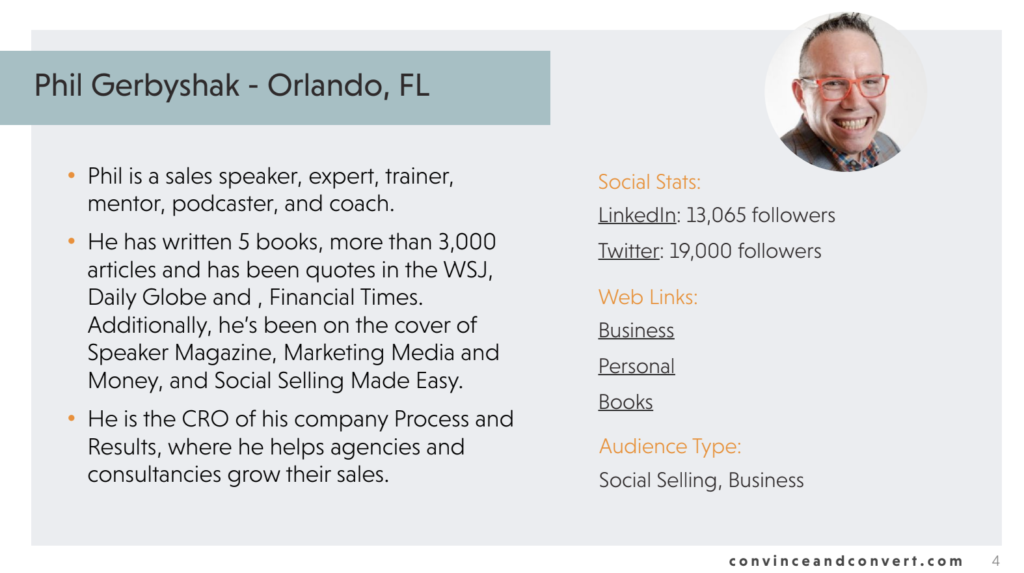
This takes the work the software provides for surfacing potential KOLs and overlays actual manual review and research from one of our team members.
(We visit each KOLs page, watch multiple pieces of content on all channels, review other brands they may work with, assess quality and style of content produced and confirm audience reach numbers from the software).
We like to research 2-3x the number of final KOLs our client is targeting so that we have provided a solid look at the opportunities and competition (or not) in a category. From the set of dossiers, we narrow in on our top individuals to pursue.
Selecting B2B KOLs:
Now comes the educated guesstimate part of this work.
Each of the KOLs will have different levels of compensation, preferred channels to activate and affiliation with our client.
Before we pick up the email or phone to approach a KOL we hyper study the following parts of our dossier:
From there we work on a payment range we believe to be equitable based on the work request and experience.
KOL Payment: The Wild West
Some of you may know I worked with Jay in the early 2000s at an ad agency in Phoenix. In those early days, I would place the online media for our clients. One such campaign was for a client who created and sold koozies.
Their koozies had suction cups on them so that the gel coat on your boat wouldn’t get ruined as you enjoyed an ice-cold beverage while cruising around the lake.
As media kits and banner ads overall were few and far between, we would literally search the web for sites we thought would be a good fit and call (on a desk phone!) the owner or main contact of the site.
(see: title of Webmaster) We’d start with an offer of a hundred dollars and see how it landed to know if we completely offended them or had just made a great deal, working our way down the list of potential banner placements.
And even in 2021, B2B KOL negotiations feel a lot similar but certainly more than a few hundred dollars.
We took this question to our friends at Onalytica, the biggest B2B influencer database. With a platform like theirs, it is easier to negotiate and process payment for a KOL, but it still requires conversation and a fair bit of guesstimation.
Each individual person and set of content pieces come with their own negotiations. Valuing the relationship and offering a fair and equitable rate will go much farther in B2B KOL partnerships than budget savings.
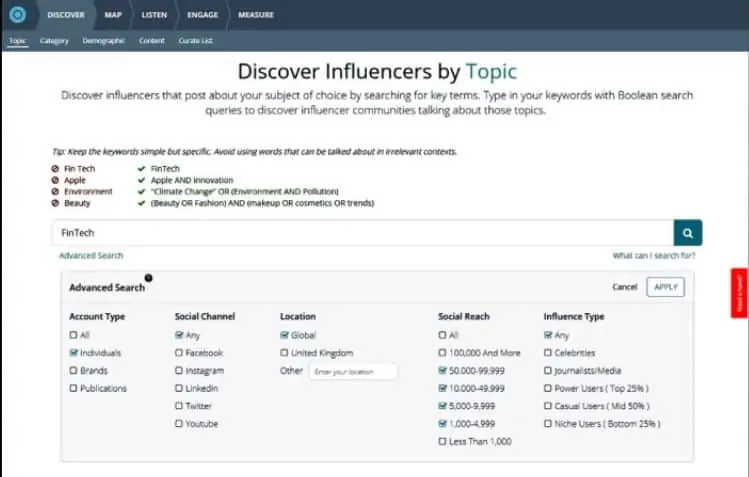
Onalytica platform
The Good News For Finding B2B KOLs
Lucky for all of us, rate cards and reports in the area are increasing, giving at least a clue or a starting point to custom negotiations with KOL’s of interest.
Even for Convince & Convert, we’ve worked on a general rate card in the form of our media kit for the types of content we regularly create for clients.

It takes into consideration the expertise our collective team brings to any KOL engagement.
As we work on behalf of clients to strategize and plan their KOL engagements, we use our rate card as the barometer for gauging the starting offers and rate negotiations with the KOLs selected.
A recent report by Intellifluence included more than 1200 influencers asking them about compensation expectations for mainstream pieces of content. And while the influencers included were likely working with more B2C than B2B brands, we found these areas to universally apply:
- Cash is preferred. “Nearly 70% of those surveyed said they liked to get paid in cash and in the product.” For B2B marketers – particularly MarTech brands, think about how you can sweeten your offer or enhance the relationship with a KOL by offering a license, upgrade or similar in addition to direct payment.
- Particularly for C&C clients, video is a common content type in our KOL programs. In the Intellifluence survey, influencers wanted brands to realize how much pre-work goes into creating a quality video.
For B2B marketers, when you are working with KOLs acknowledge that the hard work is in the prep and polish of a video. While the output may be only a few minutes of finished content, a worthwhile KOL will spend time to plan, script, and use quality equipment to shoot the video.
One area we tend to do for our clients is we do the post-production work – asking a KOL to send us clean video and we add any captions, logos and bumpers to the final cut. This works well because most of our KOL interactions are part of multi-episode shows.
Frequently Asked Questions:
QA: 1
What type of content (webinar, blog post, social post, etc) would be a fit not only for our client campaign but also fits with the KOLs style and audience set?
We have repeatedly found that when we approach a partner KOL with a specific ask or deliverable they are increasingly able to agree or negotiate the contract more quickly.
Giving them something thoughtful to react to goes a long way in the negotiation process.
QA: 2
How large does this KOLs audience reach? (followers, average engagement, etc) How key is their audience to establishing our objectives?
An exercise in quantity vs. quality if you will: Depending on the goal for the campaign, one or the other could sway the amount of negotiation you are willing to engage in.
Although leaning toward B2C, this recent Intellifluence survey has some starting points on price per post expectations and by channel direct from influencers which is a must-read.
QA: 3
Which other brands does this KOL work with or represent? How do those brands affect or overlap our client’s brand?
Usually, we work with 6-10 KOL’s at a time and are creating an episodic type show for our client. Explaining the overall campaign and creative direction the KOL is part of also provides context and company, increasing the knowledge of the outcome for the KOL helps to gain trust, especially for new relationships.
Working with B2B KOLs is a Work in Progress
Someday we’ll have the “ultimate pricing guide to B2B KOL engagements” but until that is created, we’d break it down to building a relationship with your KOLs is key and fair compensation and clear deliverables go a long way in a long term partnership.
The post Find the Right B2B Influencer or KOL for Your Brand appeared first on Content Marketing Consulting and Social Media Strategy.
Source: convinceandconvert.com

Social Media Trends You Need to Know in 2021
It’s that time of year again — time to review the social media trends we expect to shape the upcoming year. Let’s dive in now to our annual list of social media trends to watch in 2021, according to the Convince & Convert social media consulting team:
Companies Will Need to Address Social Media Team Burnout
“On one hand, many social teams have been elated to finally be seen as a vital part of their organizations because higher-ups have recognized just how valuable social media has been for communicating in real-time through COVID-19 and other major crises.
On the other hand, social teams are burning out with having to be always on with social customer care (which also includes being the target of a lot of misplaced vitriol) and also having to be the first to communicate through a lot of shifting situations and serious crises, in addition to dealing with all of the personal hardships that come with living through a pandemic.
Social media burnout has been a huge topic with a lot of Social Pros podcast guests over the last few months. I’ve also heard the concern from our clients in higher education.
In fact, according to Sprout Social, ‘88% of social marketers [in higher ed] say the pandemic has made their work much harder, and nearly half don’t have adequate support or resources to manage their mental health. Checks out.”

Anna Hrach, Strategist
Fee-based Fan Communities Will Grow
“Many businesses continue to suffer from a lack of organic reach in social media. Concurrently, consumers are increasingly gravitating toward smaller, more intimate topical communities (see the rise of Facebook Groups popularity as an example).
Simultaneously, 2020 saw a big move in the direct-to-consumer space, both in terms of e-commerce (as evidenced by Instagram shopping), and content (look at the explosive growth of OnlyFans and similar).
In 2021, we’ll see these trends converge, and brands will begin to adopt fee-based communities that give superfans exclusive access to content, exclusive products, and more.
This is the post-modern version of the Membership Club, and will give smart brands the ability to build advocacy and word-of-mouth among core customers who are willing to pay a small monthly fee to interact with one another, and the business.”

Jay Baer, Founder, Convince & Convert
Building Trust Through Content Delivered By and Featuring Humans
“Sure, for a long time, people have talked about the erosion of trust in brands, but never before have brands had to face it more head-on than 2020.
It should become the default that content is carried by human beings — whether that is influencers, your employees, or other subject-matter experts.
People don’t just need to trust because it feels good; people have to put their every action and every purchase through a filter of safety and economic impact.
It’s time to up-level content — not necessarily in production value, but in human connection. Is it harder? Yes. Is it the right thing to do? Yes.”

Mary Nice, Strategist
The Rise and Resurgence of Private Groups and Platforms
“As noise increases on social media, many are looking to customize their experiences by joining private groups and forums based on causes and personal interests.
There has been a rise in the number of Facebook Groups and membership, and Instagram is now seeing the use of its Threads or sharing Stories with specific friends.
Many people are also going to or returning to private and semi-private online forums for education, entertainment, networking, and mutual interest.”

Christin Kardos, Community Manager
Influencers Will Become Vital in B2B, not Just B2C
“According to the 11th Annual B2B Content Marketing Benchmarks, Budgets, and Trends report from CMI/MarketingProfs, 89% of B2B marketers use social media for content distribution, but only 24% used Media/Influencer relations.
It’s no surprise that in the last decade, social media has become an extremely fragmented and noisy place, and therefore, brands both in B2B and B2C will find that their dollars go further when they collaborate with individuals whom their audience trusts.
Whether these are macro-influencers or micro-influencers, co-creating content that comes from these trusted voices will help brands to break through the noise AND reach broader audiences.”

Zontee Hou, Co-lead, Consulting
Socially-conscious Values Extend to Imagery as Well
“Nearly 80% of people globally have said it isn’t enough to have people of various ethnicities, backgrounds, and appearances in advertising but that they expect companies to do a better job at capturing people’s true lifestyles and cultures, according to new research by Getty Images.
Searches have increased year-over-year for ‘diversity’ (up 133%), ‘culture’ (up 115%), ‘real people’ (up 115%) and ‘inclusion’ (up 126%).
From May to June alone, customer searches for diverse images increased by 200%, and searches for images around unity and equality increased by 500%, trends that are believed to be intensified due to anti-racism protests.
Side note: our client, AARP, partnered with Getty to create more authentic images of people 50+.”

Jenny Magic, Marketing Strategist
Social Media Is Part of Everyone’s Job
“Social media has been a core part of the business for more than a decade. Long gone are the days where ‘playing on that Facebook thing’ was only supposed to happen on lunch breaks.
In the age of coronavirus, social media has become more important than ever to business survival and success.
Your employees are your greatest social media assets. In fact, 45% of consumers are more likely to research a product or service when a brand’s employees post about that product or service.
Social media skill sets go beyond marketing and communications roles. They are less frequently required but especially needed, in customer service, HR, sales, and research.
Even in roles without direct ties to content, messaging, design, lead gen, sales, or service, we’re still asking employees to be good at social media to power our internal advocacy efforts.
Employee advocacy programs continue to be a top trend because their success to humanize a brand and amplify storytelling is undeniable at scale.
Businesses must provide social media policy guidelines and resources for their employees to master social media skills, as this technology is more akin to email than VR in today’s business world.”

Lauren Teague, Strategist
Use of User-generated Content Grows
“User-generated content has become an increasingly reliable social media marketing tactic. Brands and consumers find this type of content more authentic and trustworthy.
A majority of users trust UGC when it comes to influencing their buying decisions, and people want to see real-life experiences.
We will see a surge in UGC content this year through platforms such as TikTok and Instagram.”

Leanna Pham, Brand Marketing Intern
Questions About Any of These Social Media Trends? Ask a Convince & Convert Strategist!
Simply fill out the form below to request a no-cost consultation with a strategist on our team. We’d love to get to know you.
The post-Social Media Trends You Need to Know in 2021 appeared first on Content Marketing Consulting and Social Media Strategy.
Source: convinceandconvert.com