
Tag Archives for " B2B SEO Strategies "

B2B SEO: Three Essential Strategies to Generate High-Quality Leads
Organic search has an amazing ability to send targeted traffic on a continuous basis is unbeatable, but it is getting harder and harder to build an organic search presence.
There are many factors playing a role here, including the higher competition in just about any business sector, and Google’s growing unwillingness to send clicks elsewhere, instead of keeping those users engaged with search result pages.
So if your B2B business is seeing less and less Google traffic, you are not alone.
Using the tactics below, you can remedy the situation and improve your Google rankings.
3 Essential SEO Tactics for B2B Business
Here are three essential SEO tactics for B2B business to generate high-quality leads from organic search:
1. Get Your Site Discovered at All Stages of the Discovery (Pre-Buying) Journey
While B2B sales are often driven by impulse shopping, B2B buyers are willing to do their homework prior to making the final decision.
In the B2B industry, content is the most important component of the buyers’ journey which can directly influence purchasing decisions.

More than half (62%) of B2B customers admit they can finalize their purchase selection criteria based solely on digital content.
According to a 2015 Forrester study, 74% of B2B buyers spend more than half of their time researching a product online before buying it offline.
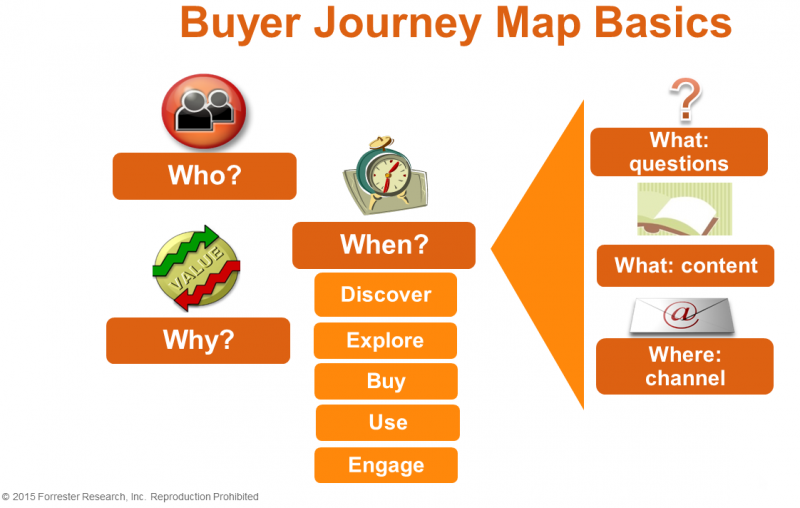
This means that B2B SEOs must pay close attention to both:
- Search queries with informational intent (to create optimized “problem -> solution” type of content
- Branded search queries (those that include their own brand or product name as well as that of their competitors’)
To give a good example of a SaaS brand doing that right, take a look at PayKickstart that has separate landing pages optimized for:
- Niche-specific landing pages that explain how the platform helps businesses in each sector they target (Example)
- Competitive landing pages (explaining why their platform is better than that of the competitor: Example)
- “Problem -> Solution” landing pages (explaining how the platform solves an existing specific problem in their niche: Example)

[An example of a landing page driven by competitive branded keywords]
This SEO strategy serves a target customer at each of their research stages:
- Planning stage: Initial research (when they are only looking for possible apps to set up their digital entity)
- The decision stage: (when the customer has collected possible options and tries to make a choice)
- Set-up stage: (when the target customer is in the process of set-up and facing some specific problems)
Your keyword research and content optimization strategy should address all of these stages that normally constitute the buying journey in the B2B sector:
The stage in the buying journey
Initial research (planning)
Decision/choice making
Set-up stage
Keyword research tactic
Core term extension (traditional keyword research)
Branded keyword research (including your and your competitor’s brand names)
2. Plan a Separate SEO Strategy for Each Possible Decision Maker
In B2Bs sales and marketing, there’s almost never a single decision maker to target.
Nowadays, the decision making unit (DMU) usually consists of about 7 people which is more than a few years ago.
Harvard Business Review reported the DMU growth back in 2017:
“The number of people involved in B2B … purchases has climbed from an average of 5.4 two years ago to 6.8 today.”
In many industries, a decision making unit may include at least the head of marketing, the head of operations, and the head of sales.
And let’s not forget multiple people who may be doing initial product research and presenting the options to the actual decision makers.
You need to target those too.
Google’s study confirms that the purchase decision-making process may include lots of employees beyond the C–suite (i.e. executive-level managers):

Obviously, all the decision makers will all have their own needs from any product they are researching.
All these diverse opinions and priorities should be addressed in the SEO strategy.
All the possible decision makers are likely to discover your product through different paths and different landing pages, so you need to plan your SEO strategy accordingly:
- Work with your sales team closely to better understand the decision making unit of your target customer
- Research your competitor’s traffic-driving keywords and organize those keywords based on your identified decision makers
- Plan an SEO content strategy accordingly to match each identified search query to a person within your target customer’s DMU to a landing page tailored to that particular decision maker
For example, for the sake of an experiment, let’s say your B2B product is a lead generation platform for businesses to capture and organize lead information.
So what we need to do to develop an SEO content strategy is to identify key organic competitors and gather their keyword data through tools like Ahrefs or SEMrush:
From there, we are developing a spreadsheet outlying our findings and including:
- The stage in the pre-buying journey (see tip #1)
- The actual decision makers/personas who are likely to be using this search query
- The landing page this search query needs for our own tool to be findable through it:

Each content piece targeting a specific decision maker and a specific keyword needs to keep that persona in mind, and a search intent behind the query.
To help with search intent optimization, use Text Optimizer which uses semantic analysis to help you better understand the topical relevance and underlying concepts:

3. Get Your Brand Associated with Your Competing and Related Entities
Making sure your brand is placed inside Google’s “map” of your niche is important for Google to know what other entities (brands) it is associated with.
Google’s Knowledge Graph (i.e. Google’s understanding of the world) is a crucial ranking factor.
You need to be connected to other brands in the niche for Google to know where you belong.

Getting your business into Google’s Knowledge base is an ongoing process that consists of:
- Email outreach to get your brand included in listicles featuring (or ranking) your competitors
- Publishing your own listicles including your brand alongside your better-known competitors
- Creating a detailed, semantically optimized About page
- Making sure your brand is featured wherever your competitors are featured, including conference websites, awards, etc.
- Creating optimized content for branded queries including [your brand vs competitor] and [competitor alternative]
Bonus: Monitor Leads, not Just Organic Search Clicks
Finally, your clicks from the organic search may still be lower than a few years ago, but what really matters for a B2B business is the leads.
Make sure your goals are set up properly inside Google Analytics for you to be able to monitor your conversions.

Another useful tracking tool to use to monitor your organic traffic performance is Finteza which allows building conversion reports based on multiple criteria, including the traffic source, the landing page, and even the audience demographic:

There are even more customer journey analytics tools for you to try, so you definitely have some options here.
Conclusion
B2B SEO may take a lot of time, planning and implementation, but it is well worth your (team’s) time because organic presence is something you can keep building on, without the need to continually invest in it.
By using the tactics above, you will create a powerful SEO strategy ensuring the long-term findability of your products.
Good luck!
The post B2B SEO: Three Essential Strategies to Generate High-Quality Leads appeared first on Content Marketing Consulting and Social Media Strategy.
Source: convinceandconvert.com