
Tag Archives for " B2B content marketing "

B2B Content Marketing Measurement Tips for 2021 (Statistics & Research)
“If a tree falls in a forest and no one is around to hear it, does it make a sound?” is a philosophical thought that can be adapted to B2B content marketing as well.

“If I create great B2B content but can’t measure it, did it make an impact?” is the question marketers ask regularly.
What is the impact?
Am I capturing all the impact?
How can I optimize performance?
Measuring the impact of content marketing allows B2B marketers to optimize campaigns for better engagement and more effectively attribute ROI.
But what are the strategies, tactics, and trends behind measuring content marketing performance for B2B marketers?
To help answer these questions on measuring B2B content performance, Ascend2 and KoMarketing Associates fielded the Measuring Content Marketing Performance Survey between February 17 – 25, 2021. 193 B2B marketing professionals participated in the survey.
The research looks at what B2B marketers are doing to measure content marketing performance.
The survey findings are available in the research report, Measuring Content Marketing Performance: A B2B Marketer’s Perspective.
The key findings from the research on measuring B2B content marketing performance.
Here are key findings from the research on measuring B2B content marketing performance.
1. Determining ROI is the top challenge for B2B marketers when it comes to measuring content marketing performance.
Measuring return-on-investment (ROI) of content marketing is critical to optimizing a strategy, but nearly half (46%) of B2B marketing professionals consider determining ROI to be a top challenge when it comes to measuring content marketing performance.
44% of B2B marketers also face a lack of budget and resources necessary to effectively measure strategic success.

Determining ROI, the lack of budget/resources and insufficient data are the top 3 challenges of measuring content marketing performance.
Why is it so difficult to determine ROI?
The math is simple: revenue generated by content, divided by cost (production cost + distribution cost).
But for B2B marketers, how do you calculate the revenue generated?
Do you assign a revenue number for every lead generated?
Do you look at overall sales revenue?
How much did your content marketing impact a sale?
How do you value activities like email clicks, shares, page views, average time on page, etc.?
How do you track the metrics you need and convert them to a dollar amount that can do into an ROI calculation?
Here’s how to overcome the challenge of determining ROI:
- Outline a strategy of what metrics you need to track
- Figure out what technology you need to track those metrics
- Pul pull together the data into an easy-to-use analytical tool
- Decide how you will assign value/revenue to your metrics
- Track your costs.
Start simple and build as you learn from the data you collect.
2. 66% of B2B marketers find it difficult to measure the performance of a content marketing strategy.
Two-thirds (66%) of B2B marketers find it difficult to measure the performance of a content marketing strategy compared to one-third (34%) who find it to be either moderately or extremely easy.
57% describe this difficulty as moderate, while another quarter (25%) of those surveyed report that gauging the effectiveness of content marketing is moderately easy.
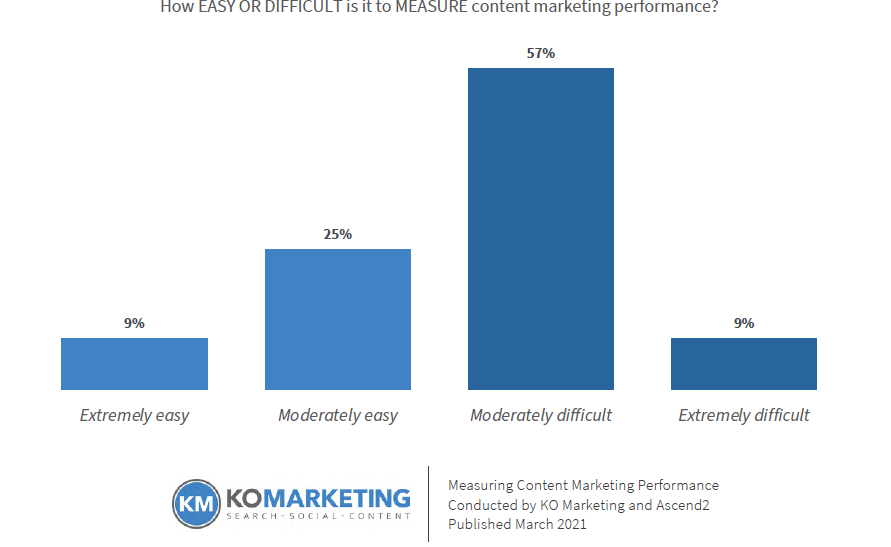
57% of B2B marketers find it moderately difficult to measure content marketing performance.
Don’t give up on your need to measure content marketing performance.
Content marketing is an investment that impacts your business strategy, branding management, audience engagement, and thought leadership.
We can all find cases on how content marketing made a significant impact on a major deal, reduced selling costs, or expanded your brand influence.
It may be difficult, but it is important to find consistent ways to measure and show the impact on your leadership team.
2. 37% of B2B marketers are using 3-5 tools for measuring content marketing performance.
Content marketing typically involves utilizing a wide range of channels across an overall marketing strategy.
One in five (21%) of B2B marketers report using six or more tools to measure content marketing performance.
Another 37% of those surveyed say they use between three and five tools, and 29% are measuring performance with two tools or less.
Marketing leaders need to embrace technology.
A strong stack of technology gives you more information about your audience, your clients (individuals or companies), and the impact of your campaigns.
Technology also allows you to be more efficient, organized, and agile as you track performance and report performance to the team.
4. Analytics tools, CRM systems, and marketing automation solutions are the most important tools for measuring content marketing performance.
Which types of tools are B2B marketers finding to be most effective for measuring content marketing performance?
Over half (53%) of those surveyed put analytics tools at the top of the list.
Customer Relationship Management (CRM) systems and marketing automation technologies are also critical to overall success according to 38% and 34% of B2B marketers, respectively.
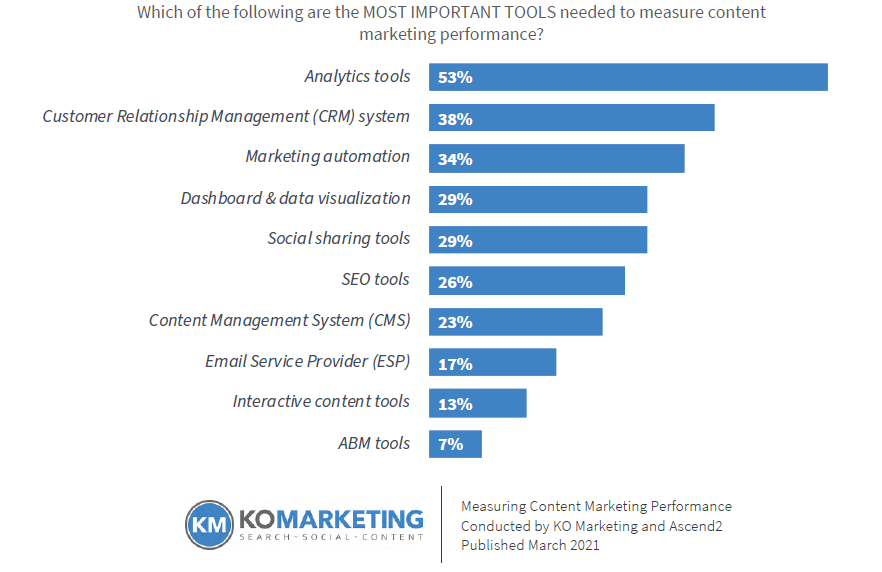
Analytics tools, CRM systems, and marketing automation solutions are the most important tools for measuring content marketing performance, according to B2B marketers.
Content marketing is data-driven.
Start with a solid setup of your Google Analytics.
Focus on four key areas:
- traffic,
- navigation,
- organic search,
- and conversions.
5. Conversion rate is the most important content marketing measurement metric, according to 50% of B2B marketers.
About half of B2B marketers agree that conversion rate (50%) and website traffic (46%) are among the most important metrics to consider when measuring the overall performance of a content marketing strategy.
Engagement on social media channels is also ranked high on the list of important metrics for 39% of those surveyed.
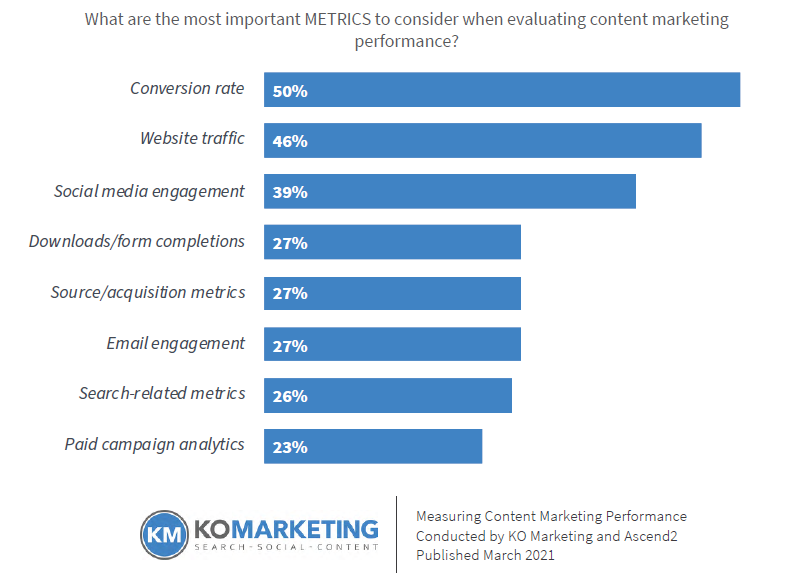
Conversion rate, website traffic, and social media engagement are the top 3 most important metrics, according to B2B marketers.
Don’t guess about the performance of your content marketing; instead, identify the data that matters most to your success.
Track and analyze performance to identify trends and adjust your strategy based on your findings.
Marketing optimization is never complete; it is an ongoing process.
Final Thoughts
Content marketing is essential to successful B2B marketing, so measuring performance is a priority.
Download Measuring Content Marketing Performance: A B2B Marketer’s Perspective for research-based strategies, tactics, and trends for B2B content marketing in the year ahead.
The post B2B Content Marketing Measurement Tips for 2021 (Statistics & Research) appeared first on Content Marketing Consulting and Social Media Strategy.
Source: convinceandconvert.com

2020 B2B Content Marketing Statistics: Charts and Data
Your B2B marketing 2020 efforts must align with what the audience wants and needs.
Keeping that in mind makes it easier to make content marketing creation plans that have a high likelihood of paying off.
To help guide your B2B content marketing strategy, let’s take a look a closer look at the 2020 State of B2B Content Consumption and Demand report, published by NetLine Corporation.
Eight B2B Content Marketing Statistics
Here are eight B2B content marketing statistics from that report worth knowing.
11.42% of C-Suite Executives Open Content at 10 a.m
“What is the best time to email content to C-Suite executives?” is a common question.
As it turns out, 10 o’clock a.m. is the sweet spot for timing if your goal is to get in touch with C-Suite executives.
More specifically, researchers found that 11.42% of people in that segment opened the material at 10 a.m.
The percentage is small, but that also means you have the flexibility to send the content out at a different time if that works better.
For example, noon was the next best time, with 11.12% of people reading the content then — possibly while starting their lunch breaks.
Remember that your target audience could behave differently from the norm, so the best way forward may not be to stick to the timing mentioned here.
Consider offering the material at a set time for a defined period, then track open-rate metrics over that period to see what kind of response you get.
11.42% of C-Suite executives open content at 10 a.m #email #B2BClick To Tweet
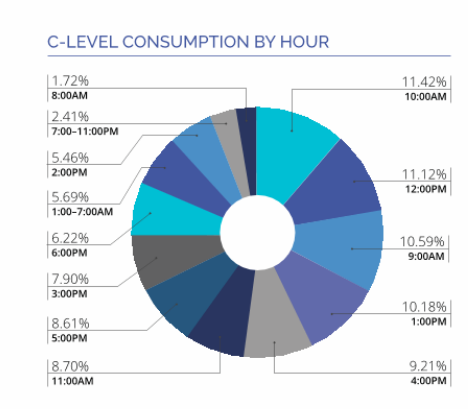
[C-Level content consumption by hour. Source: All images from the NetLine Corporation study linked above.]
Executives and Leaders in Most Job Categories Took 8% Longer to Open Requested Content Than Others
The consumption gap represents the time between someone requesting the content from a company and their opening it.
The main takeaway is that people don’t typically ask for content at the precise moment when they’re ready to read it.
Outside of people in contracting and consulting roles, most people in executive and leadership positions took 8% longer than individuals in other categories to start looking at their B2B content after asking for it.
The report’s creators recommend that you don’t solely focus on people in the C-suite.
They may be the ones who ultimately give the go-ahead for purchasing your products.
Still, other people in lower-level positions may open your content faster, thereby starting their educational journey before their superiors do.
There’s no harm in tailoring some content to the C-suite, but don’t make them your only targeted group.
People in other positions appreciate high-quality content too, and they may influence those higher up the company.
Executives and leaders intake 8% longer to open requested content than others. #B2B #contentClick To Tweet
B2B Content Consumers Access Material From Desktop Devices 68.1% of the Time
Statistics gathered for reasons not related to this report show that people are more likely to access the internet from their mobile phones than from desktop computers.
The B2B audiences studied here don’t follow that trend, however.
The breakdown showed that 68.1% of people look at B2B content on computers.
Then, 28.7% of the total used their phones to engage with it, and 3.2% of the pool accessed the material from tablets.
The report did say, though, that the percentage of people on mobile phones grew by 10% between 2018 and 2019.
B2B content consumers access material from desktop devices 68.1% of the time. #B2B #contentClick To Tweet
Another thing to keep in mind is that the report’s authors believe the percentage of people viewing B2B content on mobile devices will go up as more Generation Z members enter the workforce.
They’re more likely to have more capable, ultra-modern smartphones to keep pace with the increasingly mobile world.
Marketers should still accommodate the smaller screen sizes and make smart decisions to keep the content mobile-friendly.
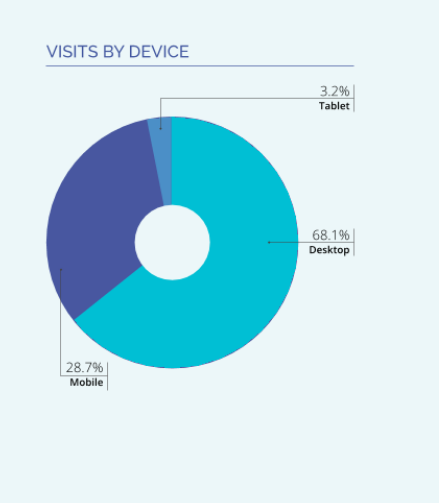
[Consumption of B2B content by device]
27% of the Active Audience for B2B Content Came From Organizations With Fewer Than 25 Employees
NetLine defines its active audience as people who requested B2B content.
The data showed that 27% of the people who actively consumed B2B content worked at organizations with 1-24 employees.
That statistic remained flat compared to last year’s report.
It may also come as a surprise that companies with 1-4 workers accounted for 15.62% of the 27%, segment making them the largest individual group in that percentage.
If smaller companies are one of your targets, these findings strongly suggest that you should keep smaller companies in mind while creating your content.
Think about the needs they likely have and how your brand could meet them.
Network Security Experts Are 87% More Likely to Enjoy DIY Projects Outside the Office Than Other Professionals
The report also discusses affinity categories.
The goal is to remember that your readers are real people who have diverse sets of interests spanning outside your company or products.
One of the related B2B content statistics was that network security professionals are 87% more likely to engage in do-it-yourself projects outside the office than other professionals.
That may mean you offer content that introduces them to tech projects they could do at home and ties into your company somehow.
The buyer affinities chart includes a wide variety of subtopics, though.
That diversity indicates you should not shy away from creating interesting material that covers some other topics and themes not strictly related to your company.
You may find that this approach leads to more repeat site visits because people are eager to see what you’ll publish next.
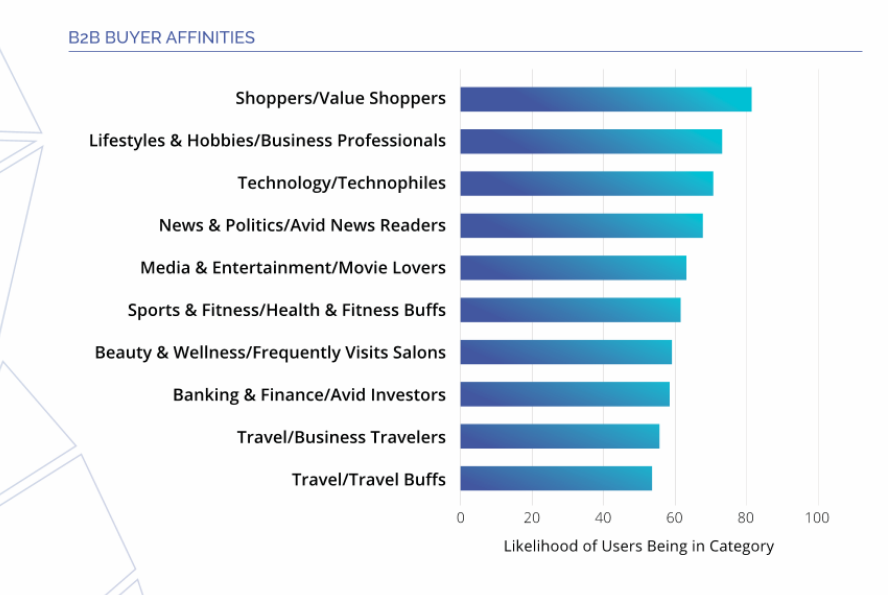
[B2B buyer affinities]
E-Books, White Papers and Guides Comprise Roughly 56% of Inventory in the Market
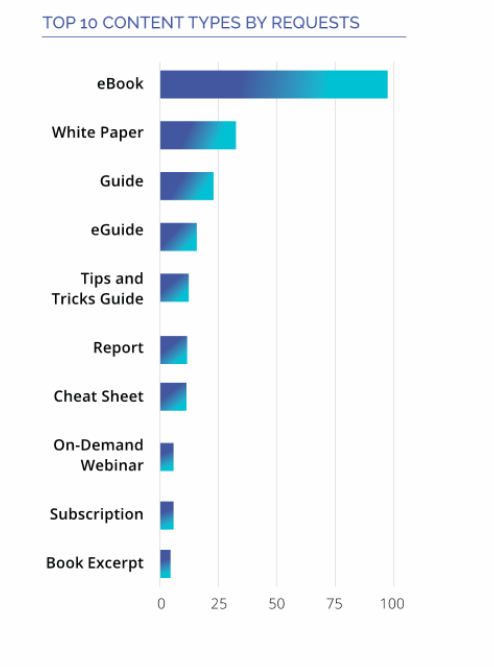
If you’re wondering what kind of content to create as part of your B2B marketing 2020 plans, e-books, white papers and guides are good options to go with first.
Statistics show that approximately 56% of all the inventory in the market is one of these kinds.
Concerning the kind of content requested, people wanted e-books most often, followed by white papers and guides.
NetLine’s analysts point out that e-books are exceptionally versatile.
You could use them to feature case studies, show thought leadership, or call attention to any other factors that could drive sales.
Notice, too, the educational nature of those top three content types.
Your B2B audience is ready to learn, and you can help them do that with high-quality material that caters to their needs.
In any case, ensure that your content marketing strategy serves a defined purpose and is goal-driven.
More Than 30% of Demand for B2B Content Comes From the Information Technology Sector
More than 30% of the overall content demand comes from audiences in that sector.
That change represents a 3% rise from 2018 numbers.
IT professionals took the top spot for audience demand, but other sectors wanted content, too.
For example, audiences in the accounting and finance industries collectively gained half a percentage point in the desire for relevant material, showing the biggest growth across all job areas.
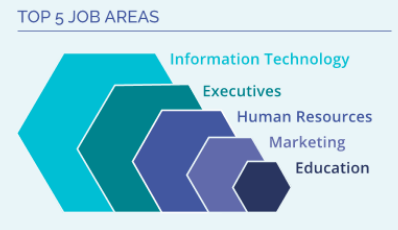
Effective ways also exist to capitalize on the B2B marketing statistics here if IT is not your main focus.
For example, if your company sells a product geared towards several industries — information technology among them — consider creating a newsletter or online content hub for tech professionals.
The High-Tech IT Industry Has the Most Active Audience
You learned earlier that IT professionals make up nearly one-third of the total content demand.
A related fact is that the high-tech IT industry showed the most active audience.
This means people in that group were the most likely to request and engage with the material.
The report’s authors noted that people working at high-tech IT companies must stay educated on the latest developments.
New content could make it easier for them to do that.
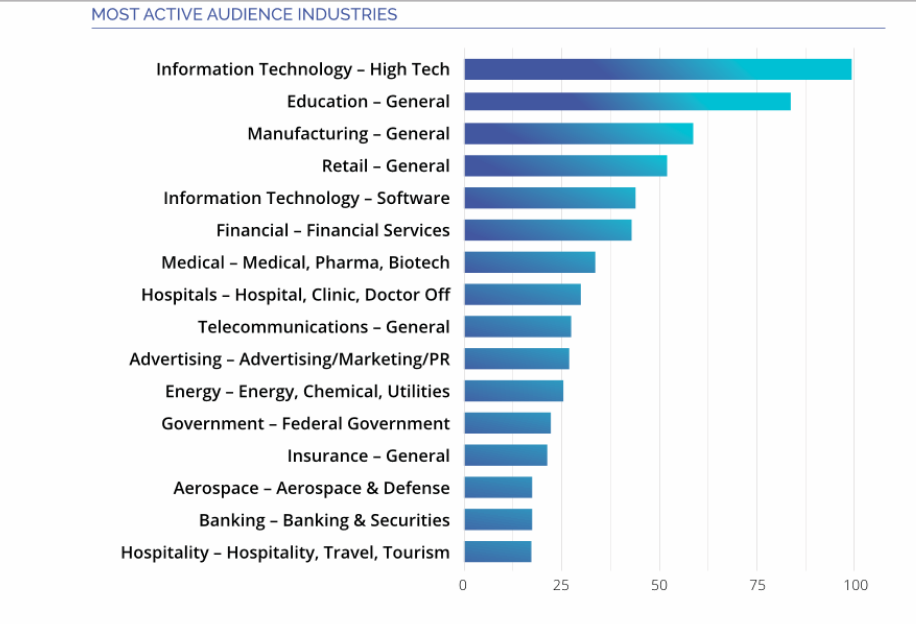
[Most active industries for content consumption]
Consider how you might create or adapt content to make it maximally appealing to people working with advanced tech.
You might gather expert perspectives about the future of a broad but relevant topic, such as cloud computing or automation, to help readers learn what’s on the horizon.
Grab Your Free Copy of the Report Now
Note from our editor: If you haven’t already, please grab your own copy of the 2020 State of B2B Content Consumption and Demand report from our friends at NetLine Corporation. Tons of useful data to guide your strategy in 2020!
The post 2020 B2B Content Marketing Statistics: Charts and Data appeared first on Content Marketing Consulting and Social Media Strategy.
Source: convinceandconvert.com

B2B Content Marketing Trends to Watch in 2020
B2B content marketing trends continually evolve, making it necessary to stay on top of how things develop.
MarketingProfs and the Content Marketing Institute recently released the B2B Content Marketing 2020 report.

It profiles some of the emerging trends related to B2B marketing, giving insight into how these concepts evolve in the upcoming months.
6 B2B Content Marketing Trends
Here are six B2B content marketing trends to keep an eye on this year:
1. A Continued Dependence on Social Media and Blogs
A question that B2B marketers may struggle with relates to the best way to distribute the content they make.
Some content marketing statistics from the report indicate that companies will most often rely on social media and blogs or short articles to connect with their B2B customers.
The research showed that 95% of respondents posted social media content within the last 12 months, and 89% published blogs or short articles over that period.
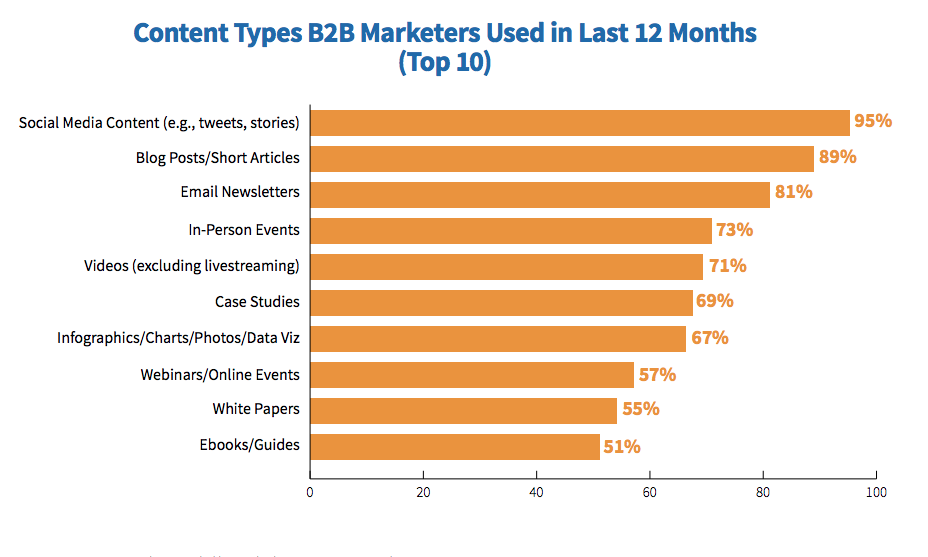
Most popular content types for B2B marketers
Marketers’ preference for those outlets did not only begin this year, however.
For example, Dropbox Business won a 2018 LinkedIn Marketing Award by moving to an always-on approach featuring targeted content delivered over social media platforms and elsewhere.
The brand enjoyed a 29:1 return on investment from that strategy.
Due to results like those, marketing professionals will realize that readily accessible outlets, including social media and blogs, are well worth exploring this year.
A goal in content marketing is to reach people where they are, and both approaches help that happen.
2. A Focus on Factual, Informational Content Over Promotional Messaging
Most B2B content has promotional aspects.
The aim is to get people to take desirable actions, and that often means doing business with a company or at least showing a willingness to learn about them.
When asked about their priorities, though, the vast majority of the most successful marketers put their energies into fact-checking and delivering highly informative content for their audiences.
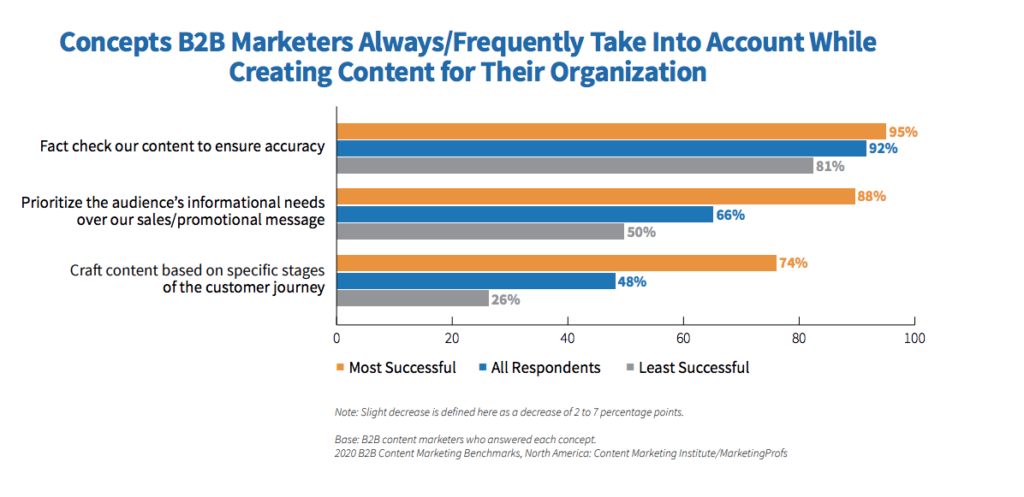
The vast majority of the most successful B2B marketers put their energies into fact-checking and delivering highly informative content.
The results showed that 95% of the most successful B2B content marketers — and 92% of all respondents — fact-check their content for accuracy before distributing it.
Moreover, 88% of the most successful marketers, and 66% of all respondents, said they cater to the audiences’ informational needs more than the company’s promotional message.
95% of the most successful B2B content marketers fact-check their content for accuracy before distributing it.
The idea is that correct information builds trust.
Trusting customers are more likely to support companies than those who lack such confidence and doubt the information they read.
Some businesses rightfully understand that it’s nevertheless possible to integrate promotional content into a primarily fact-based piece.
When CipherHeallth recently described how its automated solution helped screen for COVID-19 in incoming hospital patients, it mentioned and linked to guidelines from the U.S. Centers for Disease Control and Prevention (CDC) and the World Health Organization (WHO).
Additionally, the content specifically mentioned statistics related to a hospital that uses the technology.
Approaches like these help people feel confident in the information they read.
Individuals conclude that the publisher cares about giving straightforward facts on a hot topic.
Marketers can and should do things similarly to build trust in readers.
3. Marketers Will Keep Relying on Content for Building Brand Awareness
The research from the Content Marketing Institute and MarketingProfs also asked study respondents to reveal some of the goals they set over the last 12 months.
They also inquired about what goals these marketers met due to successful content marketing for B2B audiences.
Brand awareness was a big winner, with 86% of people saying they increased that aspect with their content marketing efforts.
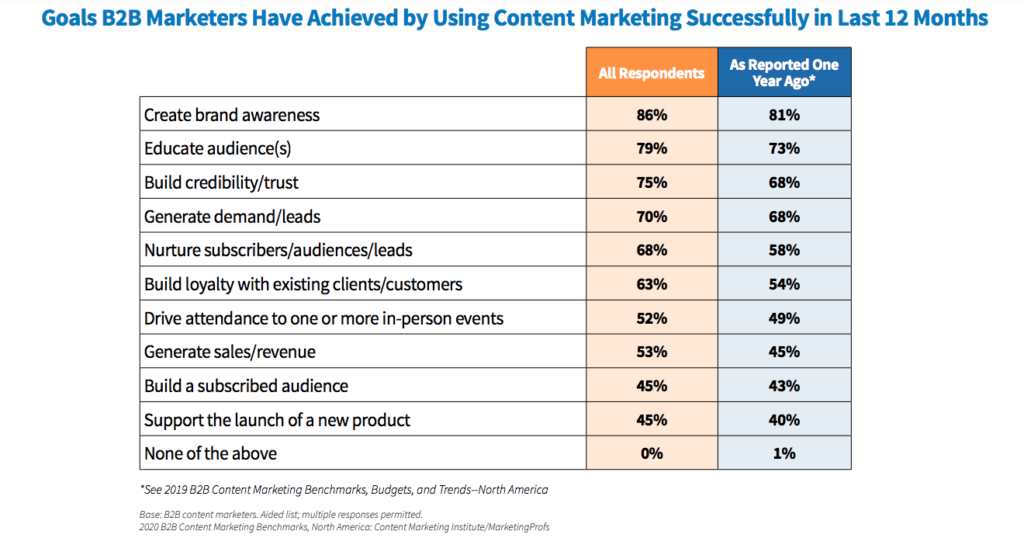
Brand awareness is the top goal B2B marketers shave achieved by using content marketing.
Moreover, 79% of people reported that content marketing helped them educate audiences, and three-quarters of those polled cited that it improved trust and credibility.
Blog posts can do all those things and more, especially when marketers take the time to write about relevant subjects that matter to their readers.
For example, the blog maintained by the CAT Rental Store caters to people who need to rent construction equipment.
The content there discusses how to choose the right size of construction equipment, how to select a bucket attachment to rent, what considerations to make when renting a generator for an event, and more.
That type of highly specialized content helps people learn more about how the CAT Rental Store could help them.
It also delivers material the target audience is most likely to want to read, which could increase on-site time and keep visitors eager to discover more during future visits.
4. LinkedIn Dominates Social Media Choices, but Other Platforms Are Widely Used, Too
Once B2B content marketing professionals decide to use social media to spread their content, the next decision to make involves platform choice. As the graph below shows, LinkedIn was the top selection for both paid and organic marketing efforts.
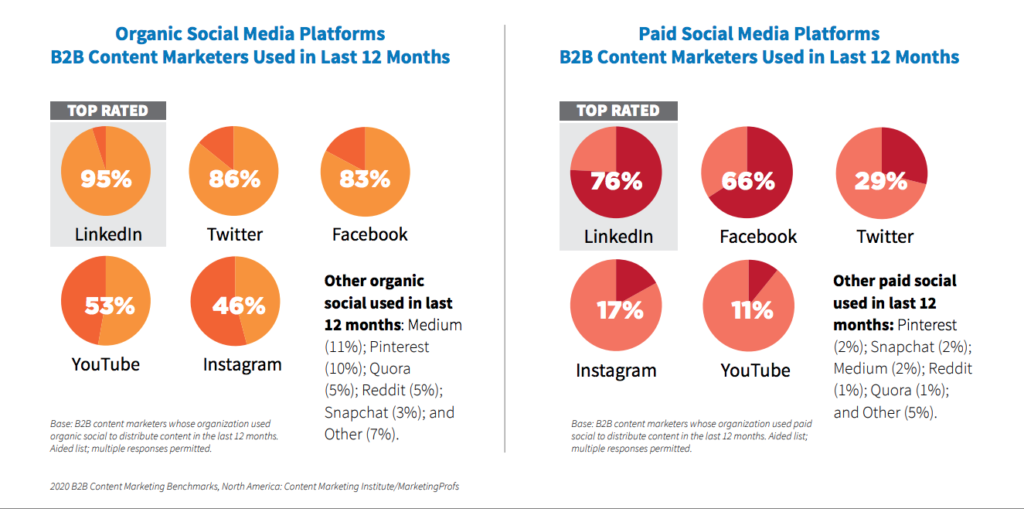
Most popular B2B content social media distribution channels
But, another thing that’s evident from those content marketing statistics is that other platforms are not far behind.
What this suggests is that marketers should take the time to research all the social media channels available to them.
They may determine that LinkedIn is the most appropriate choice, but not necessarily.
In one instance, CBD’R US, a cannabinoid products brand, found that Instagram was the best B2B channel for the company.
That outcome was due to several aspects, including smoke shops and wholesalers operating in the same niche on the platform.
Plus, the brand partners with Instagram influencers to expand its reach.
5. Marketers Will Continue Investing in Metrics-Based Solutions
Metrics platforms show whether or not content marketing for B2B brands has the desired outcome.
When it doesn’t, that may tell marketers it’s time to tweak a campaign.
Metrics-related investments are relatively new for content marketing in the B2B sector, as the chart below shows.
Since 65% of respondents established key performance indicators (KPIs) for content marketing initiatives within the last 12 months, they’re still in the early stages.
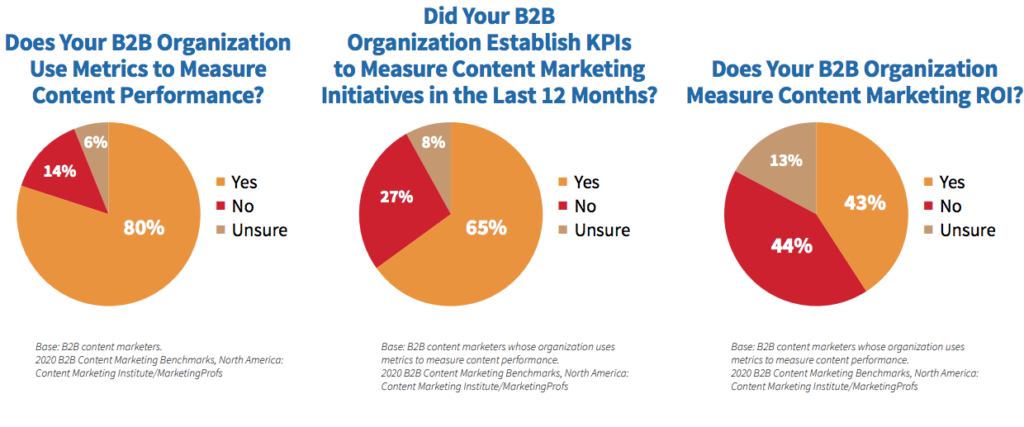
B2B content marketing measurement and KPIs
Also, whereas 80% of respondents use metrics to gauge content performance, only 43% currently do so to keep tabs on the return on investment (ROI) for content marketing.
Metrics-related investments should continue this year and for the foreseeable future.
However, more professionals will probably start paying attention to content statistics about ROI. After all, content performance is a smart thing to track, but efforts must pay off for a company’s bottom line.
80% of #B2B content marketers use metrics to gauge content performance, only 43% currently do so to keep tabs on the return on investment (ROI) for content marketing.
6. Marketers Will Consider Outsourcing to Meet Their Content Creation Needs
Companies that want to start focusing on or increase their commitment to B2B content marketing often rely on outside organizations to help with the work.
A budget may not currently allow for hiring an in-house team, and the business may want proof that B2B content works for them before they devote the resources needed to build an internal team.
The research from the Content Marketing Institute and MarketingProfs indicated that 84% of respondents outsource their content marketing creation needs.
Content distribution was the next most likely reason that companies depended on outsourcing, but only 31% of people mentioned it.
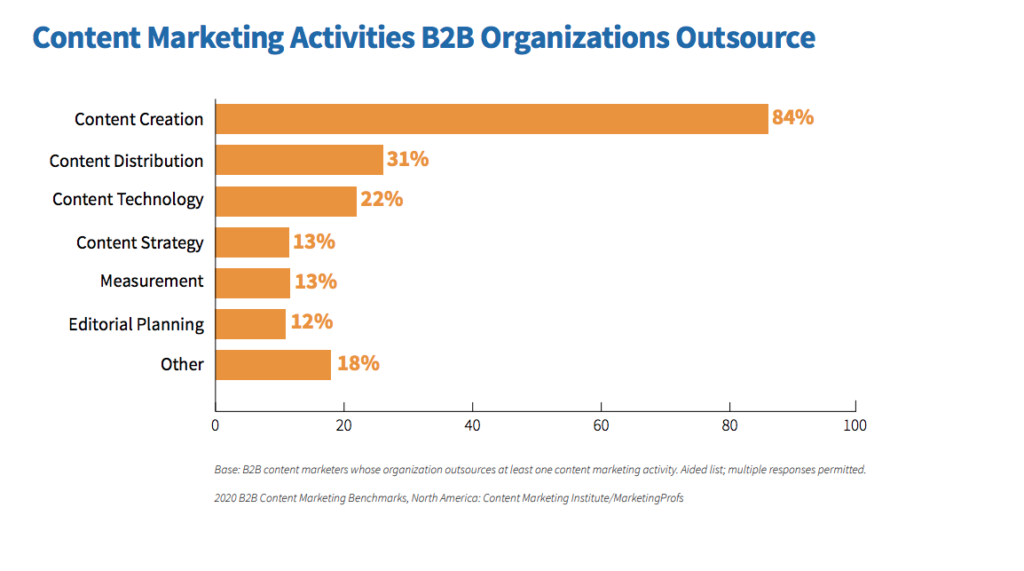
Content creation is the most popular content initiative that B2B marketers outsource
However, the report also revealed that 50% of people outsourced, and 50% were not doing that yet.
The highest percentage of companies that chose to outsource (71%) were large entities with at least 1,000 employees.
The report also clarified that the overall success a company experienced with its content marketing had little bearing on whether the enterprise decided to outsource.
As companies make that choice, they must evaluate their in-house resources and figure out if they’re sufficient enough to give the enterprise the positive results it wants, needs, and expects.
Outsourcing is not the right option in every case.
However, it could be instrumental in empowering a company to do more with its content marketing plans if an internal team does not exist, or it is not feasible to create one with the current financial resources available.
Next Steps
If you haven’t already, grab your free copy of the MarketingProfs and Content Marketing Institute B2B Content Marketing 2020 report today.
While today’s environment is constantly shifting, these B2B content trends are very relevant to your success this year.
The post B2B Content Marketing Trends to Watch in 2020 appeared first on Content Marketing Consulting and Social Media Strategy.
Source: convinceandconvert.com

5 B2B Content Marketing Examples You Can Copy
B2B marketing can sometimes seem to play second fiddle to its more glamorous sister, B2C marketing.
When it comes to content marketing, campaigns built for consumer audiences are often more intuitive, more fun, or more colorful for the audiences and the marketers who implement them alike.
However, as I like to tell my graduate students, marketers get tired of their own marketing way faster than our audiences do.
When it comes to B2B marketing, your content marketing campaigns can be highly valuable, highly sought after, and highly relevant to your audiences.
These campaigns resonate most strongly when you are focused on your audiences’ goals, challenges, and mindsets.
5 B2B Content Marketing Examples
Here are five B2B content marketing examples from companies that understand their audiences well and use their content marketing to provide Youtility.
1. CES Tech Talk Podcast Distills Key Takeaways
B2B Content Lesson: Leverage Your Experts and Break Down the Facts Through a Podcast
CES is such a huge trade show that there is no way that attendees can absorb even a tenth of the content, information, and demos that are presented at the event.
How can the Consumer Technology Association, which puts on this massive annual event, create more value for its audiences, reinforce its reputation year-round, and extend its reach?

It produces robust content as part of its marketing approach, such as its Tech Talk Podcast.
Each episode of the podcast features industry experts going deep on one specific topic area, such as tech in healthcare, self-driving cars, or the future of innovation.
This series leverages the experts that the organization is already working with and builds upon the brand recognition of its marquee event to build an audience of loyal listeners.
This series works particularly well because it synthesizes the information around each topic area into what you need to know today, as Michael Barbaro of The New York Times says in his podcast, “The Daily.”
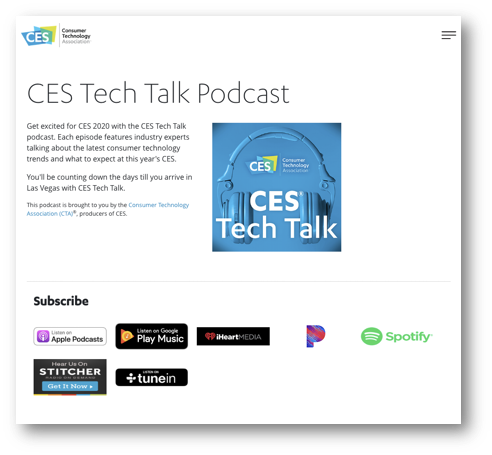
The CES Tech Talk Podcast is a great example of B2B content marketing.
2. Athena Health Teaches Business Skills Through Webinars
B2B Content Lesson: Help Solve Their Other Problems
I was recently asked by a client what kind of content they should be publishing for their audience that doesn’t give away the types of frameworks that they offer as part of their services.
While I actually believe you CAN give away some of your frameworks (see the next example), an effective type of content for B2B brands is acknowledging the kind that acknowledges that problem that your product or service solves isn’t the (only) one that’s keeping your client up at night.
For instance, Athena Health is a provider of a suite of services such as electronic health records (EHR) and medical billing.
But they offer webinars that help their clients deal with their most critical business challenges: to improve the ways in which they run their practices, recognizing that doctors don’t necessarily have MBAs and don’t always know how to grow their businesses effectively.

Webinars from AthenaHealth help their clients deal with their most critical business challenges — an excellent example of B2B content marketing.
3. Convince & Convert (This Very Blog) Gives Away Tools & Frameworks
B2B Content Lesson: Provide Your Recipe to Build Trust and Authority
If you’re a regular reader of this blog, you may have noticed that we actually give you quite a lot of tools and frameworks that we use with our clients.
That’s because we recognize that for B2B businesses like ours, there is a difference between the DIY segments and the segments that want you to help them take those frameworks and put them to good use for their organizations.
Therefore, we give away templates, like the one in this example, along with a video and blog post to explain to visitors how to use them.
It builds trust, and when those visitors (maybe like you!) are ready to take their digital marketing practices to the next step, we are already at the top of their list in terms of trust and authority.
Not only does it build trust, but it also helps us to build an audience—content like this has great value in search.
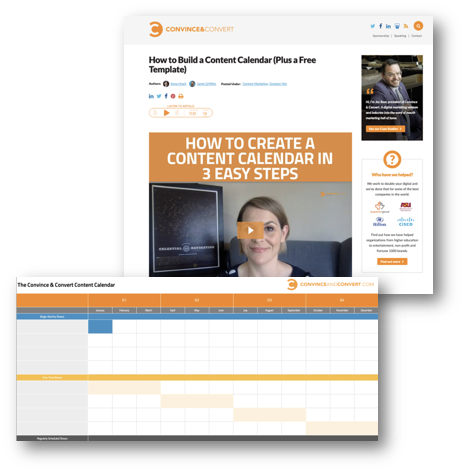
In this B2B content marketing example, we offer a downloadable template, along with a vide introduction.
Mailchimp Profiles Its Customers on Instagram
B2B Content Lesson: Showcase Your Community of Users
For many B2B companies, social proof takes the form of reviews or testimonials; however, as more and more B2B decision-makers turn to social media, creating content that reflects your community is vital. In fact, 51% of all B2B customers turn to social media to do initial research, according to Accenture.
51% of all B2B customers turn to social media to do initial research. Click To Tweet
Furthermore, the lines between social media and content marketing are blurring more than ever.
More often than not, the content that our teams are creating live on social media channels, rather than on our websites.
Therefore, looking at ways to create content within social media makes a ton of sense.
Mailchimp, for example, has used its Instagram account as a place to showcase the stories of what its customers are achieving every day, their creativity, and their stories to showcase the kinds of people who use Mailchimp to power their businesses.
It publishes micro profiles on each Instagram post.
It showcases their ethos, and it reassures potential users that they’ve found their tribe.
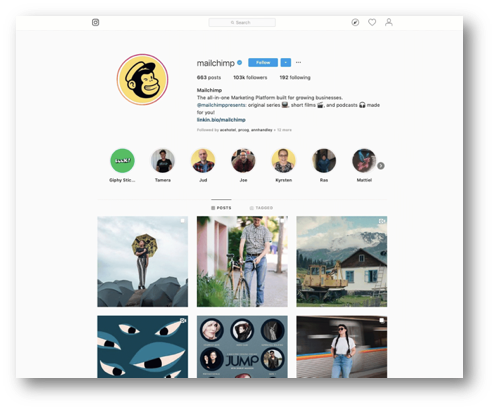
In this example of great B2B content, Mailchimp uses its Instagram account as a place to showcase the stories of what its customers are achieving every day, their creativity, and their stories to showcase the kinds of people who use Mailchimp to power their businesses.
CMI Facilitates Conversation Through Monthly Twitter Chats
B2B Content Lesson: Create Points of Interaction
If we’re talking about strong examples of B2B content marketing, what better place to turn that Content Marketing Institute itself?
CMI not only educates marketers but also connects them through events like Content Marketing World.
An ongoing example of its content marketing practice is its monthly #CMWorld Twitter chat, where guests are invited to answer pre-selected questions, posed by a moderator, while Twitter users participate in answering those same questions, asking each other questions, and picking the brains of the guest.
It’s like “Inside the Actors Studio” if the audience were up on stage participating too.
Not only does this approach create a strong network of devoted brand followers, but it (like our first example) helps the brand to leverage and extend its marquee brand.
In this case, Content Marketing World’s #cmworld hashtag gets to be used once a week, rather than for one week a year.
This keeps it front and center when it comes to marketing conversations (their key market).
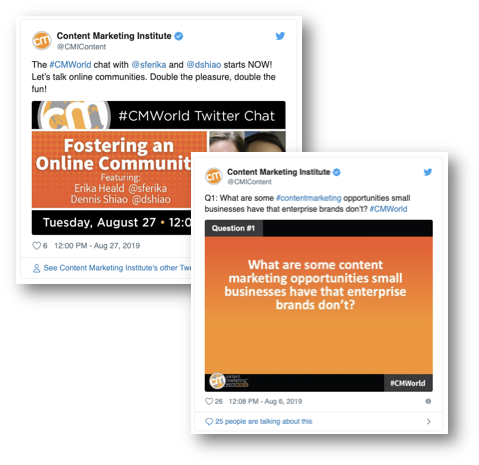
The #CMIWorld Twitter chat is an ongoing example of CMI’s content marketing practice.
Remember: As you’re developing your B2B content marketing campaigns, keep in mind your target audiences’ goals, challenges, and mindsets.
If you are able to address those specific areas and make it easy for them to do so, your content will resonate and be effective.
The post 5 B2B Content Marketing Examples You Can Copy appeared first on Content Marketing Consulting and Social Media Strategy.
Source: convinceandconvert.com