
Tag Archives for " audience "

5 Ways To Grow Your Customer Relationships Through Social Selling
Social selling is a tool that almost anyone can add to their professional toolbox. While sales professionals have traditionally applied social selling, it can apply to anyone using relationships and relational marketing in their career. Social selling solves the problem of needing to fill a pipeline and connect with customers by building relationships.
For example, recruiters can use social selling practices to identify prospects, build relationships and grow trust with potential candidates before a job opportunity arises.
Social media doesn’t replace your existing selling or relational tools. Instead, it is a different tool that helps leverage the selling skills and the relationship-building skills that one has already fostered in their career.
5 Ways To Grow Your Customer Relationships Through Social Selling
To explain how social selling helps to grow customer relationships on a one-to-one basis, let’s look at these five ways to use it effectively:
1. Understand what Social Selling Is (and Isn’t)
Social selling is the art of using social media to find, understand, connect with, cultivate and nurture potential sales prospects.
There are four key steps in this process:
- Identify prospects online
- Enrich ideal contract profiles
- Showcase knowledge and expertise
- Build one-to-one relationships
While it seems obvious, it bears repeating:
Social Selling is not Social Media Marketing.
Though both happen on social media platforms, Marketing and Sales use different approaches to achieve very different outcomes.
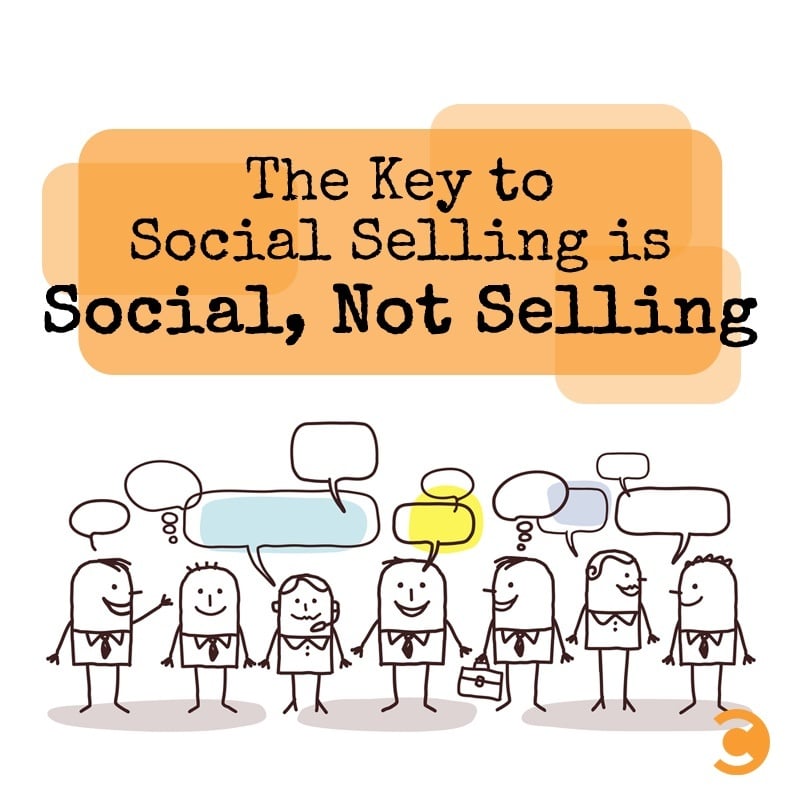
Social media marketing supports driving attention and building affinity at a large scale, with multiple audiences in mind. Organic social media marketing supports the big picture and aims of an organization.
Contrast that with the messages delivered through social selling — messages dialed in for a specific audience through more personalized content. While the Marketing team is broadcasting from one to many, social selling is ideal for that one-to-one communication.
2. Grow Your Network
A key to understanding how best to use social selling is understanding who is really in your audience. When we pull back the curtain and reveal who’s really in our social media audiences, the results are always different than expected. Remember: Those who are paying attention to your channels are not necessarily who is the most active.
In social selling, we must dive into our respective audiences outside of the brand pages.
Think about your own LinkedIn connections and Twitter followers. They most likely include a mix of the following people:
- Prospects
- Co-workers and colleagues
- Industry peers and competition
- Adjacent peers and competition
- Peers from a group, event, or networking event
- Friends, family, and acquaintances
Who do we want in our audience? When social selling, prospects are in our direct line of sight. However, don’t rule out the importance of developing connections with adjacent peers and competitors or others in the peripherals of your network. This is especially true when seeking out who can connect you to a second-level connection.
Build connections by adding value to their newsfeeds. At Convince & Convert, we are true believers that Youtility marketing pays off in dividends. When relationships are founded because we are helping, not selling, we become indispensable.
Transactions happening online take many forms — you may not get a direct sale, but an introduction or a recommendation from your network can lead to additional opportunities.
Focusing on helping people first, rather than only considering the next sale or deal, can build trust with our audience. Youtility is relevant in any form: Information, entertainment, and perspective. There are several ways to put Youtility into play.
When you’re relevant to gain someone’s attention, they permit you to earn their trust. Every salesperson knows that trust is the way to unlock that relationship and get closer to the desired outcome.
3. Be a Good Listener
We coined the term “Acceptable Eavesdropping” to describe the ideal way to listen to existing conversations happening online. Adapting social listening rules to how individuals can eavesdrop pays off in these ways:
- Follow prospects & peers and join the conversation they’re already having
- Comment and engage in content in a relatable way
- Join adjacent and industry groups of your target personas. Participate lightly and gain insights from the
- conversations, questions asked, and answers given.
- Follow relevant hashtags to find new prospects involved in similar conversations.
- Use Notifications and tools like Spoonbill.io to identify and react to profile changes.
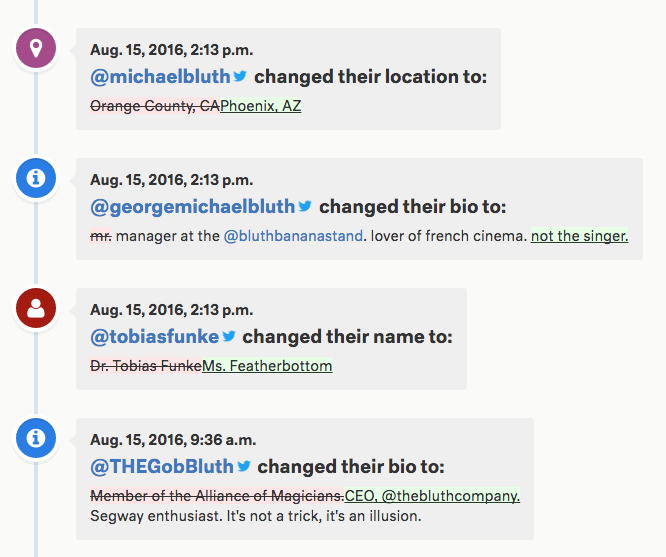
Credit: Spoonbill.io
Our actions online are generally public unless we expressly limit them. What is posted publicly is available for anybody to eavesdrop on if they know how to do it. From a social selling perspective, listening to existing conversations provides insights that help sellers fine-tune messaging and identify opportunities to contribute.
Comment on and engage with content and conversations, even if it’s not directly related to your sales effort. Applying a Youtility-first mindset, try to add value with any response or answer. Having an actual conversation builds trust and rapport.
Joining and participating in groups that attract your target personas or adjacent can lead to insights into how those individuals generally talk about their business challenges and needs.
One of the early steps I made this year while working on a startup idea was to join groups on Facebook and Reddit that help me identify and note the challenges of users that my idea will solve.
While I am not participating actively, being part of the group allows me to get familiar with this audience group’s challenges, complaints, and celebrations. Those insights are invaluable as I begin to build my product and demonstrate that I identify with the users’ needs from their point of view.
Wherever you choose to listen, do so to connect within your industry or specialty. Use that time to share information and expertise, ask for advice and build relationships. Select the social channels, groups, and hashtags that reflect the communities within your target audiences to get smarter about prospects and current customers.
4. Engage With Purpose
Listening should inform what content to create and share. All content should start from a place of understanding:
- 1) Who are you trying to reach?
- 2) What does that audience care about?
The Convince & Convert team says this all of the time, but it’s true: creating content your audience cares about is a surefire way to help them find you and stay with you.
But too often, employees are creating content that only they or their employer cares about. The effects just aren’t as appealing. We’ve all seen this as we’re scrolling through our newsfeeds, and we scroll right by what isn’t the most relevant or interesting content.
There needs to be a balanced approach between a company’s social marketing strategy and the employees taking ownership of their personal brand.
When directly engaging with your network, remember the golden rule of engagement– add value to your conversations. Do this by researching their industry and tailoring your content to their interests and needs. Be mindful of all information you share.
A good rule of thumb is to avoid using the word “I” in the first ten words of your post, caption, or comment. Engaging from a place of help means the conversation is not about you.

Stop defaulting to the “Like” (thumbs up) reaction. Using these other reactions will stand out among the different reactions, as others do not often use them.
If the post or article is noteworthy, consider sharing it and crediting the author. Send the author a direct message appreciating the post or tag them in your comments.
Use the Articles & Activities section to see what your contacts are commenting on. This will give you important insights into what they are interested in and allow you to open a conversation on a mutual piece of content you have engaged with. If your contact is not posting actively, this may help open a dialogue.
5. Measure the Effectiveness of Social Selling Efforts
Social media is a great way to generate leads, sure. But how can we measure the social selling steps of connecting with an audience, building credibility, and earning their trust? How do you know if your social selling plan is effective?
Here are a couple of ways to measure the effectiveness of social selling efforts.
Social Selling Index:
LinkedIn’s own Social Selling Index can be a barometer for individual progress. According to Linkedin, the SSI is a helpful measure of how a salesperson’s social selling skills and execution come together.

LinkedIn Social Selling Index
This self-report card allows for progress checks over time as a good base for identifying what steps taken are helping. It’s calculated by evaluating four distinct pillars:
- Establishing your professional brand
- Finding the right people
- Engaging with insights
- Building relationships
SSI scores update day to day, providing real-time feedback based on your activity and the health of your network over time. The score is based on a scale of zero to 100, with a maximum score for each pillar being 25.
Linkedin reports that social selling leaders create 45% more opportunities than those with a lower SSI as if we needed an incentive to boost scores. The more consistent you are using LinkedIn, the more significant the impact on your SSI score–but more importantly, the greater impact on your network overall.
Trackable Touchpoints
Making every touchpoint that we have with individuals trackable seems impossible. But in digital, we can get close with the right tools in place. Using data capturing and tracking technology makes it easier to qualify prospects and understand when they’re more ready and open for conversation.

Avoid duplicating Marketing’s role by trying to create campaigns on your own. Instead, it is more effective and more manageable to make individual touchpoints interactive.
Augment your emails and shared content to track when they are opened and viewed. Some of our favorite tools to do this include:
- Video tools that allow for viewability reporting, like Vidyard GoVideo
- Email enhancers like MixMax for automation and Sigstr for signatures
- Campaign URL builders and short URL providers
- SMS Messaging
Go Forth and Prosper
When applying social selling to building relationships with your social network, remember this: Doing it wrong is worse than not doing it at all. Take these ideas, and don’t hesitate to make subtle shifts in how you approach social media individually.

By focusing on the social more than the selling, success will follow.
Need an assist? The Convince & Convert Consulting team offers workshops on how teams can apply social selling to Sales, HR, and Professionals of all kinds.
The post 5 Ways To Grow Your Customer Relationships Through Social Selling appeared first on Content Marketing Consulting and Social Media Strategy.
Source: convinceandconvert.com

What’s the Difference Between a Content Creator and an Influencer?
In today’s internet-focused age, words like “content creator” and “influencer” are thrown around on nearly every social media platform. Have you ever wondered: What do these terms really mean? Is it the same thing? How do the two roles differ from the perspective of a user or consumer?
In a nutshell, the content creator is a broad term describing someone who produces some form of content, including but not limited to blog posts, videos, photography, and reels.

Influencers can also create such content, but they’re better known for their connection to their audience (i.e., the “influence” they have on their followers).
Still, confused? Let’s dive deeper into the world of content creators and influencers to understand exactly what they do and what makes them different from each other.
What Do Content Creators Do?
Content creators create content for blogs and social media platforms. This can include YouTube videos, TikTok reels, and text-based posts on social media sites like Facebook, Twitter, Instagram, LinkedIn, etc.
The content they produce is typically original and may be shared for money, audience building, brand awareness, or just as a way to share their talents online.
For example, “Insta poets,” bloggers, and newsletter writers are typically seen as content creators.
Here is an example of content on Instagram shared by the account @poets.

Content creators aren’t limited to texts, though. They can specialize in video, audio, and visual content, among other forms.
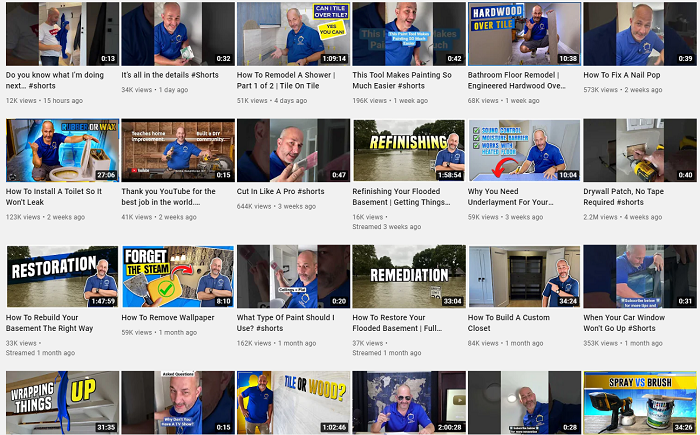
Here’s an example of a YouTube content creator Home RenoVision DIY.
What Do Influencers Do?
Influencers are popular individuals on social media and other content-sharing platforms who leverage their substantially large followings to promote certain brands and lifestyles.
This can be very beneficial for brands and small businesses looking to reach new users and build brand awareness.
When you see someone with thousands of followers flaunting a beauty or wellness product with a “sponsored” tag, they’re probably an influencer.
Influencers promote products and lifestyles through photos, videos, blogs, reels, and other forms of “viral” media.
Influencers often create content; that’s where the confusion comes from.
However, the difference is influencers are more focused on audience engagement, promotions, and portraying a certain image about themselves and their lives to sustain and grow their influence.
See this post by fashion influencer @sophia_hardy on Instagram, for example.

Content Creators Vs. Influencers: Skills
Content creators and influencers have some overlapping skills. These typically include proficiency with technology, writing and communication skills, photography, and audience management.
While some individuals may be more proficient at one skill than others, most digital creators and influencers need these skills in some capacity to thrive in their field.
Common skills:
- communicating ideas effectively
- basic tech proficiency
- managing client expectations
- admin tasks like invoicing, managing emails, follow-ups, etc.
Beyond the common overlapping skills, the two groups also need some specific skills to succeed. For instance, influencers need to have a strong understanding of how social media and audience engagement works.
Their entire process depends on leveraging these talents.
Influencer skills:
- photo editing
- video editing
- social media management
- audience management
- live streaming
- promotion
- knowledge of advertising
- niche expertise in a particular industry
Content creators can benefit from these skills too, but writing, recording, editing, and publishing content may be a bigger priority for them. Content creators also need to be good storytellers to create engaging content.
Nowadays, many content creators also excel at SEO and digital marketing to help themselves and their clients achieve key business goals.

Content marketing skills:
- above-average writing proficiency
- SEO
- digital marketing
- storytelling
- handling content management systems
- content research
- keyword research
- audience research
- broad knowledge of a particular industry
Content Creators Vs. Influencers: Strategy & Goals
The biggest difference between content creators and influencers lies in their goals and the strategies they use to achieve these objectives.
Content creators develop content marketing strategies. These include publishing schedules, topic research, keyword research, audience targeting, social media plans, and other digital marketing elements.
Content creators work with brands, agencies, business owners, and other clients to understand their current marketing needs and develop SMART plans to achieve their business goals.
Content creators earn money by developing content strategies and content items like blogs and videos for others, or by uploading media on their own accounts for ad revenue, affiliate sales, and paid subscriptions.
This way, they either get paid directly by a client seeking their services or through their own efforts by building an audience that wants to pay to consume their content.
Influencers work differently. They work with a primary goal to “influence” the audience. They work to build strong relationships with their followers. They constantly strive to increase engagement on their posts and ensure they have an optimal web presence.
Influencers also accept sponsorships from brands to promote products and lifestyle ideas. In exchange for money or free products, these users upload reviews, product photos, and videos, or sponsored posts on their social media accounts.
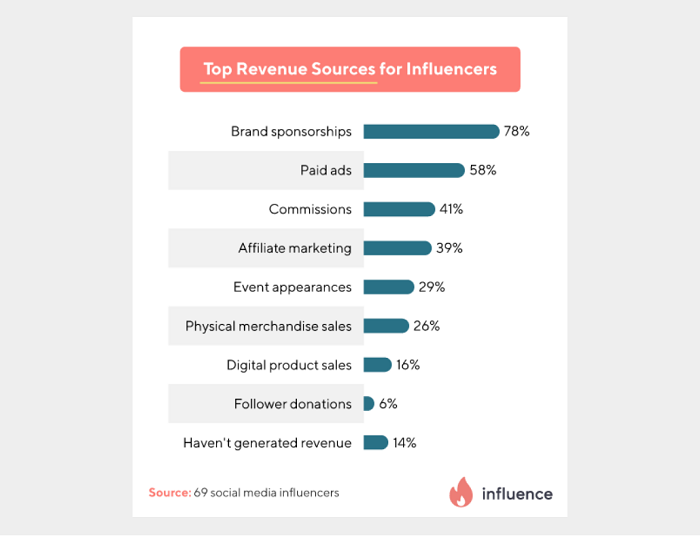
Many influencers make a huge share of their income through these sponsored posts, but not all influencers make enough money to make a living out of sponsorships. Some do it as a side hustle, while others do it for fame and status in society.
For instance, the following graphic by Influence.co shows the research findings highlighting the top ways popular influencers make money.
However, several influencers with millions of followers do reach a stage in their career where they’re regularly pulling in six figures from brand deals and sponsored posts.
Content Creators Vs. Influencers: Tools
Content creators and influencers use a variety of tools to meet their goals.
Content creators typically use the following tools:
- Blogging platforms like WordPress (free and paid features) to create and publish content.
- Google Trends (free) for keyword research and understanding current trends.
- SEMrush Topic Research Tool ($99.95 a month) for getting content ideas.
- AnswerthePublic (free) to get blog and research ideas around a specific topic.
- Grammarly (free and paid features) to catch typos and improve writing.
- Hemingway App (free) to detect reading level, reduce passive voice, and polish writing.
- Unsplash (free) to get free-of-cost, royalty-free images to use anywhere.
- Audacity (free) to create and edit audio files for podcasts and other audio formats.
This is far from being an exhaustive list. Different content creators use different tools based on their needs and end goals, but I hope this list gives you a great place to start your search.
Influencers typically use the following tools:
- Social media platforms (free and paid features) to post influential content and build an audience.
- Canva (free and paid features) to create engaging graphics in a variety of formats.
- Remove.bg (free and paid features) to remove background clutter from photographs.
- Sprout Social (starting at $99 a month) to schedule social media posts and track analytics.
- Influence.co (free and paid features) as a social media style directory to find influencers and work with sponsoring brands.
- TweetDeck (free) to organize tweets and feeds for easier access.
- Intellifluence (free and paid features) to collaborate directly with brands and agencies for sponsorships.
Again, different influencers will use a combination of these tools (or something completely different) based on how they work, but this list can be a good place to start looking.
Content Creators Vs. Influencers: Which Is Right for My Business?
Now that you know more about what content creators and influencers do, how they work, and which tools they use, it’s time to think about which of the two would be right for your business.

Whether you’re planning to work with content creators, influencers, or both, each option has its pros and cons. Let’s discuss some of those below.
Working With Content Creators
Let’s start by highlighting the pros and cons of working with content creators. Know that there will always be some individual differences based on how each person works, but many content creators share the following traits.
Pros:
- Content creators are well-versed with digital marketing and can add more value to your marketing campaigns.
- Content creators can offer more than one skill. They can write about your product but also offer photographs and videos for a more comprehensive final product.
- Content creators tend to be good storytellers. They can weave in narratives and strong research findings to strengthen your story and position your brand effectively.
Cons:
- Content creators may or may not have huge followings. Many content creators don’t have a massive influence on their audience, so you won’t necessarily get millions of impressions on your post.
- Content creators typically don’t take on sponsored posts, so your content may not be advertorial in nature.
- Some content creators have specific processes of how they work, and they might not be able to tailor their content to match your marketing needs.
Working With Influencers
Now let’s look at the pros and cons you can experience when working with influencers across different industries.
Pros:
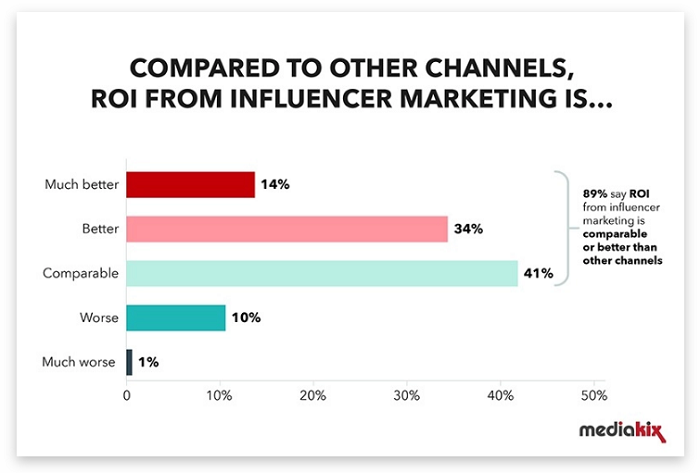
- Influencer marketing offers a great return on your investment. Studies show nearly 90 percent of marketers feel influencers provide comparable or better ROI than other marketing channels.
- Influencers have strong relationships with their audiences, so your posts can get a lot of engagement.
- Working with influencers can help you target specific audiences. For instance, beauty influencers have a lot of followers interested in beauty and wellness products so you can market to them directly.
Cons:
- Influencers may have huge followings but still be subpar content creators.
- Not every influencer can make the most engaging post so often there’s no guarantee of quality.
- Influencers may have fake followers. Today many influencers buy followers or have fake accounts to boost their apparent credibility making it very difficult to vet them before partnership.
- A lot of social media users dislike engaging with influencers, so you’re essentially cutting off a huge portion of your target audience by working only with influencers.
The bottom line here is that both influencers and content creators have something to offer, but you have to carefully consider your needs before choosing to work with any one of them.
Finally, remember that some content creators do double as influencers, offering you the best of both worlds.
Content Creators Vs. Influencers: Frequently Asked Questions
Here are some frequently asked questions about content creators and influencers.
Do content creators or influencers drive better ROI?
Statistically speaking, influencers tend to drive better ROI as they have a bigger audience, larger followings, and more consistent engagement on their posts.
What are the key differences between content creators and influencers?
Content creators are more focused on creating and publishing content, while influencers are more focused on building an audience, promoting brands, and maintaining the status quo.
They also operate differently. Content creators create original content for sharing knowledge or building a brand, while influencers post sponsored content for money and popularity.
How do I find the right influencers for my brand?
You can find the right influencer for your brand by using free and paid research tools like Intellifluence, Influence. co, and popular social media apps. You can also look at who your competitors are working with and where they find relevant influencers.
Are YouTubers content creators?
YouTubers are typically called content creators as they upload videos and popular content on a fairly consistent schedule. Viral YouTubers can become influencers once they have a large following and start accepting sponsored deals.
Conclusion: Content Creators Vs. Influencers
Working with content creators and influencers can benefit your marketing efforts. Content creators can help build an effective content marketing strategy, while influencers can help you reach more targeted users through sponsored posts.
Want to learn more about digital marketing and how to work with content creators and influencers? Read my guide on influencer marketing and content marketing strategy.
What is the most surprising difference between an influencer and a content creator you learned today?
Source: feedproxy.google.com

Find the Right B2B Influencer or KOL for Your Brand
B2B KOL and influencer programs are a topic of nearly every conversation these days. Our friend Lee Oden at TopRank Marketing conducted a survey in early 2021 about the use of B2B influencer marketing and found these incredible stats, along with many others.
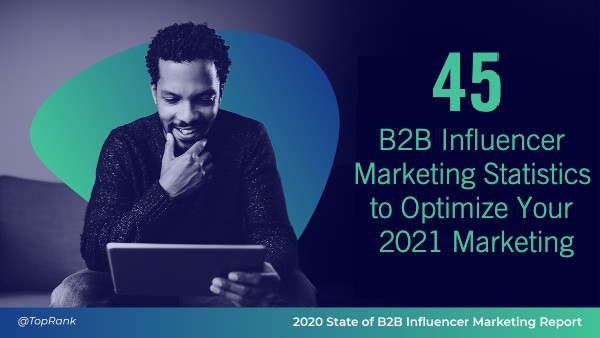
- 74% of marketers agree that influencer marketing improves customer and prospect experience with the brand
- 63% of marketers agree that marketing would have better results if it included a B2B influencer marketing program
From our view, we don’t see that trend slowing down anytime soon.
Influencer vs. KOL
Some may say it’s merely semantics but the word “influencer” infers a YouTube or TikTok celebrity smiling big to schill their use of the latest teeth whitener and the term, “key opinion leader” (KOL)” is emerging as the preferred term for B2B partnerships.

Key Opinion Leaders are what the B2B community is looking for, right? These partnerships are MUCH less about “buy now!” and more about learning something new from a trusted source or having a brand experience where sales are the last metric to be measured as the success of a partnership.
At Convince & Convert, we’ve concepted, recruited, created and managed dozens of KOL programs for clients over the years. Almost every project revolves around helping the audience gain insights or perspectives from KOLs in their area of expertise and not about direct sales.
This is the case in our most recent work with Cisco to source and creates short-length video series and blog posts for their partner marketing platform.
Over the course of the program, we’ve built relationships with our KOL’s and the partner audience at Cisco has also built affinity and trust in the knowledge they bring each month.
Not a week goes by that our own Jay Baer isn’t approached to be a KOL for various brands and contribute his thought leadership, marketing prowess, and digital personality to a campaign or brand platform.
Other C&C team members including Zontee Hou, Mary Nice, Daniel Lemin and Jenny Magic also get asked to contribute content as a KOL around digital marketing strategy and customer experience.
Working on both sides of the KOL programming has given us unique insights about how to make a program successful and what matters when negotiating a rate.
How to Approach KOL Selection
TopRank’s survey found that “39% of marketers say their top challenge with influencer marketing is that the process is too manual” and we couldn’t agree more! Our clients look to us to take out that manual work for them and deliver KOL results with as minimal extra work as possible.
Having perspective on what content creation and campaigns need from both a brand and a KOL perspective has given us a unique angle when working with KOL engagements.
Sourcing B2B KOLs for Your Brand:
We use our network of contacts as well as subscribe to several software platforms which support our discovery and vetting of potential KOLs.
Software platforms we currently use include:
– Social media marketing analytics with advanced competitive analysis, SEO, social reporting, and content marketing tools.
– Helps PR and marketing teams monitor media coverage across both news and social media and enhance brand management.
– Crawls tens of millions of social and web profiles to find what (and who) your audience reads, listens to, watches, follows, shares, and talks.
– Specialises in providing influencer marketing software and supporting professional services to help brands scale their influencer programs.
Once we have our starting list we make KOL dossiers that outline each potential KOL, the reach, content types, audience profile and other interesting information about the individual.
The dossiers bring the KOLs to life, similar to how personas would in a marketing plan as well. It allows our clients to see and relate to potential KOLs much more so than a spreadsheet of text.
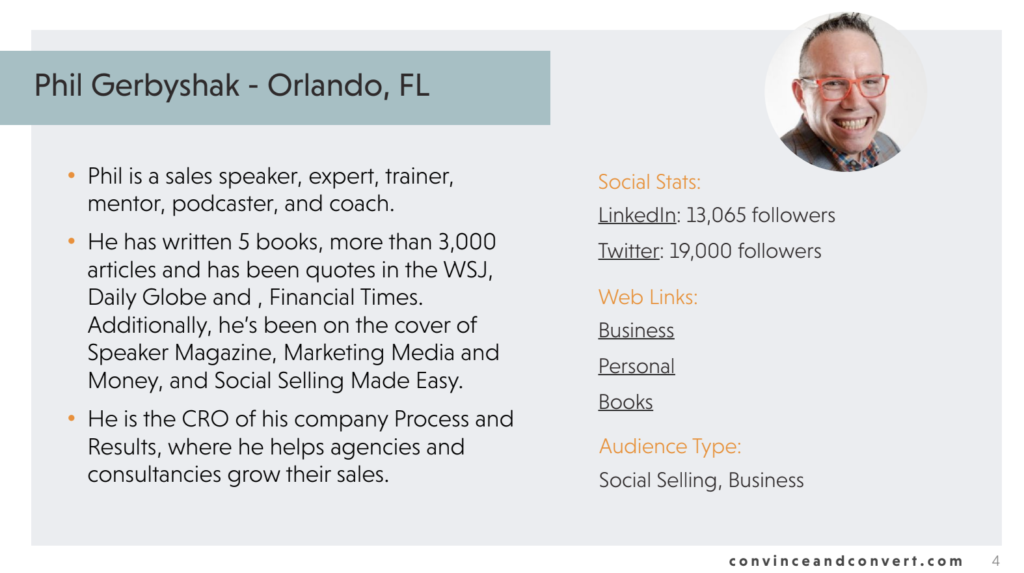
This takes the work the software provides for surfacing potential KOLs and overlays actual manual review and research from one of our team members.
(We visit each KOLs page, watch multiple pieces of content on all channels, review other brands they may work with, assess quality and style of content produced and confirm audience reach numbers from the software).
We like to research 2-3x the number of final KOLs our client is targeting so that we have provided a solid look at the opportunities and competition (or not) in a category. From the set of dossiers, we narrow in on our top individuals to pursue.
Selecting B2B KOLs:
Now comes the educated guesstimate part of this work.
Each of the KOLs will have different levels of compensation, preferred channels to activate and affiliation with our client.
Before we pick up the email or phone to approach a KOL we hyper study the following parts of our dossier:
From there we work on a payment range we believe to be equitable based on the work request and experience.
KOL Payment: The Wild West
Some of you may know I worked with Jay in the early 2000s at an ad agency in Phoenix. In those early days, I would place the online media for our clients. One such campaign was for a client who created and sold koozies.
Their koozies had suction cups on them so that the gel coat on your boat wouldn’t get ruined as you enjoyed an ice-cold beverage while cruising around the lake.
As media kits and banner ads overall were few and far between, we would literally search the web for sites we thought would be a good fit and call (on a desk phone!) the owner or main contact of the site.
(see: title of Webmaster) We’d start with an offer of a hundred dollars and see how it landed to know if we completely offended them or had just made a great deal, working our way down the list of potential banner placements.
And even in 2021, B2B KOL negotiations feel a lot similar but certainly more than a few hundred dollars.
We took this question to our friends at Onalytica, the biggest B2B influencer database. With a platform like theirs, it is easier to negotiate and process payment for a KOL, but it still requires conversation and a fair bit of guesstimation.
Each individual person and set of content pieces come with their own negotiations. Valuing the relationship and offering a fair and equitable rate will go much farther in B2B KOL partnerships than budget savings.
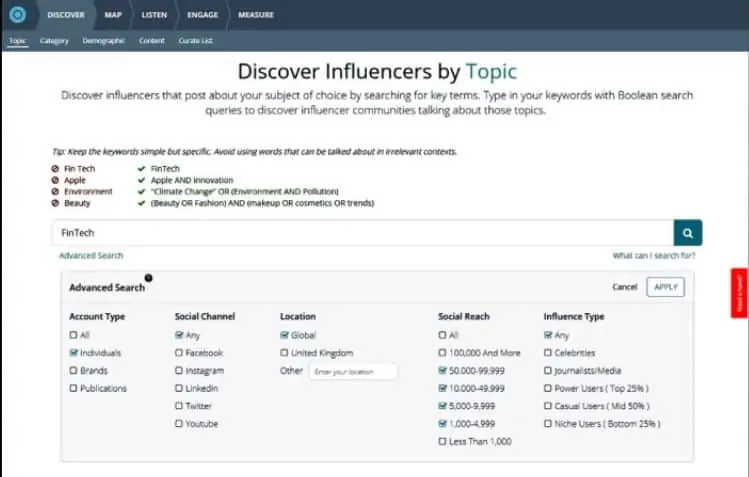
Onalytica platform
The Good News For Finding B2B KOLs
Lucky for all of us, rate cards and reports in the area are increasing, giving at least a clue or a starting point to custom negotiations with KOL’s of interest.
Even for Convince & Convert, we’ve worked on a general rate card in the form of our media kit for the types of content we regularly create for clients.

It takes into consideration the expertise our collective team brings to any KOL engagement.
As we work on behalf of clients to strategize and plan their KOL engagements, we use our rate card as the barometer for gauging the starting offers and rate negotiations with the KOLs selected.
A recent report by Intellifluence included more than 1200 influencers asking them about compensation expectations for mainstream pieces of content. And while the influencers included were likely working with more B2C than B2B brands, we found these areas to universally apply:
- Cash is preferred. “Nearly 70% of those surveyed said they liked to get paid in cash and in the product.” For B2B marketers – particularly MarTech brands, think about how you can sweeten your offer or enhance the relationship with a KOL by offering a license, upgrade or similar in addition to direct payment.
- Particularly for C&C clients, video is a common content type in our KOL programs. In the Intellifluence survey, influencers wanted brands to realize how much pre-work goes into creating a quality video.
For B2B marketers, when you are working with KOLs acknowledge that the hard work is in the prep and polish of a video. While the output may be only a few minutes of finished content, a worthwhile KOL will spend time to plan, script, and use quality equipment to shoot the video.
One area we tend to do for our clients is we do the post-production work – asking a KOL to send us clean video and we add any captions, logos and bumpers to the final cut. This works well because most of our KOL interactions are part of multi-episode shows.
Frequently Asked Questions:
QA: 1
What type of content (webinar, blog post, social post, etc) would be a fit not only for our client campaign but also fits with the KOLs style and audience set?
We have repeatedly found that when we approach a partner KOL with a specific ask or deliverable they are increasingly able to agree or negotiate the contract more quickly.
Giving them something thoughtful to react to goes a long way in the negotiation process.
QA: 2
How large does this KOLs audience reach? (followers, average engagement, etc) How key is their audience to establishing our objectives?
An exercise in quantity vs. quality if you will: Depending on the goal for the campaign, one or the other could sway the amount of negotiation you are willing to engage in.
Although leaning toward B2C, this recent Intellifluence survey has some starting points on price per post expectations and by channel direct from influencers which is a must-read.
QA: 3
Which other brands does this KOL work with or represent? How do those brands affect or overlap our client’s brand?
Usually, we work with 6-10 KOL’s at a time and are creating an episodic type show for our client. Explaining the overall campaign and creative direction the KOL is part of also provides context and company, increasing the knowledge of the outcome for the KOL helps to gain trust, especially for new relationships.
Working with B2B KOLs is a Work in Progress
Someday we’ll have the “ultimate pricing guide to B2B KOL engagements” but until that is created, we’d break it down to building a relationship with your KOLs is key and fair compensation and clear deliverables go a long way in a long term partnership.
The post Find the Right B2B Influencer or KOL for Your Brand appeared first on Content Marketing Consulting and Social Media Strategy.
Source: convinceandconvert.com

All About Substack: Competitors, Features, and Audience
Do you love to write? Draw? Create in any way? Do people tell you that you should try using your creative skills to make a living?
Do you shrug them off because you don’t know how to get started or because you don’t feel you have the time to commit to unpaid work? After all, many people get their journey started writing free content in newsletters and blog posts.

Disclosure: This content is reader-supported, which means if you click on some of our links that we may earn a commission.
That’s where Substack comes in.
You get to write and get paid—even if you don’t have a following yet.
If you’re curious to know more, stick around.
I’m breaking down Substack and its many competitors to help you determine if this is the path for you.
What Is Substack?
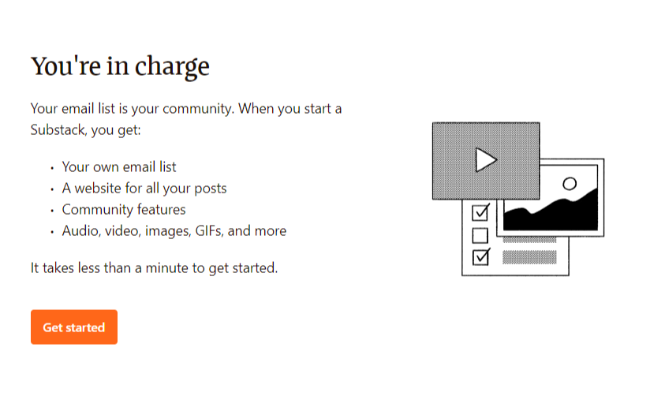
In 2017, Substack took the market by storm by allowing creatives, journalists, and bloggers to make money from their own email newsletters.
Substack provides a way to build an email marketing list, write newsletters, charge subscribers, and manage payments.
This platform offers an intuitive email creator that helps writers create interesting emails with links, images, content, and more.
It lends itself towards all sorts of creators, including:
We will focus on writers and bloggers today, but you should keep this site in mind if you’re involved with comics or podcasting.
You can begin using Substack for free.
However, as you begin to build a following, you could opt for a premium option, running $5 to $75 per month.
When you use a premium level, you can charge your readers.
Substack only gets paid when you get paid, taking a 10 percent cut.
Stripe takes an additional 2.9 percent plus 30 cents.
As you can likely tell, you need to have a solid following to make a decent buck on Substack.
Even with that amount taken out, Substack has the potential to become a viable profit source.
Substack Features
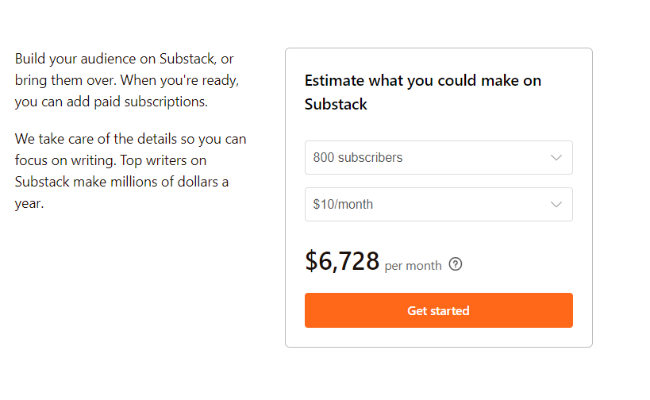
At the core, Substack is an email marketing platform.
Whether you choose to go the paid or free route, that’s up to you.
Here are some of the ways that you can make use of Substack.
Free Newsletters
Using a free Substack newsletter is a great way to grow your brand, develop your voice, and build a name for yourself.
If you don’t have a large following, this is a great place to start.
Create valuable content for your small following and offer it for free.
Don’t use Substack in a vacuum; pair it with a website.
This allows you to invite readers to your site using a CTA and potentially turn them into buyers.
Paid Newsletters
While a free newsletter has the potential to make you money on the backend, you can use paid newsletters to make money on the front end.
You can publish as many newsletters as you want, and there are little to no guidelines on what you can write.
Remember that people will factor in how much value they’re getting based on how much you’re charging them.
If you’re charging $75 per month but only publishing two newsletters, you may lose subscribers.
If someone is willing to pay to read your writing, it means they want to read it regularly.
Therefore, getting in the habit of publishing consistently is the best strategy.
This way, the readers know what to expect, and you can plan accordingly.
Who Is Substack’s Audience?
The best thing about Substack is the wide variety of subscribers for you to tap into.
The writers on Substack include journalists, celebrities, political analysts, food writers, world travelers, and more.
Most of the writing you’ll find on Substack would classify as personal writing, opinion, or research and analysis.
In the interest of transparency, Substack has experienced some controversy relevant to portions of its audience.
Writers accused of transphobia, harassment, and other negative behaviors have found homes on the platform, as it isn’t heavily moderated.
While your audience is your own and not tied to any other creator’s, this is something to factor in when considering how your particular audience may respond.
As for the audience, you have your choice of writing whatever it is you want because chances are, there is someone out there willing to pay to read your writing if it’s valuable.
If you’re targeting a more niche audience, you may be able to charge more to a small set of subscribers because they need more resources.
If you’re after a broader niche, you could charge less but reach more people.
You have the freedom to choose the direction you want to go with your Substack newsletters, but the options are nearly endless.
3 Tips Using Substack for Marketing
There is serious potential to make a lot of money and reach a lot of people on Substack, but you have to know how to do it.
So, here are some tips for marketing on Substack.
1. Start With Free Newsletters
You can’t introduce yourself out of nowhere and expect them to subscribe for a monthly fee if they have no idea who you are.
You have to provide something valuable.
Eventually, readers could become enticed by your content and want more of it.
Once you get to that point, start thinking about charging people.
One of the biggest mistakes people make is moving from free to paid too soon.
You need to be strategic, making sure your audience is genuinely engaged and would be willing to pay for your work.
Even if you wait until the perfect moment, you may still lose followers.
People who used to get something for free may balk when asked to pay.
But, if you provide excellent content, have a committed following, and charge a reasonable price, you increase your chances of keeping the majority of your subscribers.
2. Have a Strong Offer
Offer more than a newsletter; give your subscribers something they can’t turn down.
For example, you could have an exclusive social media group for subscribers or even offer one-on-one conversations or coaching, depending on your field.
You could also offer subscriber-only discounts for any products you may sell.
Write to your audience and include a CTA to get people to click on your offer.
This could be an excellent way to convert these hot leads.
3. Consider Multiple Publications
Substack allows you to have as many newsletters as you want—meaning you could have a free and paid version.
This strategy allows you to continue to engage with your entire audience.
To get readers to move to your paid option, you need to offer a little bit more.
Make the content more exclusive, valuable, and personal.
You can also have multiple free publications if you want to spread yourself across a few different niches.
For example, digital marketing is highly diverse with a variety of different subjects.
So, you could have a newsletter about SEO and another about social media marketing, both driving readers to your website.
Substack Competitors
There are a ton of Substack alternatives, so making a decision can be challenging.
Let’s take a look at some of their biggest competitors so you can choose the platform that’s right for you.
Substack Vs. Ghost

The goal of Ghost is to help you build a loyal following to generate the income you can rely on.
As with Substack, you charge subscribers a monthly fee in exchange for your content.
What separates Ghost from Substack is the way they take payment.
Ghost charges nine dollars per month and takes none of your revenue.
This makes the platform highly scalable.
You also get custom email addresses, domains, and access to a referral program.
Substack Vs. Patreon
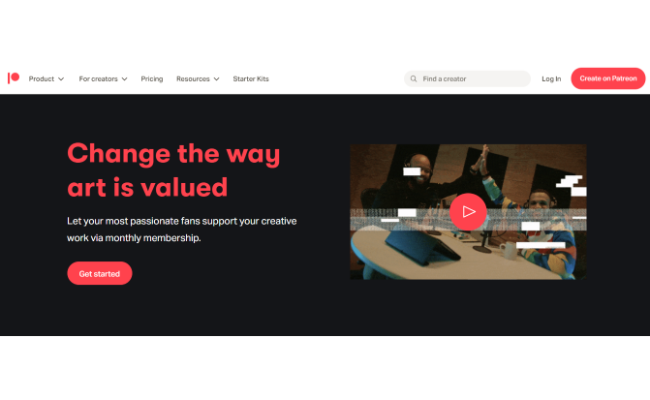
Patreon is a subscription platform allowing creatives to charge for their work.
The platform looks like a social media feed to users, and they get to scroll through the work of everyone to whom they subscribe rather than trying to go from place to place.
Patreon’s biggest perk is its tiered package option.
You can provide people with various options to appeal to their budget and how much they want from you, all from one location.
For example, at a $1 level, you could send subscribers one newsletter per week.
At a $5 level, you could send them two newsletters or a newsletter and access to a video.
Patreon plans range from five to 12 percent of your monthly income plus processing fees of 2.9 percent plus 30 cents.
Substack Vs. Medium
Medium is well-known for being a haven for creatives who simply want to make their voices known, and much of it is free to access.
As a bonus, Medium articles often rank pretty well SEO-wise.
If you upgrade to a paid Medium profile, you can charge for some or all of your content.
Rather than any kind of flat fee or percentage, Medium pays based on “reading time.”
The more time people spend reading your content, the more money you make.
You can also get paid by referring people to the platform through your unique code.
Substack Frequently Asked Questions
Here are some of the most frequently asked questions about Substack.
Is it free to access Substack?
Substack is free to write newsletters and build a following on the platform. It only costs money when you upgrade to paid and start to generate revenue from your subscriptions.
Can I advertise on Substack?
The only way Substack makes money is through their cut of subscription fees.
Should I make a Substack?
Only you can answer this.
Do you have great content ideas?
Do you have a small following that you can nurture and grow?
If yes, starting a Substack could be a great way to grow that following and eventually profit from it.
Does Substack own your content?
No. You retain ownership of everything published on Substack.
While you cannot export content out of Substack once you publish it, you maintain ownership even if you use a different platform later.
All About Substack: Conclusion
Building a following is not an easy task, and that’s why we offer assistance to marketers and creatives looking to build or grow their following quickly.
Whether you’re going it alone or getting help, you need to be consistent and patient as you grow the following.
Of course, building an email list is easier said than done, but with some hard work and focus, Substack could help you get your writing career off the ground.
What advice do you have for new writers wanting to build a following on Substack?
Source: neilpatel.com

19 Public Speaking Tips From Brian Tracy’s Professional Speaker Career
Whether you’re looking to pursue a career in public speaking or are simply trying to prepare for a presentation to your squad, your ability to deliver a theme that others can connect with is an invaluable skill that is useful in any industry.
I have been public speaking for over 40 years, and I’ve learned a lot of helpful gratuities along the way about the art of public speaking.

Discover 19 Public Speaking Tips from Brian Tracy
Read on to discover 19 public speaking tips that will allow you to become a strong speaker who can captivate any audience.
Overcome your fear of public speaking Learn how you can transform public speaking into a profitable career today.
1. Pick A Topic You’re Passionate About
Do you ever want to speak on a topic that you’re well educated on, have a strong interest in, and have your own experience with it?
Your passion will naturally shine through and will help your gathering stand engaged.

2. Know Your Audience and What They Want to Achieve
While you want to pick a topic you are enthusiastic about, you also want to make sure you’re tailoring your lecture to reverberate with your audience.
The better you know your audience demographic, the better you’ll be able to deliver a speech that resonates with them.
Remember, there’s an intellect they’re there — so make sure you speak directly to them, has become relatable as possible.

3. Practice Your Speech Regularly
The key to effective public speaking is surprisingly simple: practice, rule, practice.
Rehearse in front of a mirror or perform your speech to a friend.
Planning ahead will facilitate shape your delivery much smoother and improve your overall rendition.
If you really want to advance your knowledge, attend public speaking tricks to improve your techniques and strategies.

4. Clear Your Mind
Even “the world’s largest” seasoned public speaker can get a little anxious before a presentation.
While there are lots of ways to overcome your fear of public speaking, the best thing you can do right before your communication to clear those jitters is to take a minute to clear your attention via musing or visualization.
Picture your lecture going well to allow your subconscious mind to clear out any distractions and places great importance on successful delivery.

5. Intrigue Your Audience Right From the Start
The introduction of your addresses the tone for the rest of your talk, so it needs to be enthralling.
Make a strong statement, was asked, or refer to current events to get the attention of your gathering right away.

6. Be Clear and Concise
Remember that less is more. Don’t over-inform your audience with superfluous extents.
You want to ensure your speech is well-organized, easy to follow, and provided listeners with exactly what they came there for.
7. Be Confident
Focus on your theatre spirit as you prepare for your communication so you can be as impactful as possible to your gathering. Don’t overthink and get into your chief — anticipate positive to allow you to have confidence in yourself and your abilities.
8. Relate With Personal Stories
Incorporate personal tales and lifetime know-hows into your discussion where possible.
Doing so will help the audience relate to what you say and feel connected. Your floors remind members that you’re human, too.
9. Add Your Personality
Don’t be afraid to show the gathering who you are.
Make them laugh, share moving paraphrases that have inspired you, or use emotion to help hit your points home.
10. Speak Slowly

Speak slower than you think you need to.
Frequent breathers during your talk will help draw your listeners in and ensure you can carefully articulate everything you’re saying.
Talking slowly will also help you enunciate your words so they don’t miss a beat.
11. Take Deep Breaths
Take deep sighs before and during your address. Inhale to the count of three; then exhale for the weight of three.
This will help with any nerves you have, plus it will enable you to incorporate pauses.
12. Make Eye Contact
As you deliver your talk, look at men in your gathering and make brief eye contact.
This will allow your audience to feel as if you’re speaking immediately to them.
Just be sure not to take too long of eye contact with one or more people — steadily seem from the back to front.
13. Move Around
Be aware of your body language. Don’t precisely stand in one place — if you have room, are walking as you are talking about, but don’t pace.
Using hand gesticulates can emphasize important points in your speech and help you take control of the room.
14. Alter Your Tone Throughout
The best presenters have mastered their public speaking voice, which is the practice of utilizing different inflection times in certain areas of your speech.
You don’t want to monotone music for the entire duration.
Project your voice and improve vocal power throughout so you can lead to a potent final point.

15. Avoid Distractions As Best You Can
As much as you may try to prepare, distractions while on stage can interfere with your presentation.
Do your best to stay focused during your address so good-for-nothing interrupts your train of thought.
That said, sometimes the distraction is too noticeable to ignore.
If this happens to you, direct the attention of the audience to it in a funny room if possible and then continue speaking.

16. Incorporate Visuals in Your Presentation
Visual succors, such as envisions, maps, graphs, infographics, facilitate employ your audience as well as reinforce your points. 65% of specific populations are visual learners.
By including visual material, you’re increasing the percentage of people who will walk away from your lecture and remember it well.

17. Be Timely With Delivery
Don’t go over your allotted speaking time.
It may be seen as contemptuous if you transcend the time you’ve been given.
Timing your speech ahead can assist you to prevent things short.
You can also set up clear milestones in your pronunciation.
If you are aware of how long all sections of your discussion are, you’ll be able to keep track of time in your front while demonstrating your speech.
18. End With A Bang And Say’ Thank You
As you culminate your discussion, support some inspiration for your audience to take away.
Deliver a strong call to action that enables your audience to pray more from you.
And, as always, thank your audience for assembling and listening.

19. Have A Post-Show Meet And Greet
If you have the opportunity to meet with the crowd after your discussion, this is a valuable route to get some feedback.
See what their response was and look at possible areas where they want to hear more or less from you.
This is also a great networking opportunity.
You might be able to make acquaintances that will land you a future speaking happening, or consulting opportunities if you provide a service.
Improve Your Public Speaking Skills Before Your Next Speech
Public speaking presents as a disheartening skill to many, but with these gratuities, you’ll be able to conquer your next speech and seduce your audience.
Check out my Ultimate List of Public Speaking Tips to know how to overcome your panic, write an effective speech, and become an expert public speaker that can build a successful career.
Source: briantracy.com

How to Create a Successful Influencer Marketing Campaign Using Webinars
Webinars are an invaluable content marketing product designed to bring in high-quality leads for your sales team.
For most Convince & Convert readers, it is almost common knowledge that webinars are an invaluable content marketing product designed to bring in high-quality leads for your sales team.
However, there’s a certain mystique surrounding webinars:
- Should they be high-end in terms of production value to convey equivalence in professionalism to the product itself?
- Should they be low-fi recordings with off-the-cuff experts to provide a behind-the-scenes look on how to truly win with the product?
- Should they be pre-recorded and scripted?
- Should they be a question-and-answer free-for-all?
How should a company go about creating an effective webinar?

Like all mediums, webinars are complex, and the right answer depends heavily on the product and team using them.
For initial setup, the following guide on how to create a webinar is instructive in determining a rough format.
Once the rough format is decided on, a company can decide on how to ensure the webinar is effective by touching on the relevant psychological triggers necessary to induce the end purchase.
However, there are some gaps in the overall setup process, which this article hopes to augment.
Namely, a company needs to be cognizant of who is being targeted and how best to influence those people.
Then, how to make sure they are aware of the campaign in the first place.
Stay on target

When it comes to psychological triggers of purchase, you first need to have a much deeper understanding of who exactly you’re trying to influence.
Take into account the various cultural, social, personal, and psychological factors that might come into the purchasing decision, but also the decision to click the initial registration button and to show up.
Without delving too deep into this piece of the puzzle, consider where your target audience is located.
- Are they going to be available to join your webinar when it’s scheduled? If the product being sold is designed for their job, normal work hours make sense. If it is a side hustle, consider kicking it off after 5 pm or so.
- Are there language considerations? If the target audience is of a radically different socioeconomic status, consider the platform and minimum technical requirements for the webinar to make it as frictionless as possible.
- What’s the age range of the audience? Is the product geared towards an older audience? Younger? Hip, casual, conservative, professional?
- Why is the audience joining you? Is it to learn? Is it out of motivation to succeed, or even fear?
Once the various sociological and psychological profiling is complete to the point of having a more solid grasp of exactly who the target market is, a company can devote resources to find the ideal influencers to make it a success.
Enter influencers
To dispel the obvious myths, influencers are not just about Kim K and her sisters hawking the latest facial cream on Instagram.
While that is still an absurdly successful use case, every marketing medium and product combination can benefit from the right influencers.
It’s just a matter of choosing the right influencer type for the campaign.
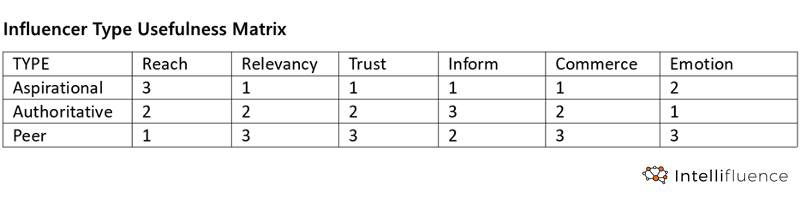
The influencer type usefulness matrix from Intellifluence
Influencers can generally be bucketed into three main categories:
- Aspirational. For ease of definition, aspirational can be thought of as the Kim K celebrity example above.
- Authoritative. These influencers are key for webinars. Authoritative influencers are the trusted subject matter experts, even in a narrowly defined field.
- Peer. Peer influencers would be akin to your colleagues and industry peers, from the B2B perspective.
Why do we care so much about authoritative influencers for your webinar campaign?
Using the usefulness matrix above, we can determine what influence type is best suited for the sociological and psychological profiling work performed earlier on the target audience.
Reach matters.
Of course, but given the educational nature of webinars, the ability to inform in a trusted and relevant manner that is geared towards commerce is the winning combination.
Peer influencers also rate quite highly, which we can layer on in a later step.
For example, Jay Baer hosts webinars for Convince & Convert’s client, SharpSpring.
Jay is an authoritative influencer in marketing and marketing technology, and also helps drive registrations for virtual events through email, social, and word-of-mouth marketing.


Jay is an authoritative influencer who hosts and presents webinars for clients.
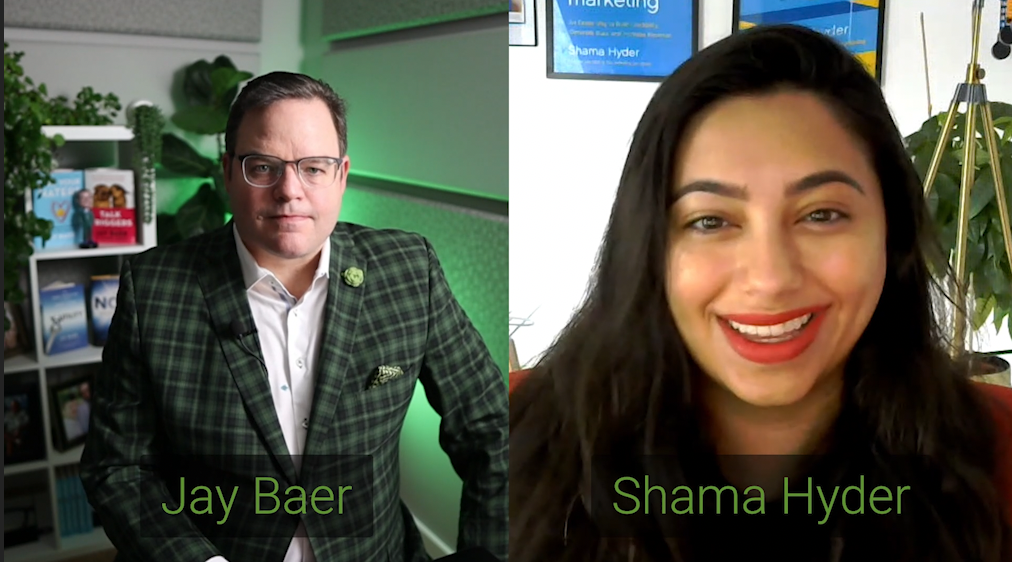
Jay also brings together additional authoritative influencers like Shama Hyder.
How to use authoritative influencers on your webinar
Pay them!

The article could have been as short as that previous sentence and still would not have been a waste of a company’s time.
If a company can pay a renowned expert in its field to host a webinar on how they have had success using YOUR product, you’ll make sales.
If you can’t get authorities, you can incentivize some walkthroughs from existing customers to prospective customers, aggregating the peer signal.
Host, co-host, or syndicate?
In the short example above, the recommendation is to pay the expert to host a webinar for his audience and followers regarding how to use your product as the expert sees fit, co-hosted with you for co-citation proximity (this is the leeching authority trick).
As a follow-up step, syndicate the webinar out to your prospective audience via email with the ability to participate in a follow-up company-hosted webinar series where your sales staff interact in more of a Q&A nature.
Since trust has already been established with tacit expert approval, the subsequent webinars can move deeper into the sales channel.
Bring on the wolf pack
In the penultimate stage of the process, the goal is to result in multiple prospective customer touches and funnel starts.
Use an on-going webinar series to keep people in the funnel

One simple way to do this is by recording an ongoing webinar series for those prospective customers, using your top product users as the weekly/monthly/quarterly experts.
This series is recorded and then syndicated through the following authoritative channels: YouTube and blogs.
As these peer-level users are already in love with your product, you can comp their usage of it as compensation in many cases.
Famed influence professor Cialdini would refer to this as unity: the desire to remain in the wolf pack.
Encourage peer influencers to promote your webinar
This can be as simple as pushing for peer influencers to share the webinar signup details over Twitter and Facebook, utilizing a series of relevant hashtags and a brief personal story of why they’ll be attending the webinar.
Make this easy for them by providing a standard promotional copy in a Google Doc.
Drive registrations with email
Another overlooked influencer syndication method is e-mail. Convince & Convert is great at email marketing with Jay’s personal updates that seamlessly interweave a narrative with a branded goal.
When a relevant email influencer is used to connect their audience with your upcoming webinar, wonderful things can happen, which is why companies like Intellifluence are willing to throw money at such influencers.
They can drive amazing signups!
Get some press
Finally, to tie the entire webinar campaign neatly with an influencer bow, consider running a targeted press relations campaign to extend your perceived authority on the subject and garner some additional eyeballs to your work.
The goal of this step is not to submit a generic PR Newswire report and hope for the best.
For the best results, target the journalists that have actively written on your industry and/or on webinar marketing in the past.
You are now doing something amazing, which their audience could benefit from knowing about.
Become the expert

If you’re just starting out in your content marketing journey and this entire process seems daunting, don’t despair.
You can become that authority yourself by taking the initial step and writing on the B2B subject matters you know about.
In due time, you’ll be the expert being paid to share your thoughts on a webinar.
The post How to Create a Successful Influencer Marketing Campaign Using Webinars appeared first on Content Marketing Consulting and Social Media Strategy.
Source: convinceandconvert.com

Customer Journey Mapping for Audience-Centric Content
One of the questions we hear from our clients most often is, “How do we get from ‘one-size-fits-all’ to personalized content?” And we have a clear answer: Customer Journey Mapping.

What Is Customer Journey Mapping?
Customer Journey Mapping (also known as Journey Mapping or Audience Journeys, or a dozen other variations) is simply the process of understanding the path your specific target audience segments take, from the moment they become aware of their problem until they (ideally) know and love your brand.
More specifically, customer journey maps clearly outline how each of your target audience’s needs, actions, and mindsets evolve through critical make-or-break decision points along their path.
Journey mapping works for both B2B and B2C scenarios, but it important to note that they are most valuable when evaluating longer-term purchases or relationship-building marketing strategies.
It is less useful to build journey maps for quick one-off purchases where customers are unlikely to build brand loyalty.
So, where to begin?
Why Is Customer Journey Mapping Important?
Your prospective customers are faced with a mountain of choices and content.
When they’re making a decision about whether to engage with a brand, customers—in every demographic, B2B, B2C, and across industries—are overwhelmingly signaling that they prefer personalized messaging that is relevant to their needs.
As Convince & Convert founder Jay Baer says, “To be someone’s favorite, you need to be hyper-relevant.”
One of the easiest ways to boost content marketing relevancy is through personalization. If you’re not already personalizing, you’re probably falling behind.
With the increasing demand for contextual, personalized content as well as the new opportunities for delivering that content using ABM and targeted social advertising, understanding the specific needs and concerns of each audience segment has never been more important.
You can’t personalize for a group you haven’t defined.
Journey maps help improve the customer experience by ensuring you’re considering their full experience as you design the interaction, and they help drive customer-centered decisions, as your team aligns business goals with the customer’s goals, and measures marketing performance based on the ease and effectiveness the customer experiences.
How to Create a Customer Journey Map
Building a Customer Journey Map involves defining five key elements:
- Audience Personas
- Decision Journey Stages
- Audience Mindset (thoughts, feelings, and top questions)
- Touchpoints & Key Actions
- Ideal Response & Content Opportunities
1. Audience Personas
Though creating audience personas are a separate task and not specifically part of the customer journey process, it’s essential to ensure you truly understand your audience before you begin.
Audience Personas should be based on research (even just talking with your customer service team is a great start), and they should group clusters of individuals together based on their needs and attitudes, not demographics.
Here’s more on How to Build Attitudinal Personas for Effective Audience Segmentation.
2. Decision Journey
The decision journey identifies the key steps an individual takes to reach their goal; this is often referenced by marketing teams to outline useful touchpoints at each stage of the decision. Typical stages of the decision journey include:
- Trigger/Desire: realizing they have a problem to solve
- Awareness: becoming aware of your type of solution
- Consideration: adding your brand to the list of possible solutions to evaluate
- Evaluation: comparing the possible solutions
- Purchase: committing to your product or services
- Loyalty: purchasing again and/or telling others about their positive experience.
Customize these stages for your own efforts. For example, a higher ed marketing team might choose to rename these stages:
- Desire
- Awareness
- Consideration
- Application
- Enrollment
- Ambassador
3. Persona Mindset & Top Questions
Next, it’s important to layer on the emotional mindset of this persona at each stage, and then define the questions or objections keeping them from taking that action.
However, almost none of the decisions customers make fit perfectly into a linear decision journey.
There are always emotions that affect a customer’s ability to reach their goal and speed up or slow down their progress.
Identifying the mindset of the audience at each step helps us consider the types of content and level of reassurance they need from us at any given moment.
Make sure that your decision journey includes not just rational steps, but also what they’re thinking, feeling, and needing at each stage.
The mindset analysis takes into account elements like their mood at this stage, how their feeling about the problem and our brand or brand category, trusted advisors they might look to for advice or inspiration, their experience or confidence level, and sense of urgency to solve the problem.
This is also a great place to document their questions and objections:
- What is keeping them from taking the next step in solving this problem?
- Which of your web pages is most visited?
- Which content assets get the most engagement?
- What frequently asked questions does your sales or support team find themselves fielding over and over?
A great tool to brainstorm these is an empathy map, developed as part of the Gamestorming human-centered design kit from XPLANE.
This is a useful exercise to solicit input from across your sales, customer support, and marketing teams to help identify the key identifiers along the journey.
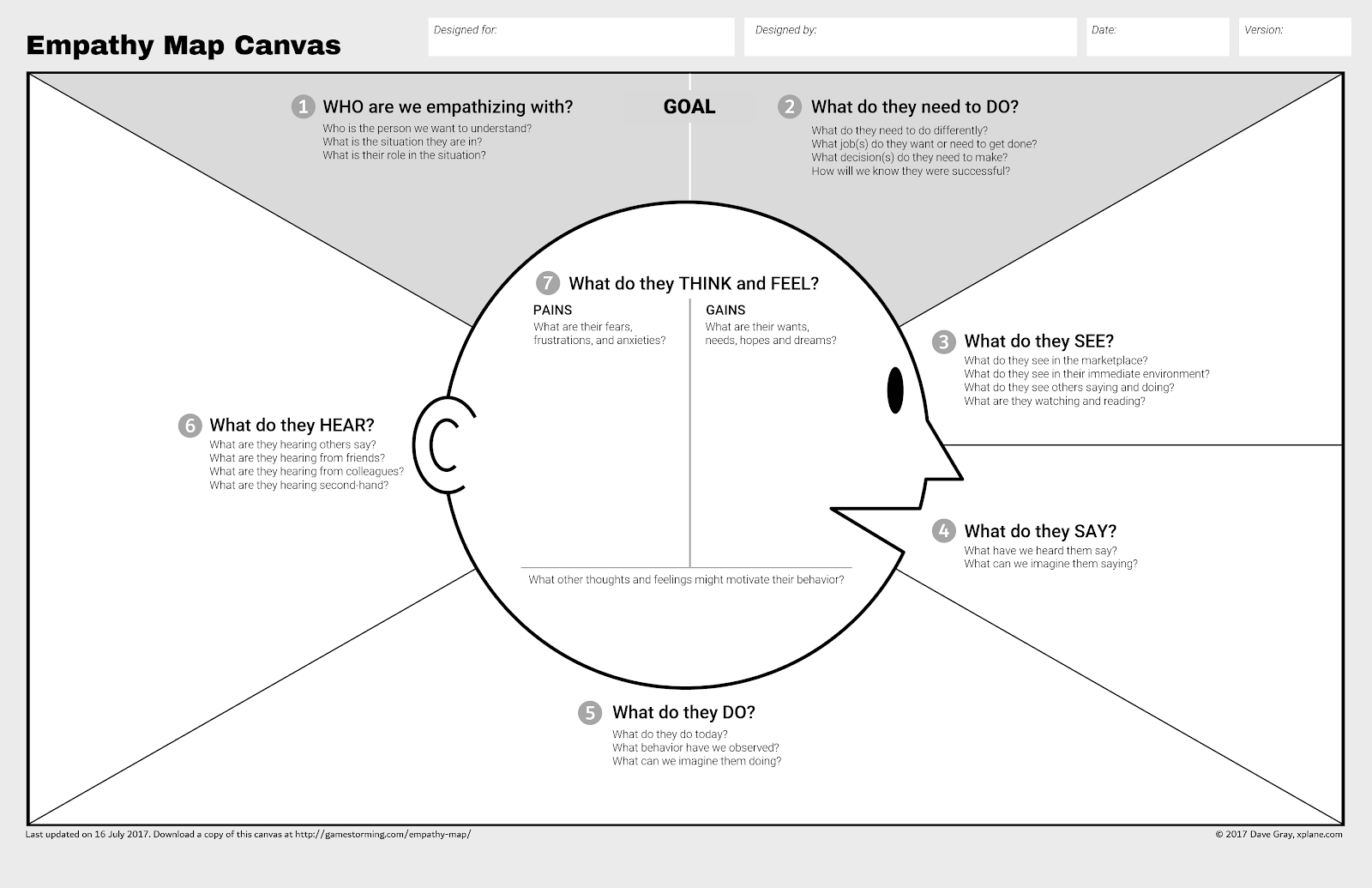
The empathy map canvas is a great tool to brainstorm the mindset of your audience.
It was developed as part of the Gamestorming human-centered design kit from XPLANE.
This is a useful exercise to solicit input from across your sales, customer support, and marketing teams to help identify the key identifiers along the journey.
3. Key Actions & Touchpoints
Ok, we know who we’re talking to, and what they’re going through as they try and solve this challenge.
The next question is what do we want them to DO and HOW are we going to encourage them to take that action. What is the most useful step they can take, and what opportunities will we have to interact with them?
Thinking about what they most need to do next at the same moment that we consider questions like, “will they are on our email list at this point?
What search terms will they be using at this stage? Is the sales team already reaching out to them at this point?
It’s important to document all the touchpoints they might get from your company all in one place to build sales and marketing alignment and ensure we’re working toward the same goals.
Understanding what actions to watch for help keep the focus on the right call to action at each step of the funnel.
4. Ideal Response and Content Opportunities
This is all about finding the most important message: what is the one thing we can say to help them get over the objection and take the next key action?
Specify an ideal response to them at each of these steps and list content you already have or plan to create to meet those needs.
From there, defining our ideal response and most important message to encourage that key action leads to clear content opportunities.
At this point, you have a really useful journey map to begin evaluating your content marketing strategy.
- Do we have most of these questions covered?
- Are these key actions from the journey map aligned with the calls to action on our website?
- What stages of the journey have we done a great job with, and where are the gaps?
Some teams use their personas, journey stages, and key action goals as a way to tag content assets, and then run reports to identify which stages are underserved.
The post Customer Journey Mapping for Audience-Centric Content appeared first on Content Marketing Consulting and Social Media Strategy.
Source: convinceandconvert.com

The 34 Marketing Principles I Live By
Can you guess how long I’ve been a marketer?
7 years? Maybe 10?
Guess again.
I’ve been a marketer for 18 years now.
That’s a long time… And funny enough, I’ve also been an entrepreneur for the same amount of time as I’ve never really held a “corporate” job.
Many of you think I am smart, and I am great at marketing.
But let me burst your bubble… I am NOT smart, and I am NOT a great marketer.
Instead, I’ve just been doing everything long enough where I’ve learned what not to do.
See, the first 4 or so years of my marketing career went really slow and didn’t go the way I wanted.
This was mainly because I kept making mistakes.
And even worse, I kept repeating the same mistakes over and over again.
So, when I was around 20 years old, I created a list of marketing principles to never break because I wanted to ensure that I didn’t repeat the same mistakes over and over again.
Over time I kept adding to the list, and it has helped me succeed not only as a marketer but also as an entrepreneur.
Hopefully, the list of principles below helps you get to where you want in life.
I know it’s helped me tremendously.
The 34 Marketing Principles
Here goes:
Principle #1: Don’t be the first

Don’t Be the First
So many new marketing channels pop up, don’t be in a rush to try them all.
Especially when these channels are new and unproven.
You’re more likely to waste time than find wins.
At the same time, you don’t want to be the last either.
The key is to be an early adopter.
Once a channel is picking up steam, that’s when you want to jump on board and see if you can leverage it for your business.
Principle #2: Ride it while it lasts

Sail Safe
Every channel that works eventually gets saturated.
Some fade away, but most stick around, and some just don’t work as well.
For example, Facebook grew through sending out invitation emails to everyone in your email address book.
That just doesn’t work anymore.
Digg used to be an amazing site that drove 100,000 visitors to a site in less than 24 hours.
It doesn’t anymore.
Google AdWords used to be a cheap way to drive sales.
It still works, but it is expensive.
When you find a channel that is working amazingly well, push hard and milk it for as long as it lasts.
As time goes on, you’ll want to keep leveraging it, but you’ll naturally have to scale back as more competitors jump due to price increases.
Principle #3: Sales and marketing should be owned by one person

Sales cum Marketing Manager
To truly grow, you need to understand the whole picture.
From how someone comes to your site, to what they are looking for, to how to sell, upsell, and retain a customer.
You need to think about the whole cycle a customer goes through.
For that reason, a company eventually needs a Chief Revenue Officer (especially in the B2B world).
A CRO is someone in charge of both sales and marketing.
The departments can run separately, but they need one boss.
When both departments don’t roll up into one boss, there is typically is a disconnect.
This will cause the conversion rates to be lower.
Principle #4: Go all in during recessionary periods

The market moves in cycles.
When things go down people pull back on marketing.
Don’t optimize for short-term gains, optimize for the long run.
Marketing tends to be more cost-effective during recessionary periods.
This is when you should be spending more, doubling down, so that way you can beat your competition once the recession is over.
Principle #5: If you aren’t thinking long term, you won’t beat your competition

Most publicly traded companies optimize for a return within the first 12 months.
Most venture-funded companies have a 1 to 3-year outlook.
If you want to beat these companies, you need to have a 3-plus year outlook.
This will open up more marketing channels that your competition can’t look at due to investors and outside pressure.
With your marketing, it doesn’t mean you have to lose money for 3 or more years to beat your competition.
It means you just have to get creative.
For example, I know marketing costs are rising each year, so I’ve invested in software to generate visitors at a much lower cost than CPC advertising.
Doing these sorts of things requires patience as it can take years for creative ideas to come to fruition.
Principle #6: Never rely on one channel

Good channels eventually become saturated and it’s too risky if your marketing is solely based on one channel.
If it goes away or stops working for your business, it will crumble you.
You can’t control algorithms, and you can’t always predict costs. Focus on an omnichannel approach.
In other words, you can’t just do SEO or social media marketing.
You need to eventually try and leverage all of the major marketing channels.
Principle #7: Marketing tends to get more expensive over time

It’s rare for marketing to get cheaper.
You can’t control this.
As much as you focus on marketing, you have to focus on conversion optimization.
It’s the only way to keep you in the game as costs increase.
Try to run at least one A/B test each month.
And don’t run tests based on your gut.
Use both quantitative and qualitative data to make decisions.
Principle #8: Don’t take your messaging for granted

No matter how effective your traffic generation skills are, you won’t win if people don’t understand why they should buy from you over the competition.
A great example of this is Airbnb.
They beat Home Away and are worth roughly ten times more.
They both have a similar product and they both executed well.
Airbnb came out much later, but they nailed their messaging.
Spend time crafting and creating amazing messaging.
Typically, amazing messaging requires story-telling and understanding your customers.
You may have to survey your customers or talk to them over the phone, but eventually, you can come up with the right messaging using qualitative data.
And once you’ve figured out the right messaging, retest each year as market conditions can change, which will affect your messaging.
Principle #9: The numbers never lie

Opinions don’t matter!
Marketing should always be a data-driven approach.
Follow the numbers and keep auditing them as things will change over time.
What works now may not in the future due to external factors that you can’t control such as privacy and security concerns.
For example, if your users claim to hate exit popups, but the data shows an exit popup increases your monthly revenue by 10%, then continually use the exit popup.
People within the organization will complain and argue with you, but as long as you aren’t doing anything unethical, follow the data.
Principle #10: The best thing you can do is build a brand
Whether it is a corporate or personal one, people connect with brands.
From Tony Robbins to Nike, people prefer brands. By building a brand, you are building longevity with your marketing.
Don’t ever take it for granted and start building it from day one.
No matter how small or big your company is, you should continually work on improving your brand.
From the story behind why it exists to showcasing it wherever you can push hard on branding.
In the short run, it will not produce a positive ROI, and it is hard to track the value of a growing brand, but it works.
When people want to buy sports shoes, they don’t always perform Google searches.
Instead, they just think “Nike.”
When people want a credit card, they think Visa, Mastercard, Discover, or American Express.
Brands are powerful and create longevity.
Principle #11: Always protect your brand

You’ll have opportunities to generate quick sales or traffic at the sacrifice of your brand image. Never do it.
It’s better to have less traffic and sales in the short run than it is to tarnish your brand in the long run.
If you tarnish your brand, you’ll find that it will be hard to recover and cost more money.
Principle #12: Don’t take shortcuts

Decision Making
Every time someone presents a social media or SEO shortcut, avoid it.
Typically, they won’t last long, and they could set you back through penalization.
It’s better to be safe and think long-term.
It will be tempting but say no.
Principle #13: Don’t market crap

Building a crappy product, service, or site just won’t cut it.
With the web being competitive and it being easier to start a site online, you need to make sure you have something incredible.
It’s 10 times easier to market something people love than it is to market something people don’t care about.
No matter how good of a marketer you are, it’s not easy to market something people don’t want.
So first focus on creating something amazing.
Principle #14: Hire a full-time affiliate manager from day 1
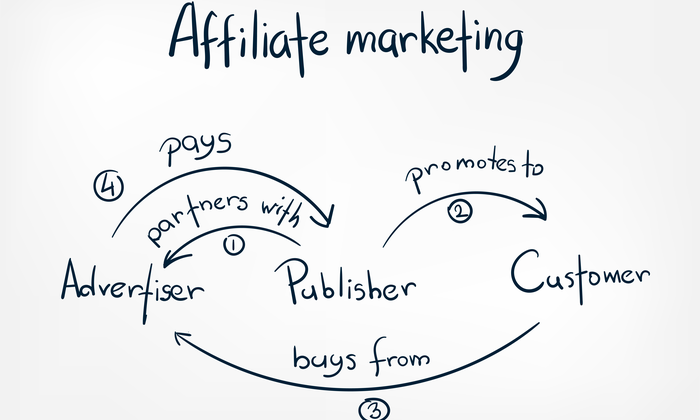
There are always people within your space who aren’t competitors and have an established user base.
Have a dedicated resource continually reaching out and partnering with these sites and companies.
It’s a good long-term way to grow without having to invest a lot of capital.
Even if your product or service isn’t ready, hire this person from day one as it takes 6 months to fully build up a good base of partnerships and affiliates.
Principle #15: Go against conventional marketing wisdom

Gmail
Doing what everyone else is doing won’t work for the long haul.
Doing the opposite usually works much better.
It may sound risky to go against the grain, but it is one of the best ways to grow when you are in a saturated market.
A simple example of this is how Gmail grew when it first came out.
Space was crowded and even though their tool was great, so were a lot of the competitors.
Gmail grew by creating the illusion of exclusivity.
People had to be invited by other members to get a @gmail.com email address.
Principle #16: If you aren’t scared, you’re not pushing the limits

A/B Testing
If you’re cheering about everything you are doing when it comes to marketing, something is wrong.
You need to be scared and be going through a mix of emotions every time you launch a new marketing campaign.
If you aren’t then you’re not pushing the limits.
Testing campaigns that your competition won’t ever dare to try, and, of course, be ethical when doing this.
Don’t burn your brand.
The bigger the risk, the bigger the reward.
Those who push the limits, tend to have a greater reward.
Principle #17: Don’t Be Unethical

You are going to have opportunities to gain quick wins at the cost of your customers.
Always put others first. It’s the only way to survive in the long haul.
In general, if you are going to have trouble sleeping at night, you shouldn’t be doing it.
A good example of this in marketing is how affiliates use forced continuity.
This is when they sell physical products for free as long as their customers pay for shipping.
What these customers don’t realize is that they are going to receive the same product every month and they will get a bill every month as well.
Don’t be unethical.
Principle #18: Get the right influencers onboard early

People tend to have a deeper connection with individuals over corporate brands.
Get influencers on board early, as it will help you attract customers faster.
Make sure your influencers are related to your business or else it won’t work and will just be a waste of money.
For example, if you are selling a B2B software you don’t want half-naked Instagram influencers promoting your product. It won’t work.
But if you are selling fashion products, having influencers on Instagram who have popular fashion channels will help drive sales.
Principle #19: Video is the future
People want to connect with you and your company.
If you aren’t integrating video within your marketing, you are making a big mistake.
Whether you like being on camera or not, the video should be in your strategy from day 1.
When you create videos, don’t just put them on your site.
Put the same videos everywhere… from social networks to asking other websites to embed your videos on their site.
You should even test running video ads as they tend to be more effective than text-based ads.
They are more expensive to run, but the conversion rate is typically higher.
Principle #20: You don’t know everything

Learn More
Marketing is always changing.
No matter how good you get at one tactic, never stop learning.
Having the attitude that you are great will only hurt you.
Have an open mind and be willing to learn from anyone, especially newcomers with little to no experience as they bring fresh insights.
Principle #21: Don’t Hire Arrogant Marketers

If you have arrogant marketers on your team, consider replacing them with people who are open to learning (assuming you aren’t breaking any HR laws).
Arrogant marketers are typically stuck in their ways and they aren’t open to change.
Just because someone doesn’t know as much, doesn’t mean they can’t learn.
Arrogant marketers tend not to experiment, and they prefer sticking with what they know.
Principle #22: Little Is the New Big

Social media has empowered everyone.
Don’t take people for granted, even if they don’t have money.
By helping everyone, it will cause your brand to grow in the long run.
Don’t worry about a direct ROI when helping others, it will cause word-of-mouth marketing.
Because of social media, everyone can impact your brand in a good or bad way.
So make sure it’s in a good way by helping everyone out (as much as it is feasibly possible).
Principle #23: Continually test what’s working
Because of external factors that you can’t control, things change over time.
For example, 3rd party authentications were used to boost conversion rates, but now people are concerned with using them because of privacy concerns.
Always retest what has worked in the past every 6 months to ensure it is still helping you.
When you don’t retest, you’ll find that your conversion rates will drop over time and you won’t know the cause of it.
Principle #24: The majority of people don’t read

If you write a masterpiece, expect the majority of the people to not read it.
Make sure your content and marketing landing pages are easy to skim.
Without this, you’ll lose out on a large portion of sales.
Things like design, spacing, colors, and typography all affect readability and how easy it is to skim.
Yes, messaging is important, but if no one reads it then you won’t generate sales.
Principle #25: Headlines are more important than content

Headlines
8 out of 10 people will read your headline, but only 2 will click through and read your content.
Spend as much time coming up with a headline as you do writing content.
If you have an amazing masterpiece and a terrible headline, it won’t get read.
You shouldn’t stop with one headline either.
Consider A/B testing a handful of headlines, as this will help you come up with a winning version.
Principle #26: Expand internationally once you’ve figured out your main market
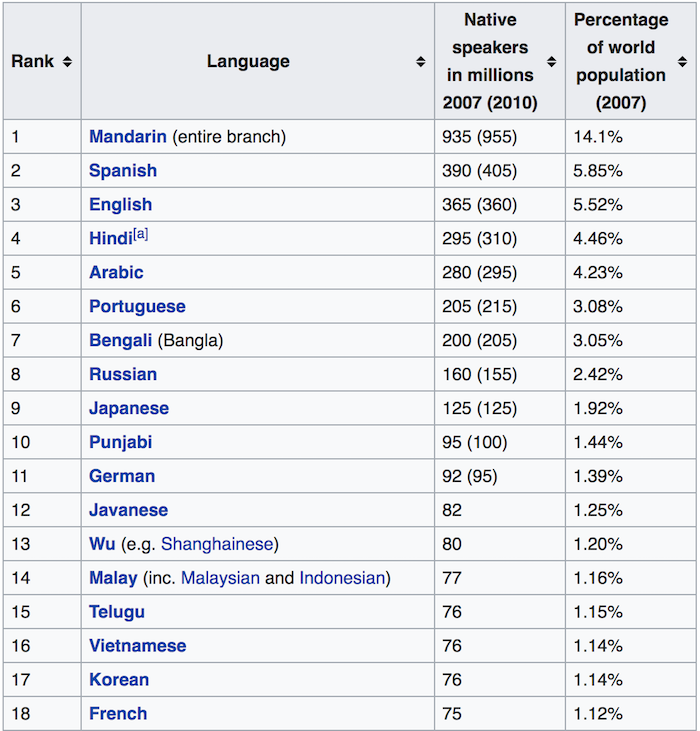
The English language is always competitive.
Translate your website, content, product, and service as quickly as possible (while maintaining quality, of course!).
It will open up more marketing opportunities and revenue streams.
When picking new markets, don’t just look at GDP look at the population as well.
If one region has a slightly lower GDP but a higher population, consider going after the one with a larger population first.
Principle #27: Be willing to start over every year

Business Growth
If you are expecting to grow by just doubling down on what worked in the past, your growth will slow down.
By having the mentality that you need to start over and redo all of your marketing initiatives each year, you’ll grow faster as you will be receptive to change.
This doesn’t mean you should ignore what worked for you in the last 12 months, it means that you need to keep doing that as well as go back to the drawing board to try new tactics.
Principle #28: Ideas are a dime a dozen, but good team members aren’t

You’ll have dozens of ideas that you’ll want to test, but if you don’t have people to take charge of them they won’t go anywhere.
Don’t bite off more than your team can handle.
If you want to grow faster, you need people to take charge and lead each of your marketing initiatives.
This will also allow you to fine-tune each channel and squeeze the most out of it.
And if you have dozens of ideas, don’t just hire any marketer.
If you don’t hire the right person, with experience, you’ll find that the marketing channel isn’t working out too well for you.
So take your time.
Principle #29: Don’t hire people you need to train if you want to grow fast

Training by Team Leader
There is nothing wrong with hiring people who need training, but it will cause your growth to slow down.
If you want more traffic and sales ASAP, you can’t hire people that need hand holding or training.
Hire marketers with industry experience that know how to get off and running from day 1.
Ideally, you should even consider hiring marketers who have worked for your competition and have done well for them.
Principle #30: It takes 3 months for a marketer to get ramped up
No matter how skilled of a marketer you hire, even if they come from your competition, it typically takes 3 months for them to find their groove.
So, when you hire them as a full-time employee or a contractor, be patient and be willing to give it at least 3 months before you decide what you want to do.
Of course, you should see results within the first 3 months (even if they are small) but you still need to be patient.
Principle #31: People love stories and always will

Storytelling goes back centuries.
They were effective back then and they still are today (and they will be tomorrow as well).
Integrate stories within your copy.
It will help you craft a better bond with your audience.
With a better bond comes higher conversion rates.
Principle #32: Don’t take trends for granted
If you see the market moving in a direction, even if you don’t think it will last forever, consider riding the wave.
Even if you don’t like the trend, you’ll find that it typically makes customer acquisition easier and more affordable.
Use tools like Google Trends to help you determine which trends are popular and to see how the market is moving.
A great example of this is MixPanel copied the KISSmetrics product, but they grew faster as they rode the mobile analytics trend, while KISSmetrics did not.
Principle #33: Optimize for revenue, not top of funnel metrics

In marketing, looking at numbers like monthly visitors is great, but it isn’t the most important metric. Optimizing for leads isn’t enough either.
Your tracking needs to encompass the whole funnel.
By optimizing for revenue you’ll be able to make better decisions and see faster growth.
When looking at your funnel, keep in mind that it shouldn’t stop with a purchase.
There are upsells, repeat purchases, cross-sells, and even churn to consider.
Principle #34: Follow the rule of 7
People need to hear about your brand or see your brand 7 times before they’ll convert into a customer.
In other words, you need to be everywhere if you want to win market share.
With every company having similar products and services, people have a hard time deciding who to buy from.
If your brand is more prevalent, people are more likely to choose you.
Make sure you are leveraging as many proven marketing channels as possible.
Conclusion
Some of the principles above may seem obvious to you while others may not.
But you’ll find that both you and your team will make many of the mistakes no matter how obvious they seem.
Whether it is the principles above or your own, consider creating a list of your own for your team to follow.
And it shouldn’t just be for marketing. I have lots of principles… especially in regards to entrepreneurship.
So what other principles should marketers follow?
Just leave a comment below with some of the principles you follow.
The post The 34 Marketing Principles I Live By appeared first on Neil Patel.
Source: feedproxy.google.com

7 Reasons Why Nobody is Reading Your Content and How to Grab Their Attention
Content, content, content.
It seems like content is the only thing anyone can talk about these days.
You’ve probably read post after post about how “content is king” at least a dozen times.
However, despite your best efforts, you can’t seem to see what the content hype is all about.
You write blog posts.
You create videos.
You participate in social media.
And yet, crickets.
You’re creating content, but it’s not getting you very far.
Unfortunately, creating content isn’t enough to really market your business.
If no one is engaging with what you’re producing, you’re simply wasting time, energy, and resources to clutter an already overcrowded web.
But this doesn’t mean content marketing is ineffective.
In fact, 20% of business owners believe content marketing will have the largest impact on their business in 2018.
If you’re not getting results from the content you’re creating, it typically means you’re doing something wrong.
But with a projected 16% growth rate between 2017 and 2021, content marketing isn’t something you can just hope will pass by.
If you want to market your business successfully, you need to find your errors, shape up your content, and start getting conversions.
7 Reasons Why Nobody is Reading Your Content and How to Grab Their Attention
To help you improve your content marketing strategy, here are seven of the biggest mistakes you might be making – and what you can do to turn your results around.
1. You have no strategy
Are you posting whatever you want, whenever you want?
A lot of marketers do this.
In fact, only 37% of B2B marketers have a documented content marketing strategy.
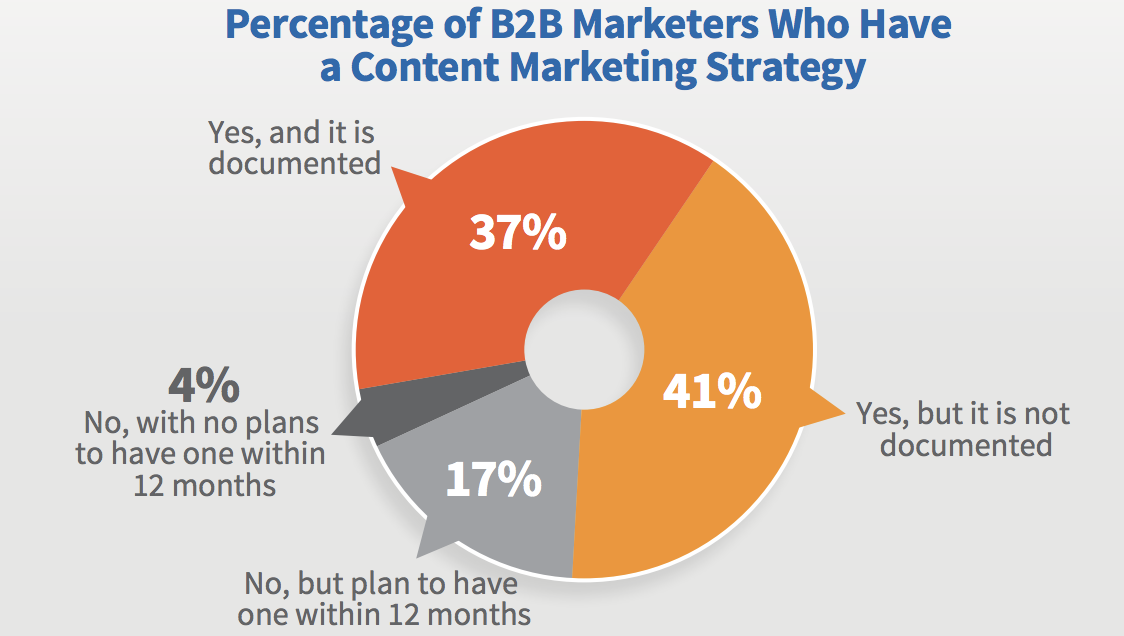
This means the majority of marketers aren’t thinking strategically about the content they’re creating.
This makes it easy for your audience to ignore whatever you’re sharing.
A content marketing strategy helps you identify what you’d like to accomplish with your content, as well as how you’re going to use your content to achieve your larger business goals.
In other words, it forces you to put intention behind your content.
Moz describes content marketing strategy as the overlap between content marketing and content strategy.
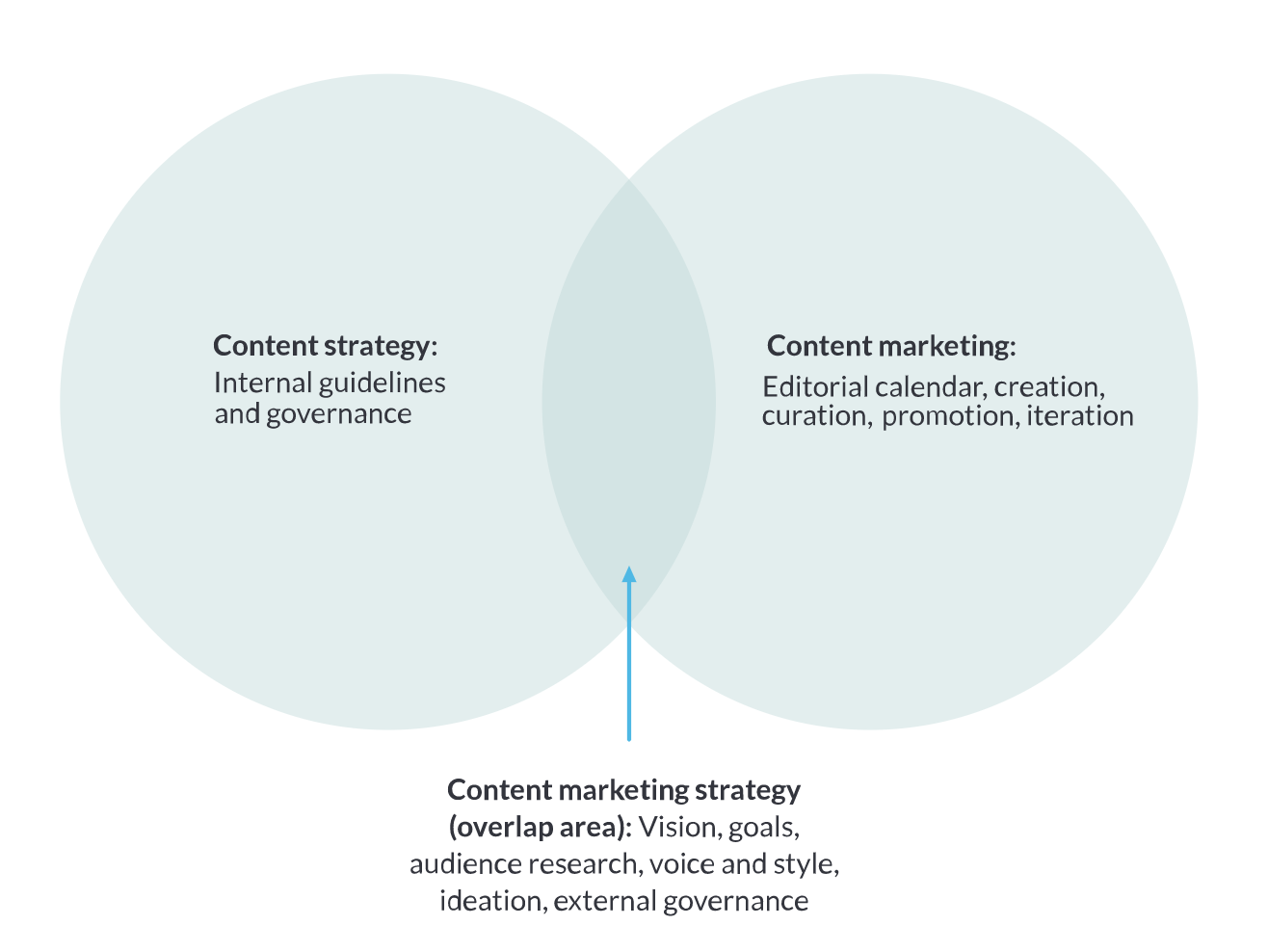
At this intersection, you’re able to use the content you’ve created to bring your business plans to life.
If you’re operating without a content marketing strategy, this disconnect makes it difficult for your target audience to know what you want them to do.
However, when you create a plan, you’re putting a purpose behind your content.
Creating a content marketing plan doesn’t need to be difficult.
In fact, Content Marketing Institute outlines how you can create an effective plan in just one page by outlining your objectives, goals, metrics, and strategy.
Once this is done, you’re ready to move on to an editorial calendar.
Your editorial calendar should work hand-in-hand with the content marketing strategy you’ve created.
Here’s an example of an editorial calendar template from HubSpot.
This calendar breaks down exactly when you’re going to publish your blog post, as well as the title name, content details, and keywords you’re going to target.
It also shares which personas you’re trying to reach and what you’re going to offer them.
This kind of well-thought-out planning means each piece of content you upload fits within the content marketing plan you’ve established.
There are dozens of ways you can create an editorial calendar.
Quickbooks chooses to house their editorial calendar in Airtable – allowing one editor to manage over 4,000 pieces of content.
Others, like Buffer, turn to Trello.
Personally, I like Asana.
But the tool isn’t the point. The best tool is ultimately the one you can get everybody to use consistently.
2. You’re not publishing enough
When it comes to uploading content, quality beats quantity any day.
However, if you’re just posting once a month, you’re going to struggle to grab any real attention.
Consistency is key to building trust and credibility both with your audience and with search engines.
The idea is simple.
When you create more blogs, you’ll drive more traffic to your website.
With more traffic, you can prove to Google that you have content people want to read.
Once they understand you’re sharing valuable information, they’ll give your content a boost on their results pages – bringing in even more traffic and attention.
However, it’s easier said than done.
If you’re stuffing your website with low-quality information that your audience doesn’t care about, it doesn’t matter how frequently you post.
In fact, The Writing Cooperative found that blogging every day actually decreased their views compared to when they were posting just six times a month.
In March 2017, before their posting experiment, The Writing Cooperative was getting about 14,000 views each month.
But once they began blogging every day, views began to decrease.
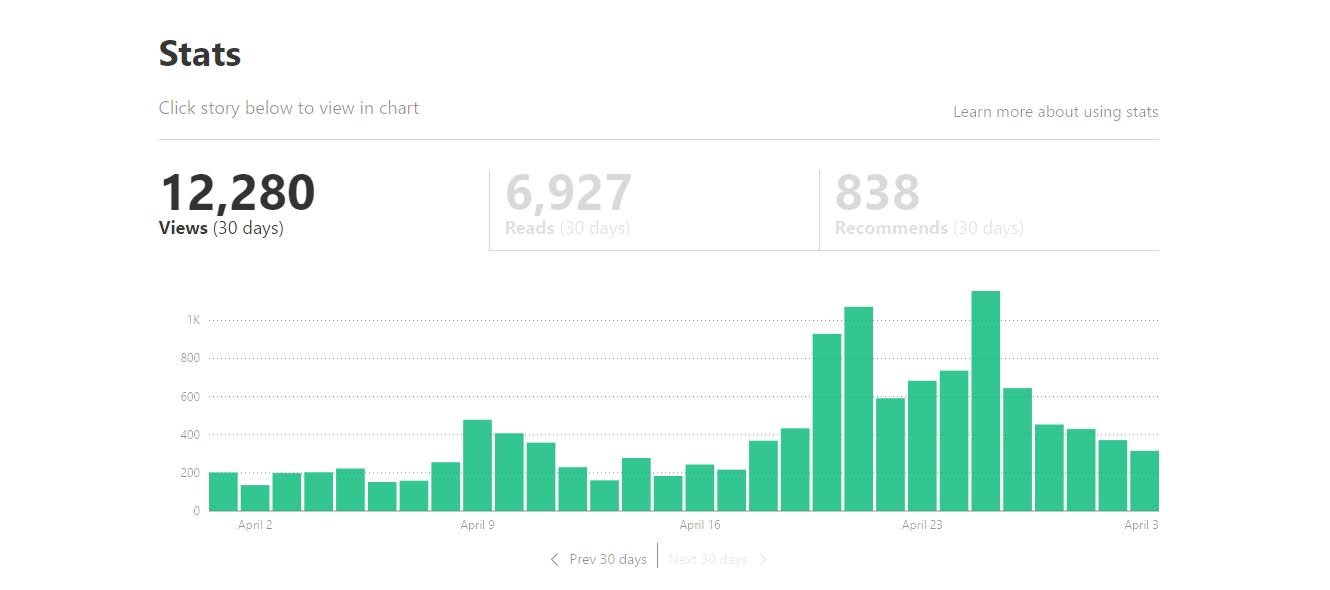
The problem here is that they couldn’t continue to create high-quality content each and every day – and their readers noticed.
The key to getting attention through your content is finding the right balance between quality and quantity.
You also want to go beyond simple blog posts.
While blogging is a great way to bring traffic to your website, it doesn’t appeal to everyone.
Not everyone likes to read blog posts.
In fact, 53% of consumers said they’d like to see more videos in the future.
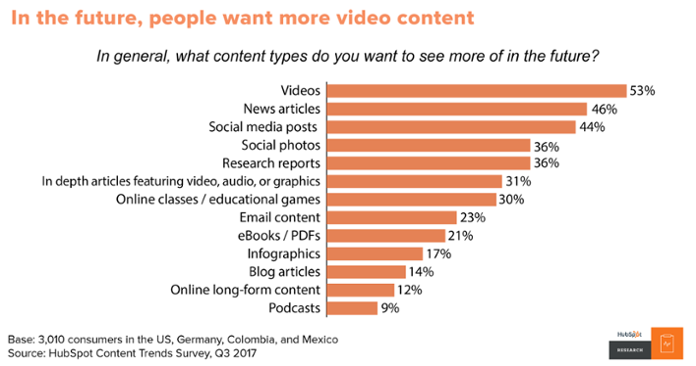
And with customers becoming more and more dependent on voice search and smart speakers, blogging isn’t always the most effective way to deliver content.
When you’re thinking about how often you should publish, you also want to consider what you’re publishing.
Videos can be a great way to grab attention, break down complex topics in a way that is easier for your audience to understand, or show off your products.
For example, Red Bull uses YouTube to show off the extreme sports, events, and competitions they sponsor.
With over seven million subscribers to their channel, Red Bull has one of the most popular YouTube pages out there.
Infographics are another way you can make your content more interesting for your audience, especially if you’re showing off large amounts of data or research.
In fact, over 41% of marketers said that infographics were the most engaging forms of visual content for their audience.
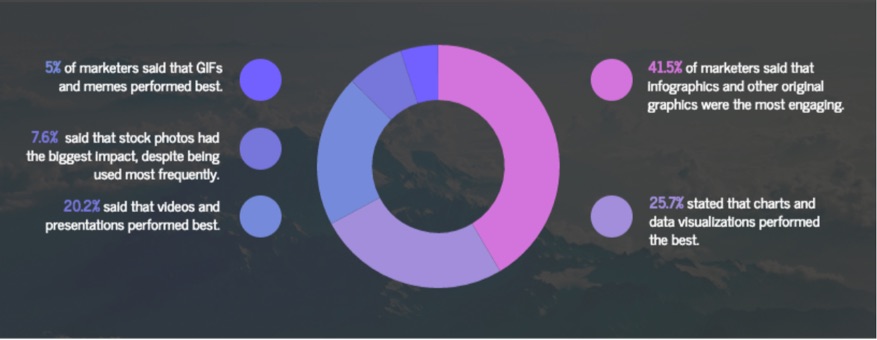
This ranked even higher than videos.
Infographics are insanely popular because they’re easy to skim and visual, making them ideal content for your always-busy customers and clients.
You can also expand your reach and get more attention to your content by producing podcasts.
Podcasts have been increasing in popularity over the past couple of years, with an estimated 67 million individuals listening to podcasts every month in 2017.
Repurposing written content into spoken can help you reach customers who don’t enjoy reading – expanding your audience to new individuals.
When trying to create different kinds of content, don’t be afraid to get creative.
However, you always want to think back to your target audience.
Focus on creating content that your audience will want to engage with.
3. You’re confusing content with sales pitches
Your content shouldn’t sell.
Sure, the whole purpose of marketing is to create interest in your business and drive sales.
But you can’t start out a relationship with a potential lead with a sales pitch.
Today’s customers don’t like being sold to.
That’s mainly because they don’t need to be sold to.
With the Internet at their fingertips, customers are more capable of discovering their options without ever needing to speak with a salesperson.
In fact, 60% of consumers won’t connect with a salesperson until they’ve already created a shortlist of potential purchases.
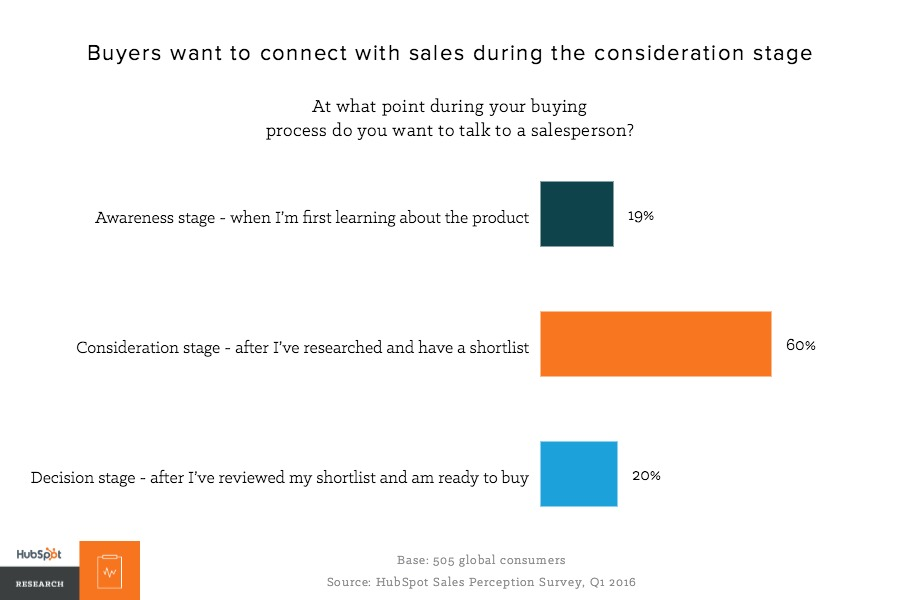
By the time they’re ready to buy, they already know more or less what they’re looking for.
This means you need to use your content to educate them – before you ever have the opportunity to connect.
Your content should be specially formatted to meet the unique needs of your buyer during every stage of their journey.
Let’s break down what that journey looks like.
First, your lead needs to become aware of your brand.
This means you need to be entertaining, engaging, or interesting enough to stand out from the piles of information already on the web.
You can do this in the form of videos, fun blog posts, educational webinars, and engaging social posts.
Take a look at this Instagram post from GoPro.

This high-quality image is attention-grabbing, causing followers to stop their scrolling and take notice.
However, it also shows off what the GoPro is capable of – increasing awareness about the brand and its products.
Next comes the consideration phase.
During consideration, your audience needs to better understand their problem, as well as their available solutions.
The content you might create for them could include product comparison videos or articles, case studies, or podcasts.
Here’s an example of a webinar from Instapage that would attract customers in the consideration phase.
During this webinar, participants learn more about how Instapage and Marketo can help lower their cost of customer acquisition, helping them determine if it’s the right solution for them.
This then brings the lead to the next stage of the buyer’s journey – the decision phase.
At this time, your lead is ready to choose which product or service is right for them.
You can encourage their decision with testimonials, product reviews, and demonstration videos.
Codeacademy uses their Stories page to share how past participants have used their skills to change their lives or careers.
These stories function the same as testimonials, allowing potential customers on the fence about purchasing to see how the decision influenced other customers’ lives.
Raphael Paulin-Daigle of SplitBase.io tells ConversionXL, “A type of social proof that works over and over again is testimonials. Whether it’s in video or written form, they’ve helped increase the conversion rate of the clients’ landing pages in every case.”
If your customer decides to buy, they’ve finally reached the delight phase of the buyer’s journey.
Here, they’ve already purchased, but you want to use your content to encourage them to buy again.
You can do this with newsletters, training webinars, or customer satisfaction surveys.
The Hubspot Academy is an example of content that reaches customers who have entered the delight phase of the buyer’s journey.
By offering training and certifications, Hubspot stays in touch with customers while providing content that can improve their experience as a customer.
Notice how none of these content forms include a sales pitch.
Instead, during each step of the way, the focus is on the customer and helping them find the right solution to their problem.
When your audience feels like you’re helping them, they’ll be more inclined to engage with your content.
4. You don’t know your audience
When you create a piece of content, do you know who you ultimately want to engage with it?
You’re probably thinking “customers.”
Unfortunately, just trying to attract anyone with a credit card isn’t going to get you great results.
With the mass amounts of content and information on the Internet, customers can find content that speaks directly to them – no matter how niche that might be.
To get attention, you need to find your audience and create content just for them.
When you focus your content, you might be narrowing down your audience pool, but you’re making deeper connections.
This can help you see real growth from your content.
Let’s take a look at how Modernweb used a hyper-targeted content strategy to bring in 10,000 visitors in just three weeks.
They started with defining their “who.”
And they got specific.
They came to the conclusion that they would be writing for “technology executives inside of enterprise companies.”
While they had clients who owned startups and small businesses, they weren’t their ideal client. So, they weren’t an area of focus.
Next, they dove into understanding the day-to-day pain points that those individuals experience.
Finally, based on the audience and pain points they established, they created a content plan that addressed those needs.
In this case, ‘Modernweb’ decided they’d focus on sharing stories from enterprise businesses who had recently switched from older to newer frameworks.
They identified their audience, understood what they were struggling with, then presented them with content that explained how similar individuals handled the same problem.
In just three weeks, their web traffic saw a major jump.

Just from getting to know their audience, they were able to bring more unique visitors to their website and keep them engaged for an average of 9 minutes.
There are a few different ways you can begin to replicate Modernweb’s results.
First, create a buyer persona.
A buyer persona walks you through who your ideal client is.
Here’s an example from ClearVoice.
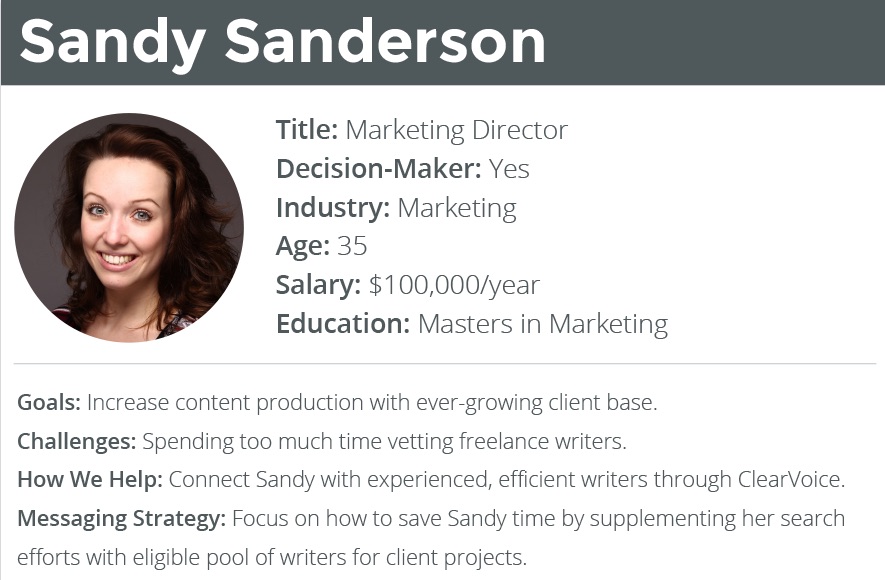
It breaks down exactly who they are, what problems they experience, and what kinds of solutions they might be looking for.
You can go deeper into your buyer persona to explain things like what they do each day, what kind of education level they have, or what they might do in their spare time.
The more detailed you can get with your buyer persona, the more targeted you can make your content.
If you have a wide range of products or services, you may also want to create multiple personas.
For example, here’s another example from ClearVoice.
While both John and Sandy have similar needs, they have different goals and challenges – meaning they’ll need to be targeted differently.
This can ensure that each of your audience members is well represented.
Next, pay attention to what they’re doing on social.
Monitoring your customer’s social activity can give you insights into the problems they’re facing, the solutions they may want, and what questions they may have.
You can then use this information to refine your content and guarantee you’re creating something they care about.
Check out the questions they’re asking on traditional platforms like Facebook or Twitter, but also dive into question sites or forums like Quora and Reddit.
For example, if you’re a personal finance firm looking for content ideas, the Personal Finance Reddit page can be a goldmine.
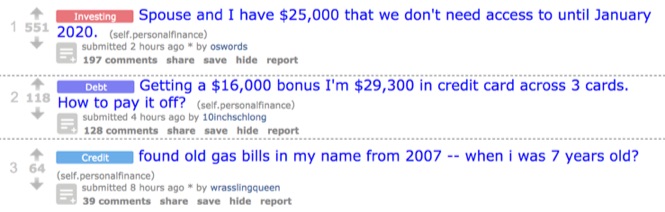
Users are constantly jumping on to ask questions about paying off debt, how to properly invest, or get advice on what to do in credit scams.
Knowing the real-life struggles your audience is facing can help you adjust and refine your content strategy to truly fit their needs.
Both of these pages can give you a great jumping-off point for creating new content.
Finally, participate in conversations with your audience.
Get involved in Twitter Chats or Facebook Groups where your audience is hanging out.
Check out how RivalIQ gets involved in a conversation with a participant during the #BufferChat.
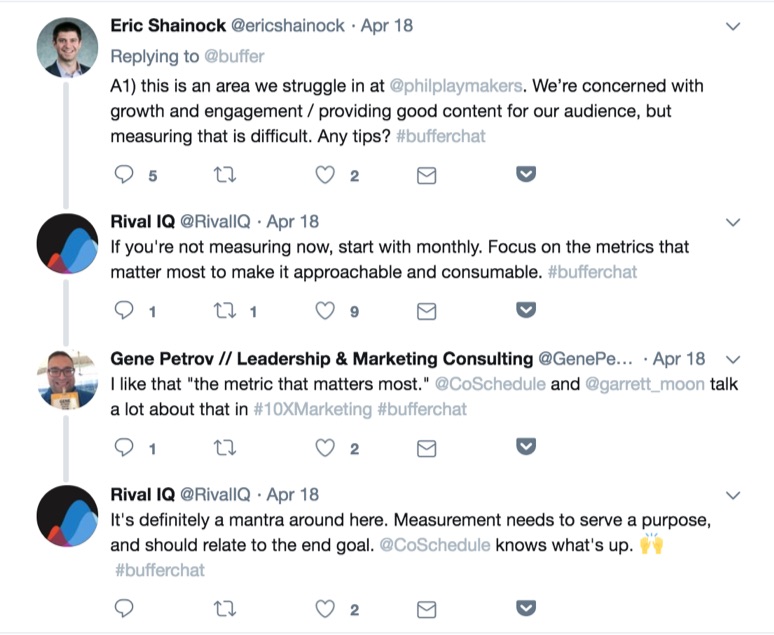
Not only does this allow them to make a great impression, but it also gives them some insight into what potential customers may be struggling with.
As you become familiar with the conversations they’re engaging with, you can refine your messaging and topics to better suit their needs and preferences.
5. Your voice isn’t genuine
Customers want to purchase from companies they believe they can trust.
In fact, the top quality that customers look for in a brand is honesty, followed by friendliness and helpfulness.
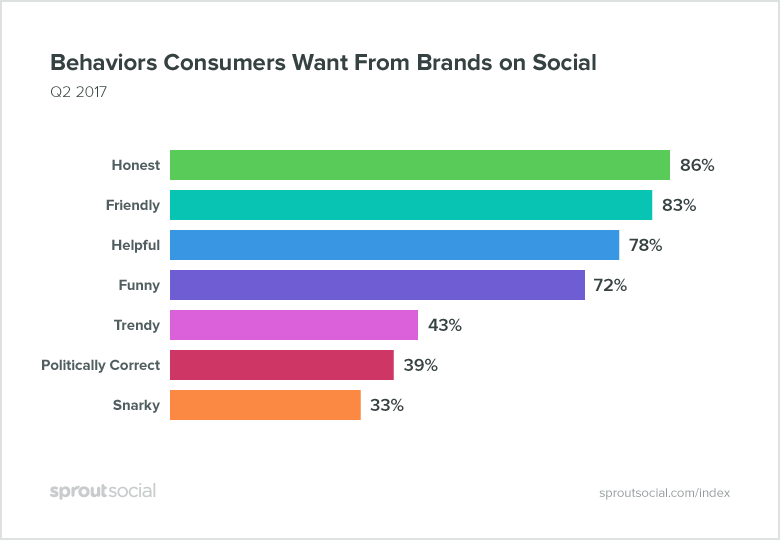
However, if it seems like you’re just putting on a persona for sales, they’re going to be hesitant to connect.
When creating your brand voice, it needs to connect who your brand is with who your audience thinks your brand should be.
Let’s consider this graph for a second.
Snarkiness is the last thing that customers what when it comes to brands on social media.
However, when we look at brands like Wendy’s and MoonPie, their attitude gets them hundreds of thousands of engagements.
So, what’s going on here?
Both Wendy’s and MoonPie have made it their brand persona to be snarky, witty, and sarcastic on social.
It’s who they are – and that’s why it works.
They’re not pretending to have an attitude just for attention.
It’s a unique indicator of their content, allowing them to create a reputation that makes customers want to connect.
Check out this quote from Juntae Delane, Founder of Digital Branding Institute.
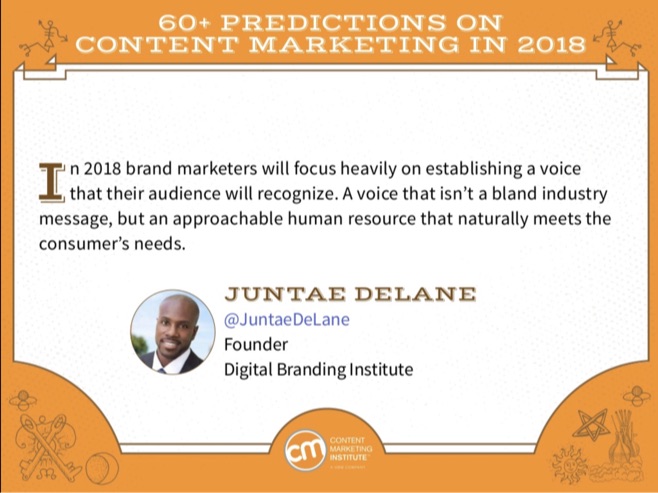
According to Juntae, a brand’s voice needs to go beyond simple industry jargon and bland business tones.
Instead, it needs to match with the customer’s needs and provide a human element to the brand.
You can build your brand voice of the buyer persona you’ve created.
Based on your buyer persona, get familiar with the kind of language, tone, or colloquialisms your audience may be using.
Check out how they speak on their own social media platforms.
Then, take a look at the competitors or other brands they’re engaging with.
Once you’re familiar with the way they communicate, create a storyboard for your voice.
Think of your brand as a unique individual.
Outline what your brand likes, what they don’t like, how they perceive themselves, and how they want to be perceived by others.
You’ll also want to dig deeper to consider larger ideas that might not have any direct influence on your brand.
Today’s customers are expecting brands to be more than just a business.
For example, 65% of consumers believe it’s important for brands to take a stand on social or political issues.
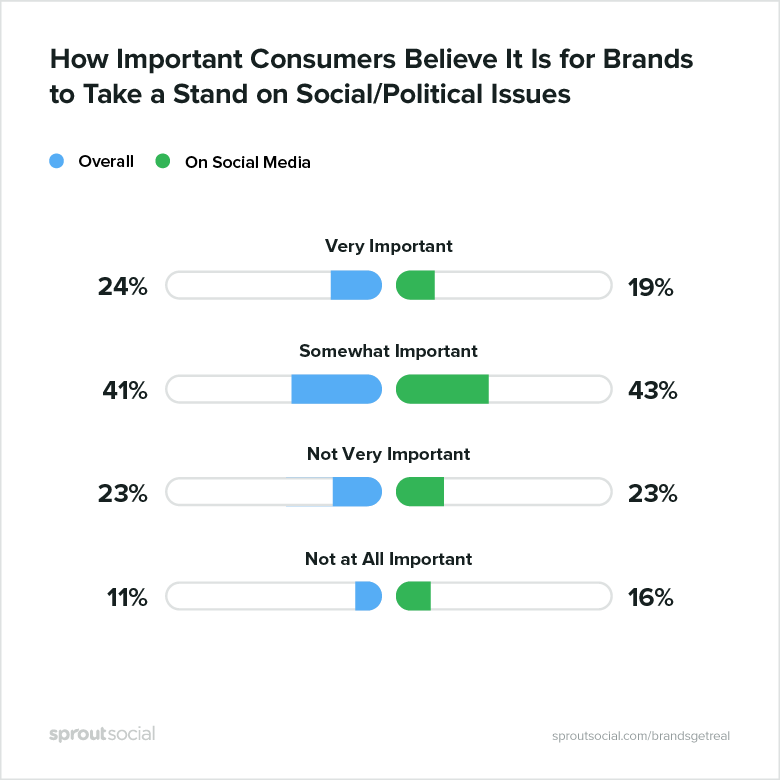
Take a look at the conversation created around Fox News anchor Laura Ingraham criticized Parkland school shooting survivor and gun control advocate, David Hogg, for getting rejected from four colleges.
David responded by calling out all of Ingraham’s advertisers, asking them to pull their support of the show.
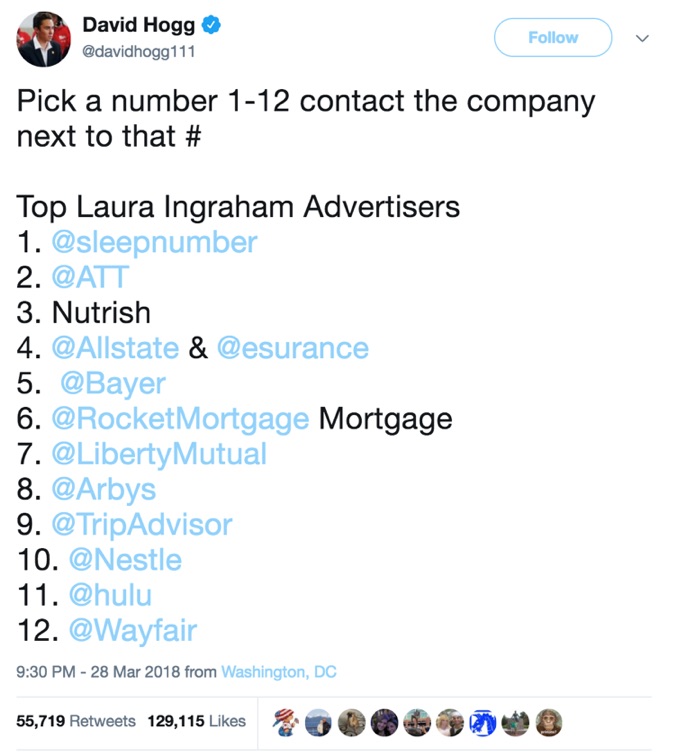
Within a few days, companies like Hulu, Bayer, and Nutrish had announced they’d be pulling the ads from Ingraham’s program.
After a few weeks, the program had lost 24 advertisers.
However, not all advertisers chose to separate.
Mike Lindell, founder of the MyPillow, announced he would be leaving his advertisements on the program.
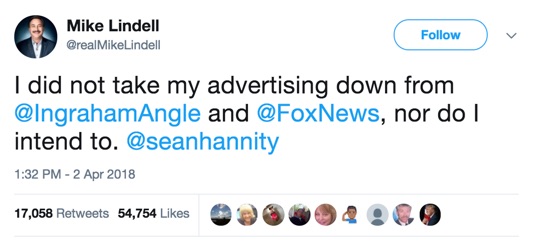
By becoming a part of important conversations and debates, brands can refine their voice and make their opinions and beliefs more well known.
While it’s impossible to prepare for every kind of hurdle or backlash your brand may experience, knowing where your brand falls in these situations can help you create consistent messaging through your content.
6. You’re not promoting
Remember when Beyonce released a surprise album without any marketing?
In three days, she sold almost 830,000 albums.
It was impressive.
However, if you’re trying to use this tactic to promote your content, you’re in for a rude awakening.
Unfortunately, you’re not Beyonce.
And that means you need to promote.
Proper content promotion is really the key to getting attention to your content.
If you’re simply posting links to your latest blog post on your Twitter account, you’re probably going to get ignored.
Take a look at this Tweet from user Vic Maine.
It’s just a link, featuring no context, hashtags, or other interesting information that might entice the reader to engage.
So, it’s not really surprising to see it hasn’t started any conversations or gotten any traction.
However, you can refine your promotion strategy to include email marketing, social, forums, and influencer marketing to improve your results.
First, let’s take a look at social.
Companies have been promoting their content on social for years.
However, the way you should promote and where you should promote is always changing.
Just one shift to the network’s algorithm or design (or even a negative post from an influencer) and your entire promotion strategy might be turned upside down.
Take a look at Facebook, for example.
After changing their algorithm, many brands reported a drop in organic reach.
However, you can work around this algorithm shift by either paying to promote your content or creating content that your audience wants to engage with.
Check out this breakdown Buffer created of important signals that can influence your ranking on Facebook.
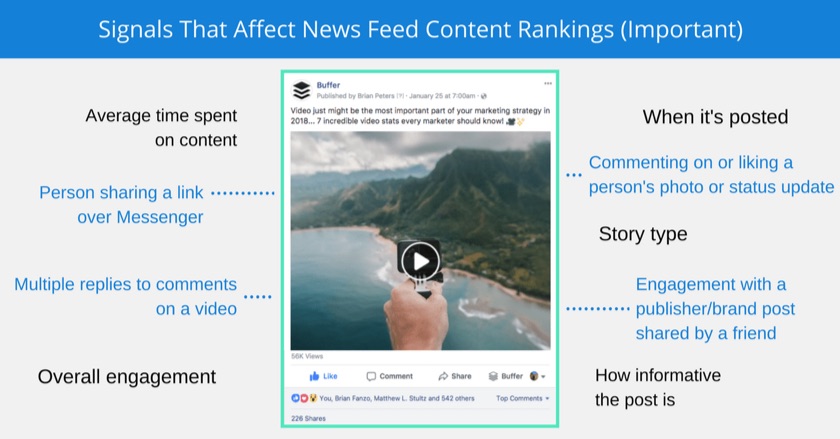
As you can see, some of the most important factors of what gets ranked depends on how users are interacting with the post.
This means you want to focus more on creating content that individuals want to engage with, rather than strictly shock-value content.
You should also make your content easy for your readers or viewers to share your content on their own.
Within blog posts, including “Click to Tweet” bars or share buttons can help encourage visitors to share the content with their friends or family – helping to improve your reach.
Content Marketing Institute frequently uses Click to Tweet bars to make it easier for their readers to share their content.
You can also use more targeted marketing approaches to help reach your audience, such as email marketing.
When you properly segment your email lists, you can share your content with individuals you already know are interested in what you’re sharing.
Take a look at the results MailChimp found for campaigns segmented by interest groups.
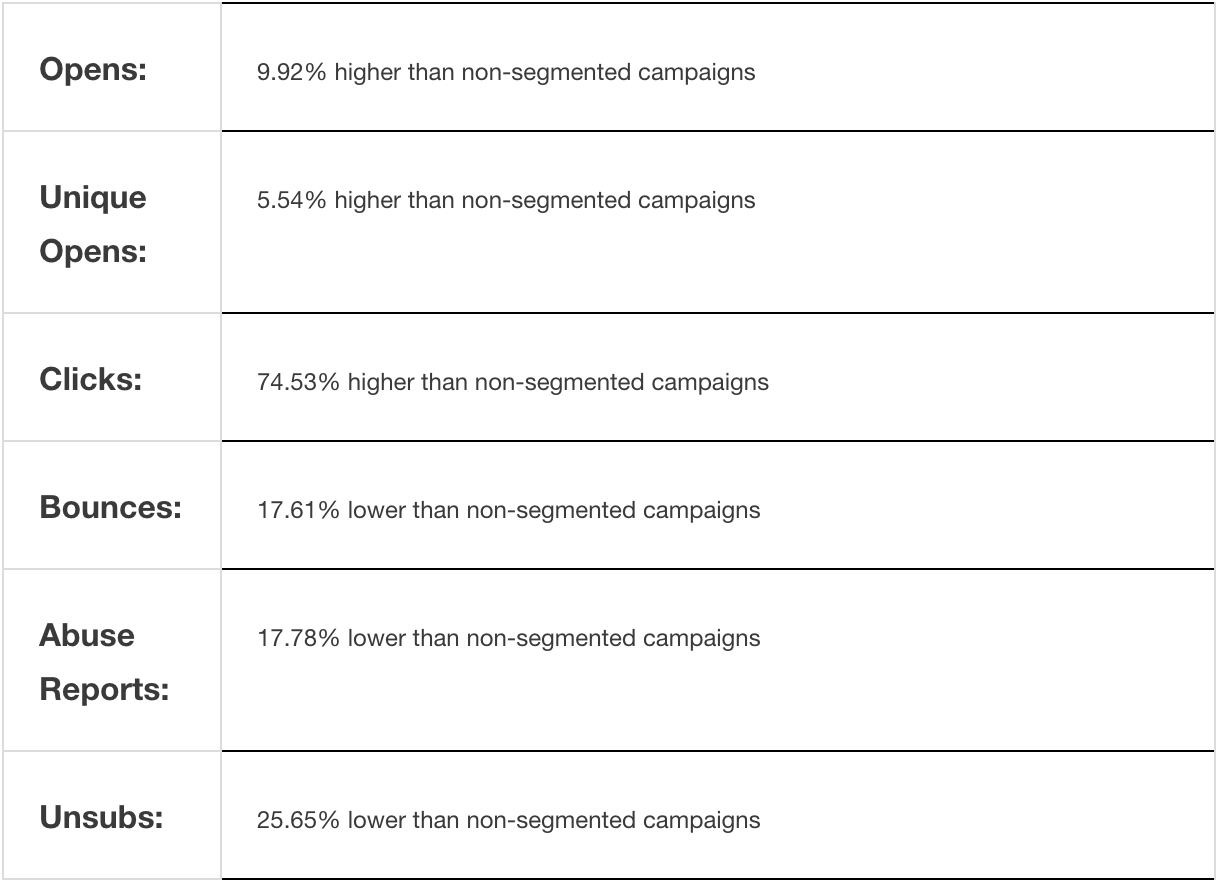
By sending specific content to your audience members based on their interests, you can dramatically improve your campaign results.
7. Your content isn’t properly optimized
Promoting your content is just one side of the coin.
To truly bring attention to what you produce, you want your audience to be able to find what you’re creating.
This means it needs to be properly optimized.
Each piece of content should comply with your greater SEO strategy.
This means going beyond just creating content that your audience wants to read or engage with.
Keywords should be factored into each piece of content you create.
By finding words or phrases that your audience is actually searching online, you can increase your chances of them finding you.
The Keyword Planner from AdWords is one way you can find new keyword opportunities.
You want to find keywords that are high in average monthly searches but low in competition.
Don’t simply guess at what you think your audience wants.
You also want to make sure your content is properly formatted.
Your titles and heading should be strong and capable of standing on their own.
According to CopyBlogger, 8 in 10 individuals will read a headline – but only 2 in 10 will read the rest.
This means you need to create headlines that your audience can’t resist.
The CoSchedule Headline Analyzer is one tool you can use to improve your headlines.
The tool analyzes your word balance to give you an overall score out of 100.
It also provides you with insights on length, sentiment, and even guesses which keywords it believes you’re targeting.
This can help you test the strength of your headlines before you post, saving you trouble and guaranteeing higher results.
But blog content isn’t the only thing you need to optimize.
You also want to make sure your videos, infographics, and images are optimized appropriately.
To optimize your videos on YouTube, start with an optimized title that describes the video and includes the keyword you’re trying to rank for.
This isn’t too much different than writing blog titles.
However, you also want to tag your videos appropriately and write a full description.
Your video description lets the YouTube algorithm know what your video is about.
Check out this description from a DottoTech video.
He provides a clear overview of what will be featured in the video, as well as some links to the apps he’s going to talk about.
This can help improve his connection to those pages and give him the opportunity to further target his keywords.
Images are another area you’ll want to ensure are properly optimized.
First, make sure you’re using high-quality images that are the appropriate size for where they’re being placed.
This can help improve your page load time to keep visitors happy.
You can use a compressor tool to change the size of your image without hurting the quality.
You’ll also want to place the keyword you’re trying to target in the file name.
Because Google can’t actually see what your image is, it’s your responsibility to tell them.
Use captions, alt text, and title text to give Google a better understanding of the image you’re sharing.
Conclusion
In today’s digital age, you can’t afford to create content that is easily ignored.
However, it takes time to craft messaging that your audience will want to engage with.
Keep these seven tips in mind the next time you create content.
What tips or tricks have you found that improve your content-creation process?
About the Author: Neil Patel is the co-founder of Neil Patel Digital.
Source: feedproxy.google.com