
Tag Archives for " artificial general intelligence "

5 Common Misconceptions about AI
In recent years I ran into a number of misconceptions regarding AI, and sometimes when discussing AI with people from outside the field, I feel like we are talking about two different topics. This article is an attempt at clarifying what AI practitioners mean by AI, and where it is in its current state.

The first misconception has to do with Artificial General Intelligence or AGI:
1. Applied AI systems are just limited versions of AGI
Despite what many think, the state of the art in AI is still far behind human intelligence. Artificial General Intelligence, i.e. AGI, has been the motivating fuel for all AI scientists from Turing to today.
Somewhat analogous to Alchemy, the eternal quest for AGI that replicates and exceeds human intelligence has resulted in the creation of many techniques and scientific breakthroughs.
AGI has helped us understand facets of human and natural intelligence, and as a result, we’ve built effective algorithms inspired by our understanding and models of them.
However, when it comes to practical applications of AI, AI practitioners do not necessarily restrict themselves to pure models of human decision-making, learning, and problem-solving.
Rather, in the interest of solving the problem and achieving acceptable performance, AI practitioners often do what it takes to build practical systems.
At the heart of the algorithmic breakthroughs that resulted in Deep Learning systems, for instance, is a technique called back-propagation.
This technique, however, is not how the brain builds models of the world. This brings us to the next misconception:
2. There is a one-size-fits-all AI solution.
A common misconception is that AI can be used to solve every problem out there–i.e. the state-of-the-art AI has reached a level such that minor configurations of ‘the AI’ allows us to tackle different problems.
I’ve even heard people assume that moving from one problem to the next makes the AI system smarter as if the same AI system is now solving both problems at the same time.
The reality is much different: AI systems need to be engineered, sometimes heavily, and require specifically trained models in order to be applied to a problem.

And while similar tasks, especially those involving sensing the world (e.g., speech recognition, image or video processing) now have a library of available reference models, these models need to be specifically engineered to meet deployment requirements and may not be useful out of the box.
Furthermore, AI systems are seldom the only component of AI-based solutions. It often takes many tailor-made classically programmed components to come together to augment one or more AI techniques used within a system.
And yes, there are a multitude of different AI techniques out there, used alone or in hybrid solutions in conjunction with others, therefore it is incorrect to say:
3. AI is the same as Deep Learning
Back in the day, we thought the term artificial neural networks (ANNs) was really cool. Until that is, the initial euphoria around its potential backfired due to its lack of scaling and aptitude towards over-fitting.

Now that those problems have, for the most part, been resolved, we’ve avoided the stigma of the old name by “rebranding” artificial neural networks as “Deep Learning”.
Deep Learning or Deep Networks are ANNs at scale, and the ‘deep’ refers not ‘too deep’ thinking, but to the number of hidden layers, we can now afford within our ANNs (previously it was a handful at most, and now they can be in the hundreds).
Deep Learning is used to generate models off of labeled data sets. The ‘learning’ in Deep Learning methods refers to the generation of the models, not to the models being able to learn in real-time as new data becomes available.
The ‘learning’ phase of Deep Learning models actually happens offline, needs many iterations, is time and process-intensive, and is difficult to parallelize.
Recently, Deep Learning models are being used in online learning applications. Online learning in such systems is achieved using different AI techniques such as Reinforcement Learning, or online Neuro-evolution.
A limitation of such systems is the fact that the contribution from the Deep Learning model can only be achieved if the domain of use can be mostly experienced during the offline learning period.
Once the model is generated, it remains static and not entirely robust to changes in the application domain.
A good example of this is in ecommerce applications–seasonal changes or short sales periods on ecommerce websites would require a deep learning model to be taken offline and retrained on sale items or new stock.

However, now with platforms like Sentient Ascend that use evolutionary algorithms to power website optimization, large amounts of historical data are no longer needed to be effective, rather, it uses neuro-evolution to shift and adjust the website in real-time based on the site’s current environment.
For the most part, though, Deep Learning systems are fueled by large data sets, and so the prospect of new and useful models being generated from large and unique datasets has fueled the misconception that…
4. It’s all about BIG data
It’s not. It’s actually about good data. Large, imbalanced datasets can be deceptive, especially if they only partially capture the data most relevant to the domain.

Furthermore, in many domains, historical data can become irrelevant quickly.
In high-frequency trading in the New York Stock Exchange, for instance, recent data is of much more relevance and value than, for example, data from before 2001, when they had not yet adopted decimalization.
Finally, a general misconception I run into quite often:
6. If a system solves a problem that we think requires intelligence, that means it is using AI
This one is a bit philosophical in nature, and it does depend on your definition of intelligence. Indeed, Turing’s definition would not refute this.

However, as far as mainstream AI is concerned, a fully engineered system, say to enable self-driving cars, which does not use any AI techniques, is not considered an AI system.
If the behavior of the system is not the result of the emergent behavior of AI techniques used under the hood, if programmers write the code from start to finish, in a deterministic and engineered fashion, then the system is not considered an AI-based system, even if it seems so.
AI paves the way for a better future
Despite the common misconceptions around AI, the one correct assumption is that AI is here to stay and is indeed, the window to the future.

AI still has a long way to go before it can be used to solve every problem out there and to be industrialized for wide-scale use.
Deep Learning models, for instance, take many expert PhD-hours to design effectively, often requiring elaborately engineered parameter settings and architectural choices depending on the use case.
Currently, AI scientists are hard at work on simplifying this task and are even using other AI techniques such as reinforcement learning and population-based or evolutionary architecture search to reduce this effort.
The next big step for AI is to make it be creative and adaptive, while at the same time, powerful enough to exceed human capacity to build models.
by Babak Hodjat, co-founder & CEO Sentient Technologies
Source: gigaom.com

Is an AGI Possible?
The following is an excerpt from GigaOm publisher Byron Reese’s new book, The Fourth Age: Smart Robots, Conscious Computers, and the Future of Humanity. You can purchase the book here.
The Fourth Age explores the implications of automation and AI on humanity, and has been described by Ethernet inventor and 3Com founder Bob Metcalfe as framing “the deepest questions of our time in clear language that invites the reader to make their own choices.
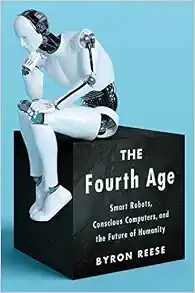
Using 100,000 years of human history as his guide, he explores the issues around artificial general intelligence, robots, consciousness, automation, the end of work, abundance, and immortality.”
One of those deep questions of our time:
Is artificial general intelligence, or AGI, even possible?
Most people working in the field of AI are convinced that an AGI is possible, though they disagree about when it will happen.
In this excerpt from The Fourth Age, Byron Reese considers it an open question and explores both sides of the question—is it possible, and are we on the right track to make it happen?
How would we go about building artificial general intelligence? Simply put, we don’t know. AGI doesn’t exist; nor does anything close to it.
Most people in the industry believe it is possible to build an AGI. Of the seventy or so guests I have hosted on my AI podcast, Voices in AI, I can only recall six or seven who believed that it is impossible to build one.

However, predictions as to when we will see it vary widely.
And while we set a pretty low bar for narrow AI, to earn the title of “AGI,” the aspiring technology would have to exhibit the entire range of the various types of intelligence that humans have, such as social and emotional intelligence, the ability to ponder the past and the future, as well as creativity and true originality.
The historian Jacques Barzun said we would know we had it “when a computer makes an ironic answer.” He might have added, “or is offended at being called artificial.”
Is an AGI really something different than just better narrow AI? Could we, for instance, get an AGI by just bolting together more and more narrow AIs until we had covered the entire realm of human experience, thus in effect, creating an AI that is at least as smart and versatile as a person?

Could we make, in effect, an AGI Frankenstein’s monster?
Can we, for instance, make a robot that vacuums rugs and another one that picks stocks and yet another that drives a car and ten thousand more, and then connect them all to solve the entire realm of human problems?
Theoretically, you could code such an abomination, but unfortunately, this is not a path to an AGI or even something like it. Being intelligent is not about being able to do 10,000 different things.
Intelligence is about combining those 10,000 things in new configurations or using the knowledge from one of them to do a new task 10,001.
At one level, the very idea of us building an AGI seems a bit preposterous compared with our current experiences with narrow AI. Narrow AI is still at a point where we are pleasantly surprised when it works.
It has no volition. It can’t teach itself something that it hasn’t been programmed to do. But an AGI is a completely different thing. It’s like comparing a zombie with Einstein. Yeah, they are both bipeds, but the zombie’s skill set is quite narrow whereas Einstein can learn new things easily.
A zombie isn’t going to enroll in night school or learn macramé. It just wanders around moaning “Brains! Brains!” all day. That’s what we have today, AI zombies.
The question is whether we can build an AGI Einstein. If we did build one, how would we regard it? What would we think it is?
At this point in our narrative, the AGI isn’t conscious. Because it is not conscious, it cannot experience the world and it cannot suffer. So an AGI in and of itself would not cause an existential crisis, a deep reflection about what makes humans special.
But it would prompt us to ask two questions:

“Is the AGI alive?” and “What are humans for?”
With regard to the first question, whether an AGI is alive, the answer is not obvious. Consciousness is not a prerequisite for life. In fact, an incredibly low percentage of living things are conscious. A tree is alive, as is a cell in your body, but we don’t generally regard them as conscious.
So what makes something alive? What is life? We don’t have a consensus definition for what life is. Not even close. We don’t even have one for death. And although there isn’t agreement on what constitutes life, a wide range of properties have been offered.
An AGI would likely exhibit many of them, including the capacity for growth and the ability to reproduce, pass traits onto offspring, respond to stimuli, maintain homeostasis, and exhibit continual change preceding death.
However, two attributes of life the AGI would not have: being made of cells and breathing. One has to ask whether these latter two are simply “things all life on earth share” as opposed to “things definitionally required for life.”
I suspect we would have no trouble recognizing a nonbreathing, non-cell-based alien who could converse with us as being alive, so why would we insist on those qualities for the AGI?
Those are just the scientific requirements for life—what about the metaphysical ones? Again, we can find the little consensus here.
Philosophical thought hasn’t invested an enormous amount of time in examining the edge cases of life, such as viruses, which even scientists can’t agree on. Were the bacteria recently revived after millions of years of stasis always alive?
Or were they resurrected from death?
That the definition of life has been a controversial topic for literally thousands of years suggests that we will not arrive at a species-wide consensus any time soon.
This being the case, we can safely conclude that there will be a variety of opinions on the question of whether the AGI is alive, and our interactions with the AGI may be made uncomfortable because of this ambiguity.
Those who answered our foundational question about what they are as “machines,” as well as those who see themselves as monists, may very well regard the AGI as alive, while others may not make that determination, or waver, in good conscience, uncomfortably on the fence.

The second question, “What are humans for?” is concisely framed by Kevin Kelly, the founding editor of Wired:
We’ll spend the next decade—indeed, perhaps the next century— in a permanent identity crisis, constantly asking ourselves what humans are for. . . . The greatest benefit of the arrival of artificial intelligence is that AIs will help define humanity. We need AIs to tell us who we are.
For the last several thousand years, humans have maintained our preeminent place on this planet for only one reason: we’re the smartest thing around. We aren’t the biggest, fastest, strongest, longest-lived, or just about any other “-est.”
But we are the smartest, and we have used those smarts to become the undisputed masters and rulers of the planet. What’s going to happen if we become the second-smartest thing on the planet?
And not just second, but second by an embarrassingly large margin? If the machines can think better and the robots can manipulate the physical world better, what is our job? I suspect we will fall back on consciousness.
We experience the world, machines can only measure it. We enjoy the world. Combine that with mortality and the preciousness of life, and you get something that is meaningfully human.

Zen Story
This idea was captured in the Zen story of the tigers and the strawberry. In that story, a man is chased by a tiger, and to save himself, he jumps over a cliff, grabs a vine, and hangs there. Above him, the tiger waits.
Below him circles another tiger. At the same time, a mouse comes out and starts chewing on the vine he is holding on to. But at that exact moment, the man spies a strawberry plant, growing on the side of the mountain.
He picks the strawberry and eats it, and never had anything tasted so good to him in all of his life. at moment, that combination of consciousness and mortality might be what we use to define us.
We are the tasters of the strawberry, able to appreciate it because we hang at the moment between life and death.
To read more of GigaOm publisher Byron Reese’s new book, The Fourth Age: Smart Robots, Conscious Computers, and the Future of Humanity, you can purchase it here.
Source: gigaom.com