
Tag Archives for " Analytics Consulting "

Analytics Consulting
Most companies think their data is clean; that they’re making good decisions with the data they have. Most of these companies are wrong; they just don’t know it yet. This is why companies need analytics consulting. They don’t know what they don’t know.
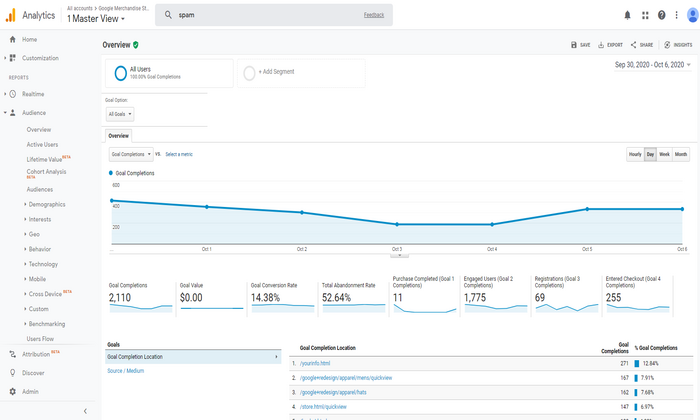
Your analytics should tell you everything.
Tools like Google Analytics are incredibly valuable for businesses. Once you’re setup, you’ll have everything you need to analyze your performance data properly. Instead, many companies have realized that their analytics tools have introduced a lot of unexpected problems.
They’re not getting the kind of value they need.
That’s good news. Most companies think their data is clean; that they’re making good decisions with the data they have. Most of these companies are wrong; they just don’t know it yet. This is why companies need analytics consulting. They don’t know what they don’t know.
Today, I’ll show you how to find the right analytics consultant for your business.
4 Ways an Analytics Consultant Can Help Grow Your Business
Many companies make the wrong assumptions. Using a tool like Google Analytics, clients think all they have to do is drop the tracking code into their web pages, log into their account, and begin analyzing their data. It sounds easy, but it often isn’t.
There’s more to it than that.
This is why you need an analytics consultant. With the right consultant, you’ll have the education you need to grow your business. You’ll be able to pull insights out of your data using a variety of methods. Each of these strategies is important because they have a cumulative effect on your business.
Here are four ways analytics consulting can help you grow your business.
1. Exclude spam traffic via bots, scrapers, and spiders
How much of your traffic comes from real visitors? How much of it comes from bots, scrapers, and spiders? According to Imperva, almost half of all internet traffic is non-human. In 2014, Google introduced an obscure setting that enables you to filter out bots and spiders listed in IAB’s Interactional Spiders and Bots list.
This low-key setting is buried in Google Analytics, but it’s incredibly important; many small businesses still aren’t aware of this setting.
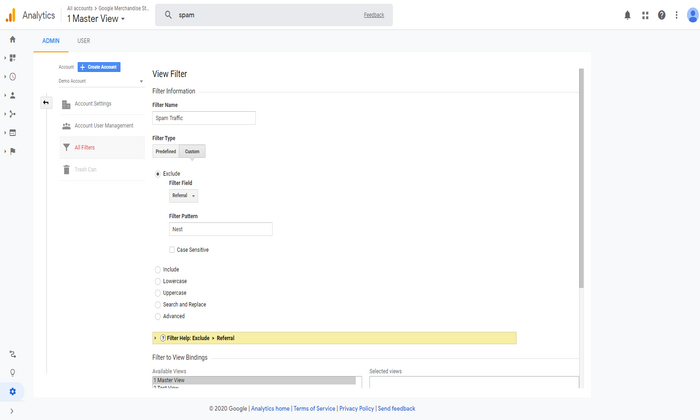
You’ll also need help to filter out referral spam.
Referral spam is basically fake website hits; these bots, scrapers, and spiders land on your site. Site owners send their spam to your site. They hope you’ll see these referrals in your Google Analytics account, clickthrough, and visit their site.
This junk traffic poisons your data.
It gives you false readings based on inaccurate data. Your site may be more or less profitable, depending on your visits-to-spam ratio on your site. This isn’t something many businesses watch for in their analytics reports.
A good analytics consultant will consistently filter the variations of spam traffic (e.g., direct spam traffic, referral spam traffic, etc.) out of your reports, so you get a clear picture of your marketing performance.
2. Help you analyze your data properly
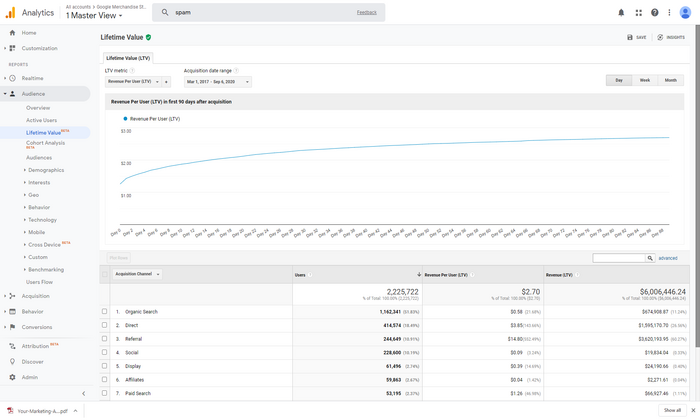
A lot of companies don’t know how to analyze their data properly. According to Forrester, between 60 and 73 percent of a company’s analytics data goes unused. Companies collect lots of data on customer activity, but they aren’t using it, why?
There are lots of reasons.
- Companies don’t know what they have Companies aren’t aware of the value of their data
- They don’t know how to evaluate or analyze their data
- Their data isn’t available to those who can use it There’s too much data to go through and not enough time to use it
Think about it.
Right now, your company has valuable data about your customers. This is data you can use to attract more customers, lower expenses, grow faster, jump ahead of competitors, etc.
If you’re unaware of the data, you can’t use it.
A good analytics consultant will help you analyze your data properly, showing you what you have and how you can use it to grow your business.
3. Identify the list of problems you’re trying to fix
Your data isn’t as valuable without context.
If you know the problem you’re trying to solve, you have a pretty good idea of the answers you’re looking for in your data.
That’s the problem though.
A lot of companies treat their analytics tools as a technology issue. They focus their attention on the obvious issues like hardware or software. They rarely treat their analytics as a question and answer tool. That’s exactly what it is, though.
Target had the right idea when they started their analysis with a problem/question.
Remember the story?“If we wanted to figure out if a customer is pregnant, even if she didn’t want us to know, can you do that?” It’s a creepy story that shows the power of questions and problems. A great analytics consultant will help you discover the issues you’re trying to solve and the questions that need answers.
4. Focus your attention on the metrics that explain why
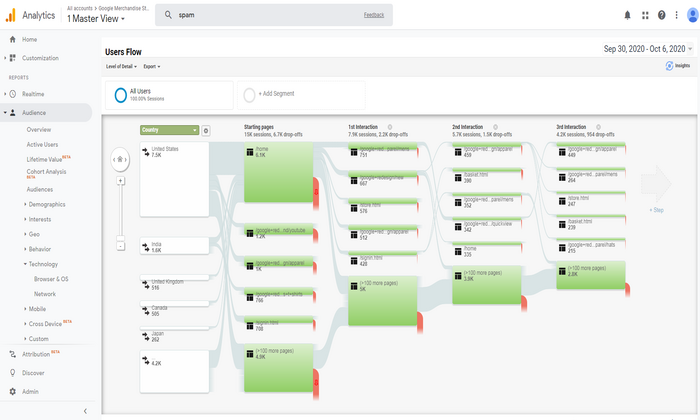
Analytics tells you what happened — what visitors did when they arrived on your site, the ads they responded to, what they read most often, etc. It doesn’t tell you why visitors do the things they do. Understanding what is important, but it’s more important to understand why something happens.
Focusing on the right metrics is the answer.
The right analytics consultant will help you answer the “what” — basically looking in the rearview mirror. But they’ll also help you look ahead; They’ll dig deeper, showing you the why behind visitor and customer behaviors.
Your analytics consultant should provide you with the education and support you need to squeeze more value out of your data.
How to Get Started With an Analytics Consultant
Avinash Kaushik has a three-step framework he uses to help analytics consultants support their clients. He calls it Data Capture. Data Reporting. Data Analysis. The nice part about this framework is the fact that it’s easy for both clients and consultants.
Consultants can use each of these buckets to analyze your goals, objectives, and the results they want to accomplish with each.
You’re basically goal setting with this framework.
Here’s a closer look at each of these three buckets and the goals for each of these.
Data Capture:
Work in this bucket is focused on audits or updating data capture methods (e.g., updating, editing, or customizing tags). This step is especially important because it determines the quality of what comes afterward. If you’ve done a good job with your data capture methods, you’ll have accurate data and reporting you can use for your analysis.
Data Reporting:
Your consultant sets up the reports you need on the intervals required. Your consultants help you identify the reports you’ll need, and they provide you with the reports you need regularly.
Data Analysis:
This is what Avinash calls an open-ended assignment, but it’s one you’ve provided to your consultant. You’re asking them to answer specific questions for you — your consultant should be able to show you what to measure, what your data is saying, what to do based on your data, and why you should do it.
Here’s what this means for you.
You’ll want to find an analytics consultant or agency that can handle all three steps in this framework. This also means you’ll need a clear idea of problems you’re dealing with ahead of time.
Measuring the ROI of Analytics Consulting Services
Many companies don’t understand analytics. If you don’t understand analytics, that’s okay; you just need to know whether you’re generating a return on your analytics investment. According to Nucleus Research, analytics returns $13.01 for every $1 invested.
Your consultant should be able to calculate your return on analytics investment.
This obviously much easier if your consultant is focused on the data analysis bucket. Suppose they’ve made several data-driven improvements to your site over three to six months. Their recommendations lead to an increase in revenue, profit, or a return on investment for you.
They should be able to verify your return on investment using the worksheet I’ve linked above.
The good news is the fact that analytics, as a discipline, is data-driven.
Checklist For Finding the Right Analytics Consultant
Choosing the right analytics consultant requires a very different set of skills. If you’re working with an independent analytics consultant, you’ll need to approach this in one of two ways.
Choose a consultant with all of the skills needed to perform across all three buckets (data capture, reporting, analysis). Choose an agency with analysts and implementation specialists needed to generate the results you need.
Here’s a list of the skills needed for each of the three roles in your buckets. Avinash breaks these skills down in detail in his web analytics consulting framework post.
Here’s a quick summary.
- For the data capture bucket, your consultant should have the skills of an implementation specialist. They’re experienced with tag managers; they understand data dimensioning and working knowledge of tracking variables.
- With the data reporting bucket, your consultant should be familiar with report creation in your analytics platform; they should also have a master list of the custom reports you’ll need for various options. It’s also ideal if your consultant has a working knowledge of his own set of customizations.
- For the data analysis bucket, your consultant should be a web analyst. Your consultant should be comfortable with advanced statistics and analytical techniques. They should be experienced in descriptive, diagnostic, predictive, and prescriptive analytics.
If you’re working with an independent consultant, they should be an industry veteran with the skills I’ve listed above. If you’re working with an agency, they should have employees with the skills for each bucket. If you have implementation specialists, you can handle data capture and possibly reporting.
Just make sure they’re a fit for that role.
Conclusion
Many companies aren’t familiar with analytics consulting. They’re not entirely sure how analytics impacts their organization. That’s okay, as long as the ROI is there.
Using a tool like Google Analytics, many companies assume that all they need to do is customize the tracking code, drop it onto their web pages, log into their account, and begin analyzing their data. It should be that easy, but it isn’t.
There’s more to it than that.
With most companies, their analytics data goes unused, they collect lots of data on customer activity, but they don’t know how to squeeze value out of their data. Analytics consulting can help you evaluate your performance data properly. Choose the right team, and your data will tell you what you need to know.
The post Analytics Consulting appeared first on Neil Patel.
Source: feedproxy.google.com

4 Questions To Make Sure You’re Creating Consistent Copy Across All Platforms
Marketing is like being a well-paid juggler—you’ve got social media in one hand, marketing in another, and somewhere above you is your content strategy.
And that’s just to name a few of the marketing channels you’ve got on your plate. With all of these platforms, it can start to get really hard to keep your copy consistent.

We all know how important copy is—it’s the thing that defines your brand and moves prospects through the Customer Value Journey.
But what happens if someone reads your copy on social media, opts-in for your offer, and is met with totally different copy? 
Leads won’t be able to get past the “trust factor” that’s essential for them to trust you enough to buy a service or product from your business.
Just like any other relationship in our lives, the customer-to-business relationship requires consistency.
5 questions to make sure you’re creating consistent copy across the platforms
Here are 5 questions to make sure you’re creating consistent copy across all of your platforms.
Question #1: Does this copy abide by my brand guidelines?
Your brand guidelines are the blueprint of your brand.
They’re going to help you figure out what’s a “Yay!” and what’s a “Nay…” in your copy.
Brand guidelines are going to be a huuuuge (serious emphasis on the huge here) help to keeping your copy on brand, especially if you have a larger team.

Think of them as the SOP for writing your copy and content.
If your copy doesn’t check every mark that it needs to on your brand guidelines then it’s going to create inconsistency across your platforms and funnels.
Use this checklist to make your life easier—if the copy can check every brand guideline on that list, green light it!
If not… ask yourself—what needs to be changed?
Question #2: Would my customers expect this from me?
Your copy is your brand voice. After engaging with your business on social media, through your articles, or your emails your prospects are going to be used to hearing a specific voice from you (ahem, think of your brand guidelines).

They want to keep hearing that voice…not unexpectedly read or hear a new brand voice.
If your brand voice is always fun and playful, but you come out of nowhere with a call to action that’s formal and professional, your prospects are going to be confused—and a confused person never buys.
In a confused state, your lead is feeling hesitant.
By reading or hearing a copy that they would expect from you, your leads are in a confident state—and a confident state does buy.
Question #3: Would my customers recognize me if I took away my branding?
Let’s take away your brand colors, fonts, and images…can your customers still see you?
This might be tough for some brands, but it’ll help you make sure your branding is consistent from socials to products.
If the only thing holding your branding together is your color palette and fonts—there’s a big problem. While this stuff is all icing on the marketing cake, your copy is the actual cake. 

If your copy is so on point that without any other clues about your brand your followers, subscribers, and customers can tell it’s you, you’ve nailed it.
You’ve made a delicious cake that people want to bite into…and you’ve added the icing on top that makes people even more excited to grab their fork.
Question #4: Does this fit in with my other copy?
Every brand has a different way of asking their followers to engage with their content, their website visitors to subscribe to their newsletter, or their subscribers to click on the offer.

Each time you write copy for a new offer you want to look at it in the context of the copy you’ve written for your other offers.
Is your new copy so far off that your customers are going to feel like they don’t know you as well as they thought they did?
A new copy should fit in well with the other copies that are already Live right now.
This isn’t to say that you can’t A/B test your copy and do something totally left-field—as long as it’s still coming from the same field.
Think of this in the context of your brand colors…if you usually brand with a medium-color green but you want to highlight something with a lighter green, that makes sense.
Your leads and customers aren’t going to be totally off-put.
But, if you decide to scratch the green and go with yellow…they’re going to be asking—is this *insert your company name’s* website?
Use these questions to make sure your copy is consistent from the first touchpoint all the way through to the day your customer buys your highest ticket offer.
This consistency is what your relationship is built on—so make it a strong foundation.

The post 4 Questions To Make Sure You’re Creating Consistent Copy Across All Platforms appeared first on DigitalMarketer.
Source: digitalmarketer.com