
Tag Archives for " agi "

5 Common Misconceptions about AI
In recent years I ran into a number of misconceptions regarding AI, and sometimes when discussing AI with people from outside the field, I feel like we are talking about two different topics. This article is an attempt at clarifying what AI practitioners mean by AI, and where it is in its current state.

The first misconception has to do with Artificial General Intelligence or AGI:
1. Applied AI systems are just limited versions of AGI
Despite what many think, the state of the art in AI is still far behind human intelligence. Artificial General Intelligence, i.e. AGI, has been the motivating fuel for all AI scientists from Turing to today.
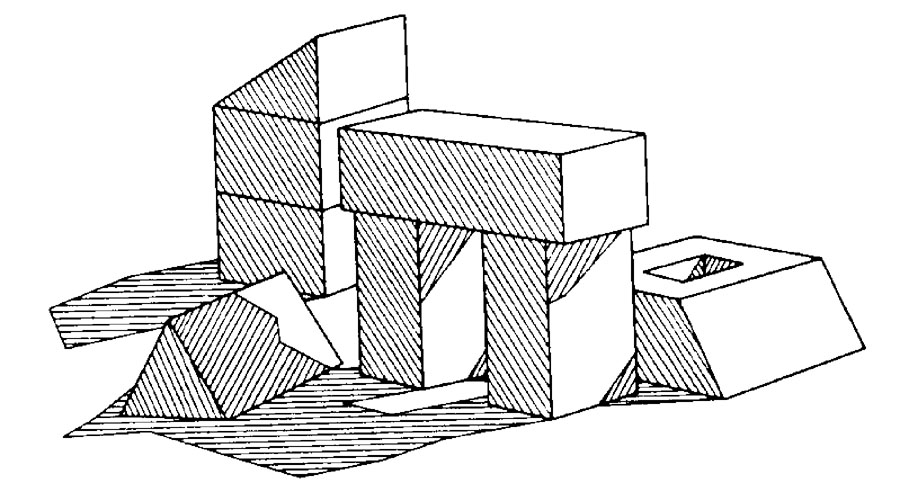
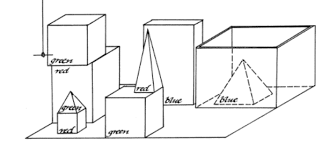
Somewhat analogous to Alchemy, the eternal quest for AGI that replicates and exceeds human intelligence has resulted in the creation of many techniques and scientific breakthroughs.
AGI has helped us understand facets of human and natural intelligence, and as a result, we’ve built effective algorithms inspired by our understanding and models of them.
However, when it comes to practical applications of AI, AI practitioners do not necessarily restrict themselves to pure models of human decision-making, learning, and problem-solving.
Rather, in the interest of solving the problem and achieving acceptable performance, AI practitioners often do what it takes to build practical systems.
At the heart of the algorithmic breakthroughs that resulted in Deep Learning systems, for instance, is a technique called back-propagation.
This technique, however, is not how the brain builds models of the world. This brings us to the next misconception:
2. There is a one-size-fits-all AI solution.
A common misconception is that AI can be used to solve every problem out there–i.e. the state-of-the-art AI has reached a level such that minor configurations of ‘the AI’ allows us to tackle different problems.
I’ve even heard people assume that moving from one problem to the next makes the AI system smarter as if the same AI system is now solving both problems at the same time.
The reality is much different: AI systems need to be engineered, sometimes heavily, and require specifically trained models in order to be applied to a problem.

And while similar tasks, especially those involving sensing the world (e.g., speech recognition, image or video processing) now have a library of available reference models, these models need to be specifically engineered to meet deployment requirements and may not be useful out of the box.
Furthermore, AI systems are seldom the only component of AI-based solutions. It often takes many tailor-made classically programmed components to come together to augment one or more AI techniques used within a system.
And yes, there are a multitude of different AI techniques out there, used alone or in hybrid solutions in conjunction with others, therefore it is incorrect to say:
3. AI is the same as Deep Learning
Back in the day, we thought the term artificial neural networks (ANNs) was really cool. Until that is, the initial euphoria around its potential backfired due to its lack of scaling and aptitude towards over-fitting.

Now that those problems have, for the most part, been resolved, we’ve avoided the stigma of the old name by “rebranding” artificial neural networks as “Deep Learning”.
Deep Learning or Deep Networks are ANNs at scale, and the ‘deep’ refers not ‘too deep’ thinking, but to the number of hidden layers, we can now afford within our ANNs (previously it was a handful at most, and now they can be in the hundreds).
Deep Learning is used to generate models off of labeled data sets. The ‘learning’ in Deep Learning methods refers to the generation of the models, not to the models being able to learn in real-time as new data becomes available.
The ‘learning’ phase of Deep Learning models actually happens offline, needs many iterations, is time and process-intensive, and is difficult to parallelize.
Recently, Deep Learning models are being used in online learning applications. Online learning in such systems is achieved using different AI techniques such as Reinforcement Learning, or online Neuro-evolution.
A limitation of such systems is the fact that the contribution from the Deep Learning model can only be achieved if the domain of use can be mostly experienced during the offline learning period.
Once the model is generated, it remains static and not entirely robust to changes in the application domain.
A good example of this is in ecommerce applications–seasonal changes or short sales periods on ecommerce websites would require a deep learning model to be taken offline and retrained on sale items or new stock.

However, now with platforms like Sentient Ascend that use evolutionary algorithms to power website optimization, large amounts of historical data are no longer needed to be effective, rather, it uses neuro-evolution to shift and adjust the website in real-time based on the site’s current environment.
For the most part, though, Deep Learning systems are fueled by large data sets, and so the prospect of new and useful models being generated from large and unique datasets has fueled the misconception that…
4. It’s all about BIG data
It’s not. It’s actually about good data. Large, imbalanced datasets can be deceptive, especially if they only partially capture the data most relevant to the domain.

Furthermore, in many domains, historical data can become irrelevant quickly.
In high-frequency trading in the New York Stock Exchange, for instance, recent data is of much more relevance and value than, for example, data from before 2001, when they had not yet adopted decimalization.
Finally, a general misconception I run into quite often:
6. If a system solves a problem that we think requires intelligence, that means it is using AI
This one is a bit philosophical in nature, and it does depend on your definition of intelligence. Indeed, Turing’s definition would not refute this.

However, as far as mainstream AI is concerned, a fully engineered system, say to enable self-driving cars, which does not use any AI techniques, is not considered an AI system.
If the behavior of the system is not the result of the emergent behavior of AI techniques used under the hood, if programmers write the code from start to finish, in a deterministic and engineered fashion, then the system is not considered an AI-based system, even if it seems so.
AI paves the way for a better future
Despite the common misconceptions around AI, the one correct assumption is that AI is here to stay and is indeed, the window to the future.

AI still has a long way to go before it can be used to solve every problem out there and to be industrialized for wide-scale use.
Deep Learning models, for instance, take many expert PhD-hours to design effectively, often requiring elaborately engineered parameter settings and architectural choices depending on the use case.
Currently, AI scientists are hard at work on simplifying this task and are even using other AI techniques such as reinforcement learning and population-based or evolutionary architecture search to reduce this effort.
The next big step for AI is to make it be creative and adaptive, while at the same time, powerful enough to exceed human capacity to build models.
by Babak Hodjat, co-founder & CEO Sentient Technologies
Source: gigaom.com

Voices in AI – Episode 52: A Conversation with Rao Kambhampati
About this Episode
Sponsored by Dell and Intel, Episode 52 of Voices in AI, features host Byron Reese and Rao Kambhampati discussing creativity, military AI, jobs, and more.
Subbarao Kambhampati is a professor at ASU with teaching and research interests in Artificial Intelligence.
Serving as the president of AAAI, the Association for the Advancement of Artificial Intelligence.
Visit www.VoicesinAI.com to listen to this one-hour podcast or read the full transcript.

Transcript Excerpt
Byron Reese: This is Voices in AI, brought to you by GigaOm. I’m Byron Reese. Today my guest is Rao Kambhampati.
He has spent the last quarter-century at Arizona State University, where he researches AI. In fact, he’s been involved in artificial intelligence research for thirty years.
He’s also the President of the AAAI, the Association for the Advancement of Artificial Intelligence.
He holds a Ph.D.in computer science from the University of Maryland, College Park.
Welcome to the show, Rao.
Rao Kambhampati: Thank you, thank you for having me.

Q: 1
I always like to start with the same basic question, which is, what is artificial intelligence?
And so far, no two people have given me the same answer.
So you’ve been in this for a long time, so what is artificial intelligence?
Well, I guess the textbook definition is, artificial intelligence is the quest to make machines show behavior, that when shown by humans would be considered a sign of intelligence.
intelligent behavior, of course, that right away begs the question, what is intelligence?
And you know, one of the reasons we don’t agree on the definitions of AI is partly because we all have very different notions of what intelligence is.
This much is for sure; intelligence is quite multi-faceted.
You know we have the perceptual intelligence—the ability to see the world, you know the ability to manipulate the world physically—and then we have social, emotional intelligence, and of course, you have cognitive intelligence.
And pretty much any of these aspects of intelligent behavior, when a computer can show those, we would consider that it is showing artificial intelligence.
So that’s basically the practical definition I use.

Q: 2
But to say, “while there are different kinds of intelligence, therefore, you can’t define it,” is akin to saying there are different kinds of cars, therefore, we can’t define what a car is.
I mean that’s very unsatisfying. I mean, isn’t there, this word ‘intelligent’ has to mean something?
I guess there are very formal definitions.
For example, you can essentially consider an artificial agent, working in some sort of environment, and the real question is, how does it improve the long-term reward that it gets from the environment, while it’s behaving in that environment?
And whatever it does to increase its long-term reward is seen, essentially as—I mean the more reward it’s able to get in the environment, the more important it is.
I think that is the sort of definition that we use in introductory AI sorts of courses, and we talk about these notions of rational agency, and how rational agents try to optimize their long-term reward.
But that sort of gets into more technical definitions. So when I talk to people, especially outside of computer science, I appeal to their intuitions of what intelligence is, and to the extent, we have disagreements there, that sort of seeps into the definitions of AI.

Listen to this one-hour episode or read the full transcript at www.VoicesinAI.com
Byron explores issues around artificial intelligence and conscious computers in his new book The Fourth Age: Smart Robots, Conscious Computers, and the Future of Humanity.
Source: gigaom.com

Voices in AI – Episode 47: A Conversation with Ira Cohen
In this episode, Byron and Ira discuss transfer learning and AI ethics.

Welcome
Byron Reese: This is Voices in AI, brought to you by GigaOm, and I’m Byron Reese. Today our guest is Ira Cohen, he is the co-founder and chief data scientist at Anodot, which has created an AI-based anomaly detection system.
Before that, he was chief data scientist over at HP. He has a BS in electrical engineering and computer engineering, as well as an MS and a Ph.D. in the same disciplines from The University of Illinois.
Welcome to the show, Ira.
Ira Cohen: Thank you very much for having me.
Q: 1
So I’d love to start with the simple question, what is artificial intelligence?
Well, there is the definition of artificial intelligence of machines being able to perform cognitive tasks, that we as humans can do very easily.
What I like to think about in artificial intelligence, is machines taking on tasks for us that do require intelligence, but leave us time to do more thinking and more imagination, in the real world.
So autonomous cars, I would love to have one, that requires artificial intelligence, and I hate driving, I hate the fact that I have to drive for 30 minutes to an hour every day, and waste a lot of time, my cognitive time, thinking about the road.
So when I think about AI, I think about how it improves my life to give me more time to think about even higher-level things.
Q: 2
Well, let me ask the question a different way, what is intelligence?
That’s a very philosophical question, yes, so it has a lot of layers in it.
So, when I think about intelligence for humans, it’s the ability to imagine something new, so imagine, have a problem and imagine a solution and think about how it will look like without actually having to build it yet, and then going in and implementing it. That’s what I think about [as] intelligence…
Q: 3
But a computer can’t do that, right?
That’s right, so when I think about artificial intelligence, personally at least, I don’t think that, at least in our lifetime, computers will be able to solve those kinds of problems, but, there is a lower level of intelligence of understanding the context of where you are and being able to take actions on it, and that’s where I think that machines can do a good task.
So understanding a context of the environment and taking immediate actions based on that, that are not new, but are already… people know how to do them, and therefore we can code them into machines to do them.
Q: 4
I’m only going to ask you one more question along these lines and then we’ll move on, but you keep using the word “understand.” Can a computer understand anything?
So, yeah, the word understanding is another hard word to say. I think it can understand, well, at least it can recognize concepts.
Understanding maybe requires a higher level of thinking, but understanding context and being able to take an action on it, is what I think understanding is.
So if I see a kid going into the road while I’m driving, I understand that this is a kid, I understand that I need to hit the brake, and I think machines can do these types of understanding tasks.
Q: 5
Fair enough, so, if someone said what is the state of the art like, they said, where are we at with this, because it’s in the news all the time and people read about it all the time, so where are we at?
So, I think we’re at the point where machines can now recognize a lot of images and audio or various types of data, recognize with sensors, recognize that there are objects, recognize that there are words being spoken, and identify them.
That’s really where we’re at today, we’re not… we’re getting to the point where they’re starting to also act on these recognition tasks, but most of the research, most of what AI is today, is the recognition tasks. That’s the first step.
Q: 6
And so let’s just talk about one of those. Give me something, some kind of recognition that you’ve worked on and have deep knowledge of, teaching a computer how to do…
All right, so, when I did my PhD, I worked on affective computing, so, part of the PhD was to have machines recognize emotions from facial expressions. So, it’s not really recognizing emotion, it’s recognizing a facial expression and what it may express.
So there are 6 universal facial expressions that we as humans exhibit, so, smiling is associated with happiness, there is surprise, anger, disgust, and those are actually universal.
So, the task that I worked on was to build classifiers, that given an image or a sequence of a video of a person, a person’s face, would recognize whether they’re happy or sad or disgusted or surprised or afraid…
Q: 7
So how do you do that? Like do you start with biology and you say “well how do people do it?”
Or do you start by saying “it doesn’t really matter how people are doing it, I’m just going to brute force, show enough labeled data, that it can figure it out, that it just learns without ever having a deep understanding of it?”
All right so this was in the early 2000s, and we didn’t have deep learning yet, so we had neural networks, but we weren’t able to train them with huge amounts of data. There wasn’t a huge amount of data, so the brute force approach was not the way to go.
What I actually worked on is based on research by a psychologist, that actually mapped facial movements to known expressions, and therefore to known emotions.
So it started out in the 70s, by people in the psychology field, [such as] Charles Akemann, in San Francisco, who mapped out actual… he created a map of facial movements into facial expressions, and so that was the basis of what are the type of features I need to extract from video and then feed that to a classifier, and then you go through the regular process of machine learning of collecting a lot of data, but the data is transformed, so these videos were transformed into known features of facial movements, and then, you can feed that into a classifier that learns in a supervised way.
So I think a lot of the tasks around intelligence are that way. It’s being changed a little bit by deep learning, which supposedly takes away the need to know the features are a priori and do the feature engineering for the machinery task…
Q: 8
Why do you say “supposedly”?
Because it’s not completely true. You still have to do, even in speech, even in images, you still have to do some transformations of the raw data, it’s not just taking it as is, and it will work magically and do everything for you.
There is some… you do have to, for example in speech, you do have to do various transformations of the speech into all sorts of short term Fourier transform or other types of transformations, without which, the methods afterward will not produce results.
Q: 9
So, if I look at a photo of a cat, that somebody’s posted online or a dog, that’s in surprise, you know, it’s kind of comical, the look of surprise, say, but a human can recognize that in something as simple as a stick figure…
What are we doing there do you think? Is that a kind of transferred learning, or how is it that you can show me an alien and I would say, “Ah, he’s happy…”What do you think we’re doing there…?
Yeah, we’re doing transferred learning.
Those are real examples of us taking one concept that we were trained on from the day we were born, with our visual cortex and also then in the brain, because our brain is designed to identify emotions, just out of the need to survive, and then when we see something else, we try to map it onto a concept that we already know, and then if something happens that is different from what we expected, then we start training to that new concept.
So if we see an alien smiling, and all of a sudden when he smiles, he shoots at you, you would quickly understand that smiling for an alien, is not associated with happiness, but you will start off by thinking, “this could be happy”.
Q: 10
Yeah, I think that I remember reading that, hours after birth, children who haven’t even been trained on it, can recognize the difference between a happy and sad face.
I think they got sticks and put drawings on them and try to see the baby’s reactions. It may even be even something deeper than something we learn, something that’s encoded in our DNA.
Yeah, and that may be true because we need to survive.
Q: 11
So why do you think we’re so good at it and machines aren’t, right, like, machines are terrible right now at transfer learning.
We don’t really know how it works do we, because we can’t really code that abstraction that a human gets, so…
I think that from what I see first, it’s being changed. I see work coming out of Google AI labs that is starting to show how they are able to train single models, very large models, that are able to do some transfer learning on some tasks, and, so it is starting to change.
So machines have a very different… they don’t have to survive – they don’t have this notion of danger and surviving, and I think until we are able to somehow encode that in them, we would always have to, ourselves, code the new concepts or understand how to code for them, how to learn new concepts using transfer learning…
Q: 12
You know the roboticist Rodney Brooks, talks about “the juice”, he talks about how, if you put an animal in a box, it feels trapped, it just tries and tries to get out and it clearly has a deep desire to get out, but you but in a robot to do it, the robot doesn’t have what he calls “the juice,” and he, of course, doesn’t think it’s anything spiritual or metaphysical or anything like that.
But what do you think that is? What do you think is the juice? Because that’s what you just alluded to, machines don’t have to survive, so what do you think that is?
So I think he’s right, they don’t have the juice. Actually in my lab, during my PhD, we had some students working on teaching robots to move around, and actually, the way they did it was rewards and punishments.
So they would get… they actually coded—just like you have in reinforcement learning—if you hit a wall, you get a negative reward. If the robot moved and did something he wasn’t supposed to, the PhD student would yell at them, and that would be encoded into a negative reward, and if he did something right, they had actions that gave them positive rewards.
Now it was all kind of fun and games, but potentially if you do this for long enough, with enough feedback, the robot would learn what to do and what not to do, the main thing that’s different is that it still lives in the small world of where they were, in the lab or in the hallways of our labs. It didn’t have the intelligence to then take it and transfer it to somewhere else…
Q: 13
But the computer can never… I mean the inherent limitations are there and that the computer can never be afraid, be ashamed, be motivated, be happy…
Yes. It doesn’t have the long-term reward or the urge to survive, I guess.

Q: 14
You may be familiar with this, but I’d like to set it up anyway. There was a robot in Japan, it was released in a mall, and it was basically being taught how to get around and if it ran into a person, if it came up to a person, it would politely ask the person to move, and if the person didn’t, it would just zoom around them.
And what happened was children would just kind of mess with it, maybe jump in front of it when it tried to go around them again and again and again, but the more kids there were, the more likely they were to get brutal.
They would hit it with things, they would yell at it and all of that, and the programmers ended up having to program it, that if it had a bunch of short people around it, like children, it needed to find a tall person, an adult, and zip towards it, but the distressing thing about it is when they later asked those children who had done that, they said, “Did you cause the robot distress?” 75% of them said yes, and then they asked if it behaved human-like or machine-like, and only 15% said machine-like, and so they thought that they were actually causing distress and it was behaving like a humanoid.
What do you think that says? Does that concern you in any way?
Personally, it doesn’t, because I know that, as long as machines don’t have a real effect on them, then, we might be transferring what we think stress is onto a machine that doesn’t really feel that stress… it’s really about codes…
Q: 15
I guess the concern is that if you get in the habit of treating something that you regard as being in distress if you get into the habit of treating it callously, this is what Weizenbaum said, he thought that it would have a dampening effect on human empathy, which would not be good…
Let me ask you this, what do you think about embodying artificial intelligence? Because you think about the different devices: Amazon has theirs, it’s right next to me, so I can’t say its name, but it’s a person’s name…
Apple has Siri, Microsoft has Cortana… But Google just has the google system, it doesn’t have a name.
Do you think there’s anything about that… why do you think it is? Why would we want to name it or not name it, why would we decide not to name it?
Do you think we’re going to want to interact with these devices as if they’re other people? Or are we always going to want them to be obviously mechanistic?
My personal feeling is that we want them to be mechanistic, they’re there not to exist on their own accord, and reproduce and create a new world.
They’re there to help us, that’s the way I think AI should be, to help us in our tasks.
Therefore when you start humanizing it, then you’re going to either have the danger of mistreating it, treating it like basically slaves, or you’re going to give it other attributes that are not what they are, thinking that they are human, and then going the other route, and they’re there to help us, just like robots, or just like the industrial revolution brought machines that help humans manufacture things better…
So they’re there to help us, I mean we’re creating them, not as beings, but rather as machines that help us improve humanity, and if we start humanizing them and then, either mistreating them as you mentioned with the Japanese example, then it’s going to get muddled and strange things can happen…
Q: 16
But isn’t that really what is going to happen? Your PhD alone, which is how do you spot emotions?
Presumably would be used in a robot, so it could spot your emotions, and then presumably it would be programmed to empathize with you, like “don’t be worried, it’s okay, don’t be worried,” and then to the degree, it has empathy with you, you have an emotional attachment to it, don’t you go down that path?
It might, but I think we can stop it. So the reason to identify the emotion is that it’s going to help me do something, so, for example, our research project was around creating assistance for kids to learn, so in order to help the kid learn better, we need to empathize with the state of mind of the child, so it can help them learn better.
So that was the goal of the task, and I think as long as we encapsulate it in well-defined goals that help humans, then, we won’t have the danger of creating… the other way around. Now, of course maybe in 20 years, what I’m saying now will be completely wrong and we will have a new world where we do have a world of robots that we have to think about how do we protect them from us. But I think we’re not there yet, I think it’s a bit science fiction, this one.
Q: 17
So I’m still referring back to your earlier “supposedly” comment about neural nets, what do you think are other misconceptions that you run across about artificial intelligence?
What do you think are, like your own pet peeves, like “that’s not true, or that’s not how it works?” Does anything come to mind?
People think, because of the hype, that it does a lot more than it really does.
We know that it’s really good at classification tasks, it’s not yet very good at anything that’s not classification, unsupervised tasks, it’s not being able to learn new concepts all by itself, you really have to code it, and it’s really hard.
You need a lot of good people that know the art of applying neural nets to different problems. It doesn’t happen just magically, the way people think.
Q: 18
I mean you’re of course aware of high profile people: Elon Musk, Stephen Hawking, Bill Gates, and so forth who [have been] worried about what a general intelligence would do, they use terms like “existential threat” and all that, and they also, not to put words in their mouth, believe that it will happen sooner rather than later…
Because you get Andrew Ng, who says, “worry about the overpopulation of Mars,” maybe in a couple of hundred years you have to give it some thought, but you don’t really right now…So where do you think their concern comes from?
So, I’m not really sure and I don’t want to put any words in their mouth either, but, I mean the way I see it, we’re still far off from it being an existential threat.
The main concern is you might have people who will try to abuse AI, to actually fool other people, that I think is the biggest danger, I mean, I don’t know if you saw the South Park episode last week, they had their first episode where Cartman actually bought an Alexa and started talking to his Alexa, and I hope your Alexa doesn’t start working now….
So it basically activated a lot of Alexas around the country, so he was adding stuff to the shopping cart, really disgusting stuff, he was setting alarm clocks, he was doing all sorts of things, and I think the danger of the AI today is really getting abused by other people, for bad purposes, in this case, it was just funny…
But you can have cases where people will control autonomous cars, other people’s autonomous cars by putting pictures by the side of the road and causing them to swerve or stop or do things they’re not supposed to, or building AI that will attack other types of AI machines.
So I think the danger comes from the misuse of the technology, just like any other technology that came out into the world… And we have to… I think that’s where the worry comes from and making sure that we put some sort of ethical code of how to do that…
Q: 19
What would that look like? I mean that’s a vexing problem…
Yes, I don’t know, I don’t have the answer to that…
So there are a number of countries, maybe as many as twenty, that are working on weaponizing, building AI-based weapons systems, that can make autonomous kill decisions. Does that worry you?
Because that sounds like where you’re going with this… if they put a plastic deer on the side of the road and make the car swerve, that’s one thing, but if you literally make a killer robot that goes around killing people, that’s a whole different thing.
Does that concern you, or would you call that legitimate use of the technology…?
I mean this kind of use will happen, I think it will happen no matter what, it’s already happening with drones that are not completely autonomous, but they will be autonomous probably in the future.
I think that I don’t know how it can be… this kind of progress can be stopped, the question is, I mean, the danger I think is, do these robots start having their own decision-making and intelligence that decides, just like in the movies, to attack all humankind and not just the side they’re fighting on…
Because technology in [the] military is something that… I don’t know how it can be stopped, because it’s driven by humans…
Our need is to wage war against each other… The real danger is, do they turn on us?
And if there is real intelligence in artificial intelligence, and real understanding and need to survive as a being, that’s where it becomes really scary…
Q: 20
So it sounds like you don’t necessarily think we’re anywhere near close to an AGI, and I’m going to ask you how far away you think we are… I want to set the question up as saying that, there are people who think we’re 5-10 years away from general intelligence and then there are people who think we’re 500 years [away].
Oren Etzioni was on the show, and he said he would give anyone 1000:1 odds that we wouldn’t have it in 5 years, so if you want to send him $10 he’ll put $10,000 against that. So why do you think there’s such a gap, and where are you in that continuum?
Well, because the methods we’re using are still so… as smart as they got, they’re still doing rudimentary tasks. They’re still recognizing images—the agents that are doing automated things for us, they’re still doing very rudimentary tasks. General intelligence requires a lot more than that, that requires a lot more understanding of context.
I mean the example of Alexa last week, that’s a perfect example of not understanding context, for us as humans, we would never react to something on TV like that and add something to our shopping cart, just because Cartman said it, where even the very, very smart Alexa with amazing speech understanding, and taking actions based on that, it still doesn’t understand the context of the world, so I think prophecy is for fools, but I think it’s at least 20 years out…
Q: 21
You know, we often look at artificial intelligence and its progress based on games where it beats the best player, that goes back to [Garry] Kasparov in 97, you have of course Jeopardy, you have Alpha Go, you had… an AI beat some world rated poker players, what do you think…And those are all kind of… they create a stir, you want to reflect on it, what do you think is the next thing like that, that one day, snap your fingers and all of a sudden an AI just did… what?
Okay, I haven’t thought about that… All these games, what makes them unique is that they are a very closed world; the world of the game, is finite and the rules are very clear, even if there’s a lot of probability going on, the rules are very clear, and if you think in the real world—and this may be going back to the questions why it will take time—for artificial intelligence to really be general intelligence, the real world is almost infinite in possibilities and the way things can go, and even for us, it’s really hard.
Now trying to think of a game that machines would beat us next in. I wonder if we were able to build robots that can do lots of sports, I think they could beat us easily in a lot of games because if you take any sports game like football or basketball, they require intelligence, they require a lot of thinking, very fast thinking and pathfinding by the players, and if we were able to build the body of the robot that can do the motions just like humans, I think they can easily beat us at all these games.
Q: 22
Do you, as a practitioner… I’m intrigued by it, on the topic of general intelligence, intrigued by the idea that human DNA isn’t really that much code, and if you look at how much code that we are different than say a chimp, it’s very small, I mean it’s a few megabytes.
That would be, how we are programmatically different, and yet, that little bit of code, makes us have general intelligence and a chimp not.
Does that persuade you or suggest to you that general intelligence is a simple thing, that we just haven’t discovered, or do you think that general intelligence is a hack of a hundred thousand different… like it’s going to be a long slog and then we finally get it together…?
So, I think [it’s] the latter, just because of the way you see human progress, and it’s not just about one person’s intelligence. I think what makes us unique is the ability to combine the intelligence of a lot of different people to solve tasks, and that’s another thing that makes us very different.
So you do have some people that are geniuses that can solve really really hard tasks by themselves, but if you look at human progress, it’s always been around combined intelligence of getting one person’s contribution, then another person’s contribution, and thinking about how it comes together to solve that, and sometimes you have breakthroughs that come from an individual, but more often than not, it’s the combined intelligence that creates the drive forward, and that’s the part that I think is hard to put into a computer…
Q: 23
You know there are people that have, amazing savant-like abilities. I remember reading about a man named [George] Dantzig, and he was a graduate student in statistics, and his professor put two famous unsolvable/unsolved problems on the blackboard, and Dantzig arrived late that day.
He saw them and just assumed that they were the homework, so he copied them down and went home, and later he said he thought they were a little harder than normal, but he solved them both and turned them in… and that like really happened.
It’s not one of that urban legend kind of things, you have people who can read the left and right page of a book at the same exact time, you have… you just have people that are these extraordinary edge cases of human ability, does that suggest that our intellects are actually far more robust than they are? Does that suggest anything to you as an artificial intelligence guy?
Right, so coming from the probability space, it just means that our intelligence has a wide distribution, and there are always exceptions in the tails, right?
And these kinds of people are in the tails, and often when they are discovered, they can create monumental breakthroughs in our understanding of the world, and that’s what makes us so unique.
You have a lot of people in the center of the distribution, that is still contributing a lot, and making advances to the world and to our understanding of it, and not just understanding, but actually creating new things.
So I’m not a genius, most people are not geniuses, but we still create new things and are able to advance things, and then, every once in a while you get these tails of a distribution intelligence, that could solve the really hard problems that nobody else can solve, and that’s a… so the combination of all that actually makes us push things forward in the world, and I think that kind of combined intelligence, I think that artificial intelligence is way, way off.
It’s not anywhere near, because we don’t understand how it works, I think it would be hard for us to even code that into machines. That’s one of the reasons I think AI, the way people are afraid of it, it’s still way off…
Q: 24
But by that analysis, that sounds like, to circle that back, there will be somebody that comes along that has some big breakthrough in general intelligence, and ta-da, it turns out all along it was, you know, bubble sort or….
I don’t think it’s that simple, that’s the thing, and solving a statistical problem that’s really, really tough, it’s not like… I don’t think it’s a well-defined enough problem, that some will take a genius just to understand…
“Oh, it’s that neuron going right to left,” and that’s it… so I don’t think it’s that simple… there might be breakthroughs in mathematics, that help you understand the computation better, maybe quantum computers that will help you do the faster computation, so you can train much, much faster than machines so they can do the task much better, but, it’s not about understanding the concept of what makes a genius. I think that’s more complicated, but maybe it’s my limited way of thinking, maybe I’m not intelligent enough with it…
Q: 25
So to stay on that point for a minute… it’s interesting and I think perhaps, telling, that we don’t really understand how human intelligence works, like if you knew that.. like we don’t know how a thought is encoded in the brain… like if I said…Ira, what color was your first bicycle, can you answer that question?
I don’t remember… probably blue…
Q: 26
Let’s assume for a minute that you did remember. It makes my example bad, but there’s no bicycle location in your brain that stored the first “bicycle”… like an icon, or database lookup…like nobody knows how that happens… not only how it’s encoded, but how it’s retrieved…
And then, you were talking earlier about synthesis and how we use it all together, we don’t know any of that… Does that suggest to you that, on the other end, maybe we can’t make a general intelligence… or at the very least, we cannot make a general intelligence until we understand how it is that people are intelligent…?
That may be, but yeah. First of all, even if we made it, if we don’t understand it, then how would we know that we made it?
Circling back to that… I think the way we… it’s just like the kids, they were thinking that they were causing stress to the robot because they were giving it… they thought they understood the stress and the effect of it, and they were transferring it onto the robot.
So maybe when we create something very intelligent that looks to be like us, we would think we created intelligence, but we wouldn’t know that for sure until we know what is… general intelligence really is…
Q: 27
So do you believe that general intelligence is an evolutionary invention that will come along if, in 20 years, 50 years, 1,000 years… whatever it is, that it is something that will come along out of the techniques we use today from the early AI, like, are we building really, really, really primitive general intelligence, or do you have a feeling that a real AGI is going to be a whole different kind of approach in technology?
I think it’s going to be a whole different approach. I think what we’re building today are just machines that do tasks that we humans do, in a much, much better way, and just like we built machines in the industrial revolution that did what people did with their hands, but did it in a much faster way, and better way… that’s the way I see what we’re doing today…
And maybe I’m wrong, maybe I’m totally wrong, and we’re giving them a lot more general intelligence than we’re thinking, but the way I see it, it’s driven by economic powers, it’s driven by the need of companies to advance, and take away tasks that cost too much money to do by humans, or are too slow to do by humans…
And, revolutionizing that way, and I’m not sure that we’re really giving them general intelligence yet, still, we’re giving them ways to solve specific tasks that we want them to solve, and not something very very general that can just live by itself, and create new things by itself.
Q: 28
Let’s take up this thread, that you just touched on, about, we build them to do jobs we don’t want to do, and you analogize it to the Industrial Revolution… so as you know, just to set the problem up, there are 3 different narratives about the effect this technology, combined with robotics, or we’ll call it automation, in general, are going to have on jobs.
And the three scenarios are: one is that, it’s going to destroy an enormous number of quotes, low-skill jobs, and that, they will, by definition, be fewer low skilled jobs, and more and more people competing for them and you will have this permanent class of unemployable… it’s like the Great Depression in the US, just forever.
And then you have people who say, no, it’s different than that, what it really is, is, they’re going to be able to do everything we can do, they’re going to have escape… Once a machine can learn a new task faster than a person, they’ll take every job, even the creative ones, they’ll take everything.
And the third one says no, for 250 years we’ve had 5-10% of unemployment, its never really gotten out of that range other than the anomalous depression, and in that time we had electricity, we had mechanization, we had steam power, we had the assembly line… we had all these things come along that sure looked like job eaters, but what people did is they used the new technology to increase their own productivity and drive their own wages higher, and that’s the story of progress, that we have experienced…So which of those three theories, or maybe a fourth one, do you think is the correct narrative?
I think the third theory is probably the more correct narrative. It just gives us more time to use our imagination and be more productive at doing more things, improve things, so, all of a sudden we’ll have time to think about going and conquering the stars, and living in the stars, or improving our lives here in various ways…
The only thing that scares me is the speed of it, if it happens too quickly, too fast… So, we’re humans, it takes, as a human race, some time to adapt. If the change happens so fast and people lose their jobs too quickly, before they’re able to retrain for the new economy, the new way of [work], the fact that some positions will not be available anymore, that’s the real danger and I think if it happens too fast around the world, then, there could be a backlash.
I think what will happen is that the progress will stop because some backlash will happen in the form of wars, or all sorts of uprisings, because, in the end, people need to live, people need to eat, and if they don’t have that, they don’t have anything to live for, they’re going to rise up, they’re not just going to disappear and die by themselves.
So, that’s the real danger, if the change happens too rapidly, you can have a depression that will actually cause the progress to slow down, and I hope we don’t reach that because I would not want us, as a world, to reach that stage where we have to slow down, with all the weapons we have today, this could actually be catastrophic too…
Q: 29
What do you mean by that last sentence?
So I mean we have nuclear weapons…
Q: 30
Oh, I see, I see, I see.
We have actual weapons that can, not just… could actually annihilate us completely…
Q: 31
You know, I hear you Like…what would “too fast” be? First of all, we had that when the Industrial Revolution came along… you had the Luddite movement, when Ludd broke two spinning wheels you had the thresher riots [or Swing riots] in England in the 1820s, when the automated threat, you had the… the first day the London Times was printed using steam power instead of people.
They were going to go find the guy who invented that and strings him up, you had a deep-rooted fear of labor-changing technology, that’s a whole current that constantly runs, but what would too fast look like?
The electrification of the industry just happened lightning-fast, we went from generating 5% of our power from steam to 85% in just22 years…Give me a “too fast” scenario. Are you thinking about the truck drivers, or… tell me how it could “be too fast,” because you seem to be very cautious, like, “man, these technologies are hard and they take a long time and there’s a lot of work and a lot of slog,” and then, so what would too fast look like to you?
If it’s less than a generation, let’s say in 5 years, really, all taxi drivers and truck drivers lose their job because everything becomes automated, that seems to be too fast. If it happens in 20 years, that’s probably enough time to adjust, and I think… the transition is starting, it will start in the next 5 years, but it will still take some time for it to really take hold, because if people lose those jobs today, and you have thousands or hundreds of thousands, or even millions of people doing that, what are they going to do?
Q: 32
Well, presumably, I mean, classic economics says that, if that happened, the cost of taking a cab goes way down, right? And if that happens, that frees up money that I no longer have to spend on an expensive cab, and therefore I spend that money elsewhere, which generates demand for more jobs, but, is the 5-year scenario… it may be a technical possibility, like we may “technically” do it, if we don’t have a legislative hurdle.
I read this article in India, which said they’re not going to allow self-driving cars in India because that would put people out of work, then you have the retrofit problem, then every city’s going to want to regulate it and say well, you can have a self-driving car, but it needs to have a person behind the wheel just in case. I mean like you would say, look, we’ve been able to fly airplanes without a pilot for decades, yet no airline in the world would touch that, in this plane, we have no pilot… even though that’s probably a better way to do it…So, do you really think we can have all the taxi drivers gone in 5 years?
No, and exactly for that reason, even if our technology really allows it. First of all, I don’t think it will totally allow it, because for it to really take hold you have to have a majority of cars on the road to be autonomous. Just yesterday I was in San Francisco, and I heard a guy say he was driving behind one of those self-driving cars in San Francisco, and he got stuck behind it, because it wouldn’t take a left turn when it was green, and it just forever wouldn’t take a left turn that humans would… The reason why it wouldn’t take a left turn was there were other cars that are human-driven on the road, and it was coded to be very, very careful about it, and he was 15 minutes late to our meeting just because of that self-driving car…
Now, so I think there will be a long transition partly because legislation will regulate it, and slow it down a bit, which is a good thing. You don’t want to change too fast, too quickly without making sure that it really works well in the world, and as long as there is a mixture of humans driving and machines driving, the machines will be a little bit “lame,” because they will be coded to be a lot more careful than us, and we’re impatient, so, that will slow things down which is a good thing, I think making a change too fast can lead to all sorts of economic problems as well…
Q: 33
You know in Europe they had… I could be wrong on this, I think it was first passed in France, but I think it was being considered by the entire EU, and it’s the right to know why the AI decided what it did. If an AI made the decision to deny you a loan, or what have you, you have the right to know why it did that… I had a simple question which was, is that possible? Could Google ever say, I’m number four for this search and my competitor’s number three, why am I number four and they’re number three? Is Google big and complicated enough, and you don’t have to talk specifically about Google, but, are systems big and complicated enough that we don’t know… there are so many thousands of factors that go into this thing, that many people never even look at, it’s just a whole lot of training…
Right, so in principle, the methods could tell you why they made that decision. I mean, even if there are thousands of factors, you can go through all of them and have not just the output of their recognition, but also highlight what were the attributes that caused it to decide it’s one thing or another. So from the technology point of view, it’s possible, from the practical point of view, I think for a lot of problems, you don’t, you won’t really care. I mean, if it recognized that there’s a cat in the image, and you know it’s right, you won’t care why it’s recognized that cat. I guess for some problems where the system made a decision that you don’t necessarily know why it made the decision, or you have to take action based on that recognition, you would want to know. So if I predicted for you that your revenue is going to increase by 20% in the next week, you would probably want that system to tell you, why do you think that’s happened, because there isn’t a clear reason for it that you would imagine yourself, but, if the system told you there is a face in this image, and you just look at the image, and you can see that there’s a face in that image, then you won’t have a problem with it, so I think it really depends on the problem that you’re trying to solve…
Q: 34
We talked about games earlier and you pointed out that they were closed environments and that’s really a place with explicit rules, a place that an AI can excel, and I’ll add to that, there’s a clear cut idea of what winning looks like, and what a point is. I think somebody on the show said, “Who’s winning this conversation right now?”
There’s no way to do that, so my question to you is, if you walk around an enterprise and you say “where can I apply artificial intelligence to my business?” would you look for things that looked like games?
Like, okay, HR you have all these successful employees that get high performance ratings, and then you have all these people you had to fire because they didn’t, and then you get all these resumes in.
Which ones more look like the good people as opposed to the bad people? Are there lots of things like that in life that look like games… or is the whole game thing really a distraction from solving real-world problems, nothing really is a game in the real world…
Yeah, I think it’d be wrong to look at it as a game because of the rules… first, there is no real clear notion of winning.
What you want is progress, you have goals that you want to progress towards, you want, for example, in business, you want your company to grow.
That could be your goal, or you want the profits to grow, you want your revenue to grow, so you make these goals because that’s how you want things to progress and then you can look at all the factors that help it grow.
The world of how to “make it grow” is very large, there are so many factors, so if I look at my employees, there might be a low-performing employee in one aspect of my business, but maybe that employee brings to the team, you know, a lot of humor that causes them to be productive, and I can’t measure that.
Those kinds of things are really, really hard to measure and, so looking at it from a very analytic point of view of just a “game,” would probably miss a lot of important factors.
Q: 35
So tell me about the company you co-founded, Anodot, because you make an anomaly detection system using AIs.
So first of all, explain what that is and what that looks like, but how did you approach that problem?
If it’s not a game, instead of… you looked at it this way…
So, what are anomalies? Anomalies are anything that’s unexpected, so our approach was: you’re a business and you’re collecting lots and lots and lots of data related to your business.
In the end, you want to know what’s going on with the business, that’s the reason you collect a lot of data.
Now, when today, people have a lot of different tools that help them kind of slice and dice the data, ask questions about what’s happening there, so you can make informed decisions about the future or react to things that are happening right now, that could affect your business.
The problem with that, is that basically… why isn’t it AI?
It’s not AI because you’re basically asking a question and letting the computers compute something for you and giving you an answer; whereas anomalies, by nature, are things that happen that are unexpected, so you don’t necessarily know to ask the question in advance, and unexpected things could happen.
In businesses, for example, you see a certain revenue for a product you’re selling going down in a certain city, why’s that happening?
If you don’t look at it, and if you don’t ask the question in advance, you’re not even aware that that is happening… so, the great thing about AI, and machine learning algorithms, is they can process a lot of data, and if you can encode into a machine, an algorithm that identifies what are anomalies, you can find them in very, very large scale, and that helps the companies actually detect that things are going wrong, or detect the opportunities that they have, that they might miss otherwise.
Where the endgame is very simple, to help you improve your business constantly and maintain it and avoid the risks of doing business, so, it’s not a “game,” it’s actually bringing immediate value to a company, highlighting, putting light on the data that they really need to look at with respect to their business, and the great thing about machine-learning algorithms, [is] they can process all of this data much better than we could, because what do humans do?
We graph them, we visualize the data in various ways, you know, we create queries from databases about questions that we think might be relevant, but we can’t really process all the data, all the time in an economical way.
You would have to hire armies of people to do that, and machines are very good at that, so, that’s why we built Anodot…
Q: 36
Give me an example, like tell me a use case or a real-world example of something that Anodot, well that you were able to spot that a person might not have been able to…?
So, we have various customers that are in the e-commerce business, and if you’re in e-commerce and you’re selling a lot of different products, various things could go wrong or opportunities might be missed.
For example, if I’m selling coats, and I’m selling a thousand other products, I’m selling coats, and now in a certain area of the country, there is an anomalous weather condition that became cold, all of a sudden I’ll see, I won’t be able to see it because it’s hiding in my data, but people will start buying… in that state will start buying more coats.
Now it’s not like if… if somebody actually looked at it, they would probably be able to spot it, but because there is so much data, so many things, so many moving parts, nobody actually notices it.
Now our AI system finds…“Oh, there is an anomalous weather condition and there is an uptick in selling that coat, you better do something to seize that opportunity to sell more coats,” so either you have to send more inventory to that region to make sure that if somebody really wants a coat, you’re not out of stock.
If you’re out of stock, you’re losing revenue, potential revenue, or you can even offer discounts for that region because you want to bring more people to your e-commerce site, rather than the competition, so, that’s one example…
Q: 37
And I assume it’s also used in security or fraud and whatnot, or are you really focused on an e-commerce-use case?
So we built a fairly generic platform that can handle a wide variety of use cases.
We don’t focus on security as-is, but we do have customers that, in part of their data, we’re able to detect all sorts of security-related breaches, like bot activity happening on a site or fraud rings—not the individual fraud of an individual person doing a transaction—but, it’s a lot of the time, frauds are not just one credit card, but somebody actually doing it over time, and then you can create or you can identify those fraud rings.
Most of our use cases have been around more business-related data, either in ecommerce, ad tech companies, online services.
And so online services, anybody that is really data-dependent to run their business, and very data-driven in running their business, and most businesses are transforming into that, even the old-fashioned businesses are transforming into that because that data has a competitive advantage, and being able to process that data to find all the anomalies, gives you an even larger competitive advantage.
Q: 38
So, last question: You made a comment earlier about freeing up people so we can focus on living in the stars.
People who say that are generally science fiction fans I’ve noticed.
If that is true, what view of the future, as expressed in science fiction, do you think is compelling or interesting or could happen?
That’s a great question.
I think that that, what’s compelling to me about the future, really, is not whether we live in the stars or not in the stars, but really about having to free up our time to think about stars, to think about the next big things that progress humanity to the next levels, to be able to explore new dimensions and solve new problems, that…
Q: 39
Seek out new life and new civilizations…
Could be, and it could be in the stars, it could be on Earth, it could be just having more time, having more time on your hands, gives you more time to think about “What’s next?”
When you’re busy surviving, then you don’t have any time to think about art, and think about music, and advancing it, or think about the stars, or think about the oceans, so, that’s the way I see AI and technology helping us—really freeing up our time to do more, and to use our collective intelligence and individual intelligence to imagine places that we haven’t thought about before…
Or we don’t have time to think about before because we’re busy doing the mundane tasks. That’s really for me, what it’s all about…
Q: 40
Well, that is a great place to end it, Ira.
I want to thank you for taking the time and going on that journey with me of talking about all these different topics.
It’s such an exciting time we live in and your reflections on them are fascinating, so thank you again…
Thank you very much, bye-bye.
Byron explores issues around artificial intelligence and conscious computers in his new book The Fourth Age: Smart Robots, Conscious Computers, and the Future of Humanity.
Source: gigaom.com

Voices in AI – Episode 46: A Conversation with Peter Cahill
In this episode, Byron and Peter discuss AI use in consumer and retail businesses.
Byron Reese: This is Voices in AI, brought to you by GigaOm. I’m Byron Reese, and today, our guest is Peter Cahill. He is the CEO over at Voysis. He holds an undergraduate degree in computer science from the Dublin Institute of Technology and a PhD in the field of computer science text-to-speech from University College, Dublin. Welcome to the show, Peter.
Peter Cahill: Thanks. Looking forward to it.
Q: 1
Well, I always like to start with the question, what is artificial intelligence?
It’s a tough question. I think as time passes, it’s getting increasingly more difficult to define it. I think some years ago, people would use ‘artificial intelligence’ and essentially pattern matching as kind of meant the same thing. I think in more recent years, as technologies have progressed, sizes of data sets are many times bigger, computer power is obviously a whole lot better as well, as are technologies developing that, I think these days, it can be really hard to draw that line. Some time ago, maybe a year ago, I think, I was chairing a panel on speech synthesis. One of the questions I had for the panelists, in general, was, in theory, could computers ever speak in a more human way, or in a way better than humans? We’ve seen many of these.
Over time, we’ve seen that computers can do computer vision better than people. Computers can do speech recognition better than people, and it’s always in a certain context and on a certain data set. But still, we’re starting to see computers outperforming people in various cases. I asked this question to the panel, could computers speak better than people? I think one of the panelists, as far as I recall, said that he believed they could, and what would be realized would be that, if a computer could not just sound perfectly human but also could be more convincing than your average person would be, then the computer would speak better than the person. I think on the back of that, to ask what’s the artificial part of artificial intelligence, it does seem that, as time passes and these technologies continue to progress, that really having a good definition on that just becomes increasingly difficult. I’m afraid I don’t have a good definition for you for it. But I think eventually people will just start referring to it as intelligence.
Q: 2
You know, it’s interesting. When Turing put out the Turing test, he was trying to answer the question, “Can a machine think?” Everybody knows what the Turing test is, can you tell whether you’re talking to a person or a computer? He said something interesting. He said that “if the computer can ever get you to pick it 30% or 40% of the time, you have to say it’s thinking.” Do you have to ask why wasn’t that 50-50? Of course, the question he was asking is not whether or not a computer could think better than a person, but whether they can think at all. But the interesting question is what you just touched on, which is if the computer ever gets picked 51% of the time, then the conclusion is what you just alluded to. It’s better at seeming human than we are. So, do you think in the context of artificial intelligence – and I don’t want to belabor it. But do you think it’s artificial like artificial turf isn’t grass? Is it really intelligent, or is it able to fake it so well that it seems intelligent? Or, do you find anything meaningful in that distinction?
I think there is a chance, as our understanding of how the human brain works and develops, in addition to what people currently call artificial intelligence – as that develops, eventually there may be some overlap. I think even myself and a lot of others don’t really like the term “artificial neural networks,” or neural networks, because they’re quite different to the human brain, even though they may be inspired by how the human brain works. But I wouldn’t be surprised if eventually, we ended up at a point of understanding how the human brain works, to the extent that it no longer seems as magically intelligent as it does to us today. I think probably what we will see happening is, as machines get better and better at artificial intelligence, that it may become almost like if something seems too natural or too good, then people would assume maybe that it came from a machine and not a person. Probably a really good example is if you consider video games today, that we have this artificial intelligence in video games, which is really not intelligent at all. For example, if you take a random first-person shooter type of game, where the artificial intelligence is trying to seem very – they make lots of mistakes, they move very slowly. If you really tried to power a modern video game with real state-of-the-art artificial intelligence, the human player wouldn’t stand a chance, just because the AI would be so accurate and so much faster and so much more strategic in what it was doing. I think we’ll see stuff like that across the spectrum of AI, where machines can be really, really good at what they’re doing and, as time passes, they’ll just continuously get better, whereas people are always starting from scratch.
Q: 3
So, working up the chain from the brain – which you said we may get to a point where we understand it well enough that our intelligence looks like artificial intelligence if I’m understanding you correctly. There’s a notion above it, which is the mind, and then consciousness. But just talking about the mind for a minute, the mind, there’s all this stuff your brain can do that doesn’t seem like something an organ should be able to do. You have a sense of humor, but your liver does not have a sense of humor. Where does that come from? What do you think? Where do you think these amazing abilities of the brain – and I’m not even talking about consciousness. I’m just talking about things we can do. Where do you think they come from, and do you have even a gut instinct? Are they emergent? What are they?
Yes, obviously it would just be a guess, really. But I would think that, if we end up with AIs that are as complex or even more complex and more capable than the human brain, then we’re going to probably see various artifacts on the side of that, which may resemble these types of things you’re talking about right now. I think maybe to some extent, right now, people draw this distinction between AI and intelligence because the human brain still has so many unknowns about it. It appears to be almost magical in that way, whereas AI is very well-understood, exactly what it’s doing and why. Even if, say, models are too big to really be able to understand exactly why they’re making certain decisions, their algorithms are very well understood.
Q: 4
Let me ask a different question. You know, a lot of people I have on the show – there’s a lot of disagreement about how soon we’re going to get a general intelligence. So, let me just ask a really straightforward question, which is some people think we’re going to get a general intelligence soon – 5/10/15 years. Some people think an AGI is as far out as 500 years. Do you have an opinion on that?
Yes, I think as soon as we can put a time on it, it’ll happen incredibly quickly. Right now, today’s technologies are not sufficient to be generally intelligent. But what we’ve seen even in general in AI in recent years is, as now, pretty much every company out there is trying to develop their AI strategy, building out AI teams or working with a lot of other companies that work in AI. I think the number of people working in AI as a field has increased dramatically, and that will cause progress to happen far quicker than it would have otherwise happened.
Q: 5
So, let me ask a different variant of the question which is, do you think we’re on an evolutionary path to build… is the technology evolving where it gets a little better, a little better, a little better, and then one day it’s an AGI? Or like the guest I had on the show yesterday said, “No, what we’re doing today isn’t really anything like an AGI. That’s a whole different piece of technology. We haven’t even started working on that yet?”
Yes, I’d say that’s correct. But the leap – it’s not going to be an iteration of what we currently have. But it may just be a very small piece of technology that we don’t currently have, when combined with everything that we do currently have makes it possible.
Q: 6
Let’s talk about that. People who think that we’re going to get an AGI relatively soon often think that there is a master algorithm, that there is a generalized unsupervised learner we can build. We can just point it at the internet and it’s going to know all there is to know. Then other people say, “No, intelligence is a kludge. Our brains are only intelligent because we do a thousand different things and they’re all cognitive biased. All this messy spaghetti code is all we really are.” Do you have an opinion on that?
I think currently there are no algorithms out there that even suggest it could be generally intelligent. I think as it is, even if there was one minor breakthrough in that space, it would have a very dramatic knock-on effect in the world. Then people would start believing it was only a number of years away. As it is right now, if it happened in 5 years, I honestly would not be surprised. If it happened in 15, I wouldn’t be surprised, or if it happened in 50. Right now, we’re at least one major breakthrough away from that happening. But that could happen at any point.
Q: 7
Could it never happen?
In theory, yes. But in practice, I would guess that it will.
One argument that says that it may be, just like you’re suggesting, a straightforward one breakthrough away. It says that the human genome, which is the formula for building a general intelligence – and it does a whole lot other stuff – is, say, 700MB. But the part that is different than, say, a chimp, is just one percent of that, 7MB-ish. The logical leap is that there might just be a small little thing that’s a small amount of code because even in that 7MB, a bunch of it’s not expressing proteins and all of that. It might just be something really simple. But do you think that that is anything more than an analogy? Is that actually a proof point?
I would expect it to be something along that line. Even today, I think you could take the vast majority of deep learning algorithms and you could represent them all in less than an MB of data. Many of these algorithms are fairly straightforward formulas when they’re implemented in the right way. They do what we currently call deep learning or whatever. I don’t think we’re that many major leaps away from having artificial general intelligence. Right now, we’re just missing the first step on that path, and once something does emerge, there’s going to be thousands, tens of thousands of people all around the globe who will start working on it immediately, so we’ll see a very quick rate of progress as a result, in addition to it just learning by itself, anyway.
Q: 8
Okay, so just a couple more questions along these lines and then we’ll get back to the here and now. There’s a group of people – and you know all the names – high profile individuals who say that such a thing is a scary prospect, an existential threat, summoning the demon, the last invention. You know all of it. Then you get the other people, Andrew Ng, where it’s worrying about overpopulation on Mars, Zuckerberg who says flat out it’s not a threat. Two questions. Where are you on the fear spectrum, and two, why do you think these people – all very intelligent people – have such wildly different opinions about whether this is a good or bad thing?
I think eventually it will get to a point where it has to become – or at least certain applications of it will have to become a threat or dangerous in some way. There’s nothing on the horizon that – that’s really, again, the path of general intelligence, which nobody has right now. I think eventually it will go that way, as many technologies do. No one really knows how to manage it or handle it. There have been calls by some people to regulate AI in some way, but realistically, AI is a technology. It’s not an industry, and it’s not a product. You can regulate an industry, but it’s very hard to regulate technology, especially when it’s outside of your own country’s borders. Other countries don’t need to regulate it, and so there’s a very good chance, if it’s going to be developed, it’s probably going to be developed by many countries, not just one, especially within a few years of each other. I’m not, to be sure, even if everybody unanimously agreed, that in 100 years’ time, it was going to become a threat. I’m not too sure that it could be stopped even already because there are so many people working on it across different countries all over the world. There’s no regulation in any single country that could stop it. Even right now, regulation isn’t required. The technologies don’t even exist to do it, to begin with.
Q: 9
Let’s talk about you for a minute. Can you bring us up to date? How did Voysis come about? How did you decide to enter into this field? Why did you specialize in text-to-speech? Can you just talk a little bit about your journey?
Sure. I started working in text-to-speech in 2002, so 15 years ago. I think at the time, what really attracted me to it was that it was a very difficult problem. Many people had worked on it for decades, especially back then. Computer voices sounded incredibly robotic, and then even when I looked into it in more detail, what made it even more interesting is many machine learning problems tend to be kind of classification problems, where they didn’t put a large amount of data, and then output a small amount of data in the output. For example, if you’re doing image classification today, the size of data you have in images and is far greater than the final results you get out of the model, which may just tell you this is a picture of a car or something like this. We didn’t put huge amounts of data in output, something that’s very small.
Text-to-speech is the extreme opposite of that, where the amount of input is just a few characters. From that, the system has to generate this human-sounding waveform. In the case of the human-sounding waveform, if even a small amount of that data is slightly off, the human ear will notice it very, very easily, because we’re completely used to listening to human voices, and we’re not used to listening to distorted signals generated by machines. I guess it’s the opposite of the traditional machine learning problem, where it’s kind of being creative, given a very small amount of data and it needs to create a whole lot more. That’s kind of where I started off originally, working on my PhD. After it, I became faculty at the university I was in, and made faculty for several years.
Then eventually, I resigned as faculty to start Voysis, where I think at the time, I had always said I’d like to open a company at some point. I think at that time in particular, we saw the likes of Google, Apple, Microsoft and so on – all of them went on an acquisition spree, and they acquired many of the smaller companies that had this technology, regardless of what country they were from. I think the knock-on side effect of that was that there were pretty much no independent providers anymore. Even what then companies were going to use these platforms for was very consumer-facing applications like we have today, with Google Home and Amazon Echo. But for other businesses out there who want to have a voice interface in their products, where their users can speak directly to their product and interact with them, pretty much the companies who could have provided that, were all acquired by these big platform companies.
That’s really what motivated me to start Voysis. Since then, we’ve built out Voysis as a complete voice AI platform, which normally when we say that, what we mean is that all of the technologies to power these systems – the speech recognition, the text-to-speech, the natural language understanding, the dialogue management and so on – all of the technologies were built in-house, here in Voysis. What we do is we partner with companies and select partners that we feel are both ready for voice, and consumers within that space that will benefit greatly from having a voice interface. When we build our products, we tend to find articles where we do a lot of user studies on how do consumers want to interact with these devices and build out the whole user experience to deliver really high-quality voice interactions, integrated directly into third-party business products.
Q: 10
Looking at your website, I noticed you have linguists, you have a wide range of specialists in your company, and then watching your demo stuff, it just seems to me that what you’re trying to do, or what the field breaks down into are four things. I think you just ran through them. One of them is emulating human speech. One of them is simply recognizing the word that I’m saying. The third one is understanding those words, and then the fourth one is managing the dialogue of what pronouns are standing for what thing and all of that. Did I miss any of it?
No, I’d say that’s it in a nutshell, although in practice, we don’t really draw a line between recognizing words and understanding. In the case of the Voysis platform, what we do is audio would go in, and after it’s passed through several models, the understanding components come out. We never transcribe it into text first, because it’s an approach that I think many companies are moving away from. If you transcribe it into text first, you tend to accumulate errors from speech recognition. When you try to understand it, there are errors in the transcription and you can never really recover from it.
Q: 11
Got you. But just as the underlying technology, I would love to just look at each one of them in isolation. Let’s do that second one first, which is just understanding what I am saying. I call my airline of choice, and I say my frequent flier number, which unfortunately has an A, an H, and an 8 in it.
Yes.
AAHH88 – you know, that’s not it, and it never gets it. I shouldn’t say that, but if everything’s really quiet, it eventually gets it. Why is it so bad?
There are probably multiple things at play there. If you’re talking to them over a phone line, phone signals are generally quite distorted and it makes it much more difficult for speech recognition to work well. But there’s also a very good chance that the speech recognition engine they’re using behind that was a general speech recognition engine built for any random use case, as opposed to one that was designed to work on telephone calls, maybe even with some knowledge of the use cases around where it was going to be used.
Q: 12
Because it only needs to recognize 36 things, right? 26 letters and ten numbers.
Sure, but that speech recognition engine may not have been built to recognize some things, which is probably why it struggles with it. Historically, most companies – not Voysis, but many others – tend to build a single speech recognition engine that they try to use in many different situations, and that’s generally where accuracy tends to really suffer. Because if you don’t build a system with any context on exactly how it’s going to be used, it’s a much more difficult task to do 100 things well than it is to do one. That’s essentially the Achilles’ heel of it.
Q: 13
I guess also, unlike dialogue, it doesn’t get any clues about what the next letter or number should be from anything prior to it, right?
There is that, but I think in that case, if you’re just listing letters and numbers, there’s not that many of them. That should work quite well, I think.
In the sentence, “The cat ran up the…,” there’s a finite number of things the cat can run-up. What I don’t get, as an aside, is I call from the same number every time. You would think they would have mastered caller ID by now. Let’s talk a little bit about understanding. Any time I come across a Turing test, like a Chatbot, I always ask the same question, which is, “What’s larger: a nickel or the sun?” I haven’t found any system that can answer that question. Why is that?
Generally, the modern technologies that are used for chat bots, I think it’s still relatively immature in comparison to the technologies behind speech recognition and text-to-speech and so on. Chatbots really only work well when they’re custom-designed and custom-built for a particular use case. If you ask them general questions like that, it won’t align closely to what they were trained on or built on. As a result of that, you’ll get random answers, essentially, from it, or it’ll struggle to work. I think the chat bot-type technology is still very immature because it requires a deeper understanding and deeper intelligence. Whereas if you designed a chatbot, say, for e-commerce in particular, and if people ask it e-commerce-related queries, modern technologies can handle that extremely well. But once you go outside of the domain it was designed for, it will really struggle, because these technologies are not at that level yet, where they could handle switching like that.
Q: 14
When they do contests to try to evaluate things that might someday pass the Turing test, they’re always highly constrained. Like you’re saying, they always say you can’t ask about all of these different things. Do you believe that to get a system that I could ask it any kind of question I want and it will answer it, does that require a general intelligence or not? Are we going to be able to kludge that up just with existing techniques on enough data?
I think the problem isn’t really about data. Its modern techniques aren’t good enough to handle any kind of completely random query a user might say to it. Data helps in certain ways, as do newer technologies that are emerging. That is kind of a general intelligence you’re talking about, where it can understand language, regardless of the use case or context.
Q: 15
You don’t think we are in the process of building that now, to hearken back to the earlier part of our conversation, and that we shouldn’t hold our breath for anything like Jarvis, anything like C3PO, anything like that anytime, maybe for decades?
I would say that I’ve seen nothing that would suggest to me that that’s going to happen any time in the next few years. Normally I do keep up on literature and academic journals and so on. I still review many of them, and there’s nothing on the horizon that I’ve seen that would suggest that. I do think modern technologies are still improving in a more iterative way, where you wouldn’t say something completely random to it. But they’re becoming less rigid. If you think of a way you may interact with a Google Home or Echo or Siri, currently it’s in a very prescribed way, where you need to know what words you can say to it in what order, to make it do what you want it to do. Technologies are getting better at being a bit fuzzier about that, so people can talk to them in a more natural way. But still, they’re still being designed around certain use cases as opposed to being completely general and being able to handle any kind of request.
Q: 16
Talk to me about dialogue management, that whole thing. Where are we with that? Once you understand the words that the person has said, is that a relatively easy problem to solve, or is that also another one that’s particularly tricky?
I think dialogue is probably the most tricky problem there is right now. What makes dialogue really, really difficult is context. You can collect a very large data set of how people interact with the system, but in all cases, the context could go back several turns. Somebody could have said something ten commands ago or ten sentences ago that’s now become relevant again. I think that general context around dialogue is what makes it quite difficult, whereas for example, with speech recognition, people would generally just consider all sentences are independent. That way, it’s very easy, even if you’re collecting data, it’s very easy to collect the large data set where people are saying loads of sentences. Whereas in the case of dialogue, if you need to have full context prescribed in your data set, everything that happened before, everything that happened after, it just means the task of even collecting data is far more difficult.
Understanding the data is far more difficult. Technologies are developing on that front. I think reinforcement learning, which you’re probably familiar with, looks really promising there. It seems to be developing at a fairly quick pace in that use case. But I think the real key with dialogue and making dialogue systems work well will be people need to talk to them in a more natural way than they currently do, whereas many companies’ current approach to dialogue is about collecting data, train the system, deploy it. For dialogue to work well, I think you need to have dialogue systems that can learn on the fly. As people interact with them, the dialogue systems will learn how to be a better dialogue system, and then maybe after enough interactions, which may initially be bad interactions, but after enough of them, the system will learn and do a much better job.
I think modern technologies can do that. We tend not to see many of them/systems deployed publicly, so again, if you speak to your Amazon Echo or something, it’s really built around having independent instructions that are not really connected to something you said a few sentences ago. You couldn’t have a chat with it. You can just give it a command and tell it what to do. But it doesn’t really come back and interact with you in any meaningful way.
Q: 17
I’ve had a couple of guests on the show from China, who have both said variants of the same thing, which is in China because you have a much bigger character set to deal with, they’ve had to do voice recognition earlier and put a lot more energy into it. Therefore, they’re ahead in it, compared to other languages. First of all, is that your experience? Are there languages that we do better at it than others? Second, how generalizable is the technology across multiple languages? Like, once you master it in Russian, can you apply that to another language easily?
There are a few approaches to this. I think the barrier for languages generally tends to be about acquiring good data. Acquiring loads of data is very easy, but you need to have good data. If you’re building a speech recognition system, where you’re expecting people to speak to it via cellphones, you want to record a data set of people speaking in a very similar way, as they would in a deployed application, but speaking through cellphones.
Generally doing that, that’s generally a big manual process that many companies do, where they record maybe tens of thousands of people, maybe more, saying commands through various different cellphone models and they’ll collect all the data, then train off that. That’s generally the barrier. The technologies themselves that are used in the Chinese systems – in Voysis, we do some stuff with Chinese as well. We are quite familiar with it, and the core technologies are all the same.
For speech synthesis, Chinese is a little bit different because it’s a tonal language. The larger character set as well brings in some of its own challenges, as well as in Chinese, they don’t have space characters between words. When you get a string of Chinese text, the first thing you need to figure out is: what are the words here? Where do you insert the spaces? For speech recognition, the technology stack is essentially the same.
Q: 18
We acquired language 100,000 years ago. Just talking about English, you know the whole path and how it got to where it is. What are things about English that make it uniquely difficult? Is it homophones? Is it…?
I think the biggest challenge with English is that the written form of English and how it’s pronounced aren’t really as well connected as many native speakers think they are. Whereas for many languages, if you see how a word is spelled, it’s very easy to predict how it’s going to be pronounced, whereas in English, that’s not really the case at all. There’s quite a lot of words that come from influences of different languages, be it from French or wherever else. I think as it is in English today, even calculating how to pronounce words remains still quite a big academic problem. People try to fight it with large data sets, where how every word is pronounced is still kind of specified manually, when the system’s being built. Whereas for many other languages, including Chinese, once you have the written form, you can generally quite easily calculate how would that be pronounced.
Q: 19
Then, talk to me about the fourth leg on this table, which is voice emulation. You had said that there’s kind of an uncanny valley effect, that if it’s just a little bit off, it sounds wrong.
Yes, these systems generate audio and they do it where their intention is that the audio will contain a speech signal and nothing else. But in practice, they’re generating audio. Any errors in that generation may result in random noises in the audio, glitches, or other things. It may be distortions, maybe it’ll mispronounce a word, wherein certain cases, changing a single sound in a word can change the meaning of a sentence very dramatically.
Also, for them to do a good job, they really need to understand the meaning of the words they’re saying, whereas if you’re just pronouncing words on their own without any understanding of the meaning, it will result in a speech signal that could sound very humanlike. But at the same time, native speakers will notice that something sounds just a bit off about it. It’s not delivered in a very natural way.
Q: 20
How do you solve that problem long-term? What are the best practices?
Currently, the best way to approach it is if you’ve got a good understanding of where that system is going to be used – again, not a one size fits all system, but you know maybe in a certain case, you want to be able to generate computer voices that will say things similar to what a store assistant may say. Generally, in that case, it makes a lot of sense to record a data set of things a store assistant would say, maybe even record a store assistant while they’re working so you can see what kind of prose it is they use.
Then from that, you build your AI with the knowledge of this is how a human in this situation would speak to someone, whereas traditionally, even now, for many of the computer voices we hear today, many of them are kind of close to being pre-recorded where they would have tens of thousands of audio clips recorded in advance, and they’re kind of stitching the words together. But even when they record the audio, they’re recording it with the use case in mind. If it’s a voice on a GPS system, like a sat nav, the audio it speaks to you with, that was trained off audio recordings of people reading sat nav-type instructions. But in that case, it can sound quite natural and it can sound quite good.
Q: 21
With those four technologies, the ability to recognize words, to understand them, to manage the dialogue, and to emulate voice, let’s say we get really good at all of them. Let’s say we get really good at them. I can think of probably three cases off the top of my head, or three ways that can be terribly misused. I’m sure you can think of more. But if we can go through each of them, I would appreciate getting your thoughts on them. The first is of course privacy. When you think about all the cellphone traffic in the world, most of us are lucky because there’s so much data that nobody can listen to all the conversations. Now, somebody can listen to all the conversations, understand them, interpret them, and so forth. I assume you agree that that is a potential misuse. What are your thoughts on it?
Yes, absolutely. I mean, I think even going back 20, 30 years, government agencies did tend to fund a lot of the university research in speech recognition. I assume use cases like that may have been what they had in mind. I think it also touches on this point of many cases where AI adds real value is that it can just scale far more than people, where you could have an AI that can transcribe all the content of all calls that are happening right now. Again, I imagine in certain parts of the world, that type of system is probably in place. I guess I don’t think there’s much that we can really do about it. It’s kind of inevitable, I think. At some point, it’s going to just become normal, if it isn’t already.
Q: 22
Then the second one is, I came across the site where you could type in dialogue and you could pick – in this particular case, it could be said in Hillary Clinton’s voice, or Donald Trump’s voice. You knew it wasn’t them, clearly. But it was kind of interesting because all you have to do is say there’s Moore’s law and it’ll be twice as good, twice as good, twice as good, twice as good. Then all of a sudden, hearing isn’t believing anymore. The whole fake news aspect of it, what do you think about that?
Yes, to really do that well, current technologies can’t do that well. There are only two companies in the world that have that capability, as far as I know. One of them is Google, and the other is Voysis. It uses a technology called WaveNet. I’m not sure if you’re familiar with it already, but if you search for it and you come across some great examples of it, it will sound very, very convincingly human, particularly if you’re just reading a sentence. If you need to read long amounts of text, then you hit this odd moment I mentioned earlier, where it sounds like the system doesn’t really understand what it’s saying.
But it will sound very convincingly human and far better than the samples you were referring to, of the Hillary Clinton voices and so on. That technology does exist today, and naturally, there are security concerns with that type of technology. Obviously, if it fell into the wrong hands, people could make phone calls with the identity of somebody else, which could obviously have a dramatic impact on various things, be it at the corporate level or government level. Again, I think this is a side effect of AI in general, that we’re going to see machines being better or as good as people at doing various tasks.
Q: 23
Do you think that’s also inevitable?
I think it’s already there.
When my Dad calls me and asks me my PIN number or whatever, I’ll be like, “I don’t know, what did you get me for my ninth birthday?” Let me ask of you, if somebody gave you a piece of audio that they recorded and said, “Can you figure out if this is a human or a computer,” could you figure it out? Or, could you imagine a tool that, no matter how good it gets, could still tell that it was not real audio, not a human?
I was having a chat with some professors about this exact question about two weeks ago. Everyone at the table unanimously agreed that that’s not possible, in our opinion. I know there’s a very big voice biometric industry right now, but I don’t really believe that computers can generate signals that will successfully bypass human systems.
I’m just going to let that sink in for a minute.
Do a Google search for WaveNet, if you’re not familiar with it. You’ll see some audio samples from both Google and Voysis, and the Voysis audio samples do sound very convincingly human. They can be used to mimic people’s voices as well.
Q: 24
Well, the interesting thing is, if you ask it about an image, we can do a pretty good job of… you take a photograph, and can you tell if this was generated entirely by a machine or if it’s actually photographed? There are all kinds of nuance in it and gradients. There are so many clues internal to it. Are you saying that there isn’t an equivalent richness to speech, you just don’t have as many dimensions of light and color and shadow and all of that, or are you saying no, even with video and images?
I mean, image is a lot easier than video. I would think, if you got one of the stronger AI teams in the world today and asked them to build a system that would produce convincing images in that sense, certainly there are several teams out there that could do it. Video tends to be a lot more difficult, just because of the complexity of it, where the video is essentially hundreds or thousands of images. I’d say the challenge or the barrier there is probably more computer power than any technologies, the lack of technology, for example.
My third question, my third area of concern is a topic I bring up a lot on the show, which is Weizenbaum and ELIZA. Back in the 60s, Weizenbaum made this program called ELIZA that was a really simple chatbot. You would tell it you were having problems, and it would ask you very rudimentary questions. Weizenbaum saw these people get emotionally attached to it, and he pulled the plug on it. He said, “Yeah, that’s wrong. That’s just wrong.” He said, “When the computer says, ‘I understand,’ it’s just a lie because there’s no ‘I’ and there’s nothing that understands anything.” Do you think it’s a concern, that when you can understand perfectly, you can engage in complex dialogue the way you’re talking about, and it can sound exactly like a human, that Weizenbaum’s worst fears have kind of come about? We haven’t really ennobled the machines, because it’s just still a lie. Do you have any concerns about that or not?
The way I look at it is I think when the day comes where, when these systems can speak and understand and interact with people in many languages in a very human and natural way, it will improve the lives of billions of people on the globe. Some people, particularly people who don’t need the technologies, may say they’d rather not use it or may not like speaking to a piece of plastic, essentially, as if it’s a person. But right now, for many people in the world, access to information is still a huge problem, much more so if you look in many developing countries.
I think even in India, they have over 1,100 languages. Even if certain people go to a doctor, they may not speak the language that the doctor speaks. There are many communication problems globally. These technologies will dramatically improve the lives of so many people. People who don’t want to speak to these devices, as if they’re human, don’t have to. I think there are probably more benefits than cons, on that front.
Q: 25
Well, just taking a minute with that, obviously, I’m not talking anything about, “Oh, we don’t want people in India to understand other…,” nothing like that. If you look at science fiction, you have three levels.
You have C3PO, and he just talked like a person. It was just Anthony Daniels talking. Then you get Star Trek, with Commander Data. It’s Brent Spiner, but he deliberately acted in a way where Data didn’t use contractions.
He didn’t have emotion in his voice, but it was still human. Then you think of something like innumerable examples, like Buck Rogers in the 25thCentury, Twiggy, and it was clearly a mechanical voice.
All three of them would solve your use case of understanding. The question is twofold. Do you have a feeling on which one of those, long-term, people will want? Will people want to always know they’re speaking to a machine?
Yes, I think so. In my opinion, people want communication to be frictionless or effortless. It shouldn’t feel that you need to concentrate hard on what’s the machine trying to say to me. Did it understand me or not? These types of things. If you have a machine that speaks in a very natural and almost humanlike way, I think many people would like it to have some artifact there that makes them aware that it’s actually a machine.
Q: 26
Where does that leave you with the technology that you’re building, that you said is trying to get that last one percent to sound like a human? What’s the use case for that? What’s the commercial demand for it?
I think right now, you have many of the computer voices we hear from various products that are out there are incredibly robotic. Those take quite a lot of effort to listen to them, especially if you try to listen to something like an audiobook. They tend to be very monotonous and almost it’s tiring to listen to them. That’s really what this technology addresses. It’s not that it has to be deployed in a way where it sounds convincingly human. It just can be deployed that way. If people have a preference to listen to it in a way where it has something in the signal where – it shouldn’t be tiring to listen to. They can do that. There’s no technology barrier to doing that, even today.
Q: 27
I mentioned the uncanny valley earlier, which is you don’t want your drawings of people to look just one notch below perfect, otherwise, they look grotesque, that you definitely want to dial them down several notches. Is there an equivalent in audio in your mind that, if it’s just a little bit too close – or do you think it ought to go as far as it can, if that’s what people want right now, or that it should get to 95% and stop if that’s more what people want right now?
I think the way machines will speak will always be different. But it doesn’t mean they shouldn’t sound natural. For example, when you and I talk, there’s plenty of times with, say, fillers like, “mmm,” “uh,” these different noises that also make our speech natural, whereas, for machines, there’s no need for them to do that. They can control even the speaking rate and various things that would make them not be speaking naturally in the human sense.
But they could still be speaking in a way that’s very easy for anyone to follow, very easy to understand, engaging. They don’t need to always sound – like today, many of these systems, especially the older generation ones, many of them do sound incredibly robotic. They’re tiring to listen to, or it takes quite a lot of effort. People listen to them when they have no other choice, really, whereas, with the new wave of technology with WaveNet, it’s enabling these systems just to sound just much nicer to listen to.
Q: 28
If you take something like a soliloquy from Shakespeare, something like, “Friends, Romans, countrymen, lend me your ears. I have come to bury Caesar, not to praise him. The evil that men do lives after them the good is oft interred with their bones.” When I say that as a human, I’m emphasizing words. I’m stretching words out. I’m making other words fast, I’m inserting pauses. Is that what you’re talking about? Do you think you’ll get to a point where you could feed it that passage and it would do an equivalent reading, and not even worrying about if the tonal quality’s perfect? But, could it do all of that other stuff I just did?
Forbes published an article with some audio samples from our WaveNet system that did exactly that, although it was reading Black Beauty, just reading maybe the first 20, 30 sentences of Black Beauty. These systems can sound quite natural, but the system that did that, which did sound very natural, it was trained off the audio of somebody reading audiobooks. It wasn’t a general system that could be used for different cases. I think current systems still need the training data to be quite close to the application. Otherwise, the level of naturalism diminishes very, very quickly.
Q: 29
How do you do that? I mean, I know we can’t understand it, especially in the context of this. But how do you do it? Is it word pairs that you’re looking for, or are words classified by their definition, whether they’re angry words? How does it work?
So, in practice, I think we’ve found out, within a certain domain – if you take audiobooks, for example, the way a single person would read a book, there are various patterns around how they express certain things. The system itself needs to consider more than the sentence. It can’t just be reading individual sentences, which again is what many of these modern systems do. It needs to really think in terms of paragraphs or in terms of the overall context with which it’s working within it. Certainly predicting pauses or breath-type sounds, these systems will do that quite naturally as-is.
I think in the case of books, it’s probably more about timing than anything else. The pitch is, I think, probably easier in books than it is in certain bits of pitch, at least easier in books than they are in other domains, I think. If you haven’t heard of it, I’d highly recommend you to have a listen to the sample we published, or Forbes published, of our WaveNet system. It is reading a book, so it is really the exact use case you’re talking about here. We got great feedback from people, saying how eerily human it sounded, I think was the term Forbes used.
Q: 30
I assume eerily in the sense that the technology is eerie, not that it sounded eerie.
Yes.
There are audio clips of J. R. R. Tolkien reading from his writings. I think there’s Hemingway reading some part of what he wrote.
I think it would be great to hear Hemingway read The Old Man and the Sea.
How much is Hemingway reading something he wrote would you need to make a convincing Hemingway reading The Old Man and the Sea?
Is it a minute?
Is it an hour?
Oh, it’s a lot more. To do it really well with current technologies, you need a lot more data. The one we published used 10 hours of one person reading, which I think was maybe a bit over two audiobooks.
Q: 31
So, if somebody had an unabridged recording of The Fellowship of the Ring, then The Two Towers, and they died, you could make a passable Return of the King?
Oh, absolutely yes. I think that data requirement will just go down over time, but currently, 10 hours is the entry-level, I think.
Q: 32
Legally speaking, who owns that? Right now, what would be the state of the art, either in Ireland where you are, or anywhere you know of?
It’s a good question. I think voice talents constantly encounter this, wherein many ways, even if you pay a voice talent to record an audiobook, for example, the audio recordings do contain that person’s identity, to some extent. I think it’s very hard to classify who actually owns audio in that sense when the audio is the other person speaking and it does contain their identity, just like if someone takes a photo of you or I. We can probably have some kind of entitlement of claiming ownership over it, if it is a photo of us, regardless of whatever payments were made. There’s some legal grey area, but that’s not got to do with AI technologies. That’s even for if you’re recording a radio commercial. It’s a legal grey area, too, as to how much of the audio recordings can you own, when it’s clearly someone’s identity? You can’t really own someone’s identity.
Q: 33
Right. I guess the question at law, which somebody will have to decide at some point, is if you pay somebody for a recording and then you own that recording, presumably, you own all of the derivative things you – I mean, like you said, it’s a grey area. We don’t know, and I’m sure regulators in case law will eventually sort it out.
I wouldn’t be surprised if we ended up in a world where maybe celebrities could do endorsements of audio clips for radio or for various other things, where the audio is completely generated by a machine, where the celebrity didn’t need to go to a recording studio for a day to record that audio. I think that day is not that long away.
Q: 34
You know, it’s a world with lots of questions. I was just reading about this company that takes old syndicated TV shows and figures out ways to insert modern product placement in them. Then they can go sell that. Isn’t that something? All of a sudden – this isn’t a real example, but you could have Lucy drinking a Red Bull in I Love Lucy, or something like that, right? It’s all ones and zeroes, at some level. I gave three areas this technology could be misused that just came to me. There’s the fake news, there’s an invasion of privacy, and there’s this dehumanizing Weizenbaum ELIZA aspect. What did I miss?
I think the general concern I’ve heard in academic circles always tends to be about privacy. You kind of covered that one. Nothing springs to mind.
Q: 35
Talk to us a minute. You have a platform that people can use. What I’ve noticed you emphasizing over and over is the platform needs to be trained to a purpose. If you’re a tennis shoe company, it needs to be taught with tennis shoe content, about tennis shoe-related issues. They’re all highly verticalized, or they have to be customized. I assume that’s the case. If so, what does that process look like and then, where are you on your product trajectory? What are you going to do next? How are you going to wow us in a year, when you come back on the show?
Yes, on the website we’re talking about this new product that we launched two weeks ago now, in New York, called Voysis Commerce. The way it really works is we’ve built out the whole commerce use case, through user studies and building up an understanding of what the consumers actually want to say to a retailer or a brand while they’re looking at their website or mobile app. We build out that use case in a way where today, any retailer or brand can just take their product catalog, which is the names of their products, whatever descriptions they have from the product pages on the products and they upload it to us.
Then, fully automatically, in a matter of hours, a voice AI is created, which knows what products they sell. It’s learned from the natural language descriptions on the product pages, about how their products are described. When a user comes along and says, “I want red tennis shoes with certain features on them,” the user can just say that using completely natural language and get relevant search results.
Then I think where it gets really interesting is when the user does get relevant searches on the screen in front of them, they can do a refinement query. They can just do maybe a follow-up query where they’re adding more details about what they’re looking for. Maybe they do their initial search for tennis shoes or whatever they’re looking for. When they see the search results on the screen, then they can say, “Actually, I only want to spend about $50. What have you got around that price?”
Again, the search results will be updated and they can continuously just provide more and more details, maybe change their mind on certain details. They could say, “What if I was to increase my budget by $50? What would the products be then?” They can just interact with it in this far more powerful way than what people are used to, with keyword-based search.
I think one of the side effects then, for the retailers, is that they get a much better understanding of what their customers are actually looking for, what their customers want. Currently, many retailers in e-commerce brands are doing a lot of data analytics. But really, what they’re analyzing is what keywords have people searched into a box or what buttons have they clicked on, whereas natural language obviously is not constrained. They can get a lot of value out of understanding their customers better and, in turn, provide a much better experience to the customers as well.
Q: 36
Fantastic. I’m going to assume I really am speaking to the real Peter Cahill, that it’s not somebody else at the company using the mimic thing, and this will be in the next Forbes article.
That’s a good idea. We should do that at some point.
Q: 37
Somebody can do all these for you. If people want to keep up with you personally and what your company is doing, can you just run down that?
Yes. Both the company and I are quite active on Twitter, so it’s @Voysis on Twitter, or @PeterCahill, on Twitter. Obviously, if anyone ever wants to drop me a mail, please do. You can reach me at [email protected].
Q: 38
Voysis is V-O-Y-S-I-S?
Yes.
Q: 39
All right, Peter, I want to thank you so much for taking the time to chat with us about this very fascinating topic.
Yes, thank you. I enjoyed it.
Byron explores issues around artificial intelligence and conscious computers in his new book The Fourth Age: Smart Robots, Conscious Computers, and the Future of Humanity.
Source: gigaom.com
The Case For and Against AGI
The following is an excerpt from GigaOm publisher Byron Reese’s new book, The Fourth Age: Smart Robots, Conscious Computers, and the Future of Humanity. You can purchase the book here.
The Fourth Age explores the implications of automation and AI on humanity, and has been described by Ethernet inventor and 3Com founder Bob Metcalfe as framing “the deepest questions of our time in clear language that invites the reader to make their own choices.
Using 100,000 years of human history as his guide, he explores the issues around artificial general intelligence, robots, consciousness, automation, the end of work, abundance, and immortality.”
One of those deep questions of our time:
Is artificial general intelligence, or AGI, even possible?
Most people working in the field of AI are convinced that an AGI is possible, though they disagree about when it will happen.
In this excerpt from The Fourth Age, Byron Reese considers it an open question and explores if it is possible.
The Case for AGI
Those who believe we can build an AGI operate from a single core assumption.
While granting that no one understands how the brain works, they firmly believe that it is a machine, and therefore our mind must be a machine as well.
Thus, ever more powerful computers eventually will duplicate the capabilities of the brain and yield intelligence. As Stephen Hawking explains:
I believe there is no deep difference between what can be achieved by a biological brain and what can be achieved by a computer. It, therefore, follows that computers can, in theory, emulate human intelligence—and exceed it.
As this quote indicates, Hawking would answer our foundational question about the composition of the universe as a monist, and therefore someone who believes that AGI is certainly possible.
If nothing happens in the universe outside the laws of physics, then whatever makes us intelligent must obey the laws of physics. And if that is the case, we can eventually build something that does the same thing.
He would presumably answer the foundational question of “What are we?” with “machines,” thus again believing that AGI is clearly possible. Can a machine be intelligent? Of course! You are just such a machine.
Consider this thought experiment: What if we built a mechanical neuron that worked exactly like the organic kind.
And what if we then duplicated all the other parts of the brain mechanically as well. This isn’t a stretch, given that we can make other artificial organs.
Then, if you had a scanner of incredible power, it could make a synthetic copy of your brain right down to the atomic level. How in the world can you argue that won’t have your intelligence?
The only way, the argument goes, you get away from AGI being possible is by invoking some mystical, magical feature of the brain that we have no proof exists.
In fact, we have a mountain of evidence that it doesn’t. Every day we learn more and more about the brain, and not once have the scientists returned and said, “Guess what!
We discovered a magical part of the brain that defies all laws of physics, and which therefore requires us to throw out all the science we have based on that physics for the last four hundred years.”
No, one by one, the inner workings of the brain are revealed. And yes, the brain is a fantastic organ, but there is nothing magical about it. It is just another device.
Since the beginning of the computer age, people have come up with lists of things that computers will supposedly never be able to do. One by one, computers have done them.
And even if there were some magical part of the brain (which there isn’t), there would be no reason to assume that it is the mechanism by which we are intelligent.
Even if you proved that this magical part is the secret sauce in our intelligence (which it isn’t), there would be no reason to assume we can’t find another way to achieve intelligence.
Thus, this argument concludes, of course, we can build an AGI. Only mystics and spiritualists would say otherwise.
The Case against AGI
Let’s now explore the other side.

A brain, as was noted earlier, contains a hundred billion neurons with a hundred trillion connections among them.
But just as music is the space between the notes, you exist not in those neurons, but in the space between them. Somehow, your intelligence emerges from these connections.
We don’t know how the mind comes into being, but we do know that computers don’t operate anything at all like a mind, or even a brain for that matter.
They simply do what they have been programmed to do. The words they output mean nothing to them. They have no idea if they are talking about coffee beans or cholera.
They know nothing, they think nothing, they are as dead as fried chicken.
A computer can do only one simple thing: manipulate abstract symbols in memory. So what is incumbent on the “for” camp is to explain how such a device, no matter how fast it can operate, could, in fact, “think.”
We casually use language about computers as if they are creatures like us. We say things like, “When the computer sees someone repeatedly type in the wrong password, it understands what this means and interprets it as an attempted security breach.”
But the computer does not actually “see” anything. Even with a camera mounted on top, it does not see. It may detect something, just like a lawn system uses a sensor to detect when the lawn is dry. Further, it does not understand anything. It may compute something, but it has no understanding.
We use language that treats computers as alive colloquially, but we should keep in mind it is not really true. It is important now to make the distinction because with AGI we are talking about machines going from computing something to understanding something.
Joseph Weizenbaum, an early thinker about AI, built a simple computer program in 1966, ELIZA, which was a natural language program that roughly mirrored what a psychologist might say.
You make a statement like “I am sad” and ELIZA would ask, “What do you think made you sad?” Then you might say, “I am sad because no one seems to like me.”
ELIZA might respond “Why do you think that no one seems to like you?” And so on. This approach will be familiar to anyone who has spent much time with a four-year-old who continually and recursively asks why, why, why to every statement.
When Weizenbaum saw that people were actually pouring out their hearts to ELIZA, even though they knew it was a computer program, he turned against it. He said that in effect, when the computer says “I understand,” it tells a lie. There is no “I” and there is no understanding.
His conclusion is not simply linguistic hairsplitting. The entire question of AGI hinges on this point of understanding something.
To get at the heart of this argument, consider the thought experiment offered up in 1980 by the American philosopher John Searle. It is called the Chinese room argument. Here it is in the broad form:
There is a giant room, sealed off, with one person in it. Let’s call him the Librarian. The Librarian doesn’t know any Chinese. However, the room is filled with thousands of books that allow him to look up any question in Chinese and produce an answer in Chinese.
Someone outside the room, a Chinese speaker, writes a question in Chinese and slides it under the door. The Librarian picks up the piece of paper and retrieves a volume we will call book 1.
He finds the first symbol in book 1, and written next to that symbol is the instruction “Look up the next symbol in book 1138.”
He looks up the next symbol in book 1138. Next to that symbol, he is given the instruction to retrieve book 24,601 and look up the next symbol. This goes on and on.
When he finally makes it to a final symbol on the piece of paper, the final book directs him to copy a series of symbols down. He copies the cryptic symbols and passes them under the door.
The Chinese speaker outside picks up the paper and reads the answer to his question. He finds the answer to be clever, witty, profound, and insightful. In fact, it is positively brilliant.
Again, the Librarian does not speak any Chinese. He has no idea what the question was or what the answer said. He simply went from book to book as the books directed and copied what they directed him to copy.
Now, here is the question: Does the Librarian understand Chinese?
Searle uses this analogy to show that no matter how complex a computer program is, it is doing nothing more than going from book to book. There is no understanding of any kind.
And it is quite hard to imagine how there can be true intelligence without any understanding whatsoever.
He states plainly, “In the literal sense, the programmed computer understands what the car and the adding machine understand, namely, exactly nothing.”
Some try to get around the argument by saying that the entire system understands Chinese. While this seems plausible at first, it doesn’t really get us very far.
Say the Librarian memorized the contents of every book, and further could come up with the response from these books so quickly that as soon as you could write a question down, he could write the answer.
But still, the Librarian has no idea what the characters he is writing mean. He doesn’t know if he is writing about dishwater or doorbells. So again, does the Librarian understand Chinese?
So that is the basic argument against the possibility of AGI. First, computers simply manipulate ones and zeros in memory.
No matter how fast you do that, that doesn’t somehow conjure up intelligence. Second, the computer just follows a program that was written for it, just like the Chinese Room.
So no matter how impressive it looks, it doesn’t really understand anything. It is just a party trick.
It should be noted that many people in the AI field would most likely scratch their heads at the reasoning of the case against AGI and find it all quite frustrating.
They would say that of course, a brain is a machine—what else could it be? Sure, computers can only manipulate abstract symbols, but the brain is just a bunch of neurons that send electrical and chemical signals to each other.
Who would have guessed that would have given us intelligence? It is true that brains and computers are made of different stuff, but there is no reason to assume they can’t do the same exact things.
The only reason, they would say, that we think brains are not machines is because we are uncomfortable thinking we are only machines.
They would also be quick to offer rebuttals of the Chinese room argument. There are several, but the one most pertinent to our purposes is what I call the “quacks like a duck” argument.
If it walks like a duck, swims like a duck, and quacks like a duck, I am going to assume it is a duck. It doesn’t really matter if in your opinion there is no understanding, for if you can ask it questions in Chinese and it responds with good answers in Chinese, then it understands Chinese.
If the room can act as it understands, then it understands. End of story. This was in fact Turing’s central thesis in his 1950 paper on the question of whether computers can think.
He states, “May, not machines carry out something which ought to be described as thinking but which is very different from what a human does?”
Turing would have seen no problem at all in saying the Chinese room can think. Of course, it can. It is obvious. The idea that it can answer questions in Chinese but doesn’t understand Chinese is self-contradictory.
To read more of GigaOm publisher Byron Reese’s new book, The Fourth Age: Smart Robots, Conscious Computers, and the Future of Humanity, you can purchase it here.
Source: gigaom.com
Is an AGI Possible?
The following is an excerpt from GigaOm publisher Byron Reese’s new book, The Fourth Age: Smart Robots, Conscious Computers, and the Future of Humanity. You can purchase the book here.
The Fourth Age explores the implications of automation and AI on humanity, and has been described by Ethernet inventor and 3Com founder Bob Metcalfe as framing “the deepest questions of our time in clear language that invites the reader to make their own choices.
Using 100,000 years of human history as his guide, he explores the issues around artificial general intelligence, robots, consciousness, automation, the end of work, abundance, and immortality.”
One of those deep questions of our time:
Is artificial general intelligence, or AGI, even possible?
Most people working in the field of AI are convinced that an AGI is possible, though they disagree about when it will happen.
In this excerpt from The Fourth Age, Byron Reese considers it an open question and explores both sides of the question—is it possible, and are we on the right track to make it happen?
How would we go about building artificial general intelligence? Simply put, we don’t know. AGI doesn’t exist; nor does anything close to it.
Most people in the industry believe it is possible to build an AGI. Of the seventy or so guests I have hosted on my AI podcast, Voices in AI, I can only recall six or seven who believed that it is impossible to build one.

However, predictions as to when we will see it vary widely.
And while we set a pretty low bar for narrow AI, to earn the title of “AGI,” the aspiring technology would have to exhibit the entire range of the various types of intelligence that humans have, such as social and emotional intelligence, the ability to ponder the past and the future, as well as creativity and true originality.
The historian Jacques Barzun said we would know we had it “when a computer makes an ironic answer.” He might have added, “or is offended at being called artificial.”
Is an AGI really something different than just better narrow AI? Could we, for instance, get an AGI by just bolting together more and more narrow AIs until we had covered the entire realm of human experience, thus in effect, creating an AI that is at least as smart and versatile as a person?
Could we make, in effect, an AGI Frankenstein’s monster?
Can we, for instance, make a robot that vacuums rugs and another one that picks stocks and yet another that drives a car and ten thousand more, and then connect them all to solve the entire realm of human problems?
Theoretically, you could code such an abomination, but unfortunately, this is not a path to an AGI or even something like it. Being intelligent is not about being able to do 10,000 different things.
Intelligence is about combining those 10,000 things in new configurations or using the knowledge from one of them to do a new task 10,001.
At one level, the very idea of us building an AGI seems a bit preposterous compared with our current experiences with narrow AI. Narrow AI is still at a point where we are pleasantly surprised when it works.
It has no volition. It can’t teach itself something that it hasn’t been programmed to do. But an AGI is a completely different thing. It’s like comparing a zombie with Einstein. Yeah, they are both bipeds, but the zombie’s skill set is quite narrow whereas Einstein can learn new things easily.
A zombie isn’t going to enroll in night school or learn macramé. It just wanders around moaning “Brains! Brains!” all day. That’s what we have today, AI zombies.
The question is whether we can build an AGI Einstein. If we did build one, how would we regard it? What would we think it is?
At this point in our narrative, the AGI isn’t conscious. Because it is not conscious, it cannot experience the world and it cannot suffer. So an AGI in and of itself would not cause an existential crisis, a deep reflection about what makes humans special.
But it would prompt us to ask two questions:

“Is the AGI alive?” and “What are humans for?”
With regard to the first question, whether an AGI is alive, the answer is not obvious. Consciousness is not a prerequisite for life. In fact, an incredibly low percentage of living things are conscious. A tree is alive, as is a cell in your body, but we don’t generally regard them as conscious.
So what makes something alive? What is life? We don’t have a consensus definition for what life is. Not even close. We don’t even have one for death. And although there isn’t agreement on what constitutes life, a wide range of properties have been offered.
An AGI would likely exhibit many of them, including the capacity for growth and the ability to reproduce, pass traits onto offspring, respond to stimuli, maintain homeostasis, and exhibit continual change preceding death.
However, two attributes of life the AGI would not have: being made of cells and breathing. One has to ask whether these latter two are simply “things all life on earth share” as opposed to “things definitionally required for life.”
I suspect we would have no trouble recognizing a nonbreathing, non-cell-based alien who could converse with us as being alive, so why would we insist on those qualities for the AGI?
Those are just the scientific requirements for life—what about the metaphysical ones? Again, we can find the little consensus here.
Philosophical thought hasn’t invested an enormous amount of time in examining the edge cases of life, such as viruses, which even scientists can’t agree on. Were the bacteria recently revived after millions of years of stasis always alive?
Or were they resurrected from death?
That the definition of life has been a controversial topic for literally thousands of years suggests that we will not arrive at a species-wide consensus any time soon.
This being the case, we can safely conclude that there will be a variety of opinions on the question of whether the AGI is alive, and our interactions with the AGI may be made uncomfortable because of this ambiguity.
Those who answered our foundational question about what they are as “machines,” as well as those who see themselves as monists, may very well regard the AGI as alive, while others may not make that determination, or waver, in good conscience, uncomfortably on the fence.

The second question, “What are humans for?” is concisely framed by Kevin Kelly, the founding editor of Wired:
We’ll spend the next decade—indeed, perhaps the next century— in a permanent identity crisis, constantly asking ourselves what humans are for. . . . The greatest benefit of the arrival of artificial intelligence is that AIs will help define humanity. We need AIs to tell us who we are.
For the last several thousand years, humans have maintained our preeminent place on this planet for only one reason: we’re the smartest thing around. We aren’t the biggest, fastest, strongest, longest-lived, or just about any other “-est.”
But we are the smartest, and we have used those smarts to become the undisputed masters and rulers of the planet. What’s going to happen if we become the second-smartest thing on the planet?
And not just second, but second by an embarrassingly large margin? If the machines can think better and the robots can manipulate the physical world better, what is our job? I suspect we will fall back on consciousness.
We experience the world, machines can only measure it. We enjoy the world. Combine that with mortality and the preciousness of life, and you get something that is meaningfully human.

Zen Story
This idea was captured in the Zen story of the tigers and the strawberry. In that story, a man is chased by a tiger, and to save himself, he jumps over a cliff, grabs a vine, and hangs there. Above him, the tiger waits.
Below him circles another tiger. At the same time, a mouse comes out and starts chewing on the vine he is holding on to. But at that exact moment, the man spies a strawberry plant, growing on the side of the mountain.
He picks the strawberry and eats it, and never had anything tasted so good to him in all of his life. at moment, that combination of consciousness and mortality might be what we use to define us.
We are the tasters of the strawberry, able to appreciate it because we hang at the moment between life and death.
To read more of GigaOm publisher Byron Reese’s new book, The Fourth Age: Smart Robots, Conscious Computers, and the Future of Humanity, you can purchase it here.
Source: gigaom.com