
Tag Archives for " account-based marketing "

Account-Based Marketing: Past, Present, and Future
The average email click-through rate is 2.6 percent. The rate of return on direct mail is around 1 percent. A good social media campaign will convert at less than 1 percent.
Why are these numbers so low? Because many new marketing campaigns don’t have the right customer research, ideal client avatars, personalization, or segmentation. They dangle a worm out there to see if anyone bites.
These factors are important, and it is why account-based marketing is a great opportunity. It is a great way to find the ideal client who you will pay you month after month.
That’s the type of client you want, and that’s what we’re focusing on in this guide.
What Is Account-Based Marketing?
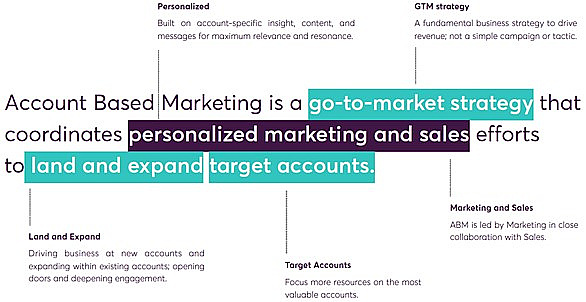
Account-based marketing is a B2B marketing strategy where the sales and marketing teams work together to find the most qualified accounts to become customers.
You’re flipping the traditional sales funnel upside down.
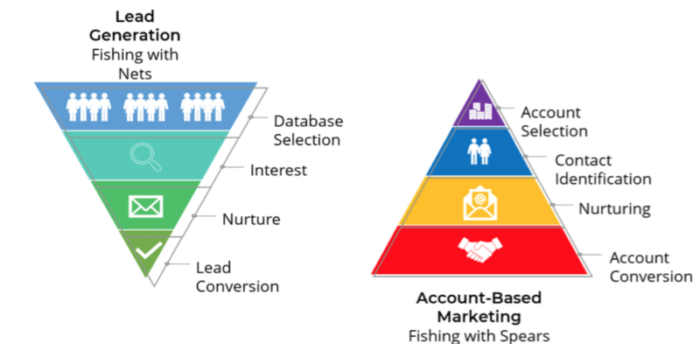
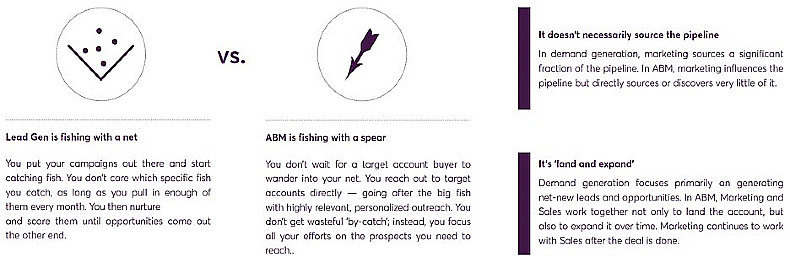
I love the example of fishing with nets versus fishing with spears.
When you fish with nets, you throw out a generalized marketing campaign to fit the needs of your customer persona, but you’re not entirely sure what will stick.
When you fish with spears, you pinpoint the clients you want with the help of your sales team. Working together will help the marketing team identify ideal clients and then put together a campaign that speaks directly to that audience.
Examples of Account-Based Marketing
Account-based marketing works by creating campaigns for highly specific audiences. By going in with a certain target group in mind, you are able to customize campaigns like you never could before.
Here are some real-life examples of account-based marketing.
Webinars
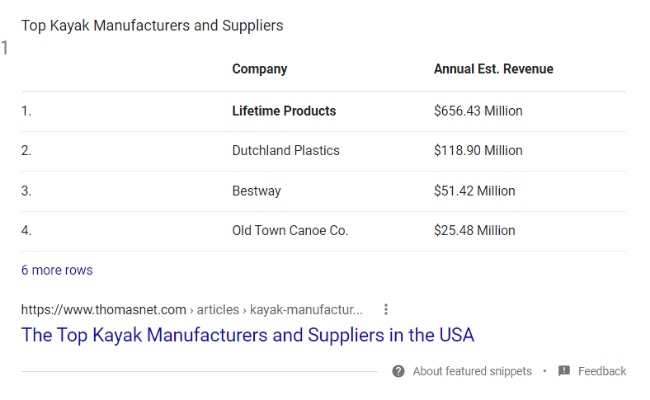
Let’s say you’re targeting an outdoor retailer that creates custom kayaks for professional fishermen. That’s a pretty specific audience, right?
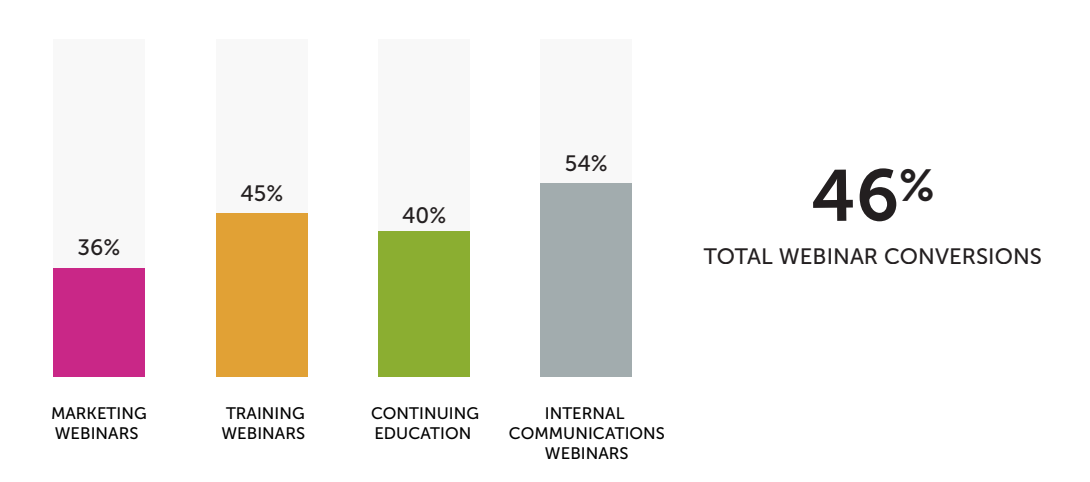
You can create a webinar dedicated to marketing for custom kayak companies.
Live Events
Even better than a webinar is a live event in-person.

Work with the sales team to identify key prospects as you plan this event. You can also create personalized upsells such as VIP passes, VIP rooms, or merchandise for the people you want to close.
PPC
Google Ads, Facebook, LinkedIn, and Instagram are all ways to reach high ticket clients through account-based marketing. Once you’ve identified your targets, you can create specific campaigns for those few prospects.

Remember the fishing with spears versus fishing with nets analogy? We’re no longer just throwing a net out to see if we catch anything. We know what we want to catch, where it is, and how to get it. We just have to do it.
Why and When You Should Use Account-Based Marketing
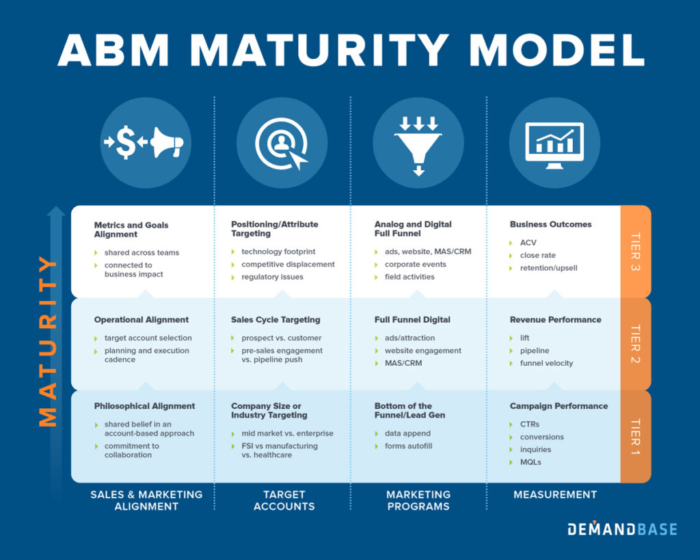
We tend to open the funnel with a broad-based marketing approach to “play the field” and see what’s out there. Eventually, we need to get away from that and narrow down to focus on the clients who will pay us what we’re worth and stick with us.
I like to call this the “ideal client.” Once you know who these clients are, account-based marketing helps you reach them.
Here are some ideal situations where you should use account-based marketing:
To Bring Marketing and Sales Together
One of the biggest issues many companies face is not having their sales and marketing team on the same page.

Account-based marketing gives these two departments a chance to work together, understand a common goal, and help each other out.
To Increase Engagement
One indicator you’re targeting the wrong audience is if they’re not engaging. This can be a sign of fatigue with your marketing campaigns as well.

How often have you seen ads over and over to the point where you don’t notice them anymore?
When this happens, it’s time to change things up and switch to a personalized strategy that will speak to one specific audience.
To Maximize ROI
The goal of both marketing sales is to bring as many people through the funnel as possible. That is a key indicator for long-term success.
Even better is bringing qualified people through the funnel versus bringing everyone.
If we focus on ROI, we only bring the most qualified accounts through the funnel. This will save you money, time, and resources.
Benefits of Account-Based Marketing
Now let’s talk about the direct benefits of an account-based marketing strategy versus something broader.
Shorter Sales Cycle
Shortening the sales cycle can save you so much time and money. This is one reason why an account-based marketing approach maximizes the ROI.
You are able to connect directly with key decision-makers early instead of using resources to engage with employees who may not have that authority. Because you are targeting decision-makers directly, you know they can pay, and you can serve them.
Personalization Saves Time and Money
How often does your sales team spend their time speaking with prospects who barely understand what your business does? That’s a sign of broad marketing.
With account-based marketing, you attract prospects who are already warmed up, familiar with your company, and ready to make a decision. This type of personalized marketing saves time and money in the long run.
Easier to Measure ROI

When we narrow down the funnel, we focus on fewer prospects. This makes it easier to figure out the ROI and deliver better results.
For instance, if we reach 100 ideal clients and convert 10 of them, we know our account-based marketing conversion rate is 10 percent.
This sure beats reaching out to the entire east coast with a marketing campaign and converting 10 people—then having four of them duck out after their first month.
Instead, you’re nurturing long-term, well-qualified prospects that will stick with you.
How to Plan and Begin Account-Based Marketing
Now that you have an overview of account-based marketing, let’s put it into practice with some actionable steps you can take.
1. Zero in on Your Targets
Work with the sales team to figure out some warm prospects. What characteristics describe them? What type of revenue do they have? What platforms do they live on?
Use all of this information to put together a personalized marketing campaign.
2. Research Them
Do plenty of research. Figure out what makes prospects tick and put together creative ideas that will make the prospect feel like the marketing campaign was made just for them—because it was.
3. Choose Your Avenue
Where are you going to market to this audience? What are you going to use to do it?
Do they have a younger demographic on platforms like Instagram and TikTok? Are they older executives that prefer direct mail or live events?
These are some key questions you should be asking before starting your campaign, especially if you expect to reach them and maximize your ROI.
4. Run Your Campaigns and Measure Frequently
One thing marketers are advised to do when running PPC, social media ads, or any other type of campaign is build up enough data before making a conclusion. With account-based marketing, things are a little bit different.
You can spill your entire ad budget pretty quickly when you have a narrow audience. You want to check on these campaigns frequently to see if your approach is hitting or not. If you don’t see the signs of success early, it is a good idea to adjust accordingly.
Tips for Implementing Account-Based Marketing
Here are some higher-level tips to make the most of your account-based marketing campaigns.
1. Plan Out Every Detail
You’re targeting a specific account, so the marketing campaigns need to be highly targeted. Information like competitors, customer relationships, buying points, selling points, and best-selling products/services are all important.
2. Align With the Sales Team
Make sure everyone is on board, from the president of marketing to the new trainee in sales. There should be no miscommunication on either side since everyone has the same goal of securing these high-ticket clients.
3. Build a Dedicated Account-Based Team
You should have a team of dedicated account managers working with these prospects before they become clients. Their focus should be on building relationships and understanding the needs of each account to streamline communications and limit the number of people you need to speak with before a close can happen.
4. Have a Small Target
Don’t spread yourself out too much. By limiting your focus to two or three high-value accounts, you are able to make sure that your campaigns speak directly to their specific needs and pain points.
If you go too broad too early, you risk the chance of your campaign alienating some or all of your target accounts.
5. Work With Decision Makers Only
You’re pouring a lot of resources into these two or three accounts, so you need to make sure you’re not wasting time. The key is to only deal with decision-makers in the company. If you can’t target specific decision-makers, they’re not a high-value target.
6. Target Warm Prospects Only
In addition to reaching decision-makers, work with your sales team to find the warmest targets. These people know who you are and have shown interest in the past but never converted.
7. Don’t Be Afraid to Adjust
Be sure to measure your results, change things as needed, and work with everyone involved to figure out what you can do differently.
Account-Based Marketing Frequently Asked Questions
What is an account-based marketing platform?
An account-based marketing platform is a form of technology that allows you to scale your marketing campaigns. These platforms allow you to run larger campaigns at narrower audiences.
How much does it cost to set up an account-based marketing plan?
It depends entirely on how much you do yourself and what you outsource. We can help you set up your account-based marketing to get you started on the right foot.
Why is account-based marketing important?
Account-based marketing is important because it caters to a specific audience which helps you maximize your ROI and bring in more high-ticket clients. This increases client retention over time and generally improves your company’s ROI.
How is ABM used?
Account-based marketing is used in various ways, but one of the most popular is to align marketing and sales teams. When these two departments work in perfect harmony, it helps bring in more high-value clients and shortens the sales process from beginning to end.
Conclusion: Account-Based Marketing
Account-based marketing is a smart choice for companies of sizes, allowing you to create deeper relationships with clients who will be more meaningful to your bottom line.
Taking on this strategy will bring in the exact type of clients you need to keep retention rates up and build a strong base. Work with your sales to identify the right accounts, create your ideal buyer persona, and pick an avenue to reach that audience.
Have you ever implemented a successful account-based marketing campaign?
Source: neilpatel.com

How to Avoid Failure in Account-Based Marketing
Did you know B2B marketers who report the most success from their digital activities in 2021 are more likely to be engaged in account-based marketing (ABM)? Only 16% of B2B marketers who describe their digital marketing efforts as “somewhat successful” have a measurable ABM program in place.
That number is reduced to 6% for those who say their digital strategy is unsuccessful at achieving goals set for the program. Check out this and other trends in our State of B2B Digital Marketing report.
Disclosure: This content is reader-supported, which means if you click on some of our links that we may earn a commission.
What Sets Successful ABM Strategies Apart From Those That Fail?
To start, ABM requires a different planning approach than more traditional B2B marketing methods.
The focus shifts away from driving lead volume and relies on a multi-channel content strategy for key accounts’ aimed at influencers and decision-makers for more personalized experiences.
ABM is based on different performance indicators that favor looking at high quality engagement indicators.
These engagement indicators aim at accelerating your pipeline velocity and increasing the overall account value versus quantity and cost per lead metrics.
To avoid account-based marketing failure, start your ABM plans by first defining your target account list and audience segmentation:
Targeting:
To develop a shortlist of high-value accounts, take a look at your customer data and develop your version of a 360-degree view of attributes that include things like: industry, size of the organization, growth stage, revenue, etc.
Determine which characteristics drive the most value for your company.
Analyze that list against other information that gauges interest and engagement with your product, including things like website visits, account tenure, intent data from search engines as well as any other relevant relationship health metrics.
Don’t try to boil the ocean — there is no reason to convert your entire organization to an ABM model.
Once you have your best-fit customers identified, you’ll be in a position to put together a list of prospect organizations with similar attributes.
Don’t try to boil the ocean — there is no reason to convert your entire organization to an ABM model.
Most successful teams are able to identify a few key prospects for an ABM strategy with some focusing on larger deals with more complexity and influential internal stakeholders.
Audience Segmentation:
ABM targets are generally composed of a few audience segments that consider both the industry and the individual’s role within the target organization, as well as the purchase process.
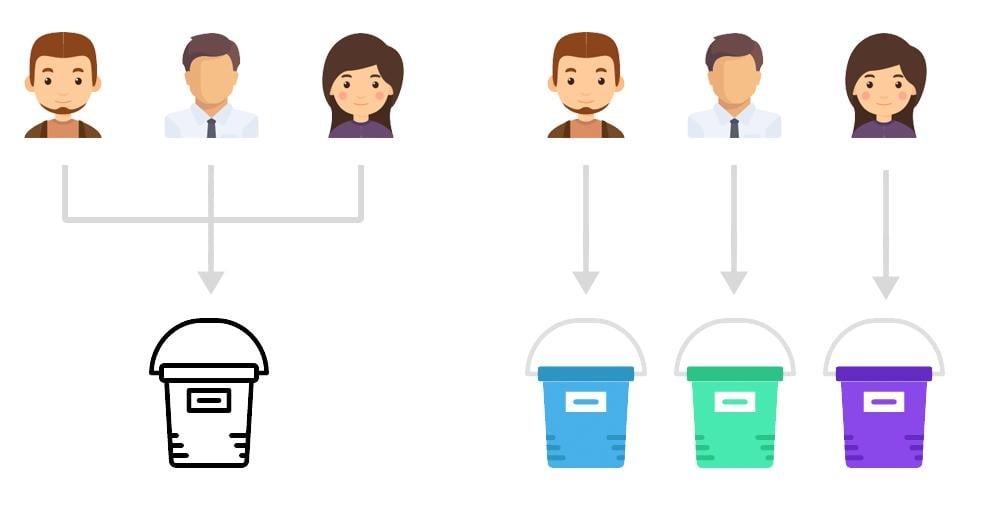
The aim is to deliver personalized content that speaks to the pain points of that particular individual in order to drive meaningful engagement that can lead to a sale.
For example, if your company provides IT infrastructure support to small and mid-size companies, someone in a day-to-day operations role would be interested in a downloadable eBook with how-tos for server protection against new security threats, versus the CFO.
However, a whitepaper on managing costs of ongoing threats to information security may prove more effective for the C-Suite or individuals with a senior-level finance role.
Once you have a shortlist of target accounts with audience segmentation, you can then build your content strategy with multi-channel campaigns.
Consider incorporating tactics for:
- website personalization,
- email, direct mail,
- direct sales outreach,
- digital ads,
- sponsored content, etc.,
with engagement triggers that indicate when and how to advance the customer in the sales process.
Sales and Marketing Alignment:
Successful ABM marketers are aligned in lockstep with their sales organizations.
Ever since the invention of email marketing in the early 2000s, driving lead volume has been easy, but the lead quality has suffered.
ABM forces strategic alignment between marketing and sales in order to shorten the sales cycle and drive quality growth not just lead volume.
How to Avoid Failure In ABM
- Pay close attention to triggers that move a customer forward in the sales cycle, and how well marketing engagement metrics are aligning with both sales activities and business outcomes.
Provide ongoing training for sales teams on available content, how it’s performing, and to solicit feedback. - Understand which accounts sales teams care most about on an ongoing basis.
Apply a test and learn approach that includes dedicating some of your marketing budgets to your ABM target account list. - Activate sales teams by indicating which account to take action on next, what engagement signals the account is showing, and the action to take on those signals.
- Abandon the traditional marketing funnel for measurement purposes. Using the same lead analytics associated with lead volume and lead quality can make ABM efforts seem ineffective when performing well.
- Focus on conversion metrics for your ABM pipeline compared with other sales pipelines for your organization, including sales cycle duration. For most teams, this will include ensuring you have executive buy-in as well as dedicated resources for creating new reports for ABM performance.
Stay Focused On Your High-Quality Target Accounts
Earlier this year, 43% of B2B marketers said they had a measurable ABM strategy in place — how many will be successful?
ABM strategies typically require investments in content creation and new reporting dashboards in order to create multi-channel campaigns for each audience segment within your target accounts.
To justify the resource investment and set your team up for success, be sure to focus your team’s efforts on a shortlist of high-value accounts.
The post How to Avoid Failure in Account-Based Marketing appeared first on Content Marketing Consulting and Social Media Strategy.
Source: convinceandconvert.com