
Tag Archives for " B2B "

12 Niche Marketplaces to List Your B2B Services
E-commerce is the future, but it isn’t just for B2C.
B2B brands are finding huge success in the digital marketplace industry and everyone wants a piece of the pie.
Globally, B2B marketplaces make up a $31 billion market.
Amazon Business, arguably the biggest player in the B2B marketplace scene, grew from $1 billion to $10 billion in sales in only three years.

Disclosure: This content is reader-supported, which means if you click on some of our links that we may earn a commission.
While competition is intense in the mainstream, niche B2B marketplaces are showing real promise.
Niche marketplaces are unique marketplaces for businesses that want to sell their products and services.
These marketplaces can be a niche in terms of the industry, region, or size of business.
For B2B marketers looking to carve out spots in the B2B marketplace world, niche marketplaces offer ways to speak to new customers.
In this blog, we’ll explore some of the best niche marketplaces for B2B brands and share insights into how you can increase conversions on these platforms.
What Are the Benefits of B2B Niche Marketplaces?
Niche B2B marketplaces allow you to speak directly to your niche, which saves time and resources in your sales process.
They also open you up to new audiences, improve your data capabilities, and more.
Not to mention, being present in a single platform full of other businesses just like you opens up a lot of room for innovation and growth.
Here are a few benefits of niche marketplaces B2B.
Speak to More Customers
It can be easy for many to think of Millennials as “kids,” but the youngest were born in the mid-90’s—meaning 100 percent of Millennials are adults.
Because of this, studies from Google have found B2B buyers are increasing of that generation.
This is changing the B2B business sales process completely.
Thankfully, B2B legacy brands can easily reach the Millennial market without completely revamping their sales strategies.

They just have to know where to find them.
Plus, by listing your business on a niche B2B marketplace, you can speak to more qualified buyers at a regional or global level, depending on the marketplace.
Cater to Niche Audiences
In niche B2B marketplaces, the people you’re talking to are already working within your niche, making them more likely to be qualified and interested from the start.
Being part of a niche marketplace puts you in front of people who already know and want your products, cutting down your sales cycle and improving revenue streams.
Streamlined Processes
Niche B2B marketplaces also offer streamlined processes for businesses that use them.
Unnecessary costs, such as having separate portals for suppliers, customers, and leads, are eliminated in the niche B2B marketplaces.
In short, time-consuming sales processes can be avoided.
Data Capabilities
In addition, e-commerce capabilities open up new ways of collecting, managing, and utilizing data.

In a B2B marketplace, you can easily see stock movements, cash flow, customer engagement, and even spending patterns.
All this data can be used to better inform your marketing efforts and improve your customer acquisition process.
Increase Conversions and Revenue
Many niche marketplaces offer additional features such as lead generation tools you can use to help boost sales conversions, ultimately increasing revenue for your business.

Listing your products or services on a global channel has the potential to double your sales possibilities, too.
Bulk Pricing
Listing your products, services, and equipment on B2B niche marketplaces allows you and your customers to benefit from bulk pricing.

On the business side, you can sell more products more efficiently. Meanwhile, customers save money by buying in bulk.
Everyone wins.
Build Better Client Relationships

Niche B2B marketplaces connect you to suppliers and manufacturers across the globe.
By increasing the scope of your business, you have the chance to build strong client relationships around the world.
Plus, the efficiency and simplicity that niche B2B marketplaces bring could make your clients happy.
The less time they spend going through complicated supply processes, the better they will feel about working with you.
12 Top Niche Marketplaces B2B
Ready to take your business into the niche B2B marketplace?
Below are 12 of the top niche marketplaces you can list your business on today.
1. Flexport – Freight Forwarding
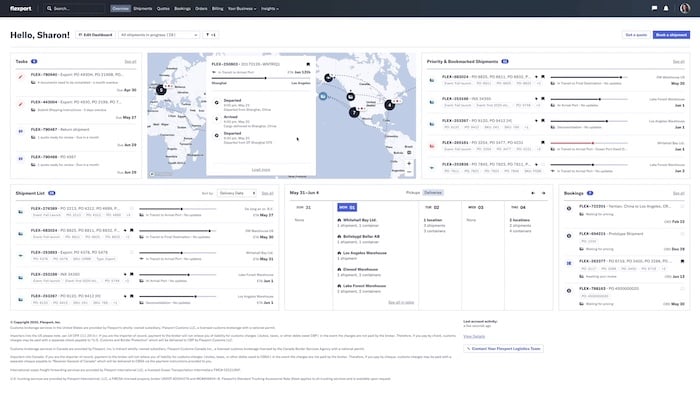
Flexport helps global trade partners simplify their supply chains through a digital platform.
The system works best for businesses involved in global trade that need to manage large inventory quantities worldwide.
By putting all shipment tracking, collaboration, insights, analytics, and inventory knowledge onto a simple digital tool, Flexport helps businesses take control of their supply chains.
2. uShip – Shipping
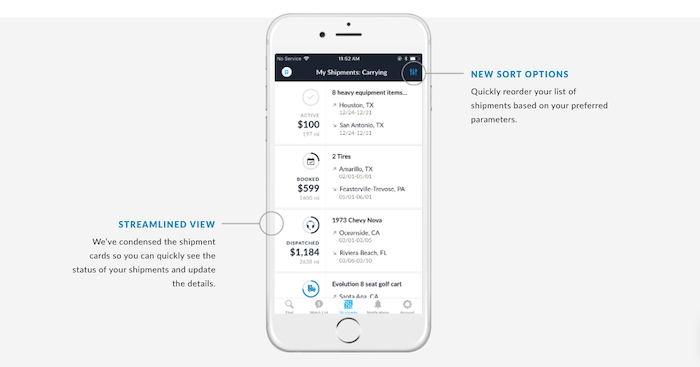
uShip helps customers ship large items by connecting them with carriers with extra truck space.
This simple transport marketplace connects shippers with thousands of qualified transporters so items can get to their destination more effectively.
uShip is an excellent niche B2B marketplace for businesses who need to ship large items, such as cars, machinery, freight, and household items.
3. Kitmondo – Machinery
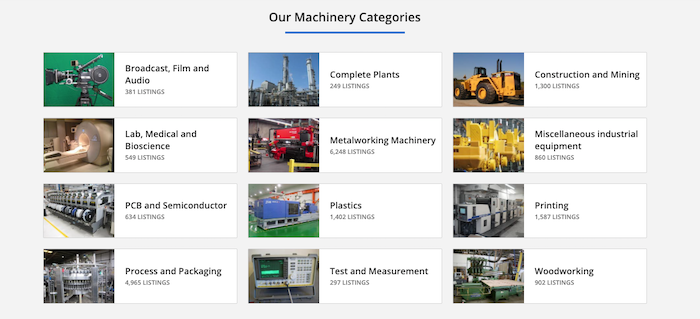
Kitmondo allows brands to buy and sell used machinery online.
With over 8,000 sellers worldwide, Kitmondo is the place for businesses to buy and sell machinery without taking a significant loss.
Kitmondo features a range of machinery types, from broadcast and film equipment to construction and mining tools.
4. Alibaba – Wholesale & Distributors
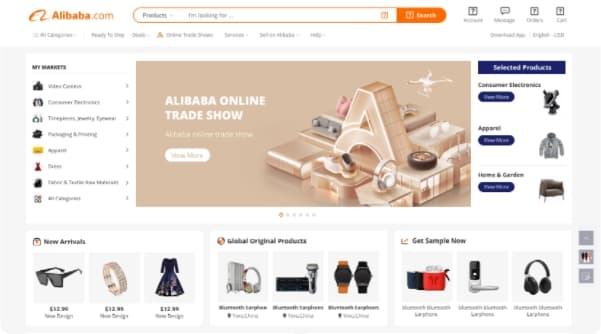
Alibaba is the leading e-commerce platform helping SMEs go global.
Alibaba allows merchants to set up a custom e-commerce storefront that sells products across the globe.
This niche B2B marketplace also offers advertising tools, data and analytics, and customer support, so your business is always set up for growth.
This marketplace is perfect for wholesale brands looking to open up their product sales and get competitive on a global market.
According to Statista, 36.5 percent of corporate buyers report using Alibaba.
5. Mable – Food & Beverage
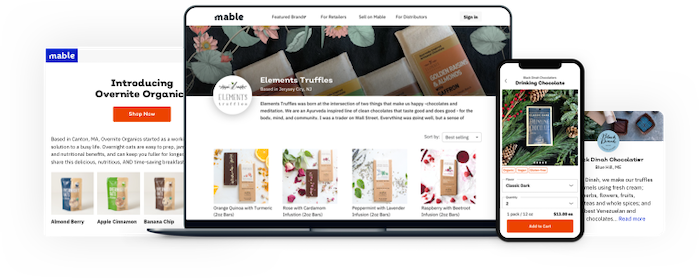
Mable is a wholesale platform specializing in food and beverage.
Founded by a grocer, Mable focuses on local, emerging brands committed to health and wellness.
Independent grocery stores, farmers, and makers can all find their stride on Mable’s easy-to-use niche B2B marketplace platform.
6. Mediatask – Architecture
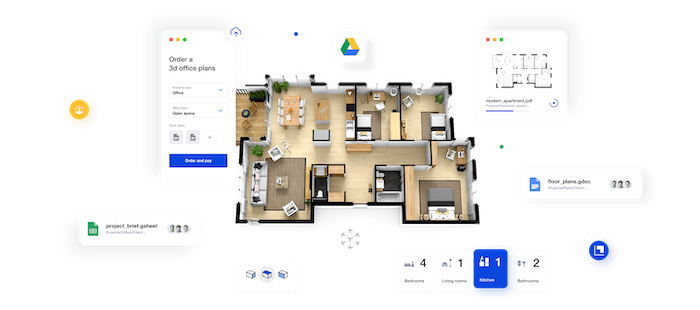
Mediatask is a niche B2B marketplace for drafters and architects.
They create customized visuals for real estate businesses in both 2D and 3D models.
Mediatask uses technology automation to increase the capacity of their team.
Through this, they have found unmatched scalability that benefits B2B brands.
If you’re a real estate developer or architect, it’s worth checking these guys out.
7. BuildingConnected – Construction
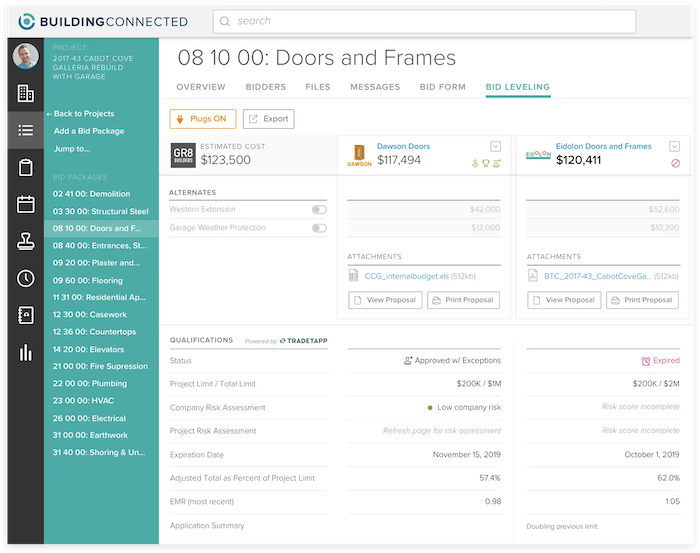
BuildingConnected is a real-time construction network that helps builders and owners streamline bid tasks and risk management processes.
Their centralized software makes it easy for construction networks to invite subcontractors, manage proposals, and even award bids.
BuildingConnected is a great choice for anyone involved in preconstruction or construction industries.
8. Clora – Science & Medicine
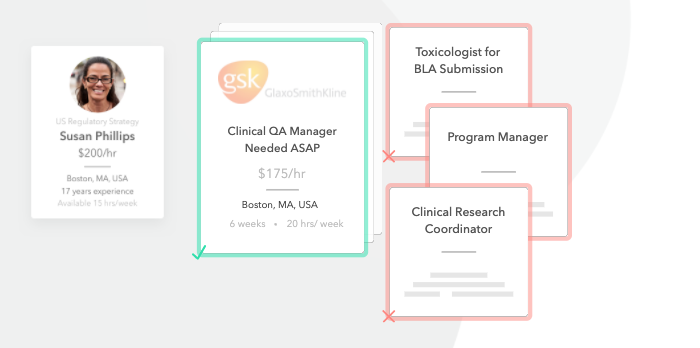
Clora is a staffing platform for those in the pharmaceutical, biotechnology, and medical device industries.
Their simple platform allows job seekers and consultants to be matched with the right opportunities or staff.
This niche marketplace B2B is the perfect example of a technology solution for a complex industry.
With Clora, scientists and researchers can easily be matched with qualified work and companies, helping drive innovation across the country.
9. Globality – Sourcing
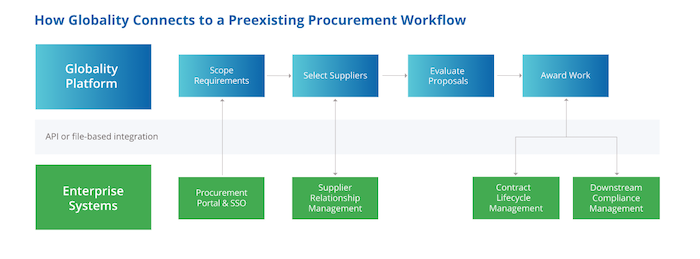
Globality allows businesses to source global services within a simple and convenient platform.
Globality uses an AI-powered platform to automate and eliminate the traditional request for proposal (RFP) process.
Now, businesses can quickly scope, manage, and negotiate projects within one simple tool.
10. Arrow – Technology
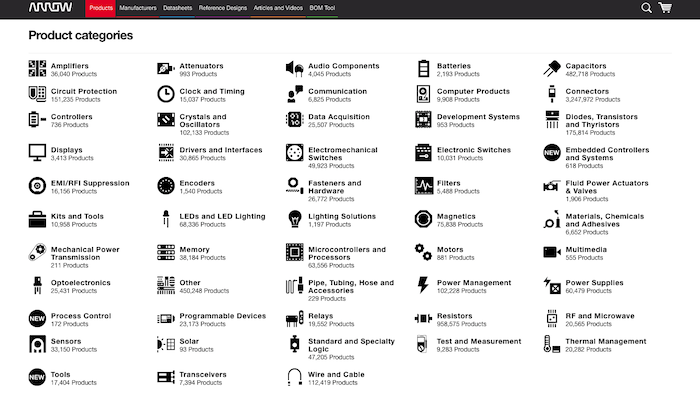
Arrow is the leading manufacturer of electronic technology for use in the home, business, and daily life.
They facilitate purchasing online and are present in more than 300 locations worldwide.
With Arrow, global manufacturers can sell technology products in a streamlined and effective manner.
11. ePlane – Aerospace
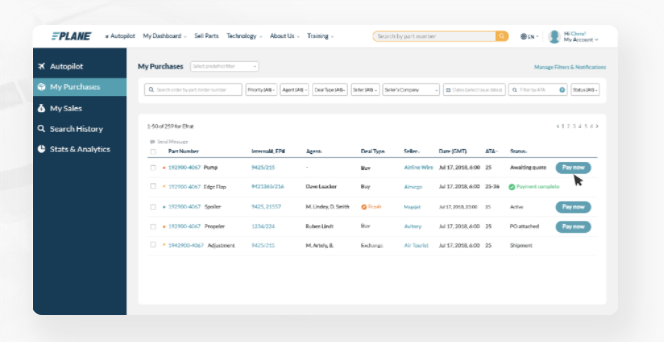
ePlane is an aerospace marketplace that allows users to trade and repair aerospace parts.
Their platform features millions of parts in a real-time database that is available through merchants across the globe.
With ePlane, aerospace professionals can reduce costs, track activity, access insightful data, and save time in their inventory procurement.
12. SupplyHog – Hardware & Building
SupplyHog is a niche B2B marketplace that allows local and nationwide partners to buy hardware and building supplies.
Merchants can list various products, from plumbing equipment to housewares, and easily sell products across the United States.
By generating quick e-commerce sales from products they already have, B2B businesses can expand their local markets and increase conversions on the whole.

B2B Niche Marketplaces Frequently Asked Questions (WP EDITOR: ADD SCHEMA)
What Is the Difference Between B2B and B2C Niche Marketplaces?
B2B niche marketplaces work between businesses, while B2C works between businesses and consumers.
How Do I Find a B2B Marketplace in My Niche?
There are so many niche B2B marketplaces out there; you just need to do your research.
Start by simply Googling your industry and seeing where your competitors list their wares.
FAQ: 1
What Are the Advantages of using B2B Marketplaces?
Niche B2B marketplaces attract niche suppliers from around the world.
FAQ: 2
What Niche B2B Marketplace Should I Use?
The niche B2B marketplace you use depends on your business and the suppliers or leads you to want to attract.
FAQ: 3
Who Should Use a Niche B2B Marketplace?
Any business that operates within a niche can benefit from connecting to more like-minded businesses.
B2B Niche Marketplaces: Conclusion
Getting involved in a niche marketplace for B2B businesses can be a great way to expand your business across the globe.
Niche B2B marketplaces also offer enhanced data and analytics tracking, plus streamlined services for those involved.
If you’ve ever thought to yourself, “I wish this was easier,” it’s worth looking around to see if anyone has created a tool to alleviate your problem.
What is your favorite niche B2B marketplace?
Source: neilpatel.com

The State of B2B Digital Marketing: 5 Findings That Will Influence Your Next Steps [2021 Research]
B2B marketers have had a lot of ups and downs in the past year, so smart and data-driven adjustments to their digital marketing plans are critical to upcoming success. Advancements in technology, data, and digital channels have created an enormous opportunity for B2B companies to innovate and grow like never before.

Disclosure: This content is reader-supported, which means if you click on some of our links that we may earn a commission.
But to make strategic changes and to develop the best marketing plan, it is critical to have current research and data to support your next steps.
In May 2021, research firm Ascend2 and digital marketing agency Wpromote surveyed 258 B2B marketing professionals in the U.S. to find out what critical shifts in the digital strategy they are using to drive more success in the year ahead.
Findings from the Research Study and How the Findings Impact You
Here are a few findings from the research study and how the findings impact you.
Finding #1: Customer connection is everything.
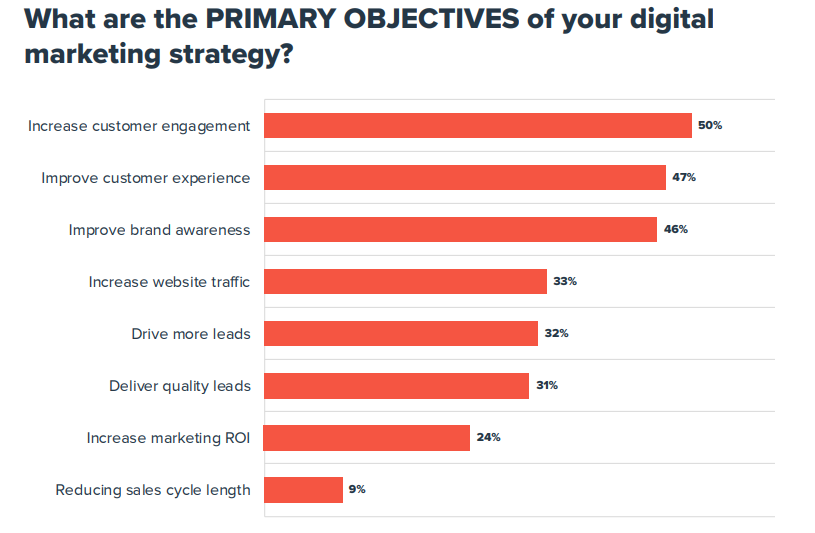
The most important objective for B2B marketers is increasing customer engagement, improving customer experience, and improving brand awareness.
As the digital marketing landscape continues to evolve, marketers have recognized that customers are no longer satisfied with the B2B status quo; instead, they are investing in building a more personalized and experience-driven approach.
An engaging, exceptional customer experience is fast becoming a non-negotiable part of a B2B digital marketing strategy.
Finding #2: Don’t overlook these digital marketing trends.
2020 presented a particular conundrum for B2B organizations: as traditional marketing strategies like conferences and networking-focused events became impossible, B2B marketers needed to find new ways to reach potential customers.
So it’s no surprise that brands embraced new social platforms, virtual events, and influencer marketing strategies that can open the door to new opportunities to drive brand awareness and grow new audiences.
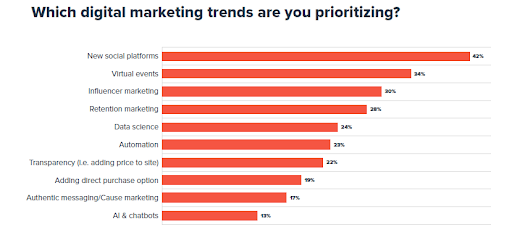
Tip: The top three marketing trends (new social platforms, virtual events, influencer marketing) are more effective when you develop a strategic plan for how all three can work together.
For example, finding the top influencers in your industry that also have a strong following on the new social platforms you are targeting will help you optimize your top priorities.
Finding #3: Budgets are going up.
B2B companies have historically underspent on digital, but that is changing.
2020 forced B2B brands to invest in their digital capabilities, including necessary tech and tactics (social platforms, virtual events, influencer marketing, etc.) and that trend looks likely to continue.
Overall, 68% of B2B marketers expect an increase in digital budget in the coming months.
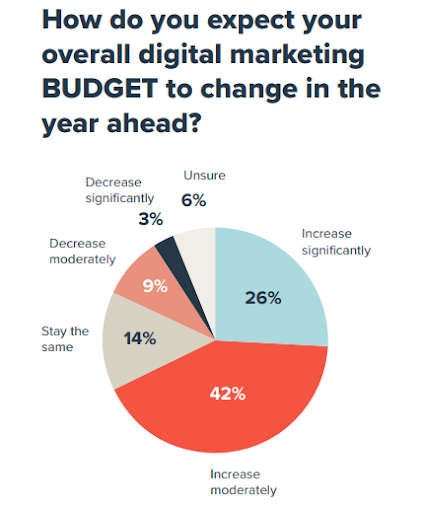
Tip: A large portion of the marketing budget is going to marketing technology.
What will executives expect as they increase marketing technology budgets?
An integrated plan from marketing:
- How will technologies work together to meet specific goals and impact core business objectives?
- Mapping investments to specific strategies, like customer engagement, customer journey, data quality, etc.
- Collaboration between departments to get the most out of tech investments.
Finding #4: Large companies struggle to prioritize quality over quantity.
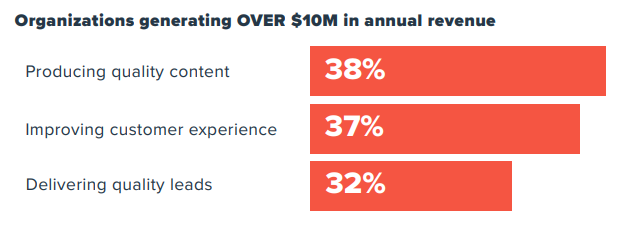
Producing quality content, improving customer experience, and delivering quality leads are the top challenges for companies with annual revenue of more than $10M last year.
As organizations grow, priorities change—and so do the challenges facing marketers.
Smaller B2B companies are much more focused on the bottom of the funnel, but larger companies are more focused on marketing strategies associated with moving up the funnel, pointing to quality content, and improving customer experience.

Finding #5: ABM could be a game-changer.
B2B marketers who reported the most success from their digital strategies are more likely to have an Account-Based Marketing (ABM) strategy in place.
ABM campaigns can cultivate engagement and drive conversion for high-value accounts by deploying targeted content and experiences.
With the success that marketers are experiencing with ABM, expect ABM to continue to grow in the coming year.
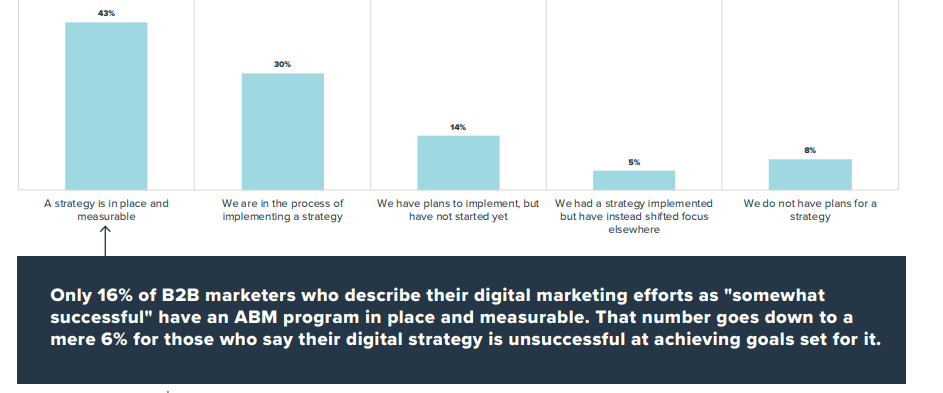
Tip: Advanced segmentation is the key to ABM’s success and the ability to deliver a better customer experience.
Better segmentation can improve the performance of sales teams, emails, content programs, and ABM campaigns because every touchpoint is more focused and informative.
Final Thoughts
Download The State of B2B Digital Marketing for data and insights on trends for B2B technology, data, channels, and more.
The post The State of B2B Digital Marketing: 5 Findings That Will Influence Your Next Steps [2021 Research] appeared first on Content Marketing Consulting and Social Media Strategy.
Source: convinceandconvert.com

B2B Content Marketing Measurement Tips for 2021 (Statistics & Research)
“If a tree falls in a forest and no one is around to hear it, does it make a sound?” is a philosophical thought that can be adapted to B2B content marketing as well.

“If I create great B2B content but can’t measure it, did it make an impact?” is the question marketers ask regularly.
What is the impact?
Am I capturing all the impact?
How can I optimize performance?
Measuring the impact of content marketing allows B2B marketers to optimize campaigns for better engagement and more effectively attribute ROI.
But what are the strategies, tactics, and trends behind measuring content marketing performance for B2B marketers?
To help answer these questions on measuring B2B content performance, Ascend2 and KoMarketing Associates fielded the Measuring Content Marketing Performance Survey between February 17 – 25, 2021. 193 B2B marketing professionals participated in the survey.
The research looks at what B2B marketers are doing to measure content marketing performance.
The survey findings are available in the research report, Measuring Content Marketing Performance: A B2B Marketer’s Perspective.
The key findings from the research on measuring B2B content marketing performance.
Here are key findings from the research on measuring B2B content marketing performance.
1. Determining ROI is the top challenge for B2B marketers when it comes to measuring content marketing performance.
Measuring return-on-investment (ROI) of content marketing is critical to optimizing a strategy, but nearly half (46%) of B2B marketing professionals consider determining ROI to be a top challenge when it comes to measuring content marketing performance.
44% of B2B marketers also face a lack of budget and resources necessary to effectively measure strategic success.

Determining ROI, the lack of budget/resources and insufficient data are the top 3 challenges of measuring content marketing performance.
Why is it so difficult to determine ROI?
The math is simple: revenue generated by content, divided by cost (production cost + distribution cost).
But for B2B marketers, how do you calculate the revenue generated?
Do you assign a revenue number for every lead generated?
Do you look at overall sales revenue?
How much did your content marketing impact a sale?
How do you value activities like email clicks, shares, page views, average time on page, etc.?
How do you track the metrics you need and convert them to a dollar amount that can do into an ROI calculation?
Here’s how to overcome the challenge of determining ROI:
- Outline a strategy of what metrics you need to track
- Figure out what technology you need to track those metrics
- Pul pull together the data into an easy-to-use analytical tool
- Decide how you will assign value/revenue to your metrics
- Track your costs.
Start simple and build as you learn from the data you collect.
2. 66% of B2B marketers find it difficult to measure the performance of a content marketing strategy.
Two-thirds (66%) of B2B marketers find it difficult to measure the performance of a content marketing strategy compared to one-third (34%) who find it to be either moderately or extremely easy.
57% describe this difficulty as moderate, while another quarter (25%) of those surveyed report that gauging the effectiveness of content marketing is moderately easy.
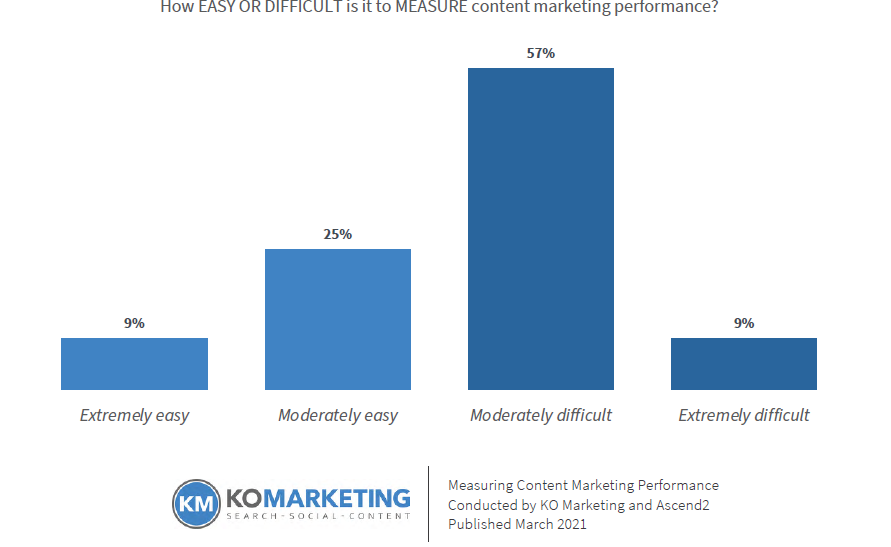
57% of B2B marketers find it moderately difficult to measure content marketing performance.
Don’t give up on your need to measure content marketing performance.
Content marketing is an investment that impacts your business strategy, branding management, audience engagement, and thought leadership.
We can all find cases on how content marketing made a significant impact on a major deal, reduced selling costs, or expanded your brand influence.
It may be difficult, but it is important to find consistent ways to measure and show the impact on your leadership team.
2. 37% of B2B marketers are using 3-5 tools for measuring content marketing performance.
Content marketing typically involves utilizing a wide range of channels across an overall marketing strategy.
One in five (21%) of B2B marketers report using six or more tools to measure content marketing performance.
Another 37% of those surveyed say they use between three and five tools, and 29% are measuring performance with two tools or less.
Marketing leaders need to embrace technology.
A strong stack of technology gives you more information about your audience, your clients (individuals or companies), and the impact of your campaigns.
Technology also allows you to be more efficient, organized, and agile as you track performance and report performance to the team.
4. Analytics tools, CRM systems, and marketing automation solutions are the most important tools for measuring content marketing performance.
Which types of tools are B2B marketers finding to be most effective for measuring content marketing performance?
Over half (53%) of those surveyed put analytics tools at the top of the list.
Customer Relationship Management (CRM) systems and marketing automation technologies are also critical to overall success according to 38% and 34% of B2B marketers, respectively.
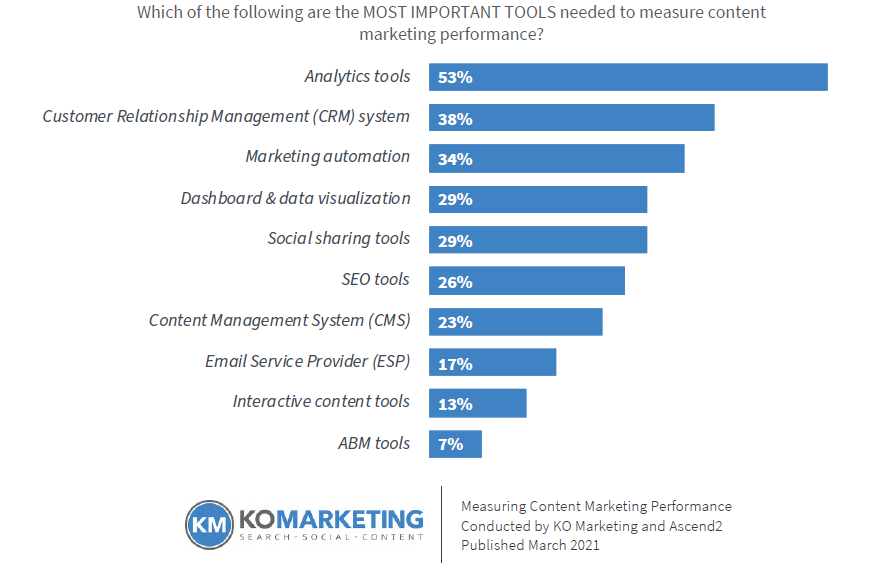
Analytics tools, CRM systems, and marketing automation solutions are the most important tools for measuring content marketing performance, according to B2B marketers.
Content marketing is data-driven.
Start with a solid setup of your Google Analytics.
Focus on four key areas:
- traffic,
- navigation,
- organic search,
- and conversions.
5. Conversion rate is the most important content marketing measurement metric, according to 50% of B2B marketers.
About half of B2B marketers agree that conversion rate (50%) and website traffic (46%) are among the most important metrics to consider when measuring the overall performance of a content marketing strategy.
Engagement on social media channels is also ranked high on the list of important metrics for 39% of those surveyed.
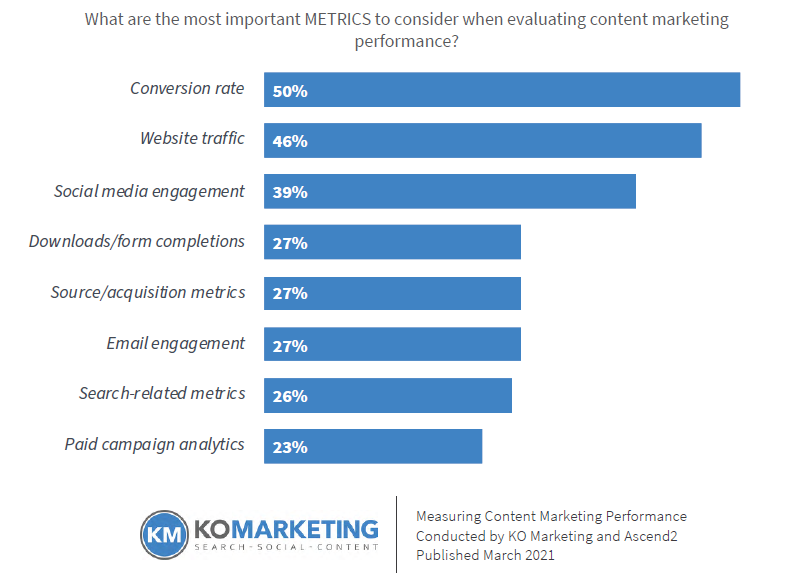
Conversion rate, website traffic, and social media engagement are the top 3 most important metrics, according to B2B marketers.
Don’t guess about the performance of your content marketing; instead, identify the data that matters most to your success.
Track and analyze performance to identify trends and adjust your strategy based on your findings.
Marketing optimization is never complete; it is an ongoing process.
Final Thoughts
Content marketing is essential to successful B2B marketing, so measuring performance is a priority.
Download Measuring Content Marketing Performance: A B2B Marketer’s Perspective for research-based strategies, tactics, and trends for B2B content marketing in the year ahead.
The post B2B Content Marketing Measurement Tips for 2021 (Statistics & Research) appeared first on Content Marketing Consulting and Social Media Strategy.
Source: convinceandconvert.com

What is the Difference Between B2B vs B2C for Paid Social Media?
While the terms B2B (business-to-business) and B2C (business-to-consumer) marketing may sound similar, they differ vastly in practice, especially when it comes to paid social media.
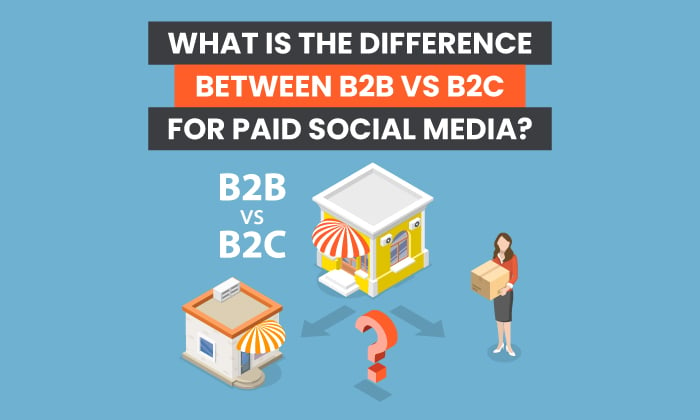
Areas like content, objectives, best practices, and which platforms to use can impact the most effective strategies in paid social media. This chart outlines a few of the main differences.
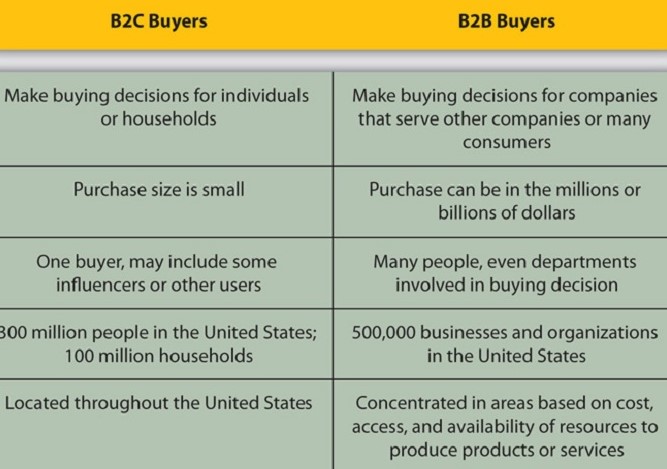
These differences are particularly evident in the approaches for paid social media strategies. Before we dig into the different strategies, let’s take a deeper look at the differences between B2B and B2C.
What is B2B Paid Social Media?
B2B buyers are typically large organizations (like enterprise companies, hospitals, or universities) that market their products or services to other businesses.
Those businesses typically need agreement from multiple stakeholders before making a purchase, which often extends the sales cycle length.
When conducting B2B marketing, the message should focus on logic and ROI, rather than emotional impact.
How can you help their organization achieve its goals? What is important to their organization’s mission?
When creating a B2B paid social marketing strategy, ensure your campaigns and accompanying materials highlight a solid return on investment (ROI) that underlines how your product or service helps them save time, money—or both.
What is B2C Paid Social Media?
Conversely, B2C marketing means you’re marketing directly to a consumer.
The focus should be on the benefits of the product—and how that product can benefit the consumer. However, the purchase decision is based much more on emotion than tangible ROI.
Buyers don’t want to put in extra work to understand the value of your product.
You must clearly indicate benefits in a concise way that uses an emotional pull.
B2C vs B2B also differs in length of the purchasing process, with consumers making purchases in minutes to days. In contrast, B2B consumers take much longer, with the decision process occasionally extending a year or more.
B2B vs. B2C Marketing on Social Platforms
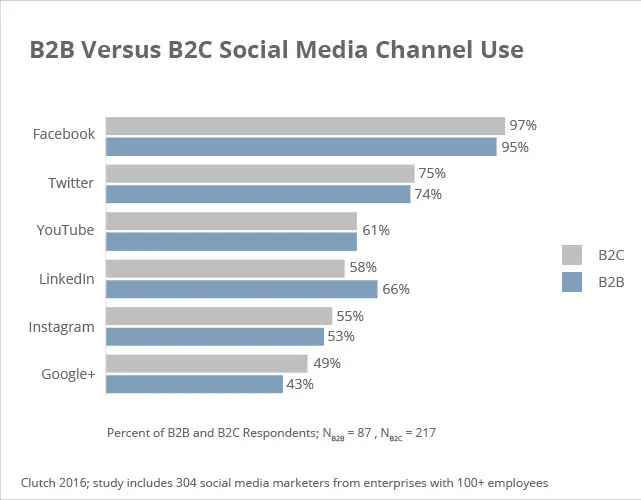
In addition to the above differences, B2B vs B2C users tends to use different social platforms.
This distinction matters for marketers, as it guides where you should focus your time and resources to target these consumers.
If you’re attempting to sell to a consumer on a historically business-heavy platform (like LinkedIn), it is unlikely you’ll have much success.
B2B Social Platform Use
Historically, social media platforms don’t perform all that well for B2Bs. For example, trying to sell an enterprise software solution on Facebook might not get you very far.
Despite this precedent, there is an exception to every rule, and in this case, that exception is LinkedIn.
Since the platform’s start, marketers have been trying to take advantage of LinkedIn’s ability to connect with powerful decision-makers in a professional setting.
Now you can. Credited with 97 percent of a business’s social media leads, LinkedIn is the platform every B2B marketer should be using to reach their audience and drive leads.
This may sound easier said than done, but luckily, there are multiple strategies to turn LinkedIn into your own personal lead-generation machine.
While LinkedIn is inarguably the most favored B2B platform, Twitter and Facebook earn second and third places in the hierarchy.
Twitter may not be your immediate go-to for B2B marketing, but the platform is filled with potential consumers ready to buy. In fact, 53 percent of Twitter users are likely to be the first to purchase new products.
Twitter can help B2B marketers:
- build brand awareness
- increase social monitoring
- assess competitor analytics
Collaboratively, these three benefits help increase your brand’s visibility, but also allow you to dive deep into competitors’ performance, assessing metrics like follower growth, impressions, and mentions to know where your competition stands.
While Facebook use is declining among younger users, many B2B decision-makers regularly use the social networking site.
A recent study reported that 74 percent of users use Facebook for professional purposes.
Facebook may help you gain access to new prospects who would never set a virtual foot in LinkedIn.
Want more evidence Facebook is advantageous for the B2B marketer?
With Facebook ads, you can:
- target your audience based on detailed preferences
- gather prospect information
- use lookalike audiences to target users similar to your best customers
- retarget users who have already interacted with your brand
Moral of the story: if you’re considering nixing Facebook from your B2B marketing strategy, don’t.
B2C Social Platform Use
While savvy marketers flock to LinkedIn, Facebook, and Twitter to reach B2B consumers, marketers targeting B2C consumers must adjust their targeted platforms accordingly.
Let’s look at a few of the most common platforms for B2C marketing.
Instagram was once dismissed as too juvenile to waste marketing spend on. Today, however, the platform is a marketer’s dream, offering countless opportunities to reach established and new consumers.
Given the B2C sales cycle’s brevity, Instagram is the perfect pair for business-to-consumer marketing.
For marketers looking to get quick returns on visually-appealing products, Instagram is the go-to social platform.
Visuals aside, Instagram is also highly-trafficked by active consumers.
In fact, Instagram’s business portal reports:
- 60 percent of people say they discover new products via Instagram.
- 200+ million Instagram users visit at least one business profile per day.
- 1/3 of the most-viewed Stories are from businesses.
Those statistics should have every marketer sprinting for their phone to start an Instagram campaign.
TikTok
TikTok might not seem like the ideal platform for your B2C marketing campaign, but many brands have found success on the interactive platform.
With the average user spending 52 minutes a day on the app, there are limitless opportunities for marketers to reach their desired audience.
Unlike other social platforms, TikTok offers marketers a variety of unique avenues for advertising, including:
- in-feed videos
- influencer package
- ssponsored AR content
As the fastest-growing social platform on the market, be sure to take advantage of the massive audience that is just a video away.
B2B vs. B2C: Content for Paid Social Media
After identifying the social platforms best-suited for your paid social campaign, it’s time to settle on what type of content to share.
B2B and B2C differ in this area as well, with B2Bs historically performing well with an informational approach, whereas B2Cs find success with a more approachable, fun tone.
B2B Social Marketing Content
As noted above, businesses buy for a clearly-defined reason—which is based on statistics, not emotion. To successfully market to B2Bs, provide content that focuses on ROI.
Here are a few types of content that tend to perform well in B2B paid social campaigns.
Informational Content
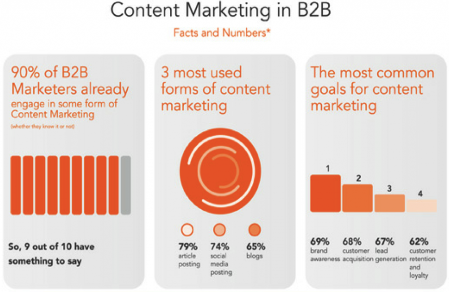
To demonstrate that ROI, consider building a library of consumable content that informs. A few mediums that traditionally perform well for B2Bs include:
- whitepapers
- infographics
- guides
- how-to content
By showing clear value in these pieces, you can scratch that ROI itch and begin the process of moving your B2B prospects through your marketing funnel.
Answer Industry Questions
Filling in industry content holes not only allows you to position yourself as an undeniable field expert, but you can also build content that satisfies specific long-tail search queries.
Targeting these queries drives qualified traffic to your site, ideally earning conversions.
B2C Social Marketing Content
While B2C’s counterpart craves ROI data, B2C consumers are more emotional buyers.
To take advantage of this motivator, use content that inspires, delights, or evokes another positive emotion.
Storytelling
Your aim is to delight and engages your B2C buyers.
Use narratives to hook and maintain consumer interest. Telling a story (either in a single iteration or across your campaign’s lifespan) can attract consumers, while also humanizing your brand.
Visual Content
Visual content grabs and holds attention much more effectively than text.
By incorporating visuals into your campaigns, you’re more likely to elicit an emotional reaction, resulting in a B2C consumer making a purchase or mentally bookmarking your product for future reference.
B2B vs. B2C: Objectives for Paid Social Media Campaigns
Given the differences in content, sales cycle, and preferred platform, it’s no surprise that B2B vs B2C also differs in objectives for paid social campaigns.
Understanding the different objectives provides the information you need to design successful social media campaigns.
B2B Objectives
The intent of most B2B marketing campaigns is not simply to make sales.
Rather, a B2B marketing campaign will be marked successful if it improves:
- brand growth
- brand awareness
- lead generation
- industry-expert status
Since the sales cycle for B2B consumers is so long, factors like brand growth and brand awareness are incredibly valuable, as they allow you to build connections with potential buyers.
B2C Objectives
While B2B marketers find success benchmarks in growth, B2C markets tend to value direct sales and interactive metrics that show content that is interesting to users. Popular goals for B2C social campaigns include:
- engagement
- likes
- follows
- going viral
For the B2C marketer, these interactions indicate consumers are attracted to the brand’s offering and willing to interact with the organization.
B2B vs. B2C: Best Practices for a Paid Social Strategy
Although a few best practices apply across the aisle when it comes to B2B vs B2C paid social marketing, a few are particularly relevant to each audience.
B2B Best Practices
To start deploying successful B2B campaigns, look to these four practices to guide you in your planning phase.
Utilize Multiple Channels
Multichannel campaigns increase ROI by 24 percent, with a 9.5 percent increase in revenue gained and a 7.5 percent decrease in cost per lead. That’s ROI you can’t easily ignore.
Identify Goals
Goals only work as hard as you do. You need to establish achievable benchmarks for each campaign, allowing you to note successes and adjust failures.
Measure Results
Without measuring results, how will you know if your campaign was a success?
By breaking down marketing metrics, you can gain specific insights into performance, identifying strengths, and recalibrating weaknesses.
Provide Quality Content
You’re only as good as your content. If you’re not creating quality pieces that provide your B2B consumers with clear, tangible ROI, then you’re not going to see results.
B2C Best Practices
Looking for a list of B2C best practices that can get your next campaign off the ground?
These three tips can help.
Track the Right Engagement Metrics
As marketers, B2C goals rely heavily on engagement, so tracking these metrics should top your list of must-dos.
- social platform engagement
- website traffic
- ROI
- quality of leads
- customer retention
- conversion rate
Test Your Ads
Testing your ads on social platforms is a great way to see which ads perform well with your intended audience.
This helps limit spend and increase audience engagement. A/B testing is an especially effective way to better understand which ads customers like.
Clearly Identify Your Audience
Without clearly outlining your target audience, you can’t market effectively on social media.
By identifying the who and the why you can target the audience most likely to engage with your content or purchase your product.

Go to Course
Conclusion
Whether you’re marketing a B2B or a B2C audience, it is crucial to recognize the differences between the two audiences so you can create a campaign that actually converts.
As you begin to build paid social campaigns, focus on identifying content that works best for your audience and use the platform where your audience is most active.
By giving your consumers what they want, when they want, where they want it, you achieve every marketer’s goal: increased visibility.
What is the biggest difference you’ve found between B2B and B2C audiences?
The post What is the Difference Between B2B vs B2C for Paid Social Media? appeared first on Neil Patel.
Source: neilpatel.com

B2B Content Marketing Research for 2021: Key Takeaways and Trends
Here are seven key takeaways from this B2B content marketing research report that I believe is important to keep in mind as you plan for 2021 and even 2022.
At Convince & Convert, one of my roles as head of the strategy is to make sure that everything we recommend to our clients is grounded in sound research and a firm understanding of what is happening right now with our clients and their industries.
To that end, we are constantly reading and summarizing reports for our own team.
One of my favorite annual reports is from our friends at the Content Marketing Institute and MarketingProfs, their annual B2B Content Marketing Benchmarks, Budgets, and Trends report.
This year, it’s more important than ever because the ground has shifted under all of our feet, and understanding the world we face during Covid and into 2021 is absolutely vital.
(Full disclosure: I’ve often worked with CMI and MarketingProfs as a speaker, and MarketingProfs is a former client of my company Media Volery, but I’d write about this report anyway because it’s essential information.)
Key Takeaways from the B2B Content Marketing Research Report
Here are seven key takeaways from this B2B content marketing research report that I believe is important to keep in mind as you plan for 2021 and even 2022.
1. Everyone is adapting to this major upheaval.
It’s no surprise that, of those with content marketing strategies, seven in 10 B2B marketers surveyed said they have experienced a major or moderate impact on their content marketing strategies.

As B2B marketers, we have to keep in mind that our customers’ customers are also adapting, so this is a critical time to change our tactics and help our customers adapt to the new reality that their end customers are facing.
If you can provide value to your customers in the B2B space at this time and guide them in how to get more out of their marketing and sales dollars, they’ll not only be grateful, but they’ll be more likely to stick around.
2. There will likely be a lasting ripple effect as B2B marketers adapt.
Of the marketers who have made adjustments, 66% said they have had to make both short- and long-term adjustments.
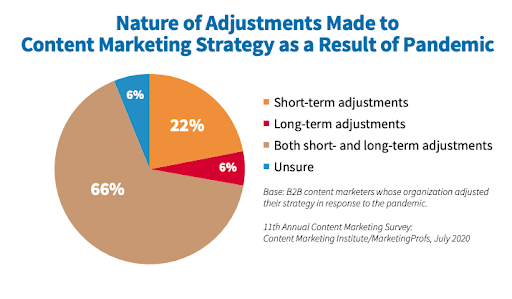
For B2B content marketers, it’s important to lean into the uncertainty that our customers are experiencing. Acknowledge their fear and confusion by providing resources to speak to their challenges.
Produce content that helps them plan short term and/or breaks down their thinking into quarters, so it’s digestible.
3. Are B2B marketers missing the opportunity to target changing motivations?
According to the study, the majority of content marketing changes that B2B organizations made in response to the pandemic related to changes in “targeting/messaging strategy”, the “editorial calendar,” and “content distribution/promotion strategy”—all focused on the operations of content marketing.
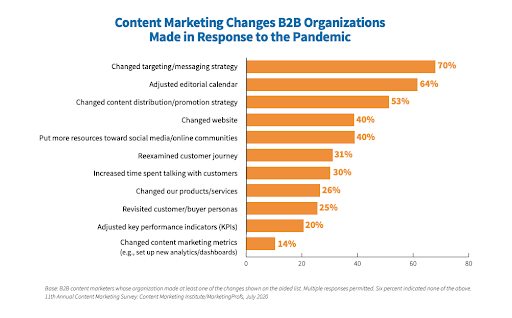
Interestingly, only a quarter of those surveyed indicated that they revisited customer/buyer personas, and less than a third (31%) said they reexamined their customer journeys.
In my opinion, this could be a major missed opportunity, considering that many businesses have shifted how they buy and what they prioritize during this time.
In fact, our own Jay Baer says, “This is the greatest opportunity you will ever have in your business life-time to create new customers.”
Understanding your audience during these times, their journey, and their mindsets will be critical to success. If your competitors aren’t investing there, now is the time for you to get this right.
4. Youtility is essential, now more than ever.
Of those who reported “extremely” or “very successful” content marketing during the last 12 months, 83% of them attributed this success to “the value our content provides.”
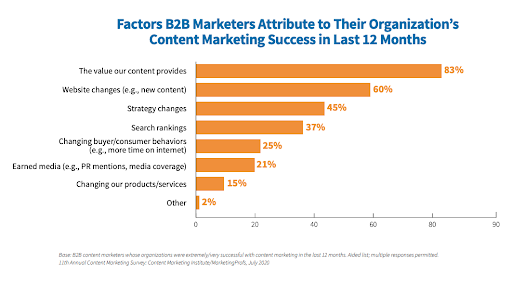
Jay Baer published his seminal book on “marketing so helpful that people would pay for it,” Youtility in 2013, but its lessons are even more important in this current environment because of everything we’ve talked about above.
Your existing customers are more willing to make a change than ever, but so are your prospective customers. So this means that you must build trust with them, so they’ll want to work with you at the end of the day.
5. Paid is here to stay.
According to the report, “72% of B2B marketers said their organization used paid content distribution channels (vs. 84% last year) in the last 12 months. However, the percentage of those using each paid channel increased over last year.”
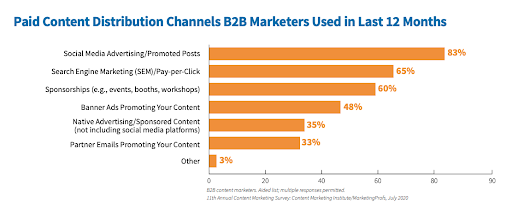
What we believe is that as in-person events go by the wayside, more B2B companies will need to invest in influencer work. In the last seven months, we’ve seen an uptick in companies that want to work with us on their B2B influencer strategies and programs.
6. Outsourcing and partnerships are vital for content marketers.
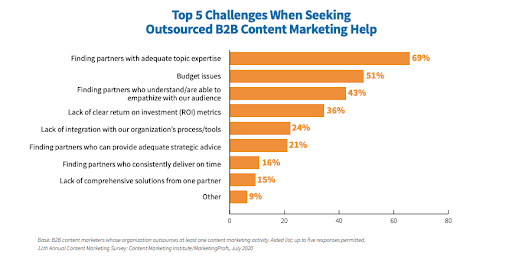
A whopping 86% of B2B marketers who outsource at least one activity say they outsource (some form of) content creation, far and away from the largest percentage. The next item is content distribution at 30%.
However, the real challenge is “finding partners with adequate topic expertise.” As you can see from this chart, 69% say that their challenge is finding partners with adequate topic expertise.
This is another reason to work with B2B influencers—because oftentimes, they can be topical experts.
We’ve recently worked with SharpSpring, a sales and marketing platform that includes CRM and automation capabilities, to launch their Agency Acceleration Series, which features a variety of experts who influence and are trusted by agency owners.
It’s a good example of a program that both showcases expertise and provides a ton of Youtility.
7. Mastering atomization is going to be key.
As you can see from the chart, companies are willing to spend on content creation and website enhancements, but not so much on staffing/human resources.
Plus, as we’ve seen from the previous chart, we know that “topic expertise” and “budget” are the top issues. So what should we make of the disconnect?

As always, firms are trying to do more with less. That’s not a surprise. But it does mean that creating a content atomization pipeline is a pressing need.
By doing so, we’re taking one piece of content and breaking it into many more pieces of content that can get eyeballs in a variety of places.
Doing more with the content we’re creating will help maximize not only our content but also help make our budgets more efficient.
Beyond Benchmarks to Actions
I hope you’ll take the time to review the B2B Content Marketing Benchmarks, Budgets, and Trends report in full.
It is because there are a ton of other interesting numbers in there, but beyond getting an understanding of how your current approach compares to other content marketers, use this report (and other reports like it).
It will help you to identify the places where you have the opportunity to take a step back, pivot, and invest time or energy in the areas that will make the biggest differences to your business and to your customers.
We must shake ourselves out of the status quo and make our B2B brands as useful to our customers as possible if we are going to be around for the next annual report.
The post B2B Content Marketing Research for 2021: Key Takeaways and Trends appeared first on Content Marketing Consulting and Social Media Strategy.
Source: convinceandconvert.com

B2B SEO: Three Essential Strategies to Generate High-Quality Leads
Organic search has an amazing ability to send targeted traffic on a continuous basis is unbeatable, but it is getting harder and harder to build an organic search presence.
There are many factors playing a role here, including the higher competition in just about any business sector, and Google’s growing unwillingness to send clicks elsewhere, instead of keeping those users engaged with search result pages.
So if your B2B business is seeing less and less Google traffic, you are not alone.
Using the tactics below, you can remedy the situation and improve your Google rankings.
3 Essential SEO Tactics for B2B Business
Here are three essential SEO tactics for B2B business to generate high-quality leads from organic search:
1. Get Your Site Discovered at All Stages of the Discovery (Pre-Buying) Journey
While B2B sales are often driven by impulse shopping, B2B buyers are willing to do their homework prior to making the final decision.
In the B2B industry, content is the most important component of the buyers’ journey which can directly influence purchasing decisions.

More than half (62%) of B2B customers admit they can finalize their purchase selection criteria based solely on digital content.
According to a 2015 Forrester study, 74% of B2B buyers spend more than half of their time researching a product online before buying it offline.
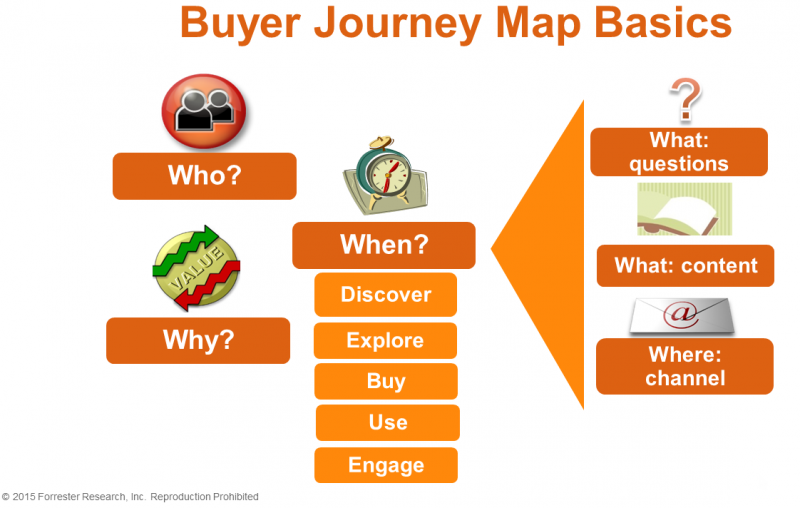
This means that B2B SEOs must pay close attention to both:
- Search queries with informational intent (to create optimized “problem -> solution” type of content
- Branded search queries (those that include their own brand or product name as well as that of their competitors’)
To give a good example of a SaaS brand doing that right, take a look at PayKickstart that has separate landing pages optimized for:
- Niche-specific landing pages that explain how the platform helps businesses in each sector they target (Example)
- Competitive landing pages (explaining why their platform is better than that of the competitor: Example)
- “Problem -> Solution” landing pages (explaining how the platform solves an existing specific problem in their niche: Example)

[An example of a landing page driven by competitive branded keywords]
This SEO strategy serves a target customer at each of their research stages:
- Planning stage: Initial research (when they are only looking for possible apps to set up their digital entity)
- The decision stage: (when the customer has collected possible options and tries to make a choice)
- Set-up stage: (when the target customer is in the process of set-up and facing some specific problems)
Your keyword research and content optimization strategy should address all of these stages that normally constitute the buying journey in the B2B sector:
The stage in the buying journey
Initial research (planning)
Decision/choice making
Set-up stage
Keyword research tactic
Core term extension (traditional keyword research)
Branded keyword research (including your and your competitor’s brand names)
2. Plan a Separate SEO Strategy for Each Possible Decision Maker
In B2Bs sales and marketing, there’s almost never a single decision maker to target.
Nowadays, the decision making unit (DMU) usually consists of about 7 people which is more than a few years ago.
Harvard Business Review reported the DMU growth back in 2017:
“The number of people involved in B2B … purchases has climbed from an average of 5.4 two years ago to 6.8 today.”
In many industries, a decision making unit may include at least the head of marketing, the head of operations, and the head of sales.
And let’s not forget multiple people who may be doing initial product research and presenting the options to the actual decision makers.
You need to target those too.
Google’s study confirms that the purchase decision-making process may include lots of employees beyond the C–suite (i.e. executive-level managers):

Obviously, all the decision makers will all have their own needs from any product they are researching.
All these diverse opinions and priorities should be addressed in the SEO strategy.
All the possible decision makers are likely to discover your product through different paths and different landing pages, so you need to plan your SEO strategy accordingly:
- Work with your sales team closely to better understand the decision making unit of your target customer
- Research your competitor’s traffic-driving keywords and organize those keywords based on your identified decision makers
- Plan an SEO content strategy accordingly to match each identified search query to a person within your target customer’s DMU to a landing page tailored to that particular decision maker
For example, for the sake of an experiment, let’s say your B2B product is a lead generation platform for businesses to capture and organize lead information.
So what we need to do to develop an SEO content strategy is to identify key organic competitors and gather their keyword data through tools like Ahrefs or SEMrush:
From there, we are developing a spreadsheet outlying our findings and including:
- The stage in the pre-buying journey (see tip #1)
- The actual decision makers/personas who are likely to be using this search query
- The landing page this search query needs for our own tool to be findable through it:

Each content piece targeting a specific decision maker and a specific keyword needs to keep that persona in mind, and a search intent behind the query.
To help with search intent optimization, use Text Optimizer which uses semantic analysis to help you better understand the topical relevance and underlying concepts:

3. Get Your Brand Associated with Your Competing and Related Entities
Making sure your brand is placed inside Google’s “map” of your niche is important for Google to know what other entities (brands) it is associated with.
Google’s Knowledge Graph (i.e. Google’s understanding of the world) is a crucial ranking factor.
You need to be connected to other brands in the niche for Google to know where you belong.

Getting your business into Google’s Knowledge base is an ongoing process that consists of:
- Email outreach to get your brand included in listicles featuring (or ranking) your competitors
- Publishing your own listicles including your brand alongside your better-known competitors
- Creating a detailed, semantically optimized About page
- Making sure your brand is featured wherever your competitors are featured, including conference websites, awards, etc.
- Creating optimized content for branded queries including [your brand vs competitor] and [competitor alternative]
Bonus: Monitor Leads, not Just Organic Search Clicks
Finally, your clicks from the organic search may still be lower than a few years ago, but what really matters for a B2B business is the leads.
Make sure your goals are set up properly inside Google Analytics for you to be able to monitor your conversions.

Another useful tracking tool to use to monitor your organic traffic performance is Finteza which allows building conversion reports based on multiple criteria, including the traffic source, the landing page, and even the audience demographic:

There are even more customer journey analytics tools for you to try, so you definitely have some options here.
Conclusion
B2B SEO may take a lot of time, planning and implementation, but it is well worth your (team’s) time because organic presence is something you can keep building on, without the need to continually invest in it.
By using the tactics above, you will create a powerful SEO strategy ensuring the long-term findability of your products.
Good luck!
The post B2B SEO: Three Essential Strategies to Generate High-Quality Leads appeared first on Content Marketing Consulting and Social Media Strategy.
Source: convinceandconvert.com