
- You are here:
- Home »
- Blog »
- Marketing »
- How Often Should You Email Your Newsletter List?

How Often Should You Email Your Newsletter List?
In the past, we’ve taken a look at why your blog needs an email newsletter and what you should include in your email newsletter.
But people have been asking for more detail on how often you should send emails to your newsletter subscribers. So we’re adding this post to round out our series on Newsletters.

Almost anything is possible here – from emailing once a year to emailing multiple times a day. For most bloggers, though, there’s a happy medium somewhere in between.
How Often Should YOU Email Your Audience?
Before we dig into the details, let’s look at some rough guidelines that will apply to most bloggers.
Chances are, your readers will want to hear from you somewhere between once a month and once a week. Less than once a month, and they may forget who you are or miss out on good offers.
More than once a week, and they may see your emails as just more “noise” in their inbox.
A couple of years ago, Marketing Sherpa found that most customers (close to 90%) want to receive emails “at least monthly”, and just over 60% of those want emails “at least weekly”.

So if you decide to email twice a month, you probably won’t go far wrong.
However, you may need to adjust this frequency depending on the type of email newsletter list you have.
Scenario #1: An ‘Updates’ Email List
Let’s say readers have signed up to hear about your new book when it’s released.
They might be interested in a monthly or quarterly newsletter about your progress, with links to interesting blog posts you’ve written, or other resources. But they’re unlikely to want emails every week or two.

In some situations (e.g. you’re a fiction author who brings out a book every year or two), an ‘update’ email just once a year might be appropriate.
Readers may not be interested in hearing regular details about your life and how the book’s coming along, but they might be very excited to get an email when it’s finished.
Scenario #2: An “E-course” Email List
If readers have joined your email list to take a short e-course by email, it might make sense to email them as often as daily (if each email is short) .
Anything less than weekly won’t be enough for them to make steady progress. Even if you’re only sending out the e-course material in weekly doses, you might want to send a second reminder email.

Readers are unlikely to want emails multiple times per day. But if you’re running an intense e-course (e.g. a week-long one that requires multiple hours of work per day) then it might make sense to email both morning and evening.
This is definitely a case, though, where you’ll want to …
Survey Your Audience to Find Out What They Want
If you’re not too sure what will suit your audience, ask them.
The easiest way to do this (and get a reasonable range of responses) is to run a survey.

You’ll probably want to ask questions that go beyond just the frequency of your emails.
For example, you may want to ask them what types of content they’d like to receive, or how long they want your emails to be.
You could ask something like this:
How often would you like to receive emails from me?
- Daily
- Twice a week
- Once a week
- Twice a month
- Monthly
- Quarterly (every three months)
- Other
Some Common Problems Related to Emailing Frequency
Sometimes, you might be having difficulties with your email newsletter without realizing those difficulties could be solved by changing the frequency.

On the other hand, you might also be worried about your email frequency because you think something is a problem when it really isn’t.
Here are some common worries and difficulties bloggers have, and my suggestions for solving them.
#1: “I Struggle to Come Up With Enough Content for My Newsletters”
If you find it tough to come up with ideas for your newsletters, you could:
- Send out blog posts rather than separate newsletters. Some bloggers send their entire blog post by email. Others craft a short summary or ‘teaser’ and then link to the post. You can send out your post using RSS to email.
- Write shorter newsletters. If you’re including two unique articles and a Q&A in every newsletter, you’re probably overwhelming your readers as well as yourself.
- Email less frequently. Obviously, if you go from emailing once a week to once a month, you’ll only need to come up with a quarter of the original amount of content.
- Re-run old newsletters. If you’ve been emailing for more than a year, you’ll have lots of people on your newsletter list who never saw your earliest newsletters. And even those who’ve stuck around from the beginning will probably have forgotten them. Pick a few good ones from your archives, edit them, and send them out again.
#2: “People Unsubscribe Whenever I Send an Email”
This causes a lot of bloggers to worry unnecessarily. You’ve probably noticed that when you send an email your unsubscribe rate goes up. This might put you off emailing at all, but it shouldn’t.
If you think about it, there’s a good reason why this happens. And it’s (normally) nothing to do with you emailing too often or emailing the wrong content.
It’s because some people are trying to reduce their incoming emails, and when an email comes in from you it acts as a signal to them to unsubscribe.
However, if you get comments or feedback saying “Too many emails” or similar, you might want to think about reducing the frequency.
And don’t worry if you get a lot of unsubscribes whenever you send a promotional email, either. If someone had no intention of ever buying anything from you, let them go.
#3: “I Get a Lot of Spam Complaints”
This is a situation where you’ll want to take action, as a high volume of spam complaints can affect the deliverability of your emails.
If you’re emailing more than a couple of times a week, it’s possible that the spam complaints are related to the frequency of your emails.
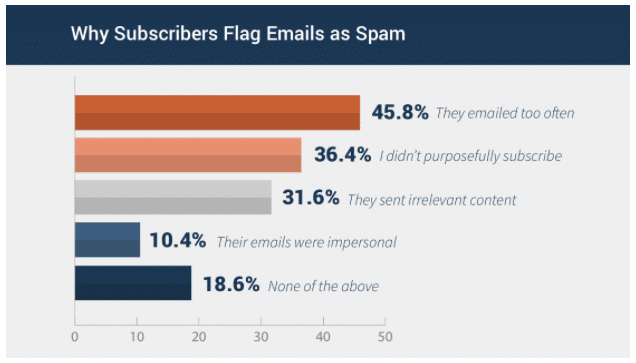
According to Campaign Monitor, one of the most popular reasons for marking emails as spam is because “they emailed too often”.
Another possibility here is you’re emailing at the right frequency, but not sending people what they asked for.
If your newsletter sign-up form promises “exclusive weekly tips” and you’re sending out two promotional emails every week and a few tips once a month, you need to change things so you’re delivering what people expect and, more importantly, what they consented to.
Changing the Frequency of Your Emails
Normally, it’s best to change your emailing frequency fairly gradually.
Don’t suddenly go from emailing once a quarter to once a week. It’s going to confuse and put off your subscribers. Instead, gradually change the frequency. You might go to monthly emails, then twice monthly, and then weekly.
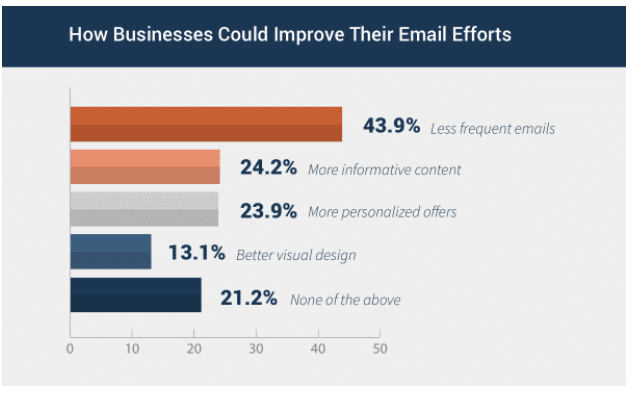
Similarly, if you normally email twice a week, your readers may start to worry if they don’t hear from you for a whole month – especially if you haven’t mentioned you’re going monthly.
The exception here is if you’re having problems because your emailing frequency is too high.
If you’re getting lots of spam complaints because emailing daily is too much for your audience, you can switch to weekly straight away.
Let Your Readers Choose How Often They Want to Hear From You
If you want, you can also let your readers decide how often they want to hear from you.
It can be a little fiddly, but most email providers let you add an option on your sign-up form (and/or where subscribers can update their details) that lets your subscribers choose how often they want to receive emails from you.
Here are instructions on how to do it in MailChimp.
Some readers might be delighted to receive every blog post the day you write it. Others may only want a weekly summary. By giving them the choice, you can keep everyone happy.

The appropriate frequency for your list depends very much on what you write about and who you’re writing for.
If you’re not sure what to go for, try emailing twice per month and ask readers to let you know if that’s about right for them.
You can easily adjust the frequency up to weekly or down to monthly, depending on the feedback. But be careful not to vary too wildly from what they consented to receive (i.e. going daily after telling them they were subscribing to a monthly newsletter).
I’d love to hear about your experiences with email frequency – whether with your own newsletter list or someone else’s.
Have you emailed too often (or not enough) in the past?
Or have you ever unsubscribed from someone else’s list because the emails were too frequent, or too far apart? Share your thoughts in the comments below.
The post How Often Should You Email Your Newsletter List? appeared first on ProBlogger.


Source: feeds.feedblitz.com
About the Author Amel
I'm a Digital Marketing Strategist passionate about SEO and Digital Analytics. I also teach Digital Marketing and offer customized private coaching to entrepreneurs and in-house marketers to help them take their revenue or skills to the next level. Follow me on Twitter where I offer advice and share high quality content on marketing, tech and productivity.